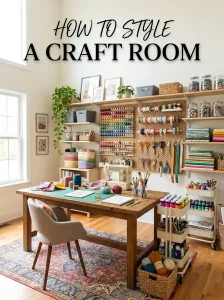
A craft room is more than a place to stash glue guns and fabric scraps. It is a small studio that should make you want to sit down and start a project the moment you walk in.
Whether your style leans toward a bright strawberry theme, a soft botanical corner, or a clean pastel setup with labeled bins, the same styling rules apply. Good lighting, smart storage, and a color story that feels like you.
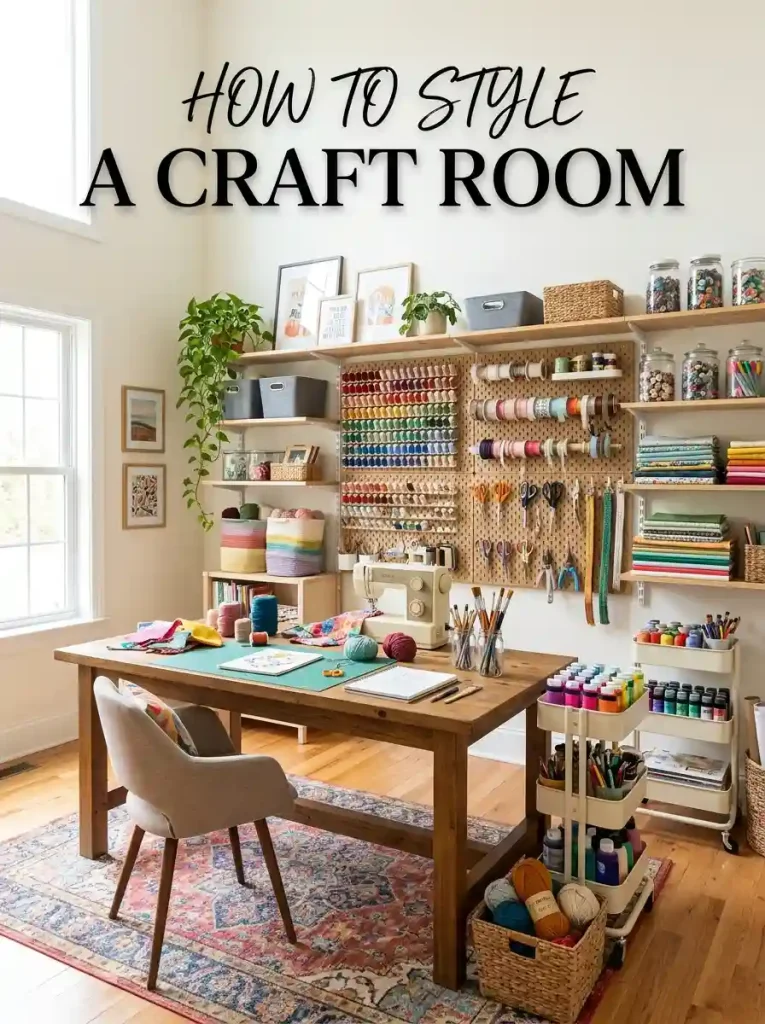
This guide walks through every piece of the puzzle, from choosing a palette to organizing ribbon and paint, so you can build a craft room that looks good and actually functions.
Pick a Theme Before You Buy a Single Bin
Every well styled craft room starts with a clear theme.
Look at the difference between a cherry and tomato studio with a checkered pink rug, a muted terracotta space with hand painted floral walls, and a teal and lilac pegboard setup. Each one feels intentional because the owner picked a lane and stayed in it.
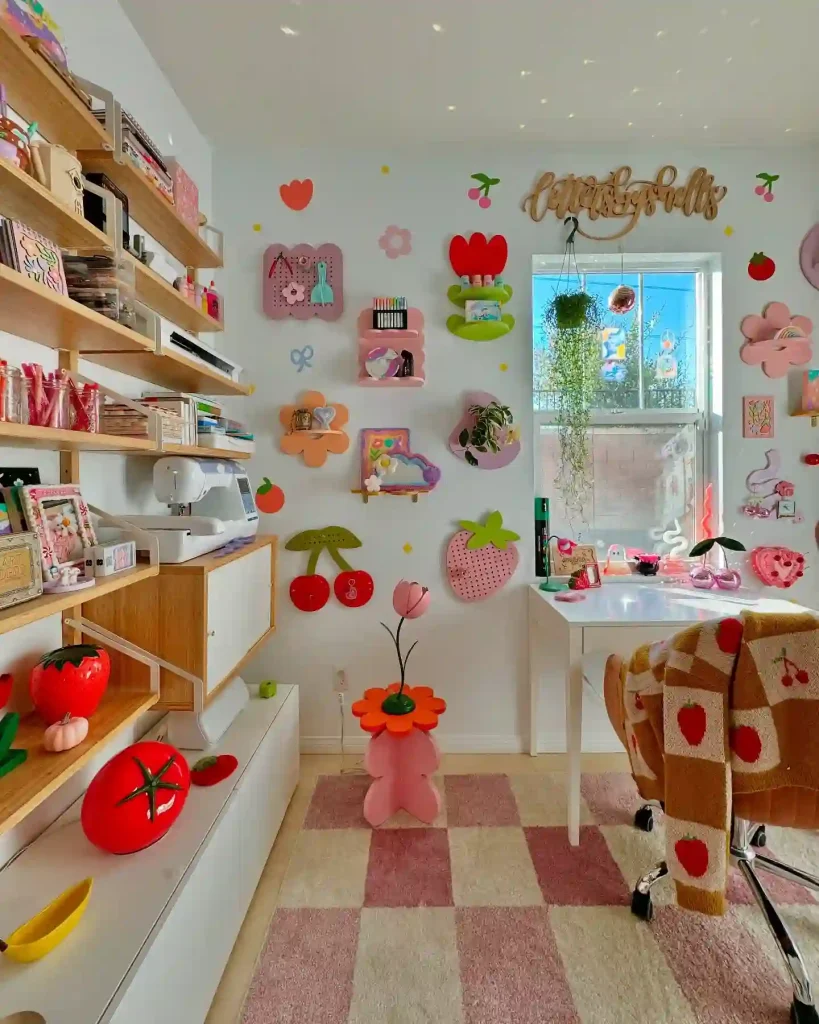
Decide early what direction you want.
- A playful, saturated palette with fruit motifs and bold colors
- A soft, botanical feel with sage green, blush, and dried florals
- A clean pastel system with mint, white, and blush accents
- A natural wood and neutral look for a more grown up studio
Once you choose, write the palette down. It will guide every future purchase.
Map Out Zones Before You Decorate
Before adding a single wall decal, think about function. A craft room usually needs a few distinct zones.
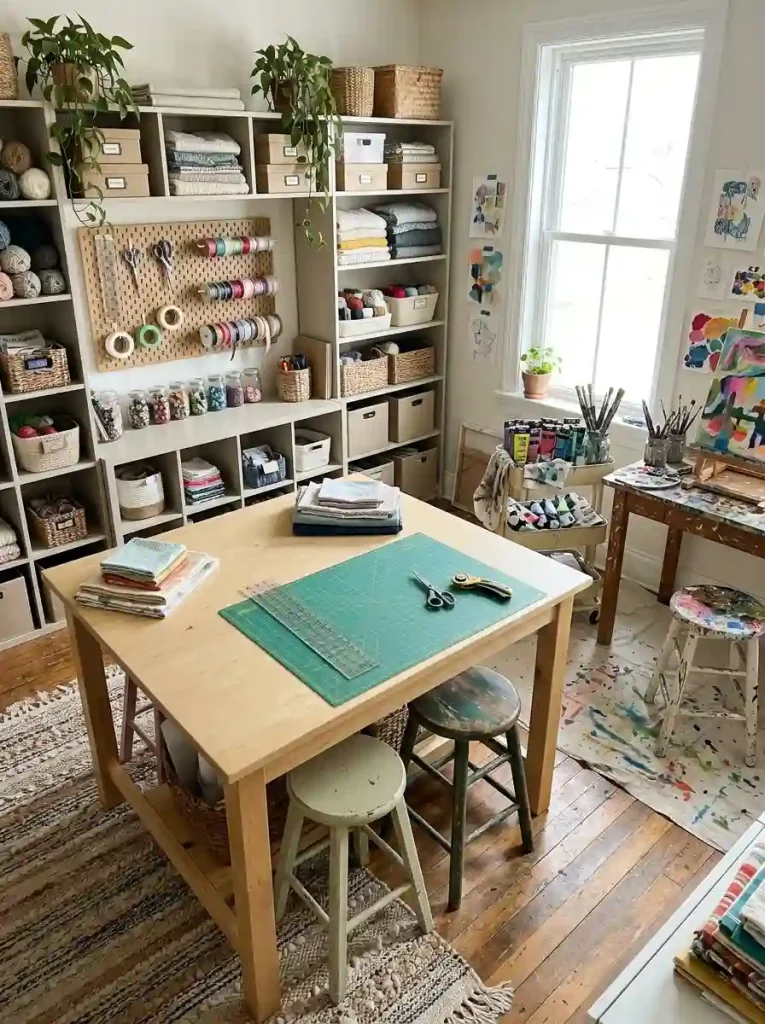
- A cutting or assembly zone with a flat, durable surface
- A painting or messy zone, ideally near a window
- A storage wall for supplies
- A seating or desk zone for detail work like sewing or card making
Mapping zones first prevents the common mistake of styling a beautiful wall that has nowhere practical to sit or work.
Choose a Wall Color That Supports Your Supplies
White and soft off white walls are popular in craft rooms for a reason. They let colorful supplies, ribbon spools, and painted decor stand out instead of competing with a busy wall color.
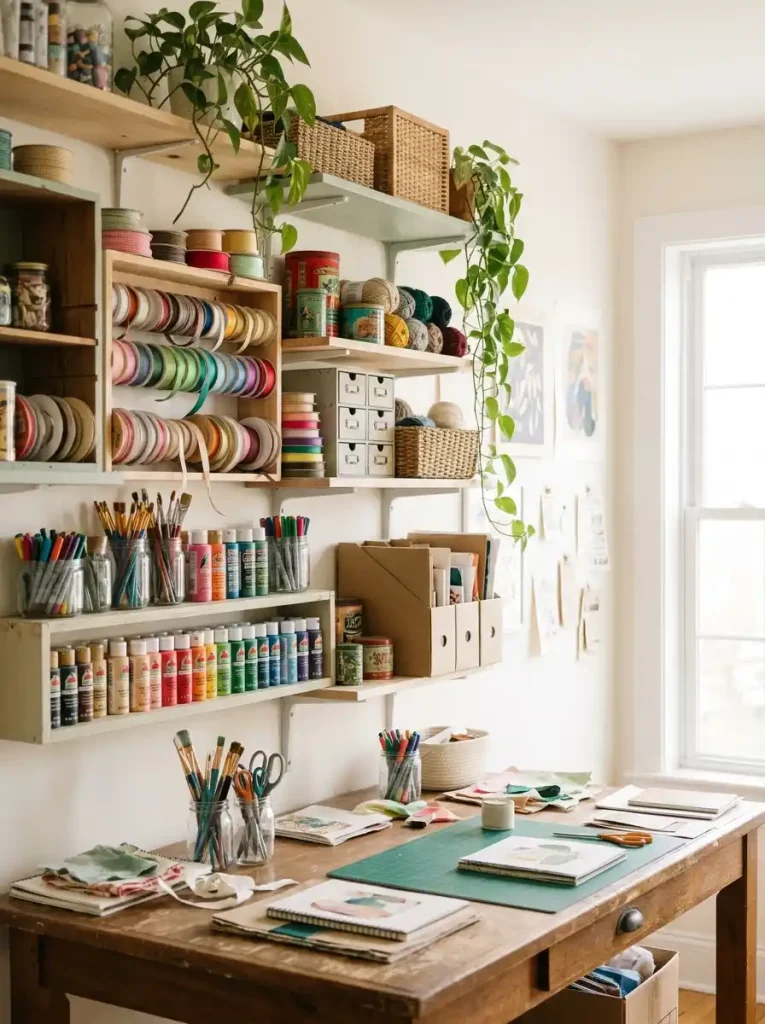
A soft blush or cream wall also bounces natural light nicely, which matters when you are color matching paint or fabric.
If you want more personality, a single accent wall with hand painted florals can work beautifully, as long as the rest of the room stays calm.
Busy supplies: Go with white, cream, or soft greige.
Neutral supplies: You can handle a blush or sage wall.
The accent wall: One only. Two will fight the shelves.
Use Pegboards as Your Styling Workhorse
Pegboards are one of the most popular craft room storage solutions, and for good reason.
A colorful pegboard holding scissors, glue guns, washi tape, and markers keeps tools visible and off the desk.
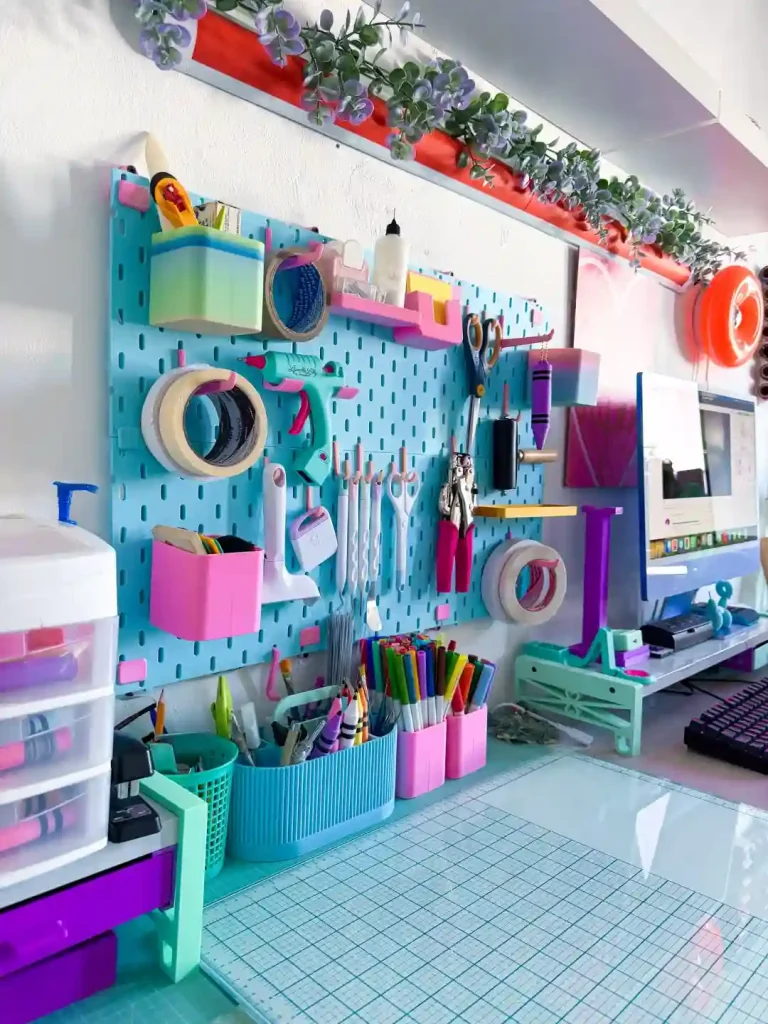
When styling a pegboard:
- Group similar tools together, such as all cutting tools in one section
- Use small bins or cups for loose items like pens and brushes
- Leave breathing room so the board does not feel overcrowded
- Pick hooks and baskets in colors that match your palette
Let Open Shelving Do Double Duty
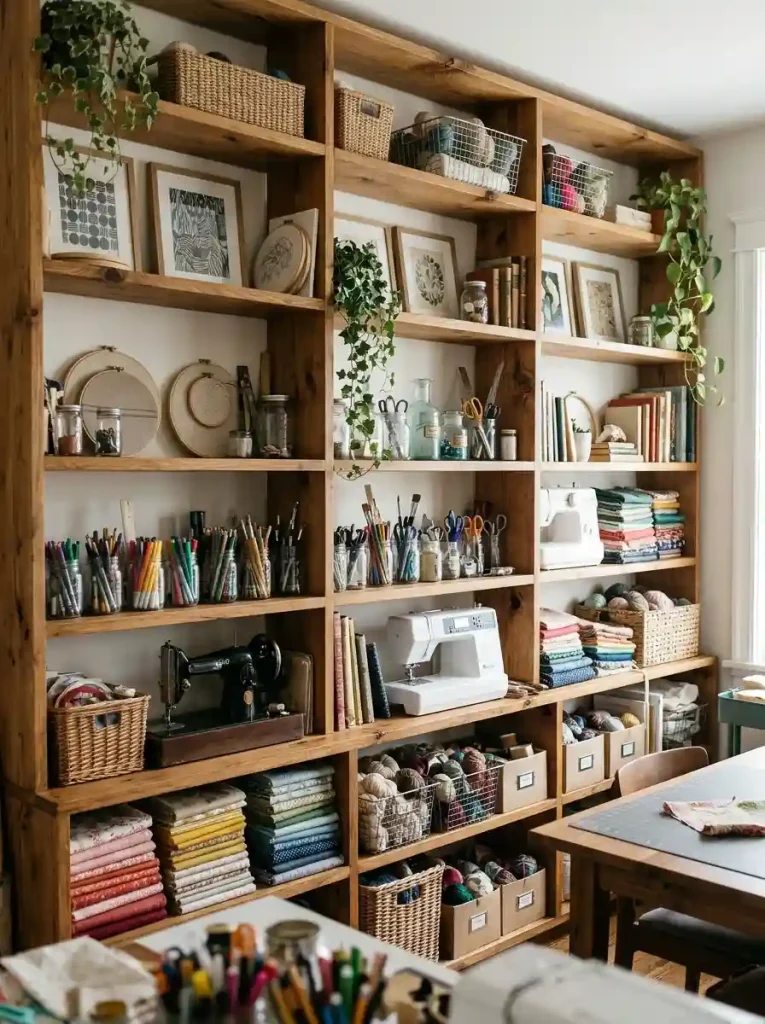
Open wood shelving is ideal for a vintage craft room because it displays supplies as decor while keeping them within reach.
A floor to ceiling unit filled with sewing machines, jars of pens, fabric, and framed art is both storage and personality.
Mix function with display by placing everyday tools on lower shelves and decorative items, like framed embroidery or small collectibles, higher up where they can be admired rather than reached for constantly.
Add a Statement Sign or Wall Art
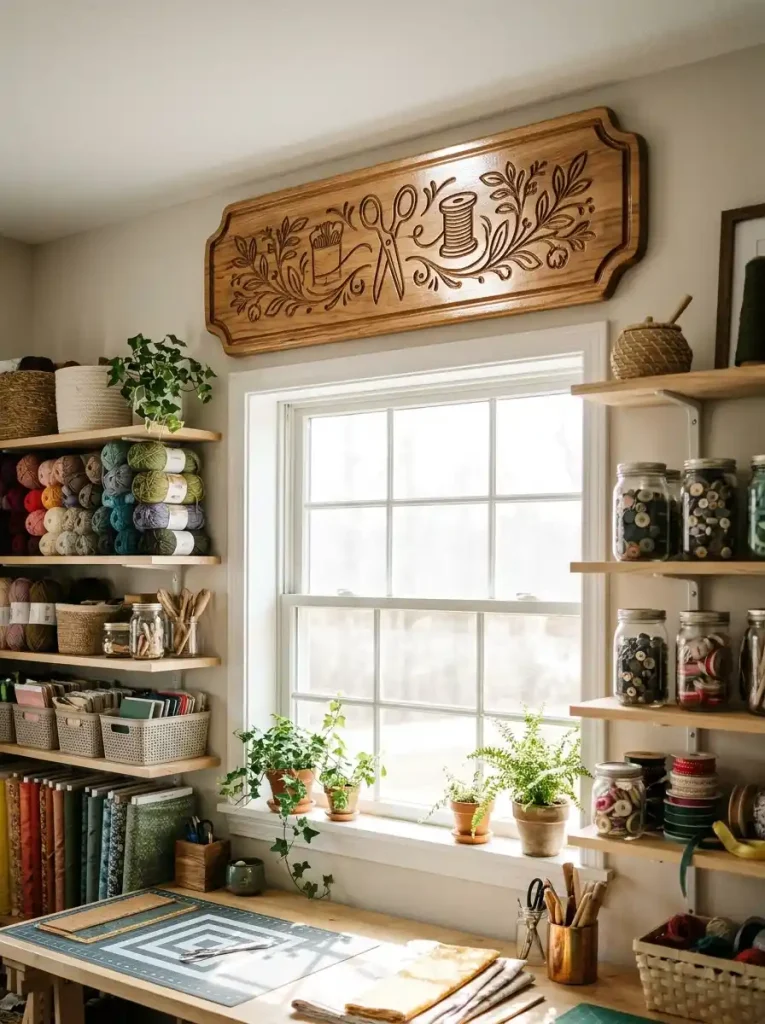
A custom wood sign with a shop name or craft business name, mounted above a window or workspace, instantly makes a craft room feel like a real studio rather than a leftover guest room.
If a custom sign is not in the budget, printable wall art, a gallery wall of small framed pieces, or painted decor cutouts in shapes like flowers, cherries, or tulips can do the same job.
💡
Hang the sign at eye level, not at ceiling height. If you have to look up to read it, it will not feel like part of the room.
Choose a Rug That Grounds the Space
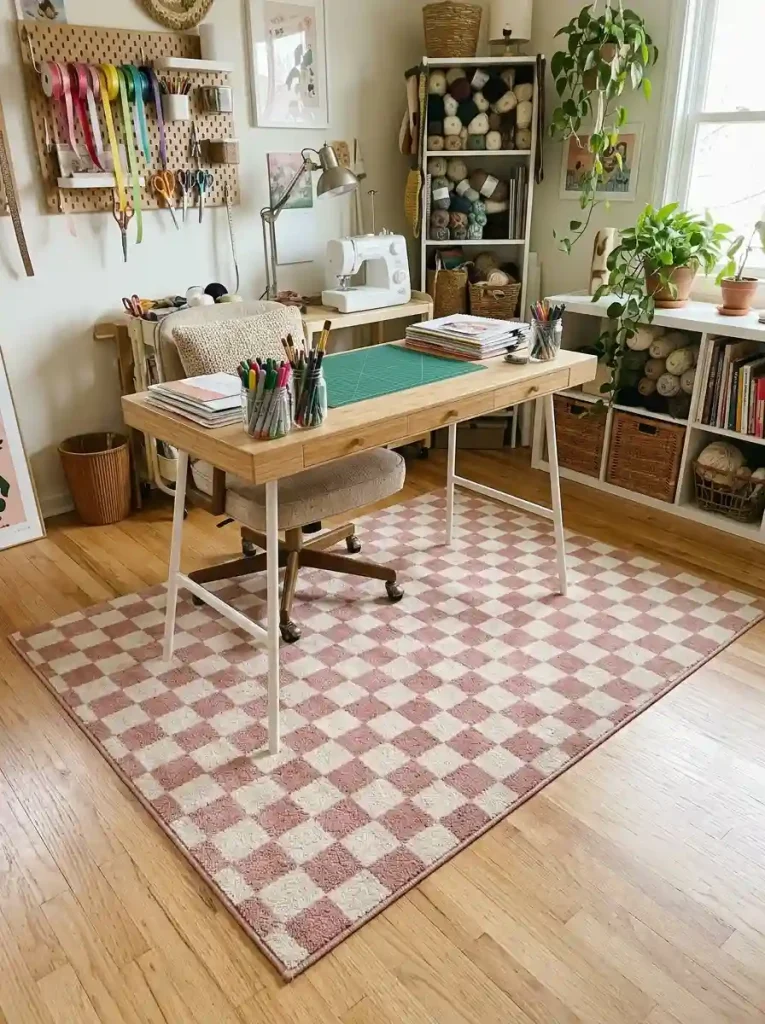
A patterned rug, like a pink and cream checkerboard design, adds softness underfoot and ties a color palette together.
Rugs also help define a seating or desk zone within a larger room.
For a craft room, choose a low pile rug that is easy to vacuum. Glitter, thread, and paper scraps are inevitable.
Clear Storage Bins Are Non Negotiable
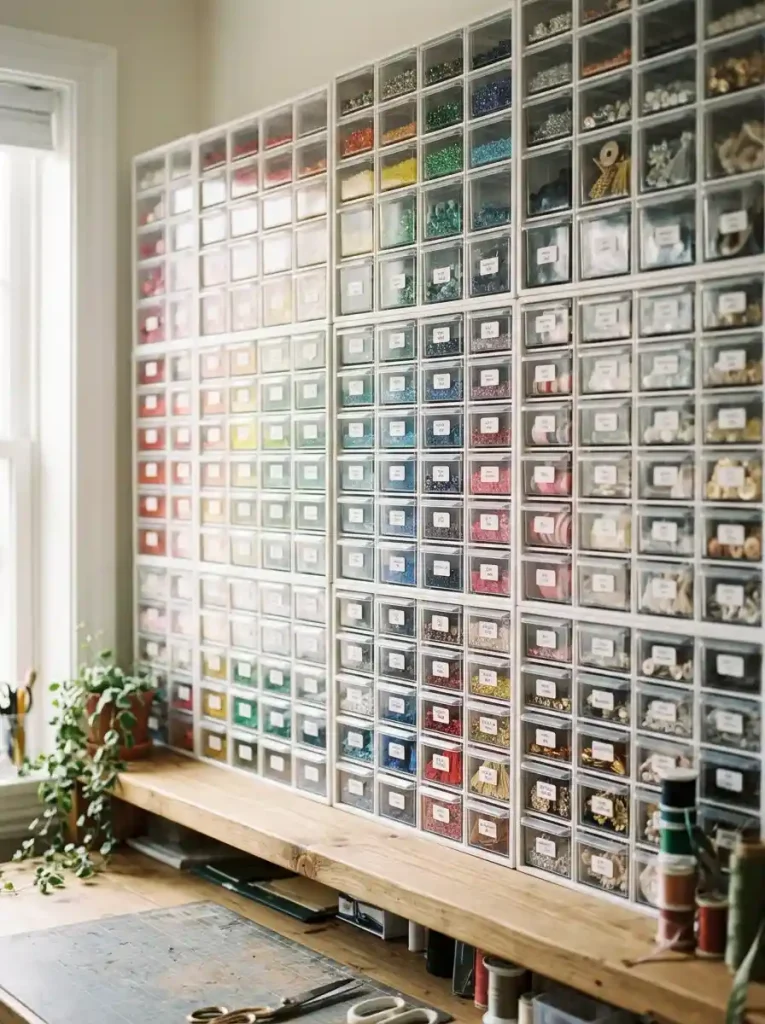
Clear plastic drawer units and bins are a craft room staple because they let you see exactly what is inside without opening every drawer.
A wall of small drawer organizers filled with beads, ribbon, and embellishments, all labeled and sorted by color or type, turns a cluttered supply stash into something that looks like a boutique.
Incorporate Greenery for a Softer Feel
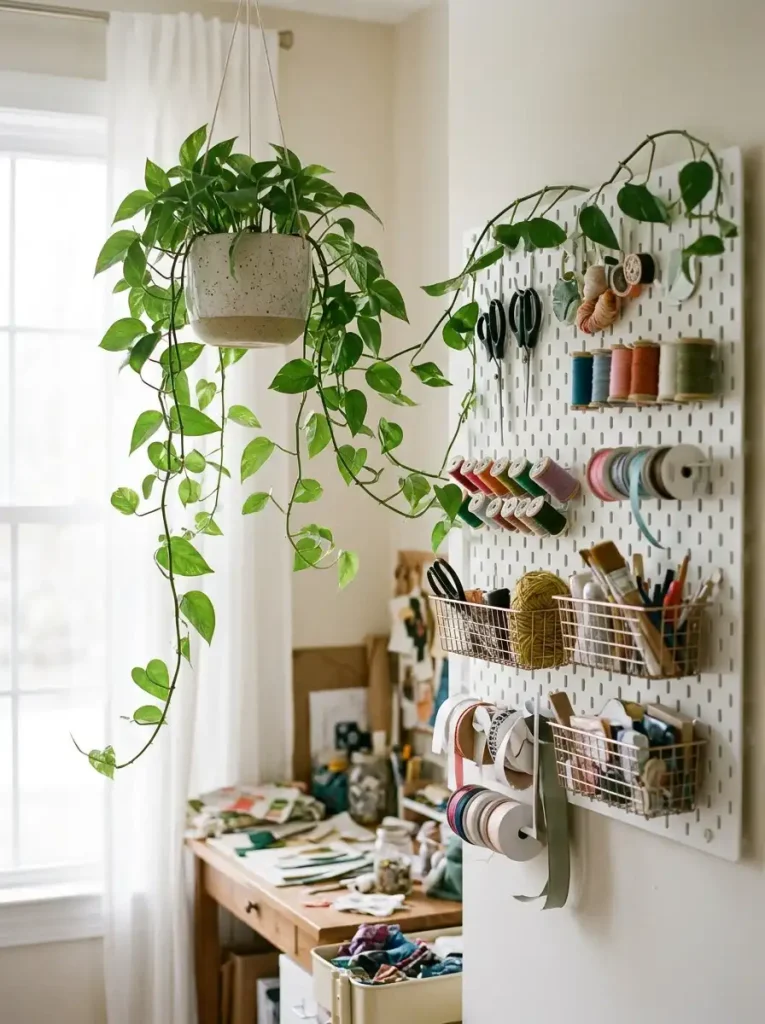
Faux greenery, hanging vines, or a small potted plant on a windowsill brings life into a craft room without adding maintenance.
A trailing plant hung near a window, or a garland of greenery draped above a pegboard, softens all the hard edges of shelving and storage bins.
Use a Window as Your Natural Light Source
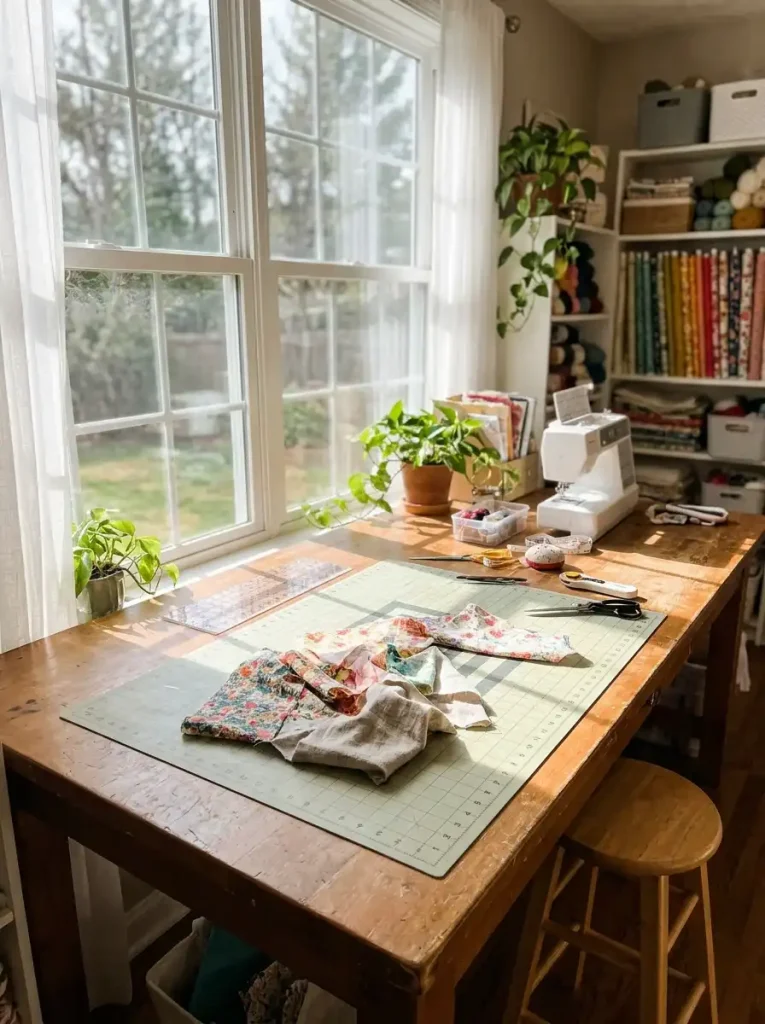
Whenever possible, position the main desk or work surface near a window.
Natural light makes color matching easier and simply feels better to work in for long stretches.
Sheer curtains with a soft floral or leaf trim can filter harsh light while keeping the room bright.
Personalize With Collectibles and Plushies
A craft room should feel personal. A plush character pillow on a desk chair, a small collection of figurines on a shelf, or framed photos of pets mixed in with craft supplies gives the space warmth.
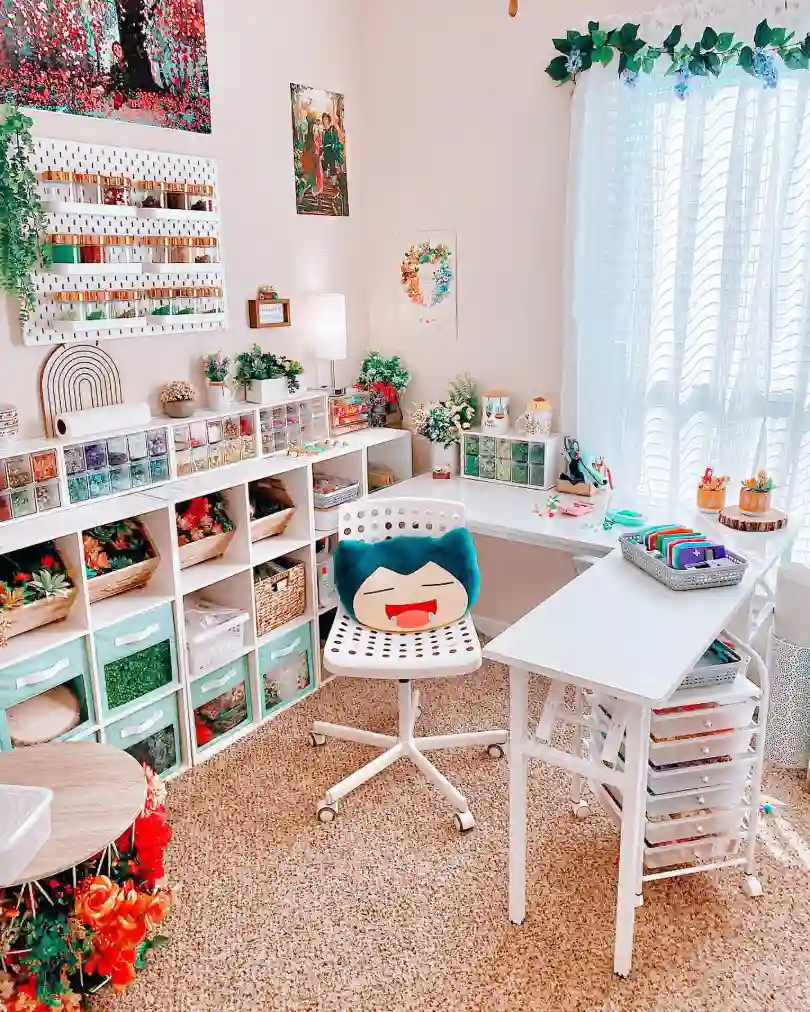
These small personal touches are often what make a craft room feel lived in rather than staged.
Repeat Your Color Palette in Small Accents
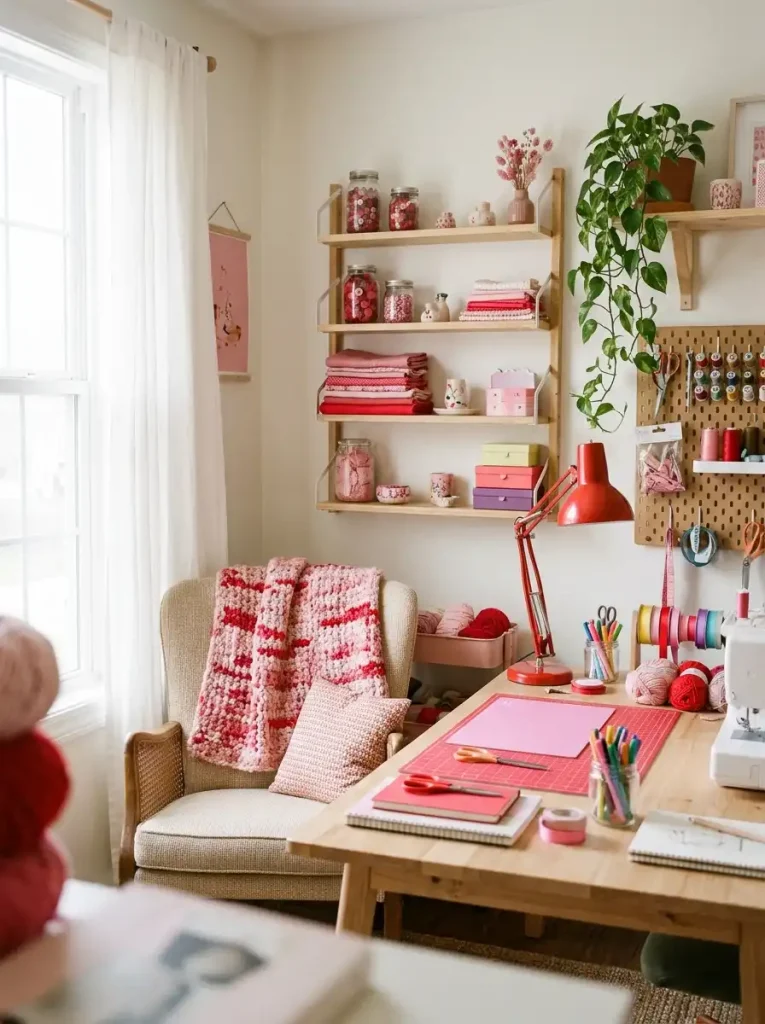
Consistency is what makes a colorful craft room feel curated instead of chaotic. If your palette includes pink and red, repeat those colors in small ways throughout the room.
A blanket draped over a chair, a desk lamp, or small decorative fruit shaped objects all count. Repetition across multiple surfaces ties a busy room together.
“A craft room should look like you. Not like a catalog, and not like a storage unit.”
Choose a Desk That Matches Your Workflow
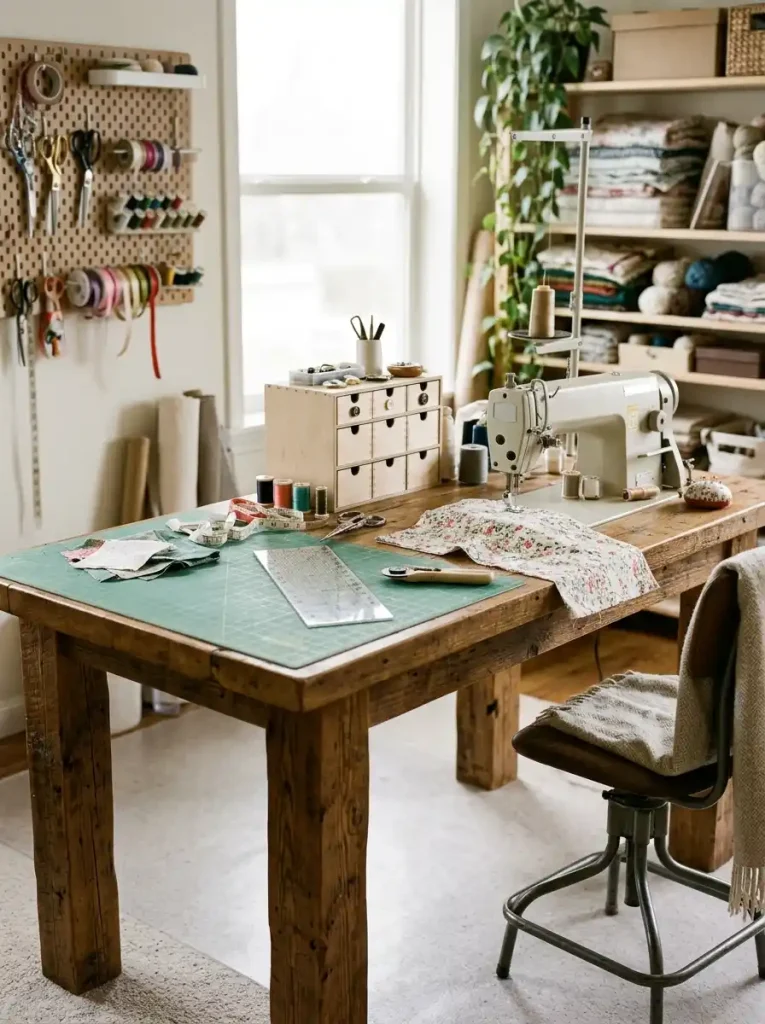
Not every craft room needs the same desk. A sewing focused space benefits from a sturdy table that can hold a machine without wobbling.
A paper crafting space may prefer an L shaped desk for spreading out supplies. A painting studio might lean toward a wood table that can handle spills and texture.
Add a Rolling Cart for Flexible Storage
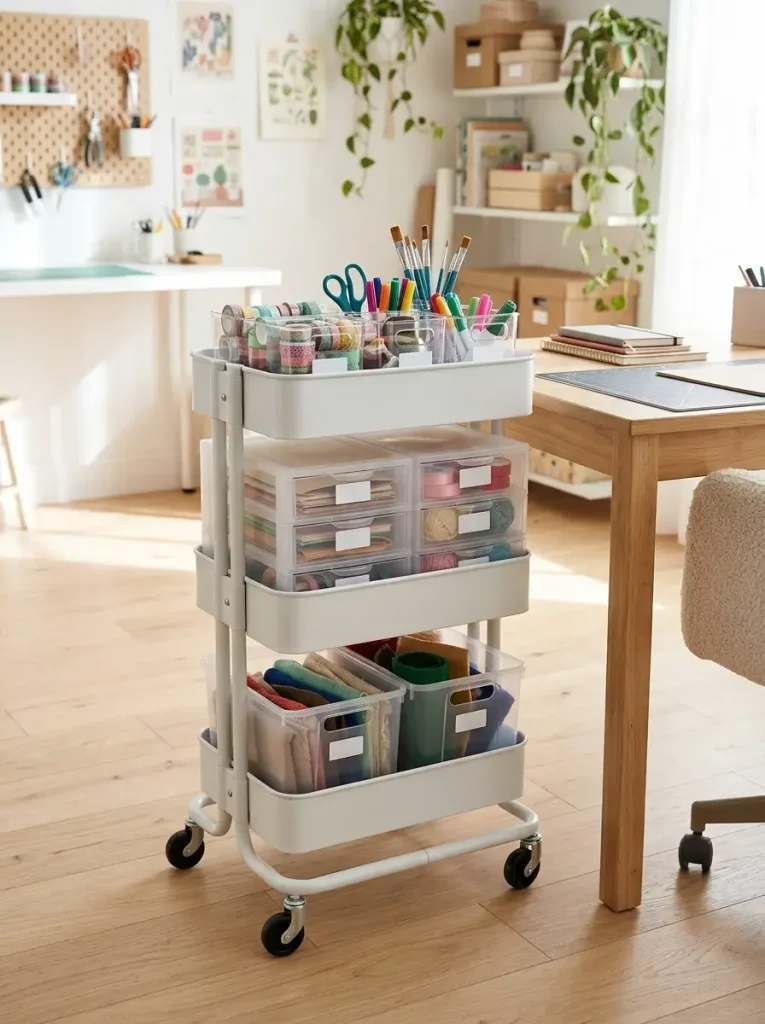
A rolling drawer cart is one of the most useful additions to any craft room.
It can hold frequently used supplies, slide under a desk when not in use, and move between zones as needed.
Choose one with clear or labeled drawers so contents stay visible.
Create a Dedicated Painting or Messy Corner
If your crafting involves paint, clay, or resin, dedicate one corner specifically to messy work.
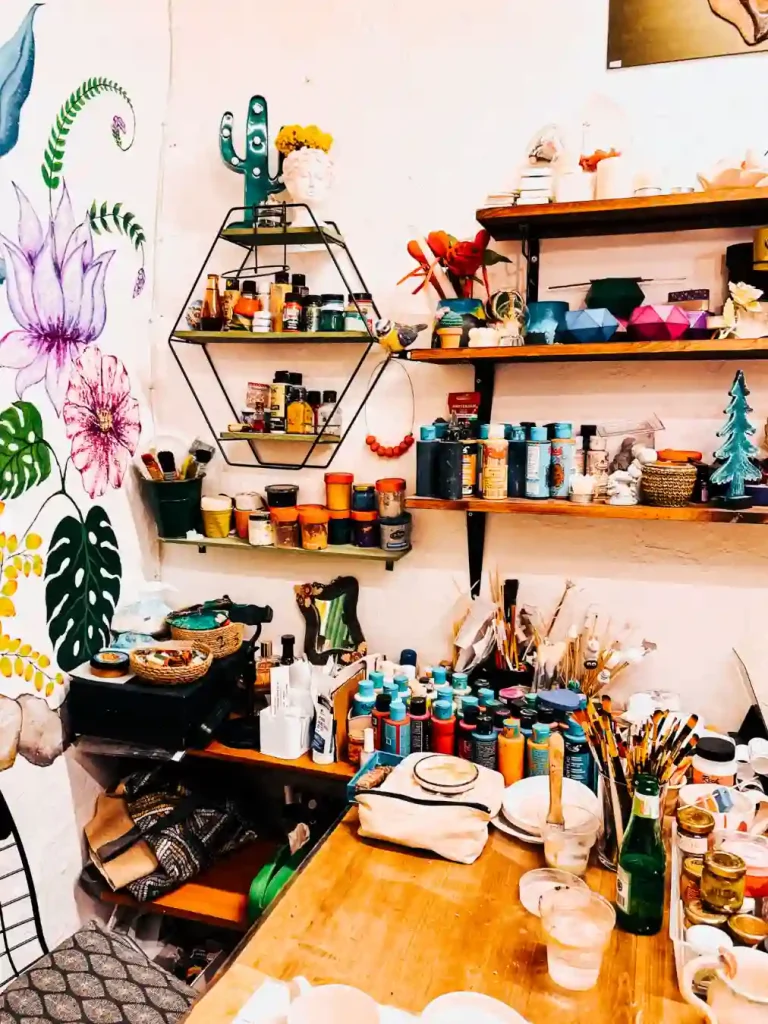
A wood table with worn, paint splattered surfaces, surrounded by shelves of paint bottles and brushes in jars, keeps the mess contained to one easy to clean area instead of spreading throughout the room.
String Lights Add Warmth Without Overhead Glare
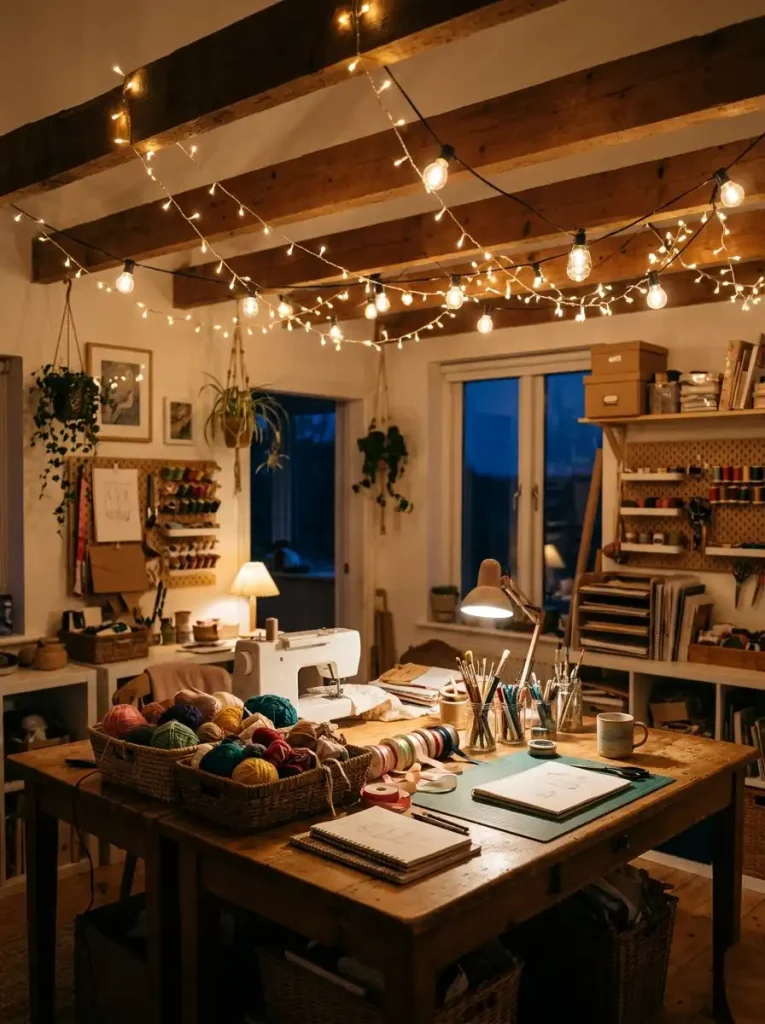
Soft string lights draped across a room add ambient warmth that overhead lighting cannot replicate.
They work especially well in craft rooms used for workshops or classes, giving the space a cozy, inviting feel even during daytime use.
Keep a Reading or Reference Nook
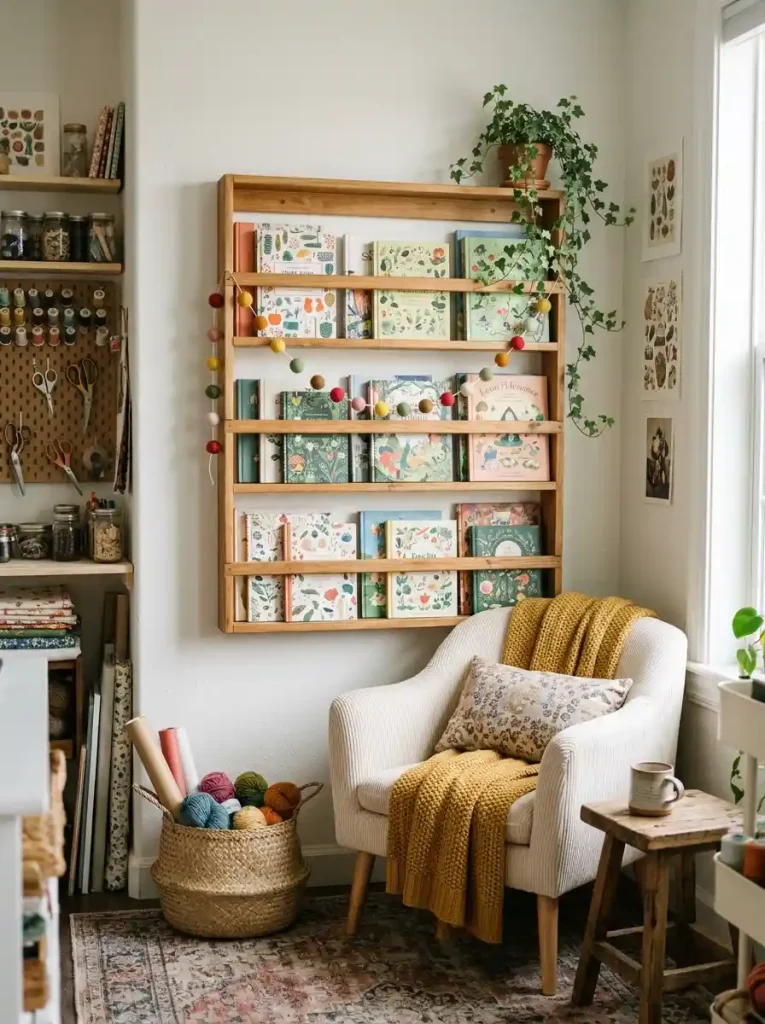
If your craft room doubles as a teaching space or a spot for kids’ projects, a small shelf of books or reference material adds function.
A wall mounted book rack filled with craft guides or children’s books keeps reading material tidy and accessible without taking up floor space.
Use Labels for Everything
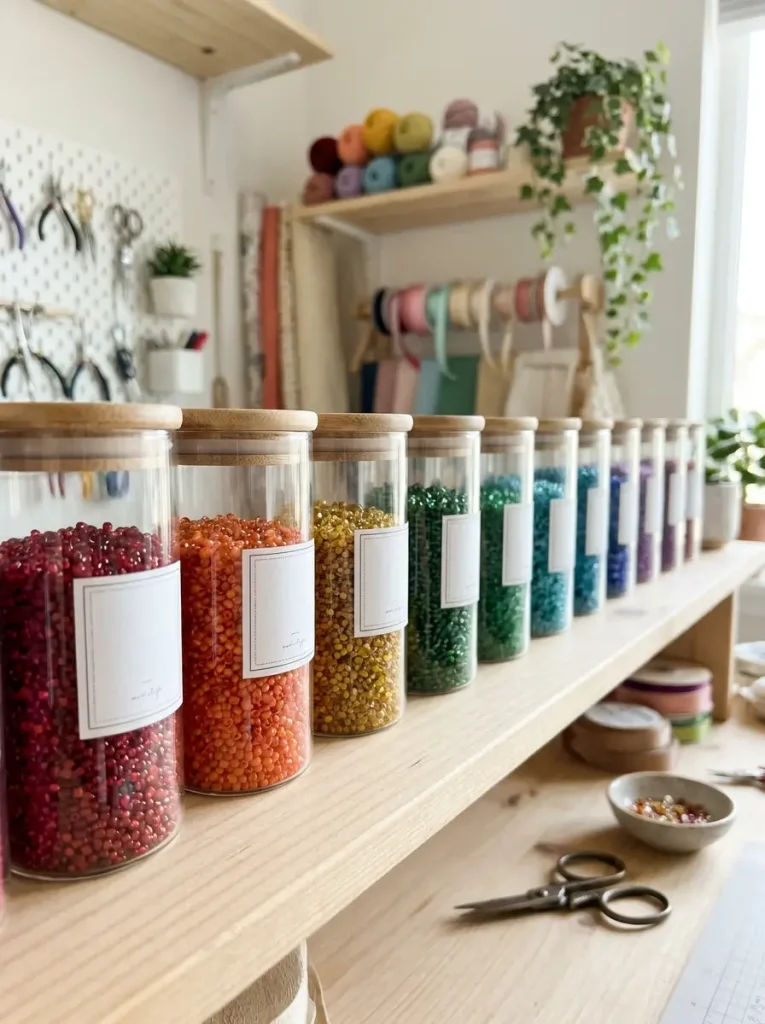
Labeling drawers, bins, and jars is a small detail that makes a huge difference.
Simple white labels on clear jars of beads or paint create a clean, boutique like look while also saving time during projects, since you are not digging through unlabeled containers.
Balance Bold Decor With Functional Negative Space
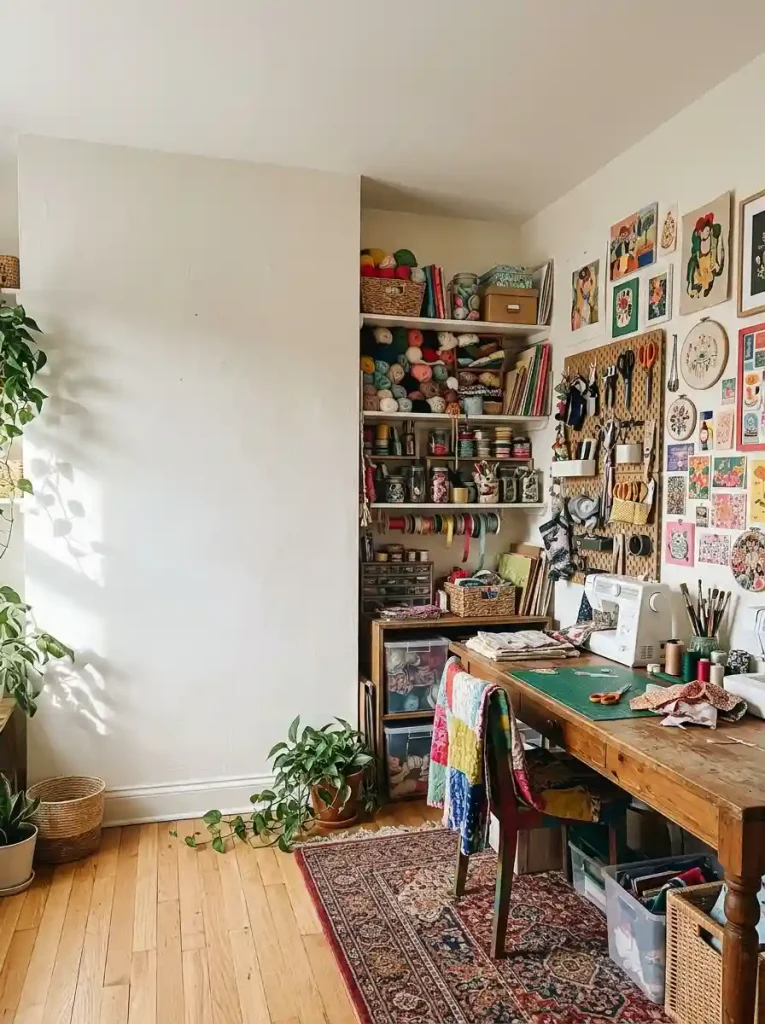
It can be tempting to fill every inch of wall space with decor, especially in a maximalist themed room.
But leaving a little breathing room, a blank stretch of wall or an empty shelf, keeps the space from feeling overwhelming.
Balance is what separates a styled room from a cluttered one.
Style Your Chair as Much as Your Walls
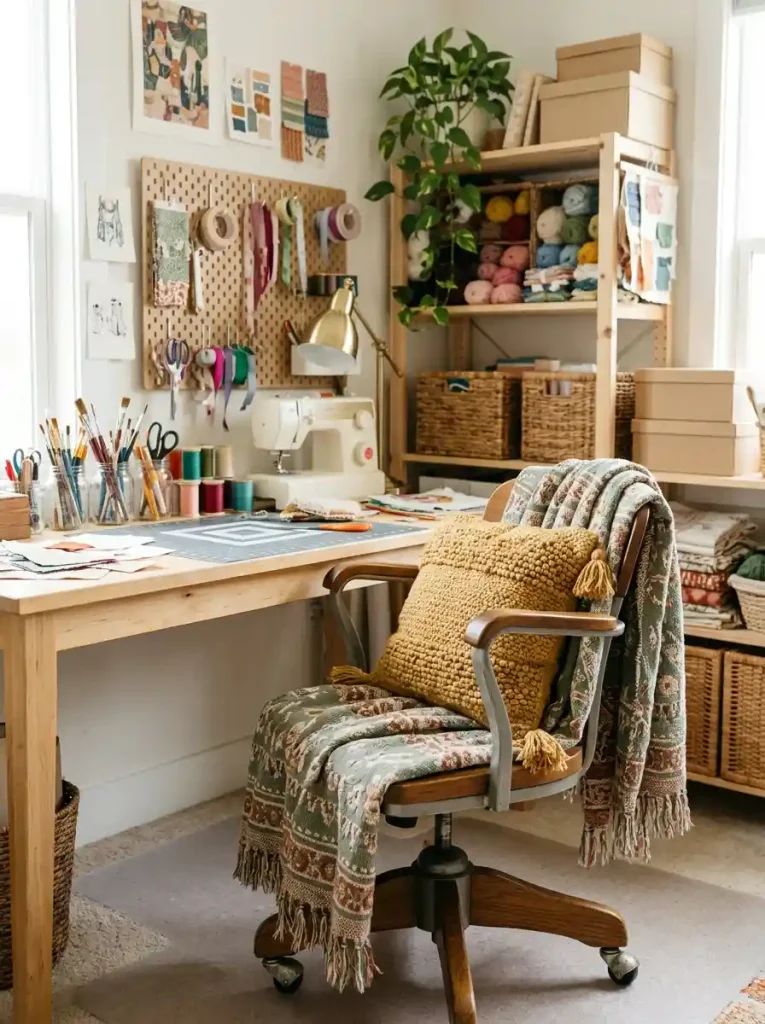
The desk chair is often overlooked in craft room styling, but it is one of the most visible pieces in the room.
A patterned cushion, a throw blanket in your color palette, or a plush pillow on the seat ties the chair into the overall design instead of leaving it as an afterthought.
Build in a Small Seating Station for Workshops
If you plan to host craft workshops or classes, consider small individual workstations instead of one large shared table.
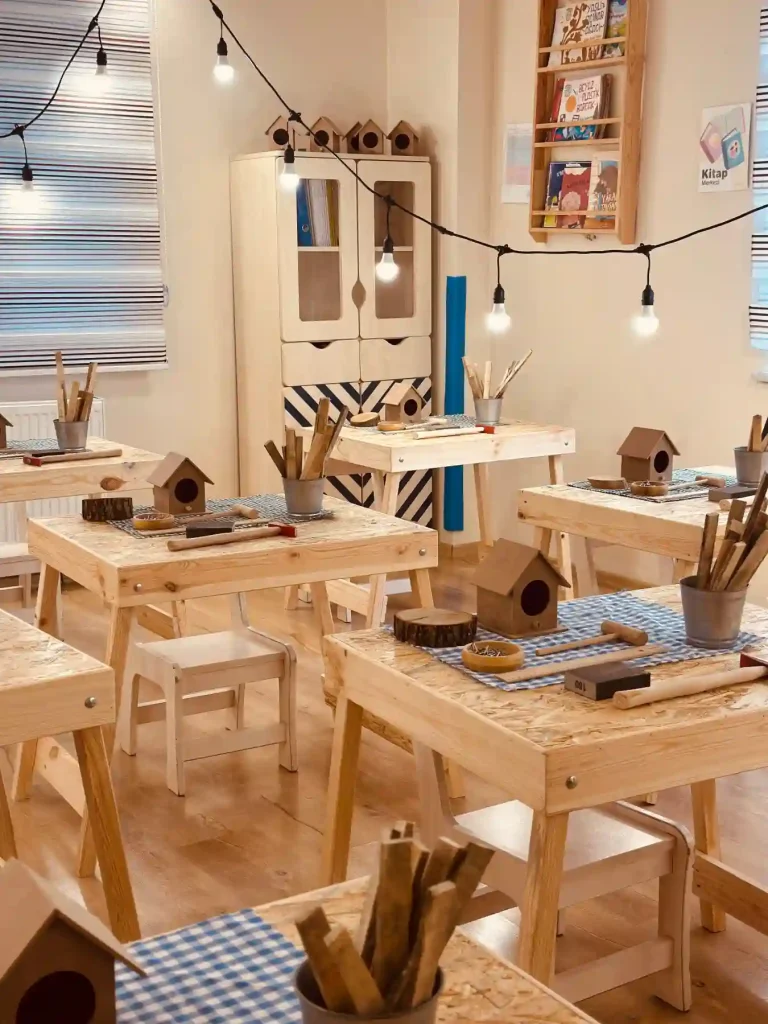
Several compact wood tables, each set up with its own tools and materials, make group projects feel organized and give every participant their own space to work.
Rotate Decor Seasonally
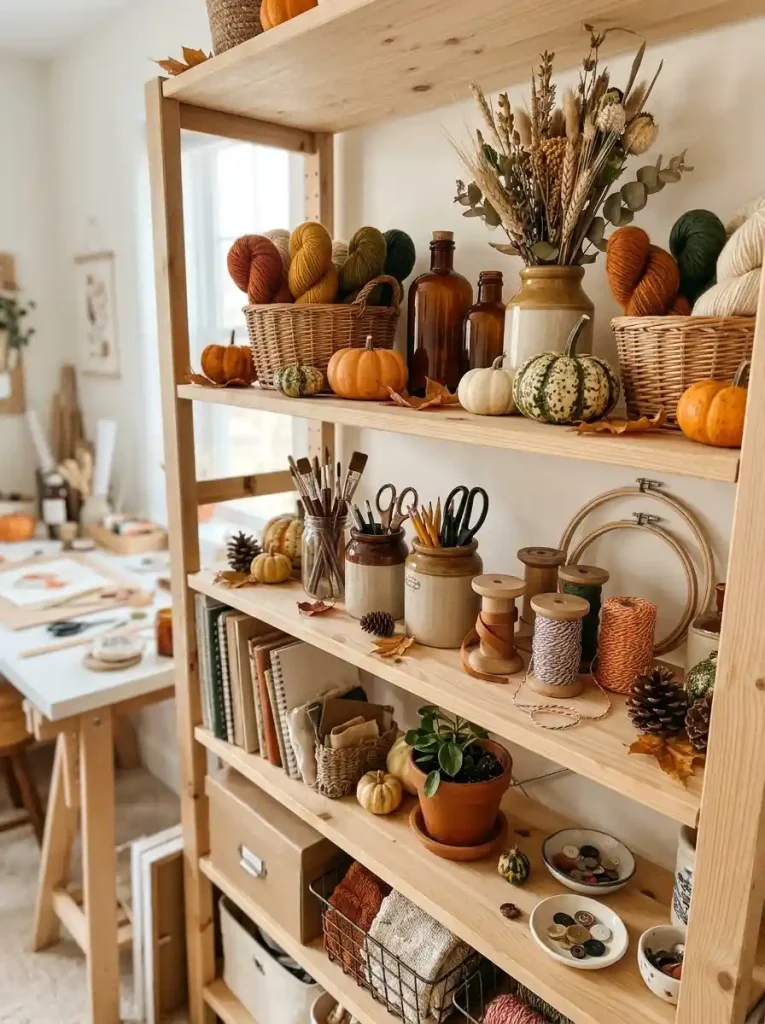
A craft room does not need to stay static year round.
Swapping out small decor items, like seasonal flowers, themed wall decals, or a different table runner, keeps the space feeling fresh without requiring a full redesign.
This is an easy way to keep motivation high throughout the year.
A Final Word
Styling a craft room is really about balancing beauty with function. The most charming craft spaces all share the same foundation. Clear zones, smart storage, a defined color palette, and a few personal touches.
Start with function, layer in your color story, and let your personality show through small details like a statement sign, a favorite plush, or a plant on the windowsill. The result will be a space that looks good in photos and feels even better to create in.
Frequently Asked Questions
What is the best flooring for a craft room?
A low pile rug over hard flooring works well. It is easier to clean up glitter, paper scraps, and small spills than carpet, while still adding softness underfoot.
How do I organize a small craft room with limited space?
Lean on vertical storage like pegboards and wall mounted shelving. Use a rolling cart that can tuck under a desk. Stick to clear bins so you can see contents without opening every drawer.
How do I choose a color palette for my craft room?
Pick two or three main colors you genuinely love. Pull them from a favorite piece of decor or fabric. Then repeat those same colors across storage, textiles, and wall art for a cohesive look.