Floating shelves have been popular for a long time. They are no longer just a trend. They are the default choice when a wall looks empty.
A full bookcase can feel like too much commitment. Floating shelves are a great fix.
But many people hang them badly or space them wrong.
This guide will walk you through the real decisions. We will cover the hardware behind the wall and the objects you put on top.
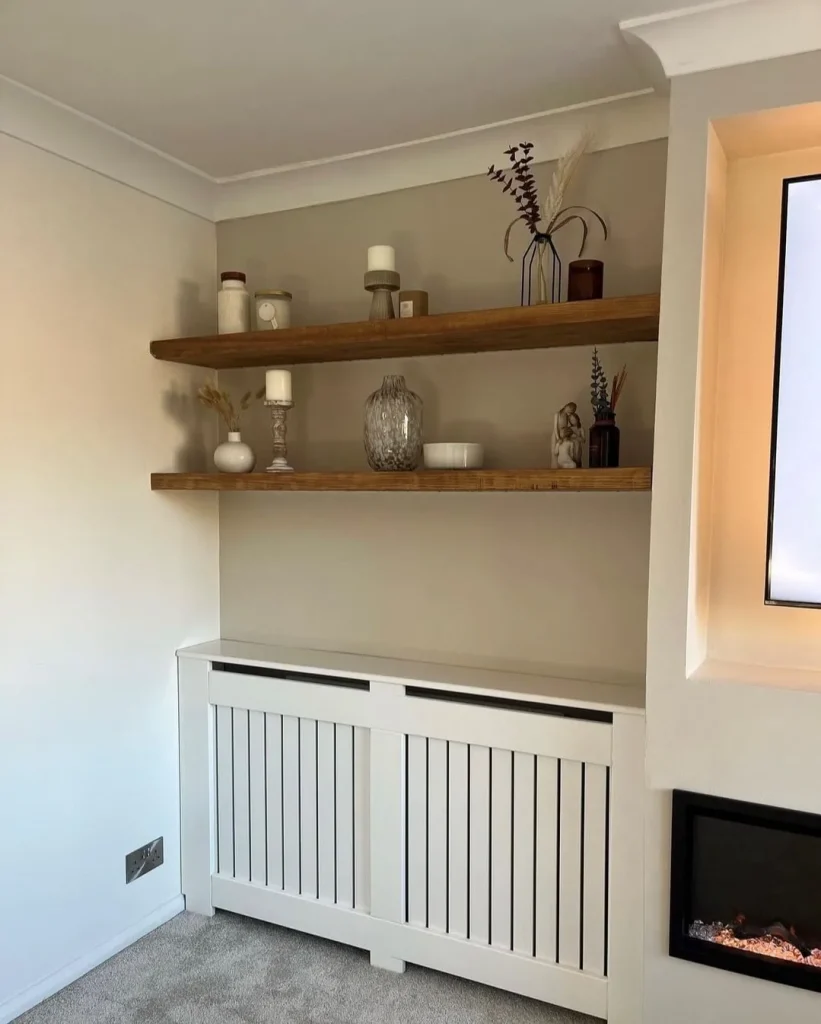
Why Floating Shelves Still Work
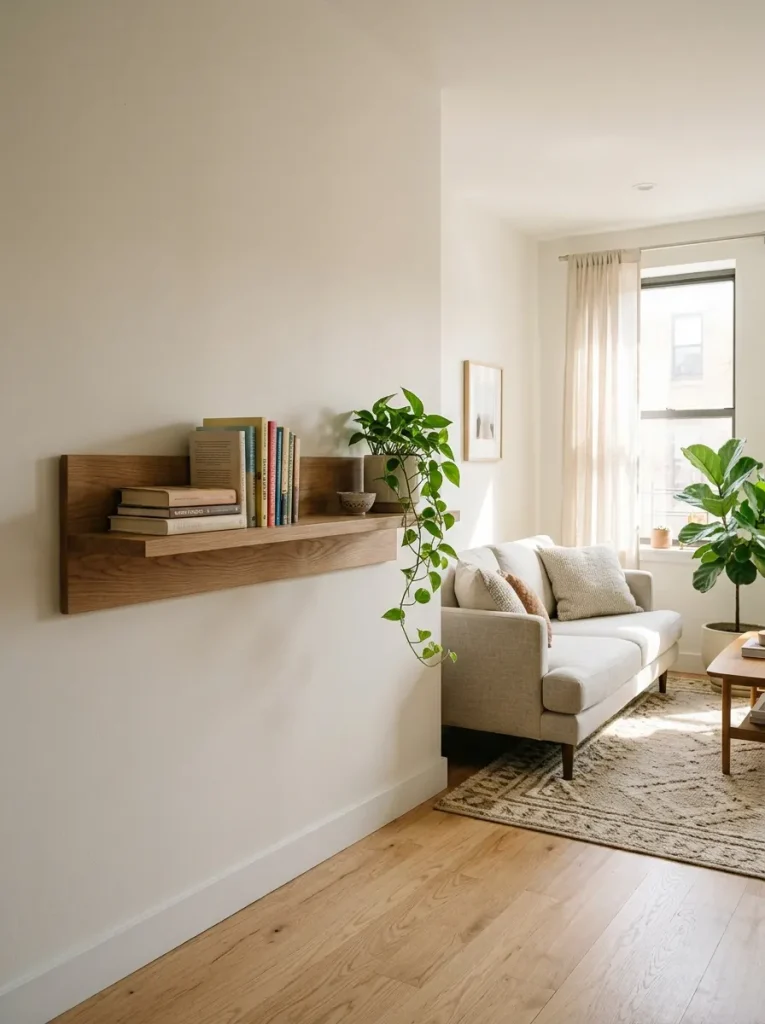
A floating shelf does something a bookcase cannot. It adds storage without taking up floor space.
In a small apartment, this matters a lot. A floor bookcase competes for room. A wall shelf keeps the floor plan open.
This is why floating shelves stay popular. They solve a real space problem, not just a style issue.
The Illusion of “Floating”
Most floating shelves are not actually floating. They are hollow wood boxes. They slide over a hidden steel bracket in the wall.
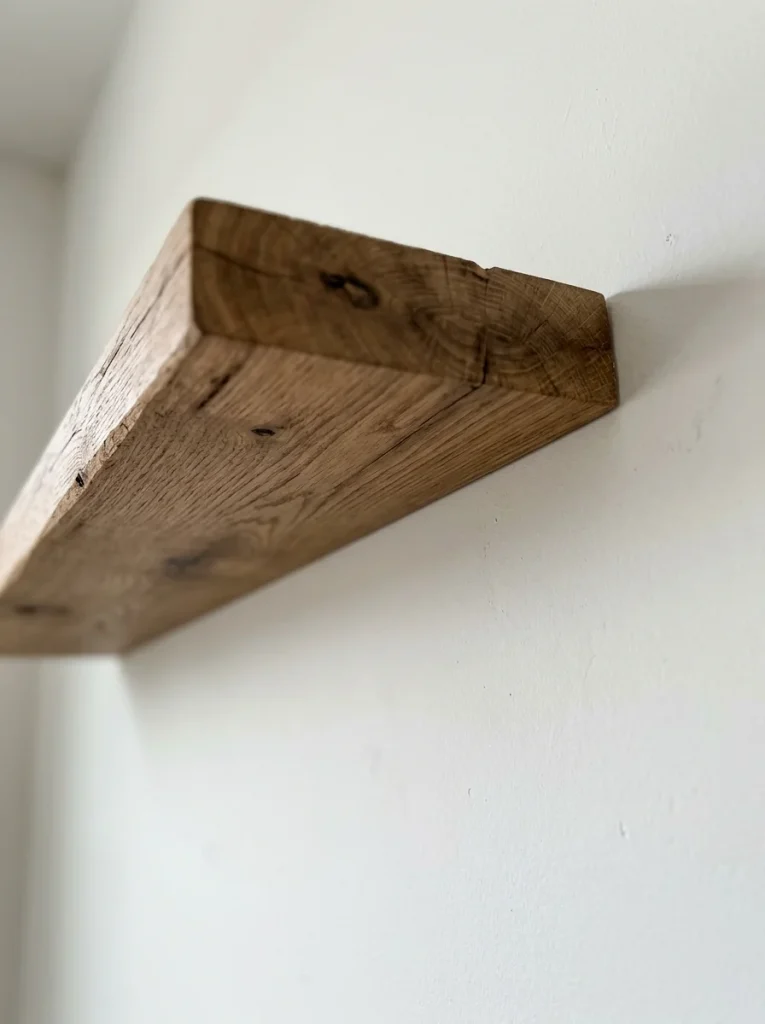
The trick works only if the bracket stays hidden.
The shelf must be deep enough to cover it.
The mounting must be perfectly level. A slight tilt will make the missing support obvious.
Wood vs. Other Materials
Wood is the most common choice for living rooms. It pairs well with almost any furniture.
It warms up a room better than metal or glass. It also hides the metal bracket easily because it is thick.
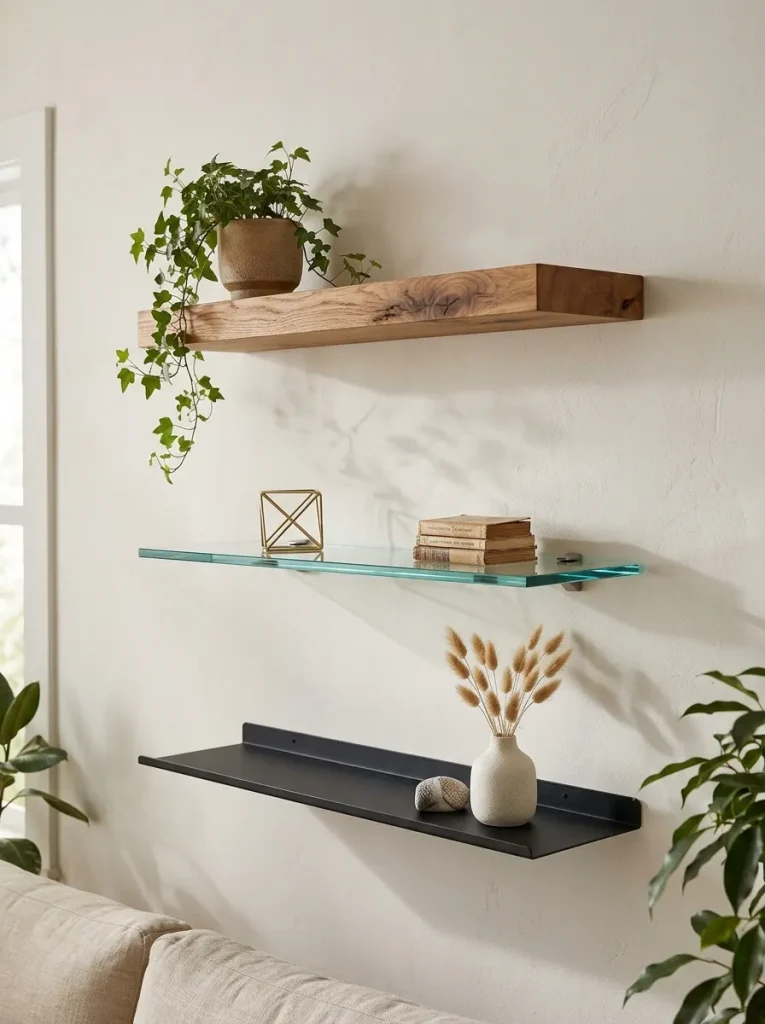
Glass shelves look sleek but show every fingerprint. Metal shelves look industrial.
They work best in rooms that already have that style. For most homes, wood is the easiest choice.
How High to Mount Them
There is no single correct height. But there is a common mistake.
People mount the first shelf too high. This leaves a weird gap of empty wall below it.
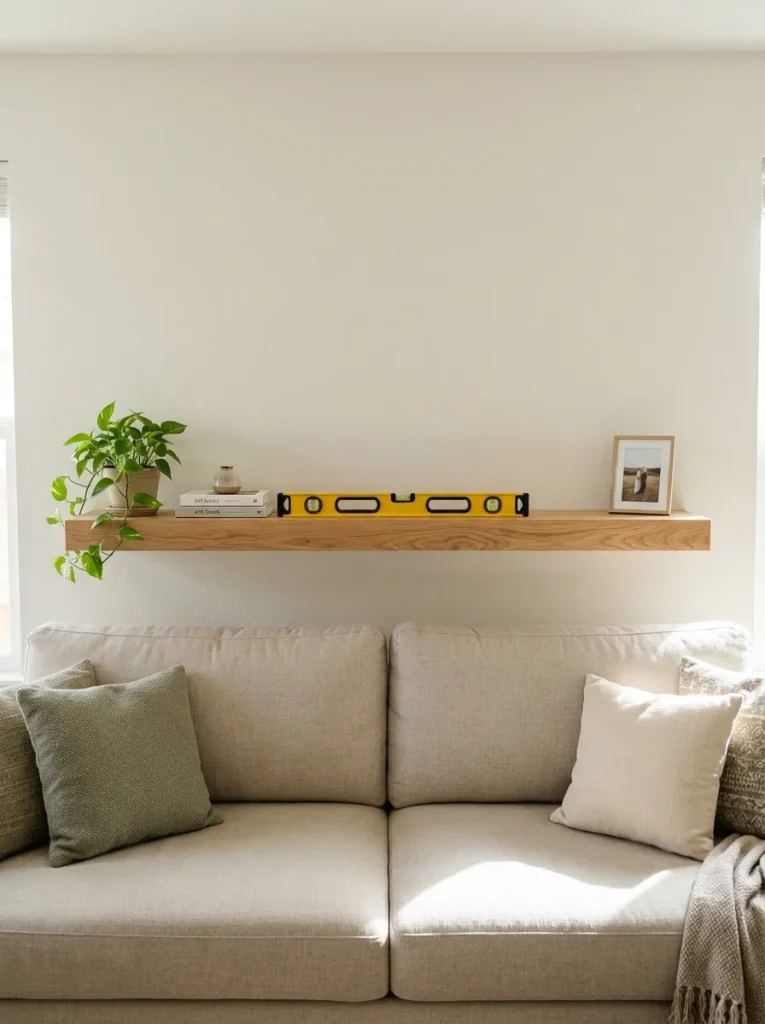
A good starting point is 8 to 12 inches above your furniture. This connects the shelf to the sofa or TV stand below. It stops the shelf from looking like it is floating alone.
Weight Limits Nobody Reads
Most floating shelf brackets hold 15 to 50 pounds. But people ignore this limit all the time.
This happens fast when you start adding books. A single foot of packed books can weigh over 20 pounds.
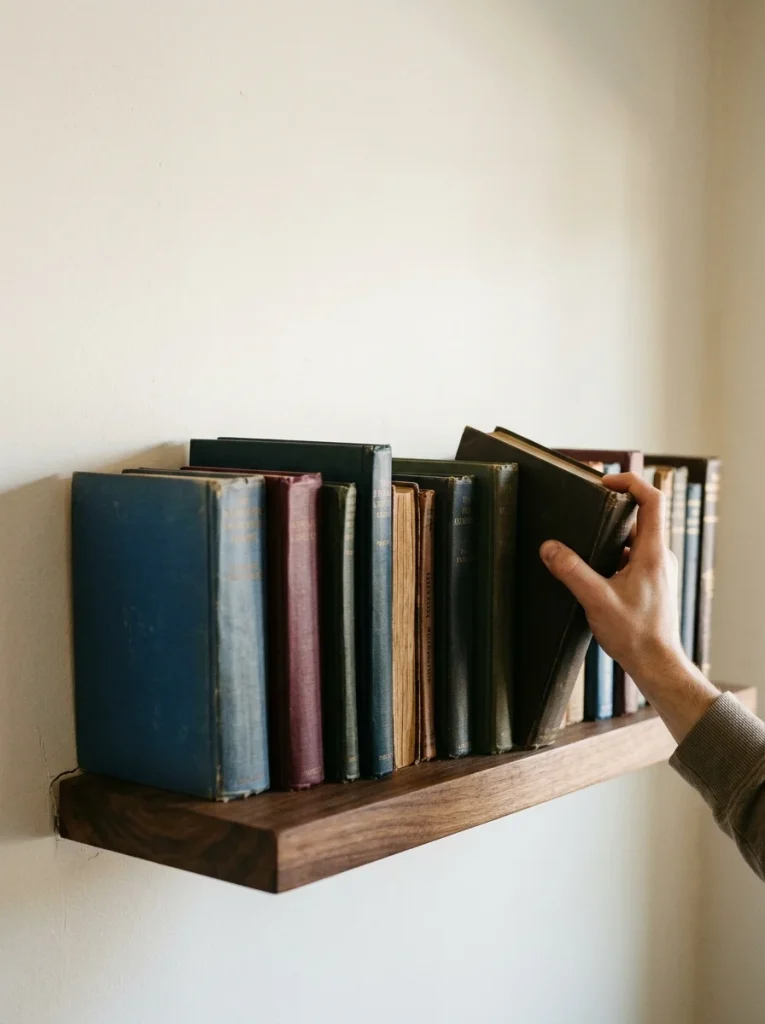
Check the weight limit before you load up the shelves. It is much easier than remounting a shelf after it rips out of the wall.
If you rent, you can still use floating shelves. Look for heavy-duty removable adhesive strips. They hold lighter items well. Use them for small plants or a few books, not heavy stacks.
Staggered Wood Shelves on a Brick Wall
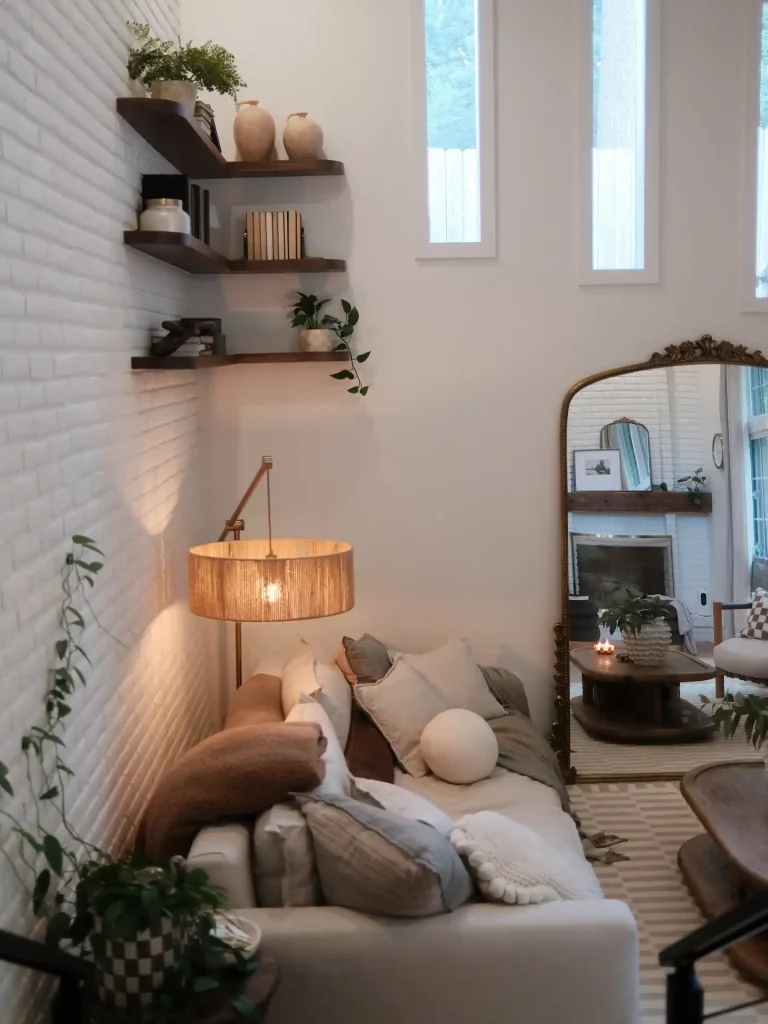
Floating shelves look amazing on a brick wall.
In this image, dark wood shelves stand out against the painted white brick. The shelves are staggered, meaning they are not all the same length.
This staggered look feels very natural. It avoids the ladder effect.
Add some small plants and simple ceramic vases to make the shelves look warm and collected.
Built-In Shelving Around a TV
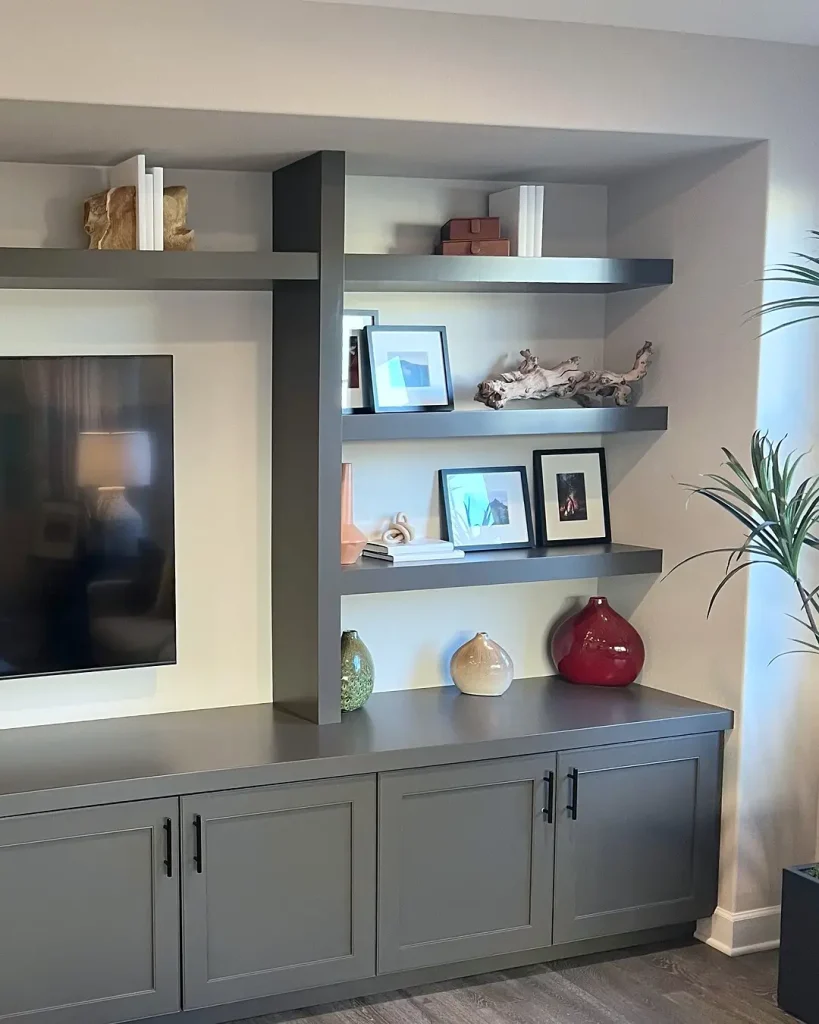
If you have an empty alcove, use it for shelves. This image shows a custom grey built-in unit. The shelves frame the TV perfectly and add lots of storage.
To style shelves like this, mix vertical books with horizontal art.
Notice how the large colorful vases sit at the bottom. Mixing sizes and colors stops a built-in unit from looking boring.
See more build in shelves living room for better view.
Choosing Your Hardware
Visible Brackets vs. Hidden Brackets
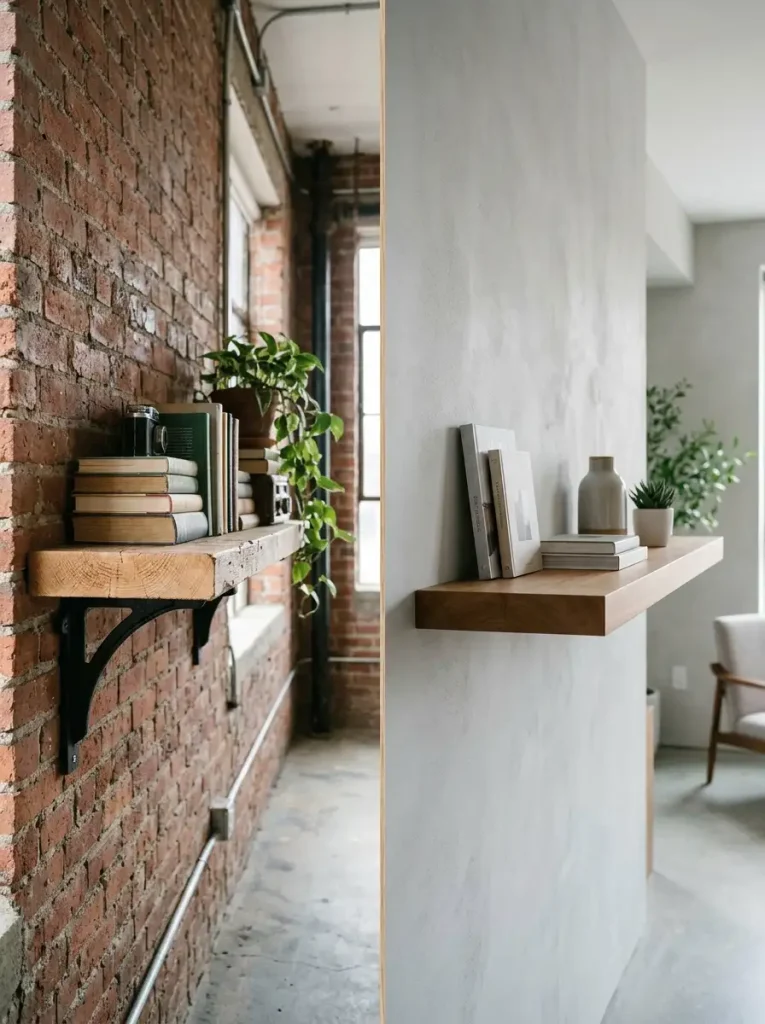
Not every shelf needs to hide its support. Exposed metal L-brackets look great in industrial or farmhouse rooms.
They also hold more weight than hidden rods. The bracket is doing visible work.
The choice is about the look you want, not just which is better.
Renter-Friendly Shelving
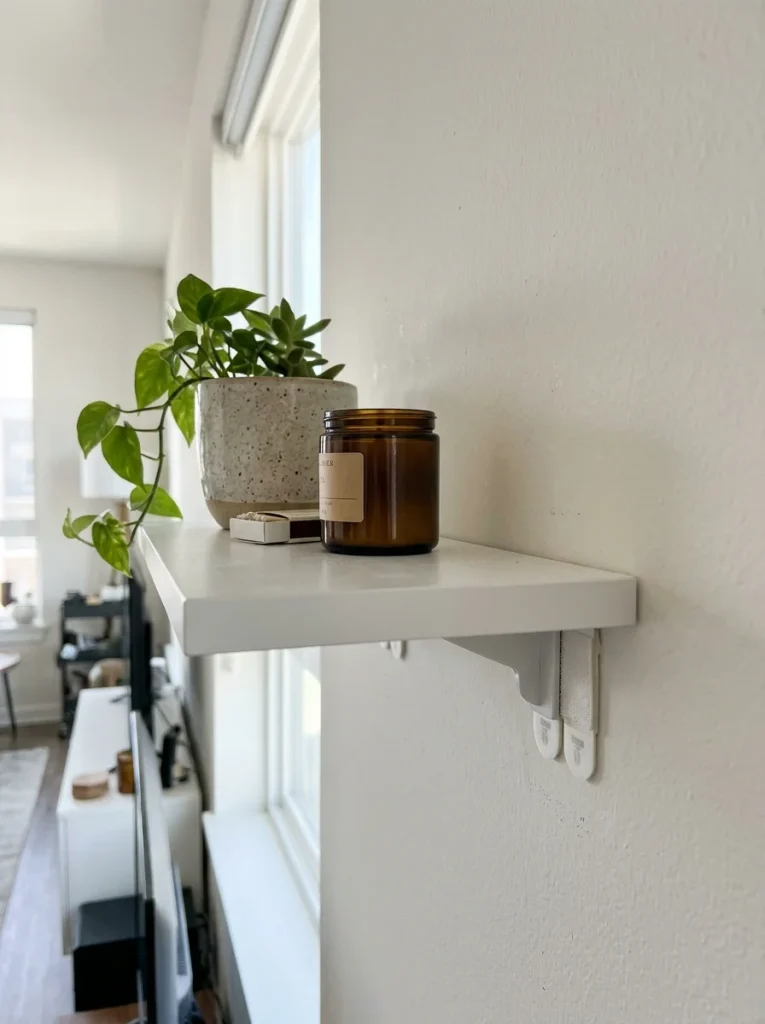
Renters often hate drilling into walls. Luckily, there are new wall shelving units for renters.
They use strong adhesive strips or small anchors that patch easily.
They will not hold as much weight as real studs. But they are great for light styling. Use them for a candle, a small plant, or a few books.
What Holds Them Up
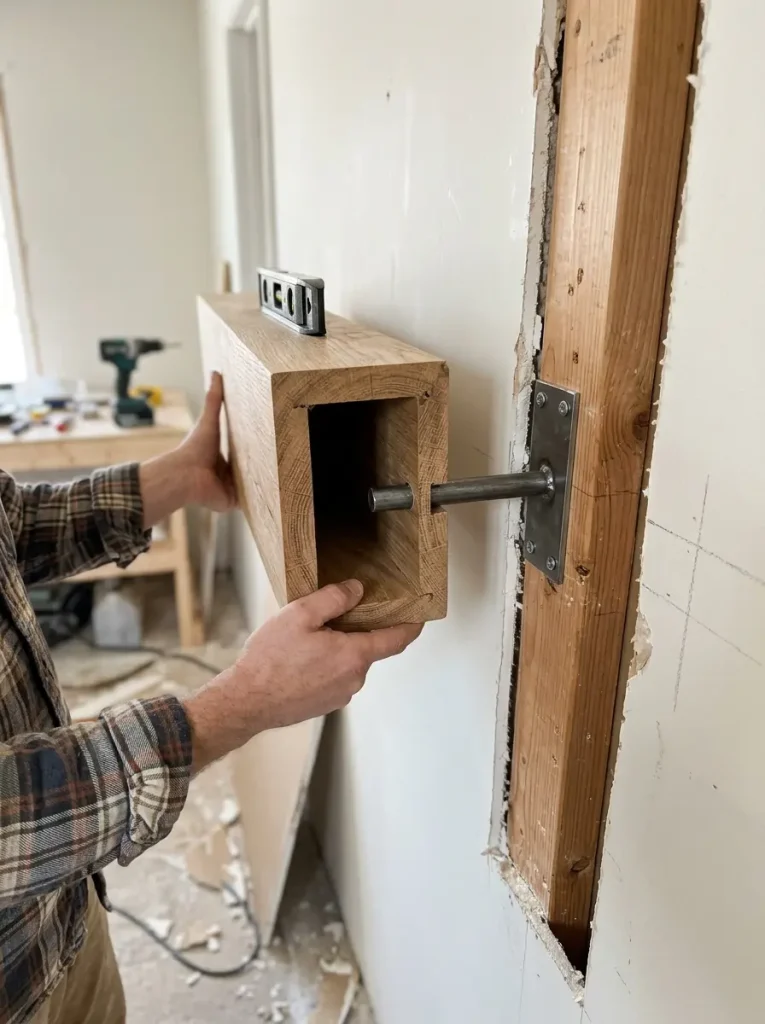
Behind every good floating shelf is a strong hardware system.
Most use a steel rod anchored into the wall studs. Some use hidden L-brackets. Others use a French cleat system.
Cleat systems hold more weight and are easier to level. Ask about the hardware before you buy.
| Hardware Type | Best For | Weight Capacity |
|---|---|---|
| Steel Rod | Light to medium decor | 15 to 50 lbs |
| Hidden L-Bracket | Standard shelving | 30 to 75 lbs |
| French Cleat | Heavy books or modular units | 75+ lbs |
Designing a Shelf Wall
Building a Full Shelf Wall
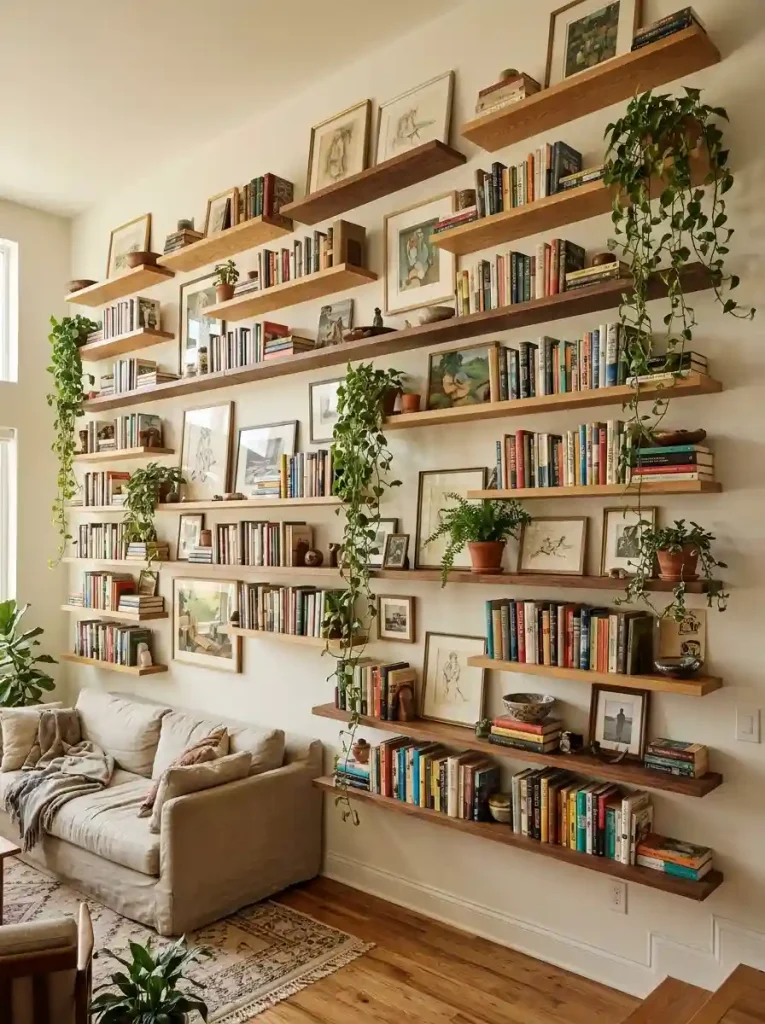
One shelf is a small touch. A full shelf wall is a bold design choice.
Cover one wall with shelves of different lengths and heights.
This turns a blank wall into the room’s main focal point.
It can even replace the need for a gallery wall. The shelves become the display.
Spacing Shelves Correctly
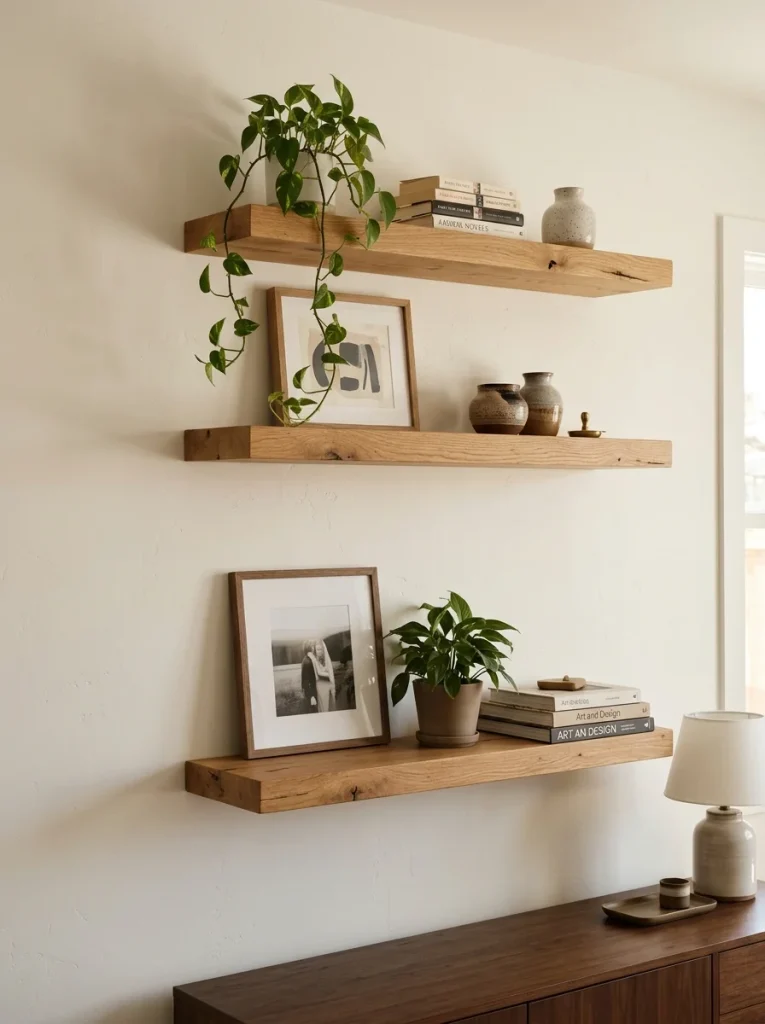
Do not mount shelves at equal intervals directly above each other.
This makes the wall look like a ladder. It looks too rigid.
Vary the gaps. Put two shelves close together. Then leave a larger gap before the next pair. This breaks up the pattern and lets the eye rest.
The Power of Asymmetry
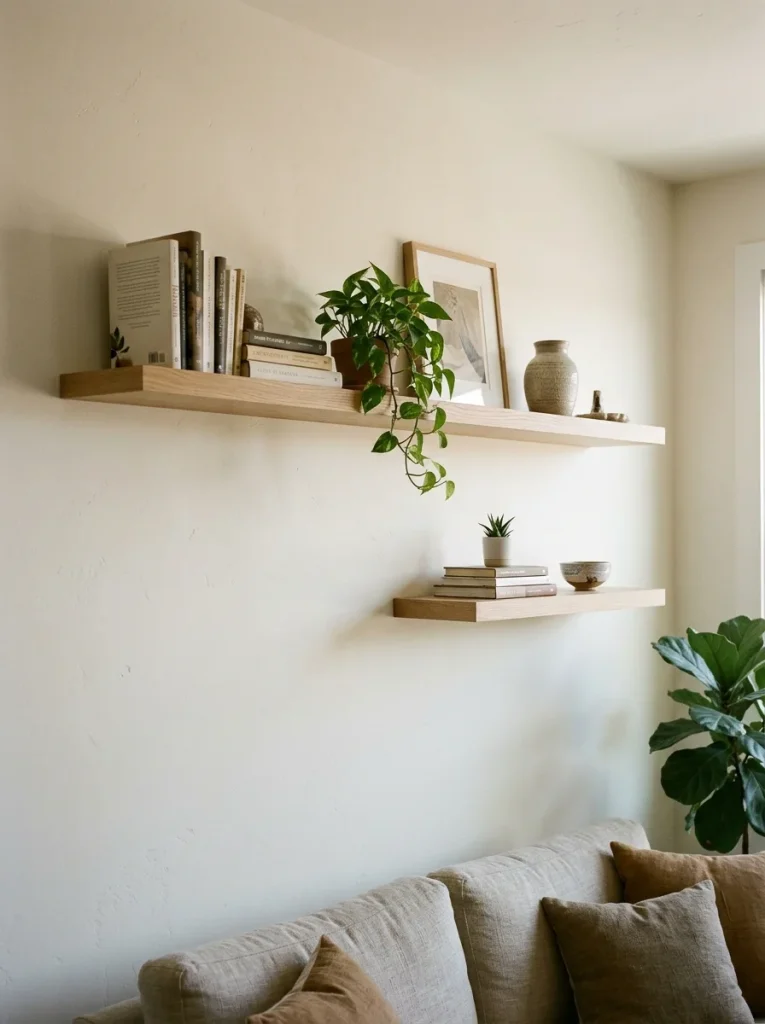
Shelves in identical lengths, perfectly centered, can look cold. They look like an office, not a home.
Stagger the lengths instead. Pair a long shelf with a short one at a different height. This feels more intentional and less like a store display.
Styling Your Shelves
Styling Without a Showroom Look
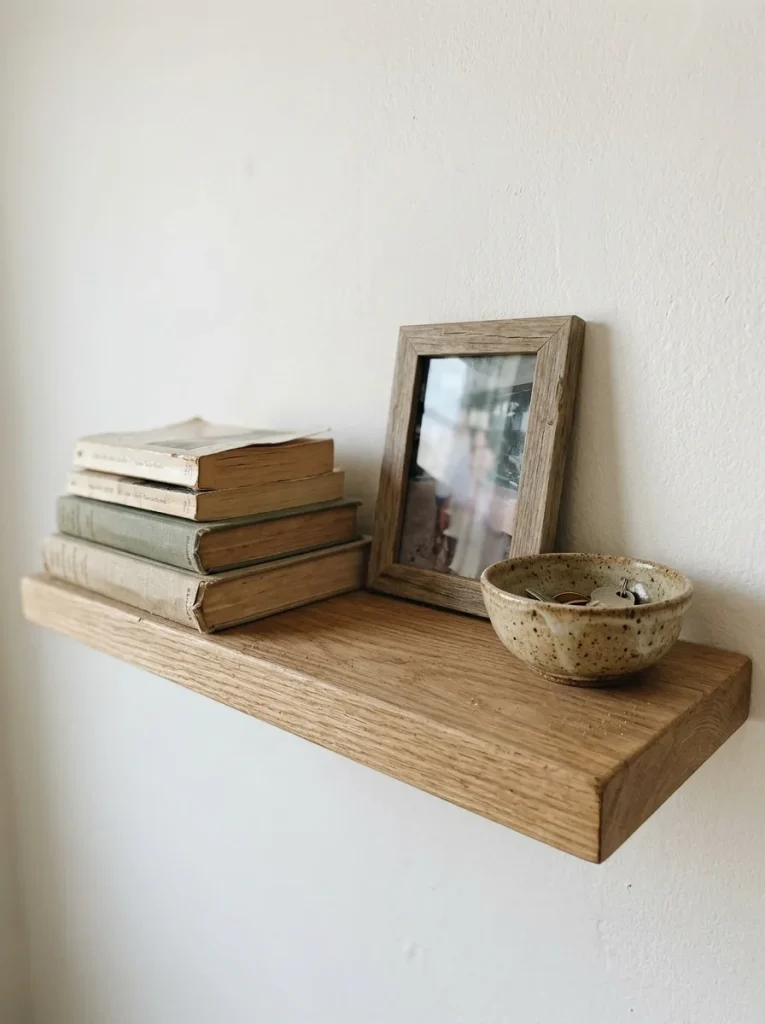
The fastest way to make shelves look fake is over-styling. Do not space three objects perfectly with nothing touching.
Real shelves have some visual noise. Stack books flat and put a small object on top.
Lean a picture frame at a slight angle. A little imperfection looks lived-in.
The Rule of Odd Numbers
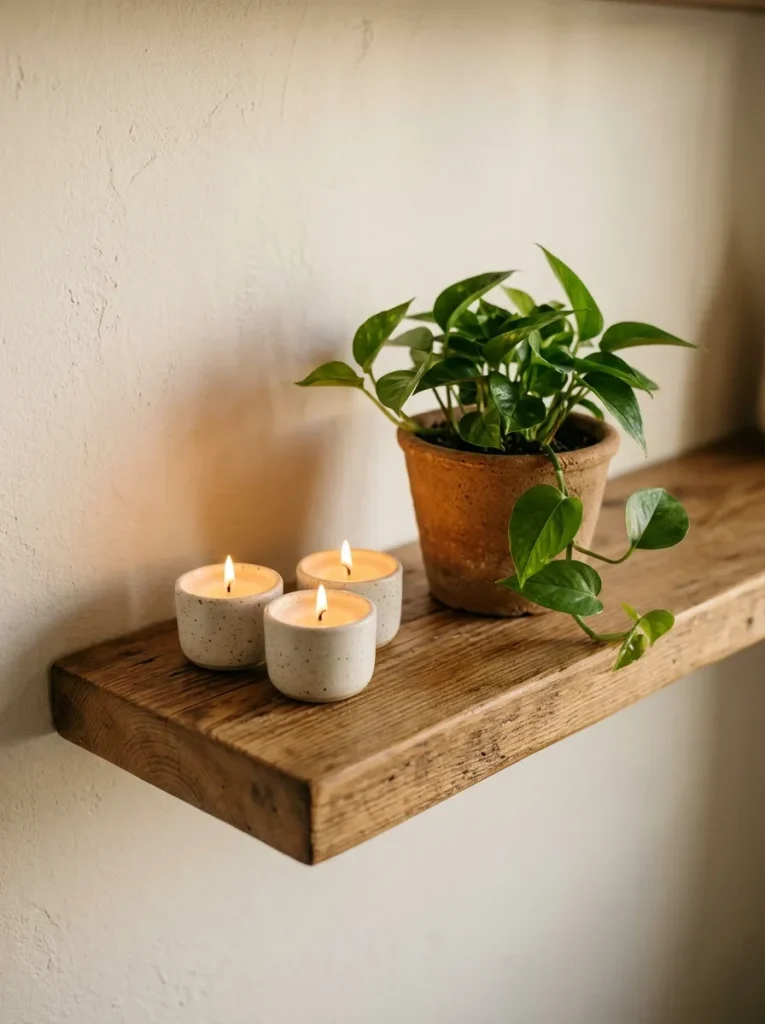
Grouping objects in odd numbers is a common styling trick.
Think three candles or five books. Odd numbers create more visual interest. The eye can split even numbers in half too easily.
This is a helpful rule, but not a law. A single oversized object on its own shelf can look just as good. Use it when you want that level to stand out.
Mixing Books and Empty Space
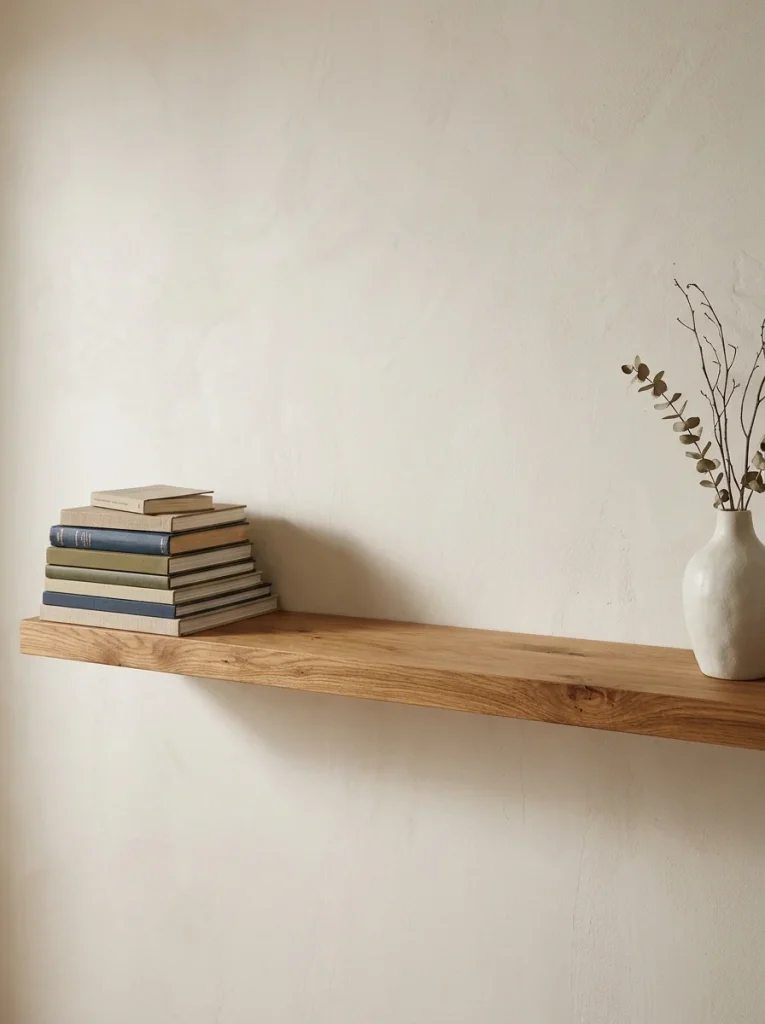
A shelf packed edge-to-edge with books looks like a storage unit. It does not look like a display.
Mix three things: a group of books, one or two nice objects, and empty space. That empty space is important. It stops the shelf from feeling crowded.
Leave some empty space on every shelf. Do not fill every inch with objects. The empty space is what makes the objects look special and intentional. Less is usually more.
Specific Placement Tips
Floating Shelves Around a TV
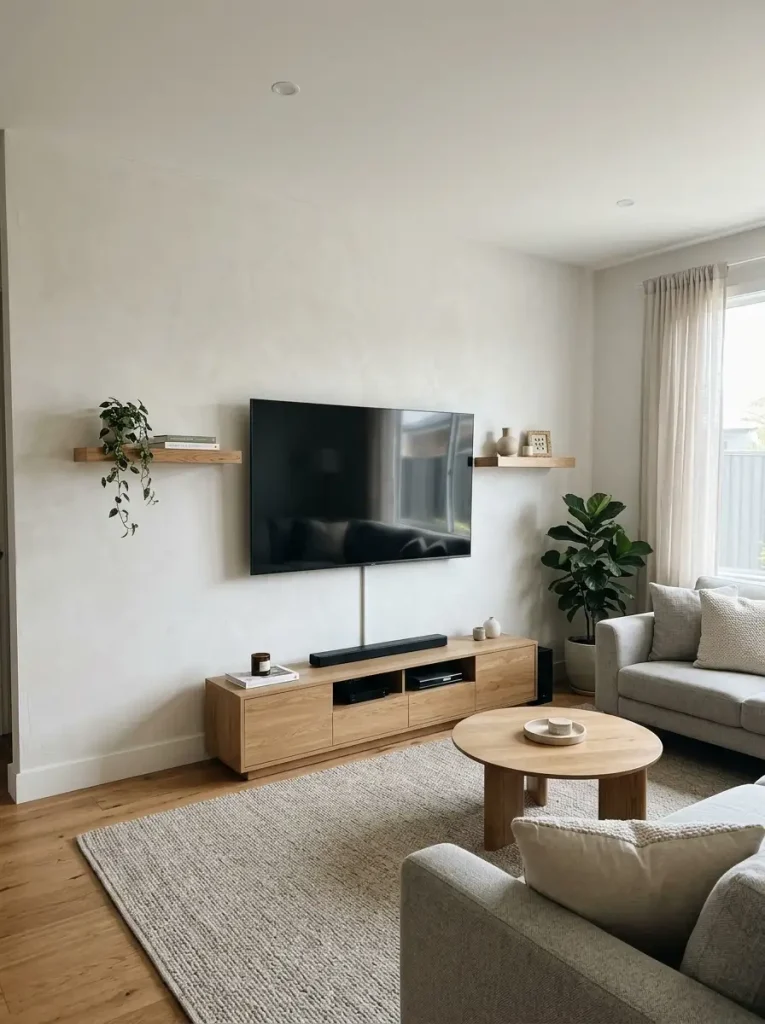
Putting shelves on both sides of a TV is a very common layout. It adds storage without needing a big media console.
Keep the shelves shorter than the width of the TV.
Hanging them at slightly different heights on each side looks better than mirroring them. It stops the wall from looking like a giant TV frame.
Corner Shelves
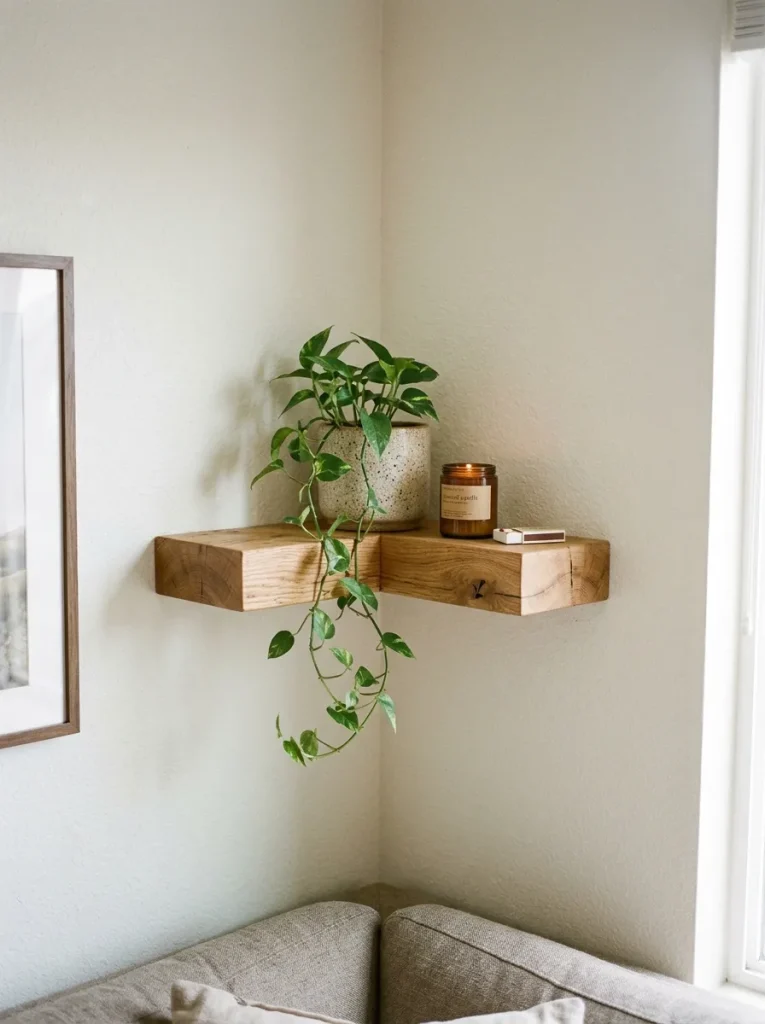
Corners are often wasted space in a living room.
Corner shelves fit into the angle where two walls meet. They turn dead space into a display area. They work best for small objects and plants. These shelves are usually shallower than straight shelves.
Shelves in an Alcove
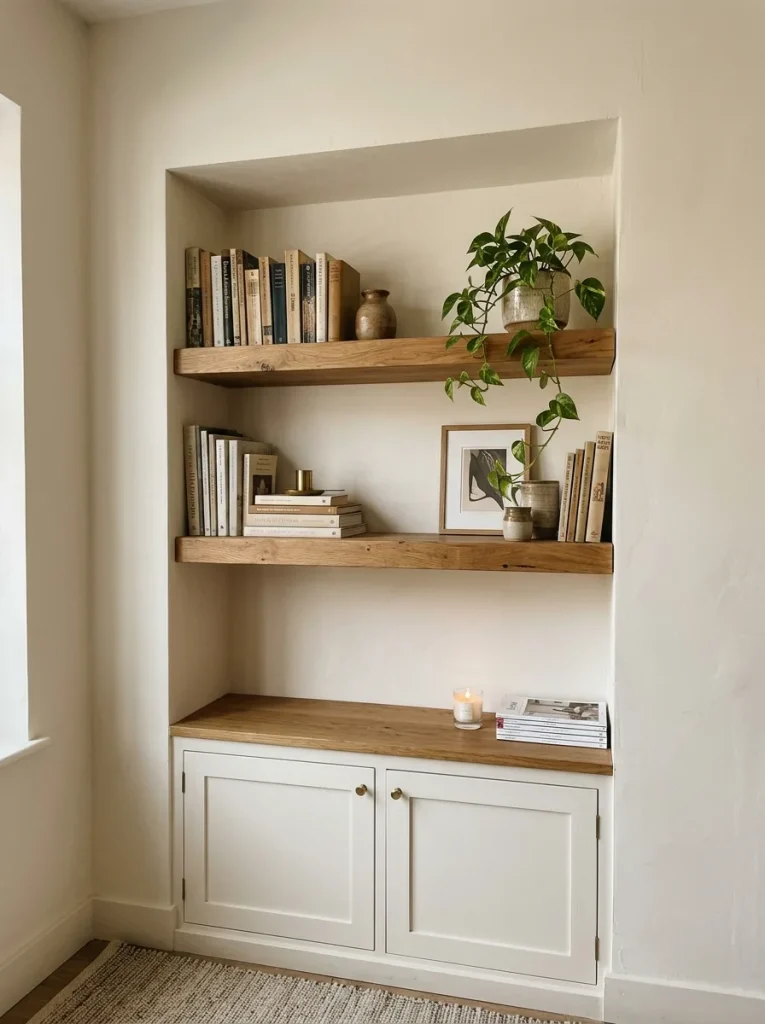
Putting a shelf inside an alcove looks much better than on a flat wall.
An alcove is a recessed nook in the wall.
The walls around the alcove frame the shelves. It makes the shelf look built-in and permanent.
Pairing Shelves with Art and Light
Pairing Shelves With Framed Art
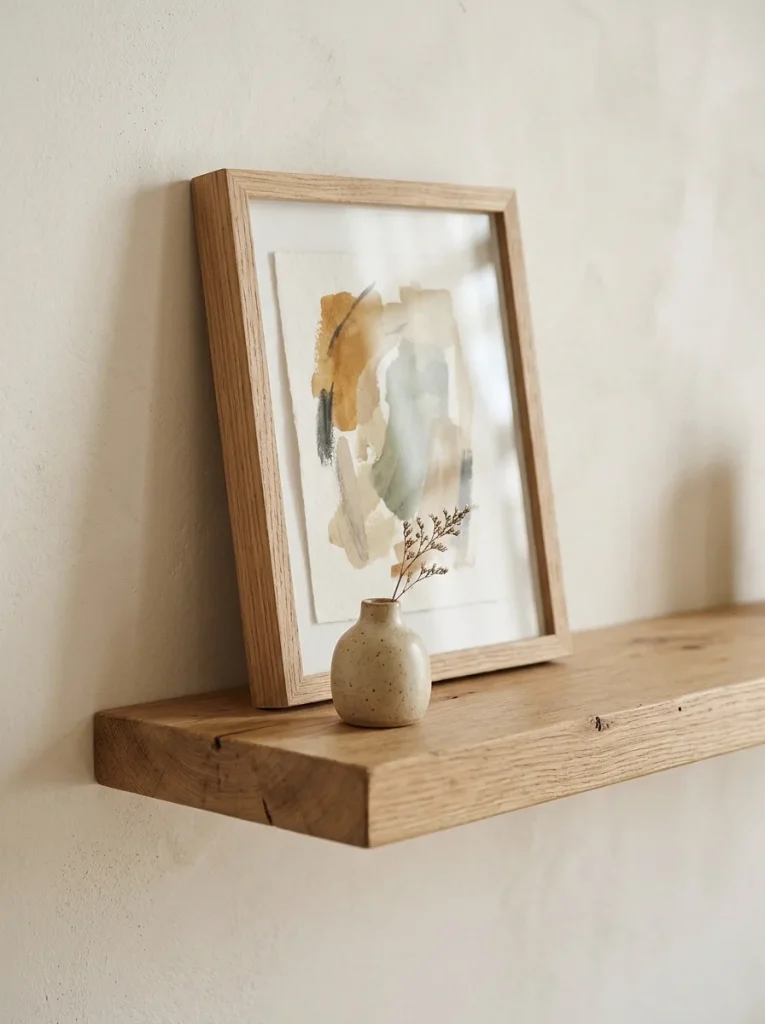
Lean a framed picture against the wall on a floating shelf.
Do not hang it directly on the wall.
This is a very popular styling move. It lets you swap the art easily. The slight forward lean also catches the light nicely.
Lighting a Shelf Wall
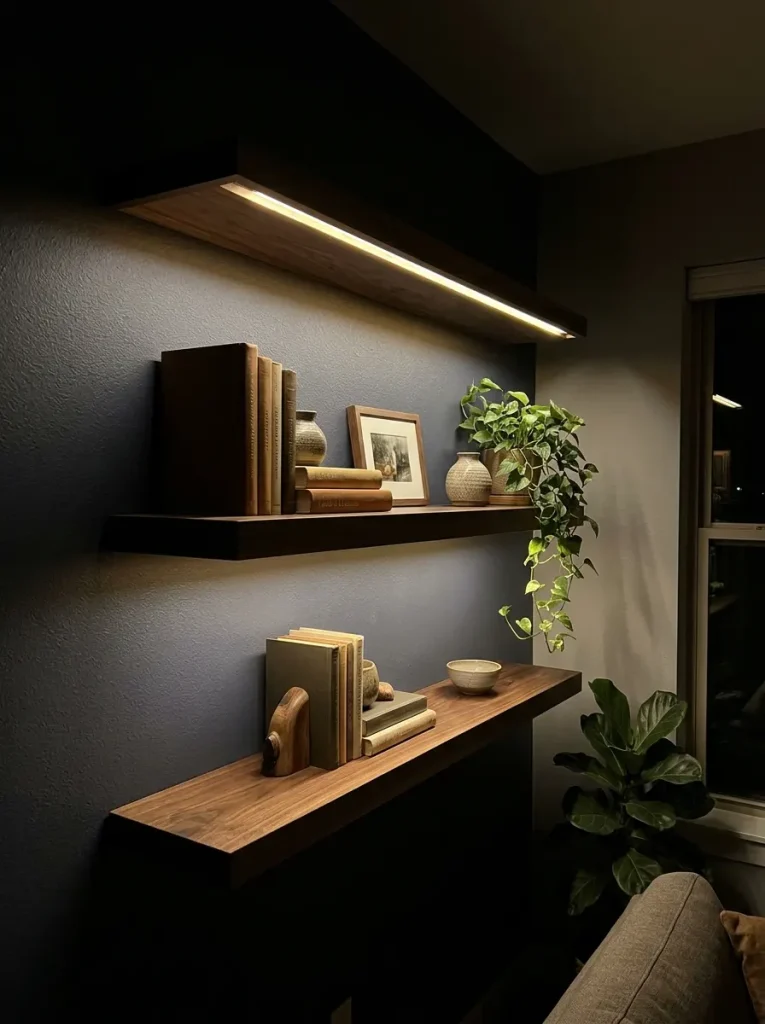
Most rooms light shelves with normal room lighting.
This can make the shelves look flat. Try battery-powered puck lights.
Or use a slim LED strip under the shelf. This casts a soft glow downward. It makes the objects look much better.
Practical Considerations
Plants That Survive on Shelves
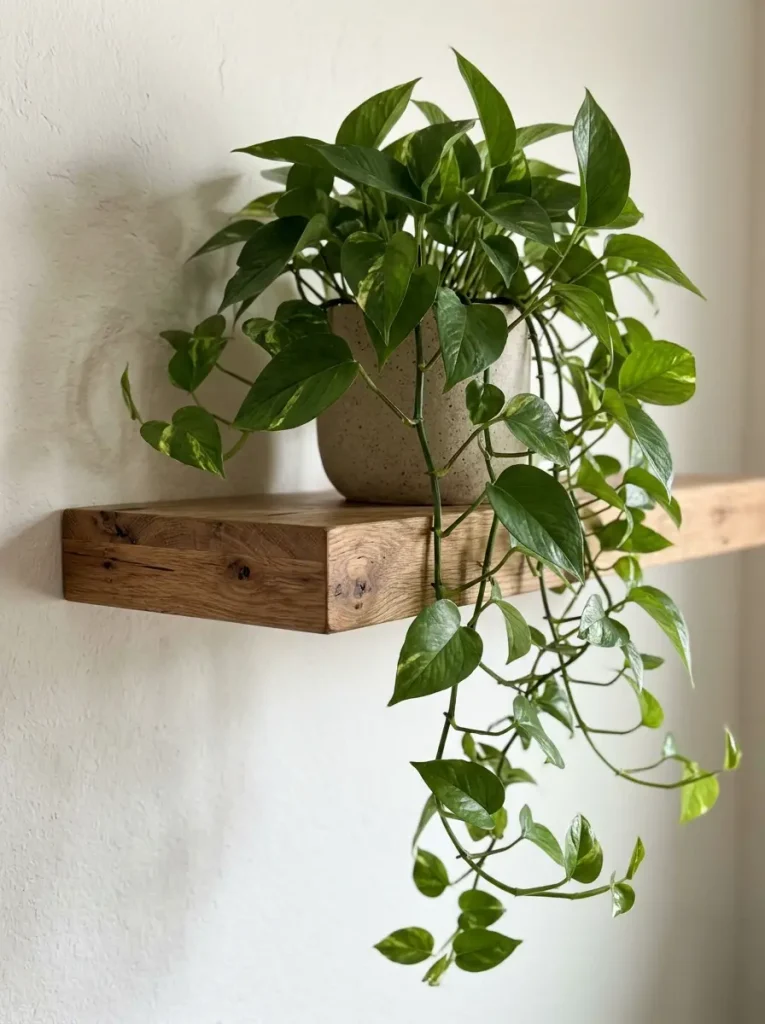
Living room walls usually do not get much direct sunlight.
Choose plants that like indirect light. Pothos, philodendron, and ZZ plants do well here.
A trailing plant draped over the edge adds movement. It looks much better than a stiff, upright plant.
Why Depth Matters
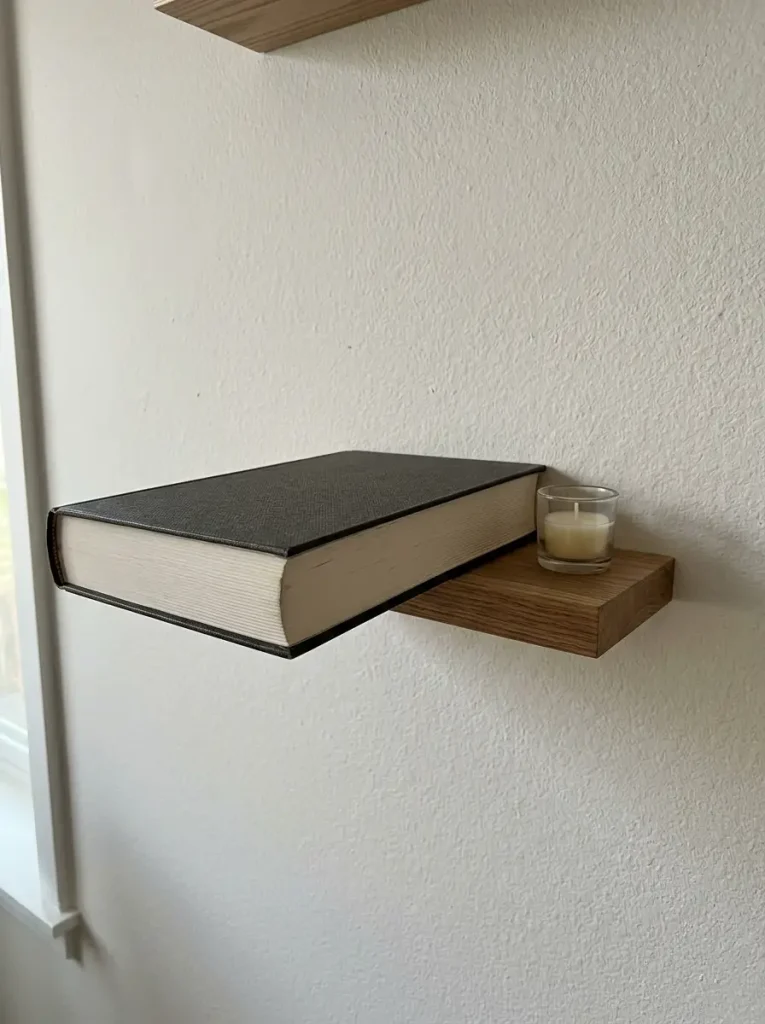
A shelf that is too shallow is useless. Most books and decorative objects need 8 to 10 inches of depth. They need to sit stably without hanging off the edge.
Measure your items before you buy shelves. Do not assume a standard depth will work.
Shelves Over a Sofa
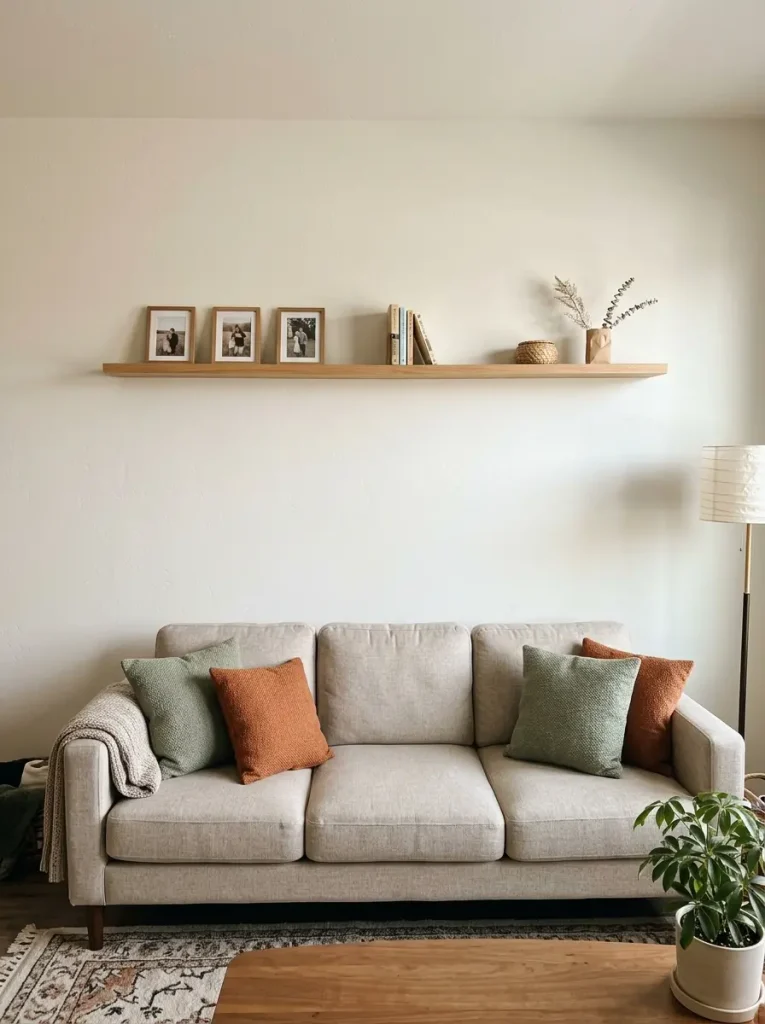
Mounting shelves above a sofa is popular, but be careful.
Anything on that shelf is directly above people’s heads. Use light objects. Books, small frames, or lightweight decor are fine. Avoid heavy or breakable items.
Shelf Layout Options
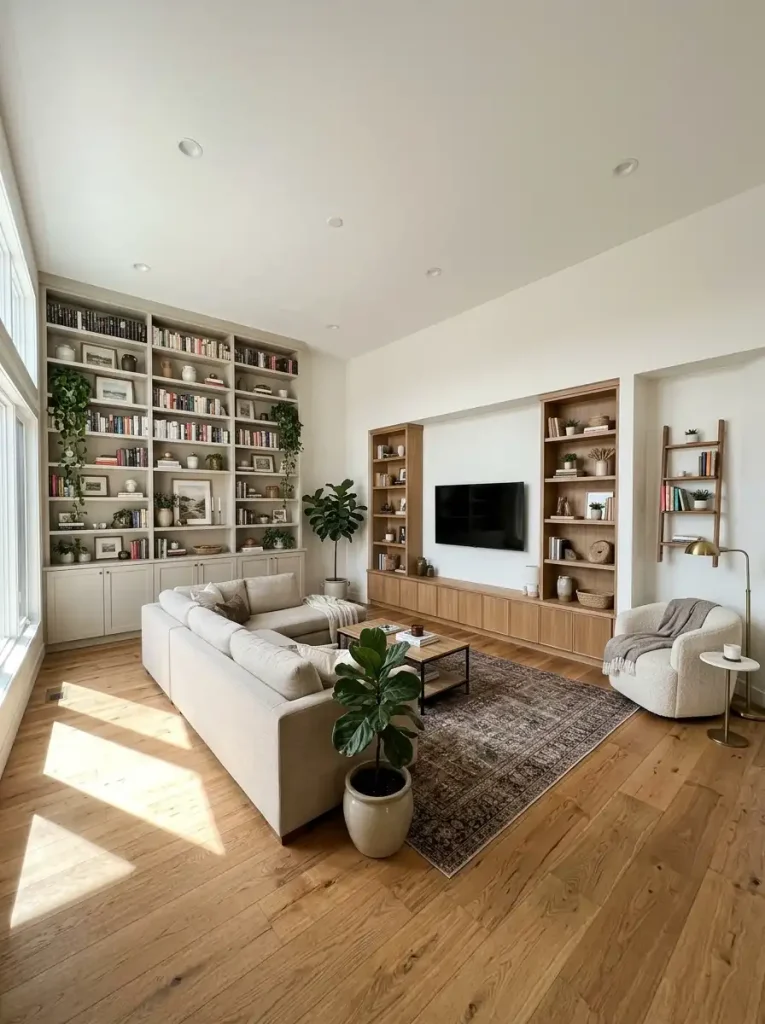
| Layout Style | Best For | Key Tip |
|---|---|---|
| Full Wall | Large empty walls, art replacement | Vary the lengths and gaps |
| Around TV | Media rooms, small spaces | Keep shelves shorter than the TV |
| Corner | Small plants, tiny objects | Use shallow shelves |
| Alcove | Built-in look, fireplaces | Frame the shelf with the nook |
When Floating Shelves Aren’t Right
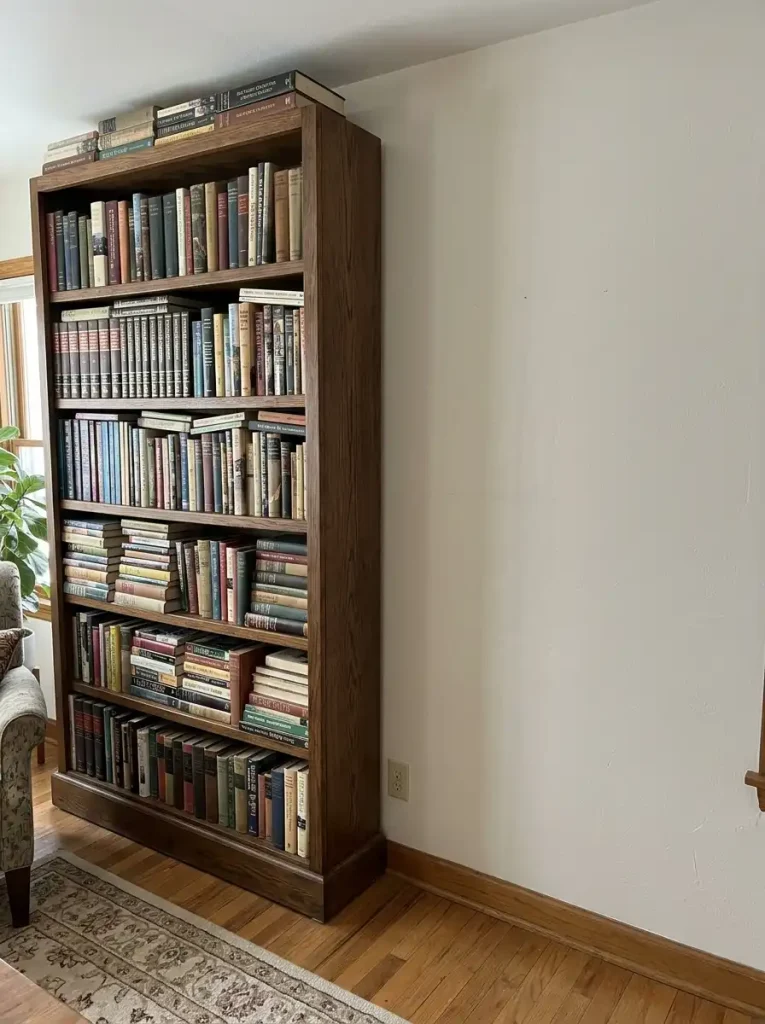
Floating shelves are not right for every wall. They are great, but not perfect. Here are times to choose a floor bookcase instead:
- Heavy Book Collections: Floating shelves can sag under the weight of too many heavy books. Use a floor bookcase instead.
- Fragile Walls: Plaster walls or lath-and-plaster walls may not hold heavy anchors. A floor bookcase is safer.
- Small Children: Kids might pull on things. Floor bookcases are safer if you have toddlers who climb.
If you have a massive book collection, use a real bookcase. If your walls are fragile, do not risk it. If you have small kids who pull on things, a heavy floor unit is safer.
Frequently Asked Questions
What is the best material for living room floating shelves?
Wood is the best choice for most living rooms. It warms up the space and pairs well with any furniture. It also hides the metal brackets easily because the wood is thick.
How much weight can a floating shelf hold?
Most hold between 15 and 50 pounds. It depends on the hardware and if it is screwed into wall studs. Always check the package instructions. Do not overload them with heavy books.
Can I install floating shelves in an apartment?
Yes. If you cannot drill into the wall, look for renter-friendly options. Some shelves use heavy-duty adhesive strips. They are great for light items like small plants or candles.
Conclusion
Floating shelves are a great way to add style and storage. They keep your floor space open and make a blank wall look finished.
Take your time planning where to put them. Check your weight limits and measure your items first. When you style them, remember to leave some empty space. A little imperfection makes your shelves look like a real, loved home.