Kitchen corners are often wasted space. But with the right cabinet, a corner can become the most useful storage spot in the room.
This guide covers every major type of corner cabinet. We will help you plan a kitchen that wastes nothing.
Why the Corner Cabinet Matters
Every kitchen has at least one corner where cabinets meet. This spot is famously hard to use. A good corner cabinet turns this awkward 90-degree gap into real storage. It can add 15% to 25% more space to a small kitchen.
Without a smart design, that deep corner becomes a dark hole. You end up losing pots and pans in the back. A proper corner unit makes sure every inch of your kitchen works hard for you.
What Is a Kitchen Corner Cabinet?
A corner cabinet is built specifically for L-shaped or U-shaped kitchen corners. Normal cabinets are straight. Corner units have angled fronts, diagonal doors, or spinning shelves.
These designs make the deep corner space easy to reach. They are engineered to solve the puzzle of the 90-degree turn, turning an awkward gap into a highly functional storage zone.
See more kitchen corner cabinets ideas for make your kitchen clutter free.
Understanding Dead Zones
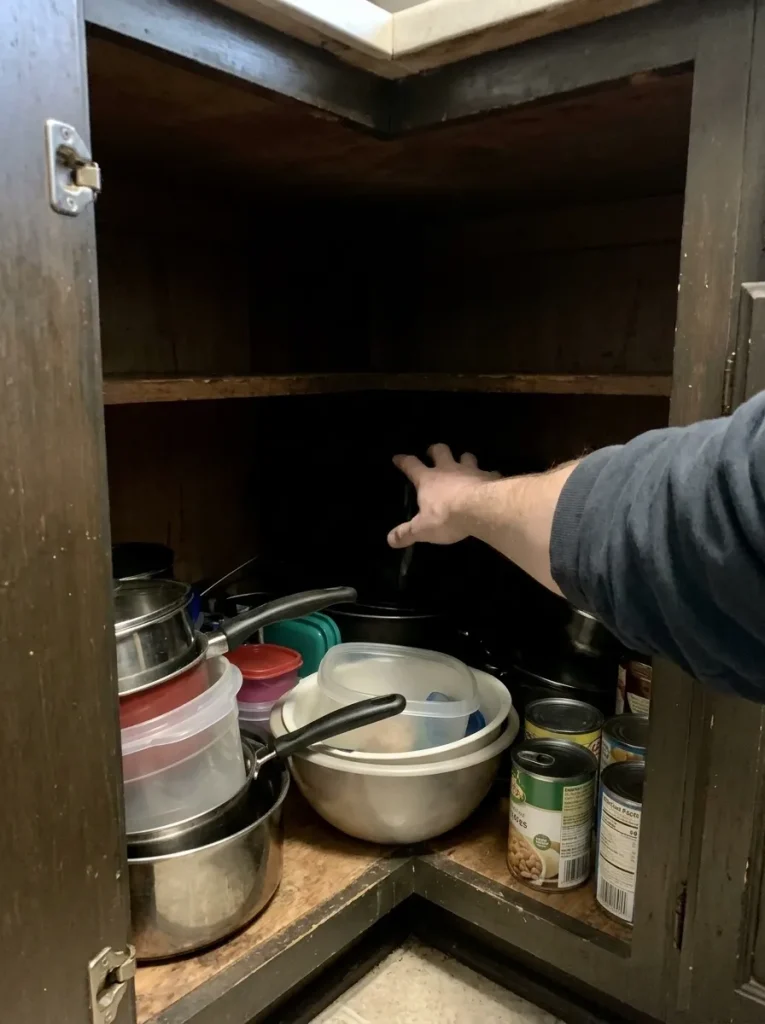
A dead zone is the deep space inside a corner cabinet. It is there, but you cannot reach it without crawling on the floor. This is the biggest design problem in any kitchen.
Every corner storage solution tries to fix this dead zone. They use rotation, pull-out parts, or clever door shapes. The goal is to bring the back of the cabinet right to your fingertips.
Types of Cabinets for Corners
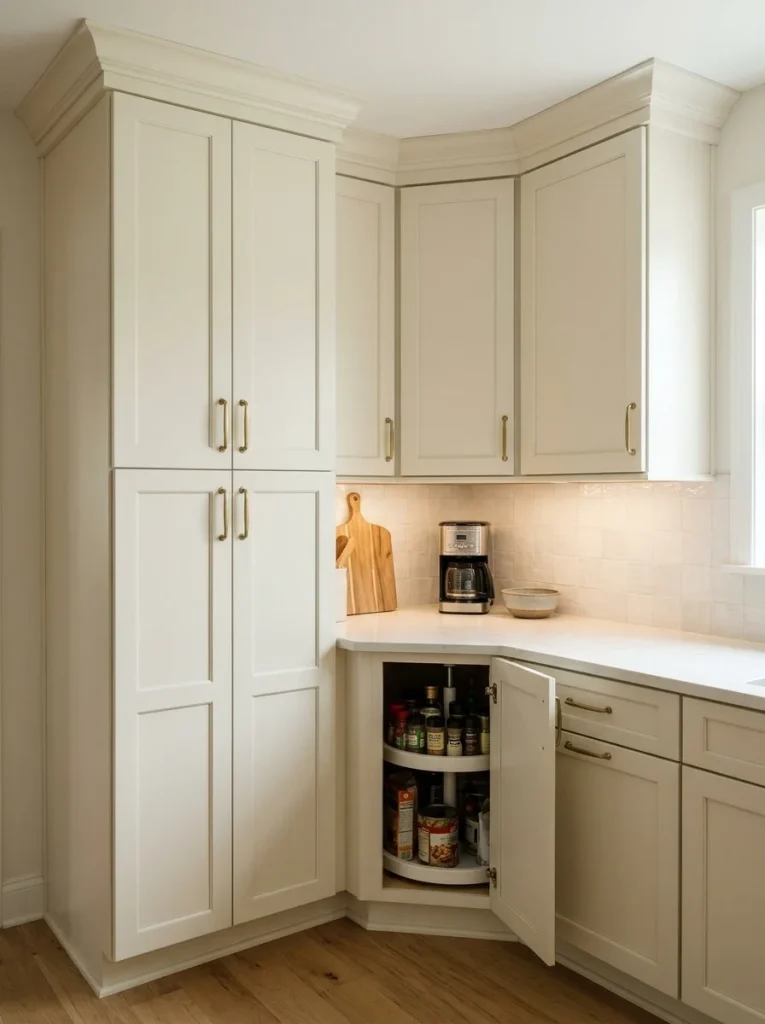
Cabinets for corners fall into four main groups. Your layout and budget will decide which type is best for your home.
- Base cabinets: Floor-level units for pots and pans.
- Wall cabinets: Upper units above the counter.
- Tall cabinets: Full-height pantry-style units.
- Specialty units: Corner islands or bars.
Corner Base Cabinet
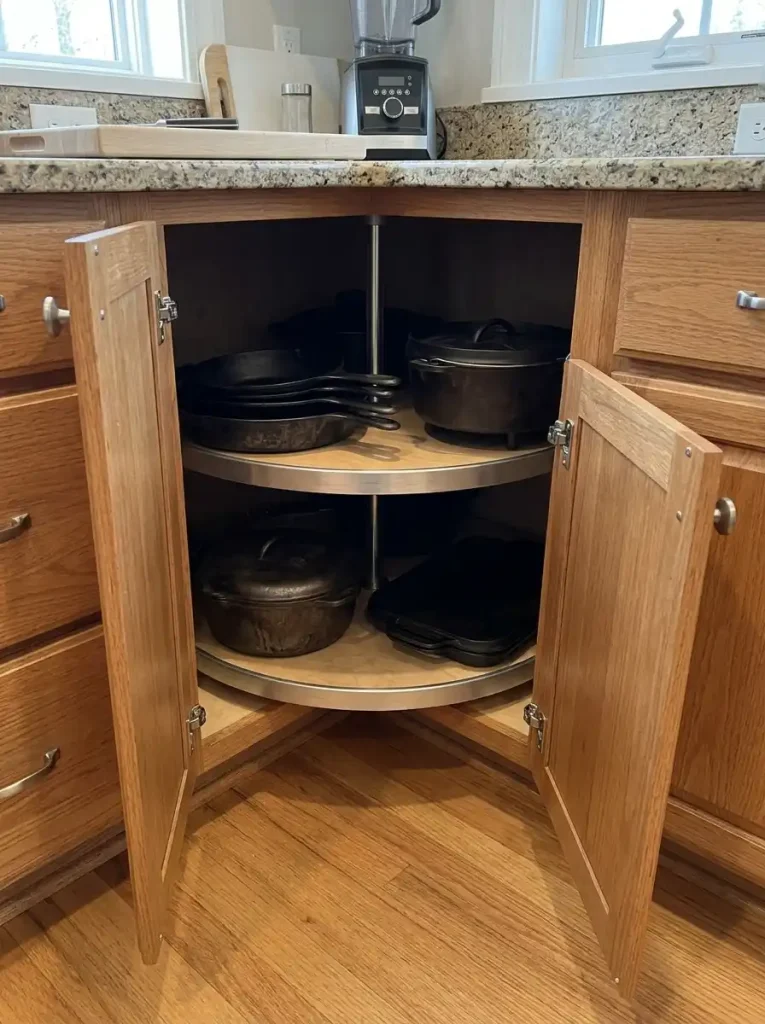
The base cabinet sits at countertop level. It is usually the largest storage space in the kitchen. It often has a lazy susan, pull-out trays, or a magic corner.
These parts help you reach the deep items easily. Because it holds the heaviest items, like cast iron pots, the hardware inside needs to be very strong and sturdy.
Blind Corner Cabinet Explained
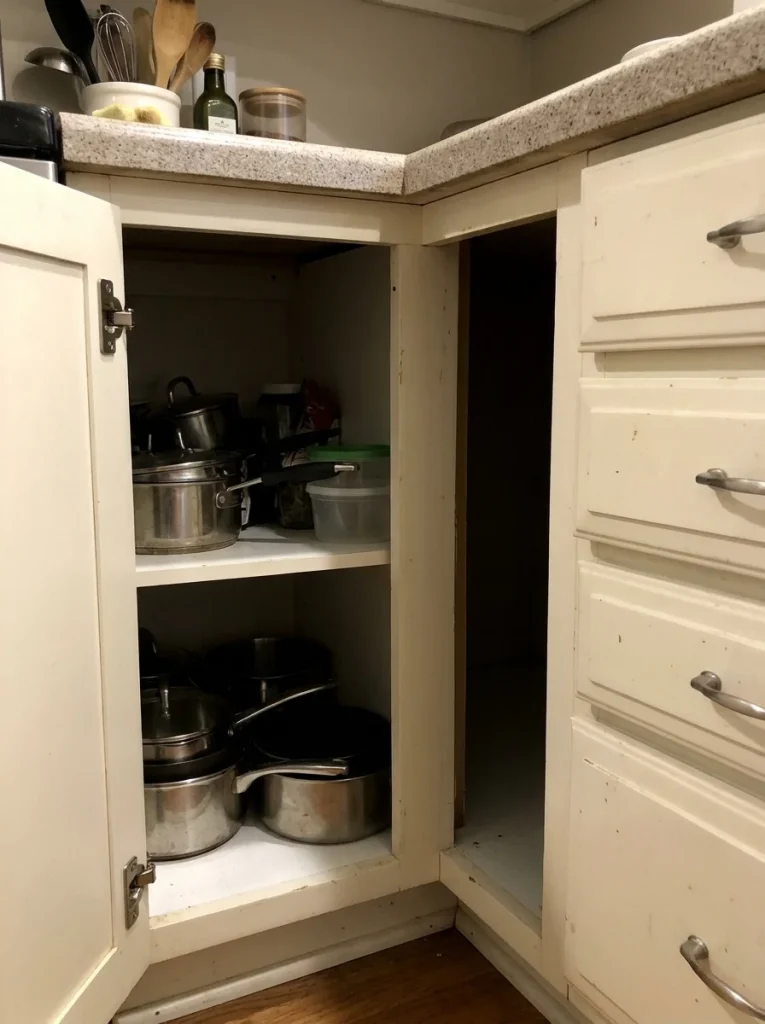
A blind corner cabinet is hidden behind another cabinet.
Part of the box is blocked by the door of the adjoining cabinet. It is called blind because you cannot see that space when the door is shut.
Without the right hardware, this space is totally wasted. You might have a large cabinet box, but only be able to use the first few inches of it.
Solving the Blind Corner
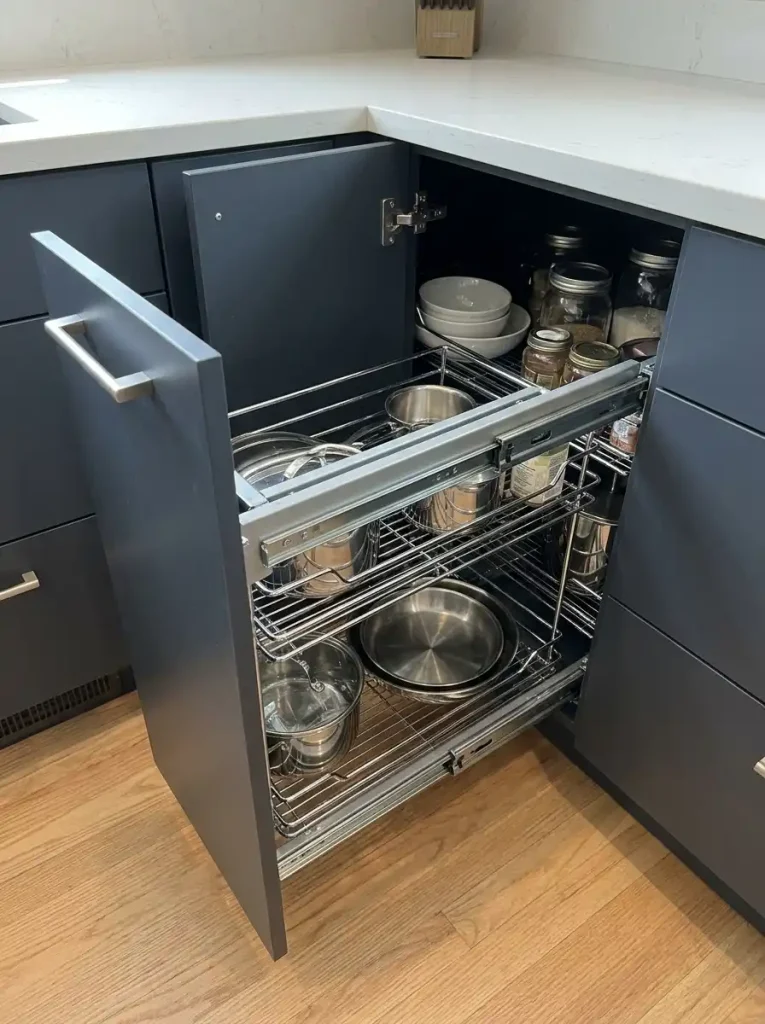
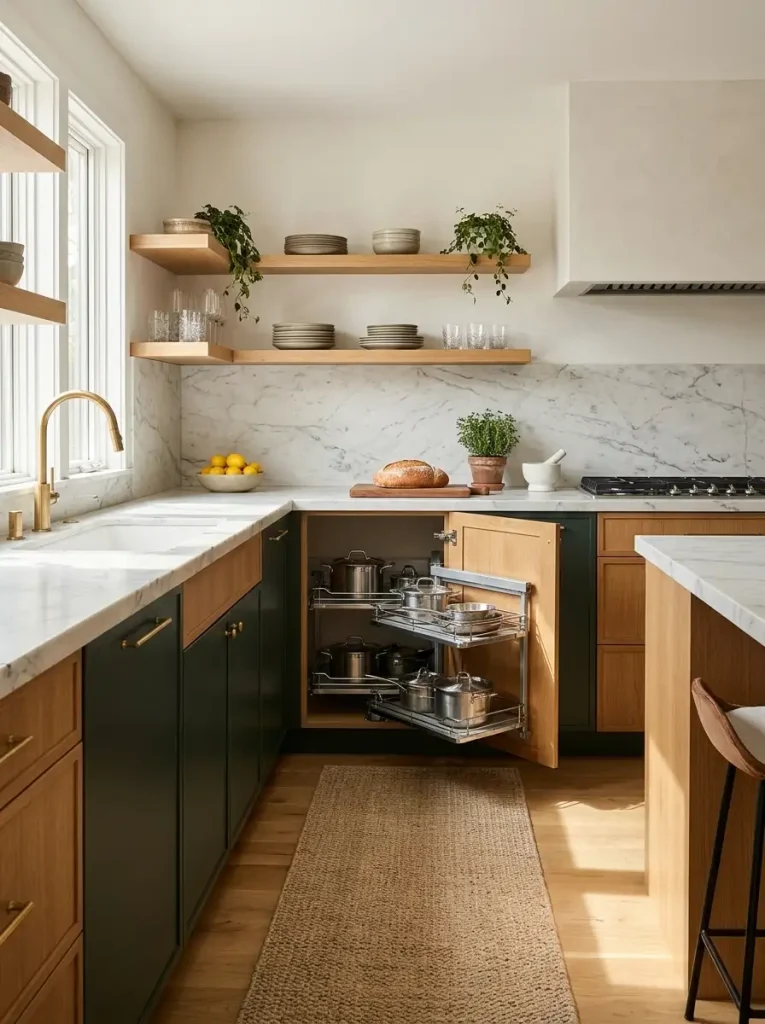
Modern solutions fix the blind corner perfectly. They use swing-out shelves or pull-out frames. Some use chrome wire baskets on rails.
When you open the door, the whole system glides out into the room.
These systems replaced the old, dark static shelves. They make reaching the back as easy as reaching the front.
Corner Tall Cabinet for Vertical Storage
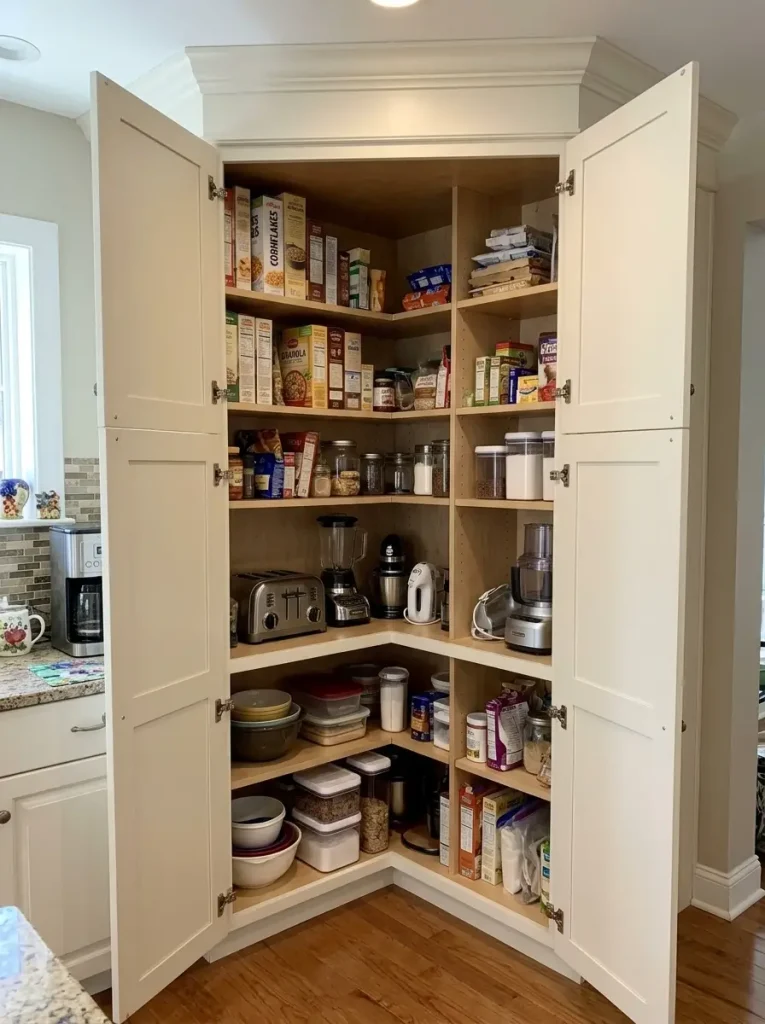
A corner tall cabinet goes from the floor to the ceiling. It is perfect for kitchens with little floor space but high ceilings. These units often act as a mini pantry.
They hold cereal boxes or small appliances on adjustable shelves. By using vertical space, you free up your lower cabinets for heavier cooking gear and dishes.
The Pull-Out Drawer in the Corner
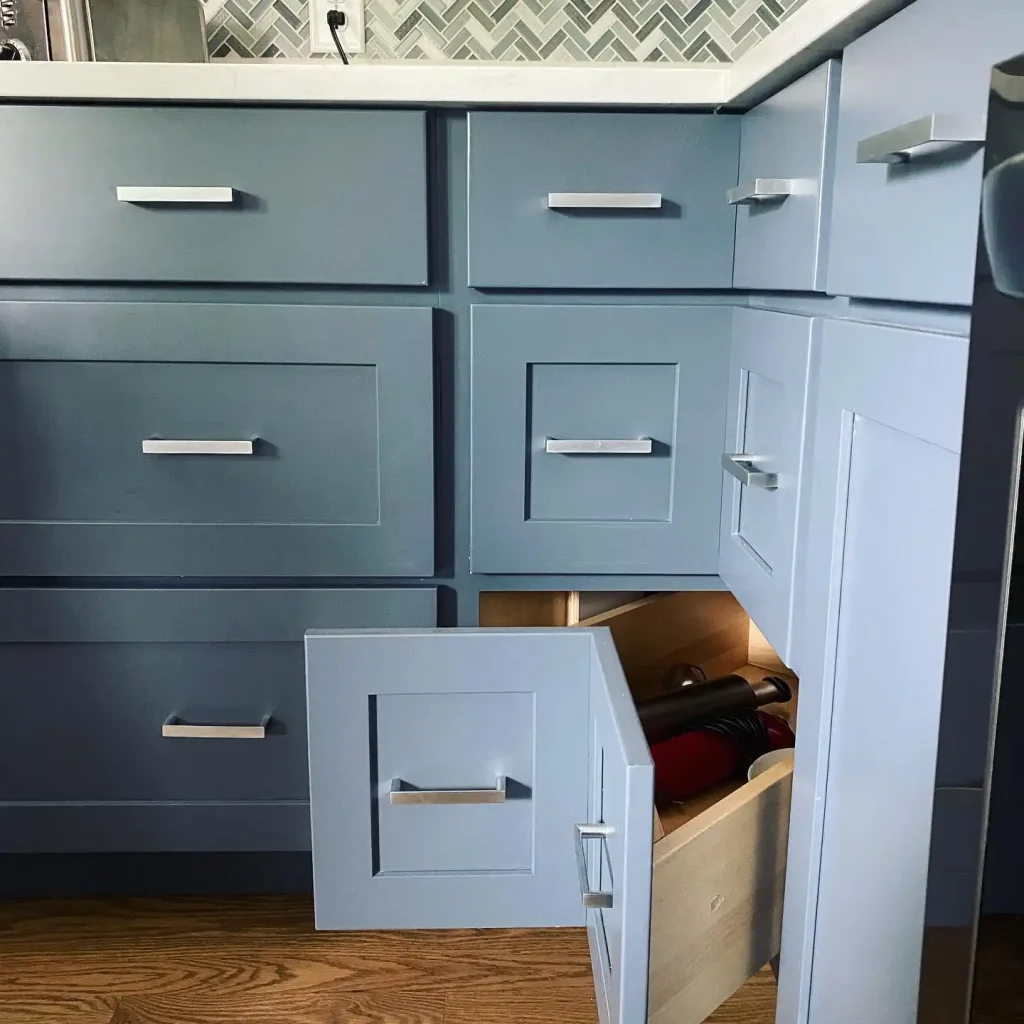
Standard cabinet doors in a corner are hard to use. A deep pull-out drawer changes the game.
In this image, a blue cabinet features a drawer that slides straight out into the room.
It uses heavy-duty rails to hold the weight of cast iron pots. This simple design brings the items right to you. You do not have to bend down and dig around in the dark.
Kidney-Shaped Magic Corner
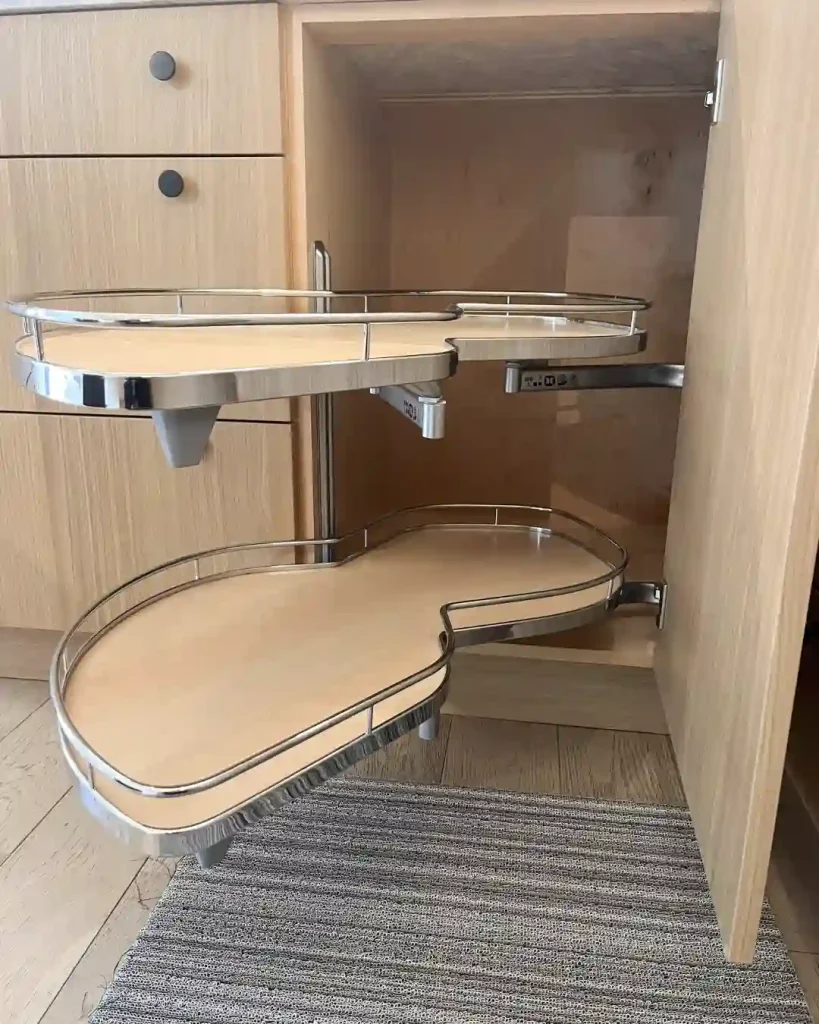
This is a great example of a high-end magic corner system.
It uses two uniquely shaped shelves that sit on articulated metal arms. When the door opens, the shelves glide out and apart.
The kidney shape is smart because it lets the shelves clear the cabinet frame as they swing.
This design uses every bit of the deep corner space. It keeps your pantry items perfectly organized.
Walk-In Corner Pantry
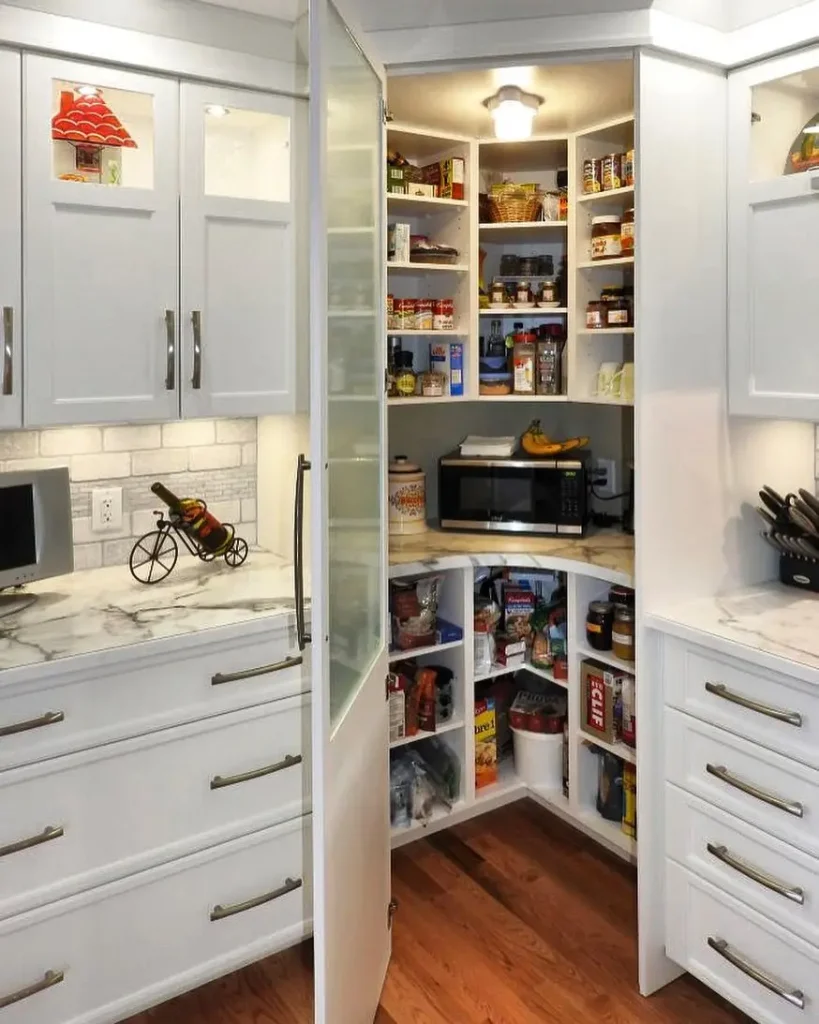
If you have the room, a walk-in corner pantry is the ultimate upgrade.
This image shows a pantry tucked right into the kitchen corner. It features a glass door that lets light in and looks elegant.
Inside, you have full shelves for dry goods and a dedicated spot for a microwave.
It acts like a small room inside your kitchen. It keeps all your food and appliances hidden but easy to reach.
Corner Cupboard Styles
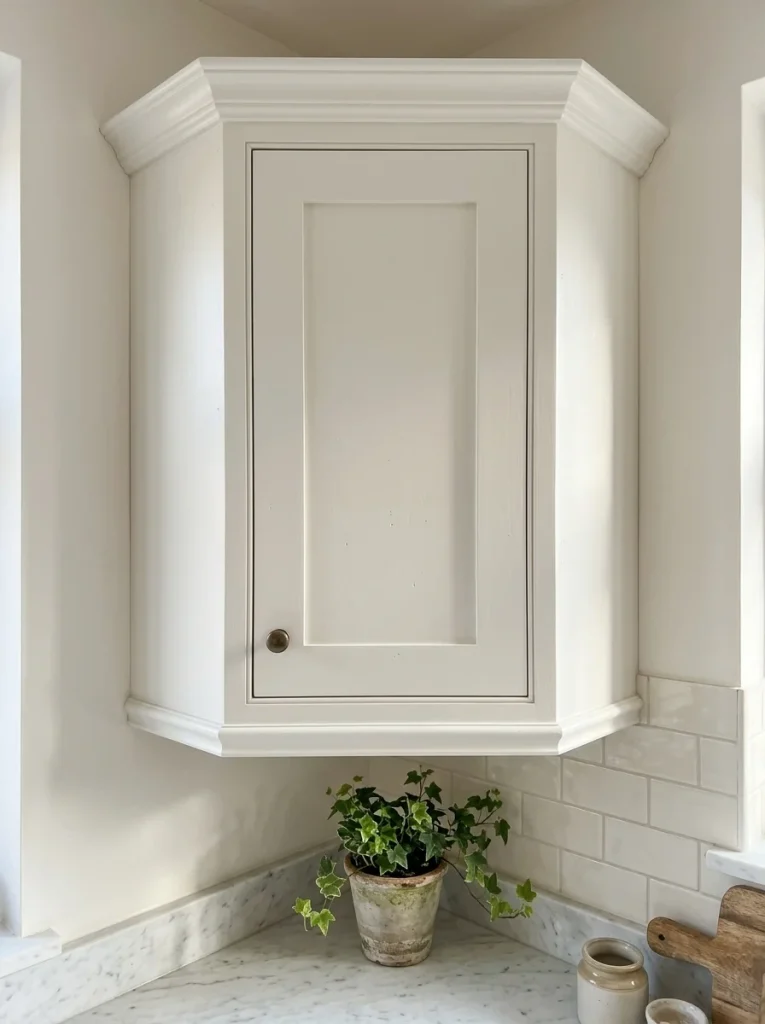
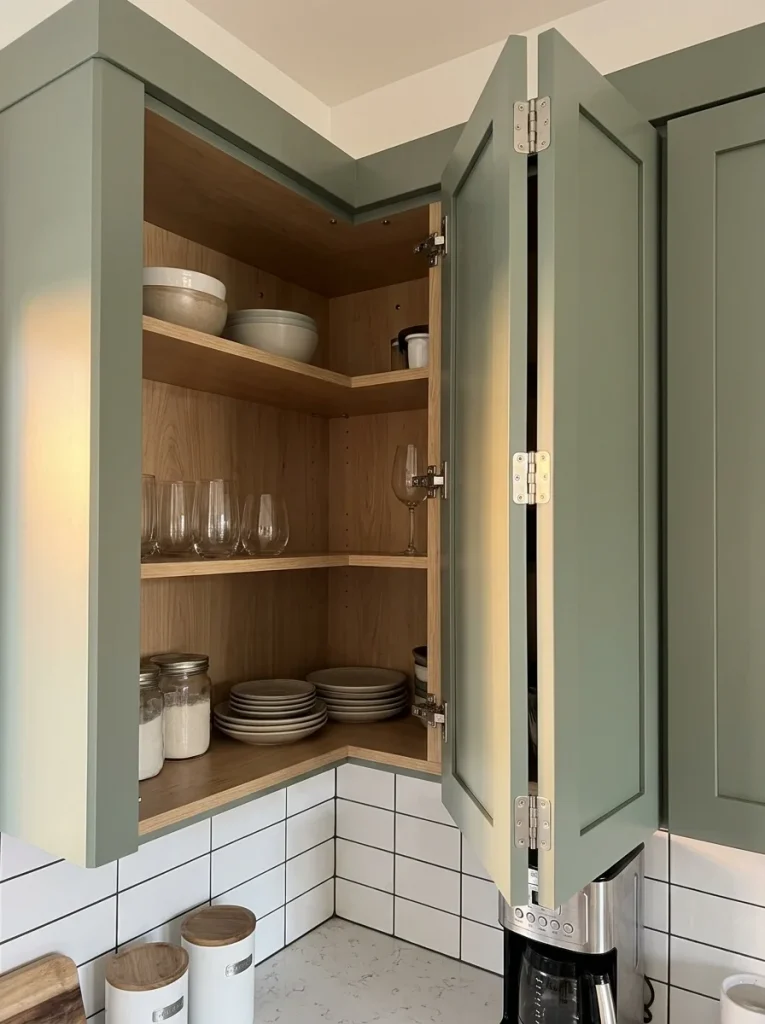
A corner cupboard is often the smaller wall unit above the counter.
There are a few common styles. Some have one single angled door. Some have bi-fold doors.
Others are L-shaped with two doors meeting at the corner.
The style you pick should match the rest of your kitchen, while still allowing the doors to open fully without hitting anything.
Corner Pantry Cabinet
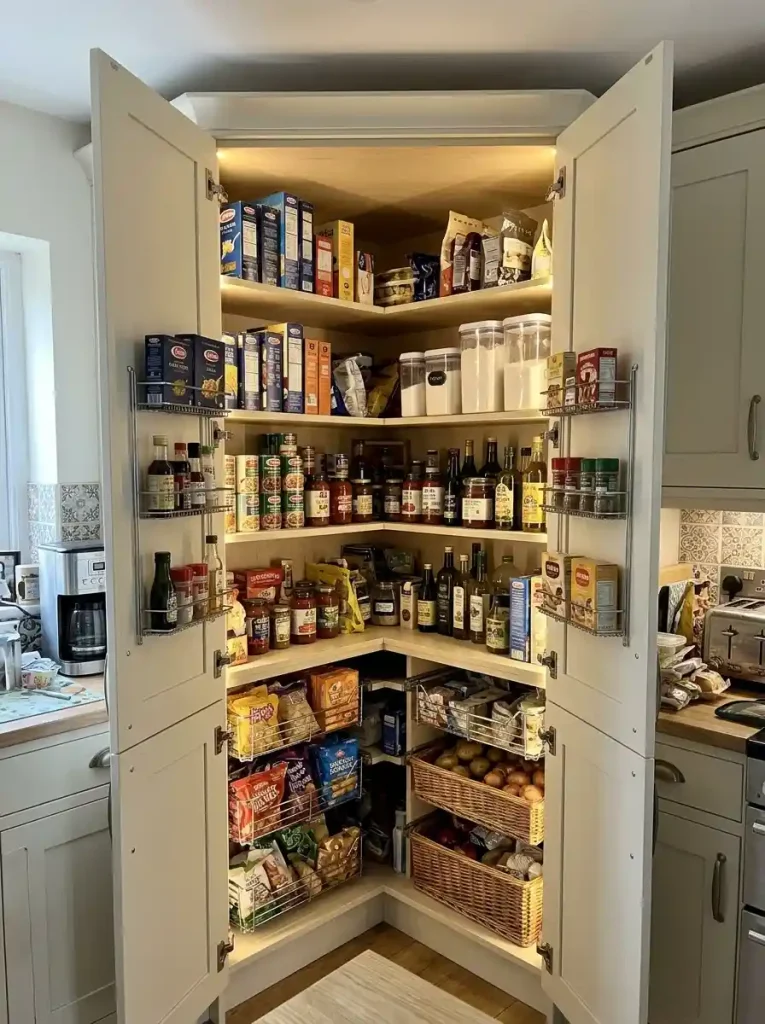
A corner pantry turns empty corner space into a food-storage hub. It usually has deep shelves, pull-out baskets, or a spinning carousel.
It is a very popular upgrade. It adds lots of dry-goods storage without making the kitchen bigger. It keeps your counters clear and your food organized.
Corner Pantry vs. Walk-In Pantry
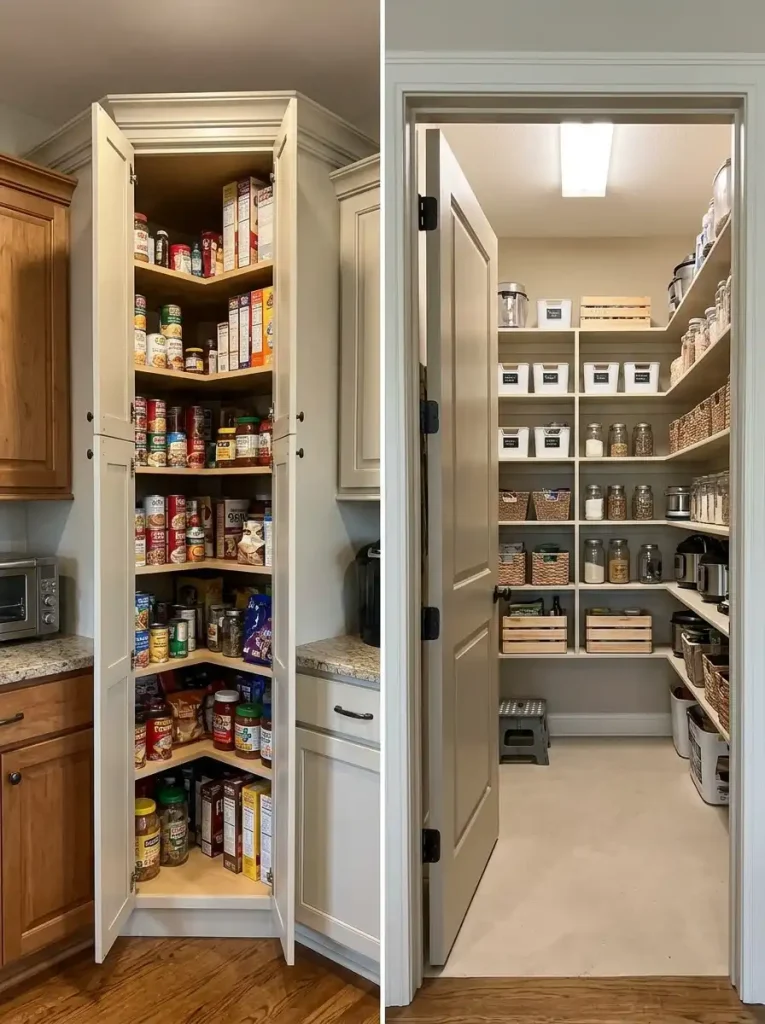
A corner pantry fits inside your normal cabinets. A walk-in pantry is a separate small room. If your kitchen is too small for a walk-in, a corner pantry is a great choice.
It gives you the same storage in a much smaller space. You get the feel of a dedicated pantry without losing any square footage in your kitchen.
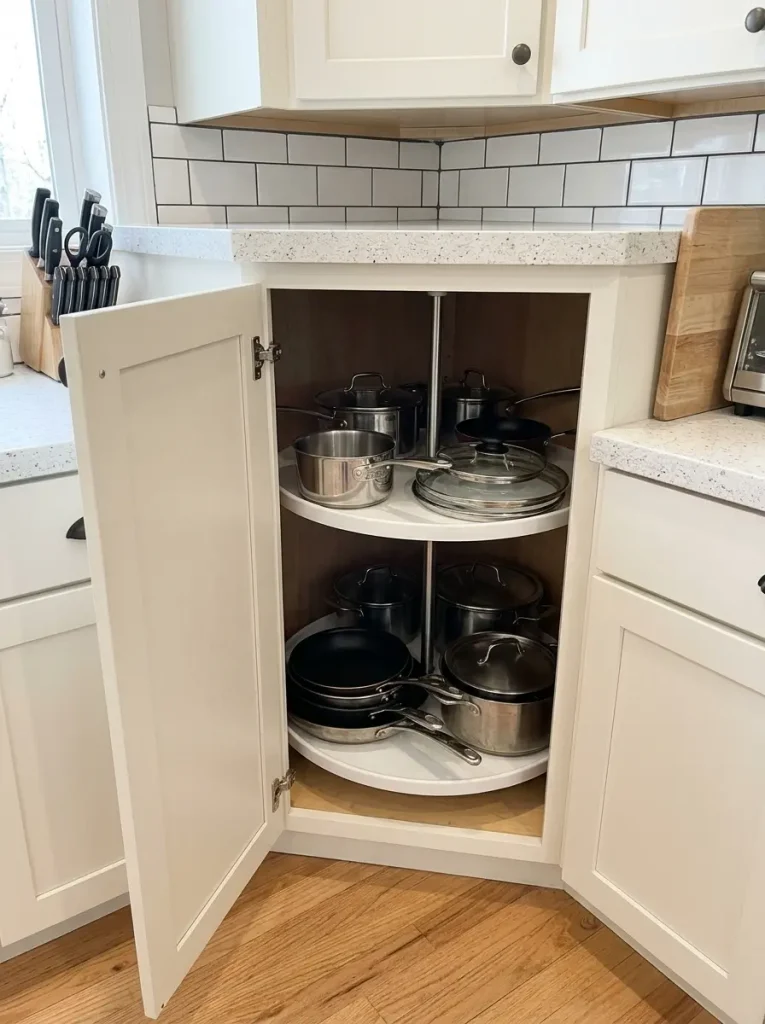
Lazy Susan for Cabinet
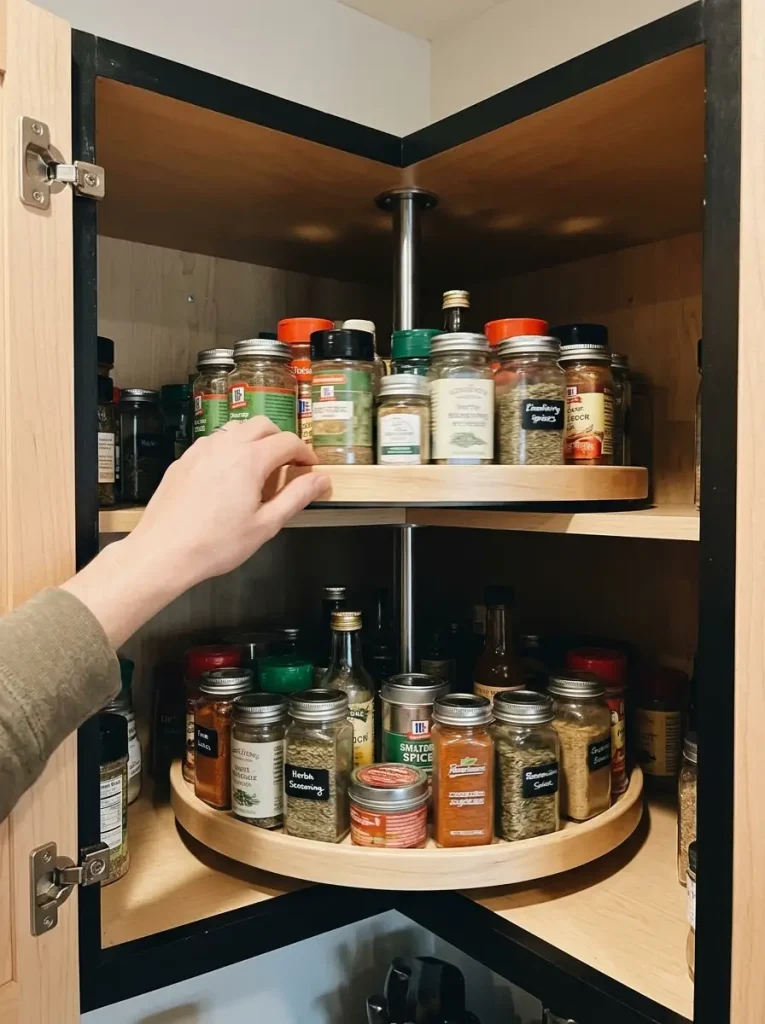
A lazy susan is a spinning tray inside a corner unit. You spin the tray to bring items from the back to the front. This means you never have to kneel in the dark to find a pot.
It is one of the most affordable and classic solutions. Just be careful not to spin it too fast, or your items might shift and fall over.
Full-Round vs. Half-Moon Designs
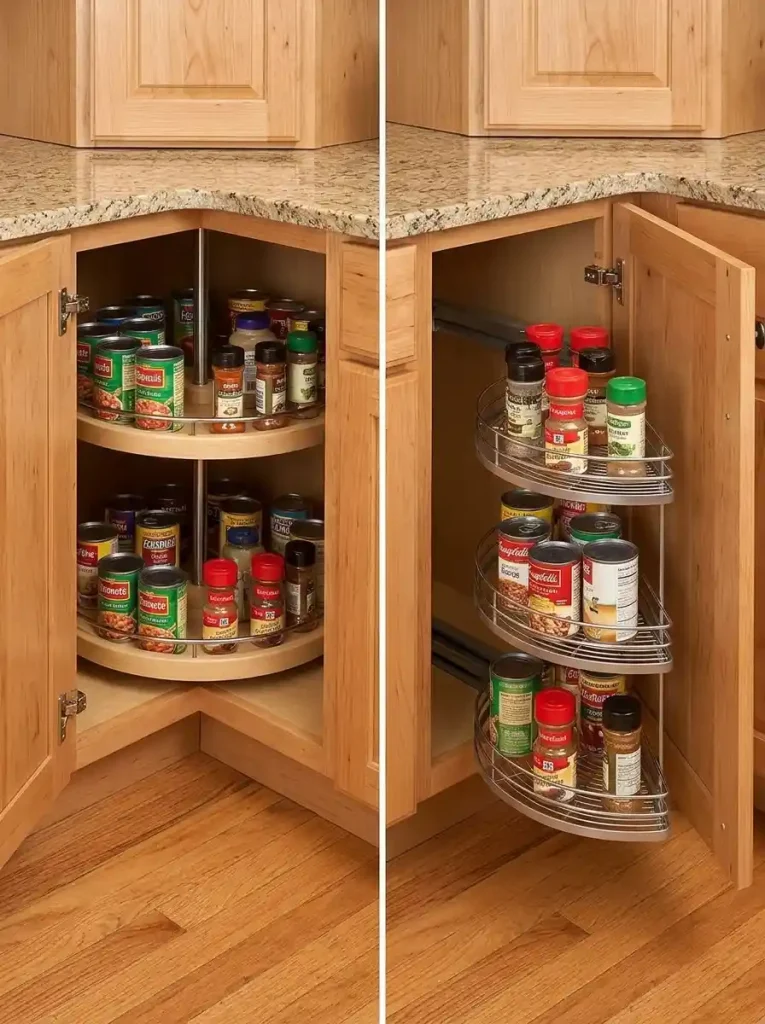
A full-round lazy susan is a full circle that spins 360 degrees.
A half-moon shape is attached to the doors. When you open the door, the shelves swing out.
Full-round holds more, but needs doors that open wide. Half-moon is better for standard blind corners. Your choice depends on how wide your cabinet opening is.
Magic Corner and Pull-Out Systems
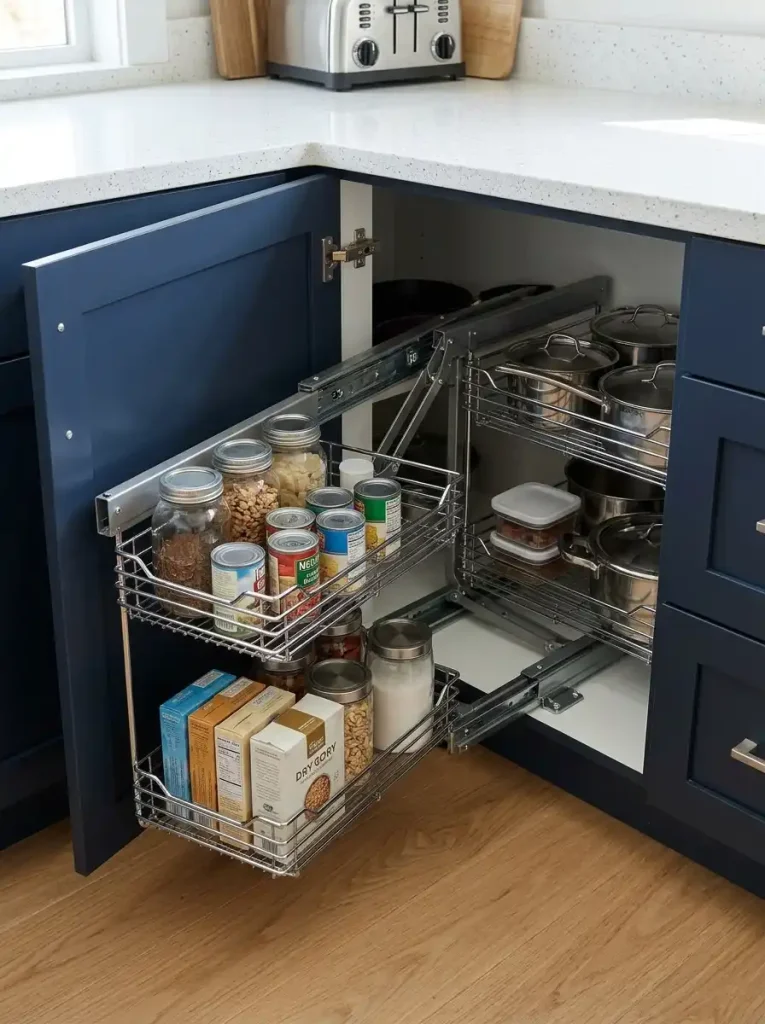
A magic corner uses nested wire baskets on special rails.
When you open the door, the baskets fold out and slide toward you. This brings every item into full view.
Unlike a lazy susan, items do not shift around when you spin.
But magic corners cost more money. They also need precise installation to work smoothly.
Storage Solutions Compared
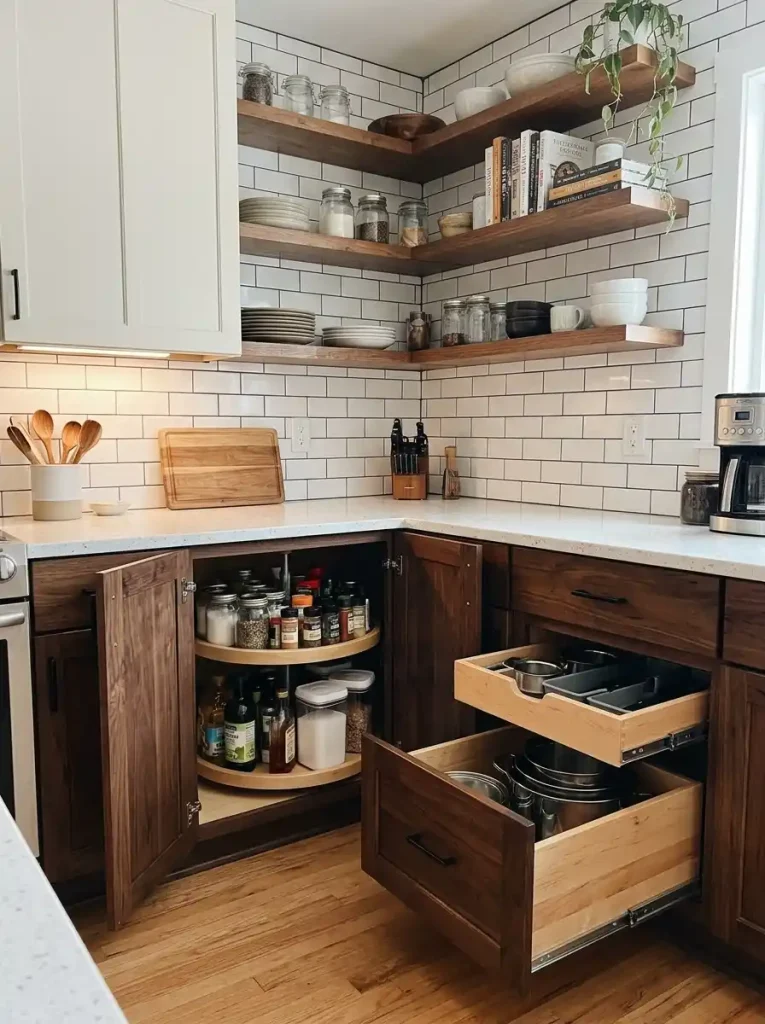
Here is a quick look at the main options to help you choose.
| Solution | Best For | Trade-off |
|---|---|---|
| Lazy Susan | Pots, pans, bulky items | Items can shift when spinning |
| Magic Corner / Pull-out | Organized, itemized storage | Higher cost, moderate install complexity |
| Swing-out shelves | Blind corners | Smaller capacity than full-round units |
| Open corner shelving | Display pieces, cookbooks | No door protection from dust |
Corner Bread Bin
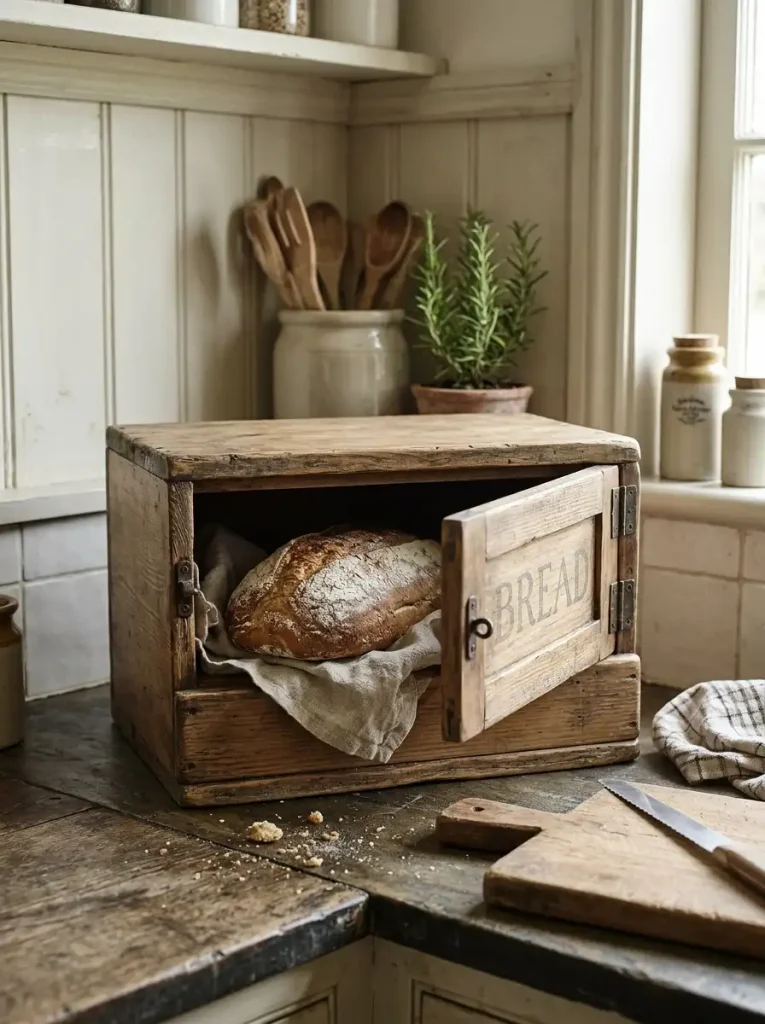
A corner bread bin is a small storage unit for bread. It keeps bread fresh and off the counter. These bins look great in rustic or farmhouse kitchens.
They make smart use of a wasted counter corner. You can often find vintage styles at thrift stores, adding a charming touch to your kitchen decor.
Materials and Finishes
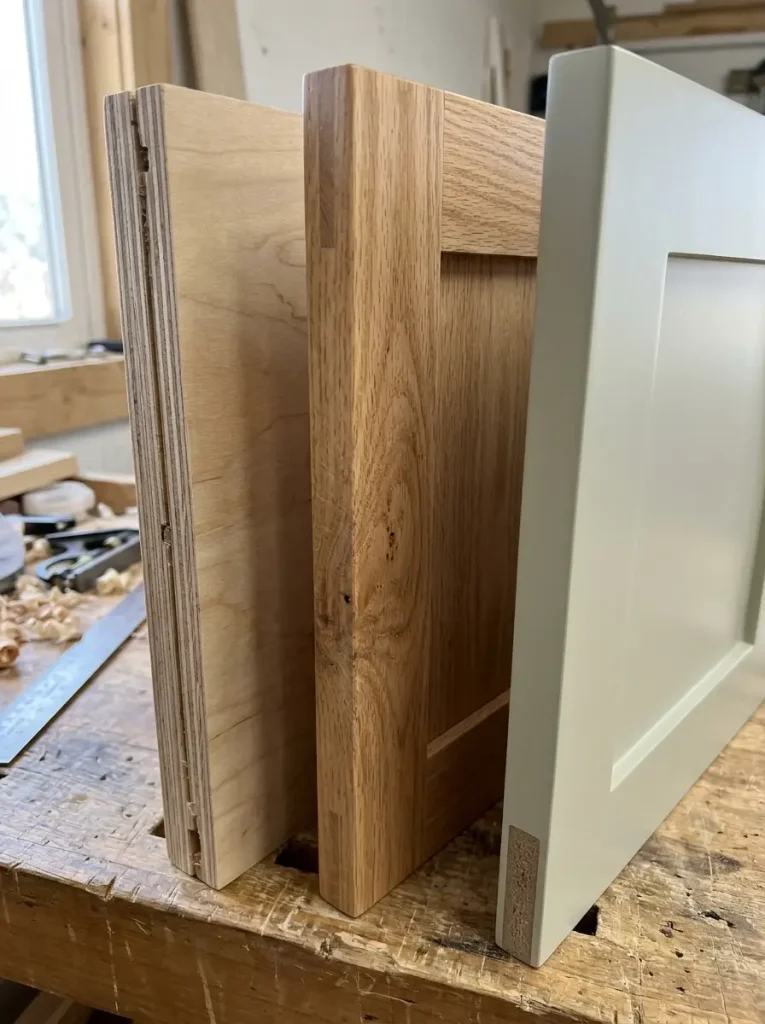
Corner cabinets are usually built from plywood or MDF. The doors can be solid wood, laminate, or painted MDF.
Corner cabinets get more wear from moving parts.
So, you should use moisture-resistant and warp-resistant materials for the base and shelves to ensure they last for years.
Hardware and Hinges
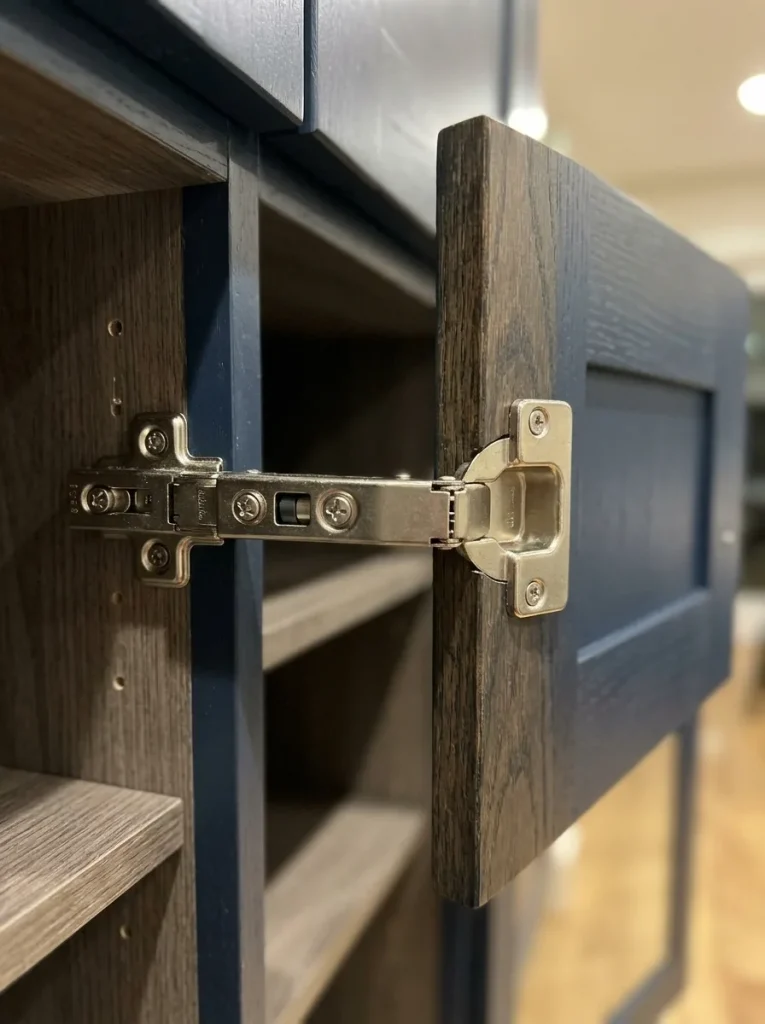
Corner cabinets need special hinges. They often use 165-degree or bi-fold hinges. These let the doors open fully without hitting other cabinets.
You should use soft-close hinges because these heavy doors get used a lot. Soft-close stops the doors from slamming and protects the internal hardware.
Lighting Inside Corner Cabinets
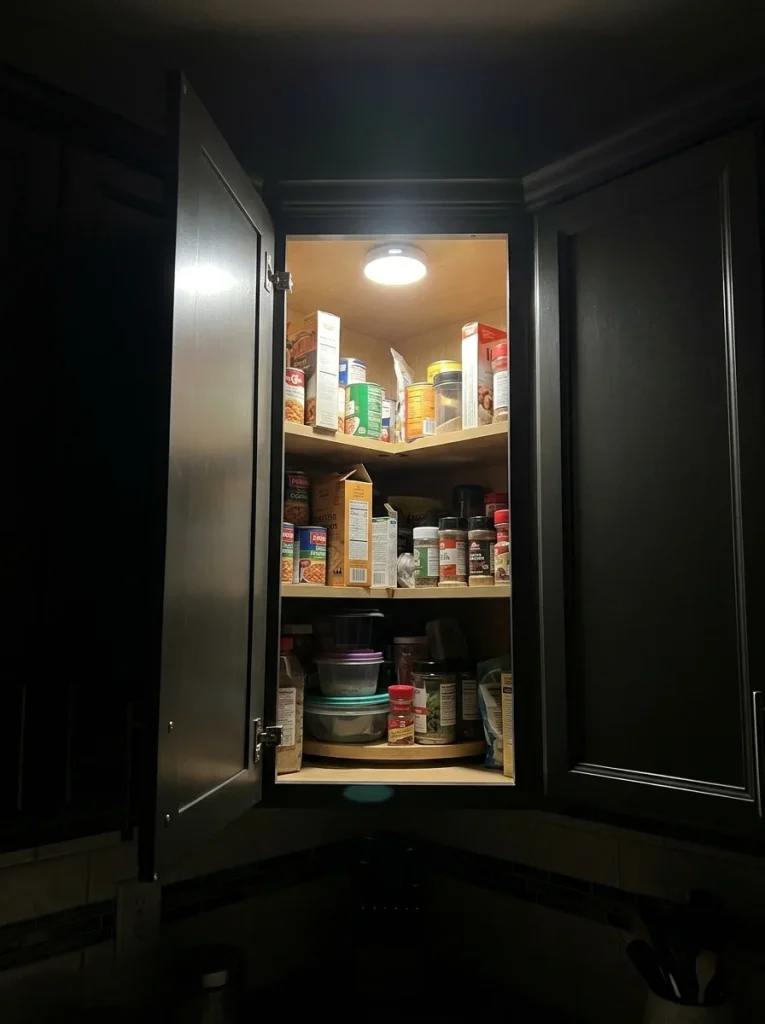
Corners are darker than straight cabinets. Battery-powered LED puck lights or motion strip lights fix this. They make the cabinet much easier to use.
A light-colored interior finish also helps you see better and find items faster. Good lighting turns a dark cave into a bright, usable storage space.
Do not just buy the biggest cabinet box you can fit. Focus on hardware that maximizes your reach. Pull-out trays and swing-out shelves are much better than deep, dark static shelves.
Corner Cabinet Door Styles
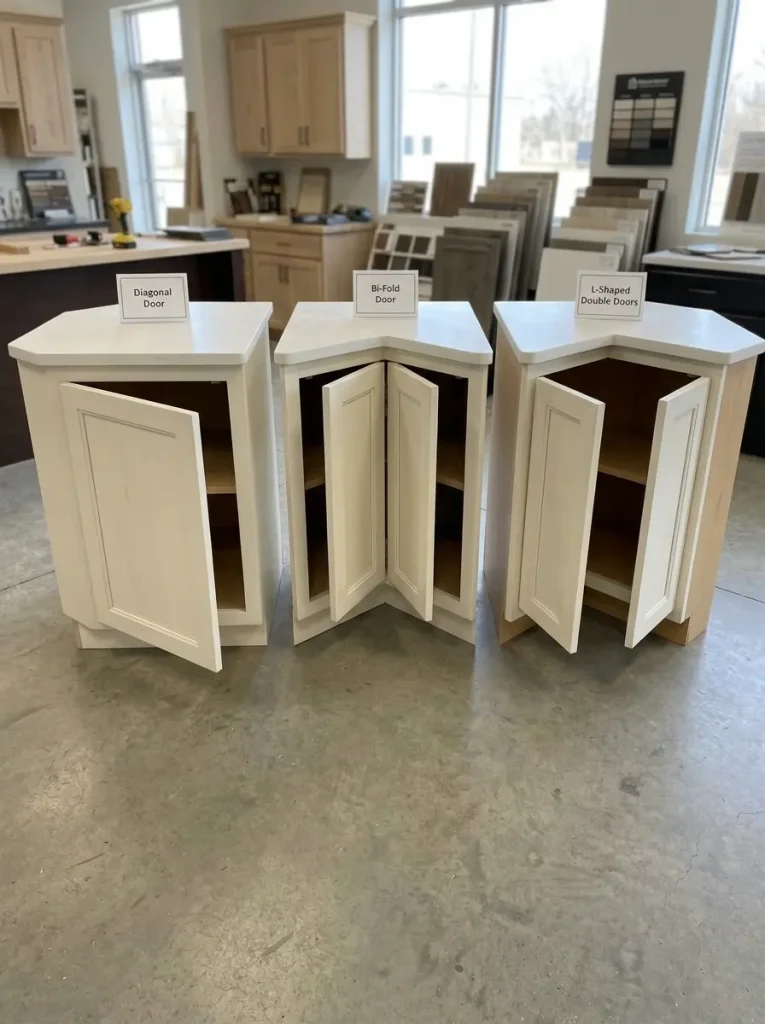
You have many door options. You can choose a single diagonal door or bi-fold doors. Some people use full-overlay doors with a lazy susan.
The right choice depends on the inside mechanism. A full-round lazy susan usually needs doors that open at least 90 degrees to let the trays slide out.
Solutions for Small Kitchens
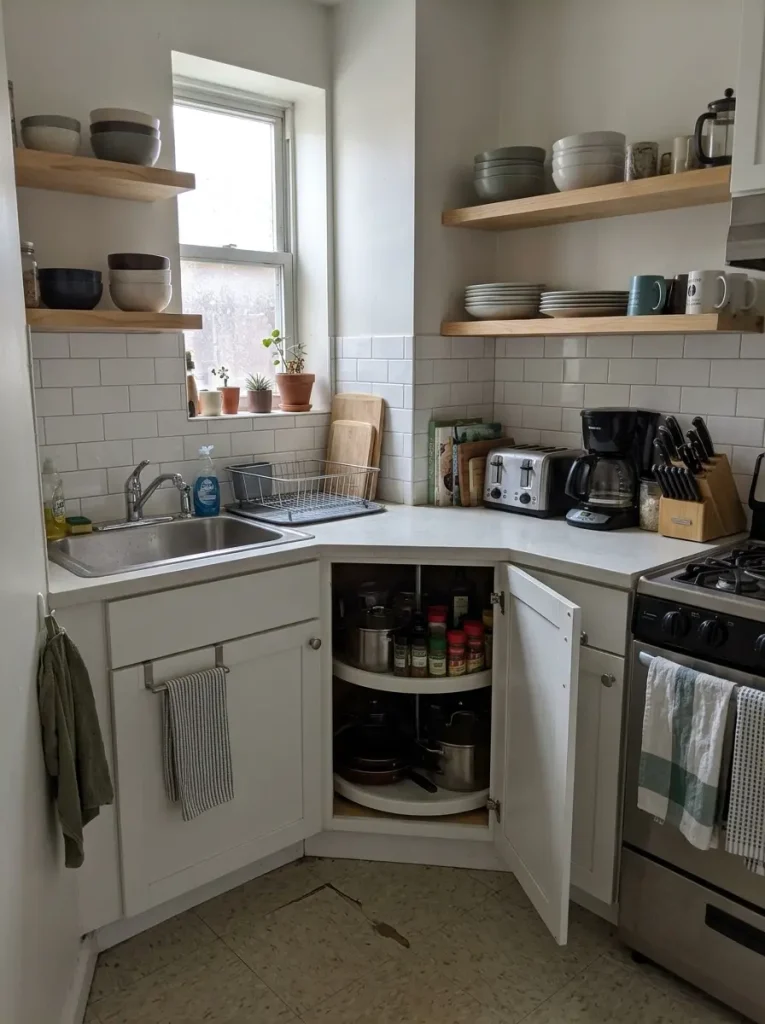
Small kitchens need smart solutions. A diagonal corner base cabinet with a lazy susan is a great fix. A tall corner pantry cabinet also works well.
In small kitchens, hardware that maximizes reach matters much more than raw box size. You want to use every inch of the space you have.
Solutions for Large Kitchens
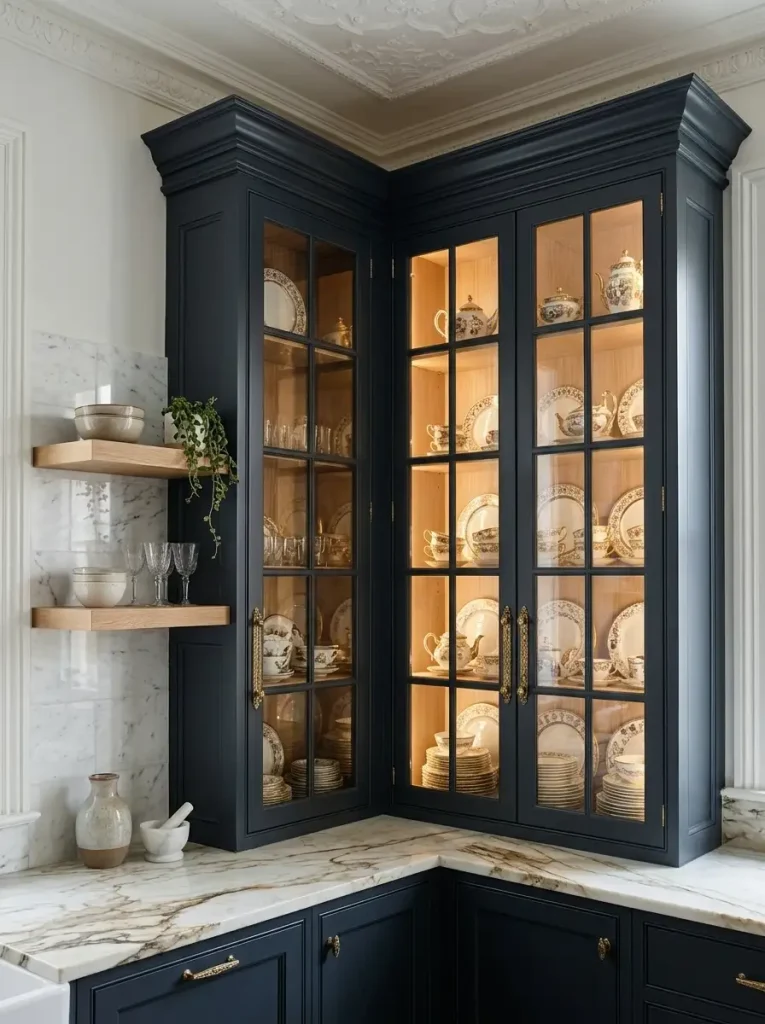
Bigger kitchens can afford to be more decorative. You can use glass-front cupboards for display. Open corner shelving or a furniture-style hutch also looks great.
Large layouts have room for a full corner pantry that acts like a food-storage room.
You can turn the corner into a beautiful focal point rather than just a storage spot.
Latest Trends
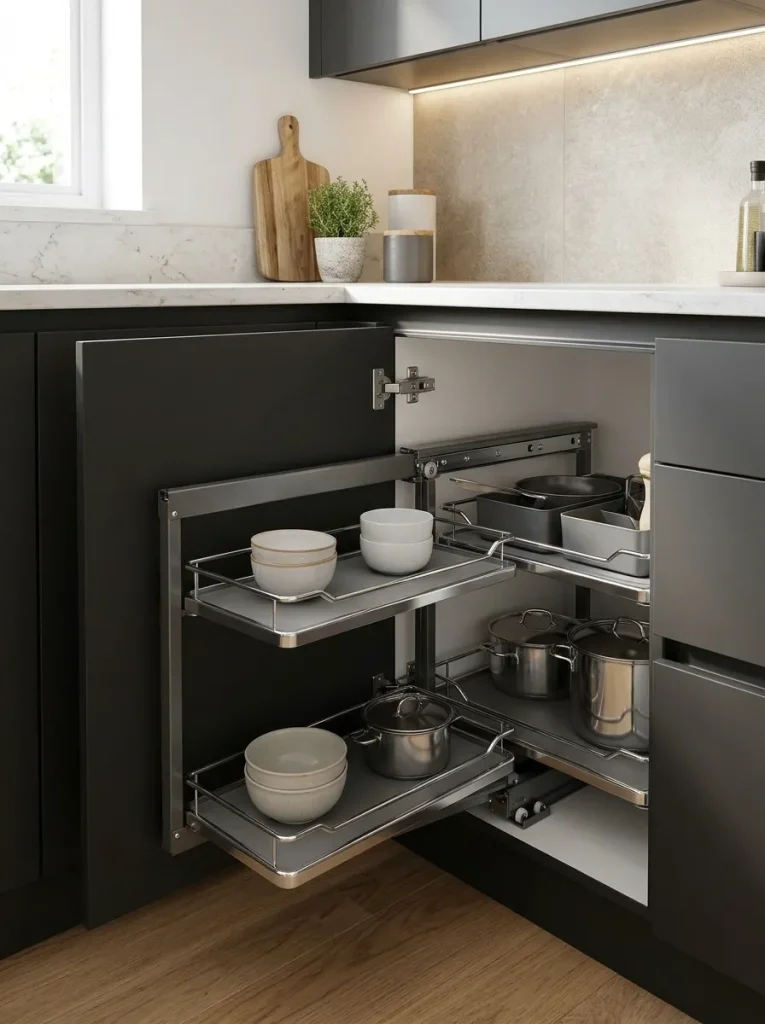
Modern design favors clean exterior lines. People want to hide the complex mechanisms inside. Soft-close is a must.
There is also a big shift toward pull-out and magic-corner systems. These offer better organization than traditional lazy susans. People want their kitchens to look sleek but function perfectly.
What Studies Say
A 2026 study in the International Journal of Creative Research Thoughts looked at compact kitchens. It found that ergonomic design greatly improves usability.
The study looked at how users reach and see items. The results showed that corner systems succeed based on reach and visibility. Raw storage volume is not as important as good design.
Choosing the Right Cabinet
Weighing a blind corner against a magic corner? The right choice comes down to three simple questions.
- Reach: How far do you have to stretch to get an item?
- Visibility: Can you see what is in the back of the cabinet?
- Habits: Does the mechanism match how you cook every day?
Get these three things right, and your kitchen corner will become one of the hardest-working zones in the room. A little planning now will save you time and frustration every day.
Frequently Asked Questions
Are corner cabinets more expensive than regular cabinets?
Yes, they usually cost more. Corner cabinets need special hinges and complex moving parts, like lazy susans or pull-out trays. This extra hardware and the custom box shape make the price higher per foot than a standard straight cabinet.
What is the best way to organize a blind corner cabinet?
The best fix is to install a pull-out system. Swing-out shelves or wire baskets on rails will glide the items out to you. This stops you from having to crawl on the floor or use a flashlight to find things in the back.
Can I add a lazy susan to my existing cabinet?
Yes, you can. Many hardware stores sell aftermarket lazy susan kits. You just need to check the exact width and depth of your cabinet first. If you are handy with a screwdriver, installing one is a great weekend DIY project.
Conclusion
A kitchen corner does not have to be a dead zone. With the right cabinet, it can become the best storage spot in your home. You just need to pick the solution that fits your space.
If you have a small kitchen, a simple lazy susan or a swing-out shelf works wonders. If you have a larger space, a magic corner or a tall pantry cabinet offers amazing organization. Always measure carefully before you buy anything.
By choosing hardware that brings items right to your fingertips, you will save time and avoid back strain. Turn that awkward 90-degree gap into a space that makes cooking easier every single day.