Design beautiful, functional camper interiors maximizing limited square footage. Strategic interior planning creates comfortable spaces supporting extended travel living.
Well-designed small camper interior ideas balance aesthetics with practicality seamlessly. Thoughtful planning transforms cramped spaces into welcoming, enjoyable homes-on-wheels.
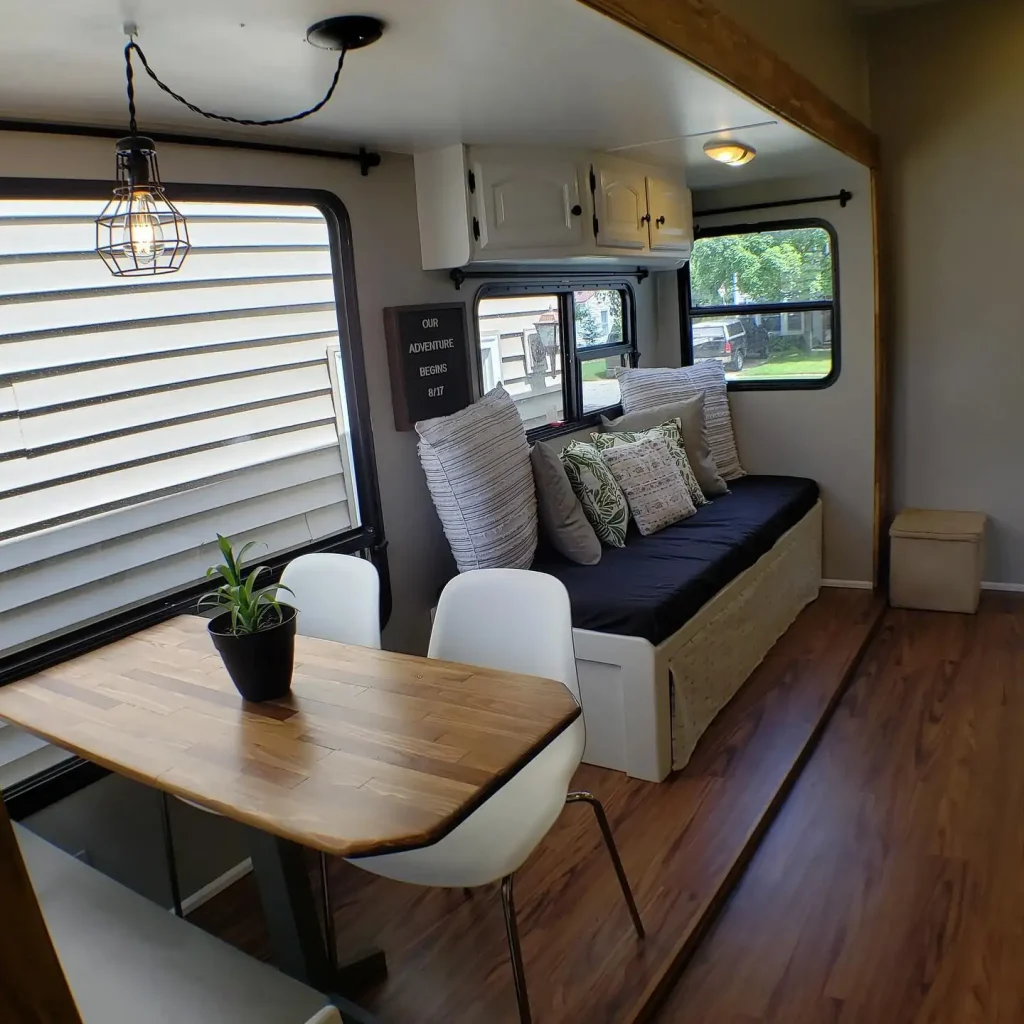
Discover creative interior ideas transforming small campers into personalized retreats. These design strategies combine home interior design principles adapted for mobile living.
1. Open Floor Plan Concept
Minimize interior walls creating flowing, spacious-feeling layouts. Open designs maximize perceived space despite actual square footage limitations.
Unobstructed sight lines make campers feel larger than actual dimensions. Strategic furniture placement defines zones without blocking visual flow.
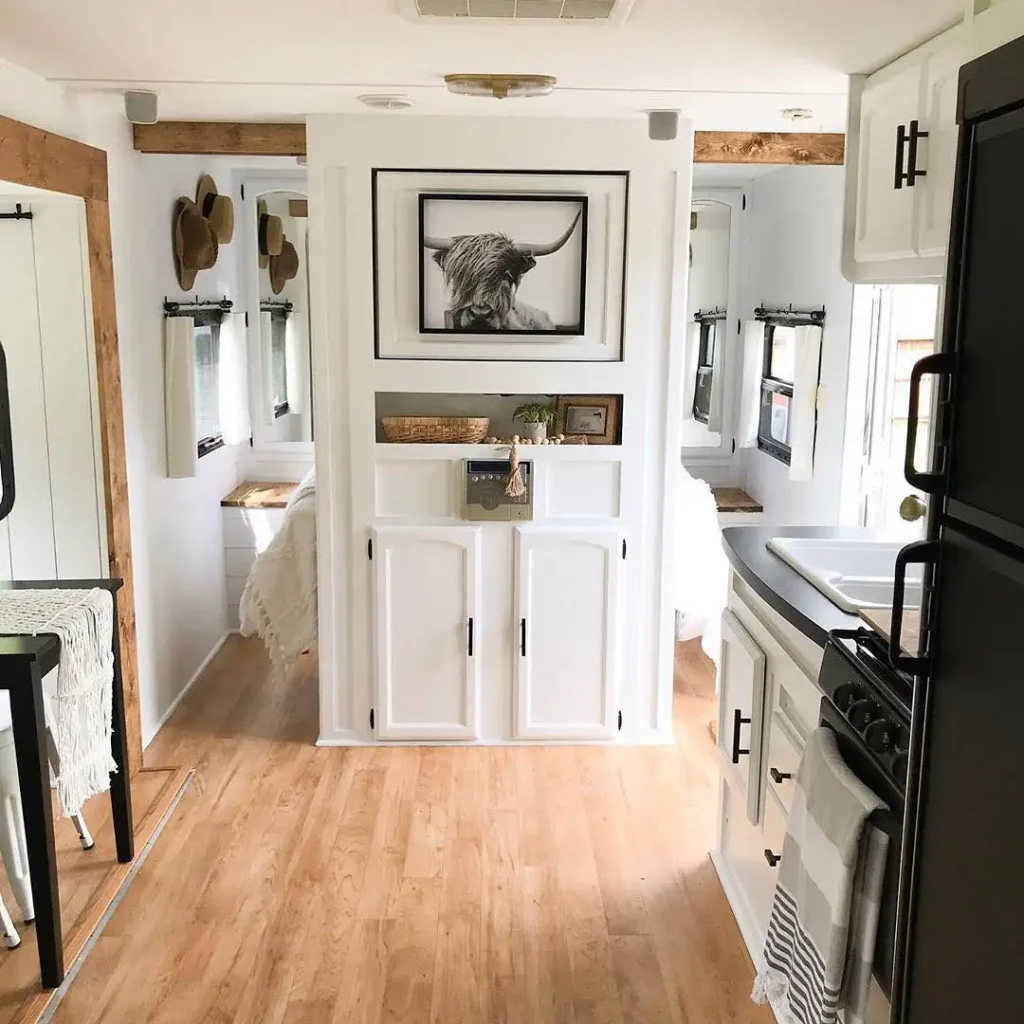
- Avoid heavy dividing curtains allowing light and sight lines throughout camper
- Position furniture creating natural traffic patterns preventing cluttered, crowded feels
2. Multi-Functional Furniture Selection
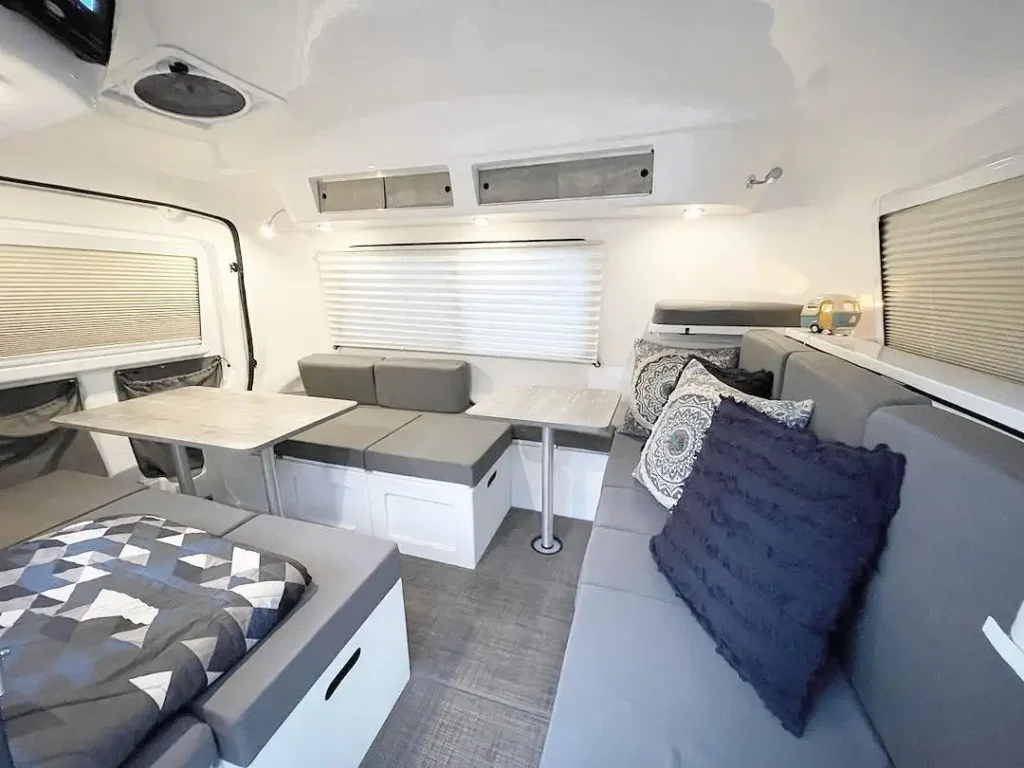
Choose pieces serving multiple purposes simultaneously. Strategic furniture maximizes functionality within severely limited space constraints.
Every piece must justify its footprint through multiple uses. Quality multi-functional furniture prevents wasted space and enables comfortable living. You’ll also love to see cute camper ideas to implement on your camper.
| Furniture Type | Primary Function | Secondary Function | Space Saved | Cost |
|---|---|---|---|---|
| Ottoman Storage | Footrest/seating | Storage compartment | High | Medium |
| Murphy Bed | Sleeping surface | Living space release | Very High | High |
| Convertible Sofa | Seating | Bed surface | High | Medium |
| Nesting Tables | Display surface | Compact storage | Medium | Low |
| Storage Benches | Seating | Hidden storage | High | Medium |
3. Sleeping Area Optimization
Design comfortable sleeping quarters maximizing rest quality. Better sleep improves overall trip satisfaction and enjoyment significantly.
Strategic sleeping arrangement frees daytime space for activities. Comfortable beds enable quality rest despite limited personal space.
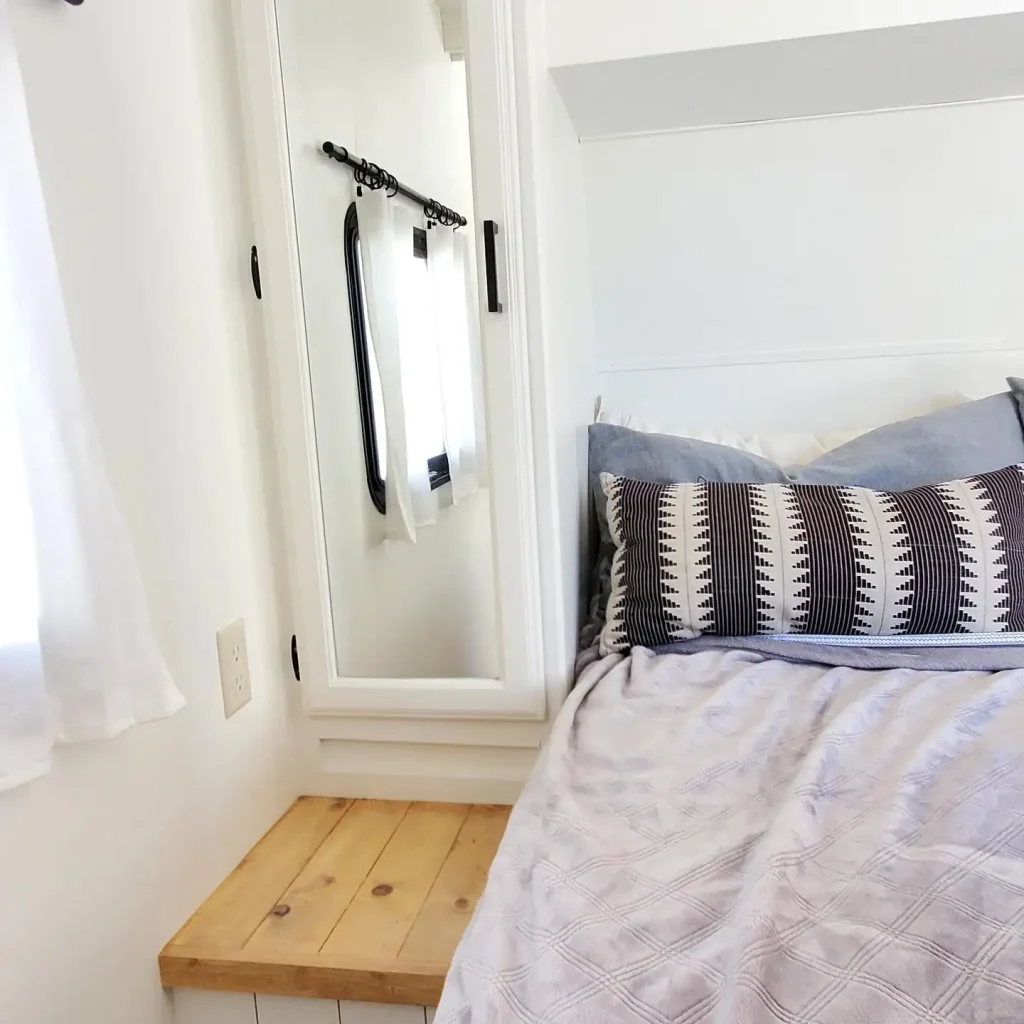
- Elevate beds on risers creating storage underneath for seasonal items
- Use quality mattress toppers improving comfort without replacing entire units
4. Living Room Arrangement Ideas
Create cozy gathering spaces encouraging family time. Thoughtful arrangement makes campers feel like genuine homes versus utilitarian vehicles.
Comfortable living areas support extended indoor time during poor weather. Strategic seating encourages relaxation and quality time together. Check more small camper hacks to optimize every inch of camper.
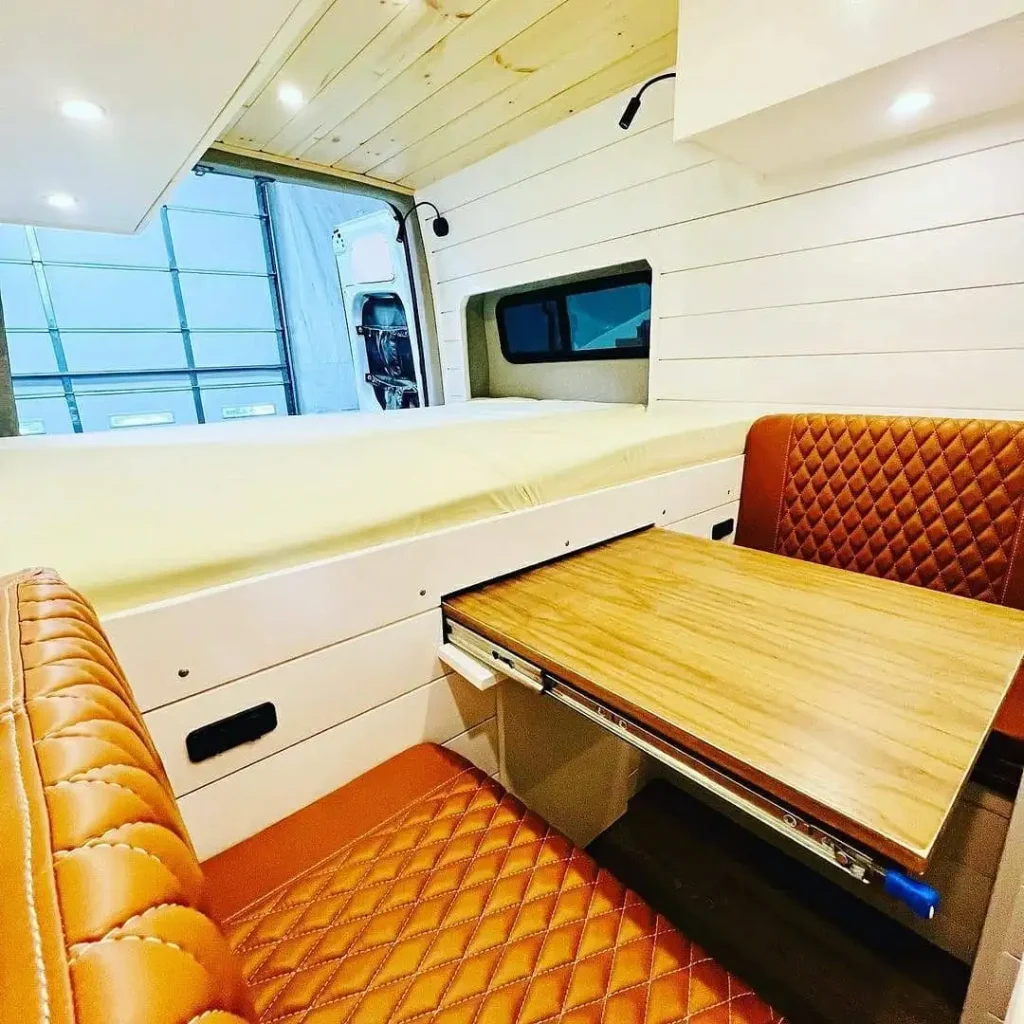
- Arrange furniture creating conversation angles promoting face-to-face interaction
- Include side tables and surfaces providing function and finishing touches
5. Kitchen Design and Layout
Optimize tiny kitchens enabling efficient meal preparation. Organized kitchens reduce cooking frustration despite severe space limitations.
Efficient kitchen design supports varied meals without overwhelming spaces. Strategic organization prevents countertop clutter maintaining functionality.
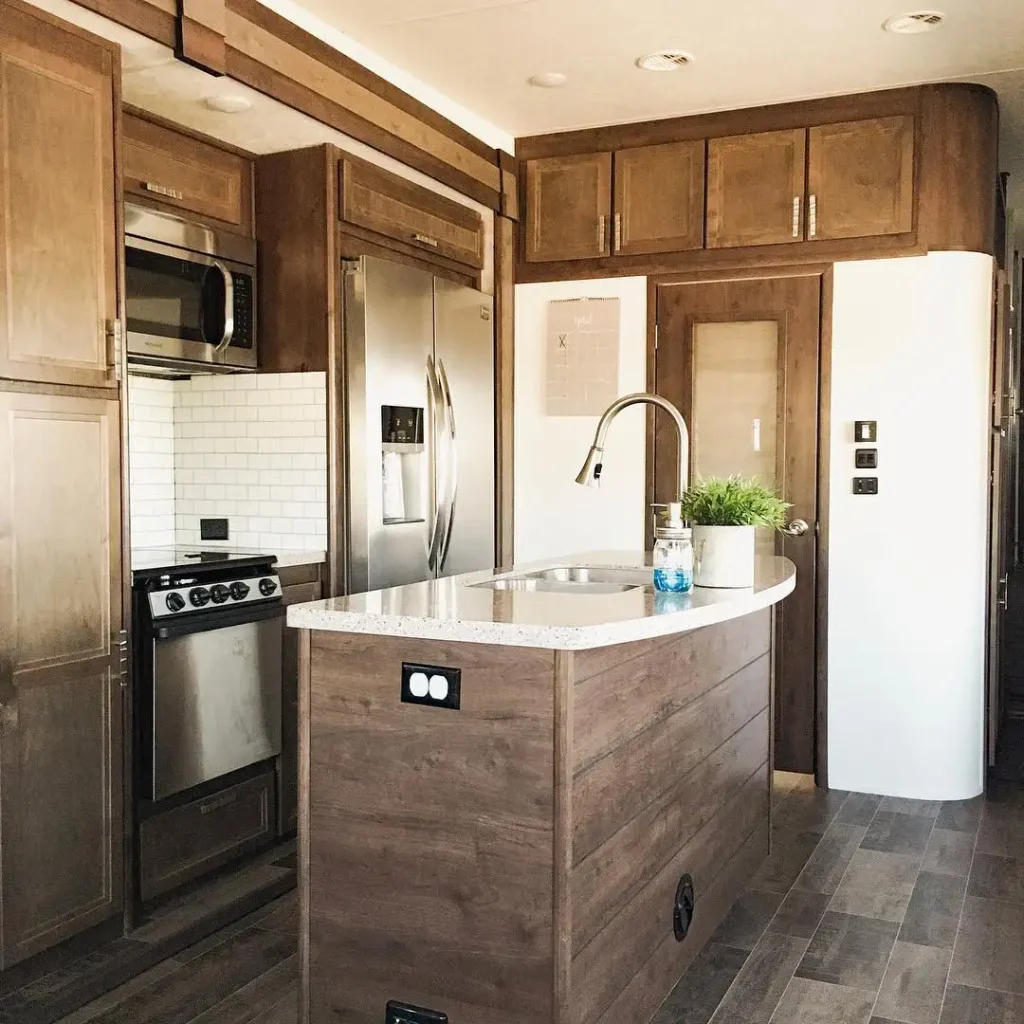
credits: @thetinywallsfamily
| Kitchen Component | Space-Saving Solution | Benefit | Implementation |
|---|---|---|---|
| Storage | Vertical shelving | Accessible organization | Wall-mounted |
| Counter Space | Fold-down extensions | Expanded prep area | On-demand |
| Appliances | Multi-use pieces | Reduced equipment needs | Quality tools |
| Utensils | Hanging organizers | Easy access | Wall-mounted |
| Pantry | Compact carousel | Visibility and access | Rotating storage |
6. Bathroom Space Maximization
Design functional bathrooms despite tiny dimensions. Organized bathrooms remain pleasant despite cramped quarters.
Strategic bathroom design prevents morning frustration and congestion. Well-planned spaces support comfortable grooming routines efficiently.
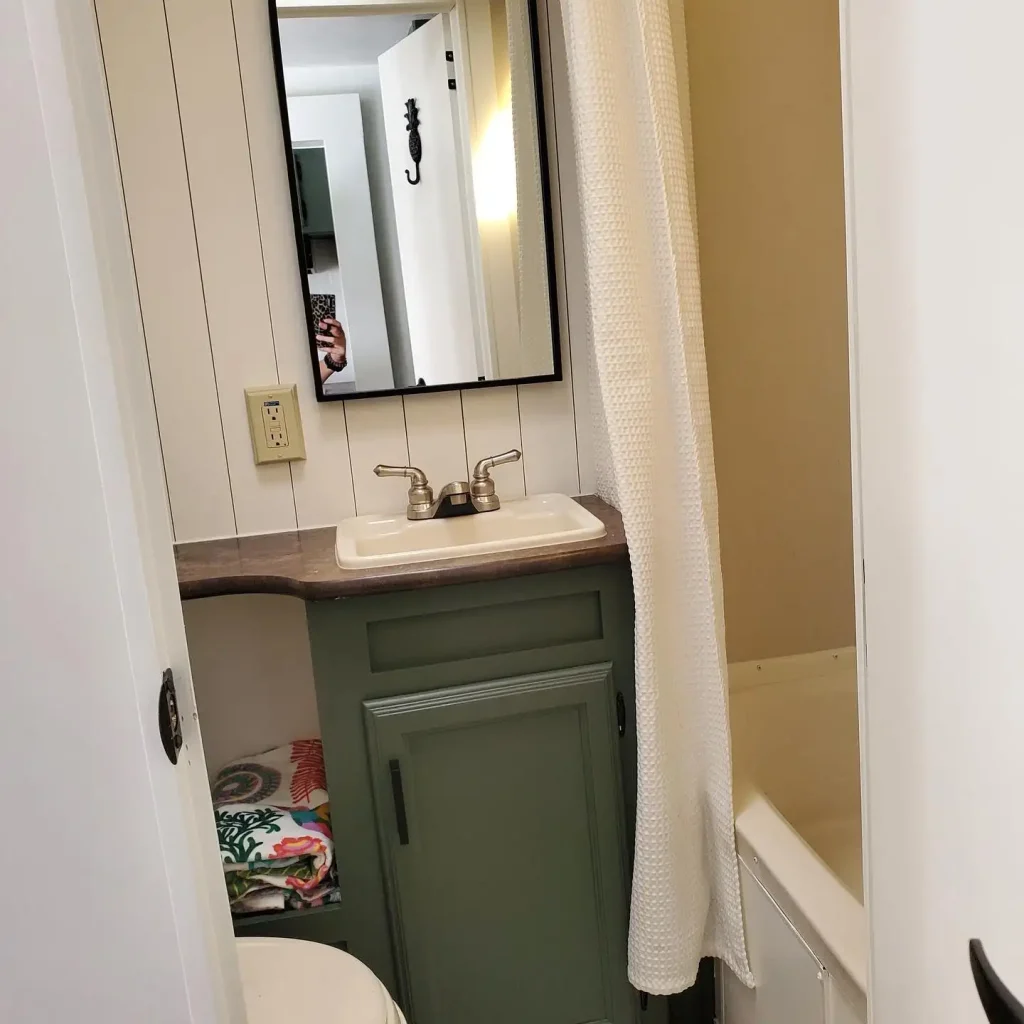
credits: @kiralwillis⠀
- Install corner shelving maximizing vertical space without consuming floor area
- Use space-saving fixtures designed specifically for tiny bathrooms
7. Bedroom Corner Utilization
Transform corners into functional bedroom areas. Strategic corner use prevents wasted space improving overall functionality.
Corner bedrooms create private sleeping spaces in open-plan campers. Thoughtful arrangement maintains bedroom functionality within limited footprint.
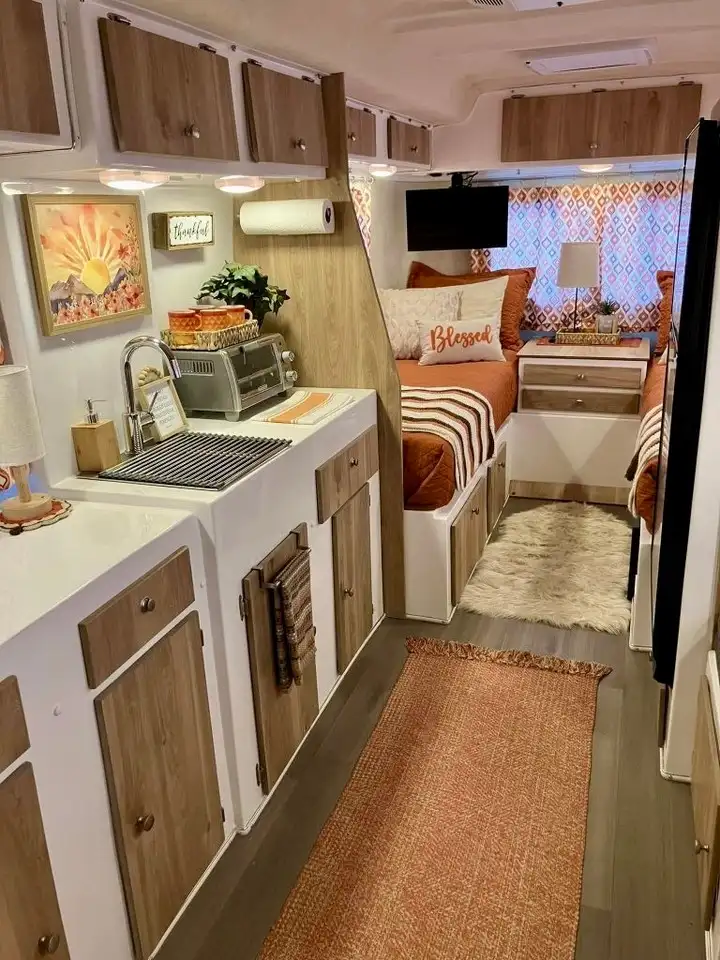
- Position beds diagonally creating efficient corner utilization
- Add corner shelving providing storage without intruding into space
8. Closet Organization Systems
Organize limited closet space maximizing storage capacity. Efficient closet design prevents wardrobe overflow in confined spaces.
Strategic organization enables packing necessary clothing in minimal space. Well-organized closets support comfortable extended traveling.
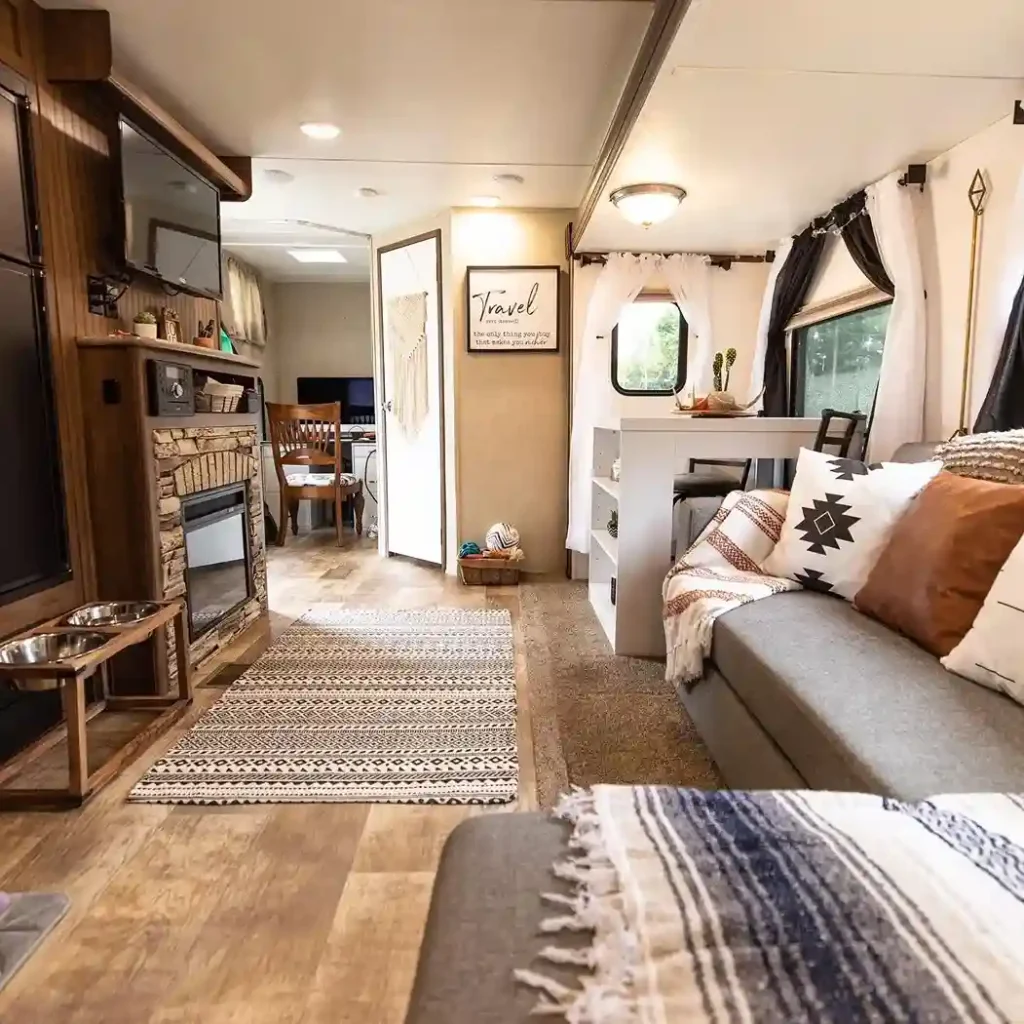
credits @lindsay.seals⠀
- Use slim hangers reducing space requirements versus standard versions
- Implement drawer dividers organizing undergarments and small items
9. Lighting Design and Placement
Create layered lighting supporting various activities and moods. Strategic lighting transforms camper atmosphere and functionality.
Multiple light sources enable mood adjustment and task lighting. Well-lit spaces feel larger while supporting practical activities.
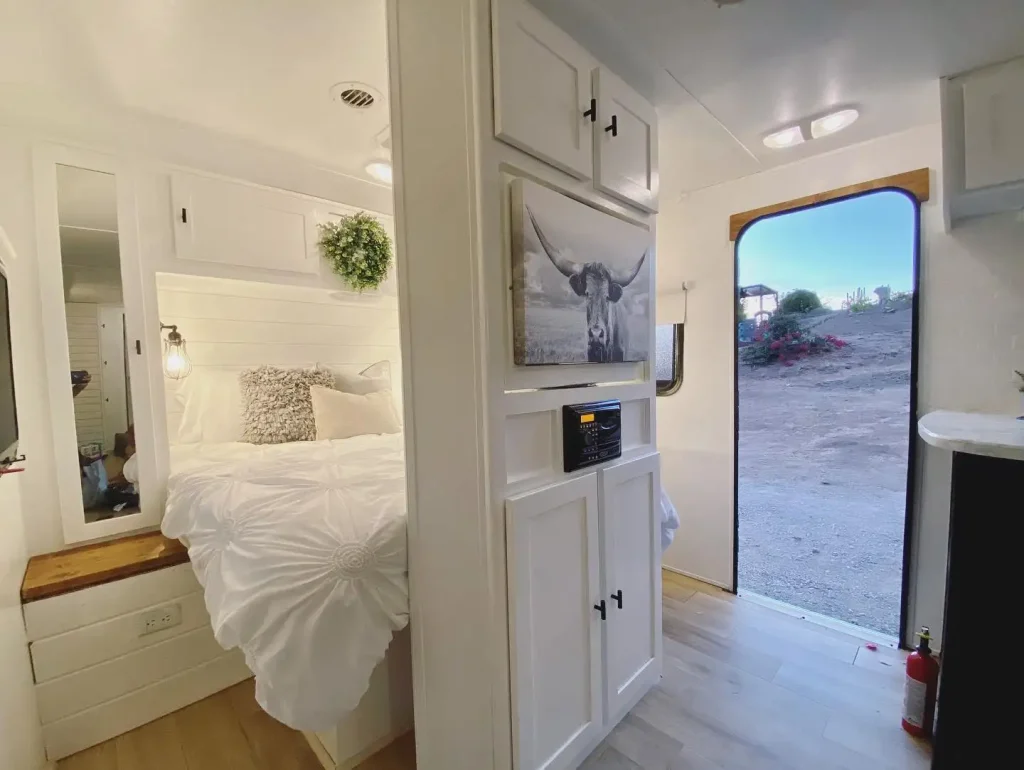
| Lighting Type | Best Location | Benefit | Power Usage |
|---|---|---|---|
| Overhead Fixtures | Center ceiling | General illumination | Moderate |
| Under-Cabinet LEDs | Kitchen/bathroom | Task lighting | Low |
| Wall Sconces | Bedside/entry | Ambient lighting | Low |
| String Lights | Accent areas | Decorative ambiance | Low |
| Reading Lamps | Seating areas | Focused lighting | Low |
10. Color Palette Development
Select cohesive colors creating harmonious, spacious-feeling interiors. Strategic color choices influence perceived dimensions significantly.
Light, neutral colors expand visual perception in cramped spaces. Coordinated palettes create unified, sophisticated environments.
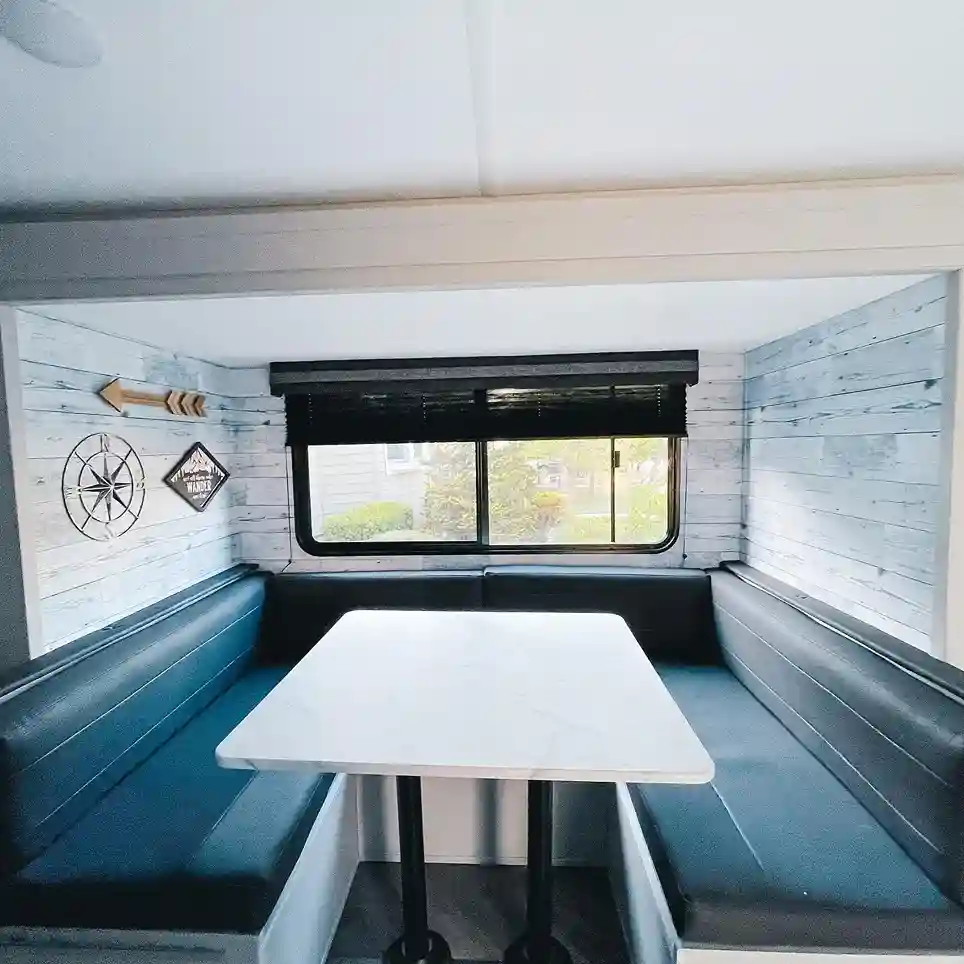
- Paint walls light neutral colors reflecting light and expanding space
- Use accent colors sparingly defining areas without overwhelming interior
11. Small Bedroom Interior Design
Create restful bedrooms supporting quality sleep. Peaceful bedroom spaces enable rejuvenating sleep despite limited dimensions.
Strategic bedroom design balances comfort with space efficiency. Well-designed sleeping areas become beloved retreats.
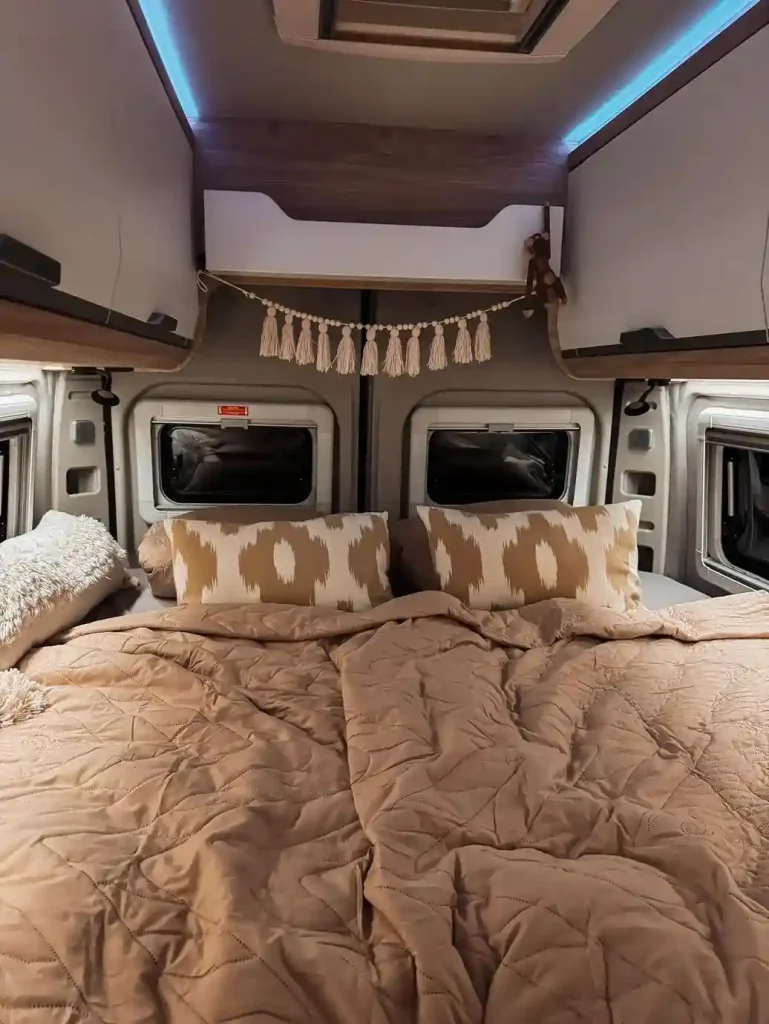
- Keep bedrooms uncluttered maintaining peaceful, restful environments
- Include soft textures creating cozy, comfortable sleeping atmospheres
12. Living Room Design Strategies
Transform living areas into comfortable gathering spaces. Thoughtful living room design encourages quality family time.
Strategic living room arrangement maximizes functionality and comfort. Well-designed spaces support entertaining and relaxation equally.
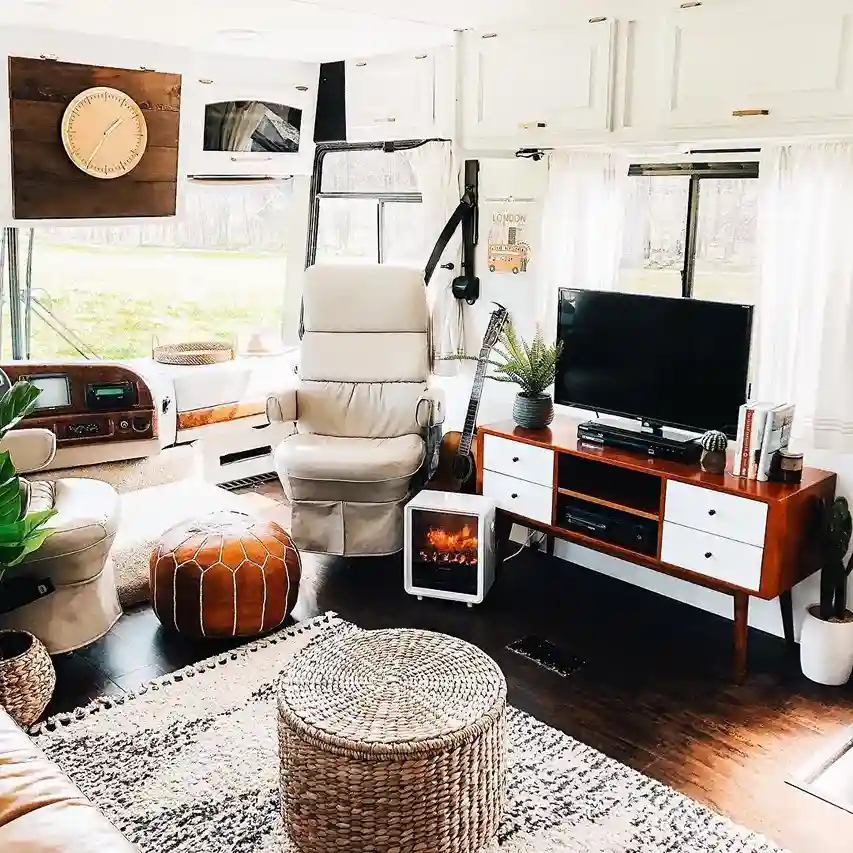
- Include comfortable seating encouraging extended relaxation and family bonding
- Add soft lighting creating warm, inviting evening atmospheres
13. Compact Bathroom Fixtures
Select space-saving fixtures designed for tiny bathrooms. Efficient fixtures maintain functionality within severe space constraints.
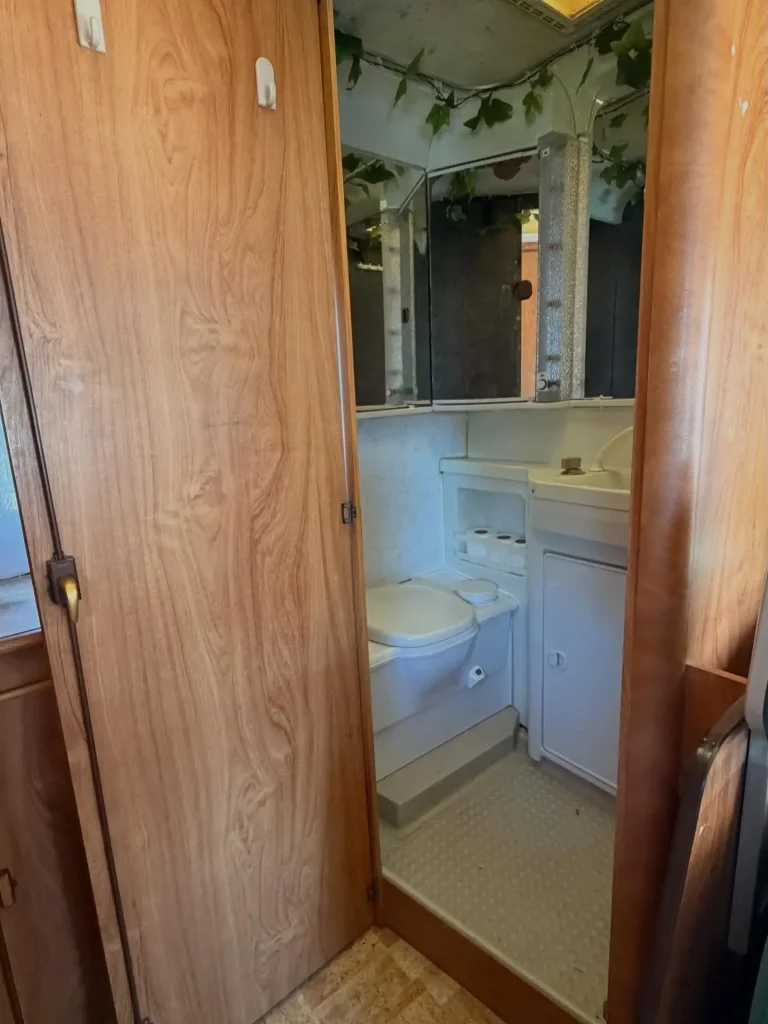
Purpose-built bathroom fixtures prevent design compromises. Strategic selections support comfort without sacrificing functionality.
- Install corner sinks utilizing typically wasted corner space
- Choose wall-mounted toilets freeing floor space for movement
14. Space-Saving Furniture Ideas
Choose furniture specifically designed for small spaces. Purpose-built pieces enable comfortable living despite limitations.
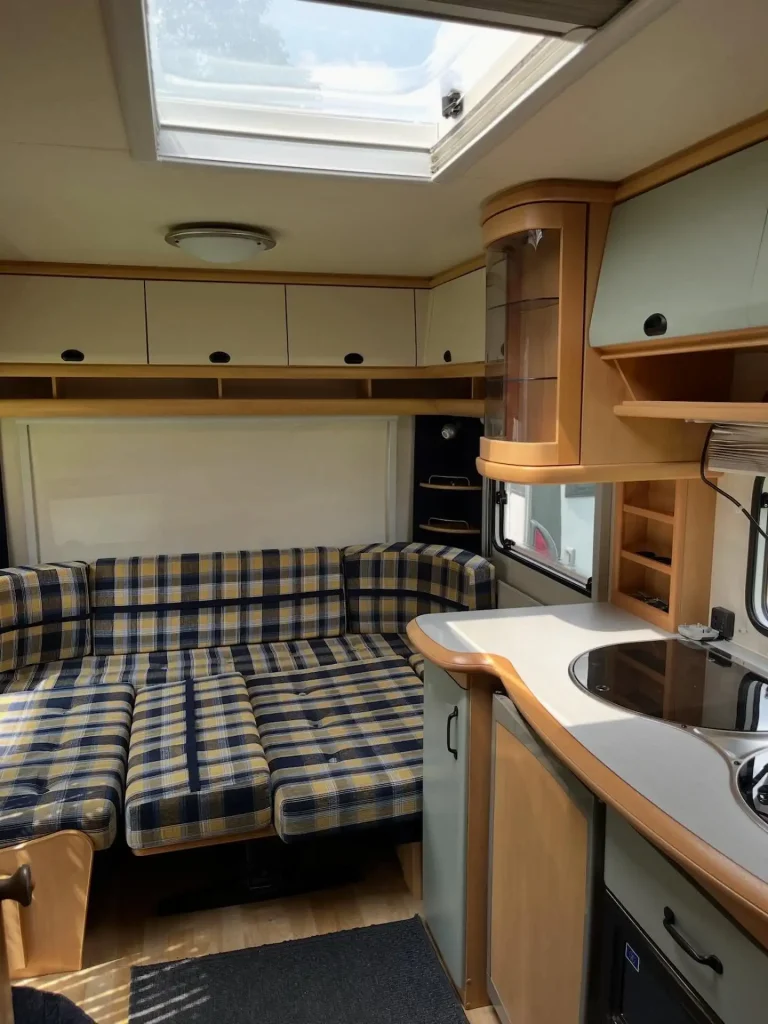
Space-saving furniture maximizes functionality per square inch. Quality selections prevent cramped, uncomfortable feeling.
- Select pieces with open legs maintaining visual space and light flow
- Include storage furniture combining seating with organizational function
15. Multipurpose Room Design
Design areas serving multiple functions simultaneously. Strategic multipurpose design maximizes limited space efficiency.
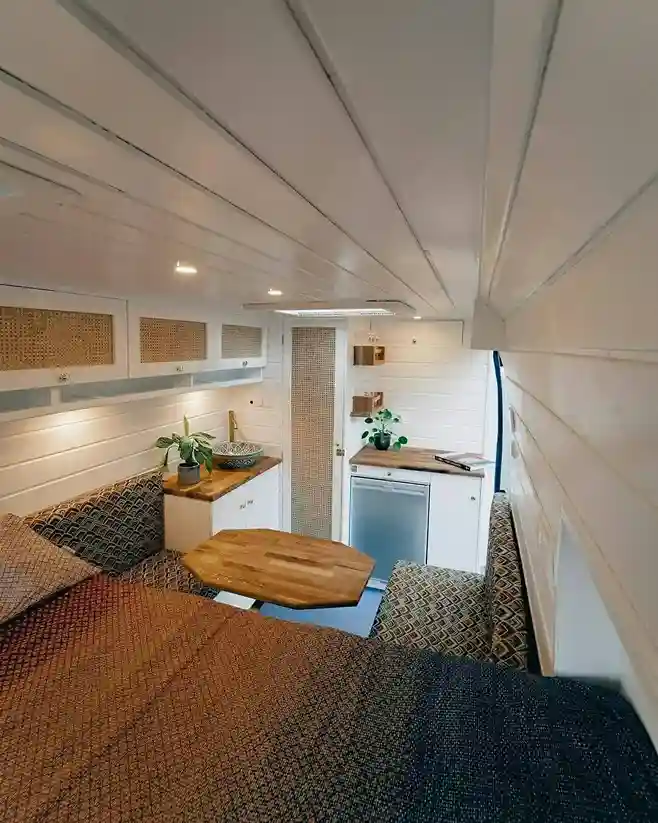
Multipurpose rooms enable various activities without dedicated spaces. Flexible arrangements adapt to changing daily needs.
| Activity Zone | Daytime Use | Evening Use | Transition Method |
|---|---|---|---|
| Seating Area | Living space | Sleeping surface | Convertible sofa |
| Dining Zone | Meal service | Work surface | Convertible table |
| Entertainment | Media center | Sleeping area | Murphy bed |
| Work Space | Desk function | Dining surface | Fold-down desk |
| Storage | Organization | Additional seating | Storage benches |
16. Window Treatment Integration
Design windows maximizing light while providing privacy. Strategic window treatments balance openness with privacy needs.
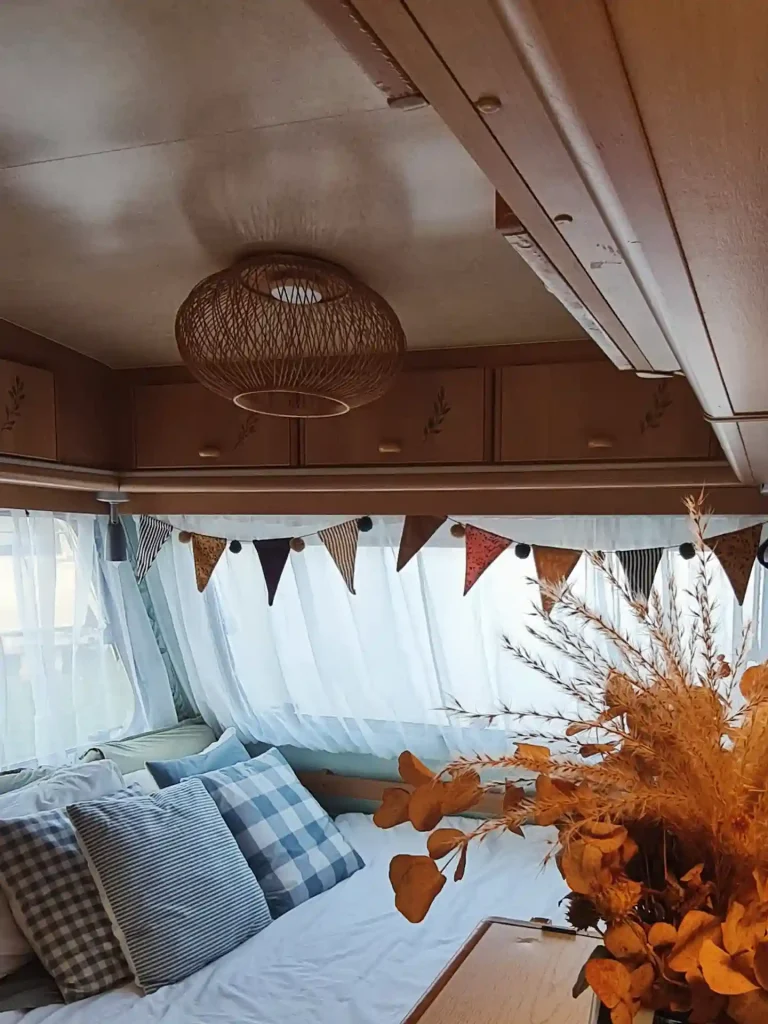
Windows influence perceived space and interior brightness. Well-treated windows enhance both function and aesthetics.
- Use sheer curtains maintaining light while providing privacy
- Install cellular shades maximizing insulation and light control
17. Storage Solutions Integration
Implement comprehensive storage maximizing available space. Organized storage prevents clutter maintaining comfortable environments.
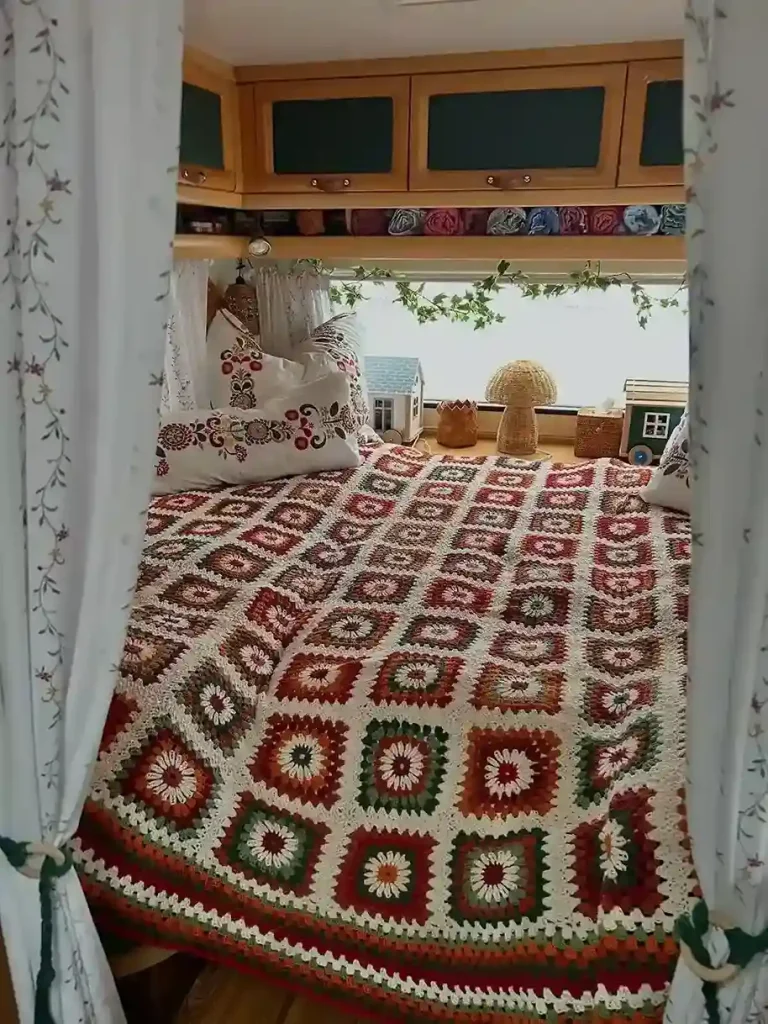
Strategic storage combines accessibility with space efficiency. Well-planned systems support comfortable extended living.
- Create under-bed storage utilizing typically wasted space effectively
- Install wall organizers providing storage without floor space consumption
18. Interior Layout Planning
Map interior layouts maximizing flow and functionality. Thoughtful planning prevents inefficient, cramped arrangements.
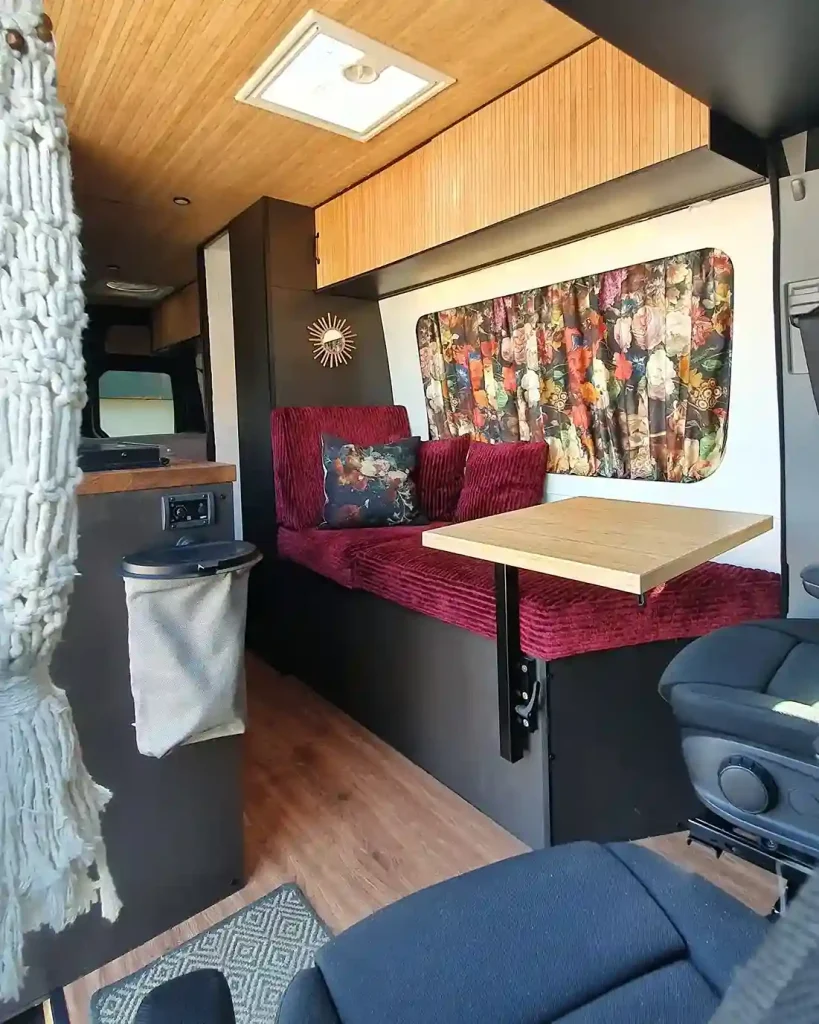
Strategic layouts enable movement without obstacle navigation. Well-planned spaces support comfortable daily activities.
- Leave clear pathways enabling unobstructed movement throughout camper
- Position frequently used items accessibly reducing daily frustration
19. Flooring Material Selection
Choose durable, attractive flooring materials. Quality flooring resists wear while supporting desired aesthetics.
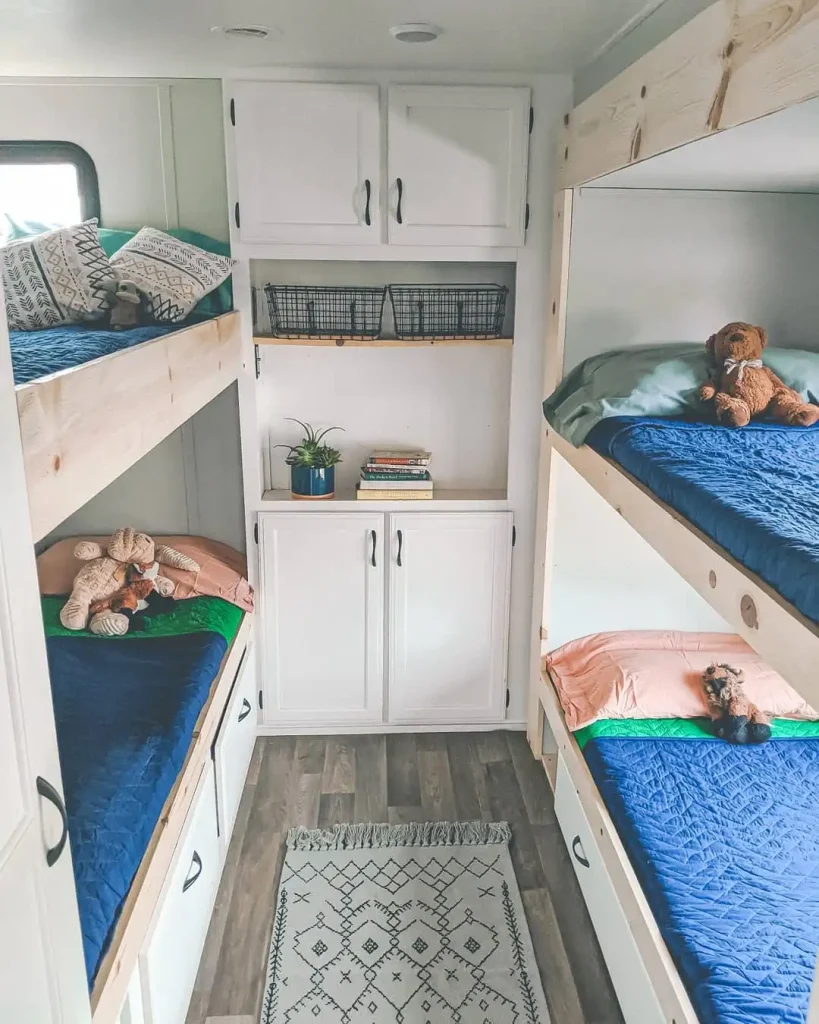
Strategic flooring choices influence overall appearance and functionality. Durable materials justify investment through longevity.
- Select easy-clean materials simplifying maintenance in active living spaces
- Use area rugs defining spaces while protecting underlying flooring
20. Wall Treatment Options
Apply attractive wall treatments creating desired aesthetics. Strategic wall design influences overall camper personality.
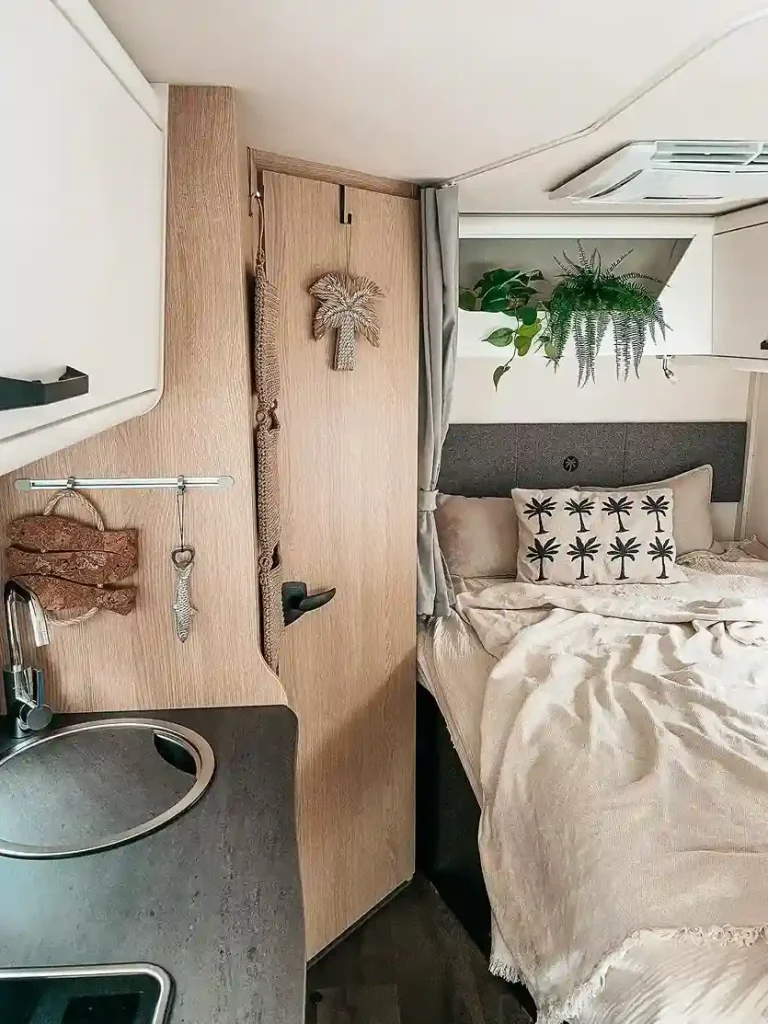
Wall treatments transform blank spaces into personality-filled interiors. Thoughtful selections create cohesive, designed-on-purpose spaces.
- Paint accent walls creating visual interest without overwhelming spaces
- Apply removable wallpaper enabling designs without permanent commitment
21. Small Bathroom Design Strategies
Maximize tiny bathroom functionality and comfort. Organized bathrooms remain pleasant despite severe space limitations.
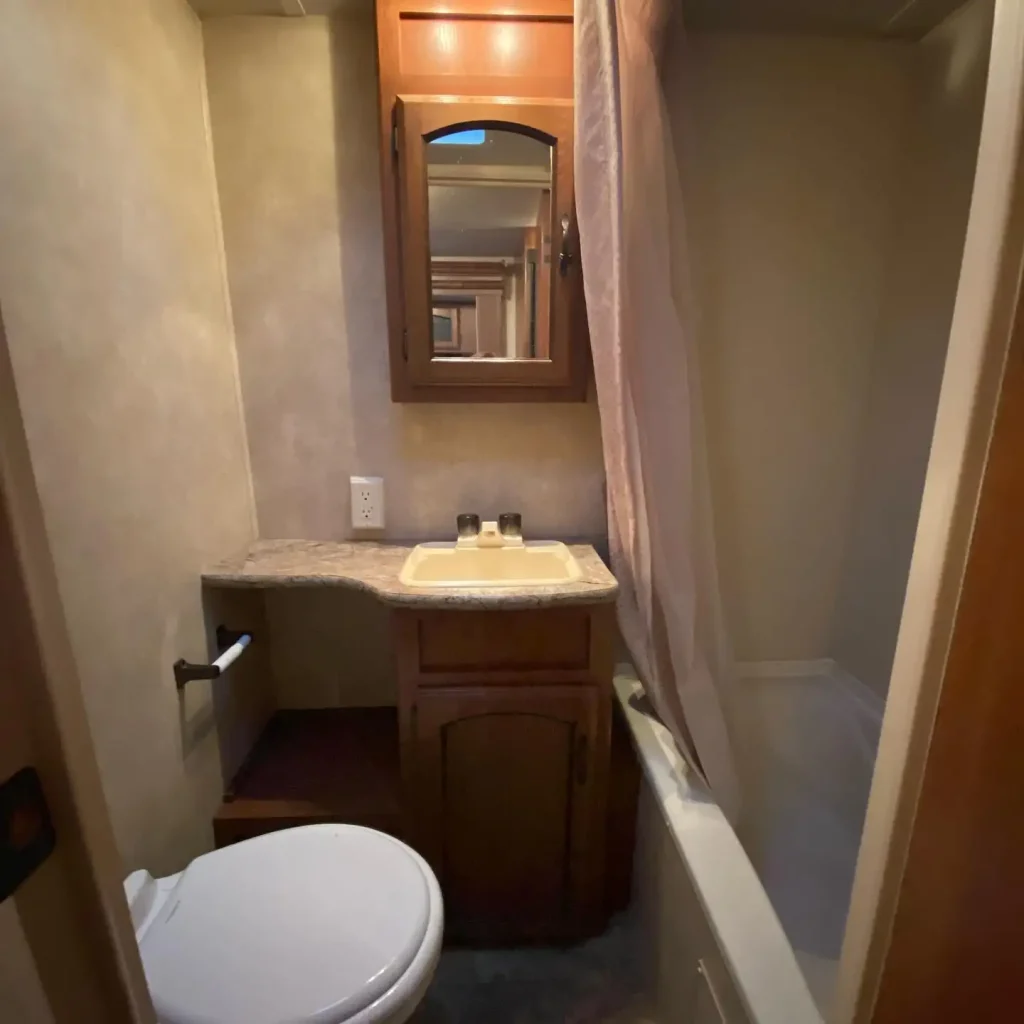
Strategic bathroom design supports comfortable grooming routines efficiently. Well-planned spaces prevent morning frustration and congestion.
- Utilize vertical space through shelving and storage solutions
- Select compact fixtures designed for tiny bathroom dimensions
22. Kitchen Space Optimization
Maximize limited kitchen functionality and storage. Efficient kitchens enable varied meal preparation despite constraints.
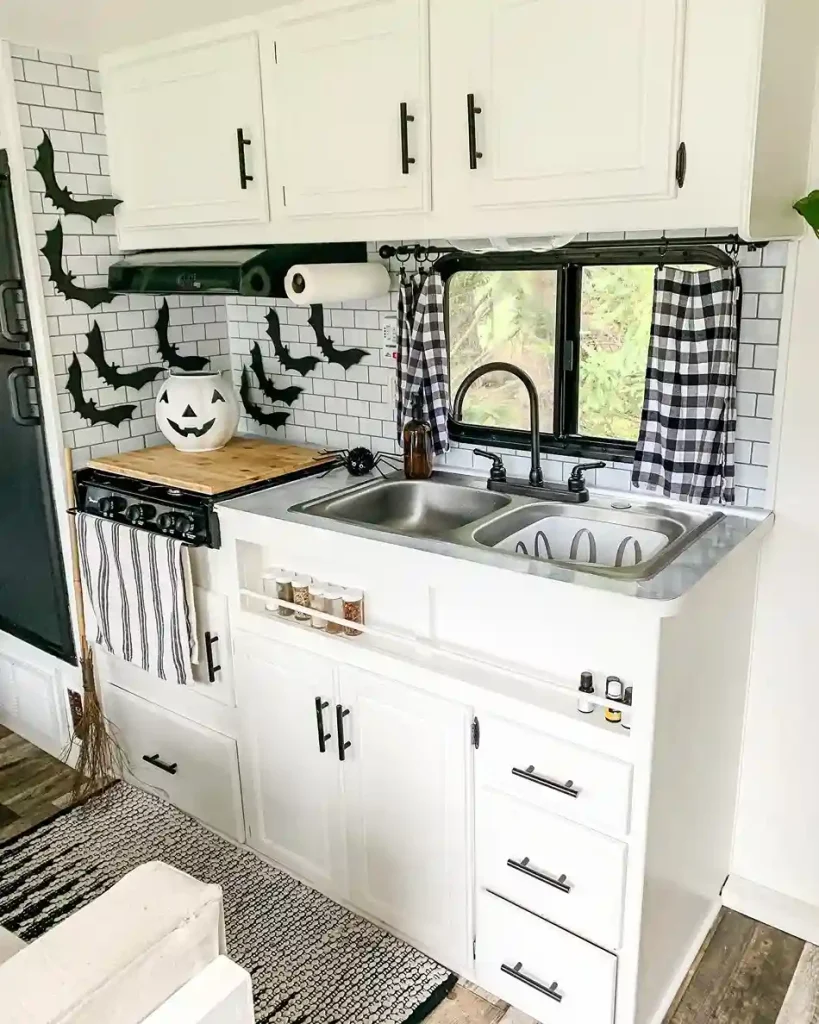
Kitchen space solutions support cooking without overwhelming cramped areas. Strategic organization maintains functionality and cleanliness.
- Implement pull-out storage accessing items without removing everything
- Use wall space for hanging storage and organizational systems
23. Bedroom Storage Solutions
Maximize bedroom storage preventing clothing overflow. Organized bedrooms maintain peaceful, restful environments.
Strategic storage supports comfortable extended traveling. Well-organized spaces prevent excessive luggage and clutter.
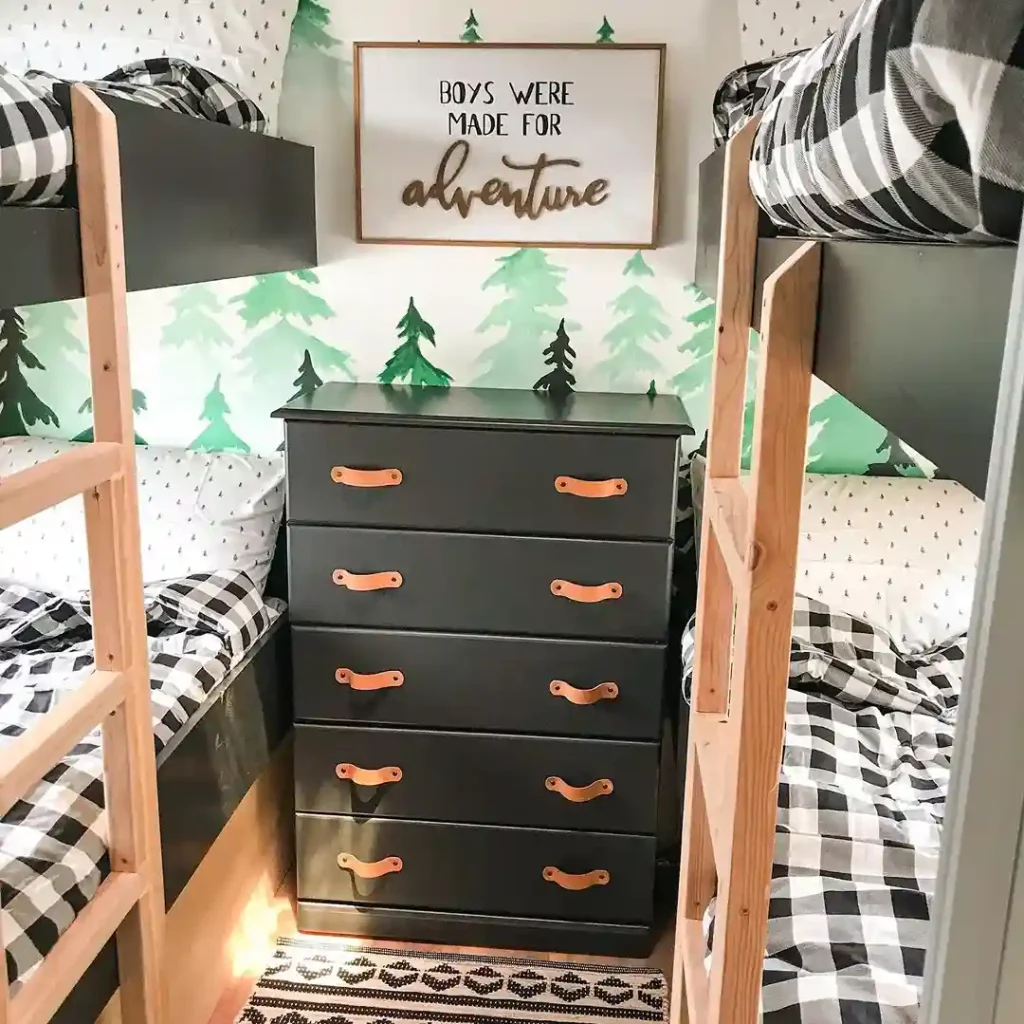
- Use under-bed storage utilizing wasted space beneath sleeping surfaces
- Install wall shelving providing accessible storage without floor consumption
24. Living Space Flow Design
Create natural traffic patterns enabling unobstructed movement. Good flow prevents cramped, congested feeling.
Strategic furniture arrangement supports comfortable daily movement. Well-designed layouts enable functional living despite limited space.
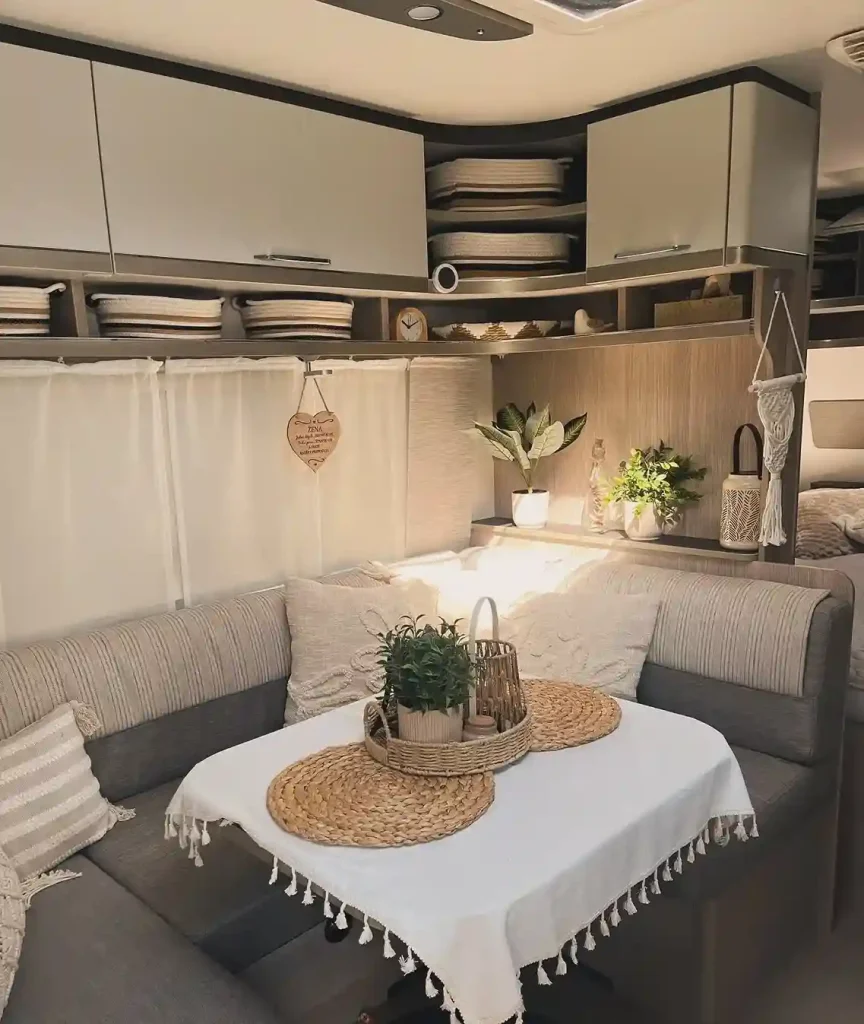
- Avoid furniture blocking pathways maintaining clear circulation routes
- Position seating enabling conversation versus isolated positioning
25. Accent Color Implementation
Use accent colors creating visual interest and personality. Strategic color pops enliven neutral base designs.
Carefully selected accents prevent overwhelming small spaces. Color selections communicate personal style effectively.
- Paint single accent walls creating focal points without overwhelming
- Add colored textiles providing changeable color elements
26. Tiny Home Design Principles
Apply tiny home design approaches to camper interiors. Proven strategies optimize extremely limited spaces.
Tiny home principles maximize functionality and comfort. Strategic approaches transform severe limitations into advantages.
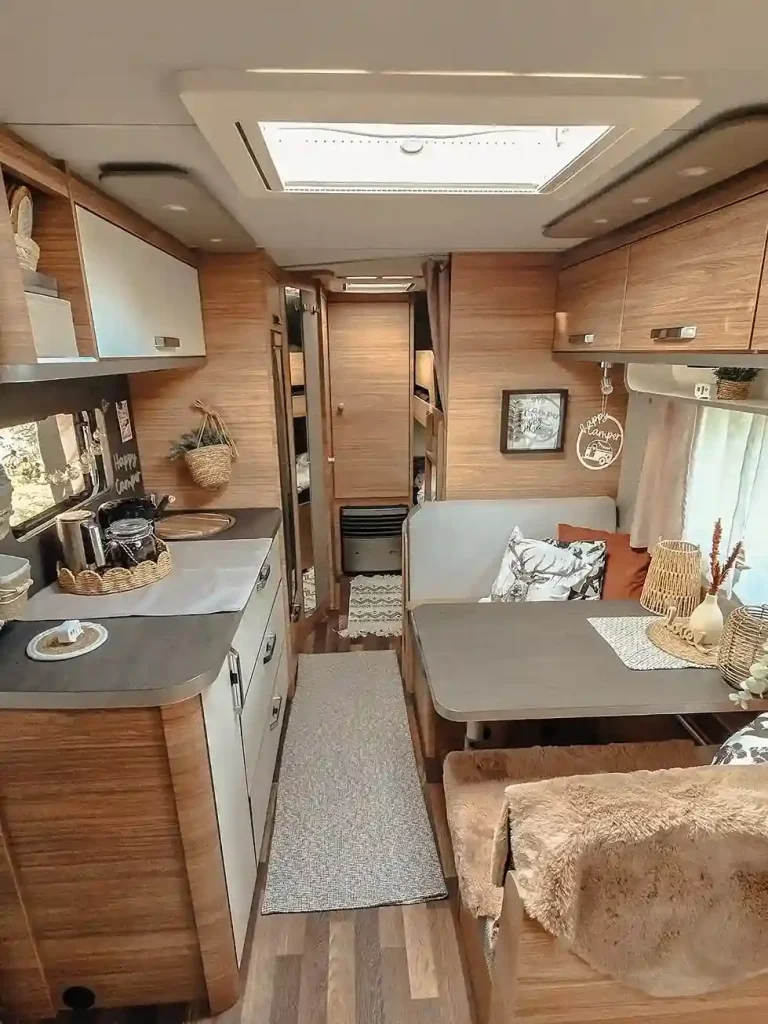
- Implement vertical storage utilizing full height of campers
- Choose multi-functional items justifying every square inch
27. Minimalist Interior Approach
Embrace minimalist design reducing visual clutter and stress. Simplified environments support mental wellbeing during travels.
Minimalist interiors feel spacious despite actual dimensions. Intentional selections prevent overwhelming tiny spaces.
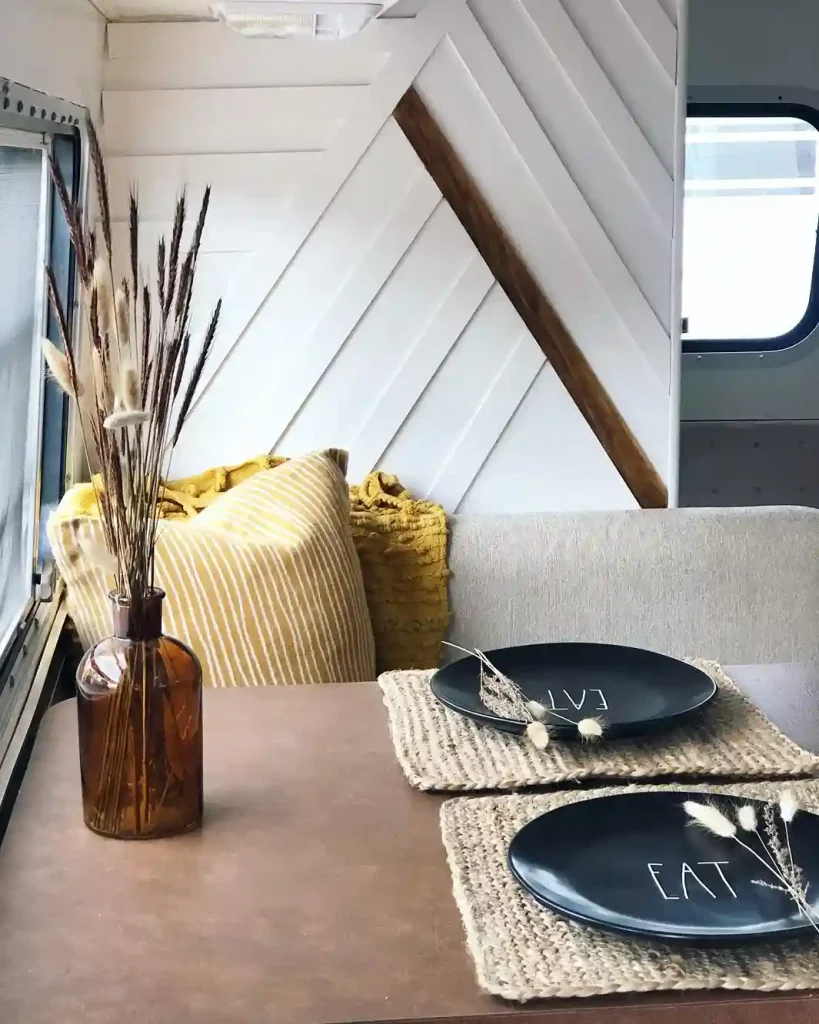
- Keep only essential items preventing unnecessary clutter
- Maintain consistent color palettes supporting unified aesthetic
28. Efficient Space Design Strategies
Apply efficient design principles maximizing functionality per square foot. Strategic approaches prevent wasted space.
Thoughtful design prevents inefficient, cramped arrangements. Well-planned layouts support comfortable extended living.
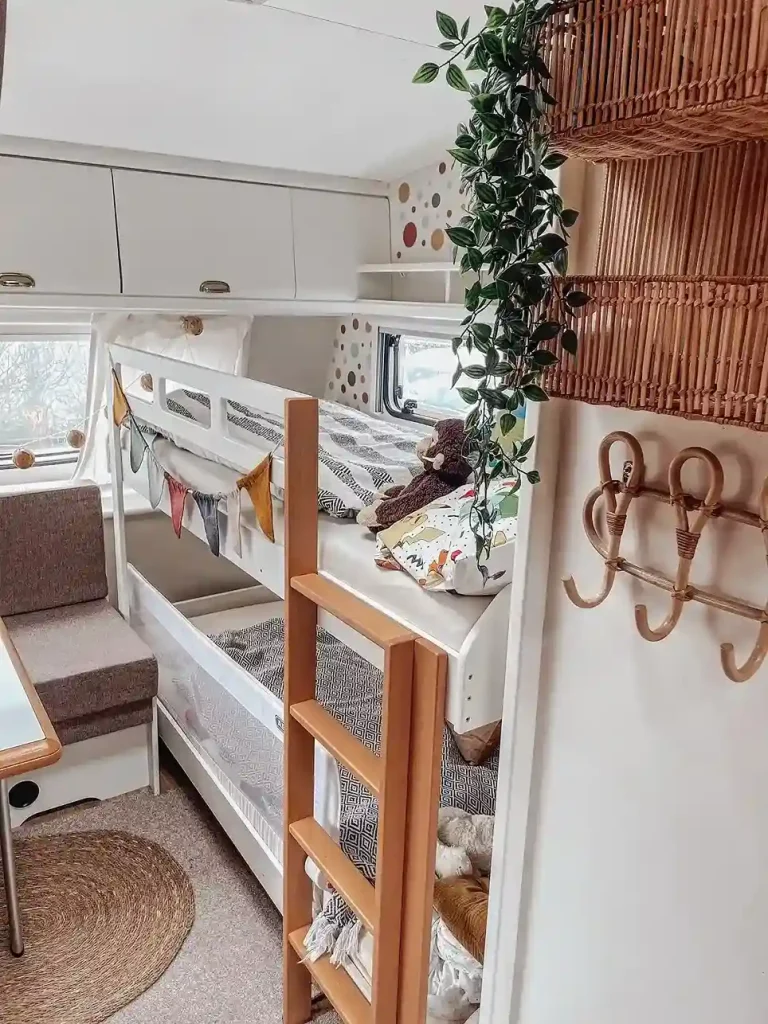
- Position frequently-used items accessibly reducing daily frustration
- Create dedicated zones supporting different activities
29. Bedroom Corner Solutions
Transform awkward corners into functional spaces. Strategic corner use maximizes total interior space.
Corner bedrooms create private sleeping areas efficiently. Thoughtful arrangement prevents wasted dimensions.
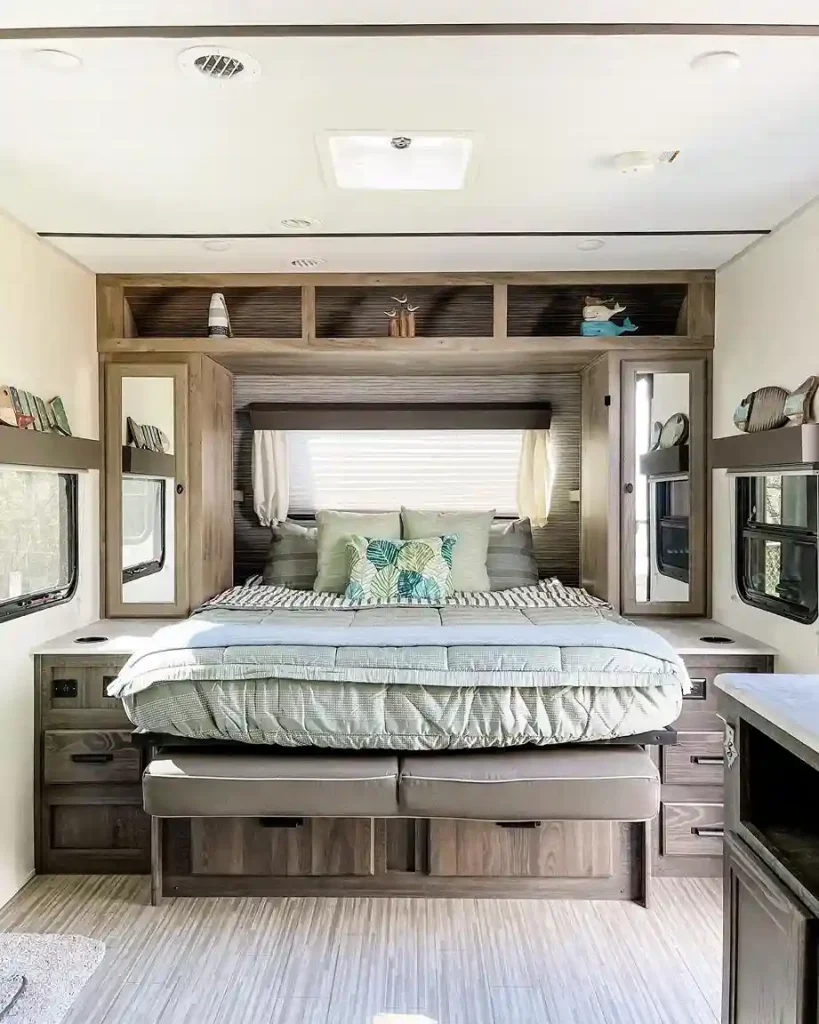
- Position beds diagonally utilizing corner space effectively
- Add corner lighting illuminating sleeping areas appropriately
30. Furniture Arrangement for Flow
Arrange furniture creating comfortable, functional layouts. Strategic positioning enables efficient daily activities.
Good arrangement prevents congestion and frustration. Thoughtful placement supports natural movement patterns.
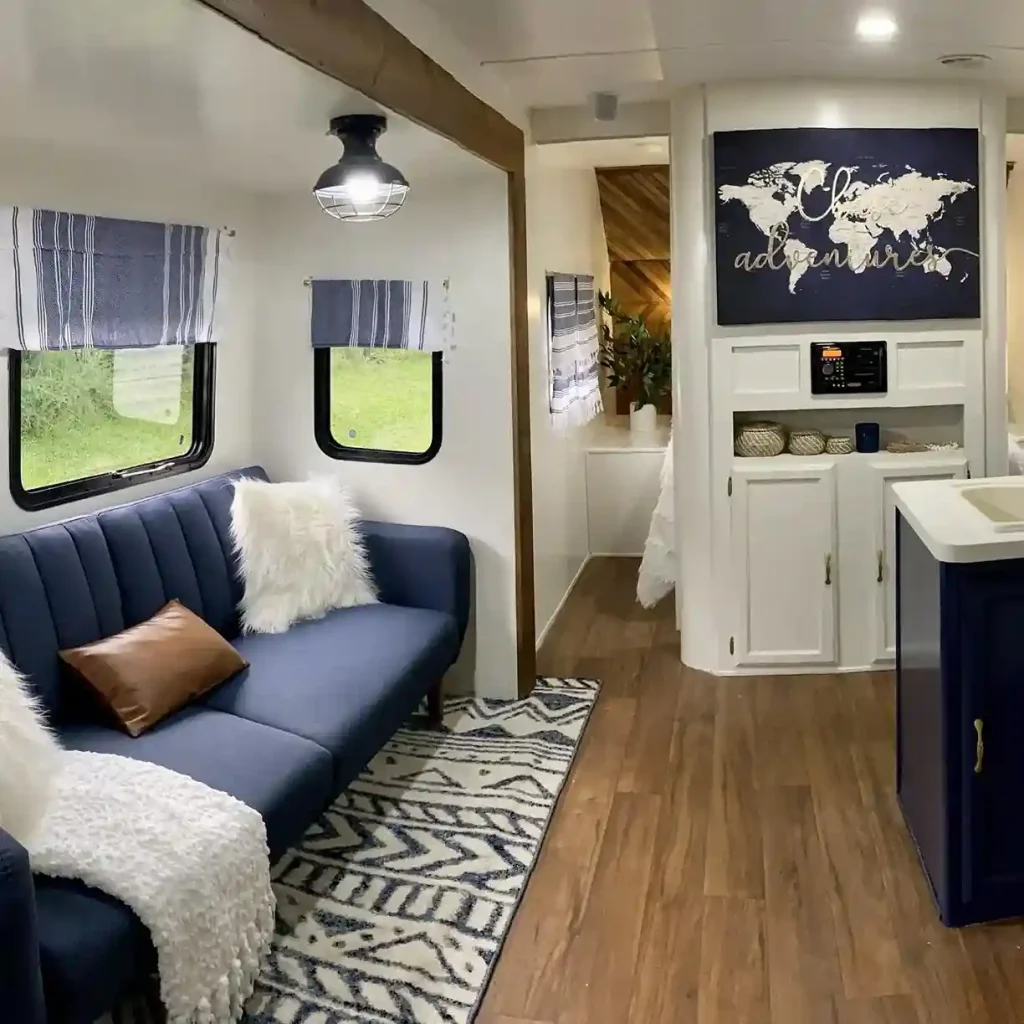
| Layout Principle | Purpose | Benefit | Implementation |
|---|---|---|---|
| Traffic Flow | Clear pathways | Easy movement | Furniture positioning |
| Conversation Angles | Face-to-face interaction | Social connection | Strategic seating |
| Visual Balance | Aesthetic equilibrium | Pleasing appearance | Distributed placement |
| Functional Zones | Activity separation | Organized use | Area definition |
| Light Distribution | Even illumination | Brightness consistency | Strategic placement |
31. Vertical Organization Systems
Maximize wall space through vertical organization. Strategic shelving and storage multiply available storage.
Vertical approaches free floor space for movement. Wall organization transforms unused vertical dimensions.
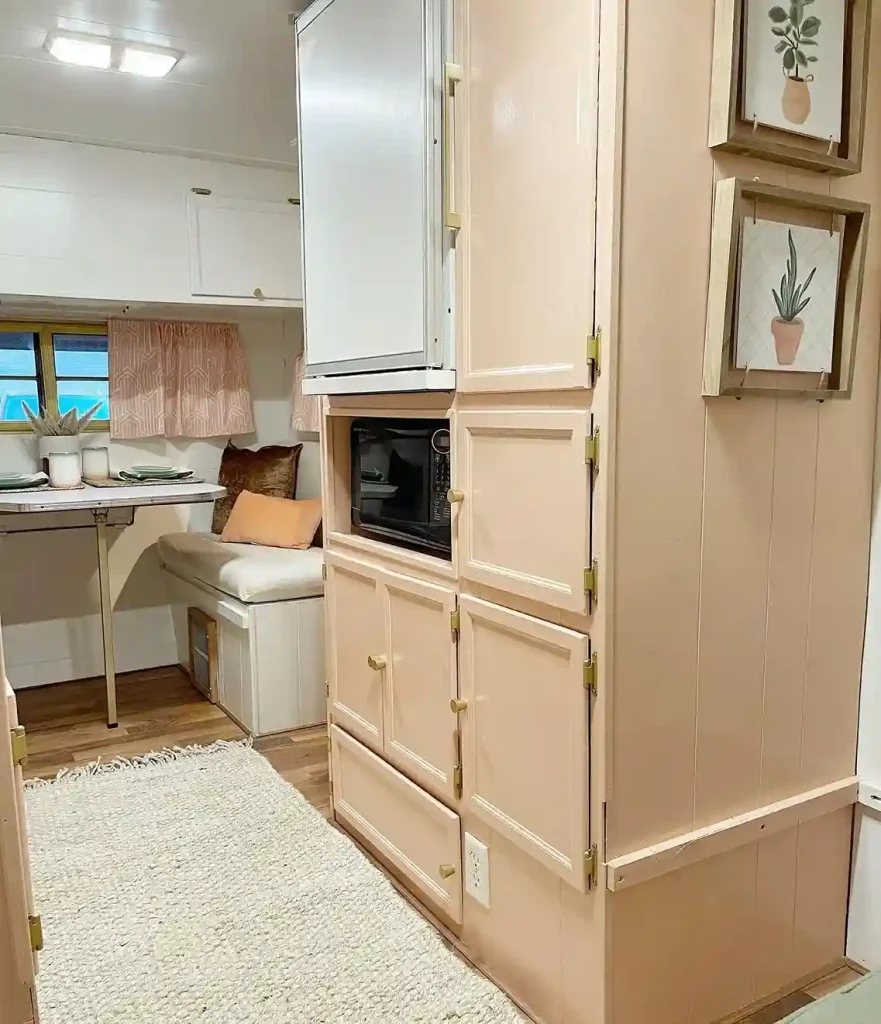
- Install pegboards providing flexible, customizable storage and display
- Add floating shelves creating accessible, organized storage without bulky cabinets
32. Compact Living Solutions
Apply compact living solutions specifically designed for tiny spaces. Proven approaches enable comfortable extended living.
Compact design principles address unique camper challenges effectively. Strategic solutions prevent compromising comfort or functionality.
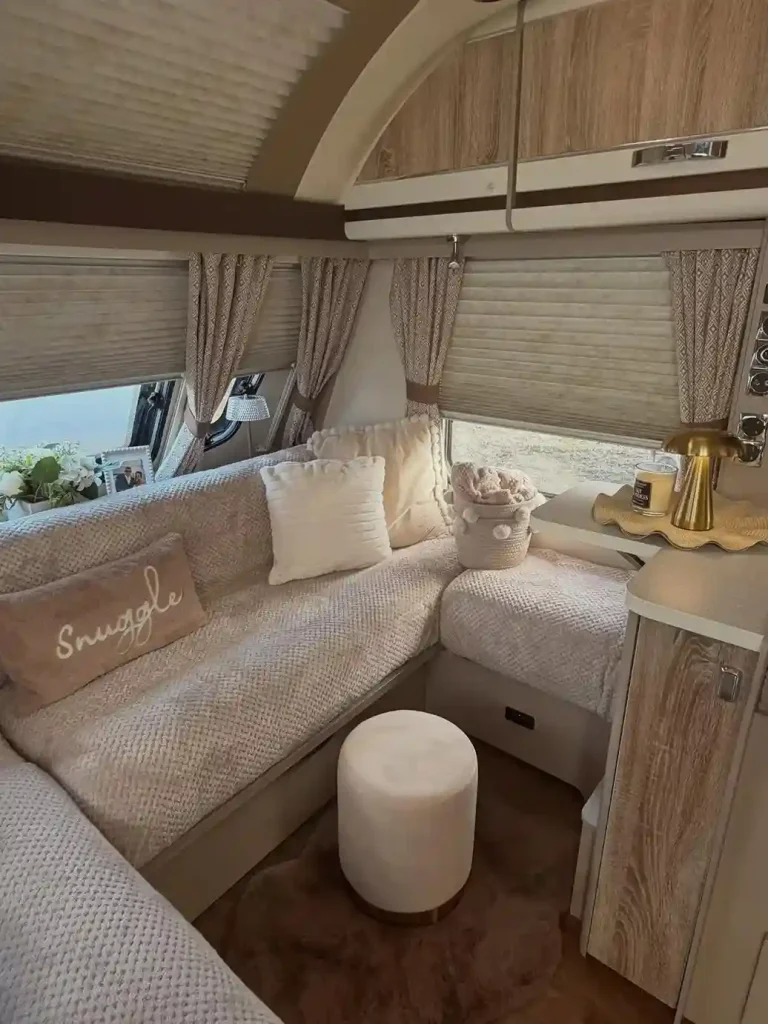
- Choose collapsible items storing compactly when unused
- Select convertible furniture adapting to different activities
33. Interior Color Coordination
Create cohesive color schemes throughout interiors. Coordinated colors create unified, sophisticated environments.
Strategic color coordination influences perceived space size significantly. Well-coordinated palettes create intentional, beautiful designs.
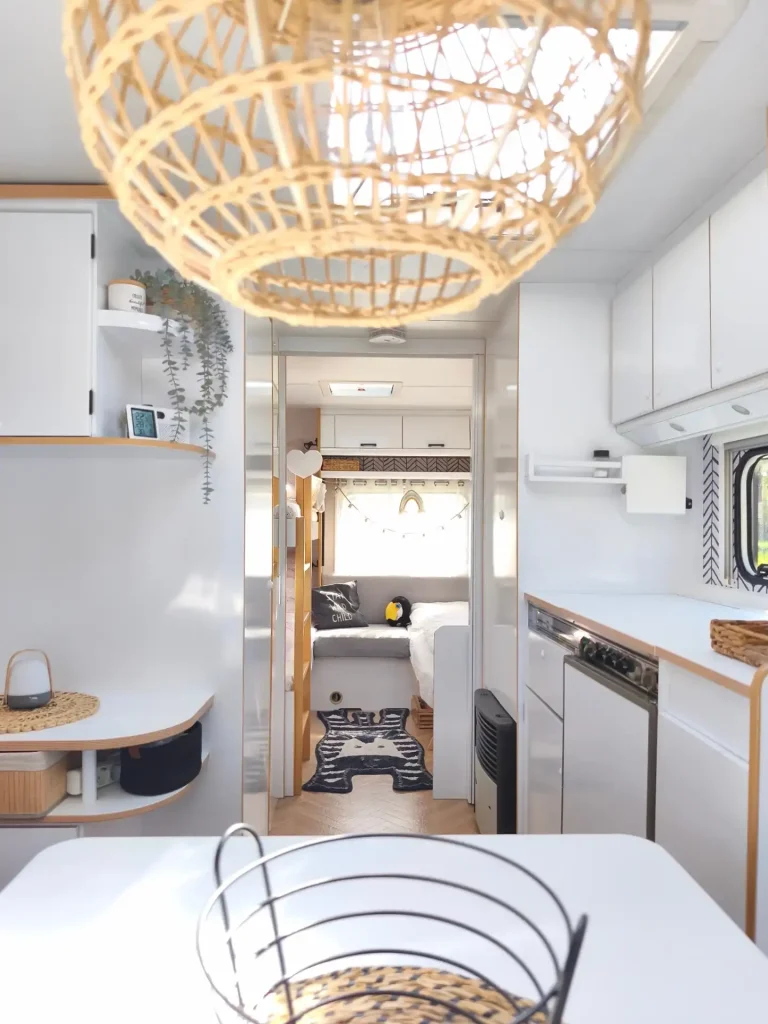
- Select 2-3 main colors creating unified, cohesive schemes
- Add accent colors sparingly creating interest without overwhelming
34. Sleeping Area Privacy Solutions
Create bedroom privacy despite open-plan layouts. Private sleeping spaces support quality rest and relaxation.
Privacy enables comfortable sleep and personal space. Strategic solutions prevent disrupted rest from roommate activities.
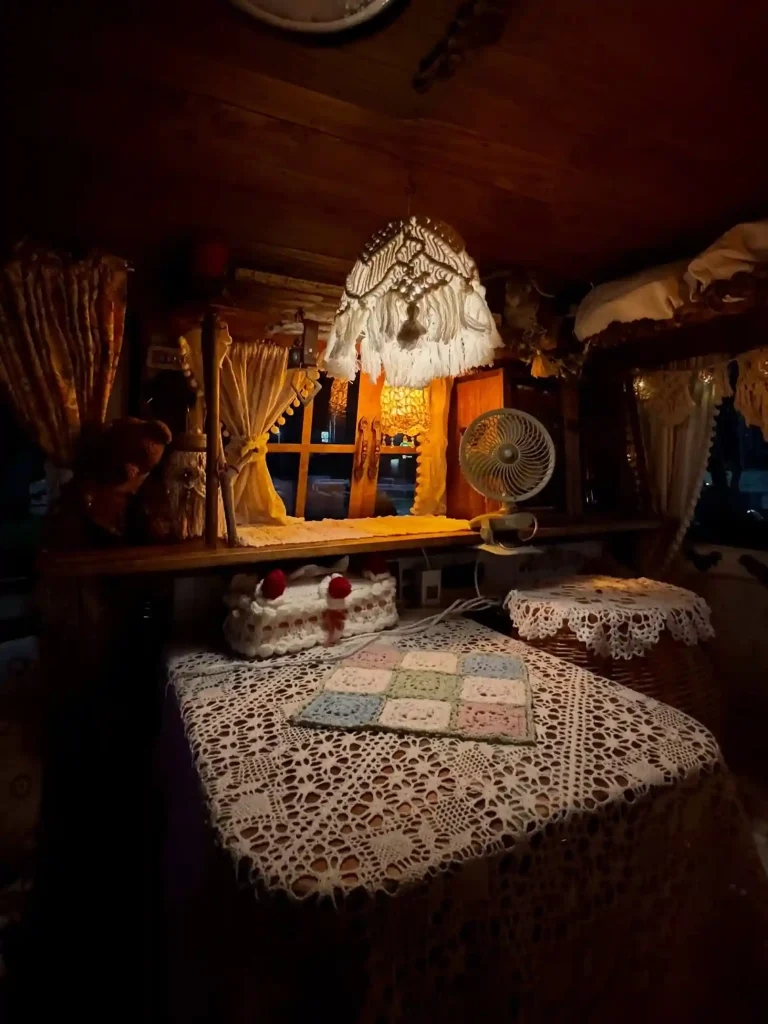
- Install curtain dividers creating visual privacy from living areas
- Position beds strategically utilizing corners and natural privacy
35. Open-Plan Living Integration
Design open-plan layouts maximizing perceived space. Strategic open design creates spacious-feeling interiors.
Open layouts make campers feel larger than actual dimensions. Thoughtful furniture placement defines zones without walls.
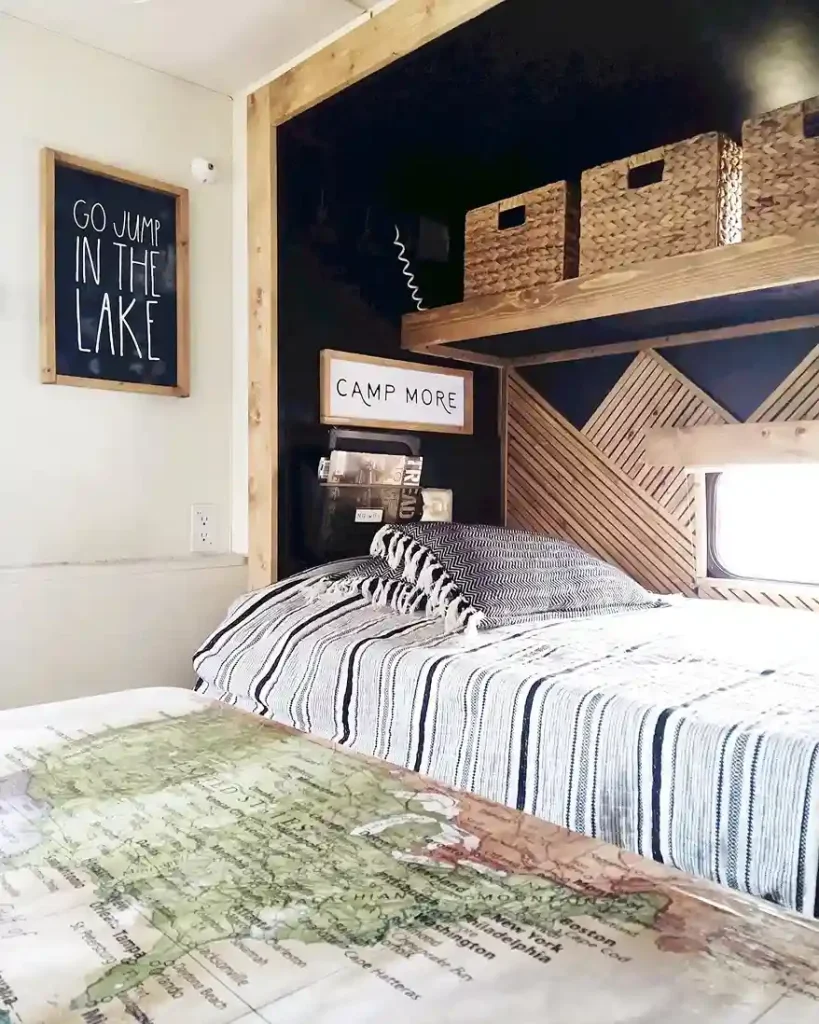
- Use rugs defining space boundaries visually separating activity zones
- Arrange furniture creating natural zone division without walls
36. Bedside Table Alternatives
Create bedside functionality without dedicated tables. Space-saving approaches provide necessary surfaces efficiently.
Alternative solutions provide table functionality without consuming precious space. Creative approaches maintain bedside convenience.
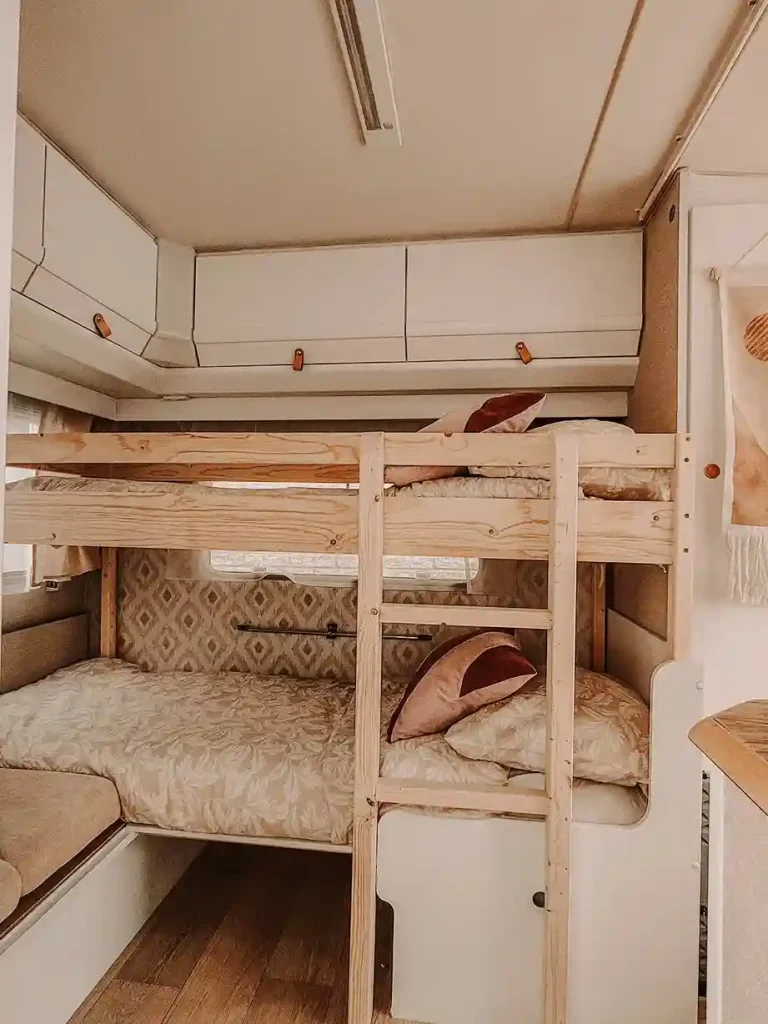
- Install floating shelves providing surface above beds
- Use under-bed storage accessing items from sleeping position
37. Ambient Lighting Creation
Install layered lighting creating desired atmospheres. Strategic lighting transforms mood and perception.
Multiple light sources enable flexible ambiance adjustment. Well-designed lighting supports both function and relaxation.
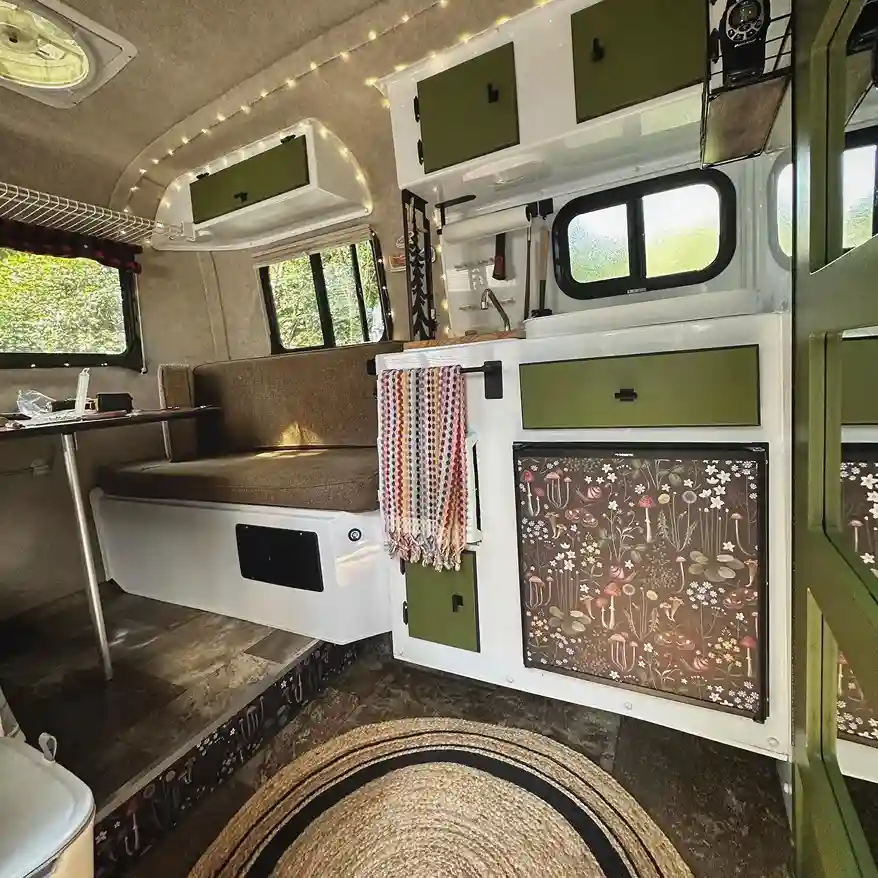
- Use dimmers enabling mood adjustment for different times
- Include accent lighting creating focal points and interest
38. Corner Space Maximization
Transform all corners into functional storage. Corner space represents significant potential storage if utilized creatively.
Strategic corner use prevents wasted dimensions. Creative approaches maximize every square inch.
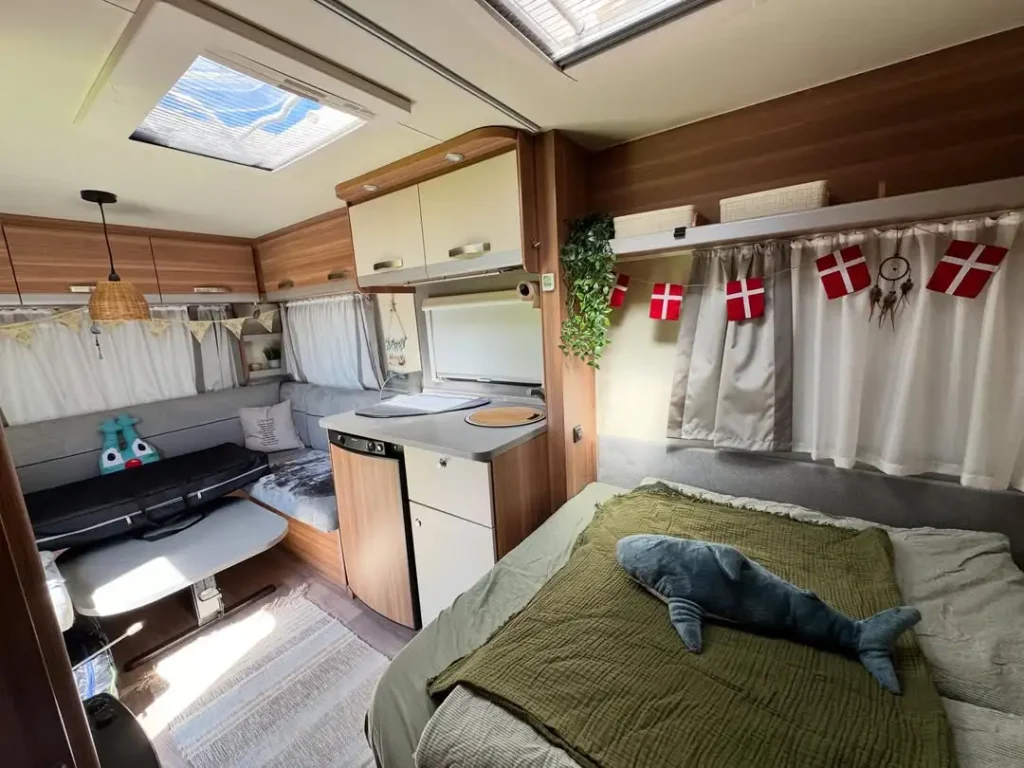
- Install corner shelves utilizing otherwise wasted space
- Position corner seating creating cozy, functional sitting areas
39. Interior Height Utilization
Use full camper height through vertical design. Strategic height utilization dramatically increases storage potential.
Vertical approaches maximize limited footprint area. Full-height design prevents wasting overhead space.
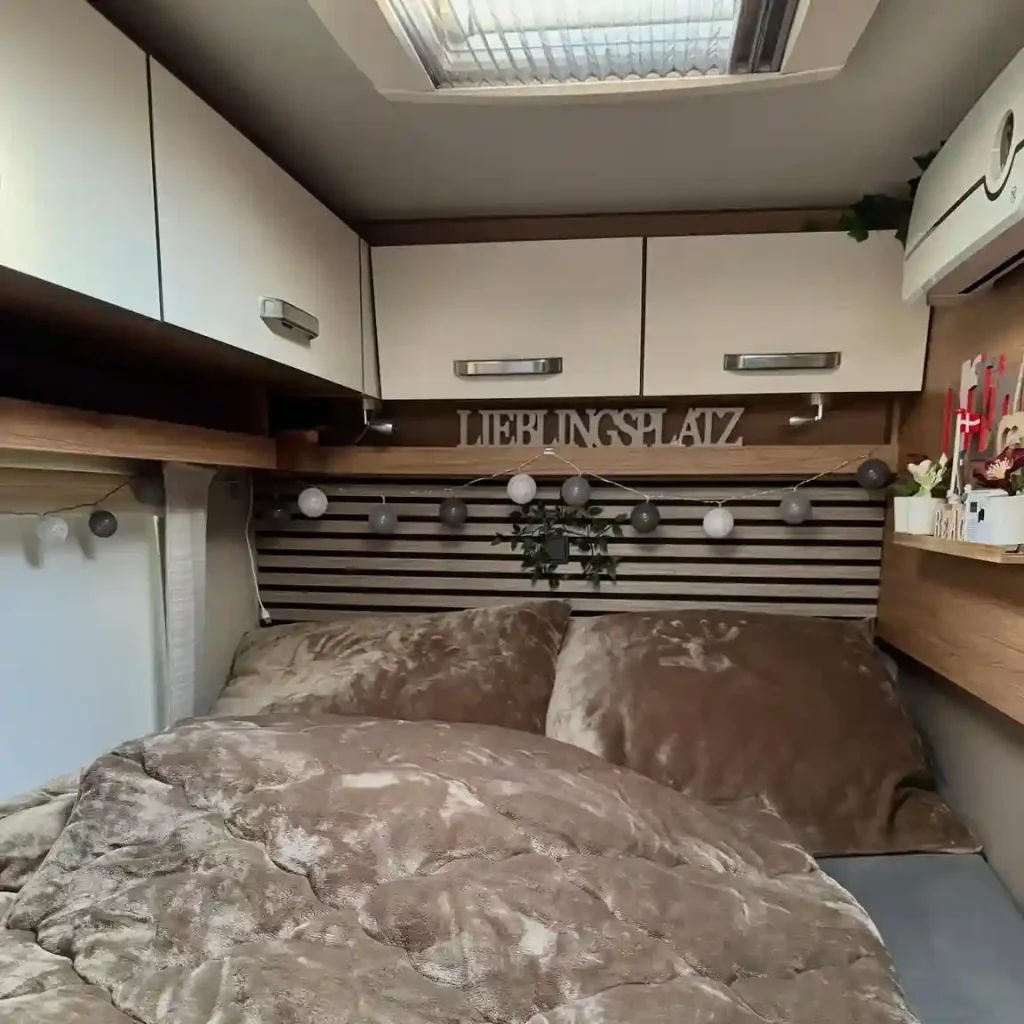
- Install ceiling storage utilizing rarely-accessed overhead space
- Use tall shelving extending storage vertically from floor
40. Personal Style Integration
Incorporate personal style creating emotionally-connected spaces. Personal touches transform generic campers into beloved homes.
Meaningful design choices create emotional attachment to spaces. Personal style transforms functional vehicles into genuine living environments.
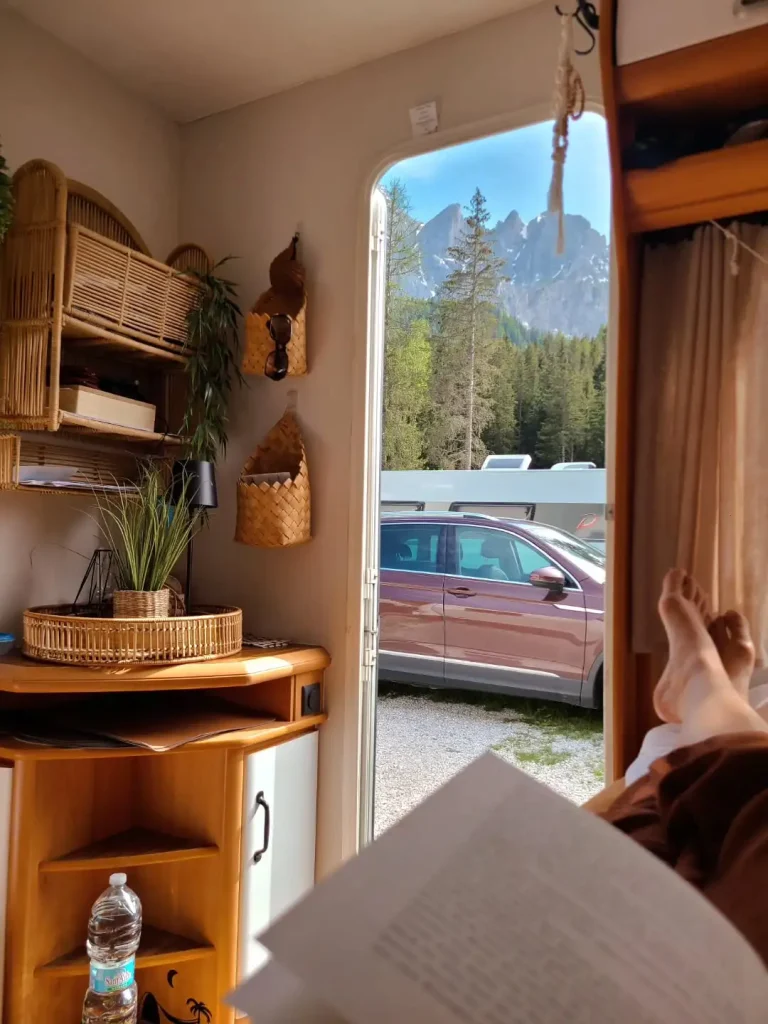
- Display meaningful items creating personal, emotional connections
- Incorporate favorite colors reflecting individual preferences and personality
Frequently Asked Questions
What layout works best for small campers?
Open-floor plans maximizing perceived space work optimally. Multi-functional zones enable various activities within single areas. Arrange furniture promoting traffic flow preventing congestion. Use consistent colors and lighting creating unified, spacious feels.
How can I make a small camper feel larger?
Use light colors reflecting light and expanding perception. Incorporate mirrors amplifying light and space appearance. Maintain minimal clutter reducing visual chaos. Use vertical storage freeing floor space for movement.
What furniture works best for tiny camper spaces?
Choose multi-functional pieces serving multiple purposes simultaneously. Select space-saving designs specifically for compact living. Avoid bulky, oversized furniture overwhelming cramped dimensions. Prioritize essential pieces eliminating unnecessary items.
How do I design for comfort in limited space?
Invest in quality sleeping surfaces supporting rest. Include comfortable seating enabling relaxation. Plan lighting supporting various moods and activities. Organize thoroughly preventing clutter affecting comfort.
Interior Design Style Guide
Modern Minimalist:
- Clean lines and neutral palettes
- Multi-functional, minimal furniture
- Vertical storage emphasis
- Uncluttered surfaces and spaces
Rustic Cabin:
- Natural materials and warm tones
- Cozy textiles and decorative elements
- Wood accents and vintage touches
- Intimate, welcoming atmosphere
Bohemian Eclectic:
- Mixed patterns and global elements
- Colorful, layered textiles
- Plant displays and natural materials
- Personal, expressive aesthetic
Coastal Cottage:
- Light, airy color palettes
- Nautical and seaside elements
- Natural light emphasis
- Breezy, relaxed atmosphere
Transform your small camper into a beautiful, functional living space. Visit MotifSpace.com for comprehensive interior design guidance and inspiration. Explore guides on interior design principles, small space solutions, furniture selection, and multifunctional design creating your ideal mobile home. Design camper interiors reflecting personal style while maximizing comfort and functionality for endless adventures.