Small bathrooms almost never have enough storage.
Towels pile up on the counter. Toilet paper sits on the floor.
There is one spot in most bathrooms that gets ignored: the wall above the toilet. This space is often empty, but it can hold a lot more than you think.
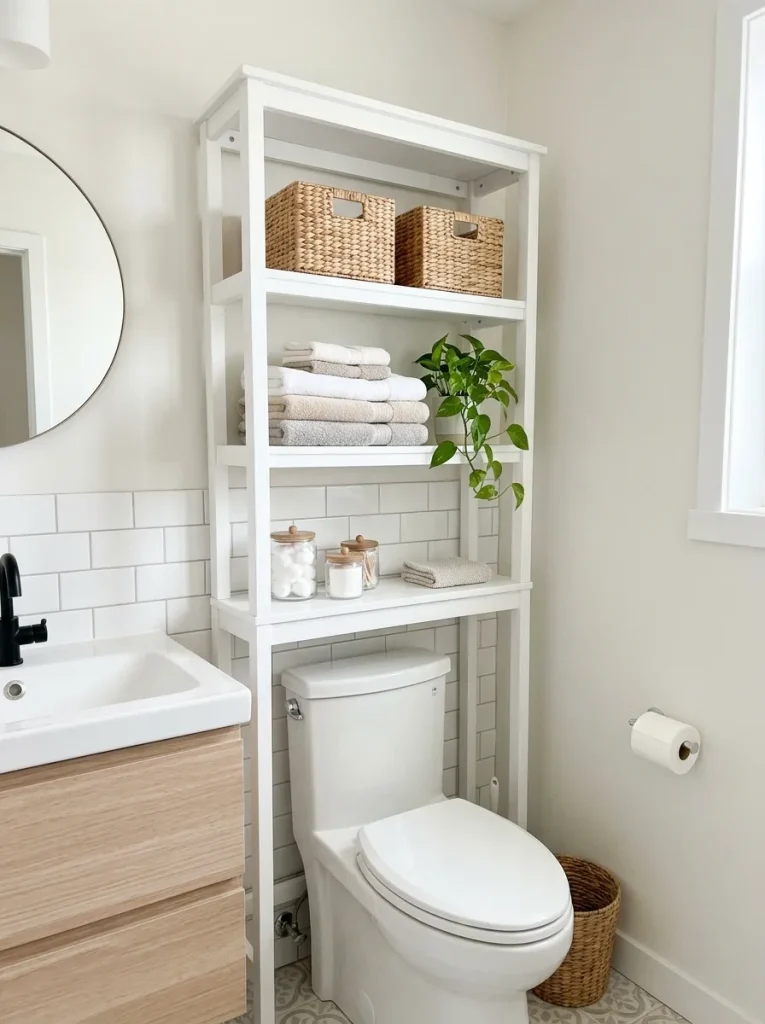
This guide explains everything you need to know about over the toilet storage.
You will learn what it is, the different types you can buy, how to measure your space, how to install it safely, and how to style it so it looks good, not cluttered.
What Is Over-the-Toilet Storage?
Over-the-toilet storage is any shelf, cabinet, or shelving unit placed in the empty wall space above a toilet tank.
It can be a freestanding tower that straddles the toilet, a cabinet mounted to the wall, or a built-in recessed unit inside the wall itself.
The goal is always the same: use empty vertical space to store bathroom items without taking up floor space.
Why Over-the-Toilet Storage Matters
Most bathrooms, especially in apartments and older homes, are small.
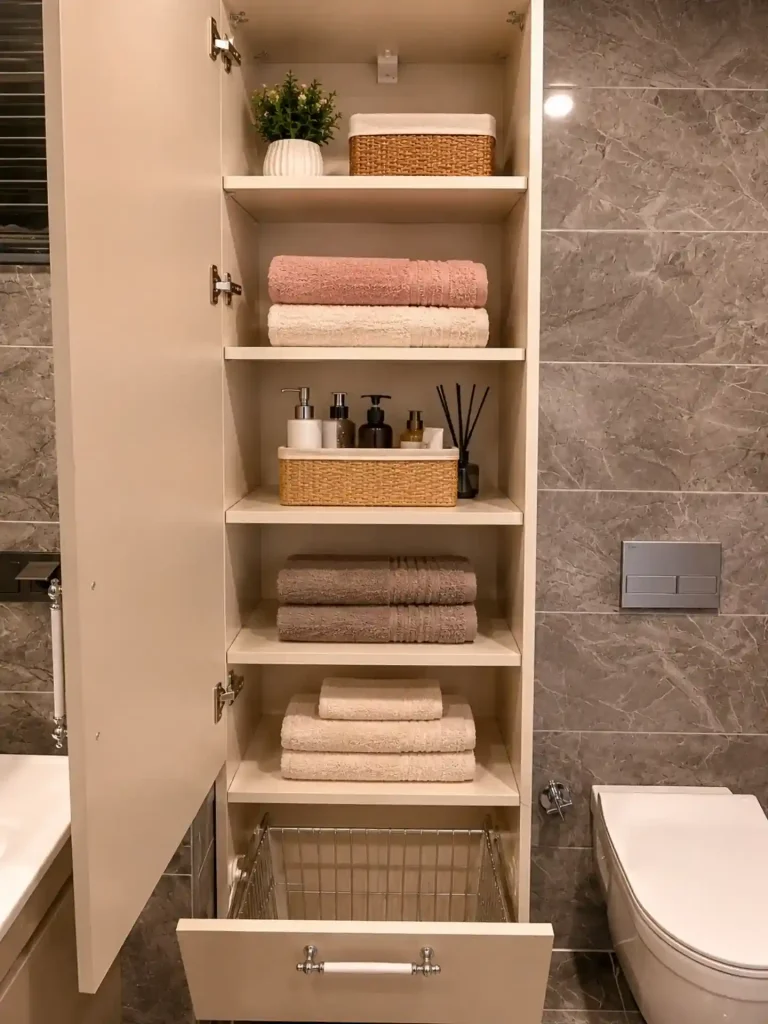
There is rarely room for a dresser or a large linen closet. The wall above the toilet is often the only unused space in the whole room.
Adding storage here solves a few problems at once. It gives you a place for towels, toilet paper, and toiletries.
It clears off your counter and tub ledge. It also gives you a spot to add style, like baskets, candles, or small plants, so the bathroom feels finished instead of empty.
Types of Over the Toilet Storage Units
There are several styles to choose from. The right one depends on your space, your budget, and whether you want to drill into the wall.
1. Étagère Shelving Towers
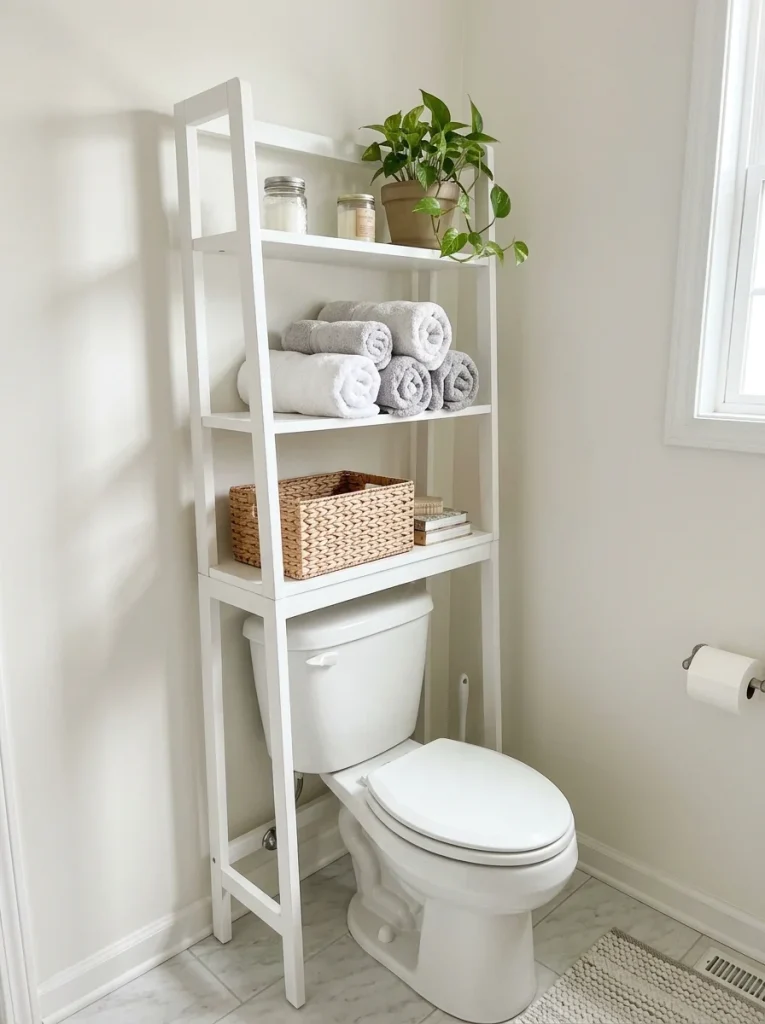
An étagère is a tall, open shelving unit with multiple levels.
Most freestanding over-the-toilet towers use this design.
They straddle the toilet tank and do not need to be mounted to the wall, which makes them easy to install and move later.
They work well for towels, baskets, and decor.
2. Wall-Mounted Cabinets
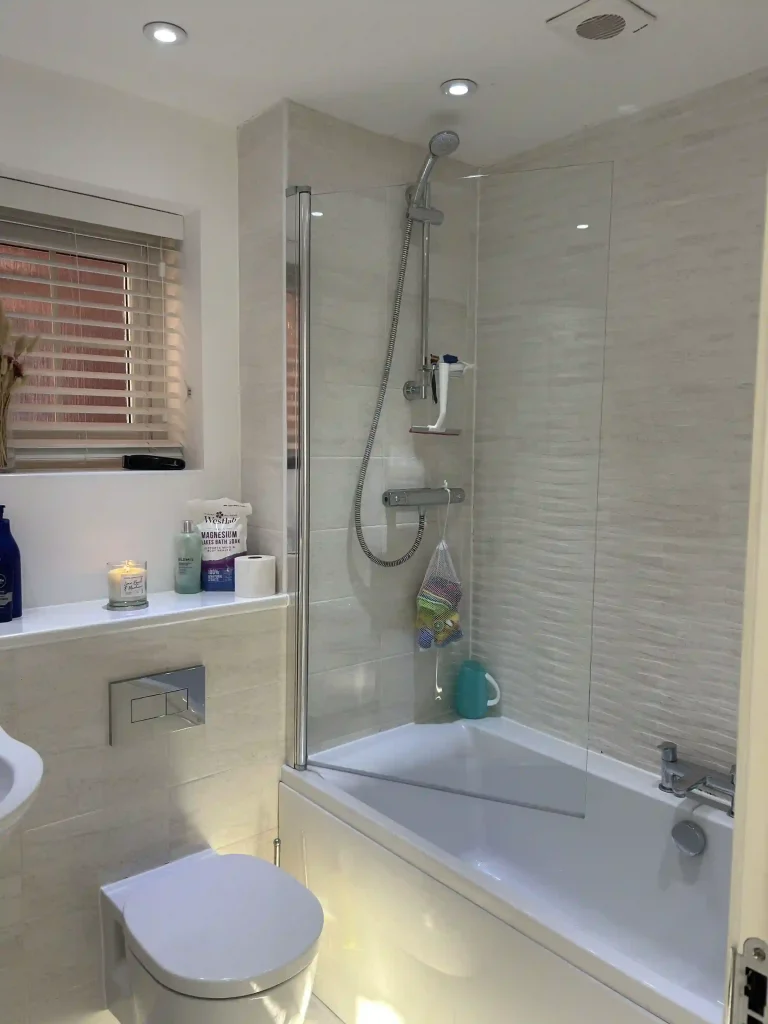
These cabinets attach directly to the wall above the toilet.
Many have doors, sometimes made of wood, glass, or woven cane, so you can hide clutter completely.
This is a good option if you want a clean, finished look with closed storage.
3. Floating Shelves
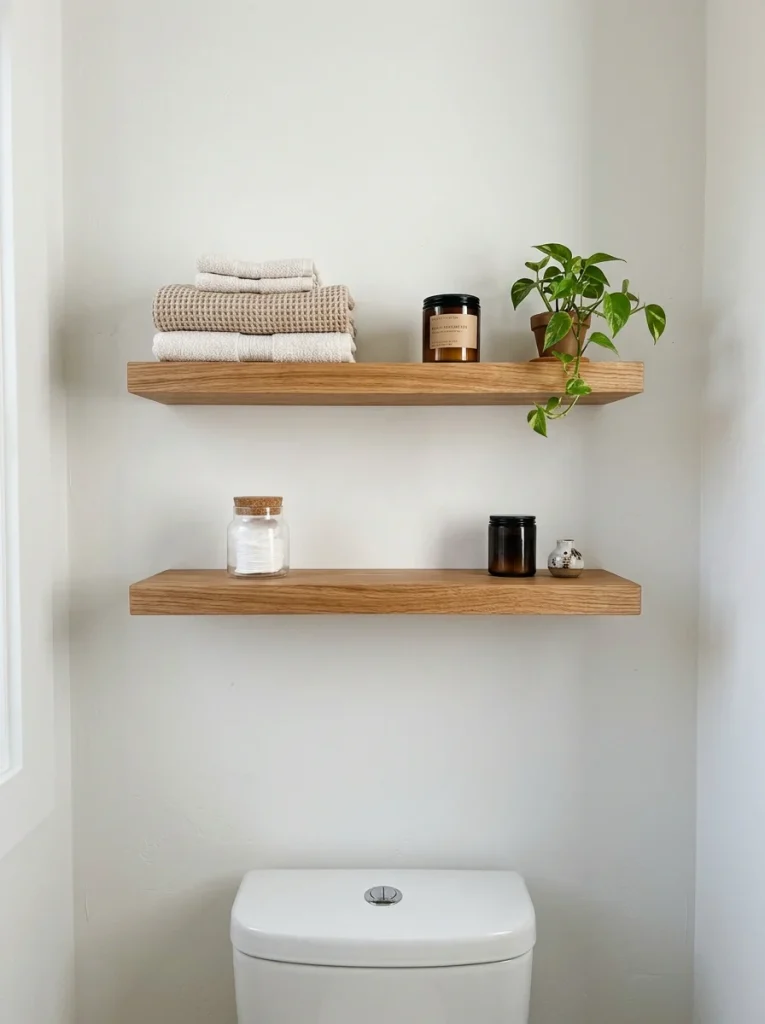
Floating shelves are simple boards mounted to the wall with brackets or a hidden rail.
They are the most minimal option and work best for bathrooms with a modern or simple style.
They do not offer hidden storage, so they work best for neatly folded towels or decorative items.
4. Built-In Recessed Cabinets
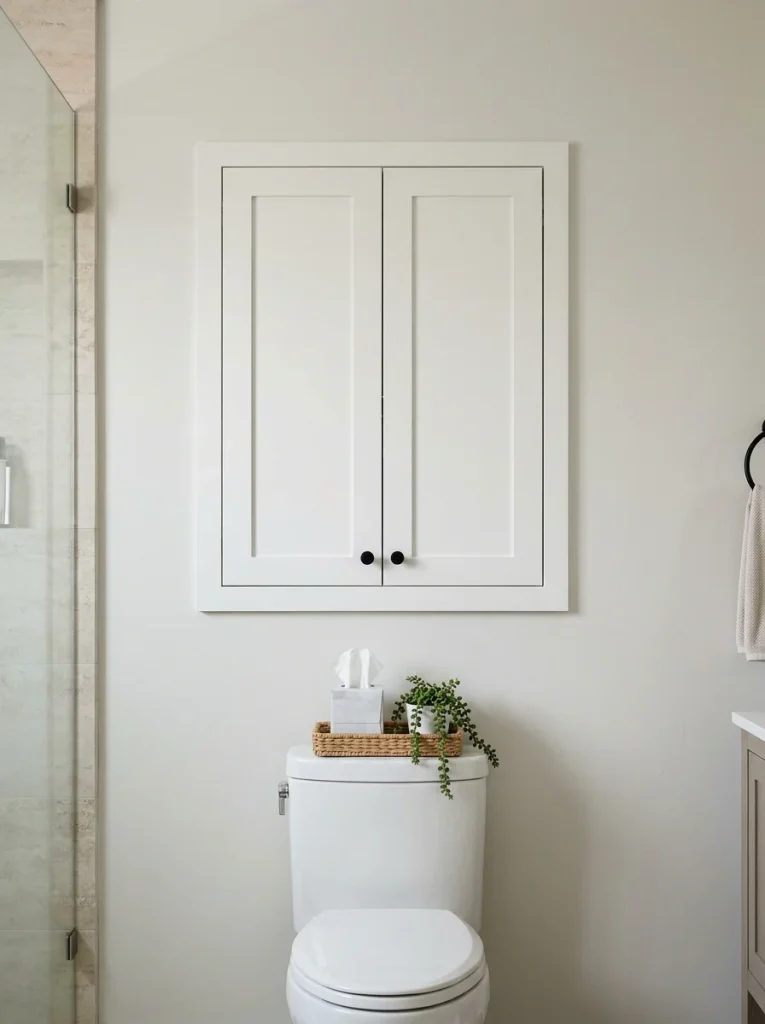
A recessed cabinet is installed inside the wall itself, between the studs, so it sits flush instead of sticking out.
This option takes more work since it usually means cutting into drywall, but it gives you storage without using any extra floor or wall space.
It works well during a renovation or new construction.
5. Ladder Shelves
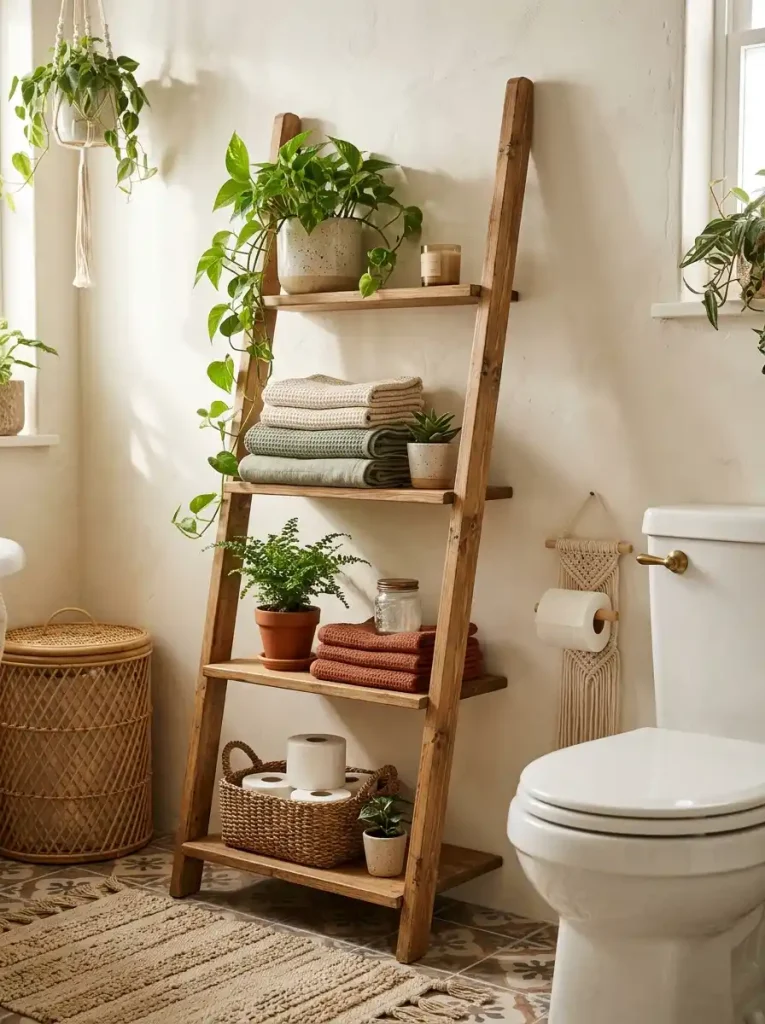
A ladder shelf leans against the wall at an angle instead of attaching to it.
It is freestanding and needs no drilling.
It usually has three to five open shelves and works well in bathrooms with a boho or farmhouse style.
6. Slim Linen Towers
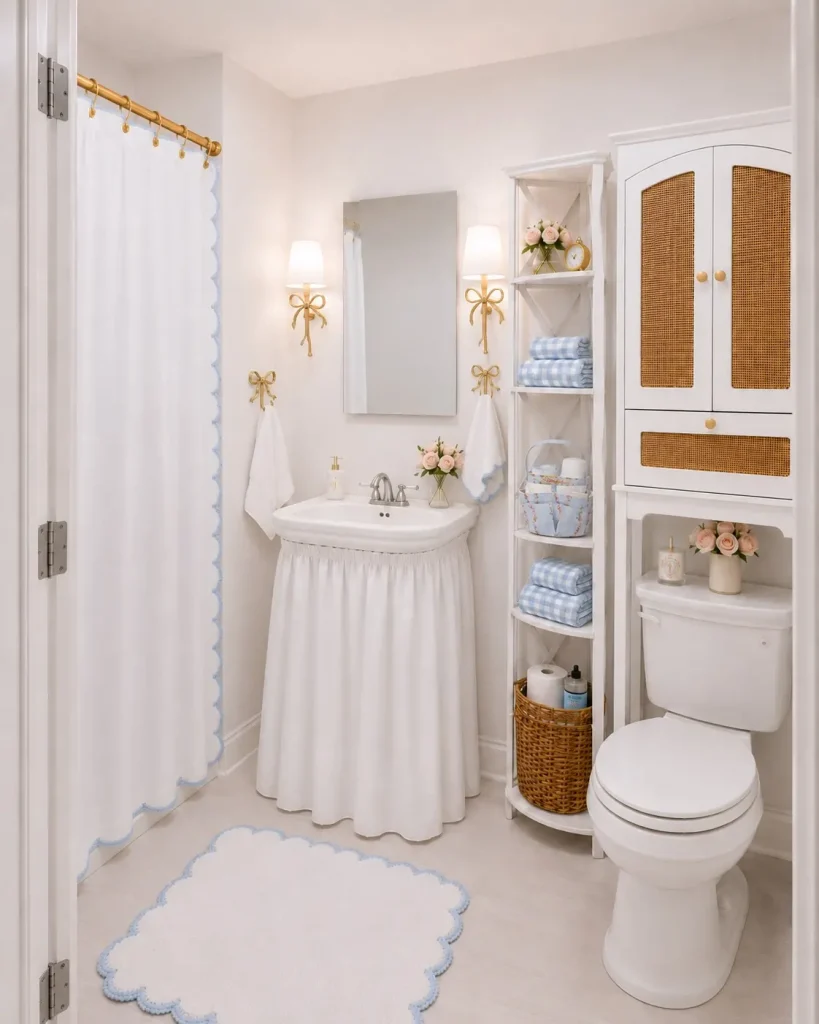
A linen tower is a tall, narrow cabinet placed beside the toilet instead of directly over it.
It often has a mix of open shelves and closed drawers or doors.
This option works best when you have space beside the toilet instead of just above it.
How to Measure Your Space Before You Buy
Before buying any unit, measure three things:
- Width: Measure the space from wall to wall around your toilet. Most over-the-toilet units range from 24 to 30 inches wide.
- Depth: Measure from the wall to the front edge of your toilet tank. Most units are shallow, usually between 7 and 10 inches deep, so they do not bump into your tank or lid.
- Height: Measure from the top of your toilet tank to the ceiling. Standard units range from 60 to 72 inches tall, but shorter options exist for bathrooms with low ceilings or a window above the toilet.
Always measure your toilet tank’s height and width too. A unit that is too narrow or too shallow will not fit around the tank properly.
Materials to Consider
Bathrooms deal with moisture, so material matters. Common choices include:
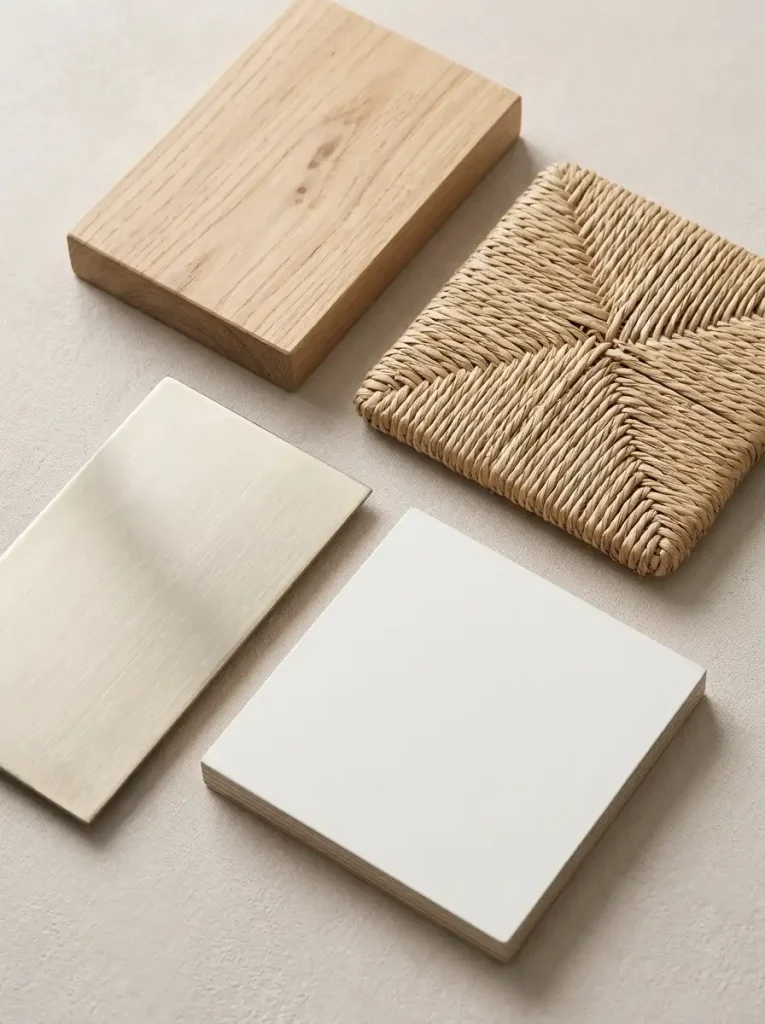
- Solid wood or wood veneer: Classic and sturdy, but needs a sealed finish to resist humidity.
- Rattan or cane: Popular in coastal and traditional styles, adds texture, and holds up well in low-moisture areas like open shelves away from the shower.
- Metal or wire: Durable and resistant to moisture, common in modern and industrial bathrooms.
- Laminate or MDF: Budget-friendly and available in many finishes, but can warp if it gets wet often.
How to Install Over the Toilet Storage Safely
Installation depends on the type of unit you choose.
Freestanding units (étagères, ladder shelves) need no drilling. They rest on the floor around the toilet base, so stability depends on a flat, level floor.
Wall-mounted units need anchors or studs. Always try to screw into a wall stud for heavier cabinets. If no stud lines up with your unit, use heavy-duty drywall anchors rated for the unit’s weight plus whatever you plan to store on it.
Recessed units require cutting into the wall and should only be installed by someone comfortable working around plumbing and electrical lines, since pipes may run behind bathroom walls.
Always check the weight limit listed by the manufacturer.
Most wall shelves hold between 10 and 30 pounds per shelf. Do not stack heavy items like large jars or stacks of books on a shelf rated for light use.
What to Store in Your Over-the-Toilet Unit
This space works best for lightweight, frequently used items, such as:
- Rolled or folded towels
- Extra toilet paper
- Toiletries like lotion, soap, and shampoo
- Baskets for smaller items like cotton balls or hair ties
- Candles or a reed diffuser
- Small decor, like a vase or plant
Avoid storing heavy items, glass bottles near the edge, or anything you do not want to risk falling near the toilet.
Styling Tips for a Polished Look
Good over-the-toilet storage should look intentional, not like a last-minute fix.
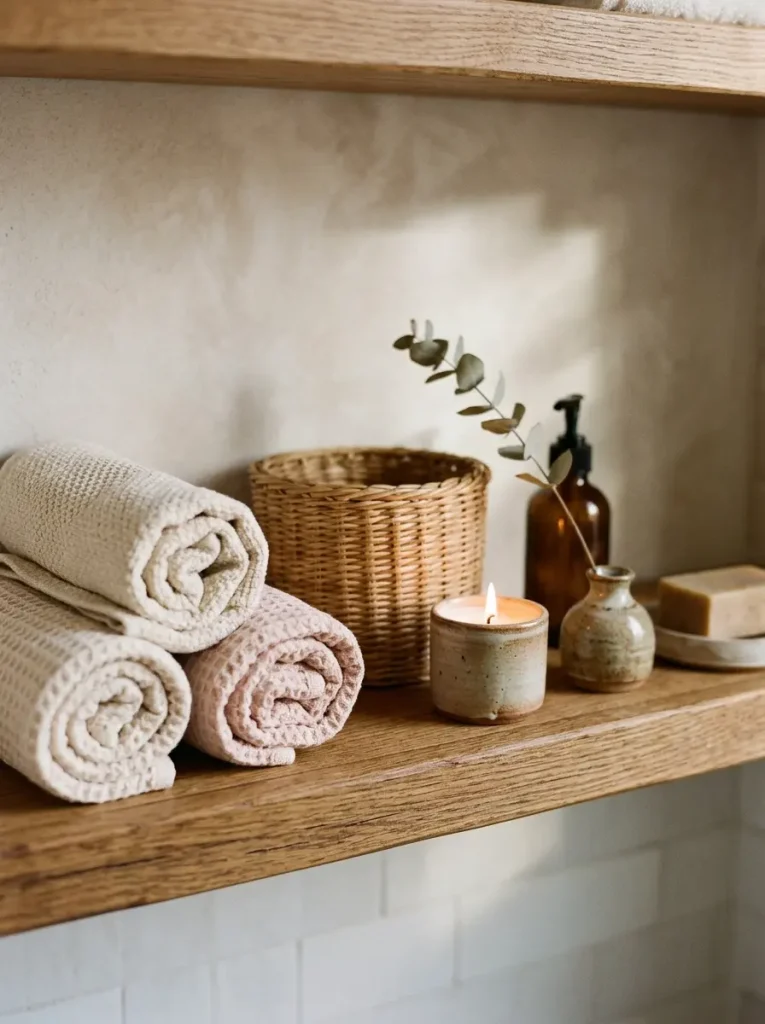
- Match your bathroom’s color palette. Stick to two or three colors for towels and baskets so the shelf feels put together.
- Fold or roll towels neatly. A stack of rolled towels looks more finished than towels tossed on a shelf.
- Use baskets to hide small clutter. Baskets keep loose items like razors or cotton swabs out of sight while still looking tidy.
- Add one decorative item per shelf. A small plant, candle, or diffuser keeps the unit from feeling purely functional.
- Leave a little open space. A shelf packed edge to edge feels cluttered. Leave some breathing room on at least one level.
Over the Toilet Storage for Small Bathrooms
In very tight bathrooms, a slim étagère or a shallow floating shelf works better than a bulky cabinet.
Light colors like white or natural wood also make the space feel larger.
If floor space is extremely limited, choose a unit with a narrow footprint, usually under 10 inches deep, so it does not interfere with the door swing or shower access.
Frequently Asked Questions
Is over-the-toilet storage safe?
Yes, over-the-toilet storage is safe when installed correctly. Freestanding units are safe as long as they sit on a flat, level floor. Wall-mounted units are safe when secured into a wall stud or anchored with hardware rated for the unit’s weight.
How much weight can over-the-toilet shelves hold?
Most over-the-toilet shelves hold between 10 and 30 pounds per shelf, depending on the material and mounting method. Always check the manufacturer’s weight rating before loading a shelf with heavy items.
Can I install over-the-toilet storage without drilling holes?
Yes. Freestanding étagères and ladder shelves require no drilling, since they rest on the floor and lean against the wall for support instead of attaching to it.
What is the standard height for over-the-toilet storage?
Most over-the-toilet storage units stand between 60 and 72 inches tall. Shorter units are available for bathrooms with low ceilings, windows, or light fixtures above the toilet.
Does over-the-toilet storage work in small bathrooms?
Yes. In fact, it works especially well in small bathrooms, since it uses empty vertical wall space instead of floor space. A slim, light colored unit works best in tight bathrooms.
Final Thoughts
The wall above your toilet is one of the most overlooked spots in a small bathroom.
With the right shelf or cabinet, it can hold your towels, toiletries, and extra toilet paper while still looking clean and styled.
Measure your space first, pick a material that can handle bathroom moisture, and install it safely.
A little planning turns wasted space into one of the most useful spots in the room.