A basement kitchenette transforms underutilized space into a functional hub for entertaining, accommodating guests, or creating a private living area. Whether you’re planning a basement remodel or maximizing your finished basement, a well-designed kitchenette adds tremendous value and convenience.
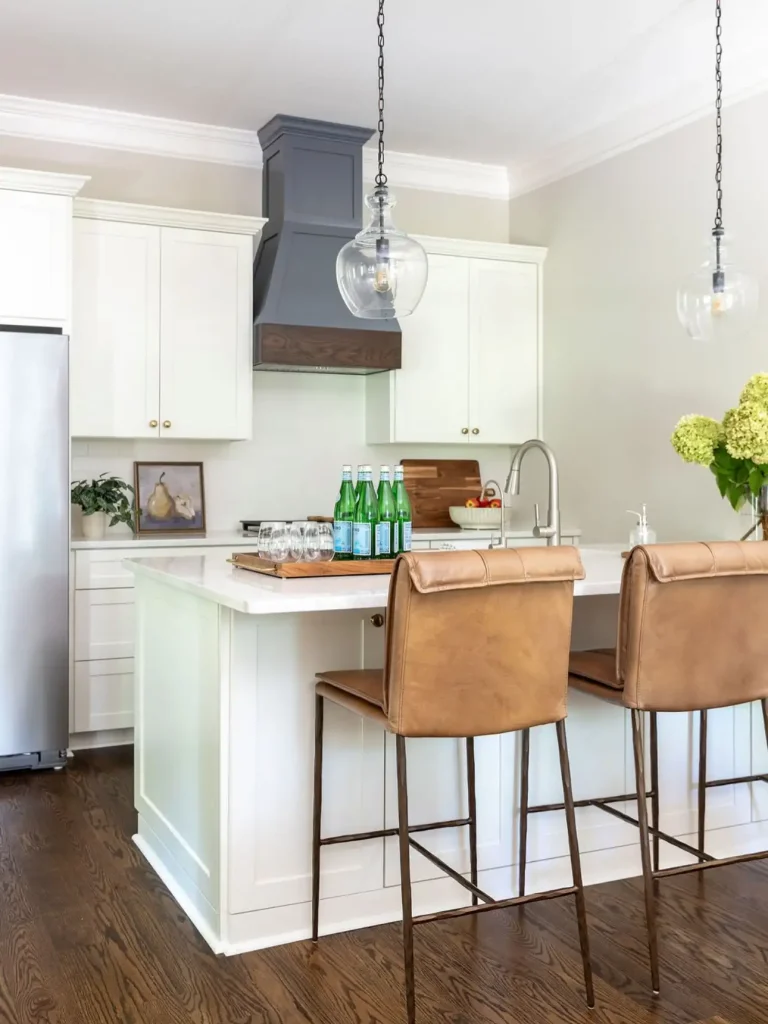
Source: @highlandhomedesignco
Why Add a Kitchenette to Your Basement?
Basement kitchenettes serve multiple purposes beyond simple convenience. They’re perfect for in-law suites, teen hangouts, or rental units.
When you add a bedroom to your basement, a kitchenette creates a self-contained living space. Guests appreciate the independence, and homeowners enjoy the added functionality.
A kitchenette also increases your home’s resale value significantly. Buyers see the potential for multi-generational living or income generation through rentals.

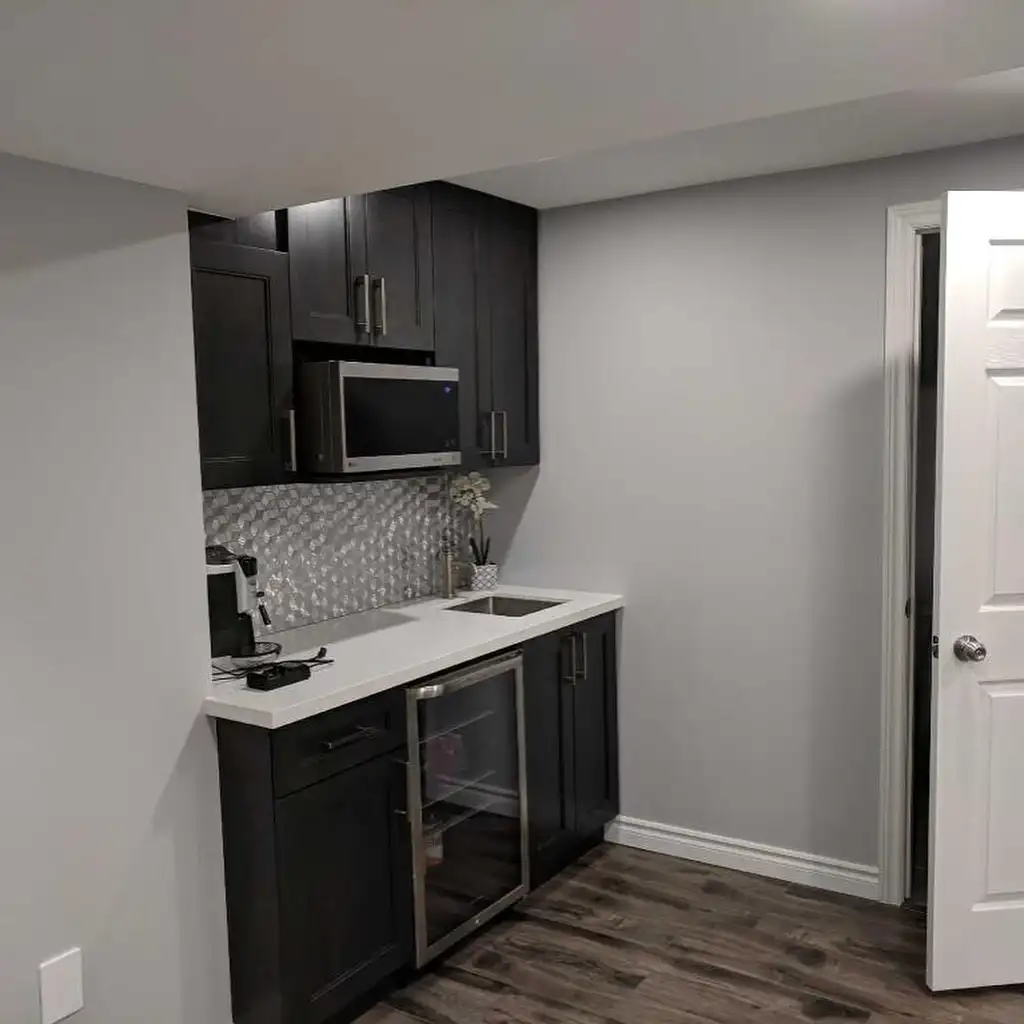
Source: @acapulcomarble
Planning Your Basement Kitchenette Layout
Start by assessing your available space. Even small spaces can accommodate efficient kitchenettes with smart planning.
Consider the work triangle concept—the relationship between your sink, refrigerator, and cooking surface. In compact layouts, keep these elements within arm’s reach.
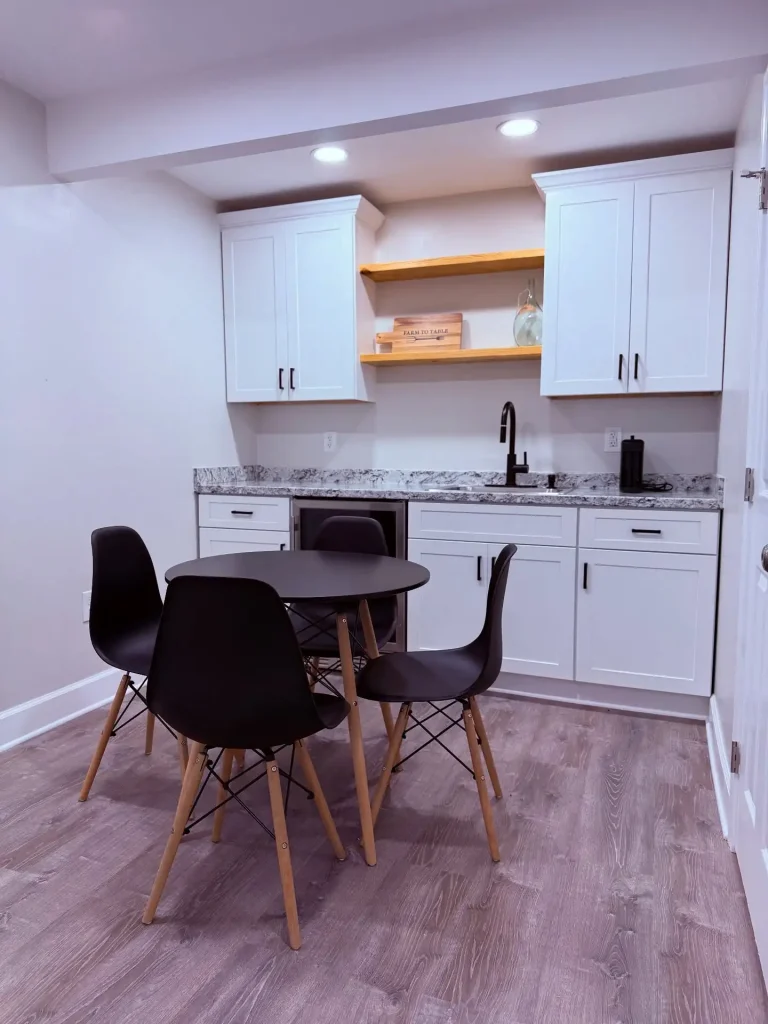
Source: @atlanta_rc
Your basement living room ideas should integrate seamlessly with the kitchenette. Create distinct zones without building unnecessary walls.
Plumbing access is crucial. Locate your kitchenette near existing water lines to minimize installation costs. Most basements have plumbing from laundry areas or bathrooms you can tap into.
Essential Kitchenette Components
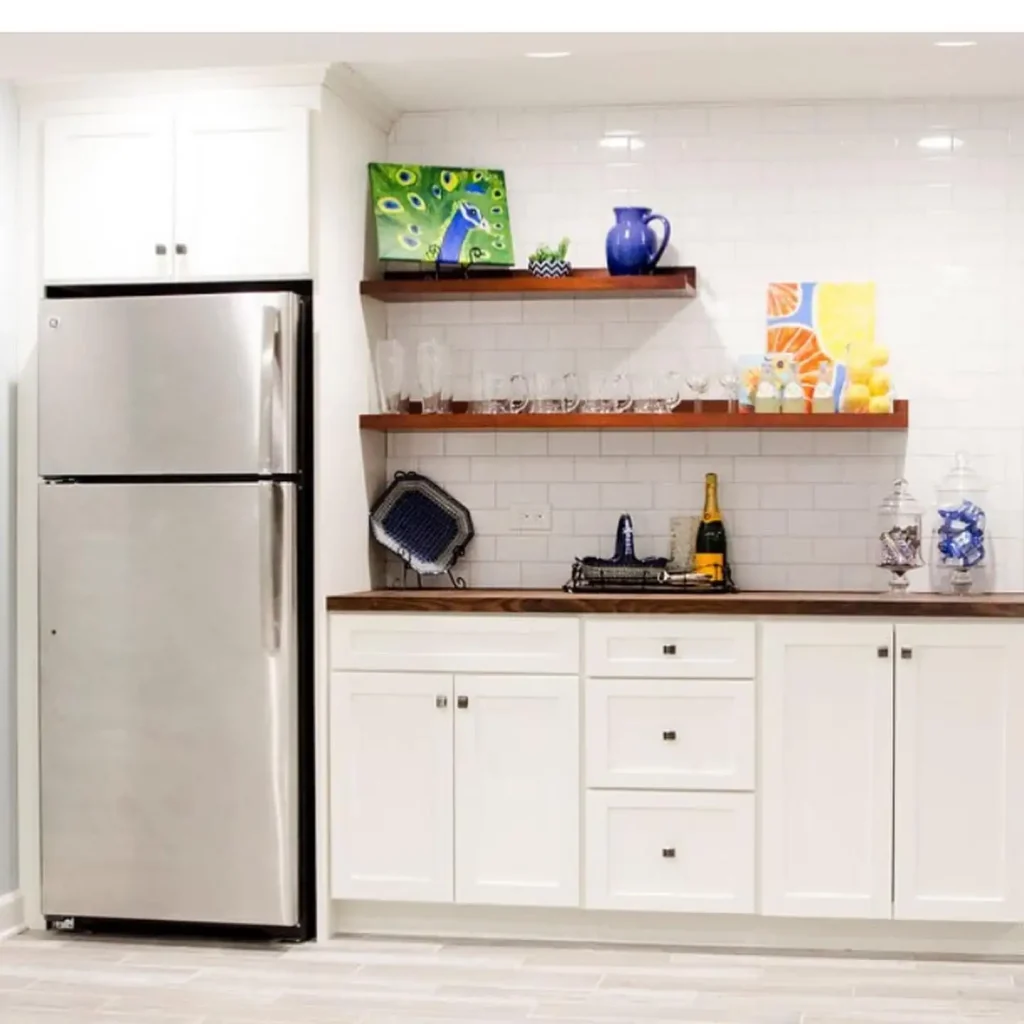
Every functional kitchenette needs five core elements: a sink, refrigerator, counter space, storage, and a cooking appliance.
The sink is non-negotiable. It’s essential for food prep, dishwashing, and general cleanup. Choose a compact model that fits your counter depth.
Source: @ricemoriartydesigninc
Refrigerators come in various sizes perfect for basement applications. Full-size units work for rental apartments, while mini-fridges suit occasional use.
Counter space doesn’t need to be extensive. Even 3-4 feet of workspace allows basic meal preparation and serving.
Storage Solutions for Basement Kitchenettes
Smart kitchen cabinet ideas maximize every inch of your basement kitchenette. Vertical storage stretches to the ceiling, utilizing often-wasted space.
Kitchen corner cabinet ideas solve awkward angle challenges. Lazy Susans and pull-out organizers make corners accessible and functional.
Source: @perspectivedesignbuild
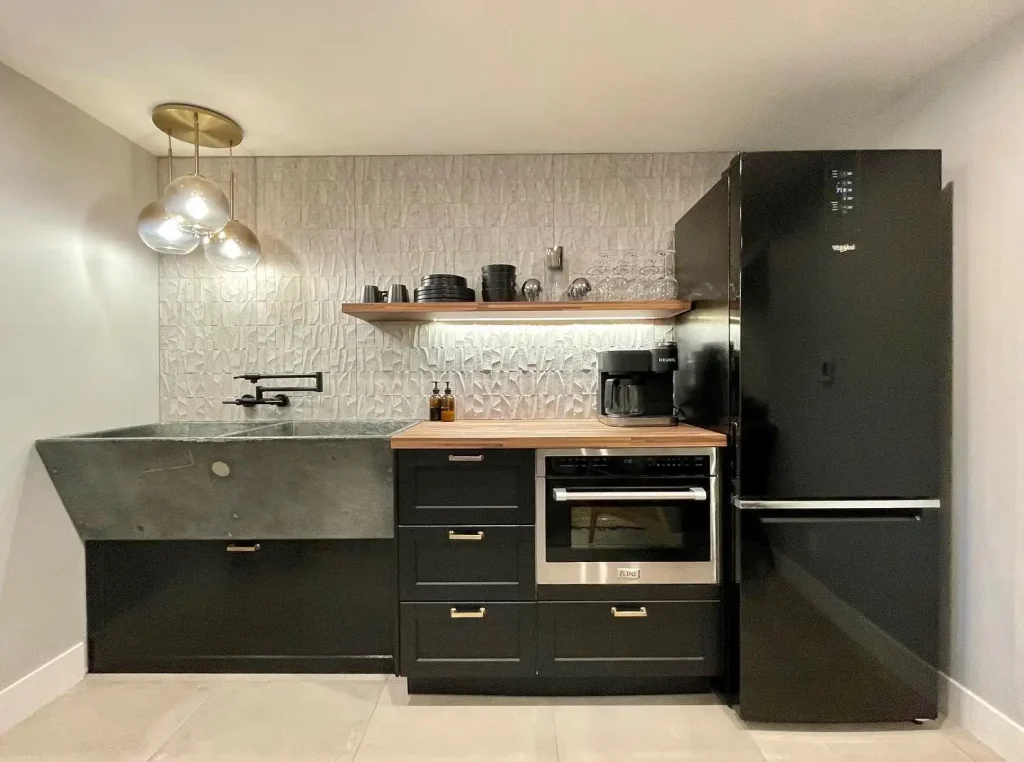
Open shelving creates visual interest while providing practical storage. It works especially well in unfinished basement designs where you embrace industrial aesthetics.
Consider floor-to-ceiling cabinets if your basement height allows. They provide pantry-style storage without consuming precious floor space.
Choosing Colors and Finishes
Good basement paint colors make kitchenettes feel spacious and inviting. Light, reflective hues combat the typical basement darkness.
White and cream cabinets bounce light around the space effectively. They pair beautifully with darker countertops for visual contrast.

Source: @makamechanicalcontracting
Blue kitchen cabinets add personality without overwhelming small spaces. Navy creates sophistication, while lighter blues feel fresh and coastal.
For a timeless look, oak kitchen cabinets bring warmth and natural beauty. Modern stains update traditional oak for contemporary tastes.
Backsplash and Wall Treatments
Peel and stick backsplash ideas offer budget-friendly solutions with easy installation. They’re perfect for DIY basement projects.
These removable options work exceptionally well in rental units. Update the look without permanent modifications.
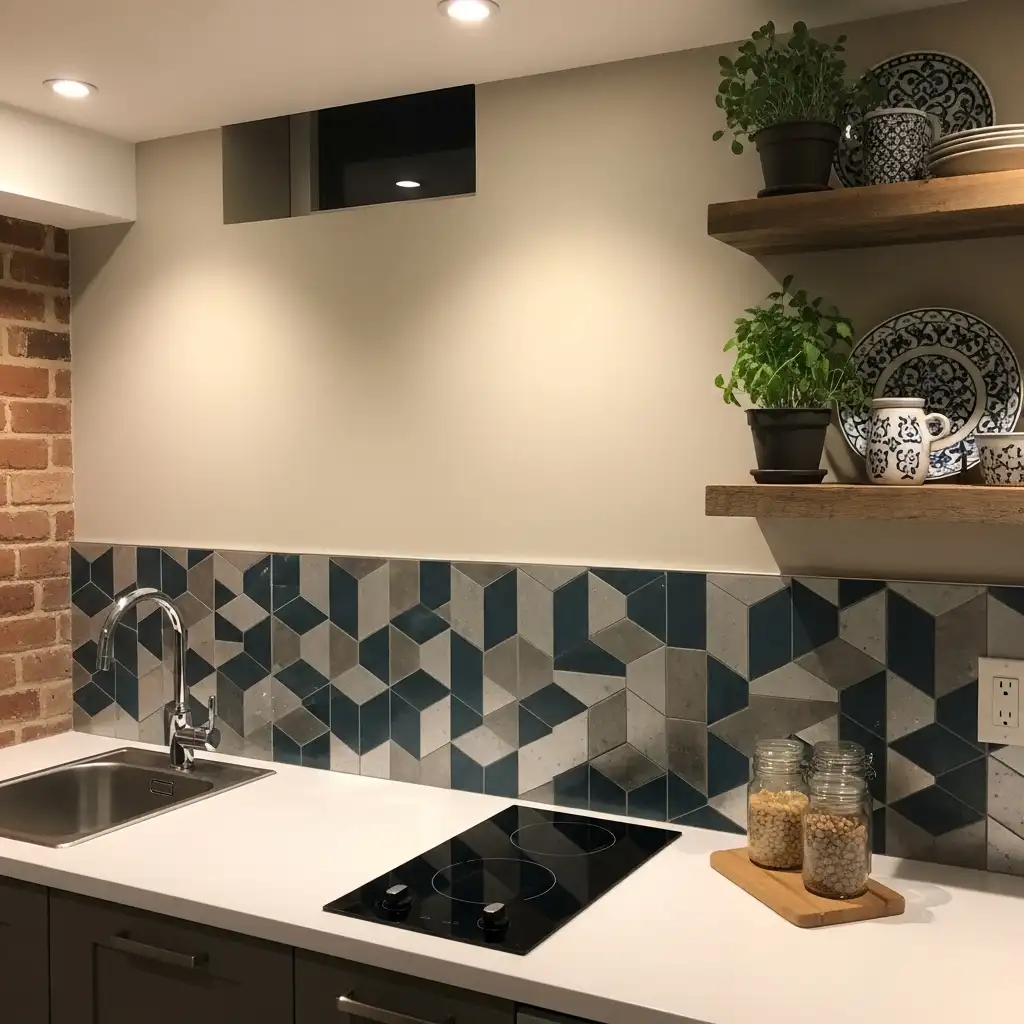
Traditional tile backsplashes remain popular for their durability and water resistance. Herringbone backsplash patterns add visual interest to simple kitchenette designs.
Wall paneling ideas extend beyond the backsplash area. Wood panels create texture and warmth throughout the kitchenette zone.
Flooring Options for Basement Kitchenettes
Basement floors require moisture-resistant materials. Peel and stick floor tile provides an economical, DIY-friendly option.
Vinyl plank flooring mimics wood beautifully while handling moisture effectively. It’s comfortable underfoot and easy to maintain.
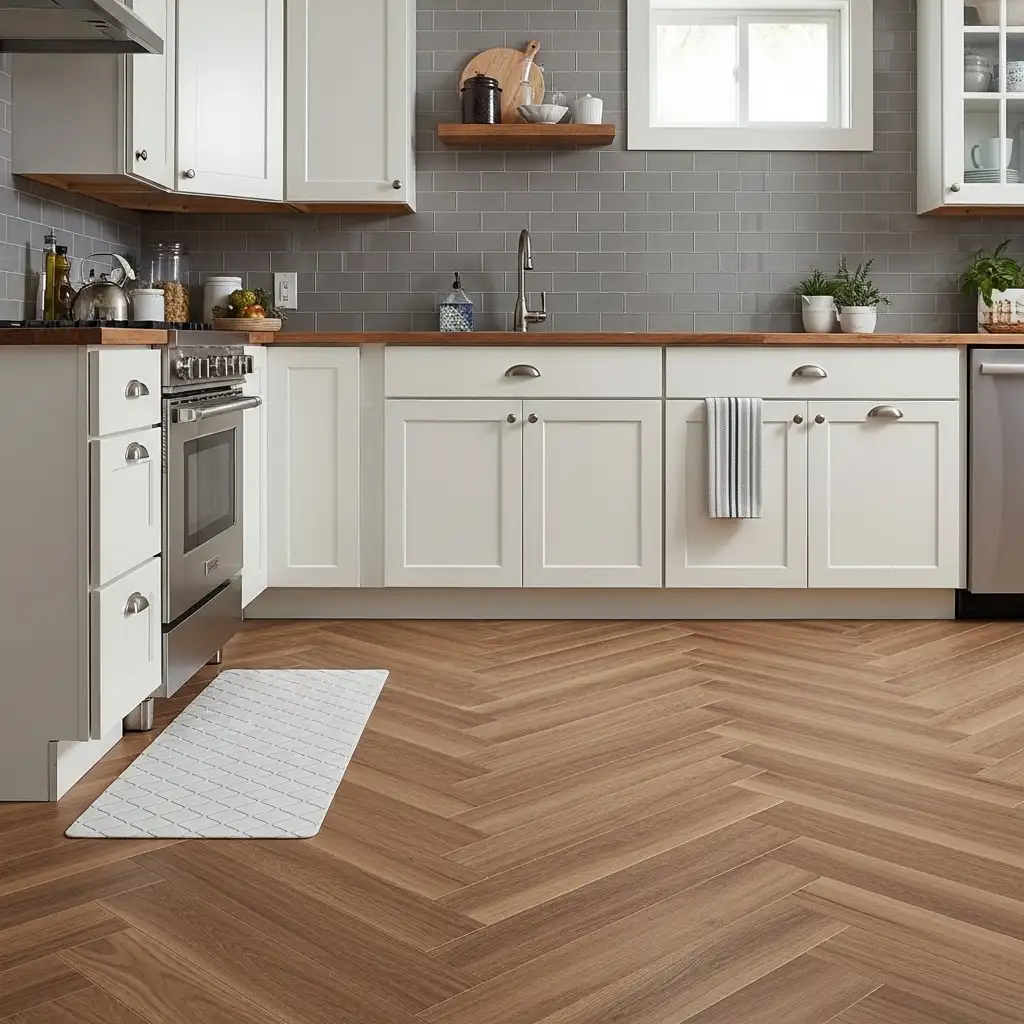
Engineered hardwood flooring works in dry basements with proper vapor barriers. The warmth of wood elevates your kitchenette’s appearance.
For pattern lovers, herringbone wood floors create stunning visual impact. This classic pattern makes small spaces feel more intentional and designed.
Lighting Your Basement Kitchenette
Basements typically lack natural light, making artificial lighting critical. Layer different light sources for functionality and ambiance.
Under-cabinet lighting illuminates countertops for food preparation. LED strips are energy-efficient and easy to install.

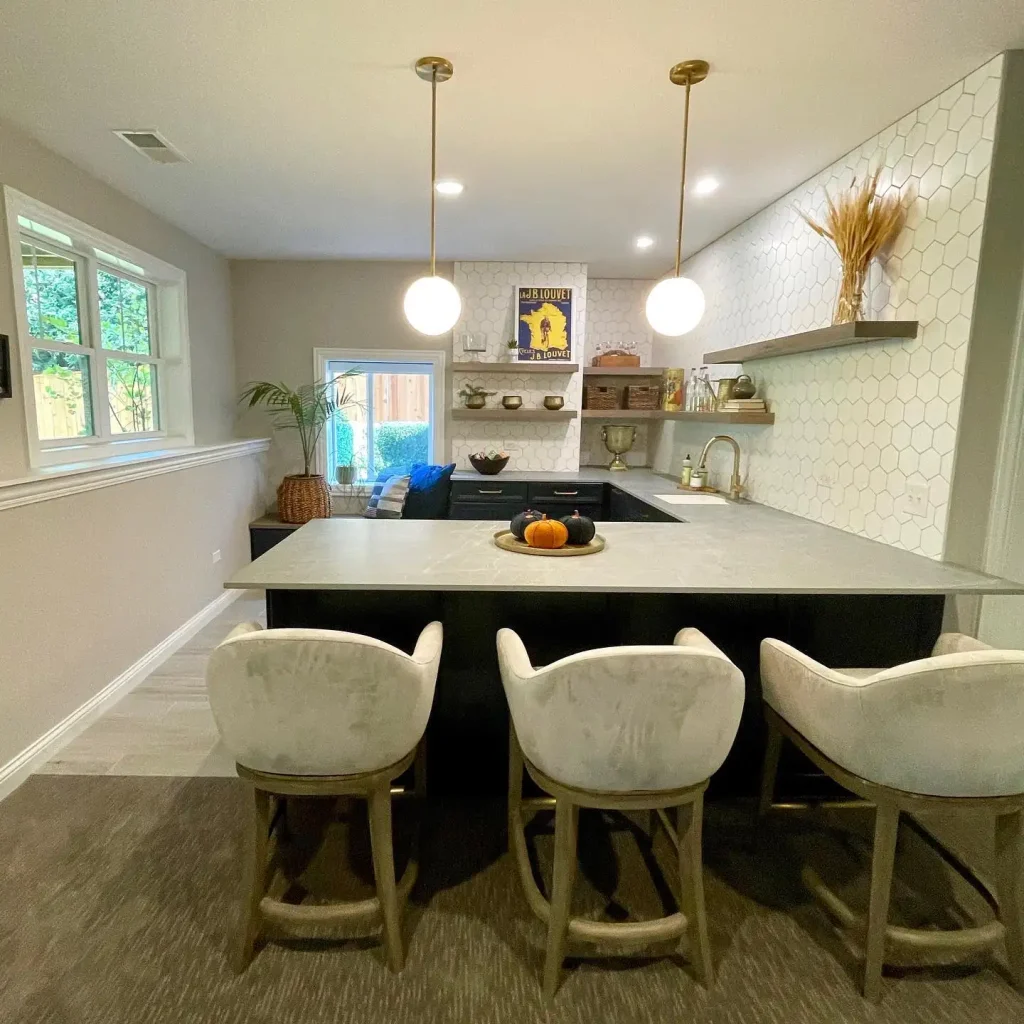
Ceiling light ideas include recessed lighting for general illumination. Add pendant lights over islands or eating areas for style and task lighting.
If your basement has a drop ceiling, work with panel-friendly fixtures. Many modern options integrate seamlessly with suspended ceiling systems.
Ceiling Considerations
Your ceiling treatment impacts the entire space’s feel. Basement ceiling ideas range from finished drywall to exposed elements.
Painted exposed basement ceilings create industrial-chic aesthetics. Black or white paint transforms pipes and ducts into design features.

For low-clearance spaces, explore basement painted ceiling low height solutions. Light colors make ceilings feel higher than they actually are.
Wood plank ceilings add warmth and texture. They’re particularly effective in cottage-style spaces.
Appliance Selection
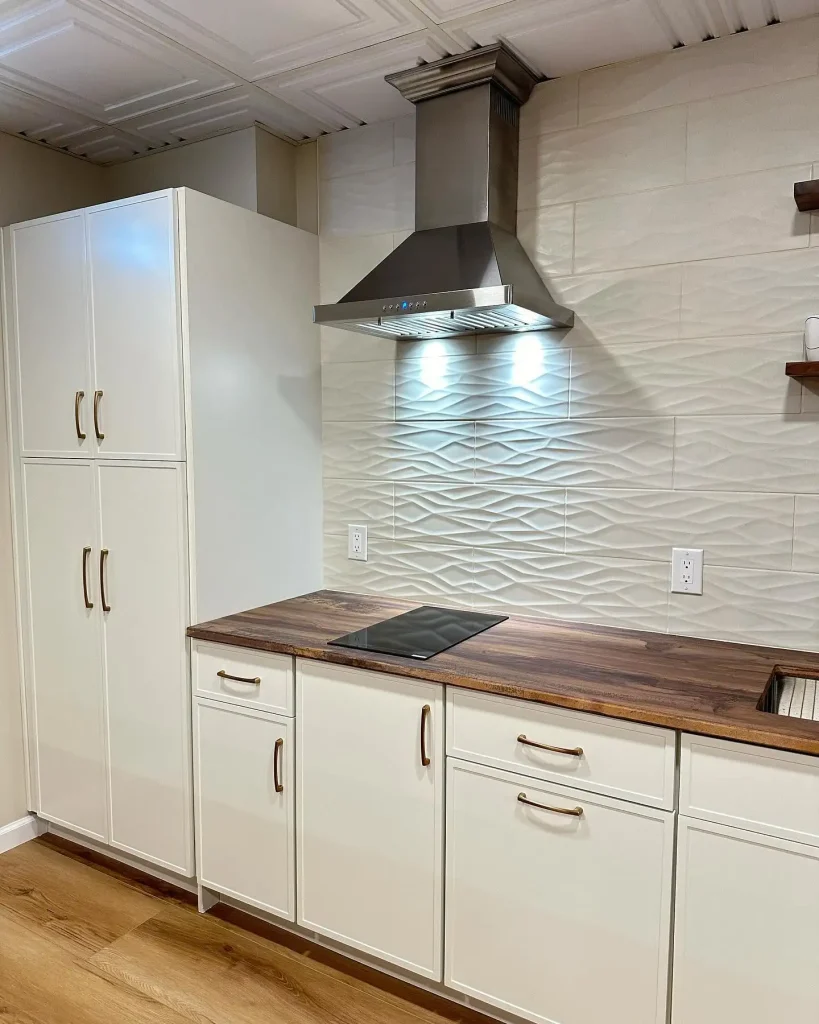
Compact appliances designed for small kitchens work perfectly in basement kitchenettes. Two-burner cooktops provide cooking capability without consuming counter space.
Combination microwave-convection ovens offer versatility. They bake, roast, and reheat—all in one countertop appliance.
Source: @mainlinekitchendesign
Dishwasher drawers fit where standard dishwashers won’t. Single-drawer models handle daily dish loads for small households or guest suites.
Consider an under-counter beverage refrigerator separate from your main fridge. It’s perfect for entertaining and keeps drinks accessible.
Creating a Coffee Station
Coffee station ideas elevate your basement kitchenette into a true gathering space. Dedicate a corner or shelf for coffee-making supplies.
Coffee bar ideas include open shelving displaying mugs and coffee accessories. This creates both function and visual interest.

Install a small sink nearby if possible. Easy water access makes coffee preparation more convenient for guests or family members.
Integrating with Basement Design
Your kitchenette should complement your overall basement aesthetic. For modern cottage bedroom ideas, extend that cozy charm into kitchen elements.
Farmhouse living room ideas translate well to kitchenette spaces. Shiplap walls, farmhouse sinks, and vintage-inspired hardware create cohesion.
Source: @tk.interiors
Open-concept designs benefit from consistent flooring throughout. This visual continuity makes the entire basement feel larger and more intentional.
Use room divider ideas to separate the kitchenette without building walls. Bookcases or partial walls maintain openness while defining zones.
Budget-Friendly Kitchenette Tips
Kitchen remodel ideas on a budget include focusing resources on quality essentials. Invest in a good sink and faucet—cheap versions cause endless frustration.
Shop secondhand for appliances and cabinets. Many homeowners upgrade perfectly functional items during kitchen renovations.
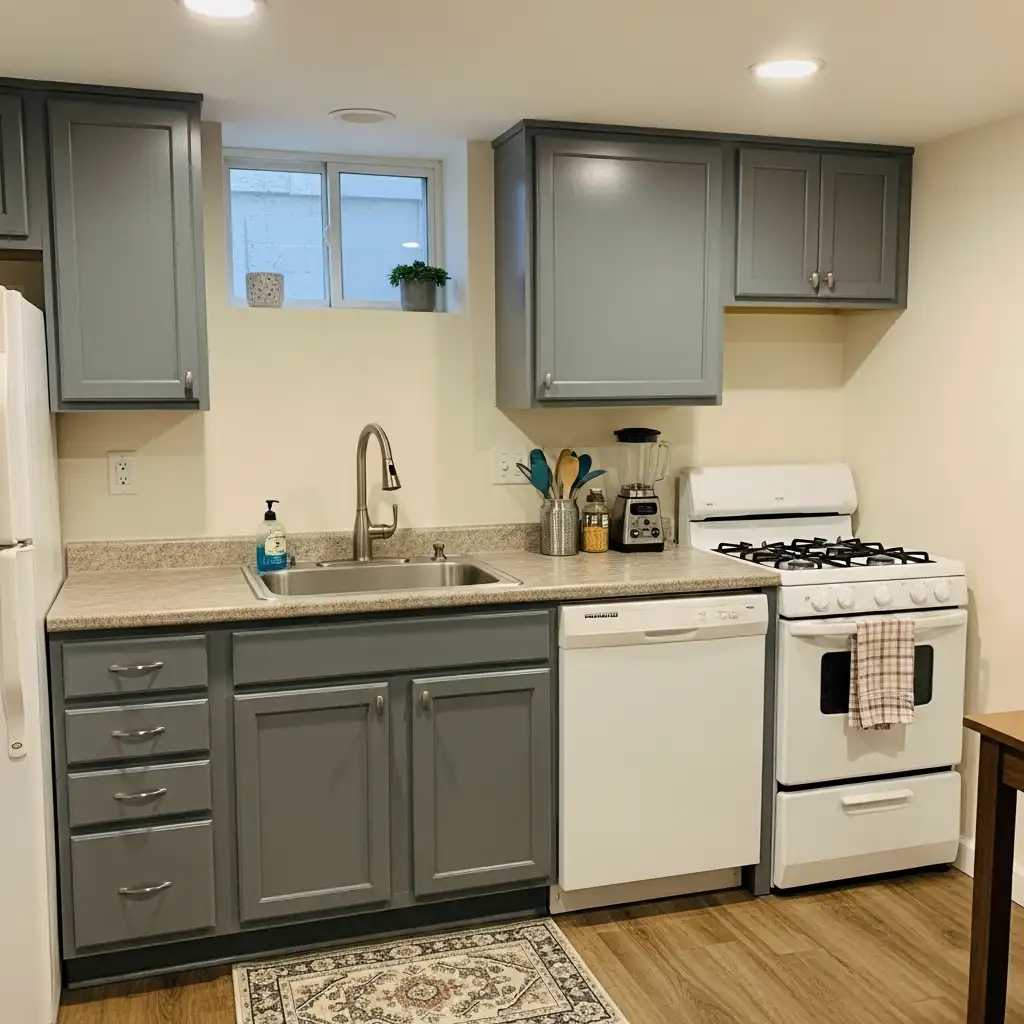
Paint existing cabinets instead of replacing them. New hardware and a fresh color transform outdated pieces remarkably.
DIY what you can comfortably handle. Installing backsplash, painting, and basic assembly saves significant labor costs.
Ventilation Requirements
Proper ventilation prevents moisture and odor problems. Range hoods remove cooking fumes and steam from the air.
If venting to the exterior isn’t possible, use recirculating range hoods with charcoal filters. They’re less effective but better than nothing.
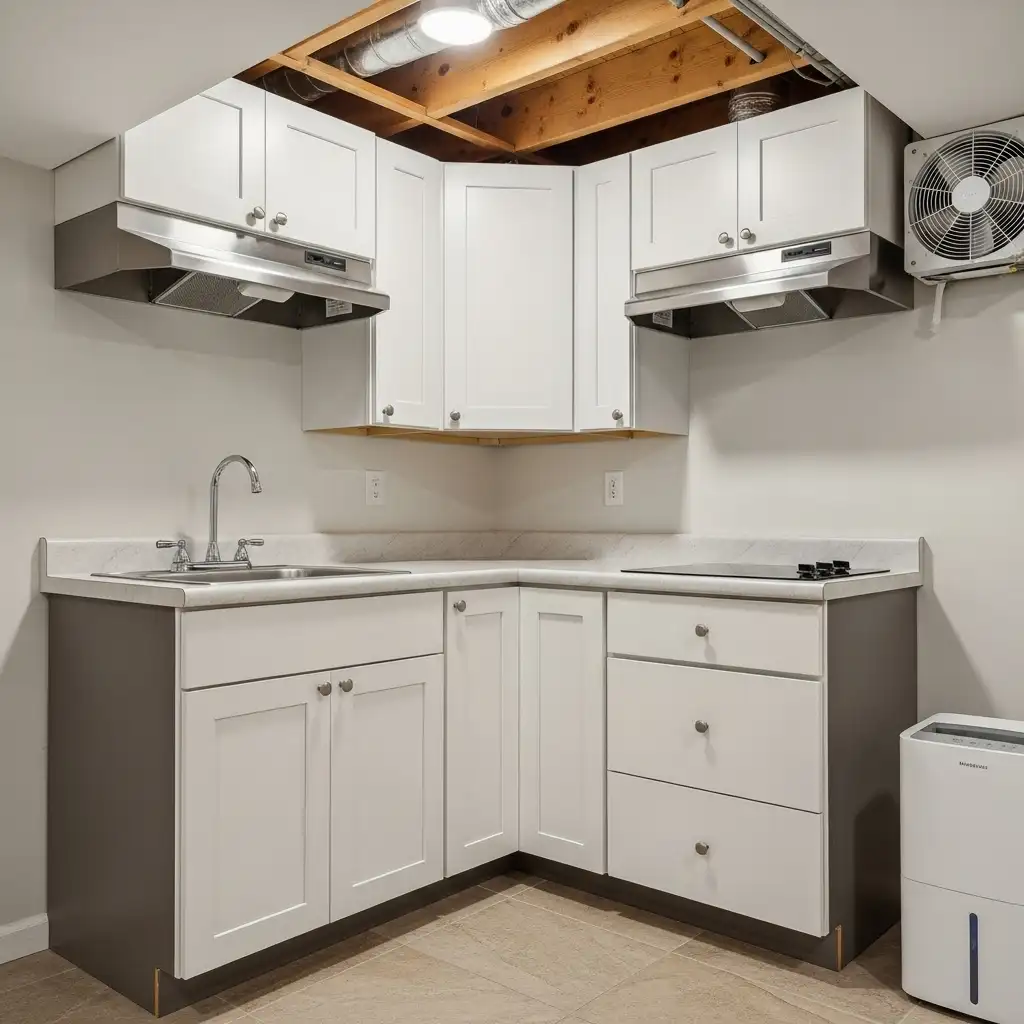
Dehumidifiers help control basement moisture levels. This protects cabinetry, prevents mold, and improves air quality.
Install an exhaust fan near the kitchenette if codes require. Many jurisdictions mandate mechanical ventilation in basement living spaces.
Electrical and Plumbing Considerations
Hire licensed professionals for electrical and plumbing work. Basement kitchenettes require specific code compliance, especially for rental units.
GFCI outlets are mandatory near sinks and water sources. These safety devices prevent electrical shocks in wet conditions.

Plan for adequate outlets before finishing walls. Kitchenettes need outlets every four feet along counters, plus dedicated circuits for appliances.
Hot water access determines dishwashing convenience. If your water heater is far away, consider an under-sink instant water heater.
Adding Personal Style
Top of kitchen cabinet decor ideas personalize your space. Display cookbooks, plants, or decorative baskets for visual warmth.
Kitchen wall decor includes artwork, floating shelves, or chalkboard walls. These elements prevent the clinical feeling of purely functional spaces.
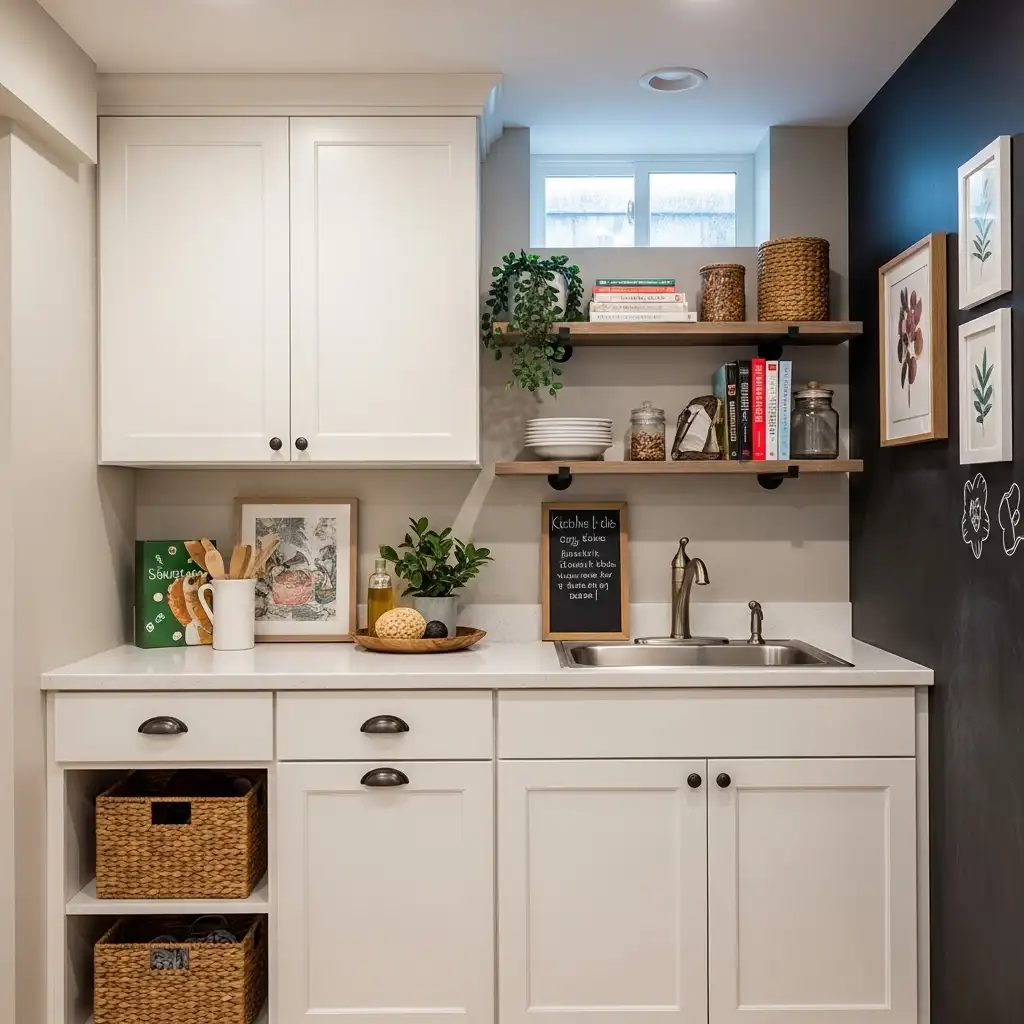
Hardware choices significantly impact style. Modern pulls create contemporary looks, while vintage knobs suit farmhouse or traditional designs.
Coordinate colors with your overall basement palette. This creates flow between the kitchenette and living areas.
Maintenance and Upkeep
Seal grout lines regularly to prevent moisture penetration and staining. This simple task extends your backsplash and floor life significantly.
Clean range hood filters monthly. Grease buildup reduces efficiency and creates fire hazards.

Source: @jg_interiors
Check for leaks periodically around sinks and appliances. Early detection prevents water damage and costly repairs.
Run water through rarely-used drains weekly. This maintains the water seal that prevents sewer gases from entering your space.
Frequently Asked Questions
How much does it cost to add a kitchenette to a basement?
A basic basement kitchenette costs between $3,000 and $8,000 for DIY installations. Professional installations range from $10,000 to $25,000 depending on complexity. The biggest cost factors are plumbing installation, electrical work, and appliance quality. If you’re already doing a complete basement remodel, adding a kitchenette during construction saves money compared to retrofitting later.
Do I need a permit for a basement kitchenette?
Most municipalities require permits for basement kitchenettes, especially when adding new plumbing or electrical circuits. Requirements vary by location and whether you’re creating a rental unit. Contact your local building department before starting work. Permitted work ensures code compliance and protects your home’s resale value. Unpermitted renovations can cause problems during home sales or insurance claims.
What’s the minimum size for a basement kitchenette?
A functional kitchenette needs just 25-30 square feet of floor space. This accommodates a small sink, compact refrigerator, microwave, and minimal counter space. Linear layouts work best for tight spaces, placing appliances and sink along one wall. Check out mini kitchen ideas for small spaces for layout inspiration. Even small apartment kitchens can be adapted for basement applications.
Can I install a kitchenette in an unfinished basement?
Yes, but you’ll need to address walls, flooring, and ceilings first. Kitchenettes require finished surfaces for cabinets, backsplashes, and proper electrical installations. Some homeowners embrace unfinished basement design aesthetics with exposed ceilings and industrial elements. At minimum, finish the kitchenette zone while leaving other basement areas unfinished. This phased approach spreads costs over time.
What appliances are essential for a basement kitchenette?
The three must-have appliances are a refrigerator, microwave, and sink. These cover basic food storage, heating, and cleanup needs. Add a two-burner cooktop or toaster oven if you want actual cooking capability. A coffee maker turns your kitchenette into a proper coffee station. Dishwasher drawers are nice but not essential for most basement applications.
Final Thoughts
A thoughtfully designed basement kitchenette transforms underground space into valuable living area. Whether creating a multipurpose room or a dedicated guest suite, this addition enhances your home’s functionality.
Start with thorough planning that considers plumbing, electrical, and ventilation requirements. Invest in quality essentials while being creative with finishes and accessories.
The result is a welcoming space that serves your family’s needs for years to come. Your basement evolves from storage area to an integral part of your home’s living space.