Are you running out of bedrooms as your family grows or needs change? Do you dream of a guest room, home office that converts to sleeping space, or rental unit generating income?
Adding a bedroom to basement represents one of the most cost-effective ways to increase functional living space, typically costing $10,000-$20,000 compared to $30,000-$50,000 for above-grade additions requiring foundations, roofing, and exterior work.
Add bedroom to basement to solve critical space shortages for growing families, provide private quarters for teenagers, accommodate aging parents, create guest suites, or enable rental income through separate apartments.
However, basement bedrooms require careful planning addressing unique challenges including egress window requirements, moisture control, adequate lighting, proper ventilation, and building code compliance ensuring safety and habitability.
Understanding these requirements and strategic design choices transforms dark, uncomfortable basement spaces into cozy, code-compliant bedrooms that families actually want to use rather than tolerate as last resorts.
Common Basement Bedroom Uses
Guest Bedroom
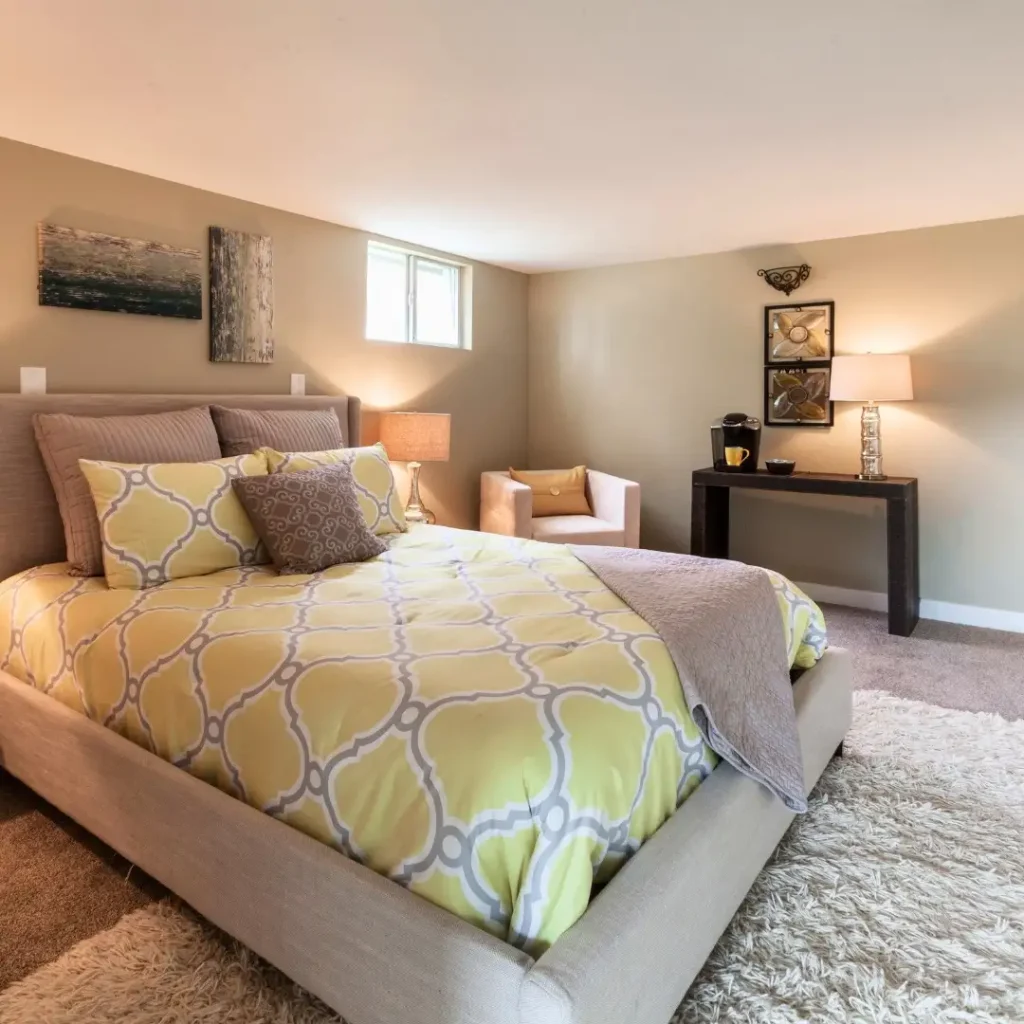
Create comfortable guest accommodations providing privacy for visiting family and friends without sacrificing upstairs space. Include quality mattresses, adequate storage, bedside lighting, and nearby bathroom access making guests feel truly welcomed rather than relegated to uncomfortable afterthought spaces.
Source: @nefarious_interior_design
Budget $12,000-$25,000 for complete guest bedroom including egress window, finishes, and furnishings creating spaces that encourage extended visits. Visit our guest bedroom ideas for guest room design.
Teenager’s Private Suite
Provide maturing teenagers with private spaces offering independence while maintaining household connection. Basement bedrooms give teens their own territories for studying, socializing with friends, and developing autonomy without constant parental oversight.
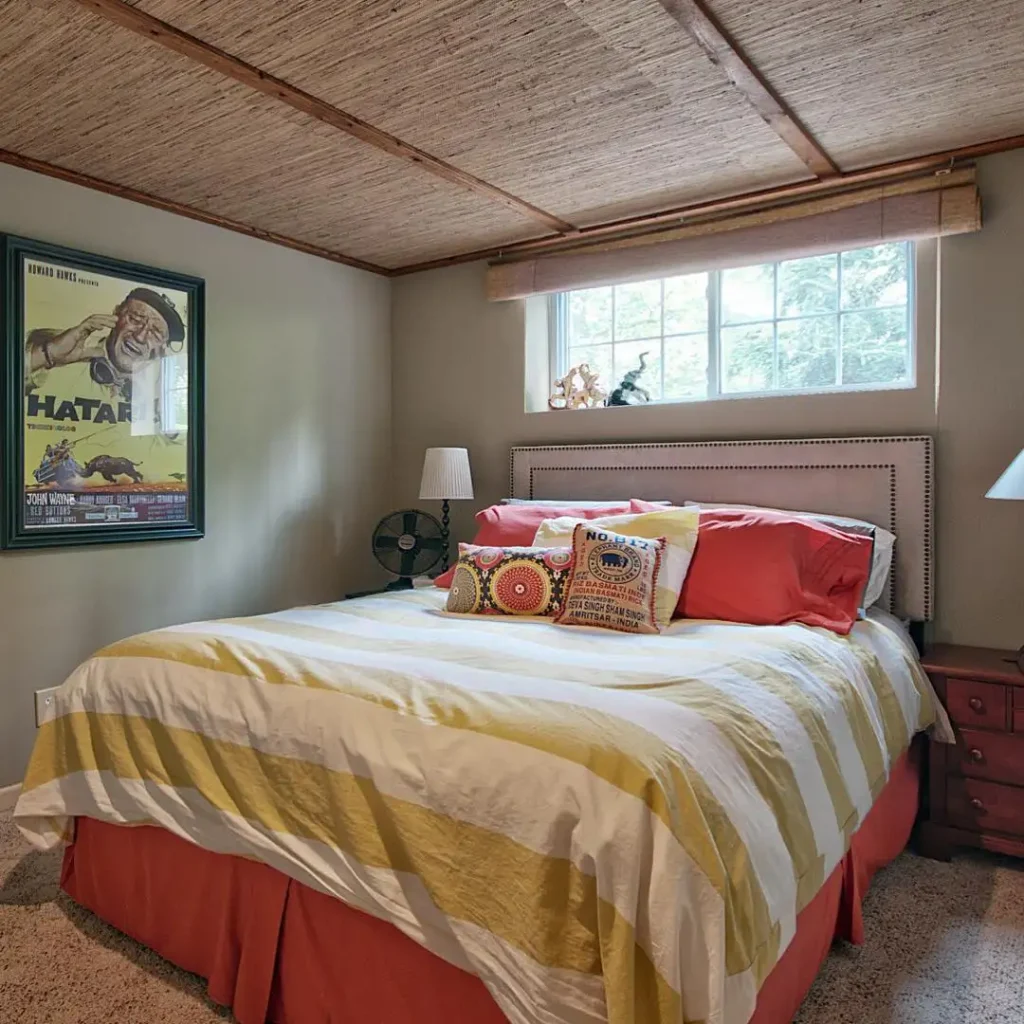
Include study areas, entertainment zones, and adequate storage accommodating teenagers’ substantial belongings. The separated space also benefits parents seeking peace and quiet upstairs despite teenagers’ different schedules and social activities. See more ideas on finished basements to make a better decision on makeover.
In-Law or Multi-Generational Living
Accommodate aging parents or adult children through basement bedrooms providing privacy and independence while keeping families together. Include nearby or en-suite bathrooms, easy stairway access, and comfortable living spaces allowing multi-generational households to coexist harmoniously.
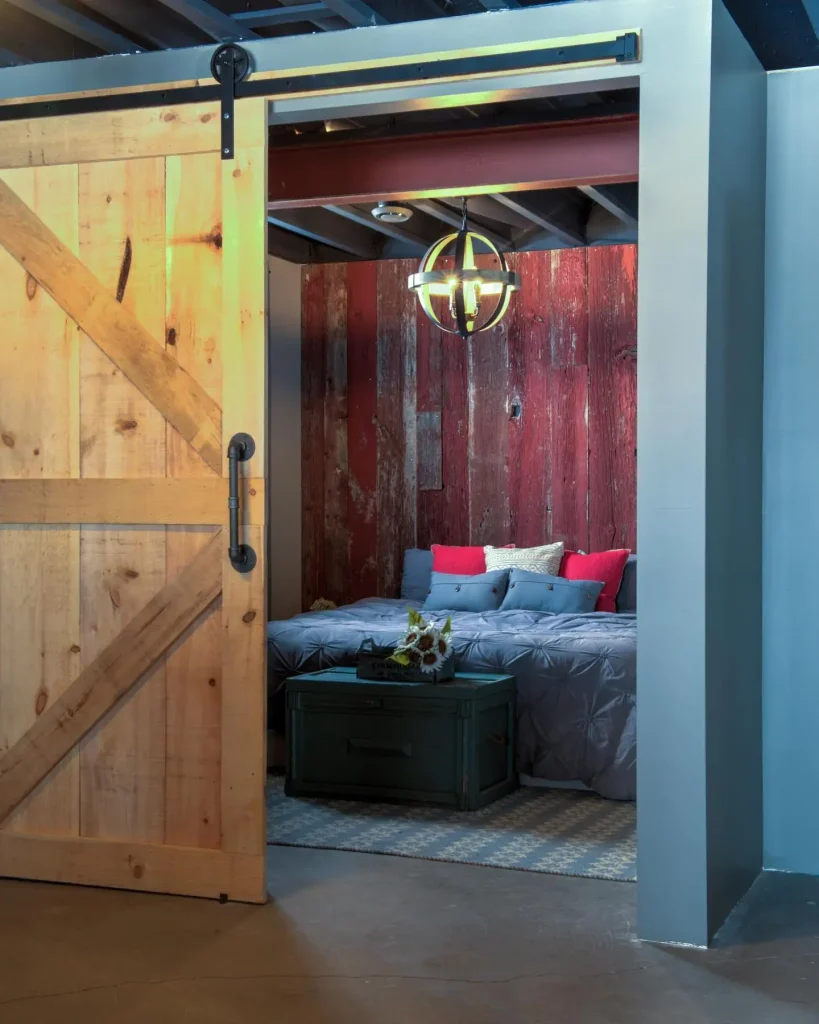
The separated sleeping quarters maintain everyone’s dignity and autonomy while providing support and connection that separate residences cannot offer families choosing to live together.
Rental Income Unit
Convert basements into rental bedrooms or complete apartments generating $600-$1,500+ monthly income depending on location and amenities.
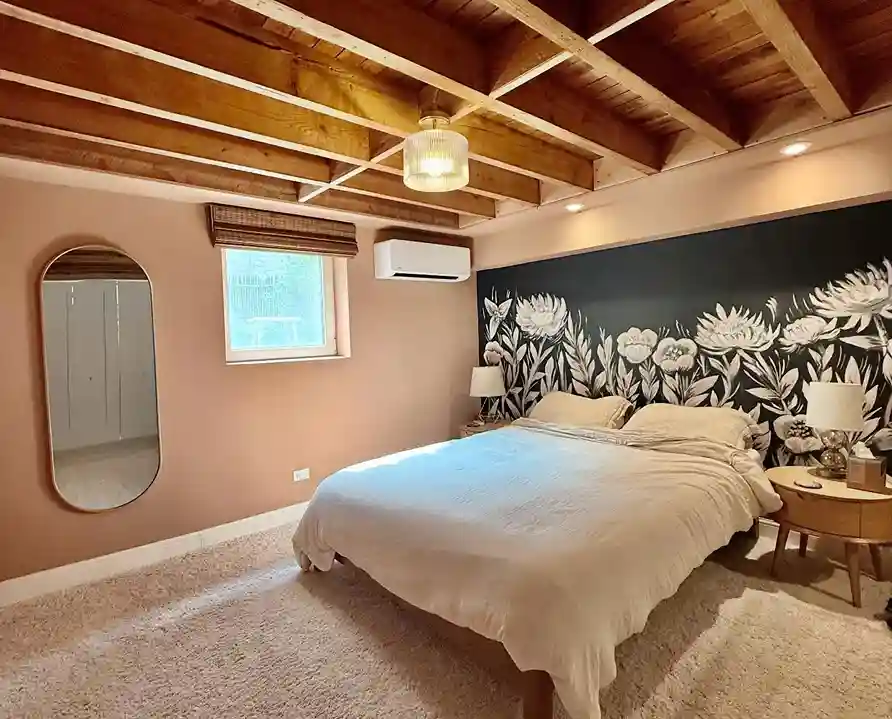
These income-producing spaces often pay for basement investments within 2-4 years through consistent rental revenue. Include separate entrances when possible, ensure complete amenities including bathrooms and potentially kitchenettes, and research local zoning and rental regulations before committing to projects intended for income generation. Try to learn remodel basement before moving towards major change in your lower portion.
Building Code Requirements for Basement Bedrooms
Egress Window Requirements
Building codes universally require bedrooms to include proper egress windows allowing emergency escape and firefighter access. Minimum requirements typically mandate 5.7 square feet of openable area, 24-inch minimum height, 20-inch minimum width, and maximum 44-inch sill height from floor. The window must open without tools or special knowledge, allowing occupants to escape quickly during emergencies like fires blocking interior exits.
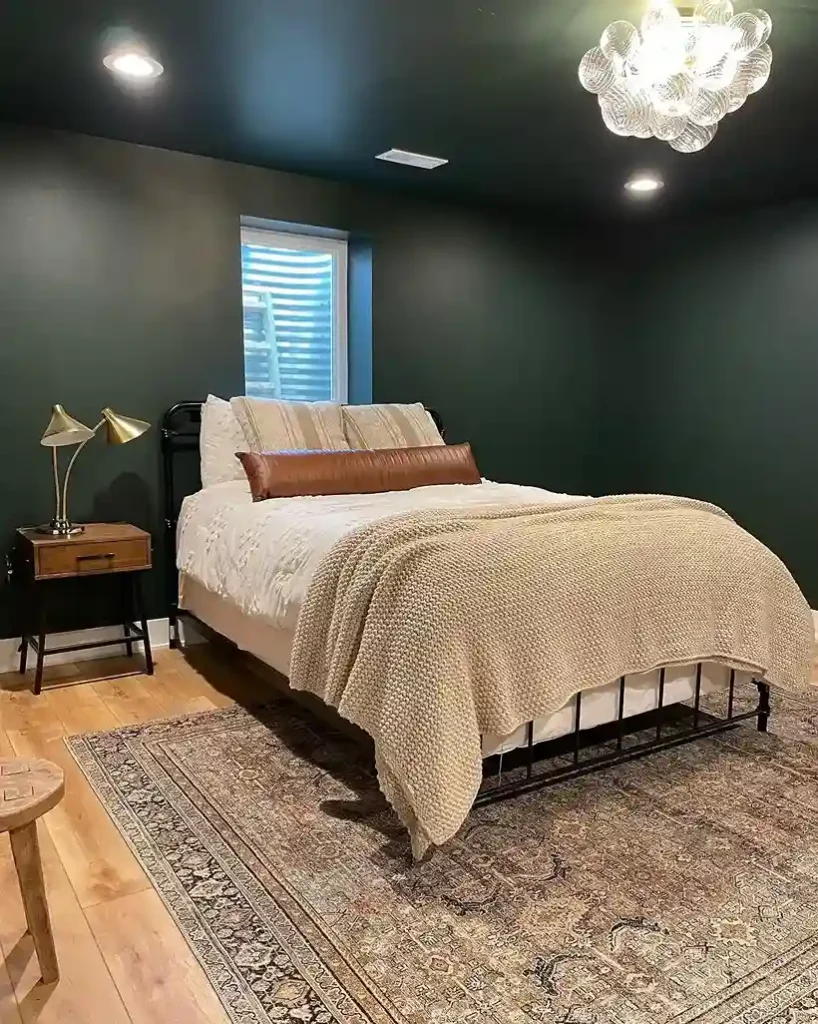
Installing egress windows costs $2,000-$5,000 per window including excavation, window well, drainage, and professional installation. This expense represents the single largest cost component of basement bedroom additions but remains absolutely non-negotiable for legal, safe sleeping spaces. Some jurisdictions allow egress doors instead of windows if bedrooms connect to exterior exits, though most basement bedrooms require proper window egress meeting specific dimensional requirements.
Minimum Ceiling Height
Most codes require 7-foot minimum ceiling heights for habitable rooms, though some jurisdictions mandate 7.5 feet. Measure carefully, as dropped ceilings, insulation, and finishes reduce clearance from original concrete ceilings to joists above. Homes with 8-foot basement heights comfortably accommodate finished ceilings, while those with 7.5-foot clearances require careful planning maximizing every inch of available headroom through strategic ceiling treatments.
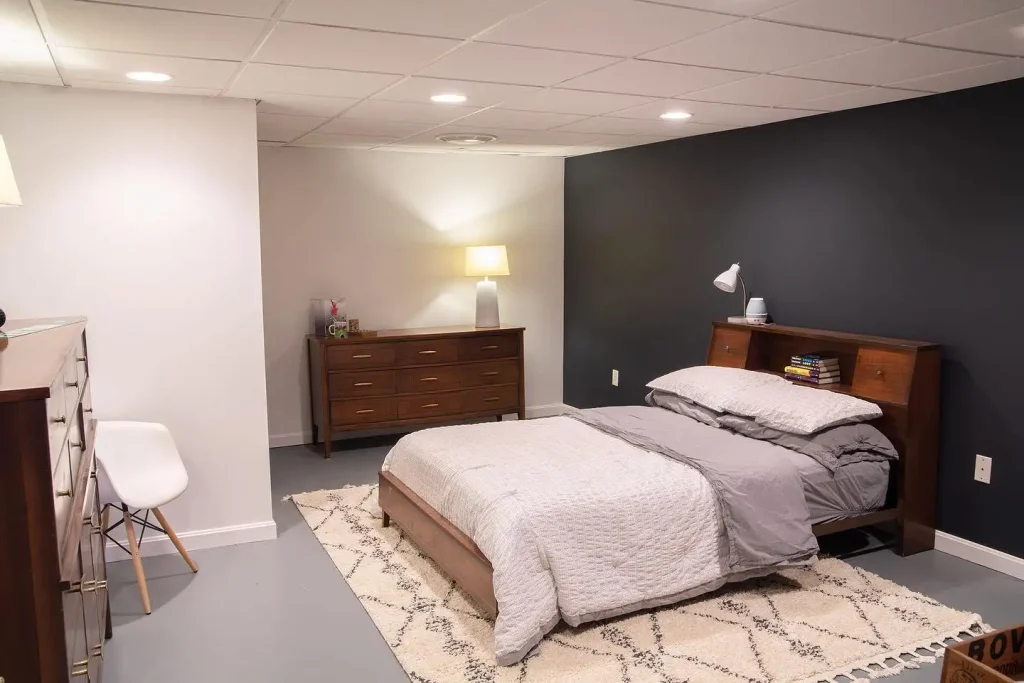
Basements with inadequate ceiling heights cannot legally become bedrooms without expensive underpinning lowering floor levels—a major structural undertaking costing $50,000-$150,000 rarely justified for single bedroom additions. Verify ceiling heights before planning bedroom projects, ensuring your basement physically accommodates code-compliant sleeping spaces without prohibitively expensive structural modifications.
Electrical and Safety Requirements
Bedroom electrical codes mandate outlets every 12 feet along walls, switched lighting, hardwired smoke detectors, and carbon monoxide detectors. These safety requirements ensure adequate lighting, power for devices, and early warning of dangerous conditions threatening sleeping occupants.
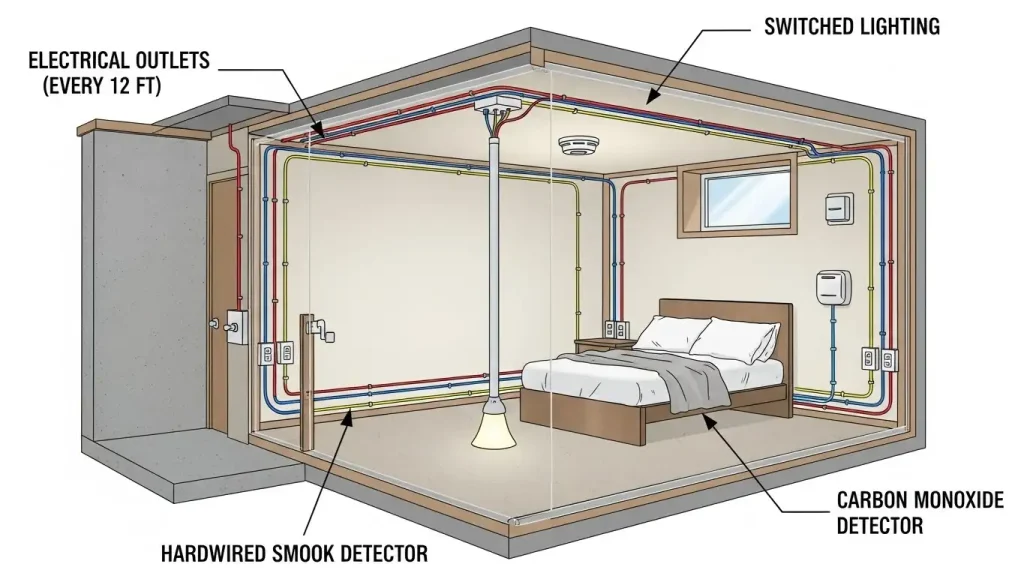
The electrical work costs $500-$1,500 depending on existing infrastructure and whether running new circuits from panels to basement locations.
Essential Bedroom Elements
Proper Moisture Control
Moisture represents the biggest threat to basement bedrooms, making comprehensive waterproofing absolutely essential before installing any finishes. Interior solutions include vapor barriers, waterproof wall systems, and dehumidifiers maintaining 30-50% humidity.
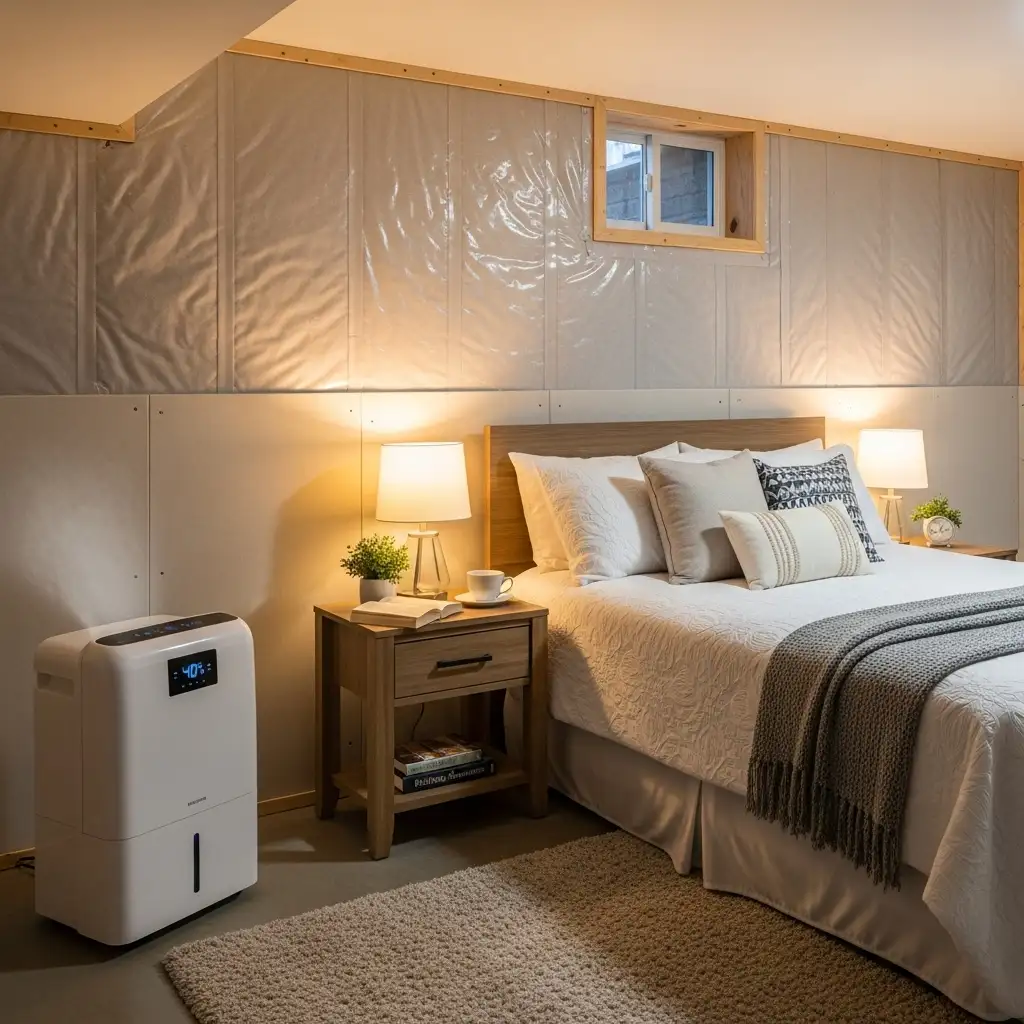
Exterior waterproofing through foundation sealing, proper grading, and gutter maintenance prevents water infiltration at source. Budget $3,000-$8,000 for thorough moisture control—this investment protects everything else while ensuring healthy sleeping environments free from mold and mildew.
Adequate Insulation
Insulate all exterior foundation walls with rigid foam boards (R-10 to R-15 minimum) or spray foam meeting local energy codes. Proper insulation creates comfortable year-round temperatures while preventing condensation that causes mold growth and musty odors.
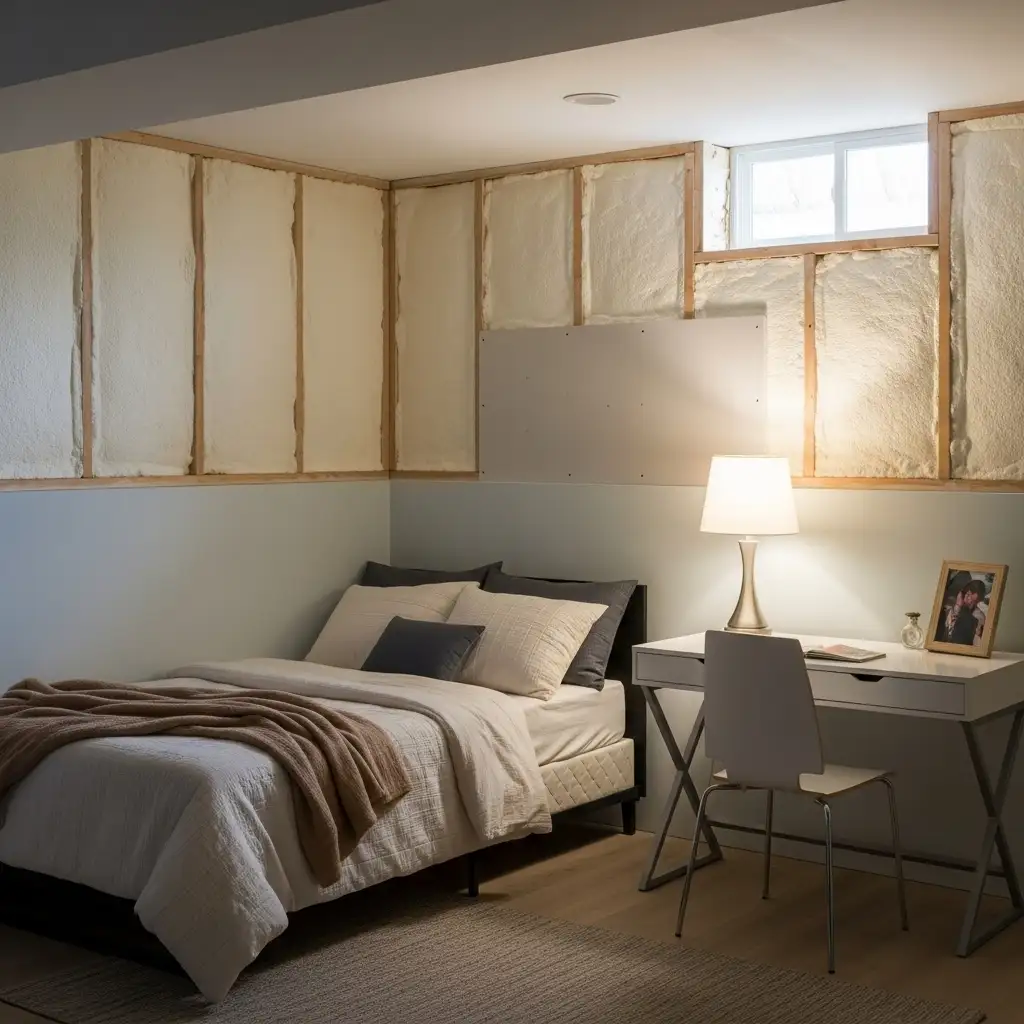
The insulated walls also provide sound dampening, reducing noise transfer between basement bedrooms and upstairs living areas—valuable for privacy and undisturbed sleep despite household activity overhead. If your basement is under construction then you will love to read our guide on unfinished basement before major makeovers.
Climate Control
Extend HVAC systems into basement bedrooms through additional ductwork ($1,500-$3,500) or install mini-split systems ($2,500-$6,000) providing independent temperature control. Proper heating and cooling proves essential for bedroom comfort—spaces that are too cold in winter or humid in summer don’t provide restful sleep regardless of beautiful finishes.
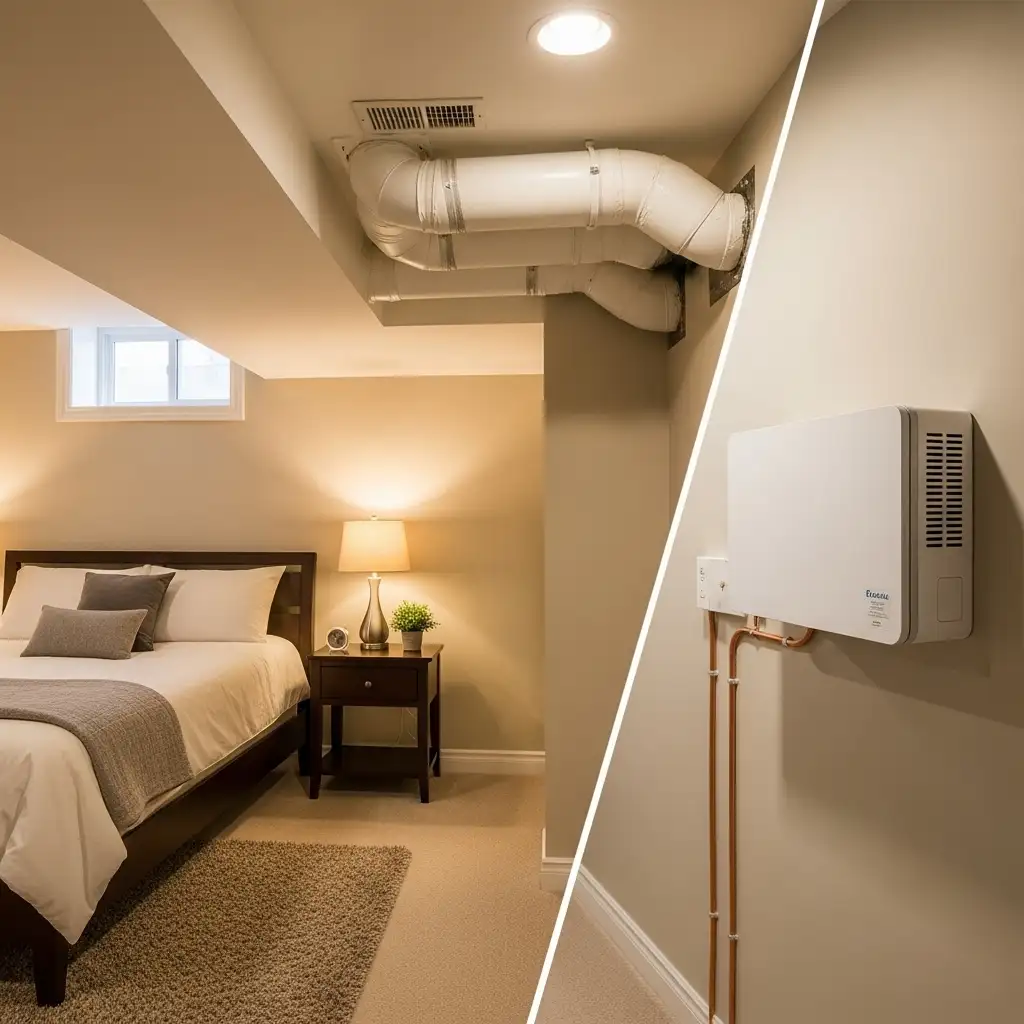
Include programmable thermostats allowing different settings than upstairs areas, as basements often need more cooling and dehumidification maintaining comfortable sleeping conditions.
Quality Lighting
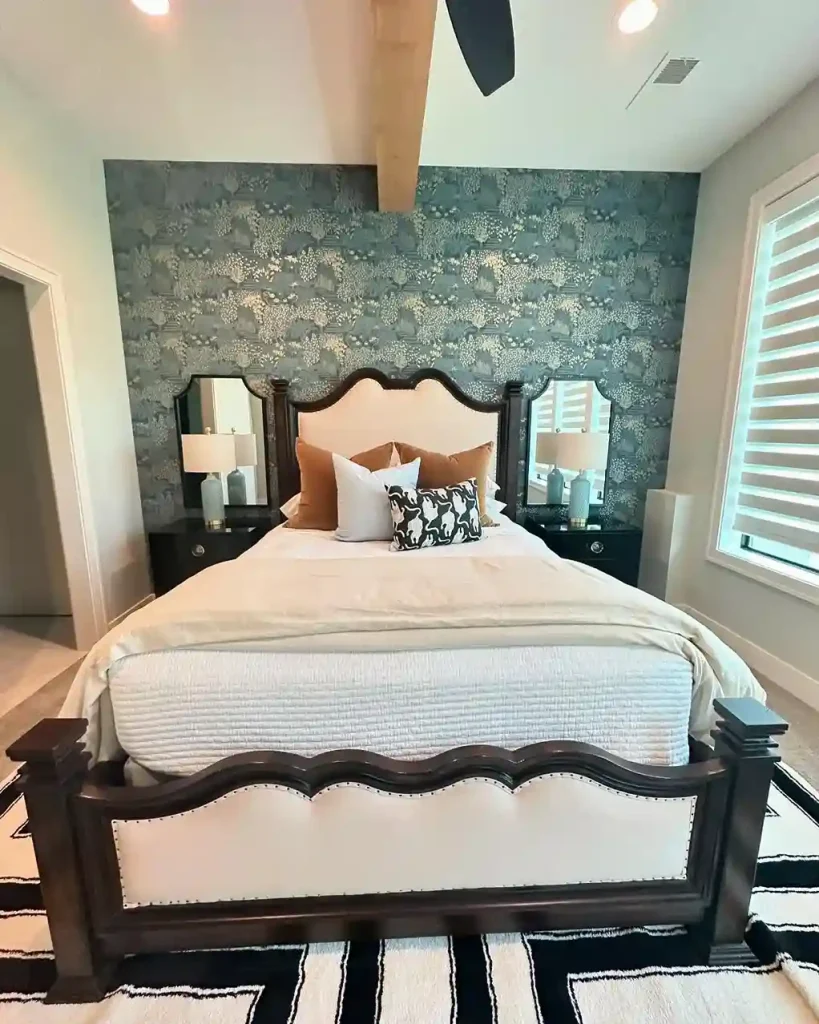
Combat natural darkness through layered lighting including overhead fixtures, bedside reading lamps, and closet lighting creating bright, welcoming environments. Despite egress windows providing some natural light, basement bedrooms remain darker than upstairs rooms, requiring thoughtful artificial lighting making spaces feel less cave-like and more inviting.
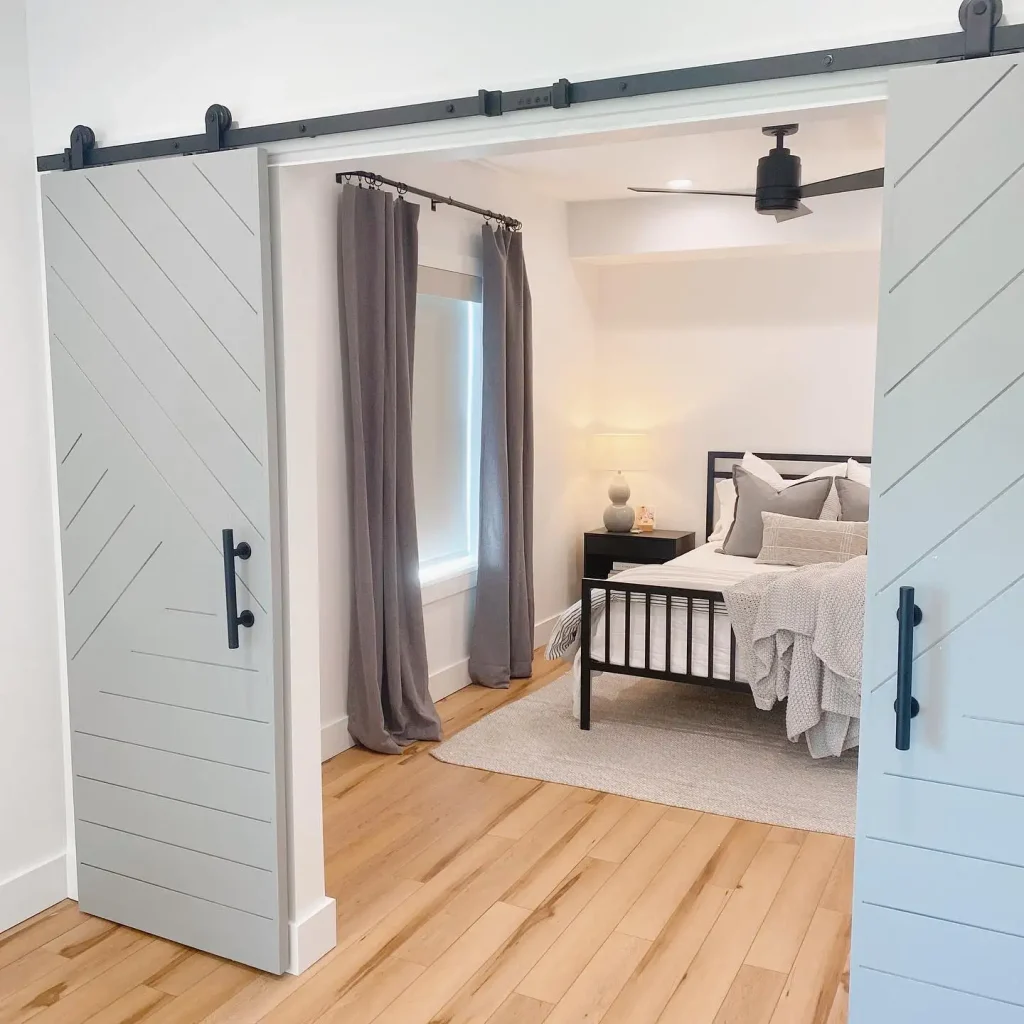
Source: @katie_gelsheimer_design
Install dimmer switches allowing brightness adjustment supporting various activities from energetic morning routines to calm evening wind-downs. For lighting guidance, see our guide to ceiling lights.
Planning Your Basement Bedroom
Location Selection
Choose bedroom locations maximizing natural light from existing windows, minimizing egress window installation costs, and providing adequate space for furniture including beds, dressers, and nightstands.
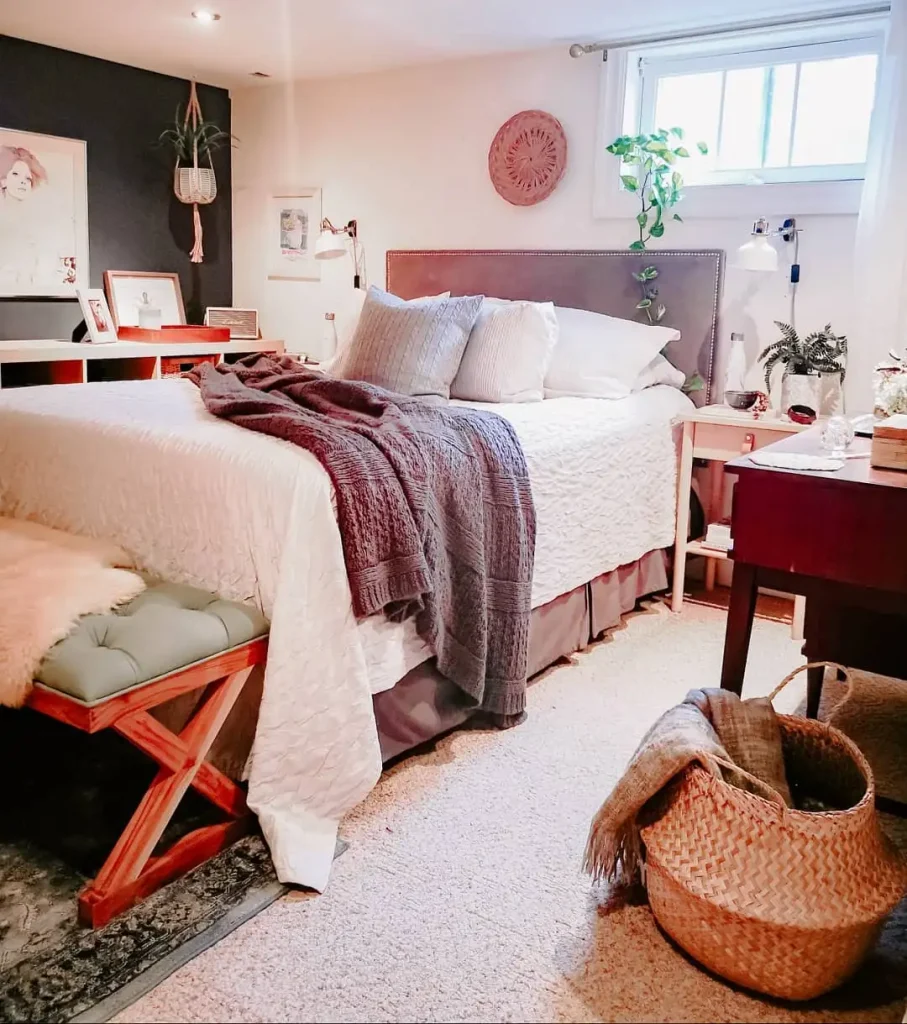
Source: @rdesignstudio.rameecyr
Consider proximity to bathrooms—bedrooms sharing walls with existing bathrooms or plumbing chases simplify adding en-suite facilities if budgets allow. Avoid placing bedrooms directly under noisy areas like kitchens or family rooms where floor noise disrupts sleep despite otherwise comfortable spaces.
Size Considerations
Building codes typically require minimum 70-80 square feet for bedrooms, though comfortable spaces need 120-150+ square feet accommodating standard furniture without cramped feelings.
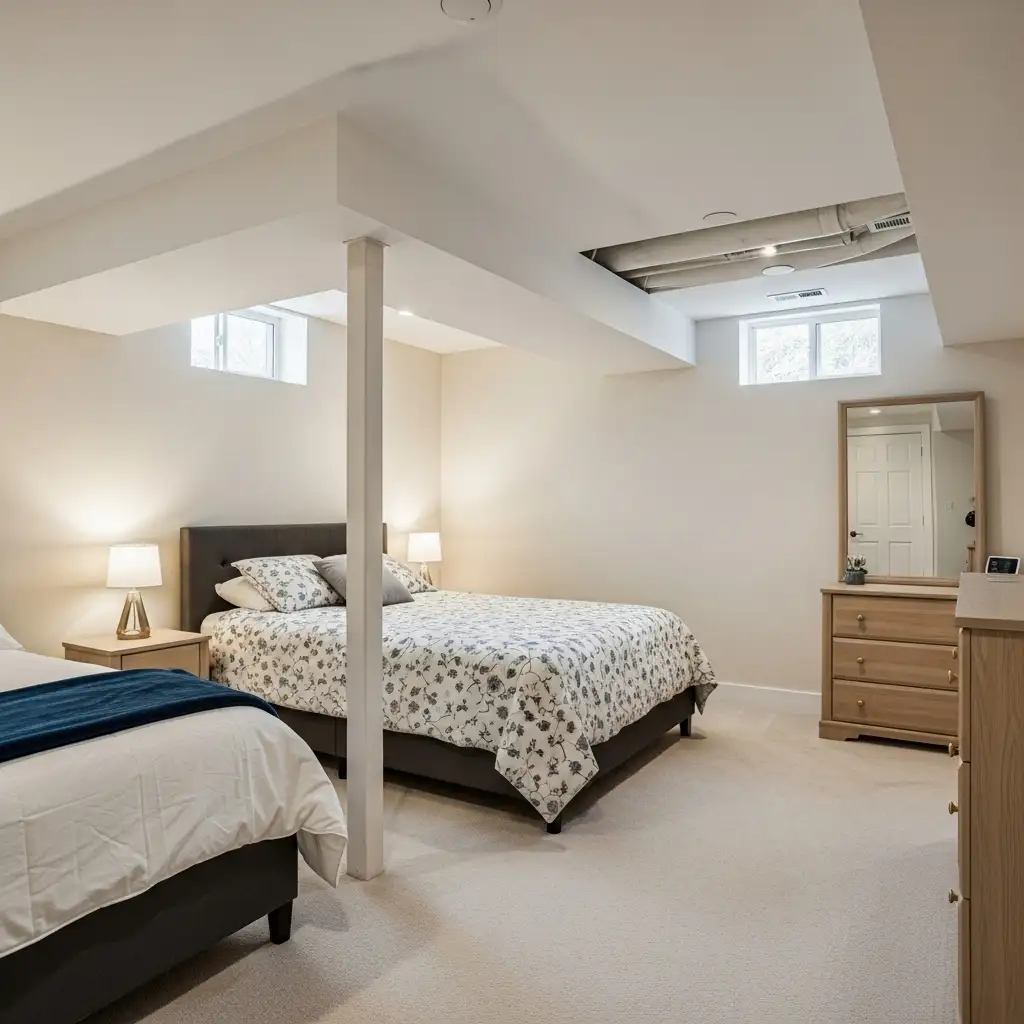
Include adequate clearance around beds (30 inches minimum), space for dressers and nightstands, and walking paths that don’t feel like narrow hallways. Larger bedrooms command better rental rates if creating income units, while smaller dimensions suit occasional guest rooms or children’s bedrooms prioritizing function over luxury.
Storage Solutions
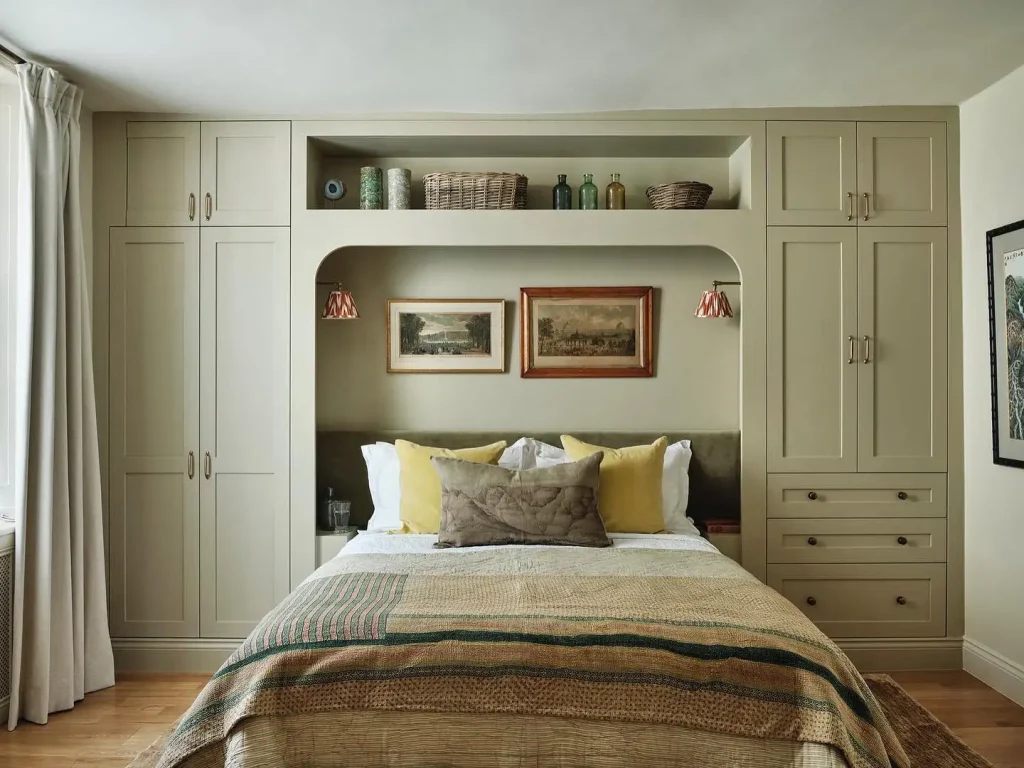
Incorporate closets meeting code requirements (typically 2 feet deep, 4-6 feet wide minimum) or provide alternative storage through wardrobes, built-ins, or under-bed solutions. Adequate storage transforms bedrooms from sleeping-only spaces into functional rooms accommodating clothing, personal items, and belongings that otherwise create clutter.
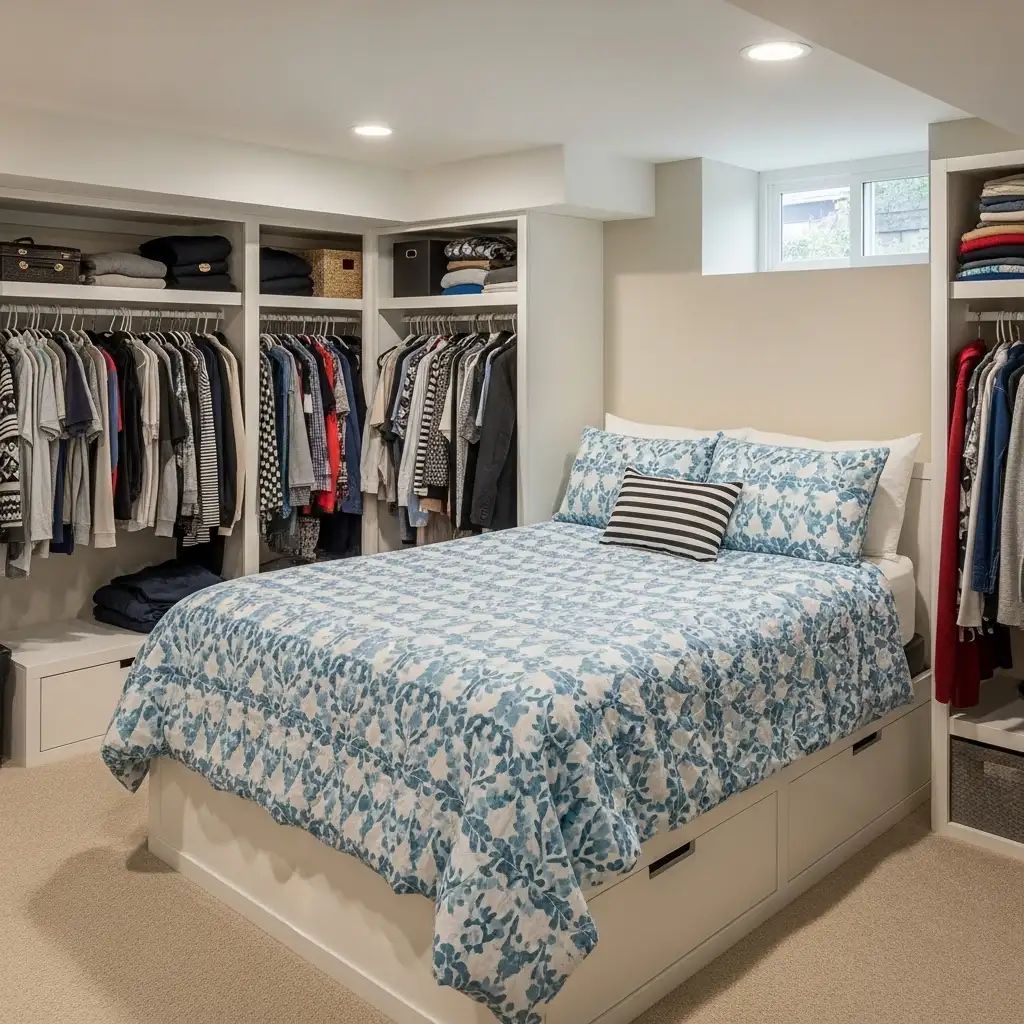
The organized storage particularly matters in rental situations where tenants expect complete, self-contained accommodations including proper clothing storage. For storage strategies, visit our small bedroom storage ideas guide.
Design Strategies for Comfortable Basement Bedrooms
Maximize Natural Light
Enlarge existing windows where possible, add window wells with decorative grates, or install light tubes bringing daylight from above. Natural light dramatically improves basement bedroom appeal, making spaces feel less dungeon-like and more welcoming. Position beds to capture window light without direct drafts, and use light-colored window treatments filtering rather than blocking precious natural illumination during daytime hours.
Light Color Palettes
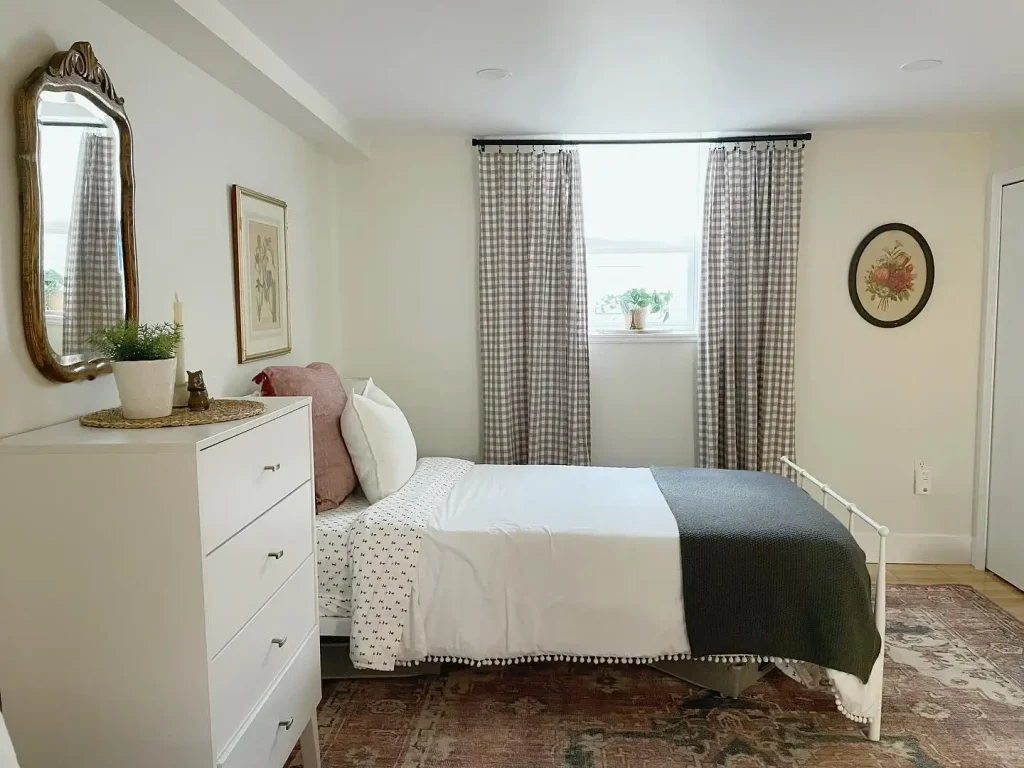
Paint walls in light neutrals including soft whites, warm creams, or pale grays that reflect maximum light while making small spaces feel larger. Dark colors absorb light making basement bedrooms feel smaller and more oppressive—particularly problematic in naturally dim below-grade spaces. The airy palette also creates calm, restful atmospheres conducive to quality sleep while providing neutral backgrounds for any bedding or decor style preferences.
Source: @mintunmaku
Strategic Furniture Placement
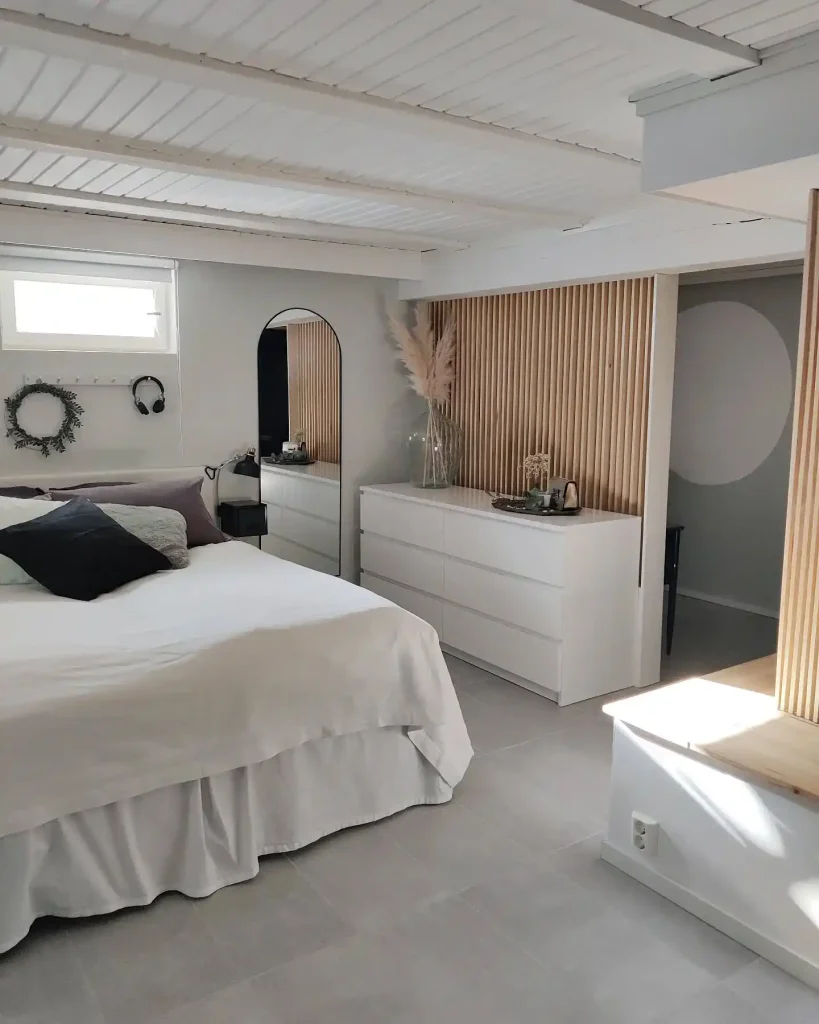
Arrange furniture maximizing floor space and traffic flow while maintaining access to egress windows that cannot be blocked by beds or large furniture. Place beds against interior walls rather than exterior foundation walls that feel colder despite insulation. Include nightstands with lamps on both bed sides, position dressers where they don’t obstruct walking paths, and ensure adequate clearance around all furniture maintaining comfortable, uncramped feelings despite potentially limited square footage.
Source: @theinteriorfox
Sound Control
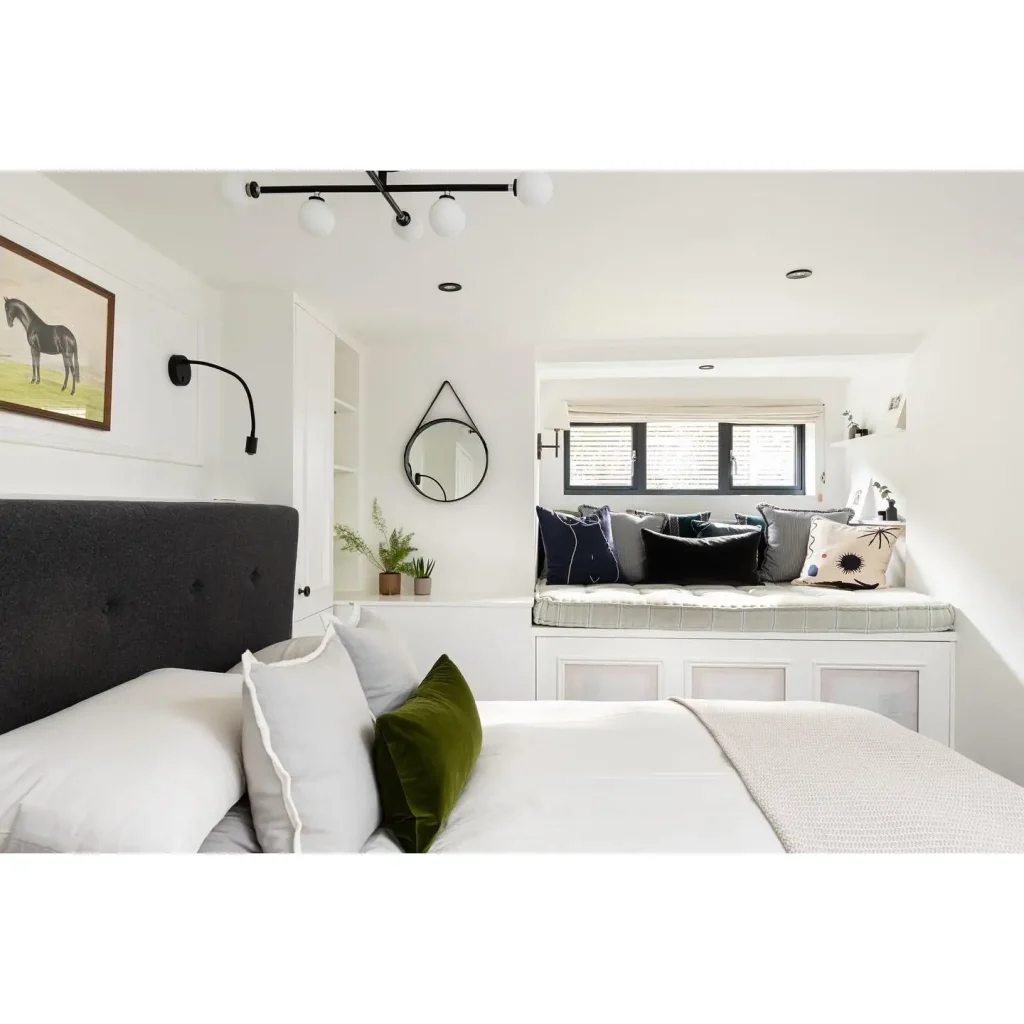
Add acoustic insulation in ceiling joists reducing noise transfer from upstairs living areas to basement bedrooms below. Use thick area rugs, upholstered headboards, and fabric window treatments absorbing sound and creating quieter sleeping environments. The sound dampening proves particularly crucial in active households where basement bedrooms might otherwise suffer from constant noise disruption preventing restful sleep despite comfortable temperatures and finishes. For bedroom design inspiration, see our master bedroom ideas guide.
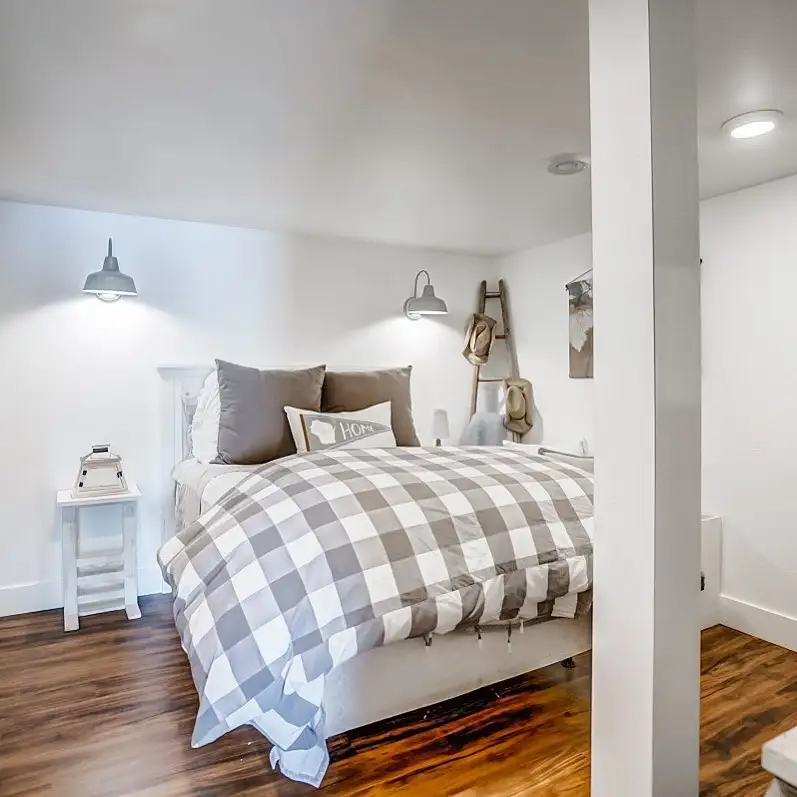
Source: @ashleykix
Cost Breakdown
Basic Bedroom Addition ($10,000-$18,000)
Basic basement bedrooms include framing, drywall, flooring, lighting, egress window, and minimal finishes creating functional sleeping spaces. This budget approach suits occasional guest rooms or children’s bedrooms where function matters more than luxury. The entry-level investment provides legal, safe bedrooms meeting code requirements without expensive upgrades or premium materials that strain limited budgets.
Mid-Range Bedroom ($18,000-$30,000)
Mid-range bedrooms include quality flooring like engineered hardwood or premium vinyl, upgraded lighting, built-in closets, better finishes, and sometimes en-suite bathrooms sharing plumbing with existing facilities. This investment creates comfortable bedrooms suitable for regular use by family members or commanding better rental rates from tenants expecting quality accommodations. The balanced approach delivers spaces that feel truly finished without luxury pricing.
High-End Suite ($30,000-$60,000+)
Luxury basement bedrooms feature premium finishes, custom closets, en-suite bathrooms with quality fixtures, sitting areas, and designer details creating hotel-like retreats. These substantial investments suit in-law suites, rental units commanding premium rents, or homeowners demanding perfection throughout entire homes. The quality finishes significantly increase property values while providing daily enjoyment justifying substantial investments through enhanced lifestyle and resale appeal.
Common Mistakes to Avoid
Skipping Egress Windows
Attempting to save money by omitting egress windows creates illegal bedrooms that cannot be advertised or sold as such, eliminating value additions and creating liability. The $2,000-$5,000 egress window investment proves absolutely non-negotiable—there are no legal shortcuts around this safety requirement. Insurance companies may also deny claims for injuries or deaths in non-compliant bedrooms, exposing homeowners to devastating financial and legal consequences.
Inadequate Moisture Control
Proceeding without proper waterproofing guarantees mold, mildew, and destroyed finishes requiring expensive remediation. Always address moisture thoroughly before installing materials that water will destroy. The unsexy waterproofing investment protects everything else while ensuring healthy sleeping environments free from dangerous mold affecting respiratory health and creating uninhabitable conditions despite beautiful surface finishes.
Insufficient Lighting
Underestimating lighting needs creates dark, depressing bedrooms that people avoid despite comfortable temperatures and finishes. Plan abundant lighting exceeding upstairs requirements, compensating for limited natural light. The extra investment transforms basement bedrooms from dreary to inviting, making them spaces families or renters actually want to occupy rather than tolerate as unfortunate necessities.
Poor Ventilation
Failing to extend HVAC or provide adequate air circulation creates stuffy, uncomfortable sleeping conditions. Proper climate control proves essential for bedroom functionality—spaces that don’t maintain comfortable temperatures don’t get used regardless of other investments. The mechanical system upgrades ensure year-round comfort while managing humidity that threatens both comfort and material integrity in below-grade sleeping spaces.
Frequently Asked Questions
How much does it cost to add a bedroom to a basement?
Adding basement bedrooms typically costs $10,000-$30,000 depending on finishes, whether including bathrooms, and existing basement conditions. Basic bedrooms with minimal finishes run $10,000-$18,000, mid-range bedrooms cost $18,000-$30,000, and luxury suites with en-suite bathrooms exceed $30,000-$60,000. The single largest expense is the required egress window at $2,000-$5,000, followed by finishing materials, electrical work, and climate control extensions necessary for comfortable sleeping.
Do basement bedrooms need egress windows?
Yes, building codes universally require bedrooms to include proper egress windows allowing emergency escape. The windows must provide minimum 5.7 square feet of openable area, be operable without tools, and have sills no higher than 44 inches from floors. There are no legal exemptions—bedrooms without proper egress cannot be legally advertised, sold, or occupied as sleeping spaces regardless of other features or finishes.
Do basement bedrooms add home value?
Yes, legal basement bedrooms with proper egress typically add $15,000-$30,000 in home value while costing $10,000-$30,000 to create. The additional bedroom count makes homes more competitive while appealing to buyers seeking maximum space. Value depends on quality, local markets, and whether bedrooms include en-suite bathrooms. Illegal bedrooms without egress add no value and create liability, making code compliance essential for any value appreciation.
Can I use a basement bedroom for rental income?
Yes, basement bedrooms often serve as rental rooms or apartments generating $600-$1,500+ monthly income depending on location and amenities. However, research local zoning, rental regulations, and licensing requirements before committing—some jurisdictions restrict basement rentals or require special permits. Ensure separate entrances when possible, include complete amenities, and maintain proper egress and safety features protecting both landlords and tenants through code-compliant construction.
Conclusion: Expand Your Home Below Grade
Adding bedrooms to basements solves critical space shortages efficiently and affordably, creating functional sleeping spaces at fractions of above-grade addition costs. Whether accommodating growing families, hosting guests, supporting multi-generational living, or generating rental income, basement bedrooms deliver substantial value through increased functionality and home values exceeding investment costs. The key lies in proper planning addressing moisture control, egress requirements, adequate lighting, and climate control ensuring comfortable, safe, legal bedrooms that serve occupants beautifully.
Ready to explore more basement possibilities? Check our guides including small bedroom ideas, bedroom ideas for couples, boys bedroom ideas, girls bedroom ideas, and home interior design ideas for complete bedroom design inspiration. Transform your basement into valuable sleeping space that serves your family beautifully while increasing your home’s functionality and market value substantially.