Are you tired of your television floating awkwardly on a blank wall without any design context? Do you struggle with unsightly cords, cables, and components creating cluttered, chaotic entertainment centers?
A wood panel accent wall behind your TV solves these common problems while creating architectural interest and warmth that transforms ordinary living rooms into sophisticated, intentionally designed spaces.
Source: @modofurniture
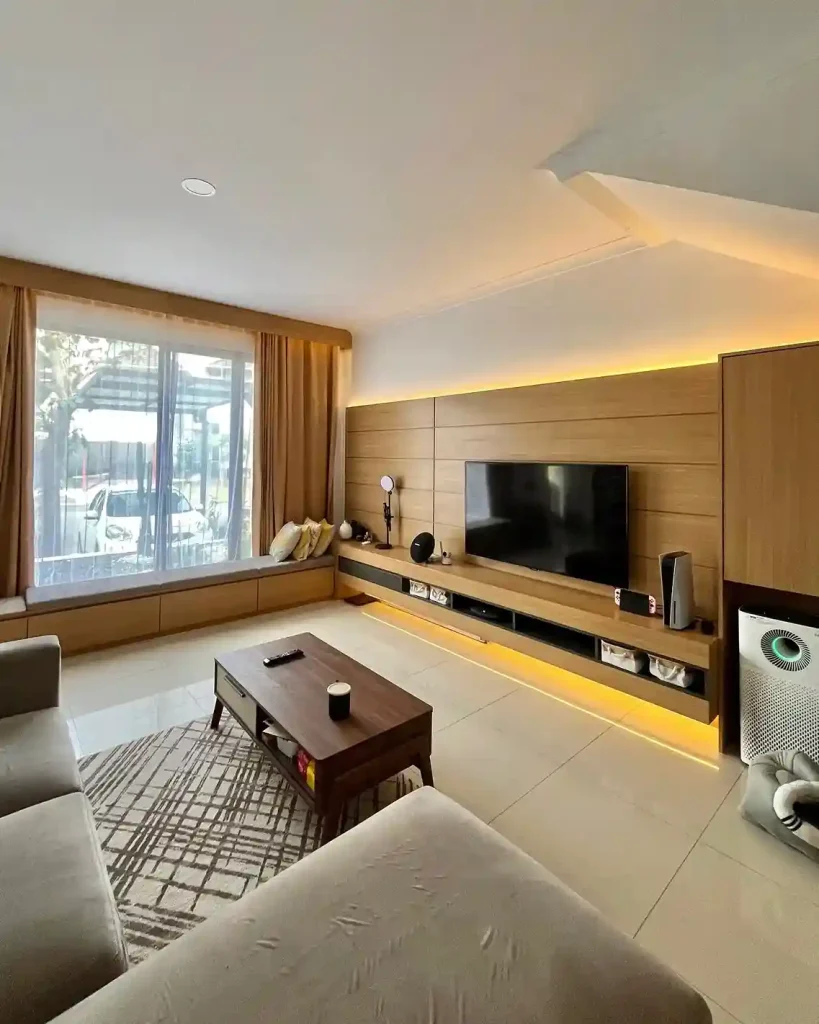
Wood panel behind TV walls provide natural focal points that draw attention without competing with screens, conceal messy wiring and equipment, and add organic texture that softens electronics-dominated spaces.
Whether you choose rustic reclaimed barn wood, sleek contemporary planks, or traditional shiplap, wood accent walls elevate TV areas from basic necessity to beautiful design features.
Source: @quarterinterior
The installation costs substantially less than built-in entertainment centers while delivering comparable visual impact through DIY-friendly projects achievable over single weekends.
Why Choose Wood Panels Behind Your TV?
Creates Intentional Focal Points
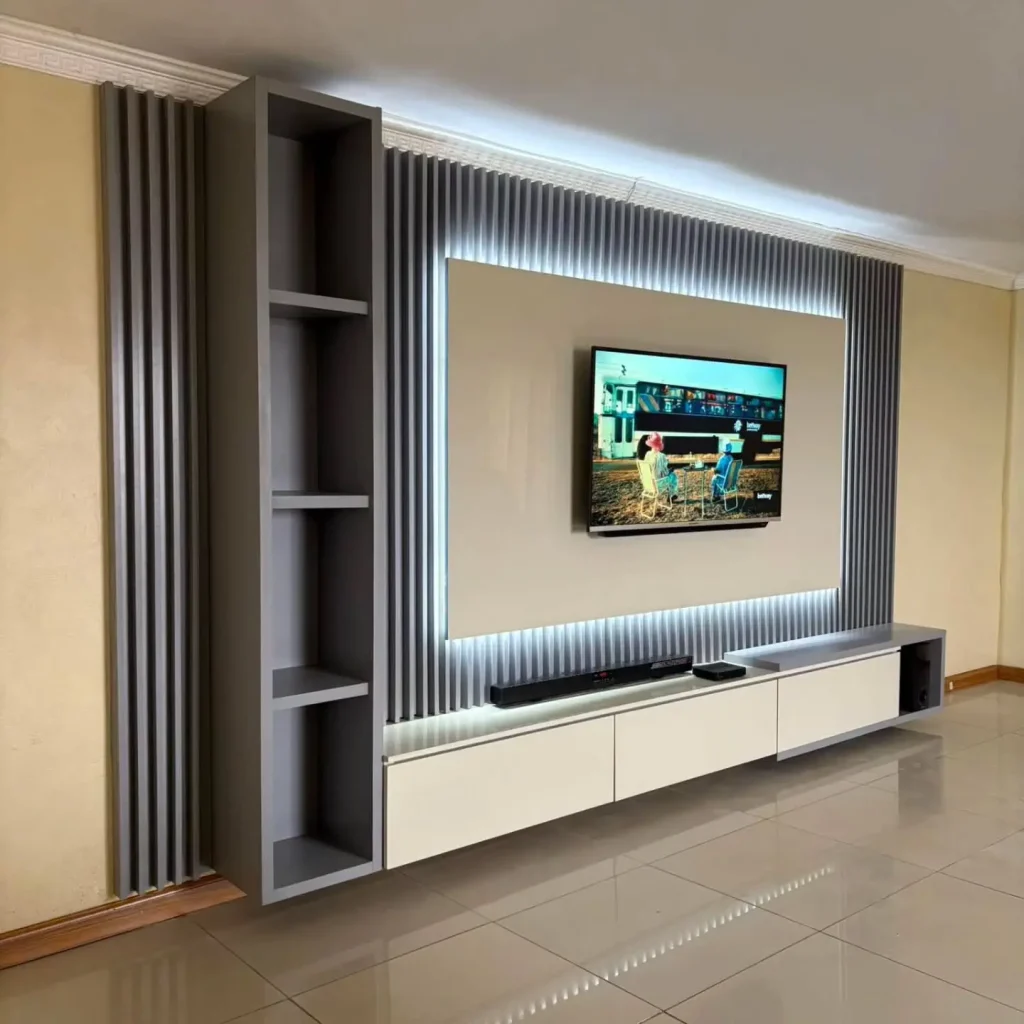
Wood accent walls frame televisions like artwork, making them appear intentional design elements rather than awkward black rectangles competing for attention. The natural material provides visual anchor that grounds screens while adding warmth and texture impossible with plain painted walls.
Source: @ayi.smart.furnitures07
This framing effect particularly benefits large TVs that might otherwise overwhelm spaces, as wood surrounds balance their visual weight through substantial presence and organic beauty. Check amazing beadboard wall ideas for TV room.
Conceals Wiring and Equipment
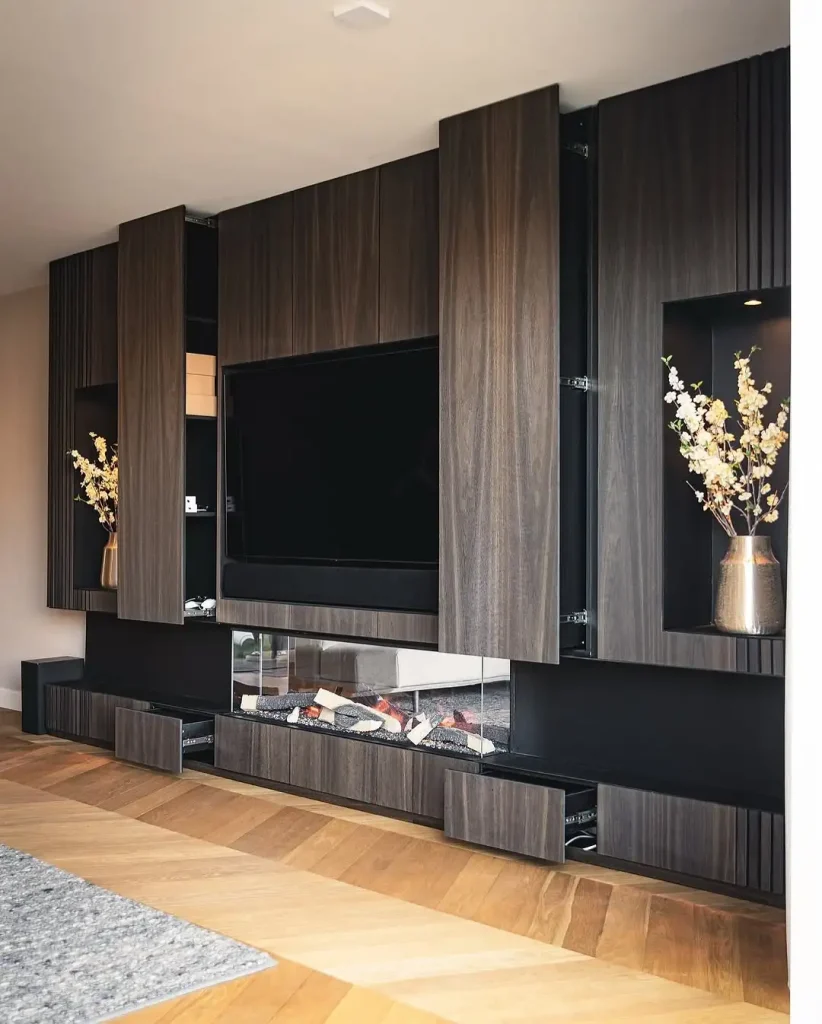
Strategic wood panel installation hides unsightly cables, power cords, and streaming equipment behind attractive surfaces maintaining clean, organized appearances.
Source: @sheddydesigns
Hollow wall constructions accommodate wiring channels routing cables invisibly from TVs to components below, eliminating the tangled messes that plague wall-mounted screens. This concealment proves particularly valuable in open-concept homes where TV walls remain visible from multiple angles throughout daily living. See more
Adds Warmth to Tech-Heavy Spaces
Living rooms dominated by televisions, speakers, and electronic equipment often feel cold and impersonal despite comfortable furnishings. Natural wood introduces organic warmth and texture that humanizes technology-focused spaces, creating balance between modern electronics and natural materials.
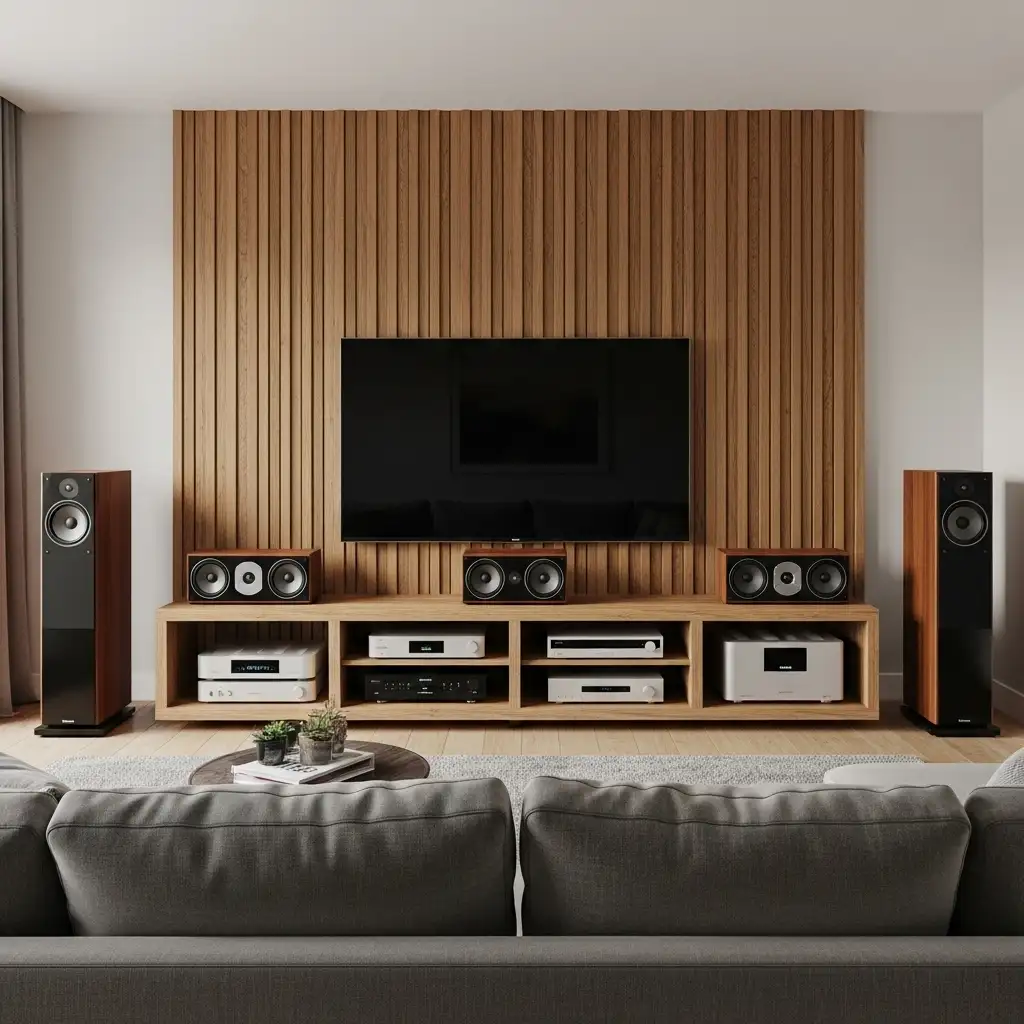
The wood softens harsh lines and reflective surfaces typical of entertainment equipment, making rooms feel more welcoming and less like commercial electronics showrooms.
Increases Perceived Home Value
Custom wood accent walls suggest thoughtful design and quality craftsmanship that appeal to homebuyers appreciating distinctive architectural details. The permanent improvement adds perceived value exceeding actual installation costs, particularly when executed professionally with quality materials and finishes.
Source: @accentwalls_neo
Real estate agents consistently note that homes with designer touches including accent walls photograph better and generate more buyer interest than comparable properties lacking distinctive features. Check these plywood walls for the TV.
Popular Wood Panel Styles
Horizontal Shiplap
Shiplap represents the most popular wood panel choice, featuring horizontal boards with characteristic shadow lines between planks creating classic farmhouse aesthetics. The overlapping installation proves DIY-friendly while delivering substantial visual impact.
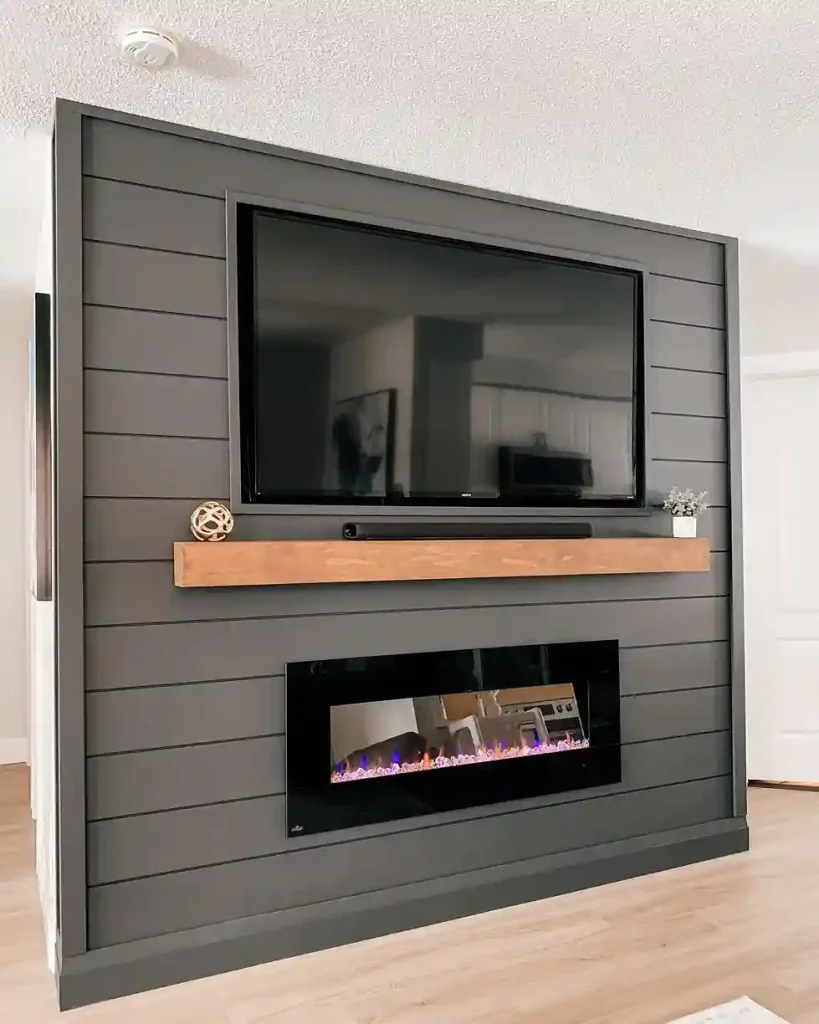
Paint shiplap white for bright, coastal vibes, use natural stained finishes for rustic warmth, or choose dramatic black creating sophisticated contemporary statements. For complete shiplap guidance, see our shiplap ceiling ultimate guide applicable to wall installations.
Vertical Planks
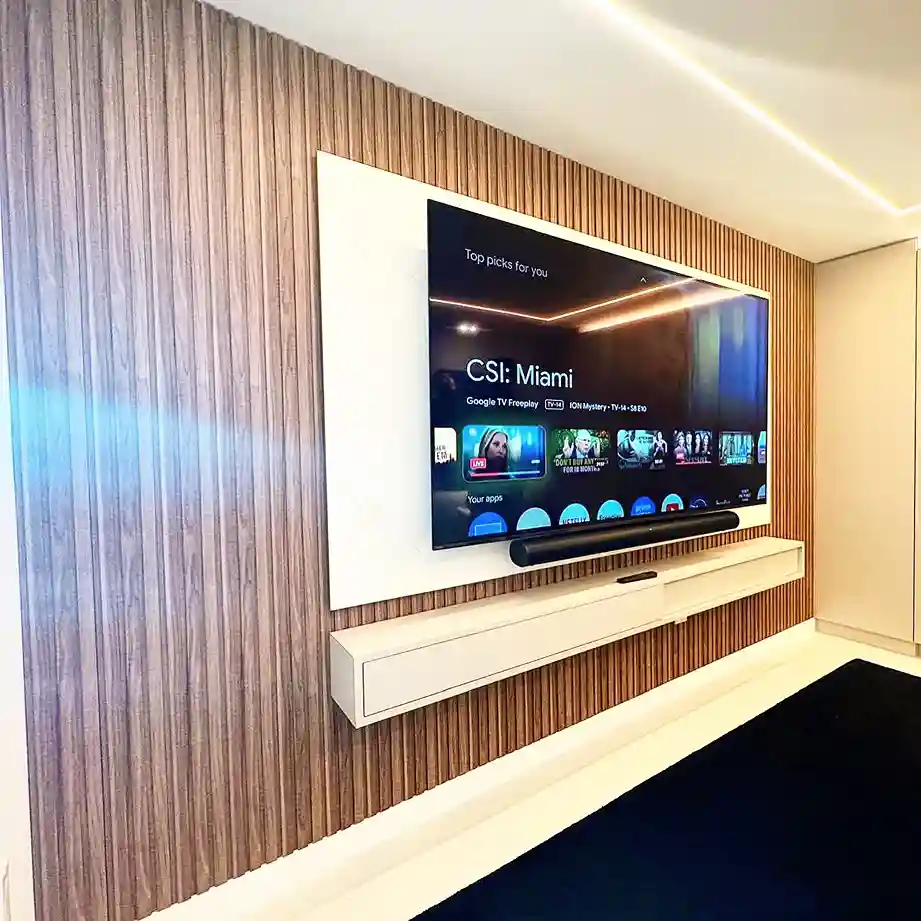
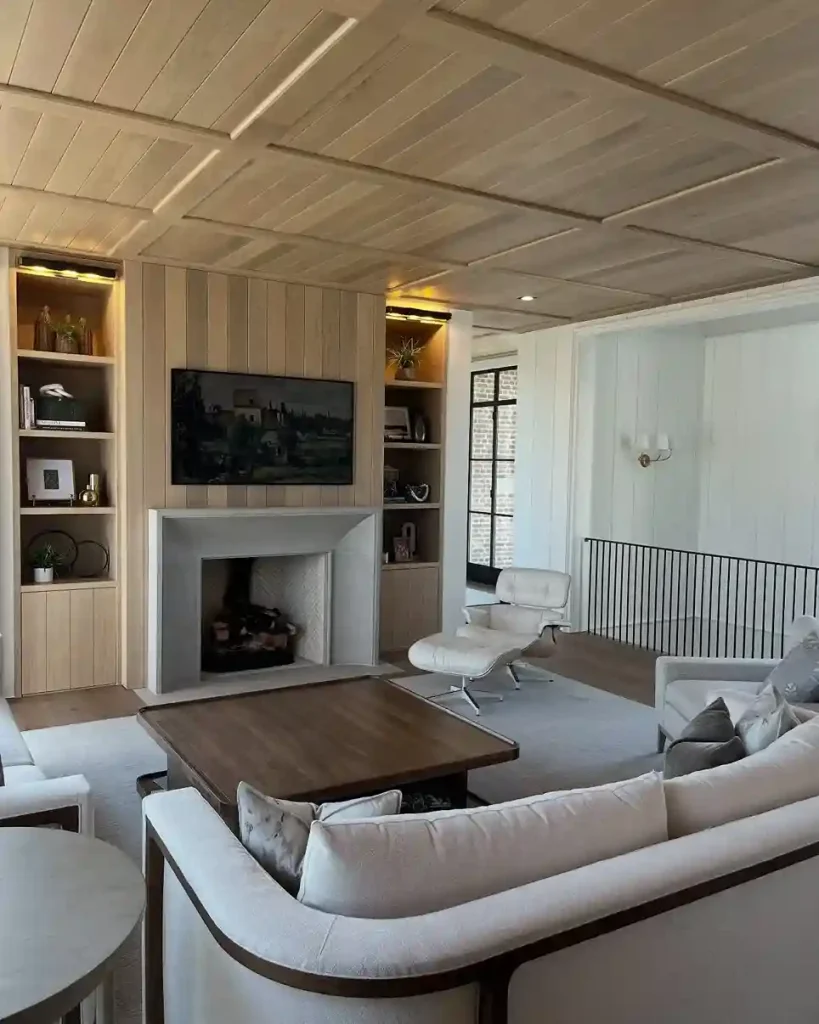
Vertical wood plank installations create modern, streamlined aesthetics that emphasize ceiling height while providing distinctive alternatives to common horizontal patterns. The vertical orientation makes rooms feel taller and more expansive, beneficial in spaces with standard 8-foot ceilings needing visual lift.
Source: @dwellingsinc
This contemporary approach works beautifully with wider planks (6-8 inches) in clean, uniform finishes creating graphic impact behind minimalist TV setups.
Reclaimed Barn Wood
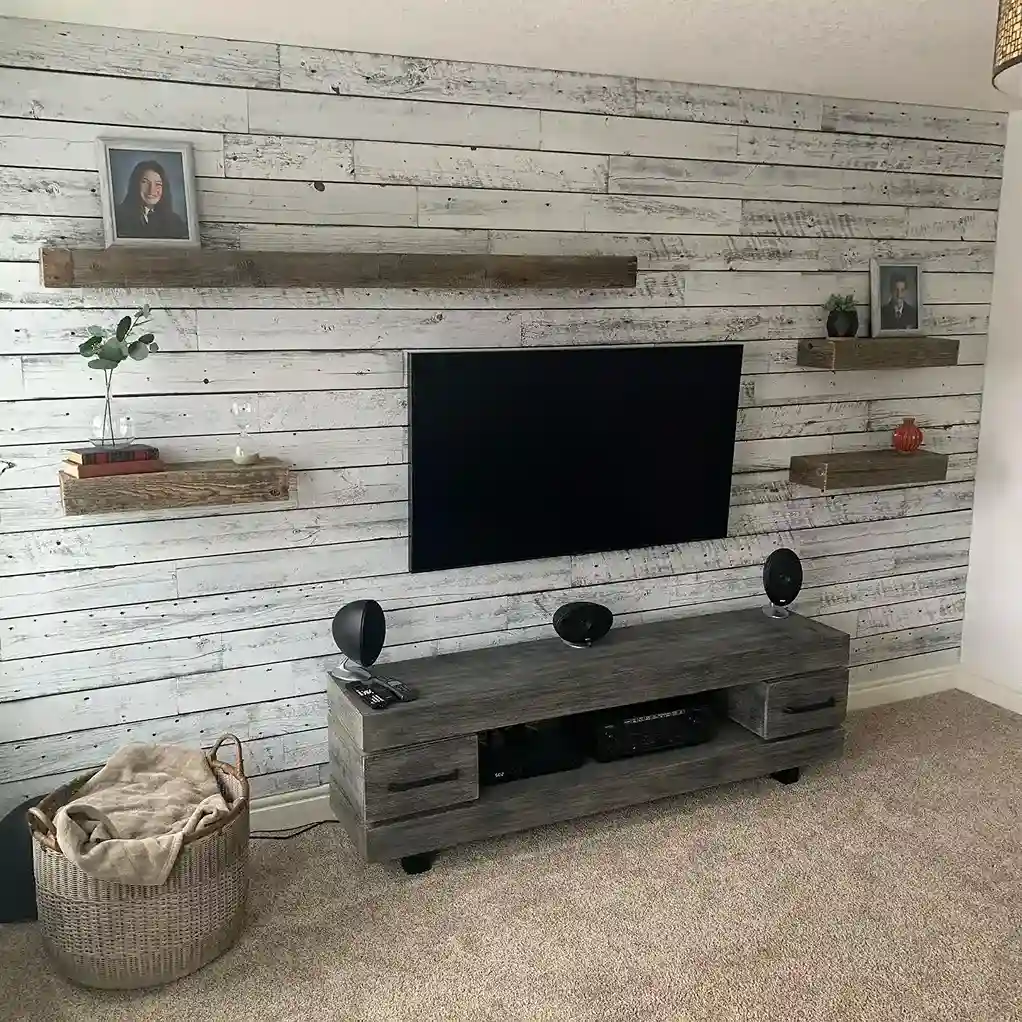
Authentic reclaimed barn wood delivers unmatched character through weathered patinas, nail holes, and varied coloring that tells stories of previous lives. This rustic option creates dramatic, textured walls impossible to replicate with new materials despite higher costs.
Source: @reclaimedtimberdesign
The irregular boards, varied widths, and genuine age create one-of-a-kind installations that become conversation pieces and distinctive features guests remember long after visiting.
Herringbone and Chevron Patterns
Create sophisticated, high-end appearances through herringbone or chevron wood patterns adding geometric interest and visual movement. These labor-intensive installations cost more in materials and time but deliver stunning results that rival custom millwork.
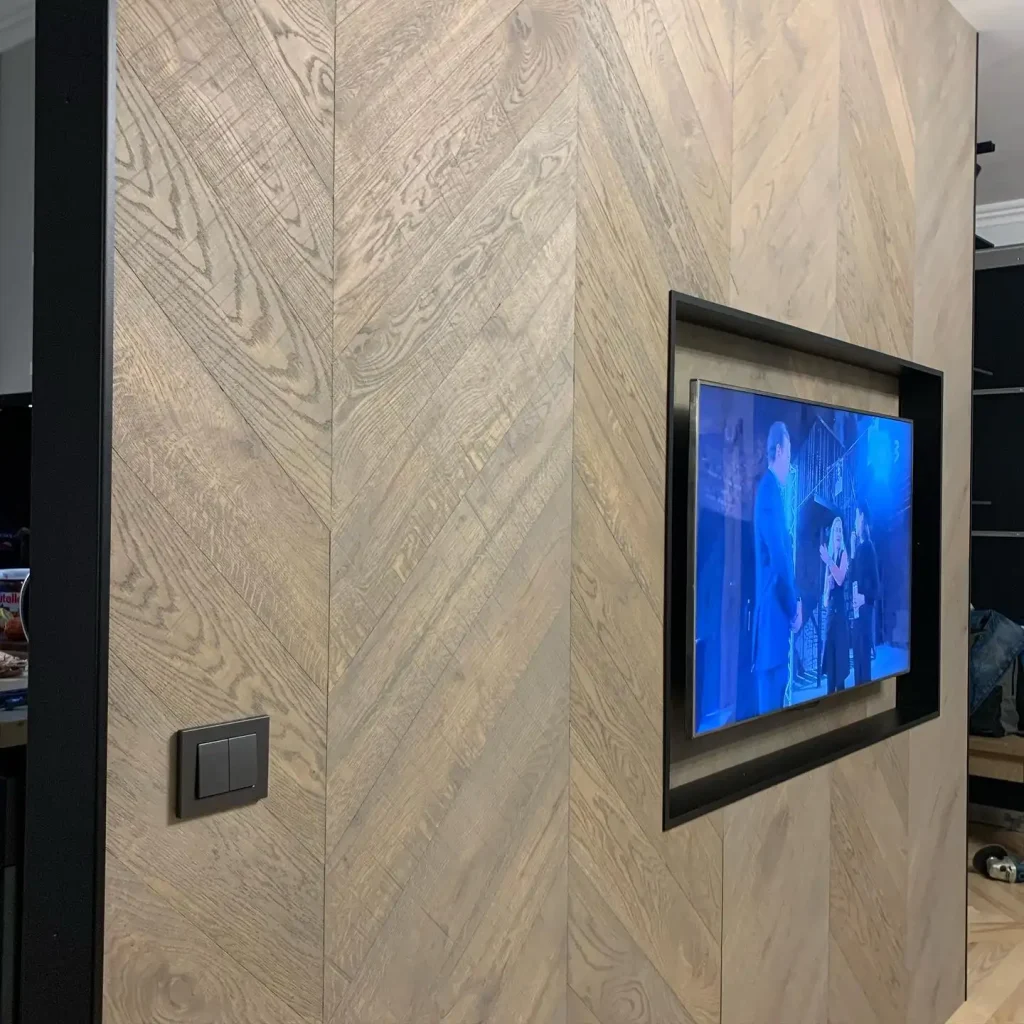
The diagonal patterns work particularly well behind larger TVs where substantial wall space accommodates pattern repetition necessary for visual impact. See our herringbone wood floors guide for pattern inspiration applicable to walls.
Wood Plank with Integrated Shelving
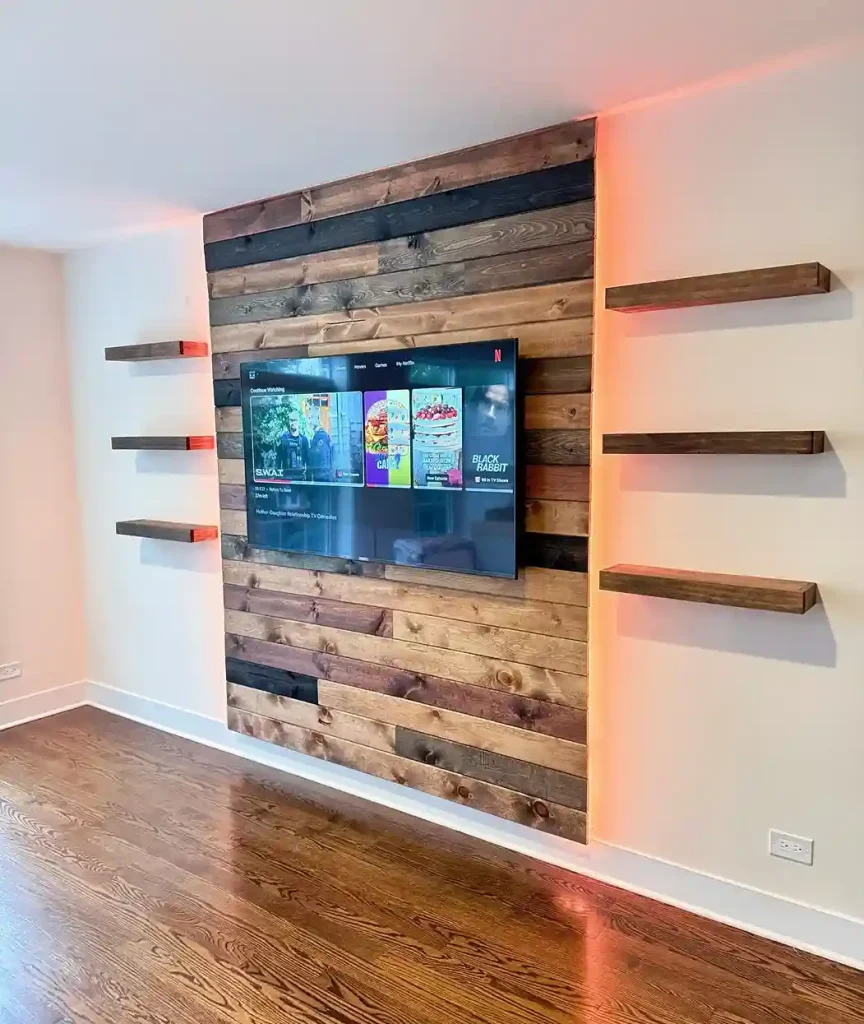
Combine wood panels with floating shelves or built-in niches creating functional storage displaying decorative items, books, or components while maintaining cohesive wood aesthetic.
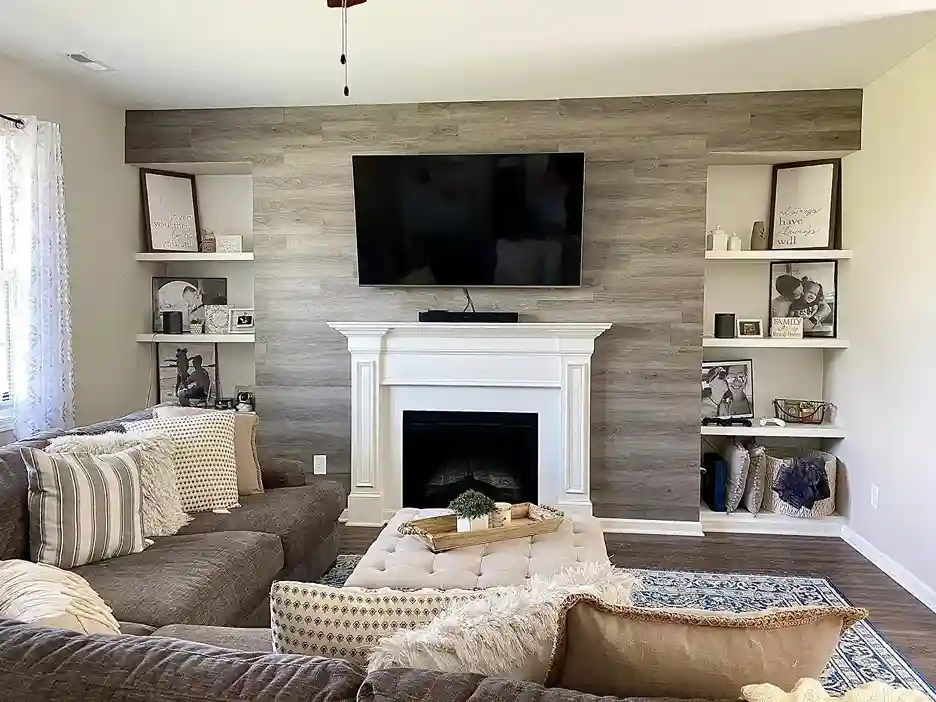
This practical approach maximizes TV wall functionality without requiring separate furniture pieces consuming floor space. Strategic shelf placement flanking TVs creates balanced, symmetrical arrangements that feel intentionally designed rather than accidentally assembled.
Planning Your Wood Panel TV Wall
Measure and Mock-Up
Begin by measuring TV wall dimensions accounting for baseboards, outlets, and any architectural features affecting installation. Create cardboard templates approximating TV size and positioning, ensuring wood panel installation accommodates mounting heights and viewing angles. This planning prevents discovering issues mid-installation when materials are already purchased and projects are halfway complete.
Consider TV Mounting First
Install TV mounts and verify positioning before beginning wood panel work, as mounting requires securing into wall studs that wood panels might obscure. Pre-planning prevents drilling through newly installed wood searching for studs, potentially damaging expensive materials. Some installations incorporate TV mounts directly into wood panel frameworks, but this requires advanced carpentry ensuring structural integrity supporting heavy electronics safely.
Plan Cable Management
Design wire concealment strategies before installation, whether routing cables through hollow wall spaces, using surface-mounted cable covers, or incorporating in-wall electrical boxes and conduit. Proper planning prevents discovering cable access problems after completing installations, requiring destructive removal accessing wiring that should have been addressed during construction phases.
Choose Finish Early
Select paint colors or stains before purchasing materials, as some products work better with certain finishes. Natural wood variations, knots, and grain patterns appear differently under various stains, so testing on sample boards ensures satisfaction before committing to entire walls. Paint-grade materials require less perfection than stain-grade wood showcasing every imperfection through transparent finishes.
Material Options and Costs
Budget Pine Planks ($1.50-$3/sq ft)
Standard pine boards from home improvement stores offer the most affordable wood panel option, providing genuine wood grain and stainable surfaces at accessible prices. A typical 8×10 foot TV wall (80 sq ft) costs $120-$240 in materials, plus finishing supplies ($50-$100), totaling $170-$340 for DIY installation. Pine accepts stains beautifully, allowing customized colors from light natural tones through dark espresso finishes matching existing decor.
Shiplap and Primed Boards ($2-$4/sq ft)
Pre-primed shiplap boards simplify installation and finishing, arriving ready for painting without additional preparation. These convenient options cost slightly more than raw lumber but save preparation time and ensure uniform paint absorption. An 80 sq ft wall costs $160-$320 in materials plus paint ($40-$80), totaling $200-$400 complete—still remarkably affordable for dramatic design impact.
Peel-and-Stick Wood Panels ($3-$7/sq ft)
Modern peel-and-stick wood panels provide ultimate convenience for non-DIYers uncomfortable with saws and nail guns. These realistic wood-look products feature adhesive backing sticking directly to existing drywall, requiring only utility knives and basic measuring skills. An 80 sq ft installation costs $240-$560, typically completable in single days without power tools or construction mess—perfect for renters or those wanting quick transformations.
Reclaimed Barn Wood ($8-$20/sq ft)
Authentic reclaimed wood commands premium pricing reflecting sourcing, preparation, and unique character impossible to replicate. An 80 sq ft accent wall costs $640-$1,600 just for materials, though the one-of-a-kind result justifies investment for homeowners valuing authentic character and sustainable materials. The substantial cost makes reclaimed wood best suited for smaller accent areas rather than entire walls, concentrating budget where impact matters most.
Installation Process Overview
Prepare the Wall Surface
Clean walls thoroughly, repair any damage, and ensure smooth, level surfaces for optimal wood panel adhesion. Remove outlet covers and switch plates, extending boxes if necessary ensuring they remain flush with finished wood surfaces. Paint walls in colors coordinating with wood in case small gaps appear between boards, preventing glaring white drywall showing through wood installations.
Install Furring Strips or Backing
Attach horizontal furring strips to walls creating level nailing surfaces if installing planks directly, or create hollow wall spaces accommodating wiring if building deeper constructions. These preparatory steps prove crucial for professional results, preventing wavy, uneven installations that appear amateur despite quality materials. Level furring strips ensure straight, true plank installation regardless of wall imperfections underneath.
Cut and Install Planks
Measure, cut, and install planks starting from bottom and working upward, maintaining consistent spacing and level lines throughout. Use finish nailers or construction adhesive attaching boards securely while concealing fasteners. Work methodically, checking level frequently preventing gradual drift creating visibly crooked installations that appear unprofessional despite otherwise quality work.
Finish and Seal
Apply stains, paints, or clear sealers protecting wood while achieving desired aesthetics. Quality finishing materials prove crucial for longevity, particularly in high-traffic living areas where TV walls receive regular cleaning. Multiple thin coats deliver better results than single heavy applications that drip, sag, or dry unevenly creating disappointing final appearances.
Design Integration Tips
Coordinate with Existing Decor
Select wood tones and finishes complementing existing furniture, flooring, and architectural elements rather than fighting established aesthetics. Wood accent walls should enhance rather than compete with surrounding design, creating cohesive spaces where all elements work harmoniously. Consider room’s overall color palette, existing wood tones, and design style ensuring TV wall additions feel intentional rather than awkward afterthoughts.
Scale Appropriately
Size wood panel walls appropriately for TV dimensions and room proportions—walls too small make TVs appear oversized, while excessively large installations overwhelm spaces. Good rule of thumb suggests extending wood panels 6-12 inches beyond TV edges on all sides, creating frames without dominating entire walls unnecessarily. For comprehensive TV wall design, visit our living room tv wall ideas guide.
Add Lighting Enhancements
Incorporate LED strip lighting behind TVs or along wood panel edges creating ambient glow that reduces eye strain while highlighting wood texture beautifully. Strategic lighting transforms TV walls from daytime design features into evening focal points that shine even when screens are off. The subtle illumination also helps TVs appear to float, adding depth and dimension to flat wall installations.
Balance with Surrounding Walls
Avoid creating jarring contrasts by ensuring TV accent walls coordinate with adjacent wall colors and treatments. Neutral wood tones work with virtually any surrounding color, while dramatic dark woods require careful consideration ensuring they don’t feel too heavy or disconnected. The goal is distinctive focal point that enhances rather than fights overall room design.
Maintenance and Care
Wood panel TV walls require minimal maintenance beyond occasional dusting with microfiber cloths or vacuum brush attachments. Clean spills immediately preventing staining or water damage, particularly on unsealed or lightly sealed wood. Inspect periodically for loose boards, damaged finish, or any issues requiring attention before minor problems become expensive repairs. Quality installation and proper sealing ensure wood TV walls serve beautifully for decades with basic care and cleaning.
Frequently Asked Questions
How much does a wood panel TV wall cost?
DIY wood panel TV walls cost $200-$600 for typical 80-100 sq ft installations using budget materials like pine or shiplap. Premium materials including reclaimed barn wood run $800-$2,000 for similar areas. Professional installation adds $400-$1,200 depending on complexity, raising total costs to $600-$3,200. Peel-and-stick options cost $300-$700 for convenient DIY installations requiring no tools or skills.
Can I install wood panels myself?
Yes, wood panel installation suits confident DIYers with basic tools and carpentry skills. The project requires accurate measuring, level installation, and patient, methodical work but remains accessible for homeowners completing projects over weekends. Peel-and-stick options require even less skill, needing only utility knives and measuring capabilities. Start with small accent areas building confidence before tackling prominent TV walls if concerned about results.
What wood is best for TV accent walls?
Pine offers best value for budget installations, providing genuine wood at accessible prices. Shiplap delivers classic farmhouse aesthetics while simplifying installation. Reclaimed barn wood creates unmatched character justifying premium costs for distinctive, one-of-a-kind results. Choose based on budget, desired aesthetic, and installation comfort level—all options create beautiful results when properly executed with care and attention.
How do you hide TV wires with wood panels?
Build shallow hollow walls using furring strips creating spaces routing cables behind wood panels from TVs to components below. Alternatively, use in-wall cable management systems or surface-mounted cord covers painted matching wood. Pre-planning wire concealment before installation prevents discovering access problems after completing projects, requiring destructive removal accessing wiring that should have been addressed during construction.
Conclusion: Frame Your Entertainment in Natural Beauty
Wood panel accent walls behind TVs transform necessary electronics into beautiful focal points that enhance rather than detract from living room aesthetics. The natural material adds warmth, texture, and architectural interest while solving practical problems including wire concealment and visual balance. Whether you choose budget-friendly pine, classic shiplap, or dramatic reclaimed wood, the investment creates distinctive spaces that elevate everyday TV viewing into experiences surrounded by natural beauty.
Ready to complete your living room transformation? Explore our guides including tv wall ideas, fireplace wall ideas with tv, living room wall decor, wall paneling ideas, and home decor ideas for the living room for complete design inspiration. Your stunning wood panel TV wall awaits—transform your entertainment space into the architectural showpiece it deserves to be through natural materials, thoughtful design, and the satisfaction of creating beautiful focal points that frame your viewing experience perfectly.