A good sewing room makes every project easier.
When your machine, fabric, thread, and tools all have a home, you spend less time searching and more time creating.
This guide walks through everything you need to plan, furnish, organize, and style a sewing room that actually works for how you sew.
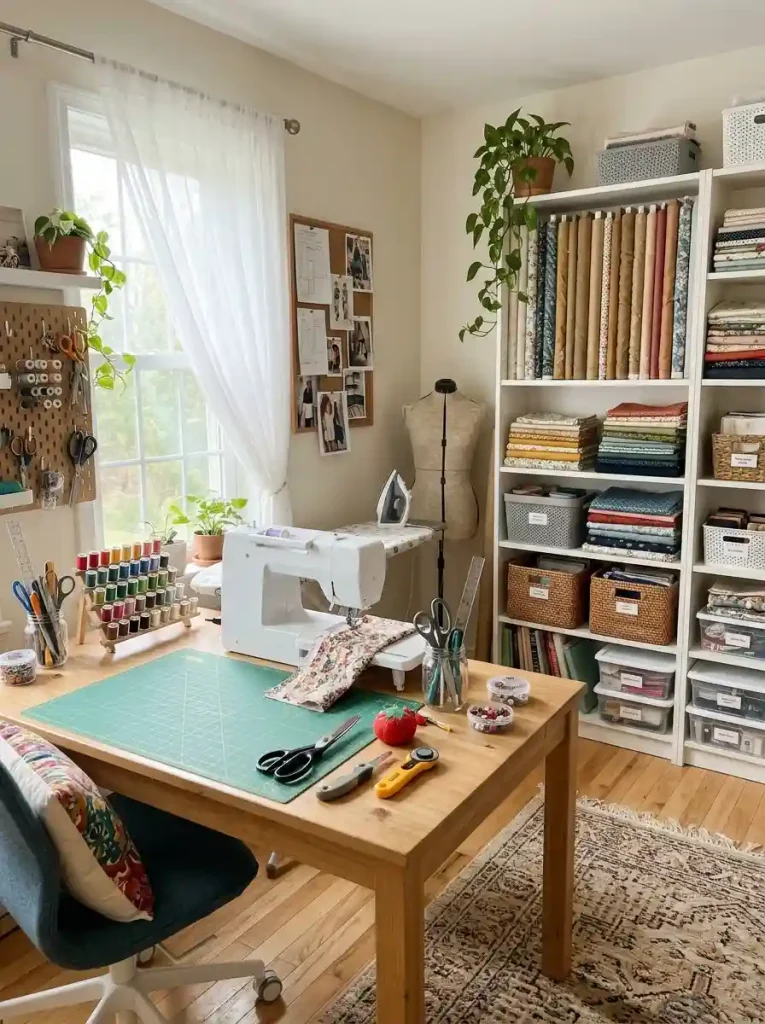
Whether you have a full spare bedroom or just a small corner of a shared space, these tips will help you build a setup that fits your space and your budget.
What Makes a Good Sewing Room?
A good sewing room gives you three things: a clear work surface, easy access to your tools, and enough storage to keep fabric and notions out of sight until you need them.
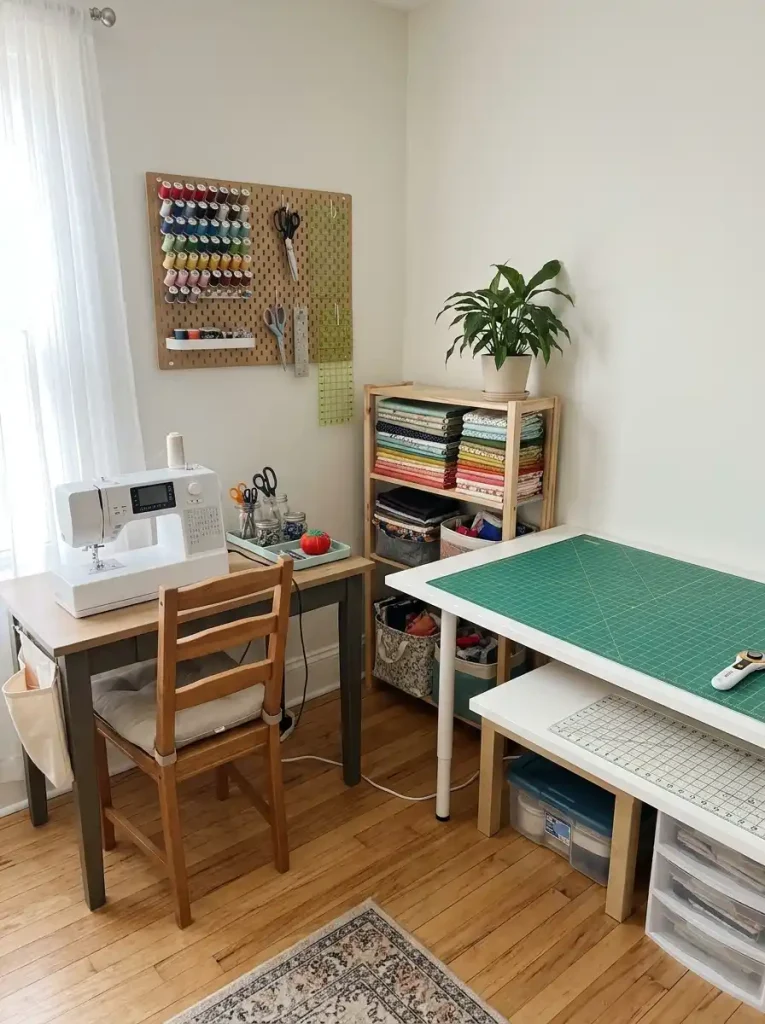
It does not need to be large. It needs to be organized around how you actually sew.
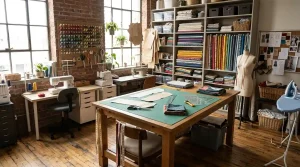
Most sewing rooms are built around three main zones: a cutting area, a sewing machine station, and a storage area for fabric, thread, and notions.
Even a small nook can include all three if it is planned well.
How to Choose the Right Location for Your Sewing Room
Pick a spot with good natural light if possible.
Sewing involves close detail work, like threading a needle or matching fabric patterns, so bright, even light makes the work easier on your eyes.
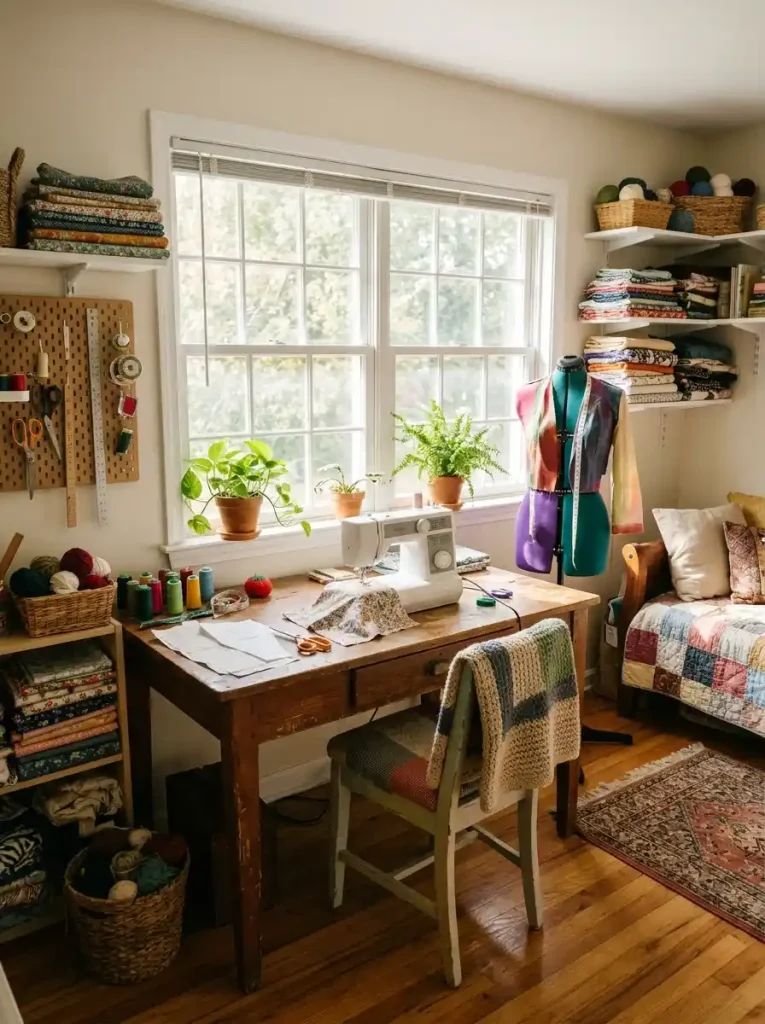
A spare bedroom, a corner of a living room, a closet, or even part of a garage can all work as a sewing space.
The key is choosing a spot where you can leave your machine set up, or at least store your supplies close to where you plan to work.
How to Plan Your Sewing Room Layout
Think of your sewing room in terms of a simple work triangle, similar to how a kitchen is planned.
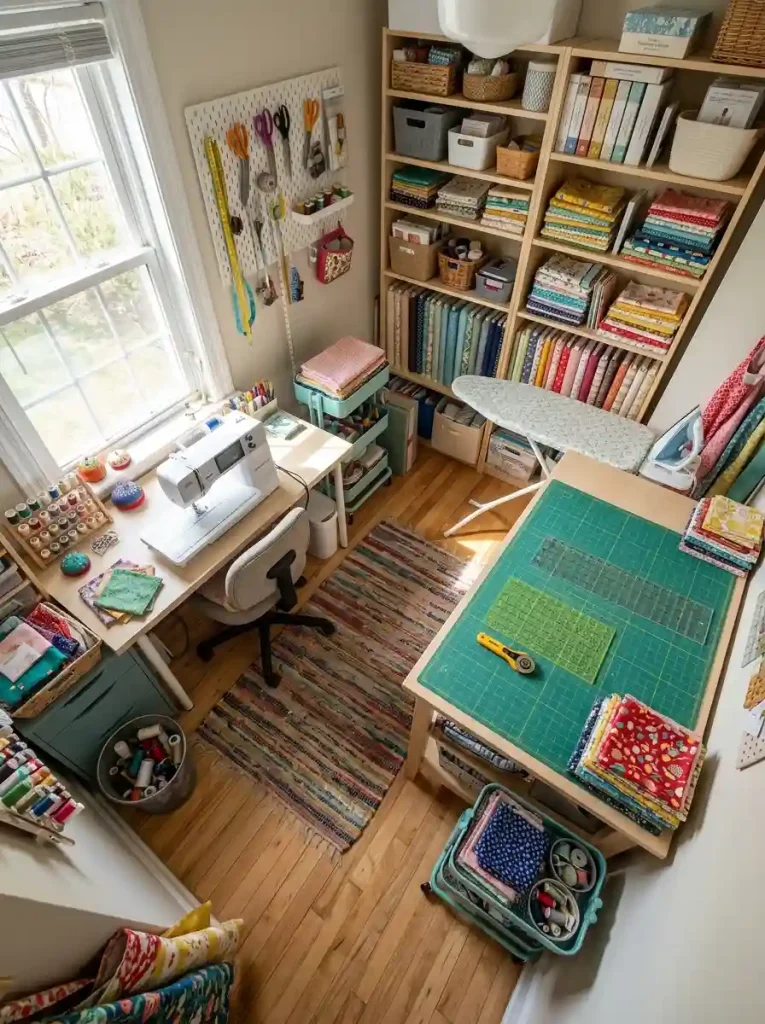
Your cutting table, your sewing machine, and your storage should all be within a few steps of each other, so you are not walking across the room constantly during a project.
If your space is small, a single multi-purpose table can serve as both your cutting surface and your sewing station.
If you have more room, separating these zones gives you more surface area for larger projects, like quilts or garments with long fabric panels.
Essential Furniture for a Sewing Room
A few key pieces make the biggest difference in how functional your sewing room feels.
A cutting table is one of the most useful investments you can make.
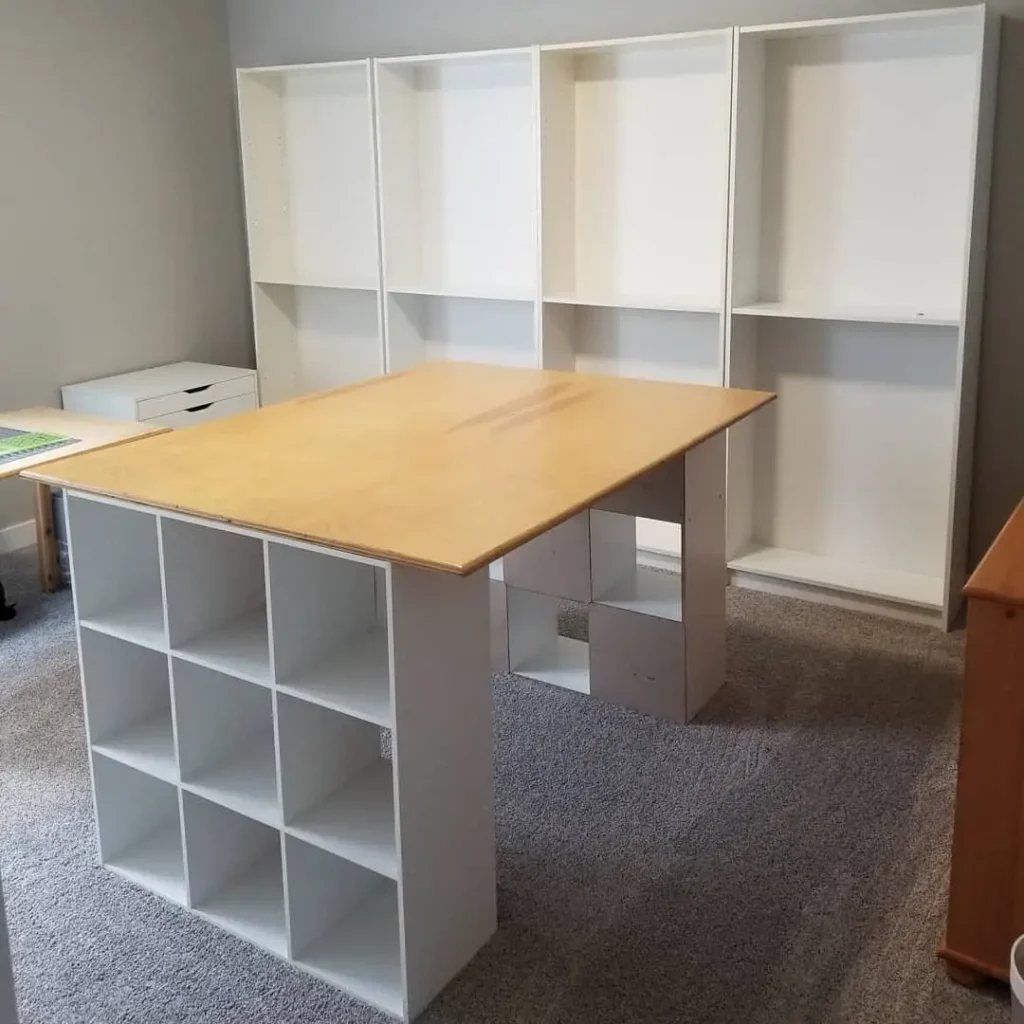
Many sewers build their own using cube storage units, like Kallax shelving, topped with a flat surface such as plywood or a folding cutting mat table.
This approach gives you a large, sturdy work surface with built-in storage bins underneath for fabric, patterns, or supplies.
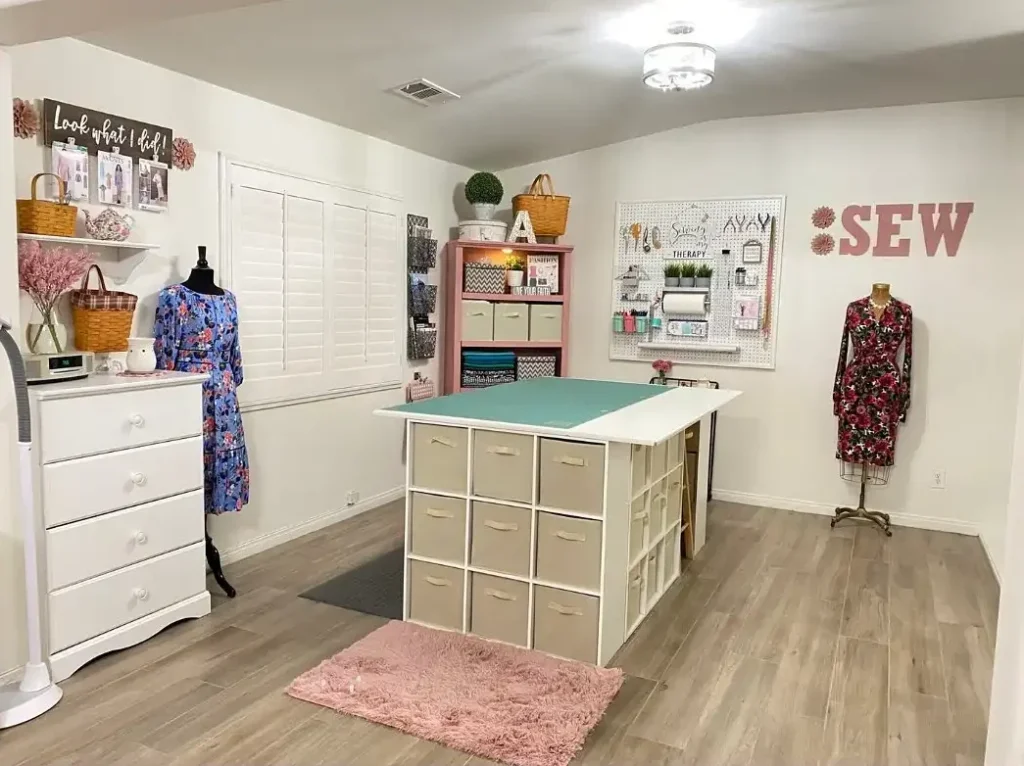
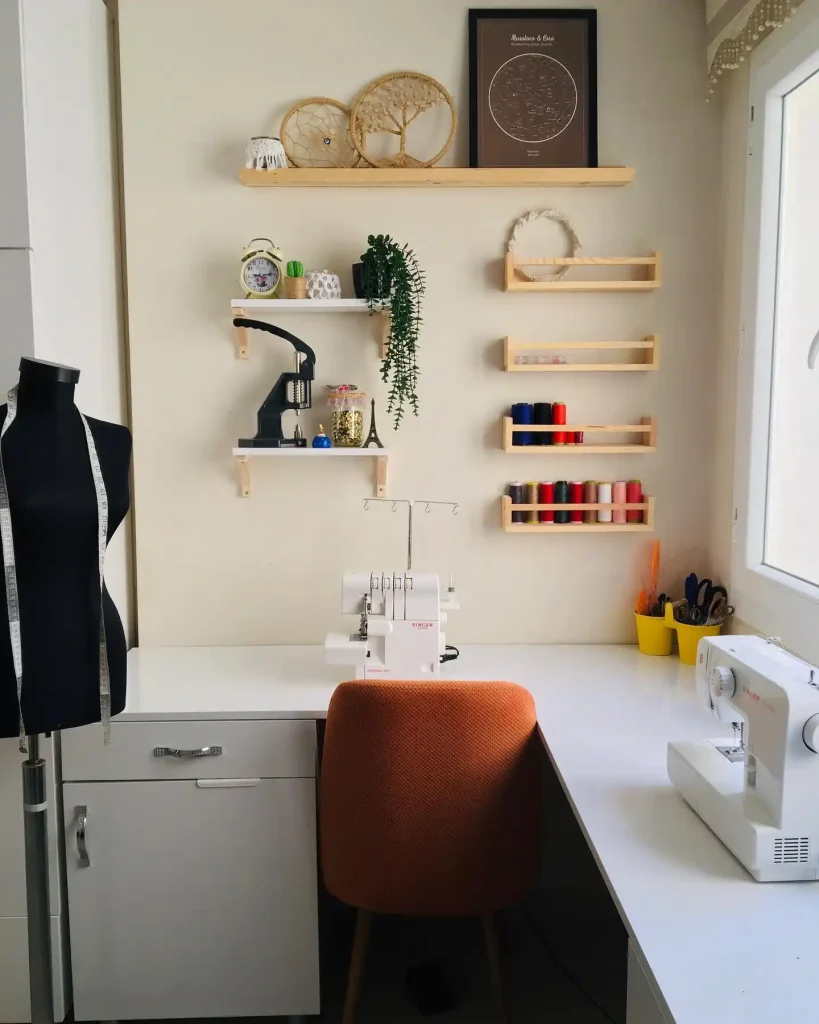
A dedicated sewing desk keeps your machine, and often a serger or overlocker, set up and ready to go. A desk at the right height prevents strain on your back and shoulders during long sewing sessions.
Storage furniture, like bookcases, cube shelving, or a tall cabinet, keeps fabric and supplies organized and out of the way.
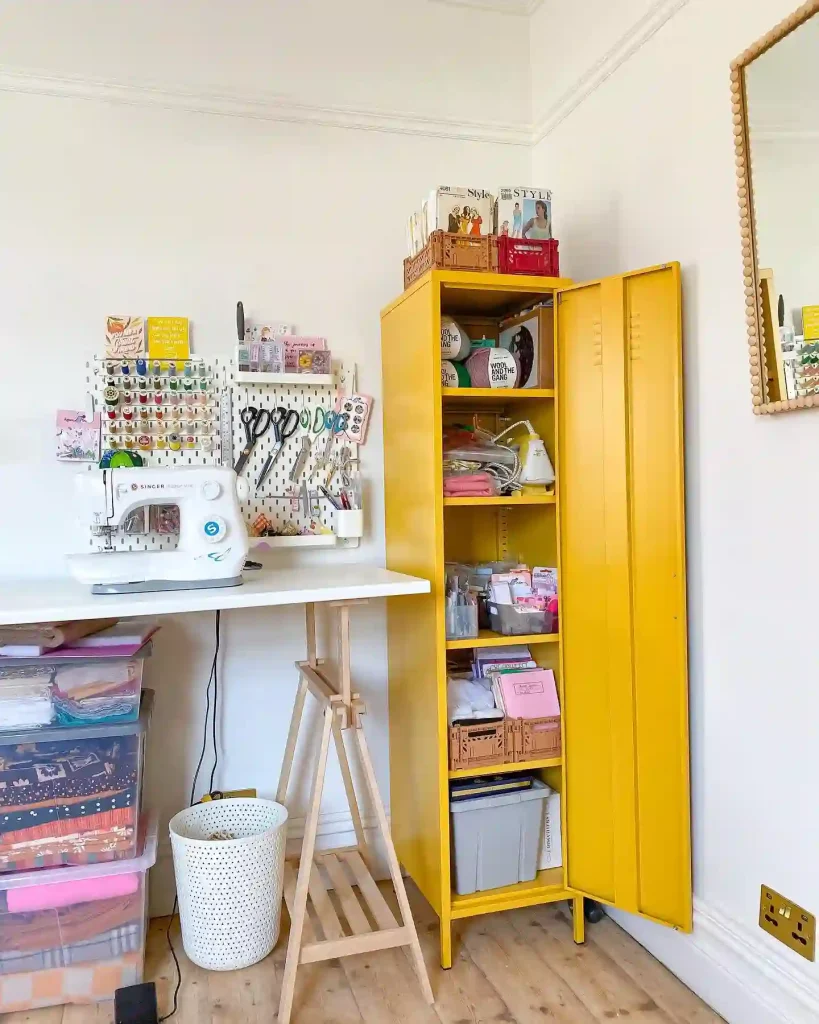
A tall metal locker-style cabinet with shelves works especially well for storing yarn, fabric bolts, and bins of smaller supplies behind closed doors.
Best Storage Solutions for a Sewing Room
Storage is where most sewing rooms either succeed or fall apart. Fabric, thread, notions, and tools all need a system, or they will pile up fast.
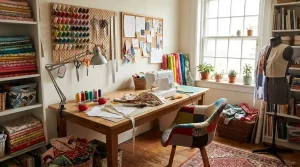
Pegboards are one of the most popular sewing room storage tools.
A pegboard mounted above your sewing desk can hold scissors, rulers, thread, and small tools, all visible and within reach, without taking up any desk or drawer space.
Cube storage units, like Kallax shelving, are a favorite in sewing rooms because the cubes are the perfect size for fabric bolts, bins, and baskets.
Two cube units topped with a flat surface also double as a DIY cutting table, giving you storage and workspace in one piece of furniture.
Wall-mounted spice racks are a clever hack for thread storage. The narrow shelves, originally designed for spice jars, hold spools of thread upright and visible, which makes it easy to grab the exact color you need without digging through a drawer.
Closed cabinets or lockers work well for supplies you want out of sight, like fabric stashes, yarn, or bulk notions.
A tall cabinet with adjustable shelves can hold a surprising amount of material while keeping the room looking tidy.
Small bins and baskets are useful for scraps, current project pieces, and loose notions like buttons or bias tape. Labeling each bin makes it easy to find what you need at a glance.
Lighting Tips for a Sewing Room
Good lighting is just as important as good storage in a sewing room.
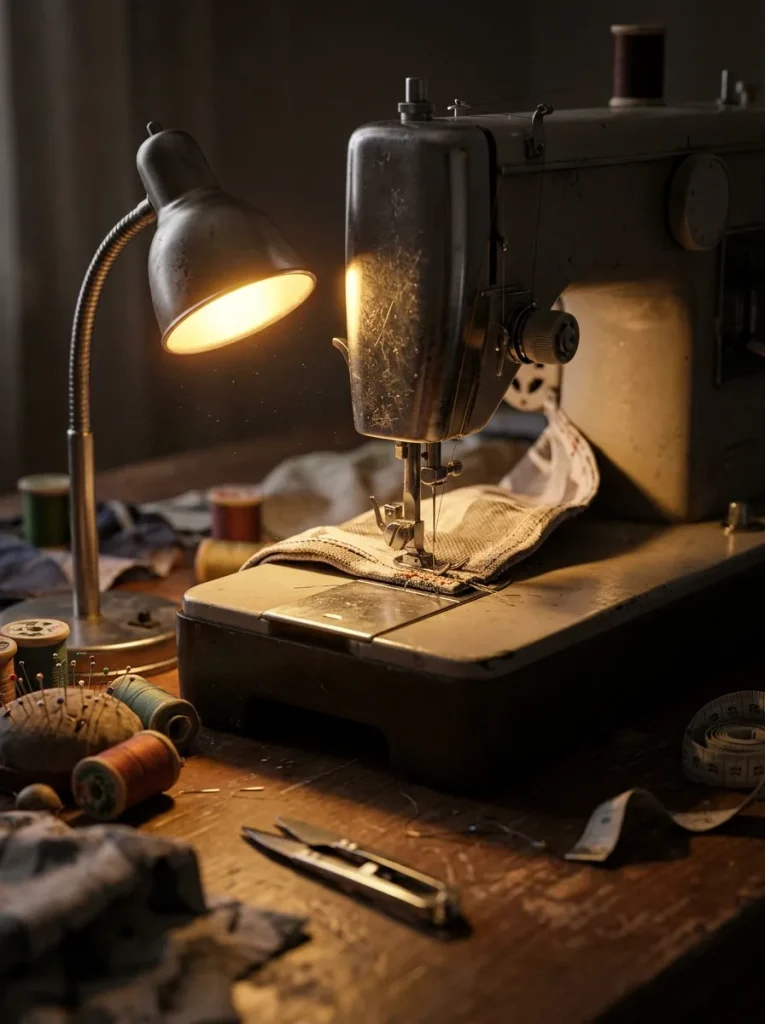
Overhead lighting alone often is not enough for detail work like threading a needle or hand stitching.
Add a task light directly at your sewing machine station, and another near your cutting table if possible.
A bright, even light reduces eye strain and helps you see fabric colors and small stitches accurately.
Small Sewing Room Ideas
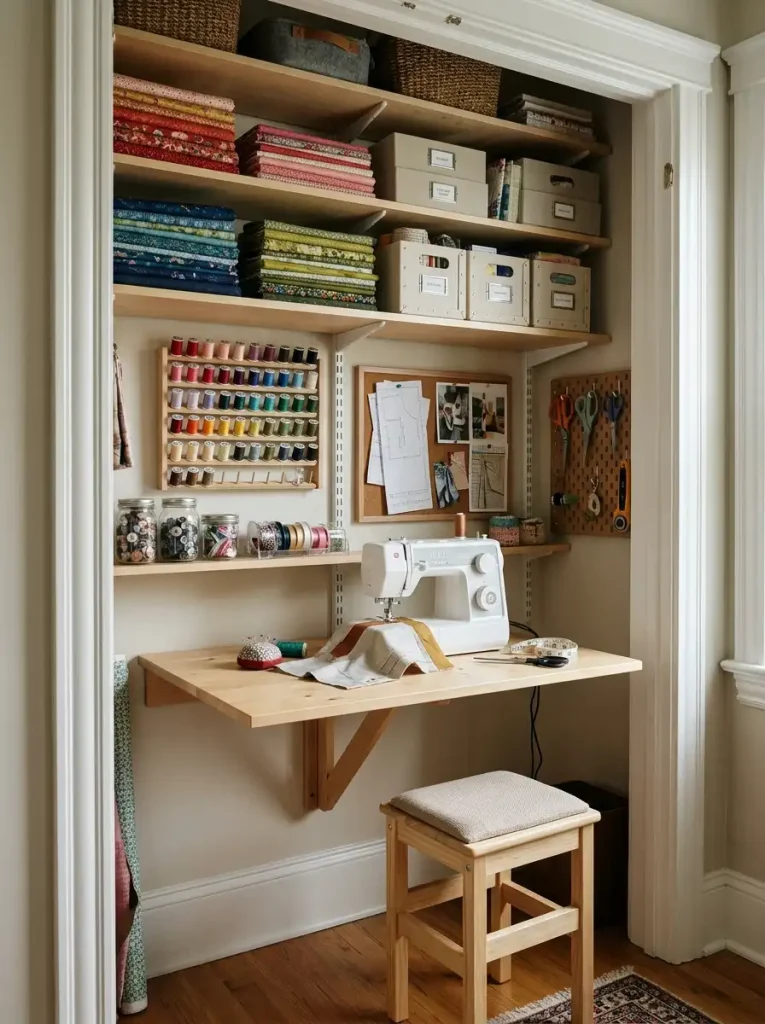
A small space does not mean you have to give up function. Vertical storage, like tall shelving units or wall-mounted racks, makes use of space that would otherwise go to waste.
A fold-down or multi-purpose table can also save floor space in a tight room.
Choosing furniture that serves double duty, like a cutting table with built-in storage cubes underneath, lets a small sewing room do more without feeling cluttered.
How to Organize Fabric, Thread, and Notions
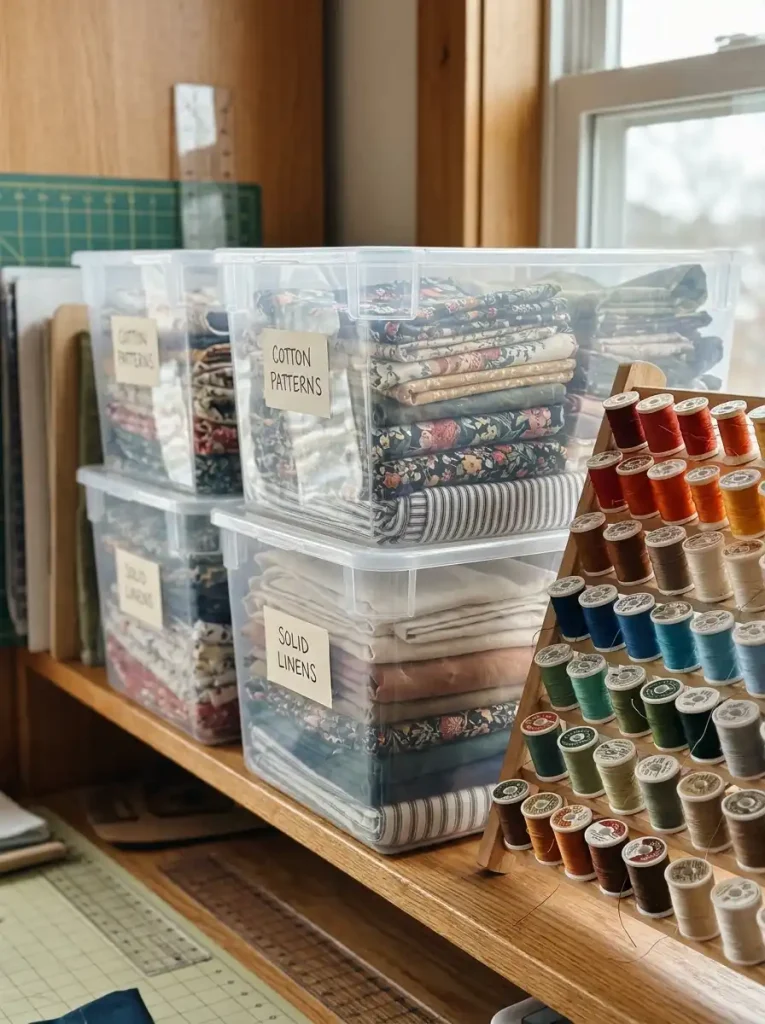
Sort fabric by type, color, or project to make it easier to find what you need.
Clear bins or labeled baskets work well for this, since you can see the contents without opening every container.
Keep thread visible and sorted by color whenever possible, either on a wall-mounted rack or in a dedicated thread organizer.
Small notions, like buttons, zippers, and bias tape, stay easiest to manage in small labeled containers, rather than one large catch-all bin.
Adding Personal Style to Your Sewing Room
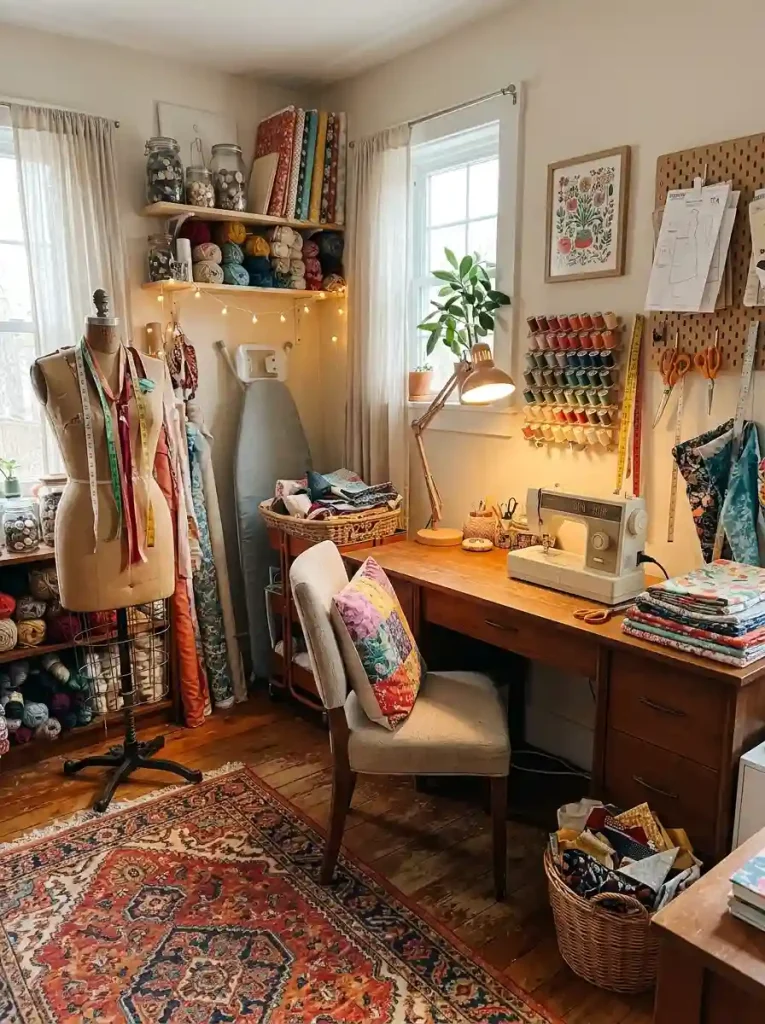
A sewing room does not have to be purely functional.
Small personal touches, like a dress form, a few pieces of wall art, or a fun sign, make the space feel like your own creative studio instead of just a workspace.
Color also plays a big role. A soft pink, a cheerful yellow, or a calm neutral palette can make the room feel inviting and motivate you to spend time there.
Even small details, like a decorative rug or a handmade wall hanging, add warmth to a practical space.
Frequently Asked Questions
How much space do I need for a sewing room?
A sewing room can work in a space as small as a closet or a corner of a bedroom, as long as it includes a flat surface for cutting and sewing, and some nearby storage for supplies. A dedicated room is helpful for larger projects, but it is not required.
What is the best table for a sewing room?
A sturdy, flat-surfaced table at a comfortable height works best for sewing. Many sewers build a DIY cutting table using cube storage units topped with a flat board, since this combines a large work surface with built-in storage underneath.
How do I store fabric in a small sewing room?
Fabric stores well in labeled bins, baskets, or on shelves sorted by color or type. Vertical storage, like tall cube shelving or a cabinet, makes the most of limited floor space in a small room.
What lighting is best for sewing?
A bright, even overhead light combined with a dedicated task light at your sewing machine and cutting area works best. Task lighting reduces eye strain during detailed work like threading needles or hand stitching.
Final Thoughts
A well planned sewing room makes every project smoother, from cutting your first piece of fabric to finishing the last stitch.
Focus on a clear work surface, smart storage for fabric and notions, and good lighting, then add the personal touches that make the space feel like yours.
Whether you have a full room or a small corner, these basics will help you build a sewing space you actually want to use.
You’ll also love to learn how to organize your sewing room in better way with our detailed guide.