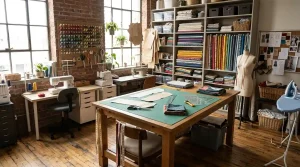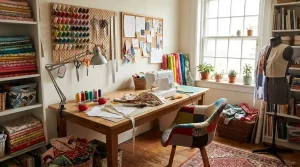
A sewing studio is more than just a room with a machine in it.
Swing studio is a creative space that should feel organized, comfortable, and inspiring every time you walk in.
You can create a full attic room or a small corner nook, the right mix of furniture, storage, and personal touches can completely change how your space feels.
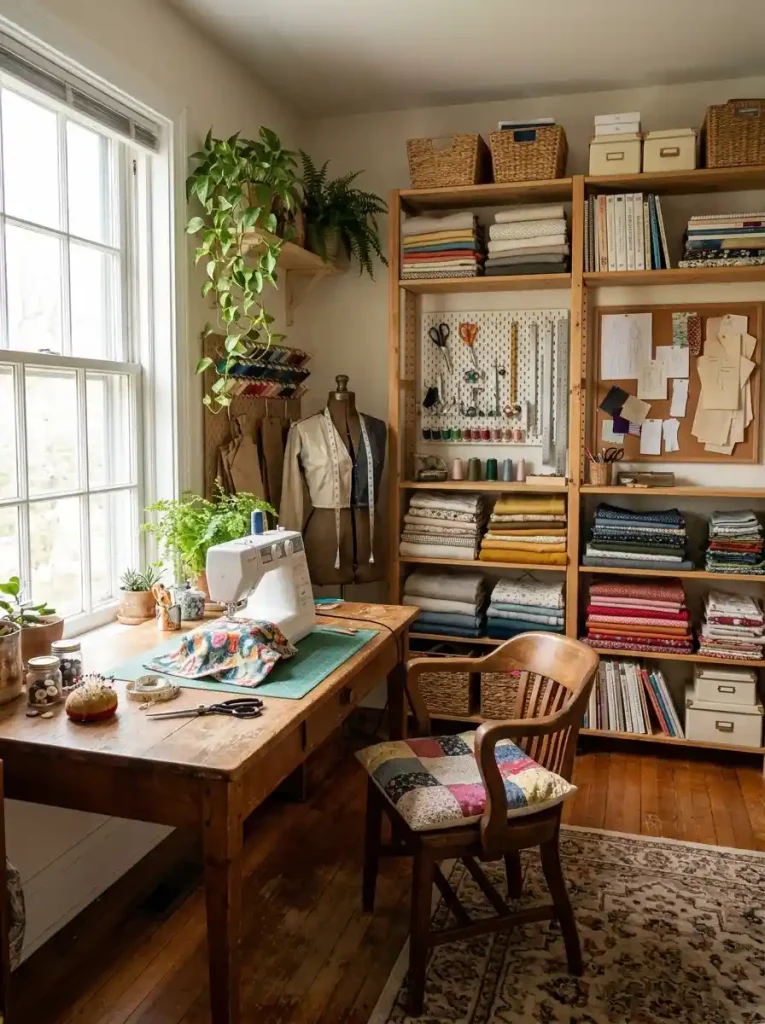
Below are 29 sewing studio ideas, pulled from real creative spaces, to help you plan or refresh your own sewing room.
Use a Corner Spot for an L-Shaped Desk Setup
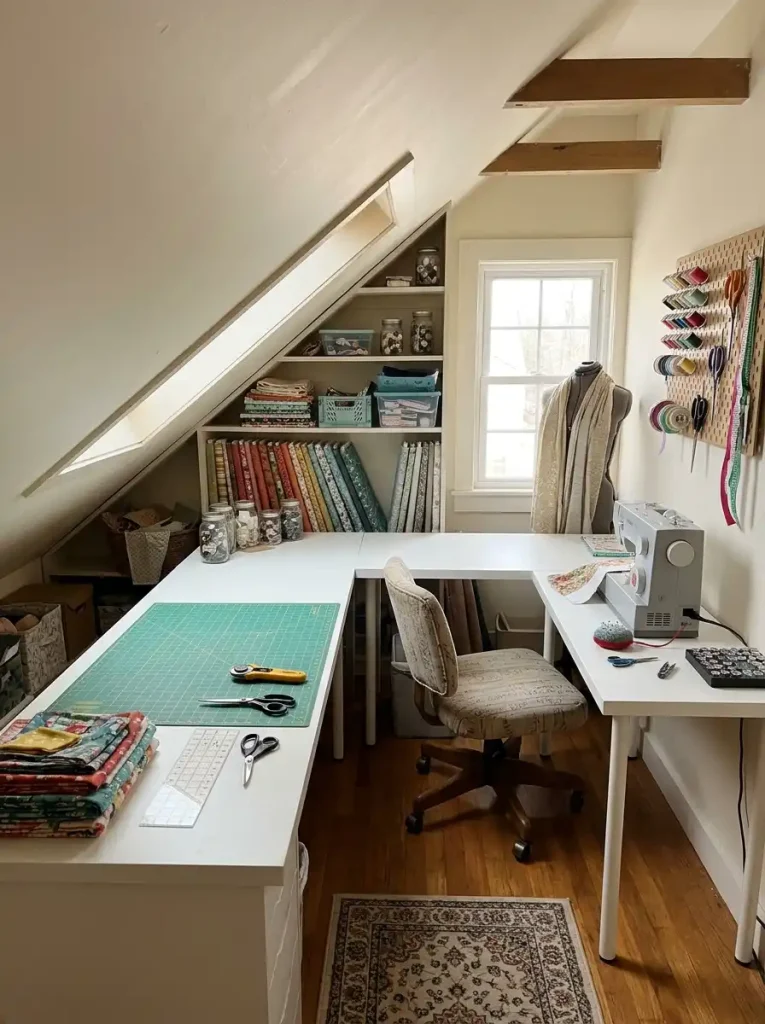
An L-shaped desk makes smart use of a corner, giving you two full work surfaces without taking up extra floor space.
One side can hold your sewing machine, while the other stays open for cutting or crafting.
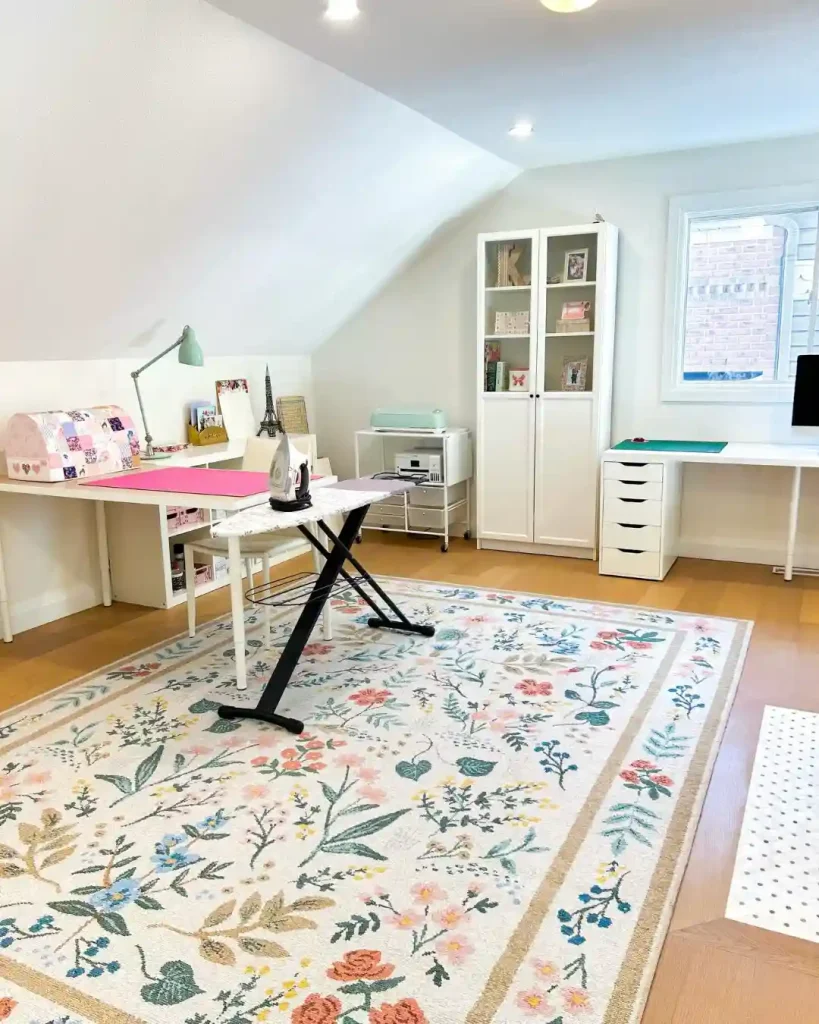
This layout works especially well in attic rooms or bonus spaces with angled ceilings, since the desk can wrap around the usable floor area instead of fighting the slope of the roof.
Add a Pegboard for Thread, Scissors, and Fabric Bolts
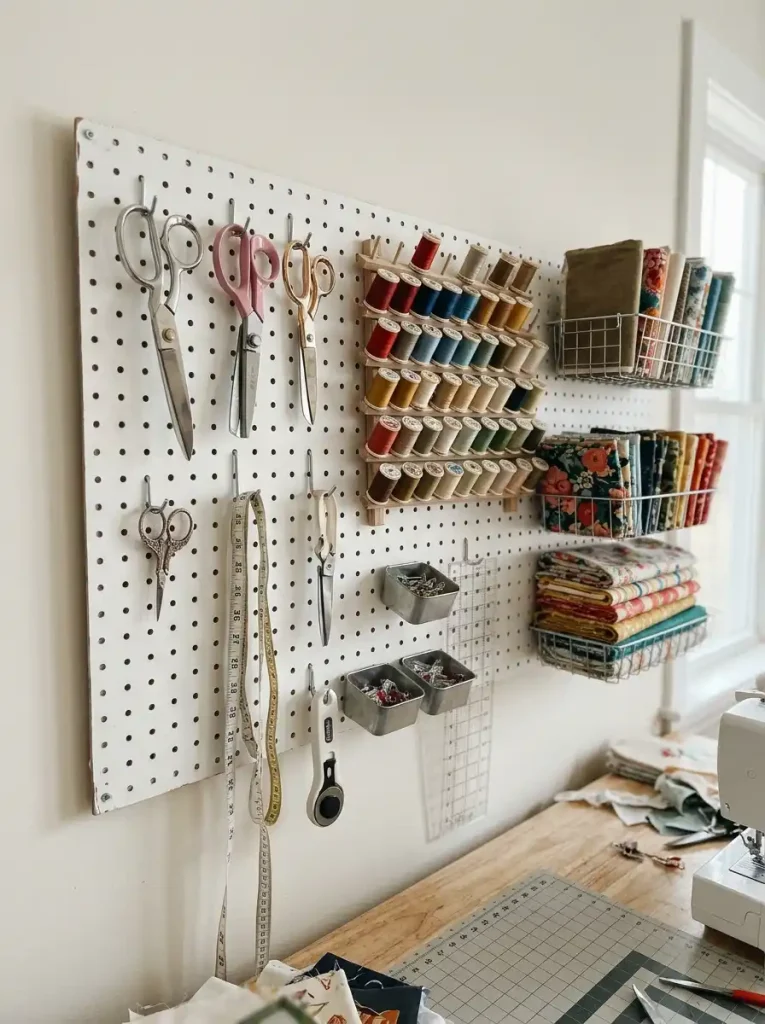
A pegboard mounted above your sewing desk keeps your most used tools visible and within reach.
Thread, scissors, measuring tools, and even small fabric bolts can hang neatly instead of cluttering your desk.
Pegboards are also fully customizable.
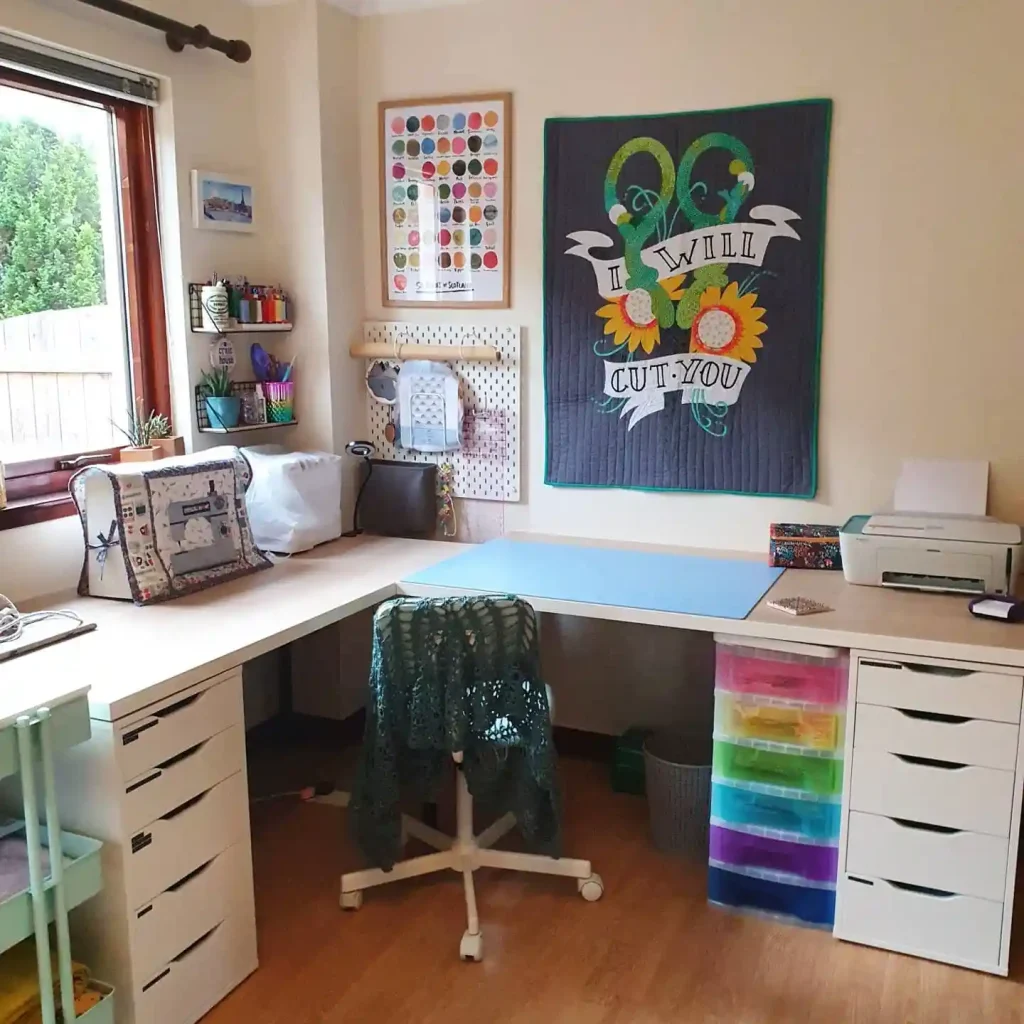
You can rearrange the hooks and shelves anytime your tools or habits change, which makes this one of the most flexible storage options for a sewing studio.
Hang Fun or Funny Fabric Art for Personality
A quilted wall hanging with a playful phrase or image adds humor and personality to your studio walls.
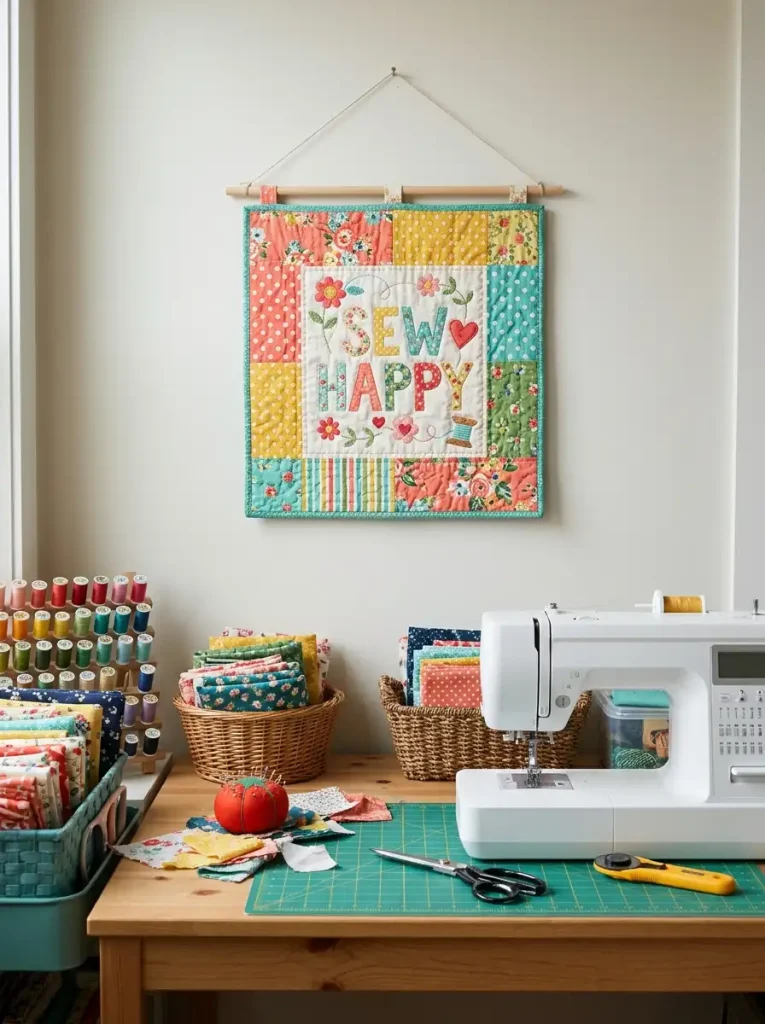
It shows off your sewing skills while also making the space feel more like your own.
This kind of art works great above a desk or cutting table, since it becomes a conversation piece for anyone who visits your sewing space.
Use Rainbow or Colorful Storage Bins
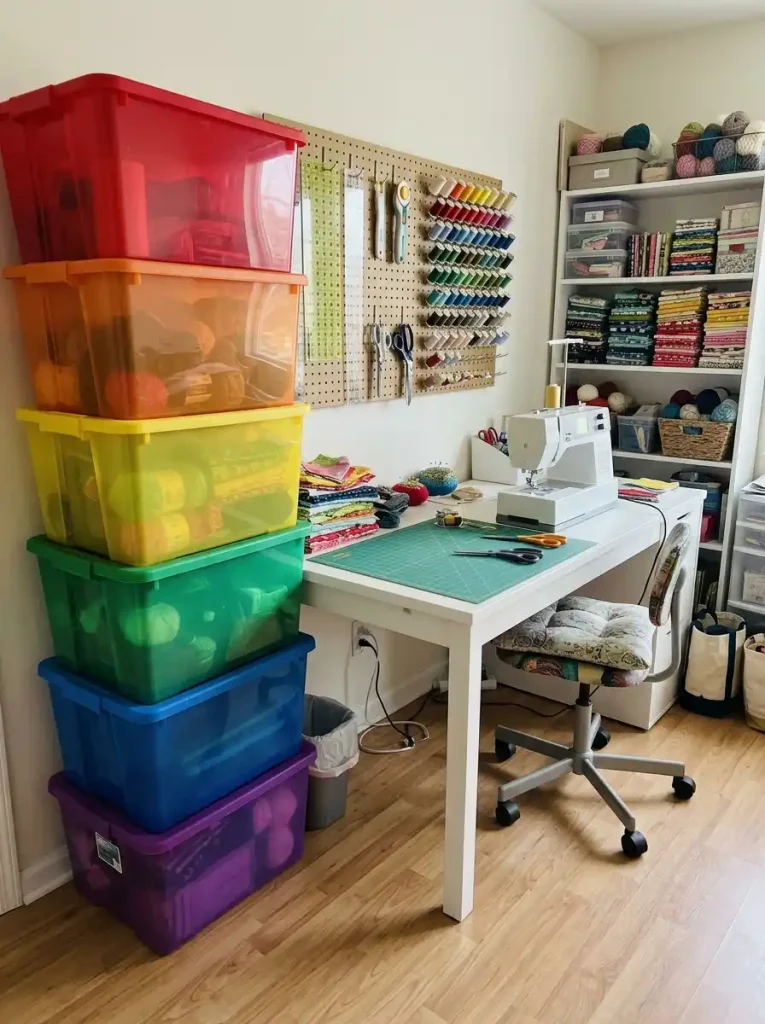
Colorful storage bins, stacked in a drawer unit or on a shelf, make it easy to sort supplies by color, project, or category.
The bright colors also add visual energy to an otherwise plain desk area.
This system works especially well for small notions, scraps, or embroidery floss, since you can quickly spot the right bin without opening every drawer.
Bring in Vintage Pieces Like an Antique Sewing Machine
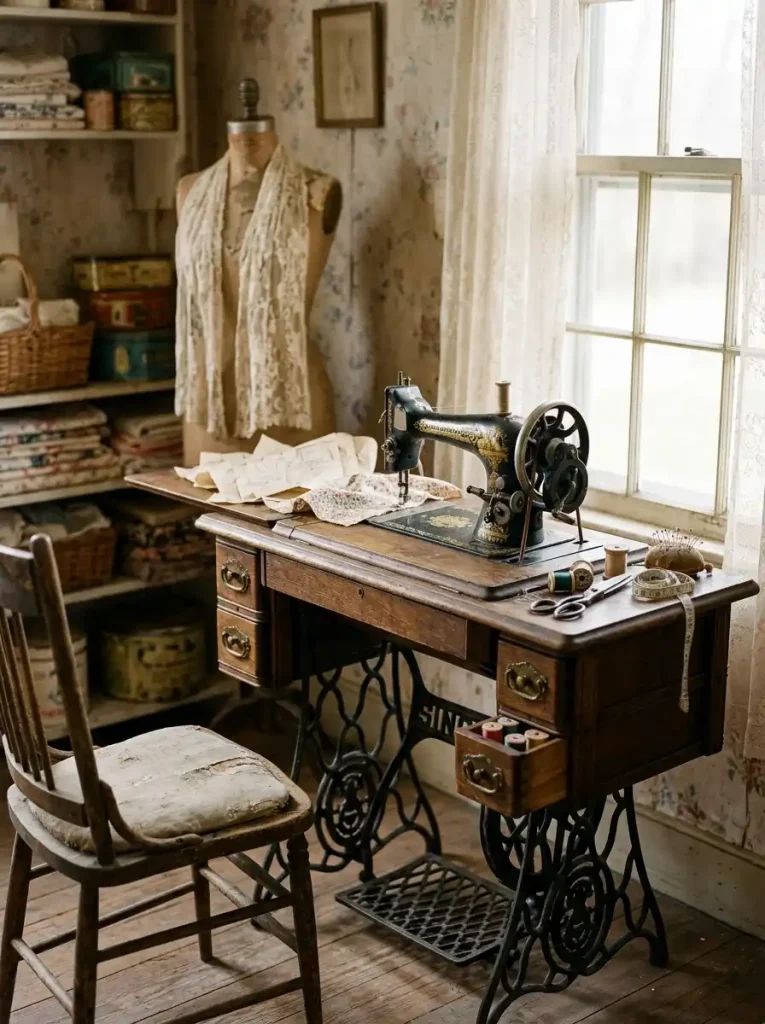
An antique treadle sewing machine or an old wooden sewing cabinet adds charm and history to a studio.
Even if it is no longer your main working machine, it can serve as a beautiful decorative piece.
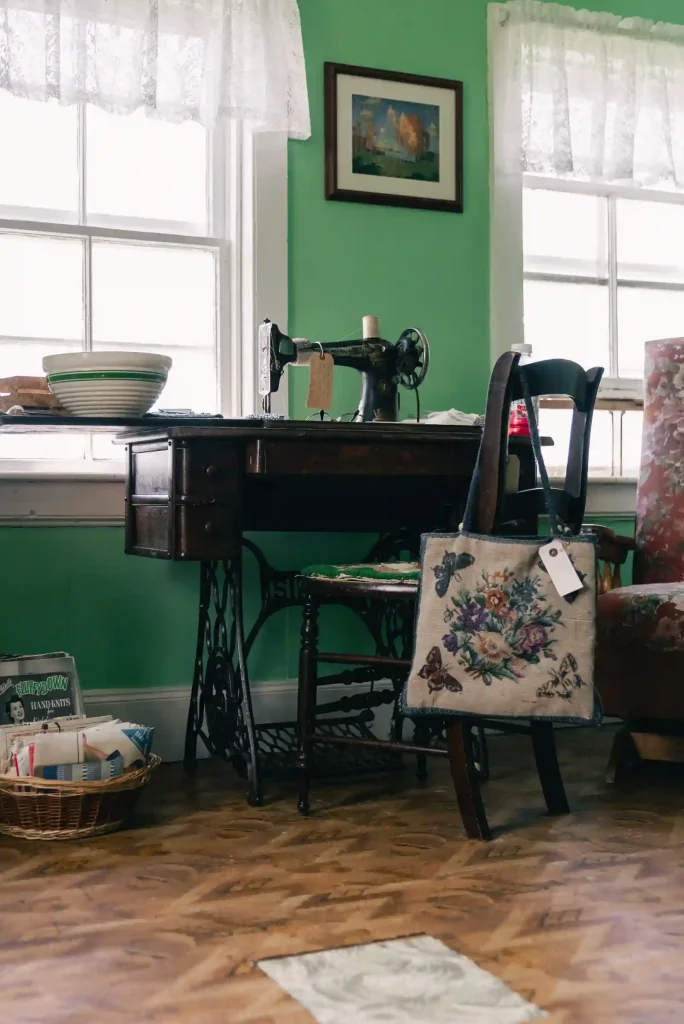
Vintage furniture also tends to have more character than modern pieces, with detailed woodwork and aged finishes that are hard to find in new furniture today.
Use Lace Curtains and Vintage Decor for Old-World Charm
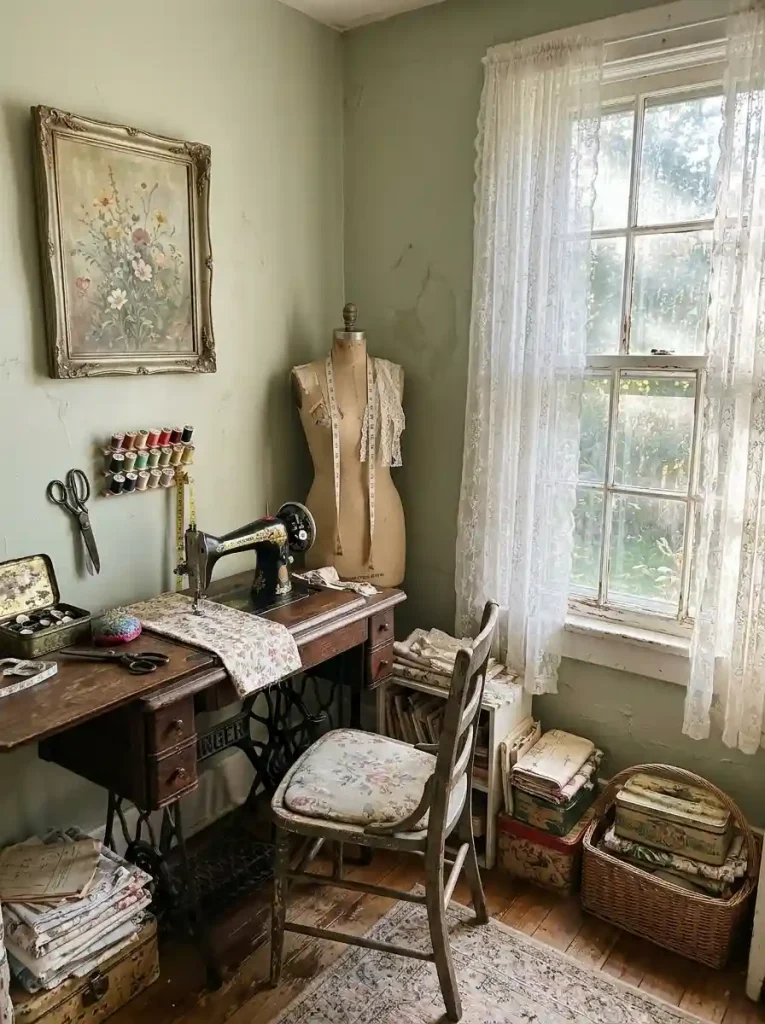
Lace curtains, floral frames, and vintage sewing notions bring a nostalgic, old-world feel to a sewing room.
This style works especially well in older homes with traditional architectural details.
Pairing vintage decor with soft wall colors, like sage green or dusty rose, enhances the old-fashioned, cottage feel even further.
Keep a Mood Board of Sketches and Fabric Swatches
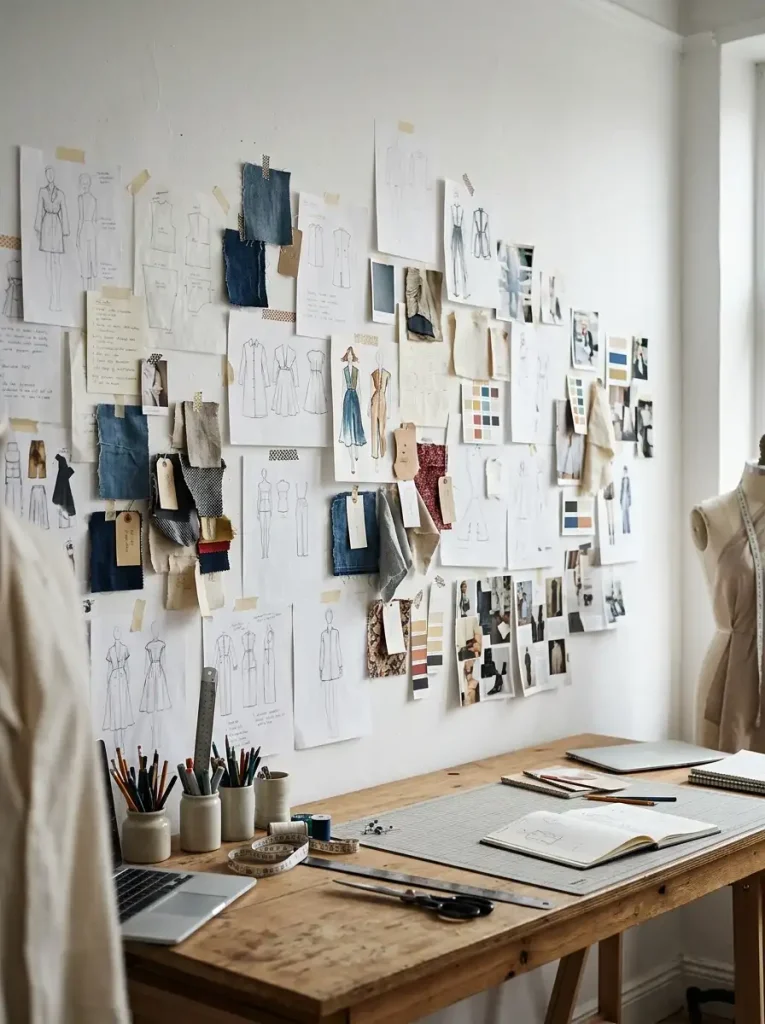
A wall covered in sketches, pattern drawings, and fabric swatches turns your studio into a true design space.
It keeps your current project visible and helps you plan color combinations before you start cutting fabric.
This idea works especially well for anyone who designs their own garments or patterns, since it keeps the full vision of a project in view at all times.
Add a Dress Form for Fitting and Inspiration
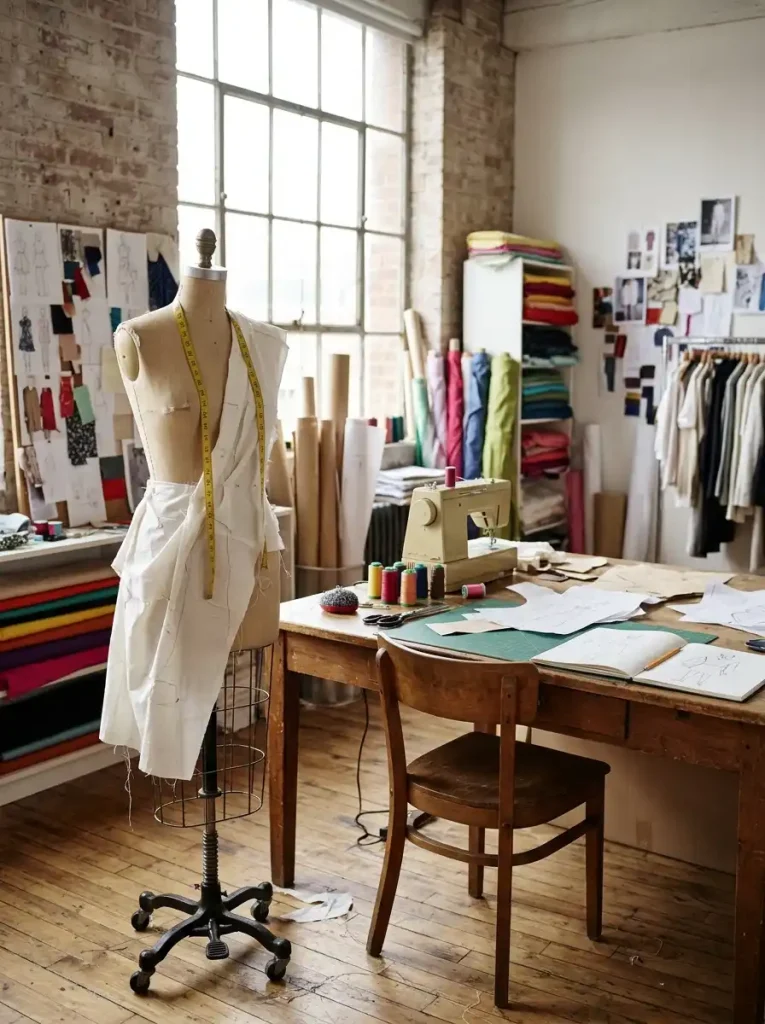
A dress form lets you pin, drape, and check the fit of a garment without needing another person.
It is an essential tool for anyone sewing clothing regularly.
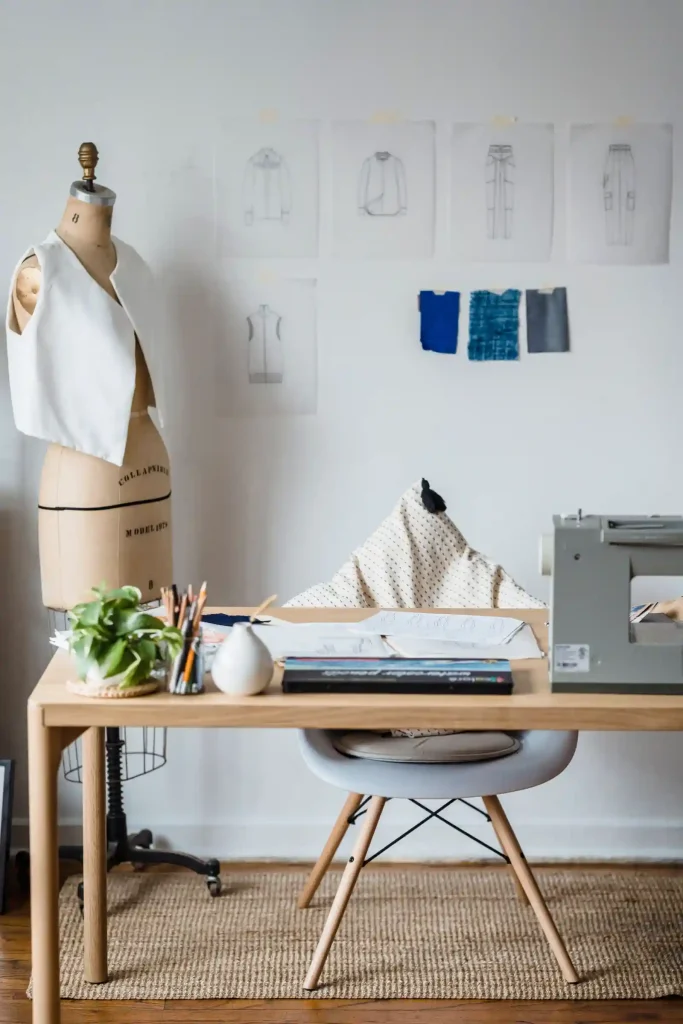
Beyond function, a dress form also works as a piece of decor.
Even dressed in a half-finished project, it adds visual interest and a sense of creative energy to the room.
See how to organize your sewing place into organized space.
Choose a Minimalist Wood Desk for a Clean Design Studio Feel
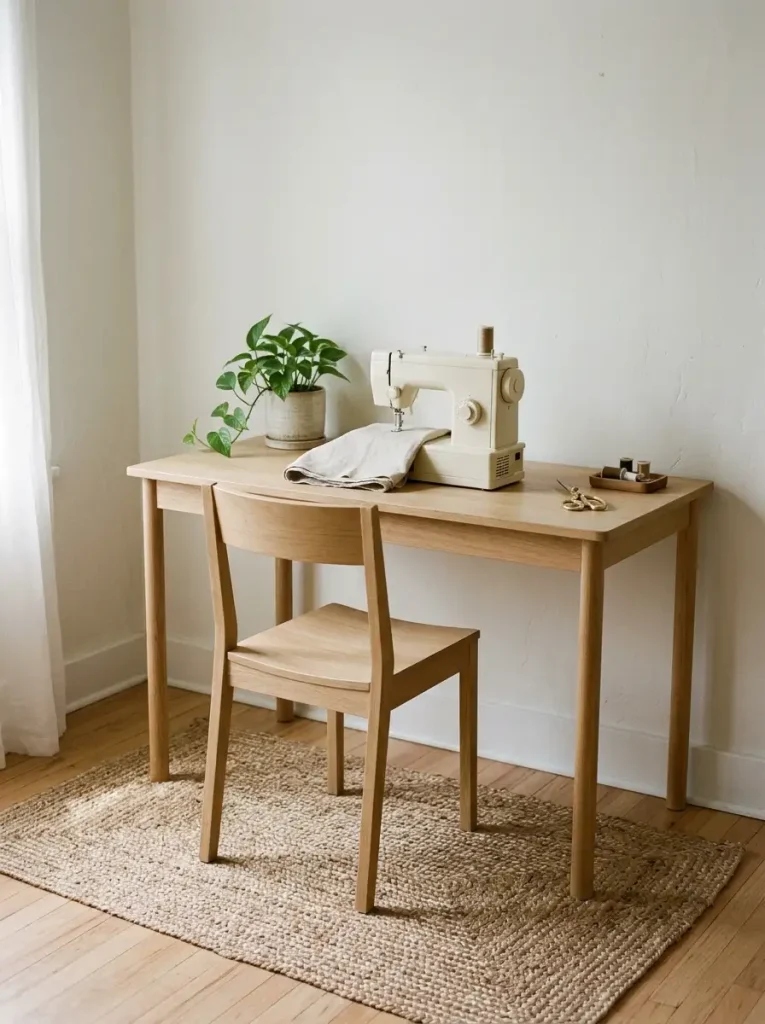
A simple wood desk with clean lines keeps a sewing studio feeling calm and uncluttered.
This style works well for anyone who prefers a modern, minimal aesthetic over a busy, maximalist look.
Pairing a wood desk with a jute rug and a small plant keeps the space feeling warm, even with a simple, pared-down color palette.
String Fairy Lights for Cozy Ambiance
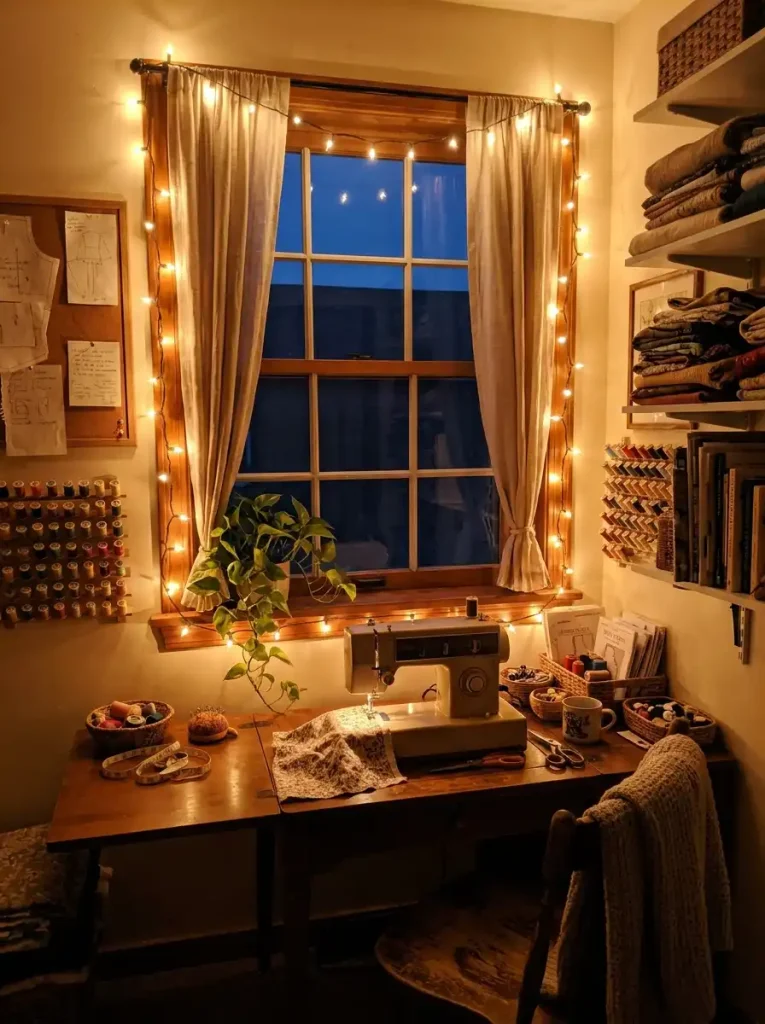
String lights draped near a window or along a shelf add a warm, cozy glow to a sewing studio, especially in the evening.
They are an easy, affordable way to add atmosphere without any major changes to the room.
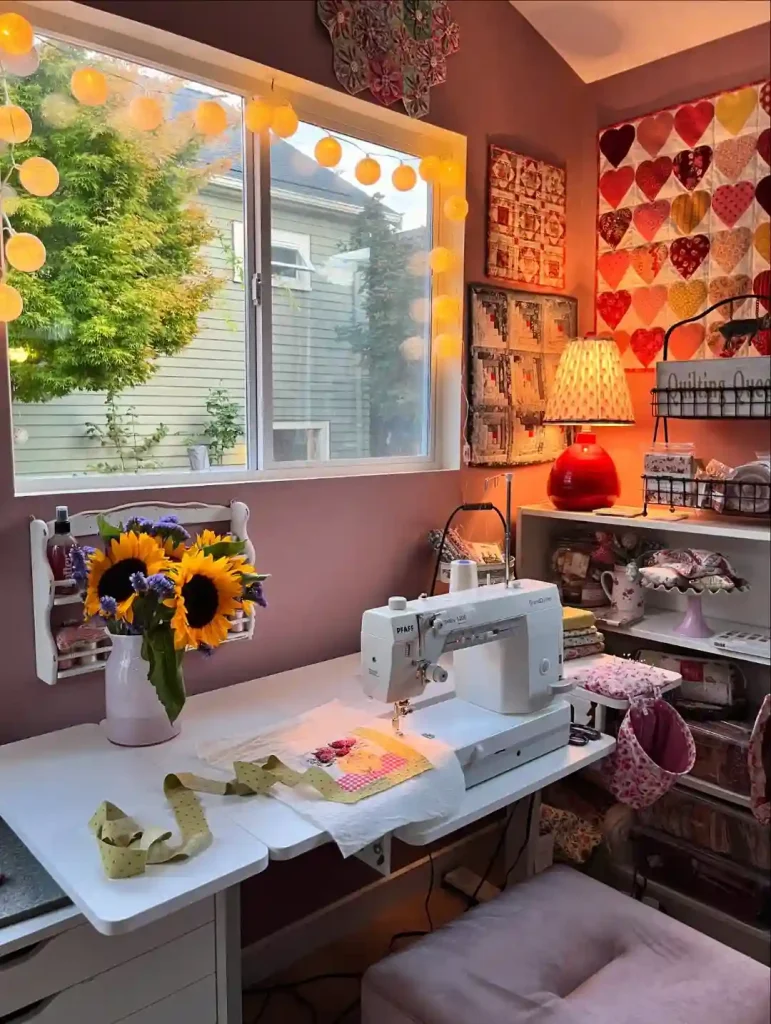
This detail works particularly well in smaller nooks, where the soft light makes the space feel inviting rather than cramped.
Add Fresh Flowers to Brighten Your Sewing Space
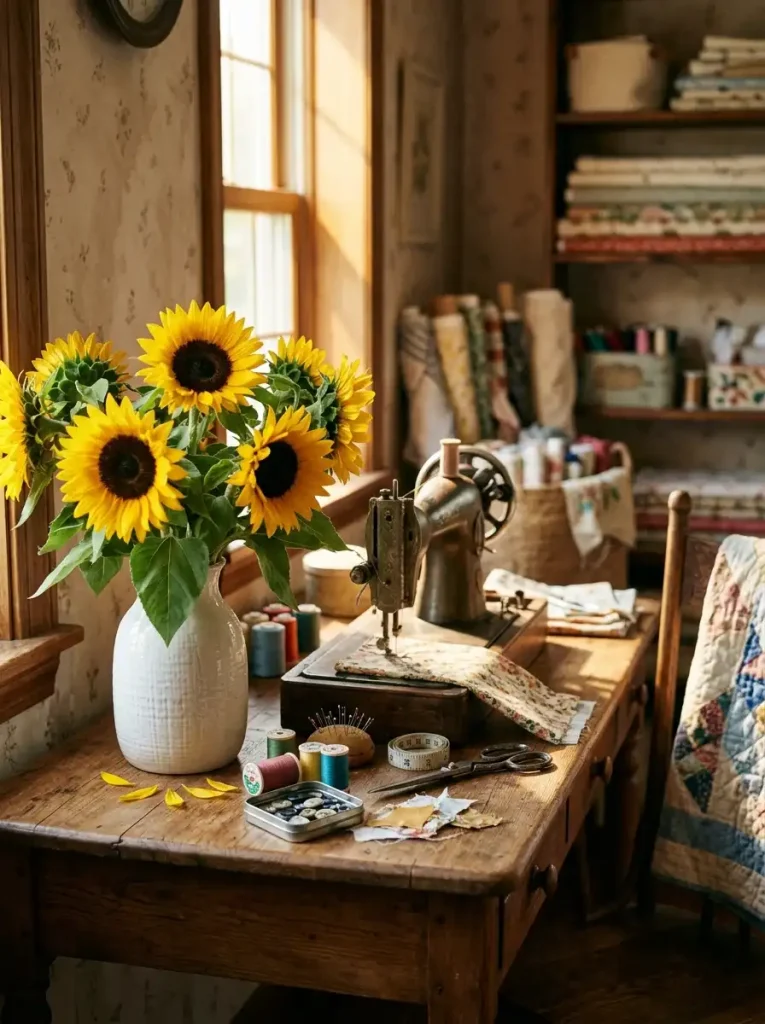
A simple vase of fresh flowers, like sunflowers or wildflowers, adds color and life to a sewing desk.
It is a small detail that makes the whole space feel more cared for and inviting.
Fresh flowers also pair beautifully with fabric and thread colors, so you can rotate blooms to match your current project or the season.
Display Quilted Wall Art or Mini Quilts as Decor
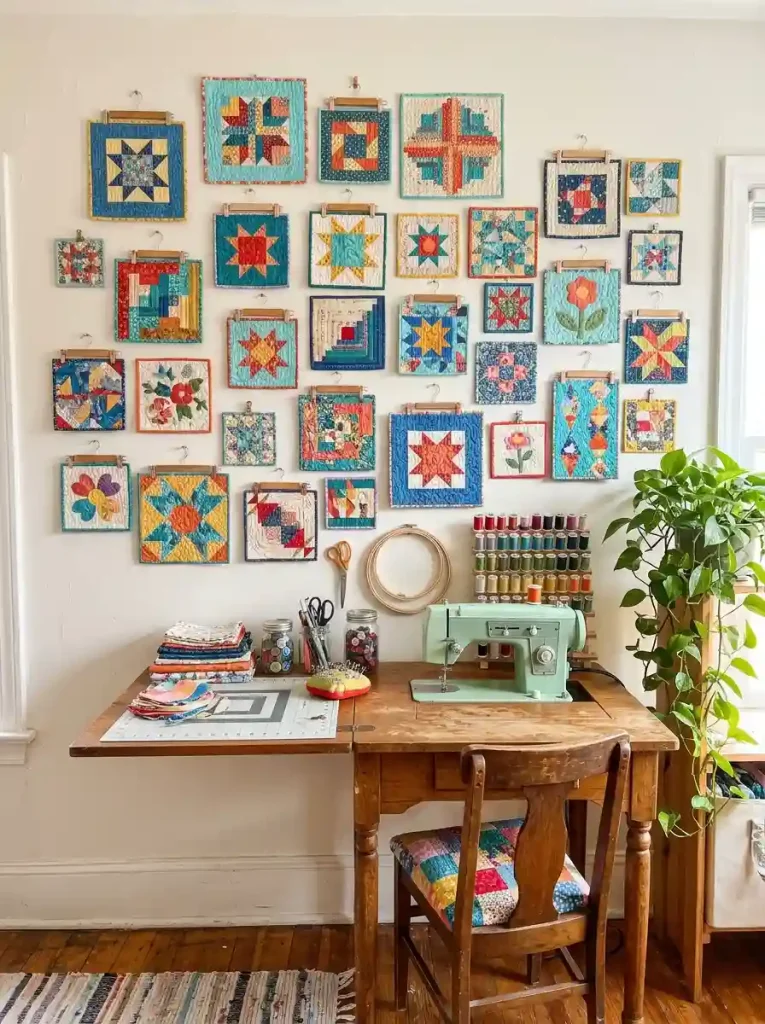
Small quilted wall hangings, made from fabric scraps or sample blocks, turn your sewing skills into wall art.
A gallery of mini quilts adds color and texture to an otherwise plain wall.
This is also a great way to repurpose leftover fabric or practice blocks instead of letting them sit unused in a drawer.
Use a Colored Lamp for Warm Mood Lighting
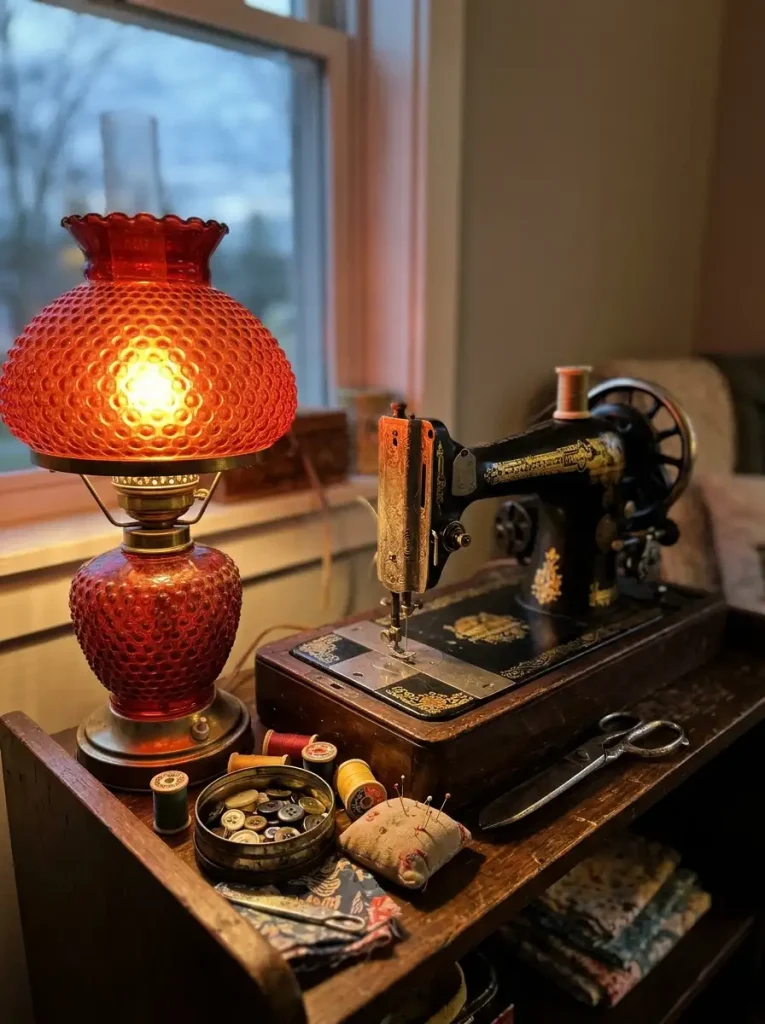
A colored glass lamp, like a red or amber shade, adds warmth and a cozy glow to a sewing studio.
It works well as an accent light alongside your main task lighting.
This detail is especially effective in the evening, when the warm color gives the whole room a relaxed, welcoming feeling.
Install Wall-Mounted Spool Racks for Easy Thread Access
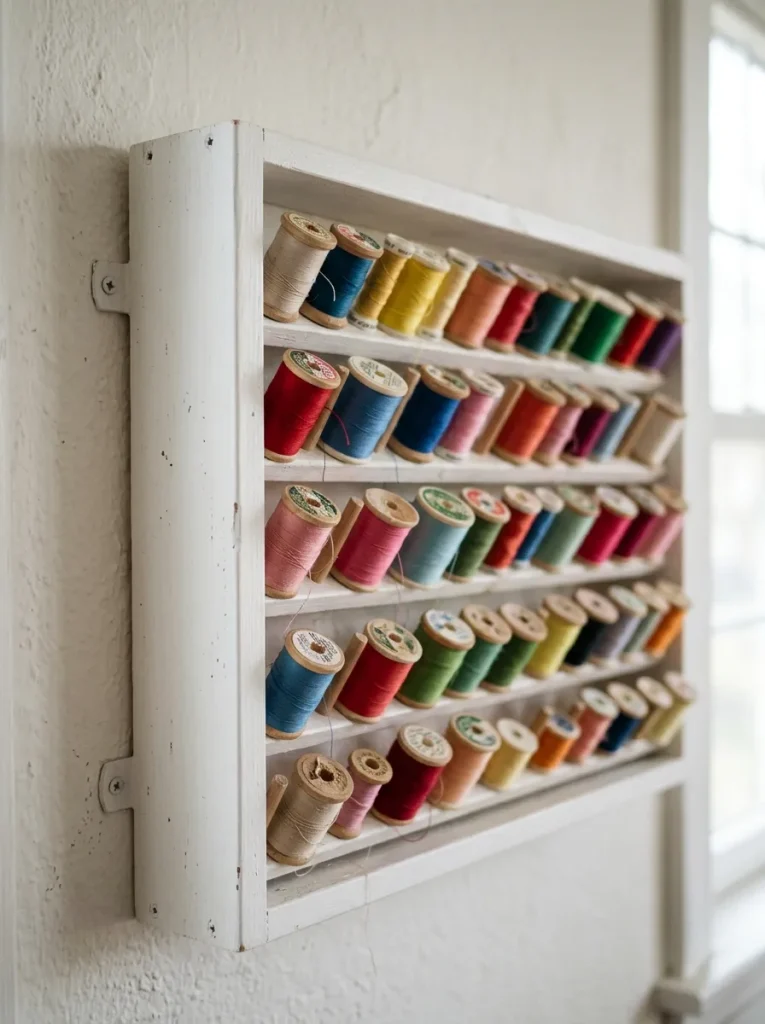
A small wall-mounted rack designed to hold thread spools keeps your colors organized and visible.
It also frees up drawer space for other notions and tools.
This kind of rack works especially well near your sewing machine, so you can grab the exact thread color you need without digging through a box.
Add a Decorative Word or Quote on the Wall
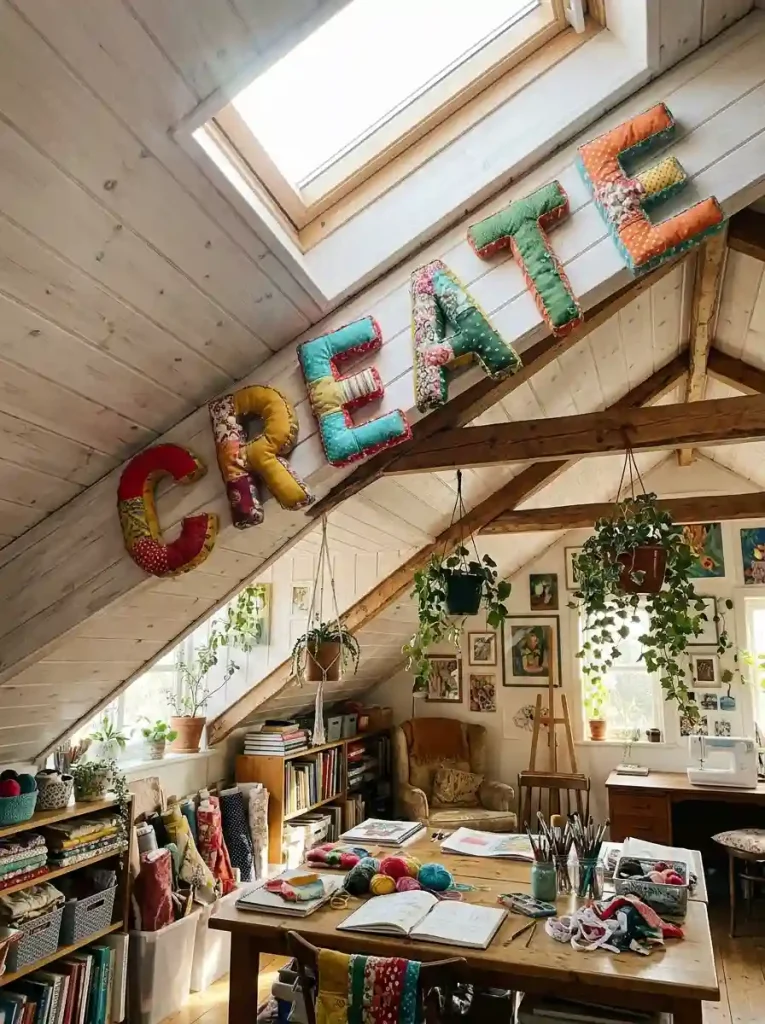
A word like “Create” or a short inspiring quote, spelled out in letters or fabric, adds a personal touch to your studio. It sets the tone for the space the moment you walk in.
This detail works especially well along a sloped ceiling or an otherwise empty wall, turning an awkward space into a styled design feature.
Use Cubby Storage to Organize and Display Your Fabric Stash
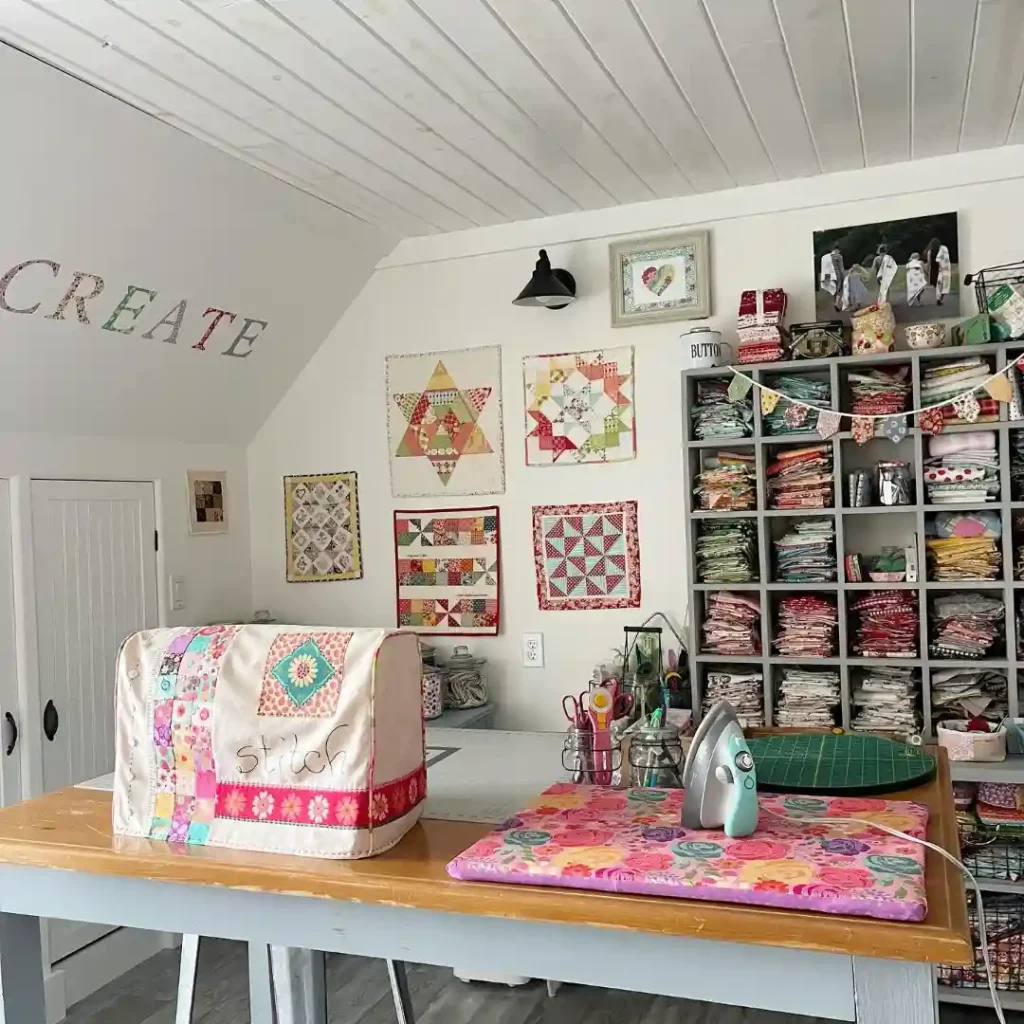
A wall of cubby shelving, sized to hold folded fabric, is one of the best ways to store a large fabric stash.
Each cubby can hold a different print, color, or fabric type, making it easy to see your entire collection at a glance.
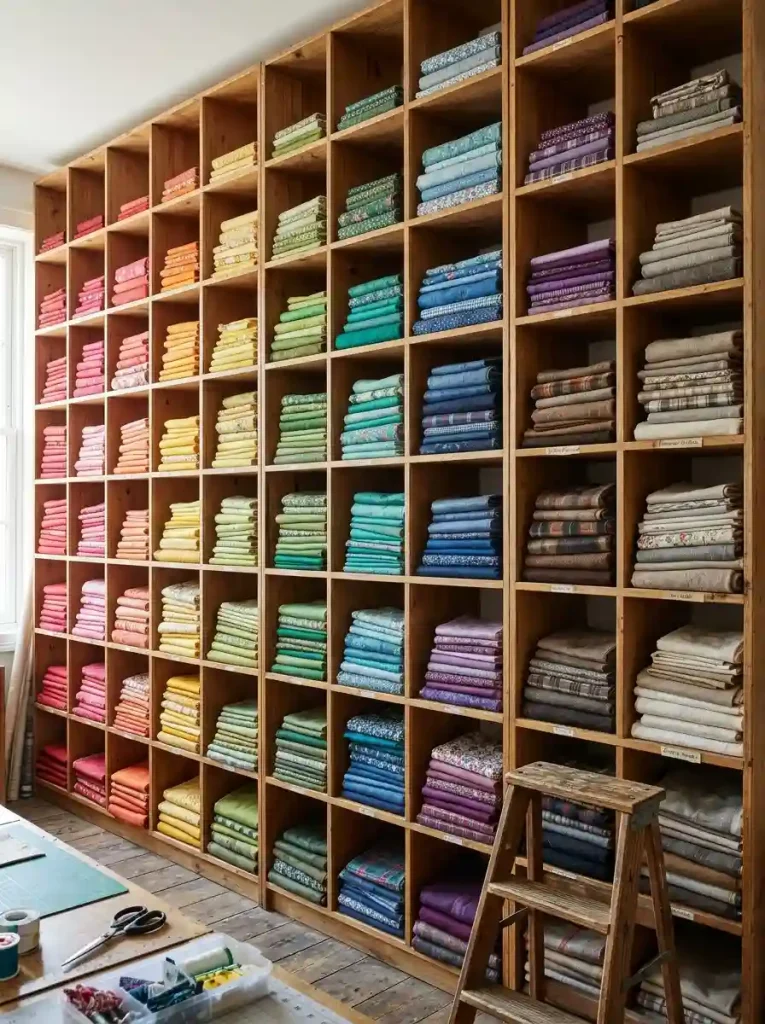
This storage method turns your fabric into decor itself, since the folded colors and patterns create a colorful, organized display across the wall.
Keep a Dedicated Ironing Station Nearby
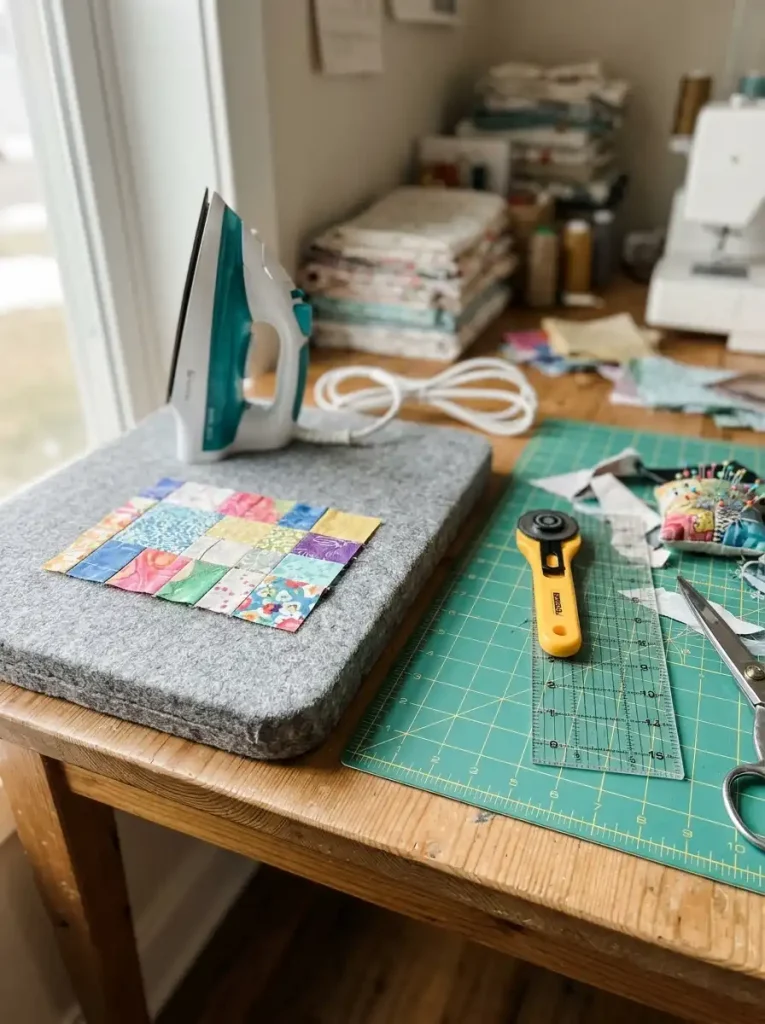
A small ironing board or a pressing mat kept near your sewing area saves time during projects that need frequent pressing.
Keeping it close means you are not walking across the house mid-project.
A compact ironing station, even a small tabletop pad, can fit into almost any studio size without taking up a full room.
Add a Floral or Patterned Rug to Soften the Room
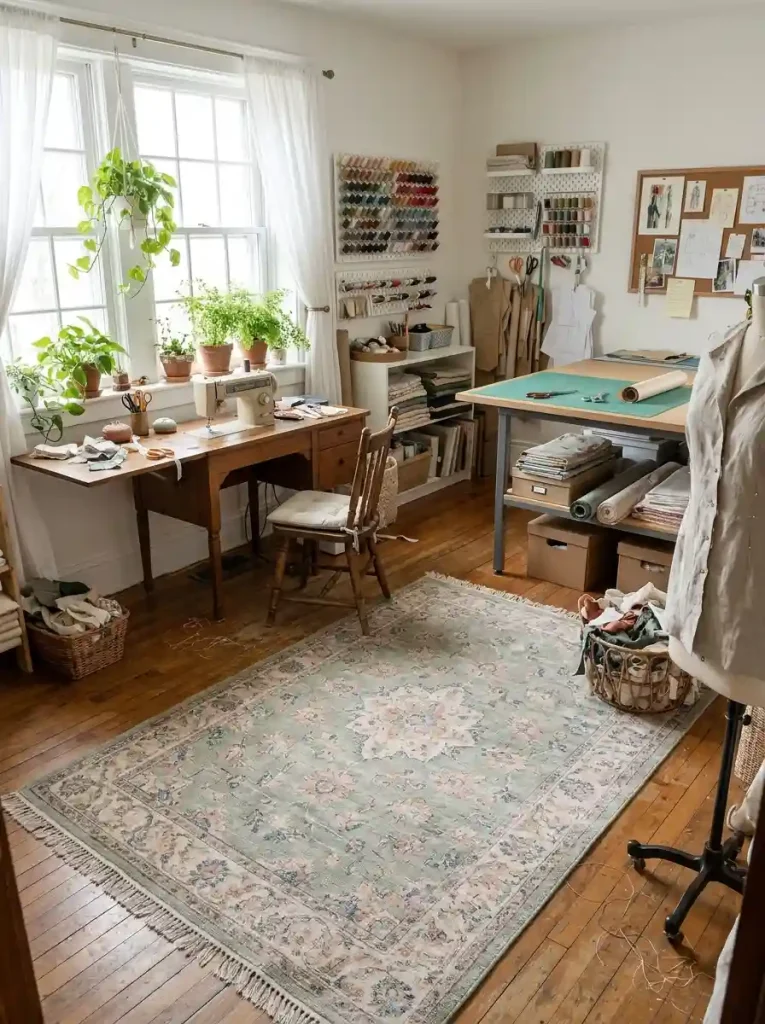
A soft rug with a floral or botanical pattern adds warmth and comfort underfoot in a sewing studio.
It also softens the look of a room filled with hard furniture edges and machines.
A patterned rug is especially useful for hiding small marks or stray threads that are common in a busy craft space.
Use a Rolling Cart for Craft Machines Like a Cricut
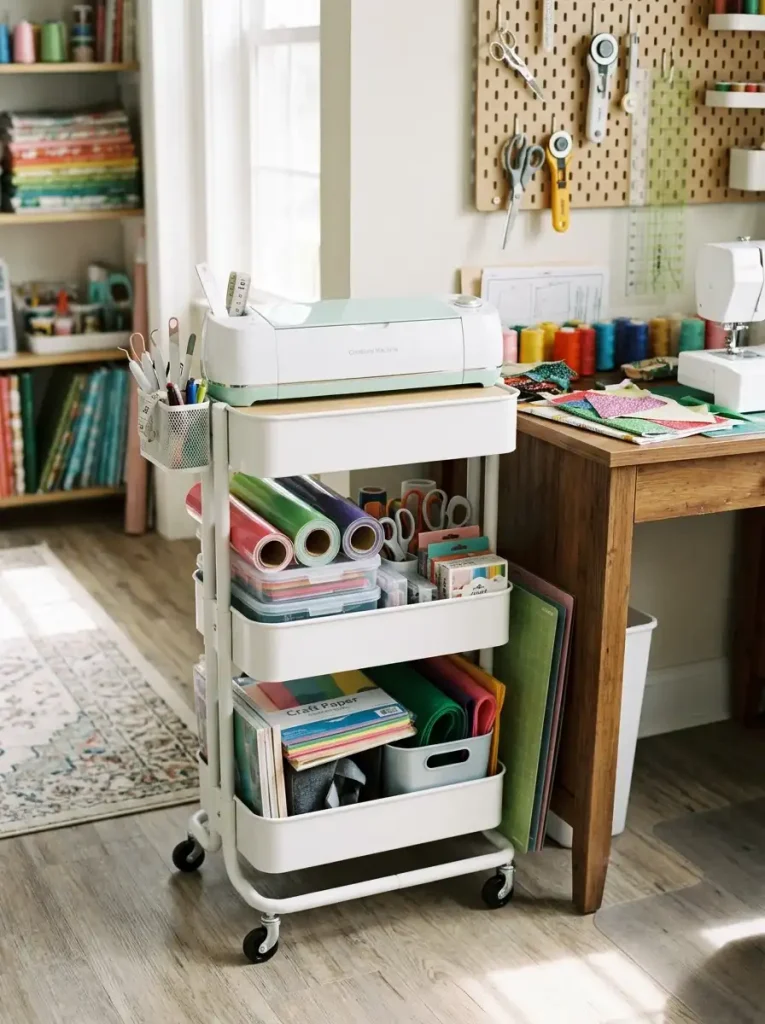
A rolling storage cart keeps secondary machines, like a cutting machine or embroidery tool, mobile and out of the way when not in use.
You can roll it over when needed and tuck it aside the rest of the time.
This setup is especially helpful in smaller studios, where every piece of furniture needs to serve more than one purpose.
Add Glass-Front Cabinets to Display Supplies and Keepsakes
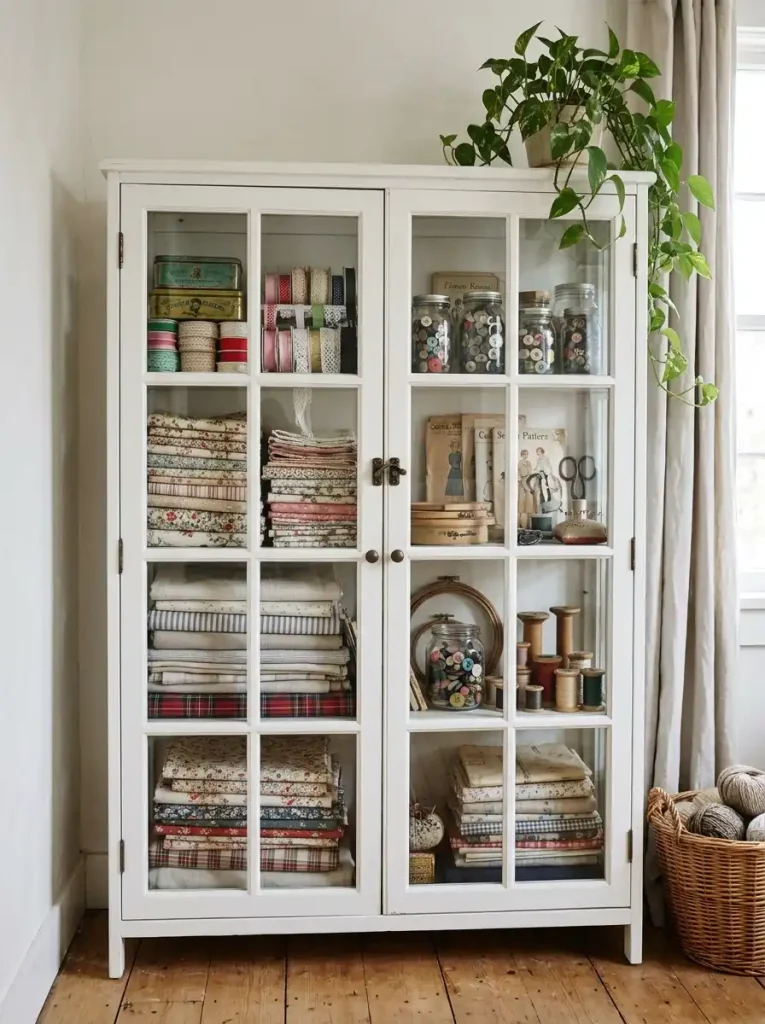
A cabinet with glass doors lets you store supplies while still showing them off.
It works well for displaying sentimental items, finished projects, or pretty notions you want to see, not hide.
This type of storage adds a furniture-like, finished look to a sewing studio, rather than feeling purely utilitarian.
Use a Cutting Mat Station with a Dedicated Table or Mat
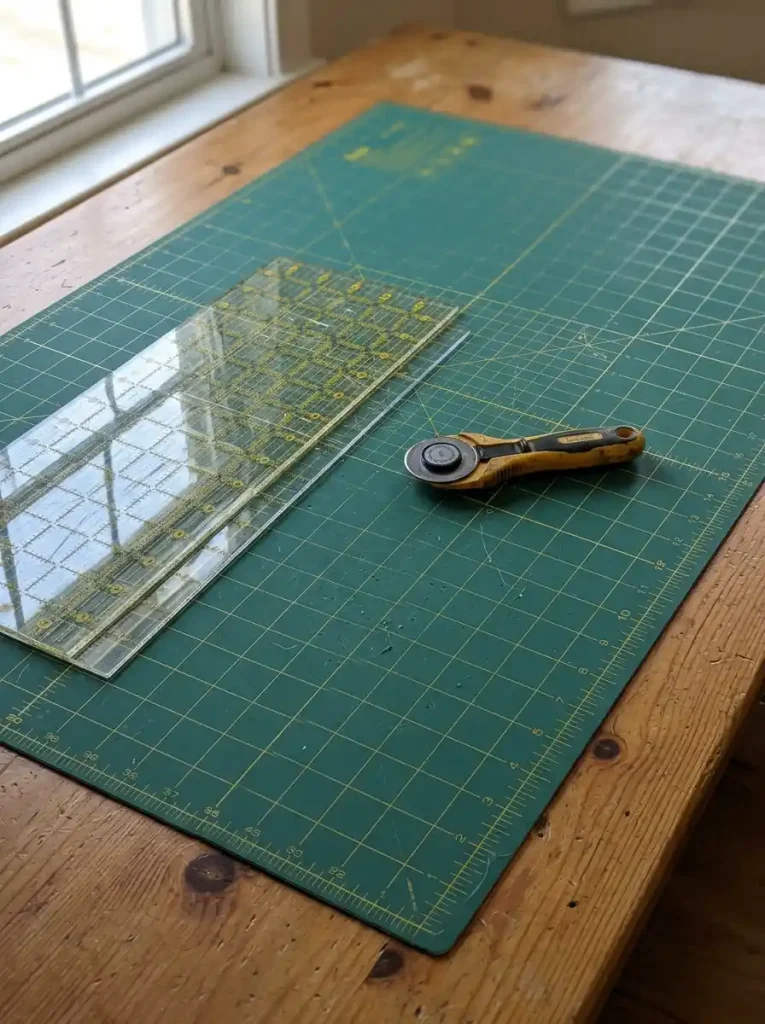
A large cutting mat, either built into a table or laid across a flat surface, gives you a protected space for rotary cutting and pattern layout.
Having one dedicated spot for cutting keeps your other work surfaces clear.
This setup works especially well paired with nearby storage, so pins, rulers, and rotary cutters stay within reach during the cutting process.
Personalize Your Space with Photos or Sentimental Decor
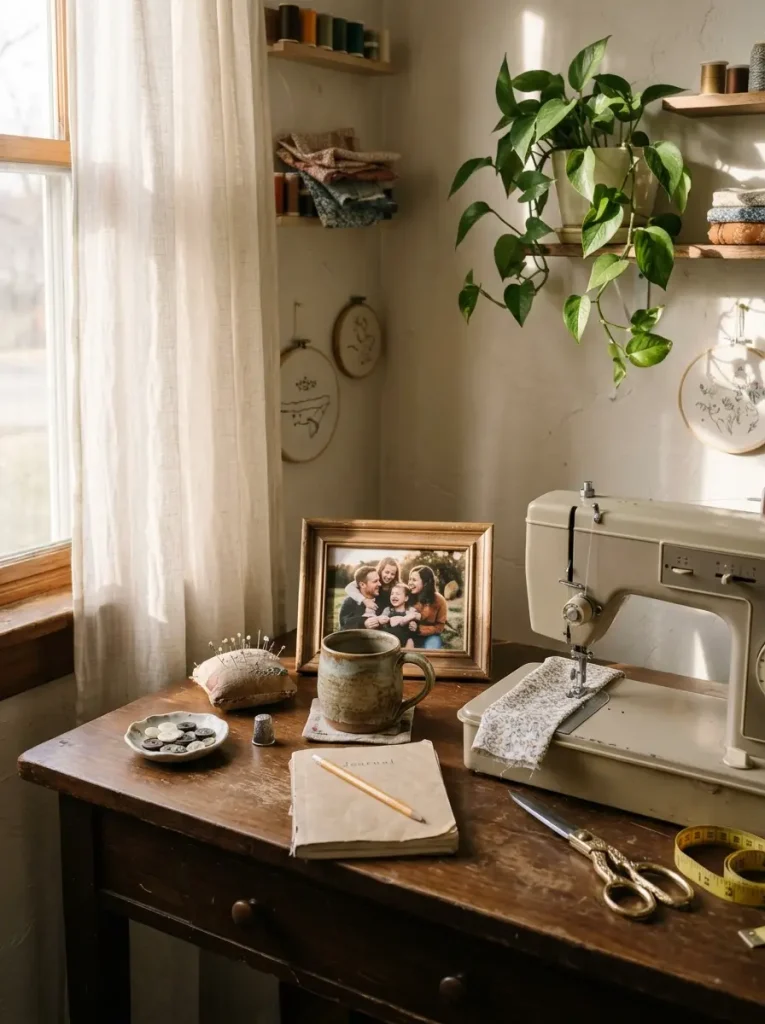
Family photos, handmade gifts, or sentimental keepsakes placed around your studio make the space feel personal, not just functional.
These details remind you why you love to create in the first place.
Even small touches, like a framed photo or a handmade mug, can turn a purely practical room into a space that feels like truly yours.
Final Thoughts
A sewing studio works best when it balances function with personality.
Smart storage, good lighting, and a clear workspace keep your projects moving smoothly, while personal touches like art, flowers, and sentimental decor make the room feel like a place you want to spend time in.
Whether your style leans vintage, modern, or cozy and colorful, there is an idea here to help you build a studio you love.
FAQs Sewing Studio
What is the difference between a sewing room and a sewing studio?
A sewing room is usually a simple space with a machine and basic storage, while a sewing studio often includes a more complete setup, such as a cutting station, design wall, dress form, and decorative touches. The term studio suggests a space built for creativity, not just function.
How do you organize a small sewing studio?
Small sewing studios work best with vertical storage, like wall-mounted pegboards, cubby shelving, and stacked drawer units. Multi-purpose furniture, such as a desk with built-in storage, also helps a small space stay functional without feeling cluttered.
What furniture do you need for a sewing studio?
Most sewing studios need a sewing machine desk, a cutting surface, and storage for fabric, thread, and notions. Optional additions, like a dress form, an ironing station, or a design wall, can make the space more complete depending on the type of sewing you do.
How can I make my sewing studio feel cozy?
Soft lighting, like string lights or a warm colored lamp, along with personal touches such as photos, fresh flowers, or handmade decor, can make a sewing studio feel warm and inviting. Choosing a soothing wall color and a comfortable rug also adds to the cozy feeling.