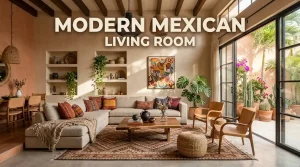
Ask someone to picture a modern Mexican living room and they will probably describe something loud. Saturated pink walls. Folk art on every surface. Talavera tile climbing a staircase.
That version exists, and it is wonderful. But it is not what is driving the current wave of interest in Mexican design.
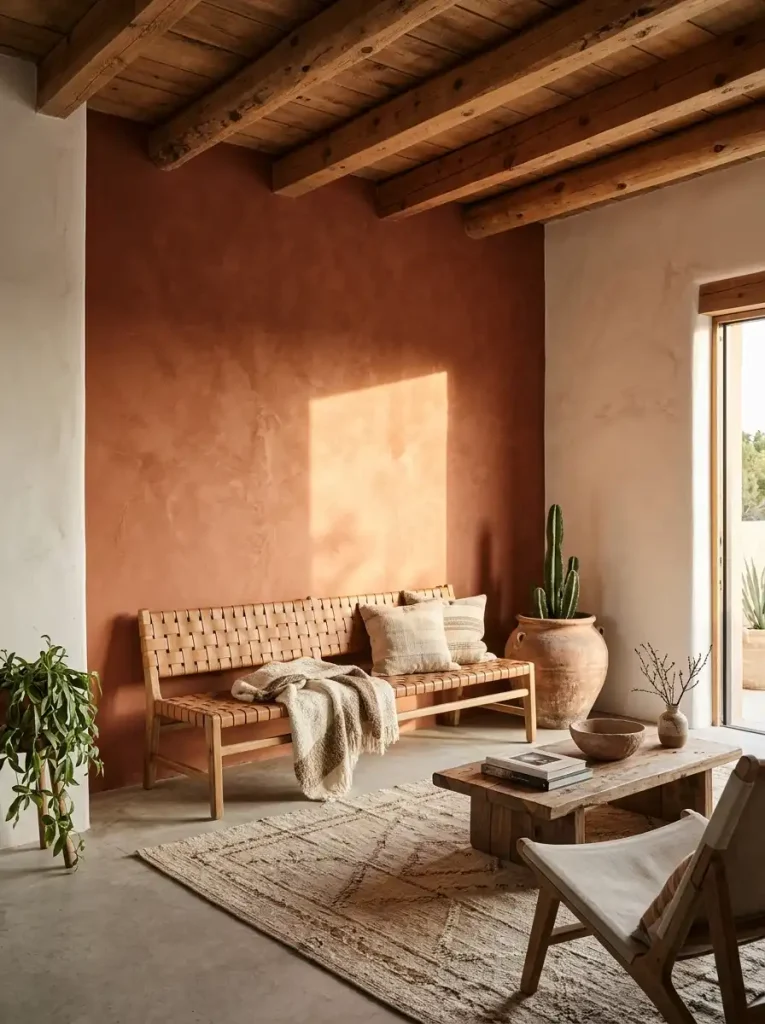
The rooms getting attention right now are quieter, built on the same bones, with a modernist’s restraint. Less maximalist folk art. More Luis Barragán.
Barragan’s Shadow Is Still Long
You cannot talk about modern Mexican interiors without acknowledging how much of this language traces back to one architect.
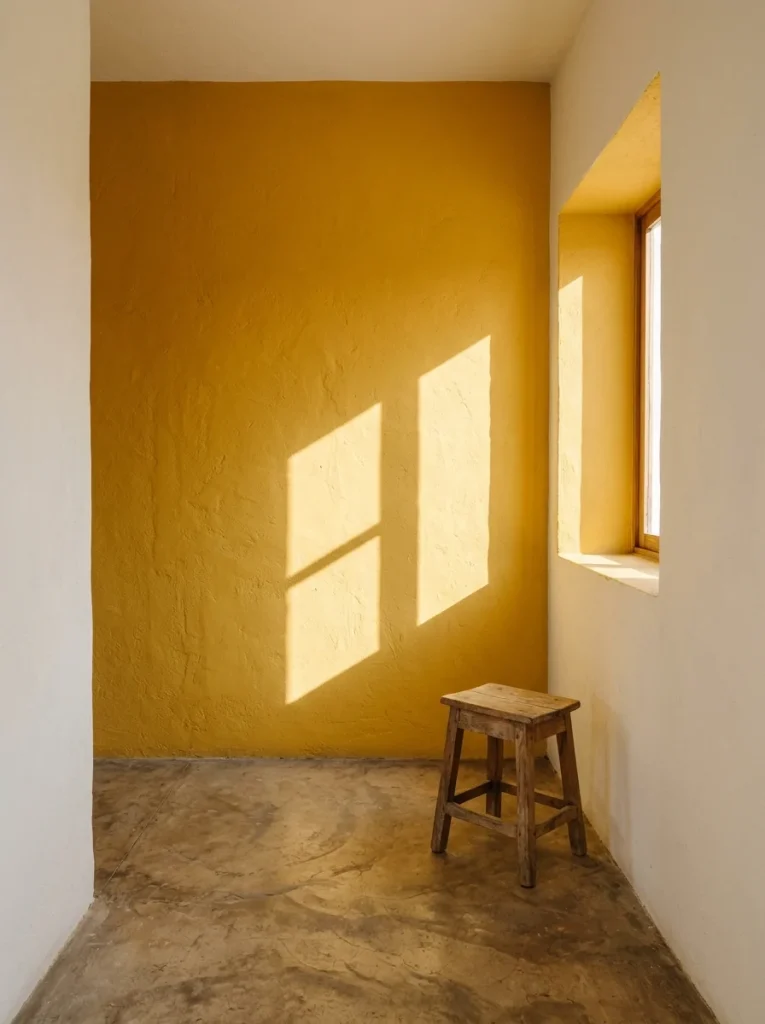
Luis Barragán’s mid-century work, and his own house in Mexico City above all, established a visual grammar that is still being quoted today.
Thick plaster walls in a single saturated color. Deep-set windows that frame light rather than view.
Furniture kept sparse so the architecture stays the main event. Nearly every room that reads as modern Mexican today is in some kind of conversation with that house.
Color in Large, Confident Blocks
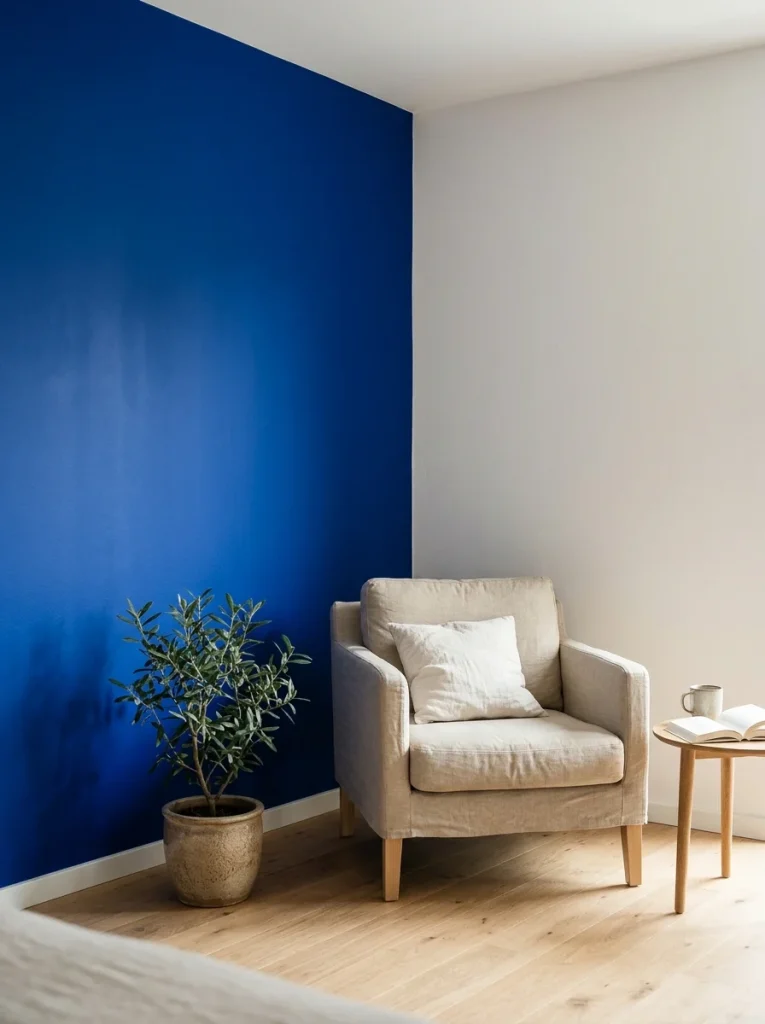
The signature move is not a colorful accessory here and there. It is an entire wall, sometimes an entire room, committed to one saturated hue.
Deep pink, cobalt blue, burnt orange, and a specific golden yellow show up constantly, usually in plaster or a matte finish that softens the color rather than letting it read glossy or synthetic.
The rest of the room then goes quiet around it. Plain wood, plain linen, plain stone, so the wall has nothing competing with it.
“Color in these rooms is not a decoration. It is the architecture itself.”
Plaster Over Paint, Whenever Possible
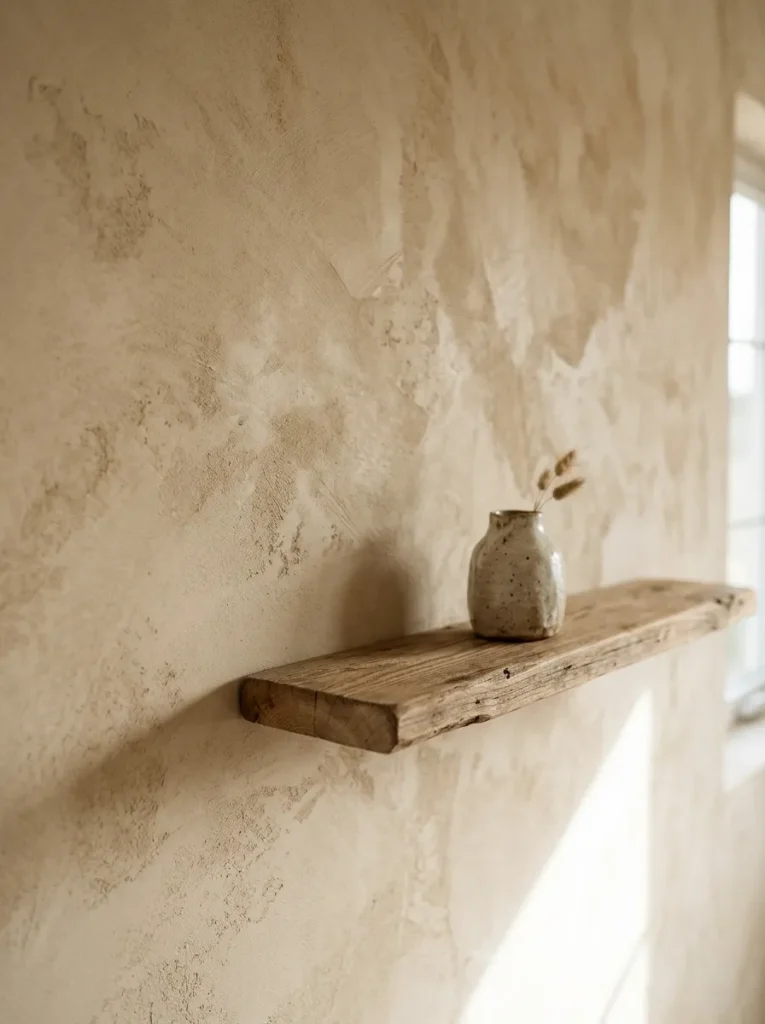
A painted wall and a plastered wall in the exact same color read completely differently.
Plaster has a soft, slightly uneven texture and a way of catching light that flat paint cannot replicate.
It looks handmade because it is. Several paint lines now market limewash and plaster-effect finishes for exactly this reason, which tells you how much the texture itself is doing the work.
Equipale and the Return of Woven Leather
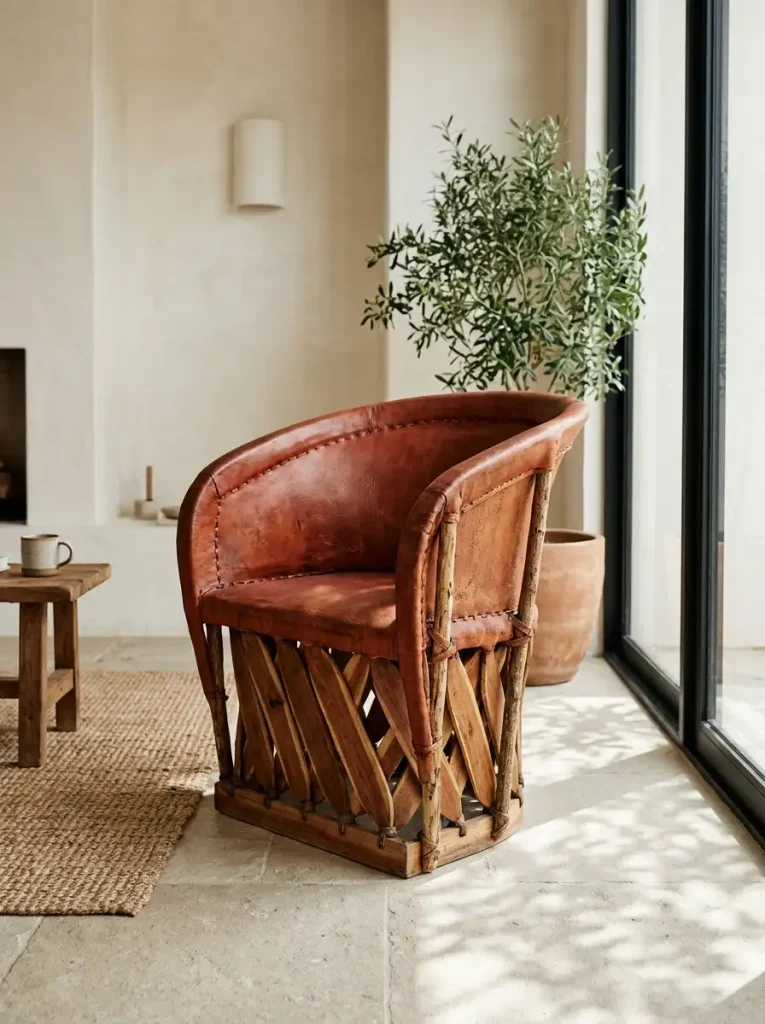
Equipale, the traditional Mexican chair built from a cedar frame and stretched pigskin or leather, has moved from regional craft piece to genuine design object.
Its rounded silhouette and warm, worn leather sit comfortably in a modern room without needing any other signifiers to justify its presence. It reads as sculptural first, traditional second.
Volcanic Stone, Used Sparingly
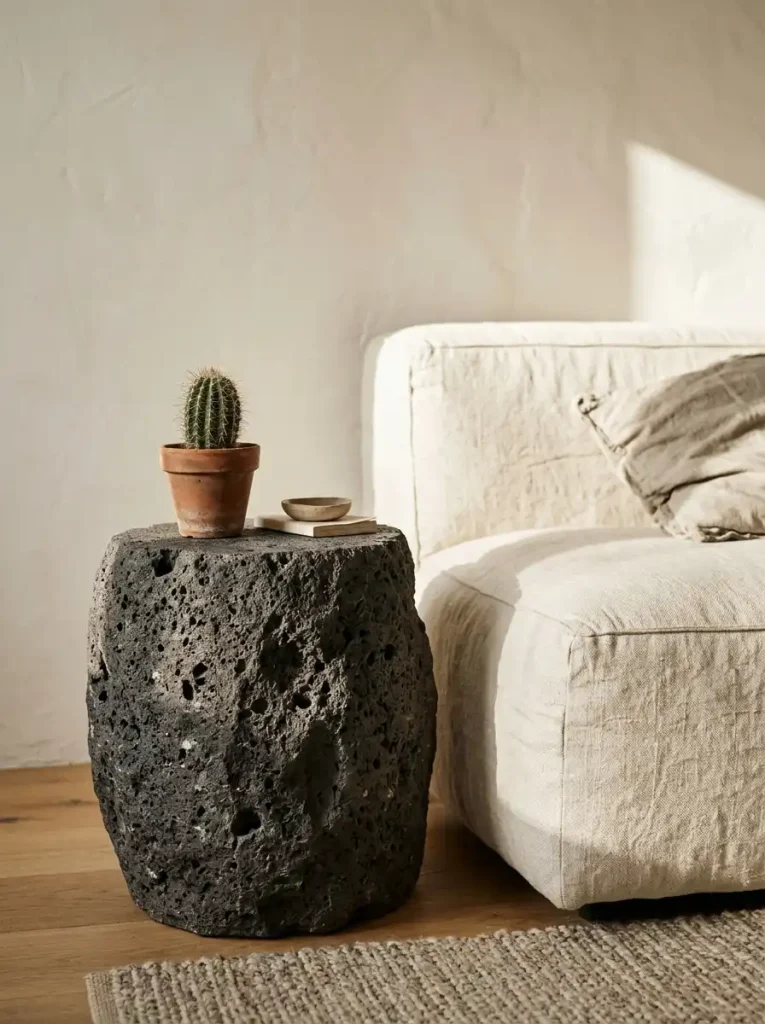
Cantera and other volcanic stones show up as fireplace surrounds, side tables, or even full flooring in higher-budget spaces.
The appeal is texture. Porous, slightly irregular, clearly cut from something that was once alive geologically.
A single stone side table can anchor an otherwise minimal room the way a piece of sculpture would.
Exposed Wood Beams as the Ceiling’s Main Event
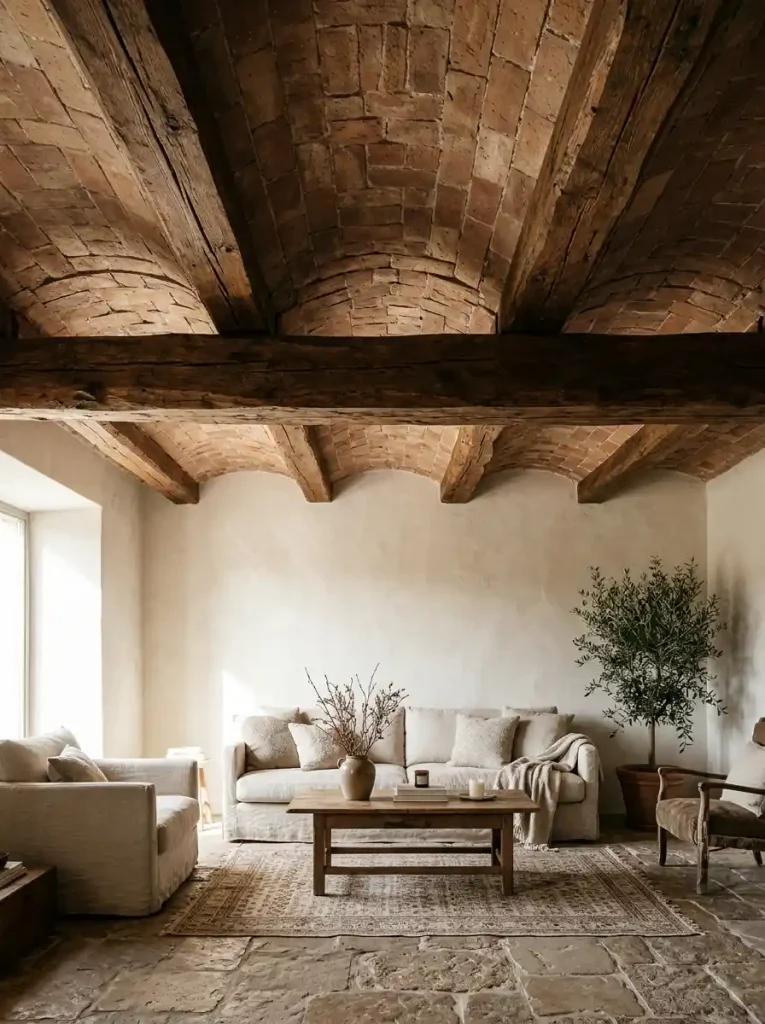
Where Scandinavian design tends to hide structure, Mexican interiors often celebrate it.
Thick, dark wood beams left fully exposed across the ceiling, sometimes paired with a traditional brick or tile vault between them.
In a modern room this gets simplified.
Fewer decorative flourishes, cleaner beam spacing, but the same instinct to let the ceiling carry real visual weight instead of disappearing into flat drywall.
Deep-Set Windows That Frame Light
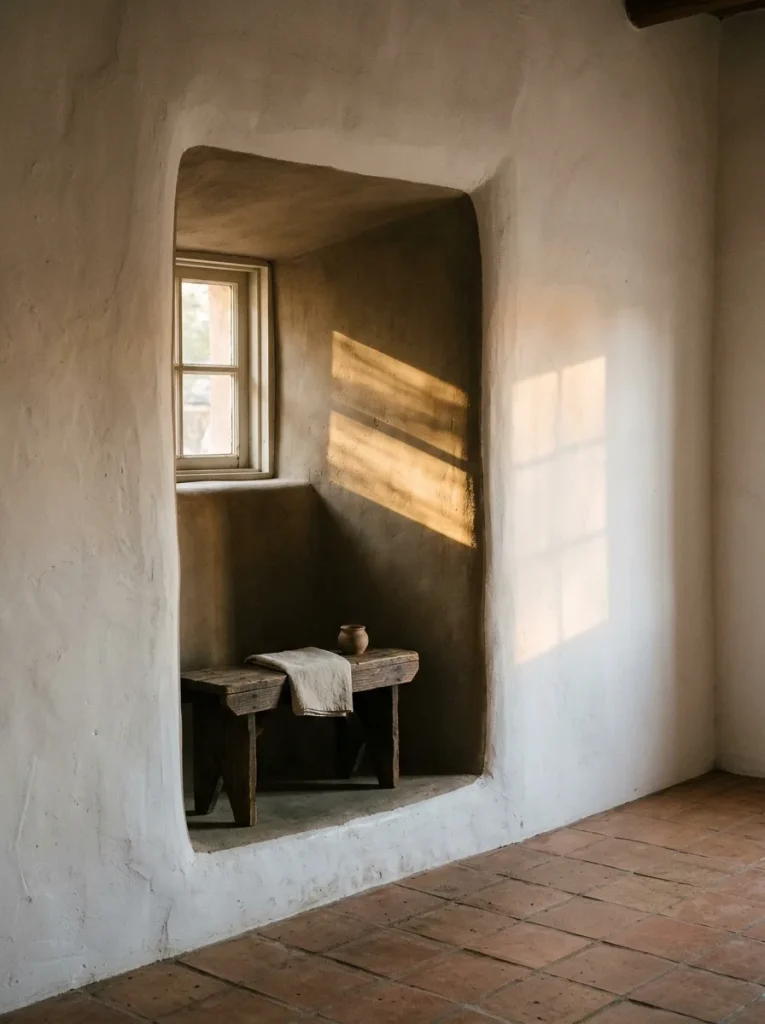
Thick plaster or adobe walls naturally create deep window recesses, and modern Mexican interiors lean into this rather than fighting it with floor-to-ceiling glass.
A smaller, deeply set window turns sunlight into something sculptural.
A single shaft of light moving across a wall through the day, instead of flooding the room evenly the way a large uninterrupted pane does.
Textiles With Geographic Specificity
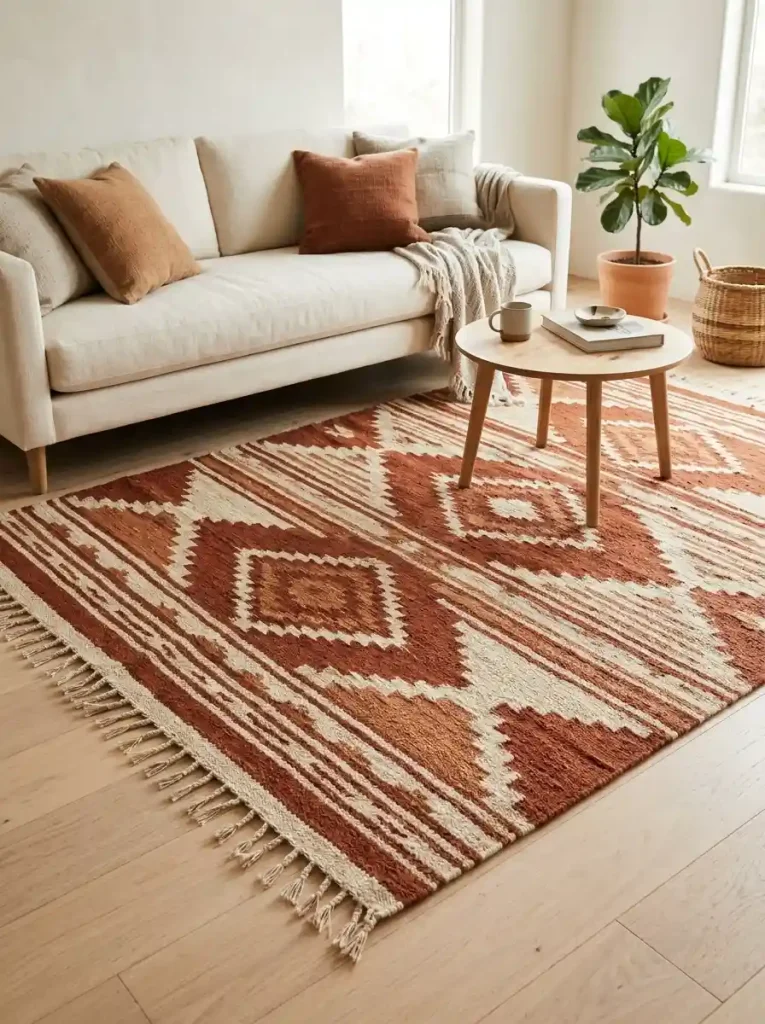
Oaxacan wool rugs, Saltillo-style woven textiles, and hand-loomed cotton throws carry real regional identity.
Each is tied to a specific weaving tradition, often a specific family workshop, rather than a generic Southwestern catch-all.
A modern room typically uses one strong textile piece, a rug or a woven wall hanging, rather than layering several.
The specificity of the one piece stands out instead of blurring into a pattern-heavy whole.
Talavera Tile as an Accent
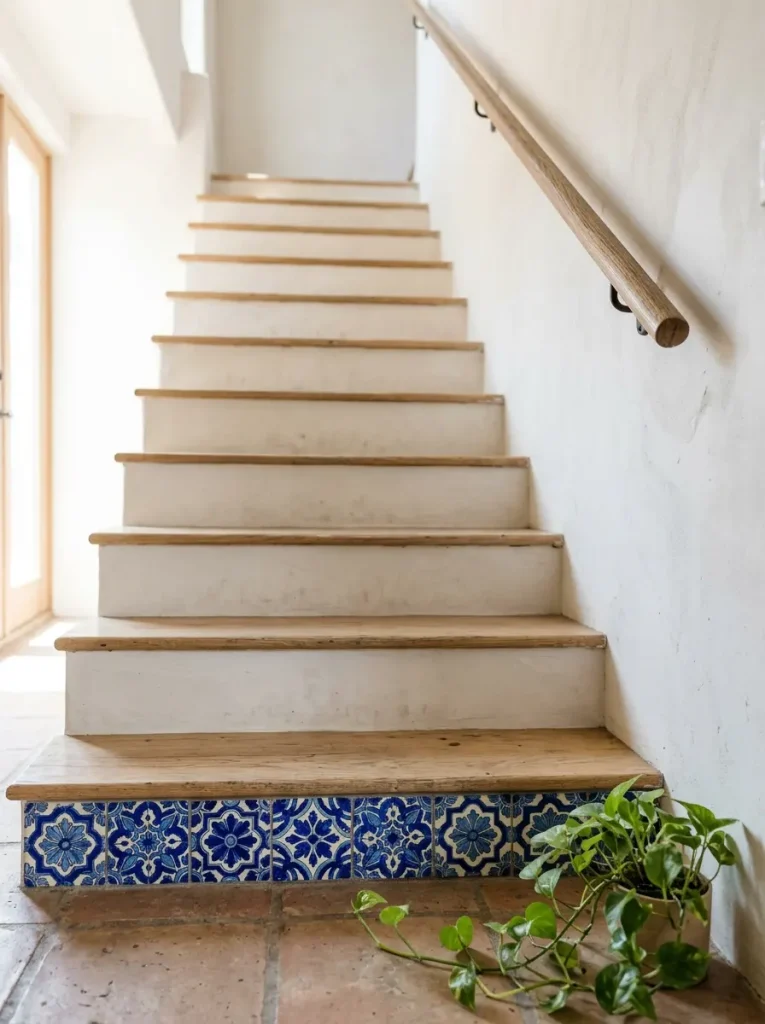
Talavera, the hand-painted glazed ceramic tile tradition centered in Puebla, is instantly recognizable and easy to overuse.
The modern approach treats it the way a jeweler treats a gemstone.
One tiled stair riser, one kitchen backsplash, one bathroom floor.
Contained to a single plane, the pattern reads as a deliberate accent instead of a theme the whole room is built around.
Pendant Lighting With a Handmade Quality
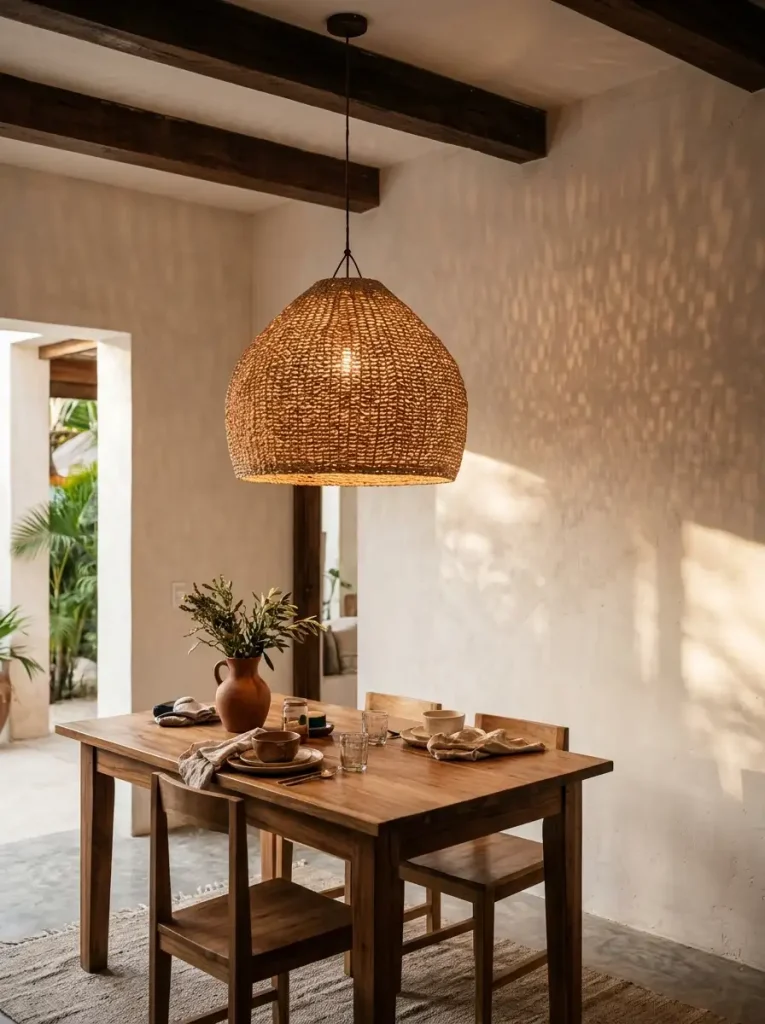
Woven palm pendants, hand-blown glass fixtures from Jalisco and Puebla glassmaking traditions, and simple perforated metal shades all show up repeatedly.
They are chosen for the way they cast light.
Dappled, warm, slightly irregular, rather than the even, shadowless light of a standard recessed fixture.
The lighting in these rooms is meant to be looked at, not just relied on.
Furniture That Is Sculptural First
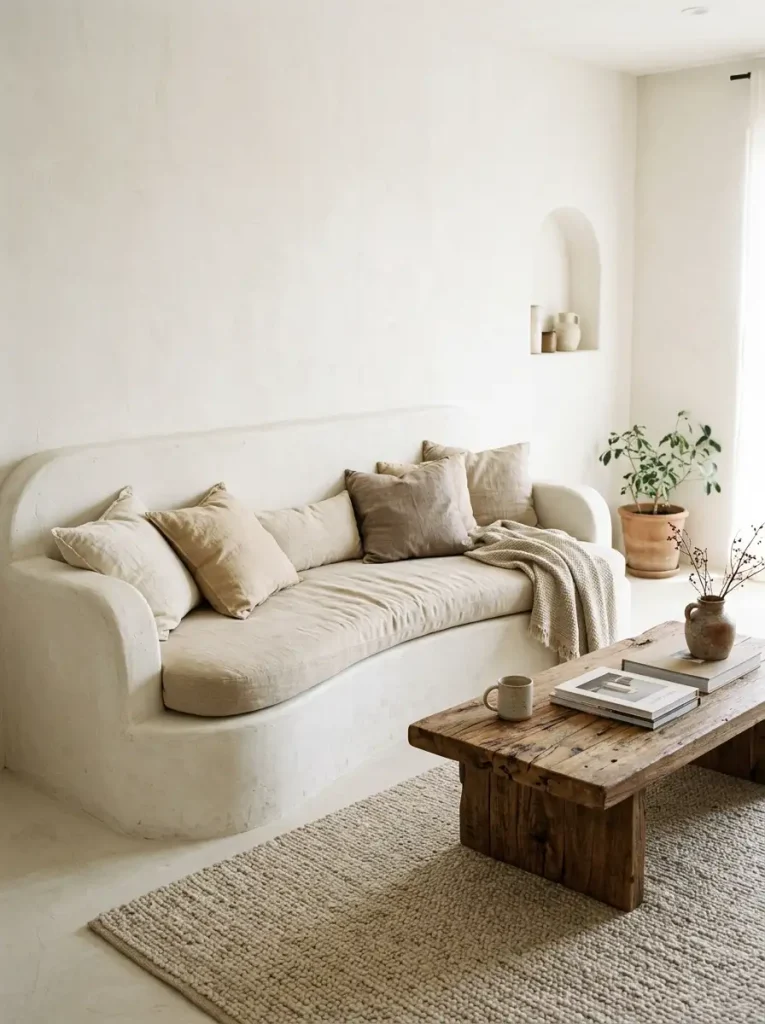
Furniture in this style tends toward bold, simple geometric forms.
A curved adobe-style banquette built directly into the wall. A chunky wood bench with no back. A low stone platform doubling as a coffee table.
Comfort has not been abandoned. It is communicated through warm materials and generous scale instead of obvious cushioning.
The Indoor-Outdoor Line Stays Blurry
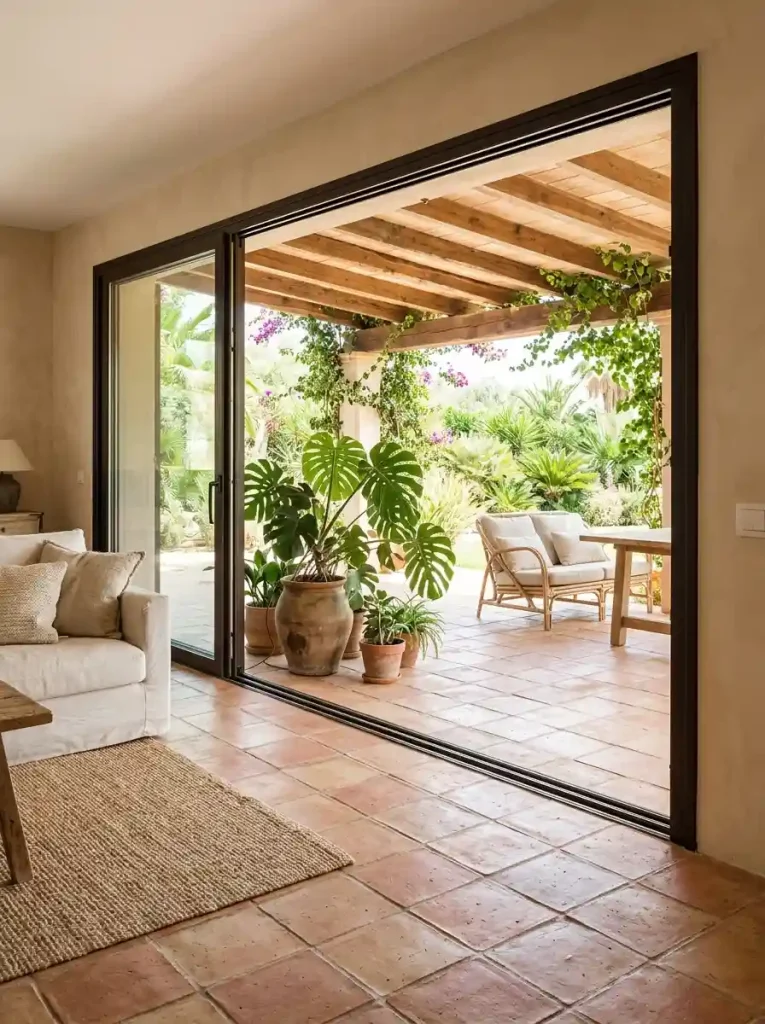
Mexican residential architecture has a long tradition of courtyards, covered patios, and rooms that open directly onto a garden.
Modern interpretations keep that connection alive, even in urban apartments.
Large sliding or folding doors. A covered terrace treated as a genuine extension of the living room rather than a separate outdoor space. Planting brought right up to the glass line.
Niche Shelving Built Into the Walls
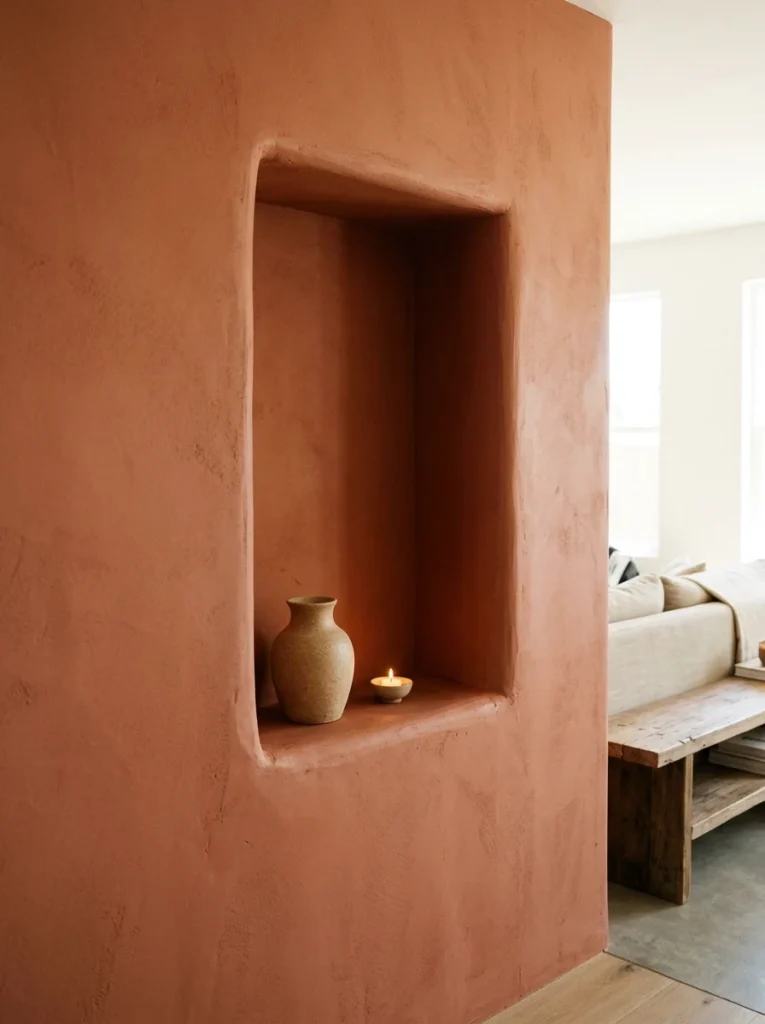
A recessed niche, plastered the same color as the surrounding wall, is a recurring architectural move.
It displays a single ceramic piece, a candle, a small plant, without the visual interruption of a shelf bracket or a furniture piece.
It is a detail that requires planning at the construction stage rather than being added later.
That is part of why it reads as considered rather than decorative.
Religious and Folk Objects, Treated as Art
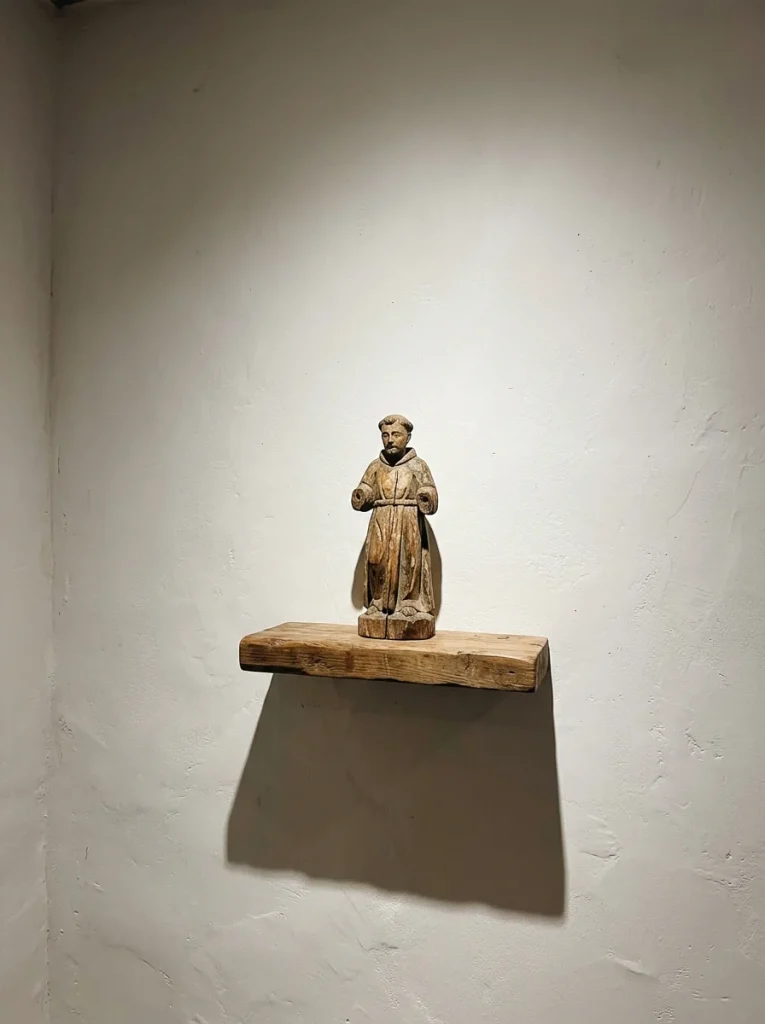
A milagro. A small retablo painting. A carved wooden santo.
Objects with genuine devotional or folk art history show up in these rooms not as kitsch, but displayed with the same care a gallery would give a painting.
Isolated on a plain wall, well lit, given room to be looked at rather than crowded among other objects.
One object, isolated, well lit.
A shelf crowded with souvenirs.
Why This Aesthetic Travels Well
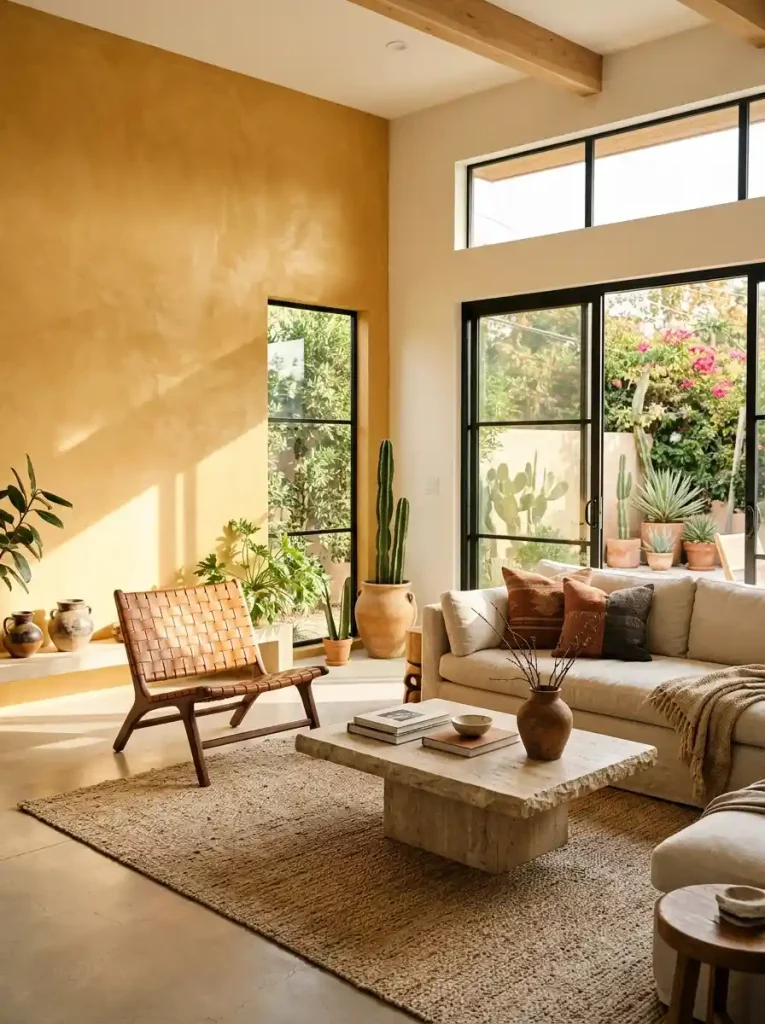
Part of why this look has spread internationally is that its core instincts are not tied to a specific regional palette. Confident color, honest materials, architecture over decoration.
A designer in Los Angeles or Austin can borrow the plaster wall, deep color, and sculptural furniture logic without it reading as costume.
The underlying principles sit closer to a design philosophy than a themed look.
Getting the Color Right
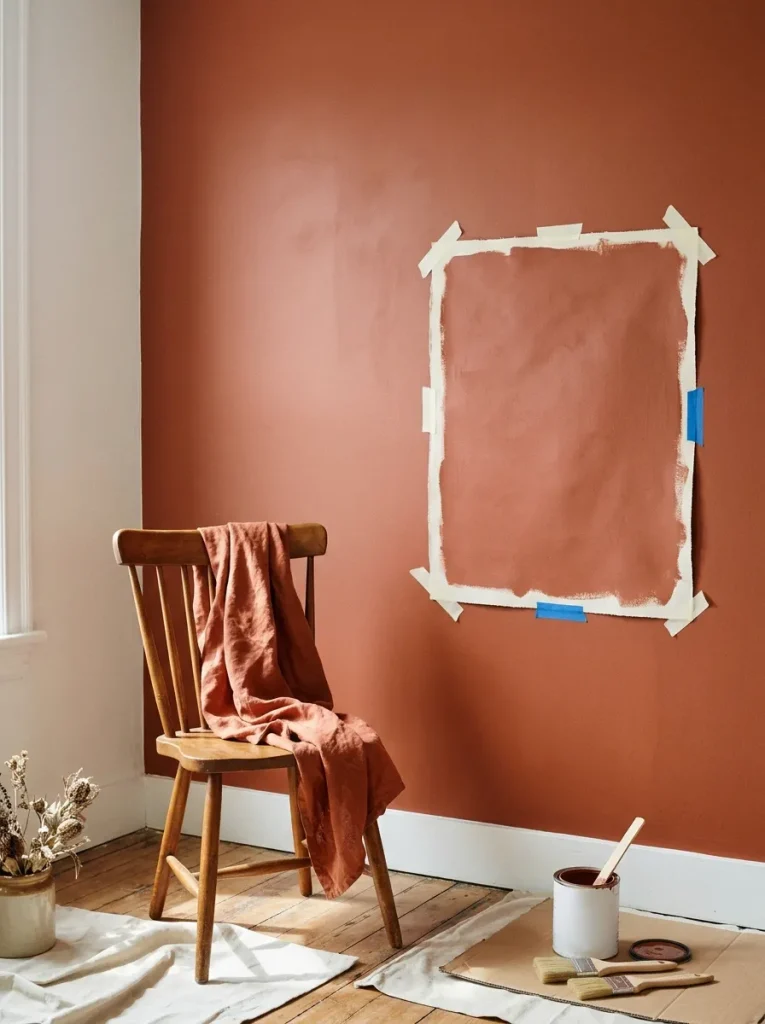
The easiest way to get this wrong is color at the wrong intensity.
A muddy, dusty version of Mexican pink reads as generic terracotta. Going too bright without the matte plaster texture reads as a theme party.
The safest entry point is one wall, one strong color, in a genuinely matte or limewash finish.
Leave everything else in the room quiet enough to let that single gesture carry the look.
Look at the paint chip in the store. Now imagine it ten times larger, with nothing else on the wall to break it up. If that feels like too much, go one shade softer before you buy.
Sourcing Pieces With Real Provenance
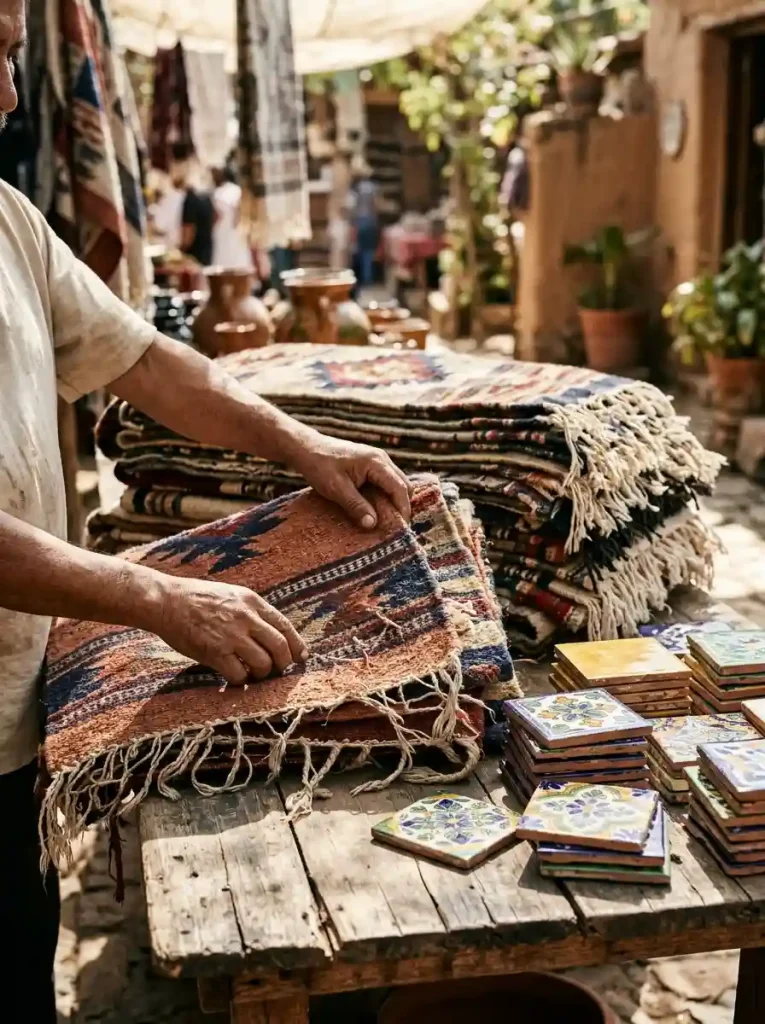
The strongest examples of this aesthetic include at least a few pieces actually made by the artisans and regions the style draws from.
A rug from an Oaxacan weaving cooperative. Talavera tile genuinely from Puebla. Equipale furniture from Jalisco.
Handmade pieces carry an irregularity and warmth that factory versions cannot replicate.
That is a large part of why the look feels authentic in the first place.
- Start with one artisan piece, not five. A single genuine textile or tile accent lifts a whole room.
- Ask where it was made. If a seller cannot name the region or workshop, it is likely a reproduction.
- Skip the themed accessories. Sombreros, painted skulls, and cactus prints pull the room toward costume.
A Final Note
The modern Mexican living room is not about filling a space with things that look Mexican.
It is about one confident color, honest materials, and enough empty wall for the room to breathe.
Get the wall right, keep the furniture quiet, and let the light do the rest.
That is the whole approach, and it works whether you are in Mexico City or Austin.