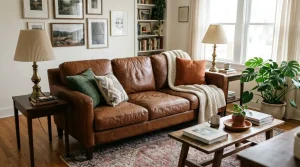
Most living rooms do not have a problem finding art. They have a problem making a decision.
You might buy a piece on a weekend trip. It sits in a closet for months.
Then you hang it on the biggest empty wall you can find. The result is a room that feels accidental. It does not look like a space you planned out.
This is not a strict style guide. It is a practical set of rules. It will help you think about the walls in the room where you spend the most time.
Why Living Room Walls Deserve More Thought
The living room is where people sit still. You might glance at art in a kitchen or a hallway.
But in the living room, you stare at the walls during a phone call or a slow Sunday.
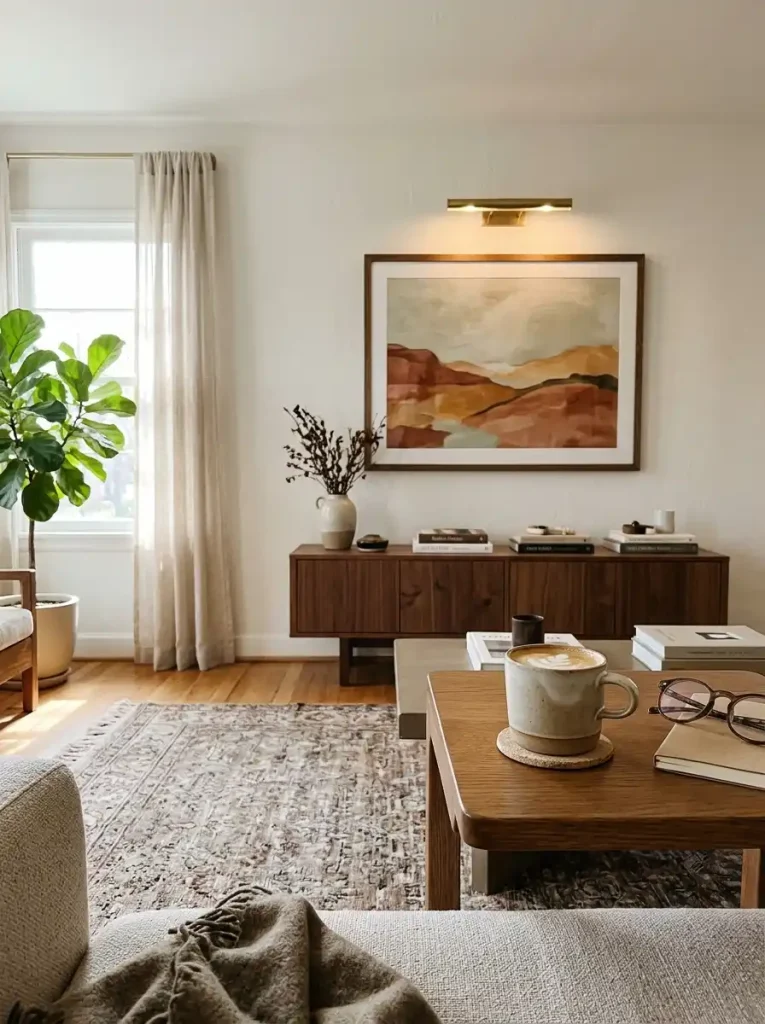
Because of this, living room art must hold up to long, repeated looking. It has to look good day after day. It cannot just look nice for a quick first impression.
Finding the Right Scale Before You Buy
The biggest mistake people make is buying the right art in the wrong size. A canvas that looks big in a store can look tiny above a wide sofa.
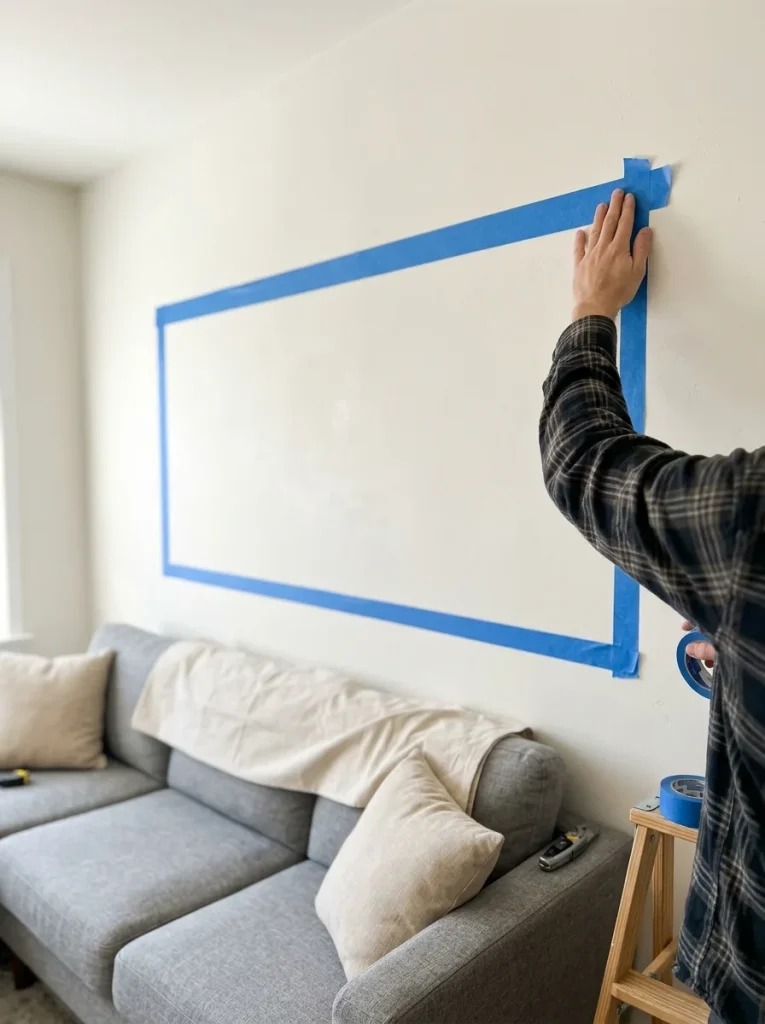
Before you buy anything, use painter’s tape. Make a square on your wall that matches the size of the art.
Live with it for a few days. This simple step saves more returns than any online measuring tool.
The Sofa-Width Rule
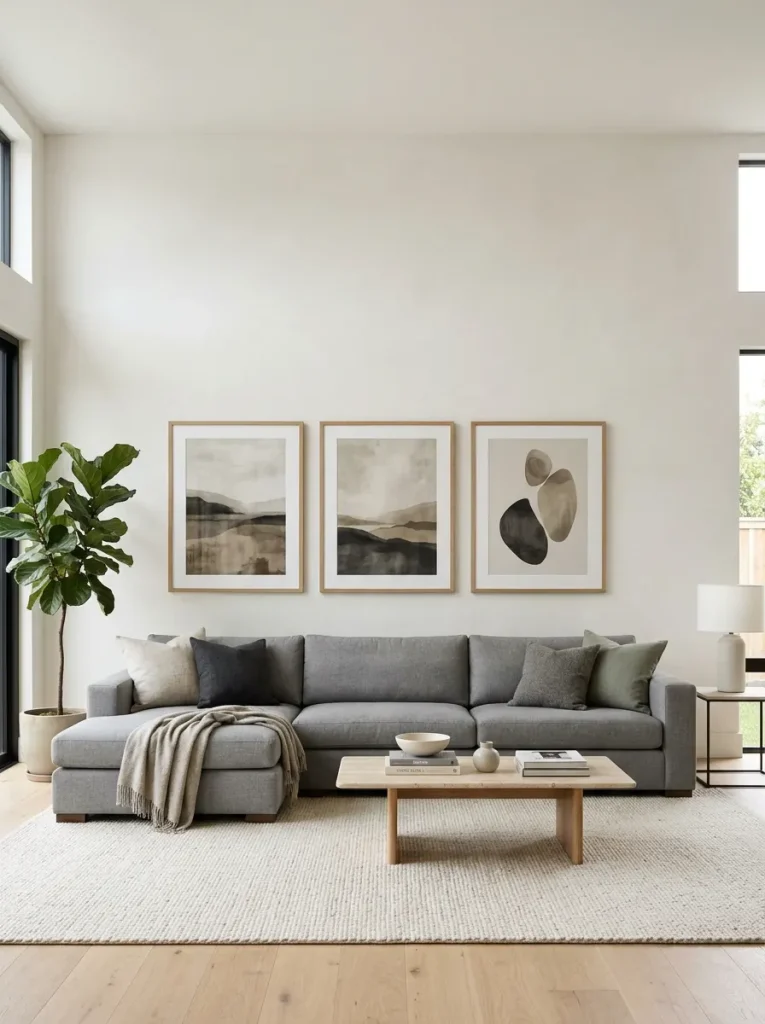
Many designers say art should cover about two-thirds of the furniture below it. This is a good starting point, but it is not a law.
A tall, narrow piece above a wide sofa can look very modern.
The key is to avoid a tiny frame floating in a sea of empty wall. Use the rule to stop that from happening.
Hanging Height: The Eye-Level Myth
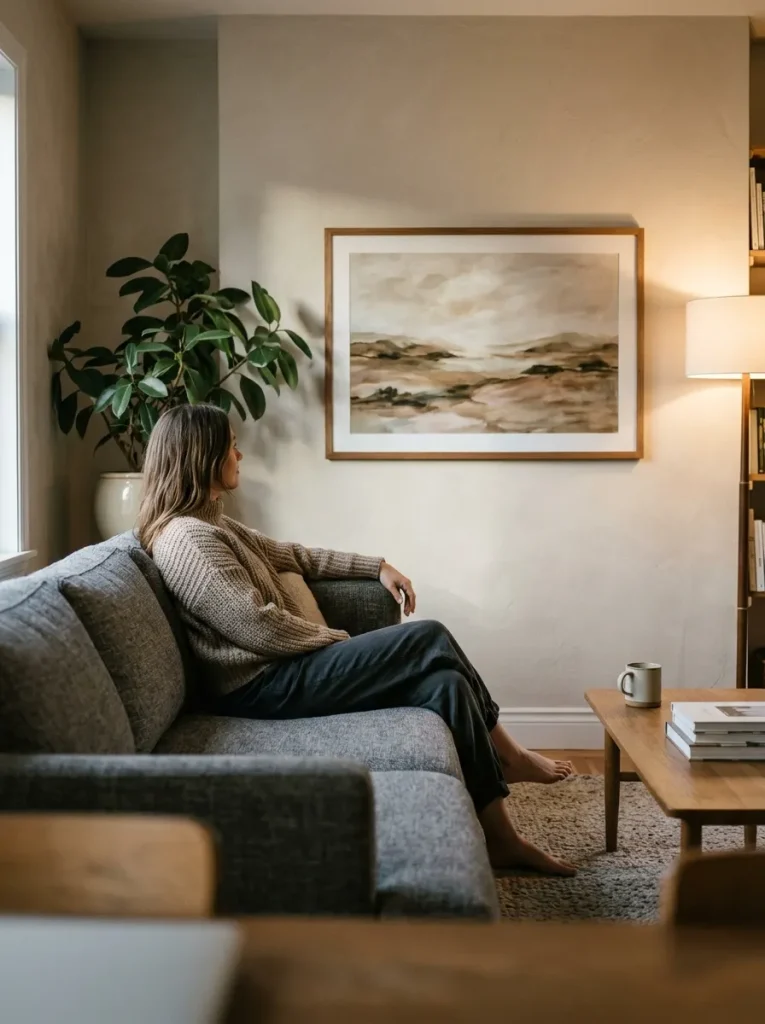
Museums hang art at about 57 inches from the floor. This is based on standing eye level. But in a living room, people are usually sitting down.
A better goal is to center the art at the eye level of someone sitting.
This usually means hanging the center between 60 and 66 inches from the floor. This is slightly higher than museum standards, especially above furniture.
Building a Gallery Wall That Works
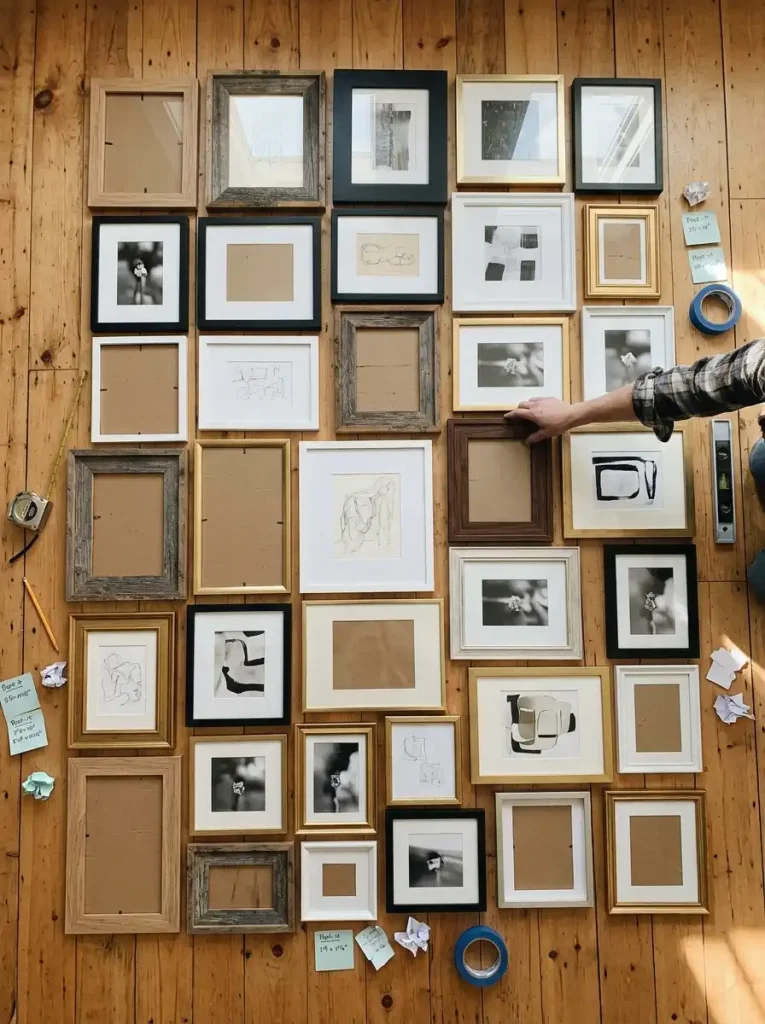
Gallery walls often fail for two reasons. Everything matches too perfectly, or nothing relates at all.
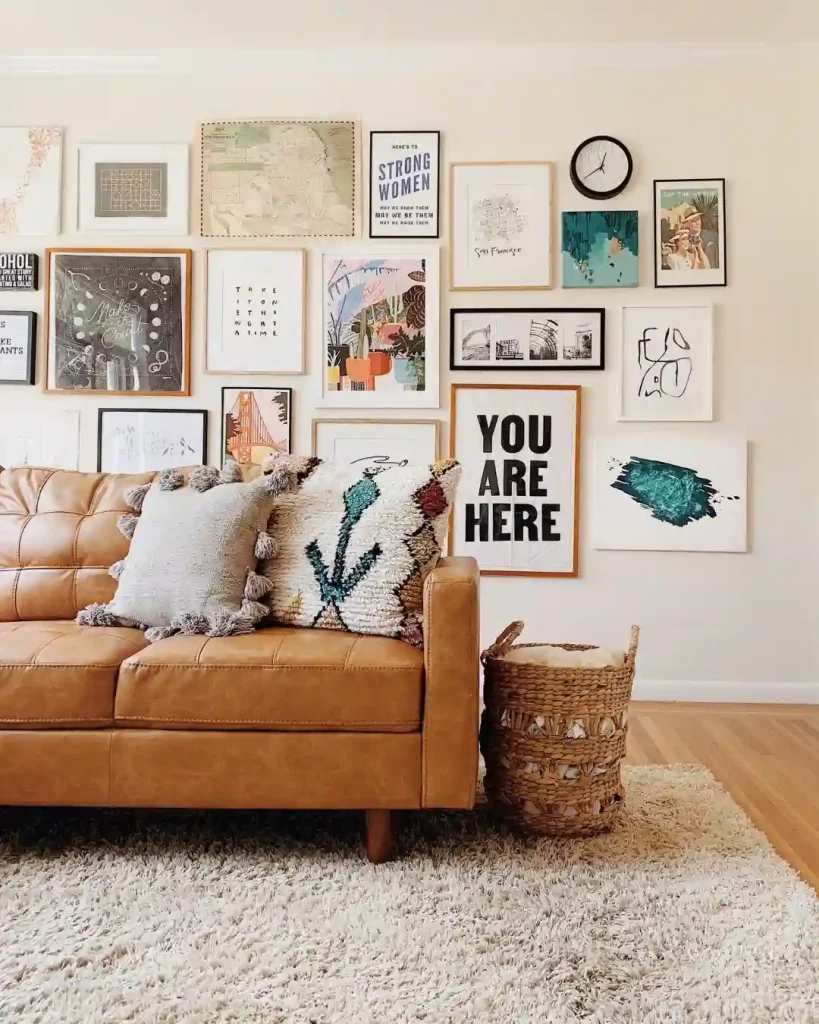
A good wall shares one or two consistent threads. For example, all the frames might be black. Or all the art might share a limited color palette. But you vary the sizes and shapes.
Always lay your frames on the floor first. It takes time, but it is the only way to check your spacing. It stops you from making too many holes in your wall.
Odd Numbers and Asymmetry
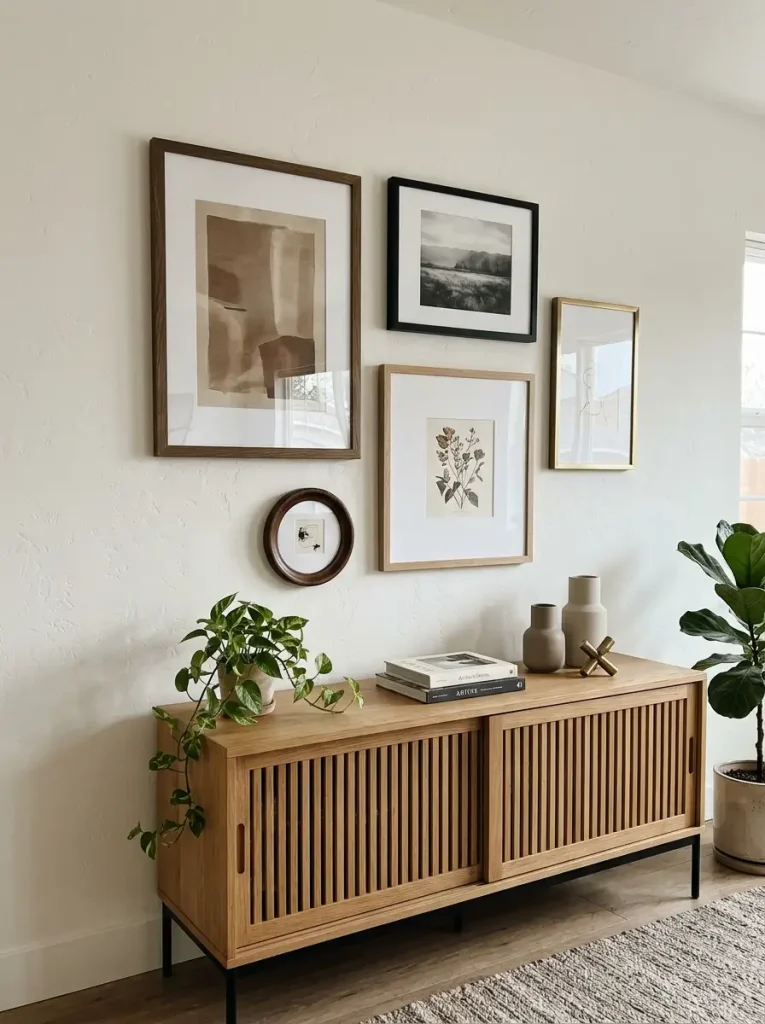
A perfect grid of identical frames can feel like a corporate office. Odd numbers of pieces and slightly uneven spacing feel more human.
Your eye does not get bored as quickly. This does not mean you cannot use a grid.
A grid works well in a very modern, clean room. But in most homes, a little asymmetry works better.
One Big Piece vs. A Collected Look
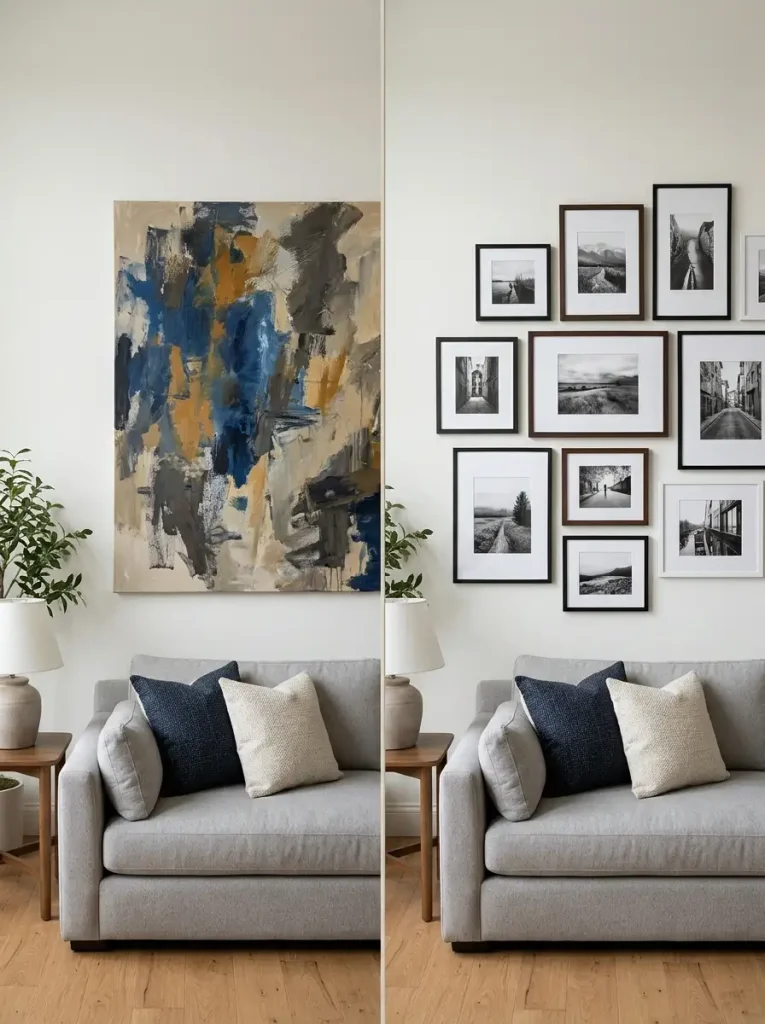
You have a choice between one huge piece or a collection of smaller ones.
This is not just about taste. It is about how you use the room.
A single large piece gives the eye one place to rest. It calms down a busy room.
A collected wall invites people to look closer. It suits rooms that are already quiet.
You’ll love to try grey couch along with wall art.
Color Theory for Your Walls
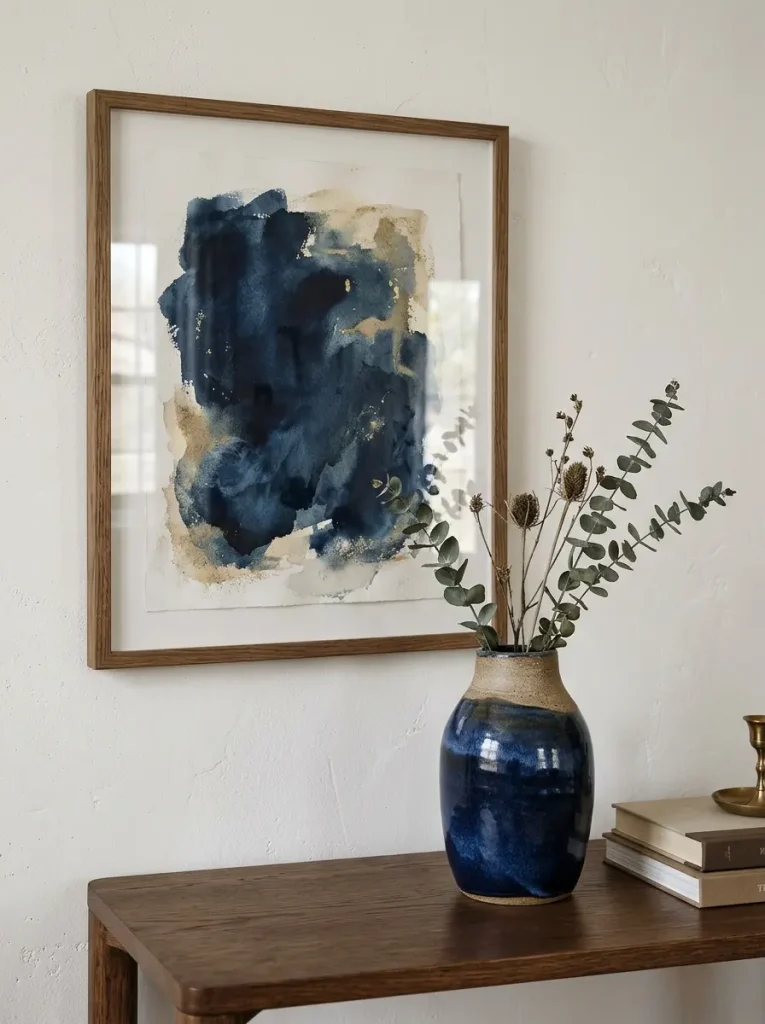
Art does not need to match your sofa. In fact, matching it often backfires. The art just disappears into the room.
Instead, pick one or two colors found in small places in your room.
Look at a book spine or a rug thread. Let the art pick up those small colors instead of copying the couch.
Mixing Mediums Together
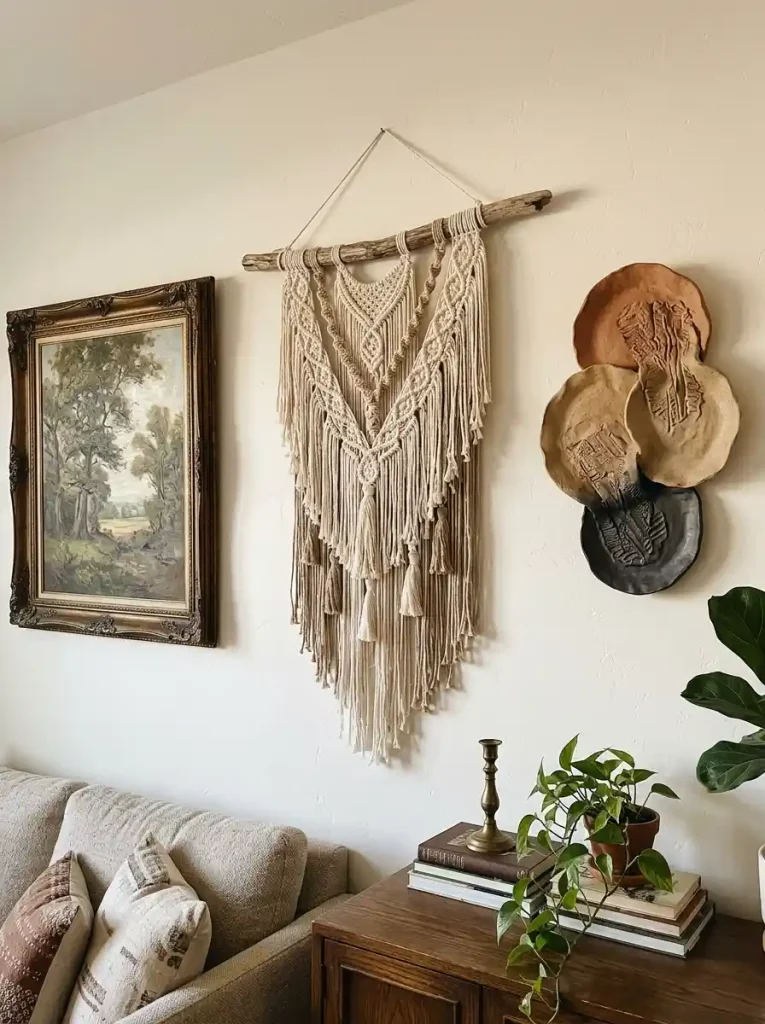
A wall full of only framed paintings can feel flat. It is like listening to one musical note for too long.
Mix in a textured piece. A woven hanging or a ceramic relief adds depth.
This makes the room feel collected over time, not bought in one trip.
Black and White Photography
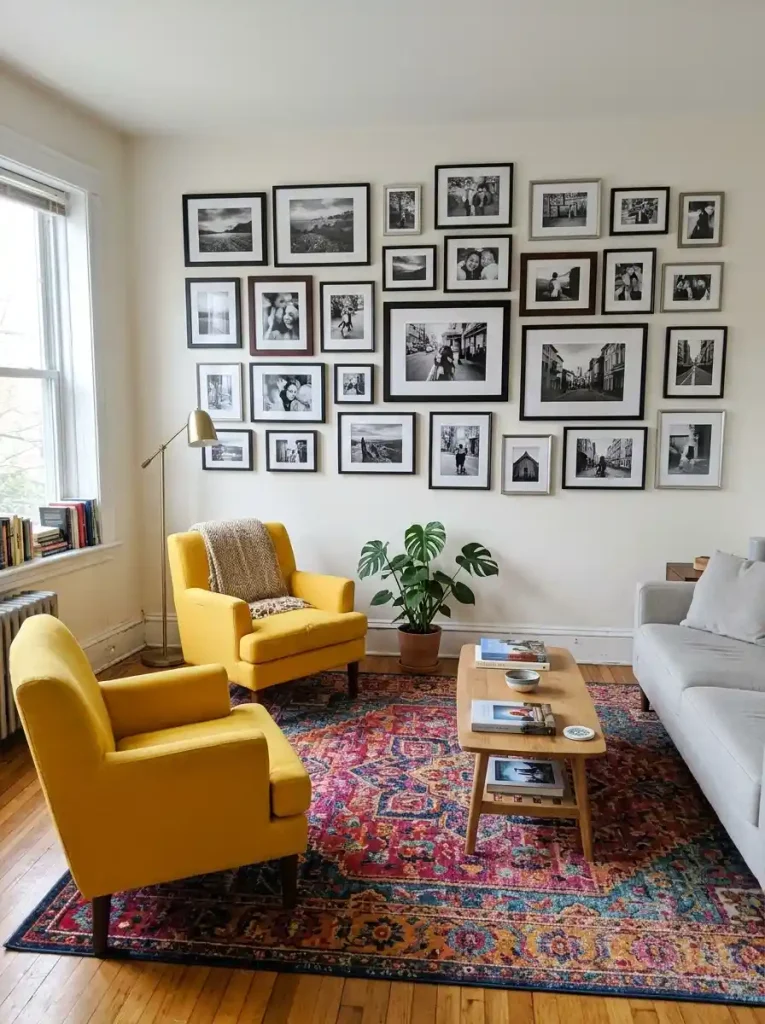
If your room has a lot of color, try black and white photos. Patterned couches and bold rugs can make a room feel busy.
Black and white art acts like a visual pause. It looks calm without being boring. It also ages very well.
Bright trendy colors can look dated in a few years.
Mirrors as Art
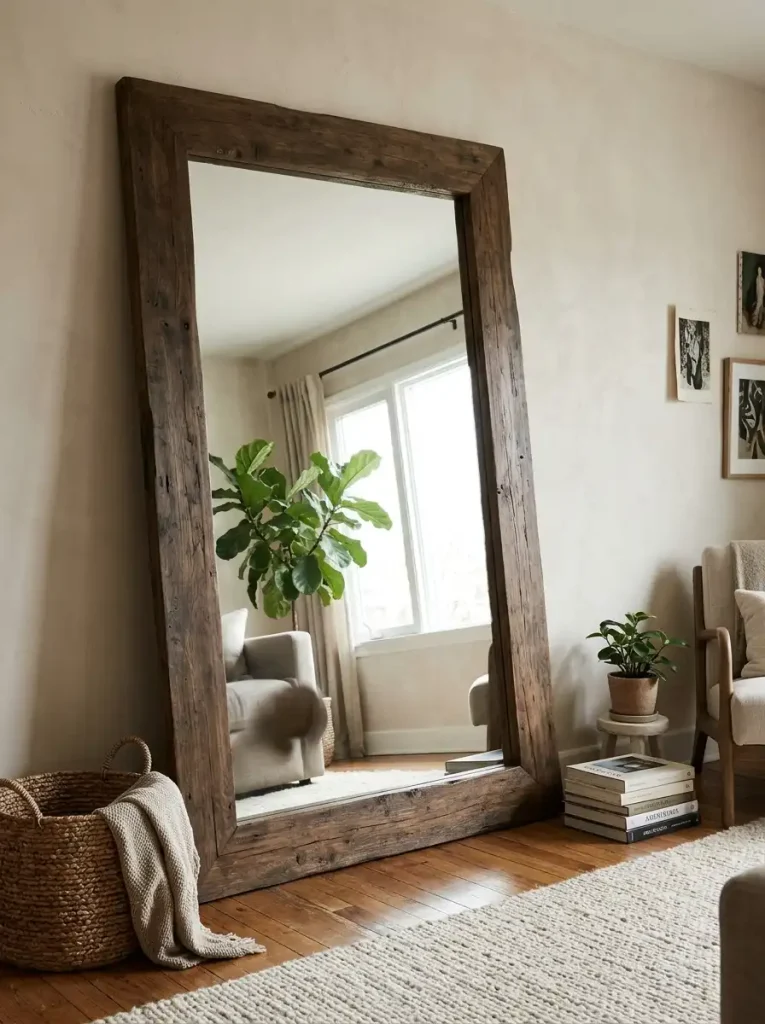
A good mirror does two jobs. It bounces light around a dark room. It also carries visual weight if the frame is nice.
Try leaning a big mirror against the wall instead of hanging it.
It looks casual and relaxed. A perfectly level mirror can sometimes feel too stiff.
Working With a Fireplace Wall

A fireplace is already a focal point. Whatever hangs above the mantel must be big enough to stand up to it.
If the art is too small, it looks like a mistake. It needs to either be a bold statement or step back and let the fireplace be the star.
Sculptural Wall Pieces
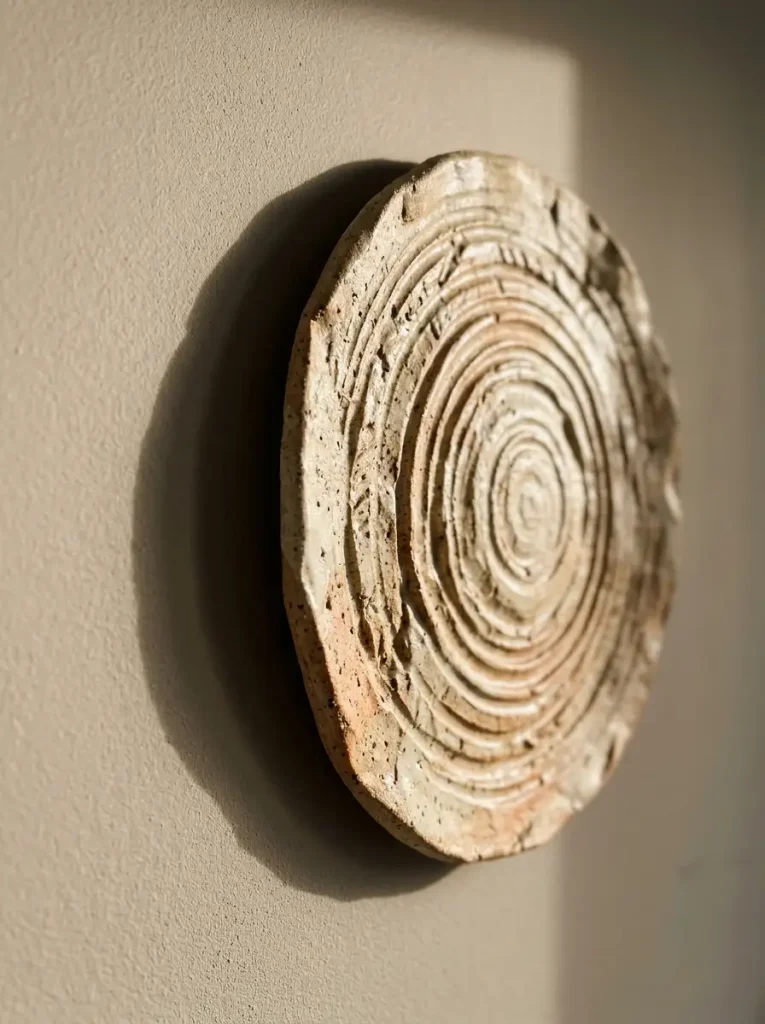
Flat art is normal, but it is not your only choice. You can hang carved wood, woven macrame, or metal pieces.
These pieces cast real shadows. The shadows move as the sun crosses the room.
This is something a flat picture cannot do. They are great for walls with boring, flat light.
Picture Ledges
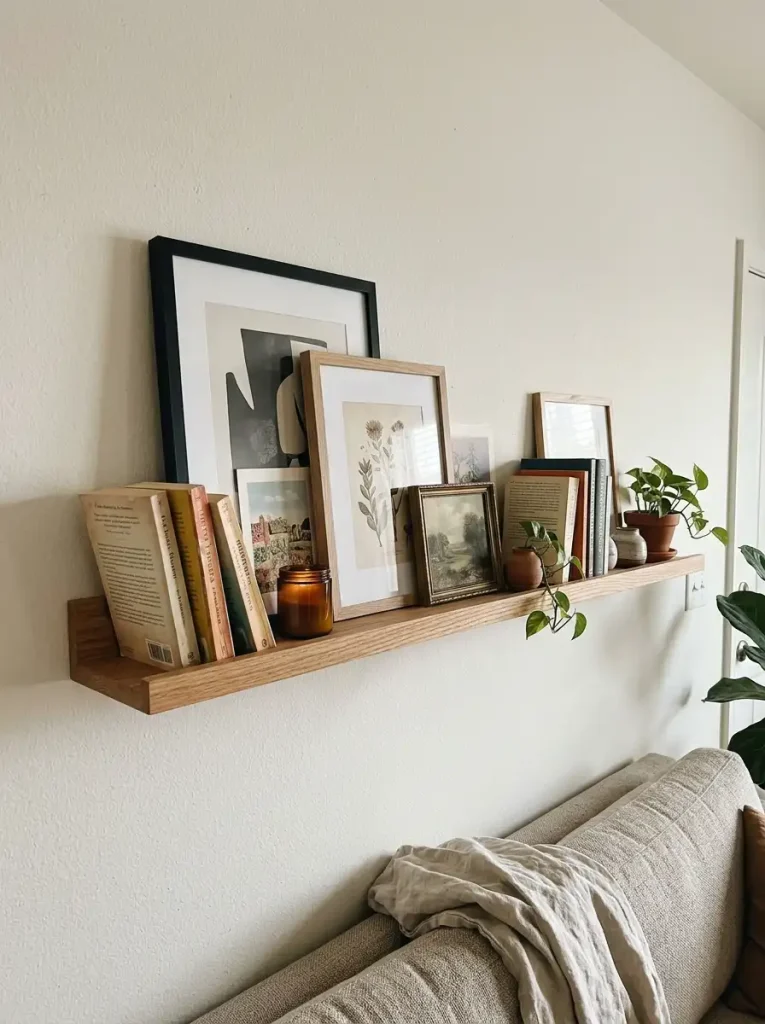
Floating ledges let you lean art instead of hanging it.
This means you can change your art in minutes. You do not need to make new nail holes.
The slight forward lean also catches light nicely. It gives cheap prints a bit more depth.
Negative Space Is Important
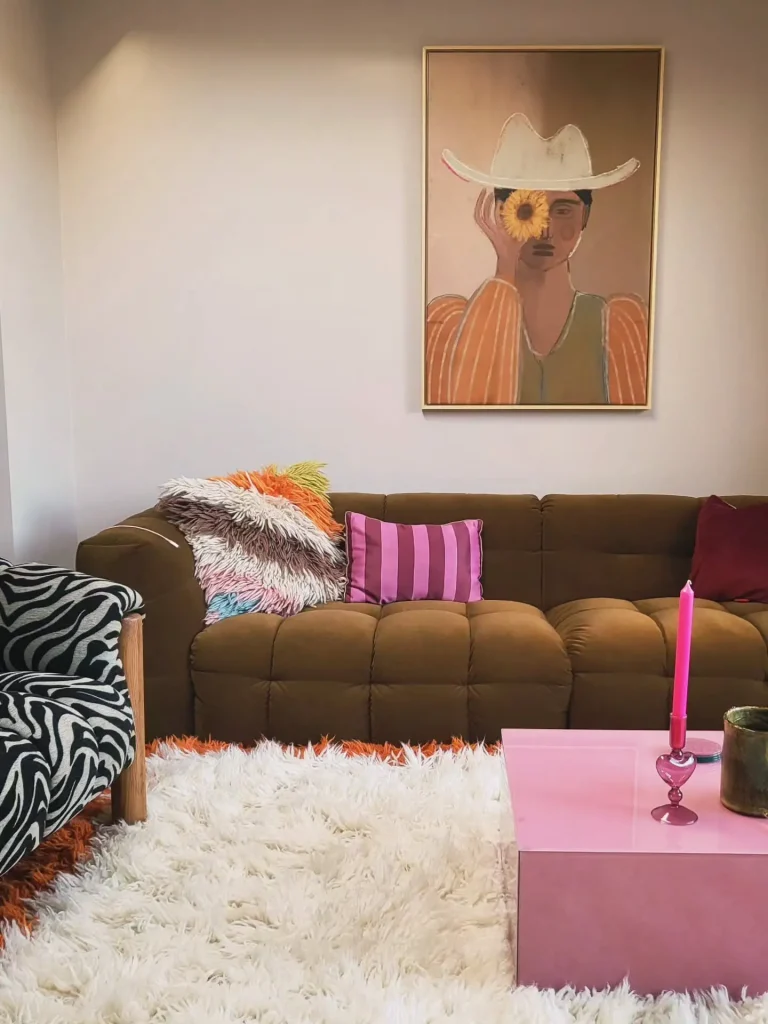
It is tempting to fill every bare wall. But empty space is doing real work.
It tells your eye where the art ends and the room begins.
One striking piece with lots of breathing room looks better than three crowded pieces fighting for attention.
Lighting Your Art
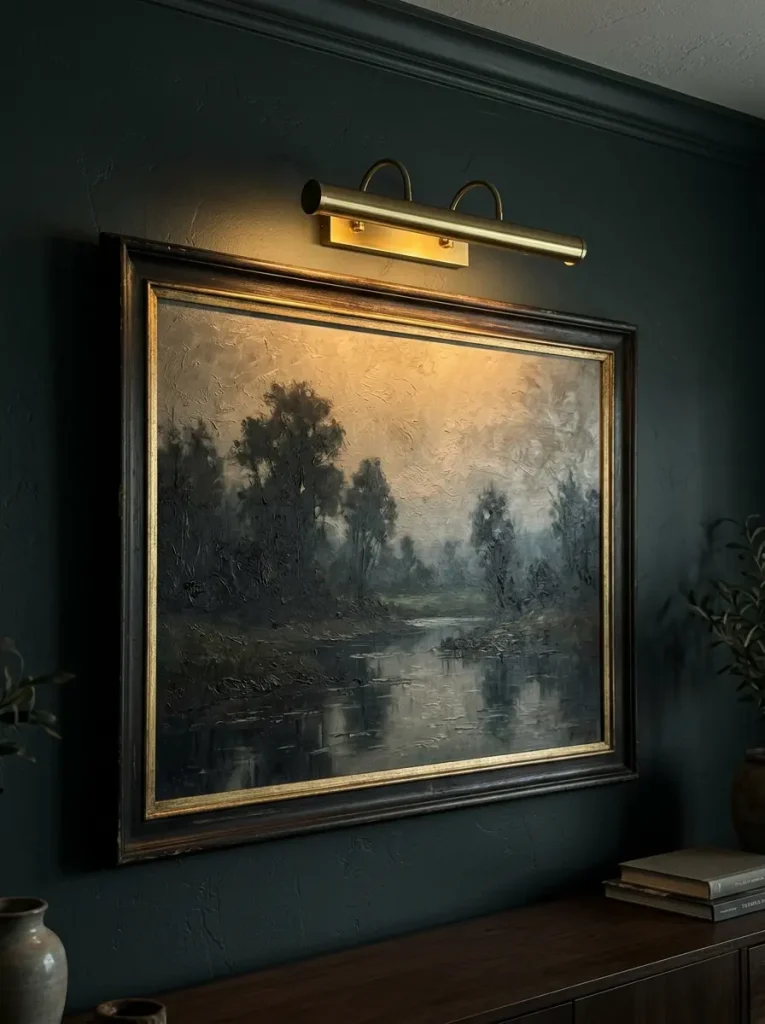
Most living rooms use normal ceiling lights. This treats every wall the same. But art often sits in the dark.
A simple picture light or a floor lamp can change everything. You do not need a full gallery lighting setup. Just point some light at the art.
Do not rely on heavy adhesive strips for heavy frames. They will fail. For anything over a few pounds, use a small drywall anchor. Most leases allow a few small nail holes as long as you patch them before you move out.
Where to Find Original Art

You do not need a gallery budget to buy original art. Look at university art programs. Students often sell work at the end of the term.
Estate sales and local auctions are also great places.
You can often find paintings for less than a cheap store-bought print. Online platforms for new artists are another good choice.
Framing Decisions
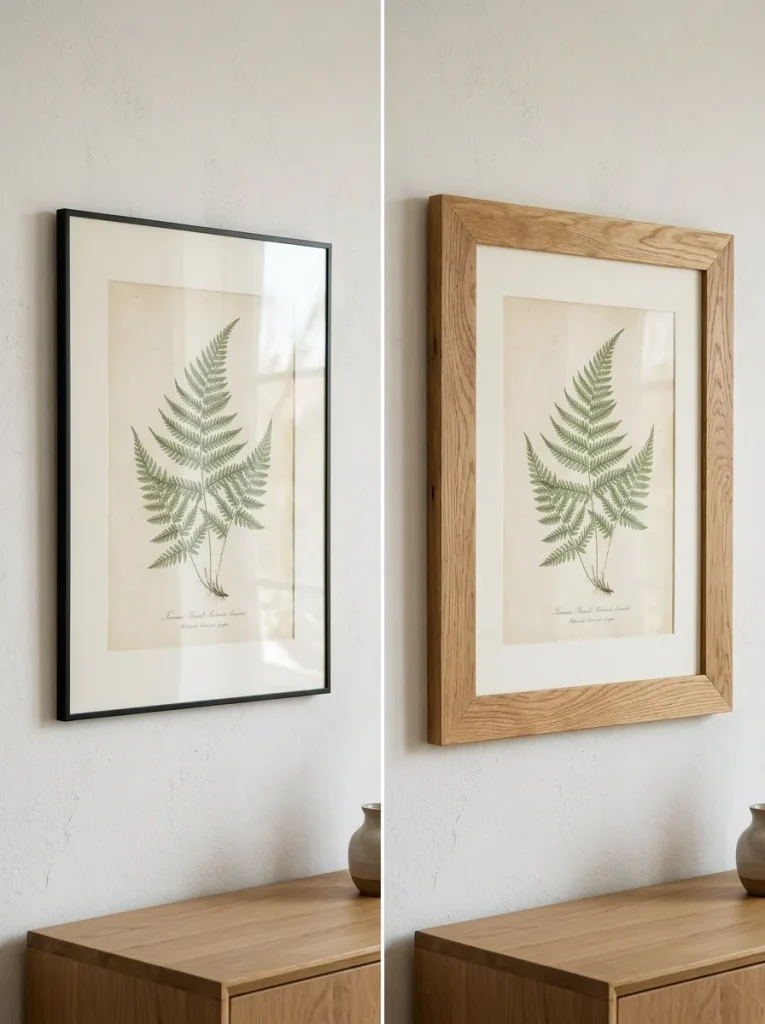
The frame changes everything. The same print in a thin black frame looks totally different than in a thick wood frame.
Frame choice is part of the design. A consistent frame style across the room makes the space feel pulled together.
Rotating Art Seasonally
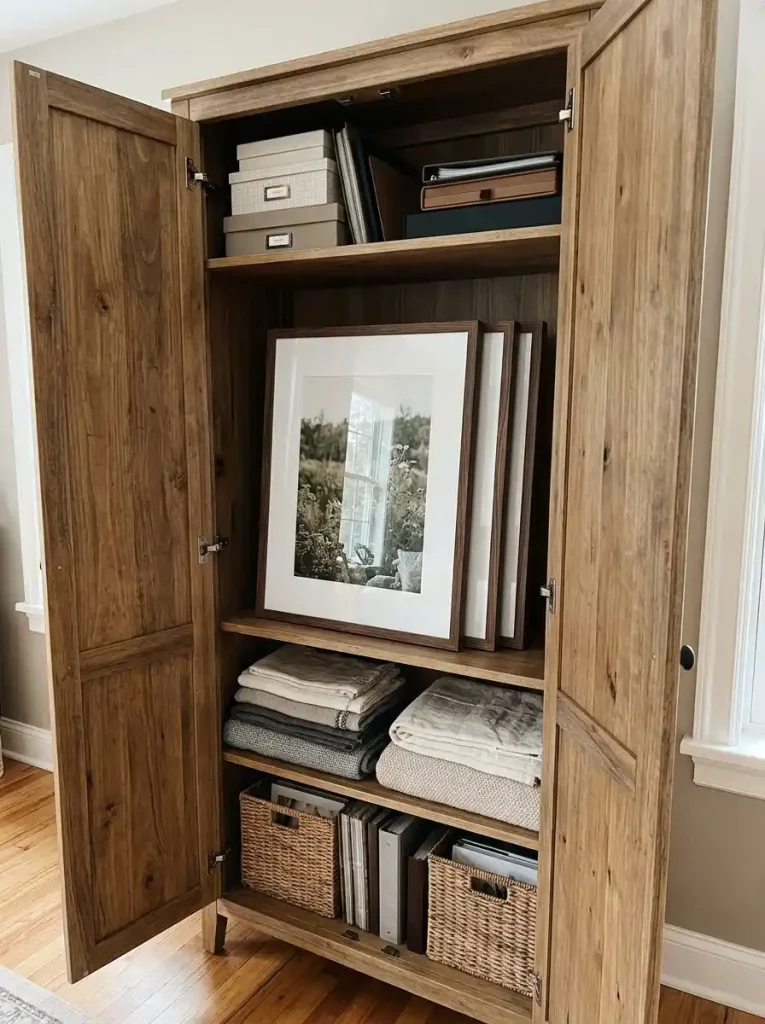
Swapping art with the seasons can feel gimmicky. A better idea is to keep a small stock of art that shares the same frame size.
Swap them out a few times a year. The wall changes, but it never looks like you are trying too hard to decorate for a holiday.
Textile and Woven Hangings
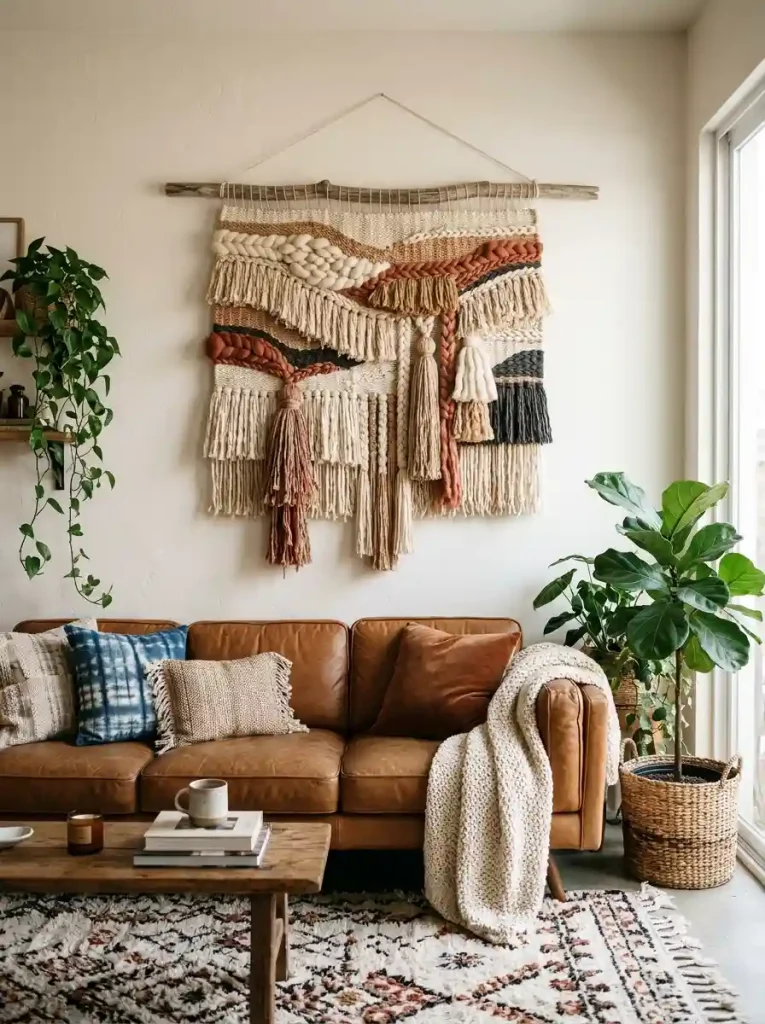
Woven pieces soften a room. They actually absorb sound, which is great for rooms with hard floors and high ceilings.
They also feel warmer and more personal than framed prints. This is why they are so popular in cozy, lived-in homes.
Letting Children’s Art Share the Wall
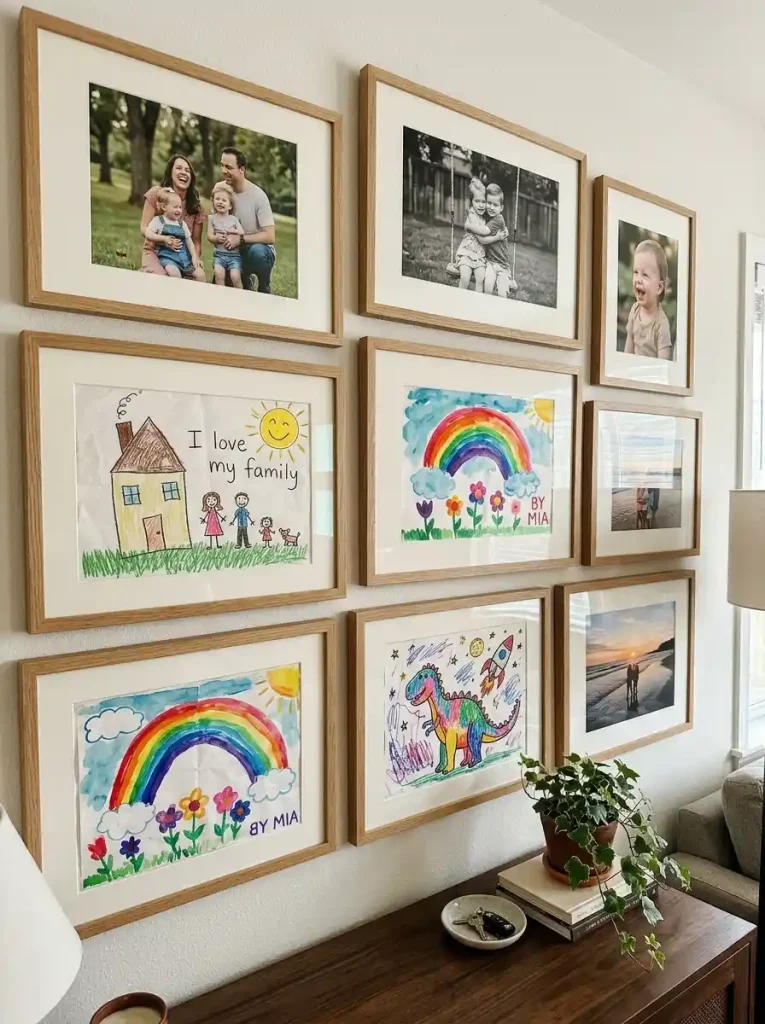
Kids’ art often gets stuck on the fridge. It rarely gets framed nicely. This makes a room feel split between real art and kid art.
Frame their best drawings in the same quality frames you use for your own art.
It shows you value their work. These pieces often become the most cherished items in the house.
The Danger of Matching Art to Your Sofa
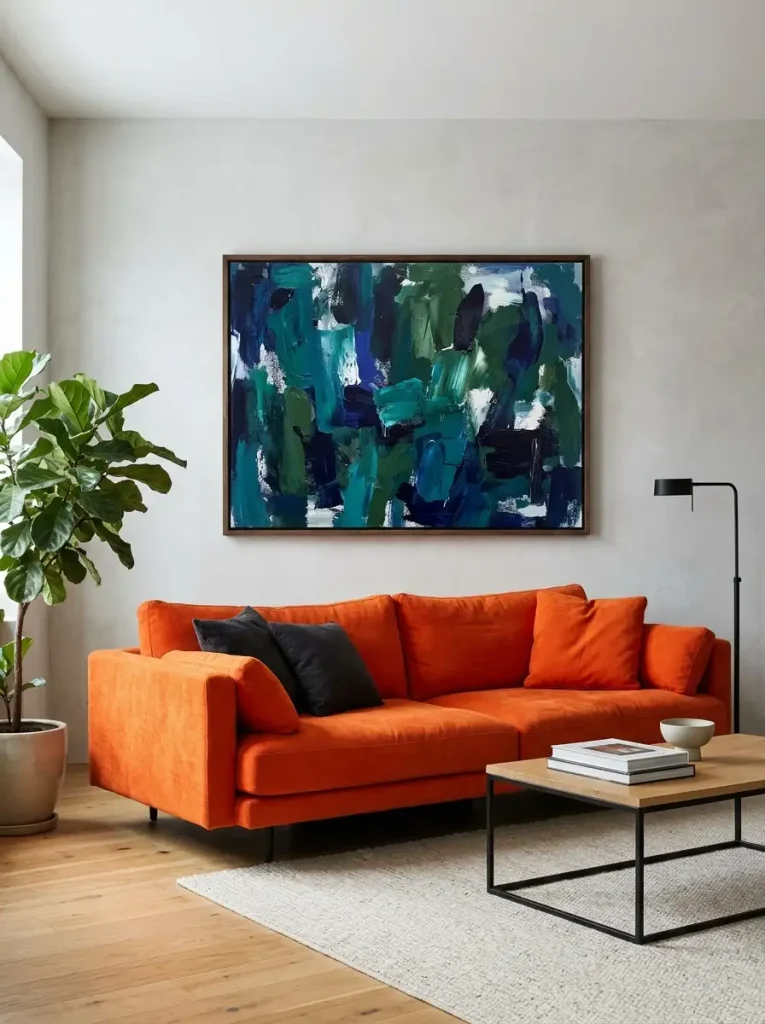
This is the biggest regret people have. Art chosen just to match a sofa will look dated when you buy a new sofa.
Art picked on its own terms will survive every furniture change. Let the art stand alone.
When to Leave a Wall Alone
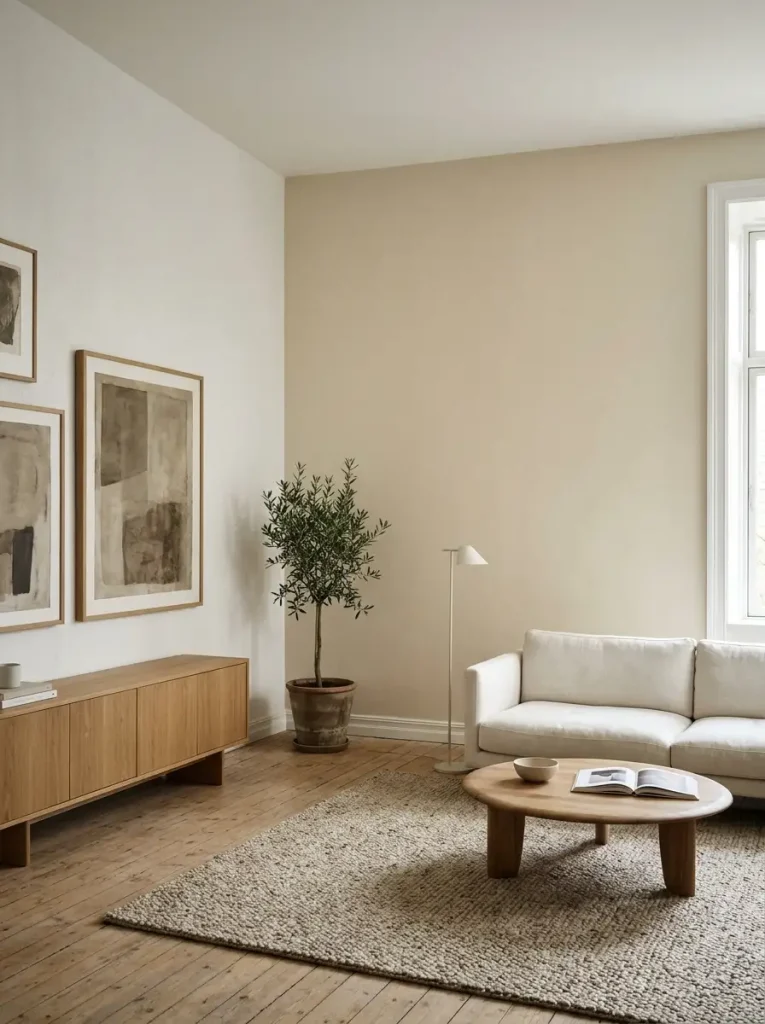
Not every wall needs art. This is the most ignored advice in design. A bare wall gives the eye a place to rest.
Before you fill that last empty space, sit with the room for a week.
Ask yourself honestly if it needs filling. Sometimes the empty space is exactly what the room needs.
Conclusion
Decorating a living room wall does not have to be stressful. You just need to make a plan before you buy anything.
Start with painter’s tape to find the right size. Hang the art at a comfortable sitting height. Mix your frames and textures so the wall feels collected over time.
Most importantly, choose art that you truly love. Do not just buy it to match your sofa. A room that reflects your personal taste will always feel more welcoming. Take your time, leave some empty space, and enjoy the process of making the room your own.
Frequently Asked Questions
What is the best height to hang living room art?
Hang the center of the art at the eye level of someone sitting down. This is usually between 60 and 66 inches from the floor. This is slightly higher than museum rules, but it feels much better when you are relaxing on the couch.
How do I know what size art to buy for my sofa?
A good rule is to pick art that covers about two-thirds of the width of your sofa. If you are unsure, use blue painter’s tape to map out the size on your wall first. This helps you see how the art will look before you spend any money.
Can I mix different types of art on one wall?
Yes, mixing mediums looks great. Try hanging a framed painting next to a woven textile or a ceramic piece. Just keep one thing the same, like the frame color or the overall color theme, so the wall still looks tied together.
What if I rent my home and cannot make big holes?
You can use picture ledges, which require just a few screws. If you use adhesive strips, make sure to follow the weight limits carefully. For heavy frames, it is safer to use a small nail and patch the hole before you move out.
Does my art need to match my furniture?
No. In fact, art that perfectly matches your sofa can look boring or dated very quickly. It is better to pick art that you love on its own. You can tie the room together by matching small accent colors found in your rugs or pillows.
Do not feel pressured to fill every empty space. A bare wall gives the eye a place to rest. If a wall feels done with just one piece, leave it that way. Less is often more when it comes to home design.