
Are you drowning in clothes upstairs while your basement sits underutilized? Does your master bedroom closet overflow despite purging regularly, or do you dream of dedicated wardrobe space where every item has its place?
Basement walk in closets solve critical storage shortages by transforming unused square footage into organized, accessible clothing storage that rivals or surpasses upstairs closets in capacity and functionality.
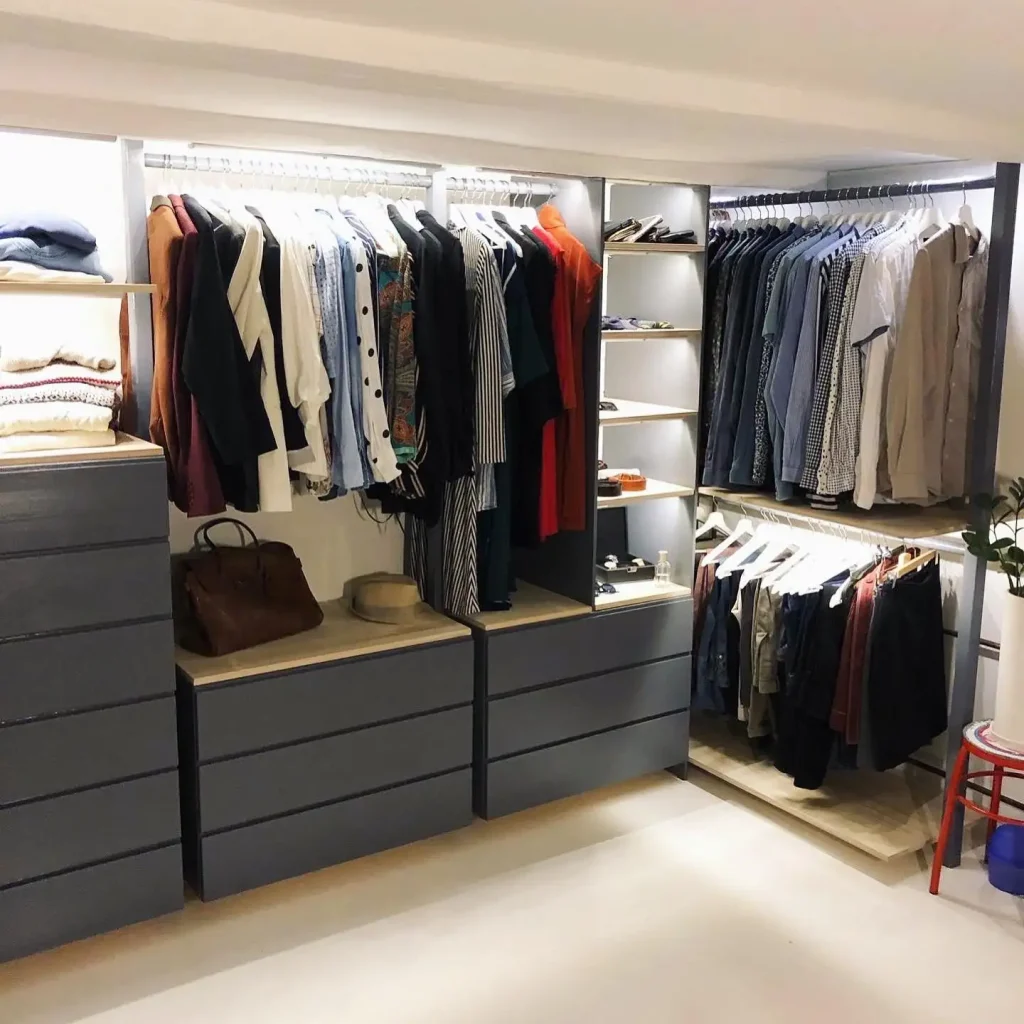
Source: @redesign_diy
Converting 50-150 square feet of basement space into walk-in closets costs $2,000-$10,000 depending on finishes, built-in systems, and existing conditions—substantially less than home additions while delivering immediate organizational benefits.
These dedicated wardrobe spaces work beautifully for seasonal storage, extensive shoe or handbag collections, formal wear requiring protection, or simply overflow from inadequate bedroom closets.

Source: @christielewisinteriors
With proper moisture control, adequate lighting, and thoughtful organization systems, basement walk-in closets become luxurious dressing rooms that make getting ready each morning a pleasure rather than a frustrating search through crammed, chaotic spaces.
Why Choose a Basement Walk-In Closet?
Massive Storage Capacity
Basement walk-in closets provide substantially more space than typical bedroom closets measuring just 4×6 feet. Converting even modest 8×10 basement areas creates 80 square feet of dedicated wardrobe storage—nearly triple standard closet capacity.
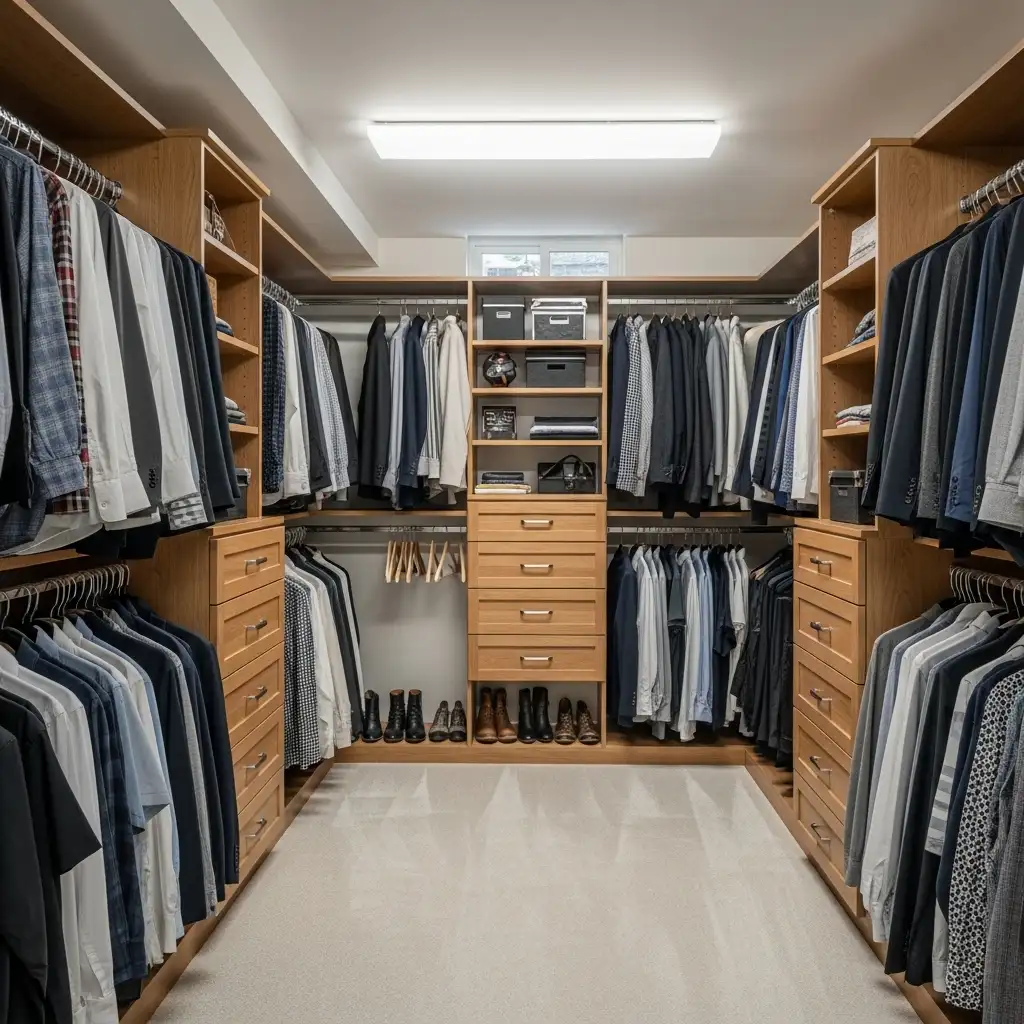
This expanded space accommodates extensive wardrobes, seasonal rotation, specialty items like formal wear or sports equipment, and organized storage impossible in cramped bedroom closets where everything competes for limited hanging and shelf space.
Frees Bedroom Space
Moving clothing storage to basements allows repurposing bedroom closets as reading nooks, home offices, nurseries, or simply leaving them for daily-use items while relocating seasonal and occasional-wear clothing below. Read more about basement bedroom to save space.

The freed bedroom square footage creates more livable, less cluttered sleeping spaces focusing on rest rather than serving as overcrowded dressing rooms straining inadequate original closets never designed for modern wardrobes.
Climate-Controlled Storage
Properly finished basement closets with adequate climate control, dehumidification, and moisture barriers protect valuable clothing better than attic storage where temperature extremes and humidity fluctuations damage fabrics. Check other ideas relevant to basement and kitchen combo.
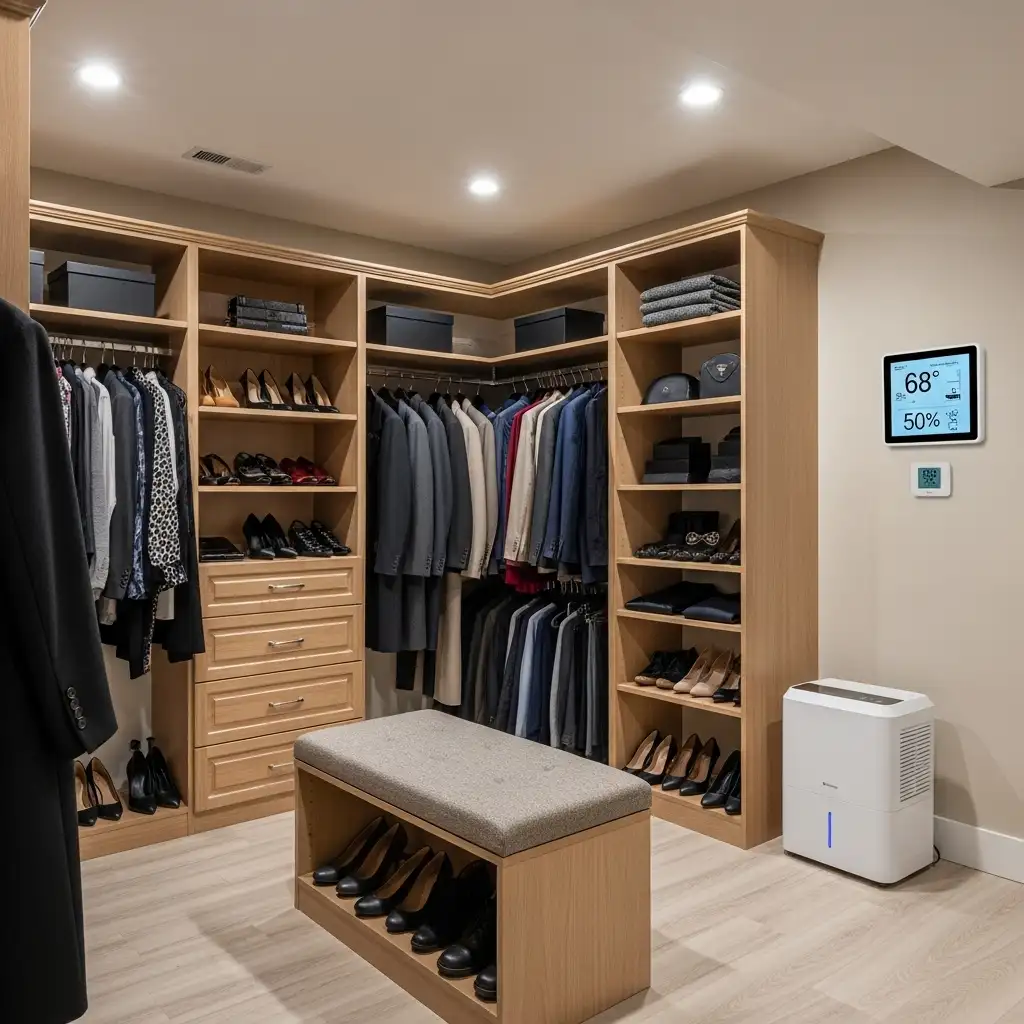
The stable environment particularly benefits delicate items including wedding dresses, fur coats, leather goods, and vintage clothing requiring consistent conditions preventing deterioration that unconditioned storage spaces accelerate through environmental stress.
Cost-Effective Solution
Creating basement walk-in closets costs $2,000-$10,000 versus $15,000-$40,000 for bedroom additions providing equivalent space. The underground location eliminates expensive foundation work, roofing, and exterior finishes while utilizing existing square footage already enclosed and partially finished. Check out our finished basement guide to learn how to save budget with best finishing.
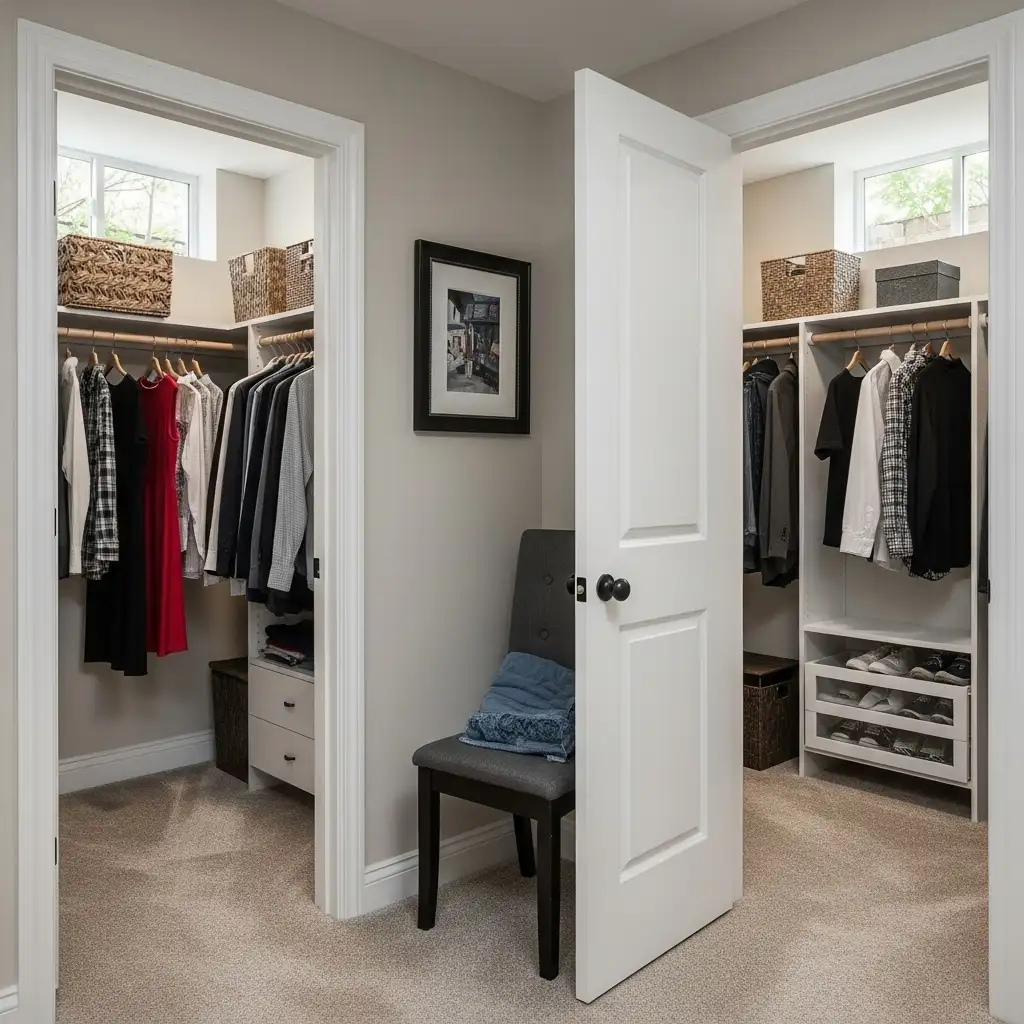
This efficient approach maximizes storage capacity per dollar invested, making it smart financial choice for homeowners needing space without major construction budgets.
Design and Organization Systems
Custom Built-In Systems
Install professional closet systems from companies like California Closets, Closet Factory, or custom carpenters creating tailored storage maximizing every inch. These permanent installations include adjustable shelving, multiple hanging rods at various heights, drawer units, shoe racks, and specialized storage for accessories, bags, and jewelry.
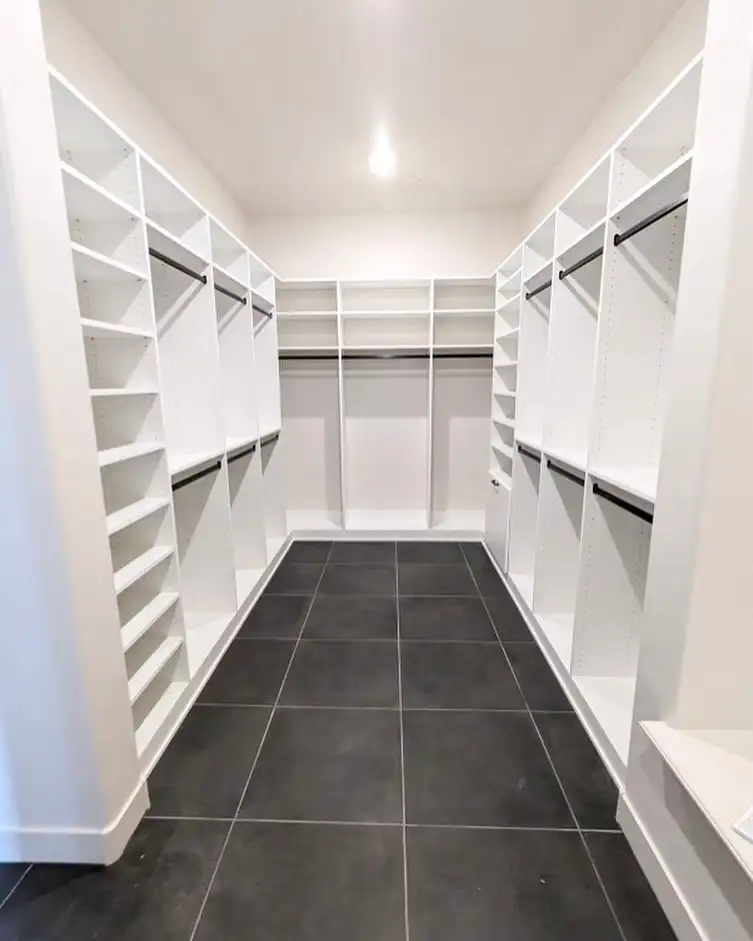
Budget $2,000-$8,000 for quality custom systems that transform empty rooms into organized wardrobe spaces rivaling luxury retail boutiques. Attach basement living room with the closet room for modern look.
IKEA PAX Systems
Create budget-friendly walk-in closets using IKEA’s modular PAX wardrobe systems offering customization at fraction of custom costs. Mix and match components including hanging rods, shelves, drawers, and specialized organizers creating personalized storage meeting specific wardrobe needs.

Budget $800-$3,000 for complete IKEA installations providing excellent functionality despite affordable pricing. For IKEA inspiration, visit our ikea closet ideas affordable organization solution guide.
Combination Storage Approach
Blend wall-mounted systems with freestanding furniture including dressers, shoe racks, and storage ottomans creating flexible, budget-conscious organizations. This approach allows gradual investment building complete closets over time rather than requiring substantial upfront costs that strain budgets.

The mixed storage adapts easily as wardrobe needs evolve without replacing entire systems that permanent built-ins would demand.
Vertical Maximization
Install floor-to-ceiling storage utilizing basement’s full height through tall shelving, double-hang rods for shirts and pants, and upper storage for seasonal or infrequently-used items.
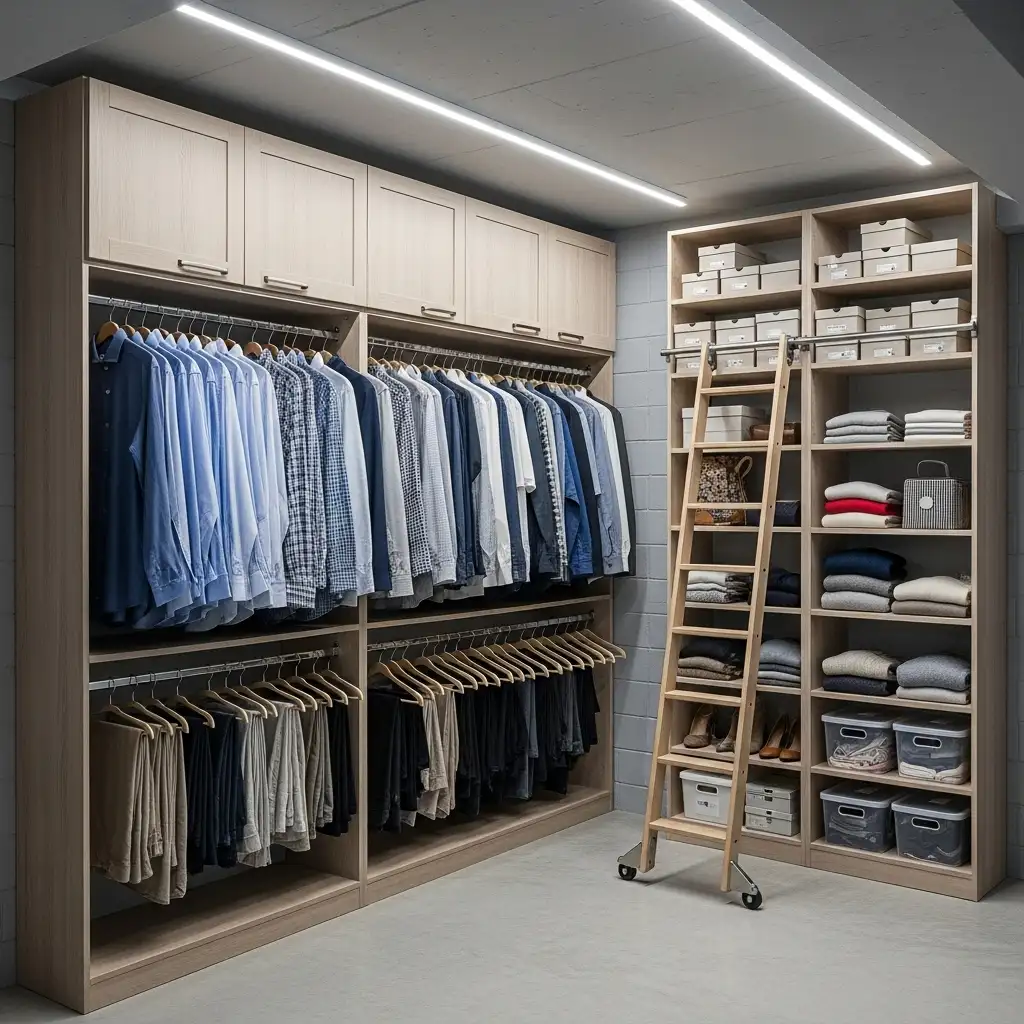
The vertical approach maximizes capacity in smaller footprints, crucial when converting limited basement areas into functional walk-in closets that must accommodate substantial wardrobes despite compact dimensions.
Essential Closet Features
Multiple Hanging Heights
Include various hanging rod heights accommodating long dresses and coats (60+ inches), standard shirts and pants (40-50 inches), and double-hanging sections for shirts over pants maximizing vertical space.
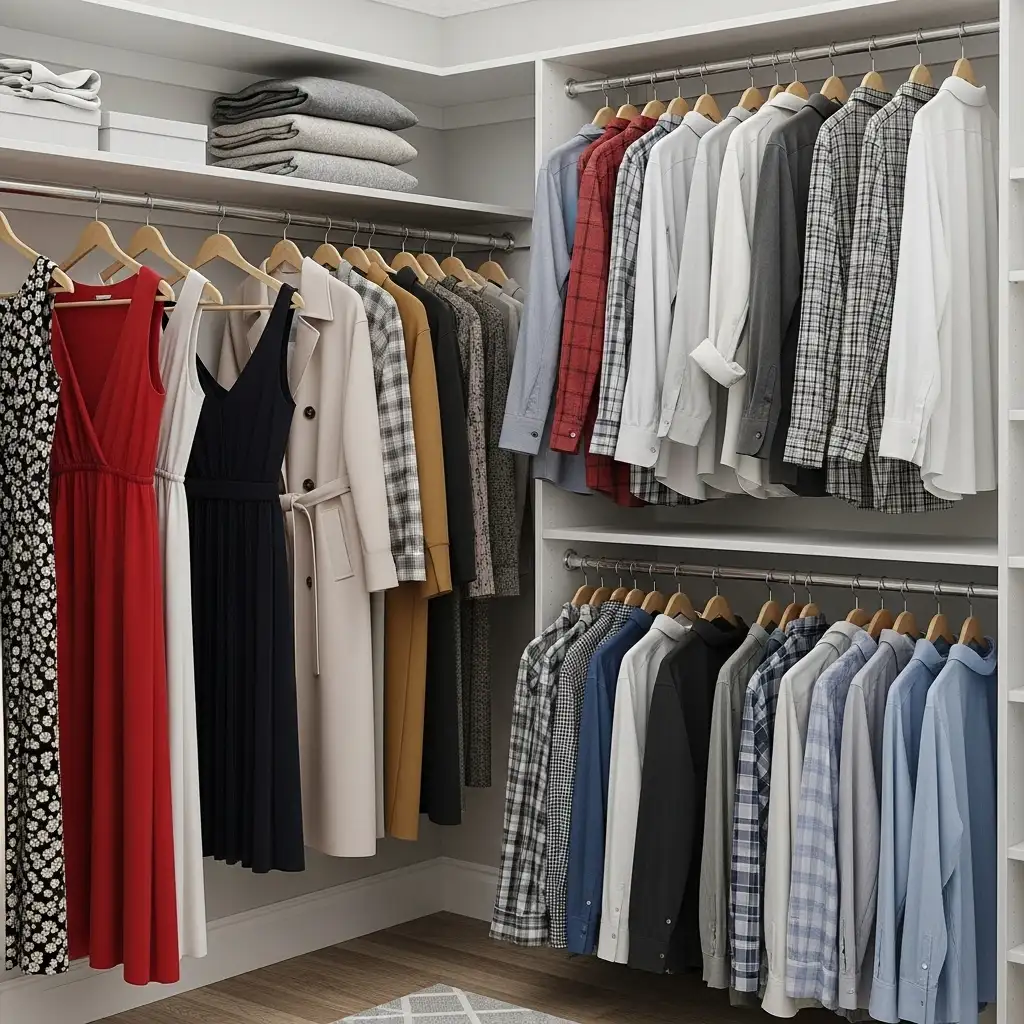
The varied heights ensure every garment type has appropriate storage preventing dragging hems or wasted space above shorter items that don’t require full-height hanging clearance.
Adequate Shelving
Install adjustable shelves at 12-18 inch intervals storing folded sweaters, jeans, purses, and storage boxes. Include deeper shelves (14-16 inches) for bulky items and shallower options (10-12 inches) for shoes or accessories.
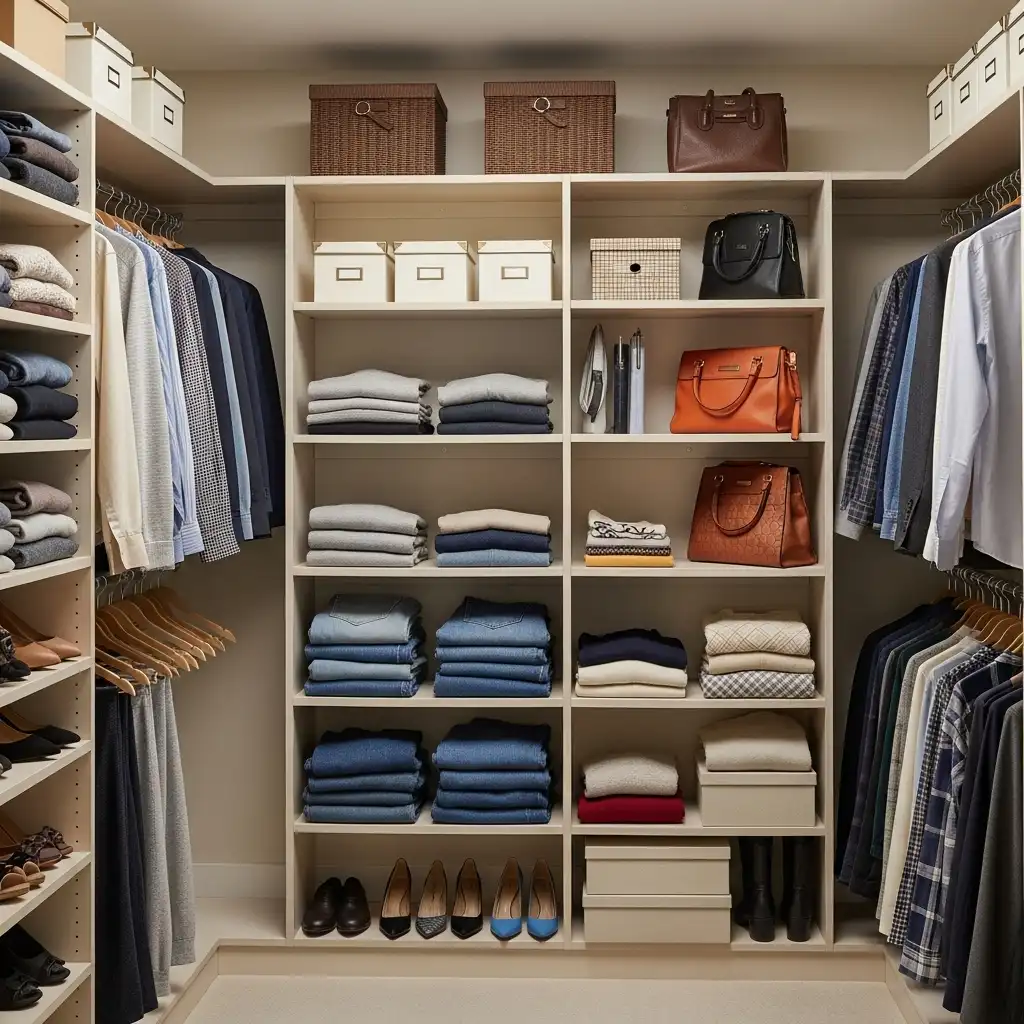
The flexible shelving adapts as storage needs change through seasons, lifestyle shifts, or wardrobe evolution without requiring complete system overhauls.
Drawer Storage
Incorporate drawer units organizing undergarments, jewelry, accessories, and folded items requiring protection from dust. Choose soft-close mechanisms preventing slamming, and include drawer dividers maintaining organization within compartments.
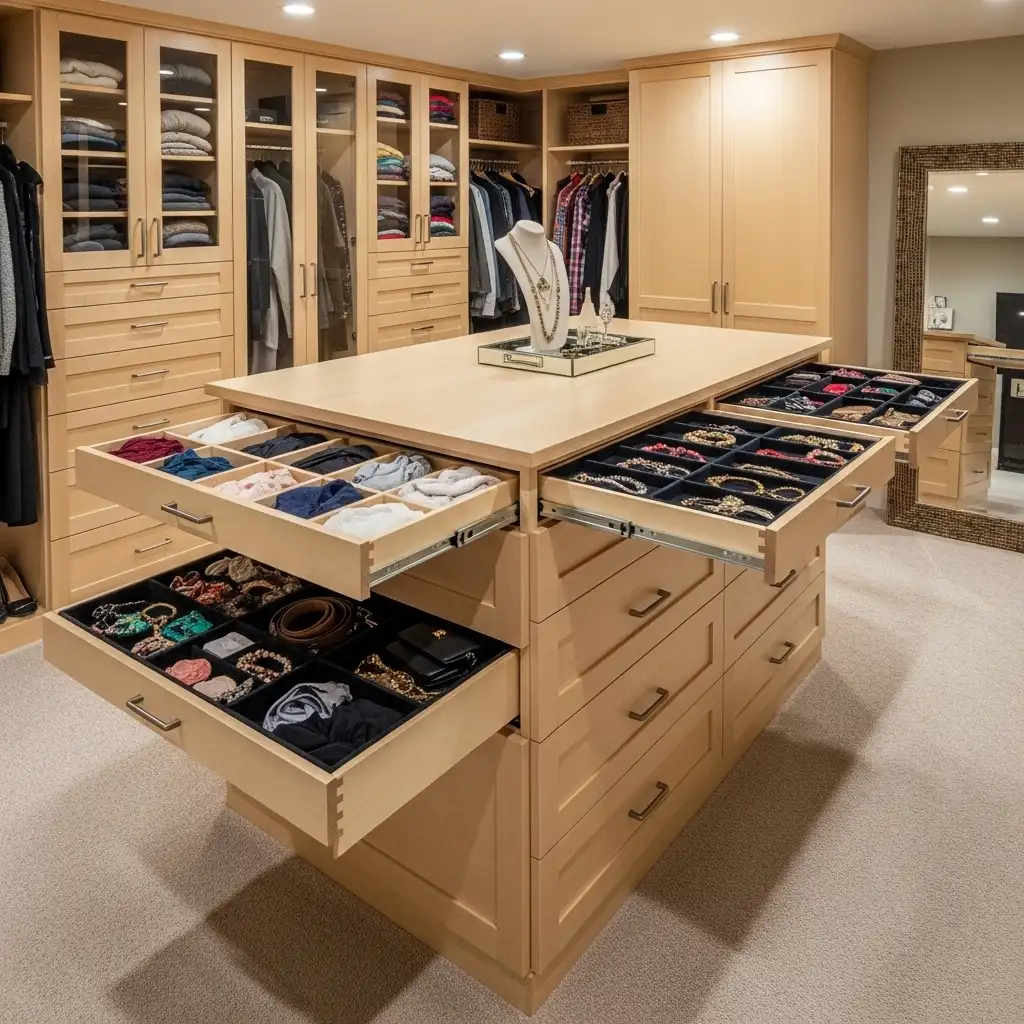
The enclosed storage protects delicate items while keeping small accessories from becoming disorganized piles that make finding specific pieces frustrating during rushed morning routines.
Specialty Storage Solutions
Add pull-out pant racks, tie and belt organizers, jewelry trays, shoe racks or cubbies, pull-down hanging rods for high storage, and valet hooks for outfit planning.
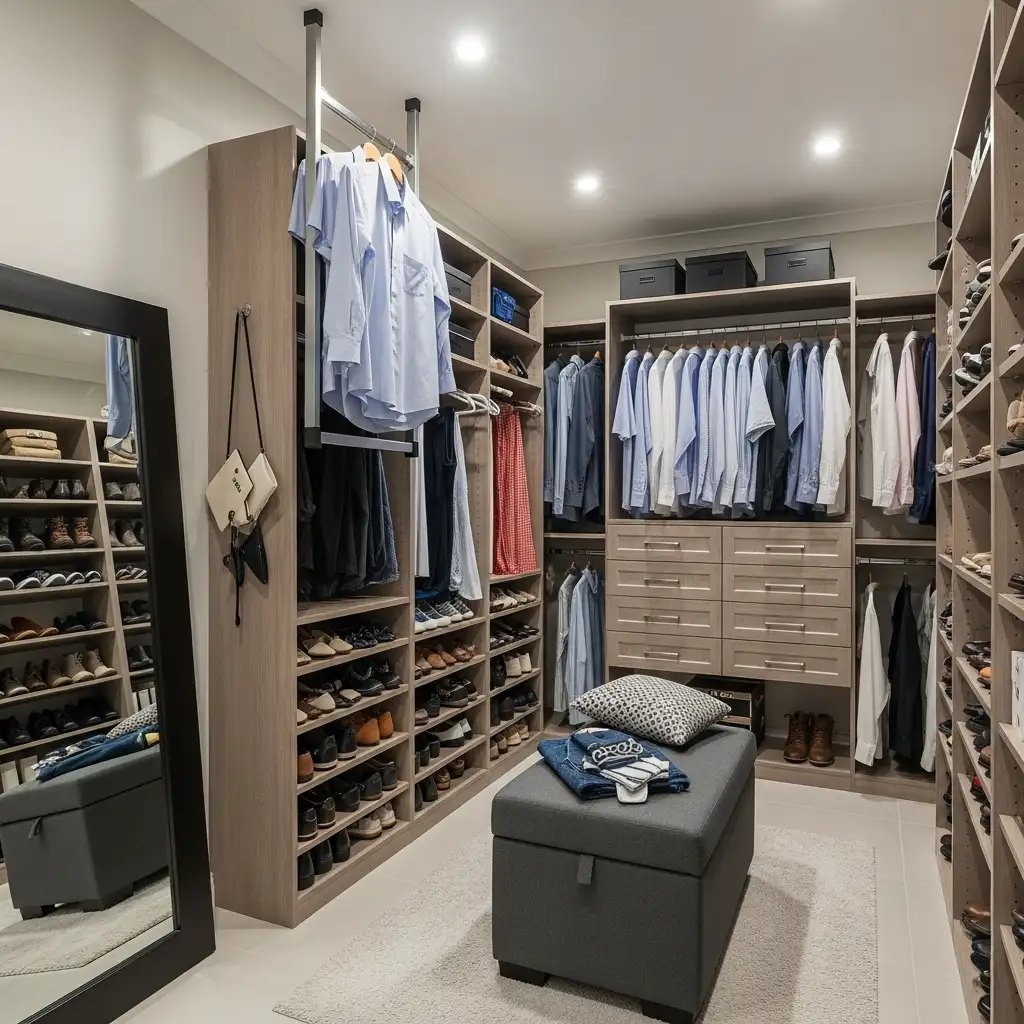
These specialized components transform basic closets into highly functional dressing rooms accommodating every wardrobe element through purposeful storage that prevents damage while maintaining accessibility.
Finishing Touches
Flooring Selection
Choose moisture-resistant flooring including luxury vinyl plank, tile, or sealed concrete rather than carpet that can harbor mold in humid basement environments.

The hard surfaces clean easily, resist moisture damage, and maintain appearances despite heavy foot traffic during daily wardrobe selection. Include area rugs for warmth and comfort underfoot without permanent carpet installations that moisture threatens in below-grade spaces.
Wall Treatments
Paint walls in light, neutral colors reflecting maximum light while creating calm, spa-like atmospheres. Consider moisture-resistant paint specifically formulated for basements, and include proper vapor barriers behind finishes preventing moisture infiltration.
Avoid wallpaper that peels in humid conditions unless using vinyl versions specifically rated for bathroom or basement applications withstanding elevated moisture levels.
Full-Length Mirrors
Install large mirrors reflecting light while providing essential functionality for outfit checking before leaving closets. Position mirrors where they don’t create awkward sightlines to basement entrances, and secure properly to walls preventing dangerous falls.
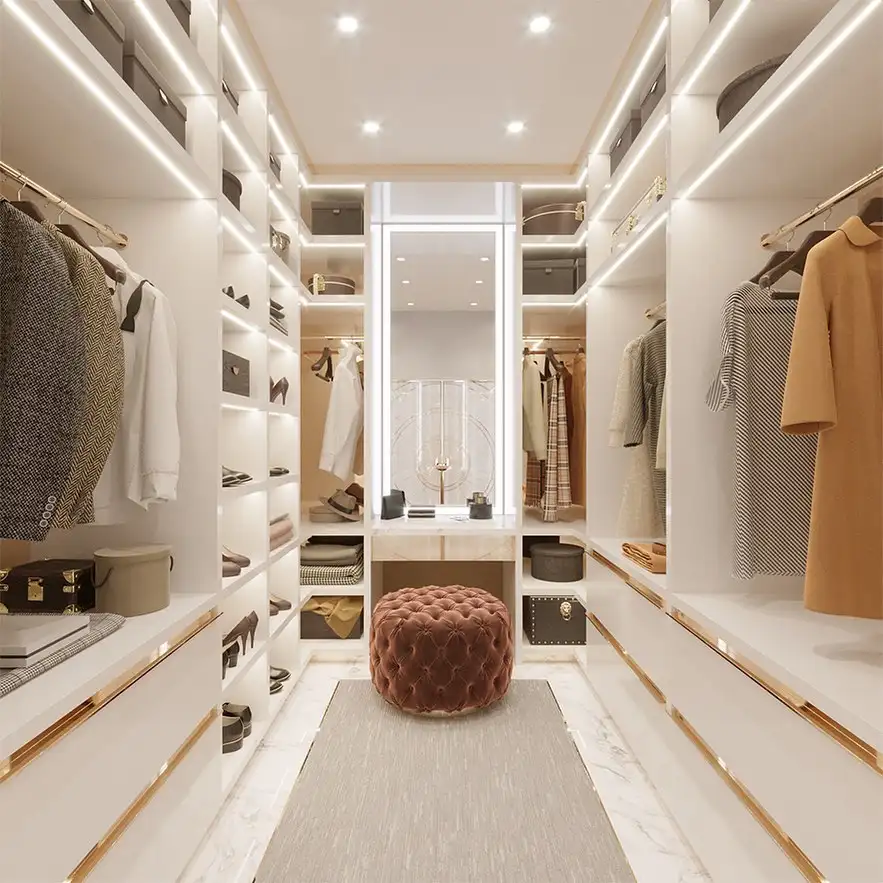
The mirrors make small closets feel larger through reflection while serving crucial practical purposes during daily dressing routines.
Seating Areas
Include benches, ottomans, or small chairs providing comfortable spots for putting on shoes, folding clothes, or simply contemplating outfit choices. Choose moisture-resistant upholstery or wipeable surfaces appropriate for basement humidity levels.
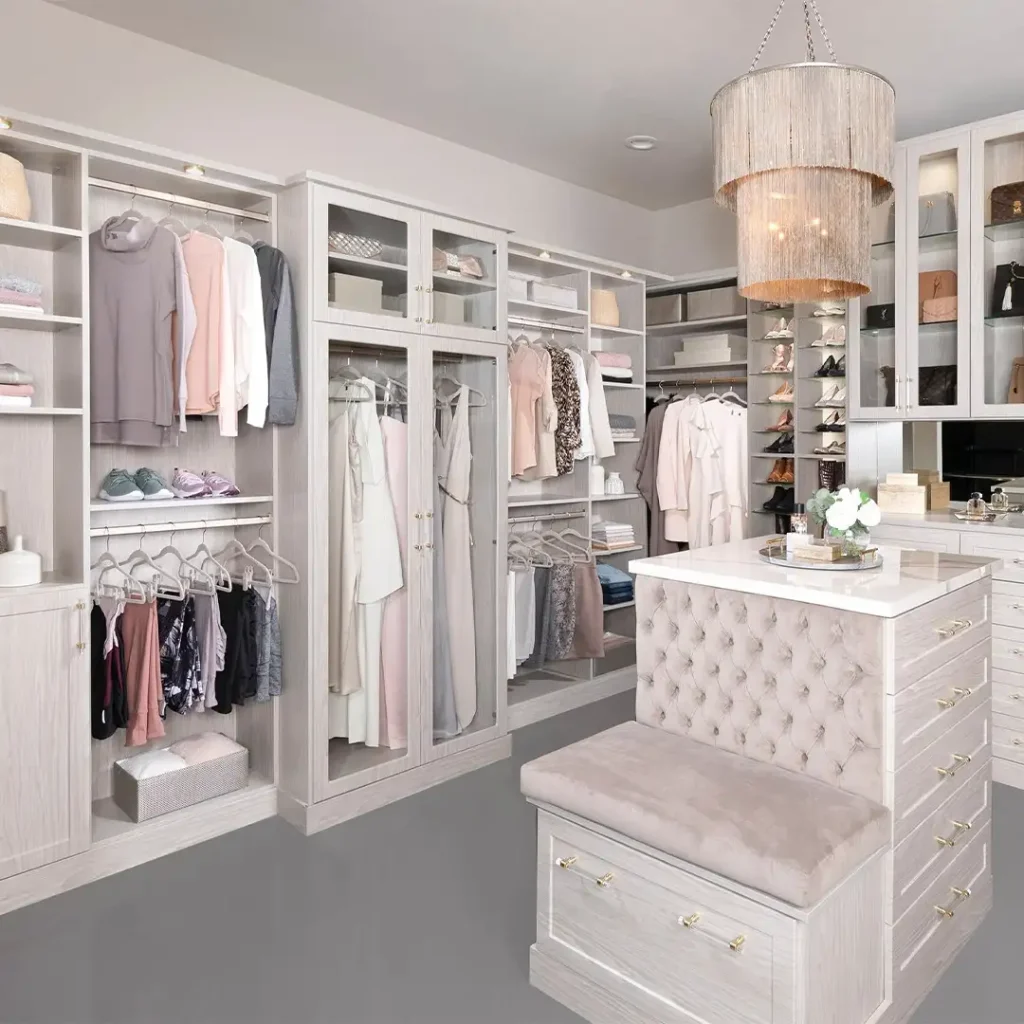
The seating transforms closets from pure storage into comfortable dressing rooms where you can actually spend time organizing and selecting clothes rather than hastily grabbing items and fleeing cramped spaces.
Essential Planning Considerations
Location Selection
Choose basement areas offering adequate ceiling height (minimum 7 feet), proximity to existing lighting and electrical, and distance from moisture-prone zones like sump pumps or exterior walls prone to seepage. Consider traffic flow—closets near basement stairs provide convenient access without traversing entire basements during daily use. Avoid positioning closets under bathrooms or laundry rooms where plumbing leaks could destroy valuable clothing despite proper waterproofing attempts.
Size Requirements
Plan minimum 5×7 feet (35 sq ft) for basic walk-in functionality, though 8×10 feet (80 sq ft) or larger creates comfortable dressing room experiences. Include adequate turning radius allowing door operation and dressing without feeling cramped. Larger closets accommodate islands, seating areas, or full-length mirrors enhancing functionality beyond simple storage. For small space strategies, see our small bedroom storage ideas guide.
Moisture Control Requirements
Successful basement closets require comprehensive moisture management including vapor barriers on walls and floors, dehumidifiers maintaining 30-50% humidity, proper drainage preventing water infiltration, and regular monitoring ensuring conditions remain suitable for fabric storage. Budget $1,000-$3,000 for thorough moisture control—this investment protects valuable wardrobes while preventing mold that ruins clothing and creates health hazards in enclosed spaces.
Lighting and Electrical
Install abundant lighting including overhead fixtures, LED closet rods illuminating hanging clothes, and accent lighting in shelving zones creating bright, welcoming spaces. Plan adequate electrical outlets supporting dehumidifiers, steamers, and charging stations for devices. Include motion-sensor switches for hands-free operation when arms are full of clothing. Proper lighting transforms dark basement corners into inviting dressing rooms where you can actually see colors and details when selecting outfits.
Climate Control and Maintenance
Dehumidification
Run dedicated dehumidifiers maintaining 30-50% relative humidity protecting fabrics from mold, mildew, and musty odors. Empty collection tanks regularly or connect to floor drains for automatic drainage. Monitor humidity with hygrometers, addressing increases immediately before they damage valuable wardrobes. The consistent dehumidification proves essential for basement closet success regardless of initial waterproofing quality.
Air Circulation
Ensure adequate ventilation through HVAC extensions, return air vents, or fans preventing stale, musty conditions. Good airflow helps manage humidity while maintaining fresh atmospheres. Don’t seal closets completely—they need air exchange preventing isolation that can lead to moisture accumulation and poor conditions affecting both clothing and health through mold growth.
Regular Monitoring
Check quarterly for water infiltration, foundation cracks, musty odors, or moisture issues requiring attention before minor problems become clothing-destroying disasters. Inspect dehumidifiers ensuring proper operation, verify adequate airflow, and address any concerns immediately. The proactive maintenance prevents catastrophic failures destroying entire wardrobes and requiring expensive remediation or complete closet rebuilding after moisture damage.
Pest Prevention
Seal any cracks or openings preventing insects and rodents from accessing closets where they can damage fabrics. Use cedar blocks, lavender sachets, or other natural deterrents rather than harsh chemicals near clothing. Store seasonal items in sealed containers providing additional protection against pests that might infiltrate even well-maintained basement spaces.
Budget Breakdown
Basic Conversion ($2,000-$4,000)
Simple closets include basic framing, drywall, paint, vinyl flooring, wire shelving systems, standard lighting, and minimal built-ins creating functional storage at minimum investment. This budget approach suits seasonal overflow or secondary storage where luxury finishes seem unnecessary for clothes you wear infrequently.
Mid-Range Closet ($4,000-$7,000)
Quality installations include moisture-resistant finishes, better lighting with dimmer controls, modular closet systems like IKEA PAX or similar, improved flooring, full-length mirrors, and adequate climate control. These comfortable closets provide organized, attractive storage suitable for regular use housing substantial portions of active wardrobes.
Luxury Walk-In ($7,000-$15,000+)
High-end basement closets feature custom built-ins, premium finishes, designer lighting, quality flooring, seating areas, islands or dressing tables, specialty storage solutions, and show-quality aesthetics. These investments create boutique-like dressing rooms that make organization and daily dressing genuine pleasures rather than necessary chores.
Common Mistakes to Avoid
Inadequate Moisture Control
Proceeding without proper waterproofing guarantees mold, mildew, and destroyed clothing despite beautiful organization systems. Always address moisture thoroughly before investing in finishes and wardrobes that water will destroy. The unsexy waterproofing investment protects everything else while ensuring healthy environments for fabric storage.
Insufficient Lighting
Underestimating lighting needs creates dark closets where you can’t see colors or details when selecting outfits. Plan abundant lighting exceeding upstairs closet requirements, compensating for limited natural light. The extra investment transforms basement closets from caves into inviting spaces where you can actually function during morning routines.
Poor Ventilation
Failing to provide adequate air circulation creates stuffy, musty conditions damaging fabrics. Proper climate control and airflow prove essential for closet functionality—spaces that don’t maintain comfortable conditions shouldn’t house valuable wardrobes regardless of organizational perfection.
Ignoring Access Convenience
Positioning closets in remote basement corners makes daily use impractical, defeating their purpose. Choose locations near basement entrances allowing quick access without traversing entire spaces. The convenient placement encourages regular use rather than creating beautiful storage that’s too inconvenient for daily wardrobe needs.
Frequently Asked Questions
Is it OK to put a closet in a basement?
Yes, basement closets work beautifully when properly executed with adequate moisture control, climate conditioning, lighting, and ventilation. The stable temperatures and controlled humidity actually protect clothing better than unconditioned attic storage where extremes damage fabrics. Ensure comprehensive waterproofing and dehumidification making basements perfectly suitable for valuable wardrobe storage when environmental conditions are properly managed.
How much does it cost to build a walk-in closet in a basement?
Basement walk-in closets cost $2,000-$4,000 for basic conversions, $4,000-$7,000 for mid-range installations, and $7,000-$15,000+ for luxury dressing rooms. Costs depend on size, organization systems, finishes, and whether space requires framing or uses existing finished areas. Custom built-ins increase costs while DIY installations using modular systems reduce expenses substantially without sacrificing functionality.
How do you keep clothes fresh in a basement closet?
Maintain 30-50% humidity through dehumidifiers, ensure adequate air circulation through ventilation, use cedar blocks or lavender sachets as natural fresheners, store seasonal items in breathable garment bags, and inspect regularly for moisture or pest issues. Proper climate control and airflow prove essential preventing musty odors and mildew that poorly ventilated basement closets develop despite initial freshness.
Can mold grow in a basement closet?
Yes, mold grows in any damp environment including basement closets without proper moisture control. Prevent mold through comprehensive waterproofing, consistent dehumidification, adequate ventilation, and regular monitoring addressing issues immediately. Properly maintained basement closets remain mold-free indefinitely, but neglecting moisture management guarantees mold problems destroying clothing and creating health hazards requiring expensive remediation.
Conclusion: Unlock Hidden Storage Potential
Basement walk-in closets transform underutilized square footage into valuable wardrobe storage solving critical organization challenges while freeing bedroom space for better uses. The investment delivers immediate organizational benefits and long-term home value increases through expanded functional space that buyers appreciate and pay premiums for during home sales. Whether creating boutique-like dressing rooms or simple seasonal storage, thoughtful planning addressing moisture control, adequate lighting, and proper organization creates basement closets that serve beautifully for decades.
Start your basement closet project by assessing moisture conditions, establishing realistic budgets, planning layouts maximizing available space, and selecting organization systems matching your specific wardrobe needs. The transformation proves that valuable storage doesn’t require expensive additions when creative basement conversions deliver equal functionality at fractions of costs while solving real problems through strategic space utilization.
Ready to organize more spaces? Explore our guides including ikea mudroom ideas, bathroom closet organization ideas, craft room storage ideas, basement remodel guide, and home interior design ideas for complete organization inspiration. Transform your basement into the organized wardrobe space you’ve always wanted through strategic planning and quality execution that maximizes your home’s hidden storage potential.