
Ever feel like your basement stairwell is the forgotten child of your home? That dark, creaky descent that everyone dreads?
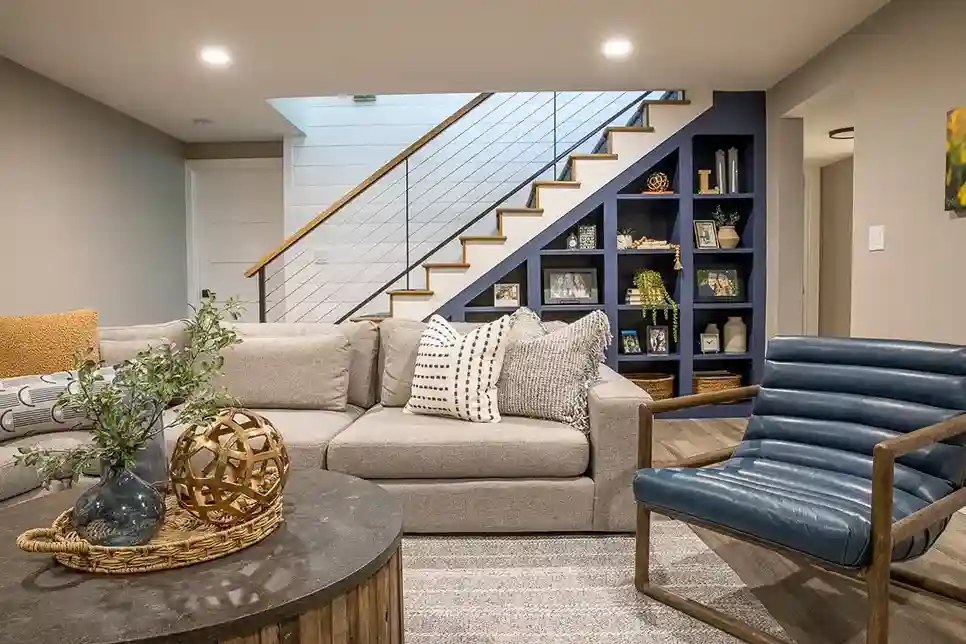
Source: @restyledesign
What if I told you this overlooked space could become one of your home’s most impressive features?
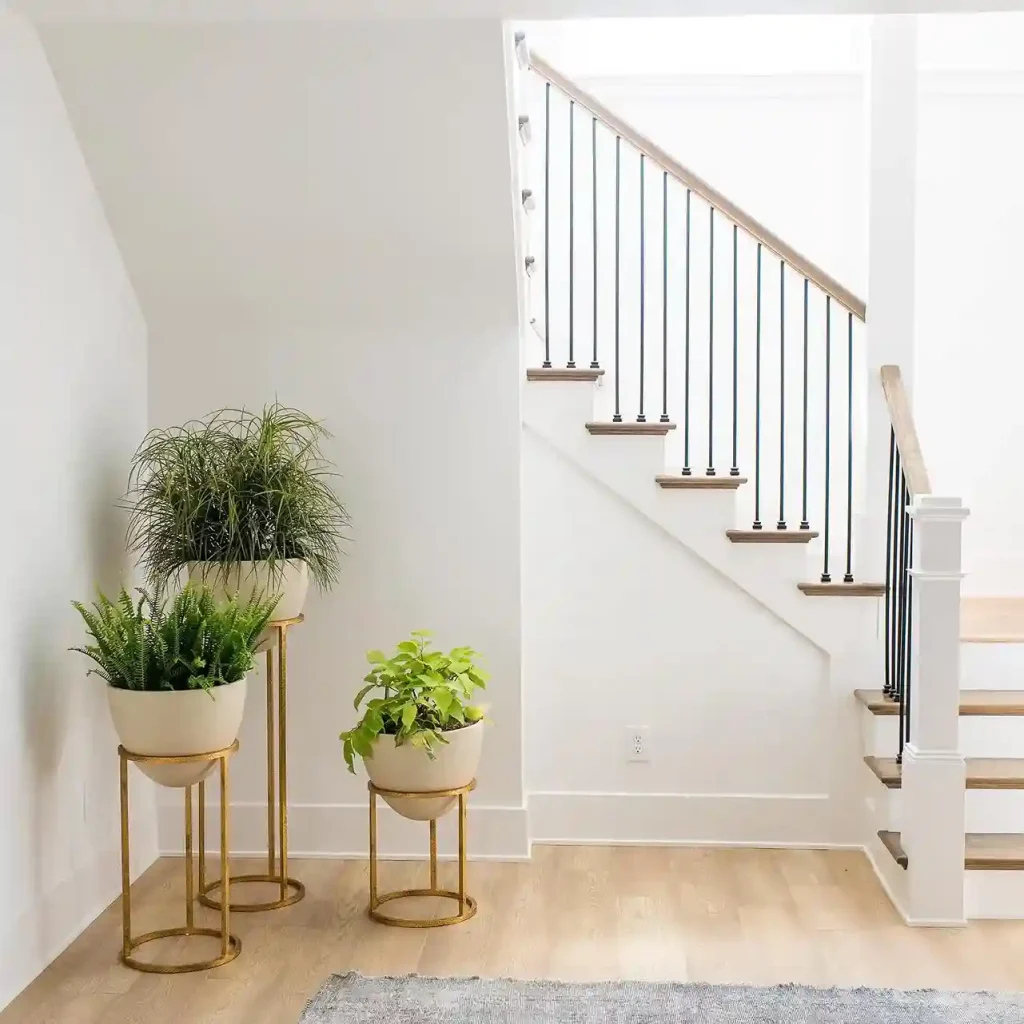
Source: @sarahshieldsphoto
Let’s transform that dungeon entrance into a design statement with basement stairwell designs.
Why Your Basement Stairwell Deserves Attention
Your stairwell is the first impression of your lower level. A well-designed descent sets expectations and seamlessly connects your living spaces.
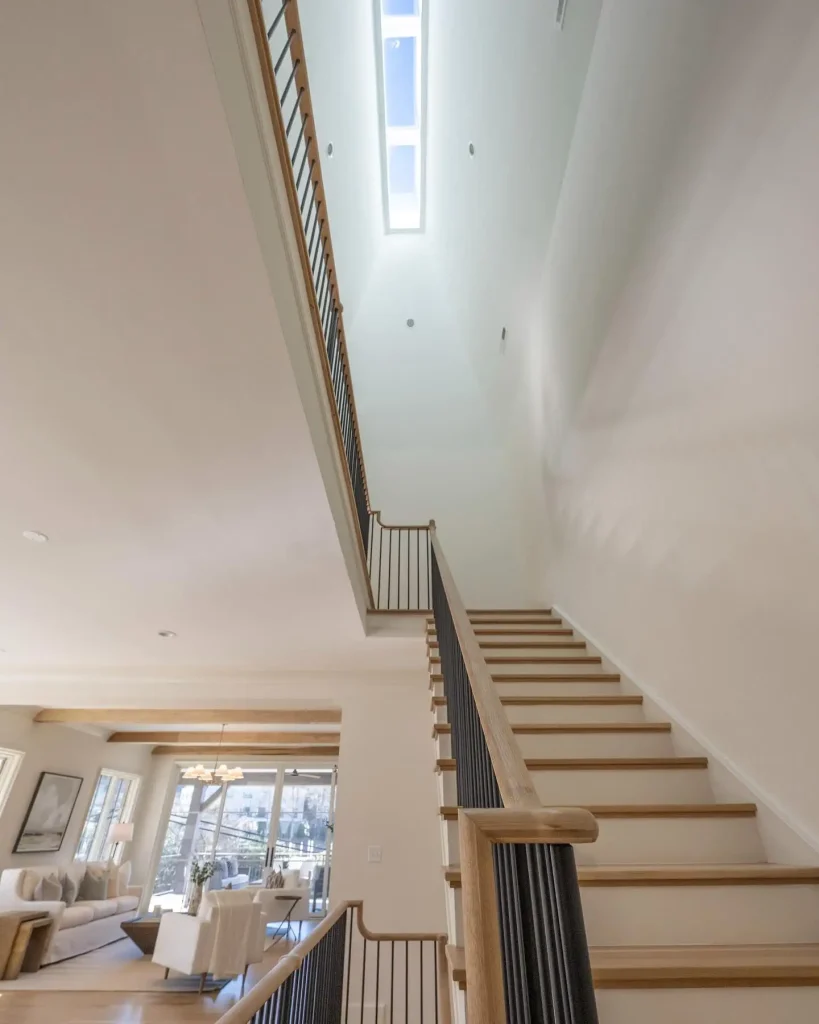
Source: @alenkysignaturehomes
Whether you’re planning a basement remodel or simply refreshing what you have, the stairwell shouldn’t be an afterthought. It’s an opportunity to add value, improve safety, and showcase your design sensibility.
Understanding Building Codes and Dimensions
Before diving into aesthetics, you need to understand the rules. Building codes require minimum 36-inch width, though 42-48 inches feels more spacious. Tread depth must be at least 10 inches, with riser heights between 7-7.75 inches.
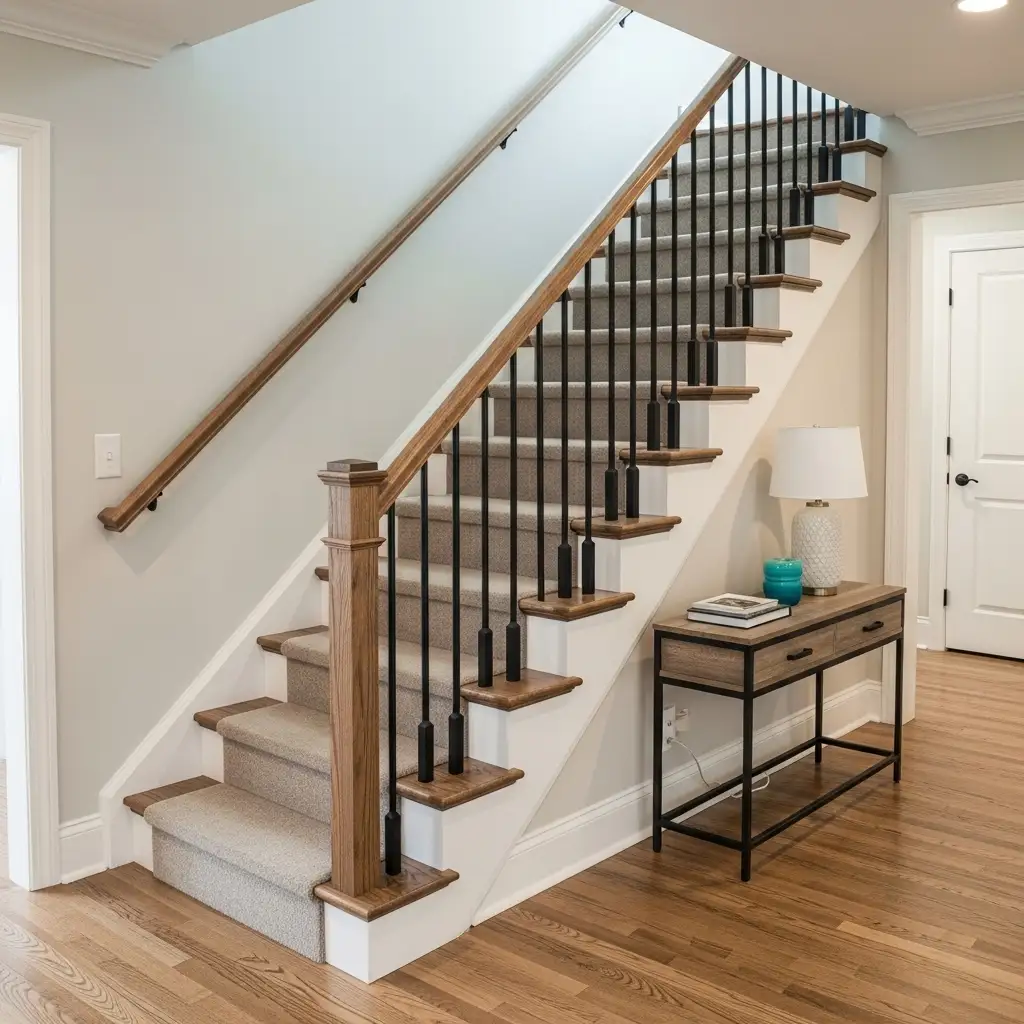
Handrails are mandatory on at least one side, preferably both. Skipping these requirements creates safety hazards and resale complications down the line.
Lighting: Your Safety and Style Foundation
Proper illumination transforms basement stairs from treacherous to inviting. LED strip lighting along treads costs $50-150 and provides edge-lit guidance that’s both modern and practical. Wall sconces every few steps run $200-600 depending on fixture quality.

Source: @2brothersrenovation
Motion sensors add $30-80 but deliver hands-free convenience for midnight trips. Budget $300-1,000 total for comprehensive stairwell lighting that combines safety with ambiance.
Hardwood Treads: The Timeless Choice
Hardwood remains the gold standard for basement stairs. Oak treads cost $30-50 per step, maple runs $40-60, and walnut reaches $60-100 per tread. Professional installation adds $50-80 per step.

Source: @alexagerken
For a standard 13-step basement staircase, expect $1,000-2,500 total. The investment pays off in durability and timeless appeal that complements any finished basement style.
Painted Stairs: Budget-Friendly Drama
Paint offers the most affordable transformation at just $100-300 for materials if you DIY. Two-tone designs with painted risers and stained treads create visual interest without overwhelming small spaces.

Source: @petrieinteriordesigns
White risers with dark treads offer classic contrast, while bold colors inject personality. Professional painting costs $500-800 but ensures flawless results that won’t chip or peel.
Carpet Runners: Comfort and Quiet
Carpet runners reduce noise between floors while adding comfort underfoot. Quality stair runners cost $15-40 per linear foot, with installation adding $5-10 per foot.

For typical basement stairs, budget $400-800 installed. This works beautifully when creating a basement bedroom where sound control matters. Choose low-pile, durable carpet rated specifically for high-traffic stair use.
Open Risers: Modern Spaciousness
Eliminating solid risers opens sightlines and makes narrow stairwells feel larger. This contemporary approach costs $2,000-4,000 for materials and installation but delivers dramatic impact.
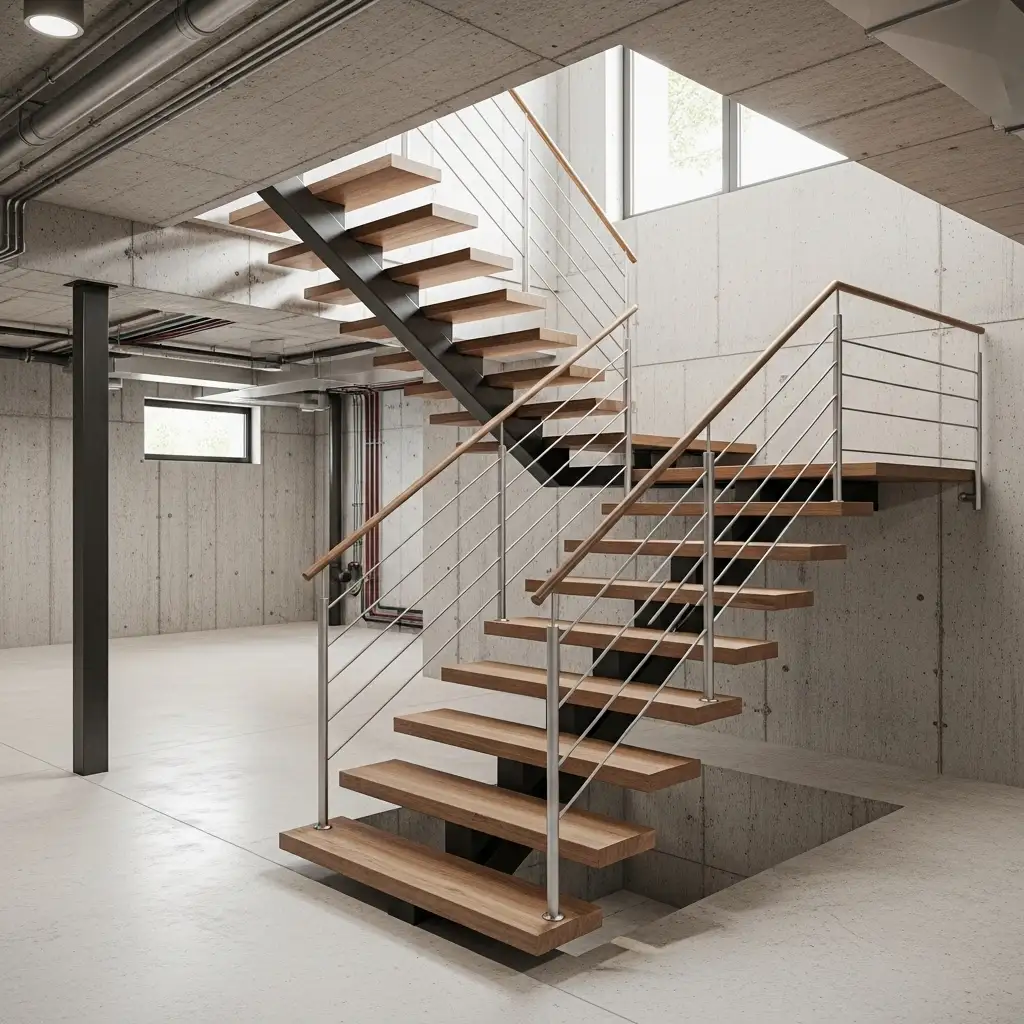
Open risers work particularly well in unfinished basements where you’re embracing industrial aesthetics. Consider safety if you have young children or pets who might stick limbs through openings.
Glass and Metal Railings: Industrial Chic
Cable railings run $60-200 per linear foot installed, while glass panels cost $150-350 per foot. These modern options open up sightlines and flood stairwells with light.
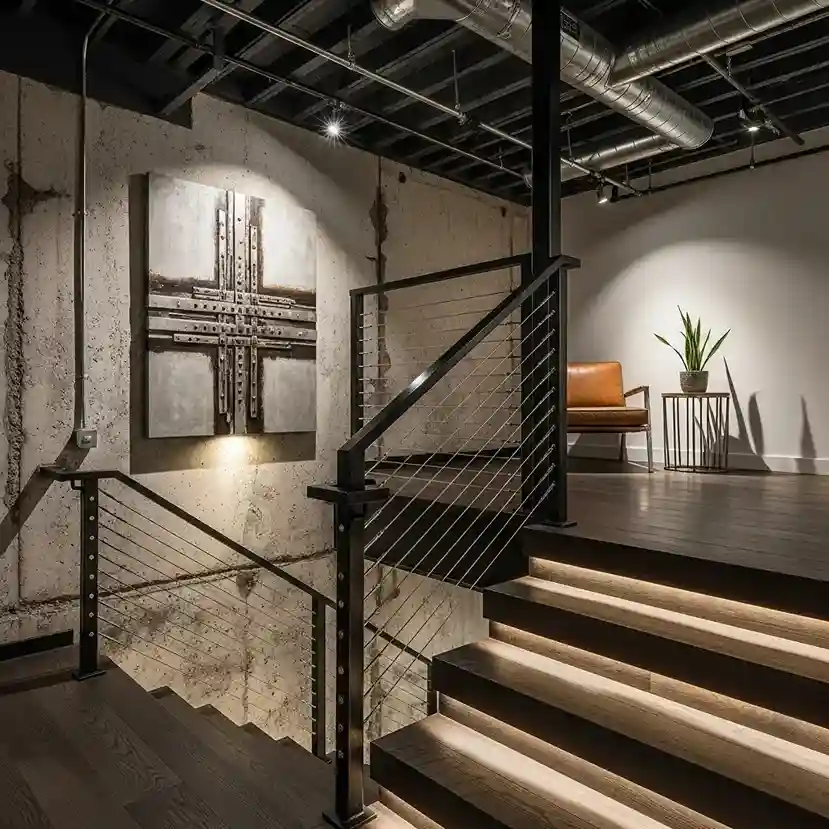
Metal railings suit contemporary basement living rooms and loft-style spaces. The transparency makes small stairwells feel twice their actual size.
Under-Stair Storage Solutions
That triangular void beneath your stairs represents 30-60 square feet of untapped potential. Built-in cabinets cost $500-2,000 depending on complexity, while pull-out drawers run $800-2,500.
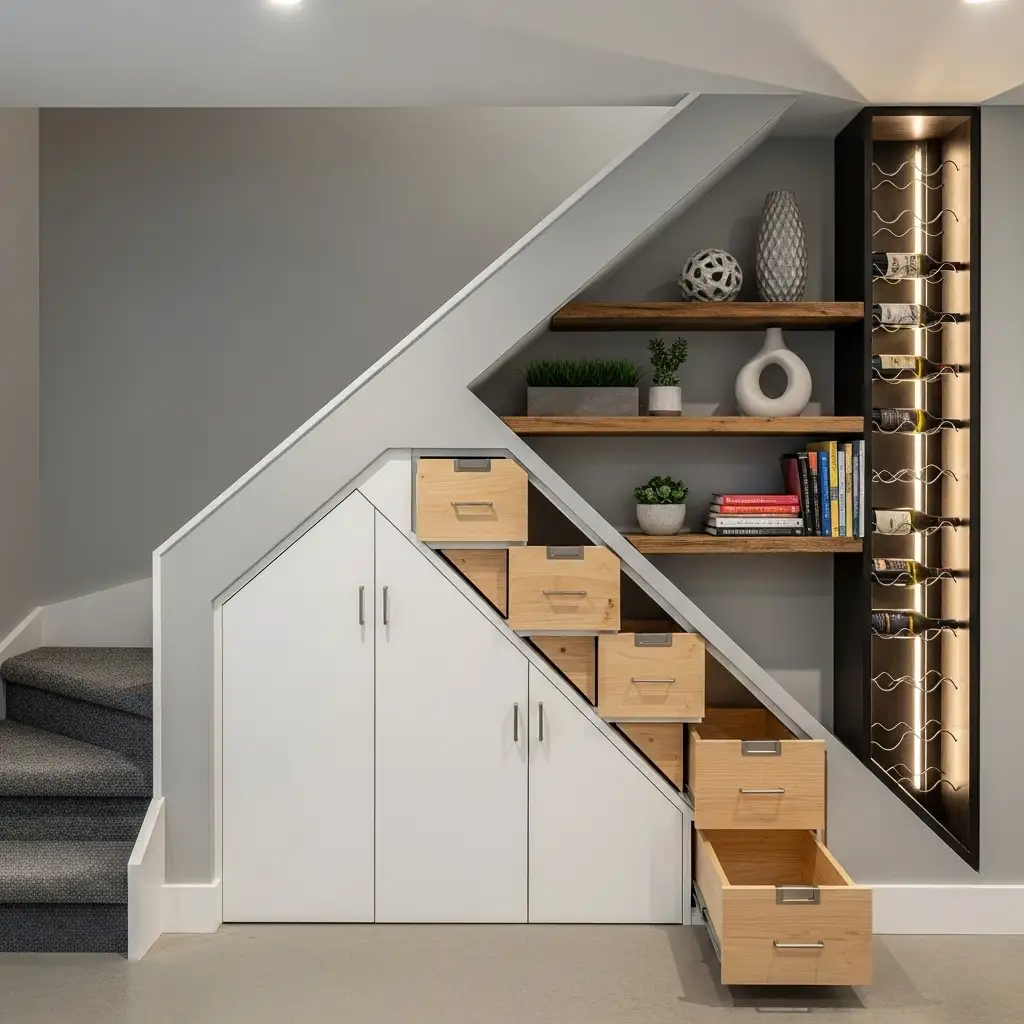
Open shelving offers the budget option at $200-600. Custom wine storage ranges from $1,000-3,000. Transform dead space into functional organization borrowed from clever small apartment ideas.
Accent Walls and Wallpaper
Stairwell walls provide perfect canvases for bold design moves. Peel-and-stick wallpaper costs $30-100 per roll and installs easily in these vertical spaces.

Shiplap accent walls run $3-7 per square foot for materials. Board and batten treatment costs $5-10 per square foot installed. These architectural details add dimension and guide the eye downward with intentional design.
Safety Features You Cannot Skip
Slip-resistant tread tape costs just $20-40 but prevents accidents on smooth surfaces. Handrails must support 200 pounds and sit 34-38 inches above tread nosing.

Dual handrails cost $200-500 installed but provide crucial support for all ages. Adequate headroom requires 6’8″ minimum clearance. Never compromise safety for aesthetics regardless of your basement kitchen ideas or other design priorities.
Painting and Staining Techniques
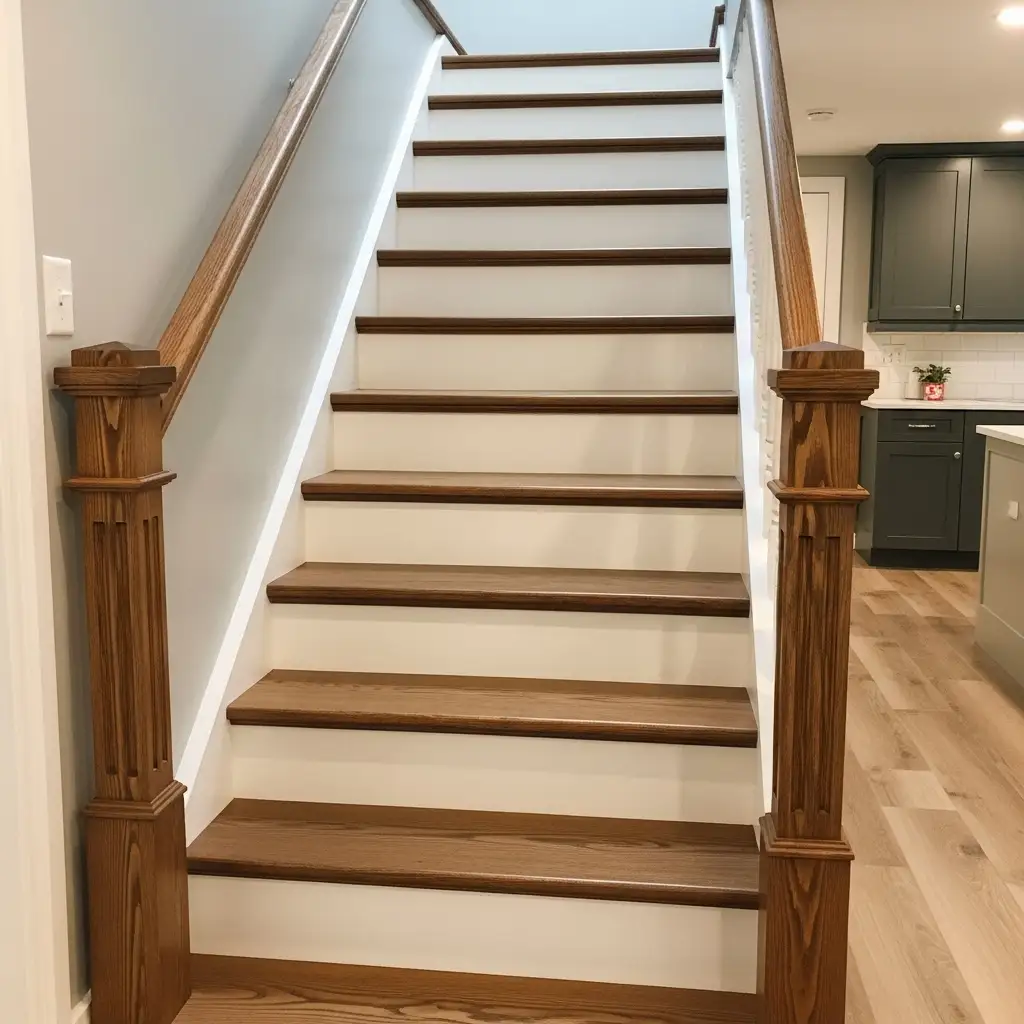
Staining showcases natural wood grain but requires more prep work and skill. Professional staining costs $300-600 for basement stairs.
Source: @motifspace
Painted stairs need quality primer and floor-rated paint to withstand traffic, costing $150-300 for DIY materials. Consider darker colors for treads to hide wear, with lighter risers to brighten the space and make steps more visible.
Basement Stairwell Lighting Budget Breakdown
Basic lighting upgrade with LED strips and one fixture runs $200-400. Mid-range renovation with multiple sconces and smart controls costs $600-1,200.
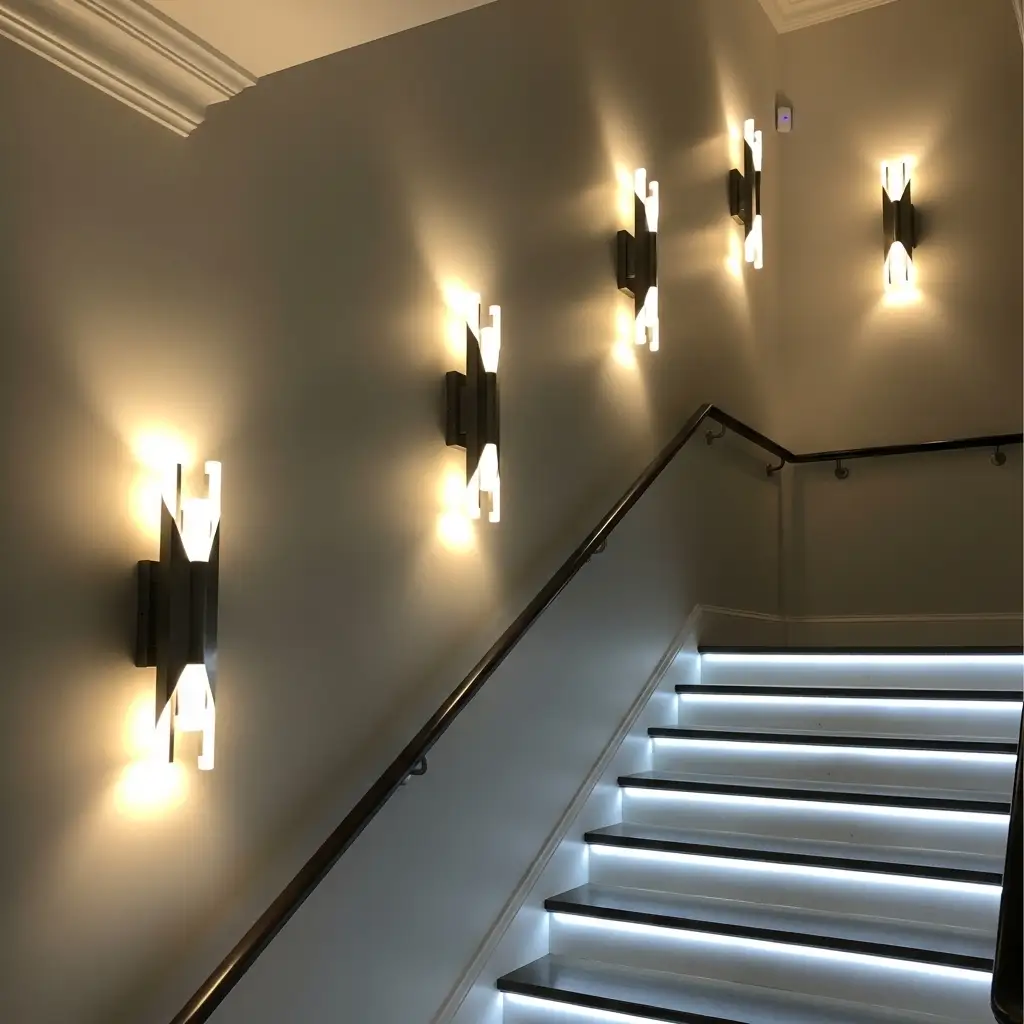
High-end installations with custom fixtures, accent lighting, and full automation reach $2,000-4,000. Factor in electrical work at $75-150 per hour if adding new circuits or switches beyond DIY capabilities.

Creating Visual Interest with Landings
If your stairwell includes a landing, treat it as a mini gallery. Wall art, family photos, or floating shelves create pause-worthy moments.

Source: @the_seasoned_home
A small console table with decorative items adds personality. Budget $100-500 for landing decor that makes the descent more interesting and breaks up long flights of stairs.
Matching Your Basement Aesthetic
Your stairwell should preview what lies below. Modern basements suit clean lines and minimal railings. Traditional spaces call for classic wood balustrades.

Source: @briahammelinteriors
Industrial basement paint colors pair beautifully with metal and concrete finishes. Rustic basements shine with reclaimed wood and wrought iron details. Consistency creates cohesive design that feels intentional rather than piecemeal.
Frequently Asked Questions
What’s the average cost to renovate a basement stairwell?
Basic cosmetic updates like painting and new lighting run $500-1,500. Mid-range renovations with new treads, railings, and lighting cost $3,000-7,000. Complete staircase replacement reaches $5,000-15,000 depending on materials and complexity. Most homeowners spend around $4,000 for meaningful improvements that balance aesthetics with function.
Can I DIY basement stairwell improvements?
Painting, staining, installing LED strips, and adding carpet runners are manageable DIY projects. Structural changes, new railings, electrical work beyond simple fixture swaps, and tread replacement typically require professional expertise. Building code compliance is crucial for safety and resale value, so hire pros for anything structural.
How do I make a narrow basement stairwell feel larger?
Open risers create visual flow-through. Light paint colors reflect more light. Glass or cable railings eliminate visual barriers. Strategic lighting brightens dark corners. Mirrors on landing walls double perceived space. Removing unnecessary bulk like old carpet or heavy wooden railings opens up the area dramatically.
What materials work best in humid basements?
Luxury vinyl plank resists moisture better than hardwood while looking similar. Metal railings won’t warp like wood. Sealed concrete treads handle dampness well. If using hardwood, choose dense species like oak and seal properly. Address humidity issues with dehumidifiers before installing moisture-sensitive materials to prevent warping and mold growth.
Conclusion
Your basement stairwell deserves the same design consideration as any other space in your home. Whether you’re working with a $500 paint-and-light budget or planning a $10,000 complete renovation, focus on safety first, then layer in style that complements your basement living room ideas and overall vision. The descent to your lower level should feel intentional, inviting, and impressive rather than an afterthought that everyone dreads navigating.