
Your basement is probably the most versatile square footage you own. Maybe you’ve turned it into an epic home theater, a cozy guest suite, or finally set up that home gym.
But if the staircase leading to it feels like an afterthought, you’re ruining the vibe before anyone even gets downstairs.
Source: @oldfox_pa
Think about it: a great staircase doesn’t just connect two floors—it sets a mood. It can be the grand entrance to your entertainment zone, a clever storage spot for all that “I’ll-use-this-someday” stuff, or just a really cool-looking piece of architecture you’re proud to show off.
Source: @finishedbasementsnj
No more boring. No more builder-grade beige. Let’s turn that neglected passage into a feature that makes people say, “Whoa, your basement stairs are cool.” Here are 21 basement stair design ideas to make it happen.
1. Open-Riser Modernity
Source: @odettedesigngroup
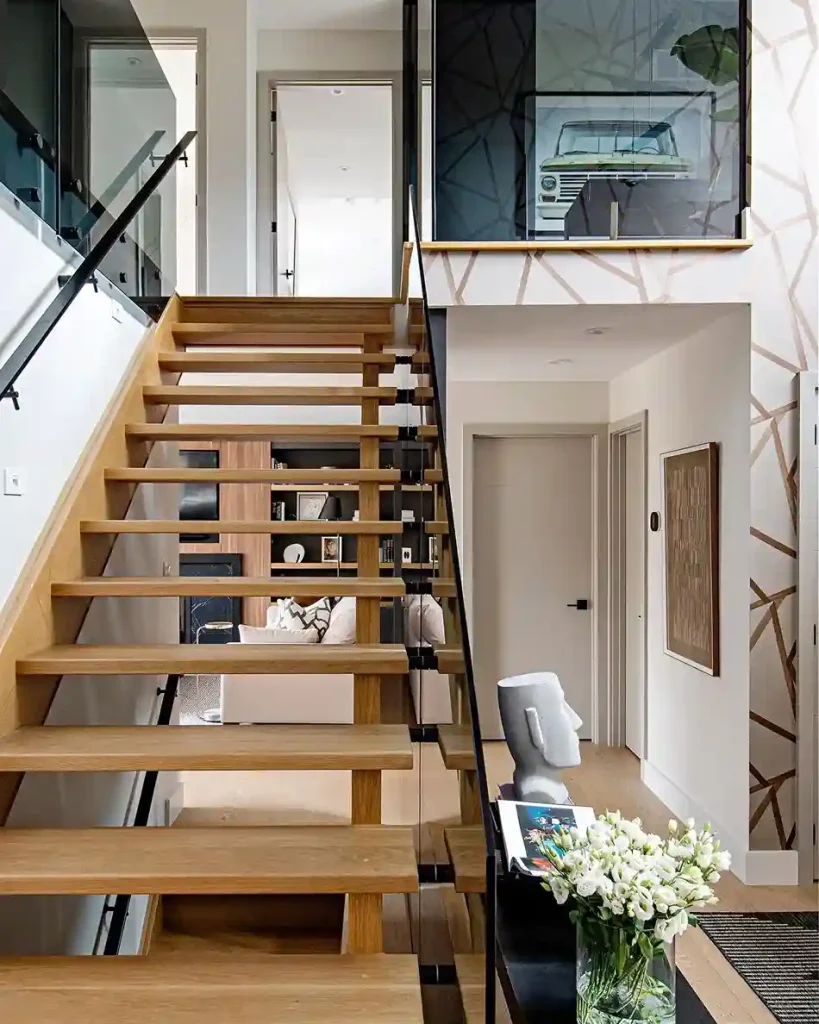
Replace solid stair risers with open spaces between each tread. This contemporary design allows light to filter through, making a narrow stairwell feel airy and less confined. It’s a perfect match for homes with a modern cottage or minimalist aesthetic.
2. Statement Runner
Source: @mywirralvictorian
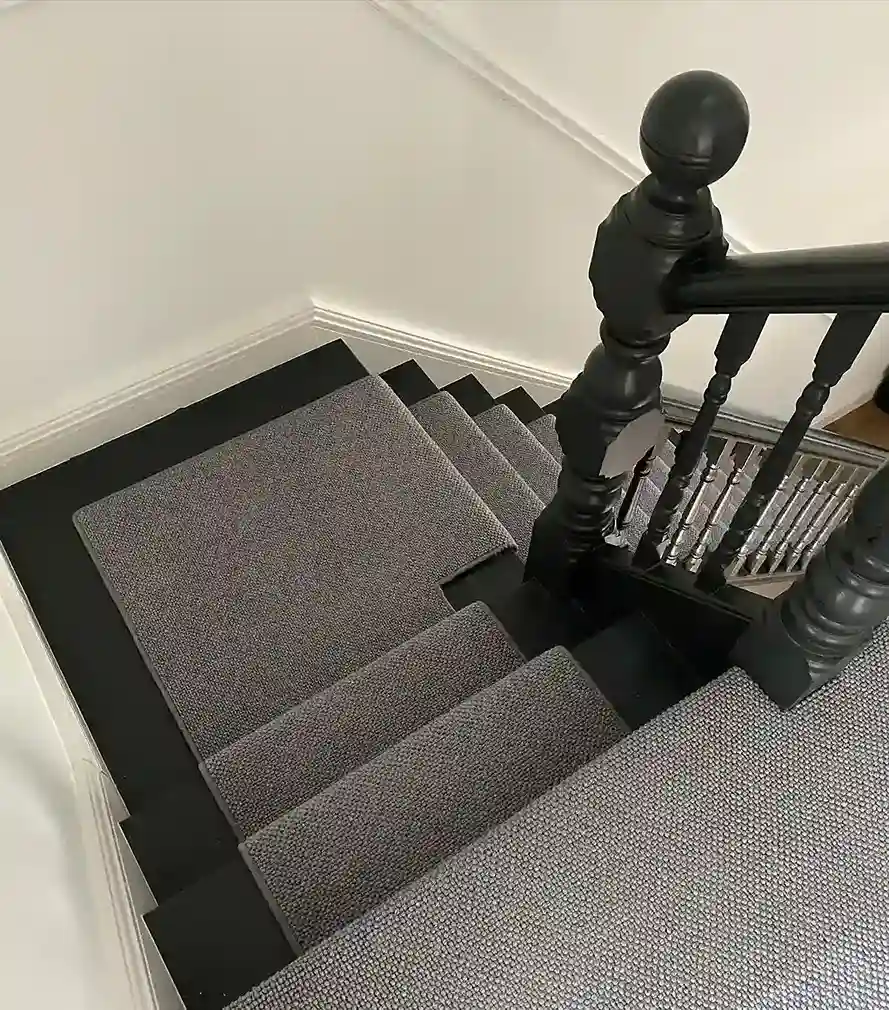
Lay a bold, patterned runner down the center of your wooden stairs. This instantly adds color, texture, and a layer of sophistication. A runner also provides traction, reduces noise, and protects your treads.
Choose a durable, low-pile wool or indoor-outdoor material that can handle traffic. This pop of pattern works beautifully to lead the eye downward into a thoughtfully designed basement living room.
3. Built-In Drawer Storage
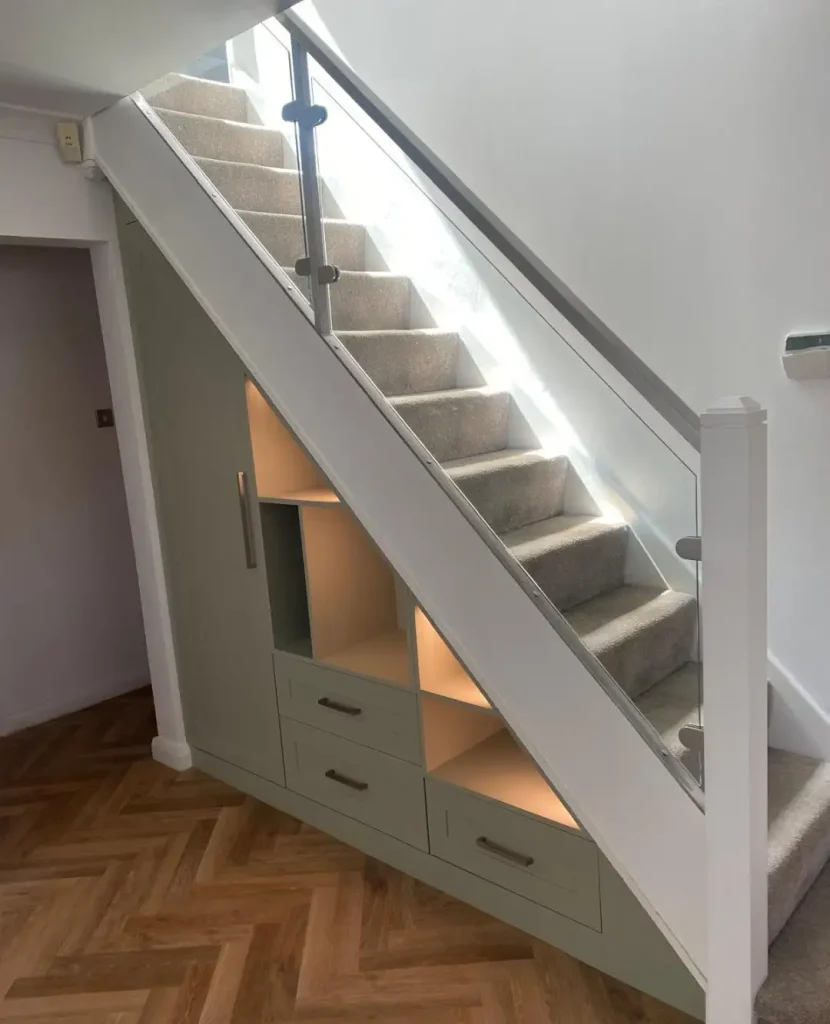
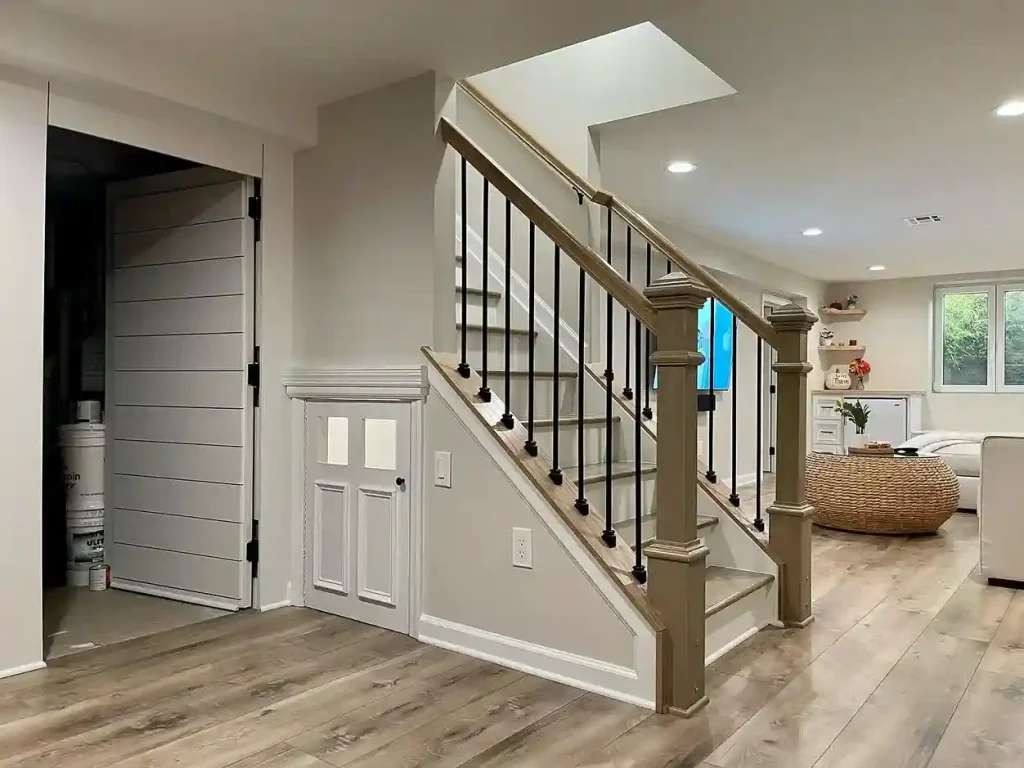
Maximize every inch of often-wasted space by building drawers into the side of your stair stringers. These shallow, pull-out drawers are ideal for storing shoes, board games, holiday decor, or cleaning supplies. It’s a brilliant organizational hack that complements other smart basement storage solutions.
4. Painted Treads in a Bold Color
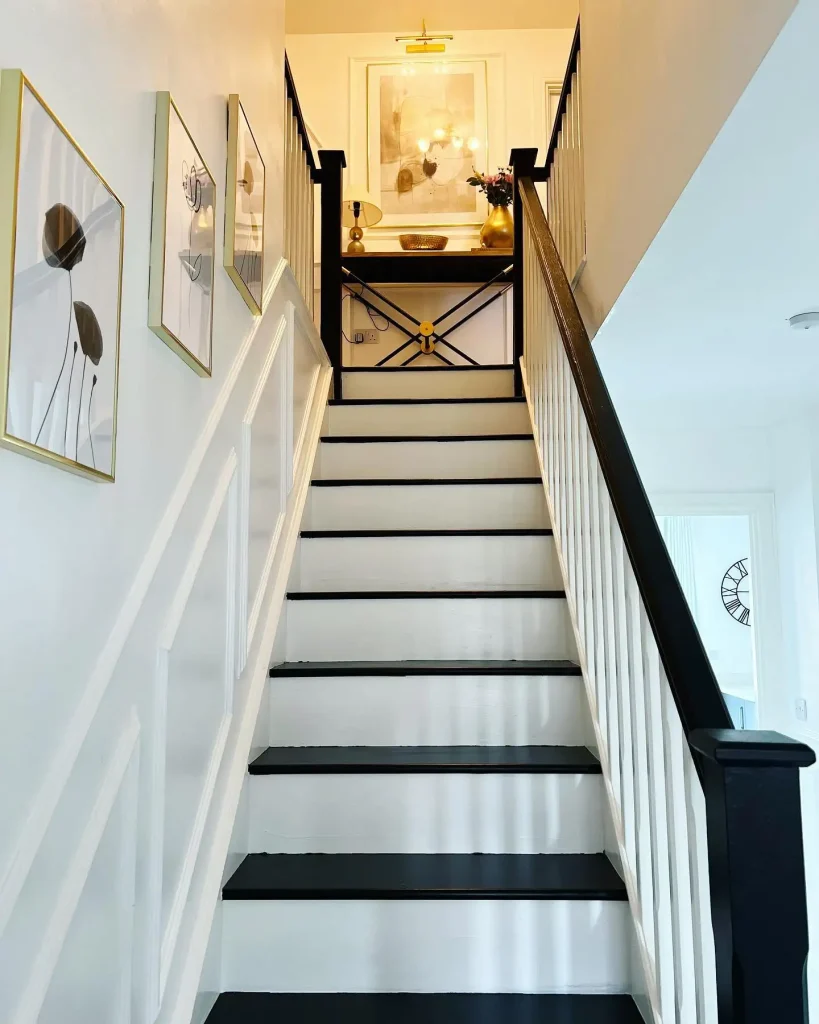
For a high-impact, low-cost update, paint your stair treads a contrasting, bold color. Deep navy, forest green, or classic black against white risers creates a dramatic, graphic look.
Use a high-quality, enamel-based paint for durability. This approach is as transformative as choosing the right good basement paint colors for your walls.
5. The Library Staircase
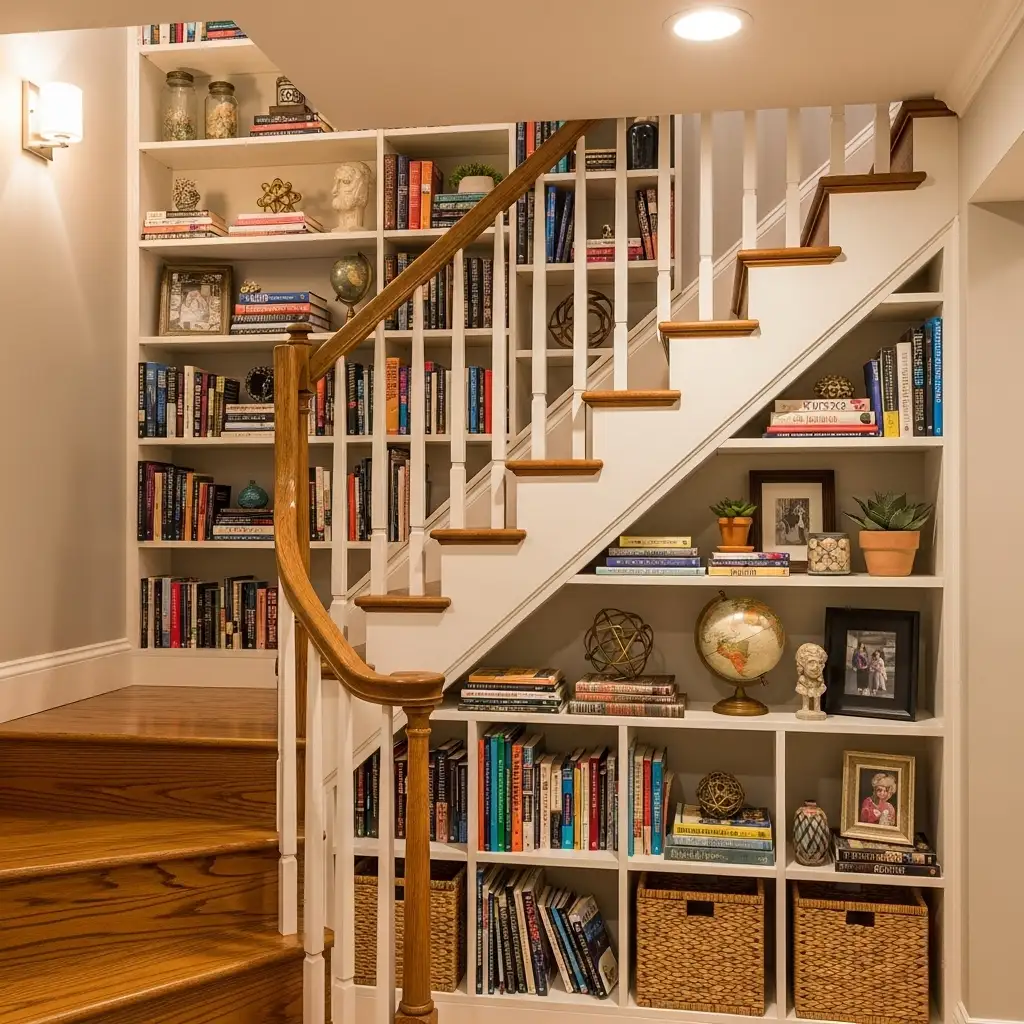
Transform the wall alongside your staircase into a floor-to-ceiling bookshelf. Follow the stair’s slope to create dynamic shelving that holds books, display objects, and baskets. This idea turns a mundane passage into a charming home library annex and adds incredible character.
6. Industrial Metal and Cable Railings
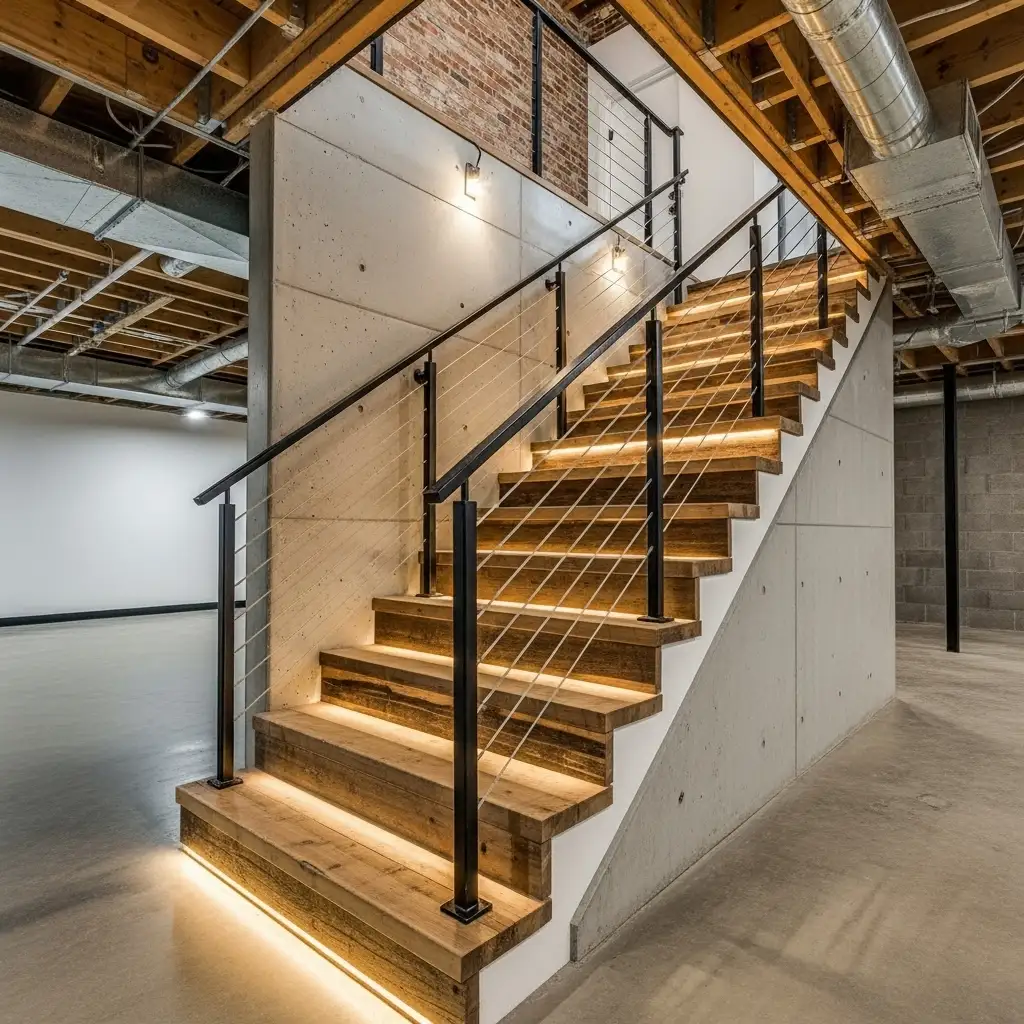
Swap out bulky wooden balusters for sleek metal cables or thin, black metal rods. This industrial-style raiding is visually light, modern, and incredibly durable.
It pairs exceptionally well with reclaimed wood treads or a concrete feature wall, creating a loft-like vibe perfect for an unfinished basement design that celebrates raw materials.
7. LED Under-Tread Lighting

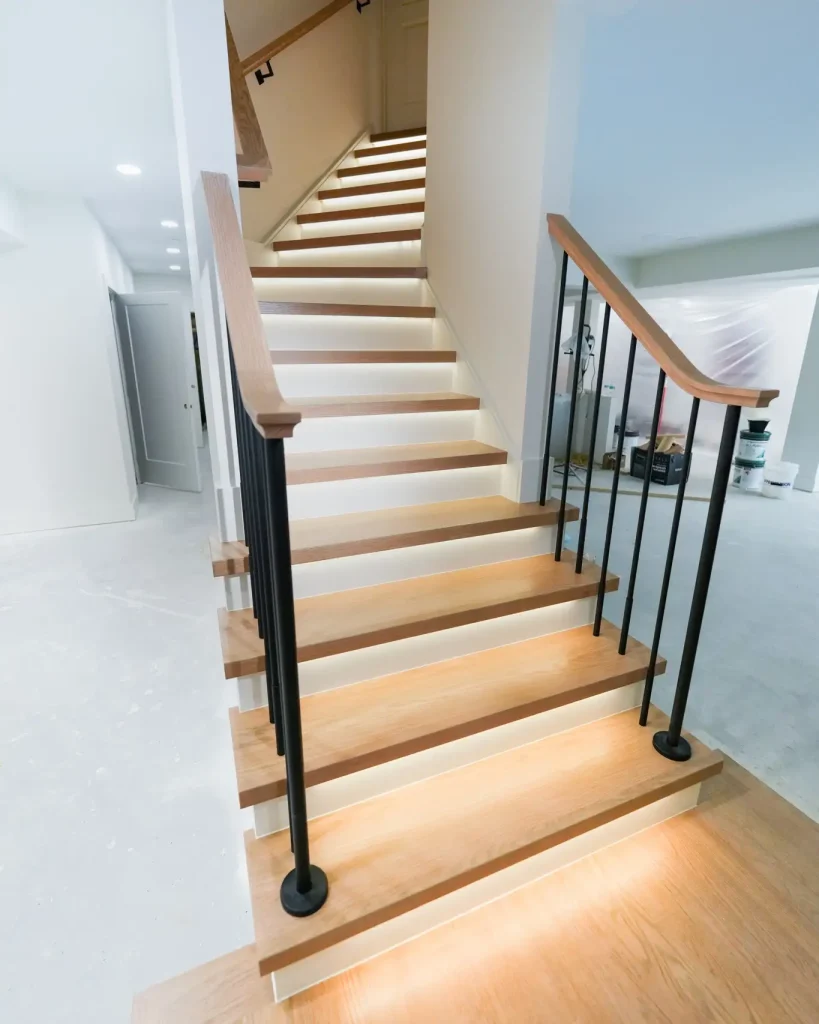
Install subtle LED strip lighting underneath the lip of each tread or along the baseboard. This “floating” effect is not only ultra-modern and safe for nighttime navigation, but it also creates an ambient glow that makes the staircase itself a light source. It’s a tech-savvy feature worthy of a home theater basement.
8. Reclaimed Wood with a Live Edge
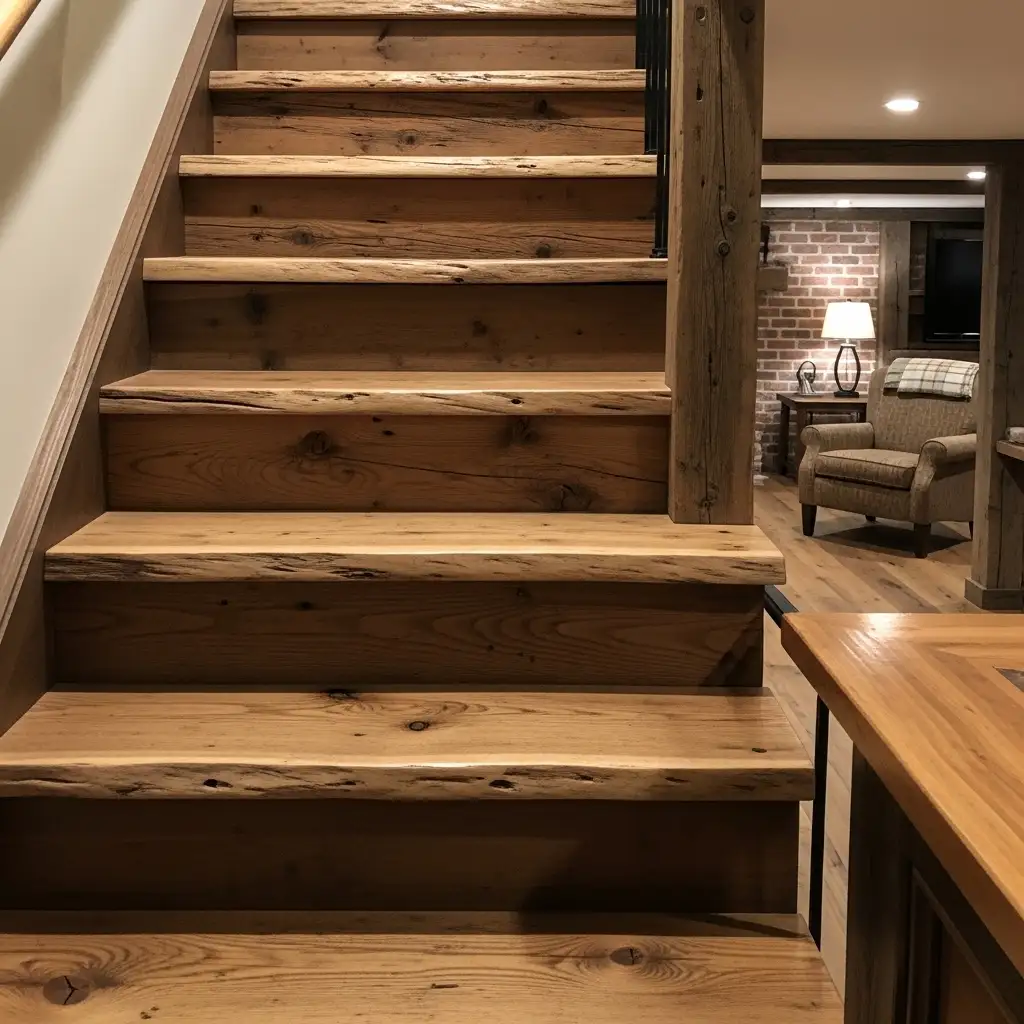
Source reclaimed barn wood or planks with a natural, live edge for your treads. Each step becomes a unique piece of art, full of character, knots, and history. This warm, rustic choice is the perfect entry point to a cozy, rustic living room or a basement pub.
9. Carpeted Insets with Wood Borders

Get the best of both worlds: the warmth and quiet of carpet with the durability and beauty of wood. Install a plush carpet insert on each tread, bordered by stained and finished wood. This creates a custom, high-end look that is both comfortable underfoot and easy to maintain on the edges.
10. Glass Panel Railings
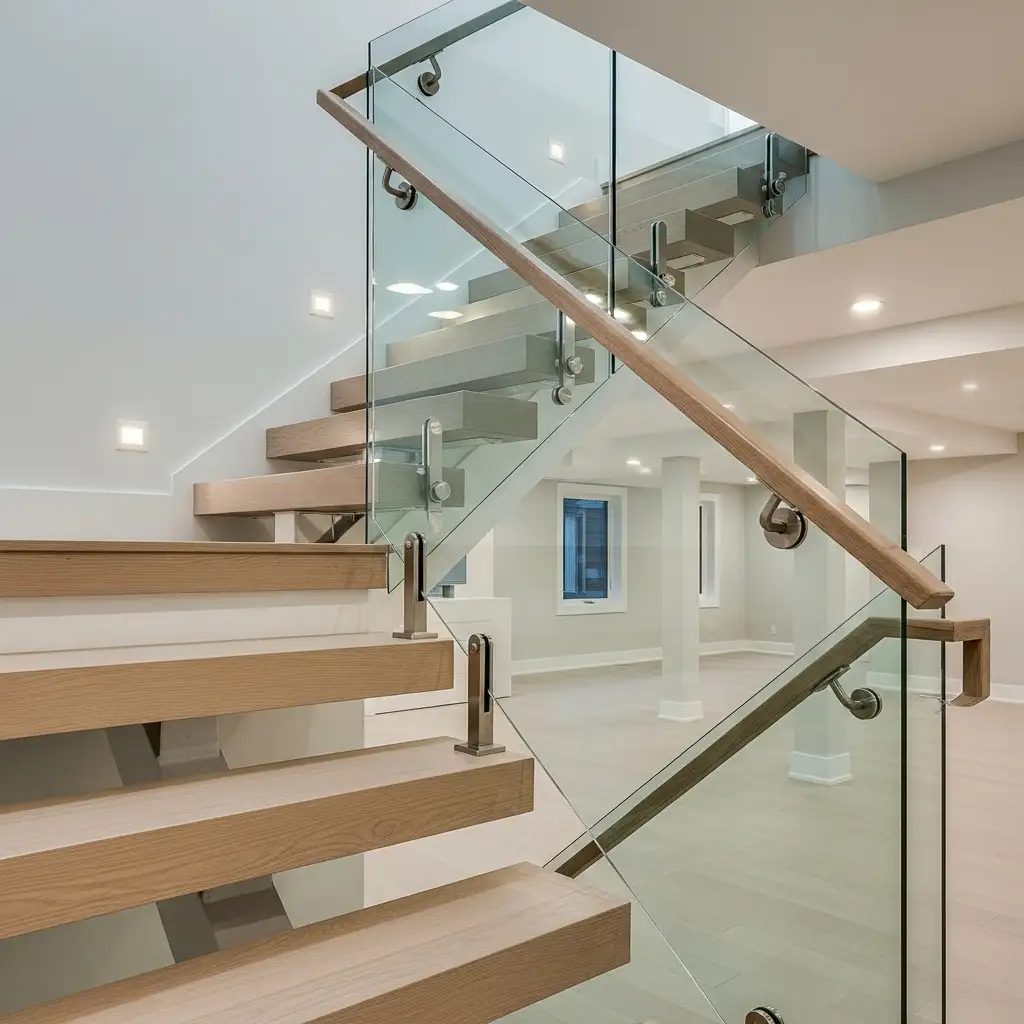
For the ultimate in openness and light flow, use tempered glass panels for your railing. This is an excellent choice for a staircase that ends in an open-concept basement, as it preserves sightlines and makes the space feel larger. It provides a clean, contemporary backdrop that lets your basement design ideas shine.
11. Wall-to-Wall Carpet in a Neutral Tone
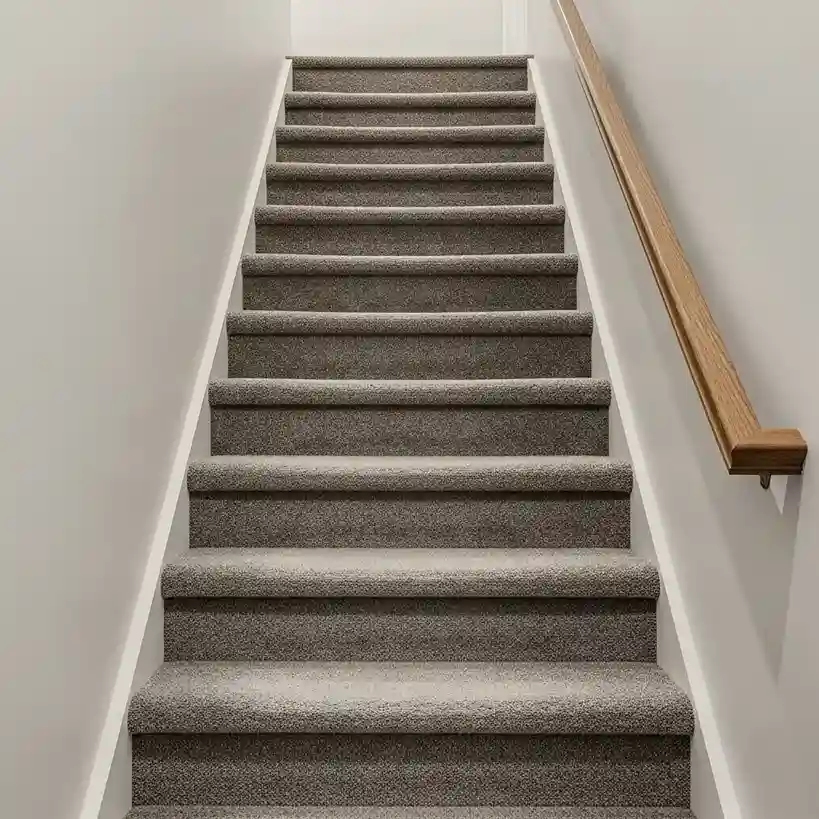
A classic and practical solution. Wall-to-wall carpeting on basement stairs is soft, sound-absorbing, and safe. Choose a high-quality, dense, low-pile carpet in a neutral gray, taupe, or charcoal to hide dirt and create a seamless flow from the upper floor. It’s a comfortable choice that works with any finished basement style.
12. Geometric Wallpaper Accent
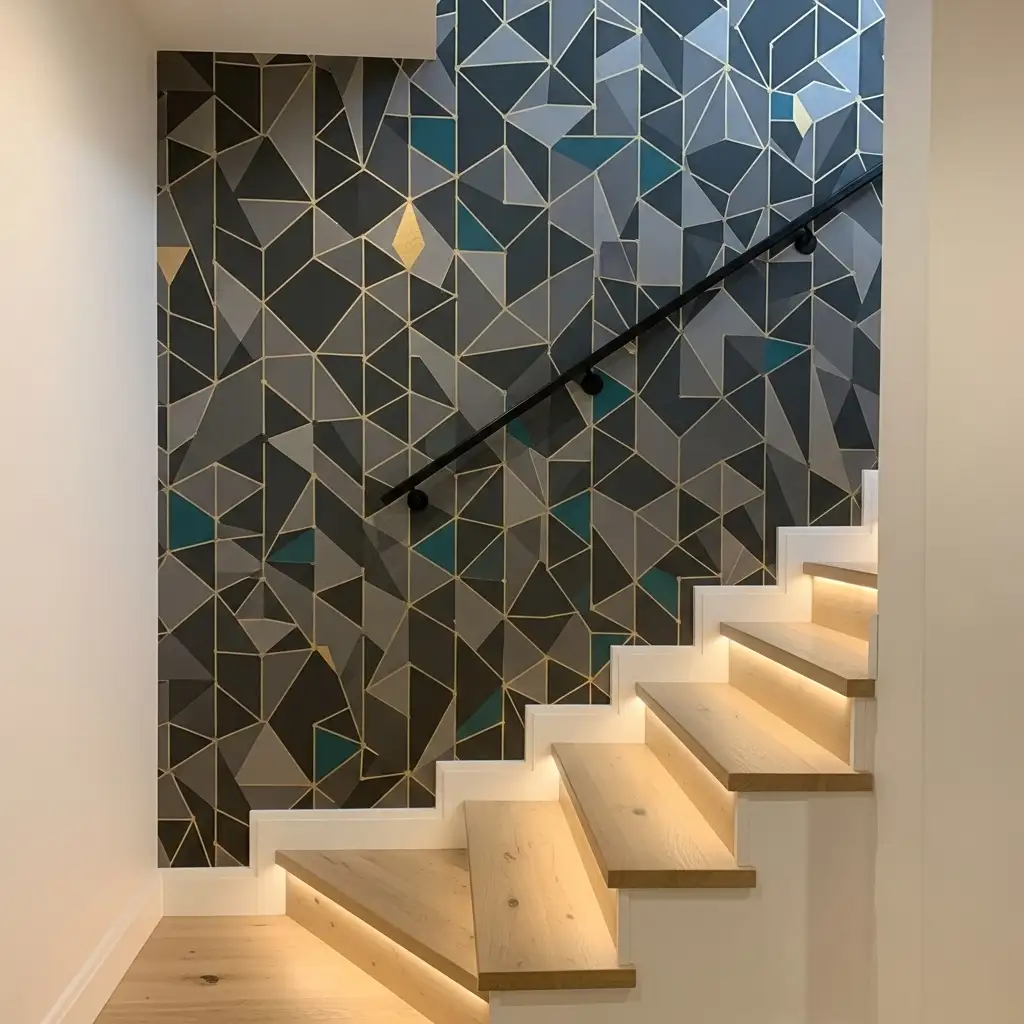
Apply a striking, large-scale geometric or botanical wallpaper to the stairwell wall. This vertical accent draws the eye down and makes a powerful style statement in an otherwise narrow space. Keep the treads and railing simple to let the wallpaper be the star. For more accent inspiration, see our ideas for bold accent walls.
13. Wainscoting or Beadboard on the Stairwell Walls
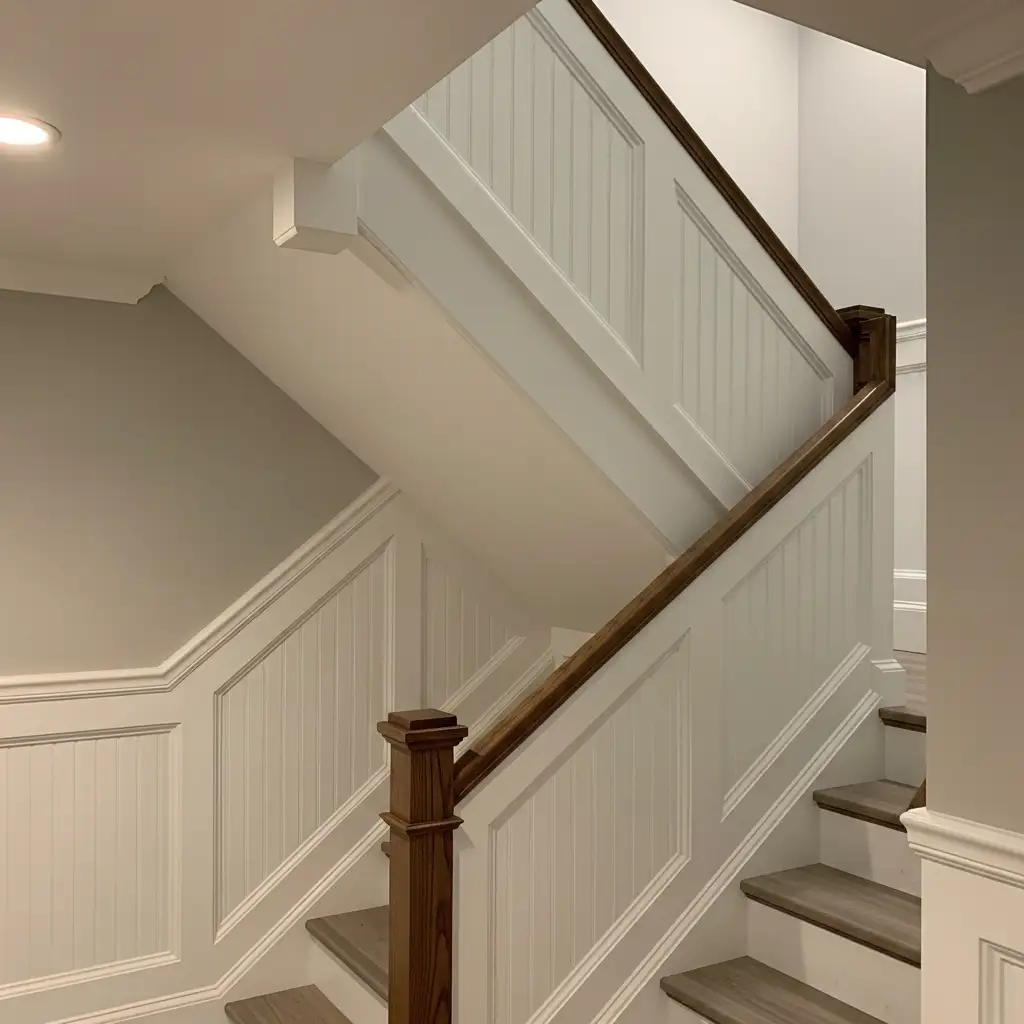
Add classic texture and protection to your stairwell walls with beadboard or traditional wainscoting. Paint it a crisp white or a contrasting color for definition. This architectural detail adds charm and is a perfect bridge if your home features beadboard ceilings or tongue-and-groove walls.
14. Contrasting Risers
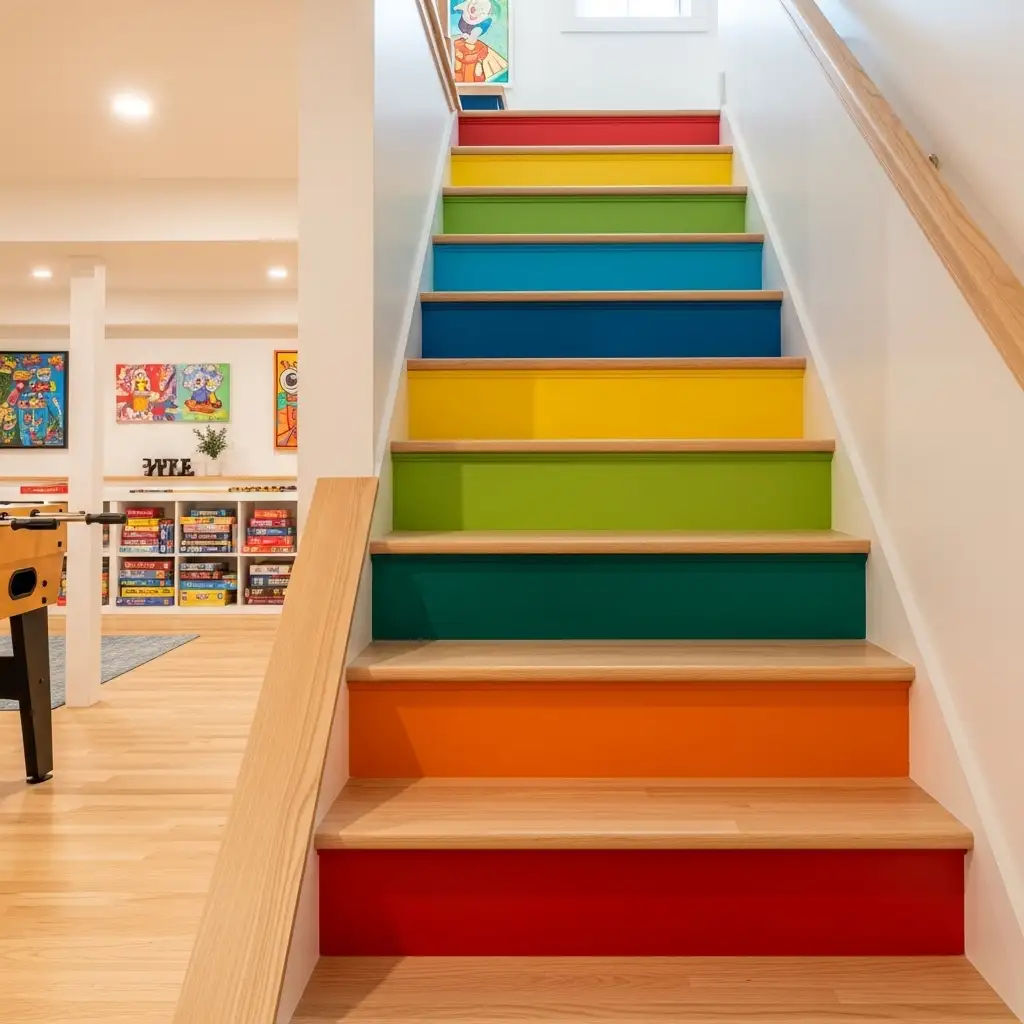
Create rhythm and visual interest by painting or tiling each stair riser a different, alternating color. This playful approach is especially effective in a family-friendly basement game room or a creative hobby space.
15. The Spiral Space-Saver
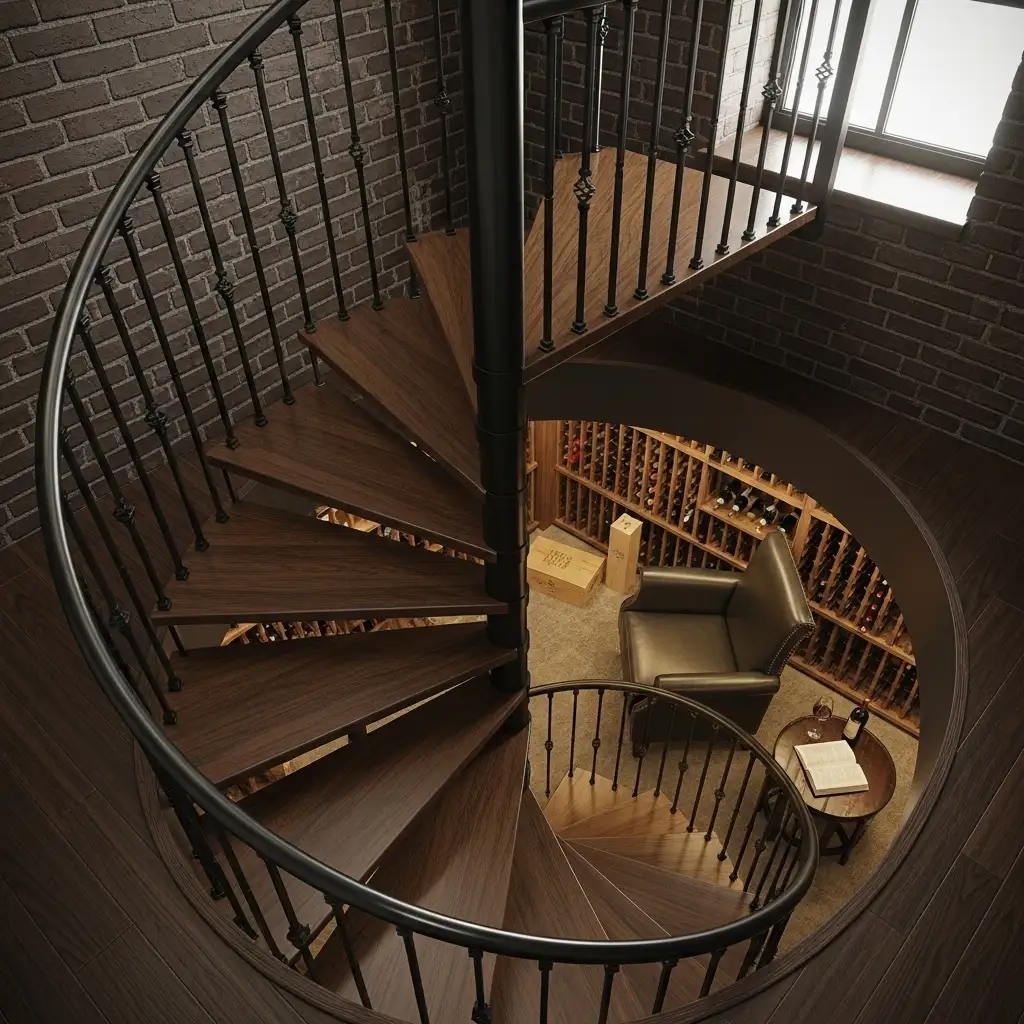
If floor space is extremely limited, a metal or wooden spiral staircase can be a sculptural and space-efficient solution. While not ideal for moving large furniture, it makes a dramatic architectural feature and is perfect for accessing a basement wine cellar or quiet reading nook.
16. Integrated Plant Ledges
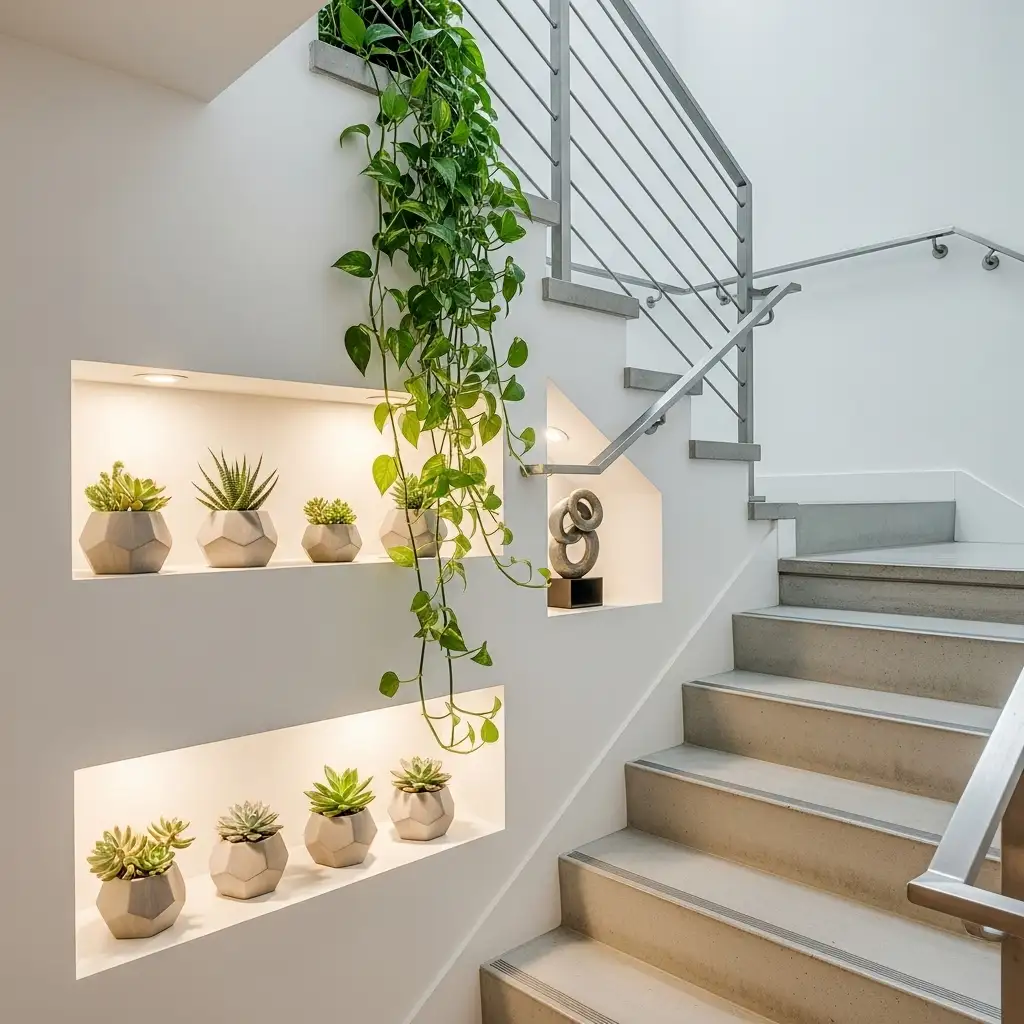
Incorporate shallow ledges or recessed niches into the stairwell wall at various heights. These become perfect perches for a cascading pothos, a series of small succulents, or curated art objects, bringing life and personality to the descent.
17. Blackened Steel Stringers with Wood Treads
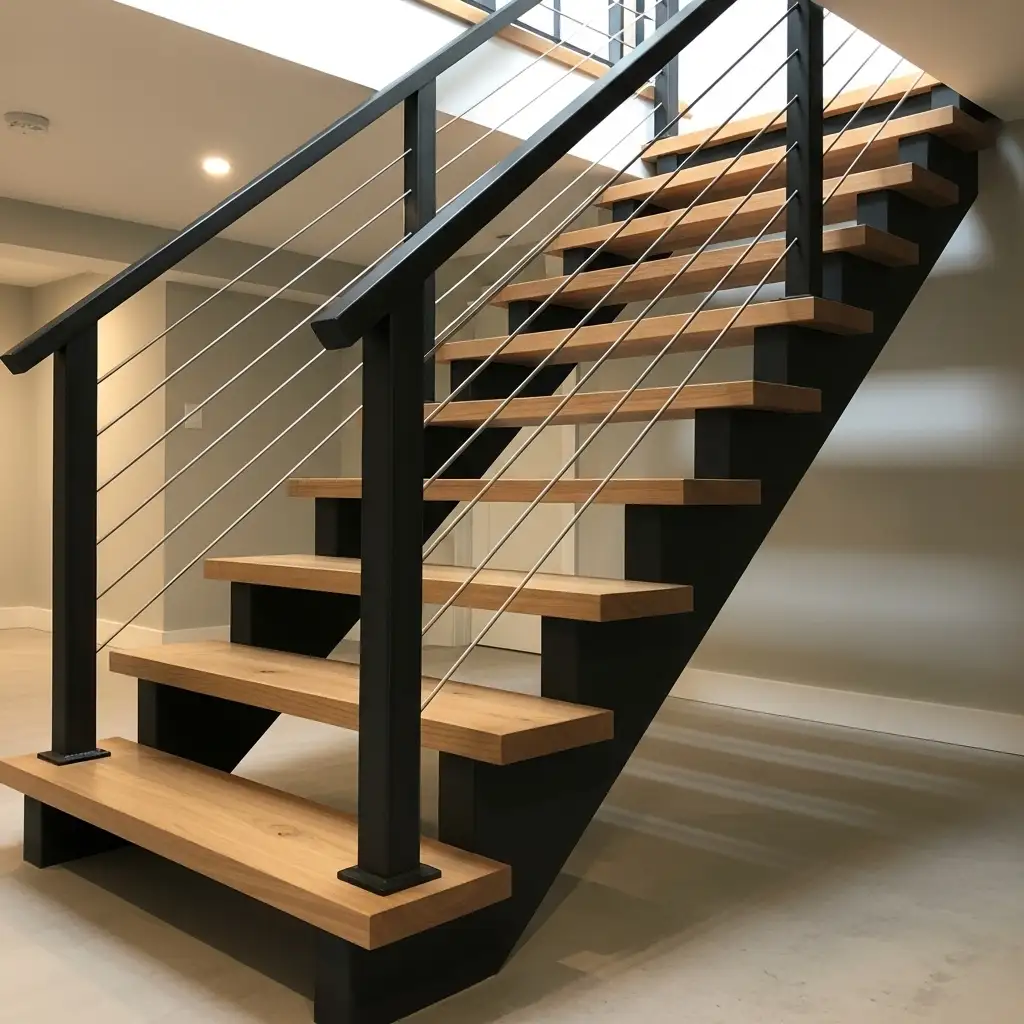
Use blackened or powder-coated steel for the structural stringers (the side supports) and pair them with warm, light wood treads. This combination of industrial and natural materials is strikingly modern and incredibly sturdy.
18. Stairway Gallery Wall
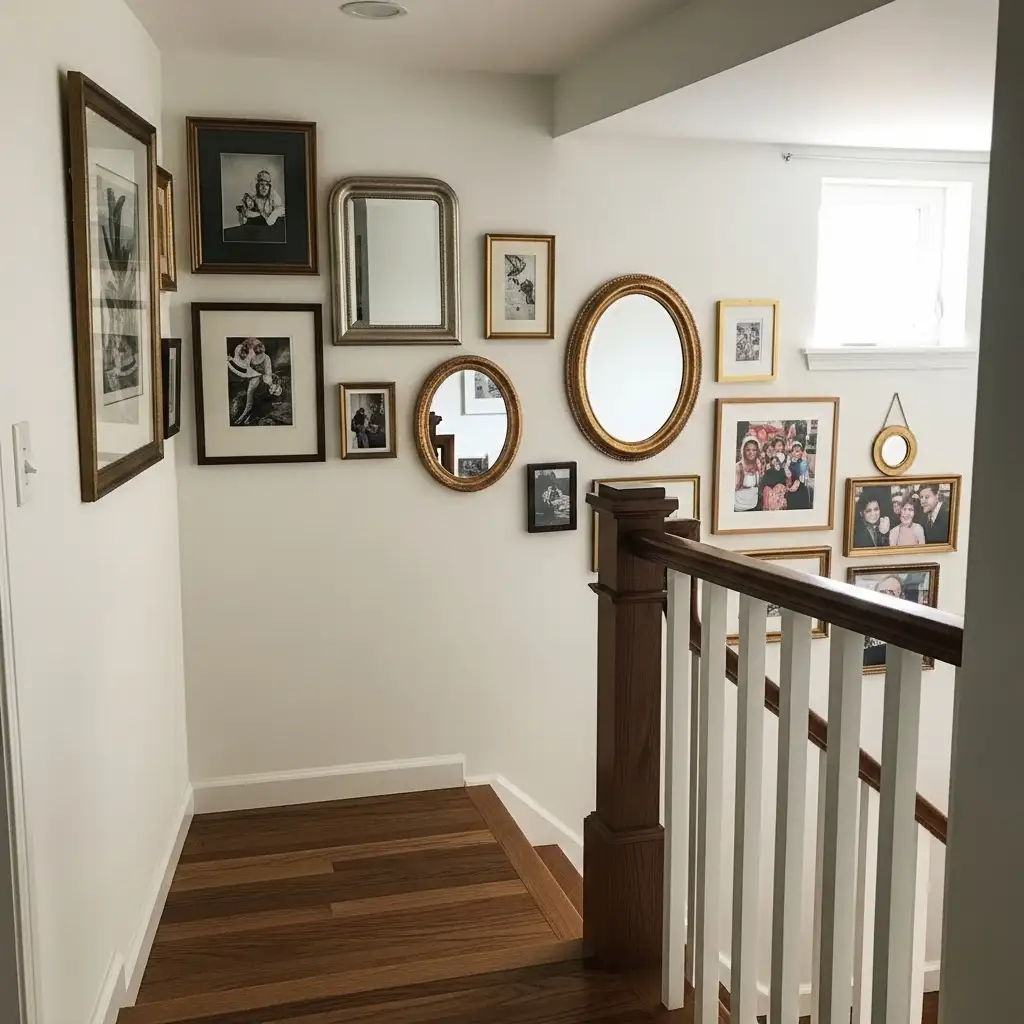
Treat the sloped wall alongside your stairs as a curated gallery space. Hang a collection of framed art, photographs, or mirrors, following the stair’s incline. This personalizes the space and gives you a reason to slow down and enjoy the journey. For hanging tips, see our guide to living room wall art.
19. Concrete Treads for an Urban Feel
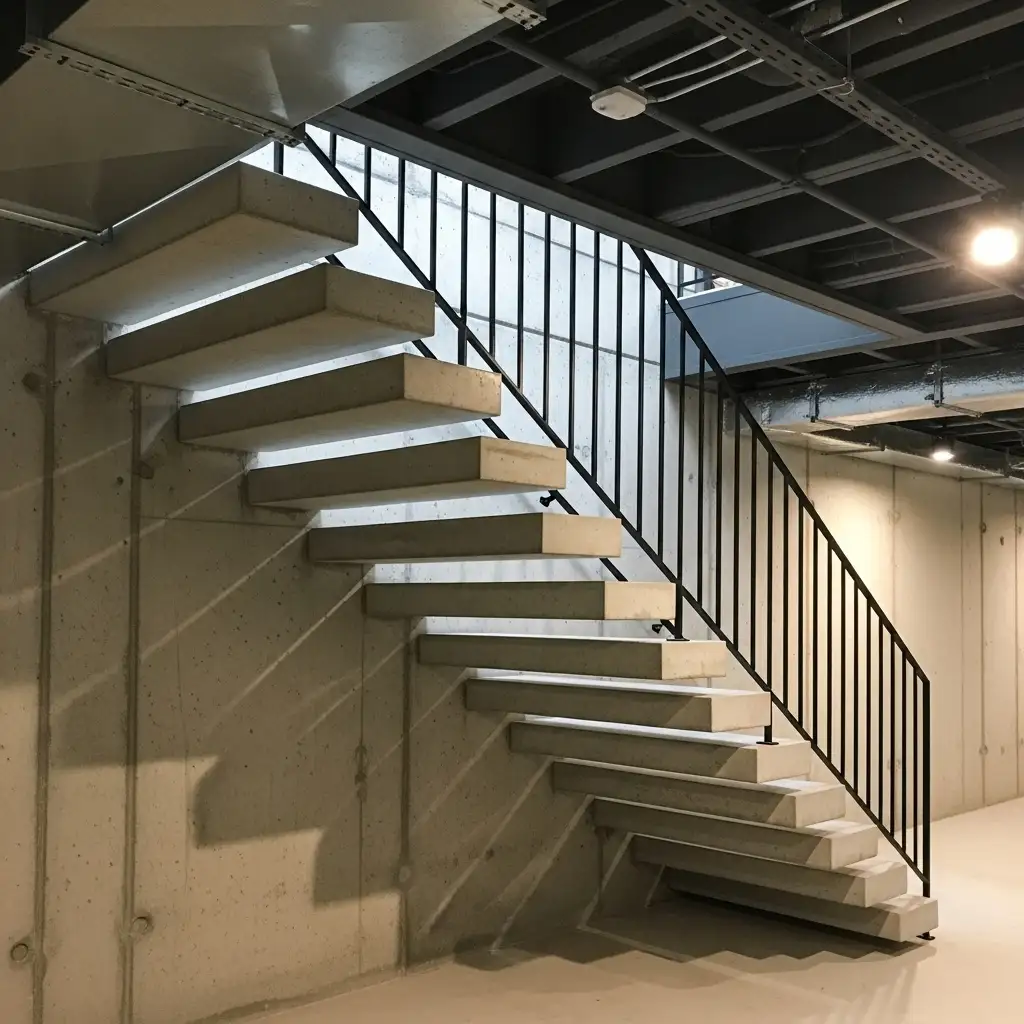
For an ultra-modern, loft-inspired look, pour concrete treads. They are exceptionally durable and make a massive impact. Pair them with a minimalist metal railing and exposed painted basement ceiling for a cohesive industrial aesthetic.
20. Bright White with Natural Light
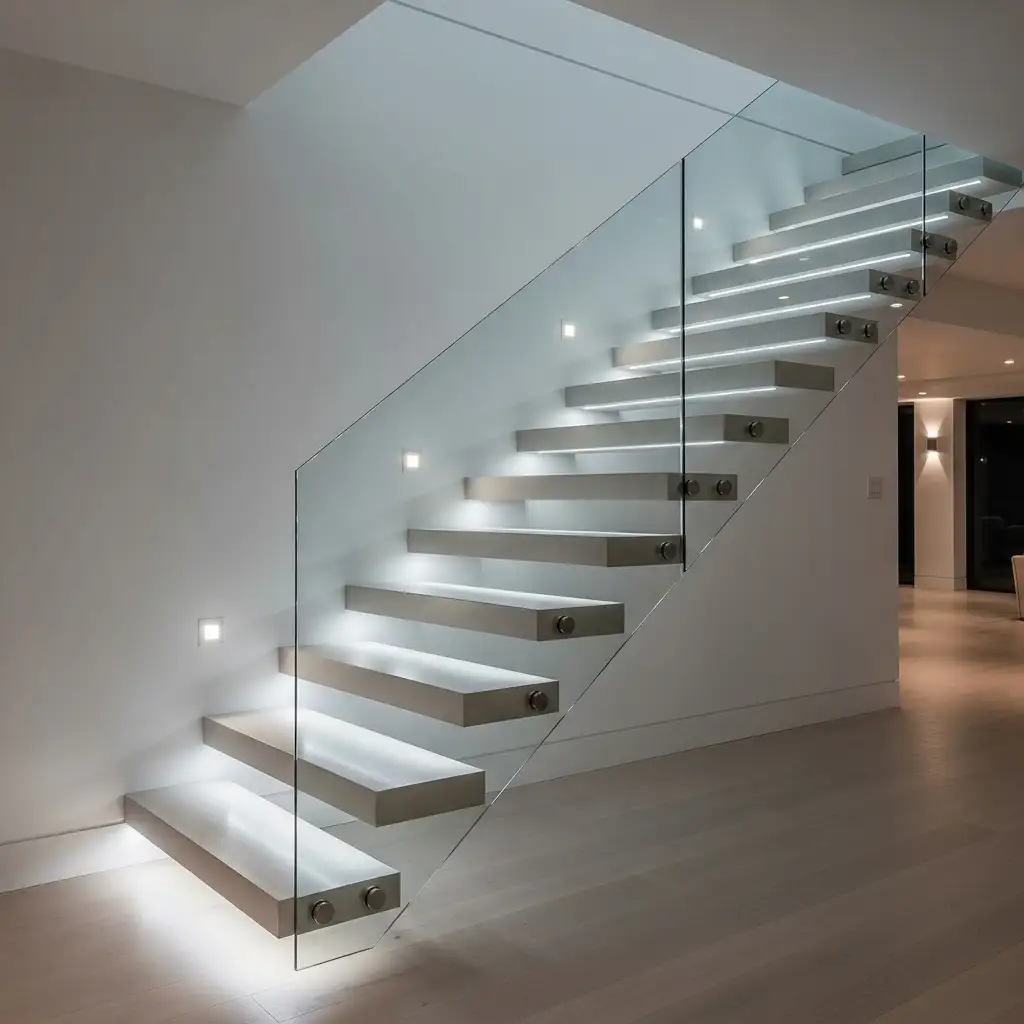
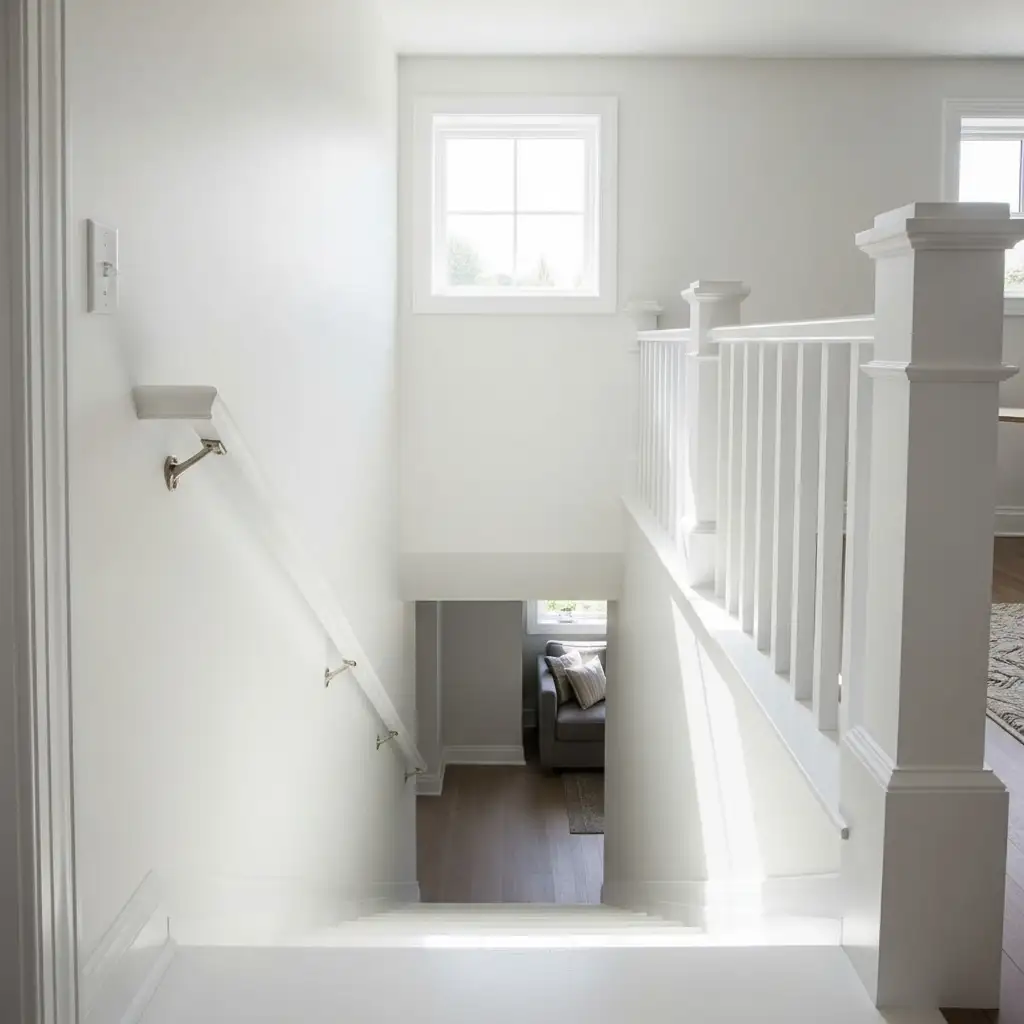
If you have a window at the top or bottom of the stairwell, amplify the light by painting everything—walls, risers, trim, and railing—a bright, clean white. This reflection will make a potentially dark basement entrance feel cheerful and welcoming.
21. The “Floating” Cantilevered Stair
The ultimate modern statement: treads that appear to float in mid-air, anchored directly into the wall with no visible stringers below. This design is pure architectural sculpture, maximizing light flow and creating a stunning, minimalist focal point. It requires professional engineering but delivers unmatched wow factor.
4 FAQs About Basement Stair Design
1. What is the most important safety consideration when redesigning basement stairs?
The building code is non-negotiable. Key requirements include: consistent tread depth (usually a minimum of 10 inches), maximum riser height (typically 7.75 inches), a minimum headroom of 80 inches, and secure, graspable handrails on at least one side. The railing balusters must be spaced no more than 4 inches apart. Always check with your local building department before starting a structural remodel.
2. How can I make my basement stairs less noisy?
Squeaky stairs are often caused by loose treads rubbing against stringers. Secure them with screws (not nails) from below. Adding a thick, quality carpet pad and carpet or a rubber underlayment beneath a runner will also absorb sound. For open-riser stairs, adding a discreet felt pad between connecting metal and wood parts can minimize clicks and creaks.
3. My basement stairwell is very dark. What’s the best lighting solution?
Layered lighting is key. First, ensure you have a bright overhead light at the top and bottom. Then, add ambient layers: LED strip lights under handrails or treads, plug-in wall sconces on the stairwell wall, or even recessed lights in the ceiling above the stairs if possible. The goal is to eliminate shadows on each step. Our guide to ceiling lights offers great fixture ideas.
4. Can I renovate my basement stairs myself, or should I hire a professional?
It depends on the scope. DIY-friendly projects include painting, installing a runner, adding wall treatments like wallpaper or wainscoting, and updating balusters/newel posts. Require a Pro: Any change to the stair’s structure, pitch, or footprint (like creating open risers or installing a spiral stair), or work involving load-bearing walls, requires a licensed contractor. Electrical work for new lighting should also be done by a qualified electrician.
Conclusion: Your Descent, Redefined
Your basement stairs are more than a conduit; they are a transition zone that holds immense potential. Whether you choose the quiet luxury of a woven runner, the clever utility of built-in drawers, or the bold drama of floating concrete treads, your design choice sets the stage for what lies below.
By investing thought and creativity into this often-overlooked space, you do more than just improve aesthetics—you enhance safety, increase functionality, and elevate the entire experience of your home. A well-designed basement staircase doesn’t just lead to a renovated room; it promises an arrival. So look at that stairway not as a project to check off, but as the opening chapter to your basement’s story. Make it a page-turner.