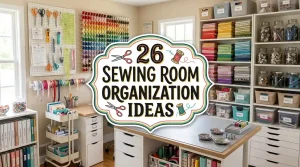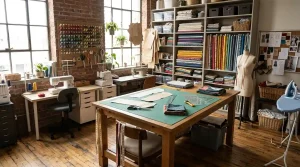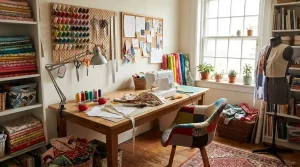
A sewing room can get messy fast. Fabric piles up, thread spools roll away, and small notions like buttons and zippers end up scattered everywhere.
The good news is that a few smart organization systems can fix all of that, while still keeping your space looking pretty.
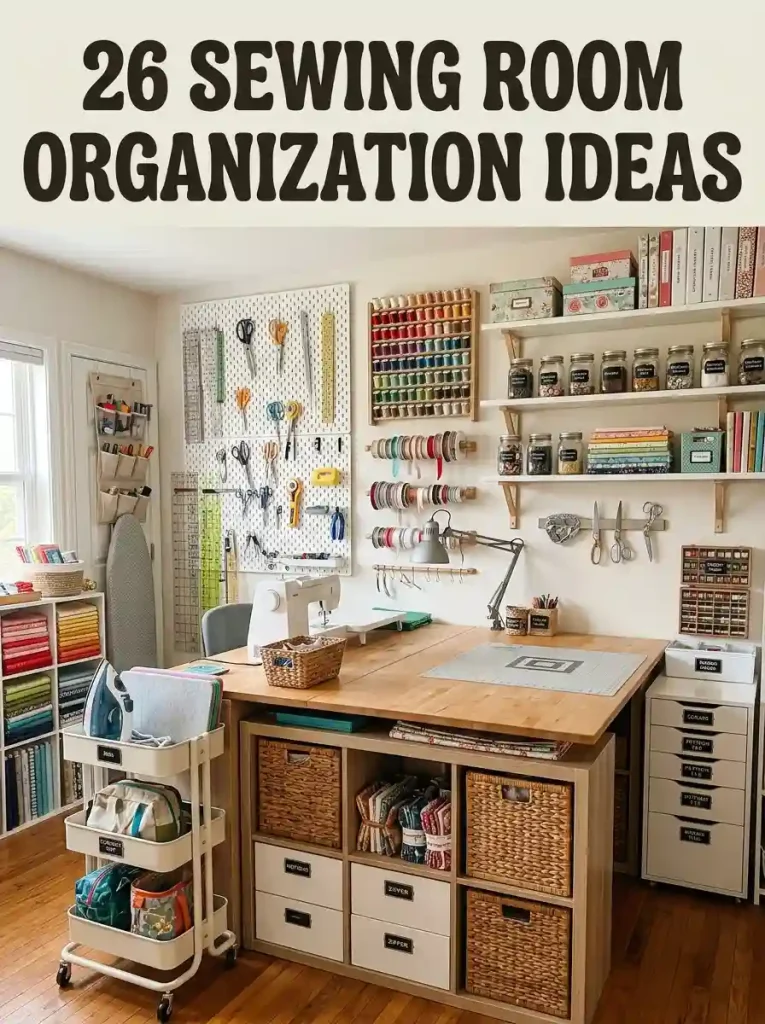
Below are 26 sewing room organization ideas that mix practical storage with a bit of style, so your space stays functional and still feels like your own.
1. Sort Fabric by Color or Type
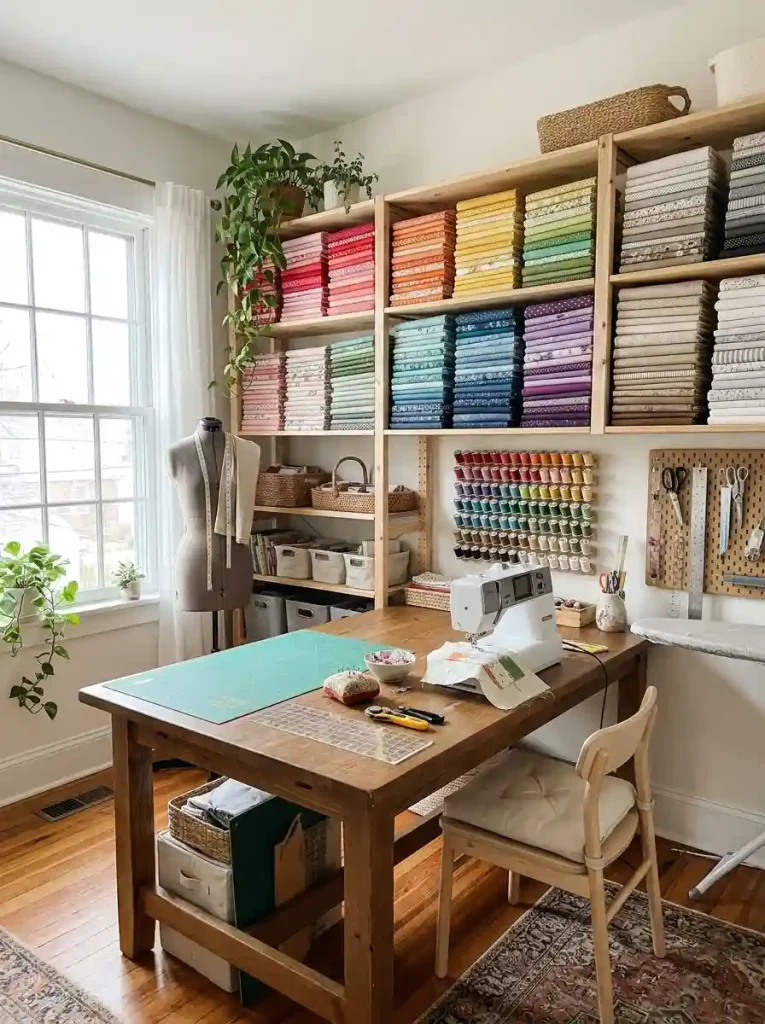
Sorting fabric by color or type makes it much easier to find what you need for a project.
Stacked by shade on open shelving, your fabric collection also becomes a colorful, intentional display instead of a messy pile.
If you prefer sorting by type instead of color, group similar fabrics together, such as cottons, knits, and quilting prints, so you always know where to look first.
2. Use Clear Storage Bins for Fabric
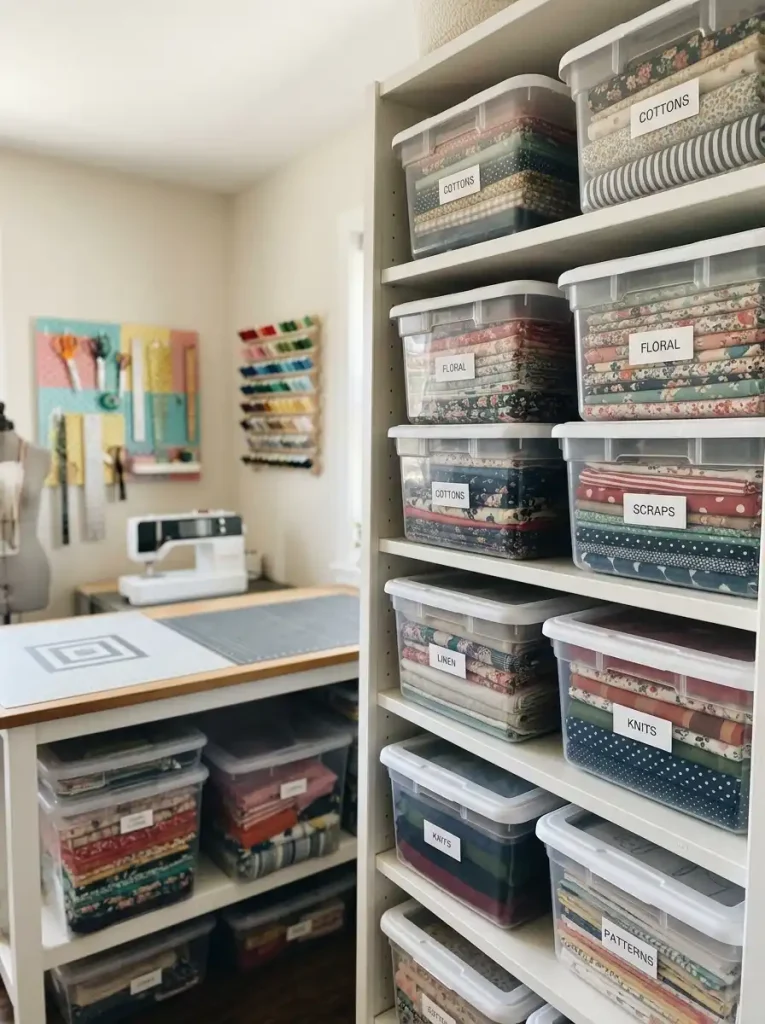
Clear bins let you see exactly what is inside without opening every container.
This saves time when you are searching for a specific print or fabric weight.
Stack clear bins on shelving or inside a closet to make the most of vertical space.
Adding a simple label on the front makes the system even faster to use.
You’ll also love to learn about sewing studios and its organization.
3. Turn a Bookcase into a Rainbow Fabric Display
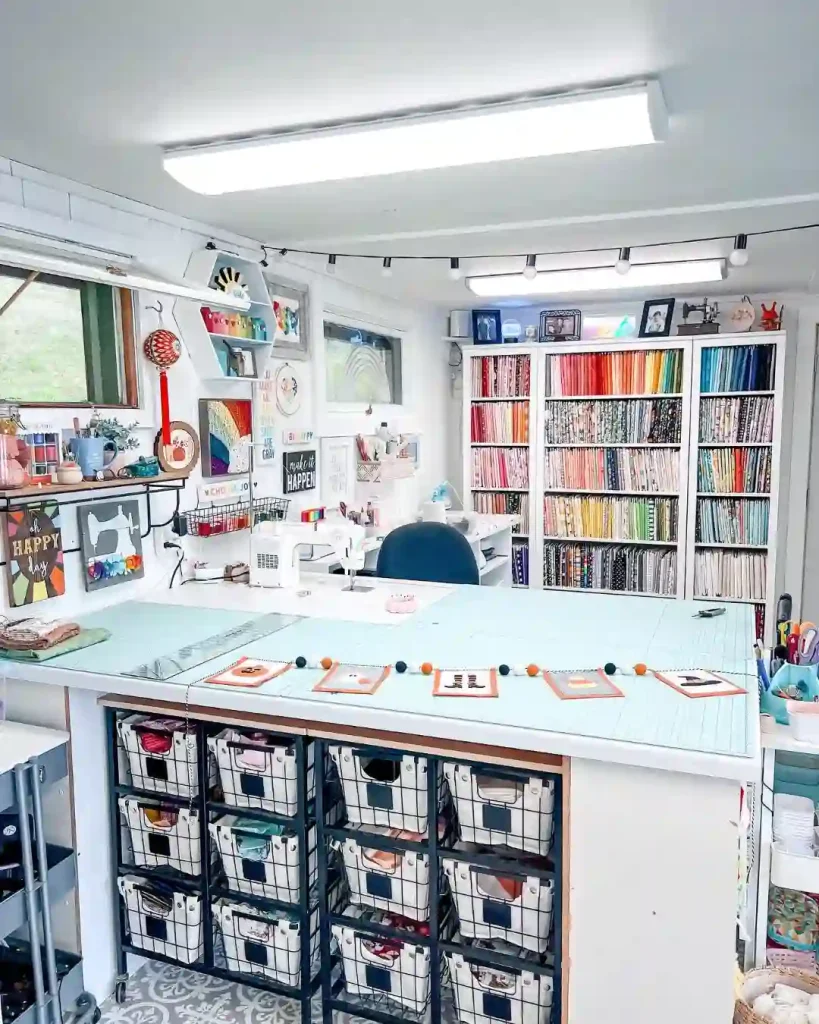
A tall open bookcase filled with folded fabric arranged by color creates a rainbow effect that turns your fabric stash into a beautiful display instead of a messy pile.
Sorting by color makes it easy to find the right shade for a project.
It also adds vibrant creative energy to your sewing room.
This storage method works well for anyone who wants a functional system that also looks intentional and pretty.
4. Store Scraps in a Labeled Remnant Basket
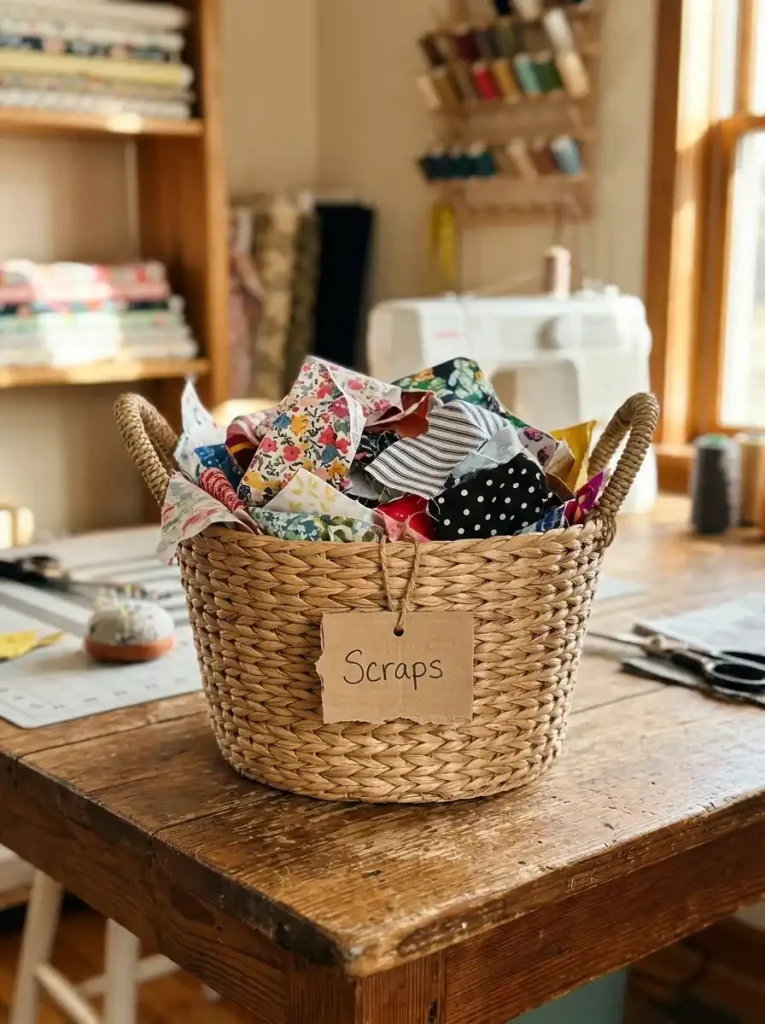
Fabric scraps and remnants need a home too, or they end up cluttering your cutting table.
A labeled basket keeps leftover pieces contained and ready for your next small project or patchwork idea.
Sorting scraps by color inside the basket makes it even easier to grab the right piece when inspiration strikes.
5. Organize Thread with a Dedicated Thread Tower
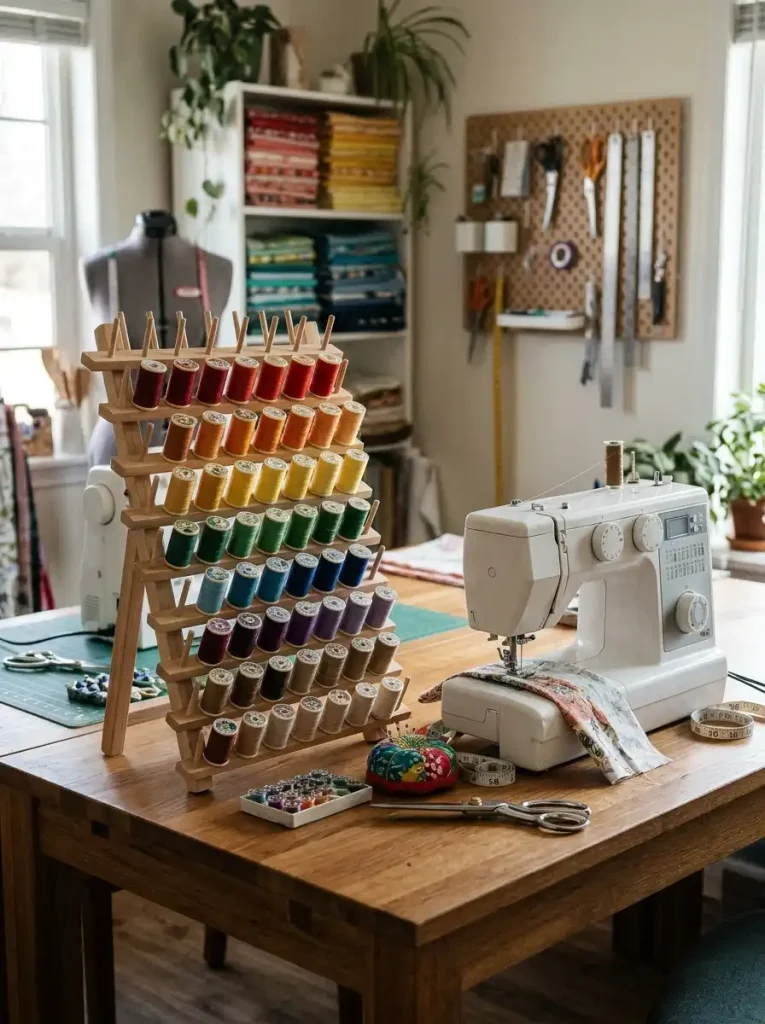
A thread tower or rack holds spools upright and visible, so you can grab the exact color you need without digging through a drawer.
Many towers also sort thread by color automatically, just by the way the spools are arranged.
Keeping thread near your sewing machine saves time during projects, since you will not need to get up and search through storage mid-seam.
6. Keep Bobbins in a Divided Case
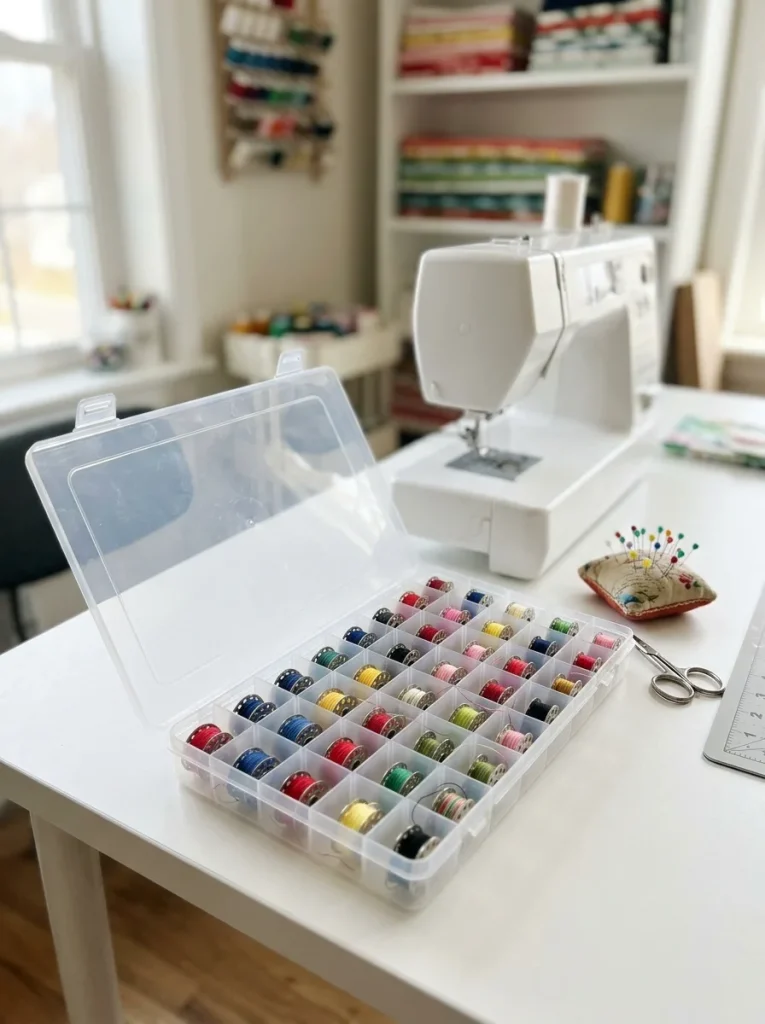
Bobbins are small and easy to lose, especially when they are loose in a drawer.
A divided bobbin case keeps each one separated and visible, so you always know which colors you have ready to go.
Some cases even snap closed, which is helpful if you like to travel with your sewing machine and supplies.
7. Store Buttons and Small Notions in Mason Jars
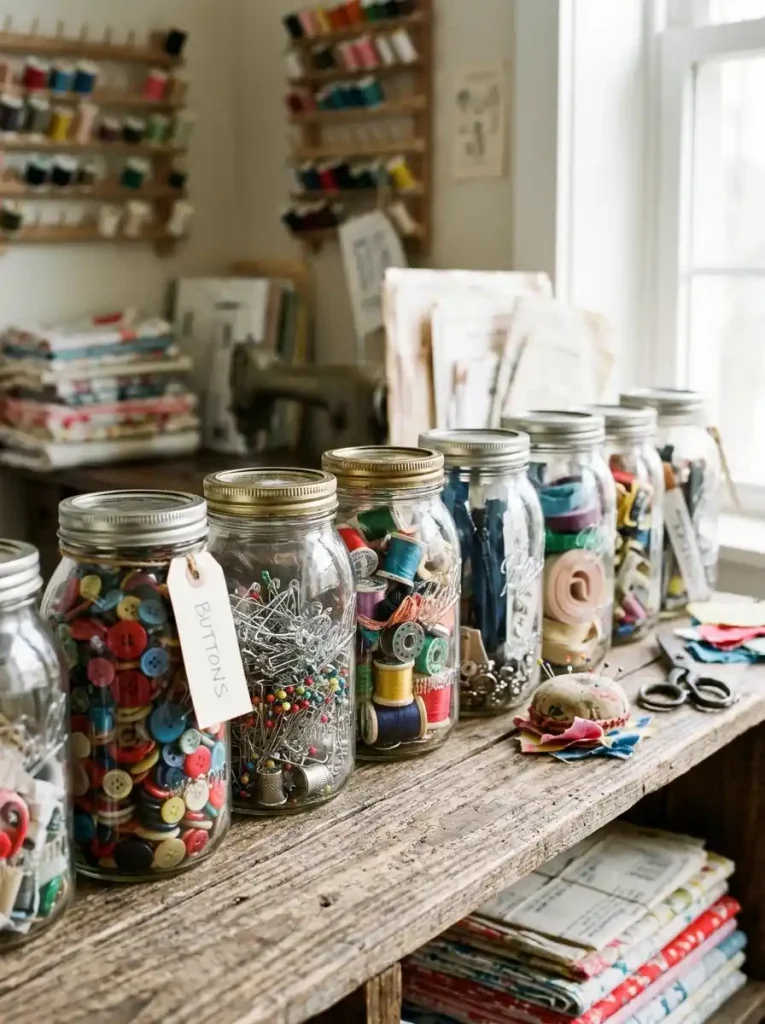
Mason jars are a simple, affordable way to store buttons, pins, and other small notions.
Because the jars are clear, you can see the contents at a glance without opening a lid.
Lined up on a shelf, a row of jars filled with colorful buttons or pins also adds a nice visual touch to your sewing space.
8. Use an Over-the-Door Organizer for Small Tools
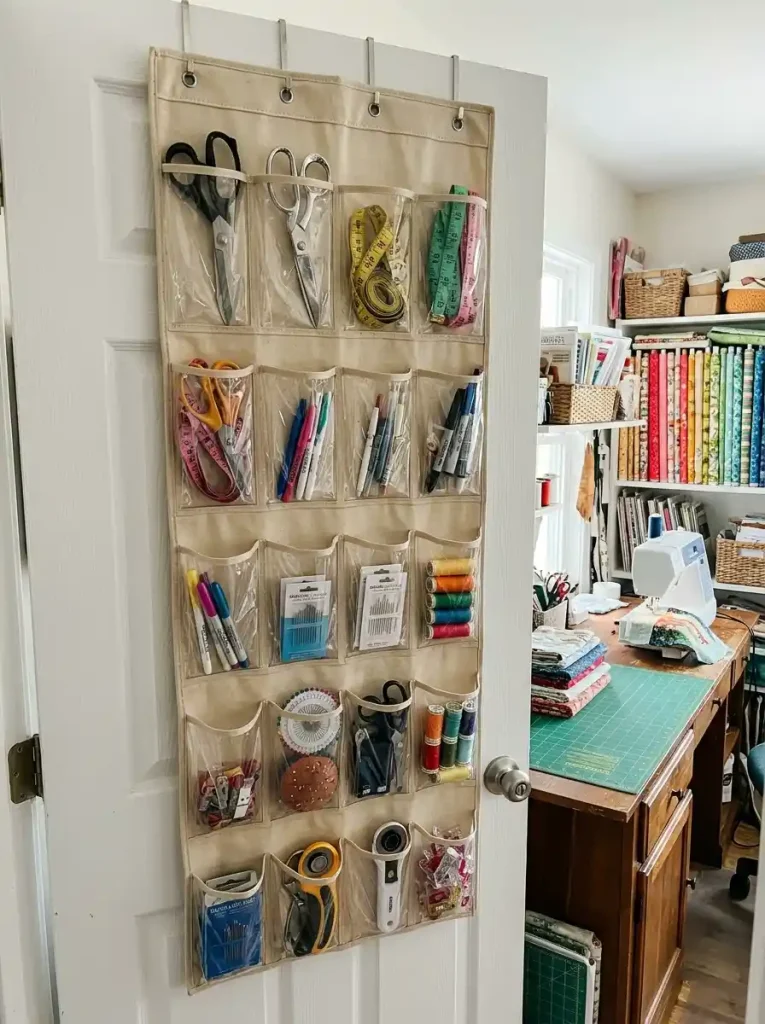
An over-the-door shoe organizer, repurposed for sewing supplies, is a clever way to use otherwise wasted space.
Each small pocket can hold scissors, measuring tools, or notions.
This option works especially well in small sewing rooms or shared spaces, since it adds storage without using any floor or shelf space at all.
9. Sort Sewing Patterns in a Filing Box
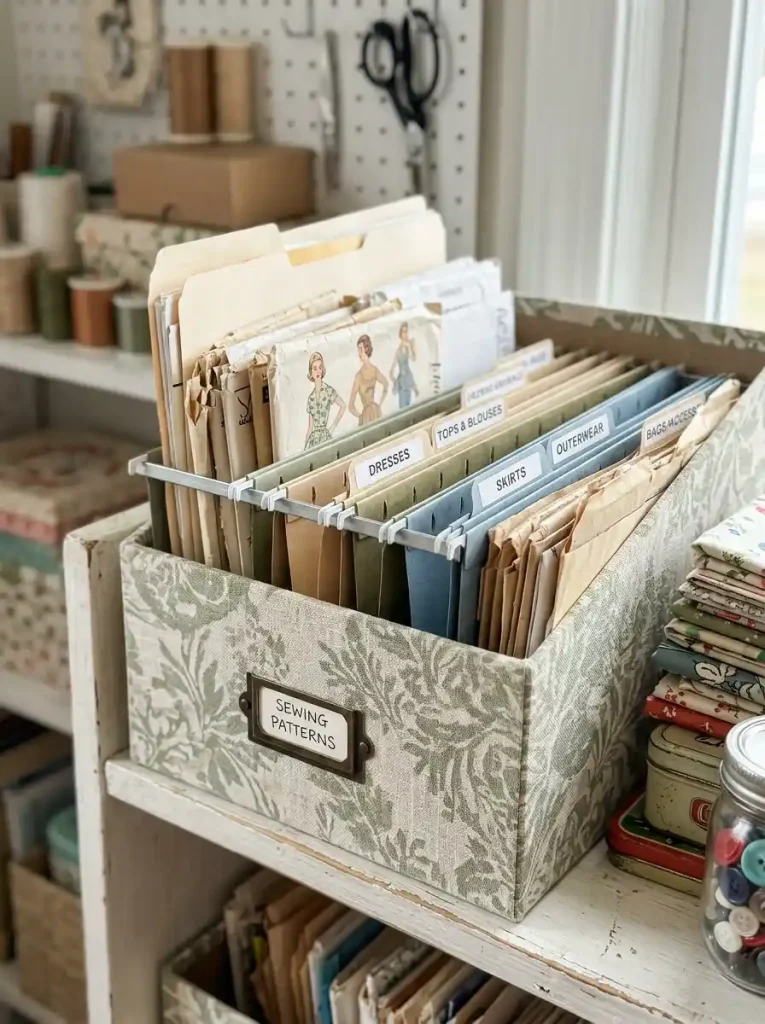
Paper patterns are easy to lose track of if they are just piled in a drawer.
A filing box or hanging folder system lets you sort patterns by type, size, or project, so you can find the right one quickly.
Labeling each folder clearly also saves time, especially if your pattern collection grows over the years.
10. Store Pattern Paper in Cardboard Tubes
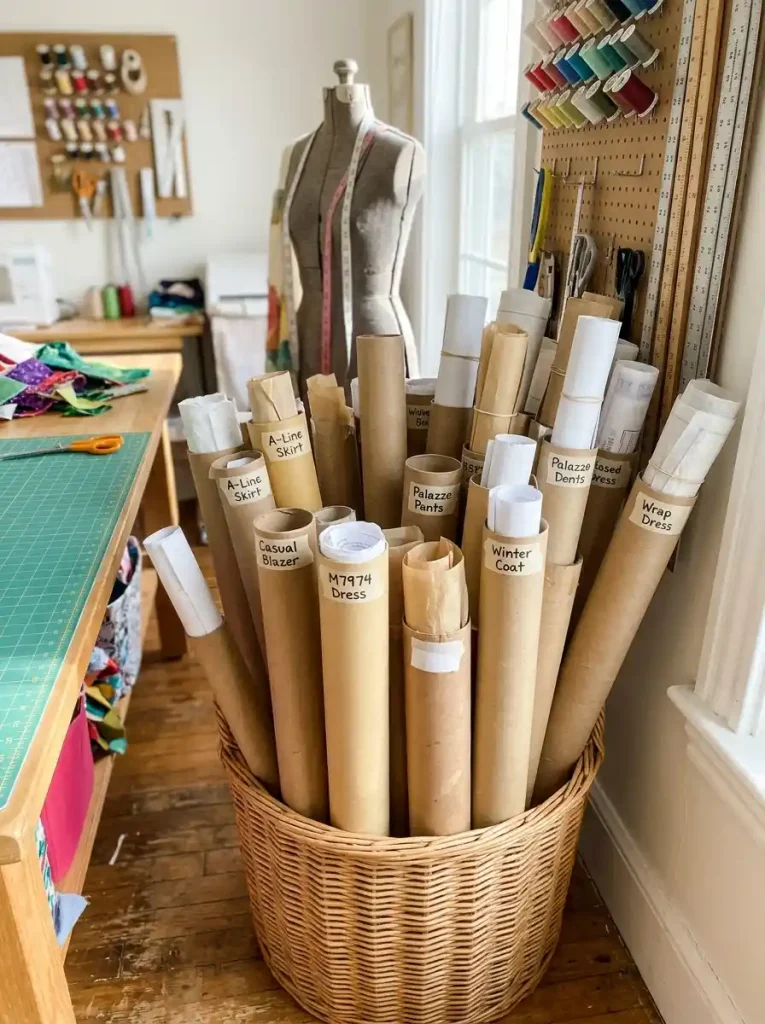
Rolling pattern paper into cardboard tubes, instead of folding it, helps prevent creases and tears.
This is especially useful for larger pattern pieces that do not fold easily.
Labeling each tube with the pattern name or number makes it simple to grab the right one without unrolling several tubes first.
Plan your sewing room from start to end with help of our detailed guide.
11. Keep Current Projects in Individual Project Bins
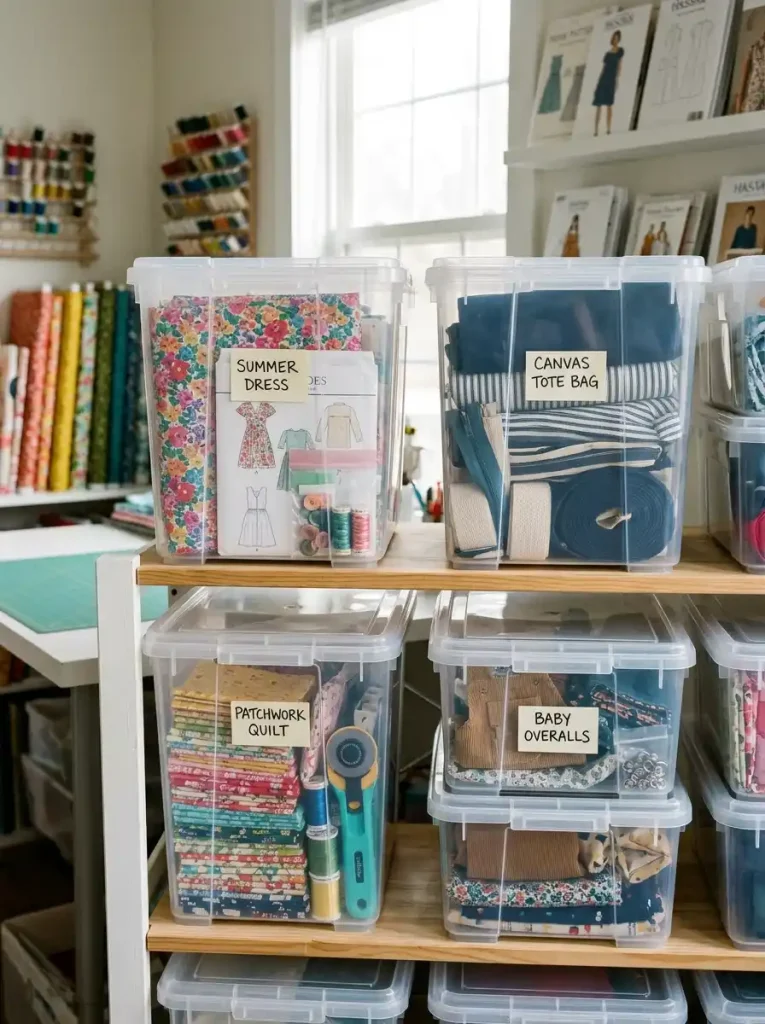
A dedicated bin for each active project keeps fabric, pattern pieces, and notions together in one place.
This prevents pieces from getting mixed up with your general fabric stash.
Stackable bins work especially well if you like to work on more than one project at a time, since each one stays fully separate and easy to grab.
12. Store Unfinished Projects (UFOs) Separately
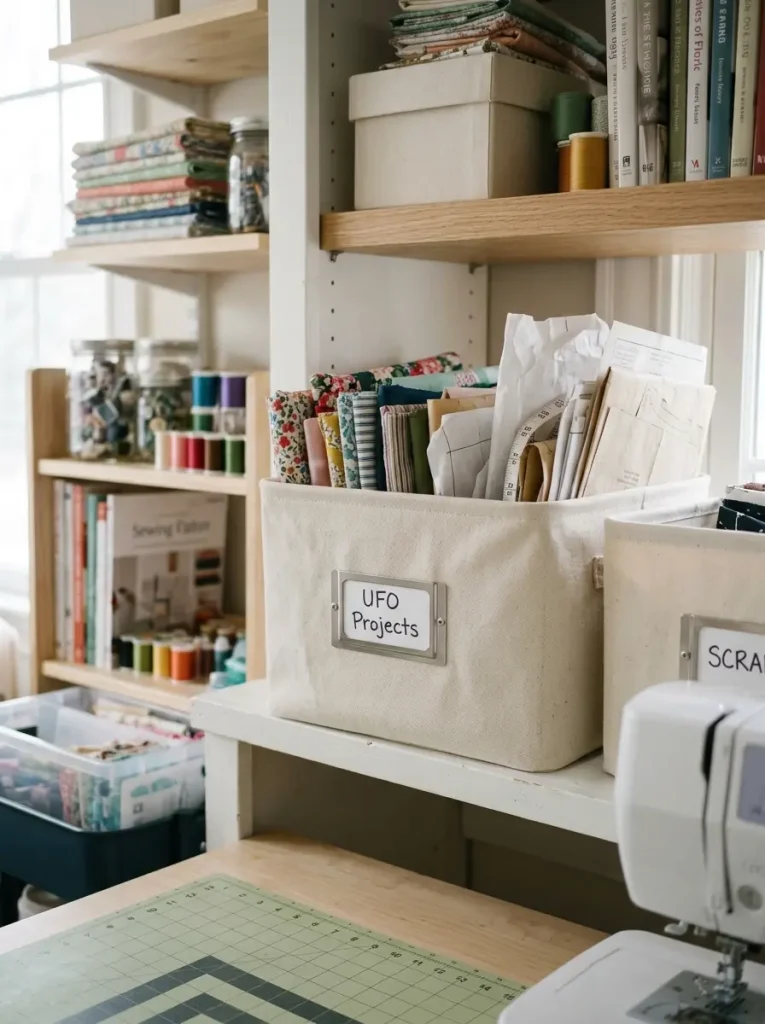
Every sewer has a few unfinished projects, often called UFOs, tucked away somewhere.
Giving them their own labeled bin or shelf keeps them out of your active workspace while still keeping them visible enough to finish later.
This also helps you see exactly how many projects you have in progress, which can be a helpful reminder to finish one before starting something new.
13. Organize Ribbon and Trim on a Spool Rack
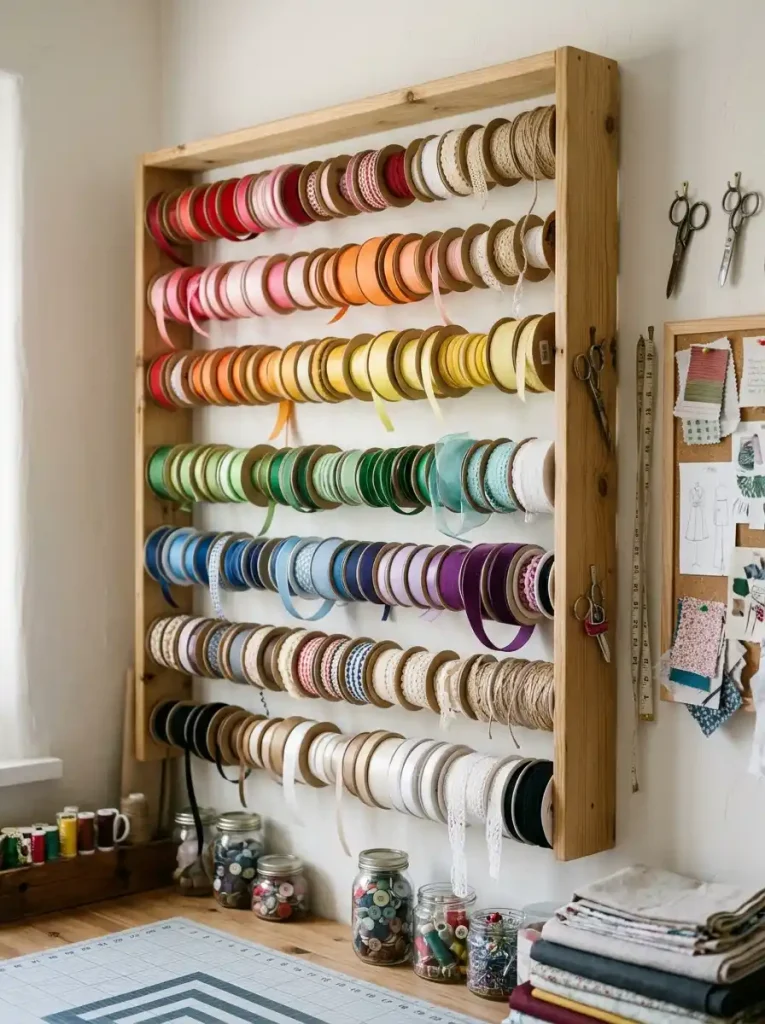
A small rod or dowel mounted on the wall works well for holding spools of ribbon and trim.
Keeping them visible and sorted by color makes it easy to choose the right one for a project.
This system also prevents ribbon from tangling or unwinding, which often happens when spools are stored loose in a drawer.
14. Use Drawer Dividers for Small Notions
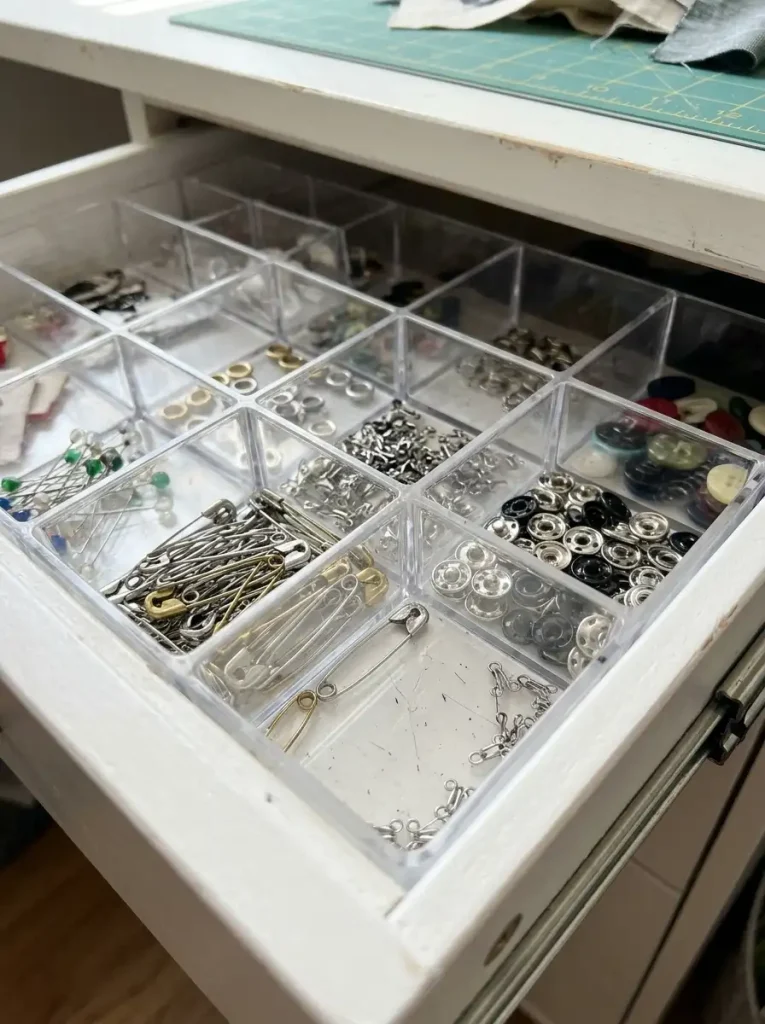
Drawer dividers keep small items, like safety pins, snaps, and hooks, from sliding around and mixing together.
Each section can hold a different type of notion, which makes cleanup and searching much faster.
Clear plastic dividers also let you see the contents of each section without opening every single one.
15. Store Zippers by Length and Color
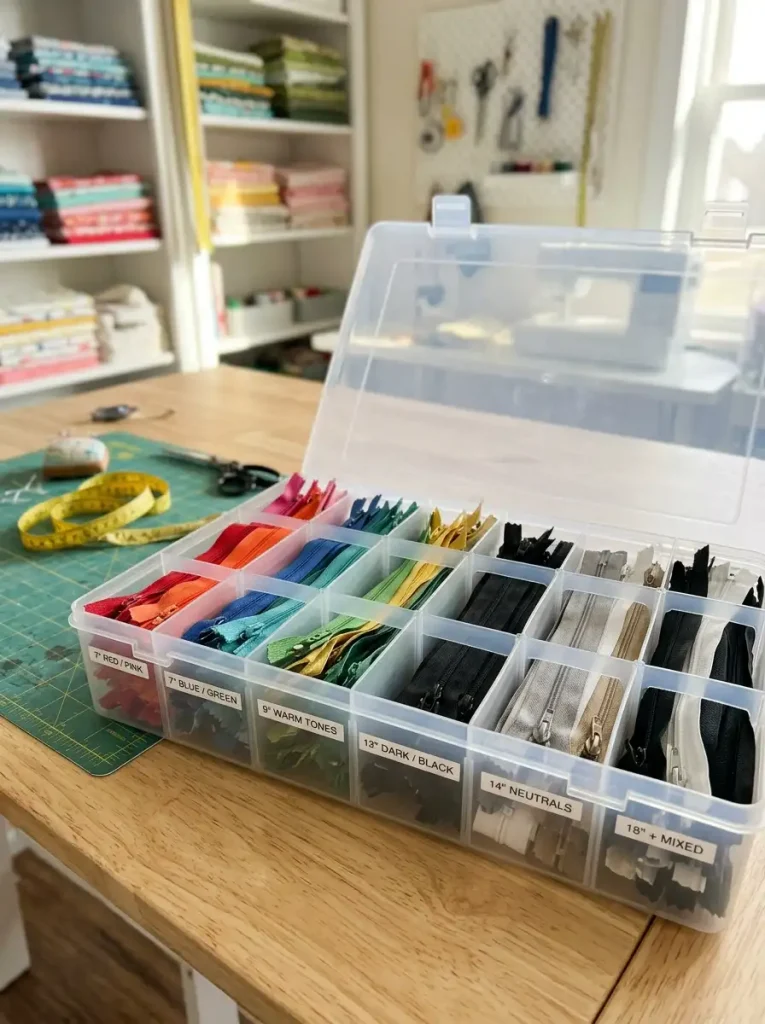
Zippers are much easier to use when they are sorted by length and color instead of tangled together in a bag.
A small labeled bin or divided organizer works well for this.
This system saves time during garment sewing, since you can find the exact zipper length you need without untangling a pile first.
16. Keep Elastic and Bias Tape on Labeled Spools
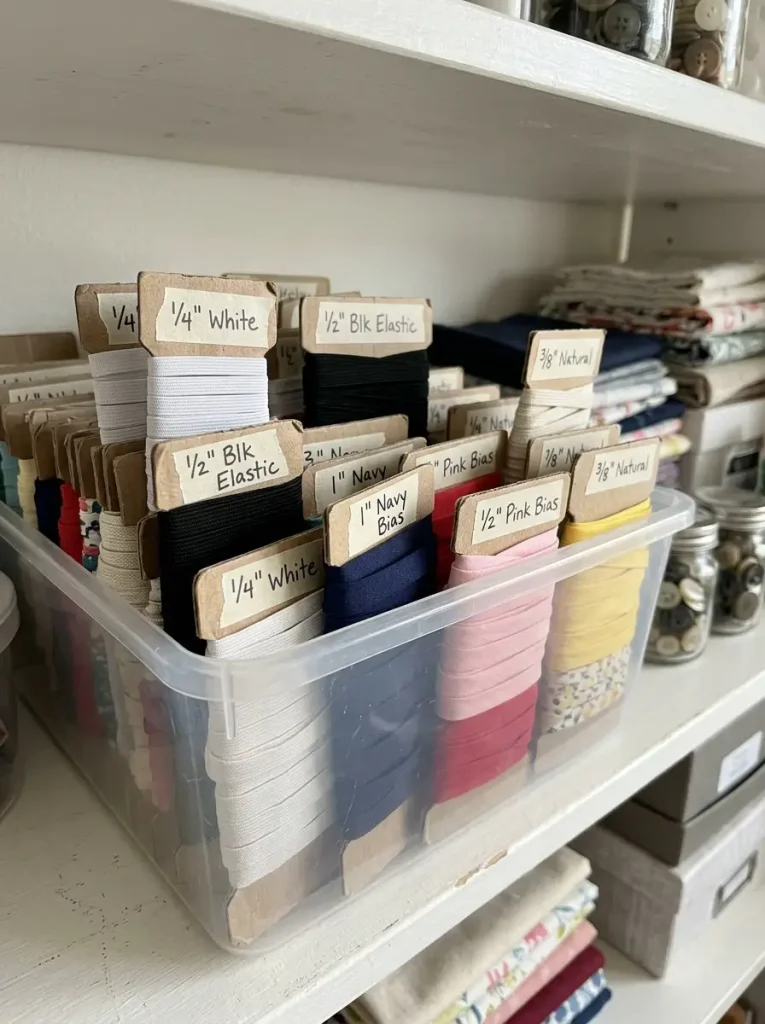
Elastic and bias tape tend to unravel and tangle if stored loose.
Winding them onto small cardboard spools or clips, then labeling each one by width or color, keeps them neat and ready to use.
Storing these spools upright in a small bin or drawer keeps them organized and easy to see at a glance.
17. Use a Rolling Cart for Frequently Used Tools
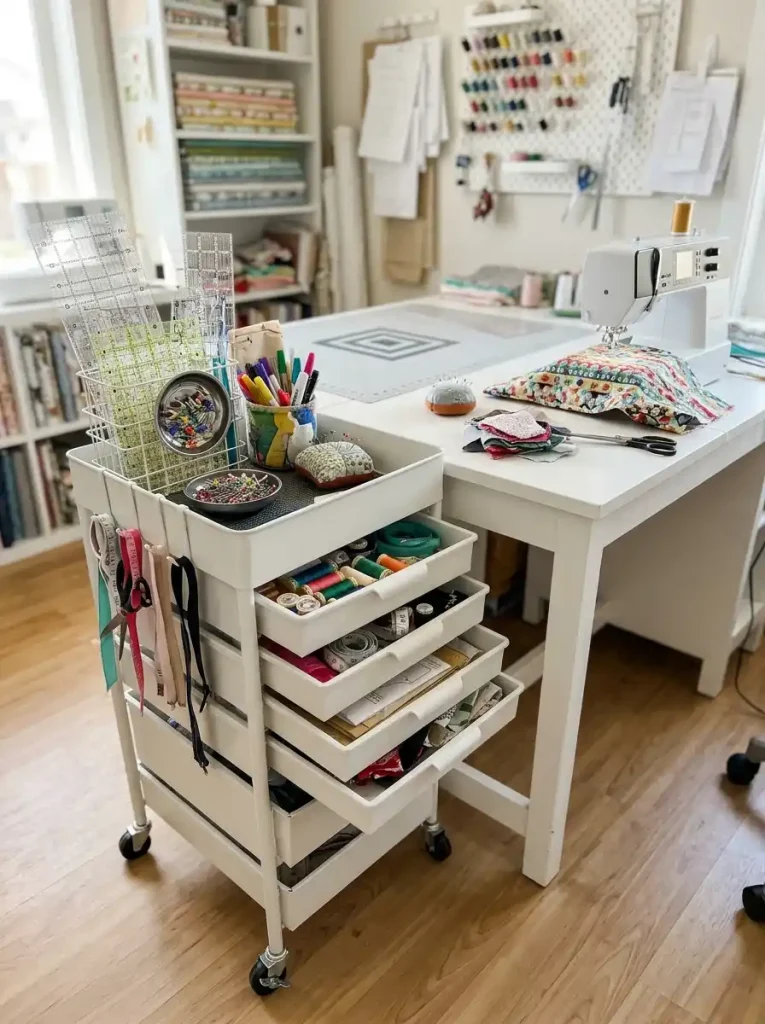
A small rolling cart with drawers keeps your most used tools, like pins, markers, and rulers, mobile and within reach.
You can roll it next to your sewing machine or cutting table depending on what you are working on.
This setup is especially helpful in shared spaces, since you can roll the entire cart out of the way when the room is needed for something else.
18. Add a Label System to Every Bin and Drawer
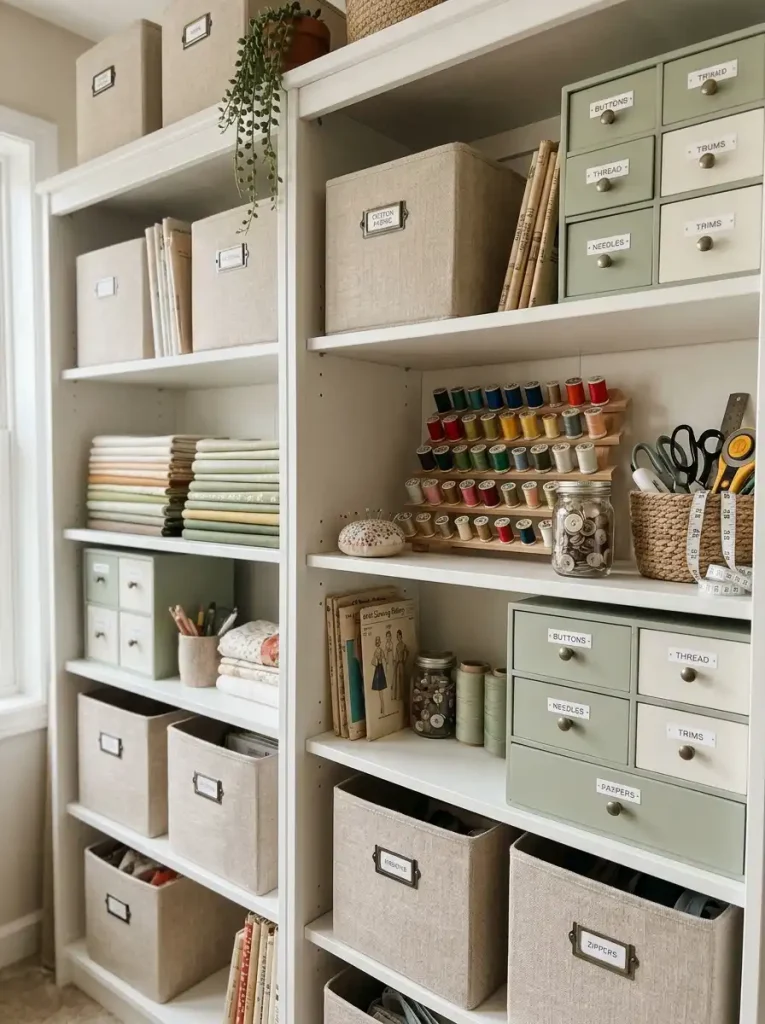
A consistent label system is one of the simplest ways to keep a sewing room organized long term.
Labels remove the guesswork, so you always know exactly where something belongs when you are cleaning up.
Using a label maker or simple printed tags gives your storage a clean, cohesive look, rather than a mix of handwritten notes and sticky notes.
19. Store Embroidery Floss in a Floss Organizer Box
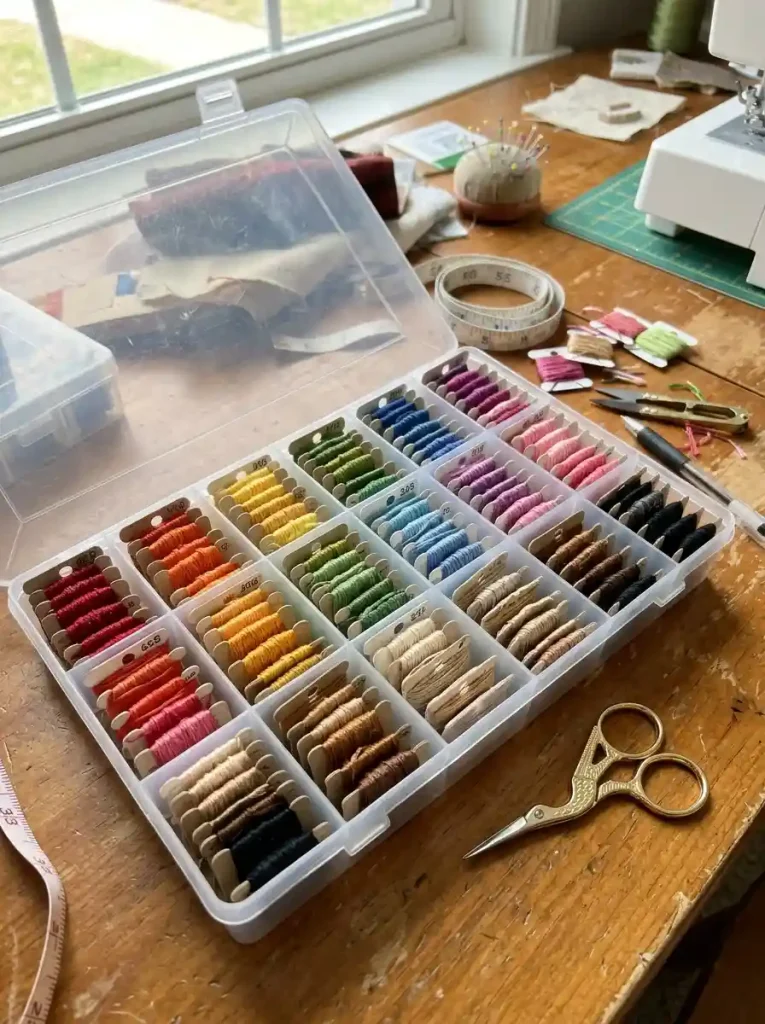
Embroidery floss tangles easily if it is not wound and stored properly.
A floss organizer box, with individual cards or bobbins for each color, keeps every strand separated and easy to find.
Sorting the box by color family makes it even faster to choose the right shade for detailed stitching work.
20. Keep a Scissors and Rotary Cutter Caddy Nearby
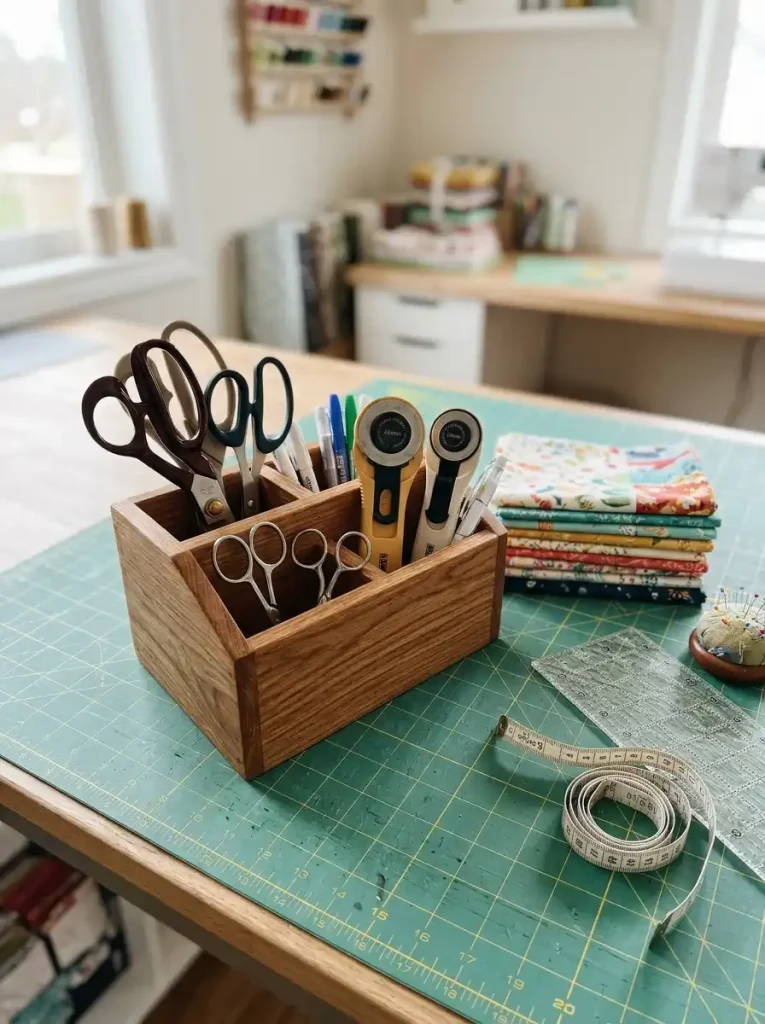
Cutting tools need a dedicated spot close to your cutting surface, so they do not end up buried under fabric or paper.
A small caddy or holder keeps scissors and rotary cutters within easy reach.
This also helps protect your blades, since a dedicated holder prevents tools from banging around loose in a drawer.
21. Use a Closet as a Dedicated Sewing Storage Space
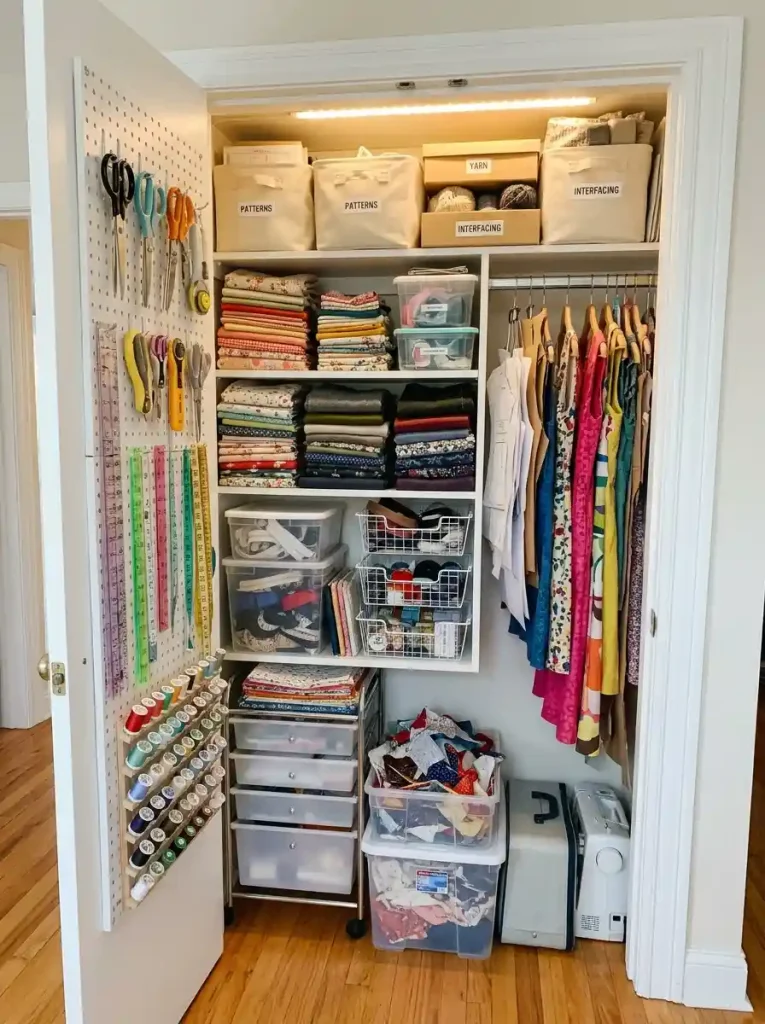
An unused closet can become a highly functional sewing storage space with a few shelves and bins added inside.
This works especially well for hiding bulk fabric storage out of the main room.
Adding a rod inside the closet also gives you a spot to hang garments in progress, keeping them wrinkle free while you work.
22. Hang Finished or In-Progress Garments on a Rod
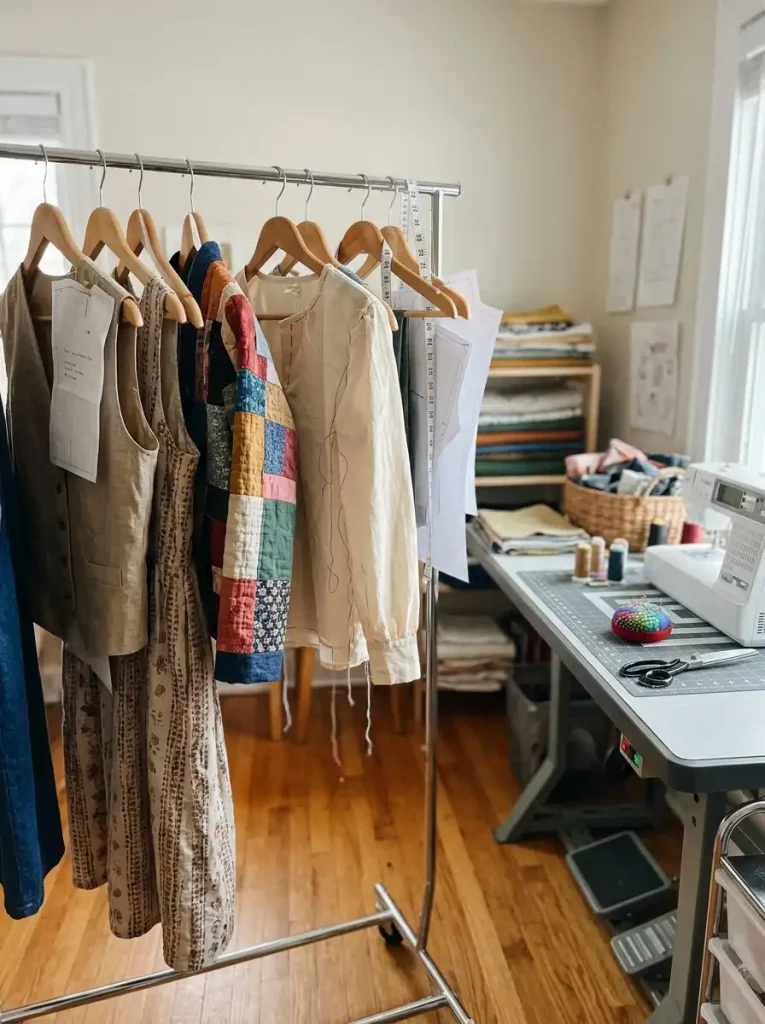
A simple clothing rod gives garments, whether finished or still in progress, a place to hang instead of lying on your sewing table. This keeps your workspace clear and prevents wrinkles.
This is especially useful for anyone who sews clothing regularly, since it mimics a small closet setup right inside the sewing room.
23. Store a Travel Sewing Kit for On the Go Projects
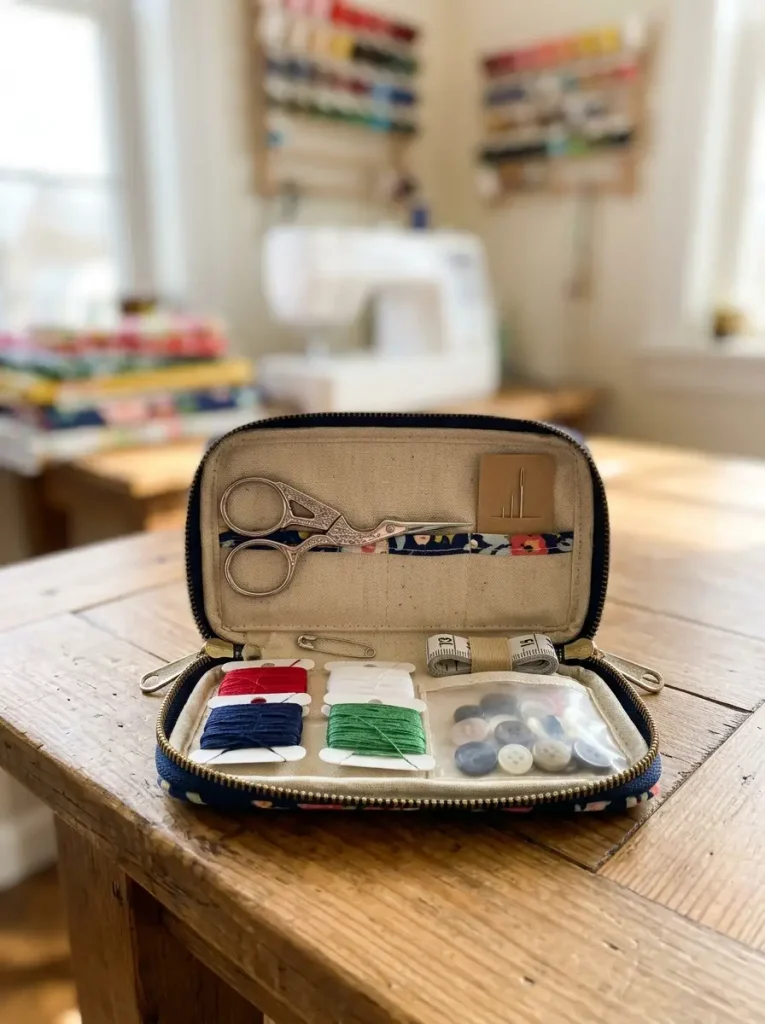
A small zippered pouch stocked with basic tools, like a needle, thread, scissors, and a few buttons, makes it easy to grab your sewing kit for travel or quick repairs.
Keeping it separate from your main supplies means you are never missing a tool when you need it most.
This kit is also useful for hand sewing projects you want to take outside of your main sewing room, like mending or small embroidery work.
24. Add Personal Labels or Decor to Make Storage Pretty
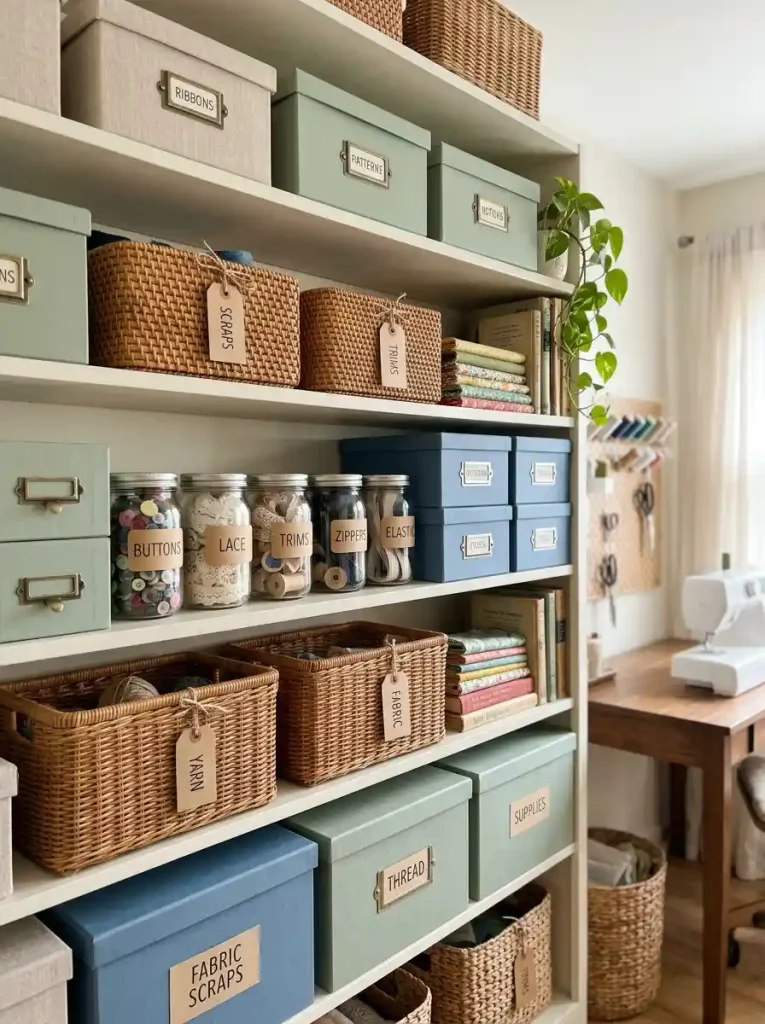
Organization does not have to look purely functional. Adding decorative labels, a coordinating color scheme, or pretty containers turns your storage system into part of your room’s overall style.
Even small details, like matching lids or a consistent font on your labels, make a big difference in how put together your sewing room feels.’
25. Use Wire Basket Storage Under Your Cutting Table
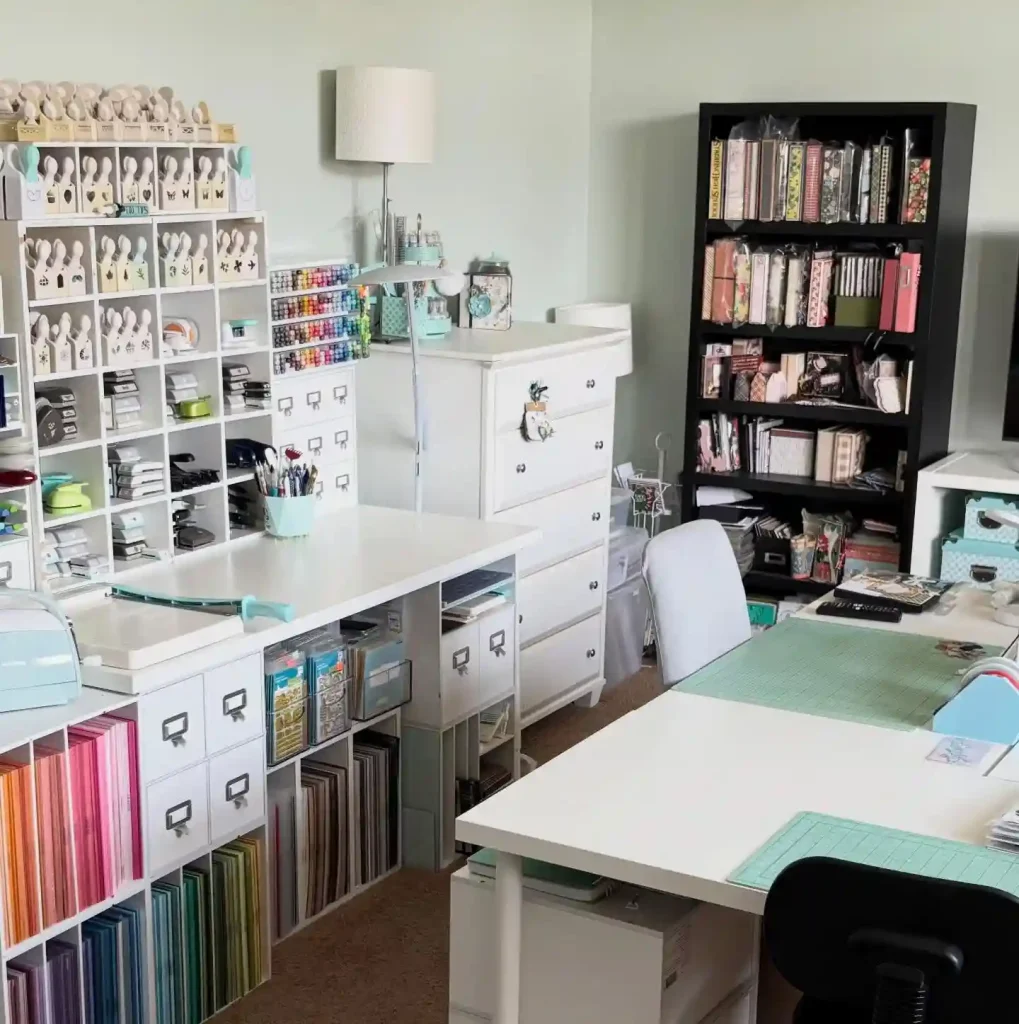
A grid of wire baskets under a cutting table holds fabric cuts, patterns, and active projects.
Because the baskets are open, you can see exactly what is inside without opening drawers.
This keeps your main work surface clear while storing bulky items like fabric yardage and interfacing right where you need them.
It also makes cleanup faster because every item has a visible home.
26. Build a Vertical Fabric Bolt Rack
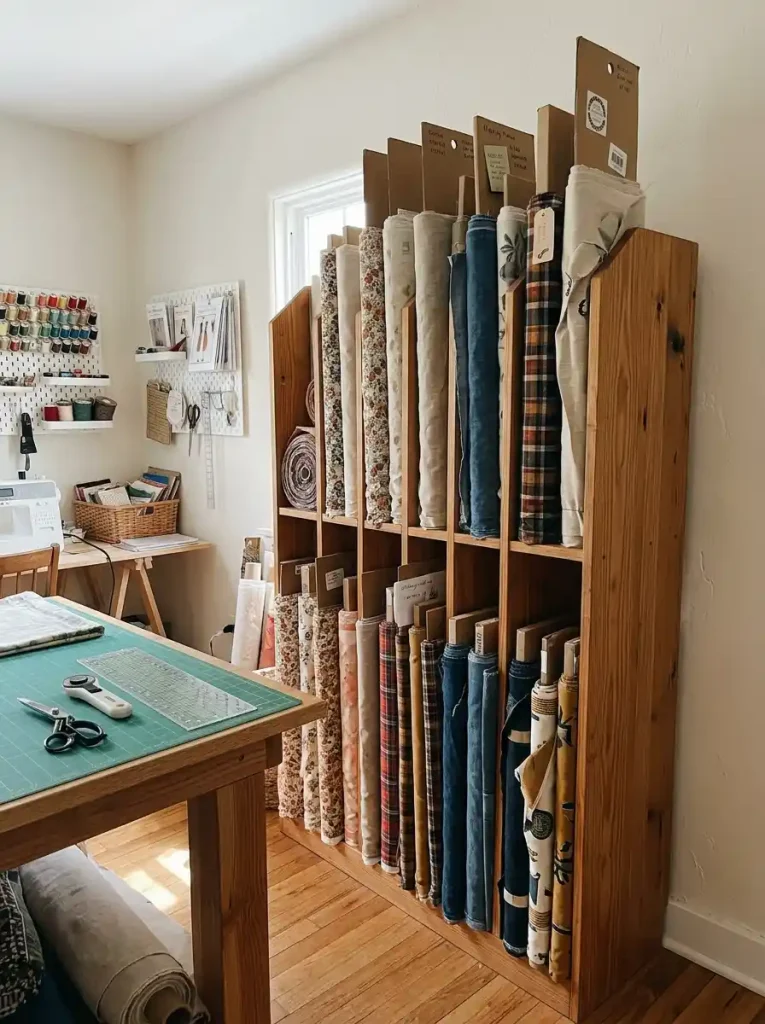
A vertical rack designed to hold fabric bolts keeps larger fabric cuts upright and easy to flip through, similar to browsing a fabric store.
This works especially well for anyone who keeps larger fabric yardage on hand.
This type of storage also saves floor space compared to stacking bolts flat, since the rack uses height instead of width.
Final Thoughts
A well organized sewing room saves time, reduces frustration, and makes every project more enjoyable.
From sorting fabric by color to giving zippers and elastic their own labeled spot, small systems add up to a space that works for you instead of against you.
With a little planning, your sewing room can stay both functional and beautiful at the same time.
FAQ’s Sewing Room Organization
How do I store fabric in a small sewing room?
Use vertical space with a tall bookcase and open wire baskets under your cutting table. Sort fabric by color so you can see what you have at a glance.
What is the best way to organize fabric by color?
Fold fabric into uniform sizes and arrange it on open shelves from light to dark or in rainbow order. This makes it easy to find the right shade for any project.
How can I keep my cutting table clear?
Store fabric, patterns, and active projects in wire baskets underneath the table. Open baskets keep everything visible and within reach without cluttering your work surface.