Are you looking at your unfinished basement and seeing wasted potential instead of valuable square footage? Does your family need more living space but dread the cost and hassle of building additions?
A finished basement transforms dark, concrete storage areas into beautiful, functional living spaces that add 500-1,500 square feet without expanding your home’s footprint, increasing property values by $30,000-$70,000 while costing just $20,000-$45,000 to complete.
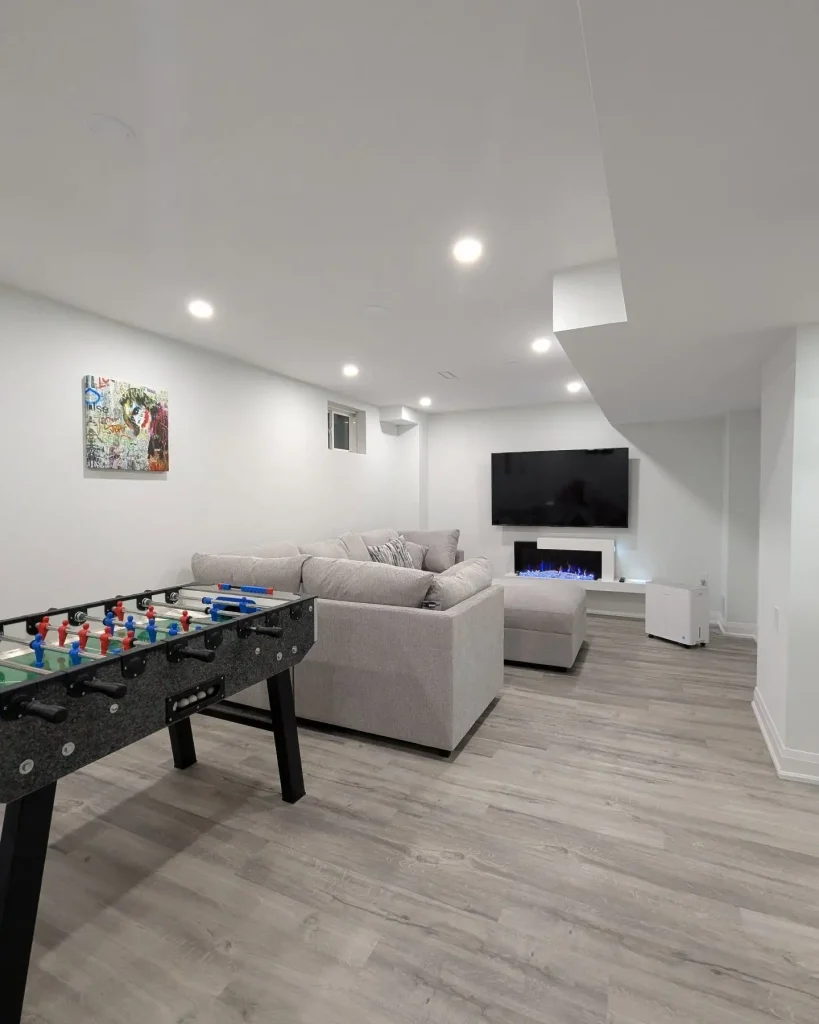
Source: @db.renos
Unlike unfinished basements serving solely as mechanical rooms and storage dumping grounds, finished basements become integral parts of homes—extra bedrooms accommodating growing families, entertainment spaces for gathering friends, home offices supporting remote work, or rental units generating income.
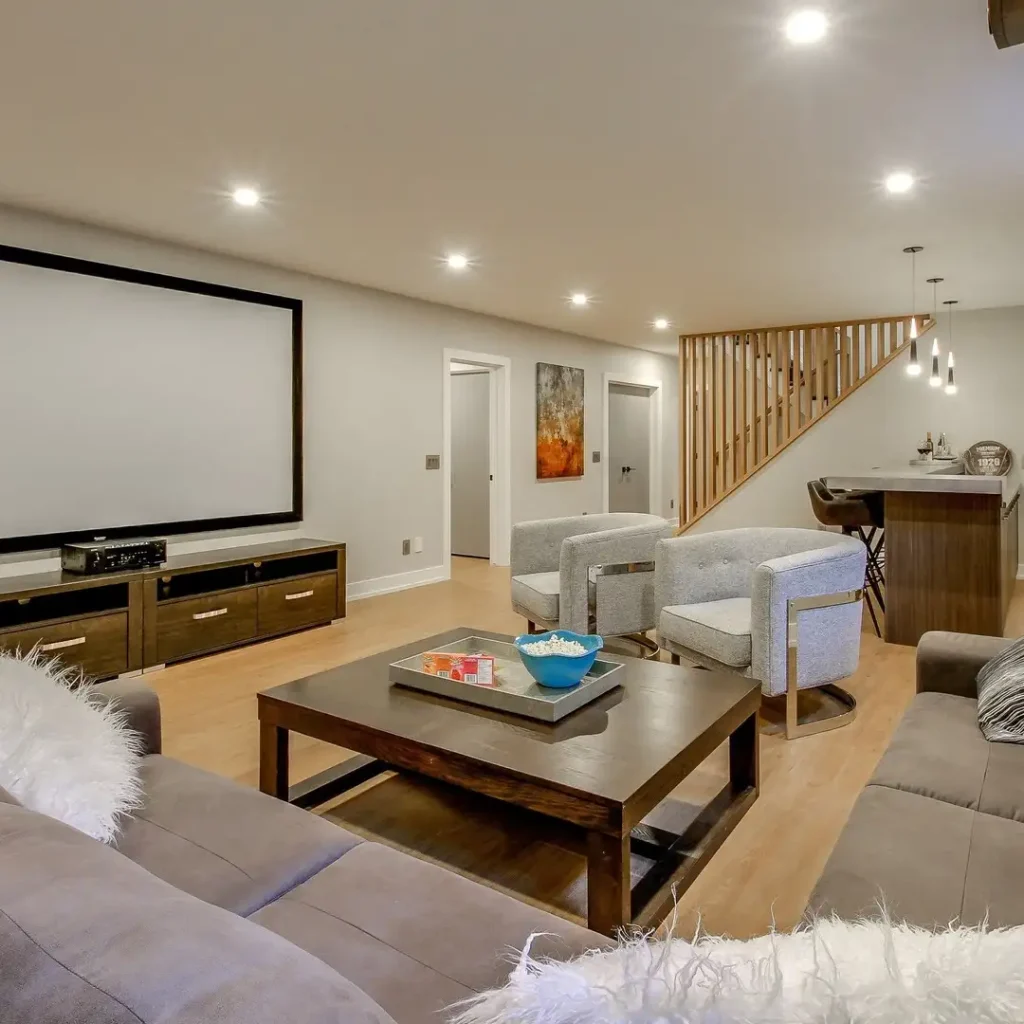
The transformation requires addressing moisture control, installing proper finishes, ensuring adequate lighting, and meeting building codes, but the investment delivers immediate quality-of-life improvements and long-term value appreciation.
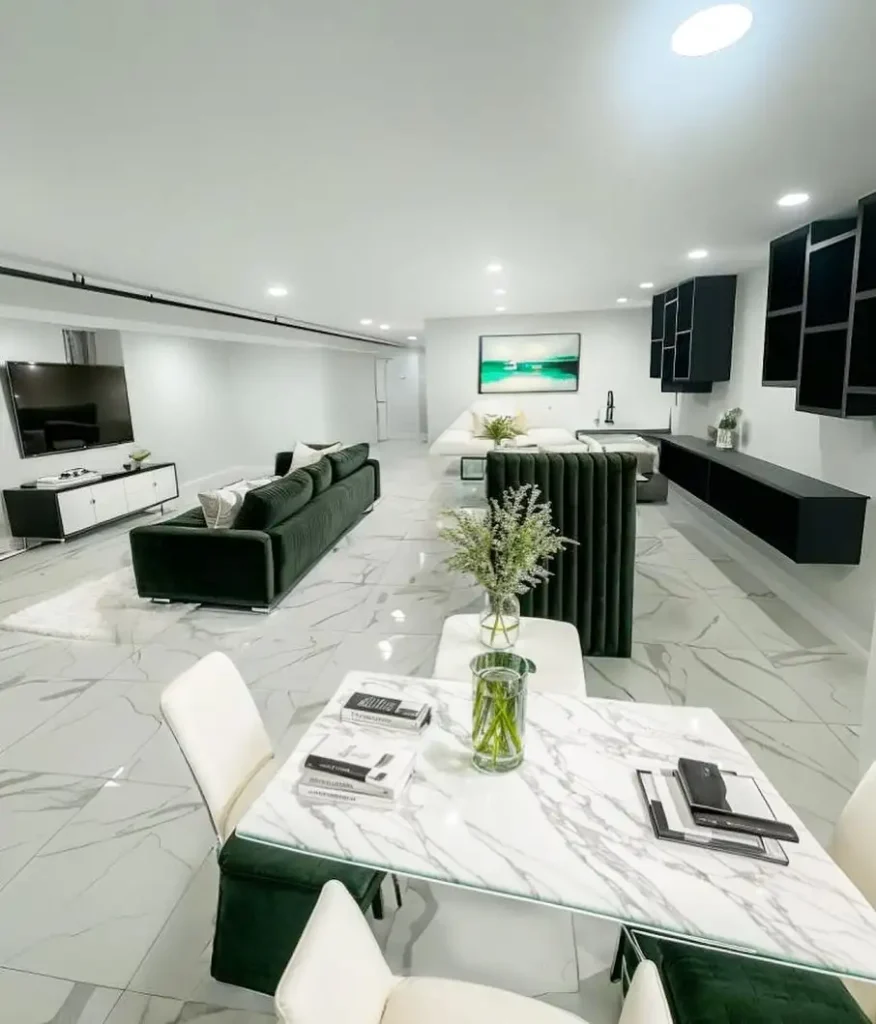
Source: @holmesapprovedhomes
Let’s explore everything you need to know about creating finished basements that rival upstairs living spaces in comfort, beauty, and functionality.
What Defines a Finished Basement?
Essential Finished Basement Features
Finished basements include complete walls with drywall or paneling, finished ceilings either dropped, drywalled, or painted exposed, proper flooring covering concrete slabs, adequate lighting and electrical outlets, climate control through heating and cooling, and sometimes bathrooms or wet bars.
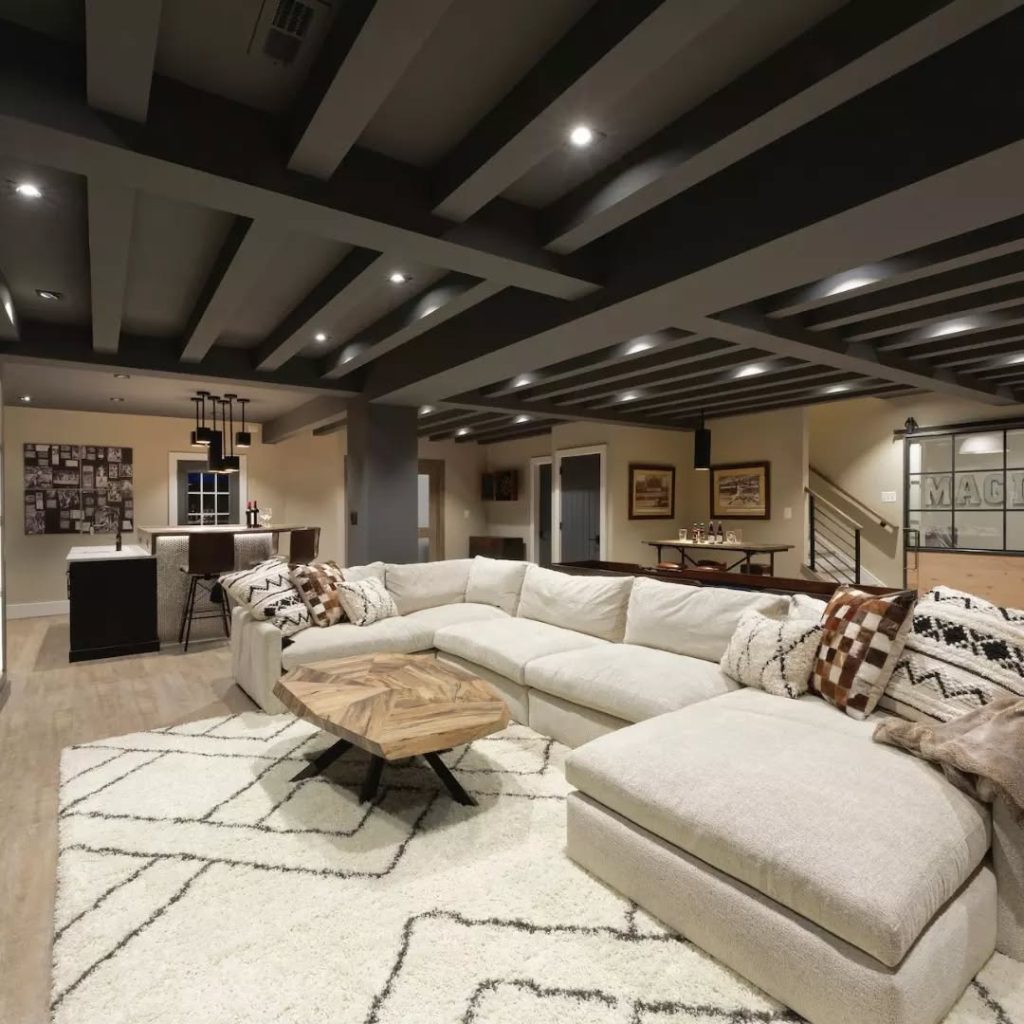
Source: @metrodesignbuildgroup
These elements transform raw concrete boxes into livable spaces indistinguishable from above-grade rooms except for their underground location. The key distinction from unfinished basements lies in complete, move-in-ready conditions requiring no further work before comfortable daily use.
Building Code Requirements
Most jurisdictions define finished basements through specific code requirements including minimum 7-foot ceiling heights (some areas require 7.5 feet), proper egress windows for bedrooms allowing emergency escape, adequate electrical service with outlets every 12 feet, smoke and carbon monoxide detectors, and proper moisture barriers preventing water infiltration.
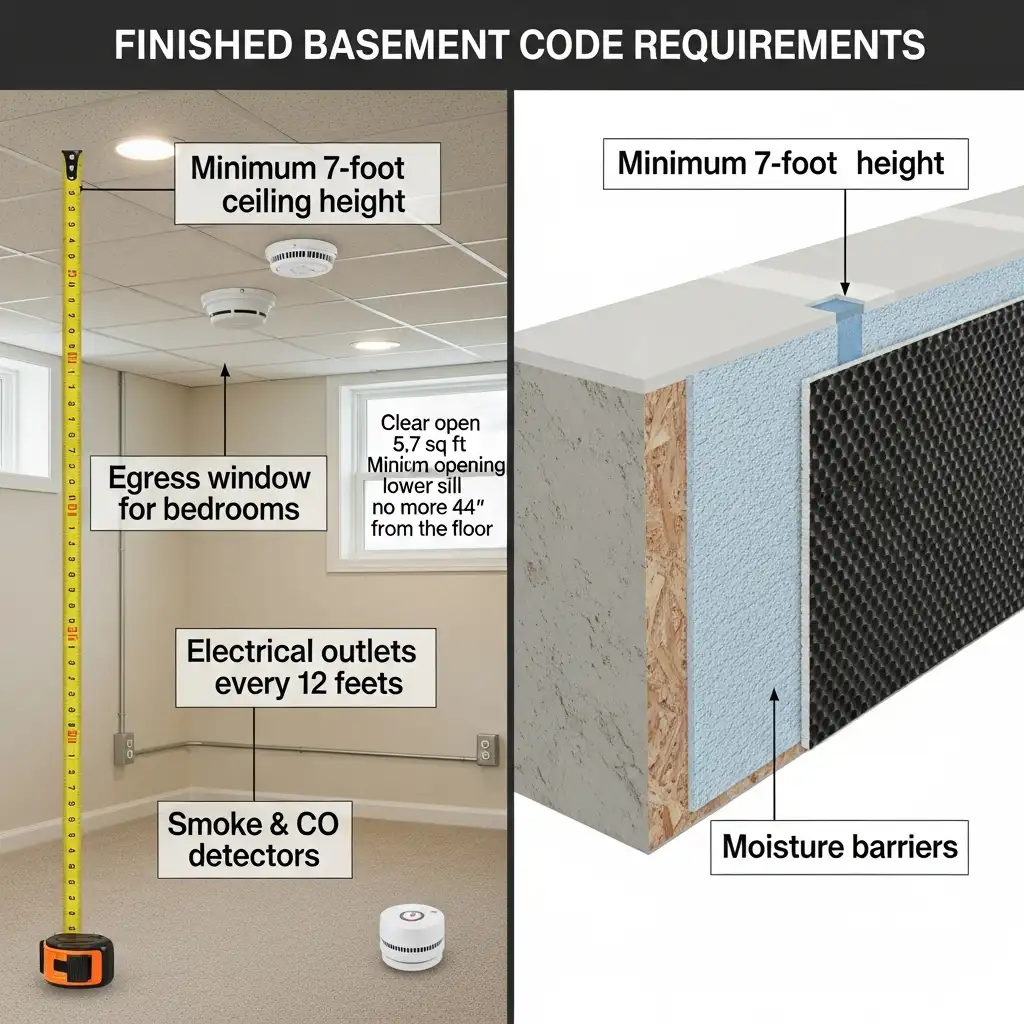
These regulations ensure safety and habitability rather than arbitrary standards, protecting homeowners and future occupants. Always verify local codes before beginning projects, as requirements vary significantly by location and can substantially impact project costs and feasibility.
Benefits of Finished Basements
Increased Living Space
Finished basements add substantial square footage without expensive additions requiring land, foundations, and roof construction costing $150-$400 per square foot. Basement finishing typically runs $25-$75 per square foot, delivering three to six times more space per dollar invested.
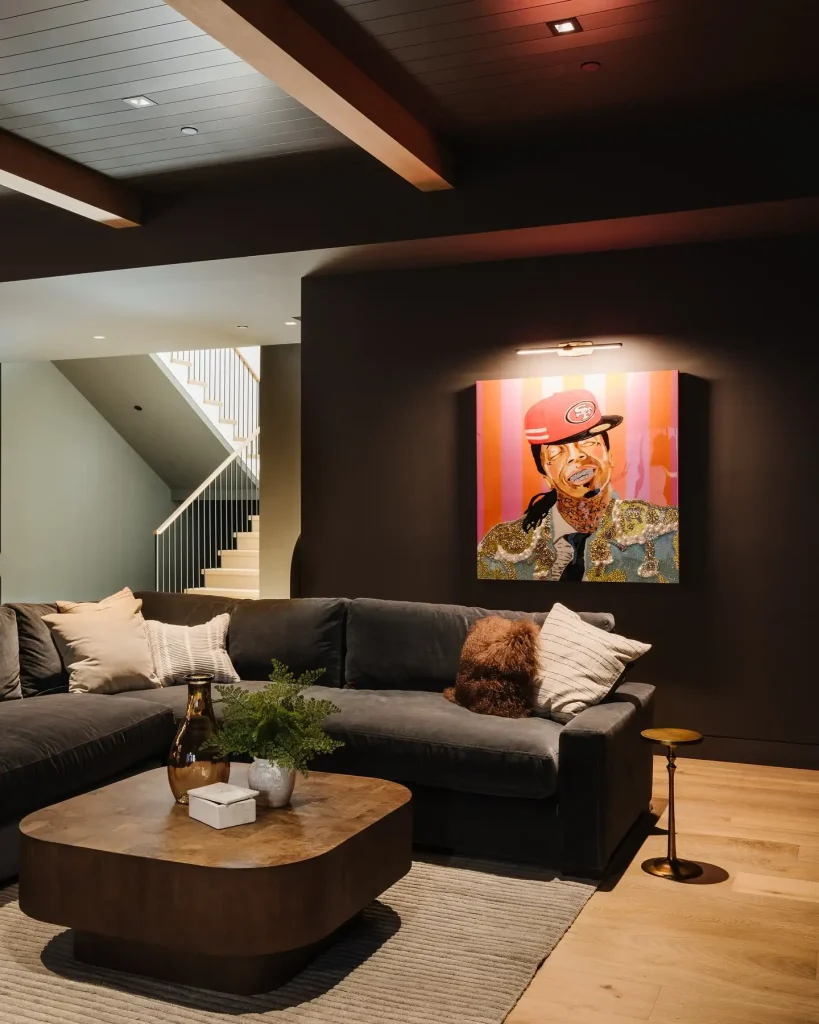
This efficient expansion suits growing families, multigenerational households, or homeowners wanting dedicated spaces for hobbies, work, or entertainment without leaving beloved neighborhoods or undertaking massive construction projects disrupting entire properties.
Higher Home Value
Real estate appraisers typically add $30,000-$70,000 in value for quality finished basements, representing strong returns on $20,000-$45,000 typical investments. Finished square footage makes homes more competitive in markets while appealing to buyers seeking maximum space.
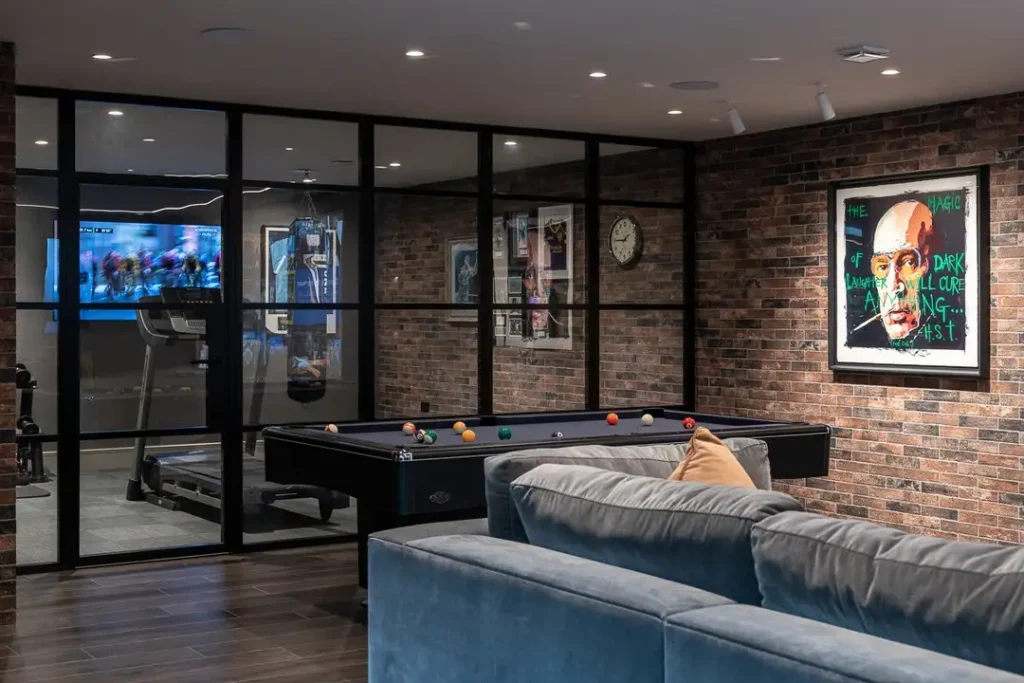
The additional bedrooms and bathrooms that finished basements often include prove particularly valuable, as bedroom count significantly impacts property values in most markets nationwide. For home value strategies, see our home interior design ideas.
Rental Income Potential
Finished basements with separate entrances, kitchenettes, and full bathrooms convert into rental apartments generating $800-$2,000+ monthly income depending on location and amenities. This passive income offsets mortgages while building equity, potentially paying for basement investments within 2-5 years through consistent rental cash flow.
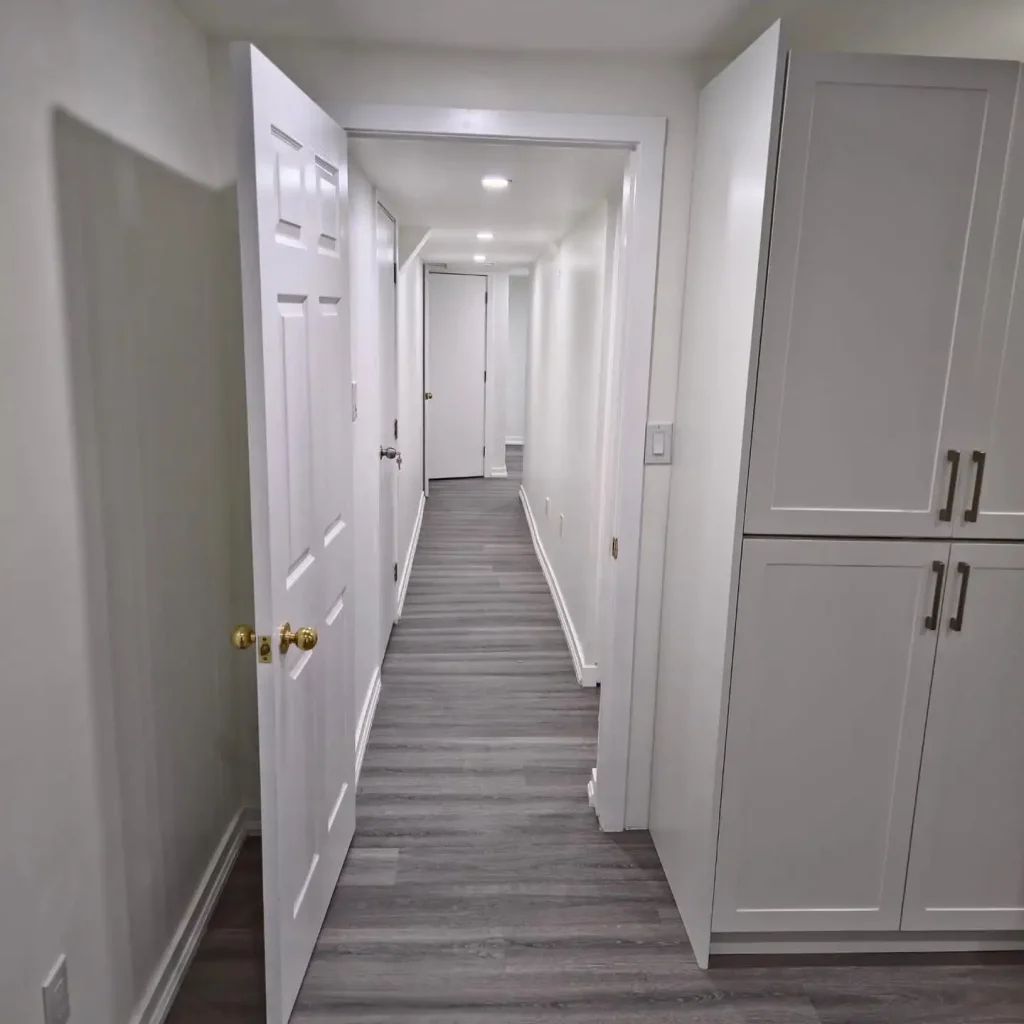
The rental potential particularly appeals to homeowners in expensive markets where mortgage assistance significantly impacts affordability and financial flexibility throughout homeownership journeys.
Flexible Functionality
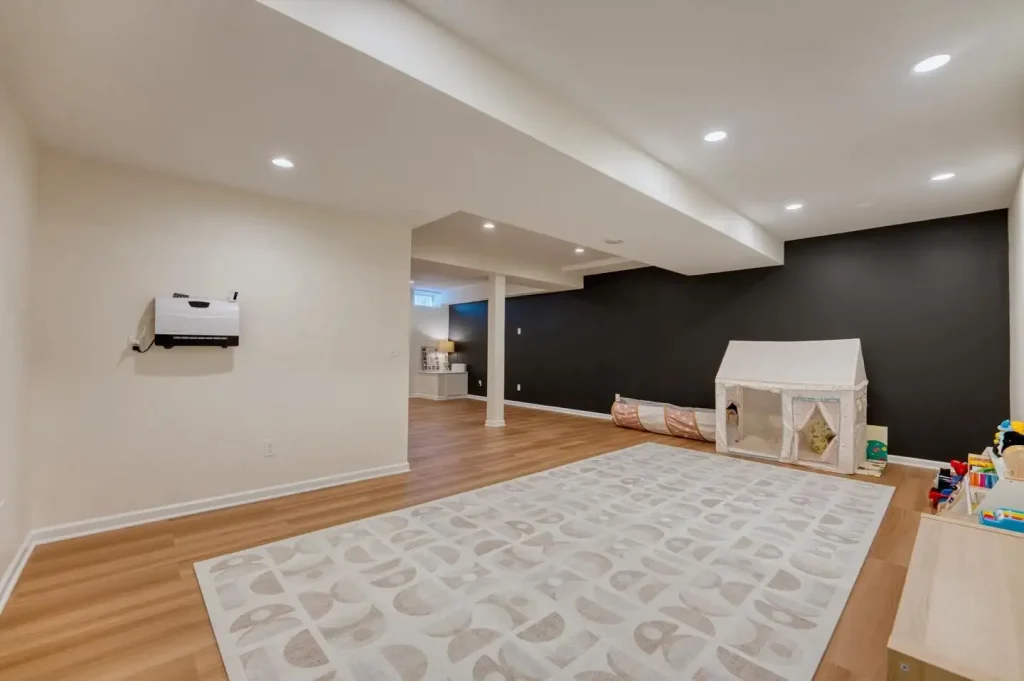
Unlike purpose-built additions committed to specific uses, finished basements adapt easily to changing family needs through simple furniture rearrangement or minor modifications. Today’s playroom becomes tomorrow’s home office, then guest suite, then teenager hangout space without major renovations. See more remodel options for the basement to refresh the area.
Source: @thebasicbasementco
This flexibility proves invaluable as families grow, age, and evolve through various life stages requiring different spatial accommodations over decades of homeownership.
Popular Finished Basement Layouts
Open-Concept Recreation Room
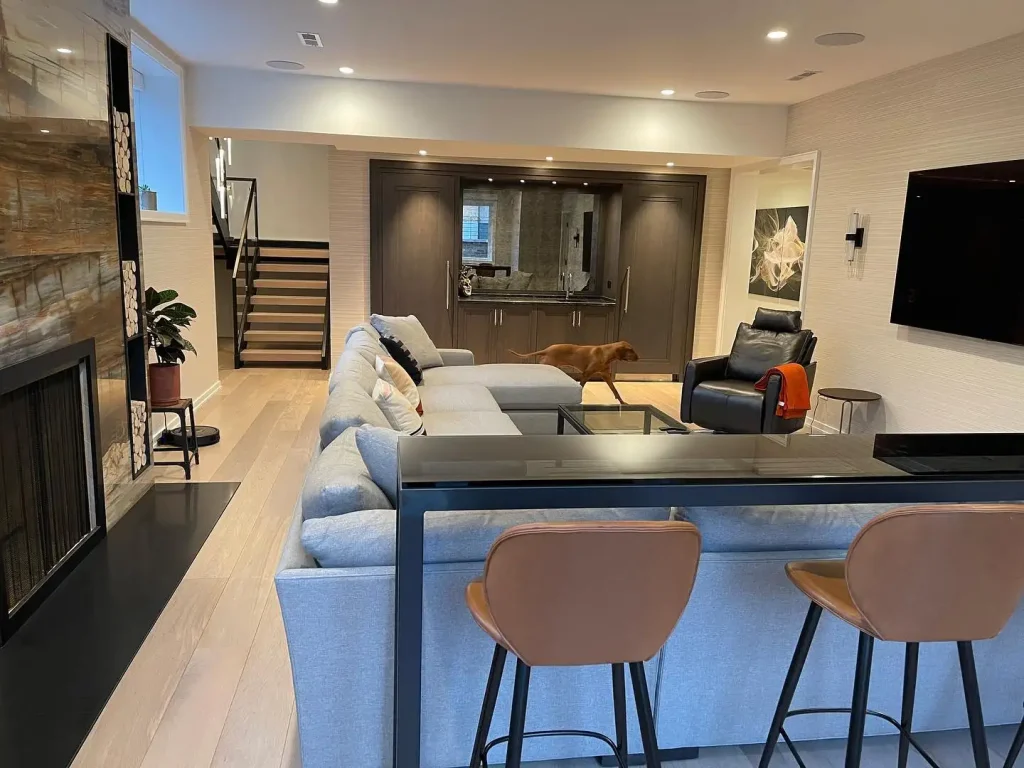
Create large, flexible entertainment spaces with sectional sofas, large-screen TVs, game tables, and wet bars perfect for family gatherings and entertaining. This most common layout typically costs $18,000-$35,000 for 500-700 sq ft including all finishes.
Source: @tzsdesign
The open design maintains spacious feelings while accommodating various activities from movie nights to game tournaments. Add mini-fridges, popcorn machines, or arcade games personalizing spaces for family entertainment preferences and hobbies. See our living room and dining room combo ideas for open concept inspiration.
Suite with Bedroom and Bath
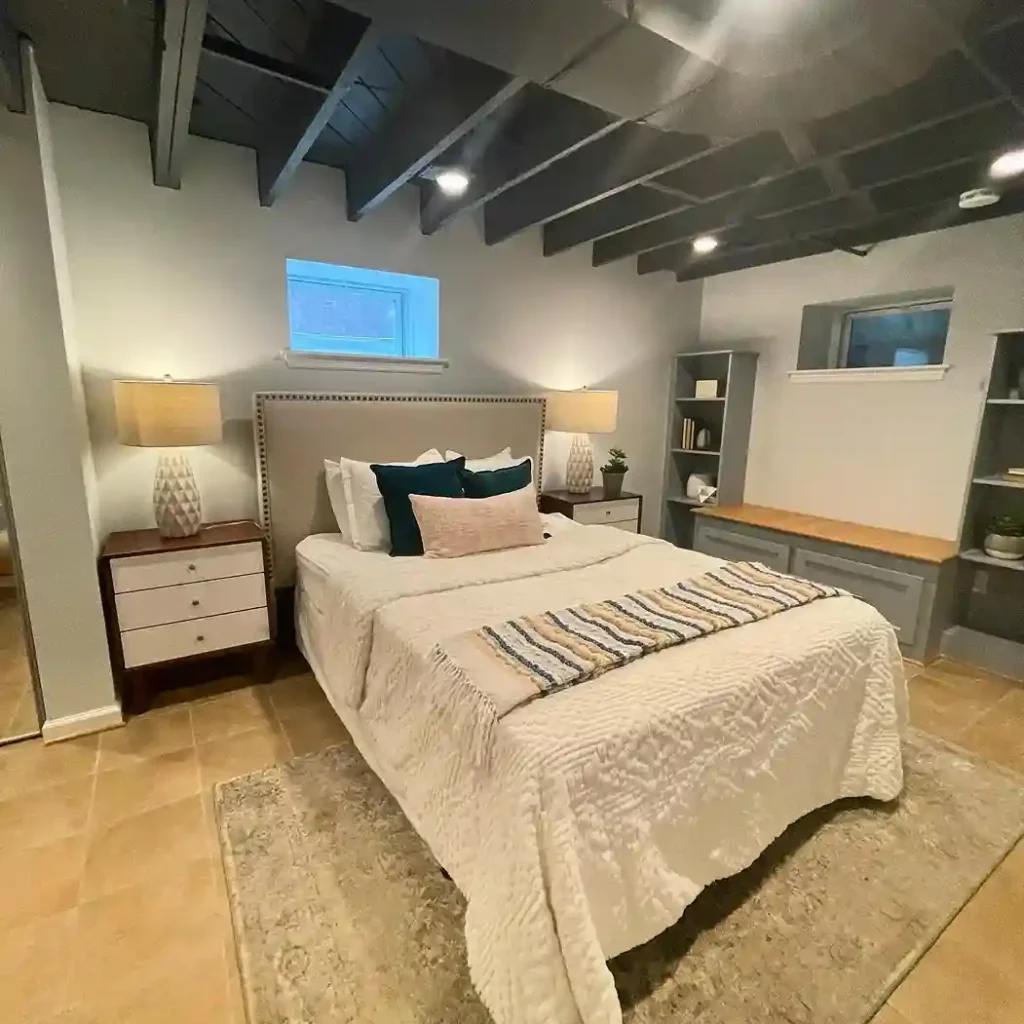
Convert basements into complete guest suites or in-law apartments with bedrooms, full bathrooms, and sitting areas providing privacy and independence. These comprehensive layouts cost $35,000-$70,000 depending on finishes and bathroom fixtures.
Source: @redhousestaging
Include egress windows in bedrooms meeting code requirements while providing natural light and emergency escape routes. The self-contained suite accommodates visiting family, aging parents, or adult children without sacrificing upstairs privacy or comfort. Visit our guest bedroom ideas for guest space design.
Home Office and Workspace
Design dedicated professional spaces separating work from family life while capitalizing on basement quiet and privacy. Include proper desk areas, adequate outlets for equipment, excellent task lighting, and comfortable seating supporting productive work.
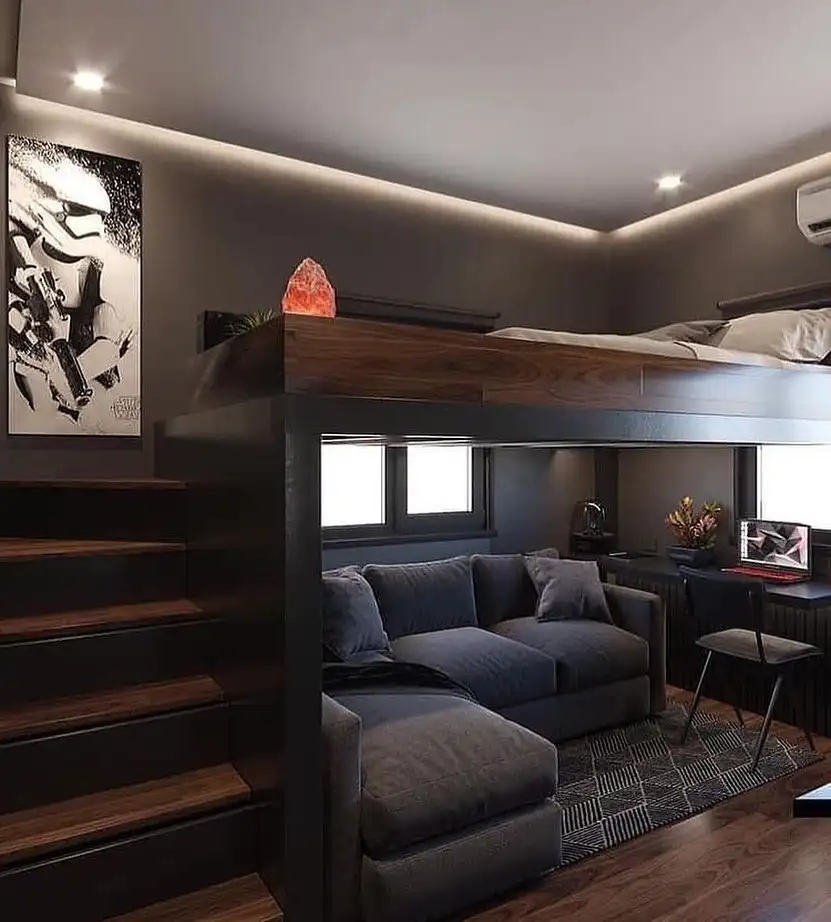
Source: @luxebuildings
The separated workspace helps maintain work-life boundaries increasingly important as remote work becomes permanent for many professionals seeking focus without household distractions. Explore our home office ideas guide.
Multi-Zone Functional Space
Combine multiple functions through strategic zoning—home theater in one corner, exercise equipment in another, craft area along one wall, and kids’ play space completing the layout. This versatile approach maximizes basement utility serving entire families rather than single purposes.
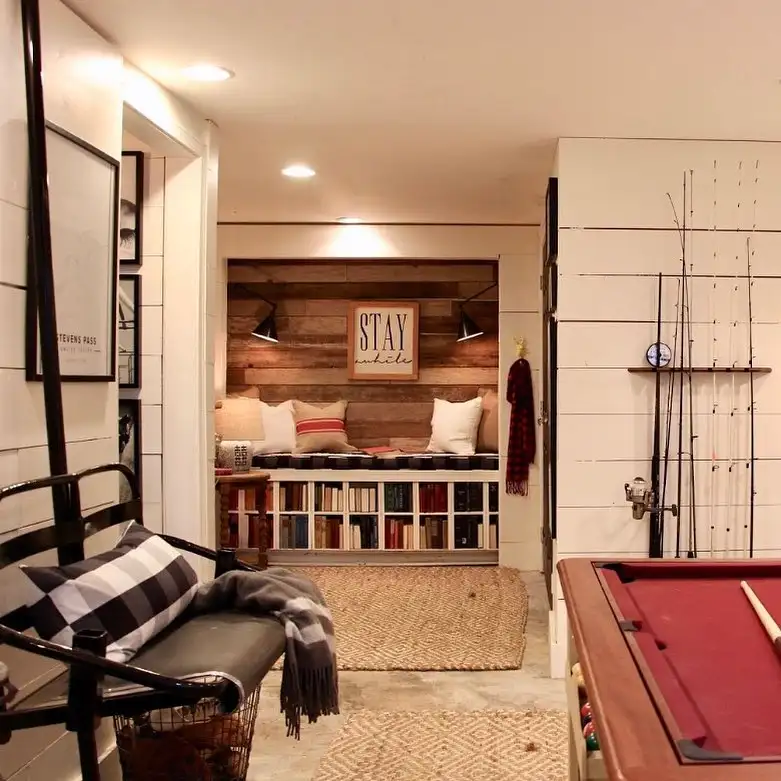
Source: @mysweetsavannah
Include storage throughout organizing different activity supplies while maintaining clear traffic flow between zones. The multi-functional design adapts easily as family needs evolve without requiring major renovations or layout changes.
Ceiling Treatments
Drop Ceilings
Suspended grid ceilings with acoustic tiles cost $2-$5/sq ft, providing finished appearances while maintaining easy access to mechanicals above. The practical solution works well when plumbing, electrical, or ductwork requires occasional maintenance.
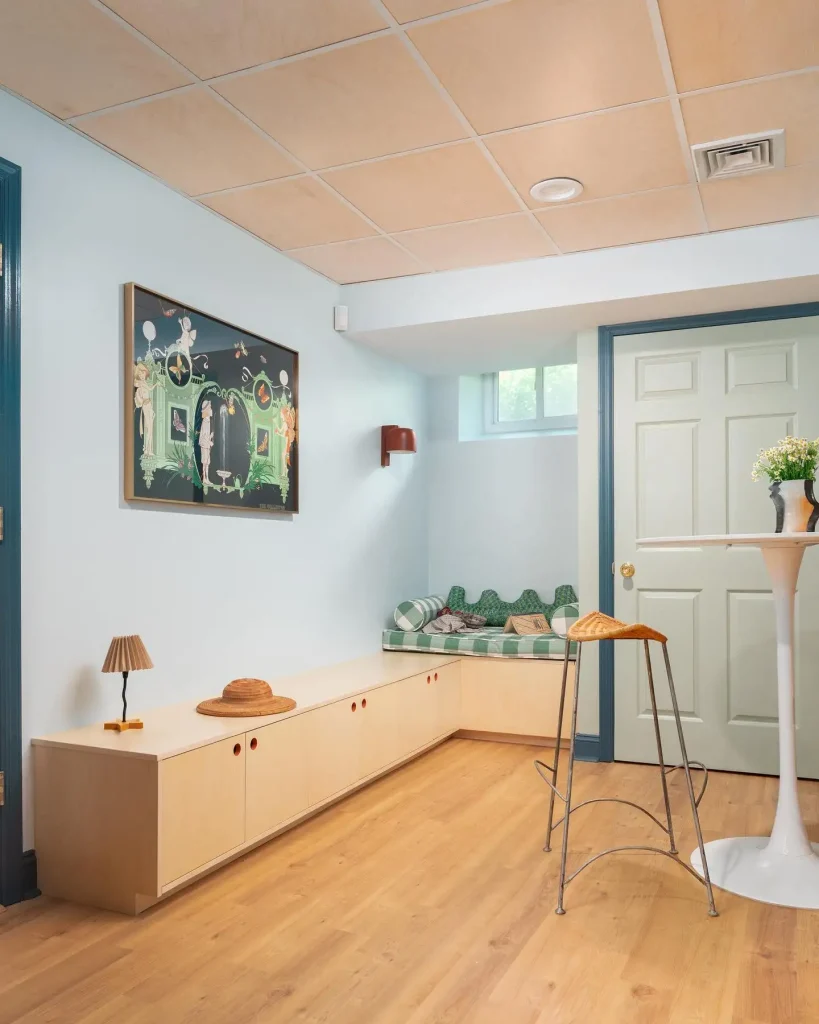
Modern options include attractive wood-look tiles and various colors beyond institutional white, creating residential aesthetics rather than commercial appearances that older drop ceilings suggested. For drop ceiling ideas, see our drop ceiling ideas to conceal clutter guide.
Drywall Ceilings
Traditional drywall delivers the most finished, upstairs-like appearance at $3-$8/sq ft installed but permanently conceals mechanicals, complicating future repairs or modifications. This polished approach suits basements with organized, accessible mechanicals requiring minimal maintenance.
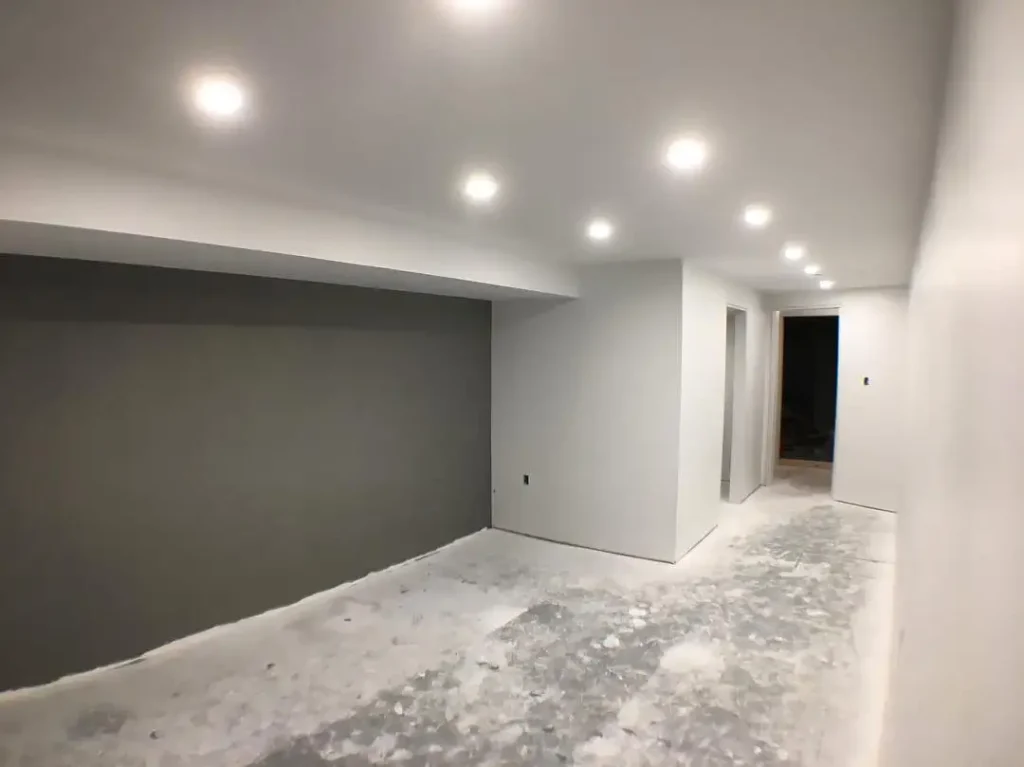
Source: @calltheneighbours
The seamless surface accepts any paint color while providing best sound insulation between floors—valuable when bedrooms occupy basements requiring quiet despite upstairs activity overhead.
Painted Exposed Ceilings
Paint joists, ductwork, and pipes uniform colors creating industrial aesthetics at $1-$3/sq ft while maintaining maximum ceiling height. This budget-friendly, trendy approach embraces basement’s utilitarian nature rather than concealing it.
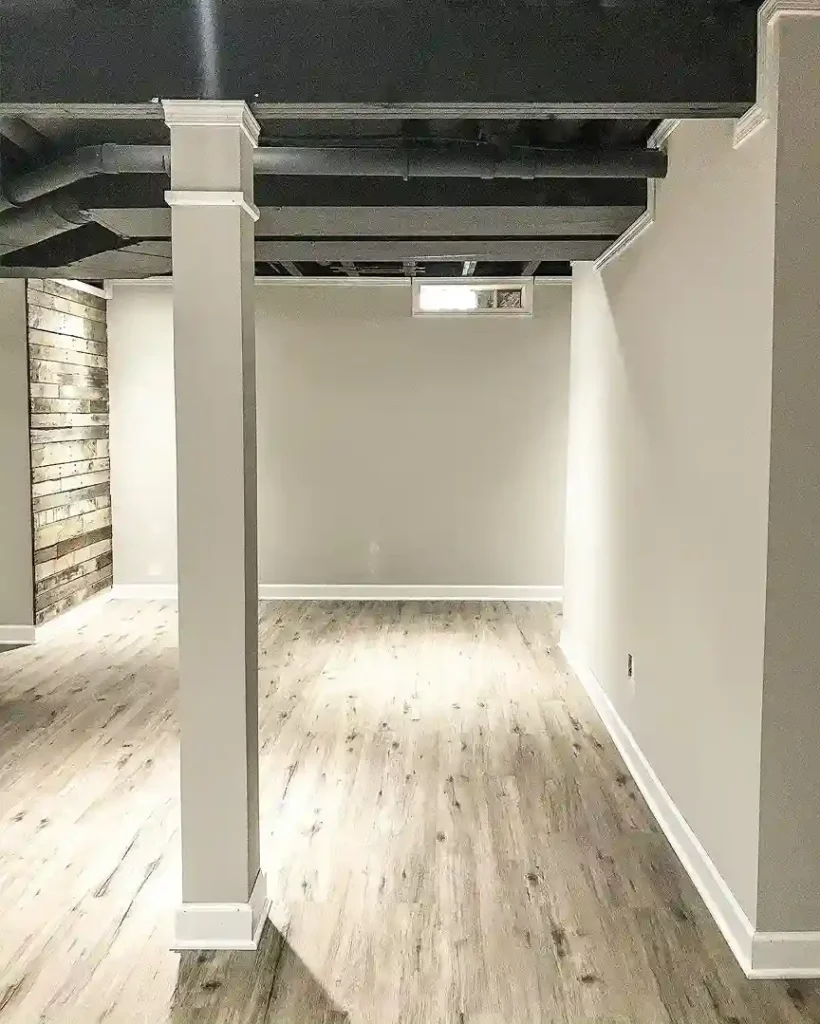
The exposed ceiling works beautifully in contemporary finished basements, home gyms, or entertainment spaces where industrial edge feels appropriate and intentional. Visit our exposed basement ceiling guide for exposed ceiling inspiration.
Cost Breakdown
Basic Finished Basement ($25-$50/sq ft)
Basic finishes including framed walls, drop ceilings, vinyl flooring, basic lighting, and paint create functional spaces at minimum investment. A 600 sq ft basement costs $15,000-$30,000, providing livable space for family rooms, playrooms, or storage areas where function matters more than luxury aesthetics. This approach establishes usable space that can be upgraded gradually as budgets allow through better flooring, improved lighting, or added amenities.
Mid-Range Finished Basement ($50-$75/sq ft)
Mid-range basements include engineered hardwood or quality LVP flooring, upgraded lighting, drywall ceilings, custom built-ins, and potentially one bathroom. A 700 sq ft space costs $35,000-$52,500, creating comfortable offices, guest suites, or entertainment spaces with professional appearances. This sweet spot balances quality and cost, delivering spaces that feel truly finished without luxury price tags that strain budgets.
High-End Finished Basement ($75-$150/sq ft)
Luxury finished basements feature premium materials including stone counters, custom cabinetry, designer lighting, multiple bathrooms, full kitchens, and show-quality finishes. A 900 sq ft luxury basement costs $67,500-$135,000, creating spaces rivaling main-level rooms in quality and aesthetics. This investment suits rental units commanding premium rents, primary living spaces, or homeowners demanding perfection throughout entire homes regardless of floor level.
Essential Elements of Quality Finished Basements
Proper Moisture Control
Successful finished basements begin with comprehensive moisture management preventing mold, mildew, and material damage. Interior waterproofing through vapor barriers, drainage systems, and dehumidifiers maintains dry conditions while exterior solutions including proper grading, gutter maintenance, and foundation sealing prevent water infiltration at source. Budget $3,000-$10,000 for thorough waterproofing depending on existing conditions—this unsexy infrastructure investment protects everything else, making it absolutely non-negotiable despite temptations to skip straight to attractive finishes.
Adequate Insulation
Insulate all exterior foundation walls with rigid foam boards (R-10 to R-15 minimum) or spray foam insulation meeting local energy codes while creating comfortable year-round temperatures. Proper insulation reduces energy costs, prevents condensation issues causing mold, and makes basements feel warm and inviting rather than cold and damp. The upfront insulation investment pays back through reduced utility bills while making basements comfortable regardless of outside weather extremes throughout annual seasonal changes.
Complete HVAC Systems
Extend existing forced-air systems into basements through additional ductwork ($2,000-$5,000) or install dedicated mini-split systems ($3,000-$8,000) providing independent climate control. Proper heating and cooling proves essential for basement comfort—spaces that are too cold in winter or humid in summer don’t get used despite expensive finishes. Include programmable thermostats allowing different temperature settings than upstairs areas, as basements often need less heating but more cooling and dehumidification maintaining comfortable conditions.
Abundant Lighting
Combat natural darkness through layered lighting including recessed cans (1 per 25-50 sq ft), task lighting over work areas, and accent lighting highlighting features. Plan more lighting than seems necessary—dark basements feel unwelcoming despite beautiful finishes. Maximize any natural light through window wells, enlarged windows where possible, or light tubes bringing daylight from above. Quality lighting transforms basements from cave-like to inviting, making them spaces families actually want to use rather than avoid. For lighting guidance, visit our guide to ceiling lights.
Frequently Asked Questions
How much does it cost to finish a basement?
Finishing basements typically costs $20,000-$50,000 for typical 500-800 sq ft spaces, or approximately $25-$75 per square foot depending on finish quality and included amenities. Basic functional finishes run $25-$50/sq ft, mid-range remodels cost $50-$75/sq ft, and luxury finishes exceed $75-$150/sq ft. Costs vary dramatically based on existing conditions, whether adding bathrooms requiring plumbing, and local labor rates affecting professional installation expenses.
Do finished basements add value?
Yes, finished basements typically add $30,000-$70,000 in home value while costing $20,000-$50,000, delivering strong ROI. Finished square footage makes homes more competitive while appealing to buyers seeking maximum space. Actual value depends on finish quality, local markets, and whether spaces include bedrooms and bathrooms that buyers value most. Appraisers count finished basements differently than main-level square footage, typically valuing them at 50-75% of above-grade space.
How long does it take to finish a basement?
Basic finished basements take 4-8 weeks from start to completion, while complex projects with bathrooms, kitchens, or rental units require 2-4 months. Timeline depends on project scope, contractor availability, permit processing, and whether DIYing portions requiring more time than professional work. Plan conservatively, adding buffer time for inevitable delays including material backorders, inspection scheduling, or unexpected complications discovered during construction.
Can I finish my basement myself?
Yes, handy homeowners can complete many tasks including demolition, framing, drywall, painting, and flooring. However, hire licensed professionals for electrical, plumbing, HVAC, and structural work requiring permits and expertise. The DIY approach saves 40-60% on labor but requires significant time, proper tools, and realistic skill assessment. Many homeowners successfully combine DIY work with professional help for specialized trades, maximizing savings while ensuring code compliance and quality results.
Conclusion: Complete Your Home’s Potential
Finished basements transform neglected underground spaces into valuable living areas that serve families beautifully while increasing home values substantially beyond investment costs. Whether creating entertainment spaces, guest suites, home offices, or rental units, finished basements add hundreds of square feet at fractions of addition costs while improving quality of life through expanded functionality meeting evolving family needs throughout decades of homeownership.
The investment delivers immediate benefits through improved daily living while building equity that pays dividends during eventual home sales. Start your finished basement journey by assessing current conditions, establishing realistic budgets, and planning layouts that serve your specific needs while meeting code requirements ensuring safe, comfortable spaces. Whether tackling projects yourself or hiring professionals, proper planning creates finished basements that become homes’ most-used and appreciated spaces rather than forgotten afterthoughts collecting dust and clutter.
Ready to explore more basement possibilities? Check our guides including brilliant basement ceiling ideas, basement painted ceiling low height spaces, multipurpose rooms ideas, home library ideas, and small apartment ideas for complete home design inspiration. Your finished basement transformation awaits—unlock the valuable living space hiding beneath your feet and complete your home’s full potential through thoughtful design, quality finishes, and strategic investments that deliver lasting value and enjoyment for your entire family.