
Wood ceiling beams are a timeless architectural feature, offering warmth, texture, and structural definition to any space. Whether you’re aiming for a cozy farmhouse vibe or adding texture to a clean modern design, beams create visual interest that draws the eye upward.
This guide provides 16 essential ideas and practical details—including material cost and application in your bedroom, kitchen, and living room—to help you seamlessly integrate wood beams into your home.
What are the structural benefits of adding exposed wood beams?
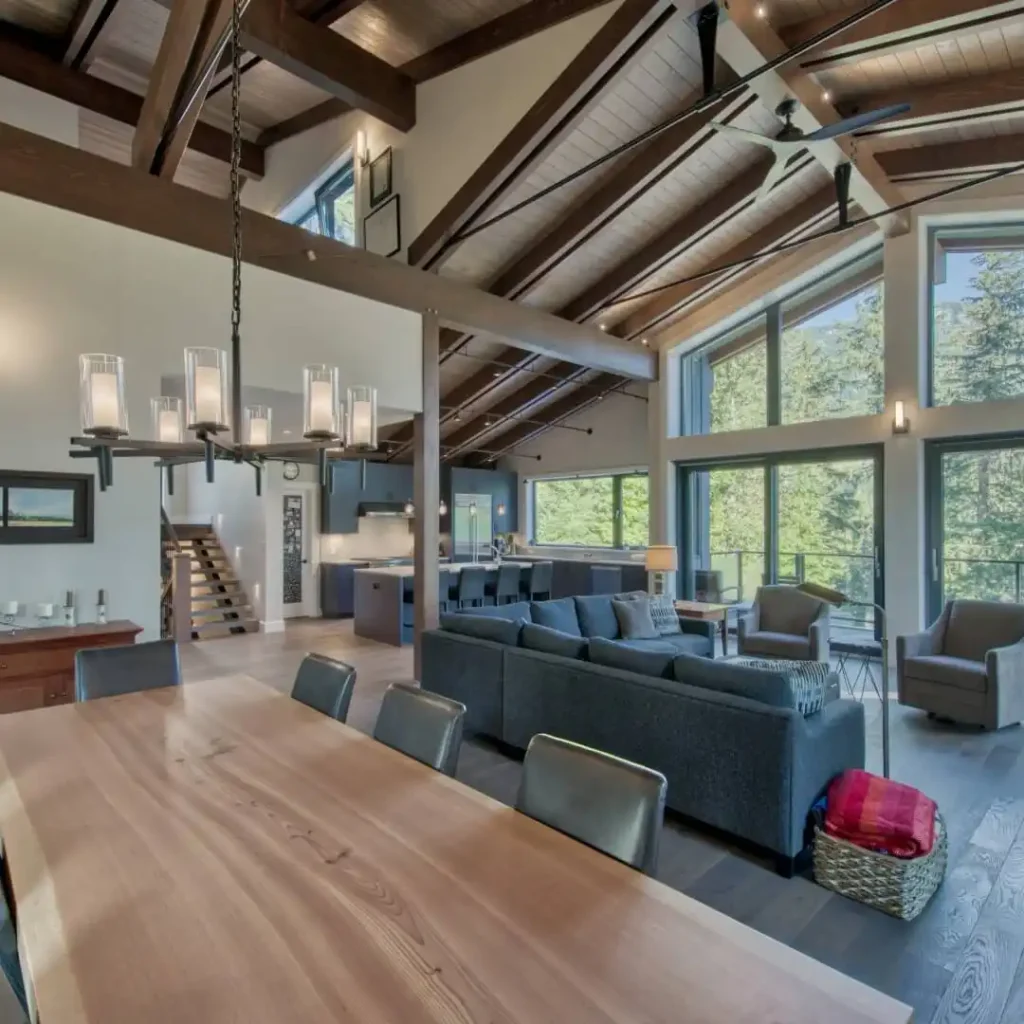
Credits: @gavan.construction.company
In most remodels, exposed beams are primarily decorative. However, when installed as part of a structural renovation (like removing a wall), real timber beams offer genuine load-bearing support. Faux or engineered beams, which are lightweight and highly popular, offer no structural benefit but are easier to install and more budget-friendly.
How does beam spacing affect the overall look of the room?
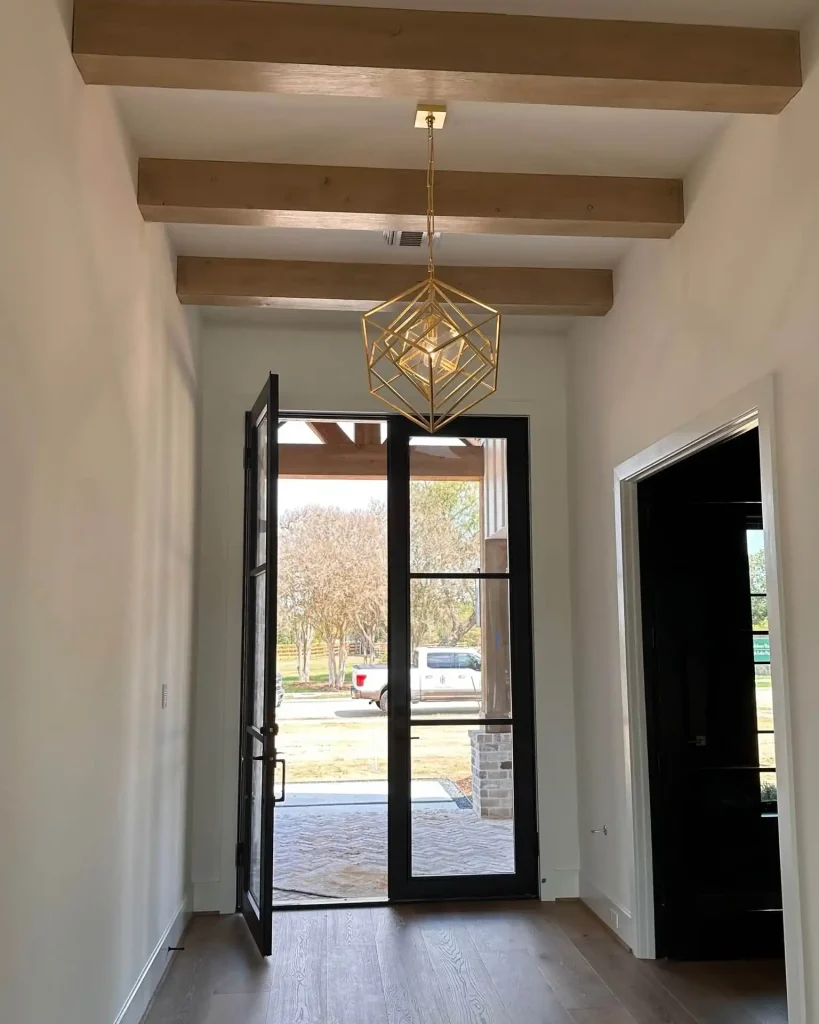
Credits: @fairmontcustomhomes
Wide spacing (6 to 8 feet apart) creates a lighter, more open feel and works well in contemporary or minimalist designs. Close spacing (3 to 4 feet apart) creates a heavier, more intimate look that works perfectly in a cozy farmhouse kitchen or rustic ceiling living room.
How can I use decorative straps and metal brackets with beams?
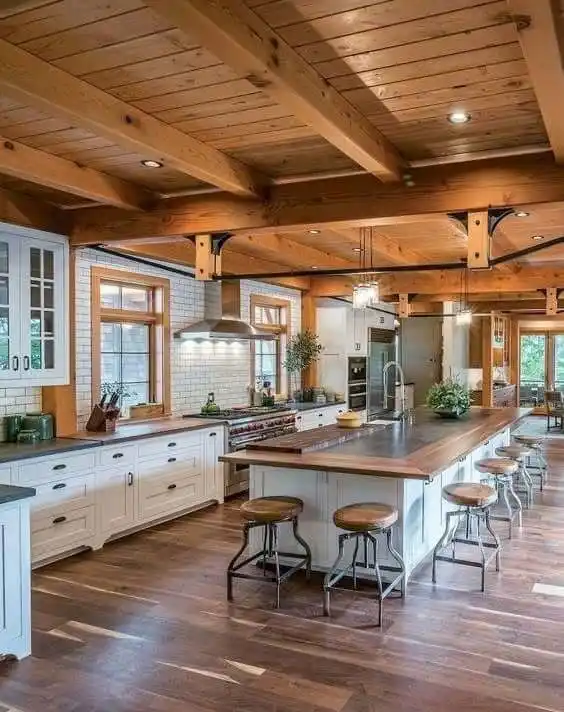
Credits: @farmhouseismystyle
Adding decorative metal straps, iron brackets, or industrial plates is an excellent way to enhance a beam’s visual weight and industrial style. These accessories, especially when blackened, reinforce a rugged, farmhouse aesthetic and provide realistic “structural details” for faux beams.
What are the cost differences between solid wood and composite beams?
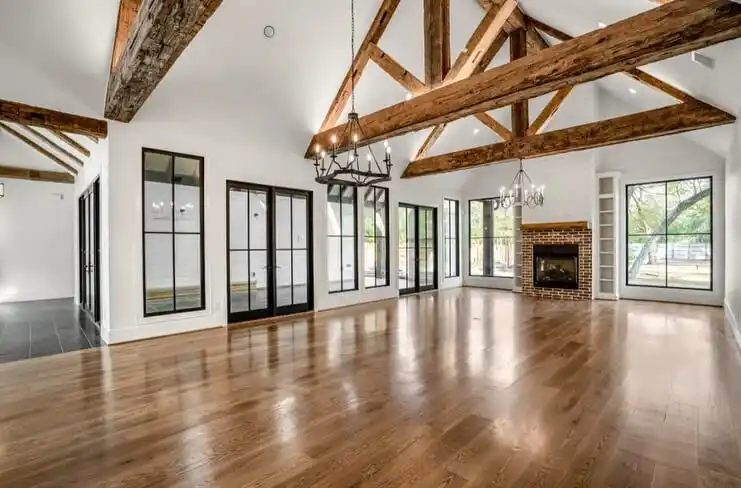
Credits: @zander_homes
Cost is the biggest differentiator. Solid, reclaimed timber is the most expensive option due to sourcing and installation difficulty. Faux vaulted beams (made from polyurethane or lightweight wood veneer) are significantly cheaper, easier to install, and require less labor, offering an accessible solution for all ideas.
How can I match new beams to existing rustic woodwork?
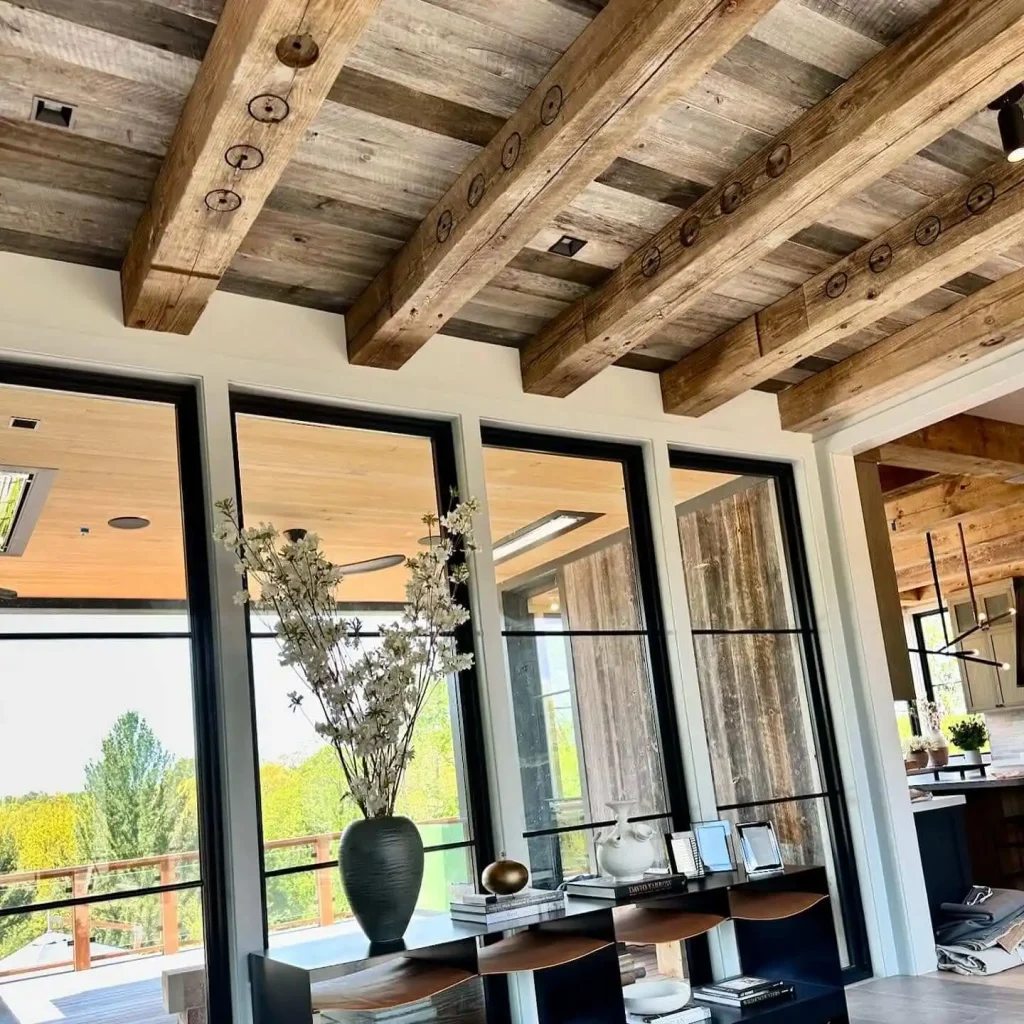
Credits: @newenglandantiquelumber
To match existing rustic woodwork, use new wood with a distressed finish (created through sanding, wire-brushing, or faux-aging techniques). Stain the beams a custom color that pulls the undertones from the existing pieces to create a cohesive look throughout the living room or kitchen.
How to create a striking contrast with painted white beams?
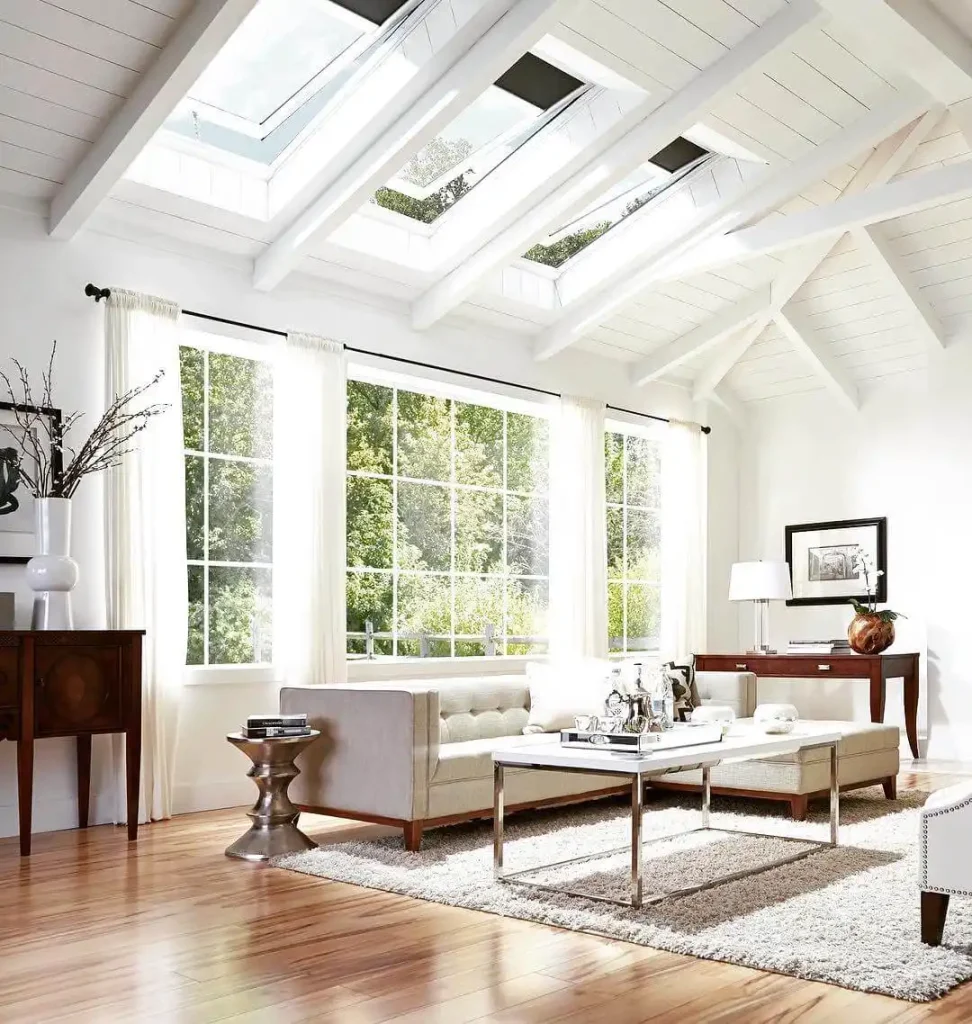
Credits: @creatingyourinterior
Painted white beams are a hallmark of modern farmhouse style. This finish provides high contrast against dark or wooden ceilings, making the beams themselves pop. It works exceptionally well in a kitchen where it can echo white cabinetry, creating a clean, cohesive line.
How can beams be used to visually lower a very high ceiling?
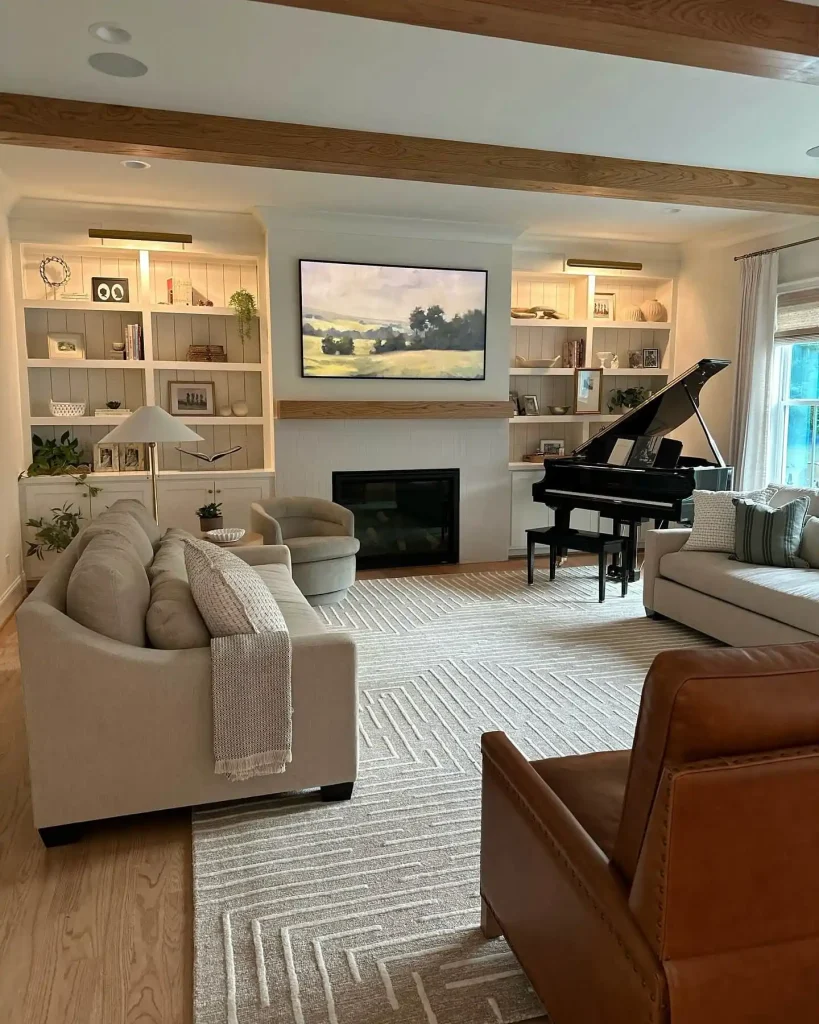
Credits: @rockcreekbuilders
For rooms with excessive vertical space, use thick, dark-stained beams spaced closely together. The dark color and heavy application create strong horizontal lines that draw the eye downward, making the room feel cozier and bringing the ceiling height into proportion.
What are the key considerations for beams in humid climates?
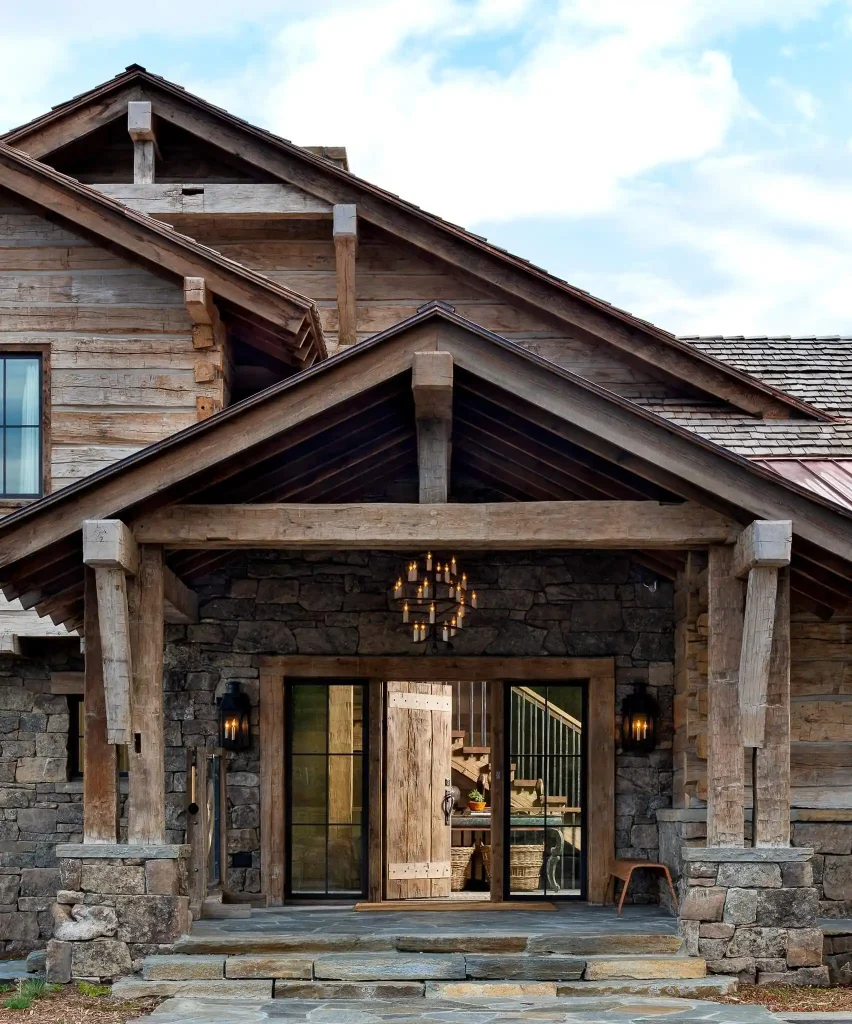
Credits: @pearsondesigngroup
In humid areas, solid timber beams can be susceptible to expansion, contraction, and warping. Faux or engineered beams are often a better choice because they are chemically treated, lightweight, and dimensionally stable, making them a more reliable long-term solution.
How to use beams to define a perimeter border instead of crossing the room?
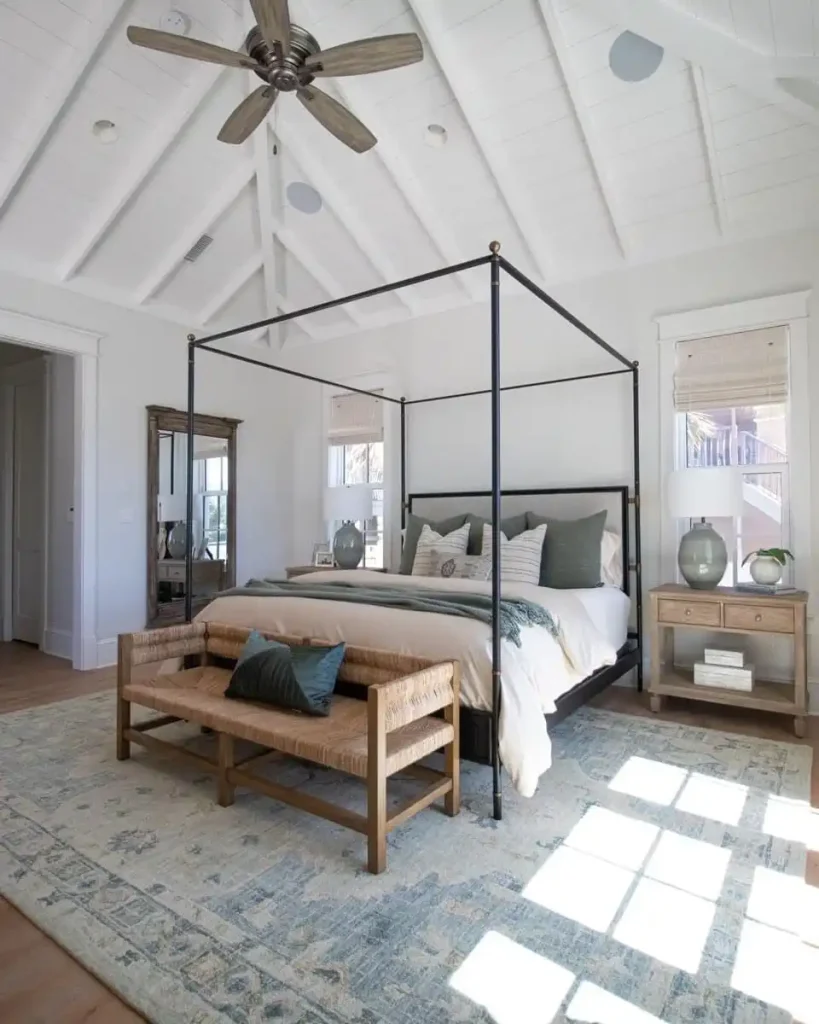
Credits: @carterbuildingcompany
Run a single beam around the perimeter of the room, parallel to all four walls. This border effect neatly “caps” the ceiling and provides a subtle, sophisticated frame. It works well in a bedroom to add architectural interest without overpowering the sleeping area.
Should the ceiling between the beams be painted a specific color?
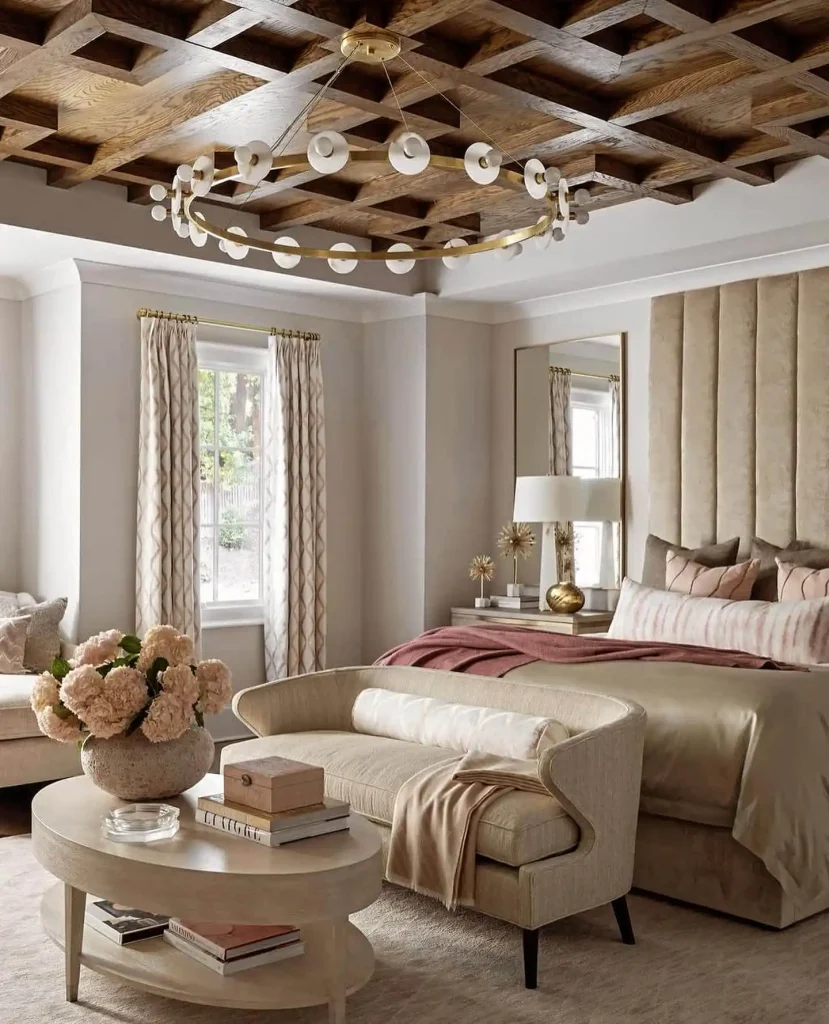
Credits: @altonladay
Yes, painting the ceiling between the beams can enhance the overall design. For a dramatic look, paint the ceiling white and the beams dark. For a subtle, cozy effect in a living room, paint the ceiling a light, warm neutral (like a cream or pale grey) that complements the wood tone. This attention to detail elevates your home interior decor ideas.
How can I run HVAC and electrical conduits subtly around the beams?

When installing faux beams, you can often run wires and HVAC conduits inside the hollow structure. For solid beams, wires can be run along the ceiling and hidden in a shallow routing channel cut into the top of the beam, ensuring your design is clean and functional.
How to achieve a modern, sleek look using smooth, unstained beams?
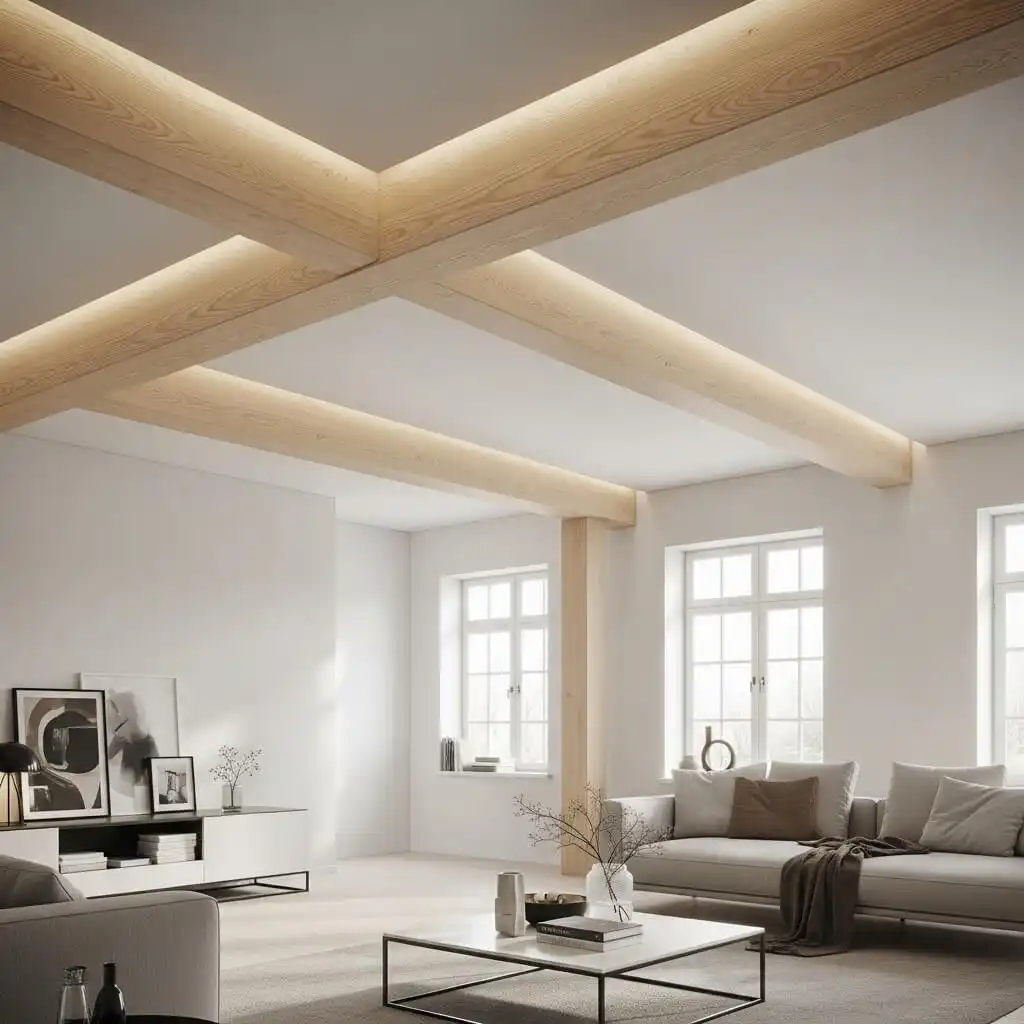
For a modern, minimalist aesthetic, choose beams with sharp, clean edges and a smooth finish (no distressing or heavy texture). Leave them unstained with a clear coat, or whitewash them slightly to maintain a soft, natural look that aligns with minimalist home decor ideas.
How to use a distressed finish to make new beams look old?
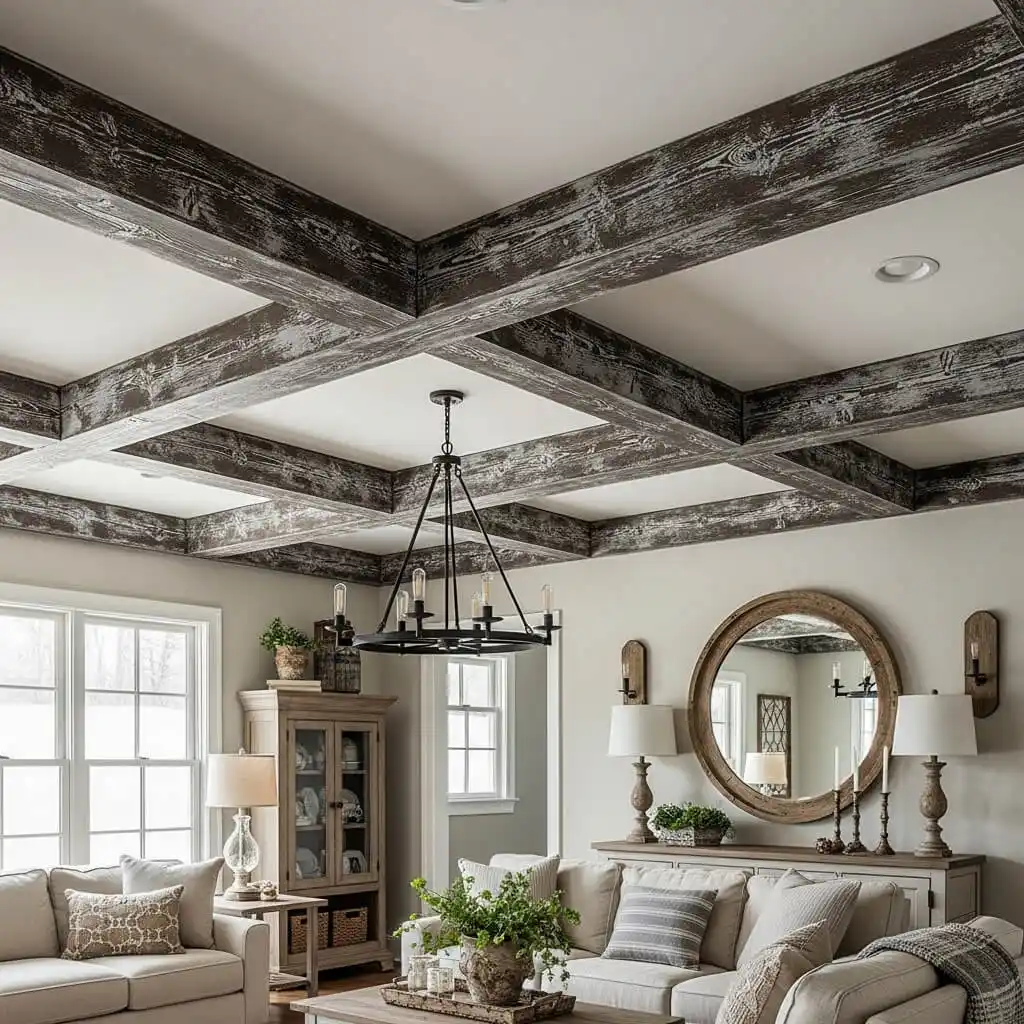
A distressed finish involves techniques like chain-denting, heavy wire-brushing, and hand-scraping the wood to simulate age. Using a dark matte stain or a grey/white wash over the distressed texture will emphasize the character, instantly lending a farmhouse feel to your room.
What is the impact of placing beams vertically down a wall?
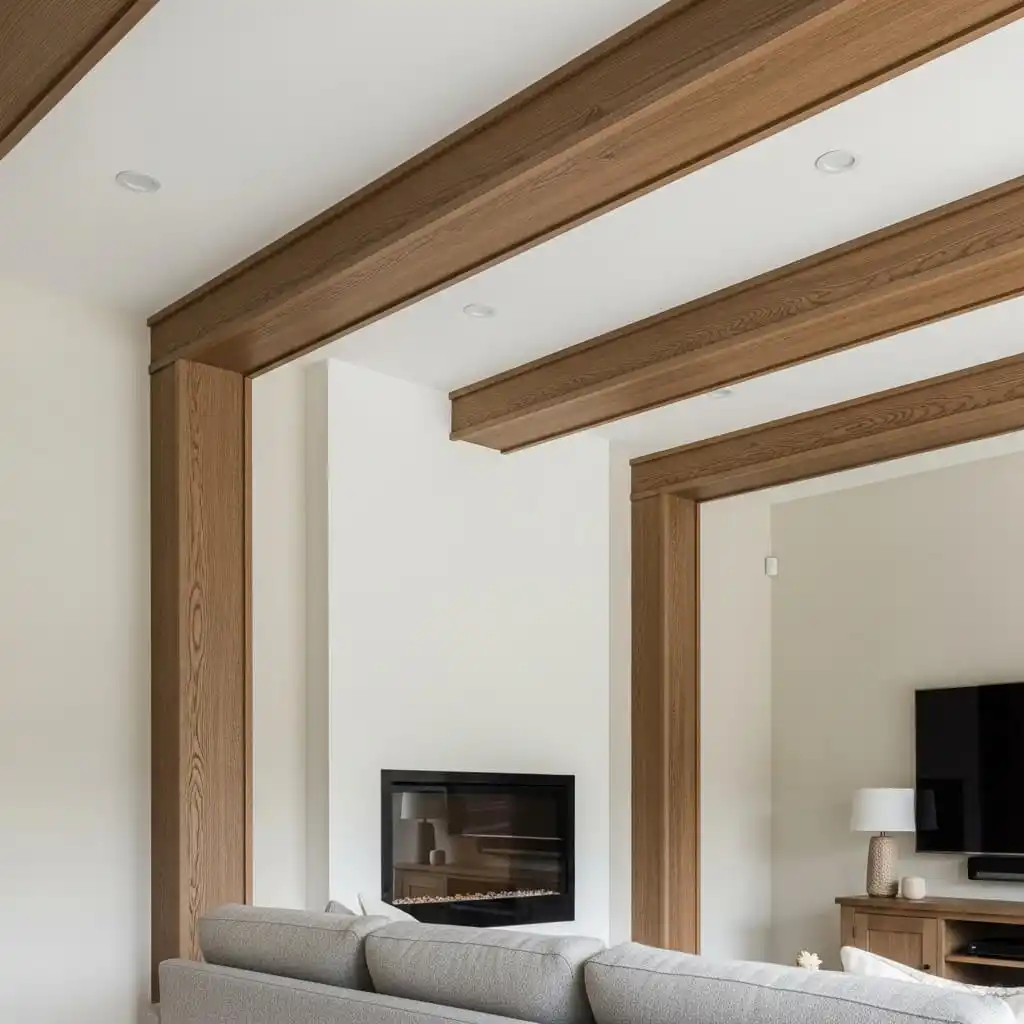
Placing decorative wood trim or beams vertically down a wall, instead of horizontally, adds a dramatic, textural accent. This can beautifully frame a fireplace or define a TV area in a living room, linking the ceiling design with your main wall feature. This extends the principles used in living room wall decor to the ceiling.
How can beams enhance the coziness of a large, open living room?
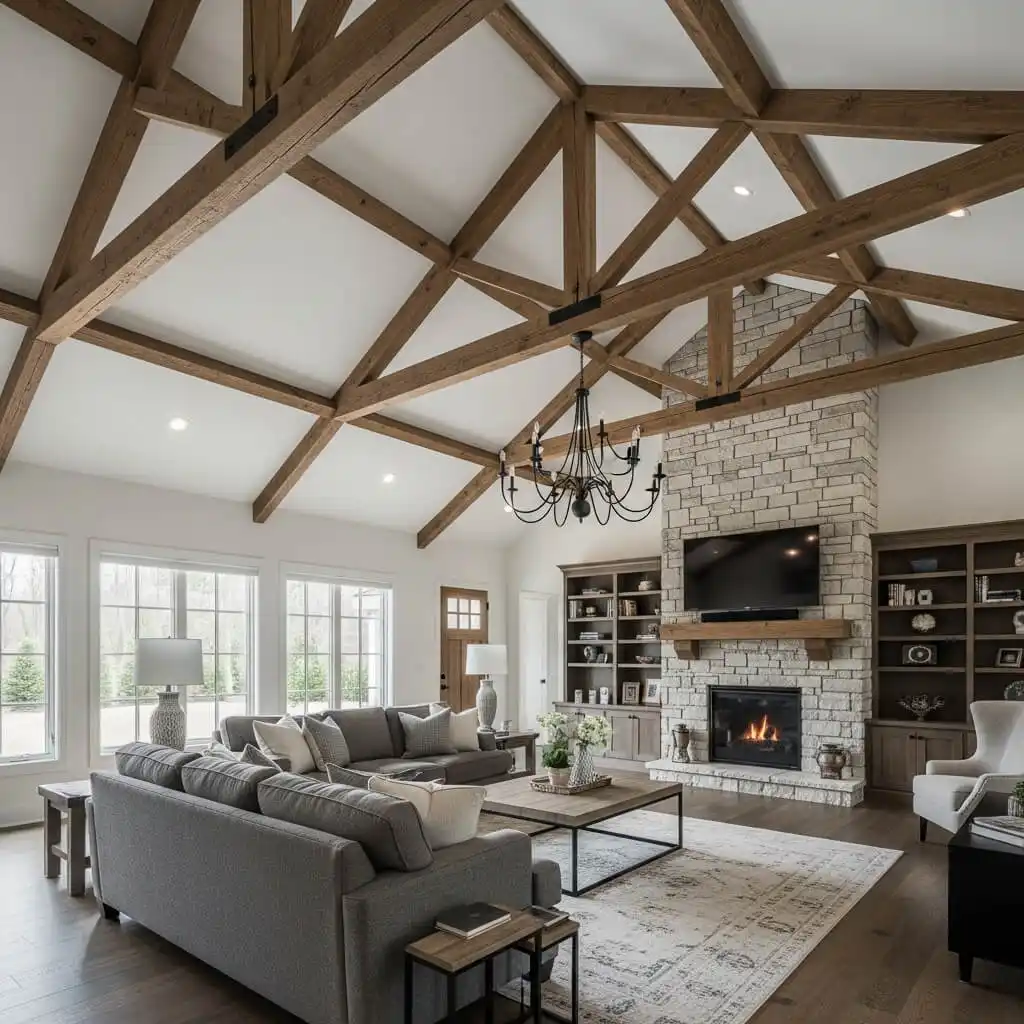
In a large, open space, beams act as a crucial architectural element that visually breaks up the massive ceiling area. This creates zones of warmth and intimacy, preventing the room from feeling cavernous. Use medium-to-dark tones to further enhance the cozy, enclosed feeling. The heavy ceiling design will beautifully complement deep tones in your seating area, such as a grey couch living room idea.
How do I clean and maintain finished wood ceiling beams?
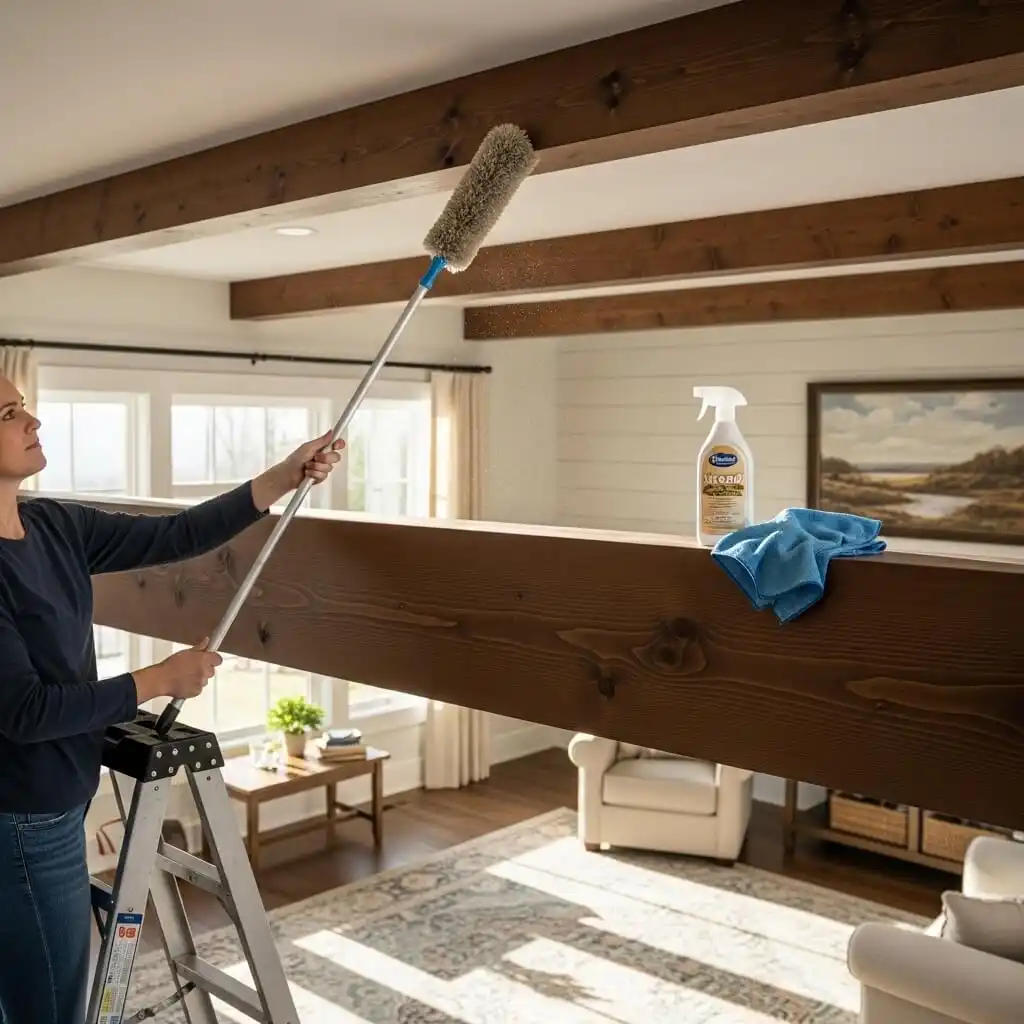
For routine cleaning, a simple dusting with a long-handled microfiber duster is usually enough. For deeper cleaning, use a mild wood cleaner on a damp cloth. Always avoid excessive moisture, especially if the beams are faux or engineered, to preserve the finish.
Faq’s
What is the ideal scale (thickness) for a living room beam?
The thicker the beam, the lower the ceiling should be, or the larger the room. A good rule of thumb is that the height (depth) of the beam should be about 1/12th of the room’s height. For a 9-foot ceiling, a beam depth of 8 to 10 inches is typically ideal.
Can I install faux beams myself?
Faux beams are extremely lightweight and often come with simple mounting plates, making them a very popular DIY project. They are attached to ceiling joists with screws and adhesive, which is much simpler and safer than maneuvering heavy solid timber. For more DIY inspiration, see diy home decor ideas living room.
How can I integrate lighting for a vaulted ceiling with beams?
For vaulted ceilings, install lighting between the beams (canned lights) or use uplighting on top of the beams to bounce illumination off the ceiling. This provides soft, ambient light that highlights the architectural texture. For bedrooms, subtle lighting near the perimeter is perfect for complementing a headboard design, similar to wall decor above bed lighting.
Conclusion
Incorporating wood beams is one of the most effective ways to introduce character and a bespoke feel to your home. By considering the style (from farmhouse to modern), the cost, and the specific application in your kitchen, bedroom, or living room, you can achieve a stunning ceiling that serves as the foundation for your entire design.