
Most homeowners view their unfinished basement as a design challenge—a damp, cluttered space that needs drywall, flooring, and expensive renovations to become “usable.” But what if we’re approaching this all wrong?
The truth is, your unfinished basements isn’t a problem to solve; it’s a raw canvas of untapped potential waiting for creative interpretation.
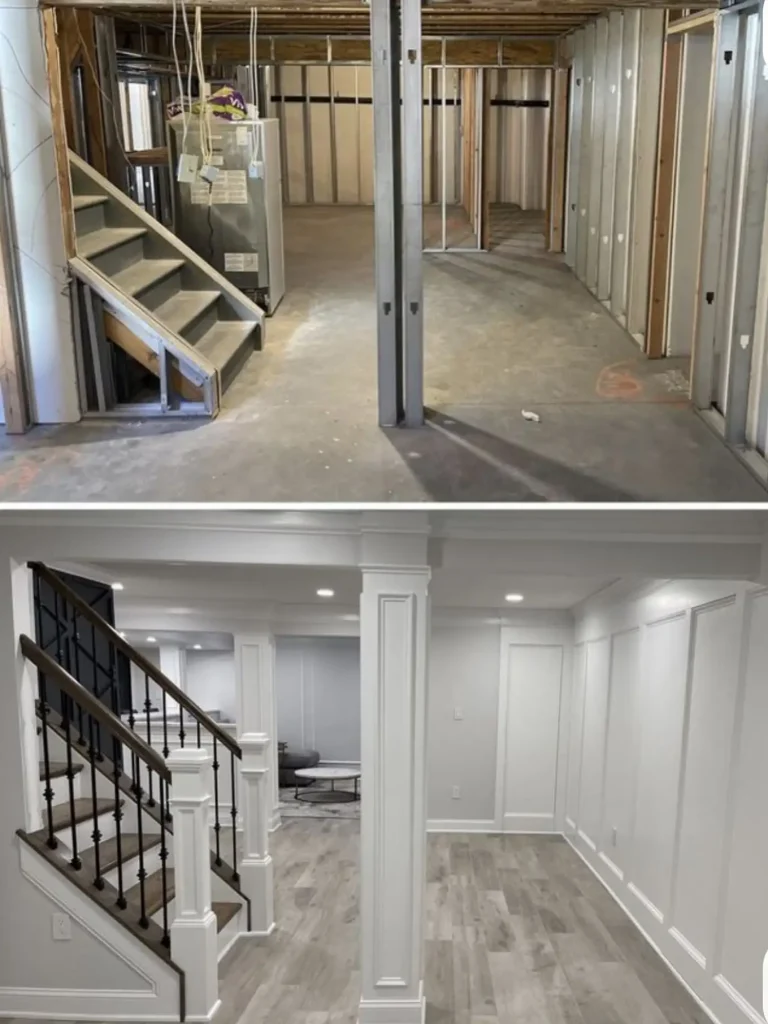
Source: @shadrealtyinvestments
Unlike other rooms constrained by conventional design rules, the unfinished basement offers something extraordinary: complete creative freedom. The exposed beams, concrete floors, and visible infrastructure that we typically hide are actually the very elements that give this space its unique character.
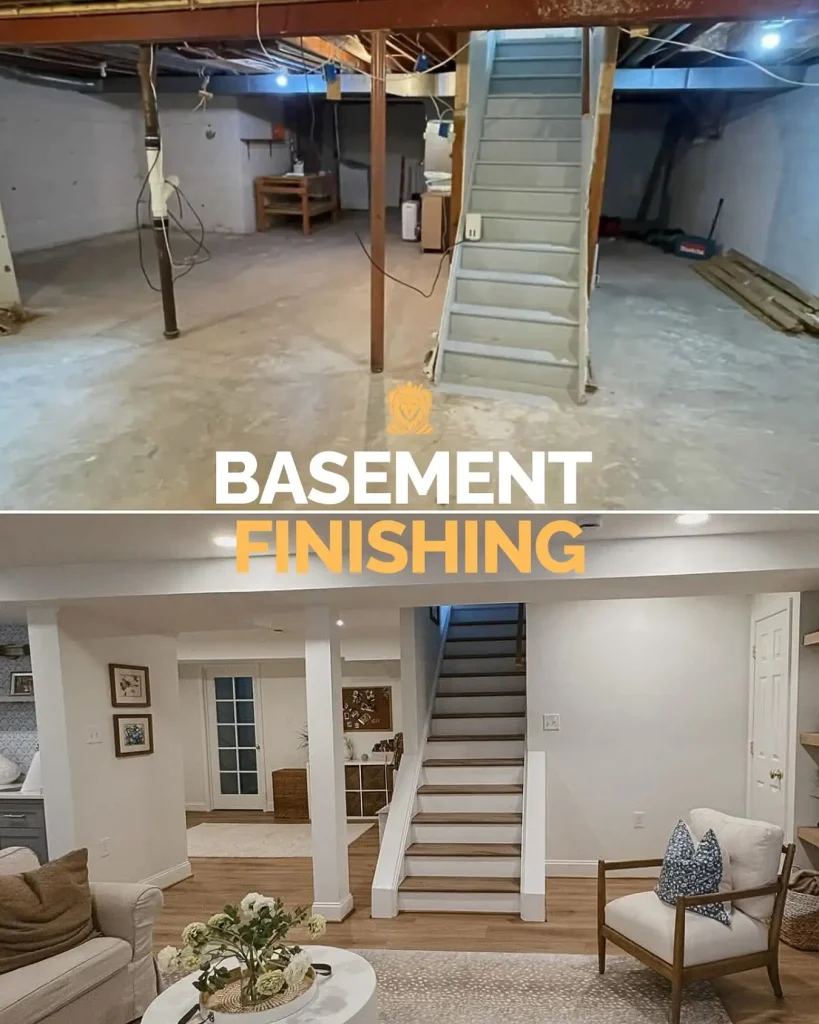
Source: @maximus.home.services
This guide will show you how to transform what many consider a liability into your home’s most authentic and versatile space. See finished basements living room for more ideas.
Embracing the “Unfinished” Aesthetic: From Flaw to Feature
The first step is a radical shift in perception. The exposed elements of your basement are not mistakes; they are the foundational texture of your space.
- The Concrete Floor: Stop seeing cold, gray slab. Start seeing a durable, minimalist canvas. A professionally applied epoxy floor coating can transform it into a glossy, seamless surface that reflects light and feels sleek and intentional. For a warmer, more tactile approach, large, plush area rugs can define zones without hiding the floor’s inherent solidity. This approach shares a philosophy with embracing painted exposed basement ceilings—it’s about enhancement, not concealment.
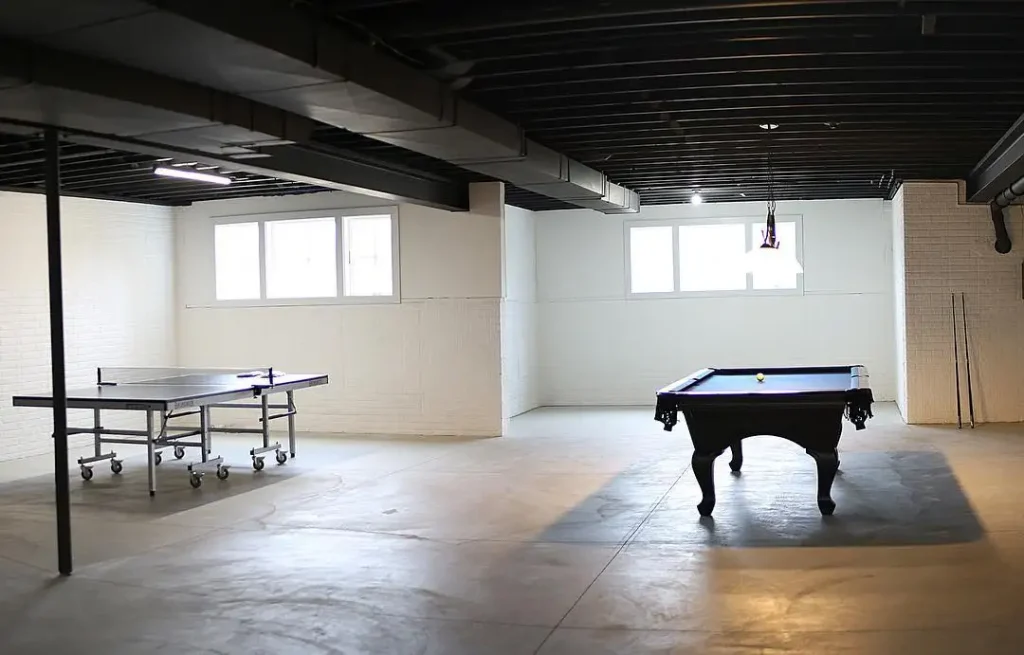
- The Exposed Ceiling Jungle: This is your basement’s crown jewel. The network of joists, ducts, pipes, and wires is a testament to your home’s inner workings. Instead of boxing it in with a drop ceiling, consider the art of curation and coordination.
- Paint it Unified: The single most transformative act. Painting everything overhead—joists, subfloor, pipes, ducts—a single, clean color (matte black, charcoal gray, or crisp white) instantly creates order from chaos. It turns a jumble of materials into a cohesive, intentional architectural feature. Explore the dramatic impact this can have in our guide to painted exposed basement ceilings.
- Create a Color-Coded System: For a more playful, utilitarian vibe, paint different systems different colors: HVAC ducts in slate blue, plumbing in copper-toned orange, electrical conduits in safety yellow. It’s functional, fun, and turns infrastructure into art. See basement remodeling guide to know more.
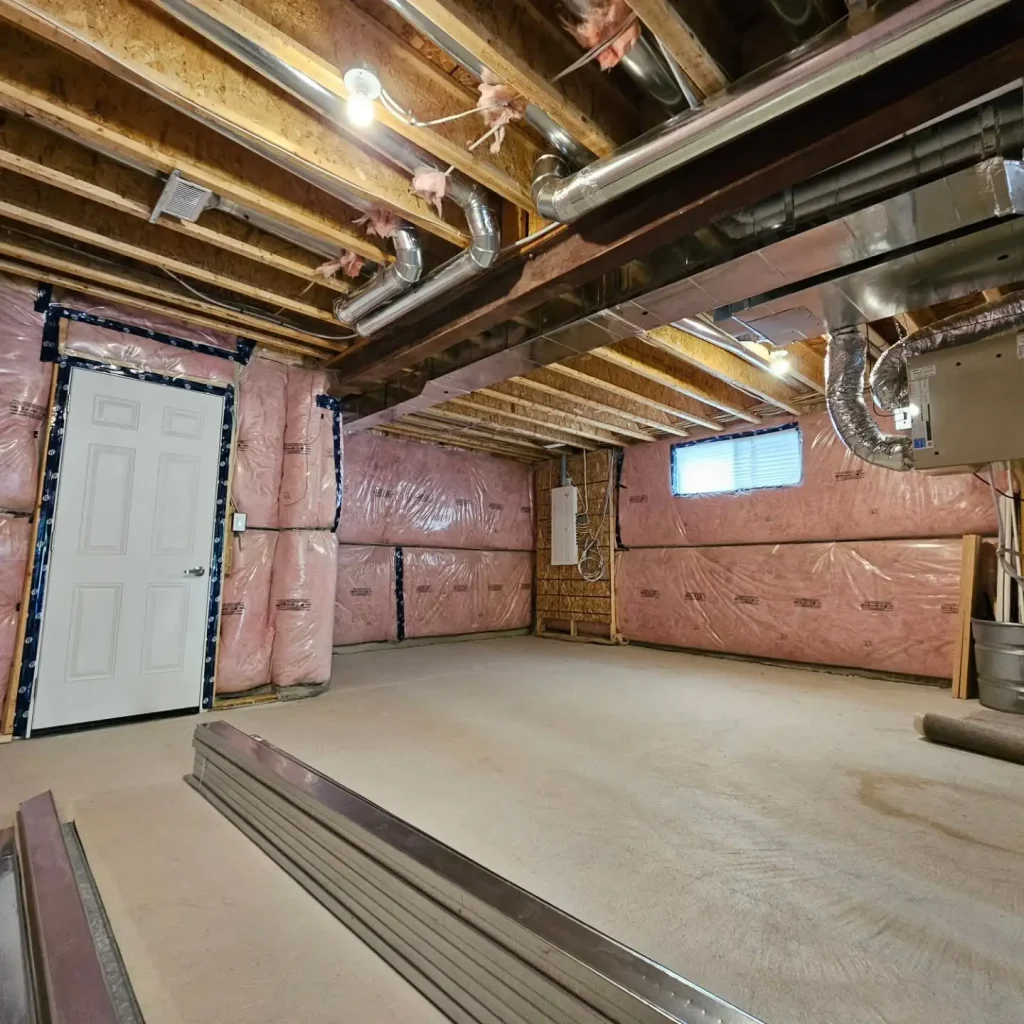
Source: @foxdrywallco
- The Concrete Block or Foundation Walls: These walls have a raw, sculptural quality. Clean them thoroughly, patch major imperfections, and consider a clear sealant to reduce dust and create a uniform sheen. For a softer look, moisture-resistant plaster (like lime-based Venetian plaster) can be applied directly, adding texture and warmth while still feeling organic. Learn more about various ideas of basement that you can follow.
This embrace of raw materials isn’t about being trendy; it’s about authenticity. It’s the same principle that makes a wood-burning stove in a living room feel so deeply comforting—it’s real, it’s elemental, and it tells a story.
Functional Zones: Crafting Purpose Without Walls
An unfinished basement’s greatest asset is its uninterrupted, open volume. The key is to define areas through furniture, lighting, and flooring, not permanent partitions.
- The Creative Workshop & Hobby Hub: This is the perfect use case. The hard floors are easy to clean, the lighting can be task-specific, and mess is a non-issue. Install sturdy, utilitarian shelving against a wall for supplies. Use a large, salvaged wood door on sawhorses as a central workbench. The open space allows projects to sprawl. For inspiration on organizing a creative haven, look at our ideas for hobby room design and craft room storage.
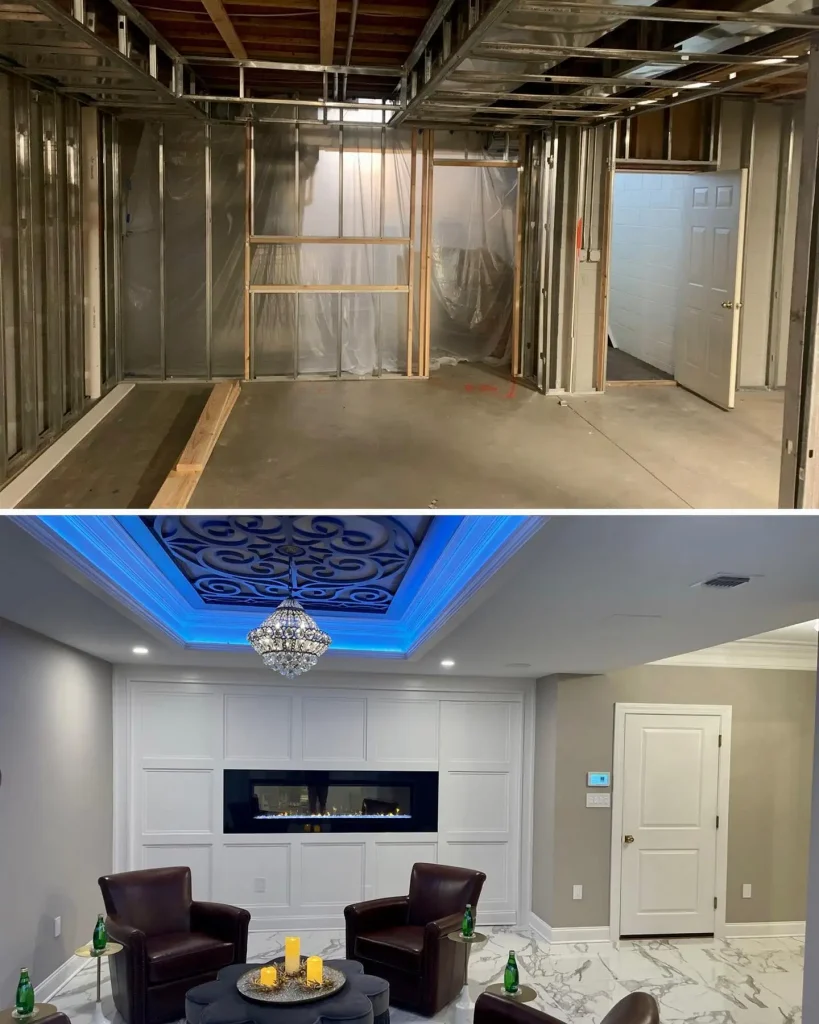
Source: @finishedbasementsnj
- The High-Energy Home Gym & Recreation Zone: Say goodbye to cramped workout corners. Here, you can have a dedicated yoga space, a weight rack, and a cardio zone without feeling crowded. Rubber interlocking floor tiles provide cushioning, safety, and a defined boundary. Mount a large screen for virtual classes or game days. The exposed ceiling allows for easy installation of heavy-duty suspension systems for boxing bags or gymnastics rings.
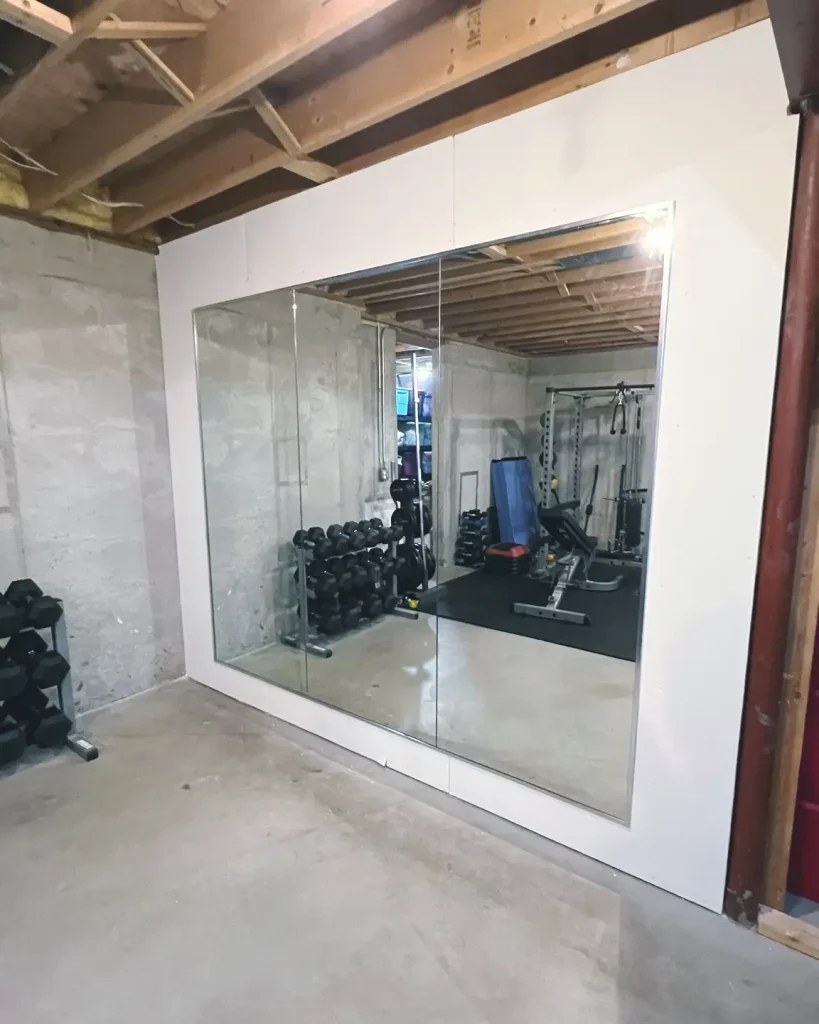
Source: @genevaglassworks
- The Moody Entertainment Lounge: This is where the basement’s inherent coziness shines. Create a intimate lounge area with a deep, comfortable sectional, a low-slung coffee table, and an oversized rug. The lack of drywall is a sound system’s best friend—acoustics are less bouncey. Use strategic, atmospheric lighting: plug-in string lights woven through joists, adjustable track lighting on beams, or dramatic plug-in wall sconces to cast pools of light. For lighting ideas that work with an industrial feel, see our guide to ceiling lights.
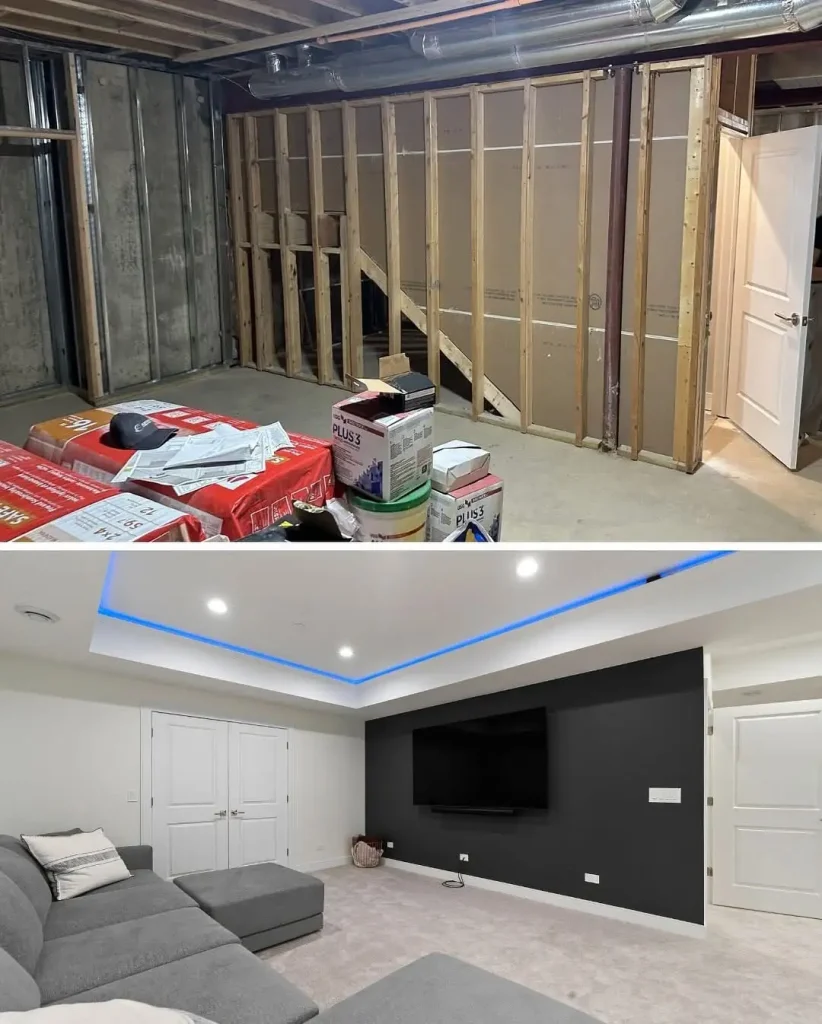
Source: @matrixbasementfinishing
- The Unconventional Guest Suite: With some thoughtful additions, you can create a bohemian, loft-style guest area. Use a large, beautiful room divider or a floor-to-ceiling curtain to separate a sleeping nook with a quality platform bed. A small, efficient mini-kitchen idea with a bar fridge, microwave, and sink can be installed along one wall. A corner bathroom vanity can be set up with a stylish freestanding screen for privacy. The vibe is more “cool downtown apartment” than “basement spare room.”
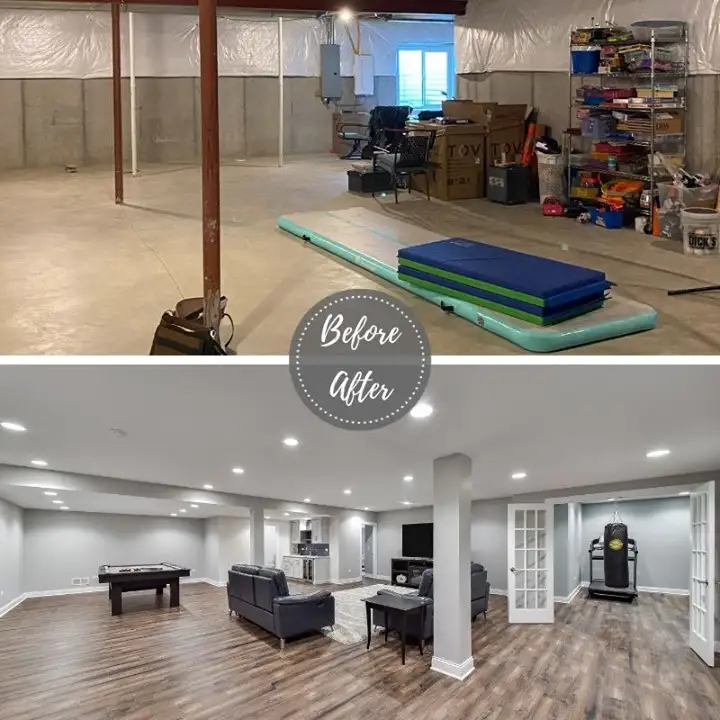
Source: @jroc_builds
The flexibility is limitless. You could have a pottery wheel in one corner and a home theater in the other, and the space wouldn’t feel conflicted—it would feel alive.
The Art of Strategic Finishing: Where to Invest for Impact
“Unfinished” doesn’t mean “unimproved.” Strategic investments in key areas elevate the space from “construction site” to “designed environment.”
Lighting is Everything: The single most important investment. Layer your light.
- Ambient: Canless LED wafer lights can be installed directly into the joist bays, providing clean, general illumination without needing a ceiling to recess into.
- Task: Use plug-in pendants over workbenches or kitchenettes. Clamp lights on shelving.
- Accent: LED tape lights under shelves or along the top of foundation walls create a beautiful, diffused glow that makes the space feel larger.
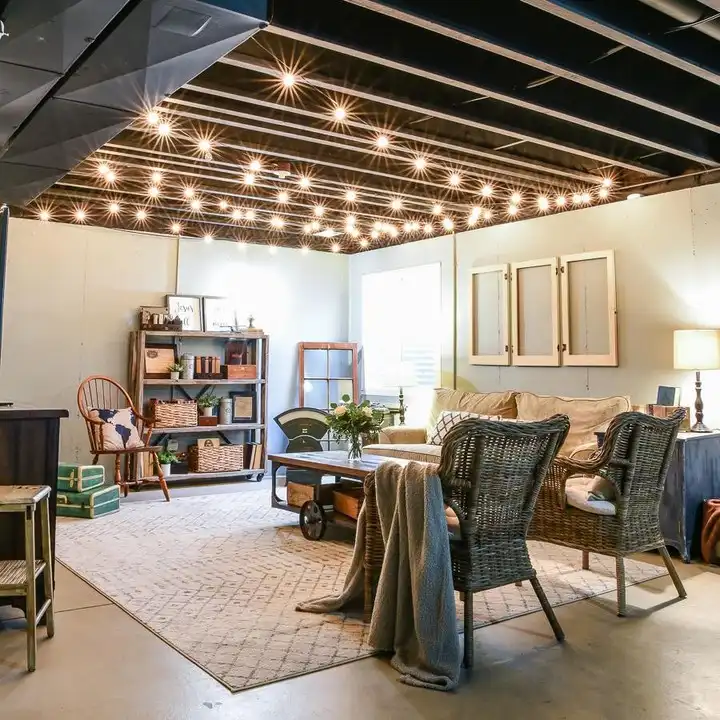
Source: @lsmude
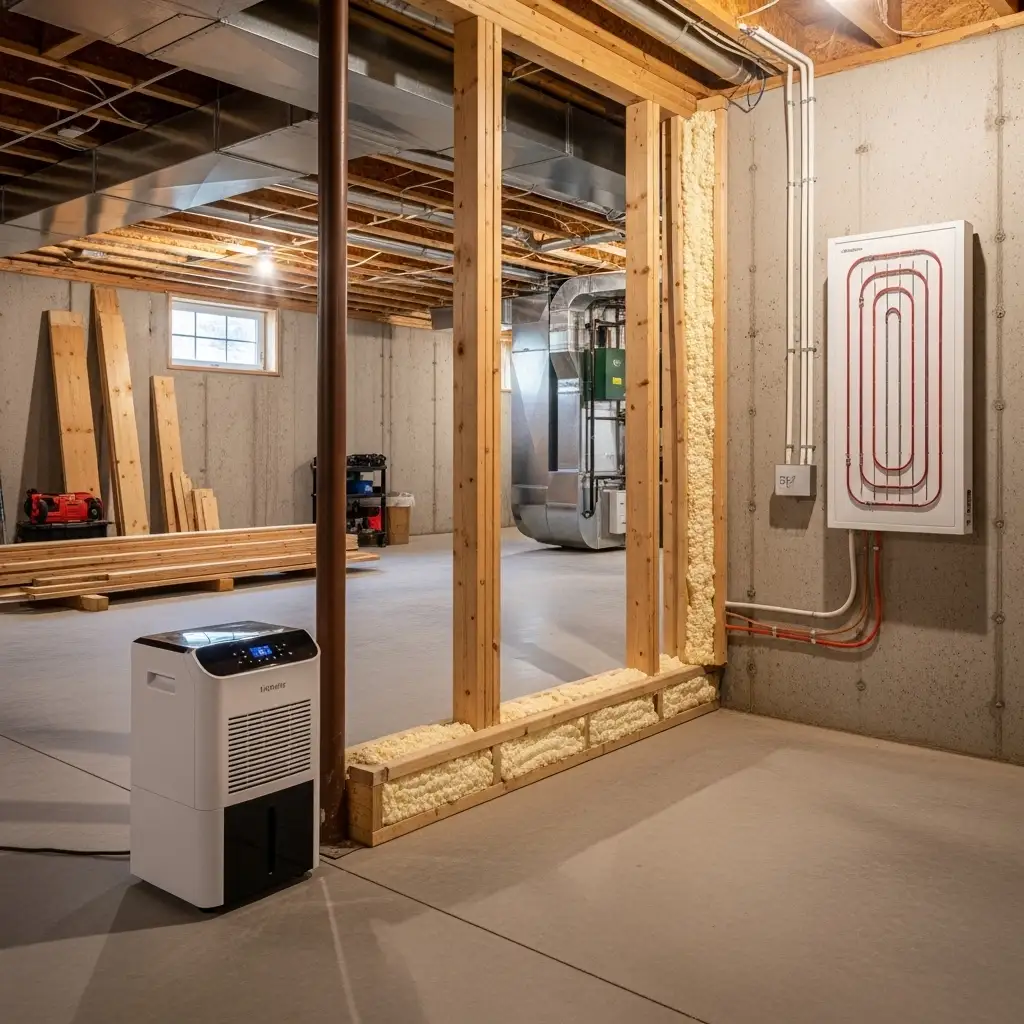
Climate & Moisture Control: Comfort is non-negotiable. Ensure your basement is properly insulated around the rim joists. A high-quality dehumidifier is essential to keep the space dry and comfortable. For heating, consider a ducted mini-split system that can both heat and cool, or supplement with attractive, safe electric radiant panels.
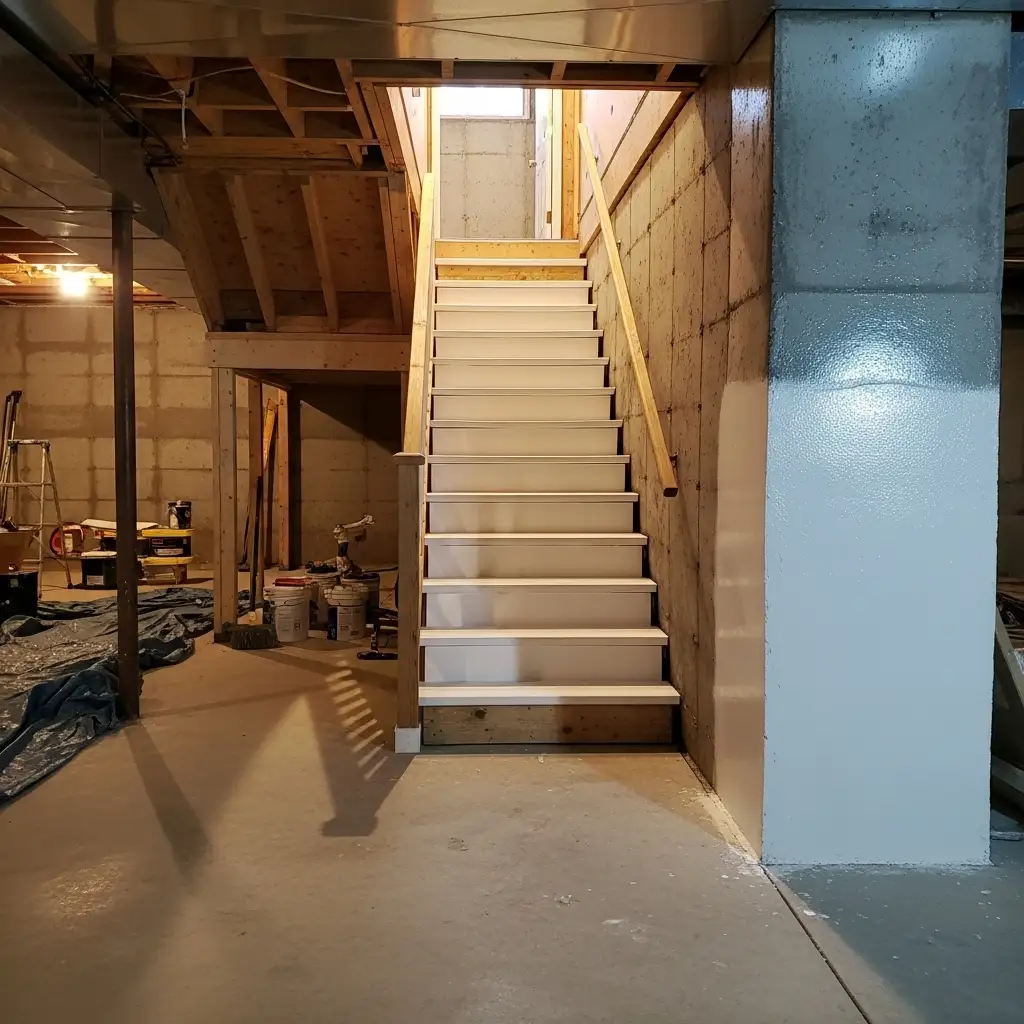
The Power of Paint (on the Right Things): We’ve talked about the ceiling. Now, consider painting any exterior foundation walls a light, reflective color to brighten the space. Even painting the stairwell stringers and risers a crisp white or bold color can make the entrance feel intentional.
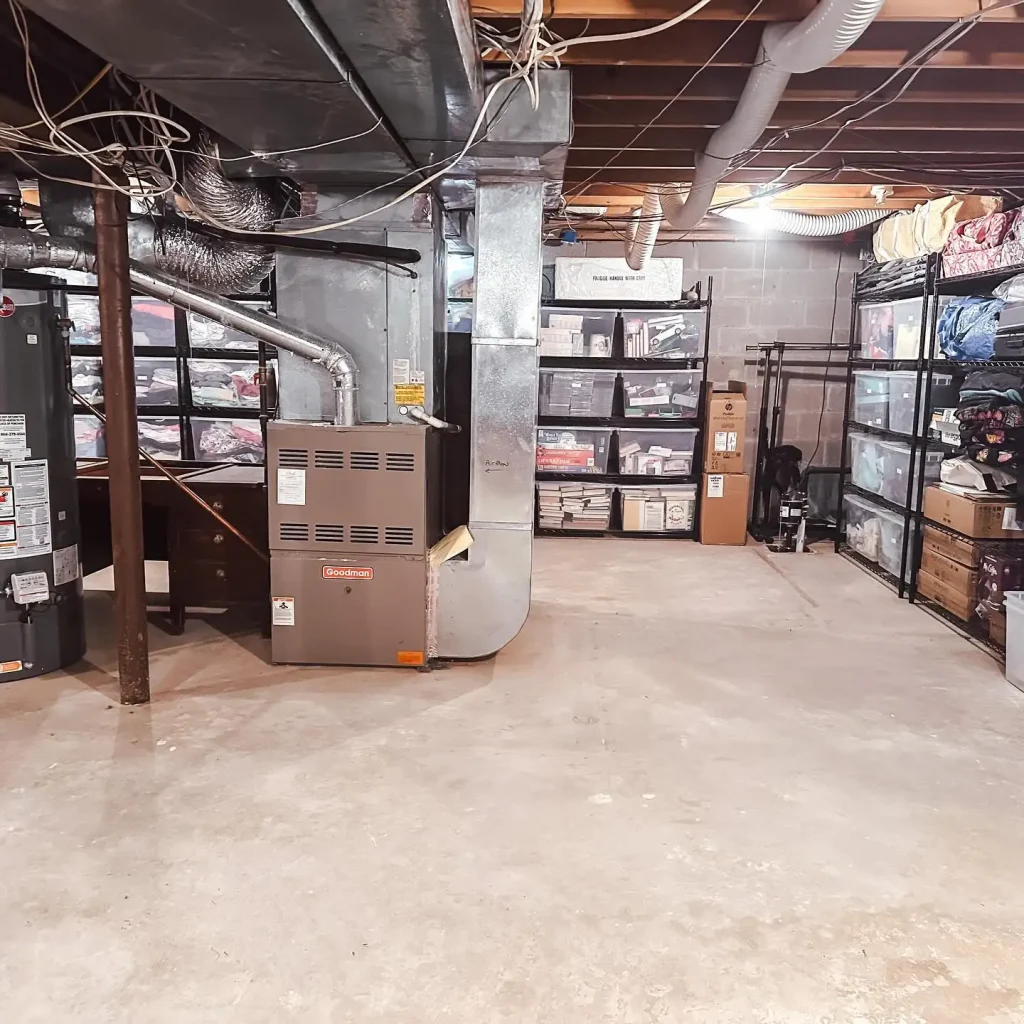
Smart, Open Storage: Replace dusty cardboard with uniform, clean-lined shelving units. Metal industrial shelves or finished plywood built-ins keep items accessible and add to the aesthetic. This is where brilliant basement storage and organization ideas come into play, turning necessity into a design feature. You can learn about various basement paint colors for alternative of only black and white.
Navigating the Practicalities: A Realist’s Guide
Before you start styling, you must address the fundamentals. An elevated unfinished basement is still a basement.
- Moisture is Enemy #1: Before you bring in a single rug, conduct a thorough moisture assessment. Look for efflorescence (white, chalky residue) on walls, check for cracks, and perform the plastic sheet tape test on the floor. Address any major water intrusion from the outside first (grading, gutters, drainage). Interior sealants are a band-aid, not a cure.
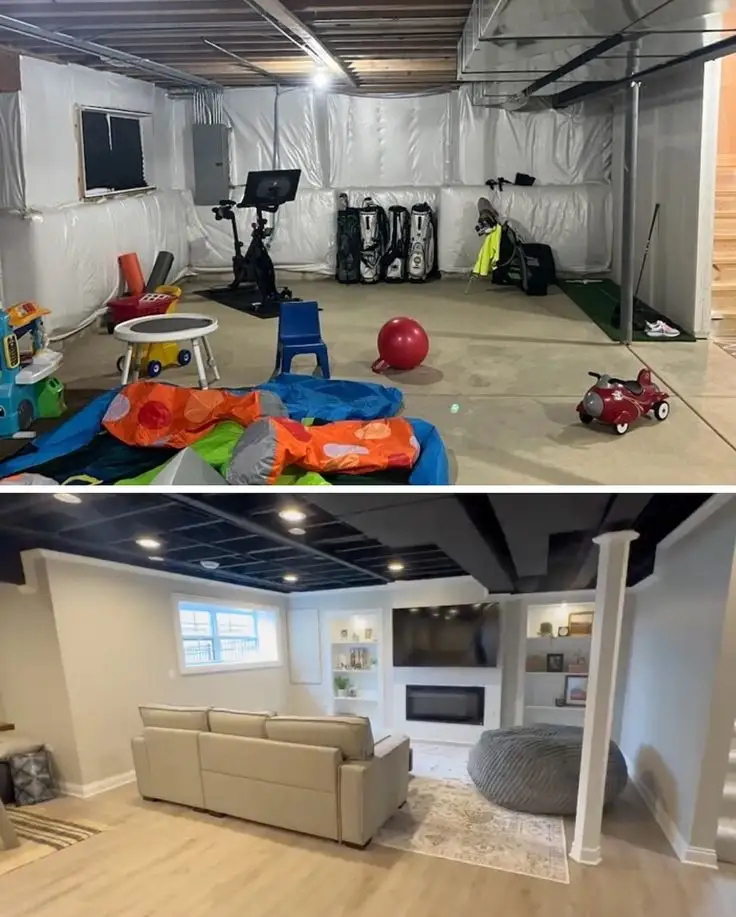
- Code & Safety Are Non-Negotiable:
- Egress: Every sleeping area must have a legal egress window or door for escape in a fire. This is a safety must and a legal requirement.
- Electrical: Ensure all outlets are GFCI-protected. Have a licensed electrician add circuits if needed for gym equipment or workshop tools. Exposed wiring must be in proper conduit.
- Fire Safety: Keep storage orderly. Install smoke and carbon monoxide detectors that are interconnected with the home’s system.
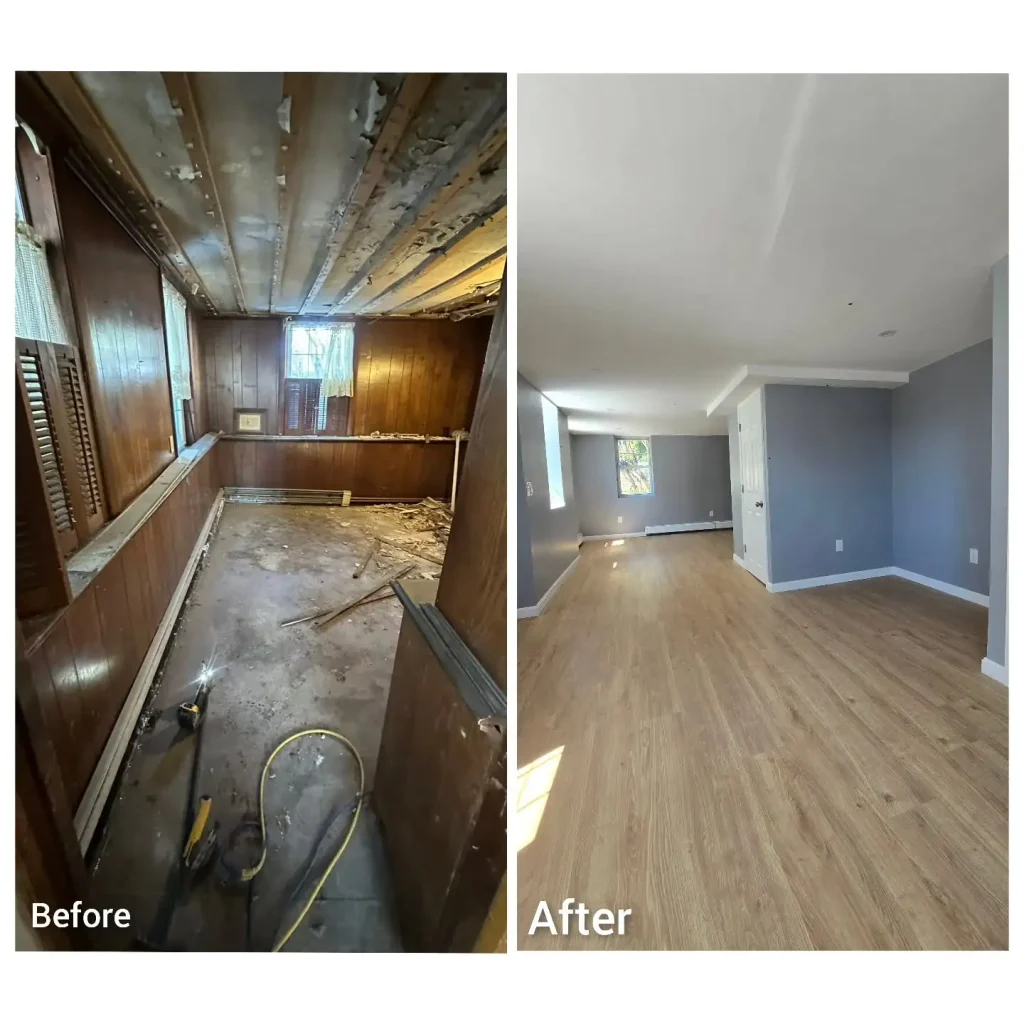
Source: @gentekcorp
- The Acoustics of Open Space: Sound will travel. Use large textiles—rugs, tapestries, heavy curtains—to absorb sound. Fabric-wrapped acoustic panels can be mounted artfully on walls to dampen echo without compromising the look.
1. Can an unfinished basement really add value to my home?
Absolutely, but differently than a finished basement. A thoughtfully designed unfinished space appeals to buyers who value flexibility and authentic character. It shows the home’s infrastructure is well-maintained and offers “blank slate” potential. While it may not add as much dollar-for-dollar as a full renovation, it requires minimal investment and appeals to a growing segment of buyers who prefer authentic spaces over generic finishes.
2. How do I deal with the “unfinished” look when entertaining guests?
The key is intentionality. Guests appreciate spaces that feel designed rather than neglected. Define clear zones with area rugs and furniture groupings. Use warm, strategic lighting to create ambiance. Add textile elements like curtains, tapestries, or large-scale art to soften surfaces. Most importantly, own the aesthetic—when you present the space with confidence as an “industrial loft” or “creative studio,” guests will appreciate its unique character.
3. What about insulation and temperature control?
You can improve comfort without finishing the walls. Focus on insulating the rim joists (where the foundation meets the floor framing), which addresses the major source of cold air. For heating, consider radiant floor mats in frequently used zones or efficient infrared heaters. Proper dehumidification also dramatically improves perceived comfort by reducing that characteristic basement dampness.
4. How do I maintain the space without it becoming a dumping ground?
Establish clear systems from the beginning. Designate specific zones for storage versus living activities. Use the container method—everything must have its place in a labeled bin or on a designated shelf. Schedule seasonal reviews to purge unused items. Most importantly, treat the space with the same respect as your finished rooms—regular cleaning and organization prevent that “dumping ground” mentality.
Conclusion: The Soul of the House
Finishing a basement the traditional way often results in a space that feels like an annex—a polite, carpeted echo of the upstairs. The elevated unfinished basement, however, becomes something else entirely: the soul of the house.
It’s where the bones of the structure are on display. It’s where creativity isn’t confined by perfectly painted baseboards. It’s a workshop, a studio, a gym, a lounge, and a gallery all at once. It embraces a kind of honest luxury—not the luxury of expensive finishes, but the luxury of space, potential, and unfiltered character.
It takes courage to leave the concrete showing and the pipes exposed. It requires a design eye to curate the chaos into cool. But the reward is a space utterly unique to you and your home—a space that doesn’t apologize for what it is, but celebrates it.
So, look at your basement again. See past the clutter and the cobwebs. See the height, the strength, the raw potential. Don’t just finish it. Reveal it.