Are you stuck in a bland, uninspiring cubicle that drains your energy before lunch? Does your workspace feel like a prison cell rather than a productive environment where creativity and focus thrive?
Office cubicles don’t have to be soul-crushing beige boxes—with thoughtful design, organization, and personal touches, even standard 6×6 workstations transform into comfortable, functional spaces that boost productivity, improve mood, and make spending 40+ hours weekly in confined spaces genuinely tolerable.
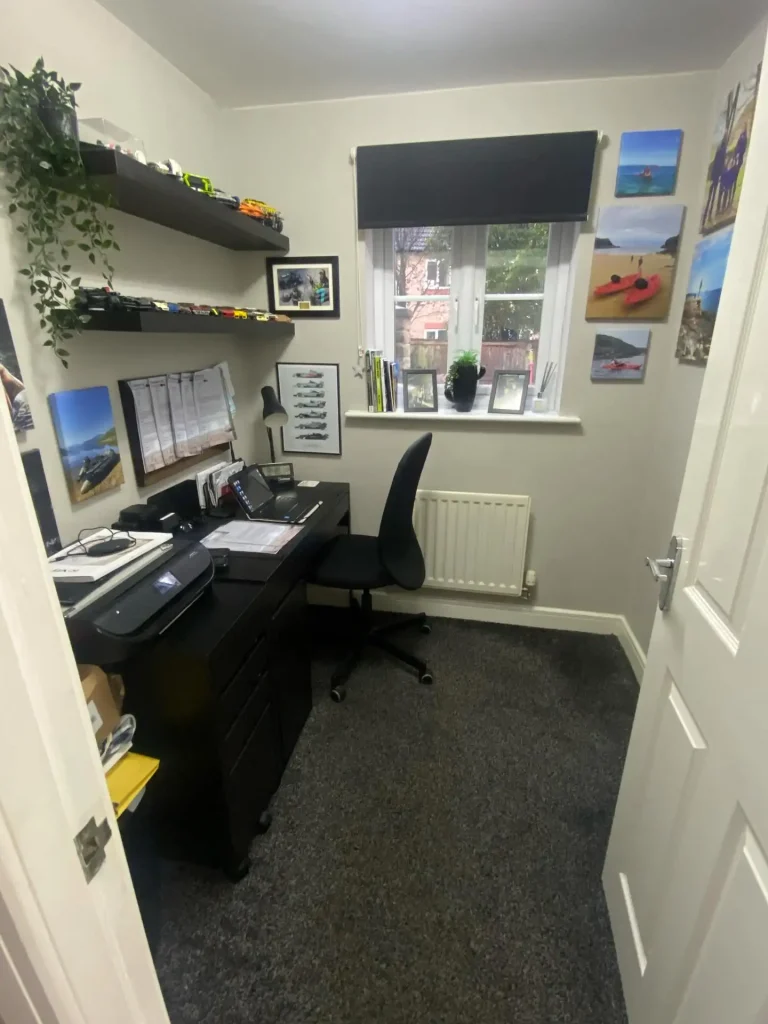
Source: @plumbforceltdpreston
Whether you rent your cubicle at a corporate office with strict decoration policies or enjoy freedom personalizing your space, strategic design choices create environments that support your work style, reflect your personality, and provide the comfort and functionality essential for sustained productivity. Furthermore, you may also prefer home office ideas for remote work.
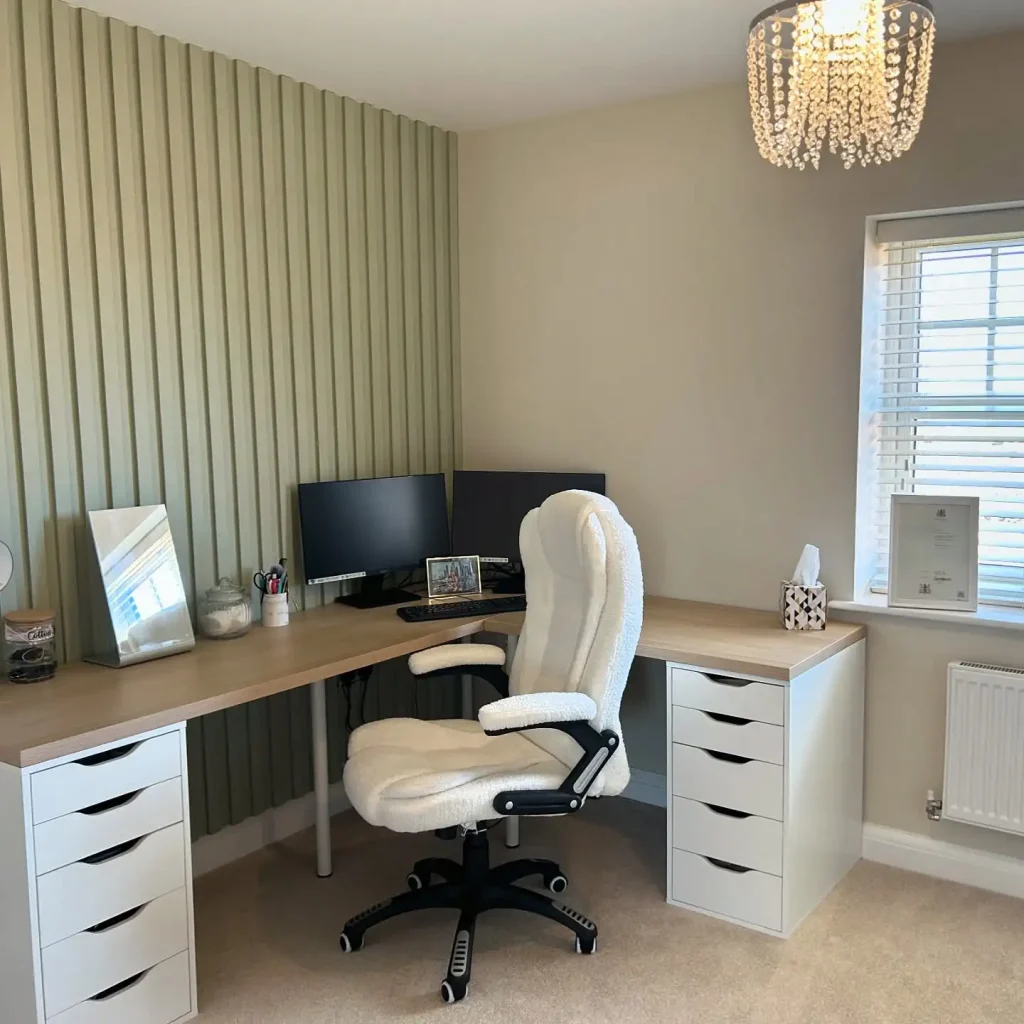
From minimalist organization systems and ergonomic setups to creative personalization and wellness-focused elements, these 22 office cubicle designs prove that small spaces can be both professional and personal, functional and inspiring. Let’s explore how to transform standard office cubicles into workspaces you actually want to occupy every day.
1. Minimalist Organization
Embrace clean, uncluttered aesthetics through minimal decor, concealed storage, neutral colors, and only essential items visible on surfaces. Use drawer organizers containing supplies, cable management systems hiding cords, and vertical file sorters maintaining paperwork order. Moreover, you can try various home office desk ideas that make you comfortable.
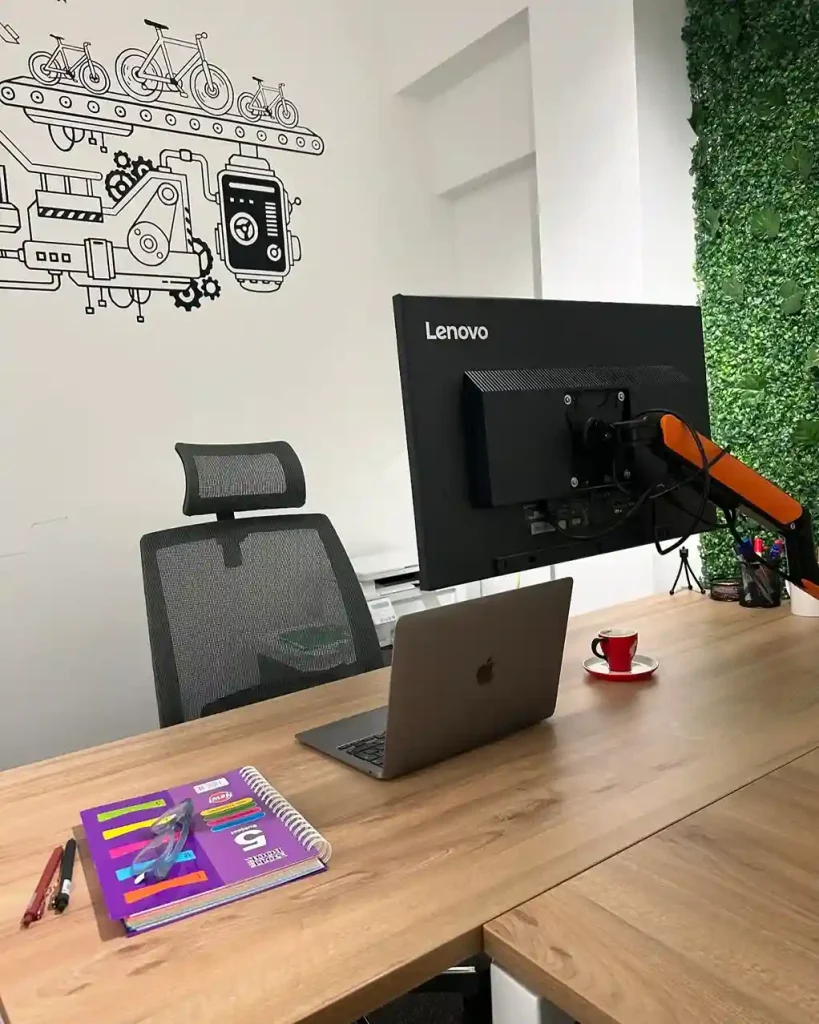
The streamlined approach reduces visual chaos that creates stress and distraction, allowing focus on work rather than navigating cluttered environments that overwhelm and reduce productivity throughout demanding workdays.
2. Greenery and Plants
Add life and air quality improvements through desk plants including succulents, pothos, snake plants, or small peace lilies requiring minimal maintenance. The natural elements reduce stress, improve mood, increase oxygen levels, and create visual interest without overwhelming small spaces.
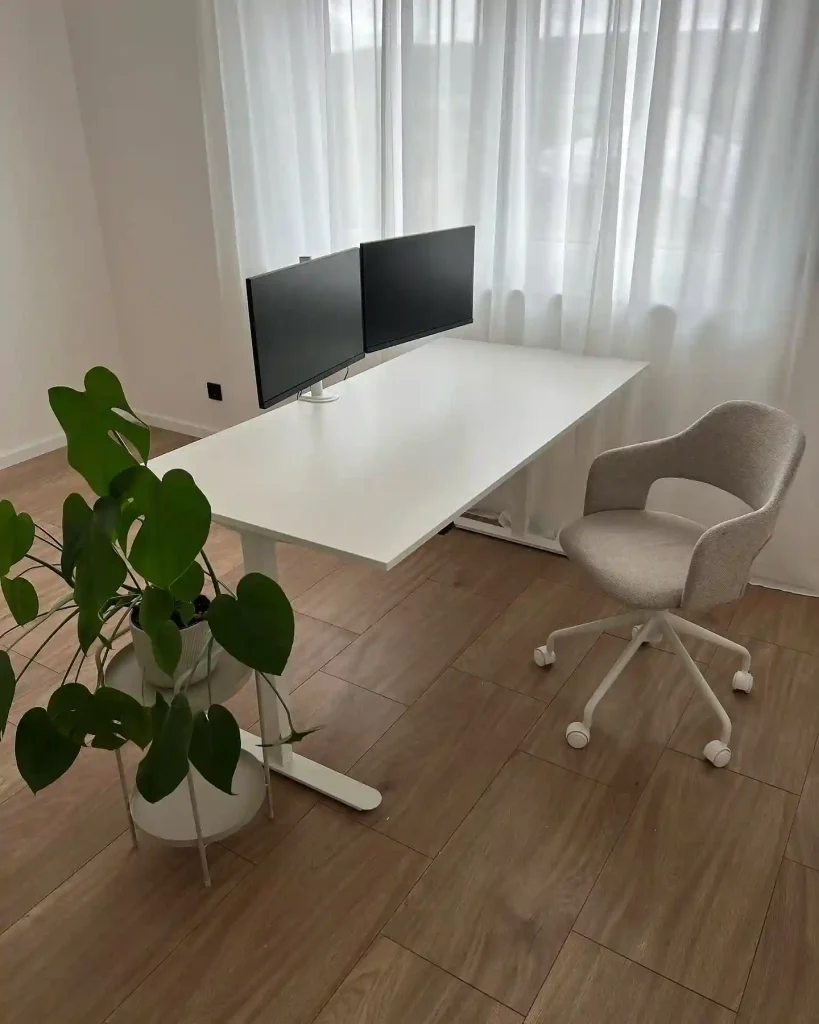
Choose low-light tolerant plants suited for typical fluorescent office lighting, and include attractive planters complementing your overall cubicle aesthetic rather than mismatched containers creating visual clutter. You can also see more cubicle decor ideas to improve quality of work with surrounding aesthetic.
3. Ergonomic Excellence
Prioritize physical comfort through adjustable chairs providing lumbar support, monitor stands raising screens to eye level, keyboard trays maintaining neutral wrist positions, and footrests improving posture. Include anti-fatigue mats if standing, desk lamps reducing eye strain, and ergonomic accessories preventing repetitive stress injuries.
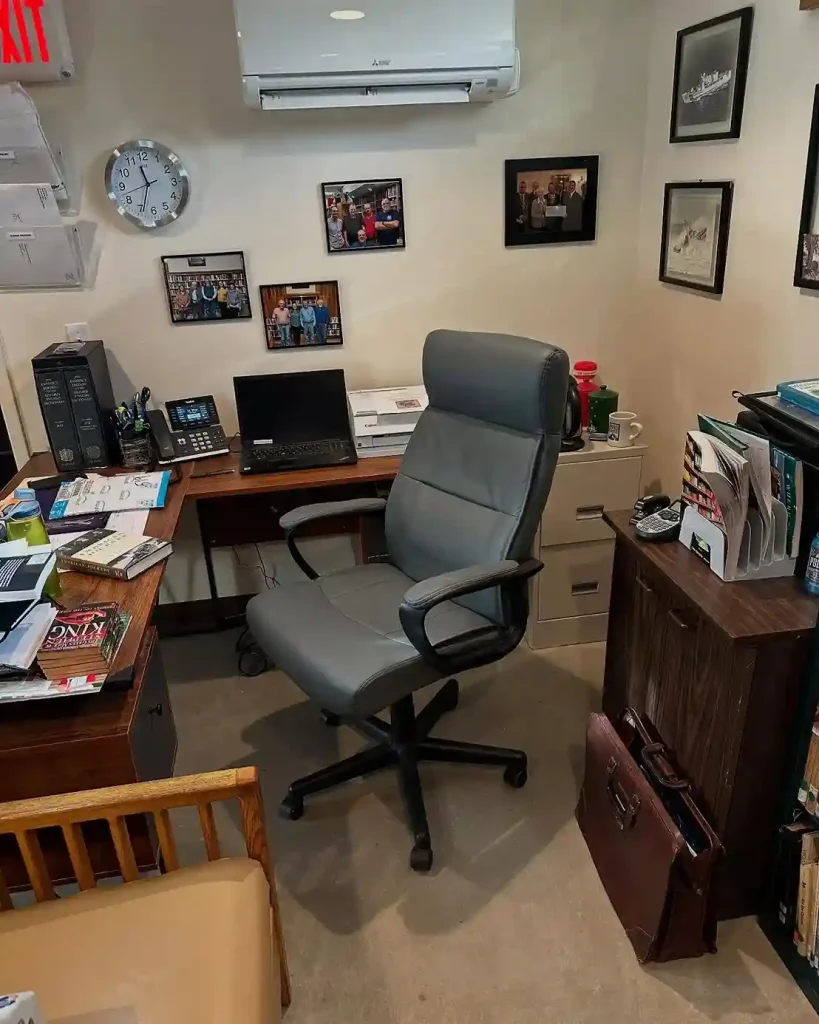
The health-focused investments pay dividends through reduced pain, increased productivity, and prevention of chronic conditions that poor ergonomics cause over years of daily desk work.
4. Color Psychology Scheme
Choose intentional color palettes creating desired psychological effects—blues promoting calm and focus, greens reducing stress and eye strain, yellows encouraging creativity and optimism, or neutrals maintaining professional simplicity.
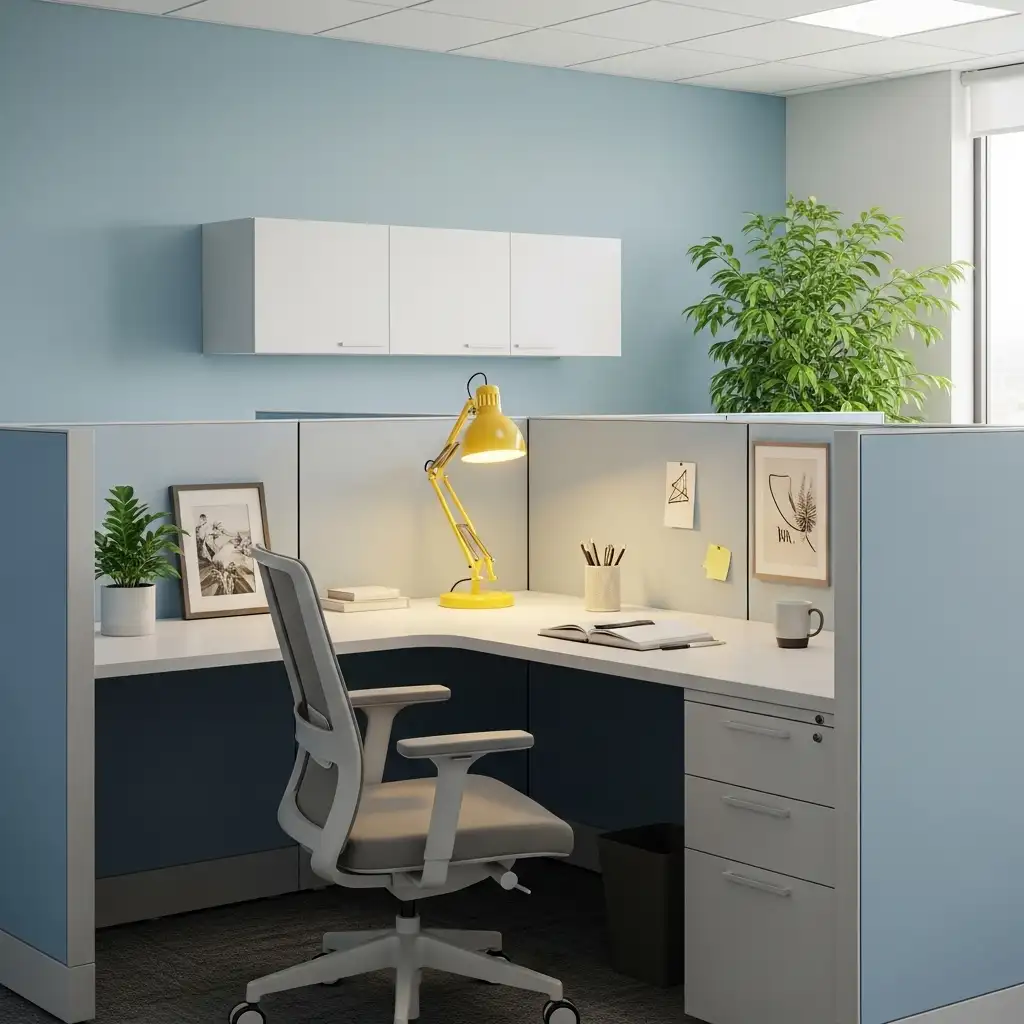
Incorporate colors through desk accessories, organizers, artwork, or small accent walls where permitted. The strategic color use subtly influences mood and productivity throughout days spent in confined spaces where environmental factors significantly impact mental states and work quality.
5. Inspirational Gallery Wall
Create motivational displays with inspiring quotes, achievement reminders, vision board elements, or meaningful photos arranged attractively on cubicle walls. Include removable adhesive strips or magnetic boards preventing wall damage while allowing easy rearrangement.
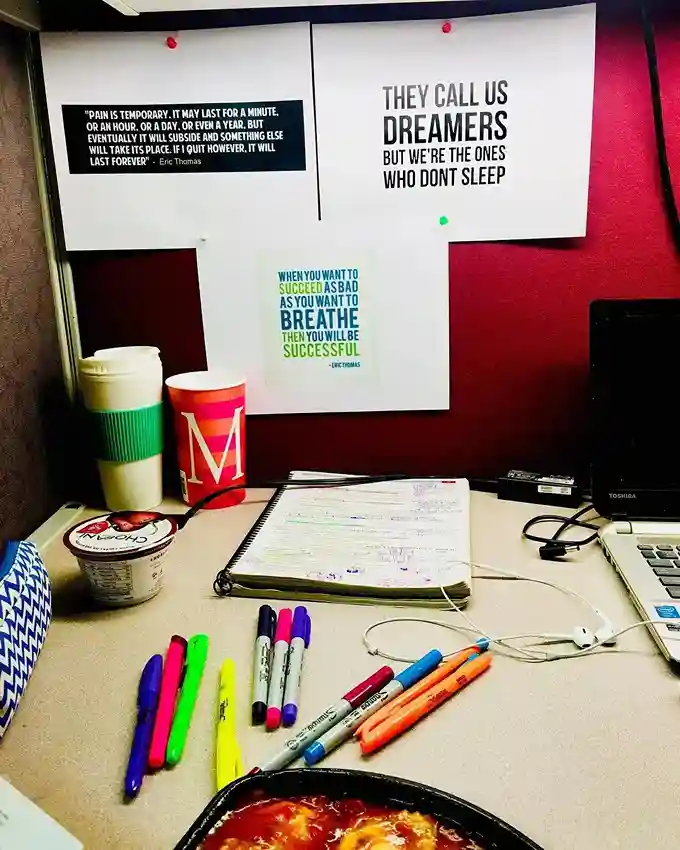
The personalized gallery provides visual breaks, emotional boosts during challenging moments, and reminders of goals and values that make demanding work worthwhile despite daily frustrations and stresses.
6. Lighting Transformation
Combat harsh fluorescent lighting through desk lamps with warm bulbs, LED strip lights adding ambient glow, or natural light simulation lamps improving circadian rhythms. Include task lighting for detailed work and softer ambient options for screen-based activities reducing eye strain.
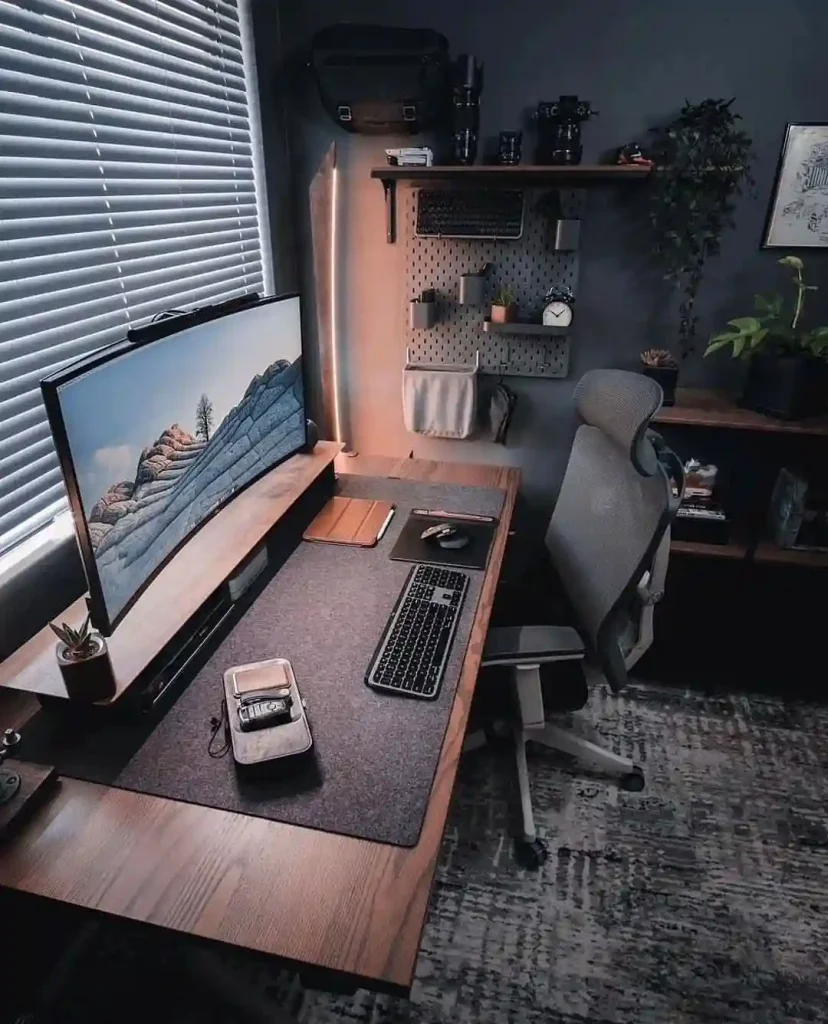
The layered lighting dramatically improves workspace comfort while reducing headaches, fatigue, and eye strain that inadequate or harsh lighting causes throughout long workdays under artificial illumination.
7. Storage Maximization
Utilize vertical space through wall-mounted organizers, over-cubicle shelving, hanging file systems, and stacking trays maximizing limited square footage. Include drawer dividers organizing supplies, desktop organizers containing frequently used items, and hidden storage for personal belongings.
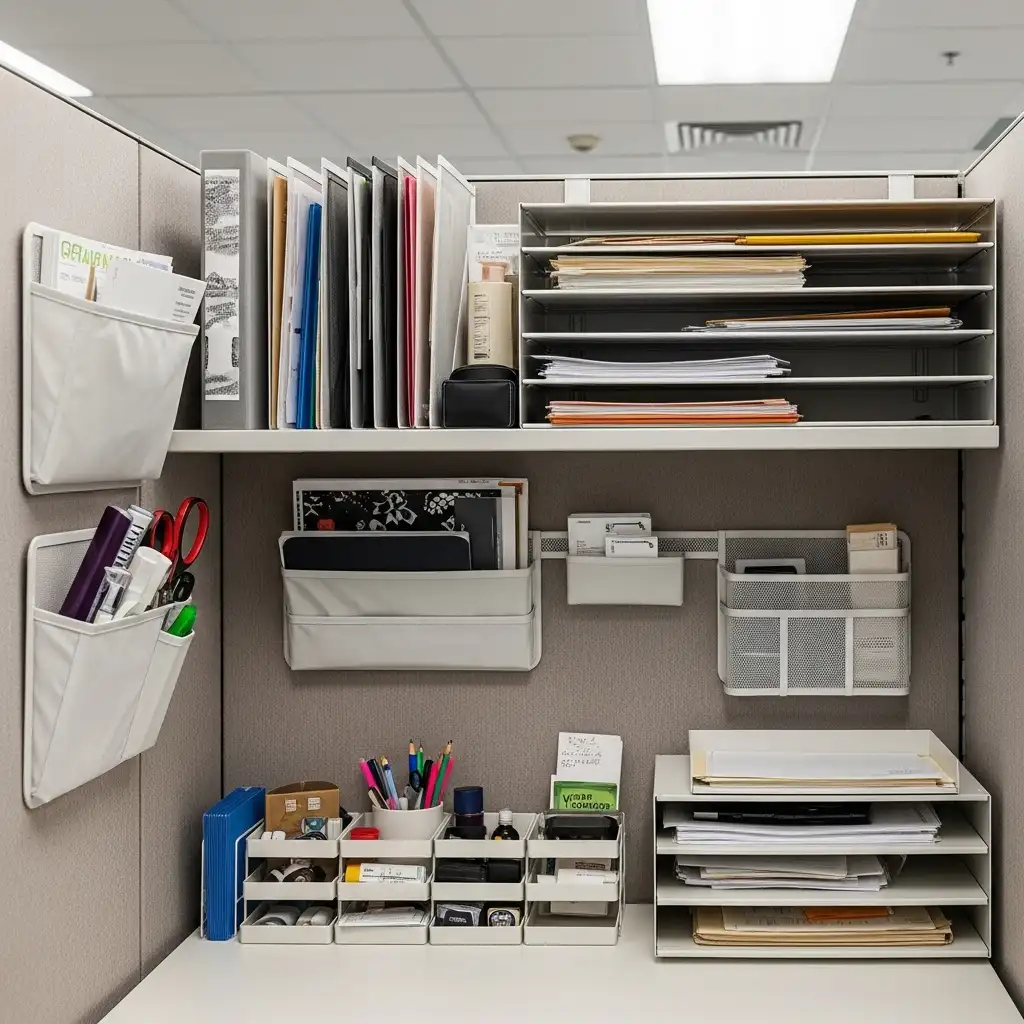
The comprehensive organization prevents clutter accumulation that creates stress and reduces efficiency when you cannot quickly locate needed items during time-sensitive projects requiring immediate access to tools and resources.
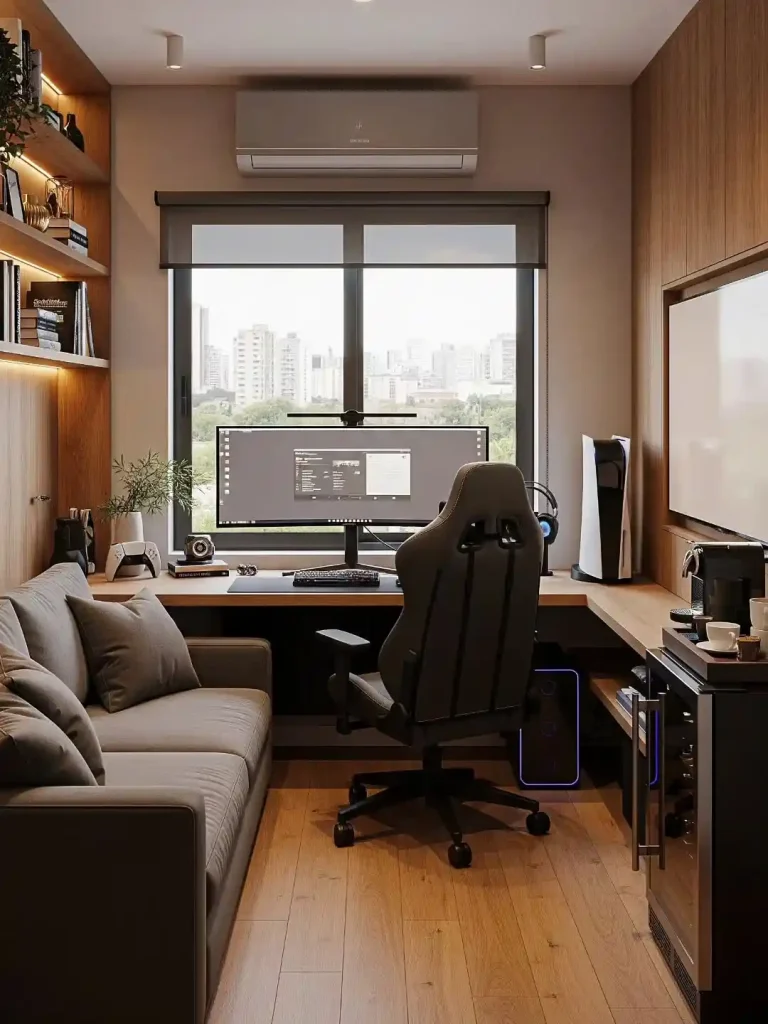
8. Tech-Savvy Setup
Create efficient technology zones with multiple monitors improving productivity, wireless charging pads reducing cable clutter, cable management systems organizing cords, and USB hubs providing adequate ports. Include headphone stands, device docks, and cord clips maintaining tidy appearances.
Source: @ea.decoor
The organized tech setup eliminates frustration and wasted time untangling cables or searching for devices, allowing seamless workflow supporting modern work requiring multiple simultaneous screens and devices.
9. Privacy Enhancements
Add visual barriers through tall plants, decorative screens, curtains on open sides, or strategic furniture placement creating psychological boundaries in open environments. Include noise-cancelling headphones, white noise machines, or sound-absorbing panels where permitted.
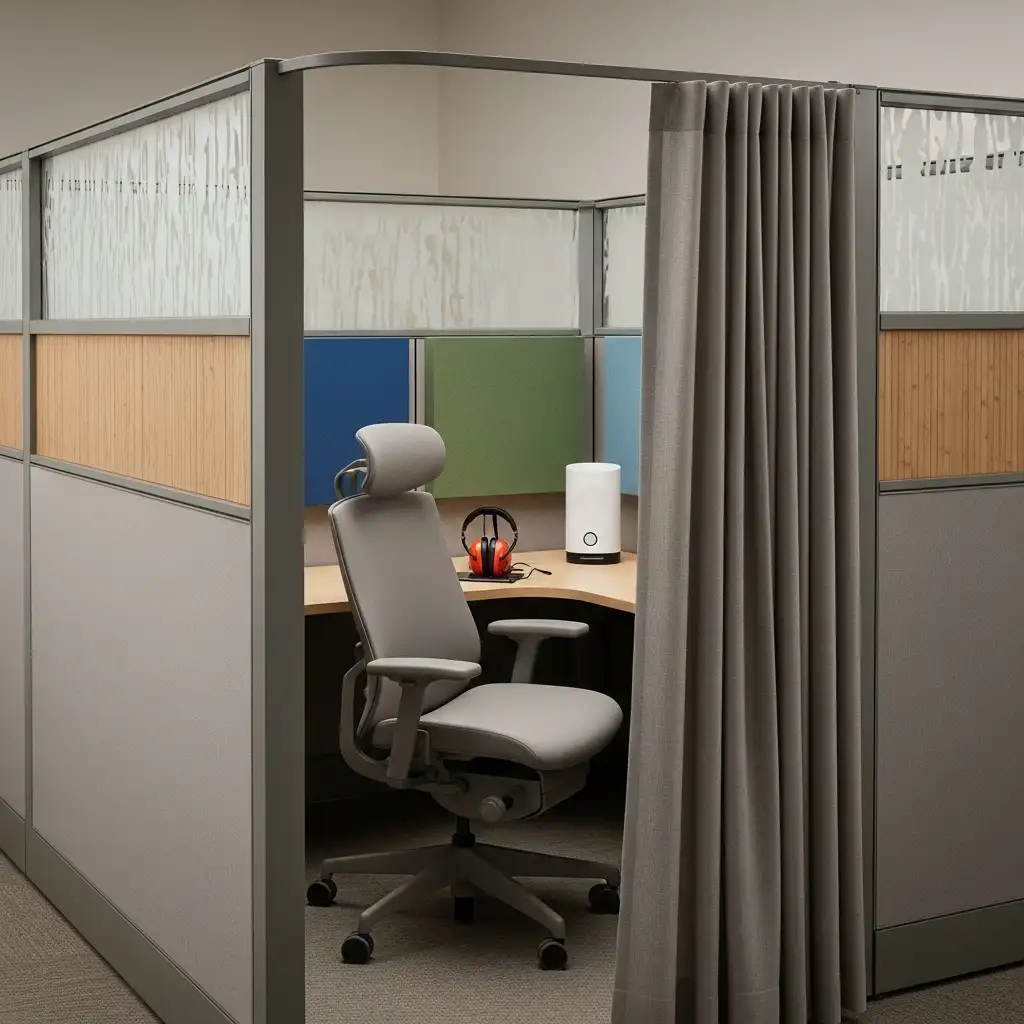
The privacy improvements help maintain focus in distracting open offices where constant movement and conversation disrupt concentration despite organizational preferences for collaborative workspace designs that often sacrifice individual productivity.
10. Standing Desk Conversion
Transform traditional desks with adjustable standing desk converters, desk risers, or full standing desk replacements improving health and energy levels. Alternate between sitting and standing throughout days, include anti-fatigue mats, and maintain proper ergonomics in both positions.
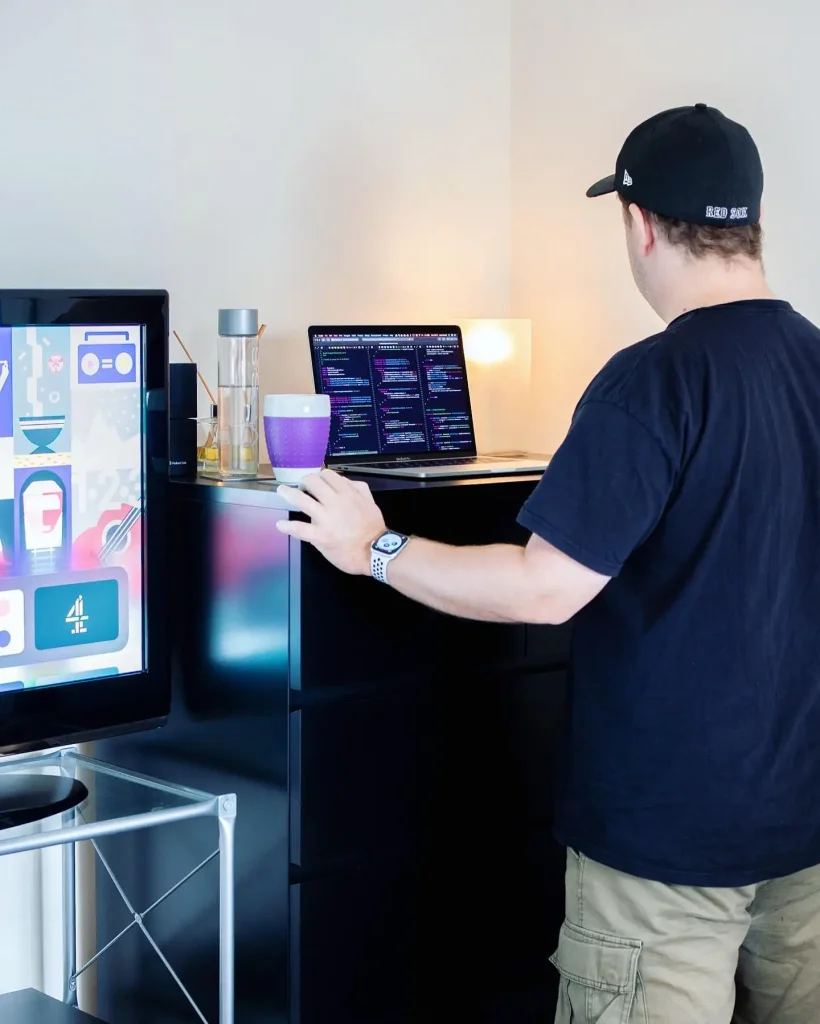
The movement variation reduces back pain, improves circulation, and increases energy compared to eight hours of continuous sitting that research increasingly links to negative health outcomes.
11. Productivity Command Center
Create centralized organization hubs with daily schedules, project timelines, priority lists, and deadline reminders displayed prominently using whiteboards, cork boards, or digital screens. Include color-coded systems tracking various projects, sticky notes for quick reminders, and calendar views maintaining awareness of upcoming commitments.
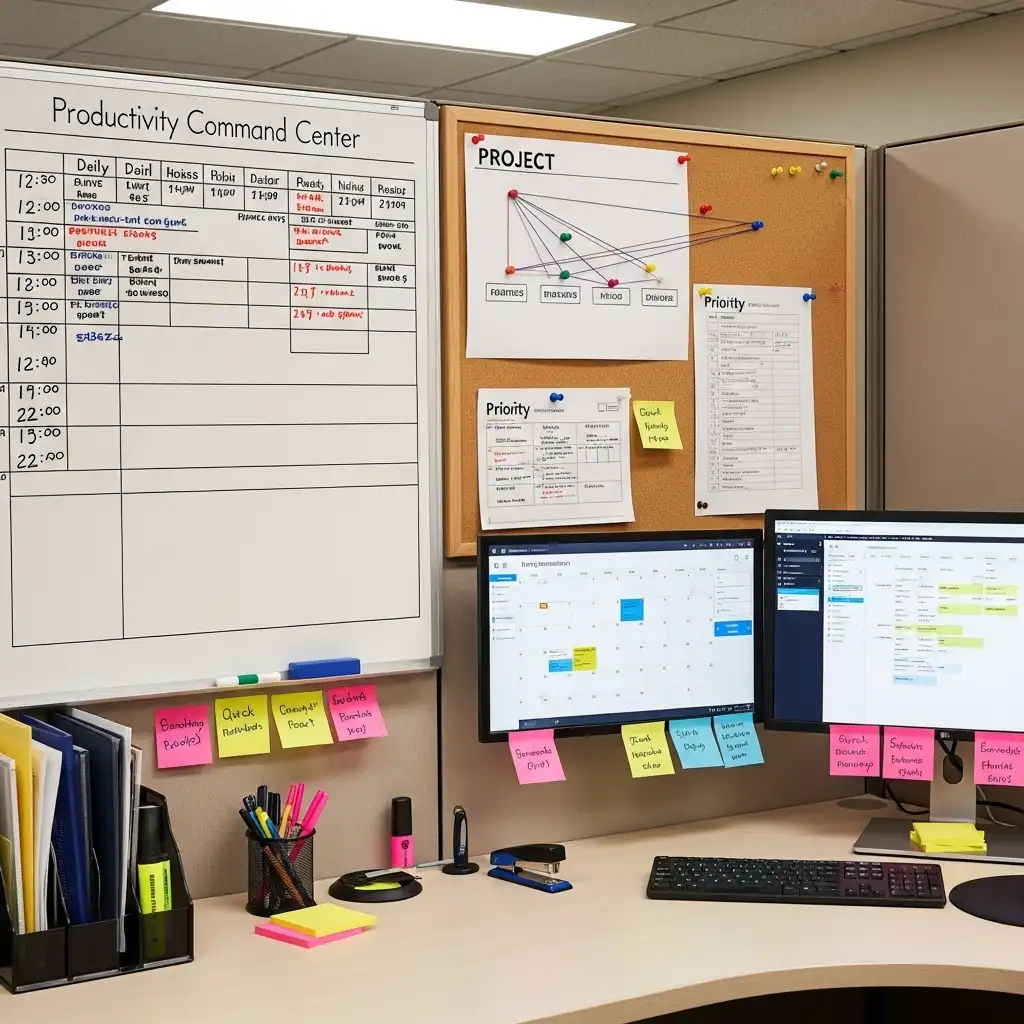
The visual organization systems keep priorities top-of-mind while reducing mental load remembering countless details and deadlines that modern work demands simultaneously.
12. Comfort Zone Elements
Include personal comfort items like cozy throw blankets, lumbar pillows, small space heaters or fans, aromatherapy diffusers (if permitted), and quality tissues. Add stress balls, fidget toys, or hand grippers providing physical outlets during tense moments.
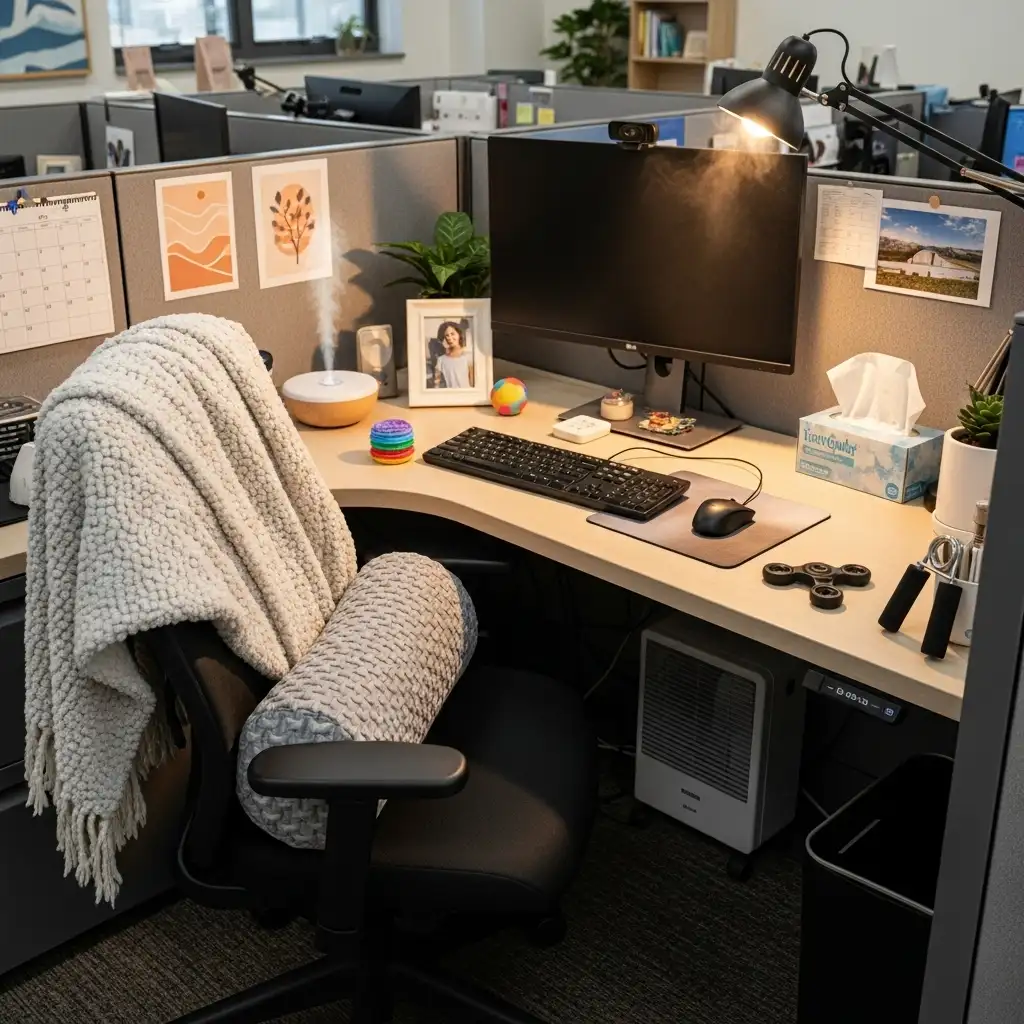
The comfort accessories transform sterile workspaces into personalized environments where you can regulate temperature, manage stress, and maintain physical comfort despite corporate climate control and furnishing decisions.
13. Modern Minimalist Tech
Embrace sleek, technology-focused designs with clean lines, wireless peripherals, minimalist accessories, and monochromatic color schemes. Choose matching desk accessories in black, white, or metallic finishes creating cohesive, contemporary aesthetics.
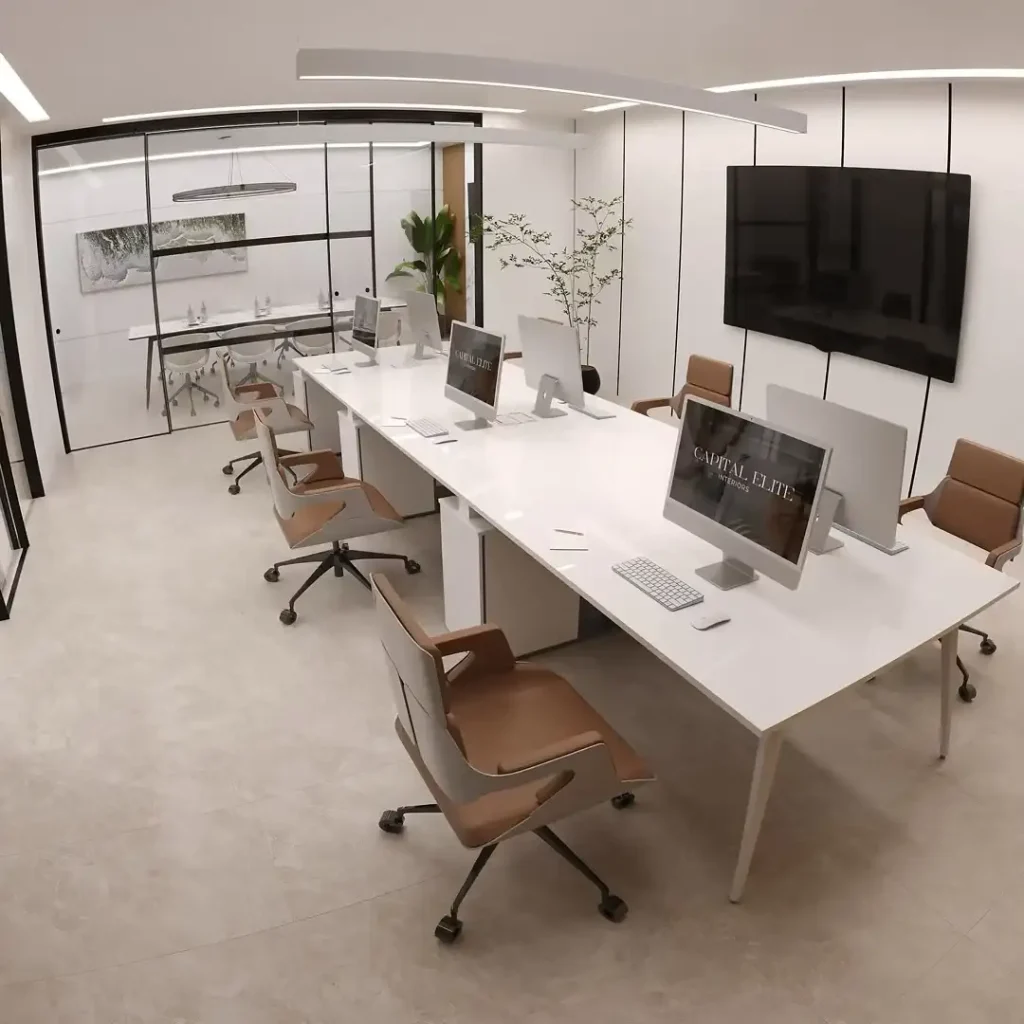
Hide cables completely, eliminate paper through digital systems, and maintain extremely organized surfaces projecting professional competence and modern efficiency that impresses colleagues and supervisors visiting your workspace.
14. Biophilic Design Elements
Incorporate nature-inspired elements beyond plants including natural wood accessories, stone desk organizers, water features (if permitted), nature photography, and earth-tone color palettes. The connection to nature reduces stress, improves creativity, and creates calming environments in urban offices far removed from natural settings.
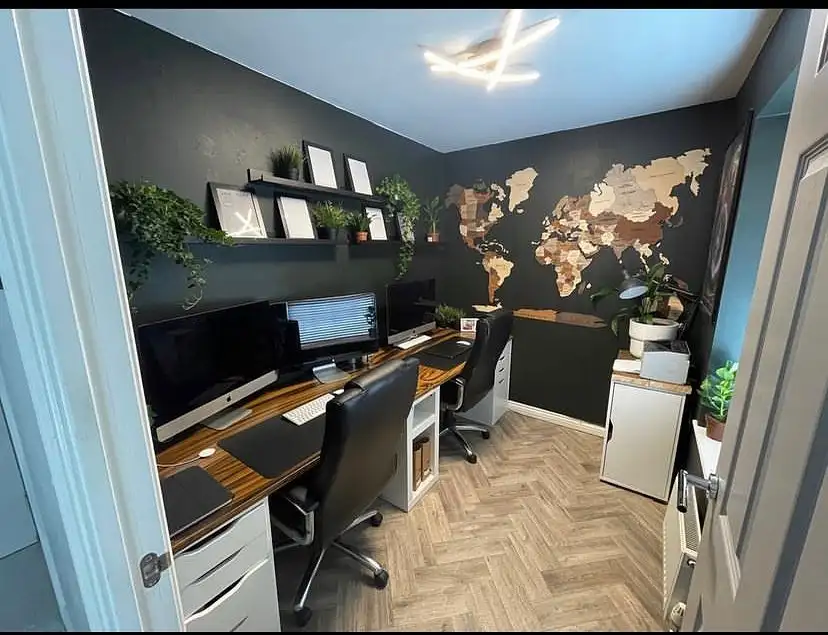
Source: @the_always_shiny_house
Research consistently shows biophilic design significantly improves workplace wellbeing and productivity through psychological connections to natural environments humans evolved within.
15. Retro Vintage Aesthetic
Create nostalgic workspaces through vintage desk accessories, retro artwork, classic desk lamps, and mid-century modern organizers. Choose warm wood tones, brass accents, and vintage-inspired colors like mustard yellow or avocado green (within professional bounds).
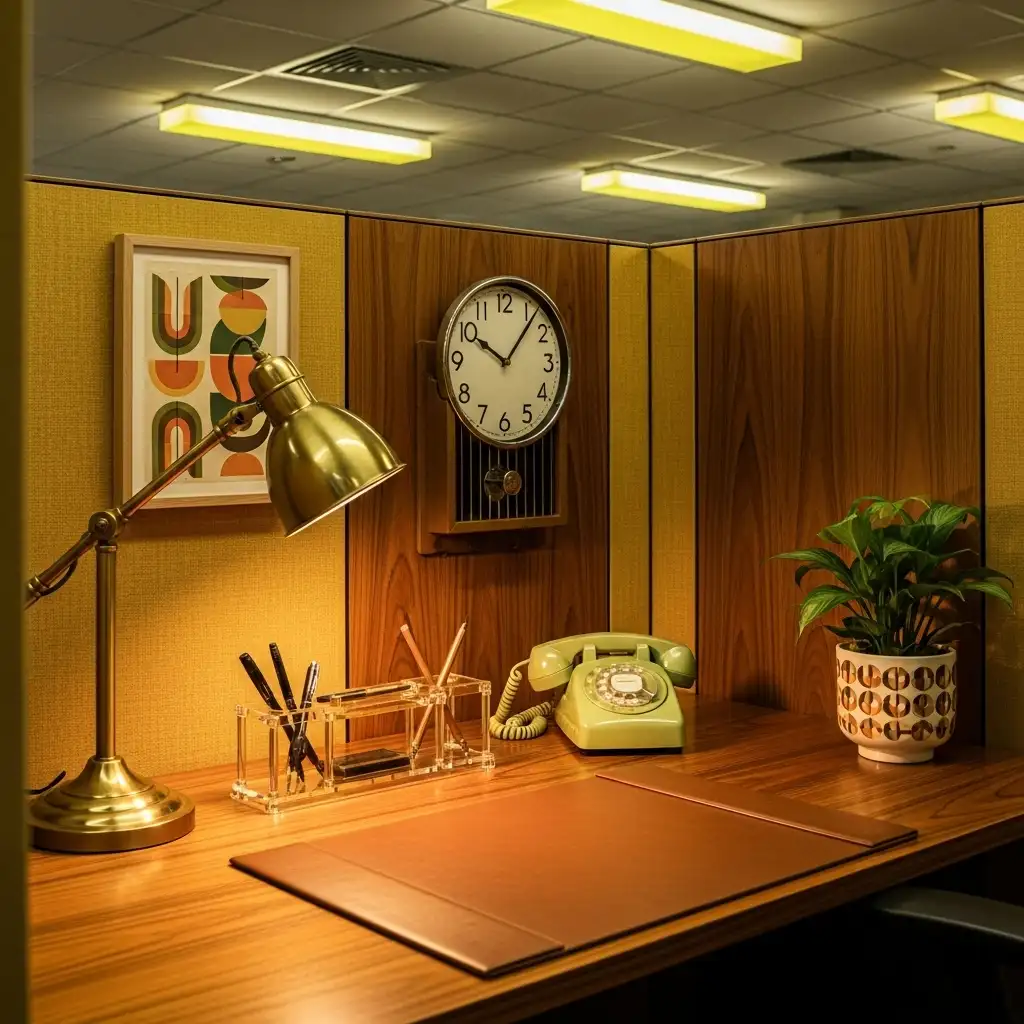
The distinctive style expresses personality while creating comfortable, homey feelings in otherwise sterile corporate environments where individuality often gets sacrificed for bland uniformity that depresses creativity and engagement.
16. Functional Feng Shui
Arrange furniture following feng shui principles positioning desks commanding room views, keeping spaces clutter-free, incorporating five elements (wood, fire, earth, metal, water), and creating balanced energy flow. Include proper lighting, live plants, and organized storage maintaining positive chi throughout workspaces.
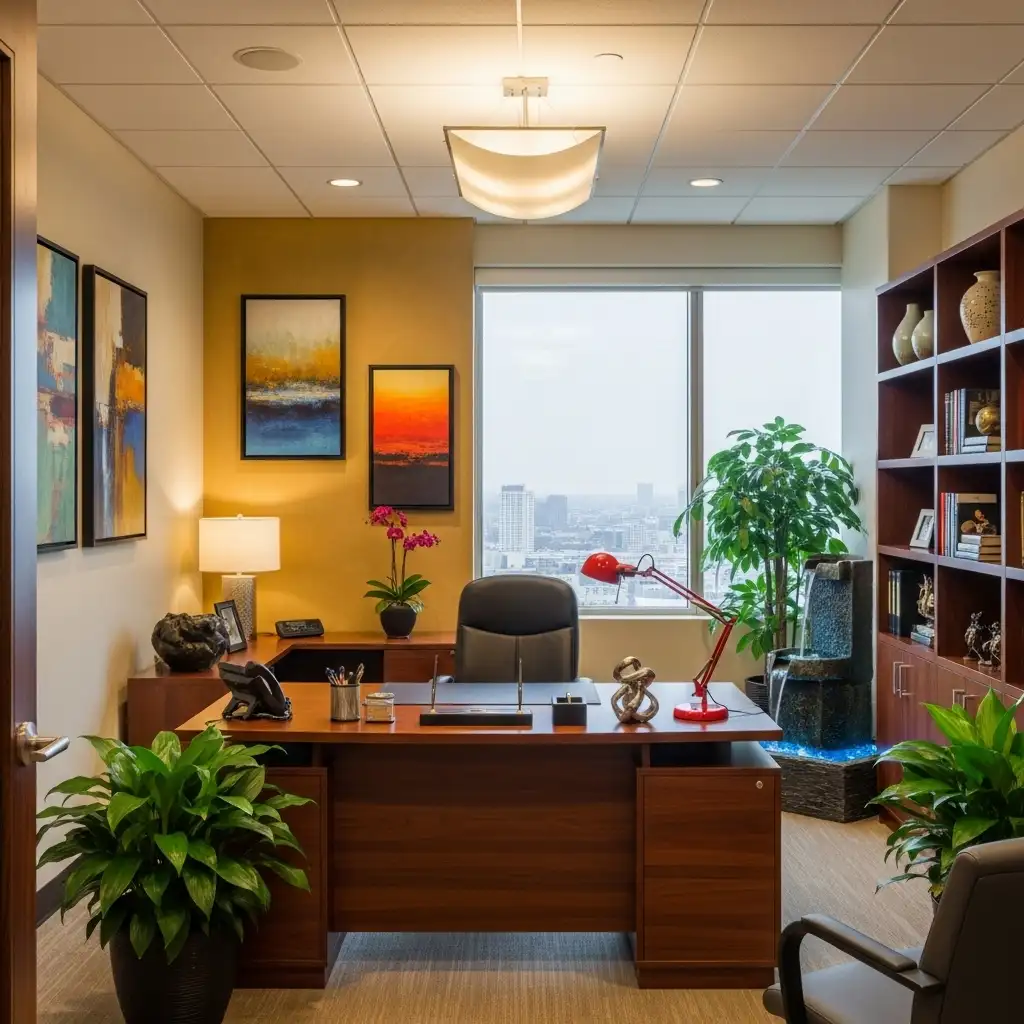
Whether you believe in feng shui philosophy or simply appreciate good spatial organization, these principles create functional, comfortable environments supporting focused work.
17. Collaborative Corner
Design spaces facilitating impromptu meetings with extra seating, small whiteboards for brainstorming, and welcoming arrangements encouraging colleagues to stop by. Include comfortable guest chairs, shared supplies, and open body language through furniture positioning.
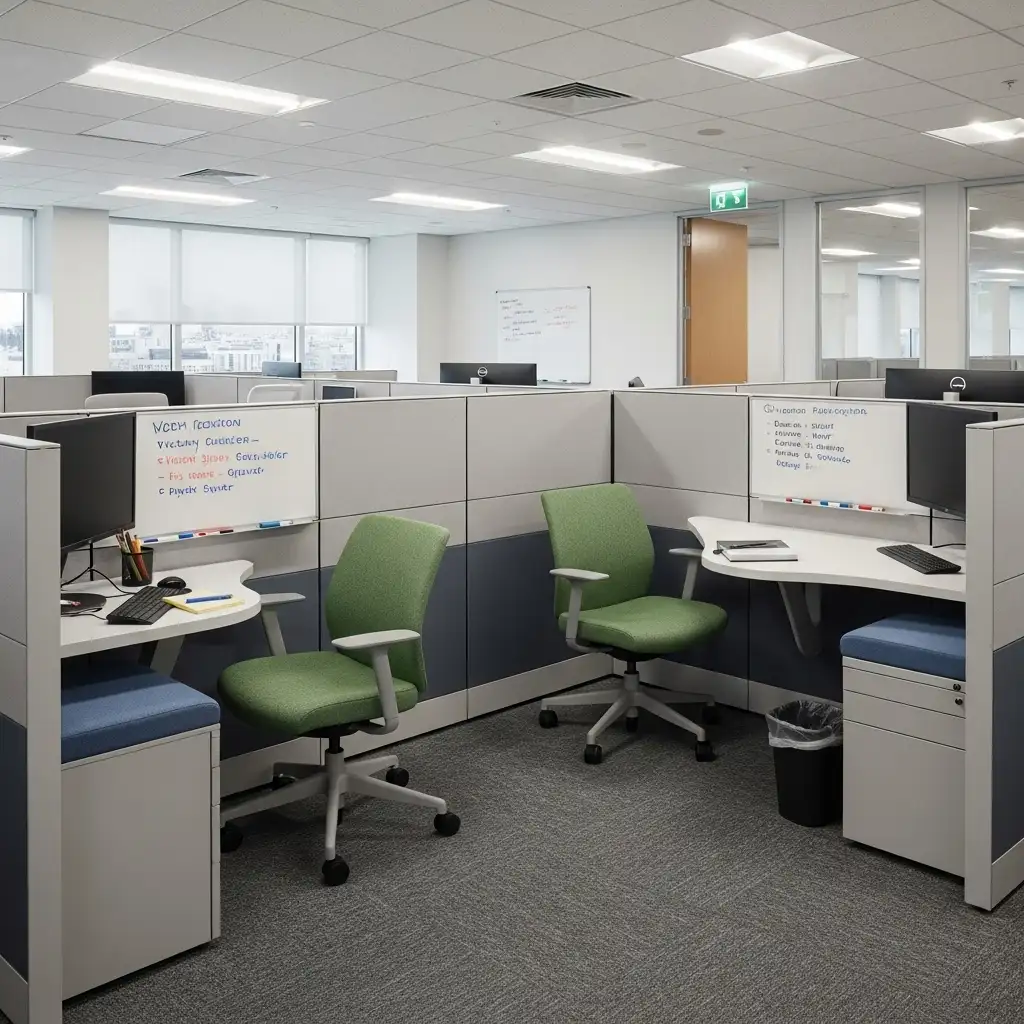
The collaboration-friendly setup builds relationships and enables quick problem-solving conversations without booking conference rooms, improving team dynamics and project efficiency through reduced communication barriers.
18. Digital Nomad Setup
Create portable, minimal workspaces using laptop stands, wireless peripherals, cloud-based systems eliminating paper, and essential-only desk items. Maintain the ability to pack up and relocate quickly, embracing flexibility and minimal attachment to physical space.
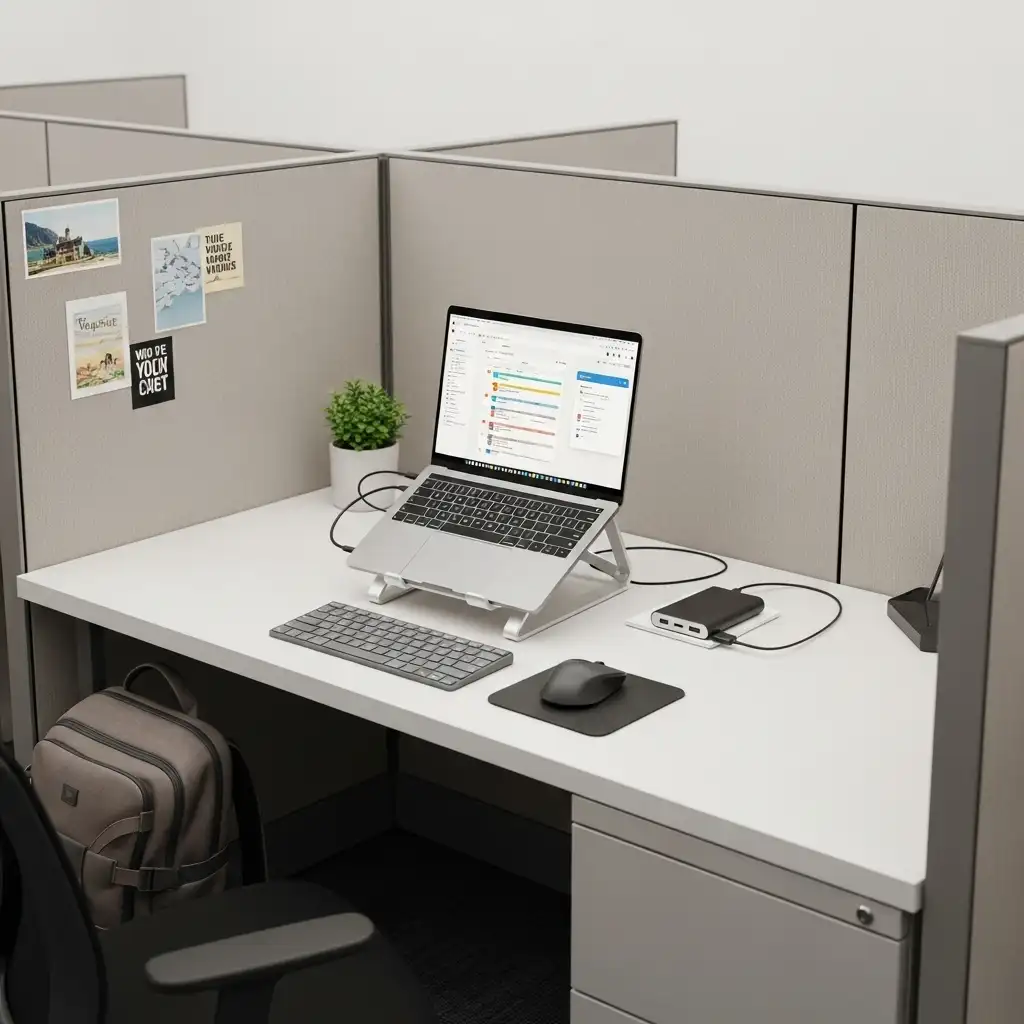
The streamlined approach suits hot-desking environments, hybrid work schedules, or simply preference for flexibility and freedom from accumulating excessive office belongings tying you to single locations.
19. Creative Studio Vibe
Transform cubicles into artistic workspaces with inspiring artwork, creative supplies visible as decor, mood boards, colorful accessories, and personality-filled arrangements. Include design books, creative magazines, samples or portfolio pieces, and tools of your creative trade displayed attractively.
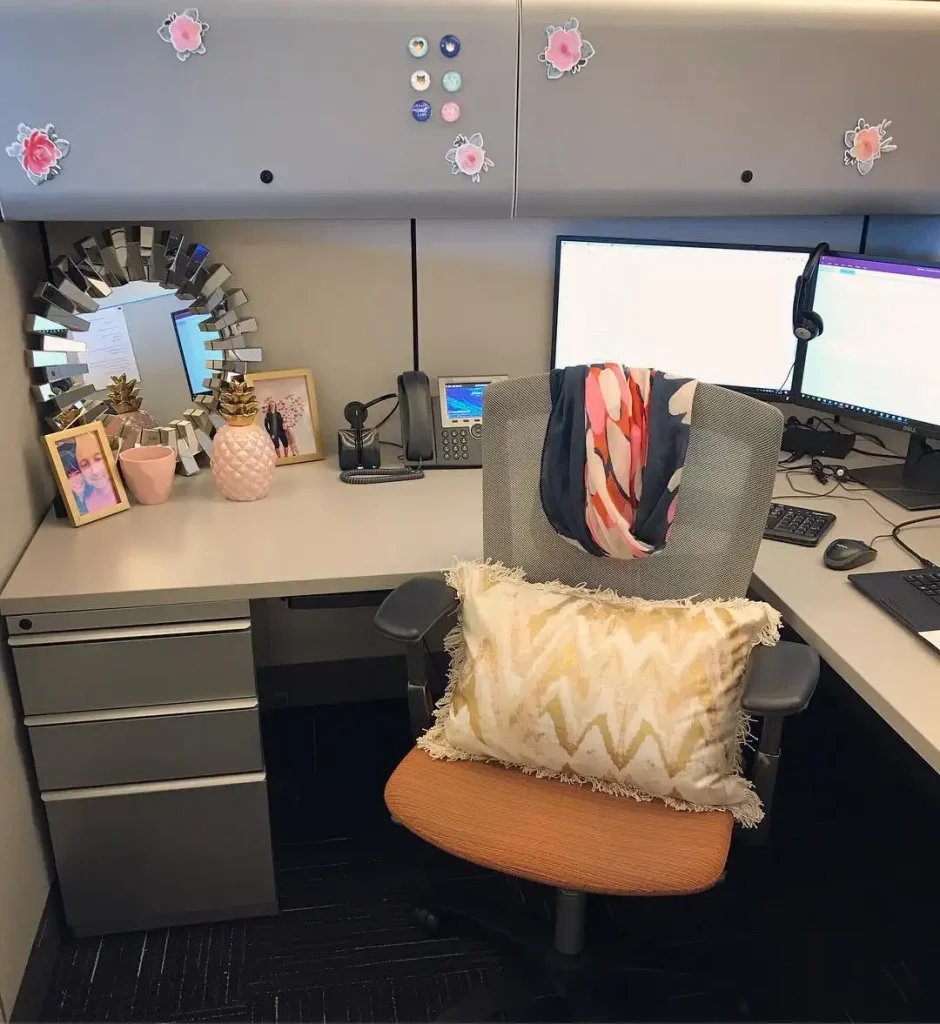
The artistic environment stimulates creativity while clearly communicating your role and expertise to colleagues unfamiliar with your specific responsibilities and skills.
20. Health and Wellness Focus
Prioritize wellbeing through ergonomic everything, exercise equipment like under-desk ellipticals or resistance bands, healthy snack storage, water bottles with intake tracking, and mindfulness reminders. Include posture correctors, blue light filtering glasses, and regular movement prompts.
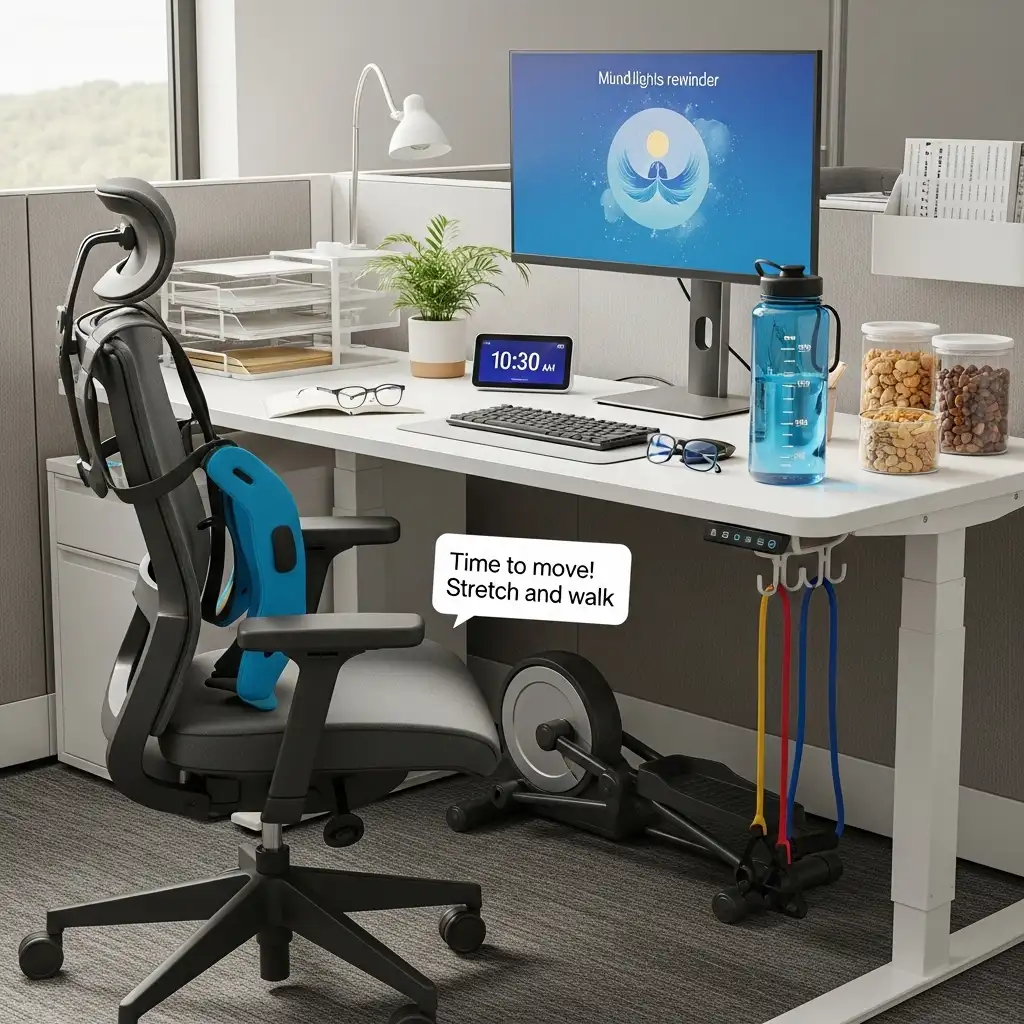
The health-conscious design acknowledges that physical wellbeing directly impacts productivity, creating environments supporting rather than undermining long-term health despite sedentary work demands.
21. Sophisticated Professional
Create polished, executive-style spaces through quality materials, minimal personal items, classic color schemes (navy, gray, white), leather desk accessories, and refined artwork. Maintain impeccable organization, professional reference materials displayed thoughtfully, and subdued personal touches that don’t distract from serious business atmosphere.
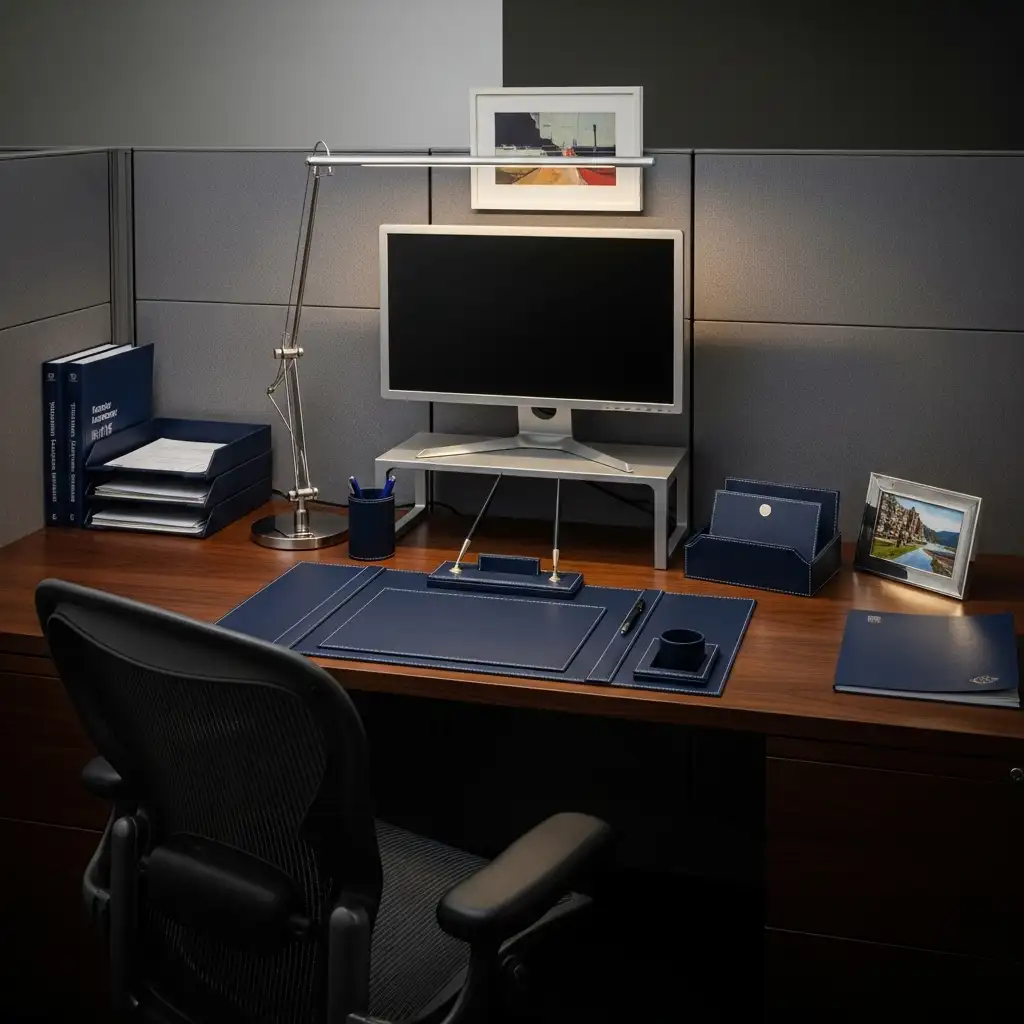
The elevated aesthetic projects competence and authority that can influence how colleagues and supervisors perceive your professionalism and capabilities.
22. Hygge Cozy Comfort
Embrace Danish hygge philosophy creating warm, comfortable, inviting spaces through soft textures, warm lighting, natural materials, and cozy elements like small blankets or soft desk pads. Include tea stations, comfortable seating, warm color palettes, and anything creating feelings of contentment and wellbeing.
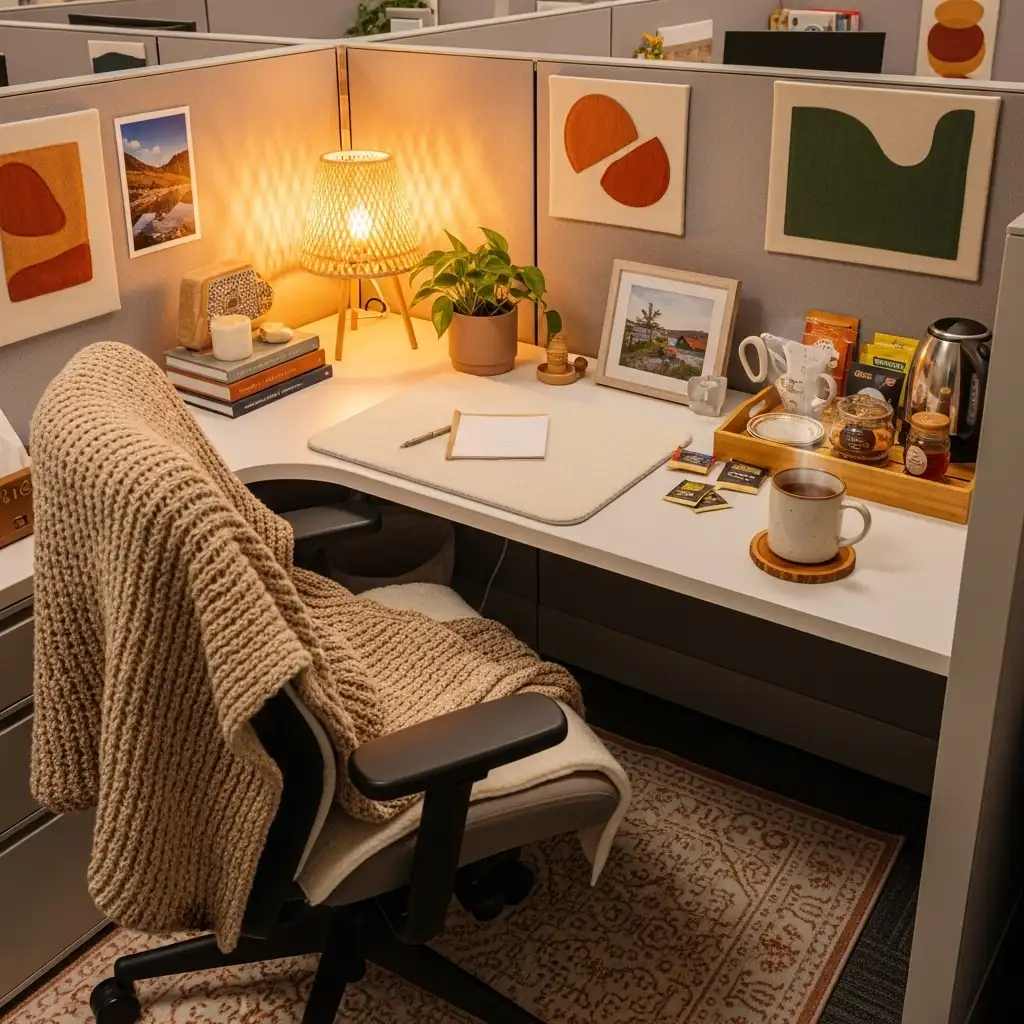
The cozy approach acknowledges that comfort directly impacts productivity, creating environments where you feel genuinely at ease despite spending majority of waking hours confined in small cubicles.
Essential Cubicle Design Principles
Respect Company Policies
Understand and follow workplace guidelines regarding decorations, furniture modifications, wall hangings, and personal items. Some companies strictly limit personalization while others encourage expression—knowing boundaries prevents embarrassing conversations with HR or supervisors requiring removal of prohibited items. When in doubt, ask permission rather than apologizing later after investing time and money in setups that violate unwritten rules.
Maintain Professionalism
Balance personalization with professional appropriateness avoiding controversial political statements, religious items that might offend, overly personal photos, or anything creating uncomfortable environments for colleagues. Remember cubicles exist in shared spaces where your design choices impact others working nearby who shouldn’t have to navigate your personal beliefs or intimate life details during their own workdays.
Prioritize Function Over Form
Ensure decorative choices don’t compromise productivity through excessive clutter, distracting elements, or impractical arrangements. Beautiful cubicles that don’t support efficient work ultimately fail their primary purpose as professional workspaces. Balance aesthetics with ergonomics, organization, and functionality ensuring your space looks good while actually helping rather than hindering daily tasks and responsibilities.
Consider Sensory Impact
Avoid strong fragrances, loud decorative elements, or visually overwhelming designs affecting nearby coworkers in shared spaces. Your wonderful scented candle might trigger someone’s migraines, while your inspirational music might destroy their concentration. The consideration for others creates harmonious office environments where everyone can work comfortably without others’ design choices becoming their problems to navigate daily.
Budget-Friendly Cubicle Upgrades
DIY Solutions
Create custom organizers from recycled materials, print free artwork or inspirational quotes, repurpose household items as desk accessories, and make your own plants from cuttings. The creative DIY approach costs little while expressing personality and creativity that purchased items cannot match. Many effective cubicle improvements cost under $50 total when using ingenuity rather than expensive store-bought solutions.
Thrift and Secondhand Finds
Shop thrift stores for unique desk accessories, vintage organizers, interesting artwork, and one-of-a-kind items adding character. The secondhand approach costs substantially less than new while finding distinctive pieces that mass-produced office supply stores cannot offer. Your $3 thrift store find often attracts more compliments than someone’s $30 container store organizer lacking personality or history.
Strategic Investments
Focus limited budgets on high-impact items like quality desk lamps, ergonomic chairs or cushions, and organizational systems that truly improve daily comfort and efficiency. Save on purely decorative elements that contribute little to actual workspace functionality. The strategic prioritization ensures limited money goes toward items delivering maximum value through improved comfort, health, and productivity rather than just looking nice.
Frequently Asked Questions
How can I decorate my office cubicle?
Decorate cubicles through desk plants, personal photos in frames, artwork or prints, inspiring quotes, organizational systems in attractive materials, desk accessories reflecting your style, and appropriate personal items. Follow company policies, maintain professionalism, prioritize function alongside aesthetics, and consider impact on nearby colleagues. Start small with few key pieces rather than overwhelming spaces with excessive decorations that create clutter.
How do you make a cubicle look nice?
Make cubicles attractive through organization eliminating clutter, cohesive color schemes, proper lighting supplementing harsh fluorescents, live plants, personal touches in moderation, quality desk accessories, and regular cleaning. Invest in ergonomic comfort items, hide cables, use vertical space efficiently, and maintain clear surfaces. The combination of organization, personalization, and cleanliness creates professional yet comfortable workspaces.
What should you not do in a cubicle?
Avoid eating smelly foods, playing loud music or videos, making excessive personal calls, displaying controversial materials, leaving clutter that spills into shared spaces, applying strong perfumes or colognes, and decorating excessively that others find distracting. Respect shared space etiquette, maintain reasonable noise levels, and consider how your choices impact colleagues working nearby in open environments.
How can I make my cubicle more private?
Increase privacy through tall plants creating visual barriers, decorative screens or curtains, strategic furniture positioning, noise-cancelling headphones, and positioning monitors away from high-traffic areas. Some companies allow adding higher cubicle walls or panels—check policies before modifications. Accept that complete privacy remains impossible in cubicle environments designed for openness, focusing instead on psychological boundaries and noise management.
Conclusion: Your Workspace, Your Rules (Within Reason)
Office cubicles don’t have to be depressing, uncomfortable spaces you merely tolerate—thoughtful design transforms even standard 6×6 workstations into productive, comfortable environments reflecting your personality while supporting focused work. The 22 design ideas presented demonstrate that cubicles accommodate any style preference, work type, and personal need from minimalist efficiency to cozy comfort, collaborative openness to focused privacy.
Start your cubicle transformation by understanding company policies, assessing your actual needs and work style, establishing realistic budgets, and implementing changes gradually rather than overwhelming small spaces with excessive additions. The investment in creating comfortable, functional, personalized workspaces pays dividends through improved mood, increased productivity, and enhanced wellbeing during the 2,000+ hours you’ll spend annually in these small but significant spaces that substantially impact your daily happiness and professional success.
Ready to organize more spaces? Explore our guides including small apartment ideas, and home interior design ideas for complete workspace inspiration. Transform your cubicle into the productive, comfortable workspace you deserve through strategic design that makes spending majority of your waking hours in small spaces genuinely tolerable and perhaps even enjoyable.