
Is your home in need of a show-stopping feature that combines classic elegance with modern appeal? Look down, because the answer might be right under your feet. Herringbone wood floors are making a massive comeback, and for good reason. This timeless pattern adds movement, depth, and a touch of luxury to any space, transforming an ordinary room into an extraordinary one.
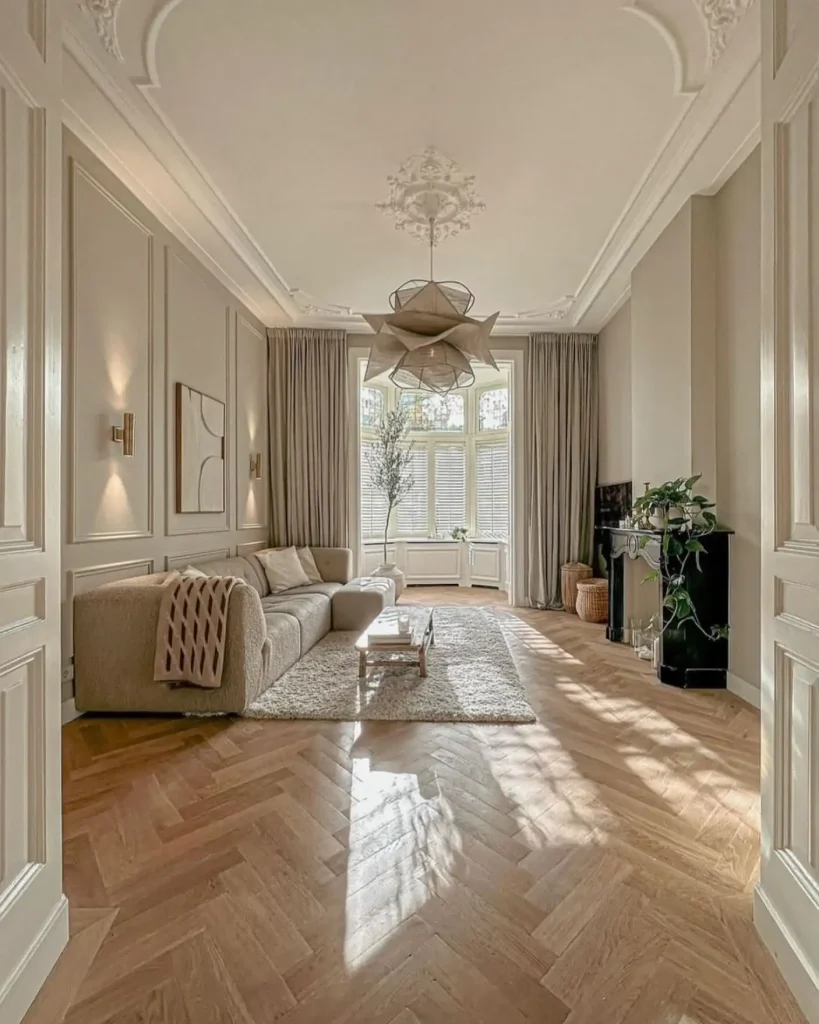
Credits: @bob_erkelens
But is this iconic pattern right for your home? This complete guide will walk you through everything you need to know—from the undeniable benefits to the practical considerations—so you can decide if a herringbone floor is your dream foundation.
What is a Herringbone Pattern?
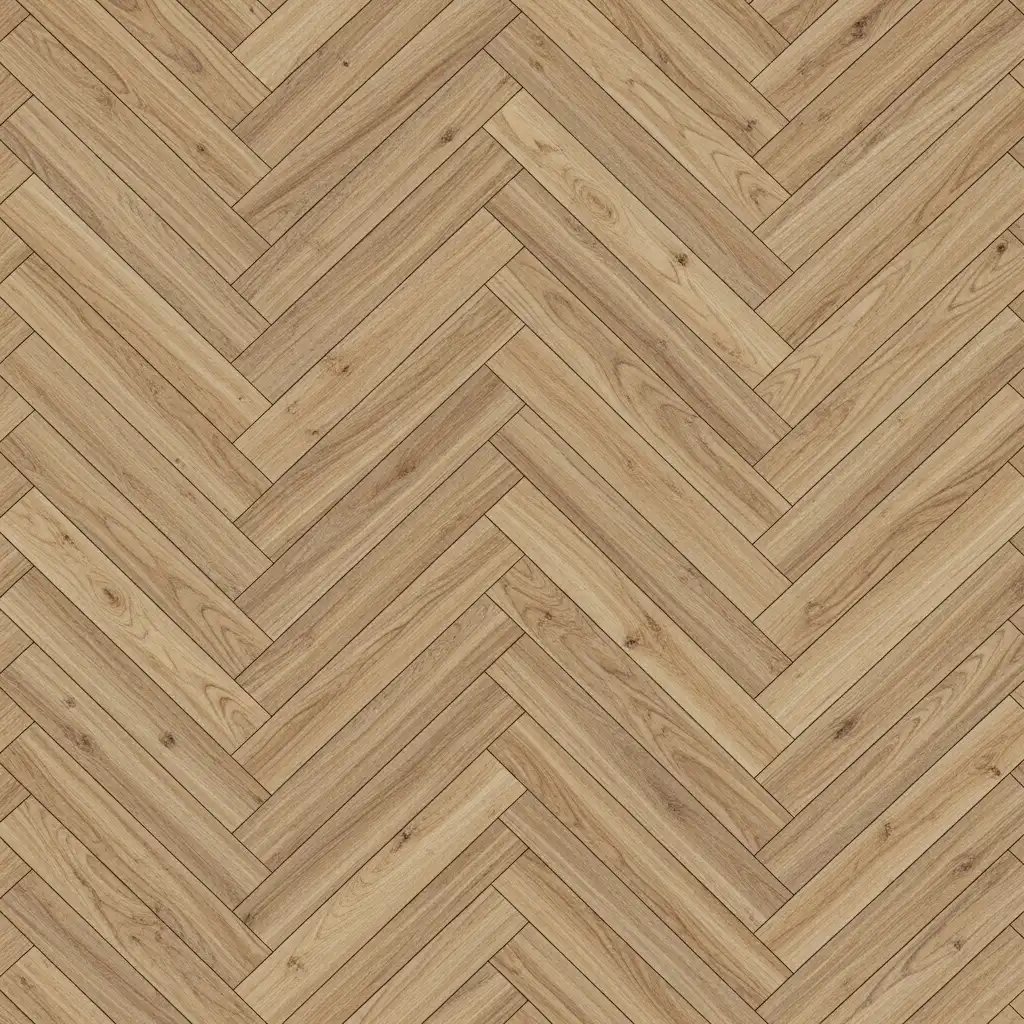
Let’s start with the basics. Herringbone is a classic pattern consisting of rectangular pieces of wood, planks, or tile arranged in a staggered zigzag design. It gets its name from the skeleton of a herring fish, whose bones resemble this distinctive V-shaped layout.
It’s often confused with a chevron pattern, but there’s a key difference:
- Herringbone: The ends of each plank are cut at a 90-degree angle, creating a broken zigzag effect that is more dynamic and textured.
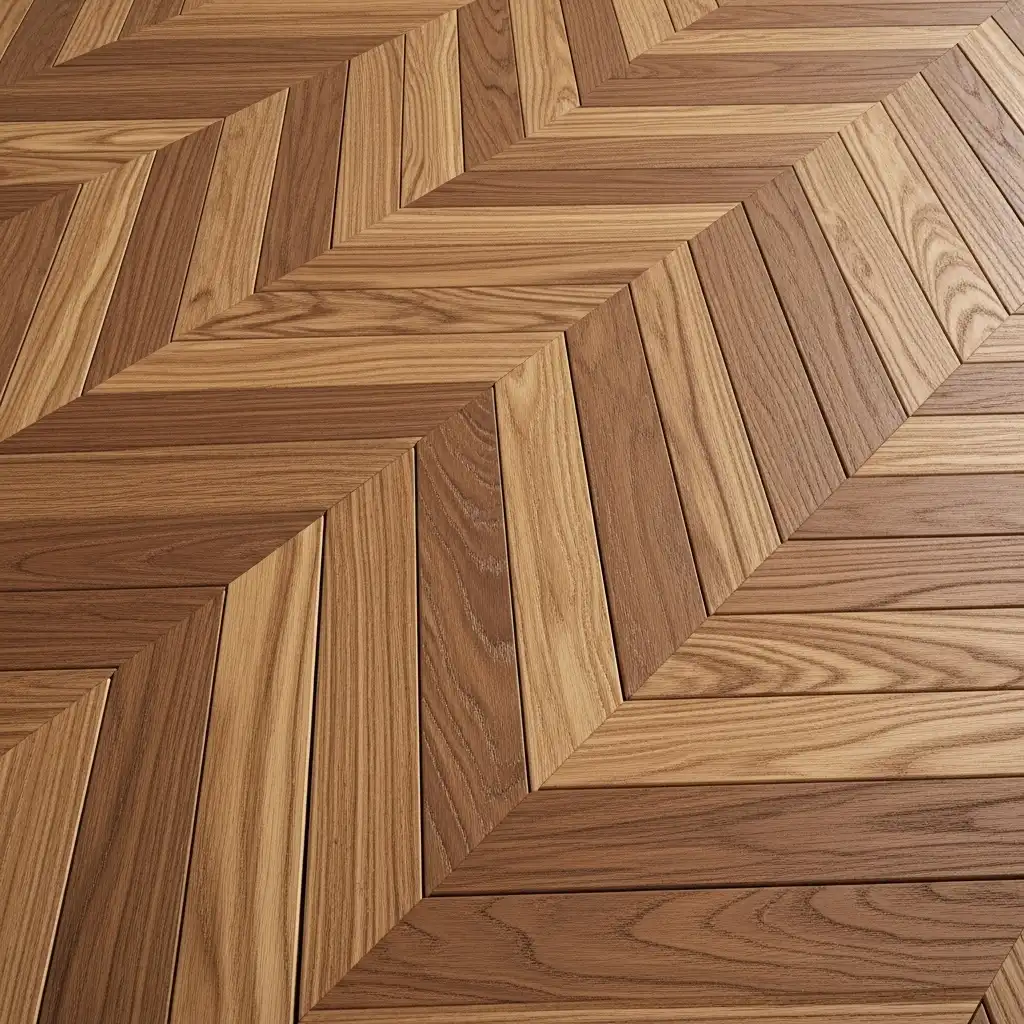
- Chevron: The ends of each plank are cut at a 45-degree angle, creating a continuous, straight V-shape that is more uniform and formal.
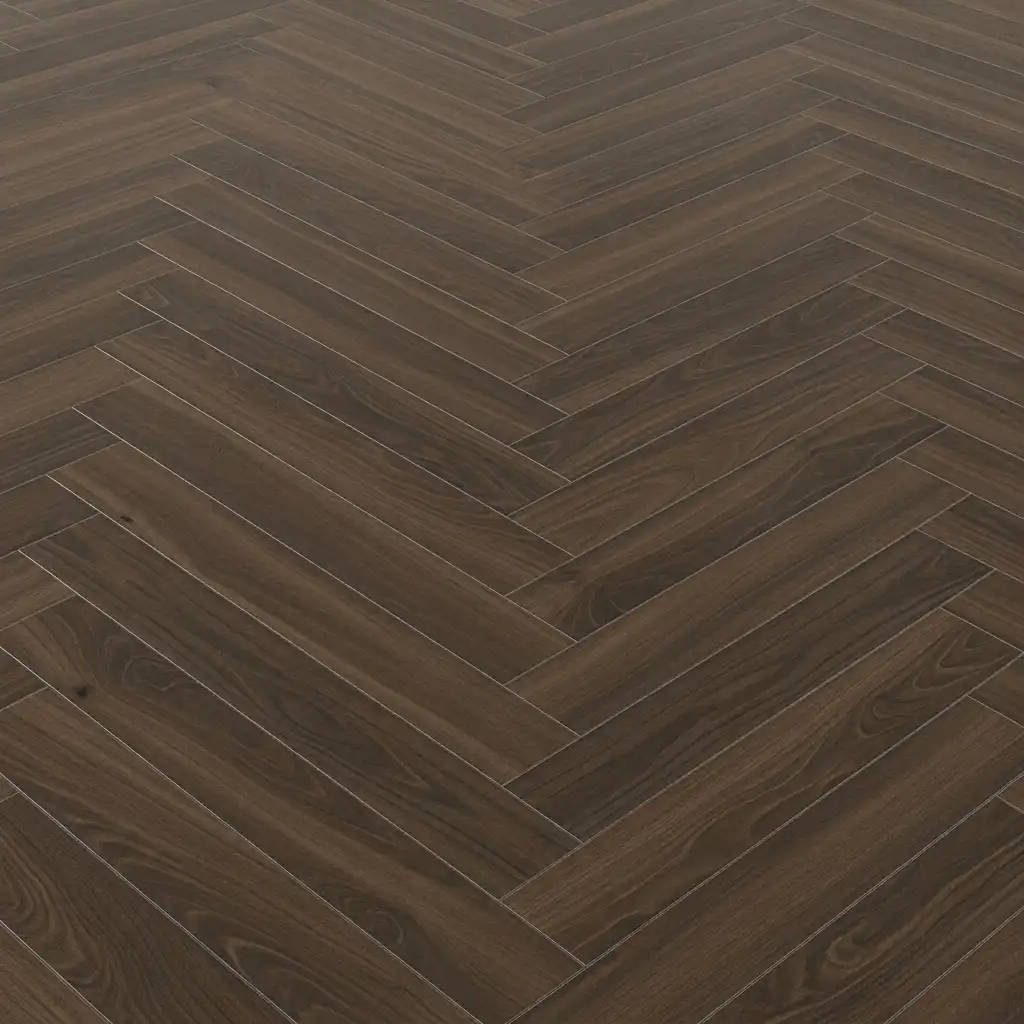
Both are stunning, but herringbone’s “broken” pattern is celebrated for its ability to add rustic charm and visual interest. For more on classic patterns that add character, explore our guide to wood wall paneling for the home.
Why Choose a Herringbone Wood Floor? The Pros and Cons
The Advantages:
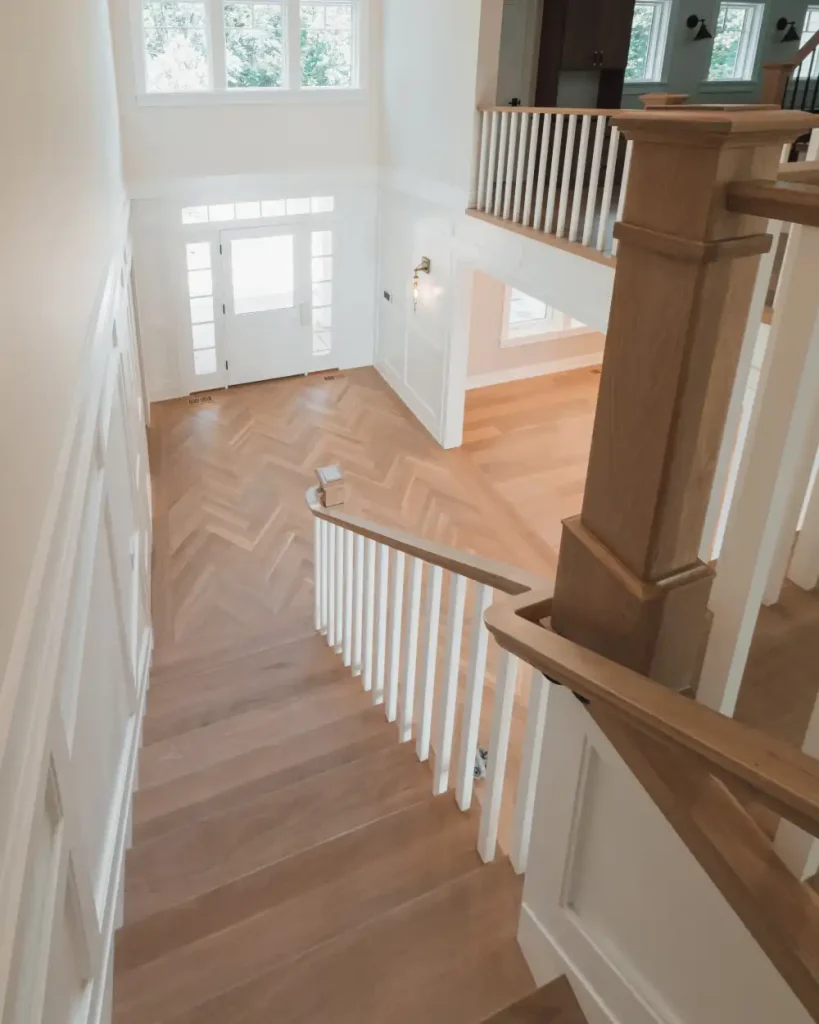
Credits: @highqualityflooring
- Timeless Elegance: This isn’t a fleeting trend. Herringbone floors have been used for centuries, from grand European estates to modern lofts, guaranteeing your home will never look dated.
- Visual Expansion: The V-shaped pattern cleverly draws the eye across the room, making spaces feel larger and longer—a perfect trick for narrow hallways or small living rooms.
- Adds Major Value: As a high-end, desirable feature, herringbone flooring can significantly increase your home’s resale value and appeal to potential buyers.
- Unmatched Character: The intricate pattern is a work of art in itself, serving as the ultimate focal point that elevates your entire décor, much like a stylish gallery wall.
The Disadvantages:
- Higher Cost: The complex installation requires more labor, time, and skill. Expect to pay 20-50% more than for traditional straight plank flooring.
- Complex Installation: This is not a DIY project for beginners. It requires a skilled professional to ensure the pattern is perfectly aligned and secure.
- Potential for Waste: The angled cuts result in more material waste than straight-lay floors, adding to the overall material cost.
Cost Breakdown: What to Expect
The cost of a herringbone wood floor can vary widely based on materials and installation.
- Materials:
- Engineered Wood: $8 – $15 per sq. ft. (Highly recommended for its stability)
- Solid Hardwood: $10 – $20+ per sq. ft.
- Laminate/LVP (Herringbone Pattern): $5 – $12 per sq. ft. (A budget-friendly alternative)
- Professional Installation:
- Due to the complexity, installation alone can cost $8 – $15+ per square foot.
Total Estimated Cost: For a quality engineered herringbone floor, a realistic budget is $16 – $30 per square foot, installed.
Design Ideas & Inspiration
A herringbone floor is incredibly versatile. Here’s how to style it for different aesthetics:
1. The Wide-Plank, Light Oak Look
For a modern and airy Scandinavian feel, choose wide planks in a light, natural oak finish. This combination keeps the space feeling bright and open while the pattern adds just the right amount of texture.
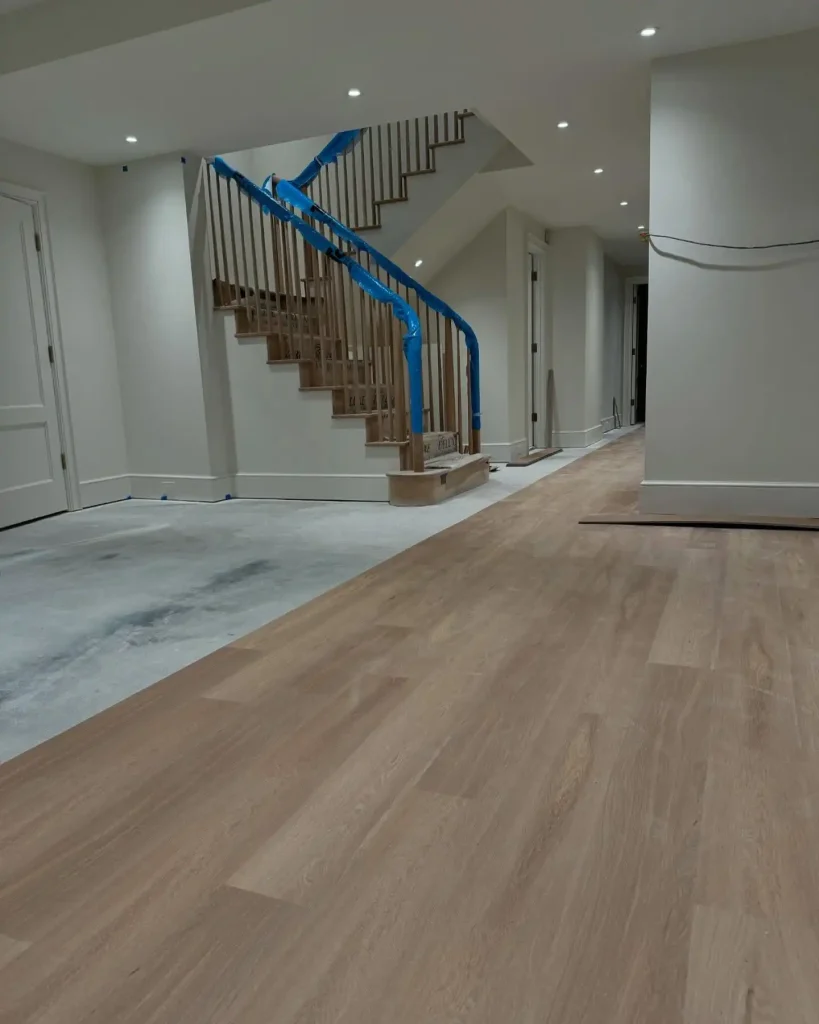
Credits: @terralegno_canada
2. The Classic & Refined
Stick with a traditional, medium-width plank in a rich walnut or classic oak with a dark stain. This creates a formal, elegant ambiance perfect for a dining room or study, pairing beautifully with the refined style of a Ralph Lauren living room.
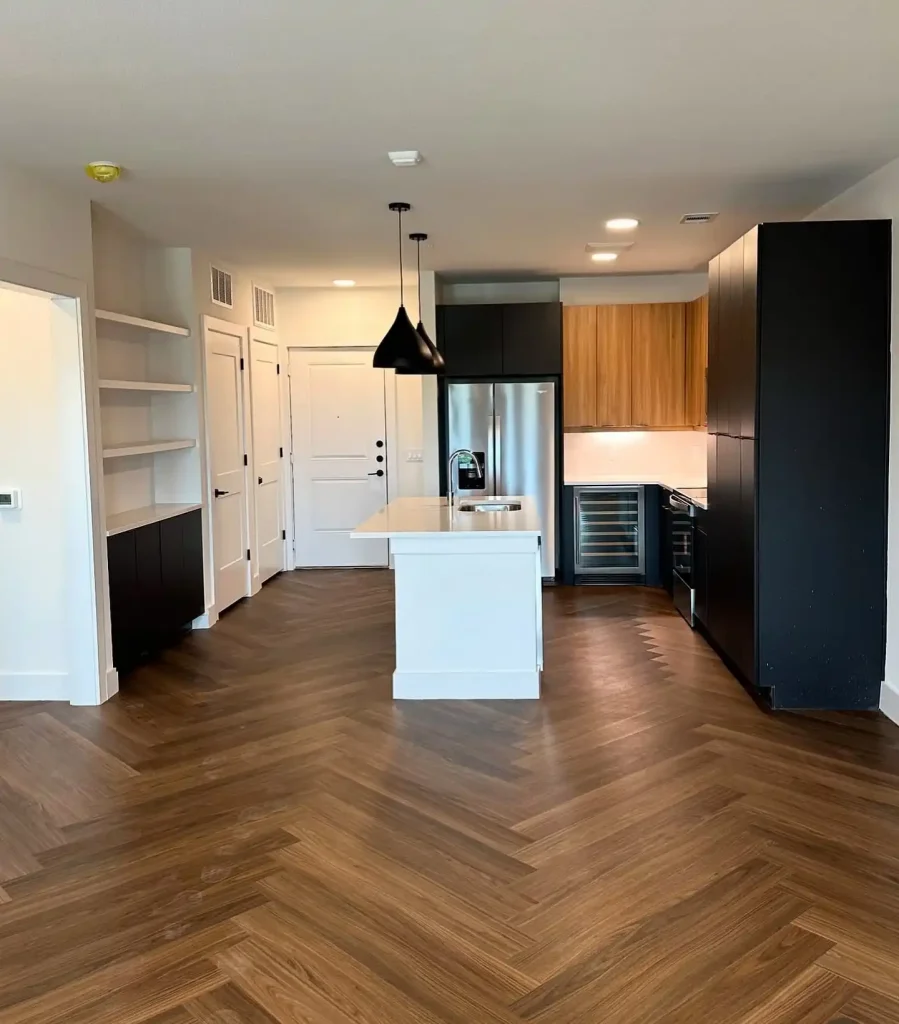
Credits: @hartwinbulverde
3. The Dramatic Statement
Go bold with a floor stained in a deep, moody color like charcoal gray or ebony. This creates a powerful, modern foundation that makes light-colored furniture and art pop, perfect for creating a dramatic black and white bedroom aesthetic in another part of your home.
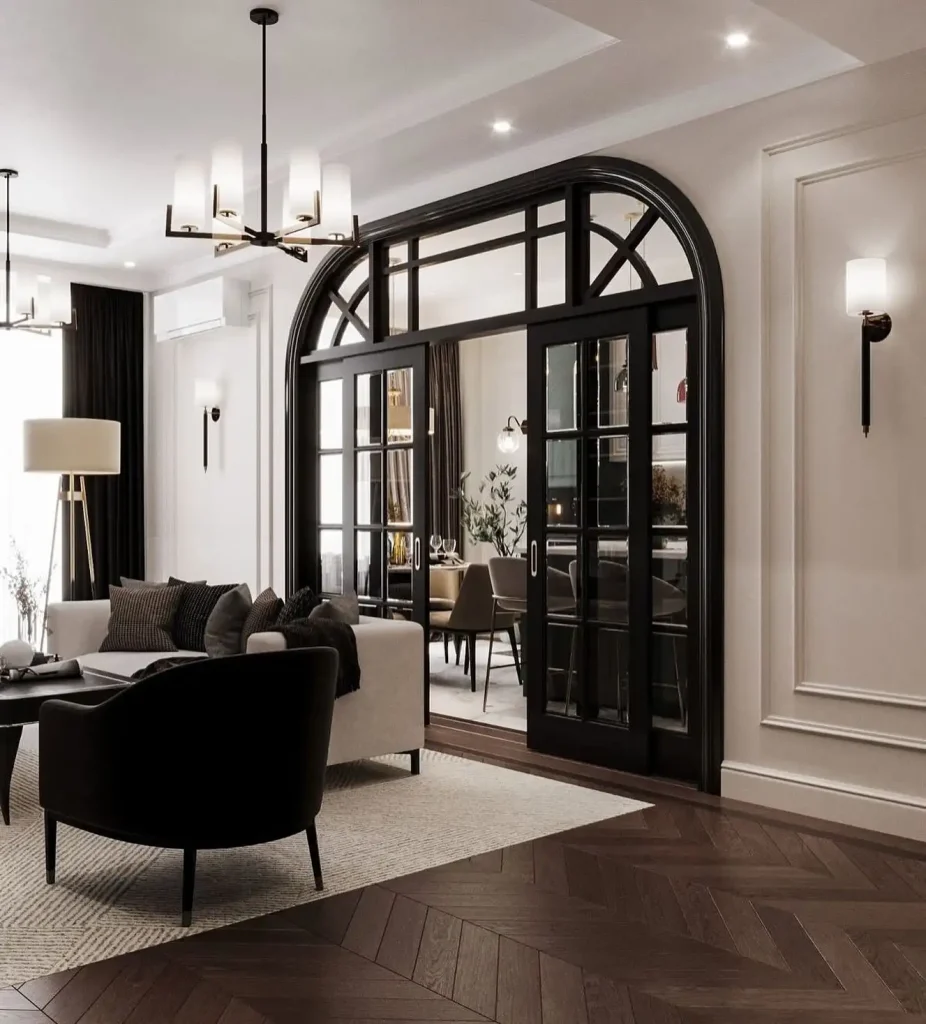
Credits: @c2c_luxuryflooring
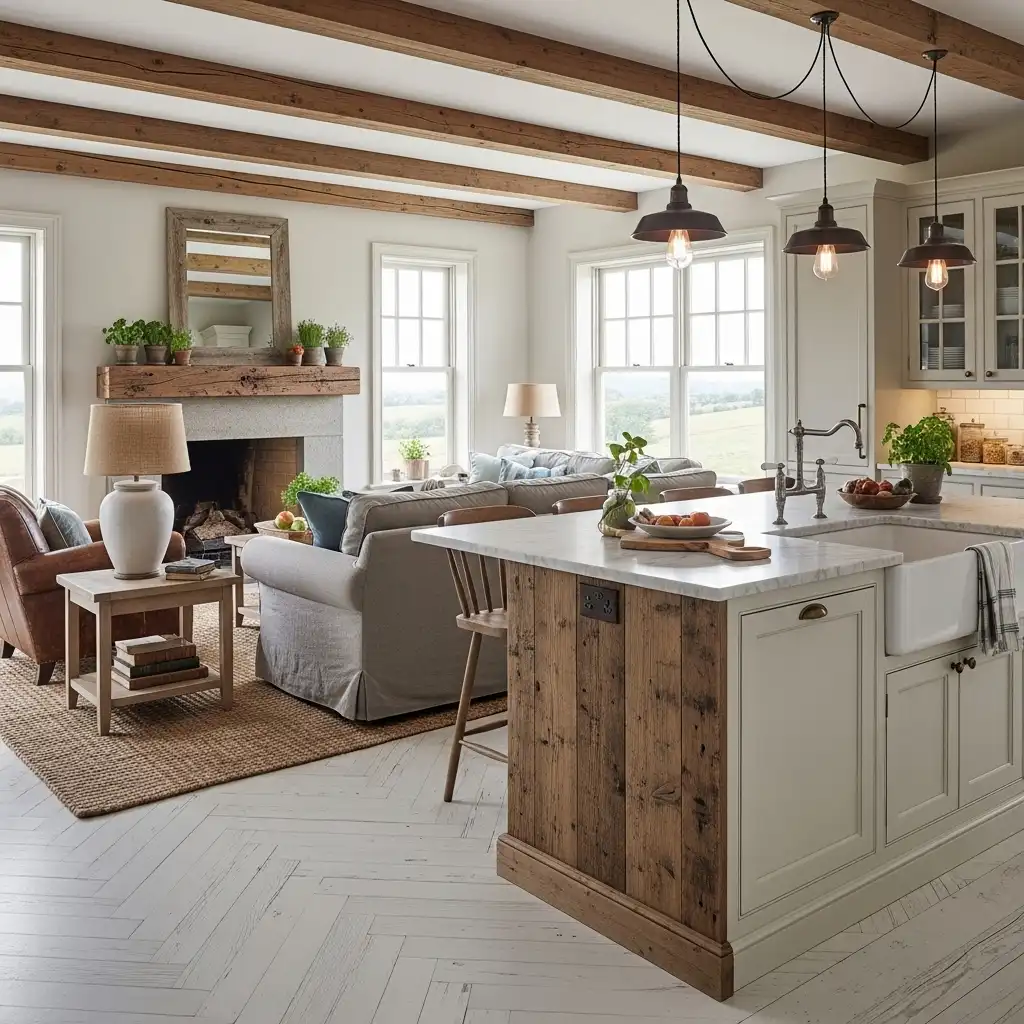
4. The Rustic Farmhouse Charm
Opt for a herringbone pattern in whitewashed or lightly distressed wood. This softens the formality of the pattern and injects a relaxed, coastal, or farmhouse living room vibe into your kitchen or living area.
Installation & Practical Considerations
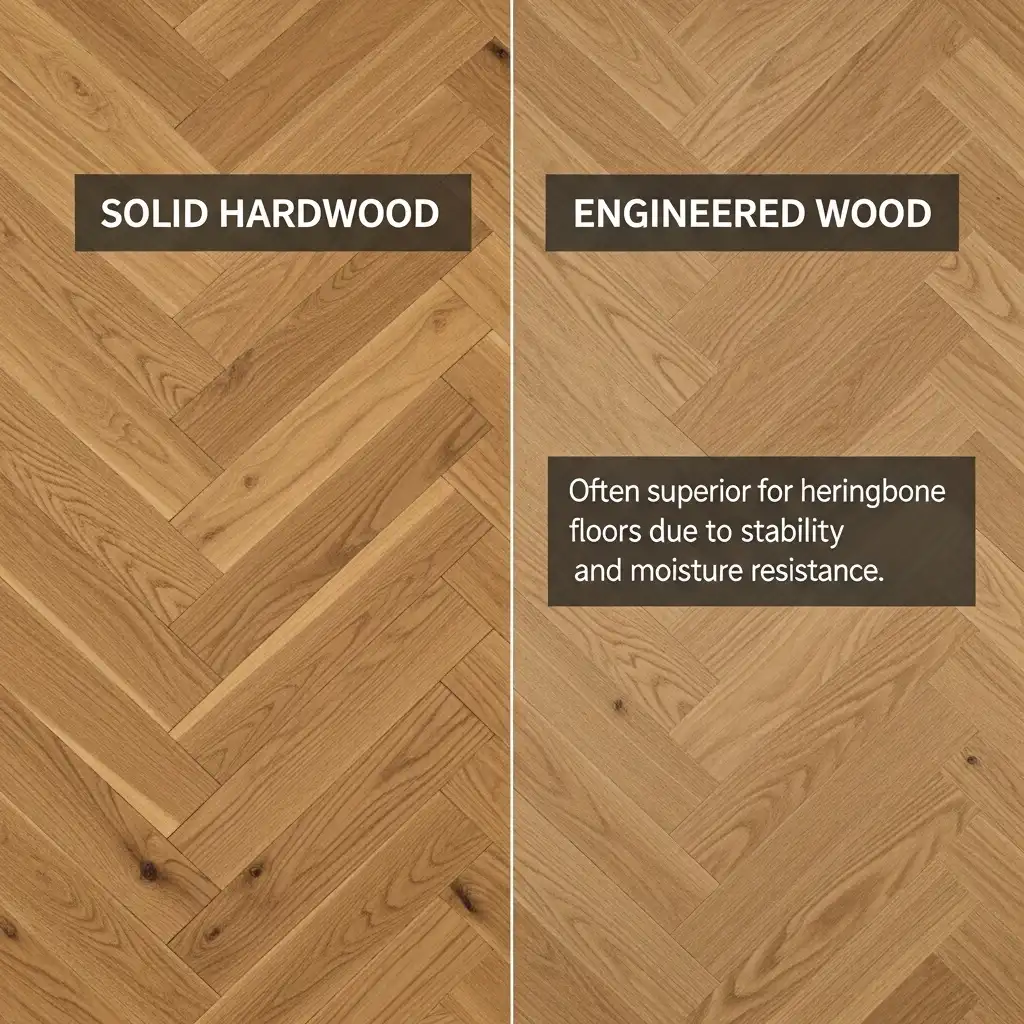
Solid Hardwood vs. Engineered Wood: Which is Better?
For herringbone floors, engineered wood is often the superior choice. Its cross-ply construction makes it incredibly stable and resistant to the expansion and contraction that can cause issues with intricate patterns, especially in areas with humidity fluctuations like kitchens or basements.
Can it be installed over concrete?
Yes! Engineered herringbone floors can often be glued directly to a concrete subfloor, making them an excellent choice for slabs and basements with brilliant ceiling ideas.
The Installation Process:
- Subfloor Preparation: The subfloor must be perfectly clean, level, and dry.
- Finding the Center: Installers will find the center of the room and snap chalk lines to guide the pattern, ensuring it’s perfectly symmetrical.
- Laying the Floor: Planks are meticulously laid in the V-pattern, typically glued down or nailed for a secure, lasting hold.
Frequently Asked Questions (FAQs)
Are herringbone floors going out of style?
No. While they are experiencing a huge surge in popularity, herringbone is a classic pattern with centuries of staying power. It’s a timeless investment, not a short-lived trend, much like the enduring appeal of a vaulted ceiling living room.
What direction should a herringbone floor run?
Traditionally, the pattern points toward a room’s main focal point, like a fireplace wall with a TV, to lead the eye. In a hallway, it often runs lengthwise to emphasize the space’s long lines.
Is herringbone harder to clean than regular floors?
Not significantly. The V-shaped grooves are minimal. Regular sweeping or vacuuming (with a hard-floor setting) and occasional damp mopping with a wood-floor cleaner are all that’s needed.
Can I use herringbone in a kitchen or bathroom?
Absolutely! An engineered wood herringbone floor is a stable and beautiful choice for kitchens during a remodel. For bathrooms, a luxury vinyl plank (LVP) in a herringbone pattern offers a waterproof and realistic wood-look alternative, complementing your bathroom tile ideas beautifully.
Conclusion
A herringbone wood floor is more than just a surface to walk on—it’s the foundation of your home’s design. It’s a commitment to craftsmanship, character, and timeless style. While it requires a greater investment upfront, the payoff is a breathtaking, valuable, and enduring feature that you and future homeowners will cherish for decades.
If you’re ready to give your home a foundation of unparalleled elegance, the herringbone pattern is a perfect choice. Pair it with other classic elements like wood beams on the ceiling or a coffered ceiling to create a truly cohesive and stunning interior.