
Are you staring at dingy, dark basement walls wondering how to make your lower level feel less like a dungeon and more like a desirable living space? Does choosing the right paint color for your basement feel overwhelming given the unique challenges of limited natural light, low ceilings, and often awkward proportions?
The right and good basement paint colors can dramatically transform a basement from a neglected storage area into a functional, inviting extension of your home that family and guests actually want to spend time in.

Basements present unique decorating challenges that require thoughtful color selection. Unlike above-ground rooms with abundant natural light, basements typically feature small windows, artificial lighting, and sometimes no windows at all.
Low ceilings can make spaces feel cramped, while concrete walls and exposed mechanicals create industrial atmospheres that need softening. The good news? Strategic paint color choices can address all these issues, making basements feel brighter, larger, and more welcoming.
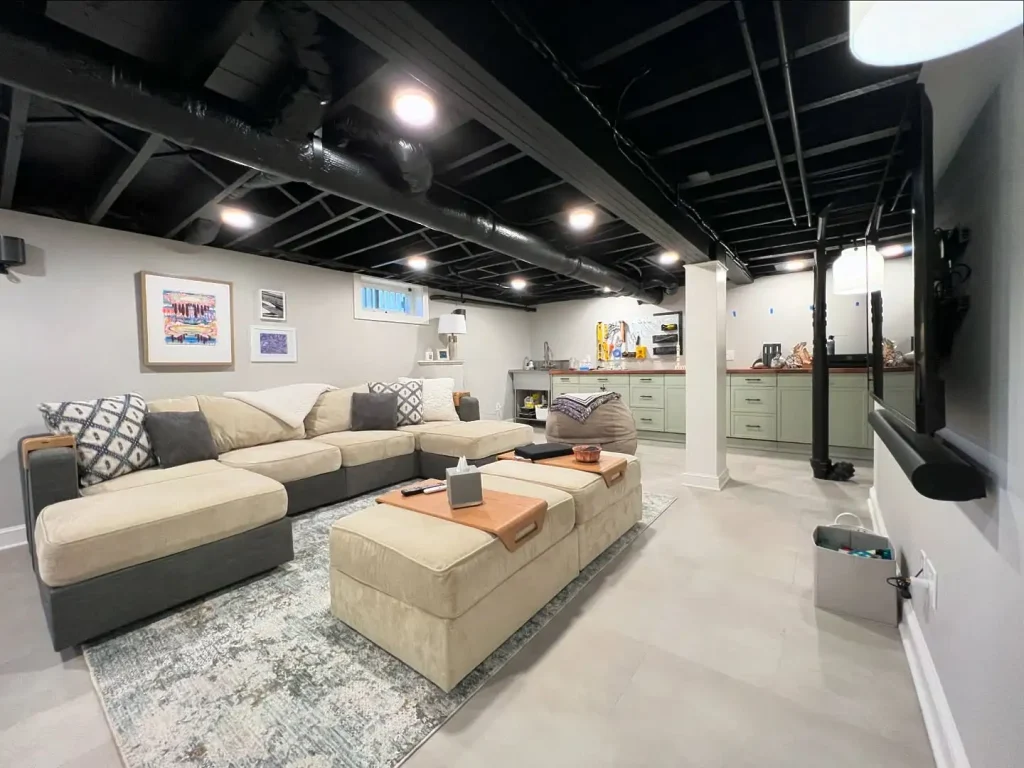
Credits: @amyarchambaultstudio
Let’s explore the best basement paint colors and proven strategies for selecting shades that maximize your lower level’s potential.
Understanding Basement Lighting Challenges

Basements rarely receive the natural light that above-ground rooms enjoy, making color selection critical for creating comfortable, functional spaces. Limited or absent windows mean you’re working almost exclusively with artificial lighting, which significantly affects how colors appear. What looks like a soft beige in a naturally lit paint store can read as muddy brown in a basement with only overhead bulbs. You can also read our guide on painted basement ceiling.
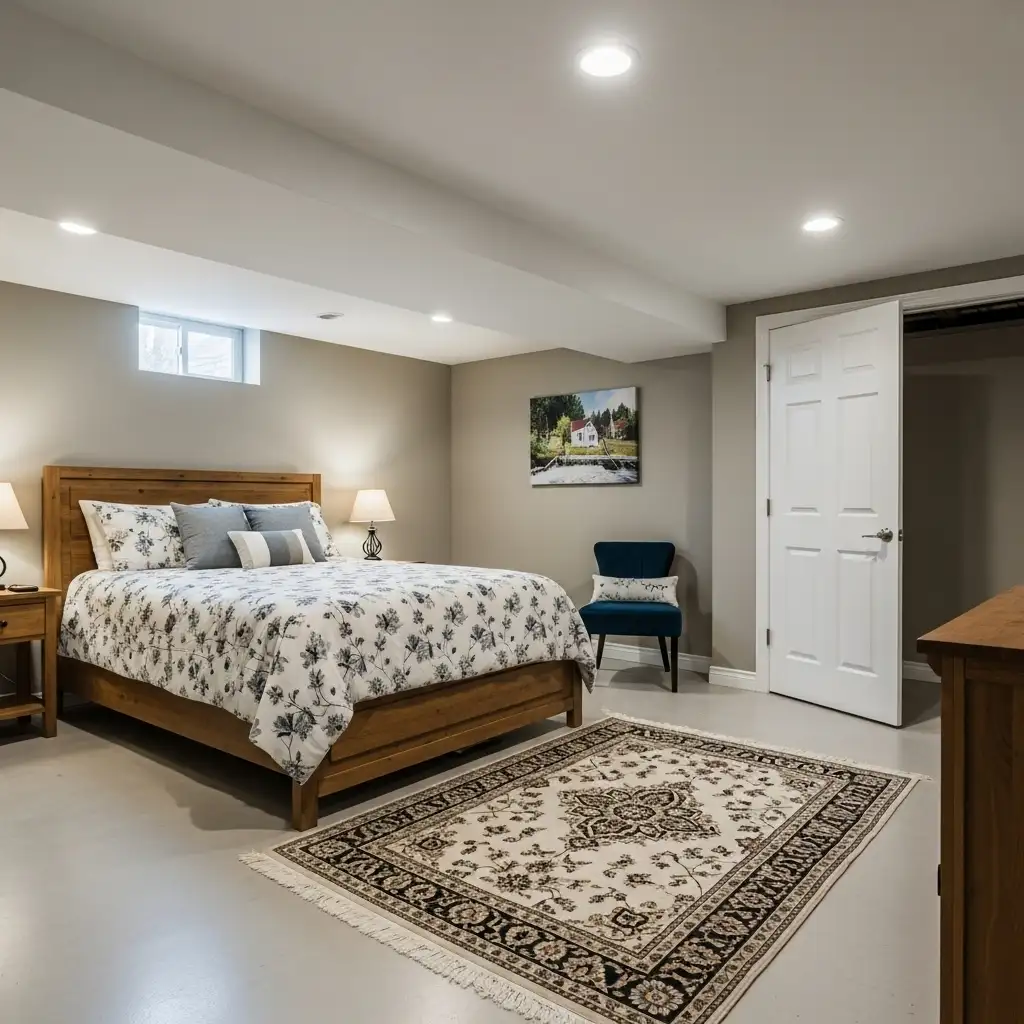
Low light levels also make basements feel smaller and more confined than their actual square footage. Dark colors that create cozy intimacy in well-lit bedrooms can feel oppressive in basements, while light colors become essential tools for reflecting available light and creating perceived spaciousness. The primary goal when selecting basement paint colors is maximizing light reflection to create bright, welcoming environments despite limited natural illumination.
Best Light and Neutral Colors for Basements
Crisp White and Off-White
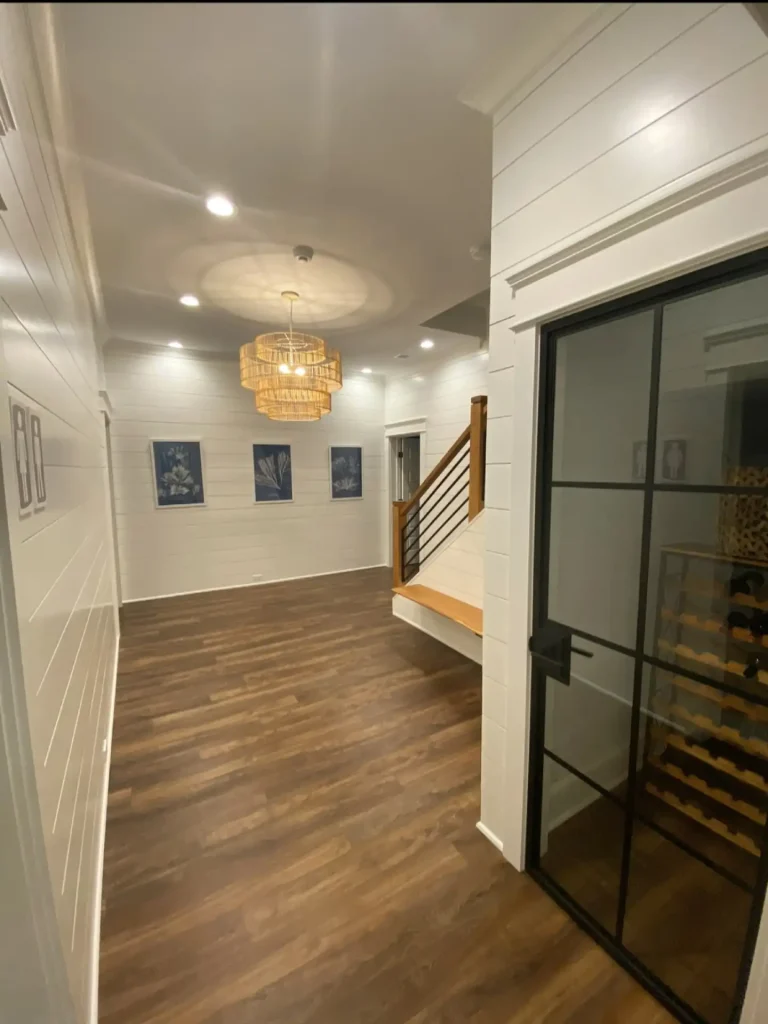
Credits: @teichcustombuilders
Pure white or soft off-white shades remain the most effective choice for brightening dark basements. These colors reflect maximum light, making spaces feel larger and more open regardless of actual dimensions. Bright white works particularly well in finished basements with adequate artificial lighting, creating clean, modern aesthetics that serve as neutral backdrops for any furniture style or decor scheme.
Off-whites with subtle warm undertones prevent the stark, clinical feeling pure white can create in windowless spaces. Shades like ivory, cream, or vanilla add warmth while maintaining light-reflecting properties. These softer whites work beautifully in basements designated as family rooms, home theaters, or recreational spaces where comfort matters more than crisp modernity.
Soft Gray Tones
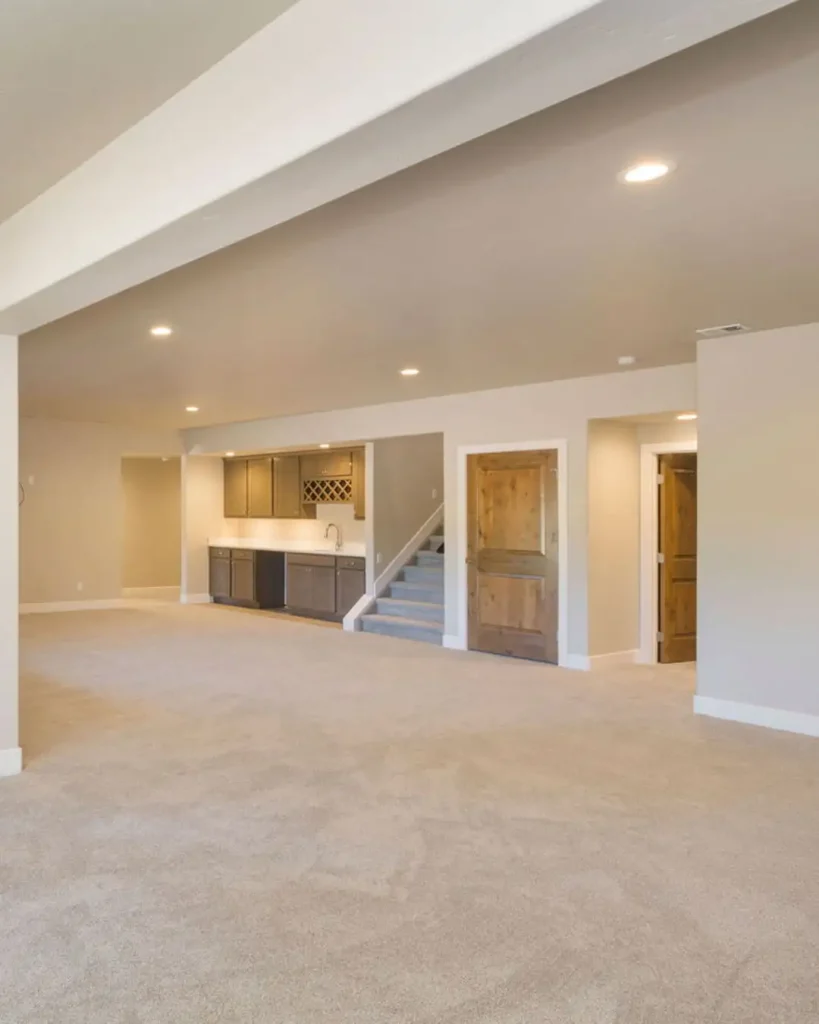
Credits: @ogdensflooring
Light gray has become increasingly popular for basements, offering sophisticated neutrality that feels more contemporary than beige while maintaining excellent light reflection. Choose grays with warm undertones to prevent cold, unwelcoming feelings in spaces lacking natural warmth. Shades like greige (gray-beige hybrids) provide perfect balance between modern gray aesthetics and traditional warmth.
Gray works particularly well in modern or industrial-style basements where exposed ductwork, concrete floors, or metal elements complement cooler color palettes. Pair light gray walls with white trim and ceilings to maximize brightness while creating subtle definition between surfaces. For inspiration on working with gray in different spaces, explore our grey bedroom ideas and grey couch living room ideas.
Warm Beige and Tan

Beige and tan colors bring natural warmth to basements that can feel cold and unwelcoming due to concrete construction and lack of sunlight. These classic neutrals create comfortable, livable atmospheres perfect for family rooms, guest bedrooms, or entertainment spaces. Choose lighter beige shades rather than deep tans to maintain adequate light reflection in low-light environments.
Warm neutrals pair beautifully with wood furniture, natural fiber rugs, and earth-tone accessories, creating cohesive spaces that feel grounded and inviting. These colors also provide forgiving backgrounds that hide minor imperfections in basement walls while complementing virtually any decorating style from traditional to transitional.
Adding Color Without Overwhelming the Space
Soft Blue for Tranquility
Light blue shades create calming, serene atmospheres perfect for basement bedrooms, home offices, or meditation spaces. Choose blues with gray undertones rather than pure saturated blues, which can feel cold in low-light environments. Soft sky blues, powder blues, or blue-gray hybrids provide color interest while maintaining the light-reflecting properties essential for basement success.
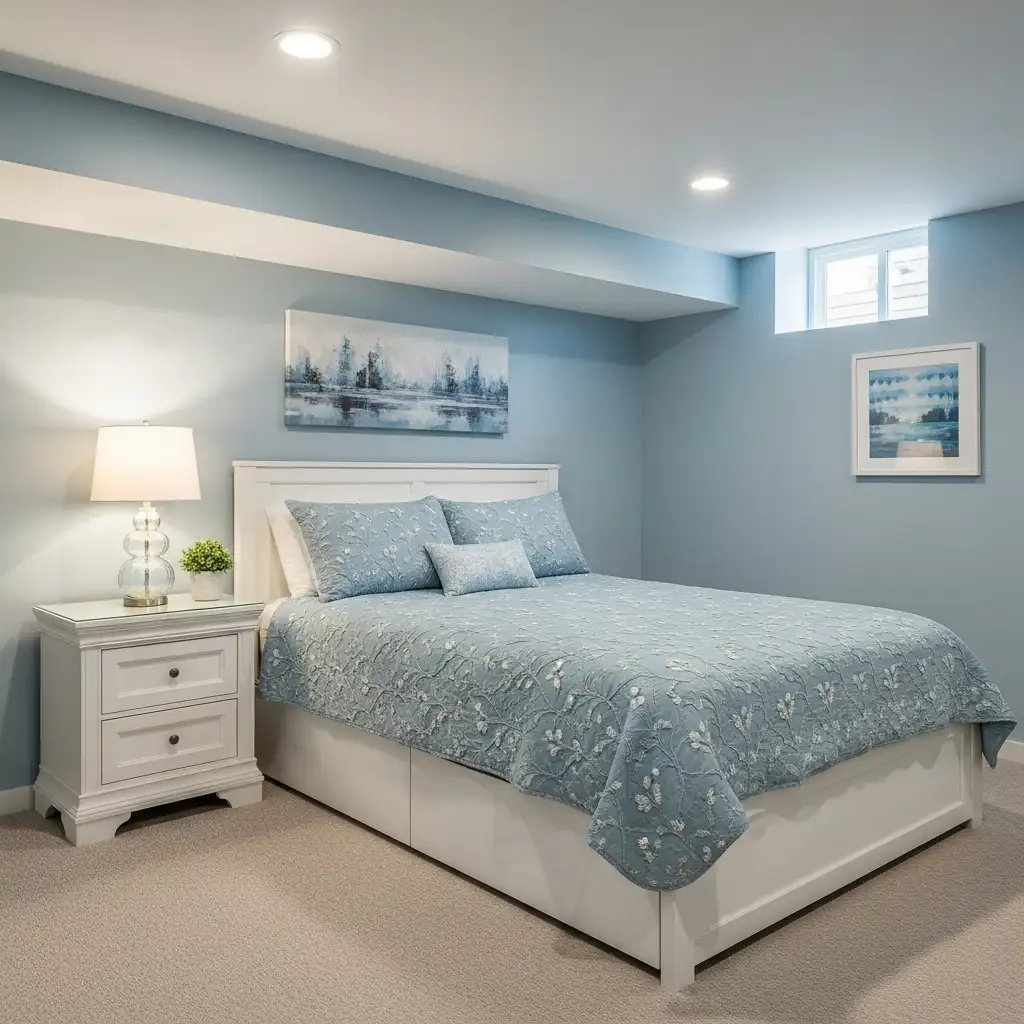
Blue works particularly well in basements with any natural light, as even small windows allow the color to shine without feeling heavy. Pair light blue walls with white trim and warm wood accents to prevent overly cool feelings. For more blue color inspiration, visit our blue bedroom ideas and blue living room ideas guides.
Gentle Green Hues
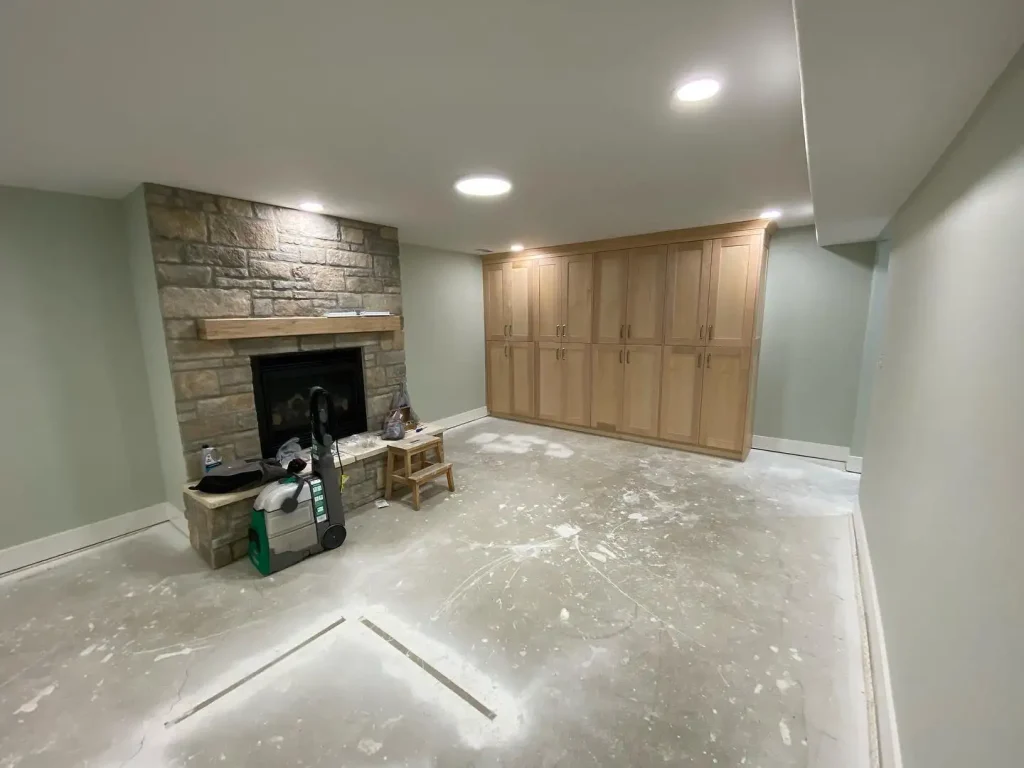
Soft sage, mint, or sea foam green brings nature-inspired freshness to windowless basements, creating organic warmth without heavy color saturation. Green’s psychological associations with growth and renewal make it excellent for basement home gyms, yoga studios, or creative workspaces. Choose muted, grayed-down greens rather than bright, saturated shades that can overwhelm in artificial lighting.
Credits: @grangerpainters
Green pairs beautifully with natural materials like wood, stone, and plants, helping basements feel more connected to nature despite being underground. This color family works well in both traditional and contemporary design schemes, offering versatility that justifies its growing popularity in below-grade spaces. Explore more green applications in our green bedroom ideas and green living room ideas collections.
Warm Yellow for Brightness
Pale yellow brings sunshine to even the darkest basements, creating cheerful, energizing atmospheres perfect for family rooms, playrooms, or home offices. Choose buttery yellows or soft cream-yellows rather than bright primary yellows that can feel overwhelming. The warm undertones in yellow compensate for cool artificial lighting while maintaining excellent light reflection.

Yellow works particularly well in basements designated for daytime activities where energy and positivity enhance functionality. Pair with white trim, natural wood furniture, and green or blue accent colors for balanced, nature-inspired palettes that feel fresh and inviting.
Strategic Color Placement for Maximum Impact
Ceiling Color Considerations
Painting basement ceilings lighter than walls creates the illusion of height in low-clearance spaces, making rooms feel more open and less oppressive. White ceilings reflect maximum light downward, brightening the entire space regardless of wall color. This classic approach works in virtually any basement regardless of style or function.

For exposed ceiling basements showcasing ductwork, pipes, and joists, consider painting everything one uniform color to minimize visual clutter. Our exposed basement ceiling guide offers detailed strategies for making industrial elements work aesthetically. Alternatively, explore basement ceiling ideas for creative solutions including drop ceilings, wood planks, or painted designs.
Accent Walls for Drama
If craving more color than safe neutrals provide, designate one accent wall in a deeper or bolder shade while keeping remaining walls light. This strategy adds personality and visual interest without overwhelming limited light or making spaces feel smaller. Choose the wall furthest from the entrance or behind major furniture pieces like sofas or beds for maximum impact with minimal risk.
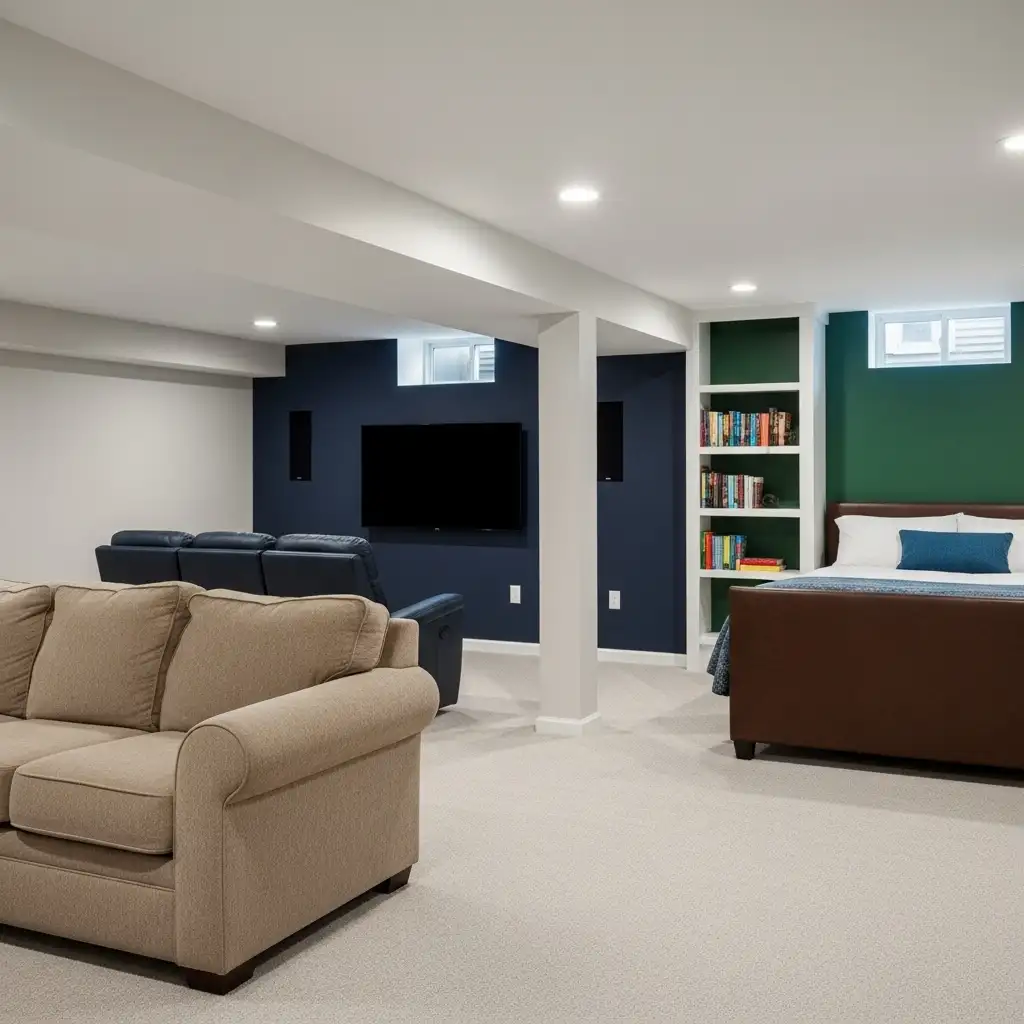
Accent walls work particularly well in defined zones within open-concept basements – perhaps a bold navy behind a home theater seating area or rich green in a designated reading nook. This approach allows color experimentation while maintaining overall brightness essential for comfortable basement living.
Two-Tone Techniques
Two-tone painting with lighter colors above a chair rail or horizontal dividing line and slightly darker tones below adds architectural interest while addressing basement proportion challenges. This traditional technique breaks up tall walls, adds visual dimension, and can even hide wear and tear in high-traffic lower portions.
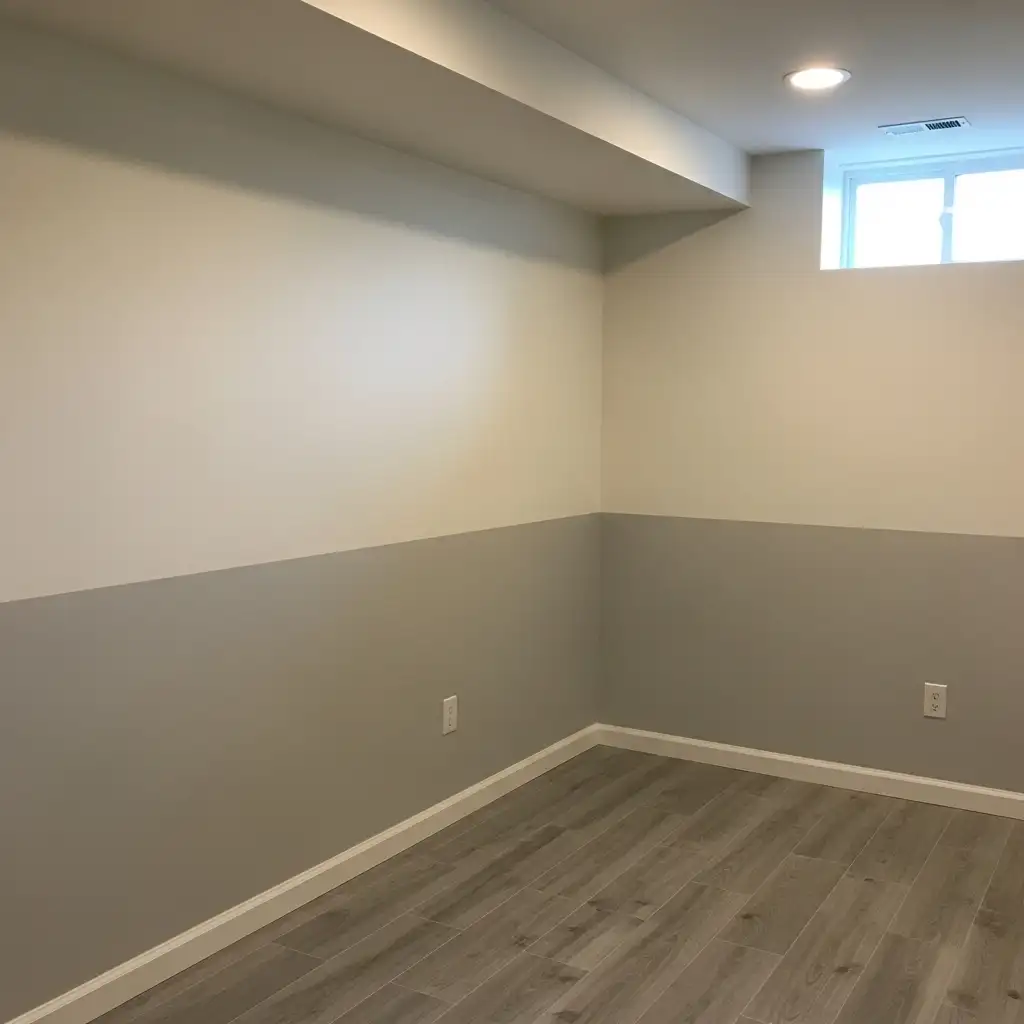
Choose colors within the same family with just 2-3 shades difference – perhaps cream above with soft tan below, or pale gray above with medium gray below. Ensure the lighter shade occupies more wall space to maintain adequate light reflection throughout the room.
Best Basement Paint Colors by Function
Home Theater and Media Rooms
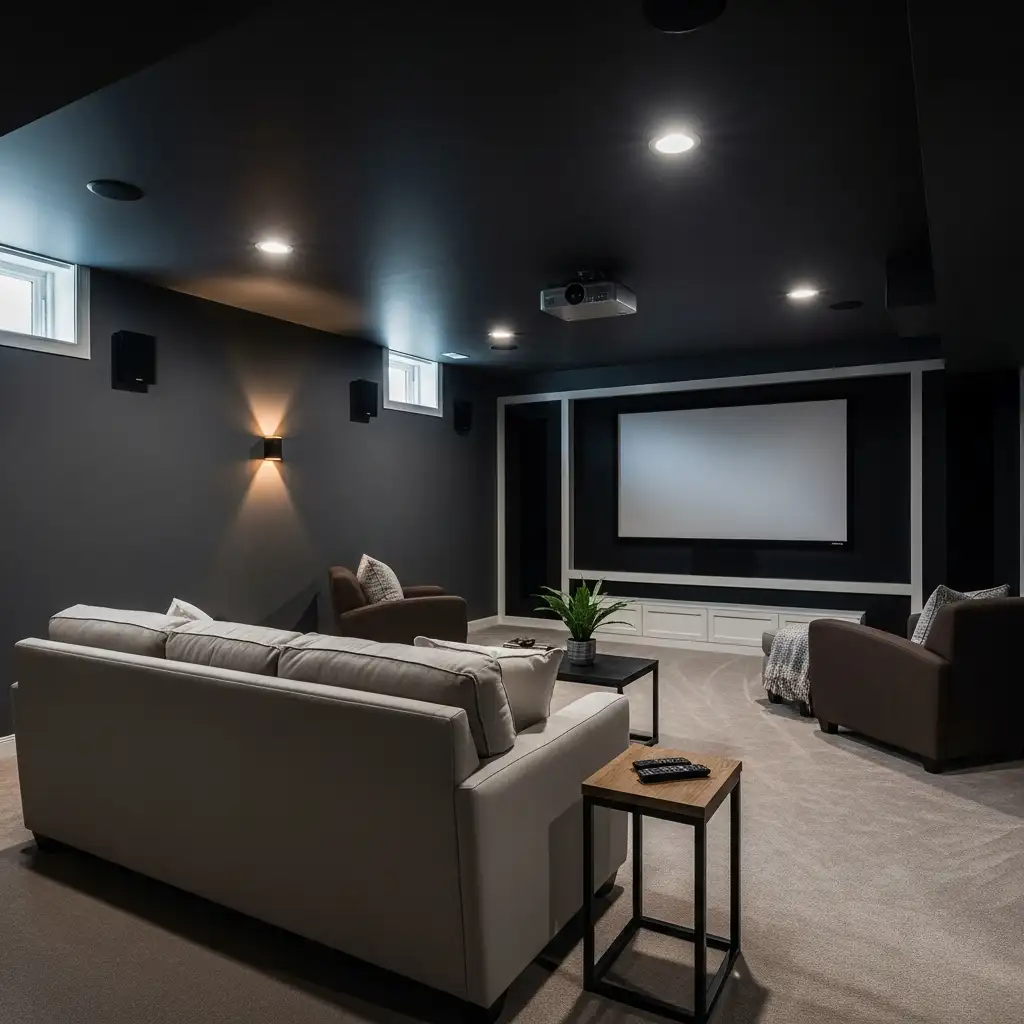
Media rooms benefit from darker colors that reduce screen glare and create immersive viewing experiences. Charcoal gray, deep navy, or rich chocolate brown on walls paired with black or very dark ceilings minimize light reflection that interferes with picture quality. Balance darker walls with adequate task lighting, comfortable seating, and lighter accent colors in furniture and accessories.
Home Office and Study Spaces

Basement offices require colors that promote focus without causing eye strain in artificial lighting. Soft grays, warm beiges, or muted blue-greens create professional atmospheres that support productivity. Avoid overly cool or stark whites that can feel harsh under fluorescent or LED task lighting. For comprehensive home office design guidance, visit our home office ideas collection.
Guest Bedrooms
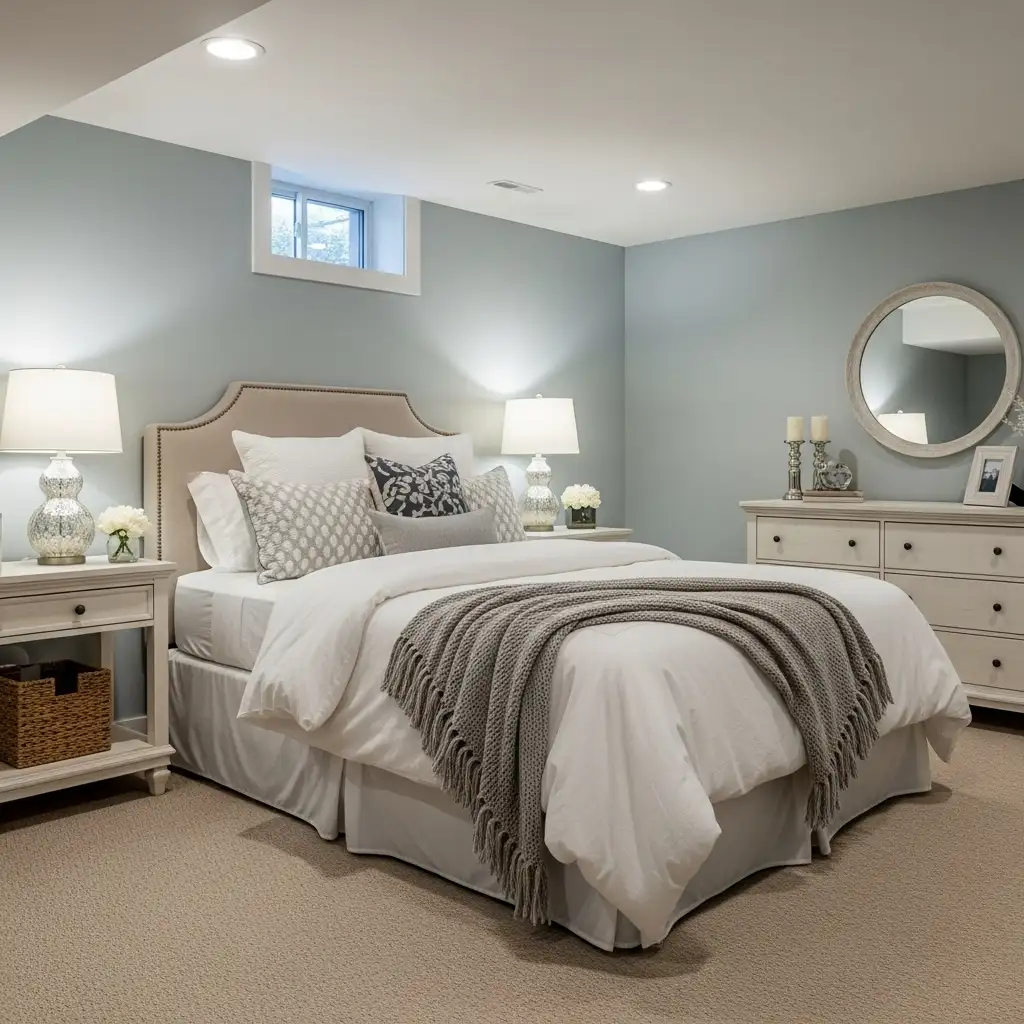
Basement guest rooms should feel welcoming and restful despite limited natural light. Soft neutrals like warm gray, gentle beige, or pale blue create comfortable sleeping environments. Add warmth through bedding, lighting, and accessories rather than relying on paint alone to compensate for the basement’s inherent coolness. Our guest bedroom ideas offer additional strategies for creating inviting lower-level accommodations.
Family Rooms and Recreation Spaces
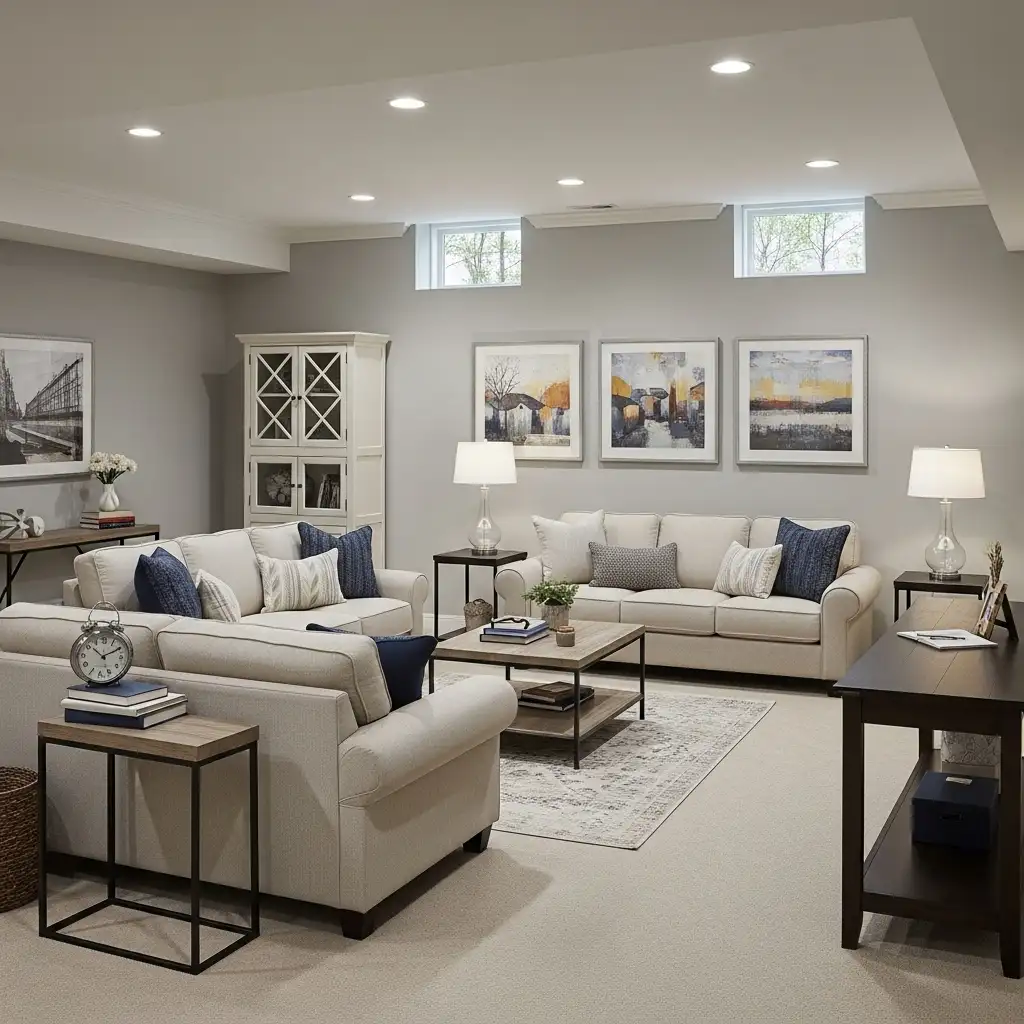
Multipurpose family spaces benefit from neutral backgrounds that accommodate various activities and furniture arrangements. Light gray, soft beige, or warm white provides versatility for everything from movie nights to homework sessions. These neutral palettes also allow easy updates through accessories, artwork, and furniture without repainting. Check our multipurpose rooms ideas for layout and design inspiration.
Paint Finish Selection for Basements
Eggshell and Satin Finishes
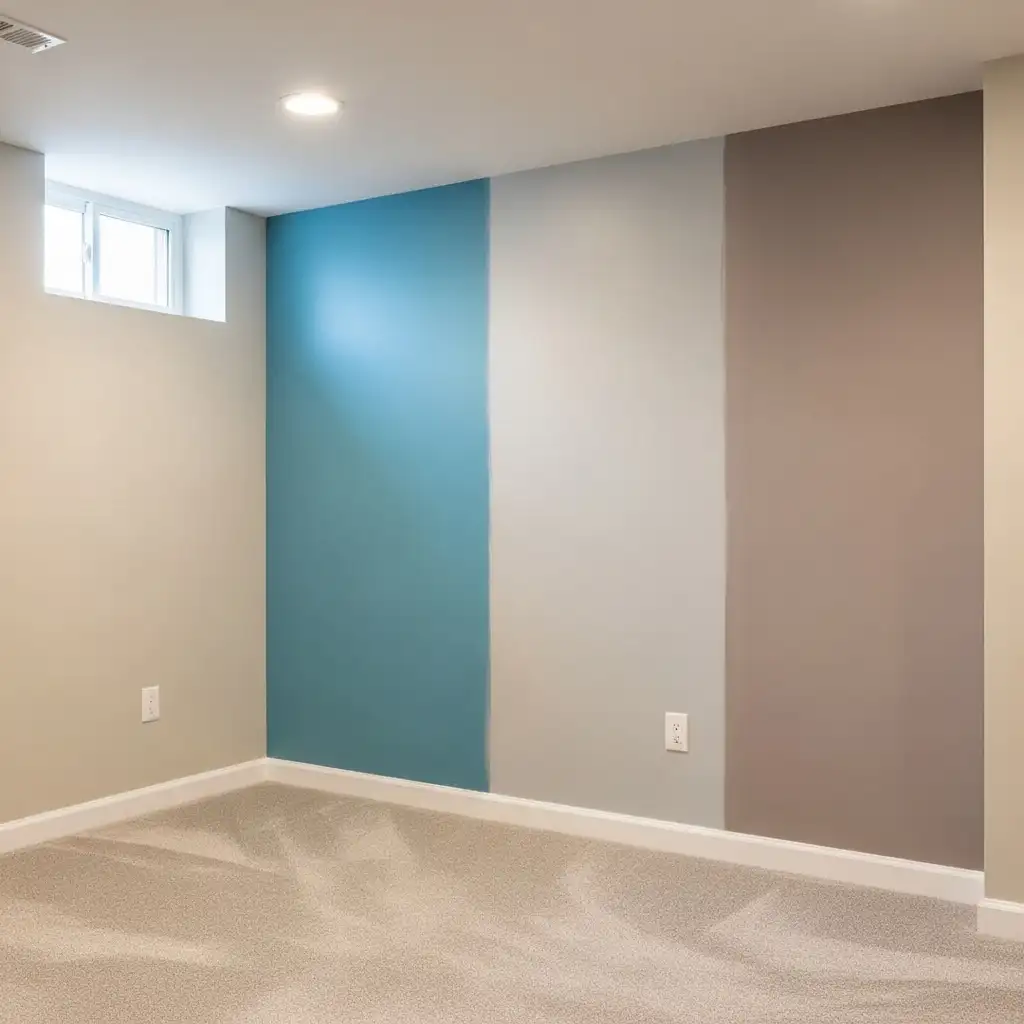
Eggshell or satin finishes offer the best balance between durability and appearance for most basement applications. These slight sheens reflect more light than flat paint, helping brighten spaces while remaining subtle enough to hide minor wall imperfections. The slight gloss also makes walls easier to clean – important in high-traffic family spaces or areas prone to moisture.
Semi-Gloss for Moisture-Prone Areas
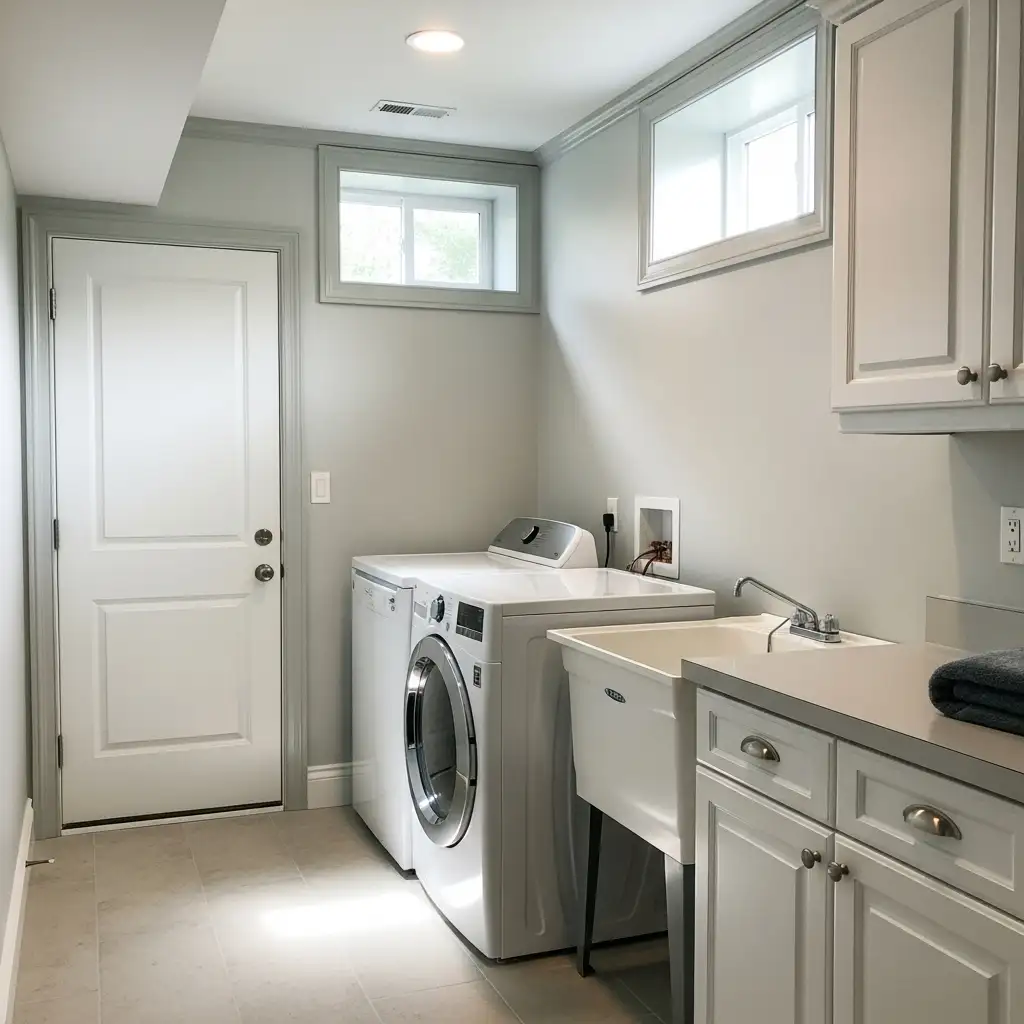
Use semi-gloss or even high-gloss finishes in basement bathrooms, laundry rooms, or areas with moisture concerns. The harder, more water-resistant surface withstands humidity better than flat finishes while making cleaning easier. Semi-gloss works particularly well on trim, doors, and built-ins throughout basements, creating subtle contrast against eggshell or satin walls.
Avoiding Flat Paint
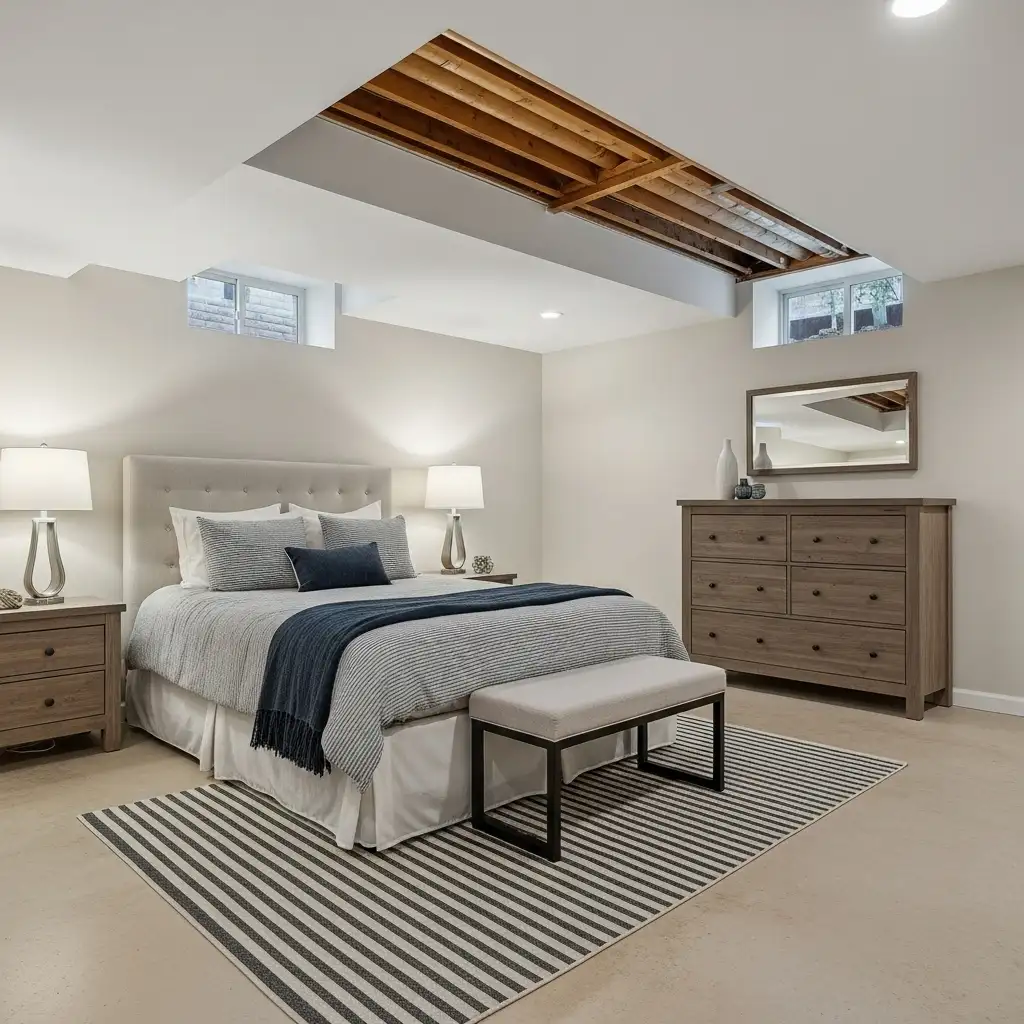
Flat or matte finishes, while excellent at hiding imperfections, generally aren’t ideal for basements. These finishes absorb rather than reflect light, working against your goal of brightening dark spaces. They’re also more difficult to clean and less durable in high-traffic areas, though they can work in low-traffic adult bedrooms where light absorption creates cozy, intimate feelings.
Additional Tips for Basement Color Success
Test Colors in Actual Conditions
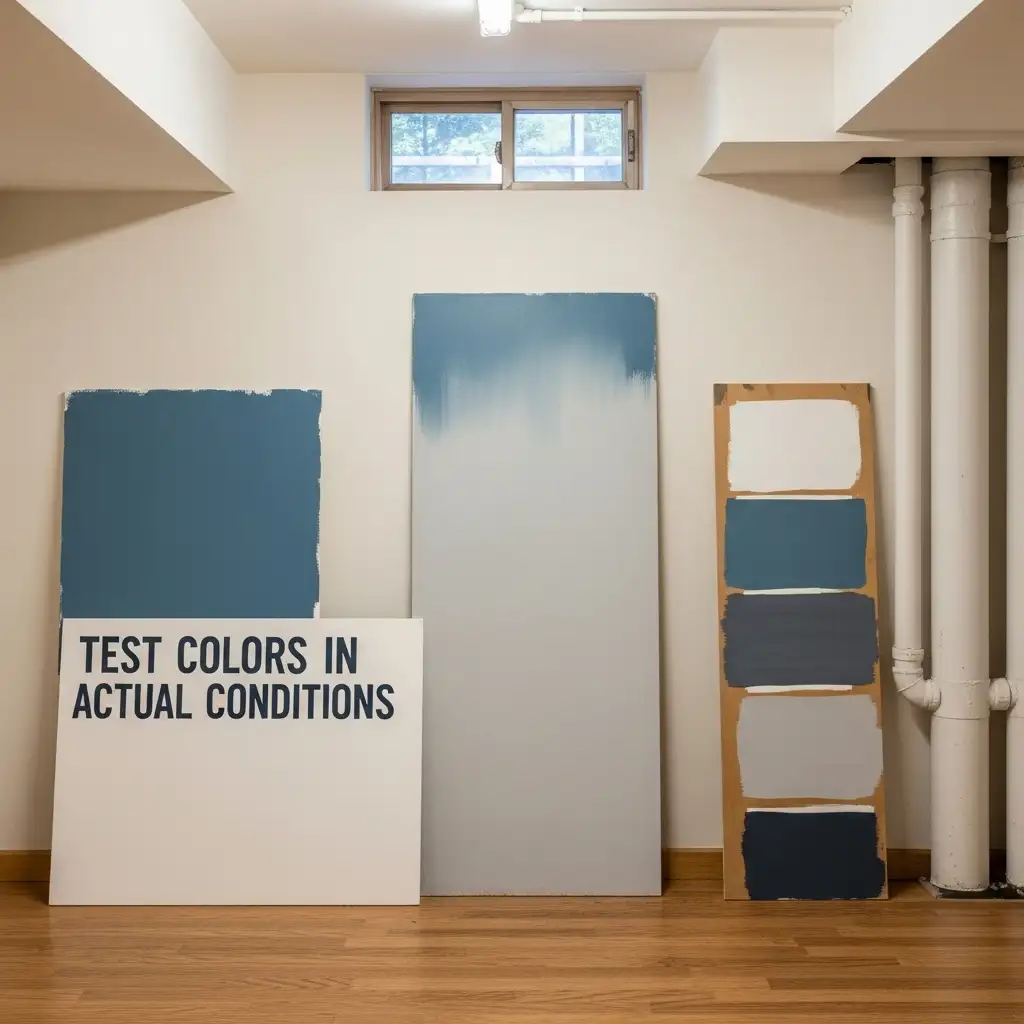
Always test paint colors in your actual basement under your specific lighting conditions before committing to entire rooms. Paint large sample boards (at least 2×2 feet) and observe them at different times of day under various lighting scenarios. Colors that look perfect in store samples can appear completely different in basement conditions.
Coordinate with Flooring
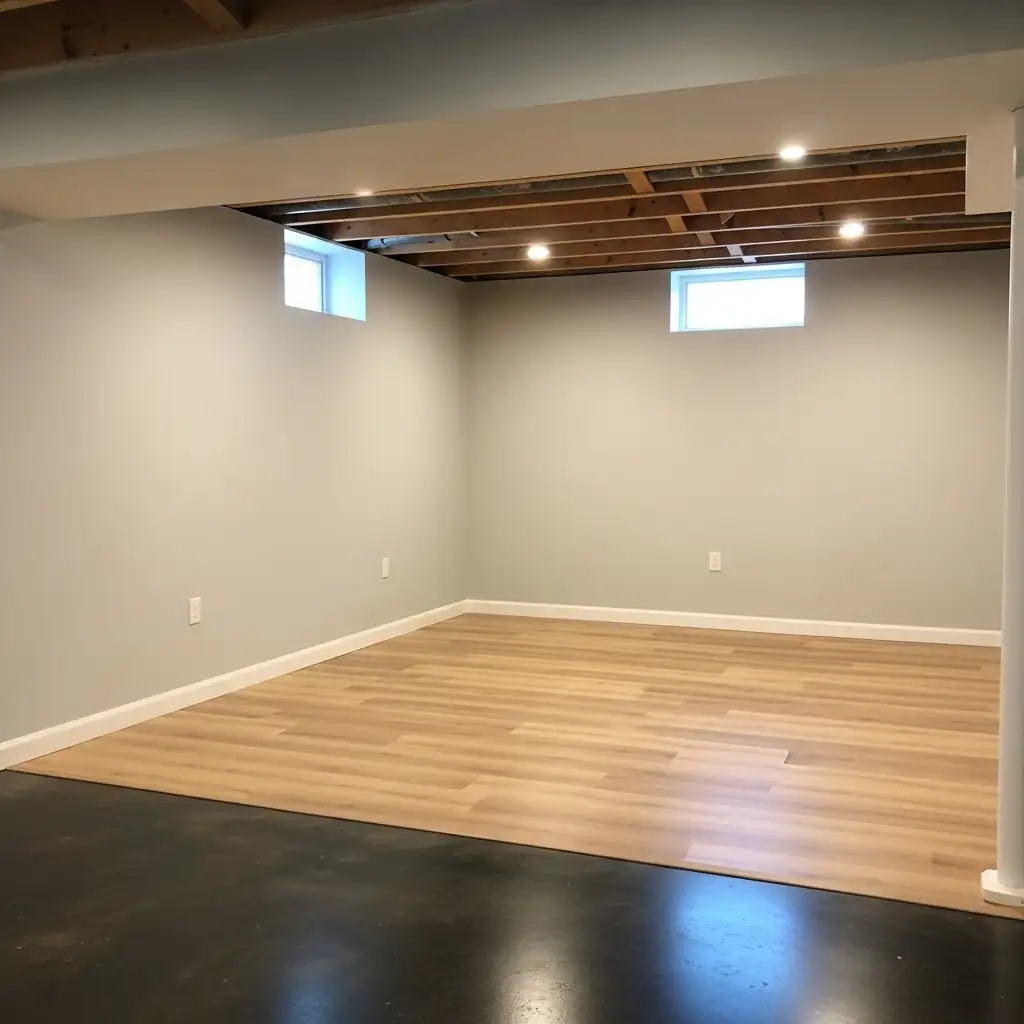
Consider existing or planned flooring when selecting wall colors. Light walls with medium to dark floors create balanced contrast, while light walls and light floors can feel too uniform. If you have dark concrete floors or wood-look vinyl, warm wall colors prevent overly cold feelings. For basements with low ceilings, explore our basement painted ceiling low height spaces guide for coordinated approaches.
Don’t Forget Trim and Doors
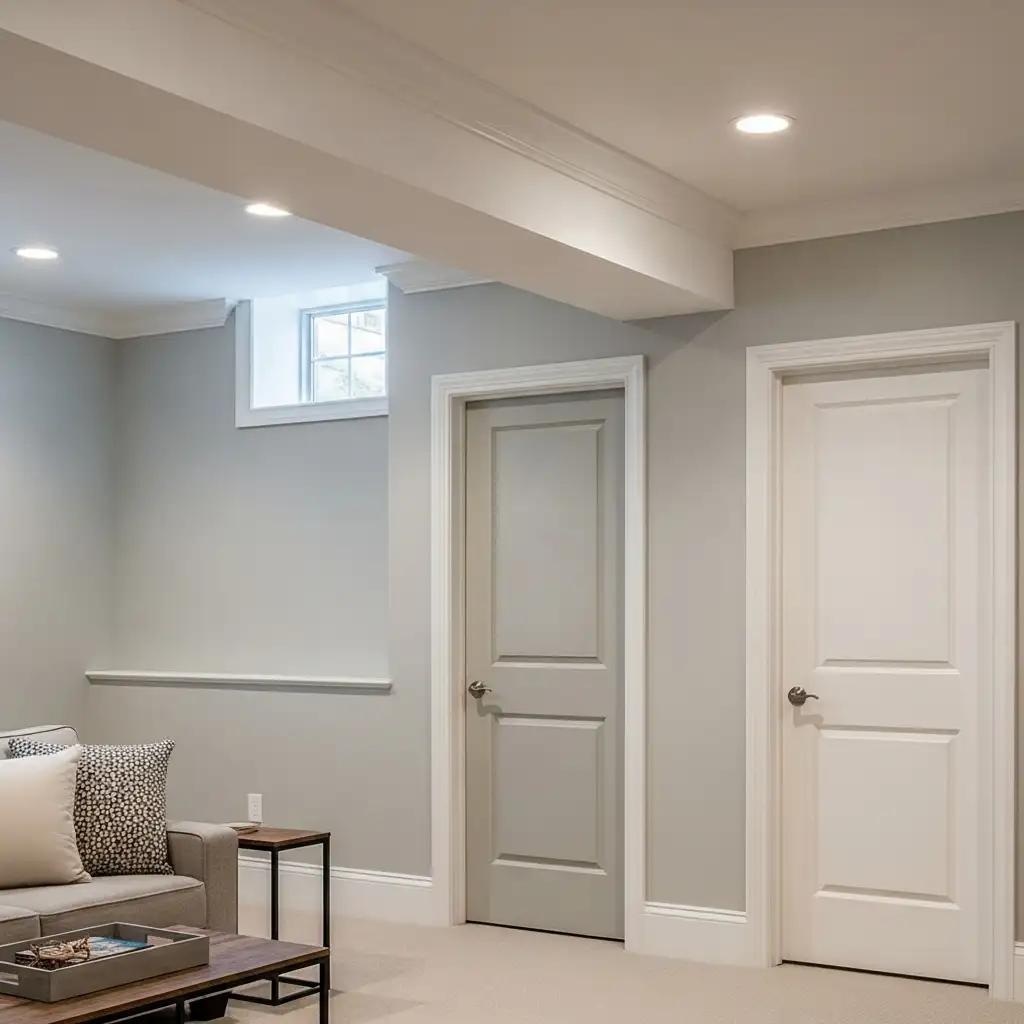
White or off-white trim creates clean definition against colored walls while maximizing light reflection. This classic approach works in virtually any basement style from traditional to contemporary. Painting doors the same color as walls creates seamless flow in open-concept basements, while white doors add architectural interest and maintain traditional aesthetics.
Frequently Asked Questions
What is the best paint color for a dark basement?
The best colors for dark basements are light, neutral shades with high light-reflective properties. Soft white, warm off-white, light gray, or pale beige provide maximum brightness while creating welcoming atmospheres. Avoid dark or deeply saturated colors that absorb light and make spaces feel smaller and more oppressive.
Should I paint my basement walls and ceiling the same color?
Painting walls and ceilings the same color can work in basements with adequate ceiling height, creating seamless, modern aesthetics. However, basements with low ceilings benefit from lighter ceiling paint that creates the illusion of height. White ceilings remain the safest choice, reflecting maximum light downward while making rooms feel more open regardless of wall color.
What paint finish is best for basement walls?
Eggshell or satin finishes work best for most basement walls, offering slight sheen that reflects light while hiding minor imperfections. These finishes are more durable and easier to clean than flat paint, important in high-traffic family spaces. Reserve semi-gloss for moisture-prone areas like bathrooms or laundry rooms where water resistance matters most.
How can I add color to my basement without making it feel dark?
Add color through accent walls, keeping remaining walls in light neutrals that maintain brightness. Use colorful furniture, artwork, rugs, and accessories that can be easily changed without repainting. Another strategy involves two-tone painting with lighter shades occupying more wall space and deeper colors limited to lower portions below chair rails.
Conclusion: Creating Your Perfect Basement Retreat
Selecting the right paint colors transforms basements from neglected storage areas into valuable, functional living spaces that enhance your home’s overall square footage and livability. Light, neutral colors remain the safest choice for maximizing brightness and creating welcoming environments despite limited natural light. However, strategic color placement through accent walls or two-tone techniques allows personality and style without sacrificing essential light reflection.
Consider your basement’s specific function, existing lighting conditions, and ceiling height when making color selections. Test samples in actual conditions before committing to full rooms, and don’t forget to coordinate wall colors with ceiling, trim, and flooring choices for cohesive results. With thoughtful color selection and proper paint finishes, even the darkest basement can become a bright, inviting space your family loves spending time in year-round.