
Beaded curtains are a fantastic, non-permanent way to add personality, texture, and movement to a room. Enjoying a major comeback beyond their retro roots, modern beaded curtains are versatile enough to fit into bohemian, coastal, minimalist, and even glamorous design aesthetics.
These curtains offer a great solution for soft separation, allowing light and air to pass through while still defining distinct zones, making them a key component of creative room divider ideas.
Whether you’re looking to define a doorway or add a touch of sparkle to a wall, here are 16 beaded curtain ideas to inspire your next home décor project.
Functional & Architectural Placement
Beaded curtains are most effective when used to delineate spaces without sacrificing an open feel. These ideas focus on where to hang them to create soft boundaries or enhance existing architectural structures.
1. Doorway Divider
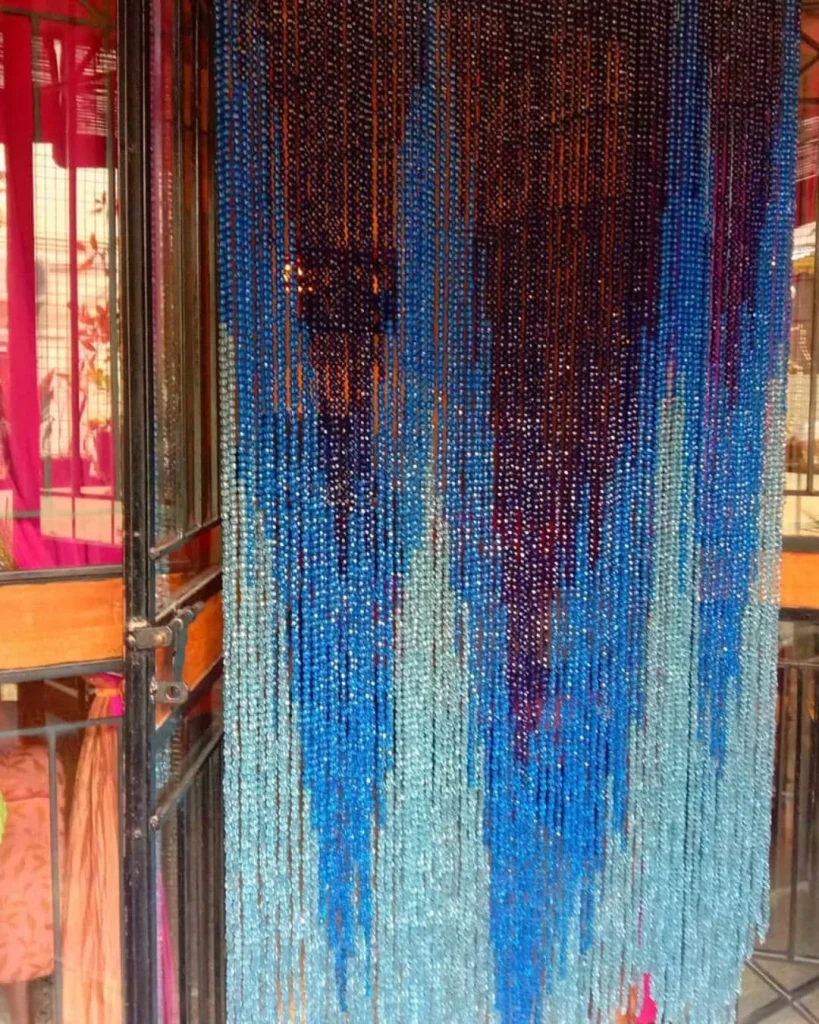
The classic use for beaded curtains is as a doorway divider, seamlessly separating rooms like a kitchen from a dining area, or a bedroom from a walk-in closet. This creates a visually interesting passage, and you can find specific examples in guides dedicated to beaded curtain doorway ideas.
2. Closet Door Replacement
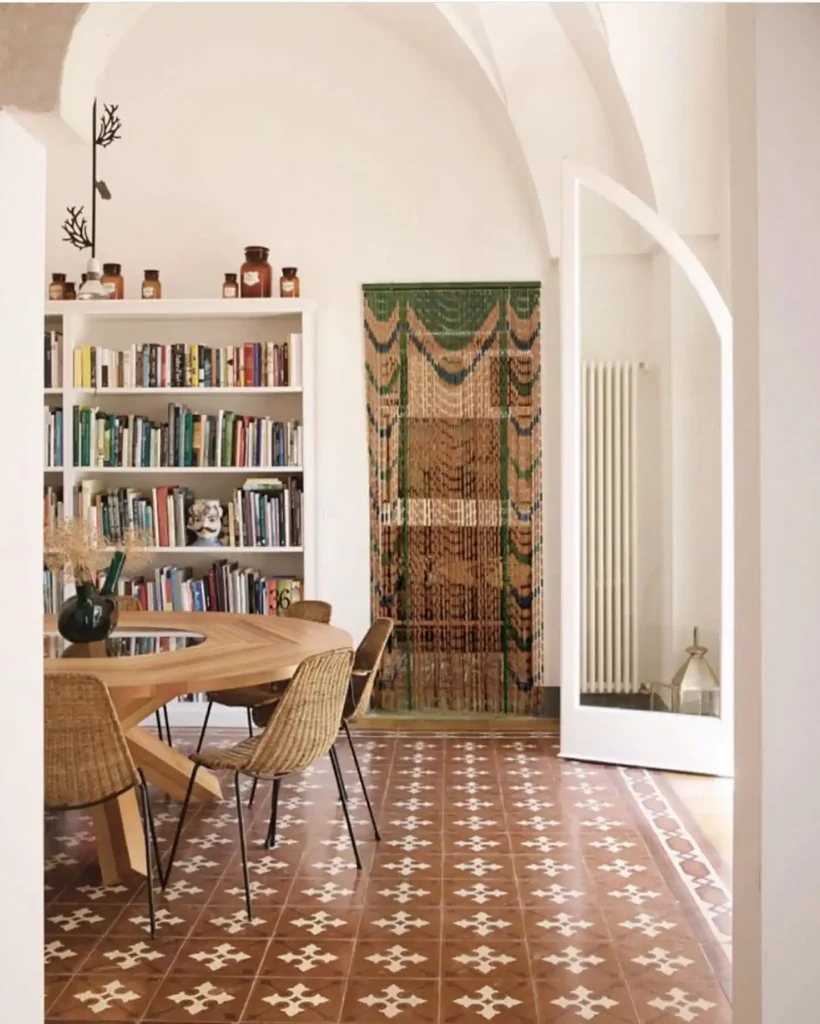
Replace bulky, solid closet doors with a beaded curtain. This works especially well for reaching into small bedroom storage areas, adding a playful texture and making the wardrobe opening feel less heavy.
3. Bed Canopy Element

Drape strings of beaded curtains around a four-poster bed frame or a circular ceiling mount to create an ethereal canopy. This adds a romantic, whimsical touch, perfect for bedroom ideas for couples.
4. Room Divider in a Studio

In a studio or open-plan apartment, hang a wide beaded curtain from the ceiling to softly divide the sleeping area from the living space. This is a common and effective trick found in guides dedicated to small apartment ideas.
5. Window Treatment
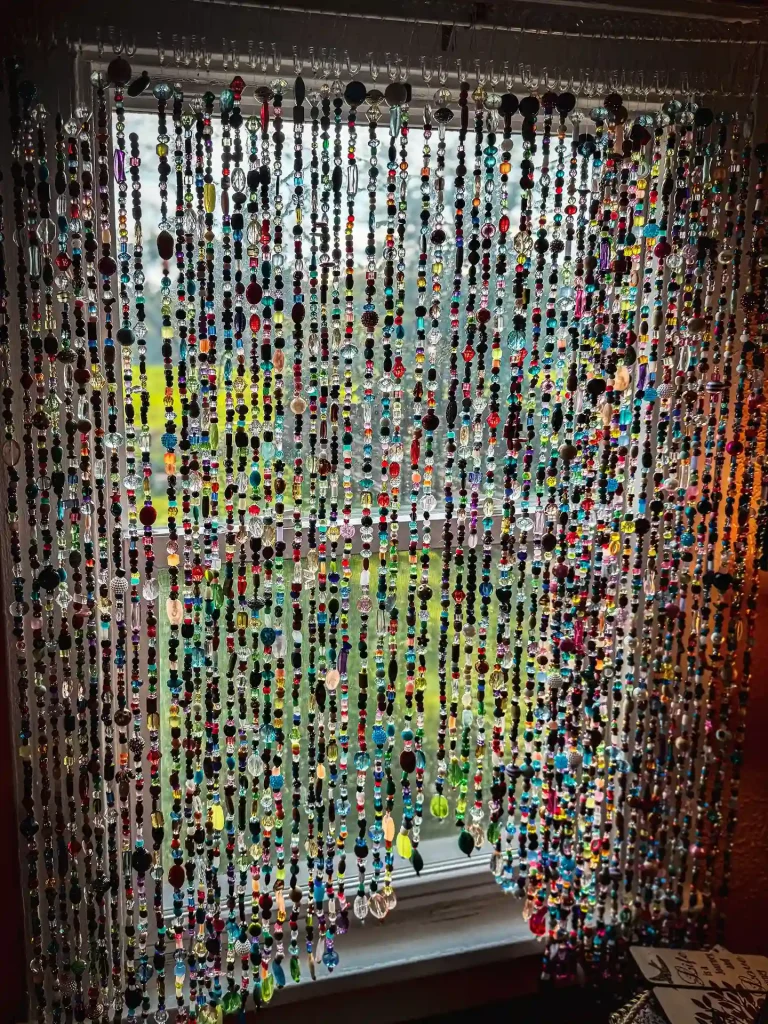
Use beaded curtains in place of traditional blinds or heavy drapes. They allow sunlight to filter through, creating beautiful, shimmering light patterns on the floor and walls.
6. Hallway Archway Accent
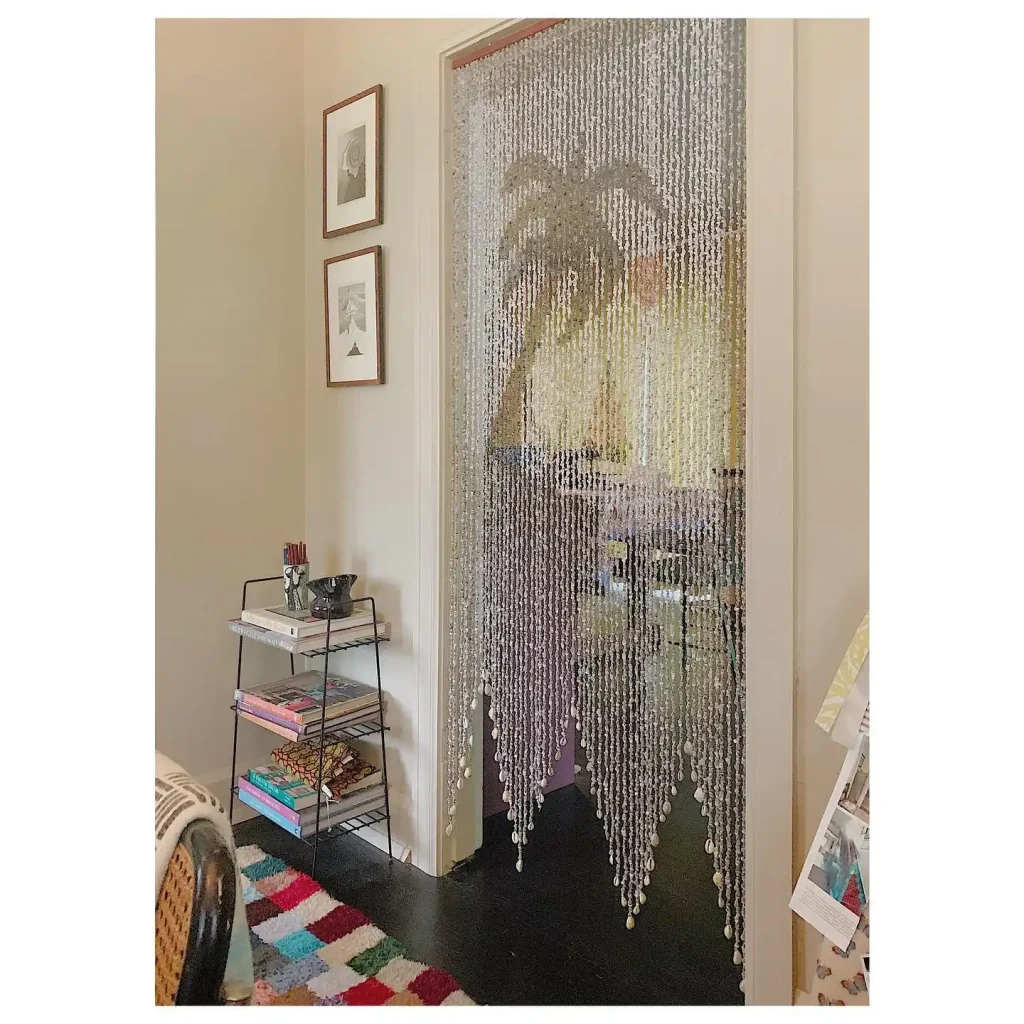
If your home has interior archways or wide openings between rooms, hanging a beaded curtain enhances the transitional space, adding a layer of texture and definition to your hallway design.
Styling & Material Concepts
The style of the curtain is entirely dependent on the material and color of the beads. These ideas focus on using specific materials to reinforce a room’s aesthetic, from natural wood to glamorous crystal.
7. Natural Wood Beads

Opt for a curtain made with simple, unstained natural wood beads for a clean, minimal, Scandi-Boho look. This provides texture and warmth without introducing bright colors, aligning perfectly with general boho home decor principles.
8. Iridescent/Crystal Beads

For a touch of Hollywood Regency or high glamour, choose curtains made with crystal or iridescent acrylic beads. These materials brilliantly reflect light, adding a luxurious and dramatic sparkle, often seen in master bedroom ideas.
9. Bamboo or Shell Curtain

Channel a tropical or coastal vibe with curtains made from bamboo sticks, capiz shells, or other natural, flat elements. This adds a subtle, gentle sound as you walk through them. This style fits well with the focus on natural elements in modern cottagecore ideas.
10. Bold, Retro Colors

Embrace the 60s and 70s revival by using curtains with vibrant, geometric patterns in bold, nostalgic colors like orange, lime green, and fuchsia.
11. Subtle Monochrome Beads
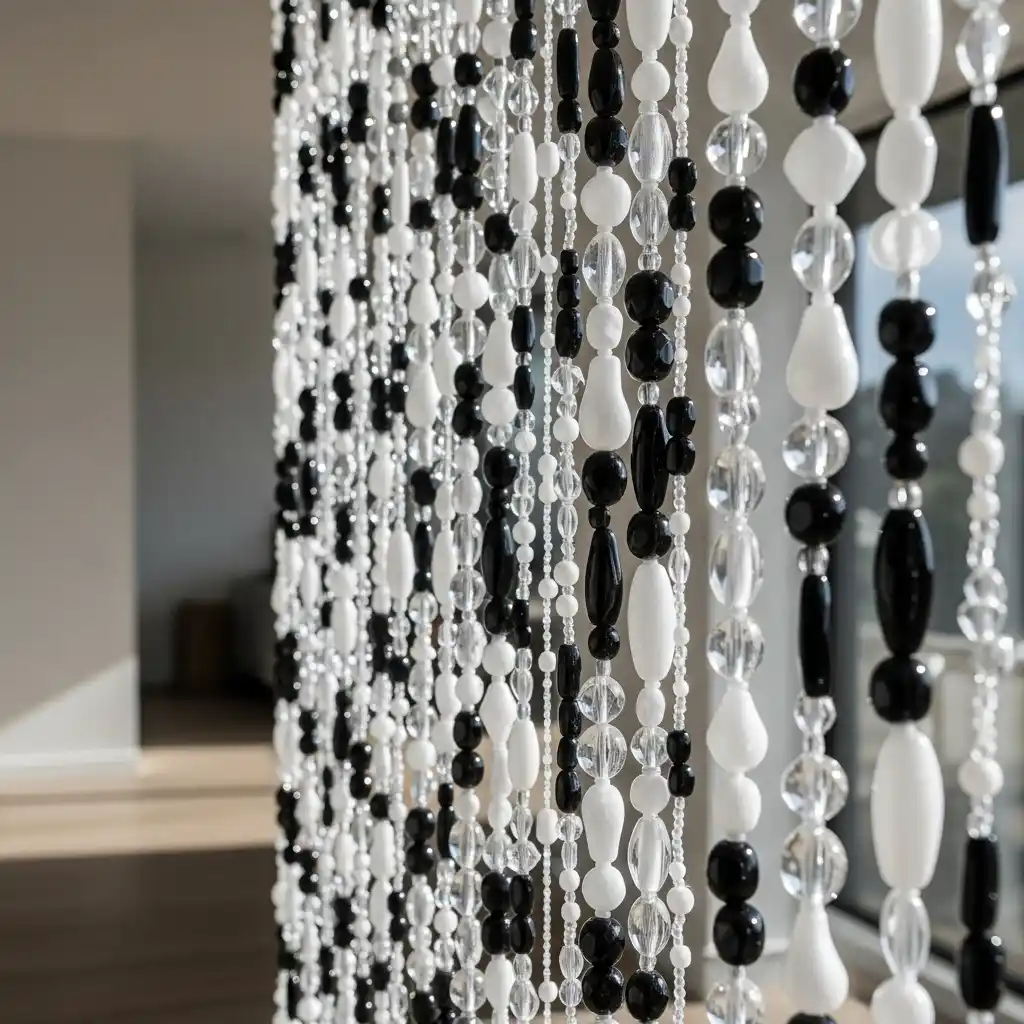
For a modern, sophisticated look, choose curtains made entirely of opaque white, black, or clear glass beads. This option prioritizes texture and visual interest while keeping the color palette minimalist and clean.
Creative & Unique Applications
Beaded curtains are not limited to separating rooms. These ideas focus on utilizing them in unexpected ways to enhance existing furniture, conceal clutter, or serve as a permanent decorative backdrop.
12. Behind the Bed Headboard

Install a rod and hang a wide beaded curtain directly behind your headboard. This creates a shimmering, textured accent wall that is far easier to install than traditional wallpaper, similar to wall decor above the bed.
13. Layered Look

For added privacy and visual intrigue, hang a sheer fabric curtain (like linen or gauze) a few inches behind the beaded curtain. The fabric provides a soft background that makes the beads stand out while slightly obscuring the view.
14. Asymmetrical Installation

Break from tradition by installing a curtain that only partially covers an opening—for instance, a short panel that hangs over a bar counter or a wide, decorative piece that starts mid-wall.
15. Hiding Storage Shelves
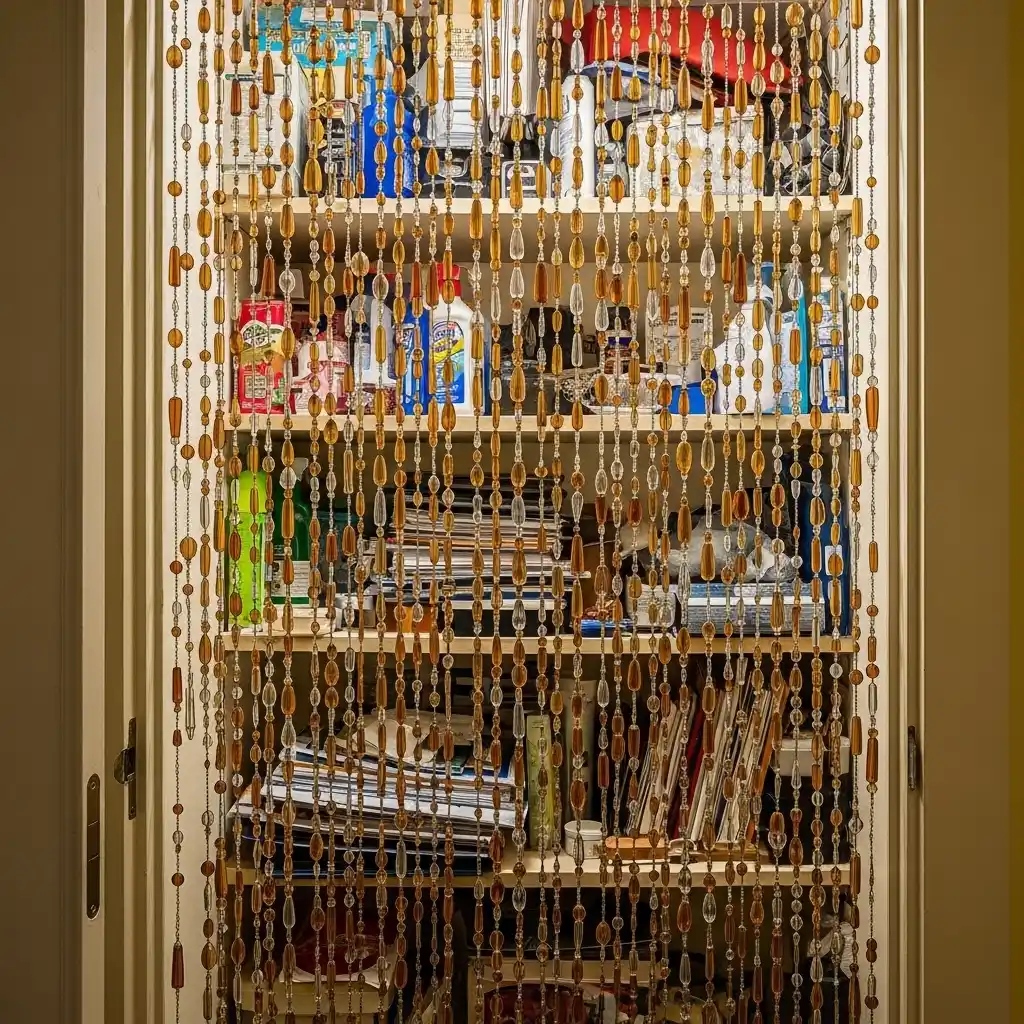
Use a beaded curtain to conceal open storage shelves that often look cluttered, such as those found in a small utility corner or a disorganized home office bookcase.
16. DIY Painted Wood Beads

Customize a basic wood bead curtain with paint. This allows you to create your own unique color pattern—perhaps painting every fifth bead a custom color—making it a perfect DIY home decor idea.
Conclusion
Beaded curtains are a fun, easy, and affordable way to define space, add movement, and inject personality into your home. They are a wonderful alternative to solid doors or walls, offering privacy without sacrificing the flow of light and air. By choosing the right material and placement, you can harness their unique texture to enhance any style from bohemian to modern.
FAQ
Are beaded curtains outdated?
Not at all. While they had a strong moment in the 1970s, modern beaded curtains made from natural wood, bamboo, or subtle crystal have made a chic comeback. They are now considered a stylish textural element in contemporary and bohemian design.
How do I clean beaded curtains?
The best way to clean most beaded curtains is to take them down, lay them flat, and gently wipe each strand with a damp cloth and mild soapy water. For wood or bamboo, use a dry, soft cloth or a feather duster.
What are beaded curtains used for besides doorways?
They are great for covering open closets or storage areas, functioning as soft room dividers in studio apartments, adding texture behind a bed as an accent wall, or replacing traditional blinds on a window.