
While accent walls have dominated interior design conversations for years, savvy homeowners are now looking up—literally—to discover the dramatic potential of accent ceilings. An accent ceiling uses color, pattern, texture, or material to transform the often-overlooked fifth wall into a stunning focal point that elevates entire rooms from ordinary to extraordinary.
Credits: @ariellahorowitzdesigngroup
Accent ceilings offer unique advantages over accent walls. They don’t compete with furniture, artwork, or architectural features at eye level. They create visual interest without sacrificing wall space for shelving, windows, or décor. And perhaps most importantly, they provide that “wow factor” that makes guests stop and look up, transforming ceilings from forgotten surfaces into conversation-starting design elements.
Whether you’re working with standard flat ceilings, architectural features like trays or vaults, or challenging spaces like low basements, accent ceiling treatments offer creative solutions that add personality, perceived height, and undeniable style to any room.
Credits: @jesslu2gee
What Makes a Ceiling an “Accent”?
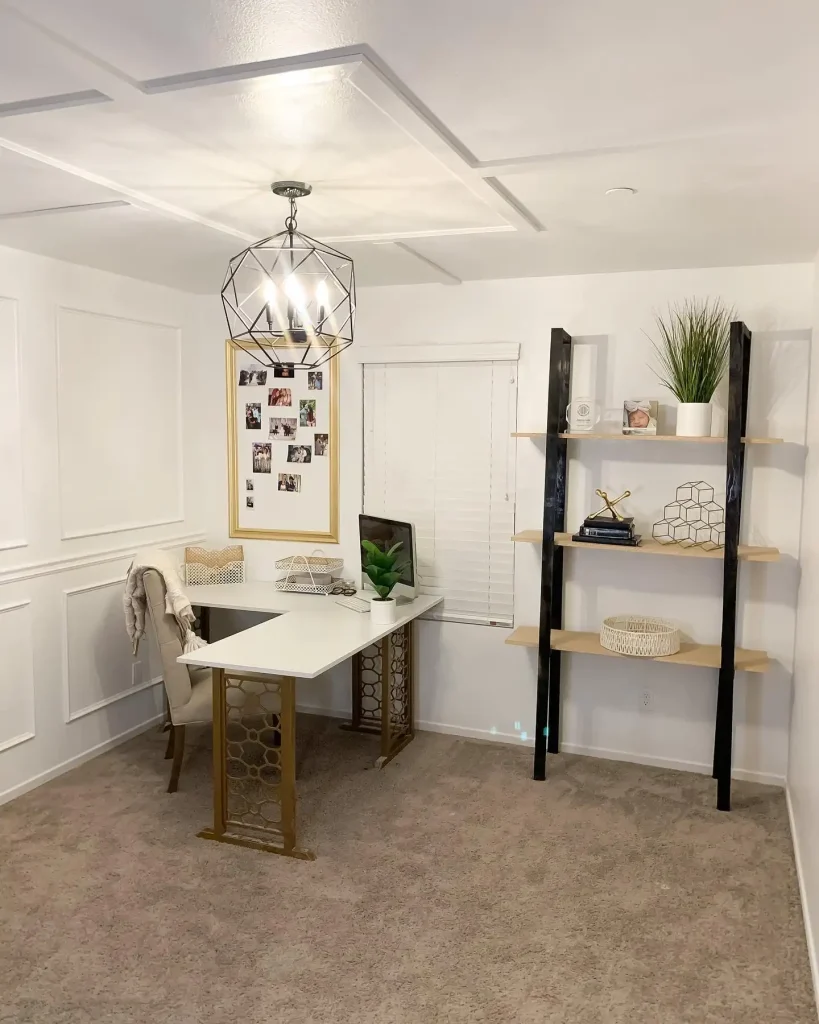
An accent ceiling stands out from surrounding surfaces through deliberate contrast. This differentiation might come from bold paint colors that differ dramatically from walls, unique materials like wood or metal that add texture, patterns created through wallpaper or stenciling, or architectural treatments that add dimension.
Credits: @thekproperties
The key principle is intentional distinction. Your accent ceiling should feel purposeful, not accidental. It announces itself as a design choice while complementing—not competing with—your room’s overall aesthetic.
Color as Accent Ceiling Treatment
Bold and Dark Hues
Deep, saturated ceiling colors create immediate drama and sophistication. Navy blue ceilings evoke nighttime skies, bringing tranquility to bedrooms and elegance to dining rooms. Charcoal gray provides modern edge while maintaining neutrality that works with various color schemes. True black ceilings deliver maximum impact, making rooms feel intimate and cozy rather than smaller—a counterintuitive effect that works beautifully in spaces with good lighting.
Credits: @welcometothewoodsblog
Rich jewel tones like emerald green, sapphire blue, or deep burgundy add luxurious personality. These bold choices work particularly well in rooms with high ceilings where dark colors won’t feel oppressive. Dark accent ceilings also hide imperfections beautifully and make lighting fixtures stand out dramatically.
For comprehensive ceiling color inspiration, explore our painted ceiling ideas guide.
Vibrant and Unexpected Colors
For those who love color but hesitate to commit to bold walls, accent ceilings offer the perfect compromise. Coral, teal, sunshine yellow, or lavender ceilings inject personality overhead while keeping walls neutral and versatile.
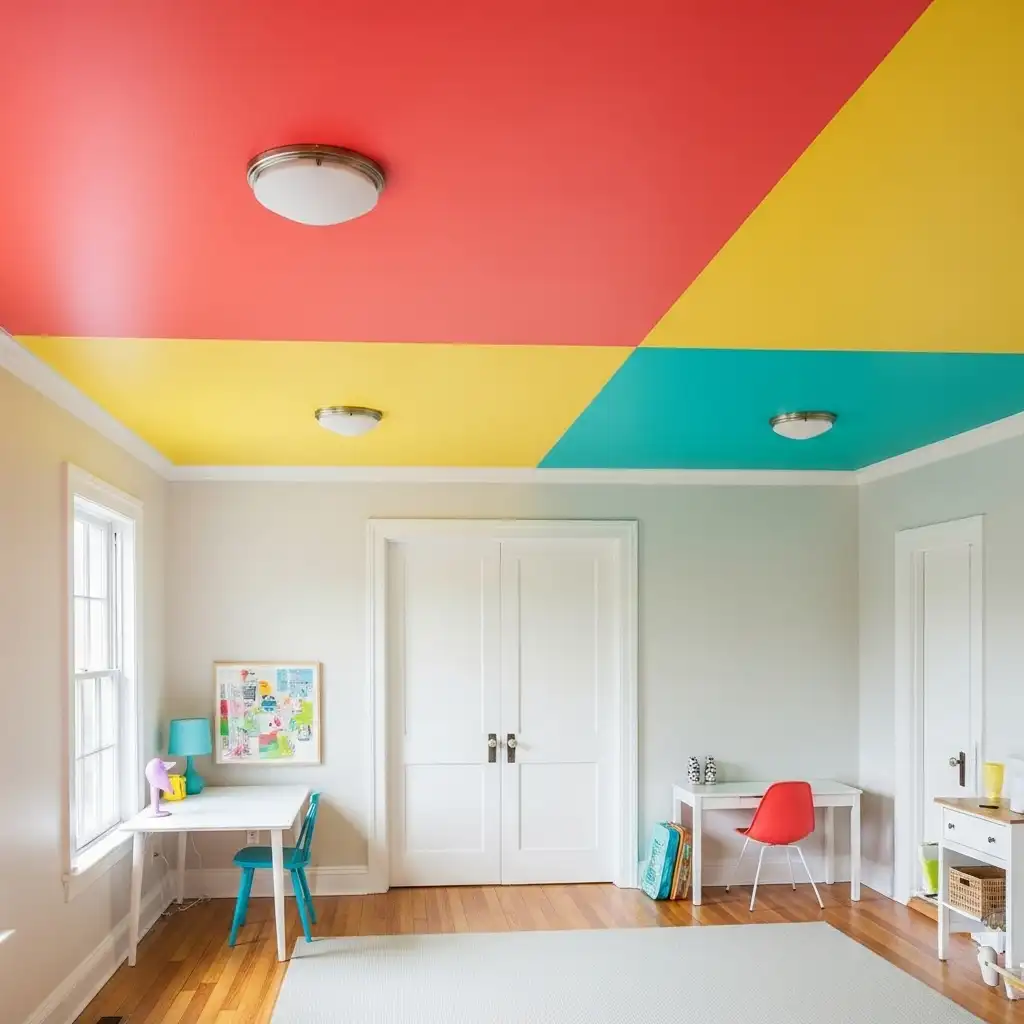
Vibrant ceiling colors work especially well in rooms with simple, minimal furnishings where the ceiling becomes the primary color statement. They’re also excellent in children’s rooms, playrooms, or creative spaces where fun and energy are design goals. Consider how natural light affects your chosen color throughout the day—what looks perfect at noon might feel different at dusk.
Soft and Sophisticated Pastels
Not all accent ceilings need to shout. Soft pastels—blush pink, powder blue, pale mint, or warm peach—create gentle accents that add interest without overwhelming. These subtle choices work beautifully in bedrooms where you want calming atmospheres, nurseries, or spaces with busy décor where bold ceiling colors would compete.
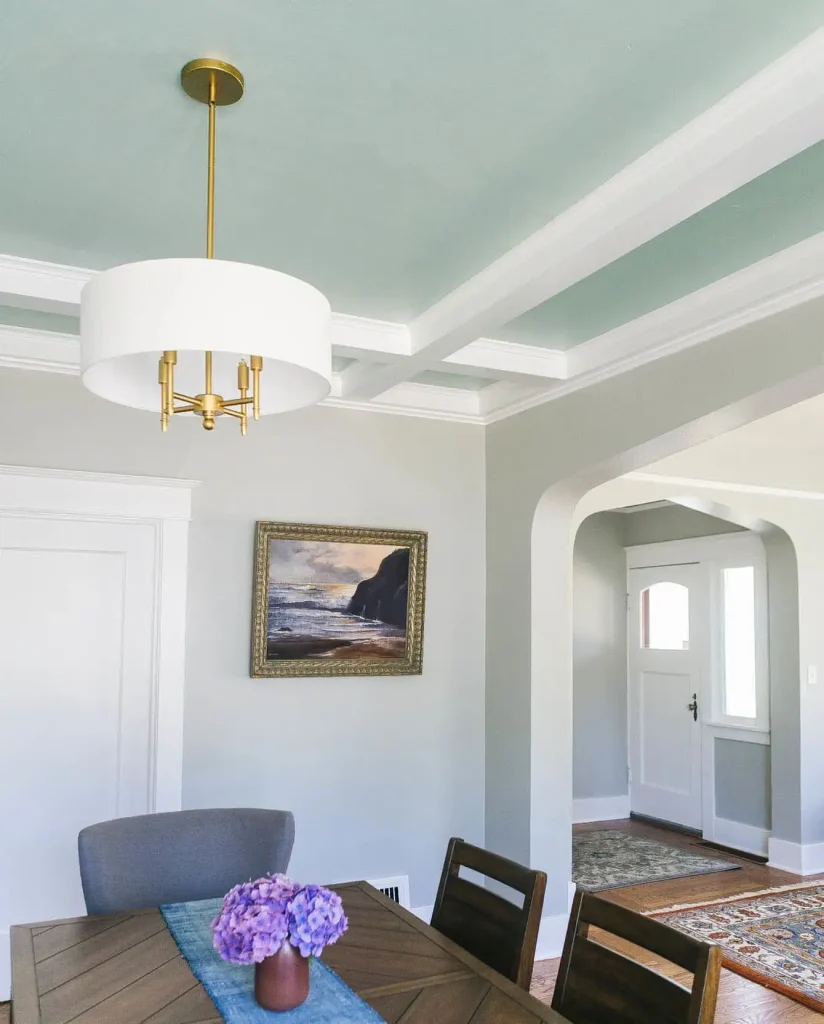
Pastel accent ceilings pair wonderfully with white or cream walls, creating dreamy, enveloping effects. They also work in cottage-style or shabby chic interiors where softness and romance guide design choices.
Architectural Accent Ceilings
Tray Ceiling Accents
Tray ceilings—featuring raised perimeters with recessed centers—provide natural opportunities for accent treatments. Paint the recessed center a contrasting color while keeping the perimeter neutral, or reverse this for different effects. The architectural dimension creates built-in accent opportunities.
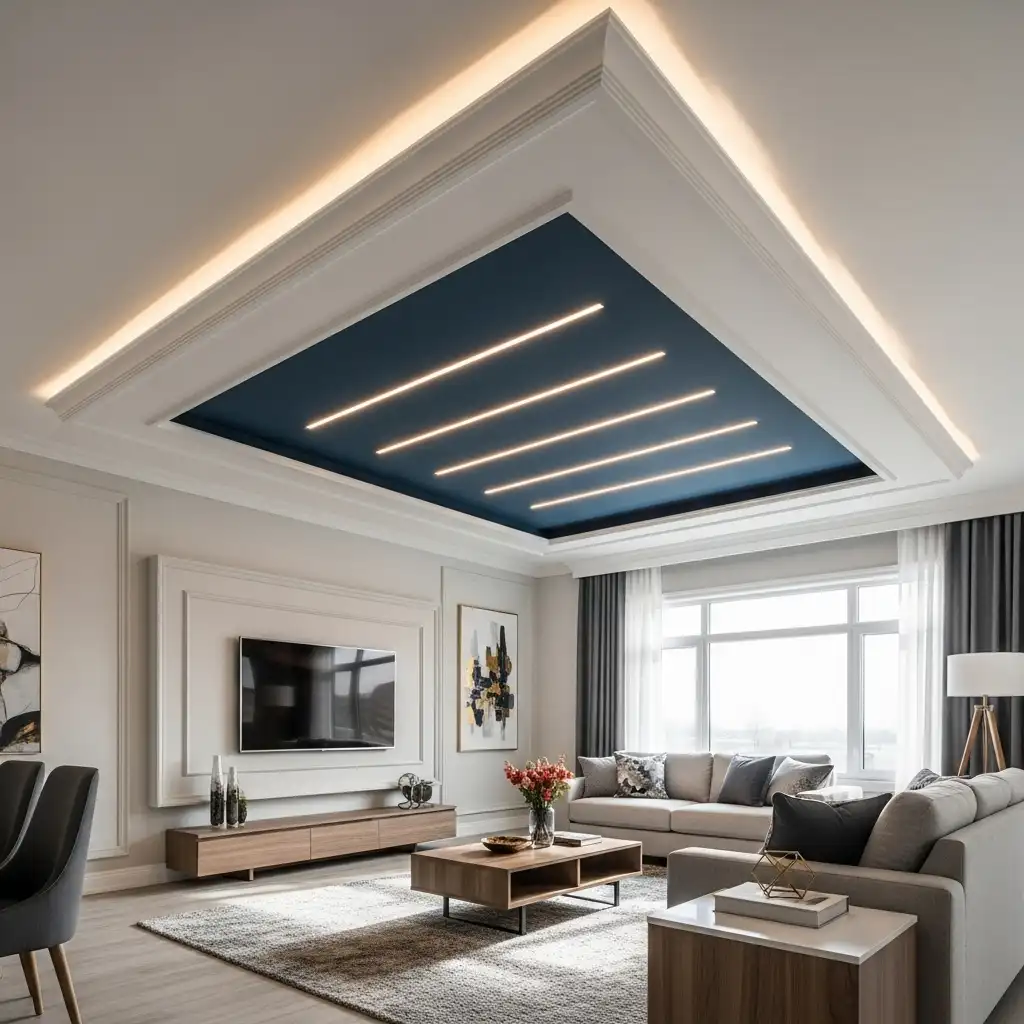
Add wallpaper to tray ceiling centers for pattern and texture. Metallic wallpapers catch light beautifully in these recessed areas, creating shimmer and glamour. Wood paneling in tray centers brings warmth while maintaining the ceiling’s architectural interest. Explore more possibilities in our tray ceiling ideas article.
Coffered Ceiling as Accent
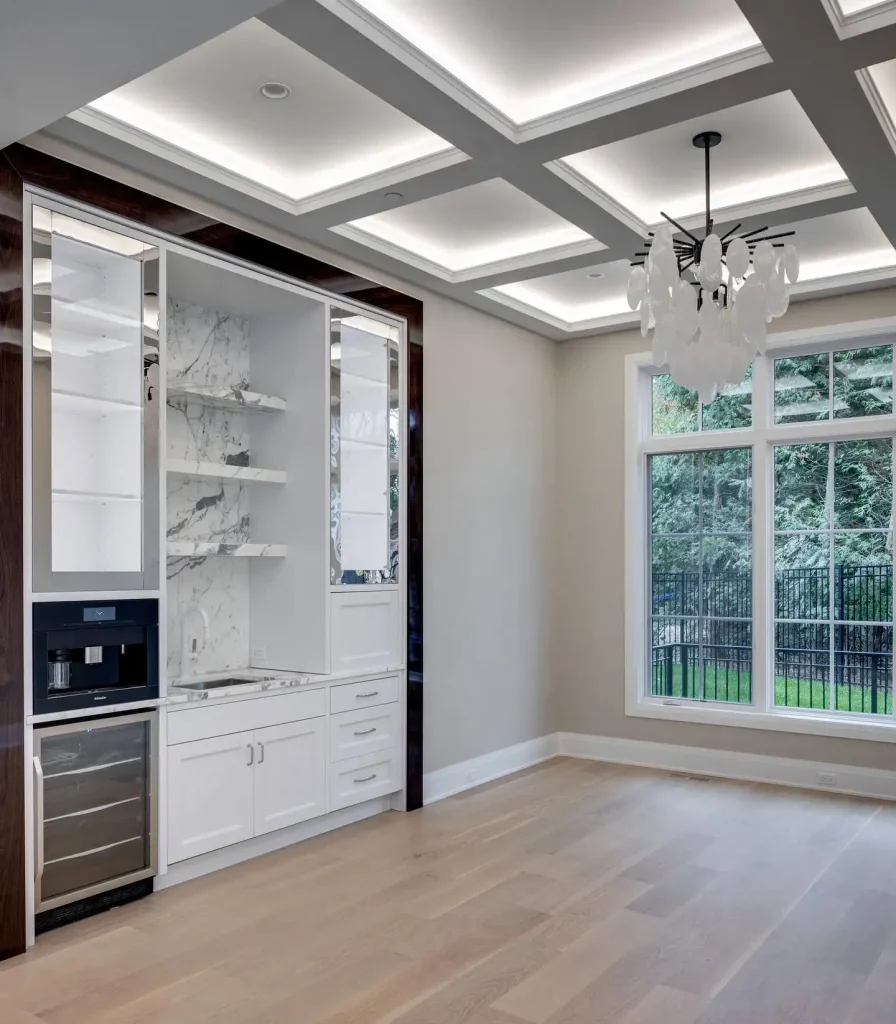
Coffered ceilings with their grid of beams and recessed panels offer multiple accent opportunities. Paint panels contrasting colors from beams—perhaps soft gray panels with white beams, or dramatic navy panels framed by cream beams. This treatment emphasizes the coffered architecture while adding color interest.
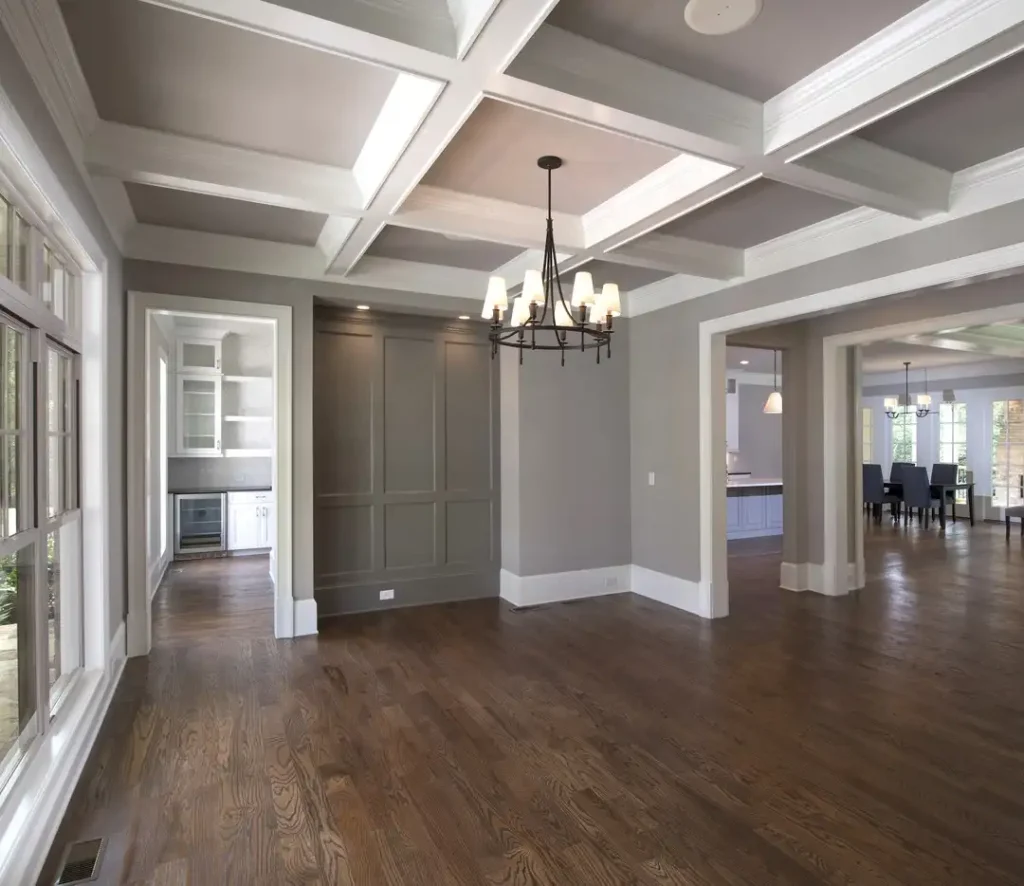
Alternatively, keep coffers monochromatic but use different sheens—matte panels with satin beams create subtle sophistication. Add wallpaper or decorative paint techniques within individual panels for custom, high-end looks. Learn more in our coffered ceiling guide.
Vaulted and Cathedral Ceiling Accents
Vaulted ceilings’ dramatic angles provide excellent canvases for accent treatments. Paint vaulted sections contrasting colors from walls to emphasize architectural shapes. Wood planking on vaulted ceilings adds warmth and draws eyes upward along the ceiling’s angles.
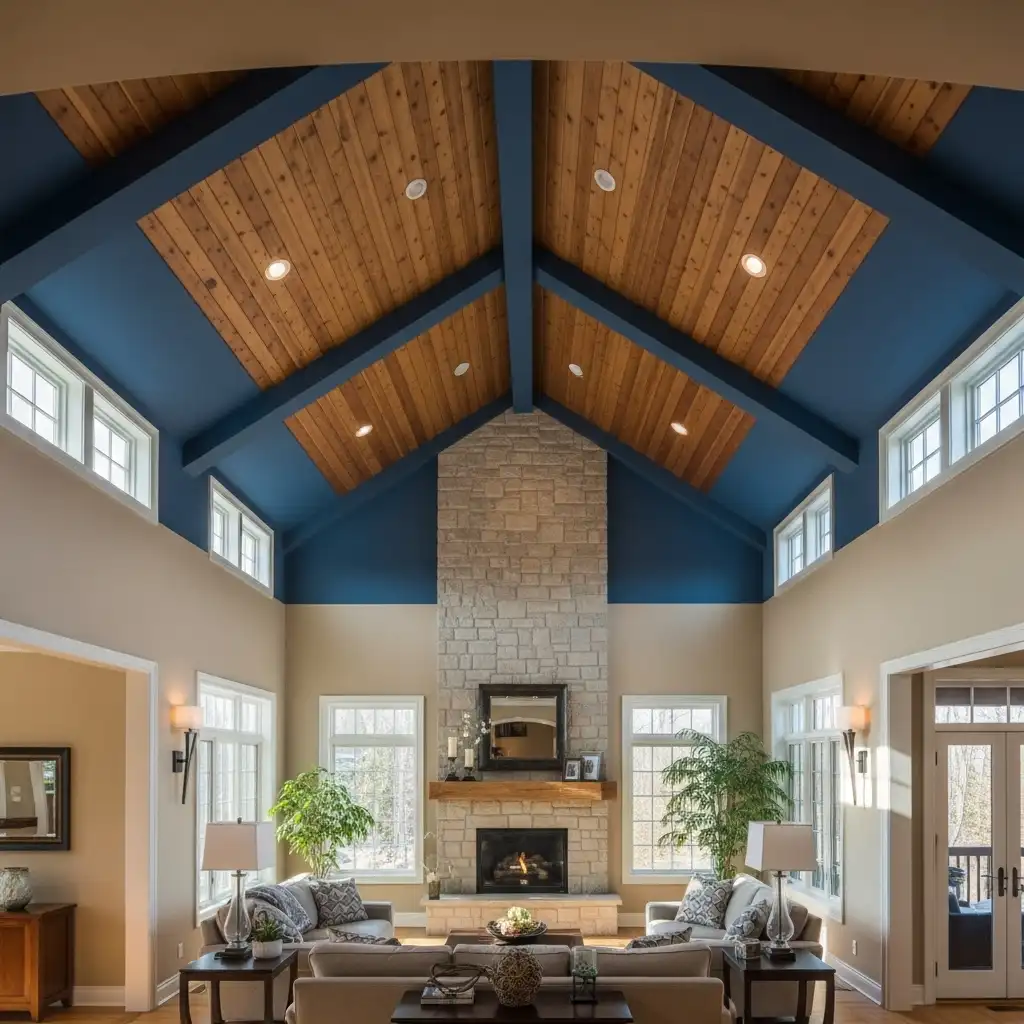
Exposed beams on vaulted ceilings can be stained or painted to contrast with ceiling surfaces, creating dynamic visual interest. These soaring spaces allow bold treatments that might overwhelm standard-height rooms. For inspiration, visit our vaulted ceiling living room ideas and cathedral ceiling living room guides.
Material-Based Accent Ceilings
Wood Accent Ceilings
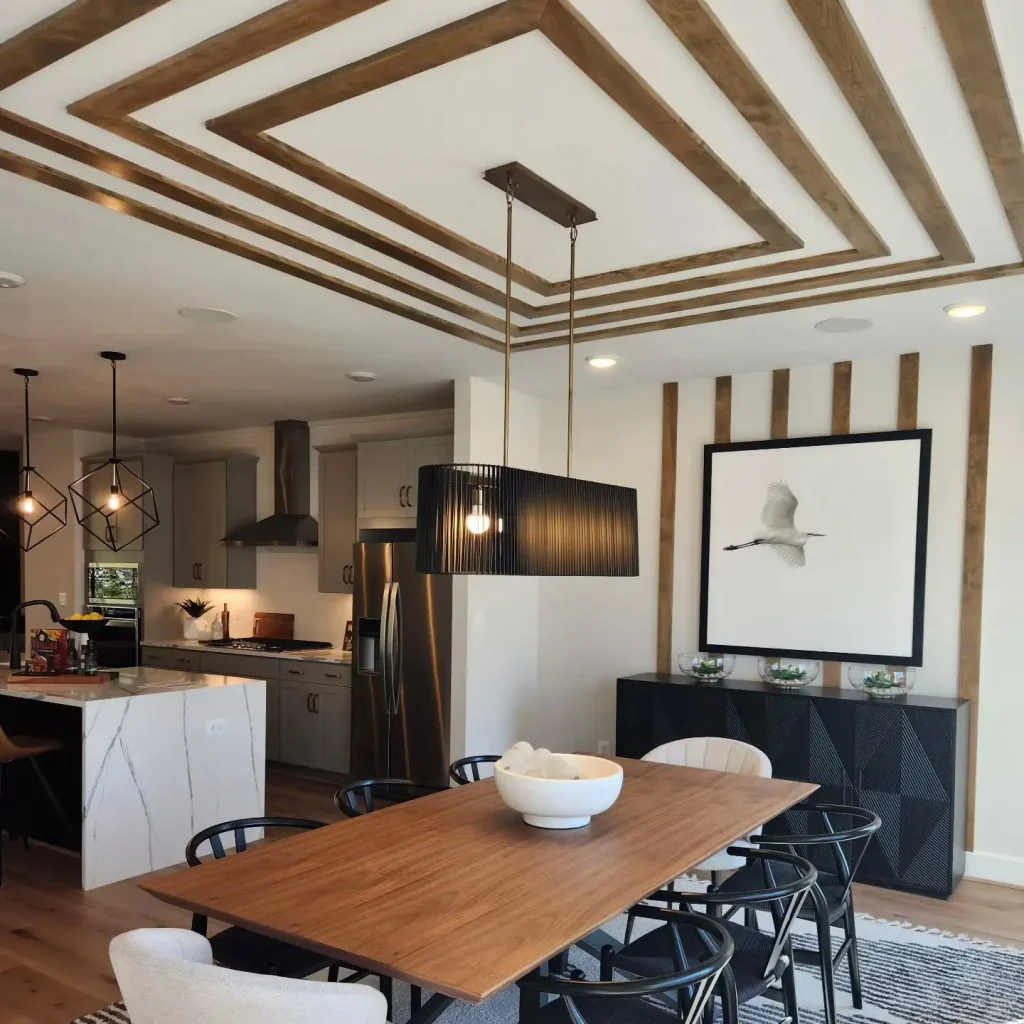
Wood transforms ceilings into warm, organic focal points. Shiplap creates casual, approachable character perfect for farmhouse or coastal styles. Tongue-and-groove planks deliver refined elegance suitable for traditional or rustic designs. Reclaimed wood adds history and texture with natural variations and patinas.
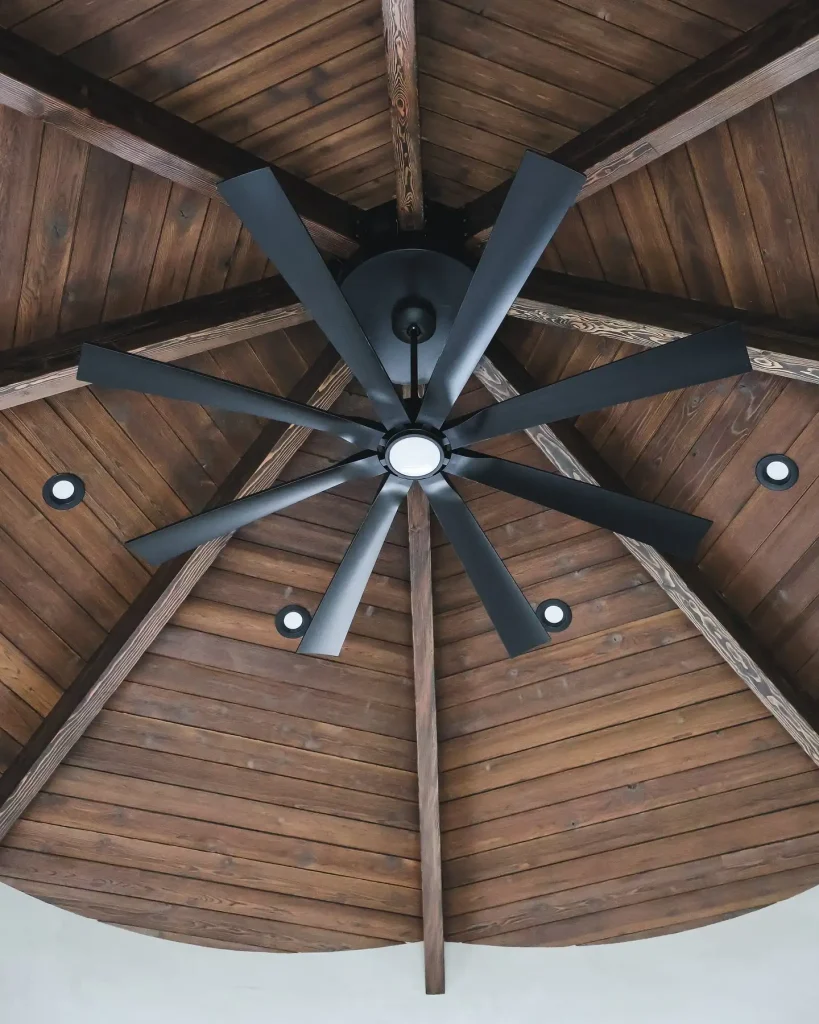
Wood ceiling direction affects room perception—lengthwise planks emphasize length, while width-wise installation creates broader feelings. Natural wood tones bring warmth, while whitewashed or painted wood suits lighter aesthetics. Wood accent ceilings work throughout homes, from bedroom ceiling designs to living room applications.
Detailed guidance awaits in our wood plank ceiling ideas, tongue and groove ceiling, and shiplap ceiling guide.
Metal and Tin Accent Ceilings
Pressed tin tiles bring vintage charm or industrial edge as accent ceiling treatments. These decorative metal surfaces work beautifully in kitchens, bathrooms, or commercial-inspired spaces. Finishes range from raw steel to antiqued copper to painted colors that coordinate with your palette.
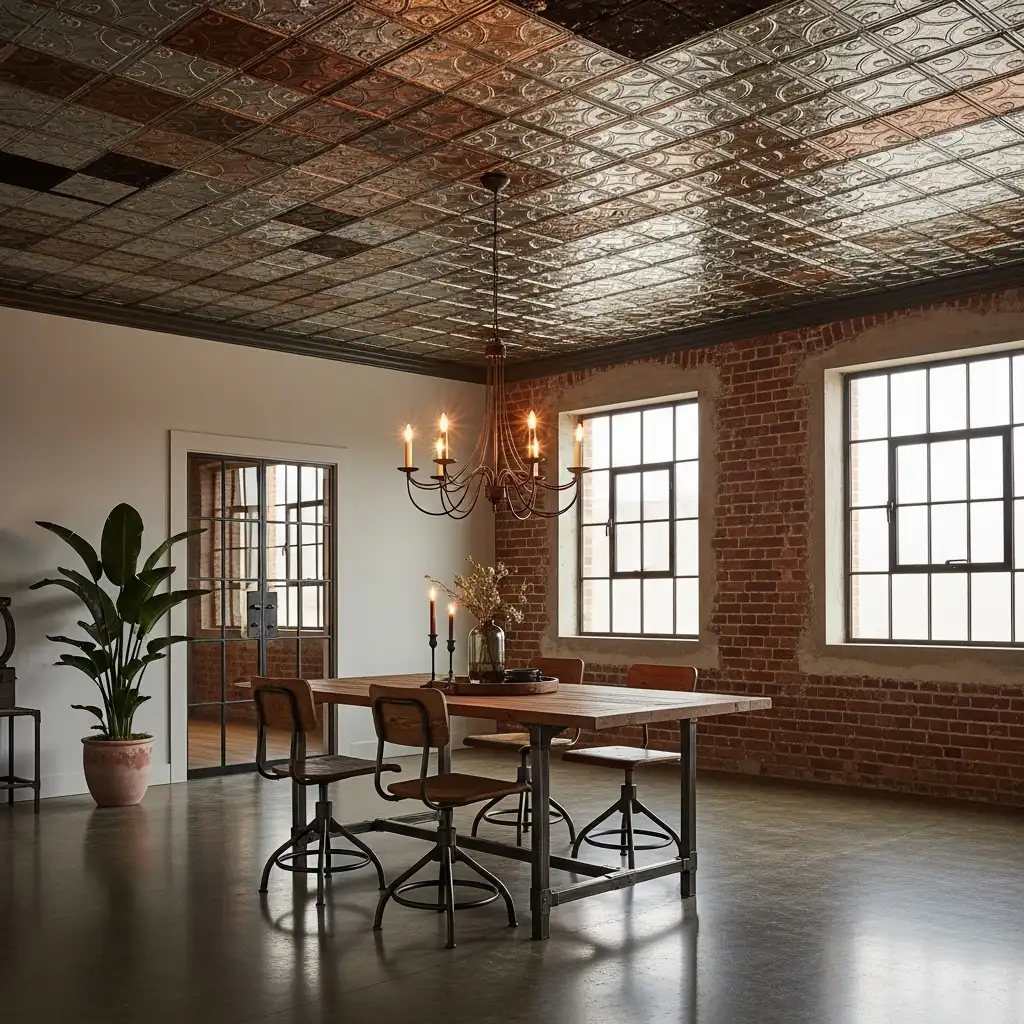
Metal ceilings reflect light uniquely, adding shimmer and dimension. They’re durable, fire-resistant, and relatively easy to install over existing ceilings. Tin tiles particularly suit eclectic, vintage, or industrial design styles where texture and pattern enhance rather than distract.
Beadboard Accent Ceilings
Beadboard’s distinctive narrow planks with vertical grooves create charming cottage character. White-painted beadboard evokes coastal vibes, while natural wood tones bring warmth. Beadboard adds subtle texture that’s interesting without overwhelming—perfect for smaller rooms where bold treatments feel too heavy.
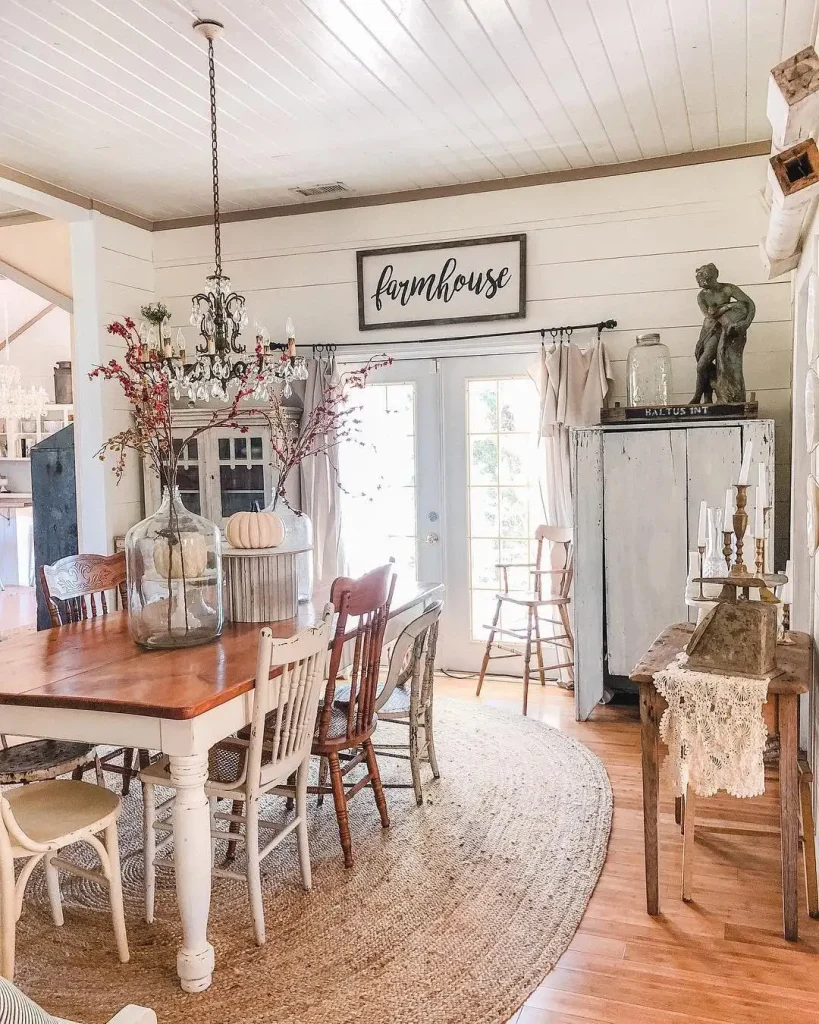
Credits: @betterhomesandgardens
This treatment works wonderfully in bathrooms, laundry rooms, porches, and bedrooms where cottage or farmhouse aesthetics guide design. Learn more in our beadboard ceiling guide.
Pattern and Wallpaper Accent Ceilings
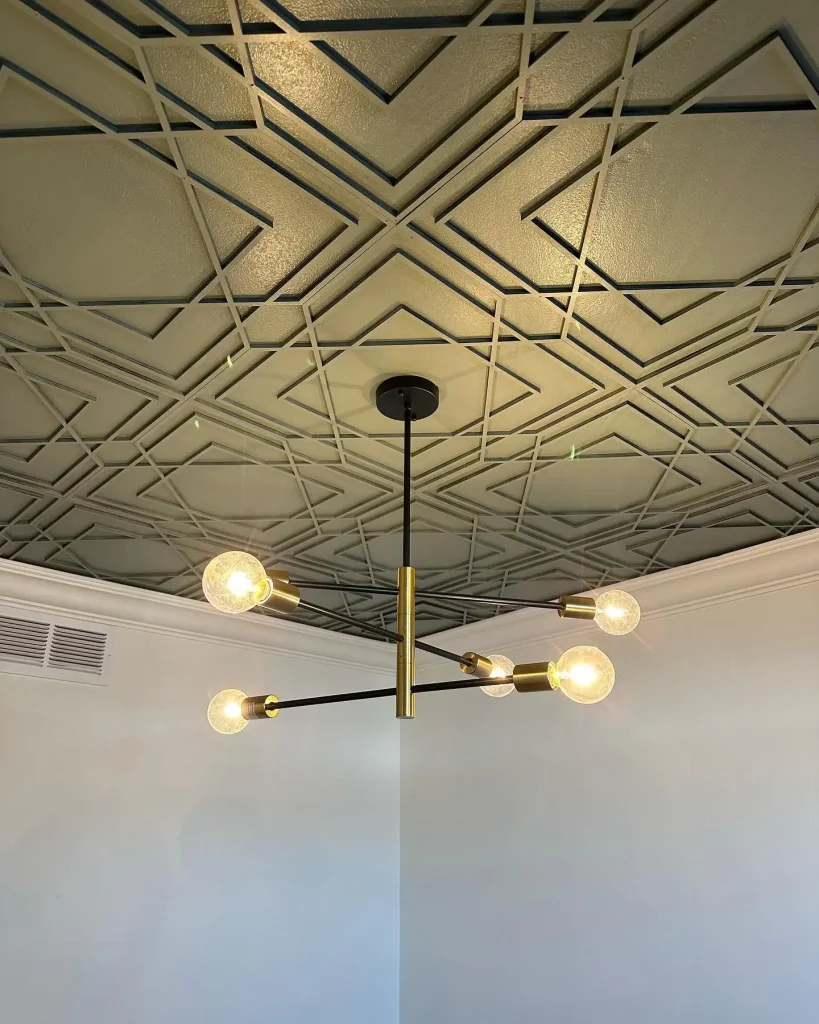
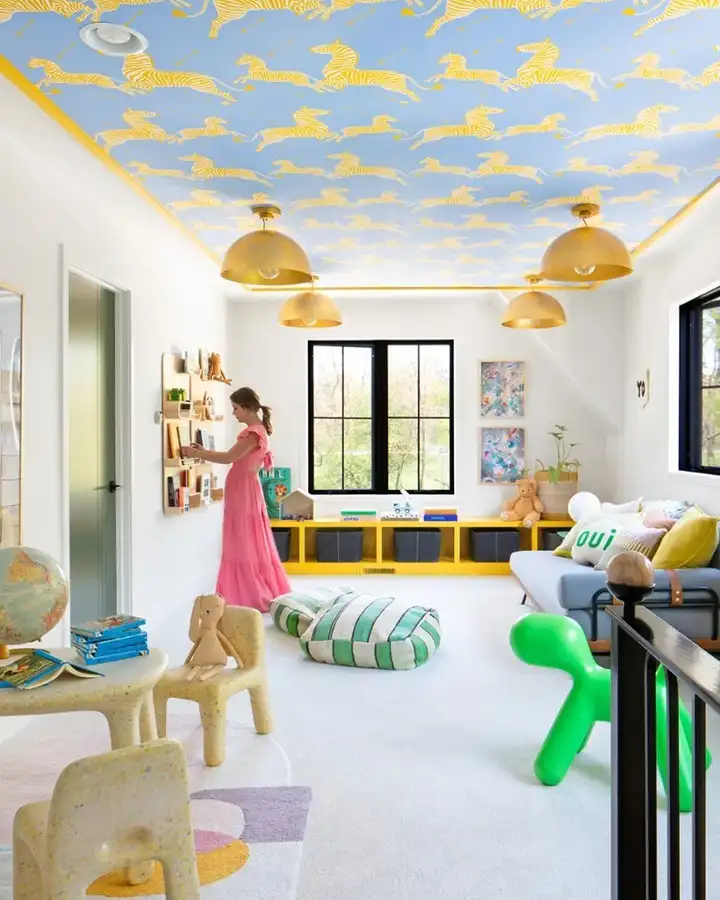
Ceiling wallpaper creates stunning accent surfaces with endless pattern possibilities. Geometric patterns add modern edge and visual interest. Botanical or floral designs bring organic beauty overhead. Metallic patterns catch light beautifully, adding glamour and shimmer. Scenic or mural wallpapers create immersive experiences—imagine clouds, star maps, or forest canopies above.
Design: @klhcustomhomes
Consider scale carefully when choosing wallpaper patterns. Large-scale patterns work well in spacious rooms with high ceilings, while smaller patterns suit cozier spaces. Coordinate ceiling wallpaper with wall colors and furnishings for cohesive design rather than competing elements.
Wallpaper application on ceilings requires patience and often benefits from professional installation, but results deliver high-impact transformation that paint alone can’t achieve.
Accent Ceilings for Specific Rooms
Living Room Accent Ceilings
Living rooms are ideal candidates for accent ceilings since they’re public spaces where bold choices impress guests. Dark accent ceilings create sophisticated, gallery-like atmospheres. Wood treatments add warmth and architectural interest. Coffered or tray ceiling accents emphasize luxury and attention to detail.
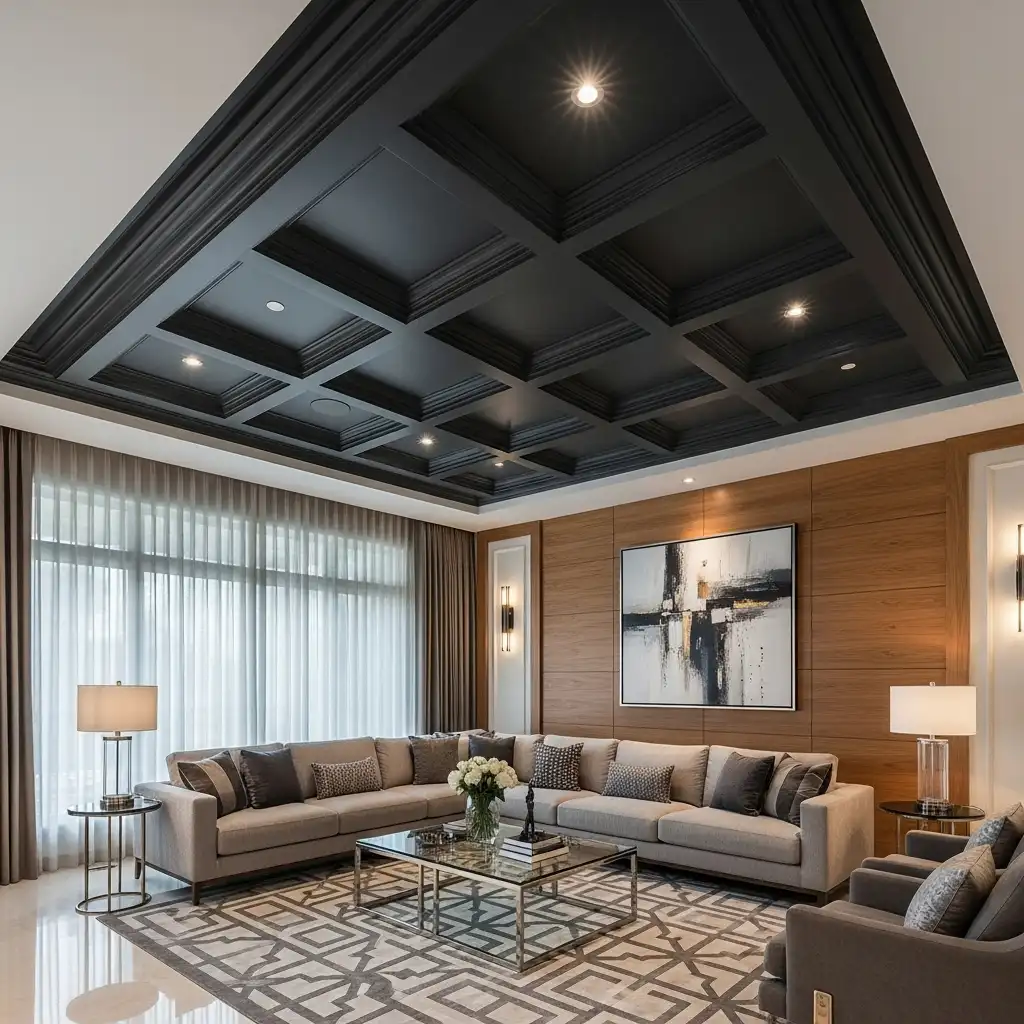
Consider how your accent ceiling interacts with focal points like fireplaces or entertainment centers. The ceiling shouldn’t compete but rather complement these features. Lighting becomes crucial—accent ceilings need proper illumination to showcase their beauty without creating gloom.
Bedroom Accent Ceilings
Bedrooms offer perfect opportunities for accent ceiling experimentation since ceilings are viewed extensively while lying in bed. Soft, calming colors promote relaxation and sleep. Wood treatments bring natural warmth that enhances comfort. Subtle patterns or textures add interest without stimulation that might interfere with sleep.
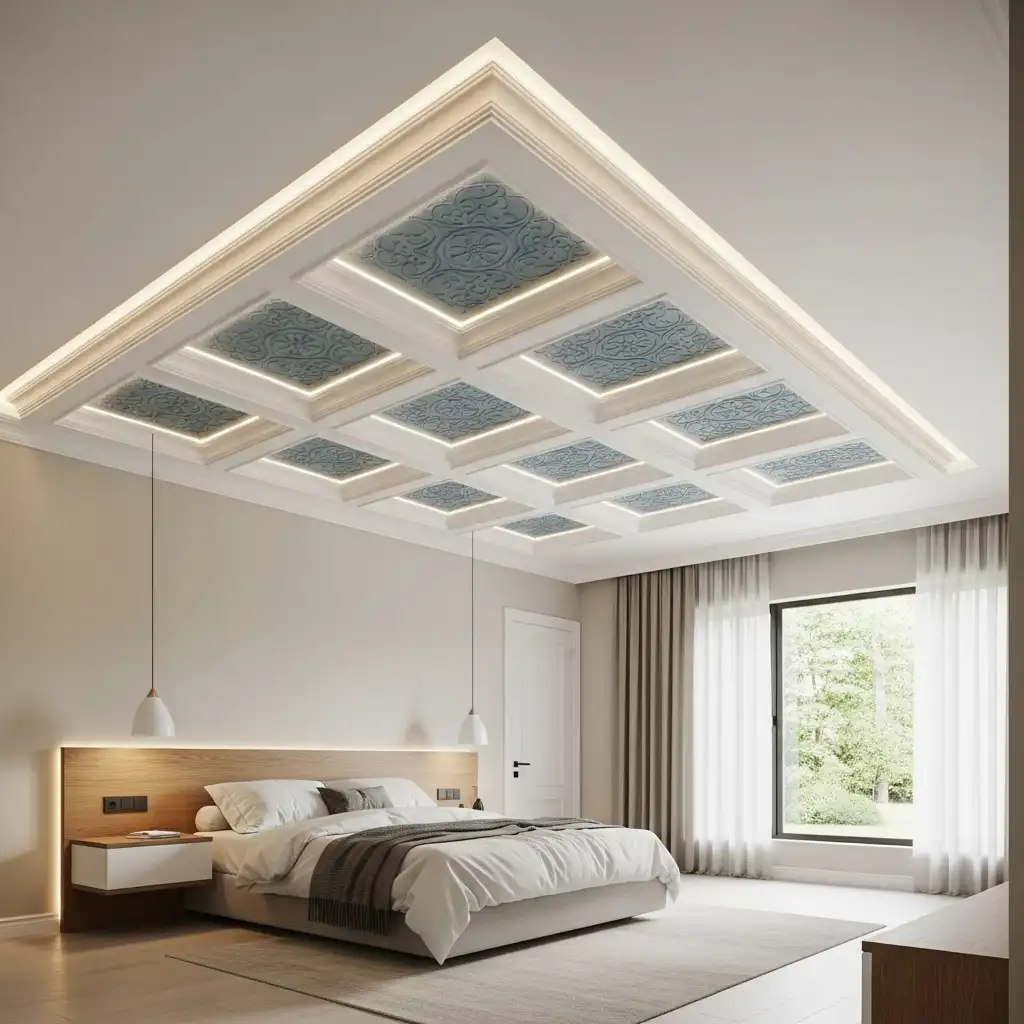
Master bedrooms can handle more dramatic treatments—deep colors, elaborate architectural details, or bold wallpapers. Guest bedrooms benefit from welcoming accent ceilings that make visitors feel special. Children’s rooms embrace playful colors and patterns that spark imagination.
Kitchen and Dining Room Accent Ceilings
Kitchens and dining rooms suit durable, easy-to-clean accent ceiling materials. Metal tiles work beautifully, providing vintage charm while resisting moisture and cleaning easily. Bold paint colors create drama perfect for entertaining spaces. Wood treatments add warmth that balances harder kitchen surfaces like tile and stone.
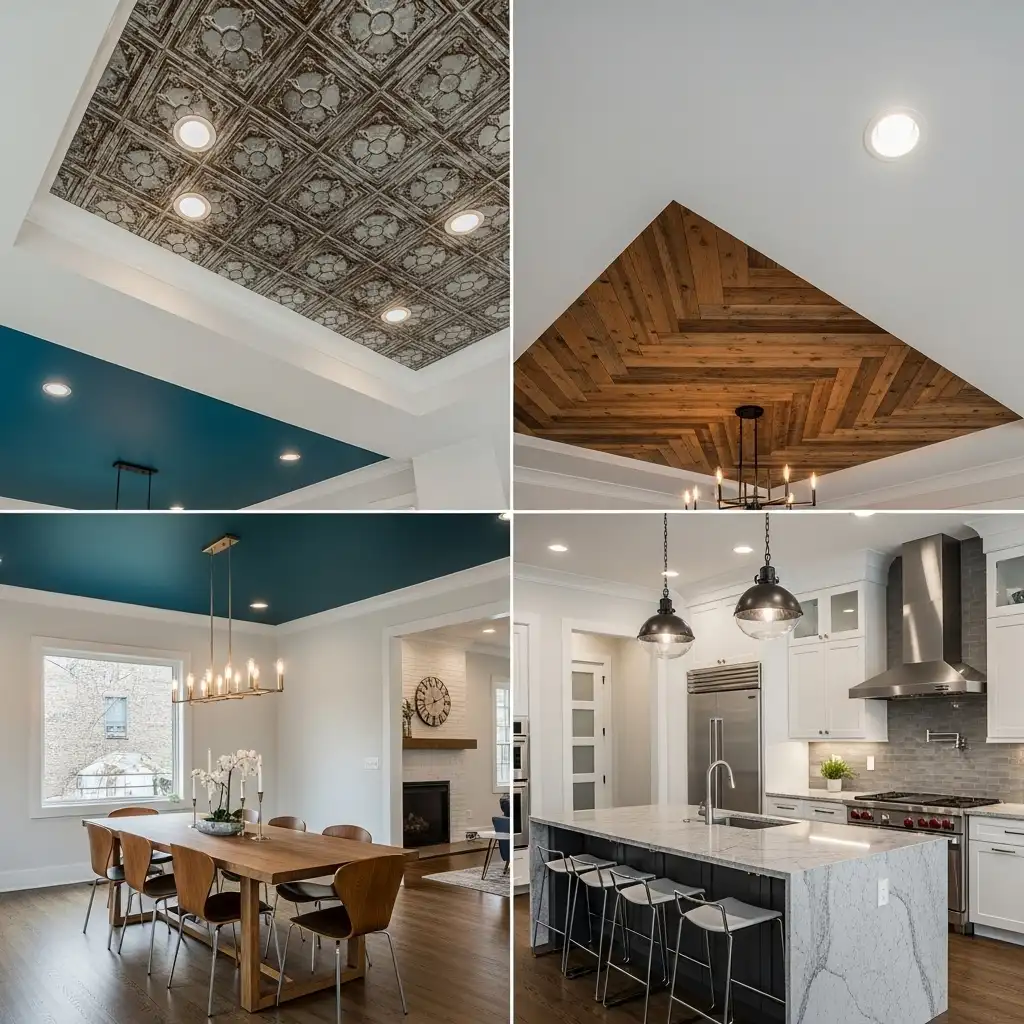
Dining room ceilings particularly benefit from accent treatments since diners naturally gaze upward during meals. Elegant colors, interesting textures, or architectural details enhance dining experiences and conversation.
Bathroom Accent Ceilings
Bathrooms require moisture-resistant accent ceiling materials but offer excellent opportunities for bold choices in typically small spaces. Deep colors create spa-like intimacy. Beadboard adds cottage charm while handling humidity well. Painted ceilings in unexpected colors transform bathrooms from utilitarian to luxurious.
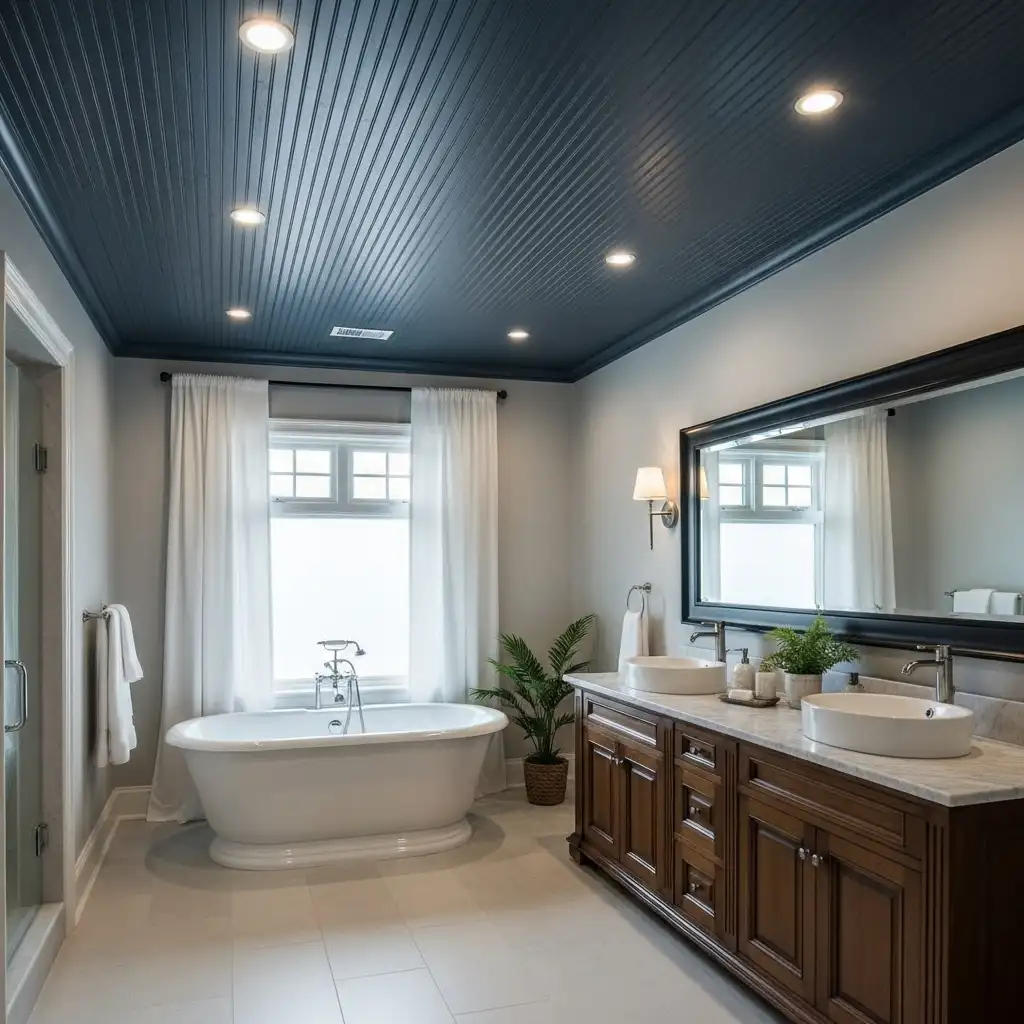
Proper ventilation becomes even more important with accent ceilings to prevent moisture damage. Use appropriate paints or materials rated for high-humidity environments.
Basement Accent Ceilings
Basements present unique challenges and opportunities. Dark accent ceilings on exposed joists and utilities create intentional industrial aesthetics rather than unfinished appearances. This approach maximizes headroom while transforming mechanical eyesores into design features.
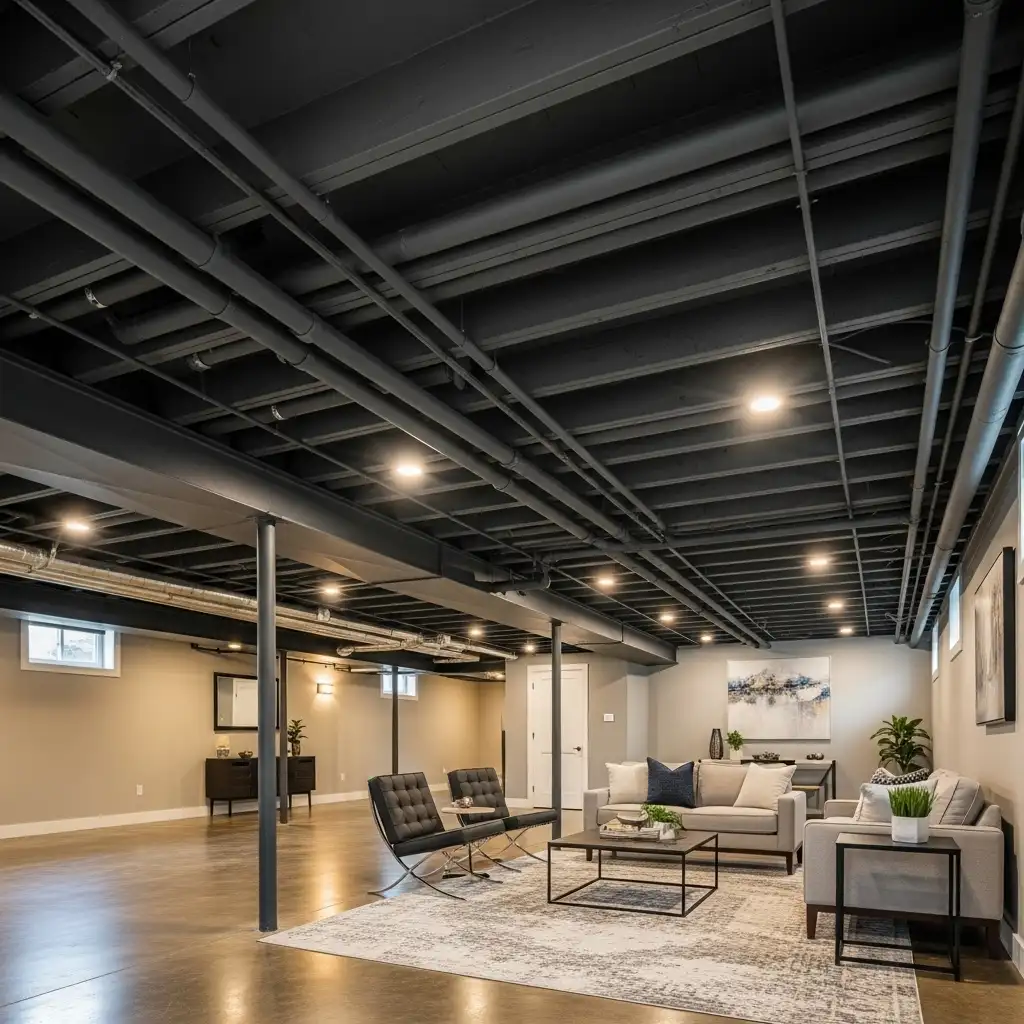
Bold colors make low basement ceilings feel purposeful rather than compromising. Strategic accent ceiling treatments define zones in open basement spaces—perhaps entertainment areas feature dark accent ceilings while workspace areas stay lighter. Detailed strategies appear in our basement painted ceiling guide.
Lighting Accent Ceilings
Lighting integration is crucial for accent ceiling success. Recessed lighting provides even illumination without visual clutter. Position lights strategically to highlight ceiling features without creating harsh shadows. Cove lighting hidden behind crown molding or in architectural details creates ambient glow that showcases ceiling treatments beautifully.
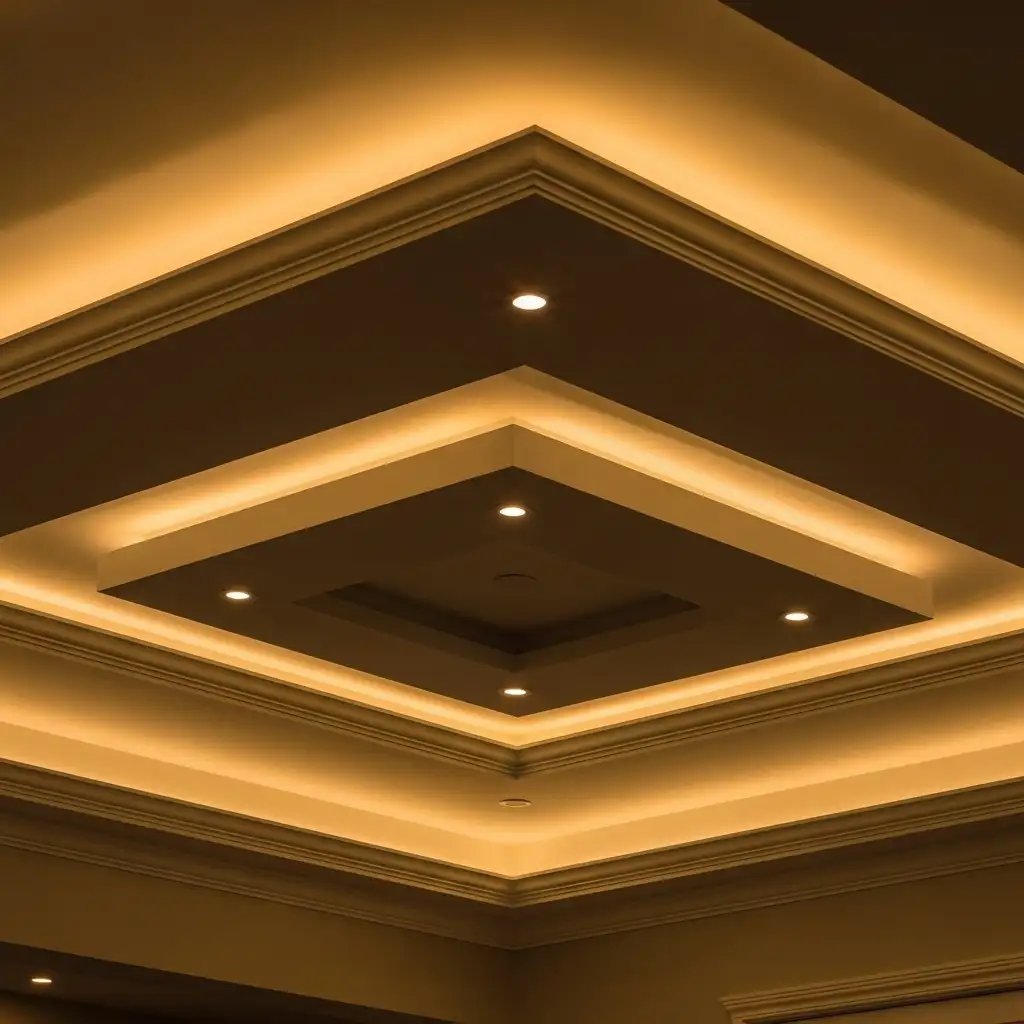
Statement light fixtures become even more dramatic against accent ceilings. Chandeliers, pendant lights, or sculptural fixtures pop against contrasting ceiling colors. Consider fixture finishes that complement ceiling treatments—brass against navy, matte black against white, crystal against metallic wallpaper.
Dimmer switches provide flexibility to adjust lighting for different times and moods. Accent ceilings often look different under various lighting conditions, so controllable lighting ensures they always appear their best.
Accent Ceiling Design Mistakes to Avoid
- Don’t choose accent ceiling colors or materials that clash with existing architectural features. Your accent ceiling should enhance rather than fight against room characteristics.
- Avoid too-dark colors in rooms with minimal natural light unless you’re committed to adequate artificial lighting. Dark ceilings need light to prevent cave-like feelings.
- Don’t forget about ceiling height when planning treatments. Bold, busy, or dark ceilings can make low ceilings feel oppressive. Reserve dramatic treatments for rooms with adequate height or use them strategically in small areas.
- Skip cheap materials that look good initially but deteriorate quickly. Ceilings are difficult to update, so invest in quality that lasts.
- Never ignore moisture or structural issues before adding accent ceiling treatments. Address problems first to prevent damaging your beautiful new ceiling.
Cost Considerations
Accent ceiling costs vary dramatically based on chosen treatment:
- Paint: Most affordable option, typically $100-$300 for DIY projects including quality paint and supplies for average rooms.
- Wallpaper: $200-$800 depending on wallpaper quality and whether you hire professionals for installation.
- Wood planking: $500-$2,000+ for materials and installation depending on wood type and room size.
- Beadboard panels: $300-$1,000 for typical rooms including materials and DIY installation.
- Tin tiles: $500-$1,500 depending on tile quality and installation method.
- Architectural modifications like adding coffers or trays: $1,000-$5,000+ for professional installation.
Budget wisely by starting with paint if unsure about commitment, then upgrading to materials or architectural treatments as confidence grows.
Maintenance and Longevity
- Accent ceilings require minimal maintenance but benefit from regular care. Dust painted ceilings periodically with microfiber cloths or vacuum attachments. Wood ceilings need occasional dusting and very rare refinishing if natural finishes are used. Wallpapered ceilings should be dusted gently and protected from excessive moisture.
- Address any water stains immediately as they indicate leaks requiring attention. Touch up painted accent ceilings as needed with reserved paint kept specifically for this purpose.
- Quality materials and proper installation ensure accent ceilings last decades with minimal upkeep, making them worthwhile investments in your home’s beauty and value.
Conclusion
Accent ceilings represent the next frontier in residential interior design, offering bold opportunities to transform overlooked surfaces into stunning focal points. Whether you choose dramatic dark colors, warm wood materials, elegant architectural treatments, or playful patterns, accent ceilings add personality and sophistication that elevate entire spaces.
The beauty of accent ceilings lies in their versatility—appropriate for any room, any style, and any budget. They provide impact without sacrificing functional space, and they surprise and delight in ways traditional design elements cannot.
If you’re ready to think beyond accent walls and embrace truly three-dimensional design, look up and imagine the possibilities. Your ceiling isn’t just a necessary architectural element—it’s an opportunity waiting to be transformed into something extraordinary that you’ll love looking at every single day.
Q: Will a dark accent ceiling make my room feel smaller?
Surprisingly, no—dark accent ceilings often make rooms feel larger and more spacious rather than smaller. Dark colors recede visually, creating depth perception that makes ceilings appear higher than they actually are. The key is ensuring adequate lighting throughout the room. Multiple light sources at various levels prevent dark ceilings from feeling oppressive. This technique works especially well in rooms with at least 8-foot ceilings. In very low-ceiling spaces under 7.5 feet, lighter accent colors are safer choices.
Q: What’s the easiest accent ceiling to DIY?
Painted accent ceilings are the most accessible DIY project, requiring only quality paint, rollers, painter’s tape, and a weekend. Choose a bold color that contrasts with your walls for immediate impact. Peel-and-stick ceiling tiles or wallpaper designed for ceilings offer another DIY-friendly option that adds pattern and texture without permanent commitment. Beadboard panels that attach directly to existing ceilings also work well for confident DIYers. Save complex treatments like coffered ceilings or extensive wood plank installations for professional help unless you have advanced carpentry skills.
Q: Should my accent ceiling match my accent wall?
Not necessarily—and often it’s better if they don’t exactly match. If you have both an accent wall and accent ceiling, they should coordinate rather than compete. Consider using colors from the same family but in different shades, or use complementary colors that work together. Alternatively, make one element bold (like a dark accent ceiling) while keeping the accent wall more subtle, or vice versa. The goal is creating a cohesive, layered design rather than overwhelming the space with too many competing focal points.