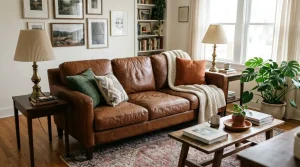
For a solid decade, gray ran the furniture world. Every showroom floor, every rental listing, every neutral living room board on Pinterest featured gray.
But walk into any design-forward home right now and you will notice something warmer creeping back in. The brown couch is having a real moment, and honestly, it never should have left.
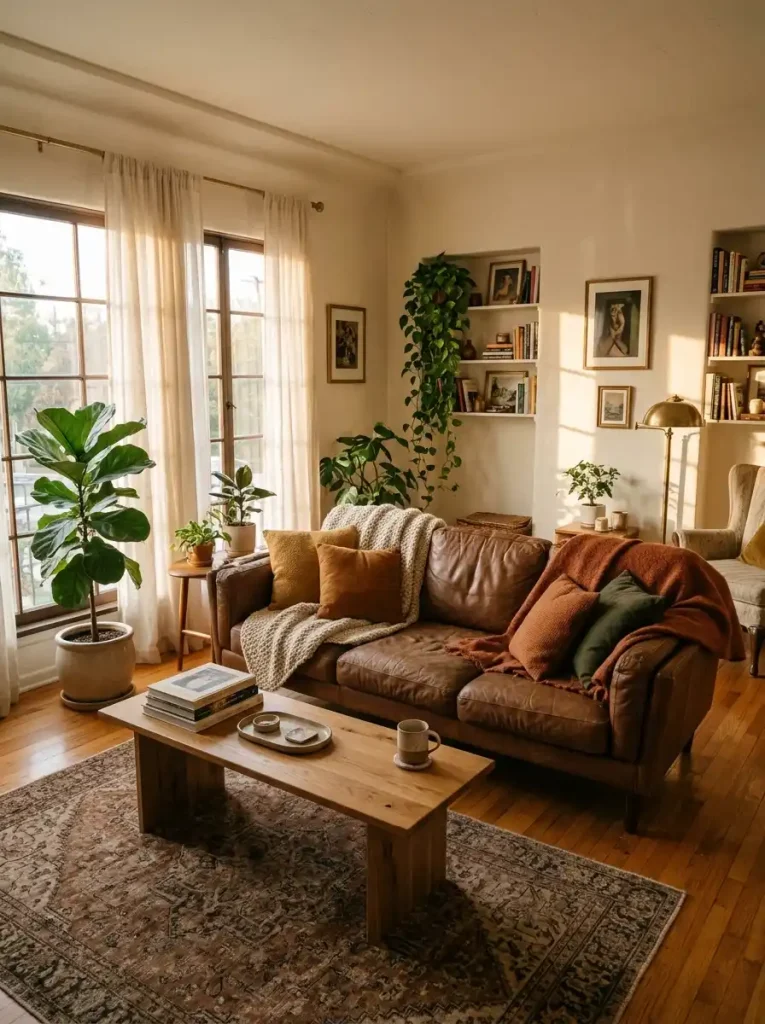
There is a reason this shift is happening. Brown does not just sit in a room. It grounds it. It reads as lived-in rather than staged. It looks expensive rather than trendy.
It has a strange ability to look equally at home in a 1970s wood-paneled den or a stark, minimalist loft. Few furniture colors can pull off that range.
Why Designers Keep Coming Back to Brown
If you have spent any time scrolling interior design accounts lately, you have probably noticed brown sofas showing up far more often than they used to. Part of that is nostalgia. Warm, earthy palettes are back after years of cool-toned minimalism.
But part of it is purely practical. Brown is one of the only sofa colors that genuinely hides life. Pet hair, spilled coffee, a toddler’s crayon incident. A chocolate or cognac tone absorbs these mishaps in a way that pale gray or white linen simply cannot.
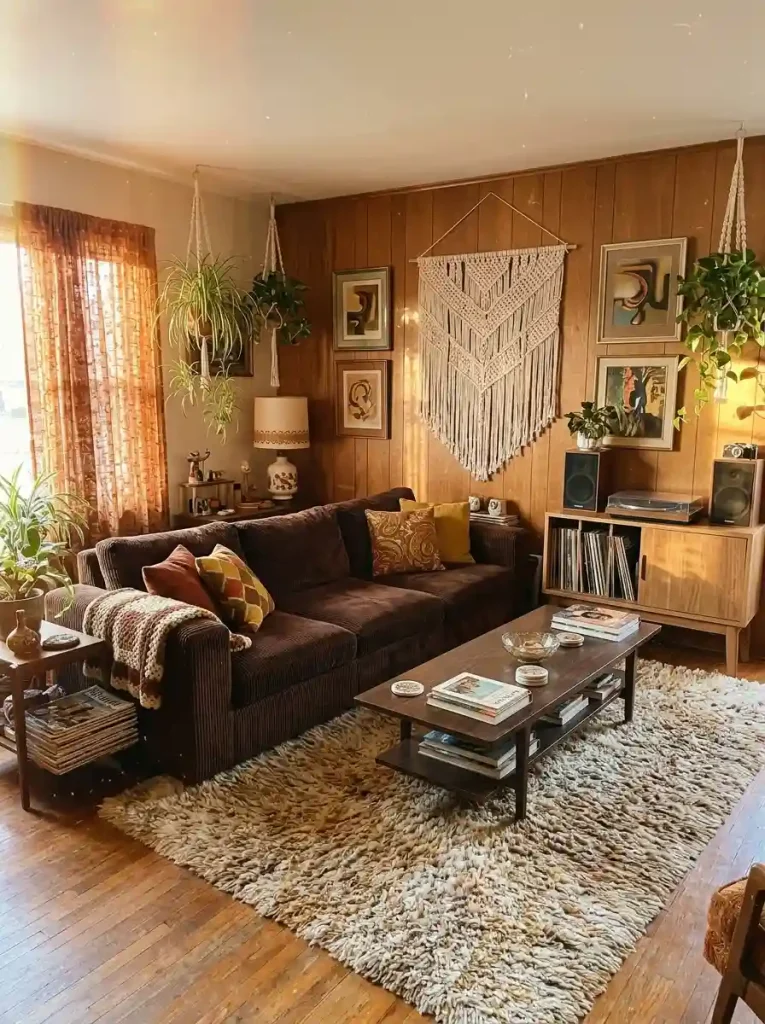
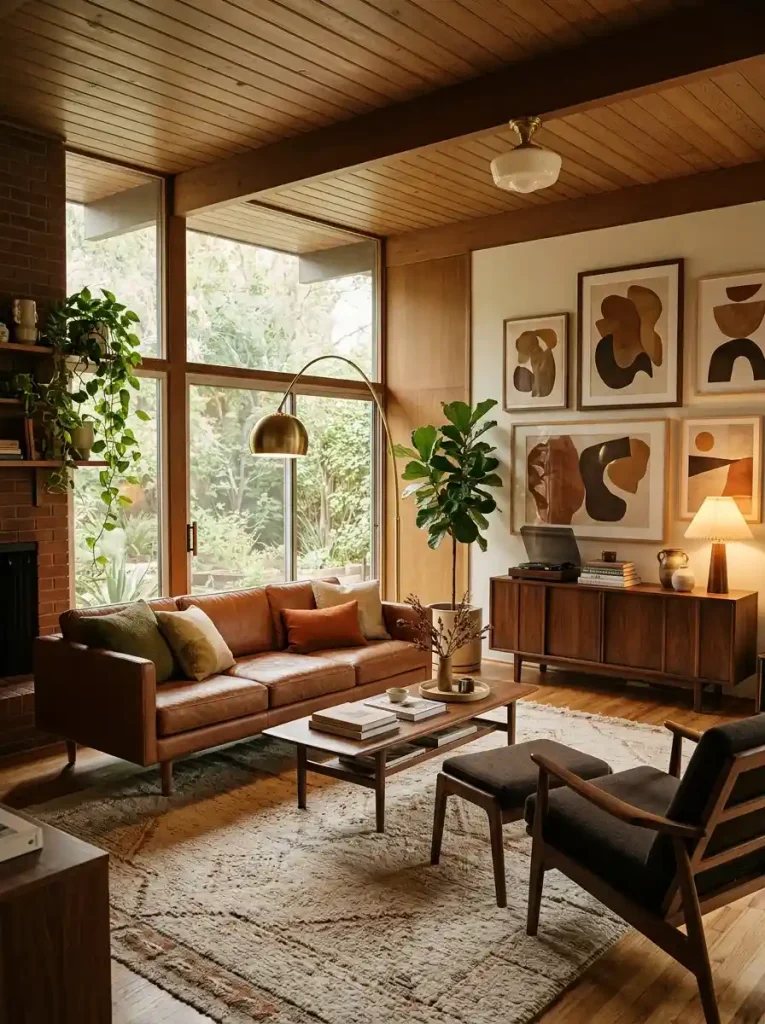
There is also the matter of versatility. A brown couch living room can lean mid-century, bohemian, traditional, industrial, or Scandinavian-minimal depending on what you put around it. Very few furniture pieces can say that.
Leather vs. Fabric: Two Very Different Moods
Choosing between leather and fabric changes the entire personality of your living room. Both are excellent choices, but they serve different design goals.
The Case for a Brown Leather Couch
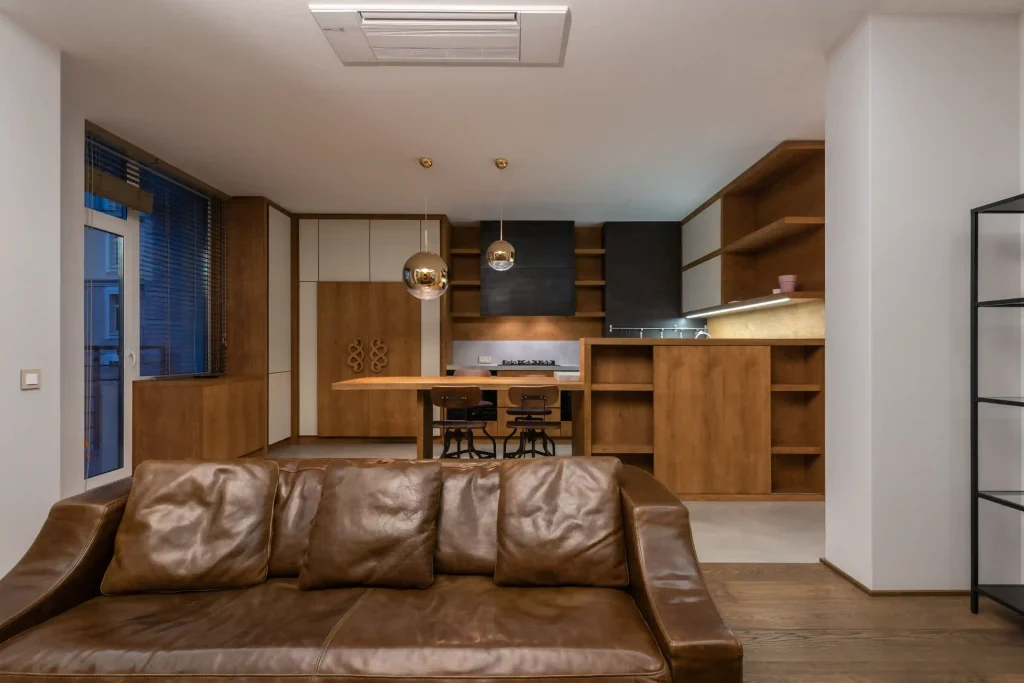
A brown leather couch does something fabric simply cannot. It develops character over time. The patina that builds up on a quality leather piece is something manufacturers spend a fortune trying to fake.
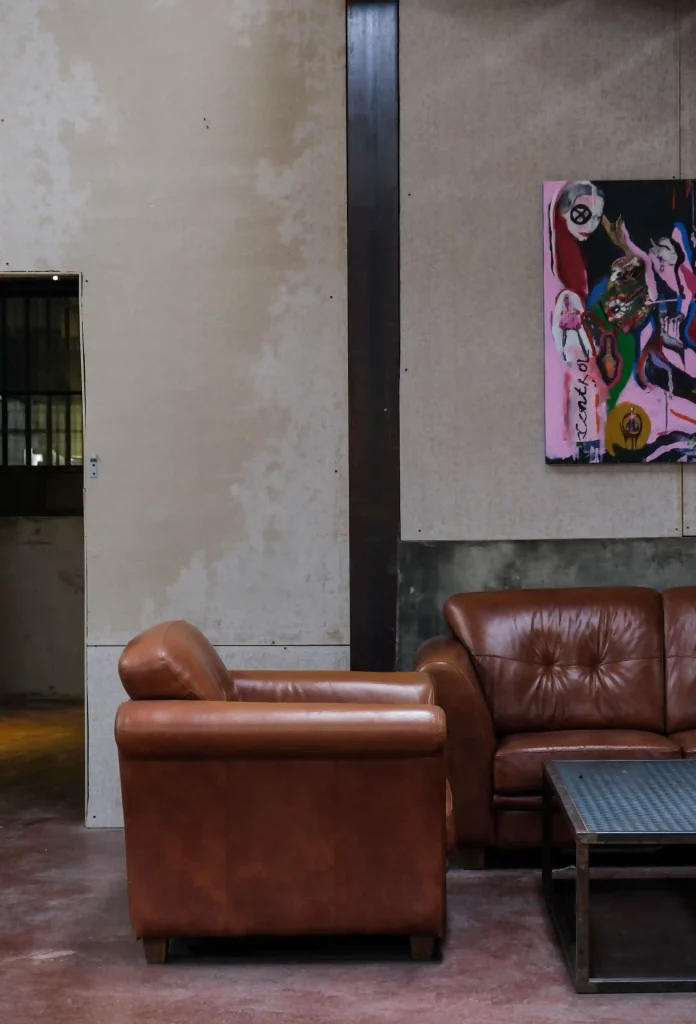
The patina builds up with soft creases and slight color variations. One look at a weathered cognac leather sofa against a rough concrete-and-plaster wall proves this point.
Paired with an equally worn leather armchair under a punchy pink and black painting, it is unapologetically industrial.
It works precisely because the leather looks like it has earned its wrinkles. These pieces are not trying to look perfect.
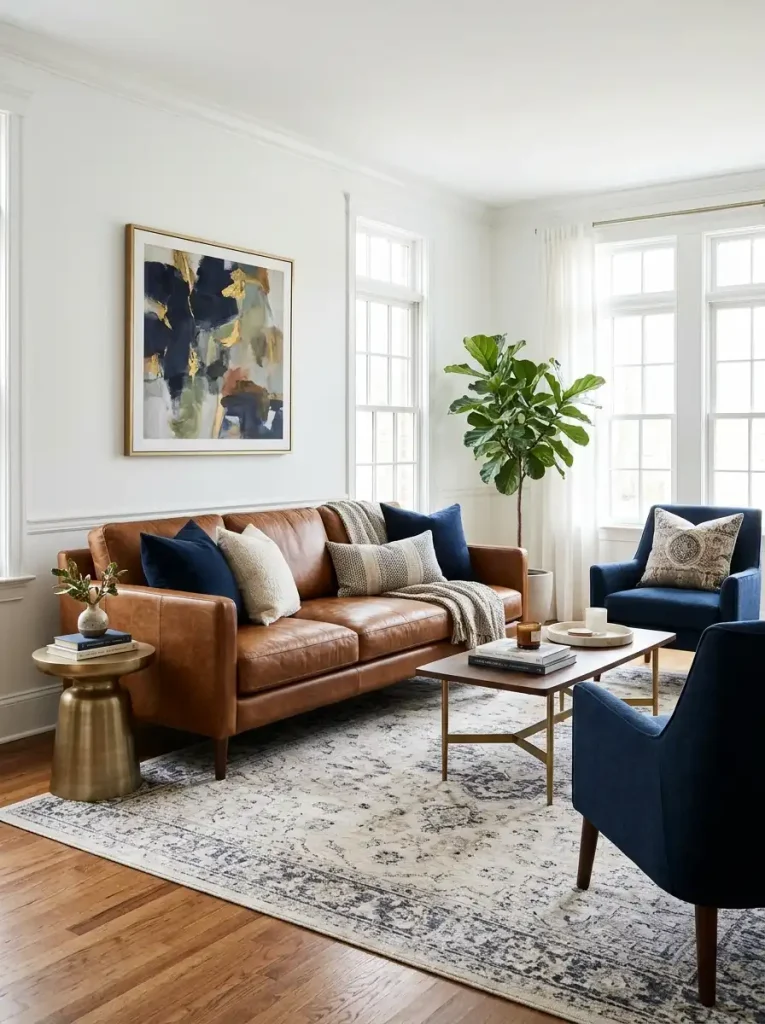
Compare that to a crisp camel leather sofa in a bright, traditional living room. Add navy wingback chairs, a gold side table, and an abstract framed painting. Same leather-brown family, completely different energy. It feels polished, tailored, and almost preppy.
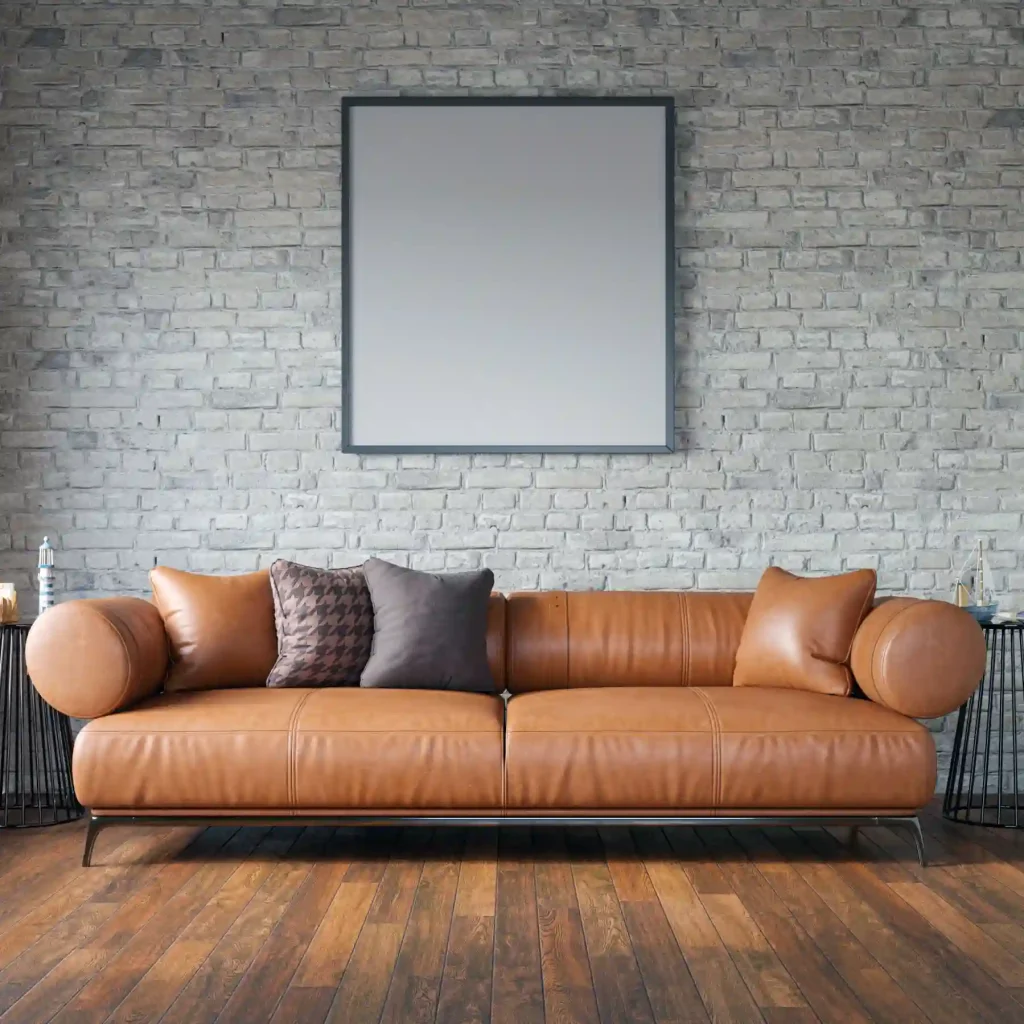
There is also a striking example of a toffee-colored leather sofa with rolled bolster arms. It is set dead center against a whitewashed brick wall with a single oversized mirror above it.
No clutter, no styling tricks. Just the sofa’s sculptural shape doing all the work. A well-shaped brown leather couch does not need much help.
The Case for Fabric
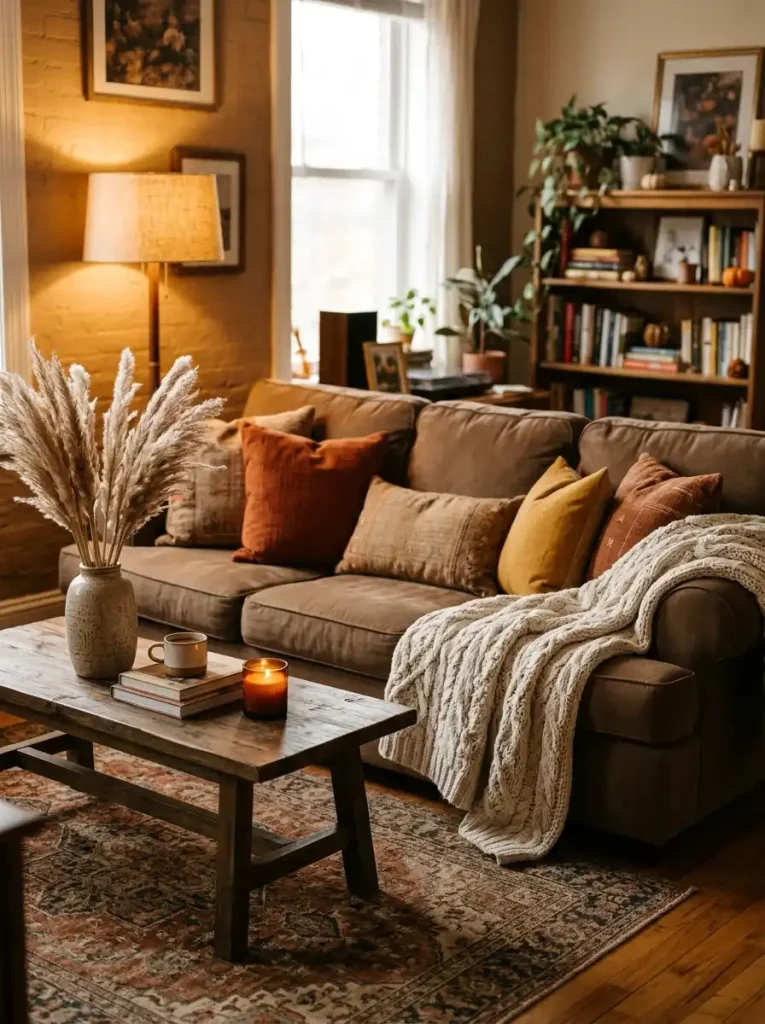
Fabric brown sofas bring something leather cannot. They offer softness, both visually and physically. A rust-toned corduroy sectional piled with cream boucle and linen pillows looks genuinely inviting. The ribbed texture of corduroy catches light differently than smooth fabric. This gives the whole piece more depth.
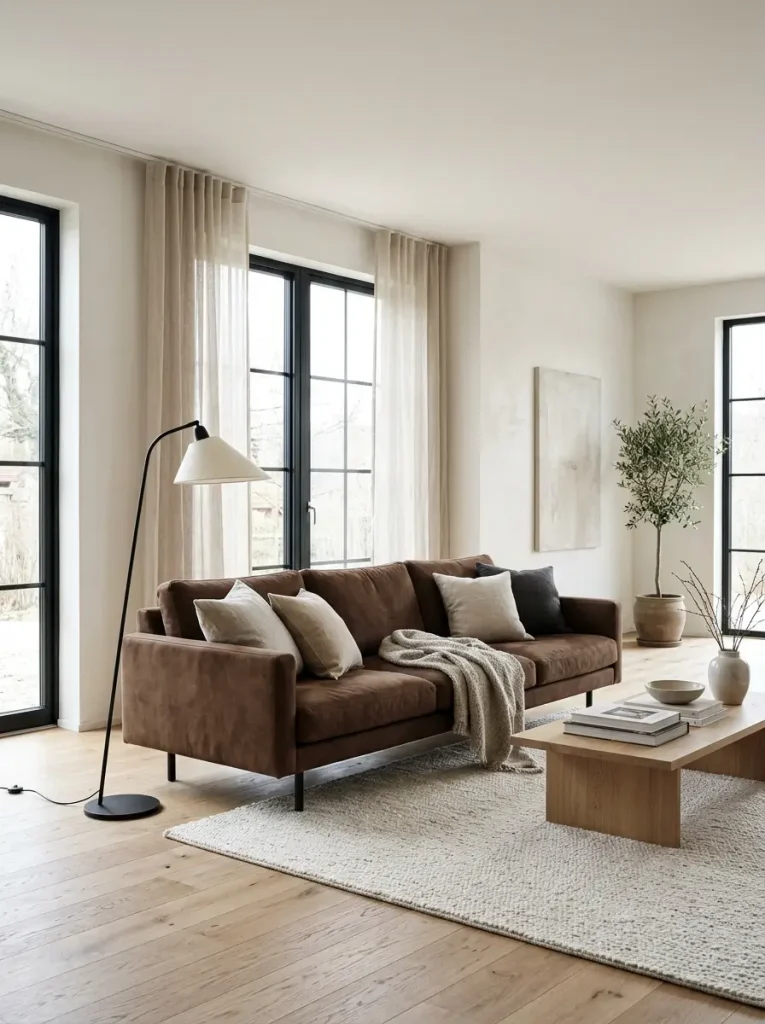
Velvet is its own category entirely. A mushroom-brown velvet sofa in a bright, airy room with black-framed windows shows how velvet can go quiet and sophisticated. The nap of the fabric softens the light instead of throwing it around.
The Brown Sectional Couch: Built for Real Life
If you actually live with a lot of people, a brown sectional couch tends to win out. This is especially true if you have kids, roommates, or a dog who thinks the furniture is communal property.
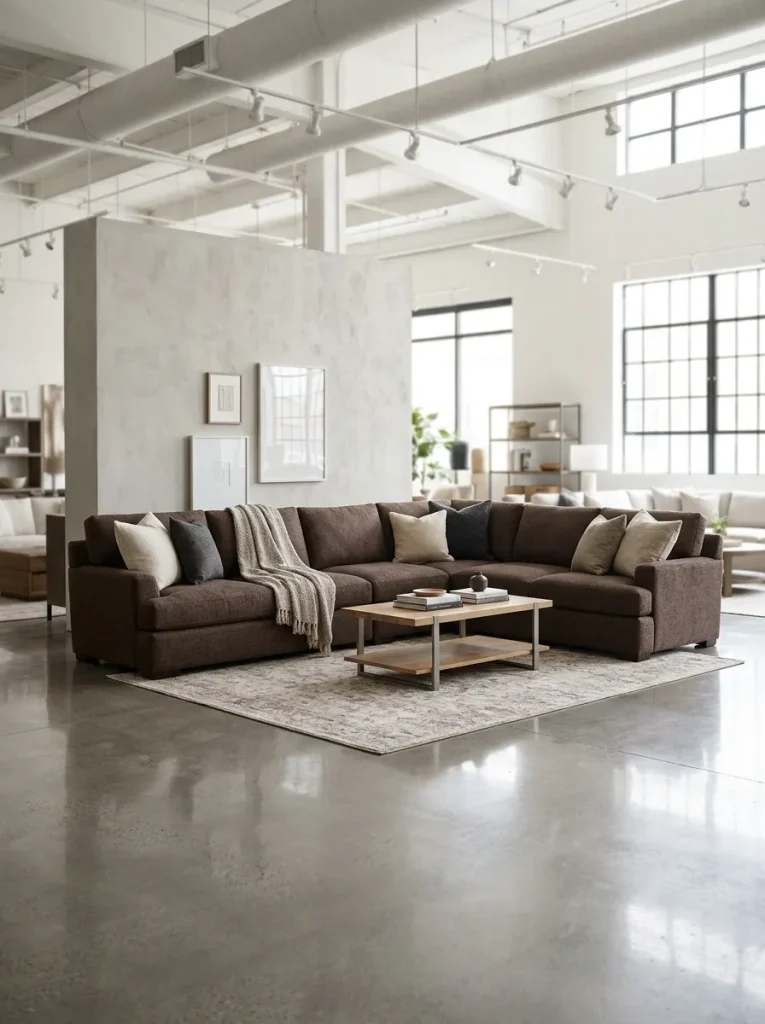
One great example is a deep espresso-brown sectional in an open industrial loft with concrete floors and factory windows. In a space with that much hard, cold material, the sectional does serious thermal work.
It is the one warm anchor in a room full of steel and plaster. It makes the whole space feel considerably less sterile.
Sectionals in this color family are also forgiving about mismatched decor eras. This matters if you are furnishing a home gradually. A dark brown sectional does not care whether your coffee table is mid-century walnut or a flea-market find.
Styling: What Actually Makes a Brown Couch Look Intentional
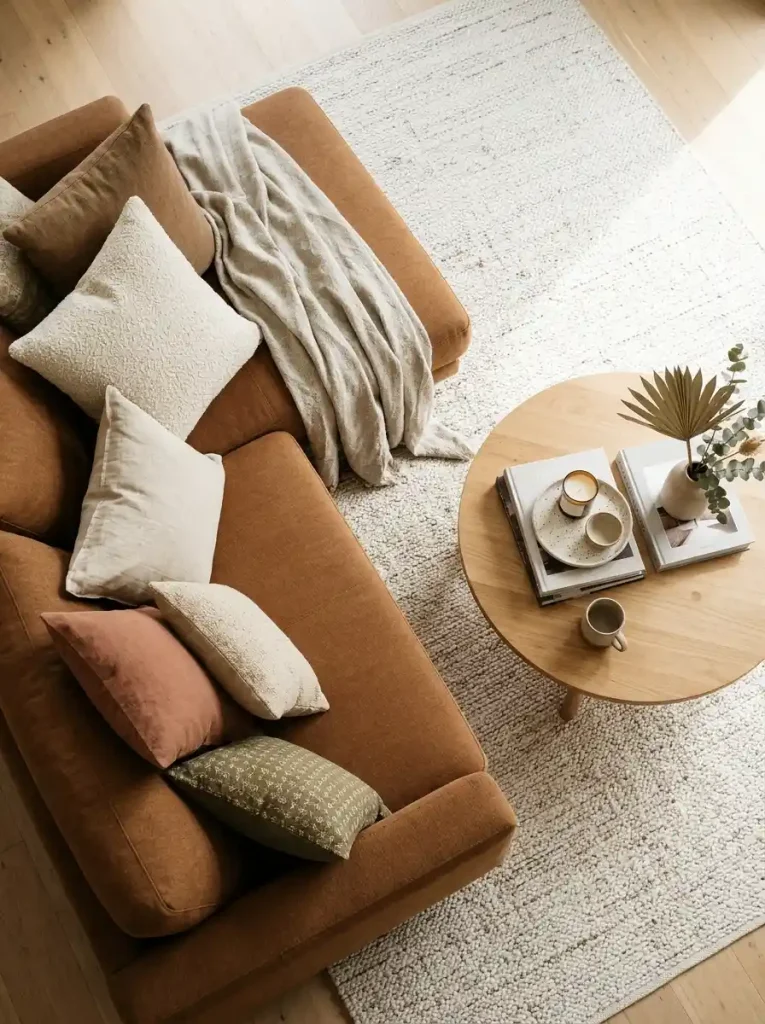
A plain brown sofa with no styling can look a little flat. This is true of almost any solid-colored furniture. The rooms that make the strongest case for brown as a design choice are the ones where the styling is doing real work.
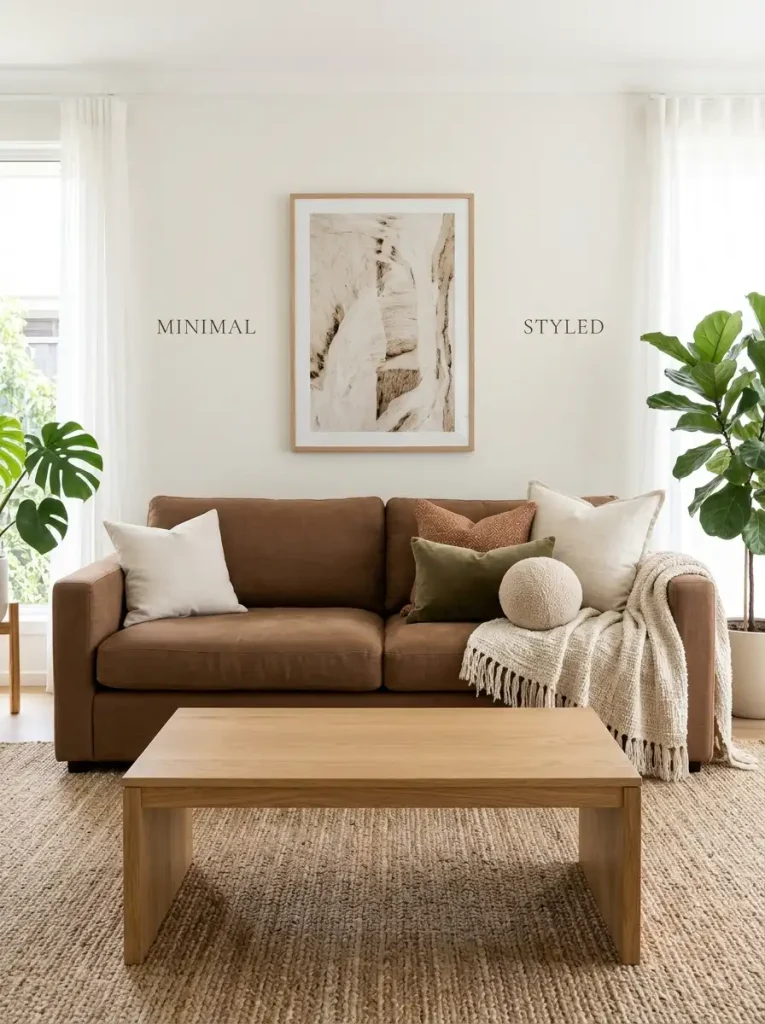
Take a side-by-side minimal versus styled comparison. It is almost a mini design lesson. The exact same cognac sofa and oak coffee table are shown, but one side is bare. The other side is dressed with layered pillows, a chunky throw, and a boucle ball.
The couch itself barely changes the room’s feeling. The styling does almost all of that work.
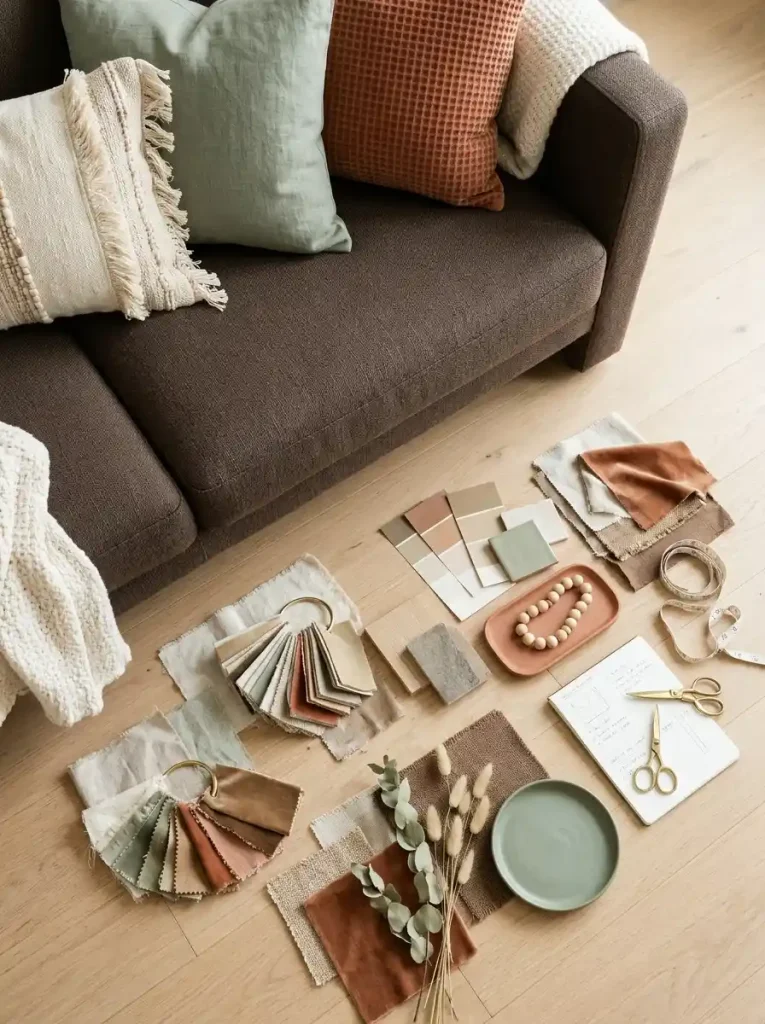
A flat-lay of fabric swatches and paint chips is a nice visual reminder. Most well-styled brown rooms start on a literal moodboard before a single pillow gets ordered.
Sage greens, burnt oranges, warm taupes, and a touch of black consistently show up. These are the accent colors that make a brown sofa look chosen rather than default.
Do not overwhelm a brown couch with too many bright, competing colors. Stick to two or three earthy tones like mustard, olive, or rust. Let the brown act as the neutral canvas for the room.
The color story should lean into autumnal tones rather than fighting the base color. Pick two to three accent colors that sit near brown on the color wheel. Think rust, olive, mustard, or cream. Avoid colors that compete with it.
Small Spaces Aren’t a Problem
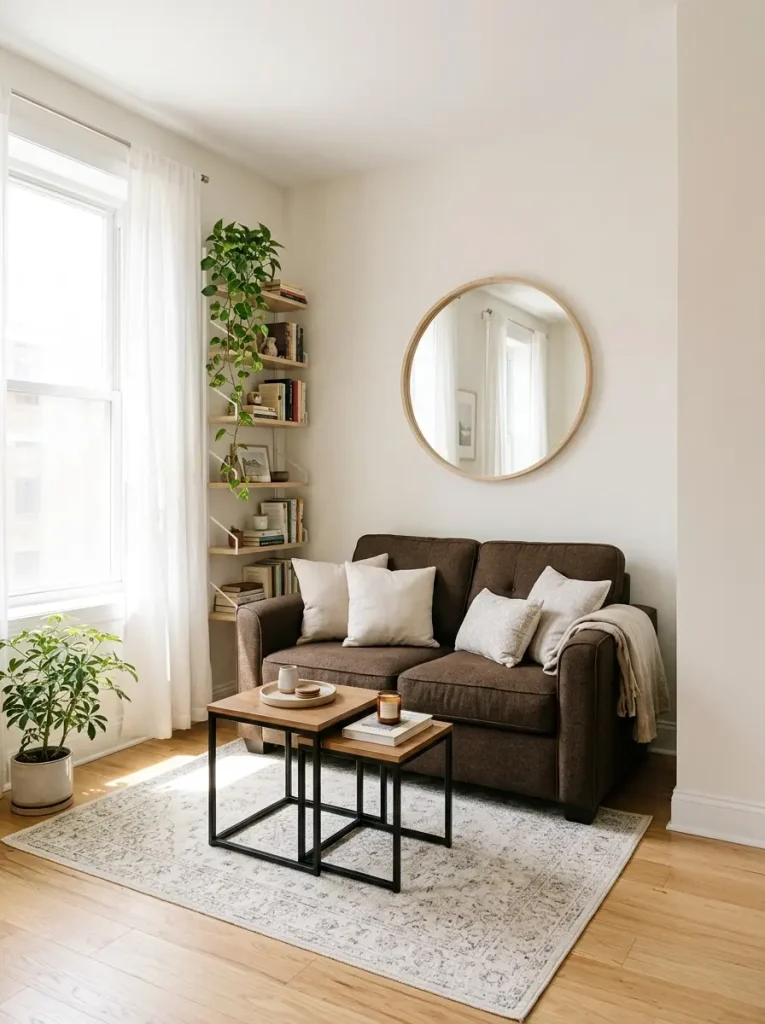
There is a persistent myth that dark furniture shrinks a room. A photo of a compact dark-brown loveseat tucked into a sunlit apartment corner pushes back on that hard.
Next to a tall corner bookshelf dripping with plants and a round mirror above it, it looks perfect. The trick is contrast. White walls, a pale rug, and plenty of natural light let the dark sofa read as a deliberate anchor point.
If anything, a small brown sofa in a bright room looks more intentional than a beige one would. It does not disappear into the walls.
Living With It: The Parts Nobody Photographs for Pinterest
The most honest images in any brown couch inspiration search are the lived-in ones.
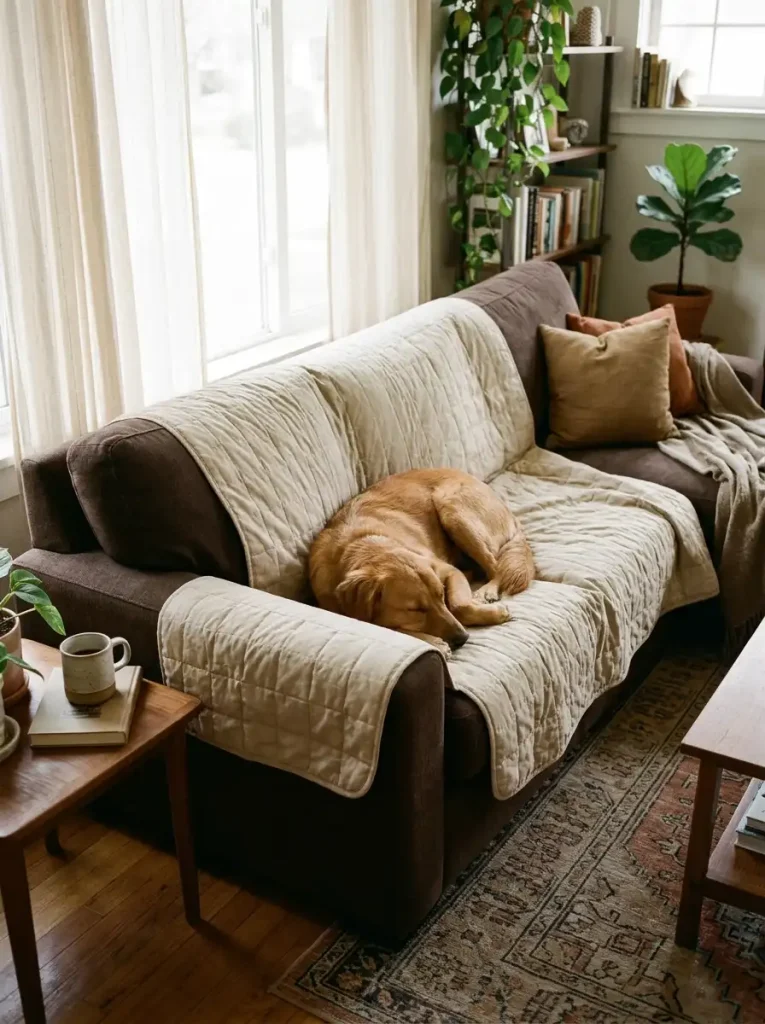
Think of a sleepy golden retriever curled up on a quilted throw cover over a brown sofa.
Or a laptop desk balanced across the arms of a charcoal-brown couch. Steam rises off a mug, and a half-finished cover letter sits on the screen.

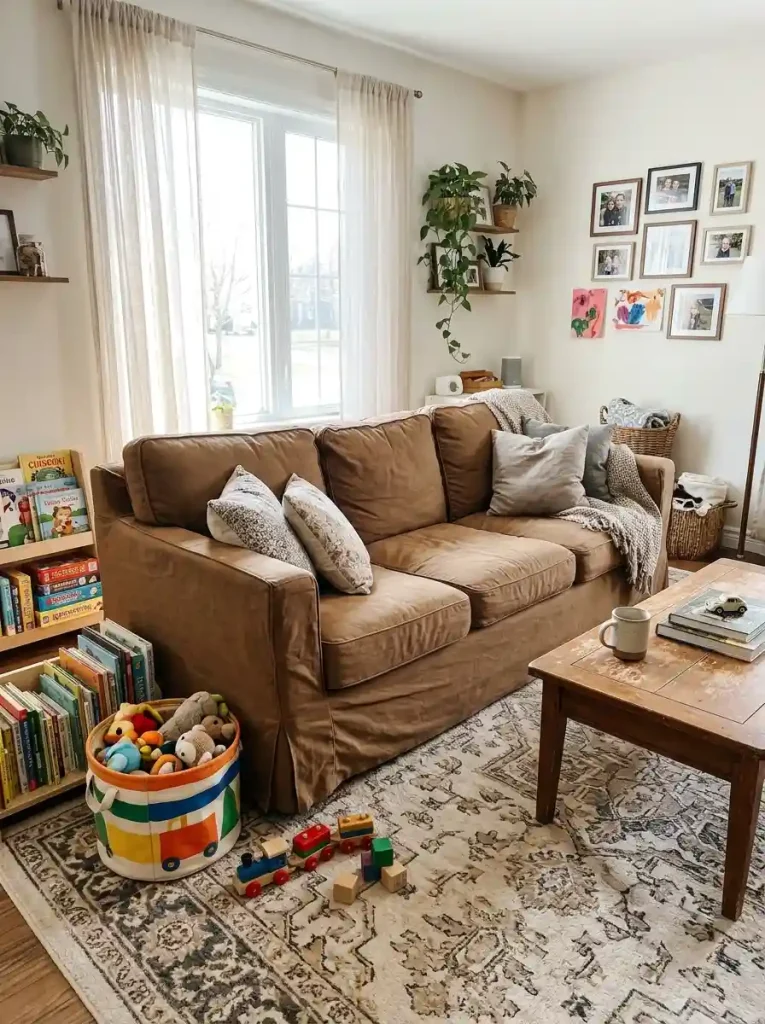
A kid’s playroom with a worn taupe slipcovered sofa surrounded by board books shows real life. A single mug and a dog-eared paperback left on a cognac sofa arm, mid-read, tell the same story.
These are arguably more useful than any showroom shot. They answer the real question people have before buying. Does it actually hold up to a normal household?
Judging by how good a sofa protector or slipcover can look even over a well-worn piece, the answer is clearly yes. There is no shame in protecting the investment.
If you have pets or small children, a washable slipcover or a high-quality quilted throw is your best friend. You get the look of a brown couch without the stress of daily accidents.
Chocolate Brown Sofas and the Case for Going Dark
There is a specific subcategory worth calling out. Chocolate brown sofas represent the near-black end of the brown spectrum.

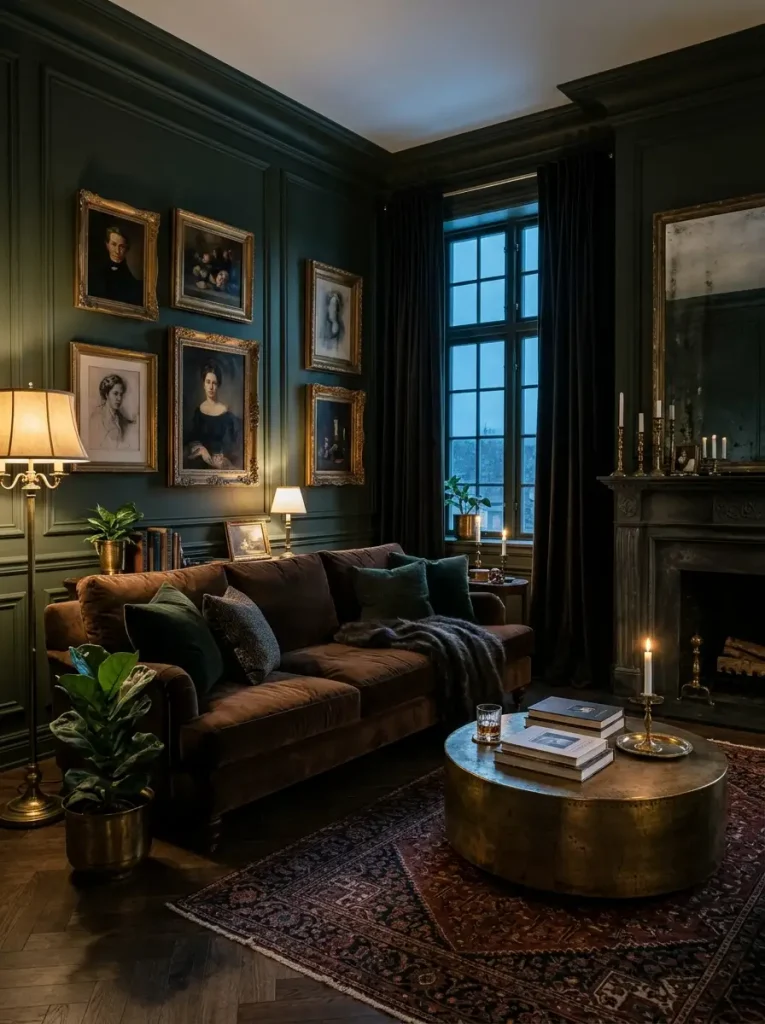
A moody, dimly lit study with deep forest-green walls and a velvet chocolate-brown sofa shows why this shade has its own fan base.
Against dark, saturated wall colors, a chocolate sofa does not fight for attention. It blends into the overall richness of the room. This lets candlelight, brass accents, and artwork carry the drama instead.
That same depth of color also shows up beautifully in cozy, cabin-style settings. Picture a plush brown sofa buried in faux fur and cable-knit pillows.
Fairy lights are strung around a snow-framed window, and a stone fireplace crackles nearby. Chocolate brown in this context is not about sophistication so much as warmth.

A Few Pairing Notes Worth Stealing
- Navy and brass: Against a caramel leather sofa, this reads polished and a little bit traditional. It is a safe but genuinely elegant combination.
- Seasonal pillows: Olive, rust, and cream pillows turn a plain brown sofa into something that feels seasonal without going full fall decor.
- Warm wood tones: A mid-century walnut credenza or an oak coffee table amplifies brown rather than competing with it. This is why so many mid-century modern living rooms lean on this pairing.
- Black metal accents: A floor lamp, a window frame, or a coffee table base keeps a brown sofa from feeling too soft. It adds a bit of visual weight.
- Plants: Green plants show up in almost every well-styled brown couch photo for a reason. The green cuts through all that warm, earthy tone and keeps a room from feeling one-note.
The Bottom Line
A brown couch is not a trend chasing its five minutes of relevance. It is closer to a reset. After years of furniture built to photograph well in a sterile, neutral box, people are gravitating back toward pieces that look like they belong to an actual home.
These pieces are a little textured, a little warm, and forgiving of daily life. Whether that means a tailored brown leather couch, a slouchy fabric sectional, or a deep chocolate velvet piece anchoring a moody study, the common thread is the same.
Brown works because it does not try too hard. In a design world that has been trying very hard for a very long time, that is exactly the appeal.