Most people buy a room divider and then hate it within a month. The screen looks flimsy. The bookshelf blocks all the light. The curtain feels like a college dorm.
The problem is rarely the divider itself. The problem is that it was chosen for how it looks in a photo, not for how it works in a real room.
This guide is not a list of ideas, but it breaks down the four jobs a room divider can do, the materials that work for each one, and the mistakes that make a divider feel like a mistake. By the end, you will know exactly which type of divider fits your space.
Do you need to block the view, block the sound, or just define a zone?
The answer changes the material you should buy.
1. The Mistake Almost Everyone Makes
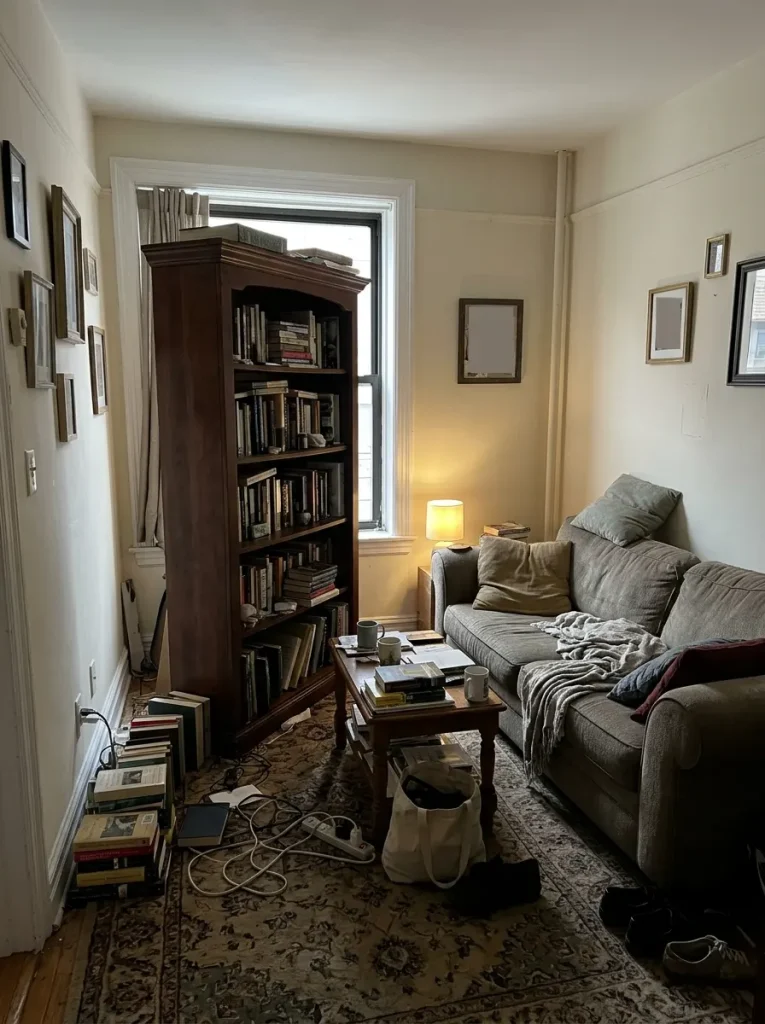
The most common mistake with a room divider is buying a tall, solid piece of furniture for a small room. It looks dramatic in the store, but once it is in a small space, it cuts off the light, makes the room feel narrower, and creates a dark corner you will never use.
A solid divider works in a large open plan loft where you have space to lose. In a small studio or a tight apartment, a solid divider is almost always the wrong choice.
Before you buy, walk into the space where the divider will go and hold your hand up at the height of the divider. If your hand blocks your view of the window or the main light source, the divider will do the same thing.
A solid, floor to ceiling bookshelf in a small room.
A dark, heavy screen in front of the only window.
An open shelving unit you can see through.
A low divider that defines the zone without blocking the light.
2. If You Need to Block the View
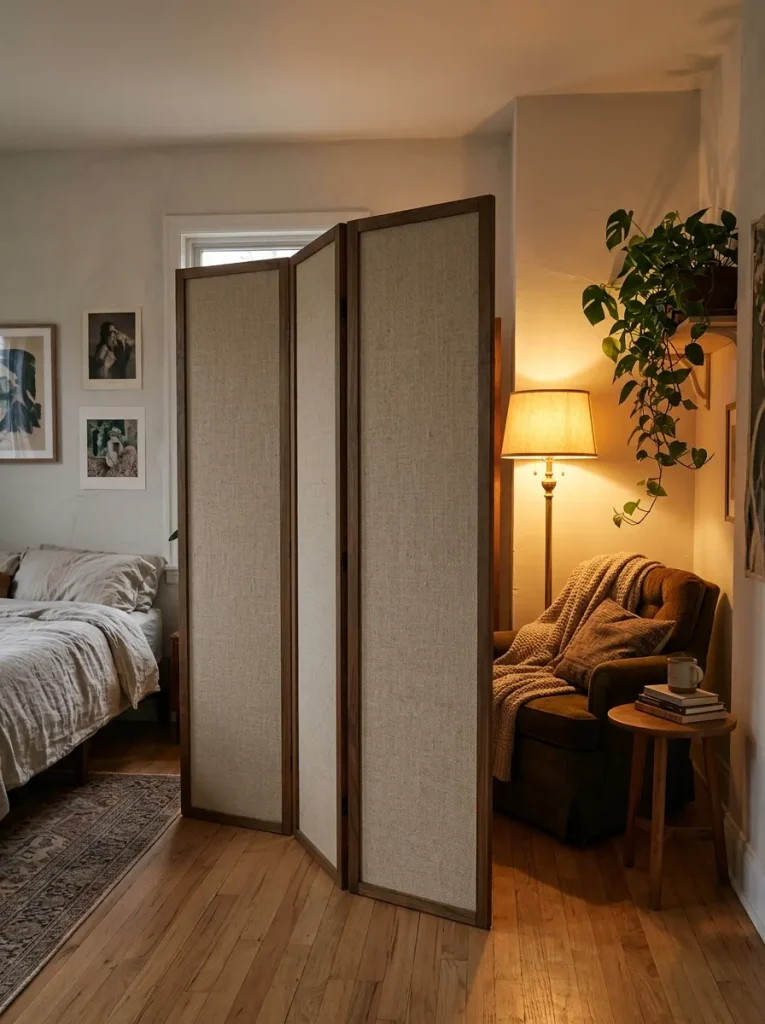
If the goal is privacy, the material matters more than the style. You need something solid enough to stop the eye, but not so heavy that it feels like a wall.
The best options for blocking a view are a folding screen, a tall bookcase, or a paneled room divider. Folding screens work well because you can open them up for a wider view or fold them flat when you need the space back. A tall bookcase works if you use the back side as a solid panel or if you fill it with books that face outward.
What does not work for privacy is a glass divider, a wire mesh divider, or a sheer curtain. They look pretty, but they do not stop anyone from seeing through them.
Folding screens, tall bookcases with a solid back, paneled dividers.
Open shelving, glass panels, slatted wood, and sheer curtains.
3. If You Need to Define a Zone Without Blocking Light
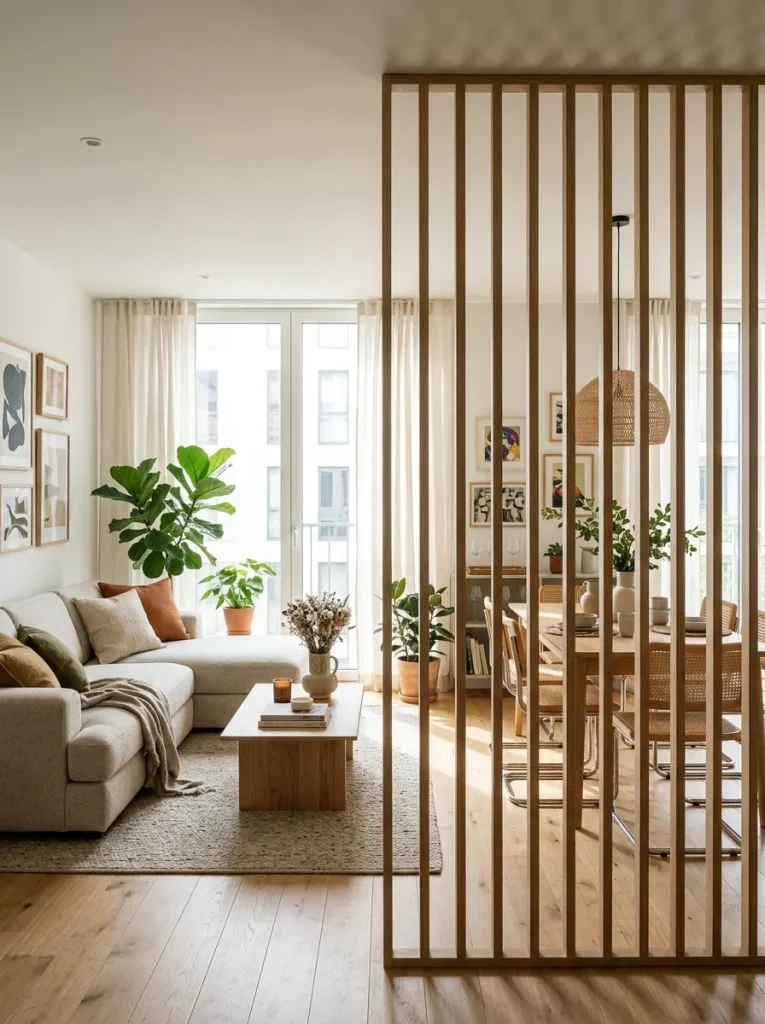
This is the most common situation. You have an open plan or a studio, and you want the bedroom to feel separate from the living room, but you do not want to lose the light.
The best option here is anything with gaps. Open shelving, slatted wood, a bookcase with no back panel, or a glass divider. These let light pass through while still creating a visual boundary.
A slatted wood divider is especially effective because it gives you privacy at eye level while letting light through at the top and bottom. If you want a softer look, a sheer curtain on a ceiling track does the same job for less money.
💡 Quick Tip
Do not run a divider all the way to the ceiling in a room with low ceilings. Stop it a foot from the top and the room will feel taller and more open.
4. If You Need to Block Sound
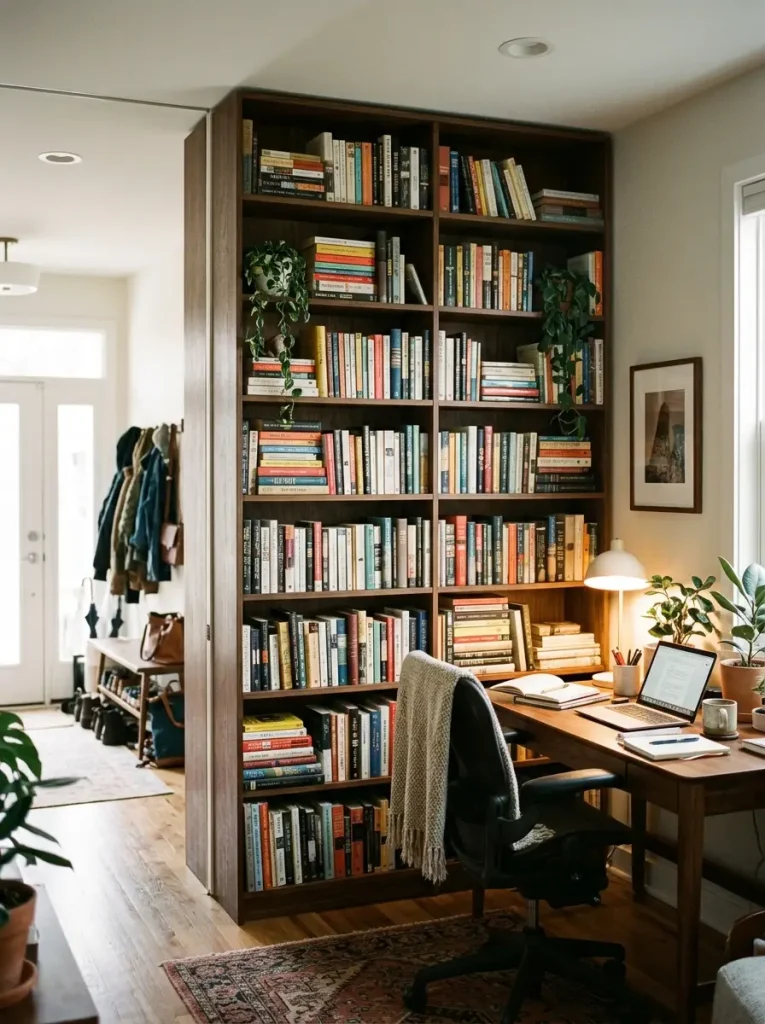
A room divider is not a soundproof wall, but it can help. A solid bookcase filled with books absorbs more sound than an open frame, and a heavy curtain absorbs more than a sheer one.
If noise is a real problem, a tall bookcase packed with books is your best option. The mass of the books and the solid back of the shelf will absorb some of the sound. A padded fabric screen works too, but it will not do as much as a full bookcase.
What does not work for sound is a thin folding screen or a wire mesh divider. They stop the view but they do not stop the noise.
See room divider ideas for your rooms especially living room.
5. The Materials That Actually Work
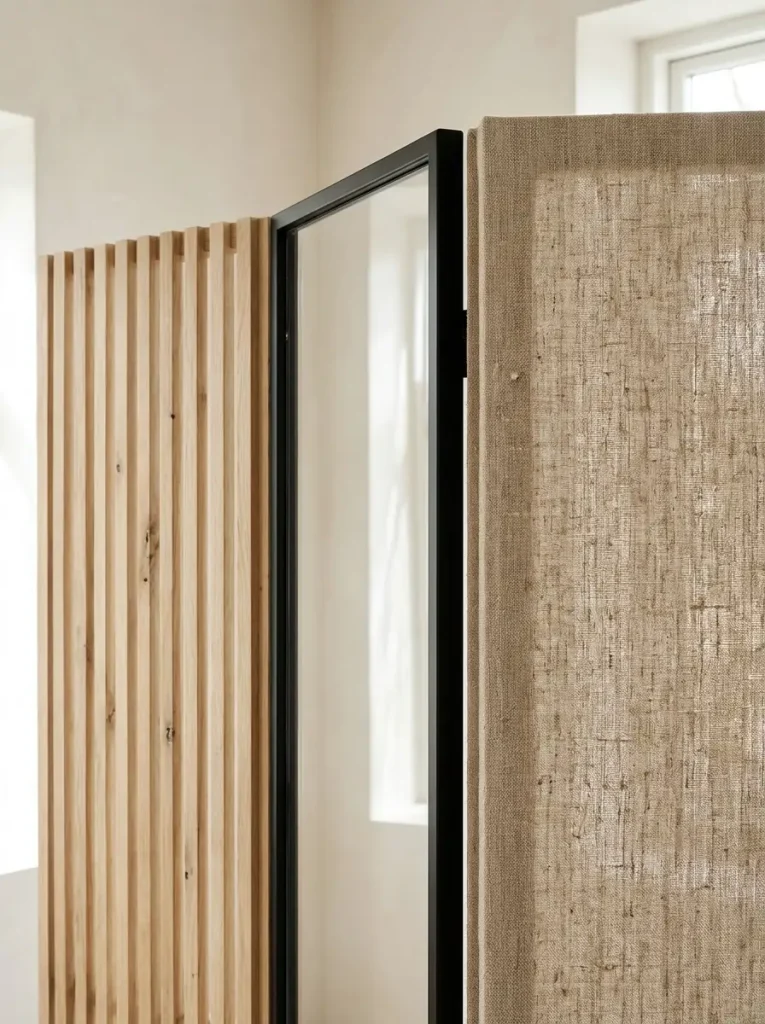
Once you know what job the divider needs to do, the material choice becomes easy.
6. The Height Rule
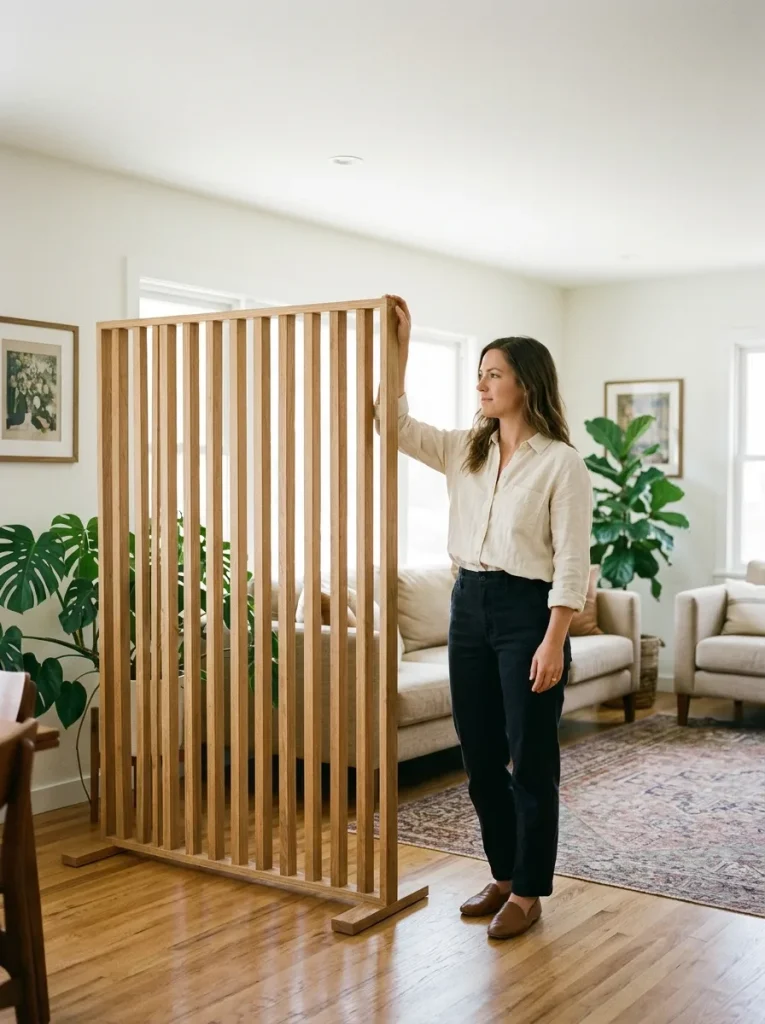
Most people buy a room divider that is too short. A divider should be tall enough to stop the eye, but not so tall that it feels like a wall. As a general rule, a divider should reach at least eye level when you are standing. If it is lower than that, it will not define the space. If it is much taller, it will close the room in.
For a room with a standard eight foot ceiling, a divider around five to six feet tall works well. For a room with a high ceiling, you can go taller. For a room with a low ceiling, stay lower.
7. The Placement Rule
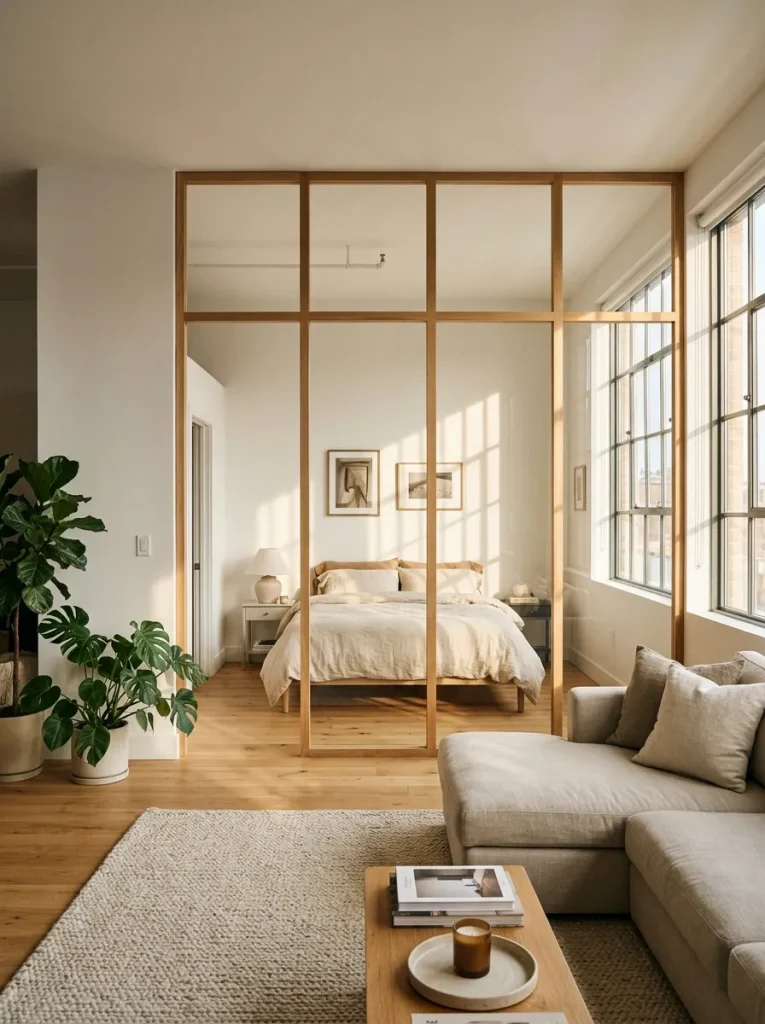
Placement matters more than the divider itself. A divider placed in the middle of a room will feel like an obstacle. A divider placed along the line where the zones meet will feel like architecture.
Place the divider so it aligns with a wall, a window, or a change in flooring. If it lines up with something already in the room, it will feel intentional. If it sits at an odd angle with nothing to line up with, it will feel random.
8. The Renter Friendly Option
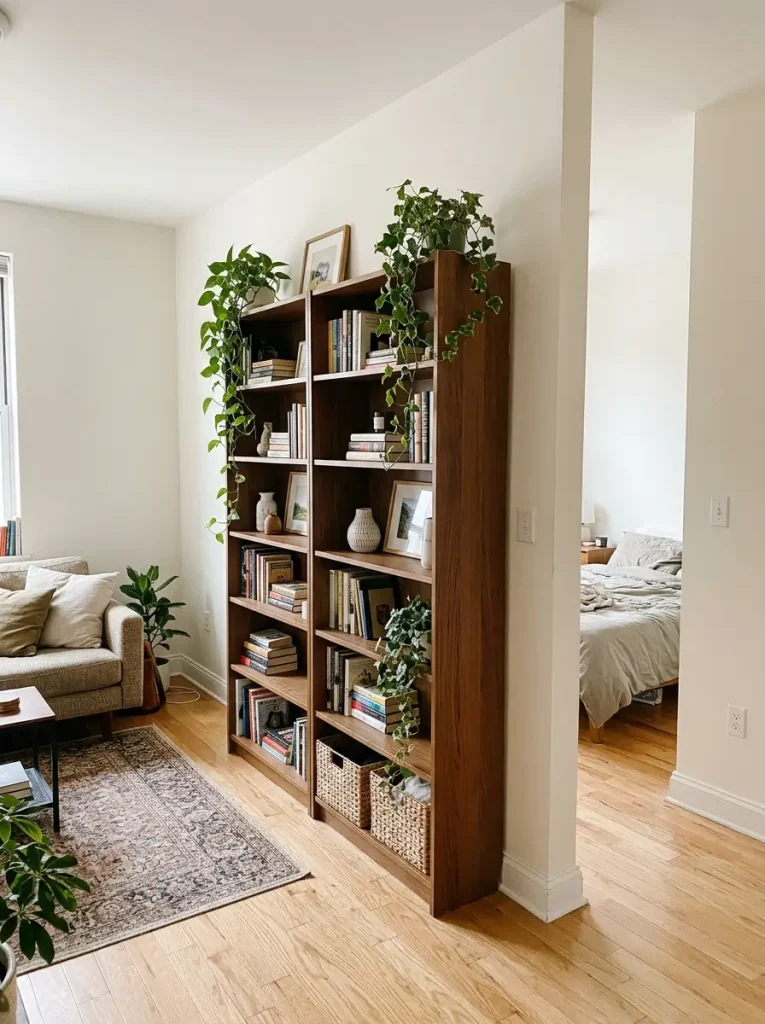
If you rent, you probably cannot install a ceiling track or build a wall. The good news is that most dividers do not require any permanent changes. A freestanding bookcase, a folding screen, or a leaning panel will do the job without a single nail.
The best renter friendly option is a tall, open bookcase with a solid back. It stands on its own, it holds your books, and it defines the space without any damage. When you move out, you take it with you.
9. The Small Room Trick
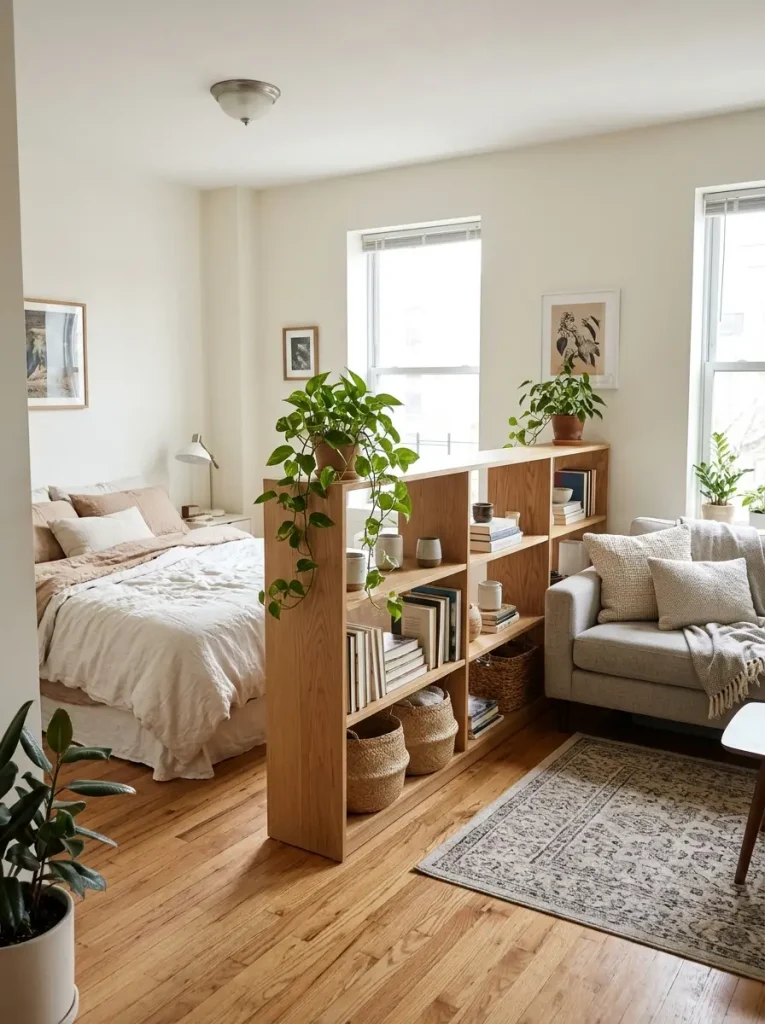
In a small room, a divider can make the space feel smaller if you get it wrong. The trick is to use a divider that is open and light. A slatted screen or a glass panel will define the zone without cutting off the light or the view.
Another trick is to use a low divider, like a bench or a low shelf, instead of a full height screen. It gives you a visual boundary without closing the room in.
💡 Quick Tip
Paint the divider the same color as the wall behind it. It will blend in and make the room feel larger instead of chopping it up.
10. The Final Test Before You Buy
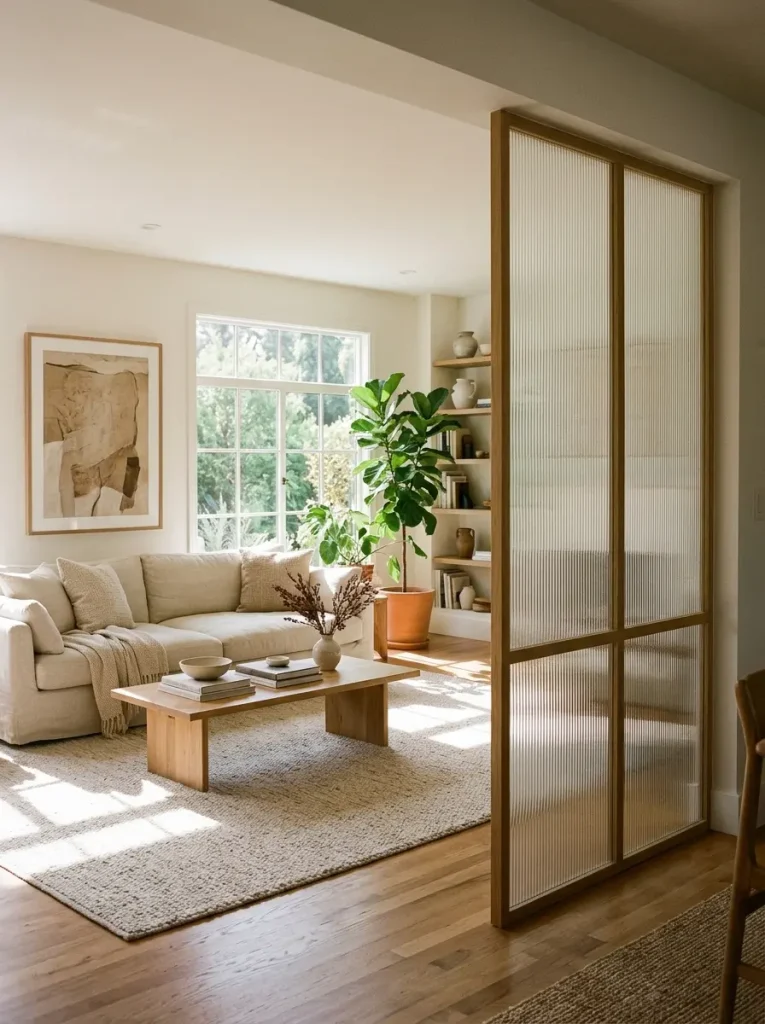
Before you buy a divider, try this test. Stand where you would normally sit in the room. Look at the space where the divider will go. If you can still see the most important part of the room, like a window, a fireplace, or a piece of art, the divider will work. If it blocks something you love, it will feel wrong every time you look at it.
A good divider makes a room feel more organized and intentional. A bad divider makes it feel smaller and more cluttered. The difference is not the price tag. It is whether you chose it for the job it needs to do.
Frequently Asked Questions
What is the best room divider for a small apartment?
A slatted wood screen or an open shelving unit. They define the space without blocking light or making the room feel smaller.
Do room dividers make a room look smaller?
Only if they are solid and heavy. A light, open divider can actually make a room feel more organized and intentional without shrinking it.
Can I use a room divider for soundproofing?
It will help, but it will not block all sound. A tall bookcase packed with books absorbs more sound than a thin folding screen. For real soundproofing, you need a wall.
Final Thoughts
The right room divider is not the prettiest one in the store.
It is the one that solves the problem you actually have.
Decide whether you need privacy, light, sound control, or just a visual boundary.
Then choose the material and the height that match that job.
Do that, and the divider will feel like part of the room instead of an obstacle in it.