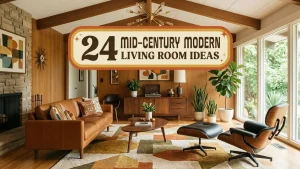
Mid century modern design does not look like a trend. It looks like a way of thinking about space. The style started in the middle of the twentieth century, but its clean lines, warm woods, and honest materials still work in homes today.
The trick to getting it right is restraint. It is not about filling a room with vintage finds. It is about choosing a few strong pieces and giving them room to breathe.
Here are 24 ideas to help you build a mid century modern living room that feels collected, comfortable, and timeless.
1. Warm wood tones (walnut and teak).
2. Clean, low profiles with visible legs.
3. A neutral base with one or two bold pops of color.
4. Natural light and an indoor plant.
1. Anchor the Room With a Walnut Credenza
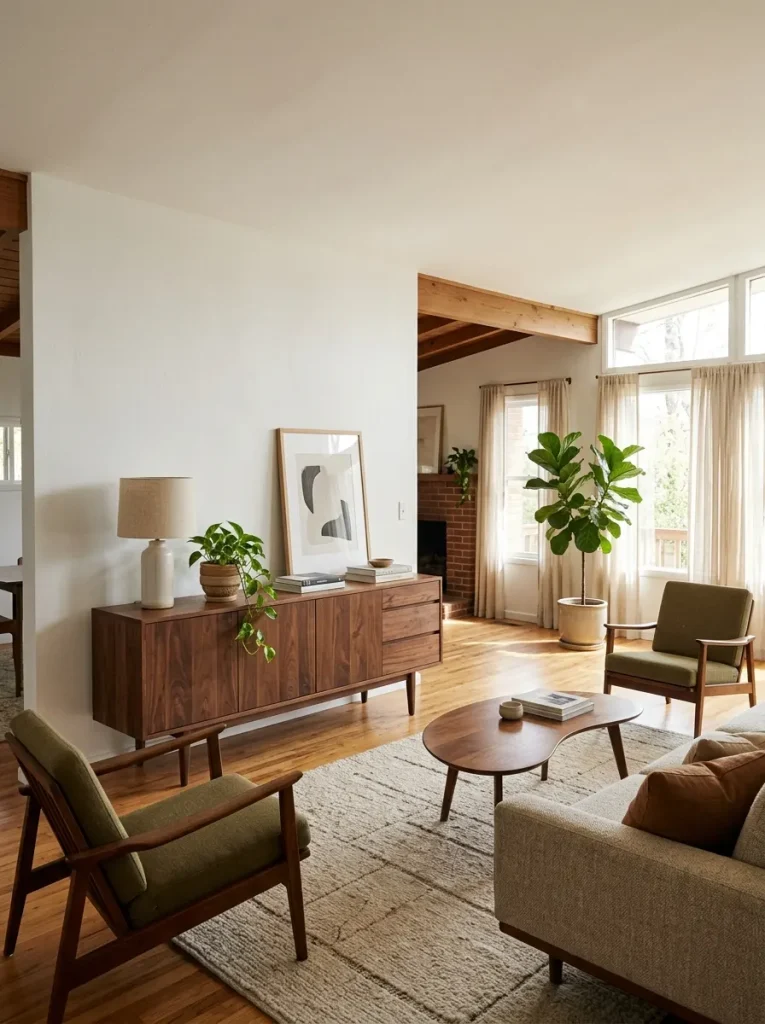
A long, low walnut credenza is the backbone of a mid century living room.
It grounds the space and gives you a surface for styling.
Look for one with tapered legs and clean lines. It can sit under a window, along a blank wall, or opposite the sofa.
Keep the surface simple with a lamp, a small plant, and a piece of art.
2. Choose a Low Profile Sofa
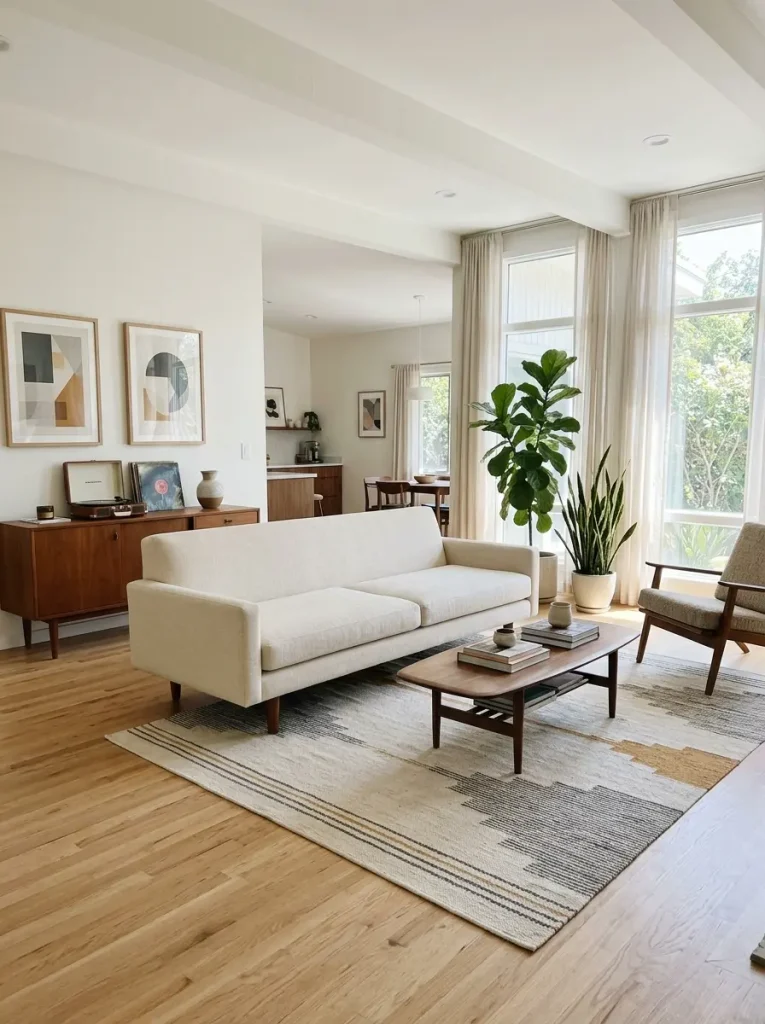
Mid century sofas sit close to the floor and often have exposed wooden frames.
A low profile keeps sightlines open, which makes a room feel larger. Look for a sofa with a tight back and simple upholstery.
Neutral tones like cream, camel, or charcoal work well because they let the wood and the accent colors do the talking.
3. Anchor the Seating with a Low, Slouchy Lounge Chair
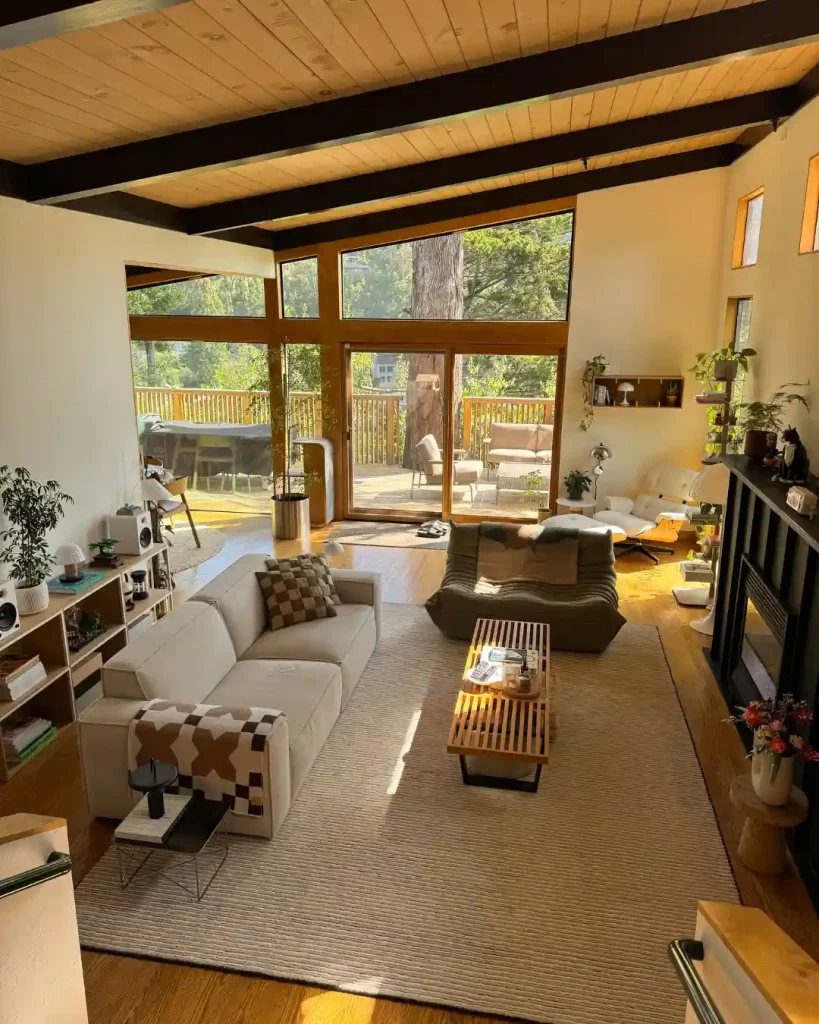
Every mid century room needs one chair that draws the eye, and in the second photo it is a dark green lounge chair with a soft, low profile.
It sits at the far end of a large woven rug, facing a long beige sofa across a slatted wood coffee table. A patterned throw blanket is draped over the back, which softens the shape even further.
Because the chair sits on its own, away from the wall, it defines the seating zone without blocking the wall of windows behind it. A small black side table and a wire magazine rack sit beside the sofa, and the low scale of both keeps the room feeling open.
A low slouchy shape in dark green anchors the seating area.
Pull it away from the wall so it frames the room instead of crowding it.
4. Use a Noguchi Style Coffee Table
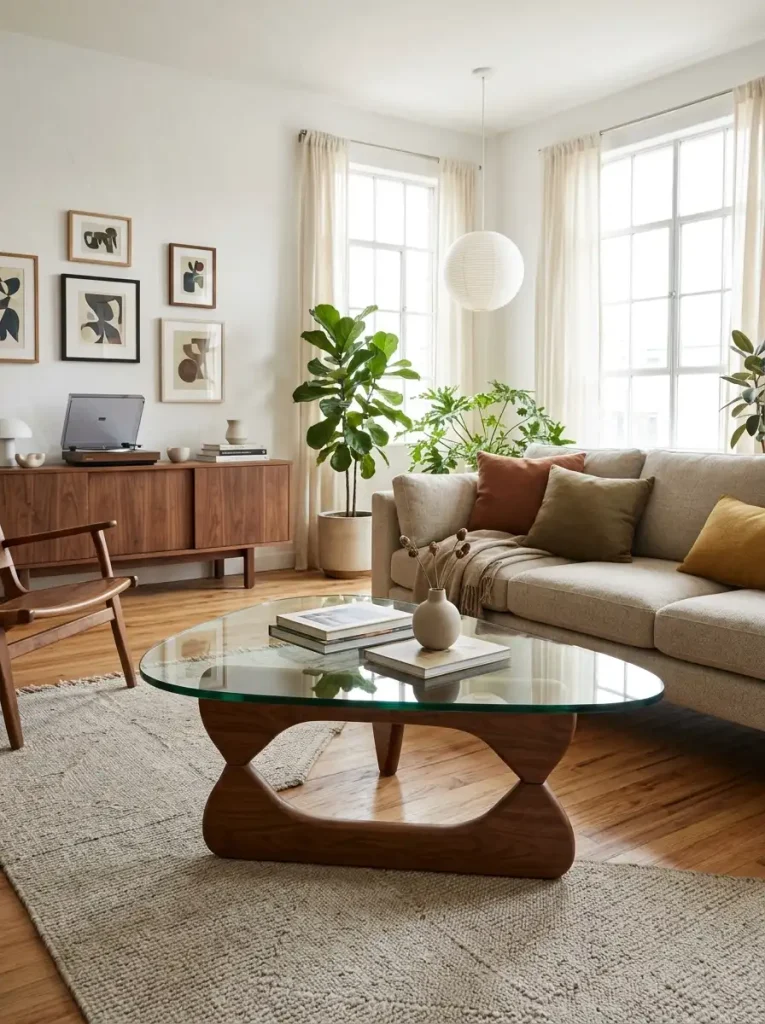
A glass top coffee table with a sculptural wood base is one of the most recognizable pieces in the style.
The glass keeps the room feeling open, while the base adds an artistic element.
It works especially well in a smaller room because you can see through it.
5. Mix a Paper Lantern with a Chrome Arc Lamp
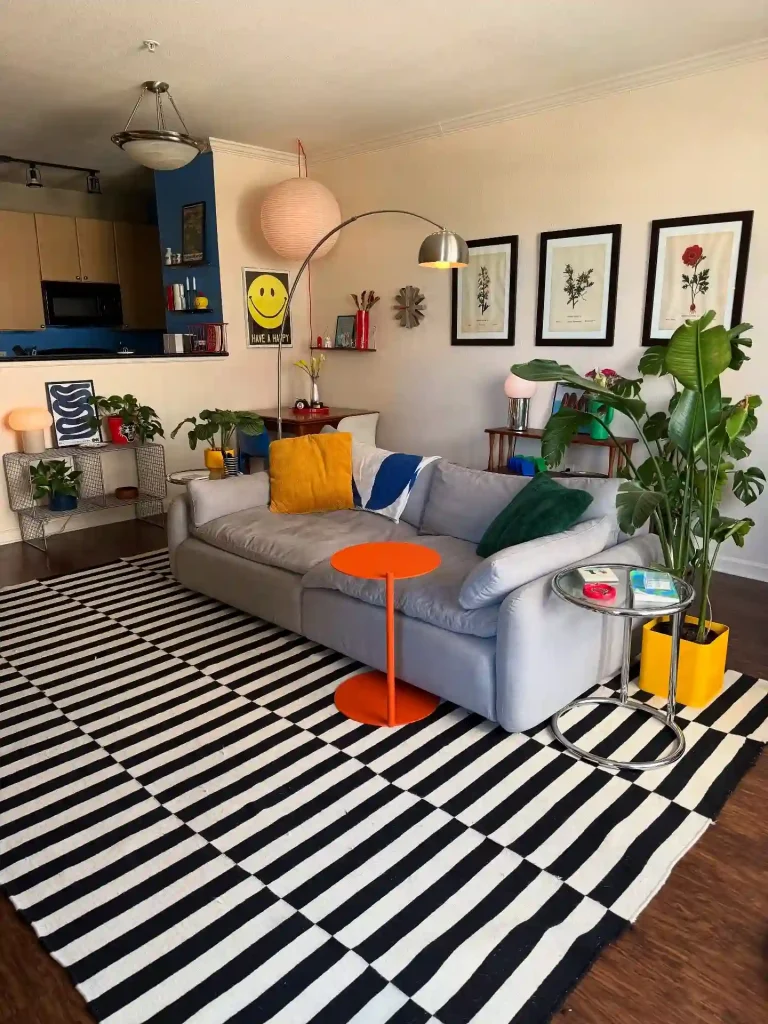
Lighting is a design feature in mid century rooms, and the first photo shows how two very different fixtures can work together.
A large pink paper lantern hangs from the ceiling and softens the whole room with a warm, diffuse glow. A chrome arc floor lamp reaches over the sofa and adds a classic mid century curve, plus a pool of light exactly where you need it for reading.
The rest of the room picks up the color. A bright orange side table, a yellow planter, and a blue kitchen wall in the background create a bold palette, but the pink lantern and chrome lamp balance it by staying soft and neutral.
Natural light matters just as much in the second photo, where a wall of windows and wood ceiling beams do all the work without a single fixture.
💡 Quick Tip
Use one light for softness and one for task light. A paper lantern and an arc lamp are a classic pairing because they do different jobs in the same room.
6. Bring in a Curved Floor Lamp
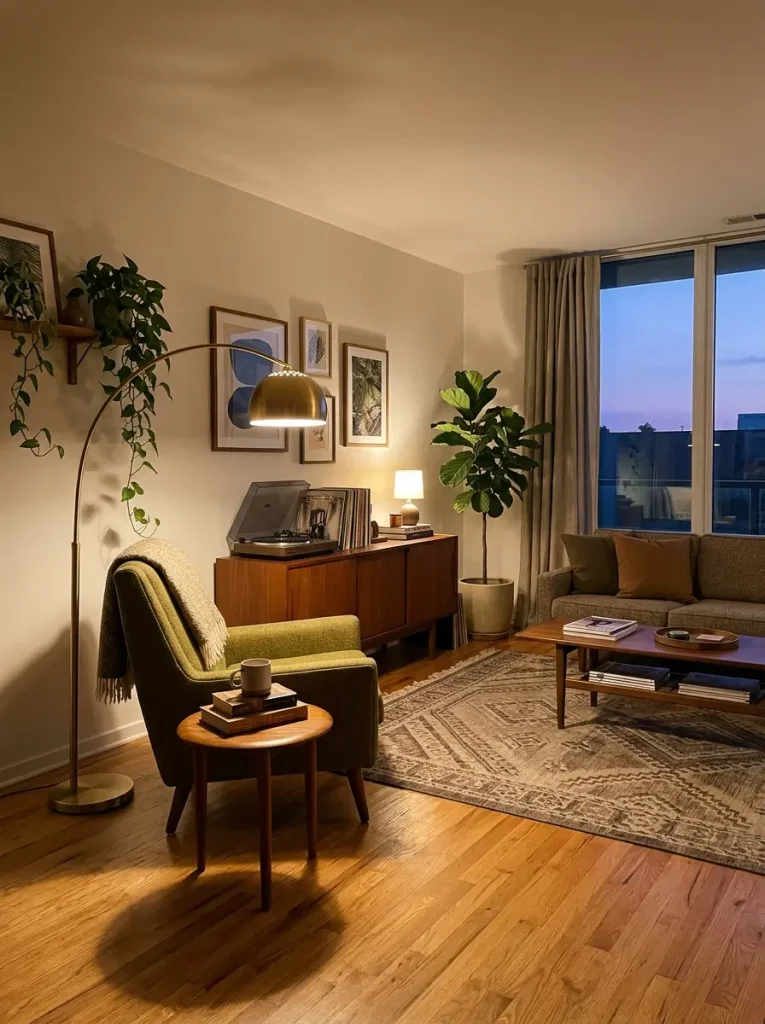
A floor lamp with a curved arc and a simple shade is a classic mid century piece.
It adds height and softness to a room with a lot of straight lines. Place it behind a sofa or beside a chair to create a pool of warm light for reading.
Walnut, teak, and rosewood give the warm, natural foundation.
Tapered legs, curved chairs, and geometric art keep it interesting.
7. Layer a Geometric Area Rug
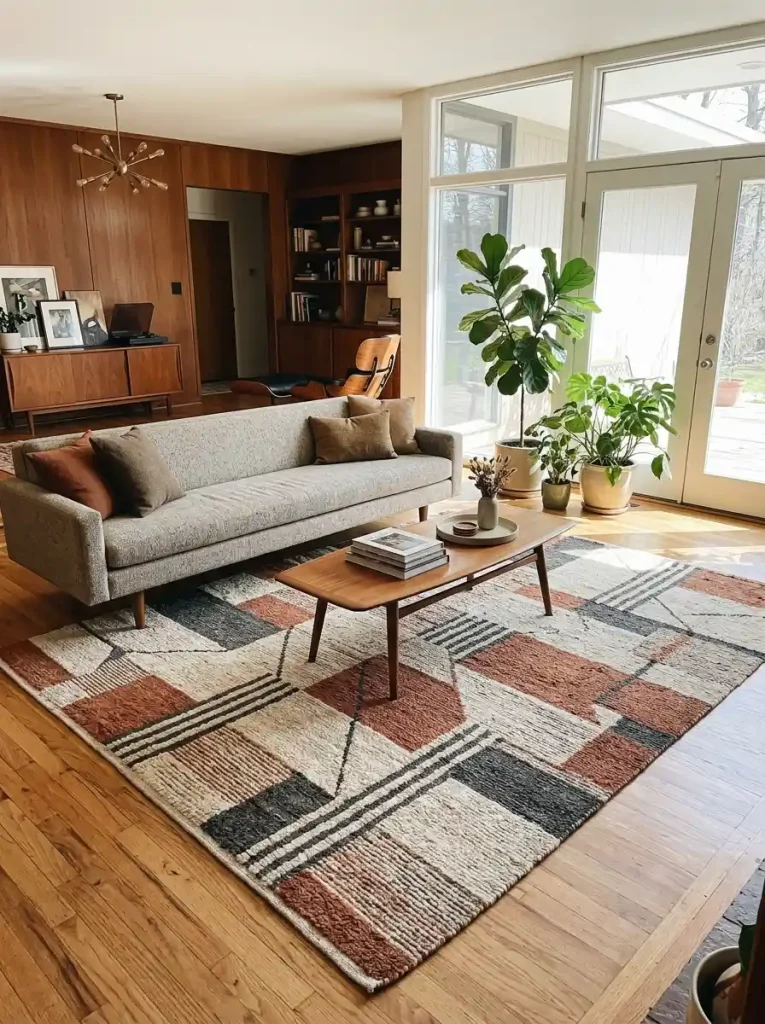
Pattern is important in mid century design, but it should be controlled.
A geometric rug in muted tones, like a simple diamond or triangle pattern, ties the furniture together without overwhelming the room.
It should be large enough that the front legs of every piece of furniture sit on it.
You’ll also love to read about mid century modern kitchen ideas for your kitchen.
8. Add a Sunburst Mirror
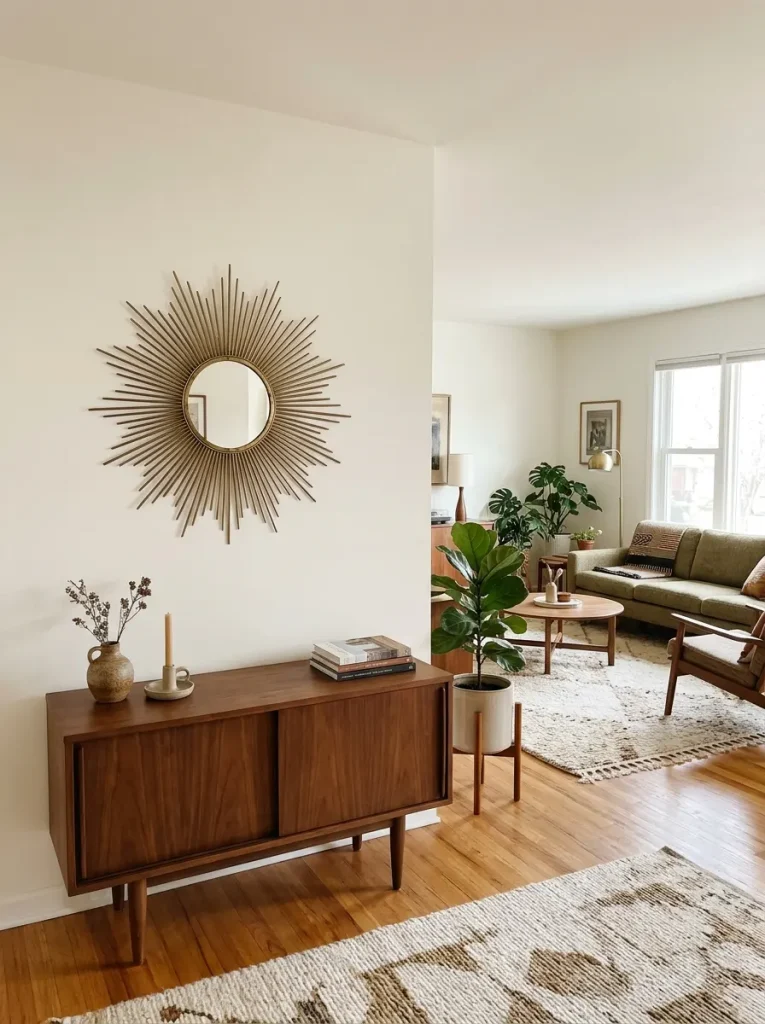
A sunburst mirror is a mid century classic.
It adds texture and a strong geometric shape to a wall without taking up floor space.
Hang it above a credenza or on a wall where you need a focal point. It reflects light and makes the room feel brighter.
9. Use Built In Shelving for Books and Objects
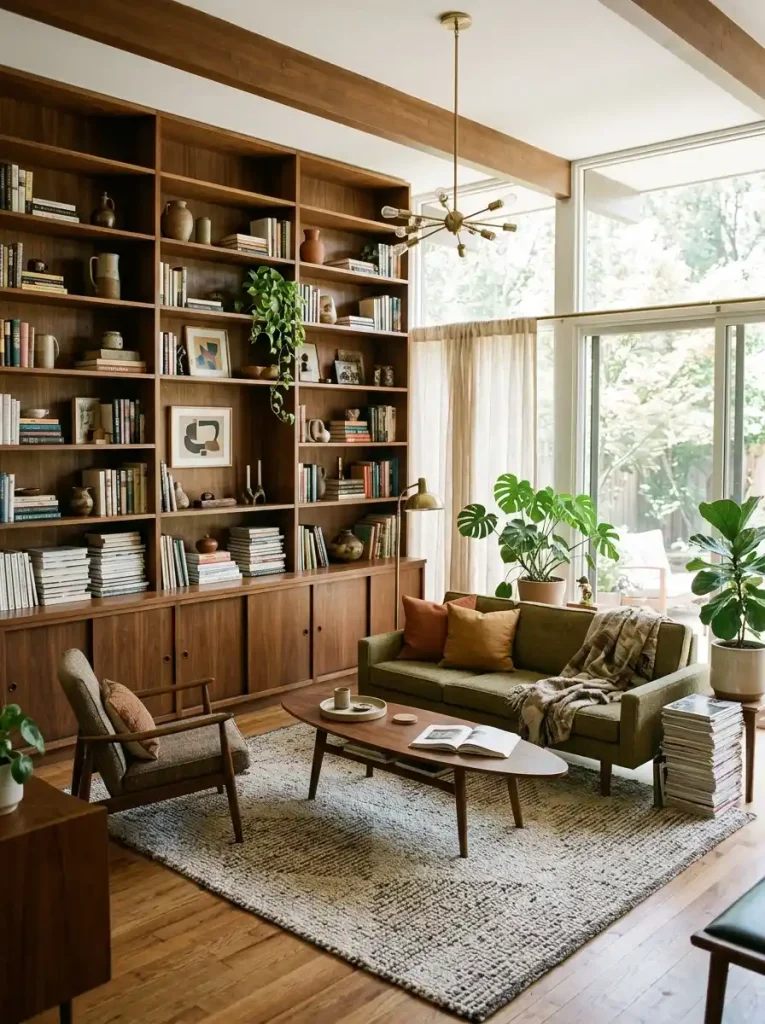
Mid century homes often featured built in shelving.
If you have a blank wall, a simple wood shelving unit with clean lines and open shelves can hold books, ceramics, and plants.
Style it with a mix of vertical books, horizontal stacks, and a few small objects. Do not fill every shelf.
10. Choose a Bold Accent Color
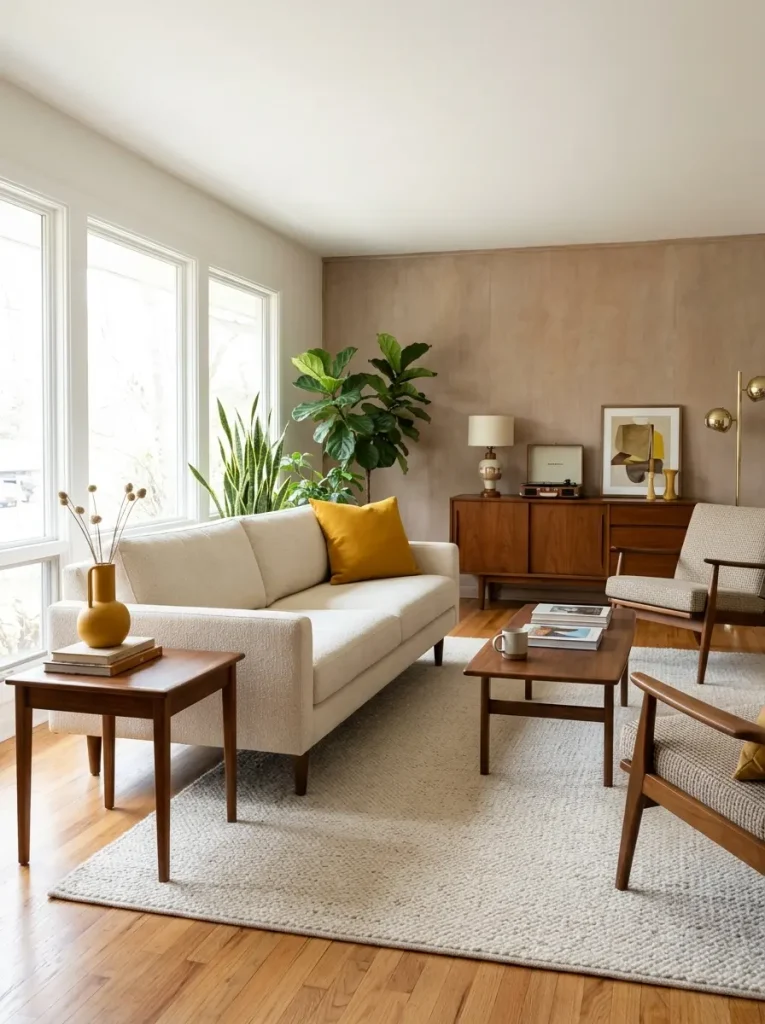
Mid century design is known for its use of color, but the trick is to use it sparingly.
Choose one or two bold colors, like mustard yellow, burnt orange, or forest green, and repeat them in small doses.
A throw pillow, a vase, or a piece of art can carry the color through the room without overwhelming it.
You’ll also love to read about mid century modern bedroom ideas for your bedroom.
11. Add a Tapered Leg Dining Chair to the Living Room
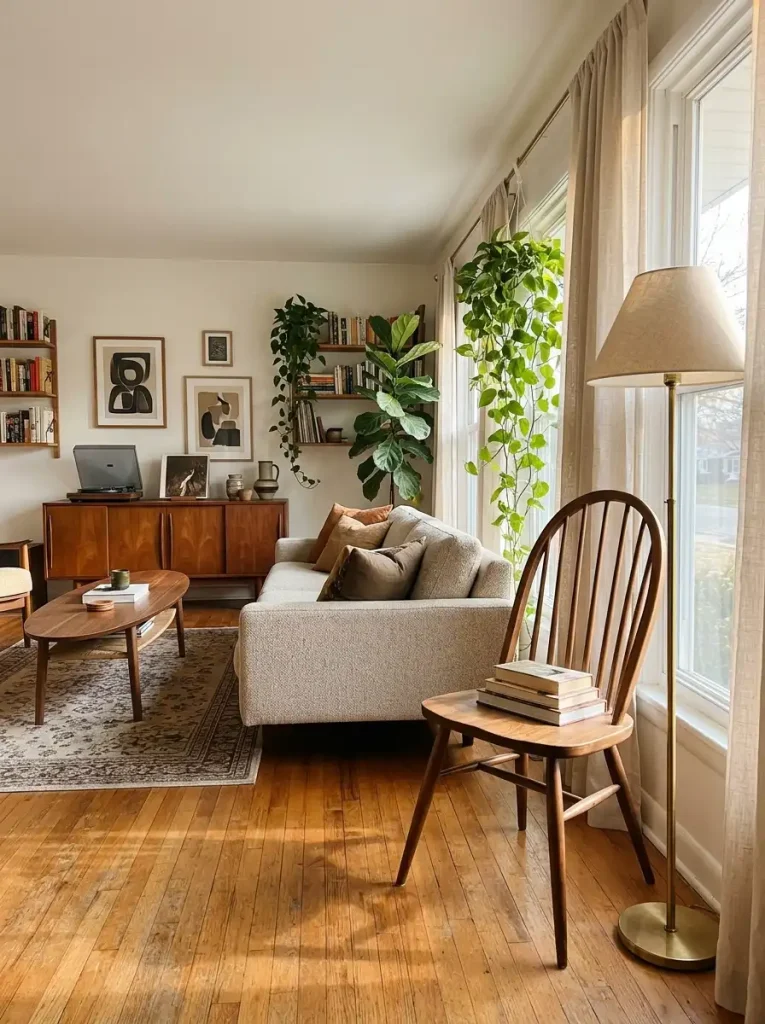
A simple dining chair with a spindle back and tapered legs can work as an accent chair in a living room.
It is a good option if you want to add seating without adding bulk. Place it against a wall or near a window, and use it as a place to set a drink or a book.
12. Hang a Large Abstract Painting
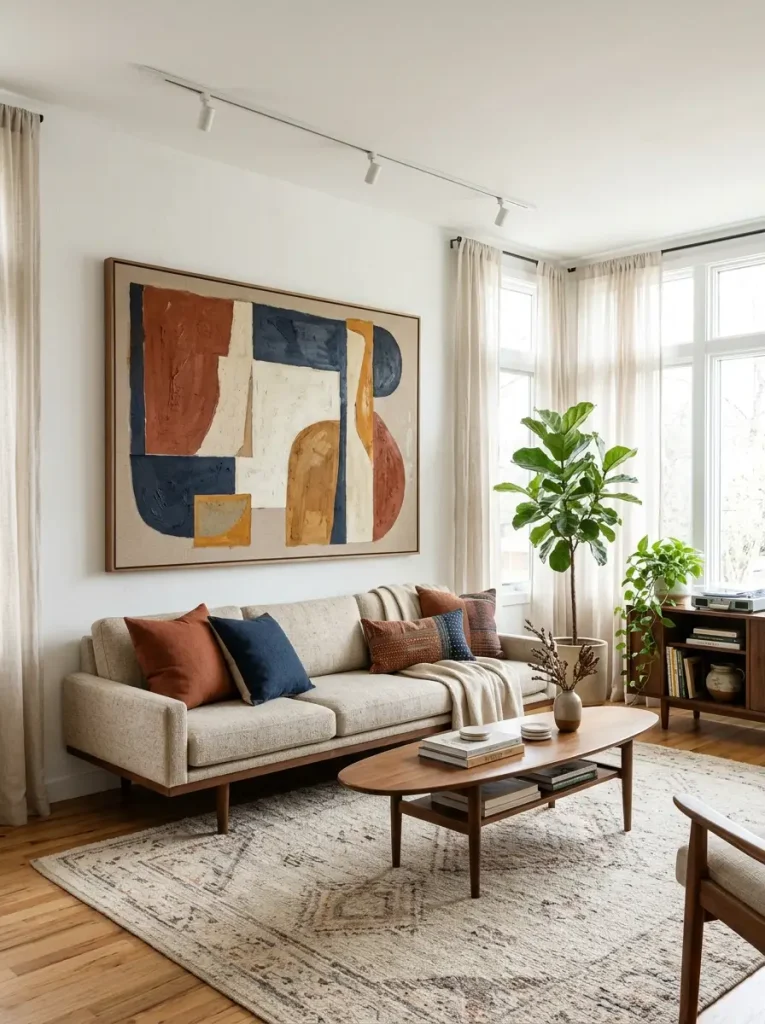
A large abstract painting in a simple wooden frame gives a room personality.
Mid century art often featured bold shapes, simple lines, and a limited color palette.
Hang it above the sofa or the credenza and let it be the main visual statement on that wall.
13. Add a Leather Chair for Texture
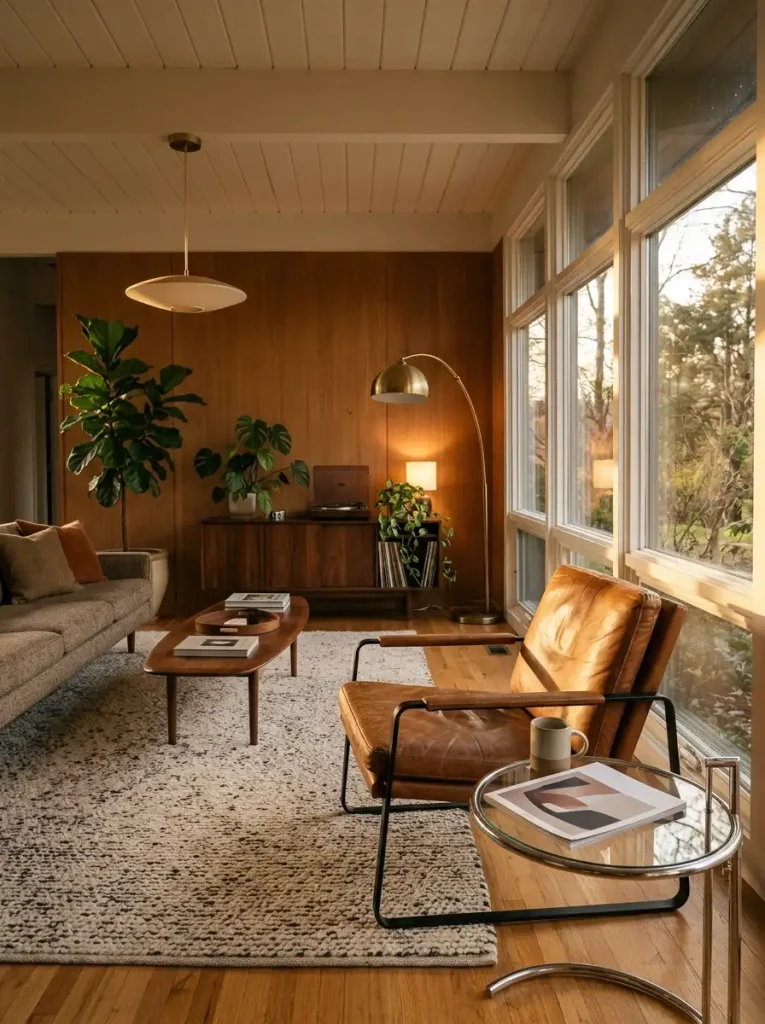
Wood and fabric are the main materials in a mid century room, but leather adds warmth and texture.
A leather chair, especially one with a simple frame and a low seat, can balance the coolness of a glass or metal table. It also ages well, developing a patina over time.
14. Use a Wood Slat Wall as a Backdrop
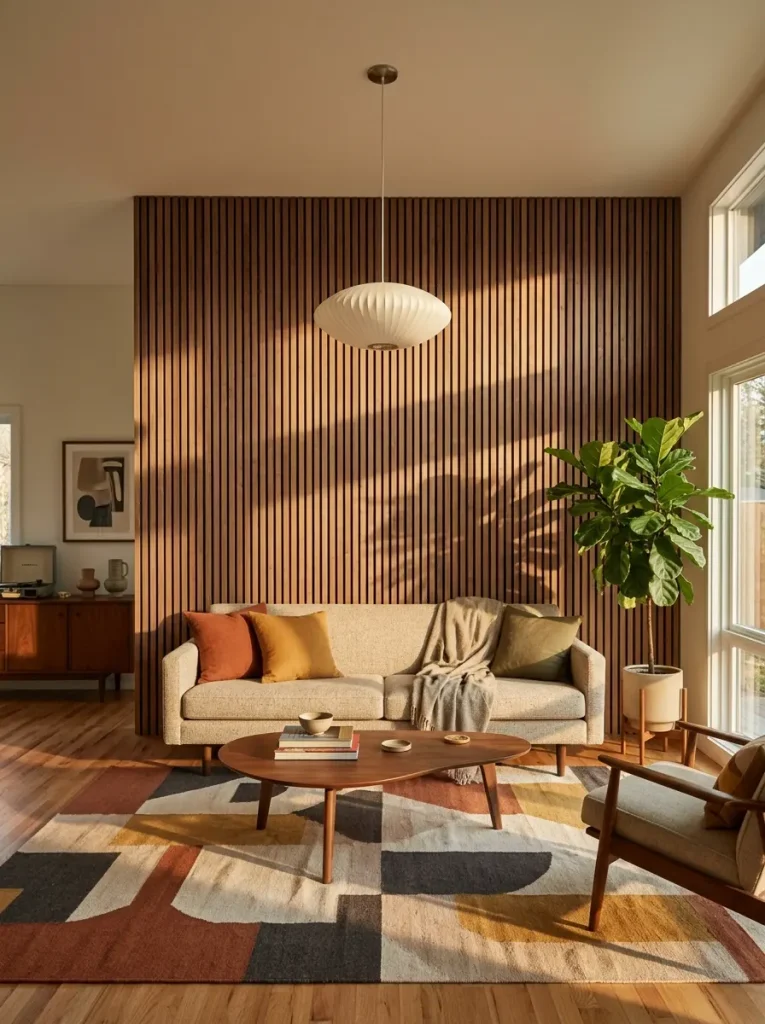
A wood slat wall, made from narrow wood strips spaced evenly, adds texture and a strong vertical rhythm. It can be used as a feature wall behind a sofa or a media unit.
It brings a natural element into the room and works well with a neutral color palette.
15. Choose a Platform Bed or Bench
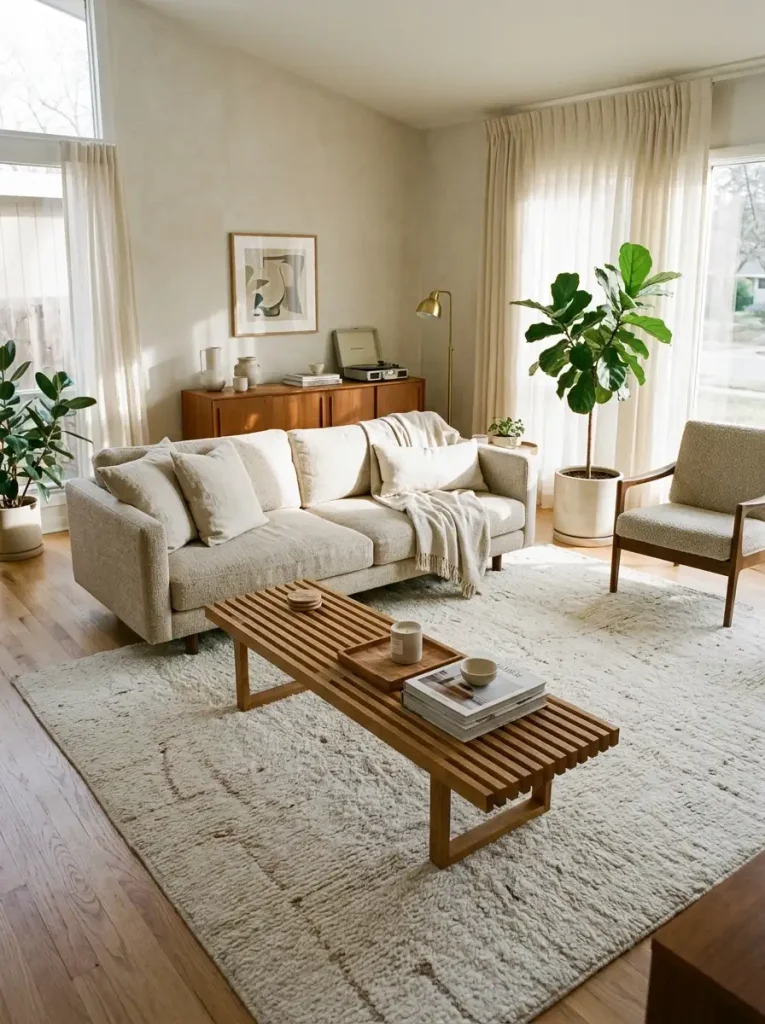
In a living room, a low platform bench can serve as a coffee table or as extra seating.
Look for one with a simple wooden frame and a slatted top. It is a useful piece in a small room because it can do double duty.
16. Add a Vintage Sideboard
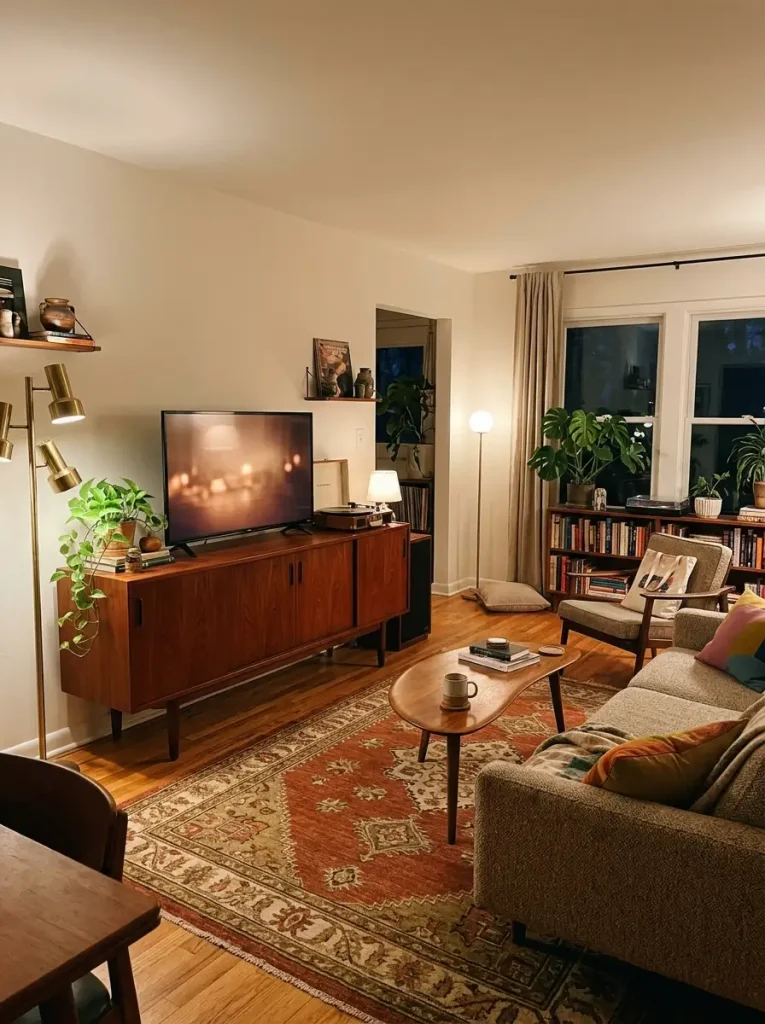
A vintage sideboard in a rich wood tone can serve as a media console or as a storage piece.
Look for one with doors, drawers, and clean lines. If it needs work, a light sanding and a coat of oil can restore the wood.
17. Bring in a Tall Indoor Plant
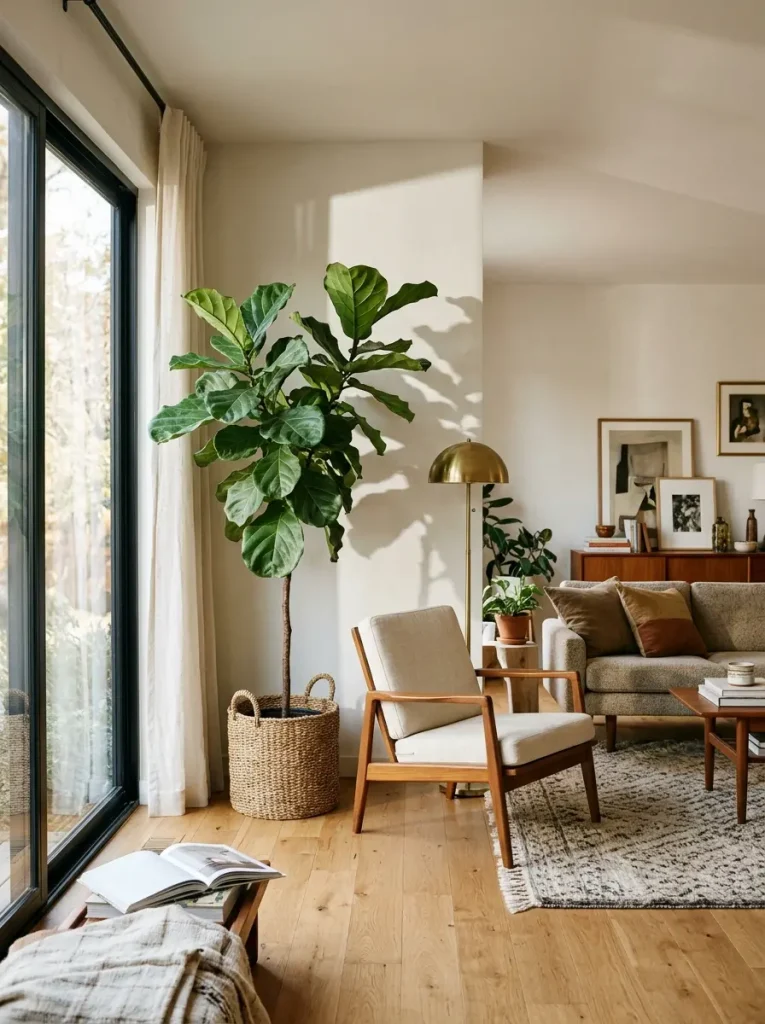
A tall plant, like a fiddle leaf fig or a rubber tree, adds life and height to a mid century room.
Place it in a simple ceramic pot or a woven basket, and put it in a corner where it can fill an empty space. It softens the straight lines of the furniture.
18. Use a Pair of Matching Armchairs
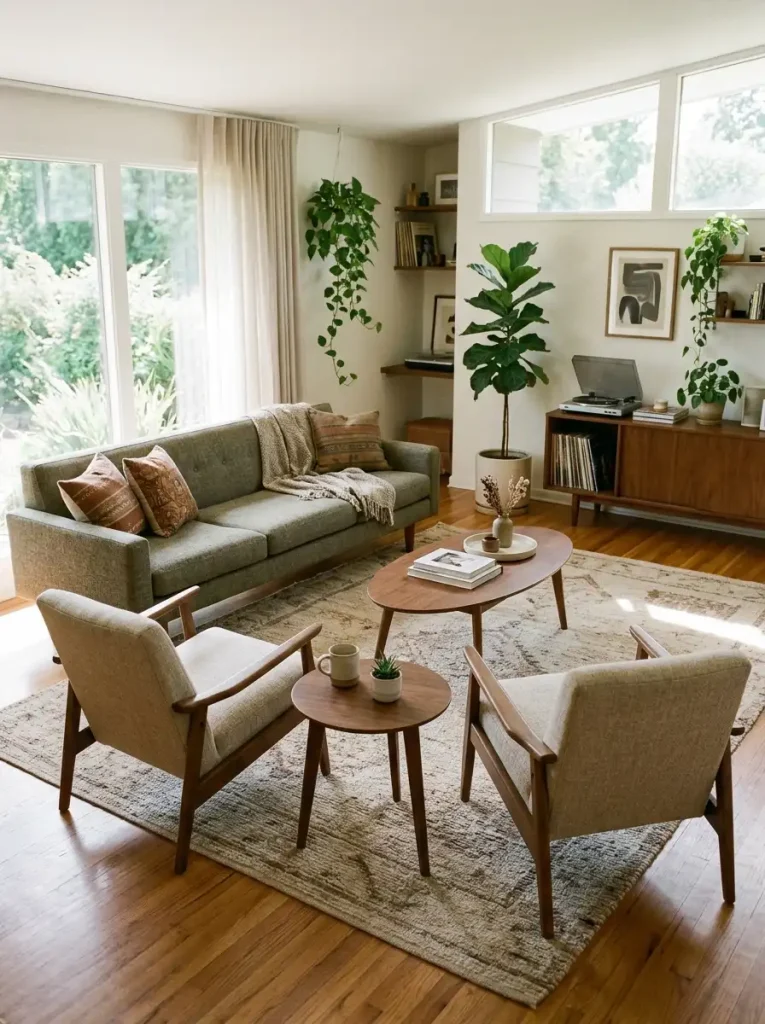
A pair of matching armchairs, placed across from the sofa, creates a conversation area.
Look for chairs with a low profile and simple lines. Keep the upholstery neutral and let the shape of the chairs be the feature.
19. Style the Coffee Table With a Tray
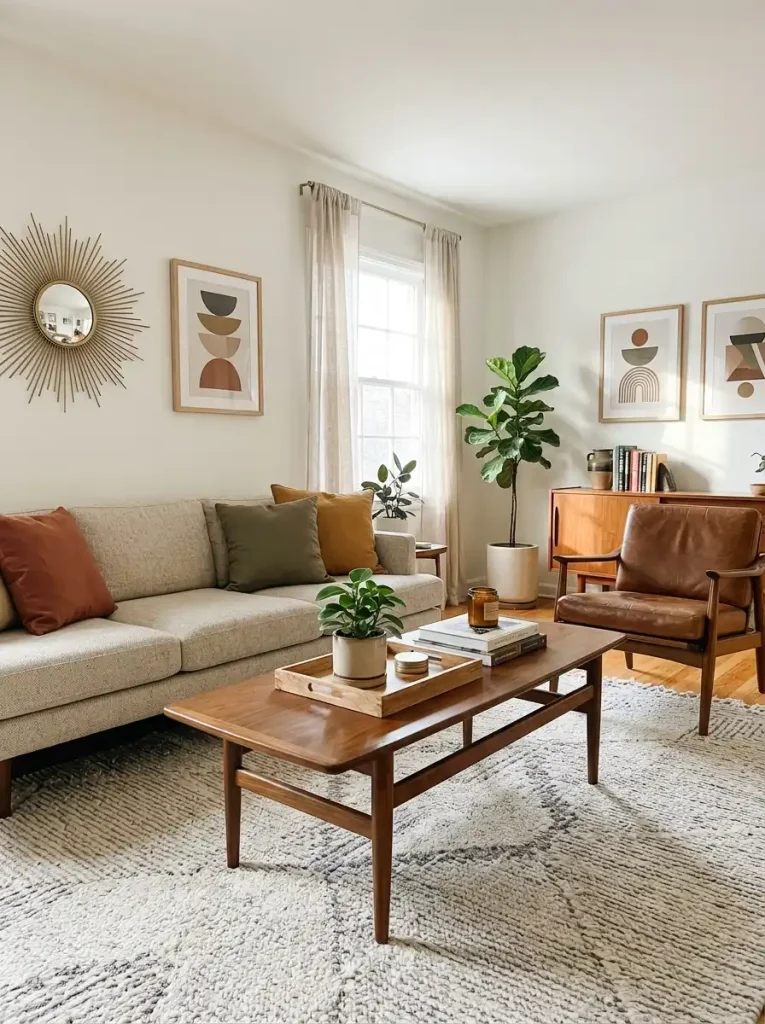
A tray on a coffee table keeps small objects contained and makes a styling choice look intentional.
Choose a simple wooden or metal tray and add a candle, a small plant, and a few books. It is a small detail that makes a big difference.
20. Choose a Simple, Geometric Pendant Light
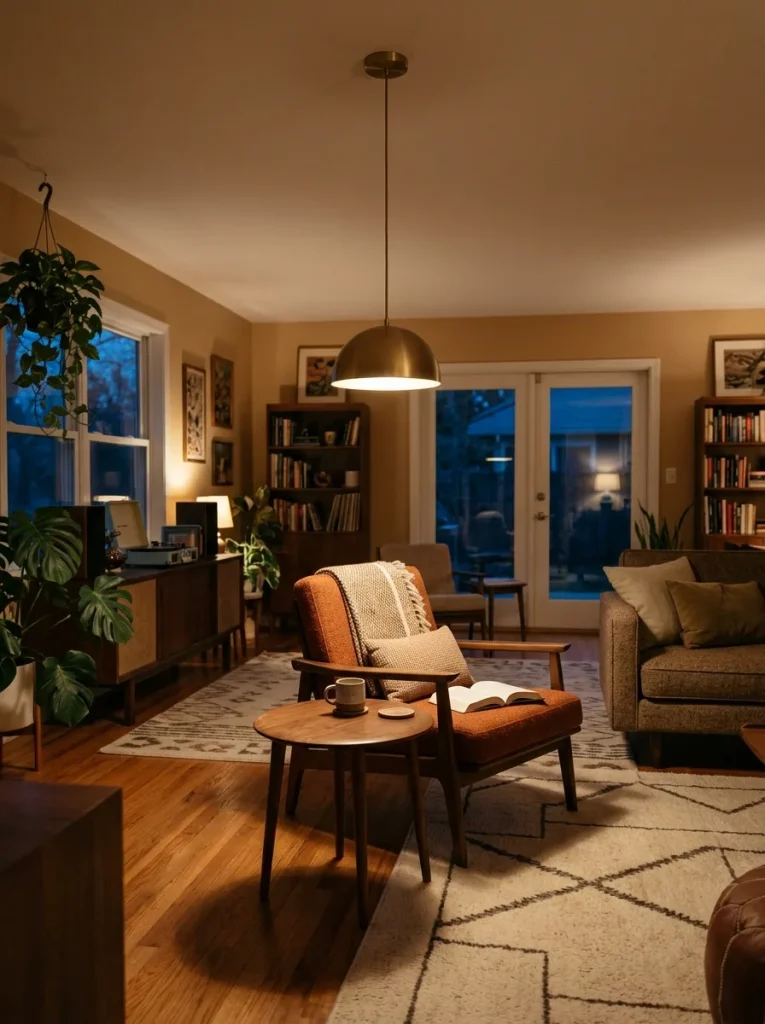
A pendant light with a simple geometric shade, like a dome or a cone, can be a focal point in a smaller room.
Hang it over a dining area or in a reading nook. It adds a modern touch and provides focused light.
21. Add a Wood Frame to Your Artwork
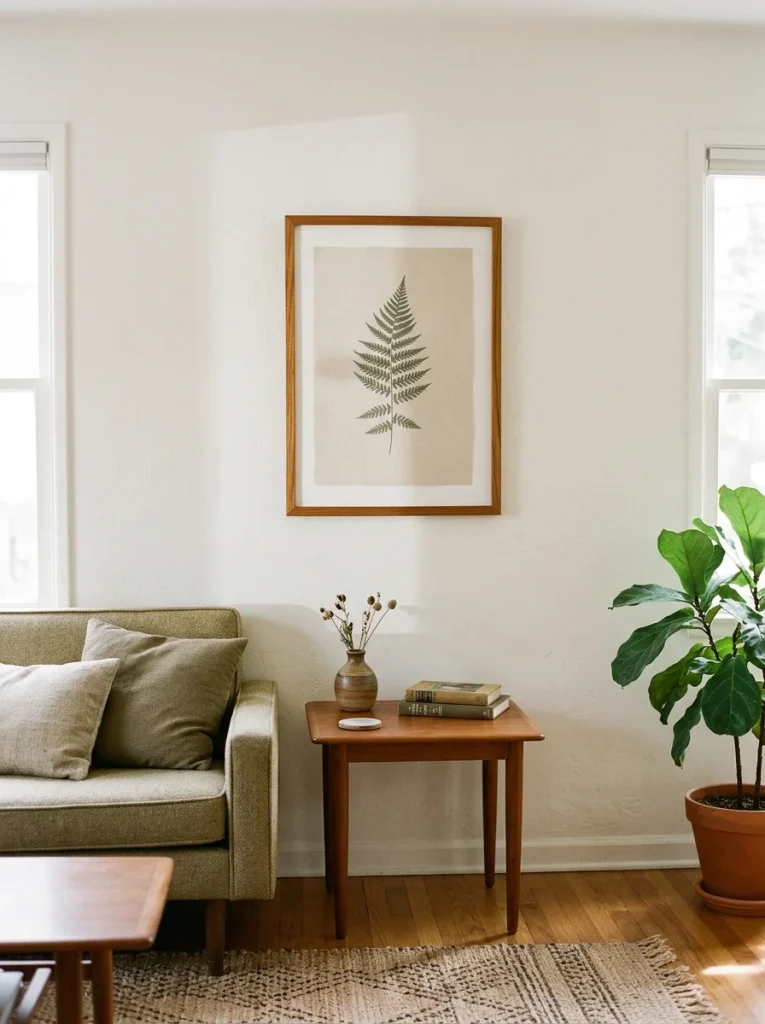
A simple wood frame is a mid century signature. Choose a thin frame in a warm wood tone to match the furniture. It is a small detail, but it ties the artwork to the rest of the room.
22. Keep the Color Palette Simple
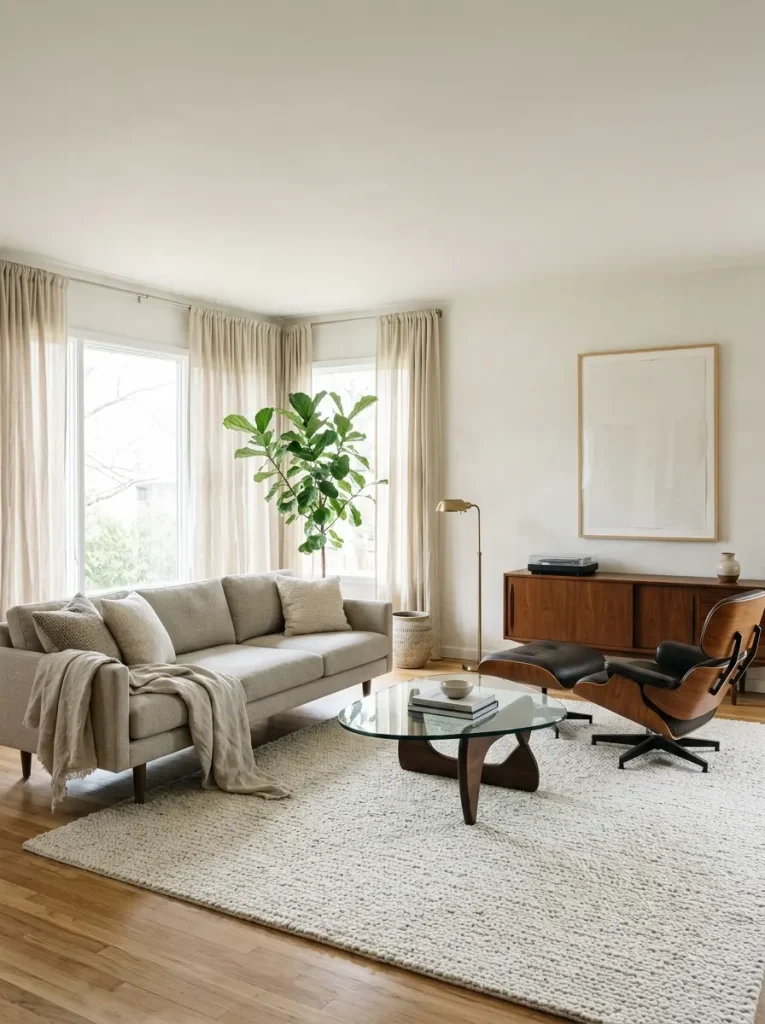
A mid century palette usually has a neutral base, like white, cream, or gray, with one or two strong accent colors. Keep the walls light and let the furniture and art bring the color.
This approach keeps the room feeling calm and open.
23. Mix Metal and Wood
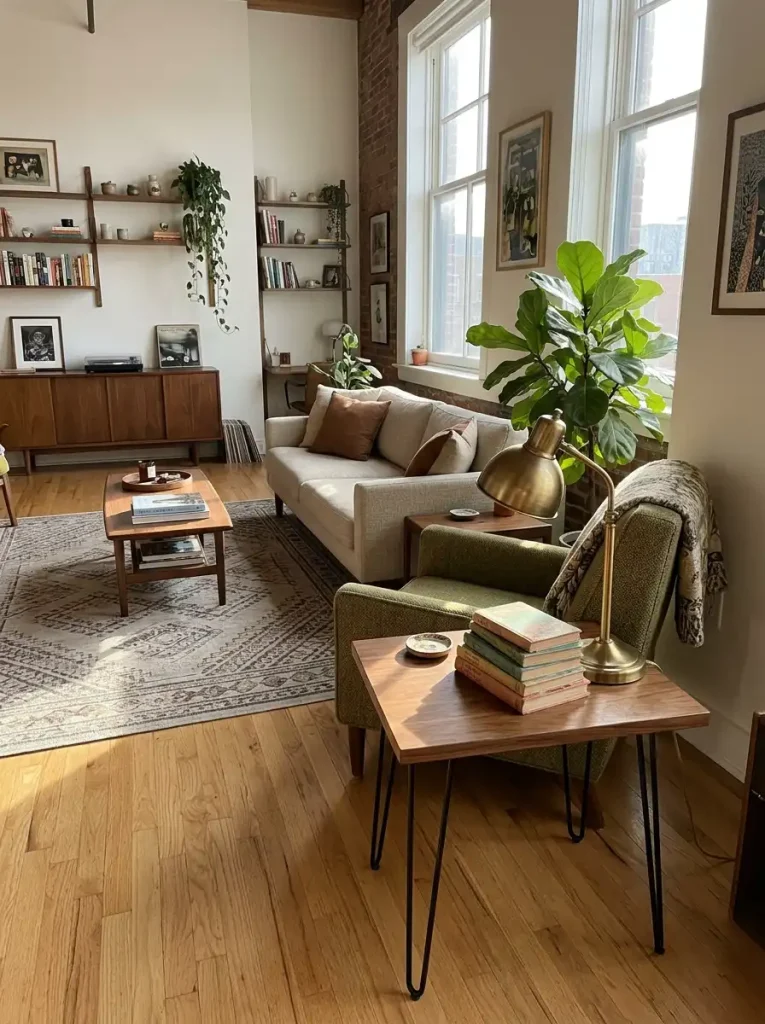
Mixing metal and wood is a classic mid century pairing.
A wooden chair with a metal frame, or a wood table with a metal base, adds contrast and keeps the room from feeling too heavy. Brass and matte black are both good choices.
24. Keep It Simple and Intentional
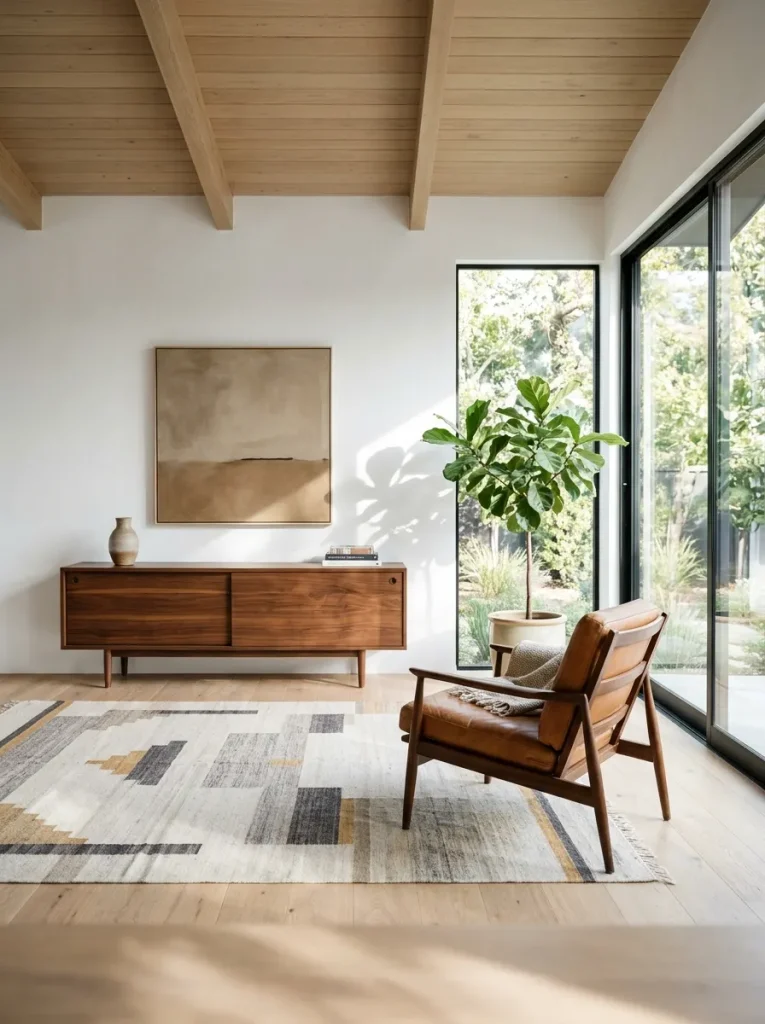
The most important mid century modern rule is restraint.
Choose a few strong pieces, give them space, and let the materials do the talking.
A room with three great pieces will always look better than a room with twenty average ones.
💡 Quick Tip
If you are not sure where to start, choose your wood tone first. Everything else, the paint, the rug, and the fabric, can be built around that single anchor.
Frequently Asked Questions
What are the key colors for a mid century modern living room?
The most common base colors are white, cream, and warm gray. The accent colors are usually mustard yellow, burnt orange, olive green, or teal. Keep the base neutral and use the accent colors in small amounts, like a pillow or a piece of art.
Can I mix mid century modern with other styles?
Yes. Mid century modern works well with other styles as long as the wood tones are consistent. A mid century credenza can sit in a room with modern art and a traditional rug. The key is to keep the palette and the shapes simple.
How do I make a small room feel mid century modern?
Use furniture with a low profile and exposed legs, like a low sofa and a glass coffee table. Keep the walls light. Add one tall plant and one statement light fixture. Avoid heavy fabrics and bulky furniture.
Final Thoughts
Mid century modern living rooms work because they are honest. They use real materials, clean shapes, and a limited palette. You do not need to buy a full set of vintage furniture. One good credenza, a low sofa, a statement chair, and a simple rug will get you most of the way there.
Start with the wood tone you love, build the rest of the room around it, and leave a little space for the room to breathe.