Are you sitting on hundreds of unused square feet in your basement while struggling with limited living space upstairs? Does your basement serve as nothing more than a dark, dingy storage area collecting dust and clutter?
Basement remodels represent one of the smartest home improvement investments, transforming neglected underground spaces into functional living areas that add substantial square footage, increase home value, and improve daily living without expensive additions requiring land and permits.
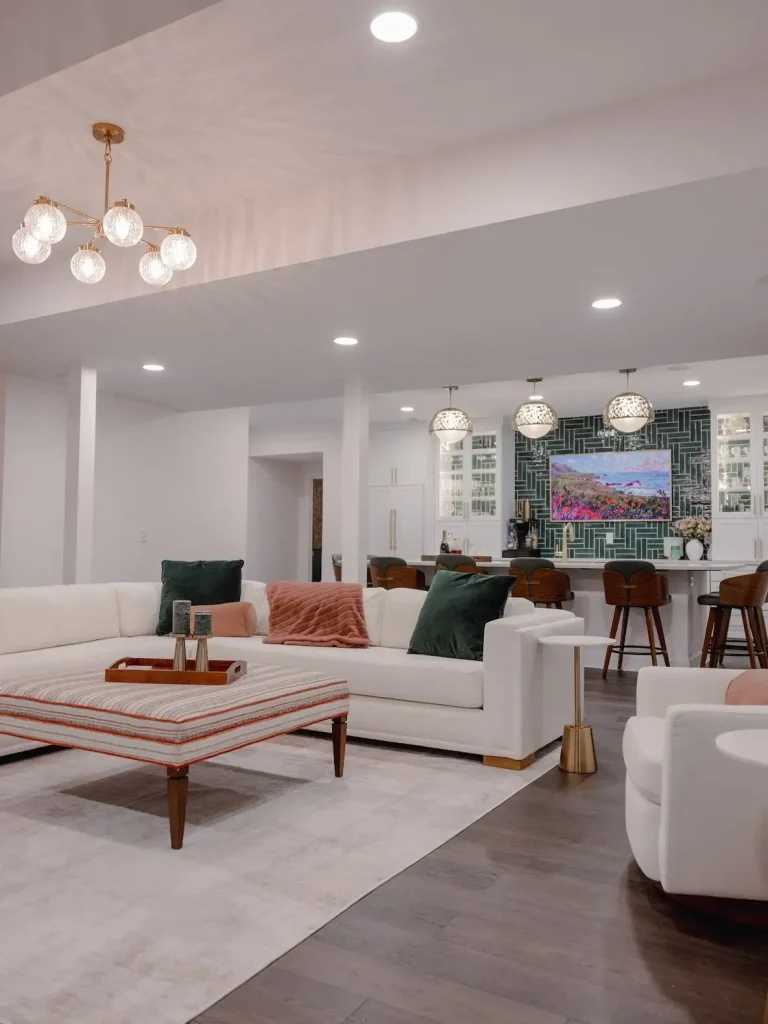
A finished basement can become anything you need—extra bedrooms for growing families, home offices supporting remote work, entertainment spaces for gathering with friends, home gyms eliminating costly memberships, or rental apartments generating income.
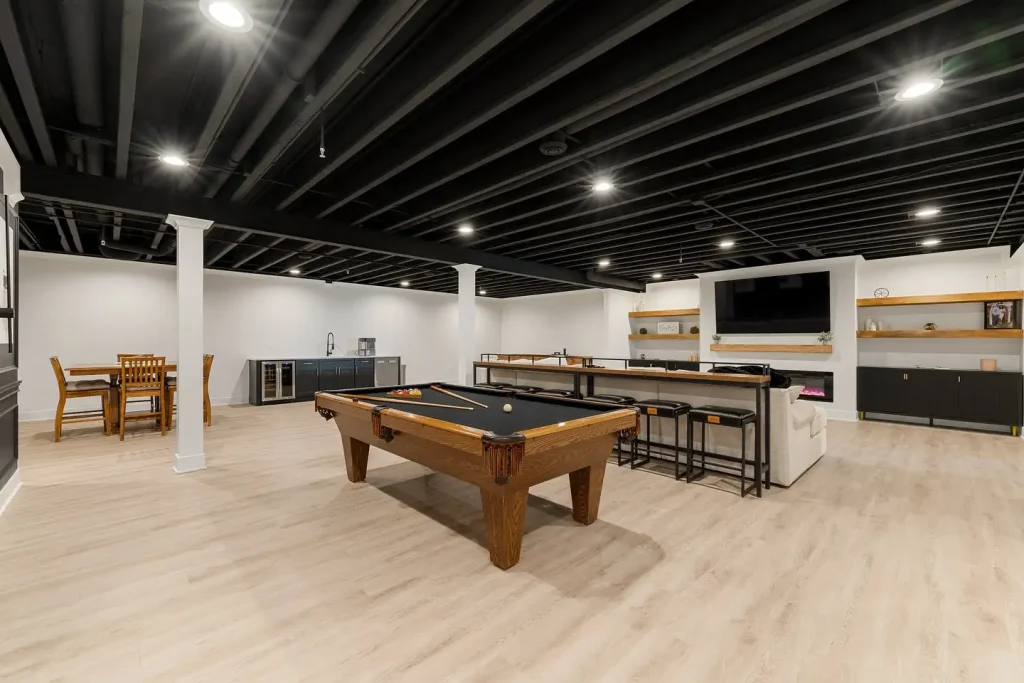
Source: @matrixbasementfinishing
The average basement remodel costs $20,000-$50,000 but can add $50,000-$80,000 in home value while providing immediate quality-of-life improvements. Whether you’re working with 400 or 1,500 square feet below grade, strategic planning transforms dark, underutilized basements into bright, welcoming spaces that become your home’s most-used areas.
Planning Your Basement Remodel
Assess Current Conditions
Begin by honestly evaluating your basement’s current state, checking for moisture issues, foundation cracks, inadequate headroom, or structural problems requiring remediation before cosmetic improvements.
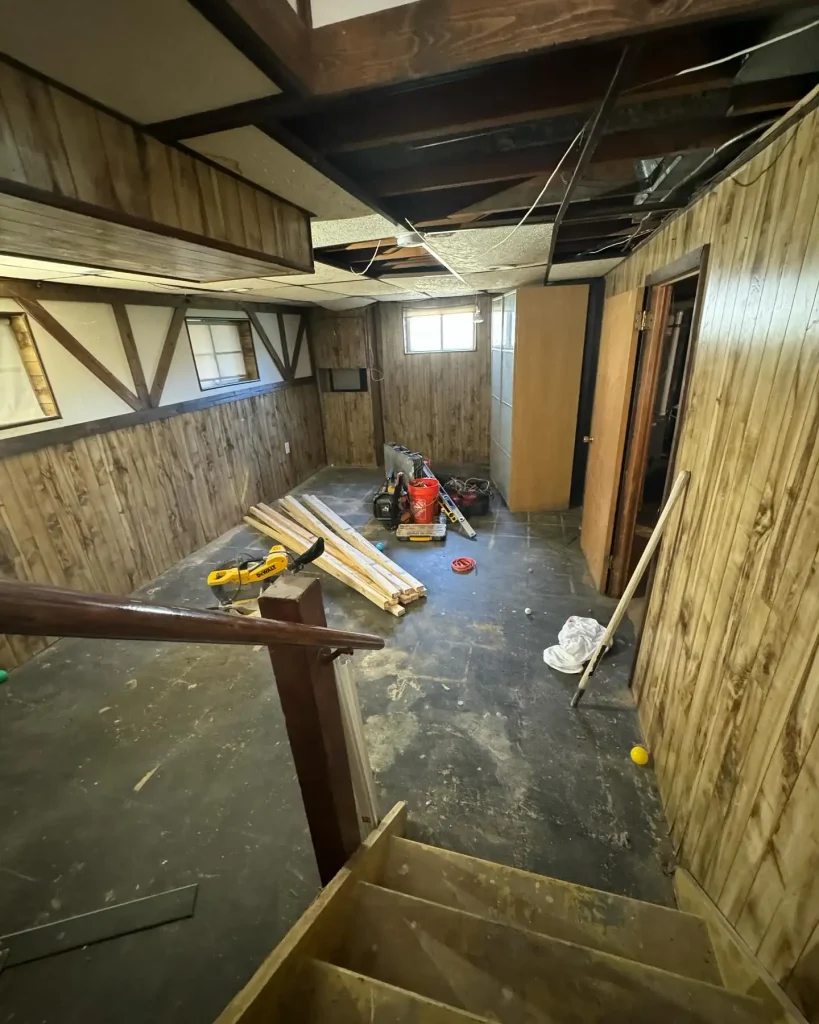
Measure ceiling heights—minimum 7 feet generally required for habitable spaces, though 8+ feet feels more comfortable and meets most building codes. Inspect for water infiltration through floor drains, foundation walls, or windows, as moisture problems must be resolved before investing in finishes that mold or mildew will destroy. For ceiling you can also try wood ceilings in your basements.
Establish Budget and Priorities
Determine realistic budgets before planning, understanding that basement remodels average $25-$100 per square foot depending on finish quality and scope. A 500 sq ft basic rec room might cost $12,500-$25,000, while a 1,000 sq ft apartment with full kitchen and bathroom runs $50,000-$100,000.
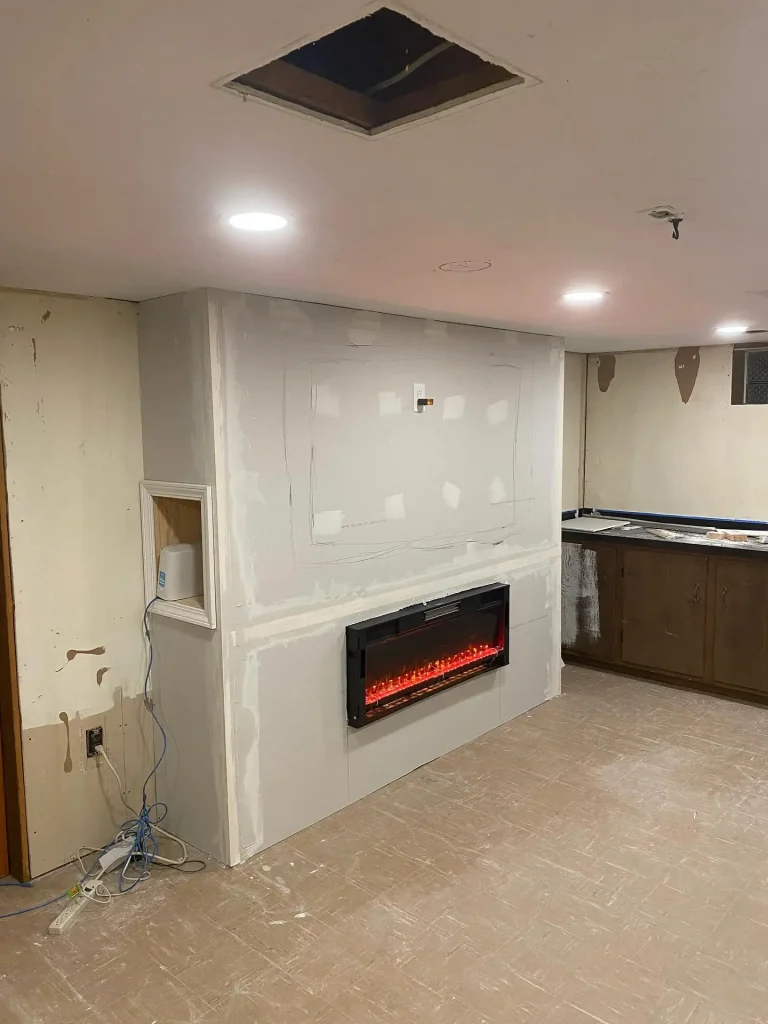
Prioritize must-haves versus nice-to-haves, potentially phasing projects across multiple years if budgets require spreading costs. Essential infrastructure including proper egress, electrical, and moisture control takes priority over decorative finishes that can wait.
Check Building Codes and Permits
Research local building codes regarding basement conversions, particularly for bedrooms requiring egress windows for emergency escape. Most jurisdictions require permits for substantial basement remodels including electrical, plumbing, or structural work.
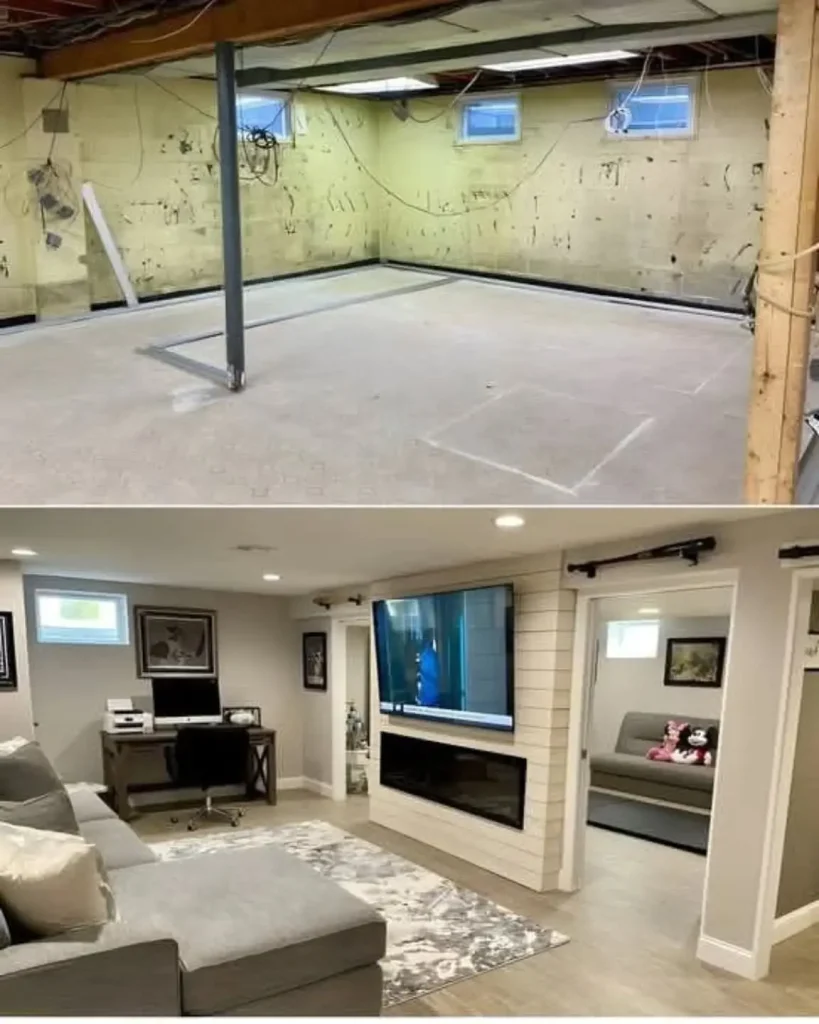
Source: @maximus.home.services
Permit costs typically run $500-$2,000 depending on project scope, and while tempting to skip, unpermitted work creates problems during home sales and insurance claims. Hire licensed contractors ensuring code compliance, or thoroughly research requirements if DIYing portions of projects. Behind TV you can try various wood panels and change the look.
Define Intended Use
Clarify how you’ll use finished basements before planning layouts and finishes. Home theaters require different considerations than bedrooms, while rental units need separate entrances and full amenities.
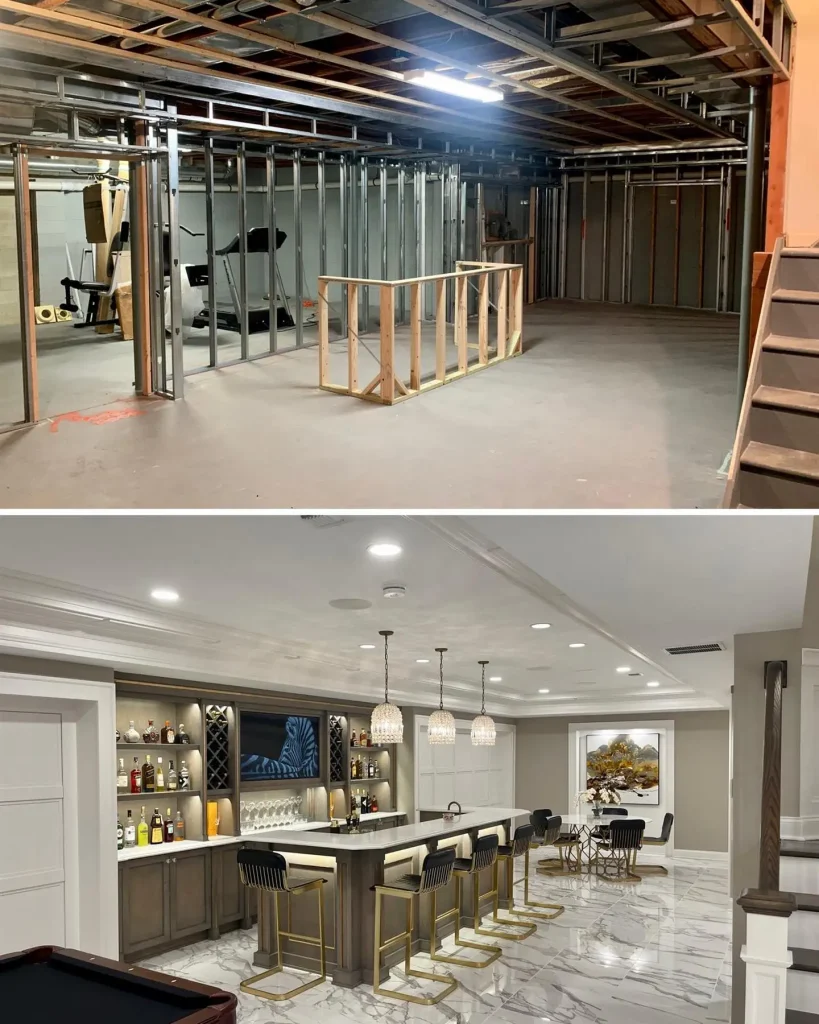
The intended function drives all subsequent decisions regarding layout, finishes, mechanical systems, and budget allocation. Be realistic about actual versus aspirational use—that elaborate wine cellar sounds wonderful but may not justify costs if you rarely entertain.
Essential Basement Remodel Elements
Moisture Control and Waterproofing
Moisture represents the biggest enemy of finished basements, making proper waterproofing non-negotiable for successful remodels. Interior solutions include vapor barriers, waterproof wall systems, and dehumidifiers maintaining proper humidity levels.
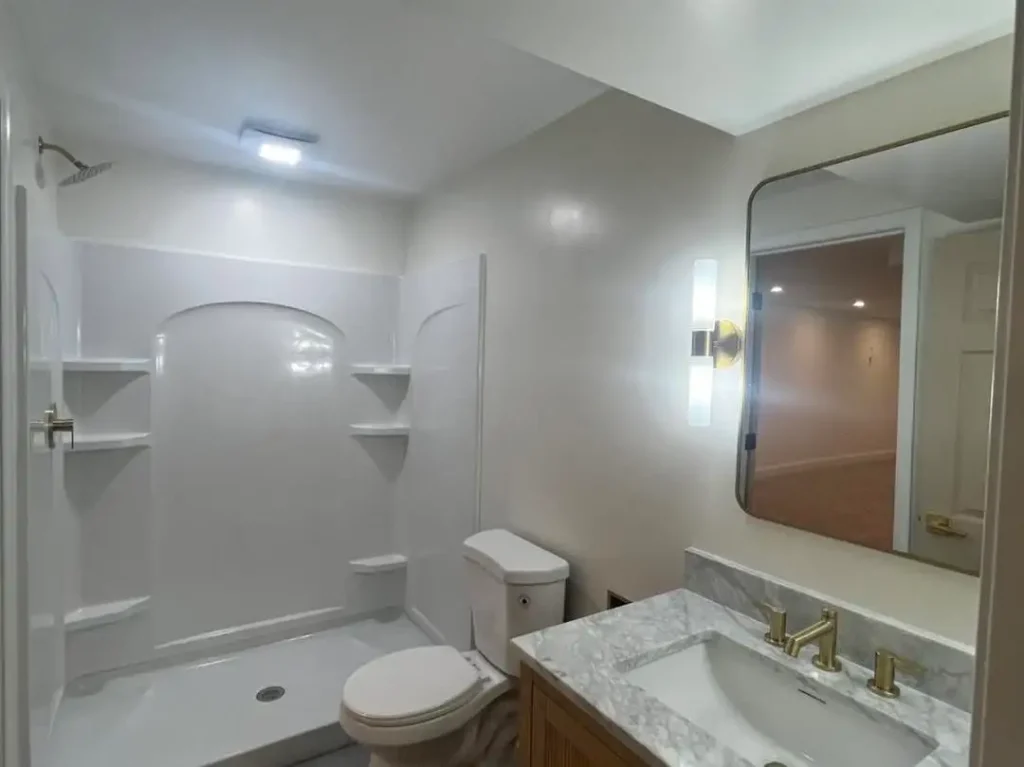
Source: @broadneckpropertiesllc
Exterior waterproofing through foundation sealing, proper grading directing water away, and gutter maintenance prevents water infiltration at source. Budget $3,000-$10,000 for comprehensive waterproofing depending on existing problems and solutions required ensuring dry, healthy below-grade spaces.
Proper Insulation and Climate Control
Insulate exterior foundation walls meeting local energy codes while creating comfortable temperatures year-round. Rigid foam insulation boards work well for concrete walls, while framed walls accommodate traditional fiberglass batts.
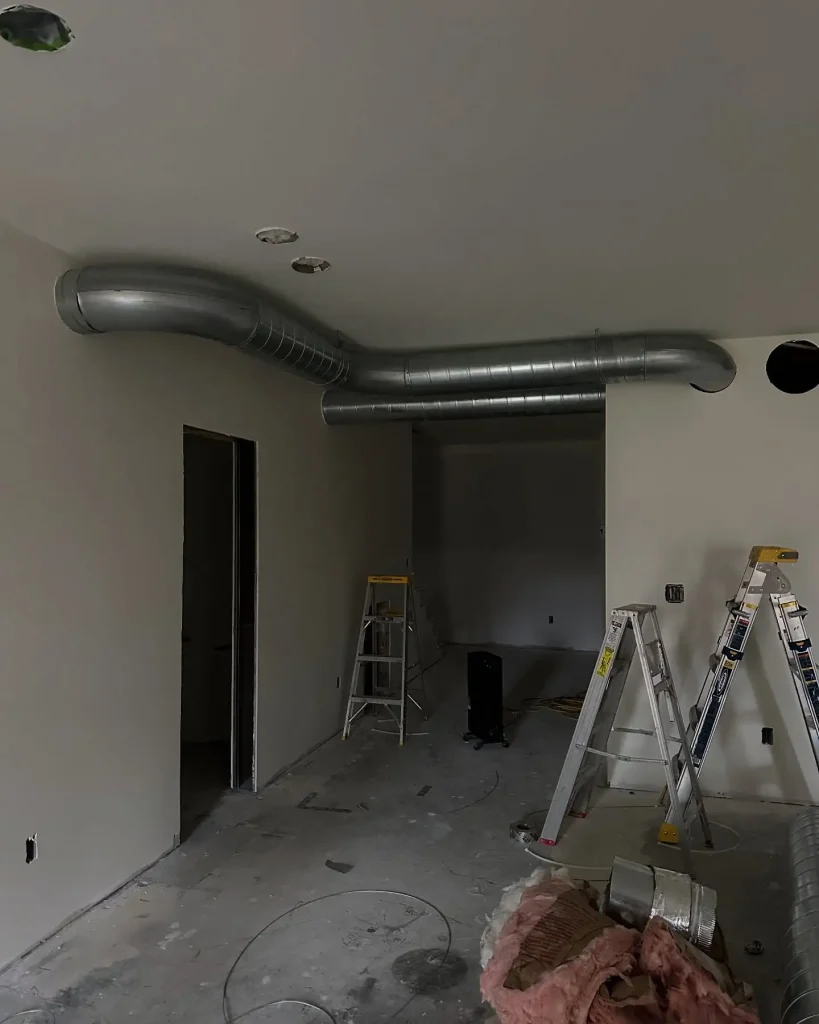
Extend HVAC systems into basements through additional ductwork ($2,000-$5,000) or install separate mini-split systems ($3,000-$8,000) providing independent climate control. Proper insulation and heating/cooling transform cold, damp basements into comfortable spaces usable year-round. See different ideas for slat ceiling to cover up the pipes.
Adequate Lighting Solutions
Combat natural darkness through layered lighting including recessed cans, track lighting, and portable lamps creating bright, welcoming environments. Plan 1 recessed light per 25-50 sq ft depending on ceiling height and desired brightness.
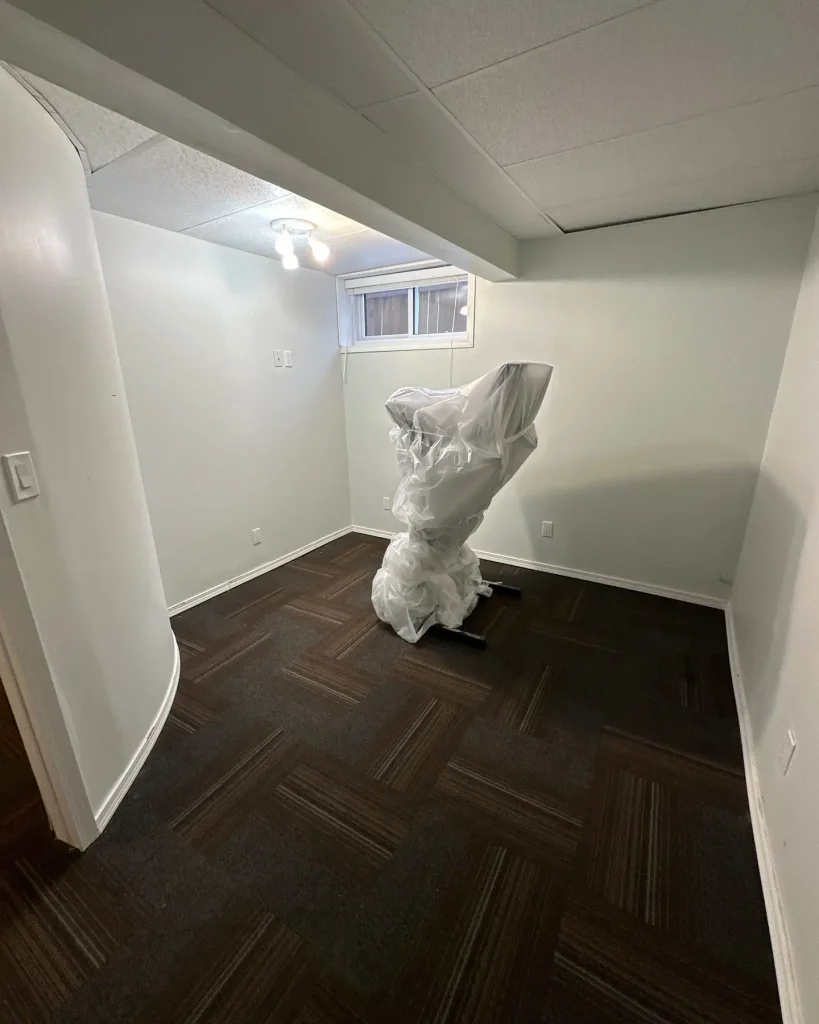
Add lighting dimmer controls allowing adjustment for various activities and moods. Maximize natural light through window wells, glass block windows, or enlarged openings where possible. Proper lighting proves crucial making basements feel less cave-like and more like upstairs living spaces. For lighting guidance, see our guide to ceiling lights.
Ceiling Treatment Options
Basement ceilings present unique challenges with exposed mechanicals, low clearance, and utilitarian appearances. Drop ceilings ($2-$5/sq ft) provide easy access to utilities while creating finished appearances. Painted exposed ceilings ($1-$3/sq ft) cost less and maintain maximum headroom by painting joists, ductwork, and pipes uniform colors creating industrial aesthetics.
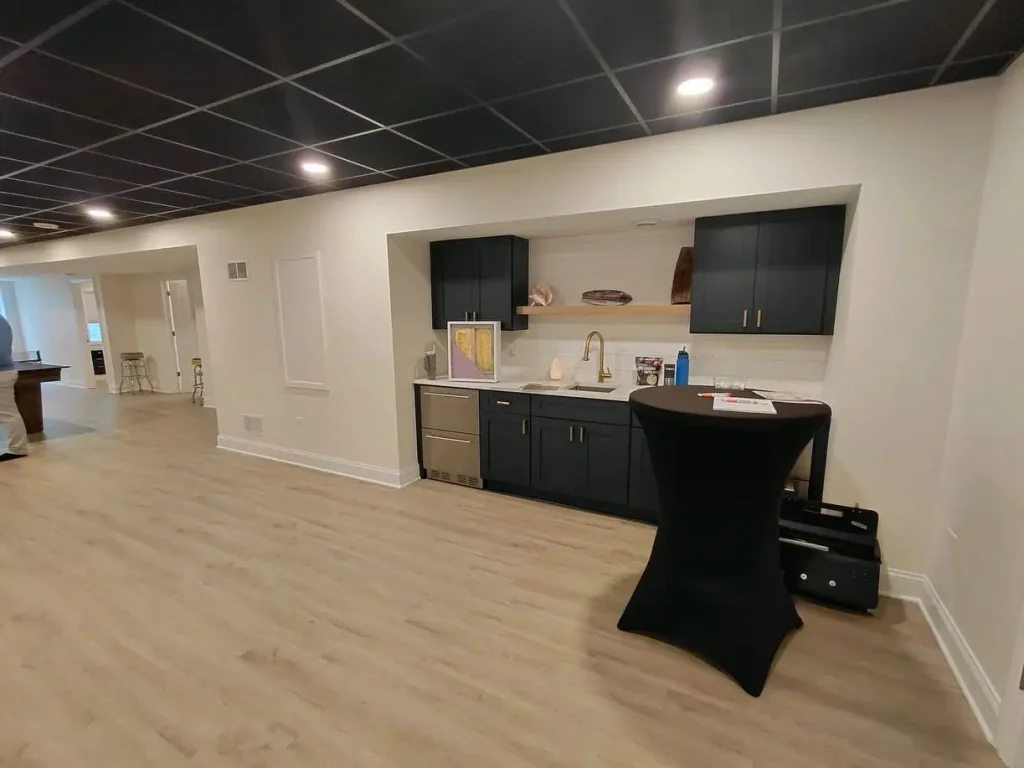
Source: @matrixbasementfinishing
Drywall ceilings ($3-$8/sq ft) deliver most finished appearances but permanently conceal mechanicals, complicating future repairs. For ceiling inspiration, visit our brilliant basement ceiling ideas and exposed basement ceiling guides.
Popular Basement Remodel Ideas
Family Room and Entertainment Space
Create comfortable gathering areas with sectional sofas, large TVs, game tables, and mini bars perfect for family movie nights and entertaining friends. This most common basement use typically costs $15,000-$35,000 for 400-600 sq ft including flooring, drywall, lighting, and basic finishes.
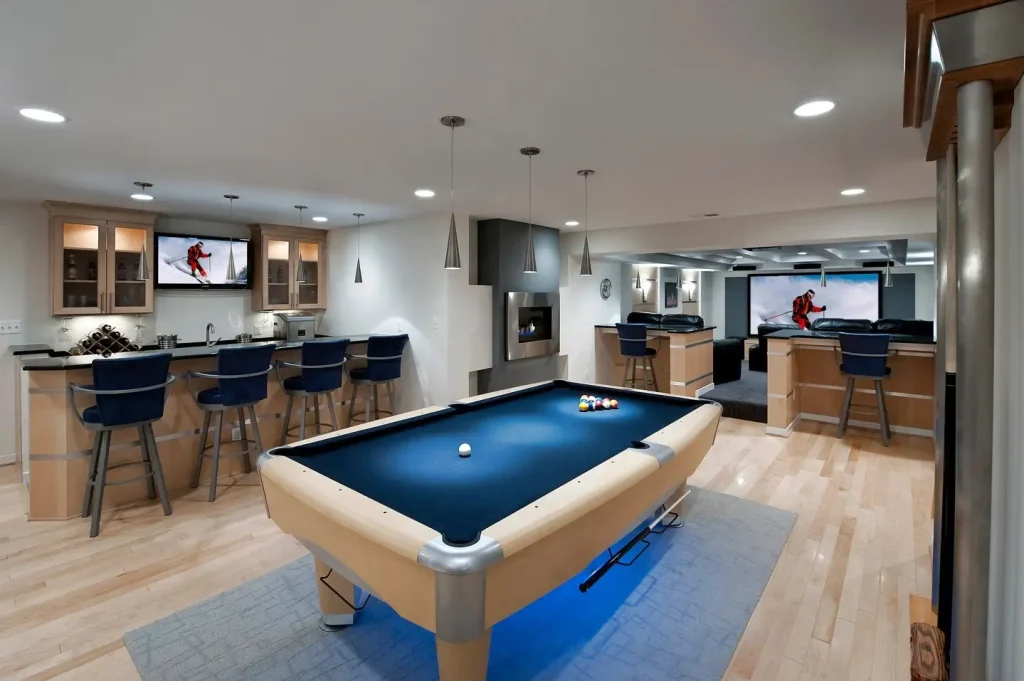
Source: @mossbuildinganddesign
Add wet bars ($2,000-$8,000) or home theater seating ($2,000-$10,000) elevating entertainment experiences. The casual basement setting encourages relaxation without worrying about pristine upstairs living room maintenance. For living room design, see our home decor ideas for the living room guide.
Home Office and Remote Work Space
Transform basements into dedicated offices separating work from family life while capitalizing on quiet, distraction-free environments. Include proper desk areas, adequate electrical outlets for equipment, excellent lighting, and comfortable temperature control supporting productive work.
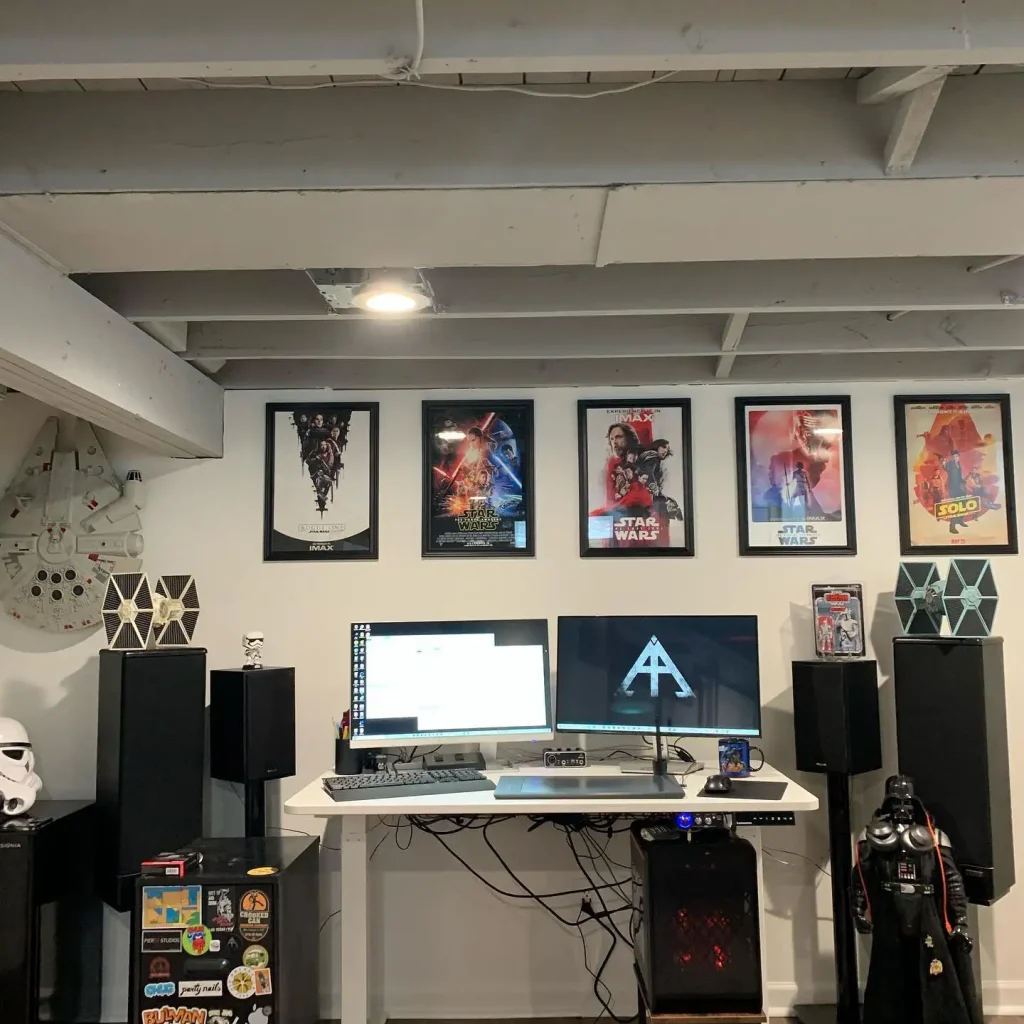
Budget $10,000-$25,000 for 200-300 sq ft professional office space with quality finishes. The separated workspace helps maintain work-life boundaries increasingly important as remote work becomes permanent for many professionals. Visit our home office ideas for office design inspiration.
Guest Suite or In-Law Apartment
Create self-contained living spaces for guests, aging parents, or adult children with bedrooms, bathrooms, and potentially kitchenettes providing privacy and independence. These comprehensive projects cost $30,000-$80,000 depending on amenities and finishes.
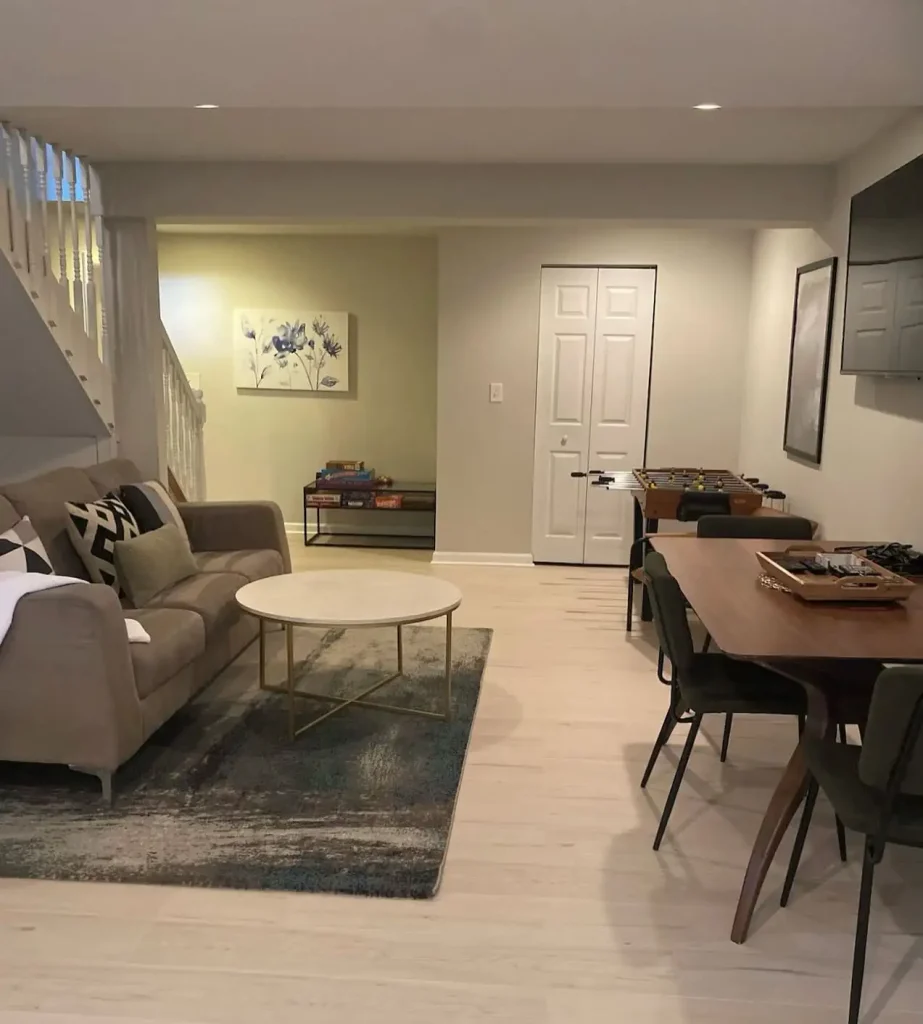
Separate exterior entrances ($3,000-$8,000) provide autonomy while egress windows ($2,000-$5,000 each) ensure code compliance for bedrooms. The investment often pays for itself through avoided assisted living costs or rental income from long-term tenants. See our guest bedroom ideas for guest space design.
Home Gym and Fitness Center
Build personal fitness spaces eliminating expensive gym memberships while providing convenient exercise access without leaving home. Rubber flooring ($2-$8/sq ft), mirrors ($200-$500), and equipment ($2,000-$10,000+) create functional workout areas. Budget $8,000-$20,000 for complete gym setups including flooring, finishes, and equipment.
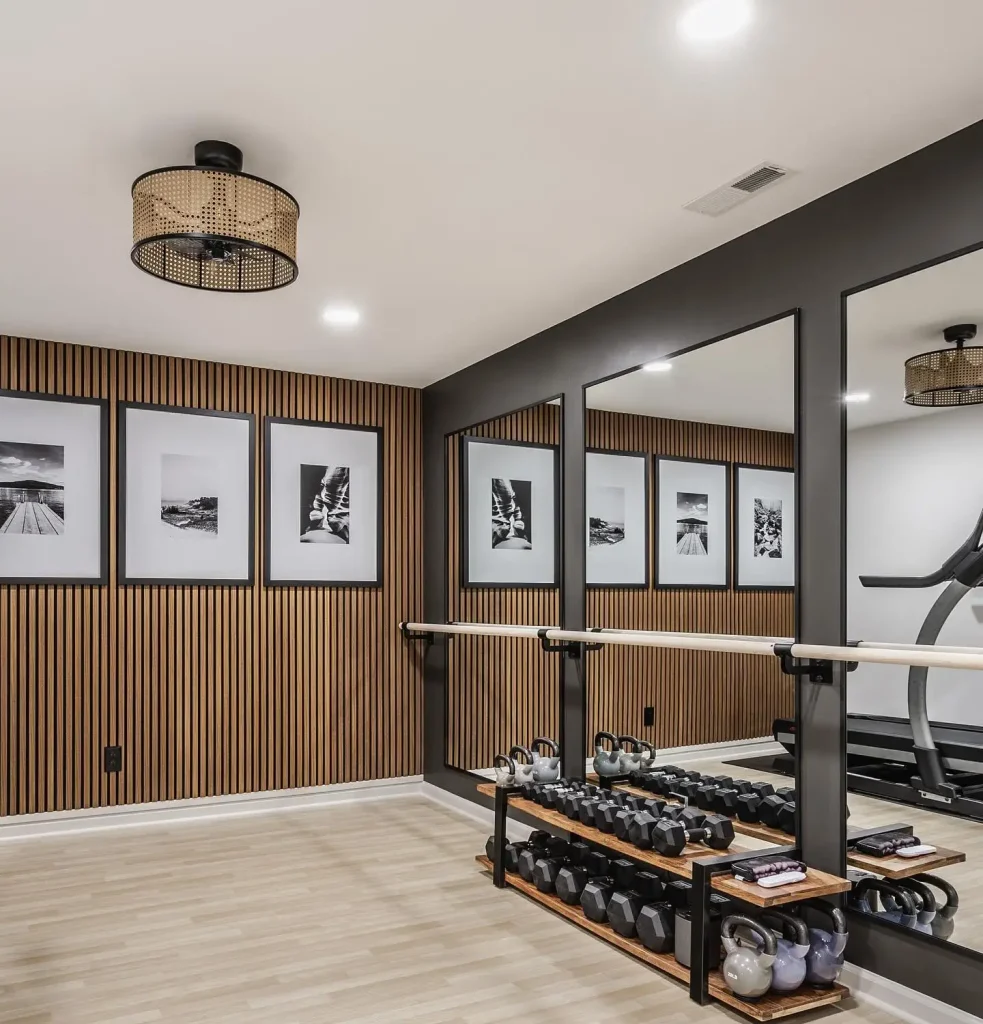
The basement location contains noise and equipment without disrupting main living areas, while climate control ensures comfortable workouts year-round regardless of outdoor conditions.
Playroom and Kids’ Space
Designate basements as dedicated play areas containing toys, crafts, and kid chaos without overwhelming main living spaces. Durable, easy-clean finishes including luxury vinyl flooring ($2-$7/sq ft), washable paint, and simple furnishings withstand rough play.
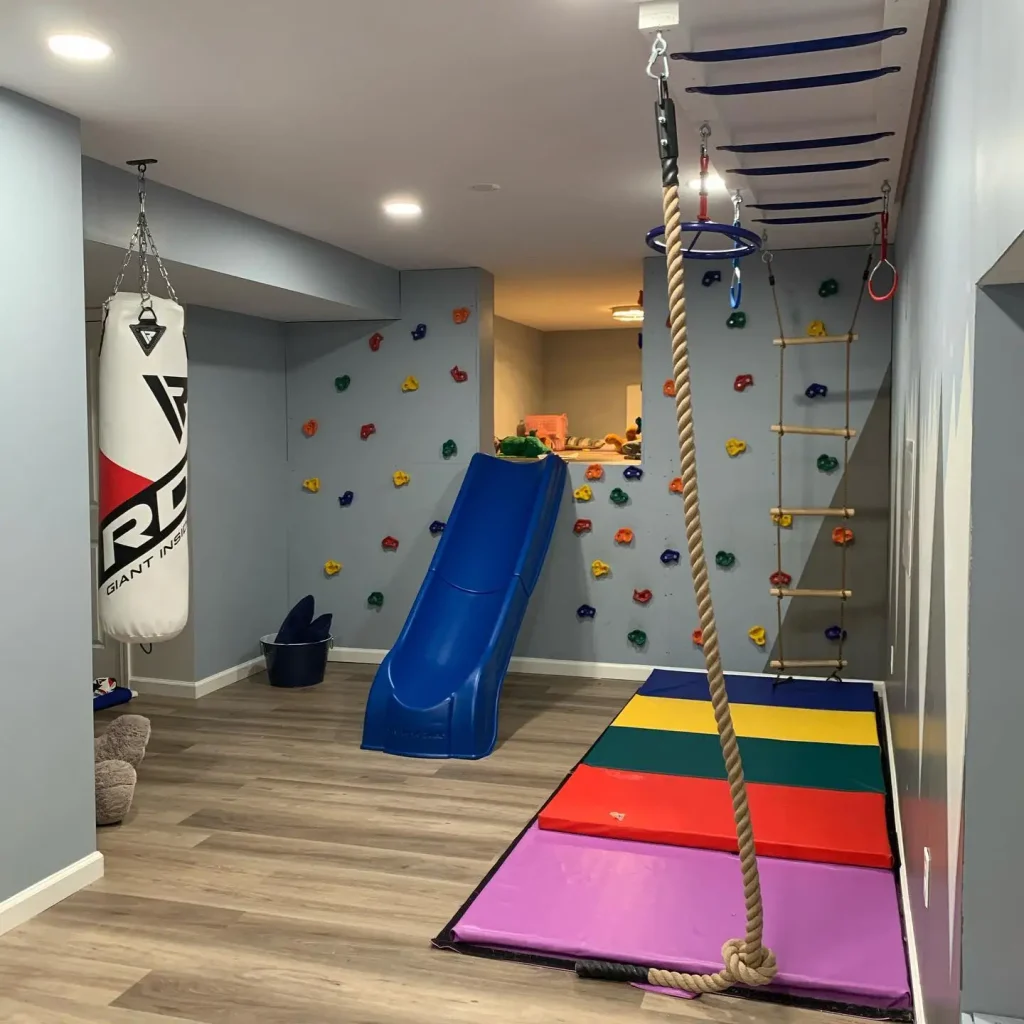
Include ample storage organizing toys while maintaining adult sanity through contained clutter. Budget $12,000-$25,000 for 400-500 sq ft playrooms that grow with children from toddlers through teenagers needing hangout spaces.
Rental Income Unit
Convert basements into rental apartments generating $800-$2,000+ monthly income offsetting mortgages while building equity. These comprehensive remodels cost $40,000-$100,000+ including separate entrances, full kitchens, bathrooms, and mechanical systems.
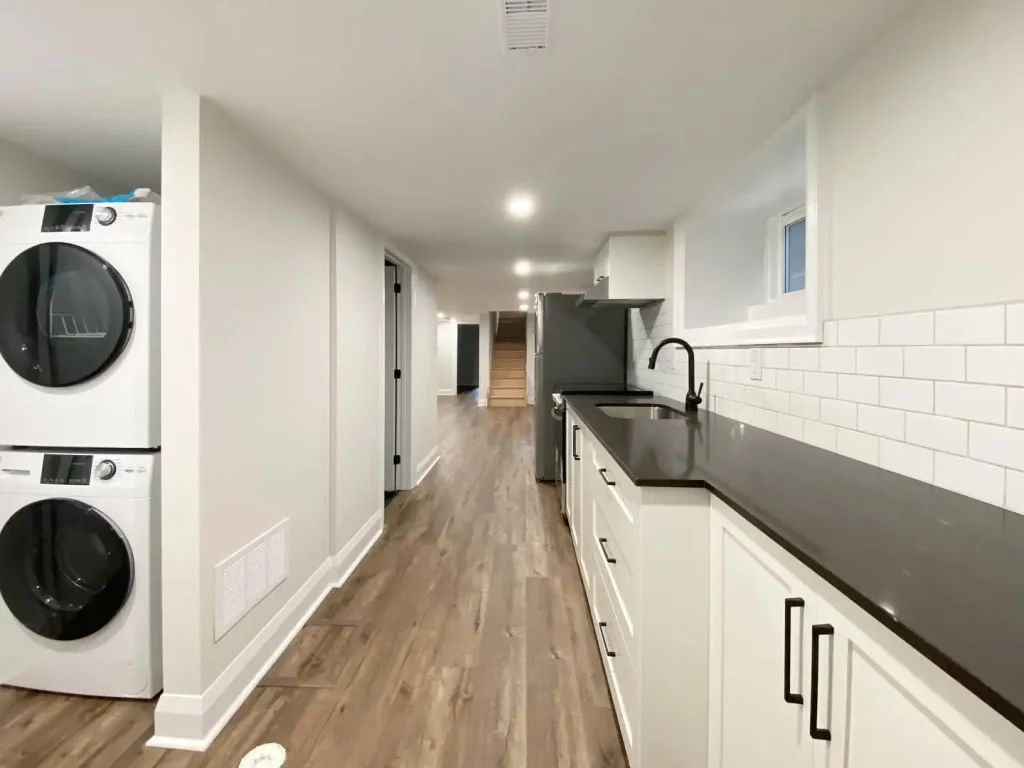
Research local rental regulations, zoning requirements, and tax implications before committing. The rental income can pay for remodeling within 3-7 years while providing long-term cash flow and increased property values attractive to future buyers seeking investment properties.
Flooring Options for Basements
Luxury Vinyl Plank (LVP) ($2-$7/sq ft)
Luxury vinyl represents the most popular basement flooring, offering waterproof performance, realistic wood or stone appearances, and comfortable underfoot feel. The floating installation over concrete proves DIY-friendly while professional installation costs $1-$3/sq ft.
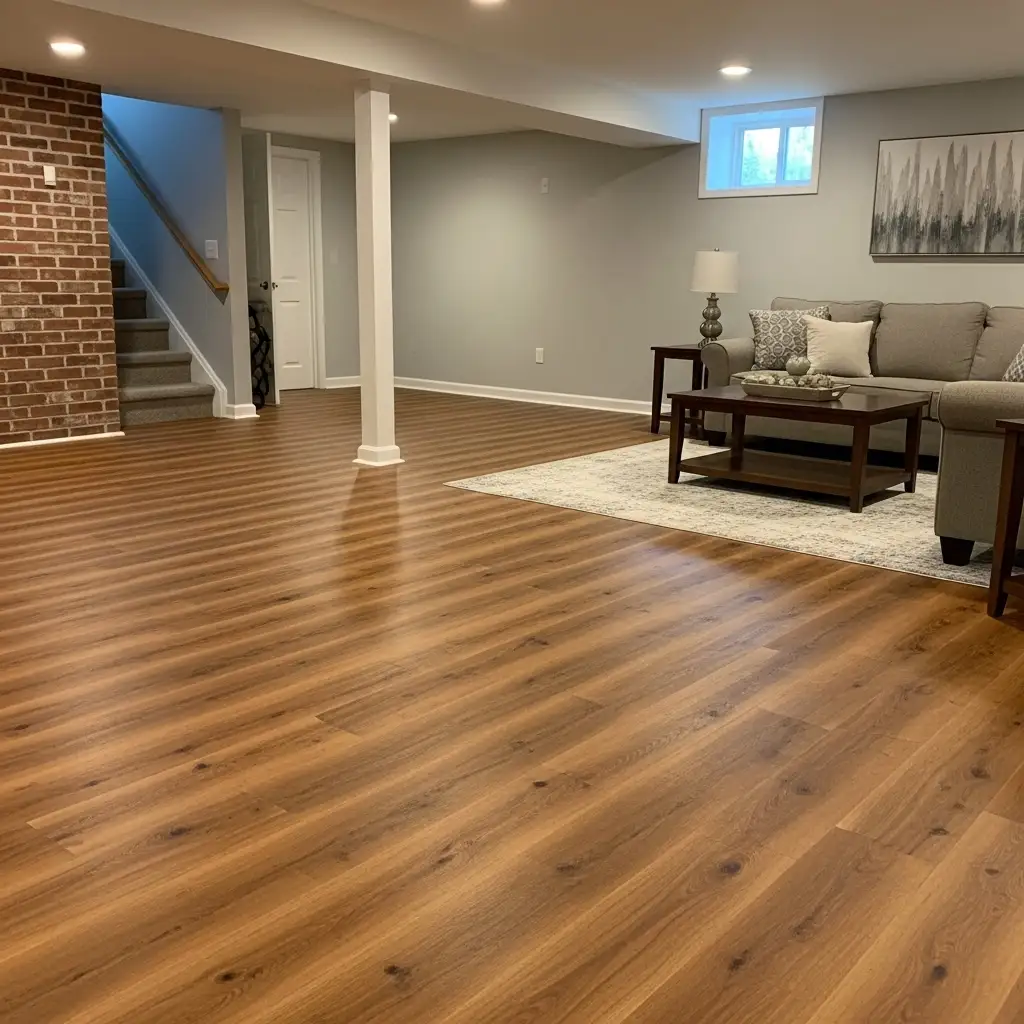
LVP withstands moisture better than laminate or hardwood, making it ideal for below-grade applications where humidity and potential water issues threaten traditional materials. The durability and low maintenance suit high-traffic family spaces.
Engineered Hardwood ($3-$8/sq ft)
Engineered hardwood provides authentic wood beauty with superior moisture resistance compared to solid hardwood unsuitable for basements. The layered construction resists warping and cupping caused by humidity fluctuations common in below-grade spaces.

Source: @masterstouchdesignbuild
Install over proper underlayment with moisture barriers protecting from concrete dampness. While more expensive than vinyl, engineered wood adds warmth and perceived value that synthetic materials cannot match for those prioritizing authentic materials.
Carpet and Carpet Tile ($2-$8/sq ft)
Carpet creates warm, comfortable basement spaces perfect for family rooms and bedrooms where softness underfoot matters. Choose low-pile, stain-resistant carpets or carpet tiles allowing replacement of damaged sections without full room renovations.
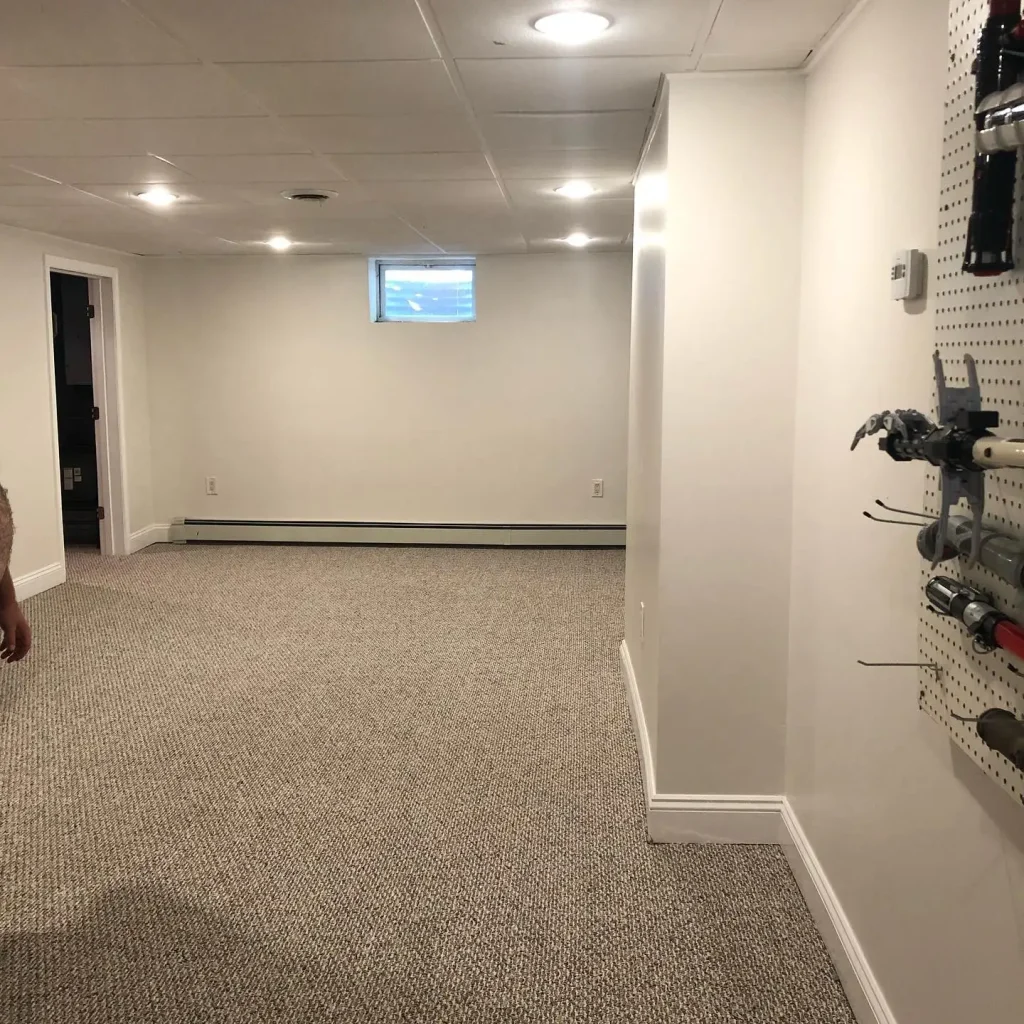
Ensure proper moisture control before installing carpet, as damp conditions promote mold growth within carpet padding. Carpet tiles offer flexibility and easy maintenance particularly valuable in basements prone to occasional moisture issues.
Concrete Staining and Polishing ($2-$15/sq ft)
Embrace exposed concrete through staining, polishing, or epoxy coatings creating industrial-chic aesthetics at reasonable costs. These durable finishes withstand anything while requiring minimal maintenance beyond occasional mopping.
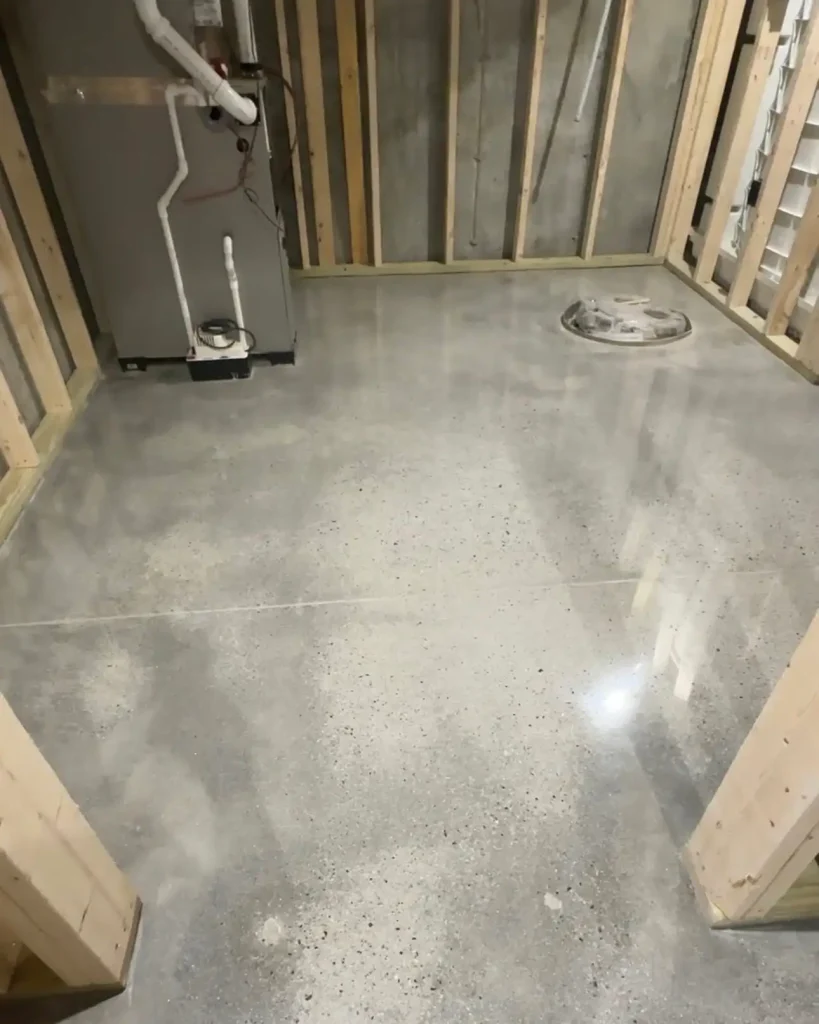
The modern approach works beautifully in contemporary basements, home gyms, or workshop spaces where durability trumps softness. Budget $3-$6/sq ft for basic staining or $8-$15/sq ft for elaborate epoxy systems with decorative flakes or metallic finishes.
Basement Remodel Costs Breakdown
Basic Finish ($25-$50/sq ft)
Basic remodels include framed drywall walls, drop ceilings, basic lighting, vinyl or carpet flooring, and paint creating functional spaces without luxury finishes. A 500 sq ft basement runs $12,500-$25,000, providing livable space at minimum investment. This approach suits rentals, playrooms, or storage areas where durability and function matter more than aesthetics. The budget finish establishes functional spaces that can be upgraded gradually as budgets allow.
Mid-Range Finish ($50-$75/sq ft)
Mid-range basements include quality finishes like engineered hardwood floors, upgraded lighting, finished drywall ceilings, custom built-ins, and one bathroom. A 700 sq ft space costs $35,000-$52,500, creating comfortable family rooms, offices, or guest suites with professional appearances. This sweet spot balances quality and cost, delivering spaces that feel finished without luxury price tags. Most homeowners find mid-range finishes provide satisfying results justifying investments.
High-End Finish ($75-$150+/sq ft)
Luxury basement remodels feature premium materials including stone countertops, custom cabinetry, high-end flooring, elaborate lighting, full kitchens, multiple bathrooms, and designer finishes. A 1,000 sq ft luxury basement costs $75,000-$150,000+, creating show-quality spaces rivaling main-level rooms. This investment suits income-generating rentals, primary living spaces, or homeowners demanding perfection in every detail. The quality finishes command premium resale values while providing daily enjoyment justifying substantial investments.
Budget-Saving Strategies
DIY What You Can
Complete demolition, painting, and finishing work yourself, hiring professionals only for electrical, plumbing, and structural work requiring expertise and permitting. This approach saves 40-60% on labor costs, potentially reducing $40,000 projects to $20,000-$25,000 through sweat equity. Be realistic about skills and available time—incomplete DIY projects waste money and create frustration better avoided through strategic professional hiring.
Phase the Project
Complete basements in stages spreading costs across years while maintaining livable conditions. Finish essential infrastructure first, then add features as budgets allow. This measured approach prevents debt while steadily improving homes without financial stress. Start with one area creating functional space, then expand gradually rather than attempting everything simultaneously and running out of money mid-project.
Choose Cost-Effective Materials
Select budget-friendly materials delivering good performance without premium pricing. Basic LVP flooring, standard LED lighting, and builder-grade fixtures cost substantially less than luxury alternatives while providing years of service. Save splurges for highly visible areas while economizing on hidden or low-impact elements. The strategic material selection maintains quality where it matters while controlling overall costs.
Maintain Exposed Elements
Paint exposed ceilings, leave concrete floors stained rather than covered, or embrace industrial aesthetics celebrating rather than concealing basement’s below-grade nature. This approach saves thousands while creating trendy industrial designs popular in modern homes. The exposed aesthetic actually costs less than attempting to disguise basement characteristics through expensive finishes. For exposed ceiling inspiration, see our basement painted ceiling low height spaces guide.
Common Basement Remodel Mistakes
Ignoring Moisture Issues
Proceeding with finishes before addressing water problems guarantees mold, rot, and wasted investment. Always solve moisture issues first through proper drainage, waterproofing, and dehumidification before installing materials that moisture will destroy. The unsexy infrastructure investments protect everything else, making them non-negotiable despite temptations to skip straight to attractive finishes.
Insufficient Lighting
Underestimating lighting needs creates dark, unwelcoming basements that families avoid despite expensive finishes. Plan abundant lighting exceeding upstairs requirements, compensating for limited natural light. The extra investment in quality lighting transforms basements from dungeon-like to inviting, making them spaces families actually use rather than avoid.
Inadequate Insulation
Skimping on insulation creates uncomfortable temperatures and high energy bills negating basement advantages. Properly insulate all exterior walls meeting or exceeding code requirements ensuring year-round comfort. The upfront insulation investment pays back through reduced energy costs while making basements comfortable regardless of outside weather conditions.
Poor Space Planning
Failing to plan layouts thoughtfully creates awkward, inefficient spaces that don’t meet needs despite substantial investments. Consider traffic flow, furniture placement, and functional zones before construction begins. Mock up layouts with cardboard or tape, living with temporary arrangements ensuring satisfaction before permanent construction commits plans to reality.
Frequently Asked Questions
How much does a basement remodel cost?
Basement remodels average $20,000-$50,000 for typical 500-800 sq ft spaces, or approximately $25-$75 per square foot depending on finish quality. Basic functional finishes run $25-$50/sq ft, mid-range remodels cost $50-$75/sq ft, and luxury finishes exceed $75-$150/sq ft. Costs vary dramatically based on existing conditions, local labor rates, finish selections, and whether adding bathrooms or kitchens requiring plumbing and electrical work.
Do basement remodels add value to homes?
Yes, basement remodels typically add $50,000-$80,000 in home value while costing $20,000-$50,000, delivering strong returns on investment. Finished basements make homes more competitive in markets while appealing to buyers seeking maximum living space. The actual value added depends on quality, local market conditions, and whether spaces include bedrooms and bathrooms that buyers value most highly.
How long does a basement remodel take?
Basic basement remodels take 4-8 weeks from demolition through completion, while complex projects including bathrooms, kitchens, or extensive structural work require 2-4 months. Timeline depends on project scope, contractor availability, permit processing, and whether you’re DIYing portions requiring more time than professional work. Plan conservatively, adding buffer time for inevitable delays and unexpected complications common in renovation projects.
Can I finish my basement myself?
Yes, handy homeowners can complete many basement remodel tasks including demolition, framing, drywall, painting, and flooring installation. However, hire licensed professionals for electrical, plumbing, HVAC, and structural work requiring permits and expertise. DIY approach saves 40-60% on labor but requires significant time investment, proper tools, and realistic assessment of skills avoiding costly mistakes requiring professional correction.
Conclusion: Unlock Your Home’s Hidden Potential
Basement remodels represent smart investments that add substantial living space, increase home values, and improve daily life through expanded functionality meeting family needs. Whether creating entertainment spaces, home offices, guest suites, or rental units, finished basements transform neglected underground areas into valuable rooms that become homes’ most-used and appreciated spaces. The investment pays immediate dividends through improved quality of life while building equity that benefits homeowners for decades or during eventual home sales.
Start your basement transformation by honestly assessing current conditions, establishing realistic budgets, clarifying intended uses, and researching code requirements before beginning work. Whether tackling projects yourself or hiring professionals, proper planning ensures successful results that serve families beautifully while delivering strong returns on investments that make financial sense alongside lifestyle improvements.
Ready to explore more basement possibilities? Check our guides including multipurpose rooms ideas, home library ideas, small apartment ideas, home interior design ideas, and laundry room guide for complete home design inspiration.
Your basement transformation awaits—start planning today and unlock hundreds of square feet of valuable living space hiding beneath your feet, turning dark, wasted areas into bright, beautiful rooms that enhance your home and life immeasurably.