
Your ceiling design living room is prime real estate that’s often left completely blank. While walls get gallery treatments and floors receive beautiful rugs, ceilings remain forgotten—yet they occupy the same square footage and significantly impact how your entire space feels.
A thoughtfully designed living room ceiling can transform an ordinary room into an extraordinary gathering space that impresses guests and delights your family daily.
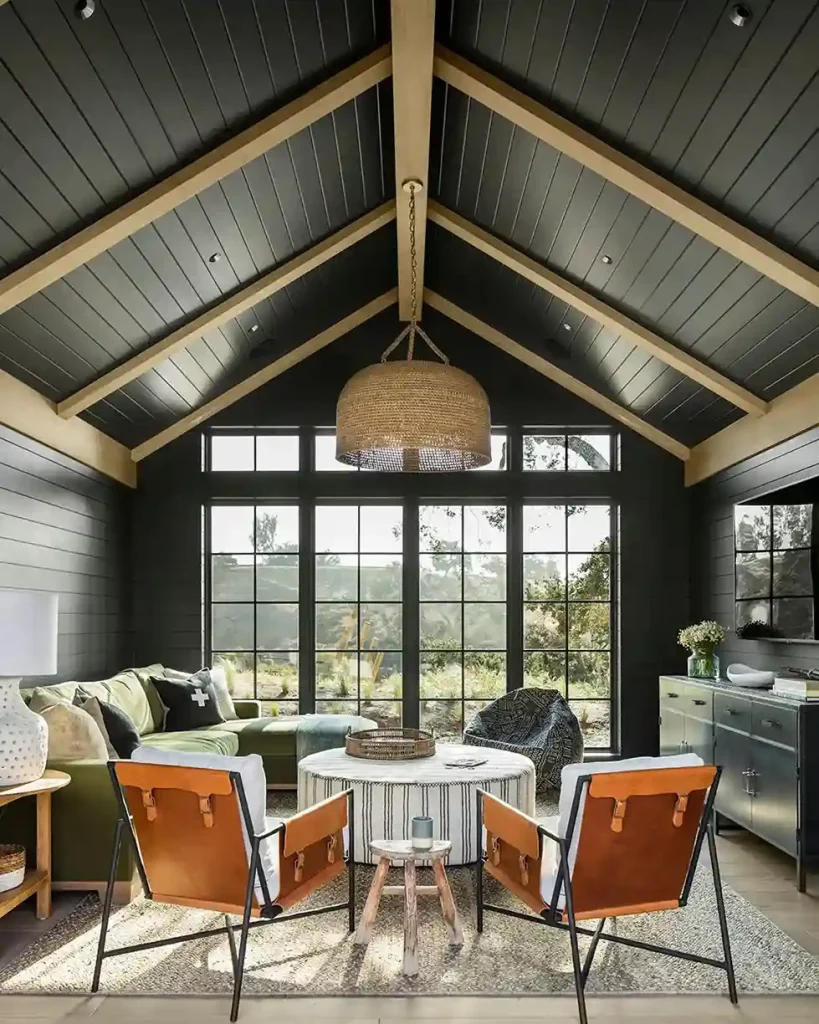
Credits: @betterhomesandgardens
The living room presents unique ceiling design opportunities because it’s a public space where you can make bold statements without the intimate considerations of bedrooms. Whether you’re working with standard eight-foot ceilings or blessed with soaring heights, the right ceiling treatment creates atmosphere, defines spaces, and adds architectural value to your home.
Understanding Your Living Room’s Ceiling Potential
Before choosing a ceiling design, assess what you’re working with. Ceiling height dramatically influences which treatments work best. Standard eight-foot ceilings benefit from designs that create illusions of height—lighter colors, vertical elements, or simple treatments that don’t overwhelm.
Nine to ten-foot ceilings offer flexibility for most designs, while ceilings over ten feet can handle dramatic treatments like substantial beams, deep coffers, or bold colors without feeling oppressive.
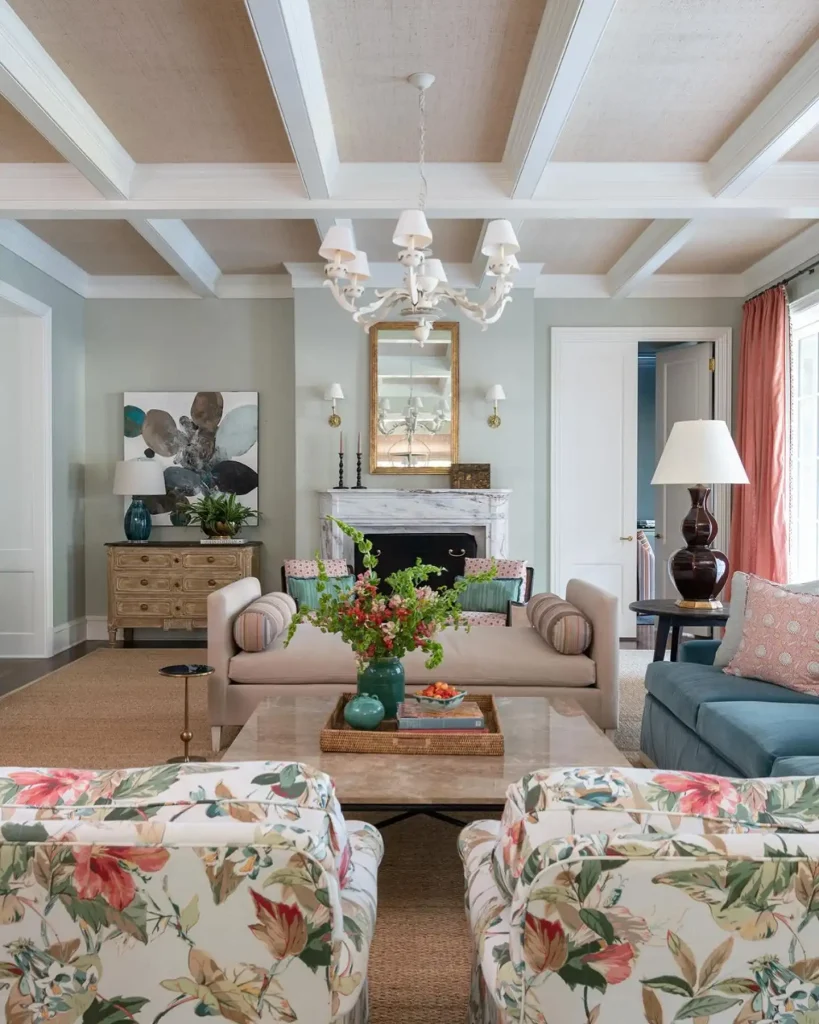
Credits: @lindseyherodinteriors
Natural light patterns matter too. Rooms flooded with sunlight can handle darker ceiling treatments that might feel heavy in dim spaces. Evening lighting becomes crucial—your ceiling design should enhance rather than fight your lighting plan.
Color as Ceiling Design
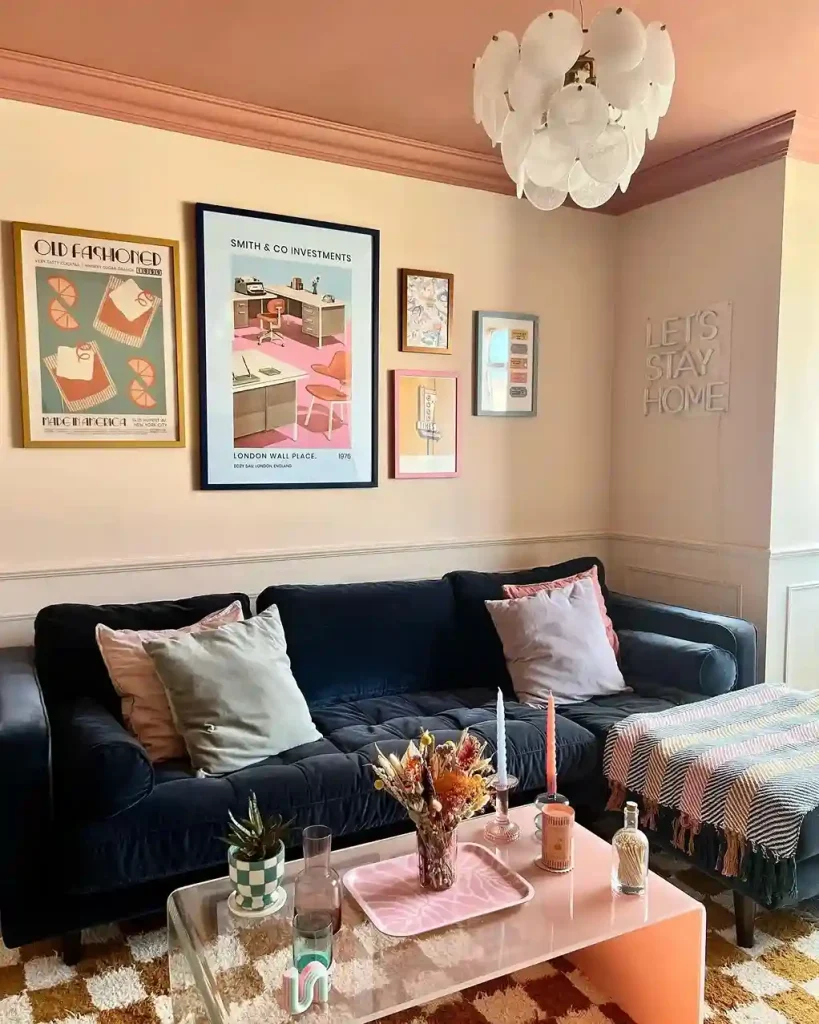
Credits: @homeofcharl
Paint is the most accessible ceiling design tool, yet most people default to builder-grade white without considering alternatives. Strategic ceiling color dramatically changes living room dynamics.
Extend Wall Color Upward: Painting ceilings the same color as walls creates seamless, envelope-like effects that make rooms feel larger and more cohesive. This technique works brilliantly in small living rooms where you want to blur boundaries and maximize perceived space.
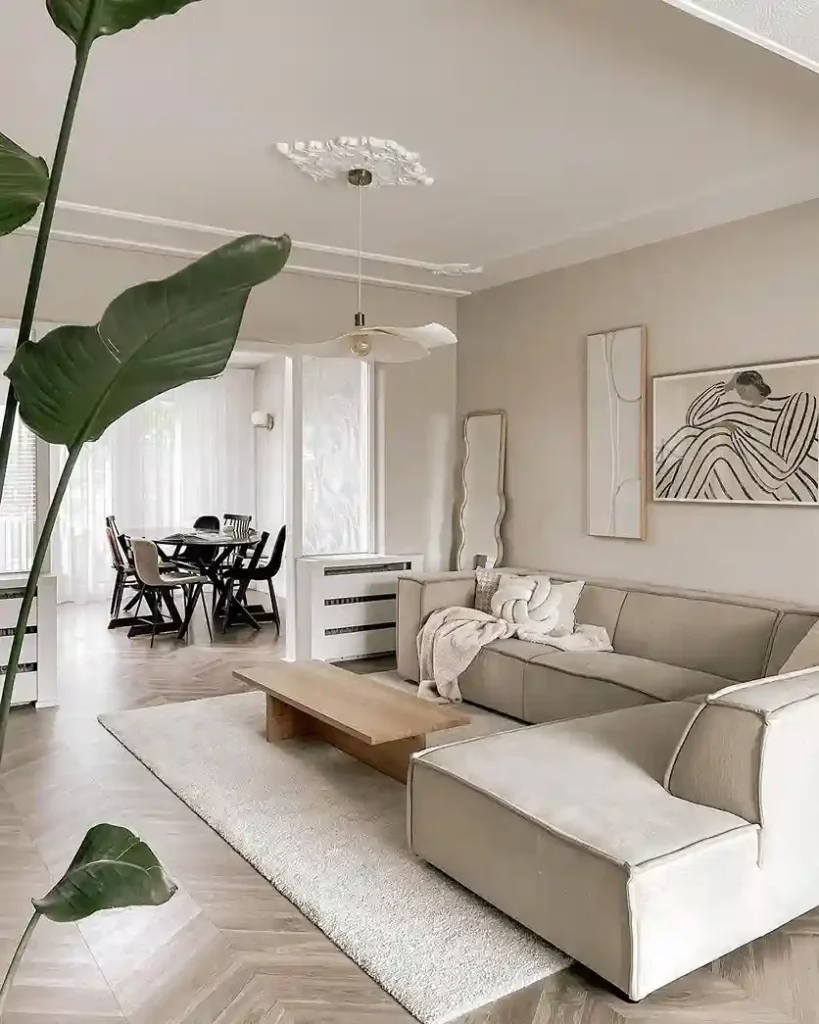
Credits: @veer.enmeer
Go Dark for Drama: Charcoal, navy, or even black living room ceilings create sophisticated, gallery-like atmospheres. Dark ceilings make spaces feel more intimate and evening-focused while providing stunning contrast for light-colored furniture and art. This unexpected choice adds instant designer credibility.
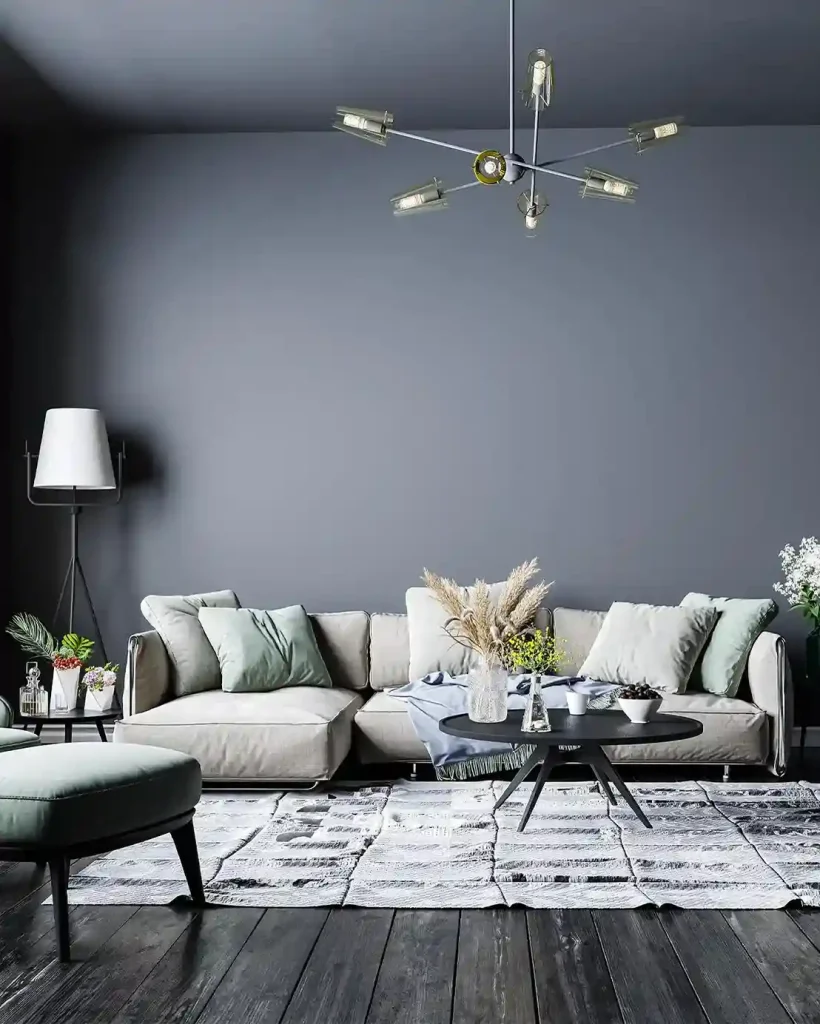
Credits: @moodfit.design.furniture
Embrace Soft Neutrals: Warm grays, soft taupes, or creamy off-whites add subtle interest without the stark coldness of pure white. These sophisticated neutrals complement any decor style while adding warmth overhead.
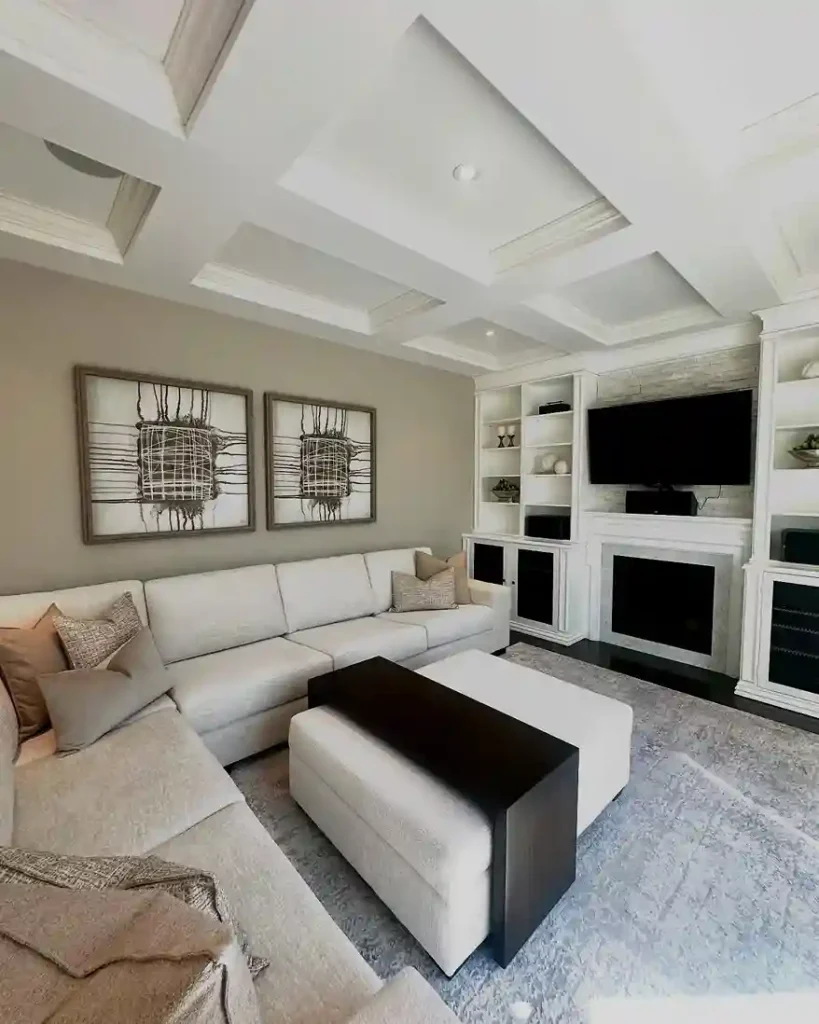
Credits: @kimmberlycaponeinteriors
Accent Color Pop: Use ceiling color as your room’s accent—perhaps picking up a secondary color from artwork or textiles. This unexpected approach creates visual interest without overwhelming walls or competing with furnishings.
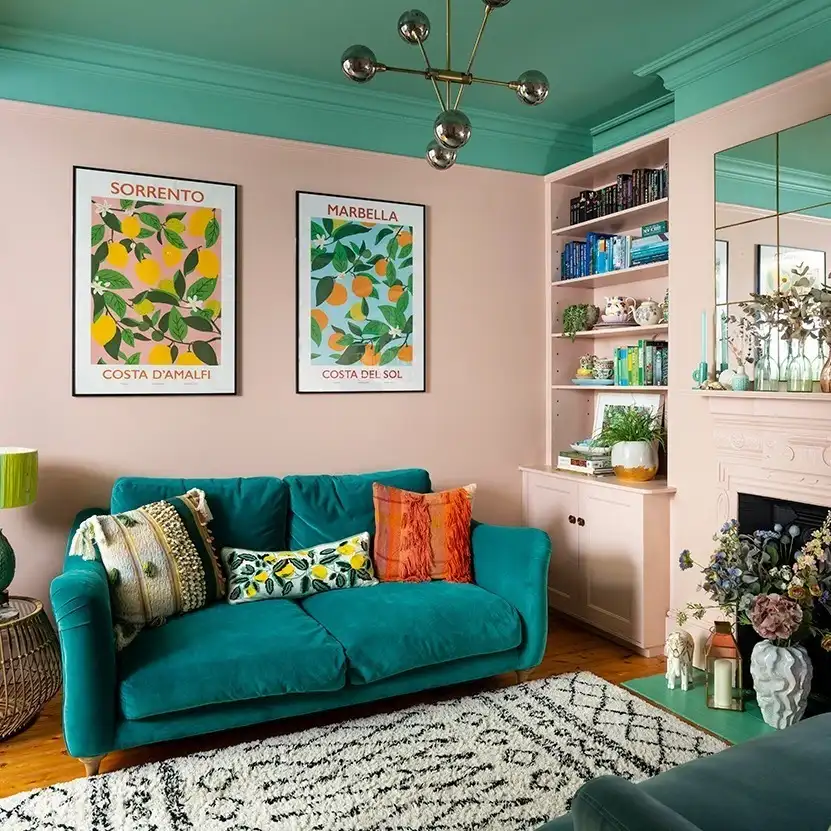
Credits: @make.spacechelmsford
Architectural Ceiling Treatments
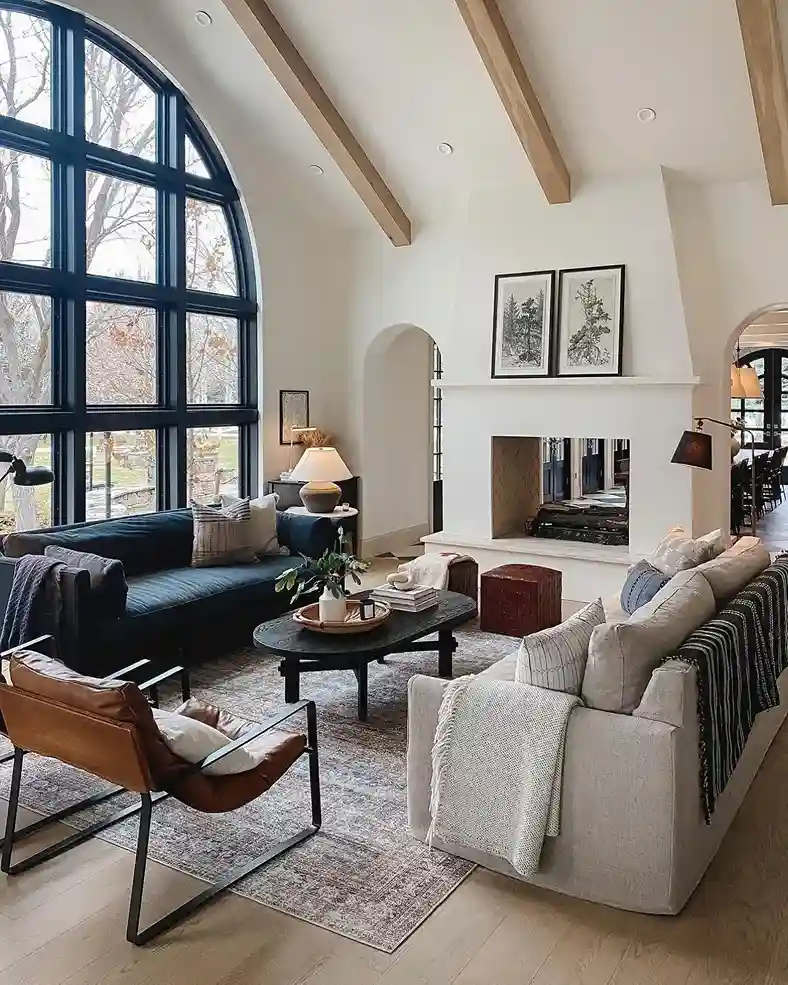
The Power of Beams
Exposed beams remain one of the most impactful living room ceiling treatments. Real structural beams in older homes or renovated spaces provide authentic character, while modern faux beams deliver similar visual impact without weight or structural requirements.
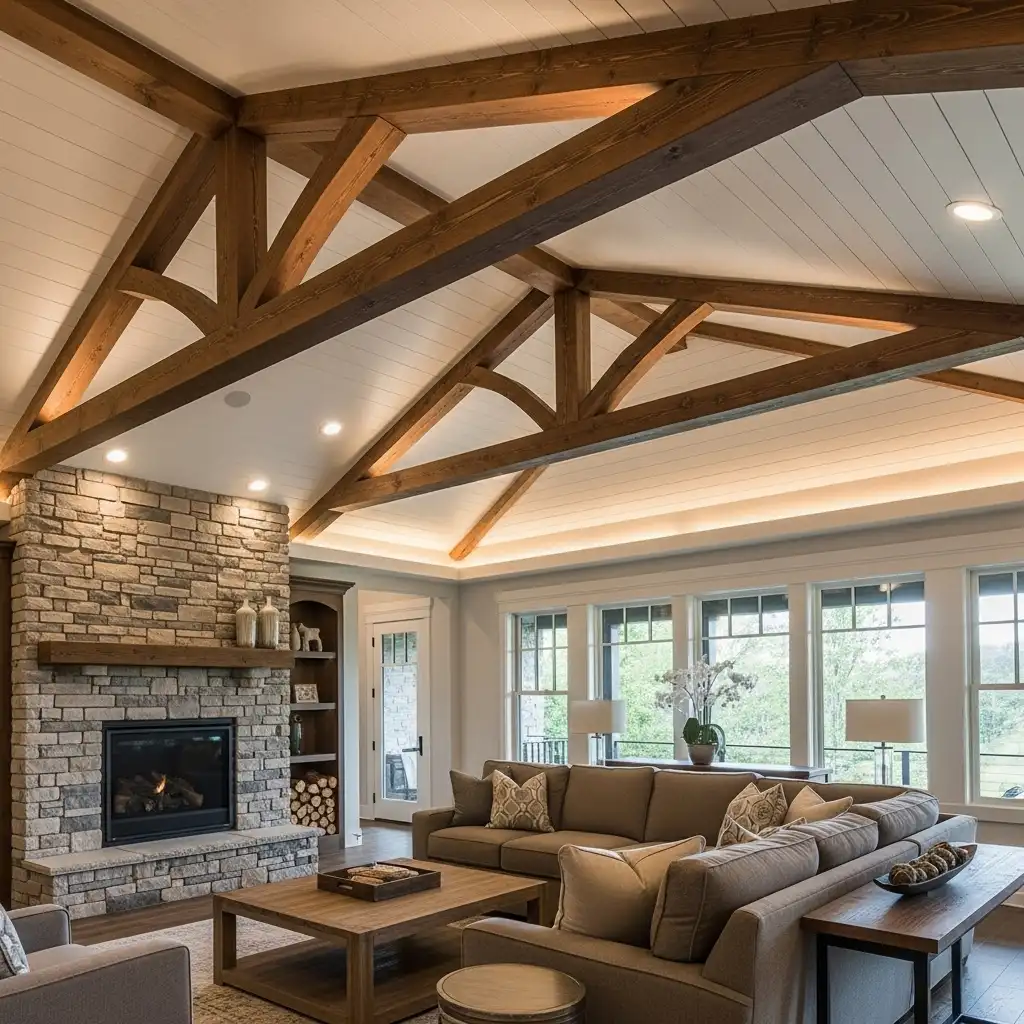
Beam arrangement options include parallel beams running one direction, grid patterns creating boxed sections, or featured beams highlighting specific zones like seating areas. Stain beams to contrast with painted ceilings or paint them to match for subtle texture. Consider beam depth and spacing carefully—oversized beams in small rooms feel heavy, while too-small beams in large spaces look insignificant.
Beams work exceptionally well in vaulted ceiling living rooms where they emphasize architectural angles. They’re equally stunning in standard-height rooms when properly scaled. Explore detailed applications in our ceiling beams living room guide.
Coffered Elegance
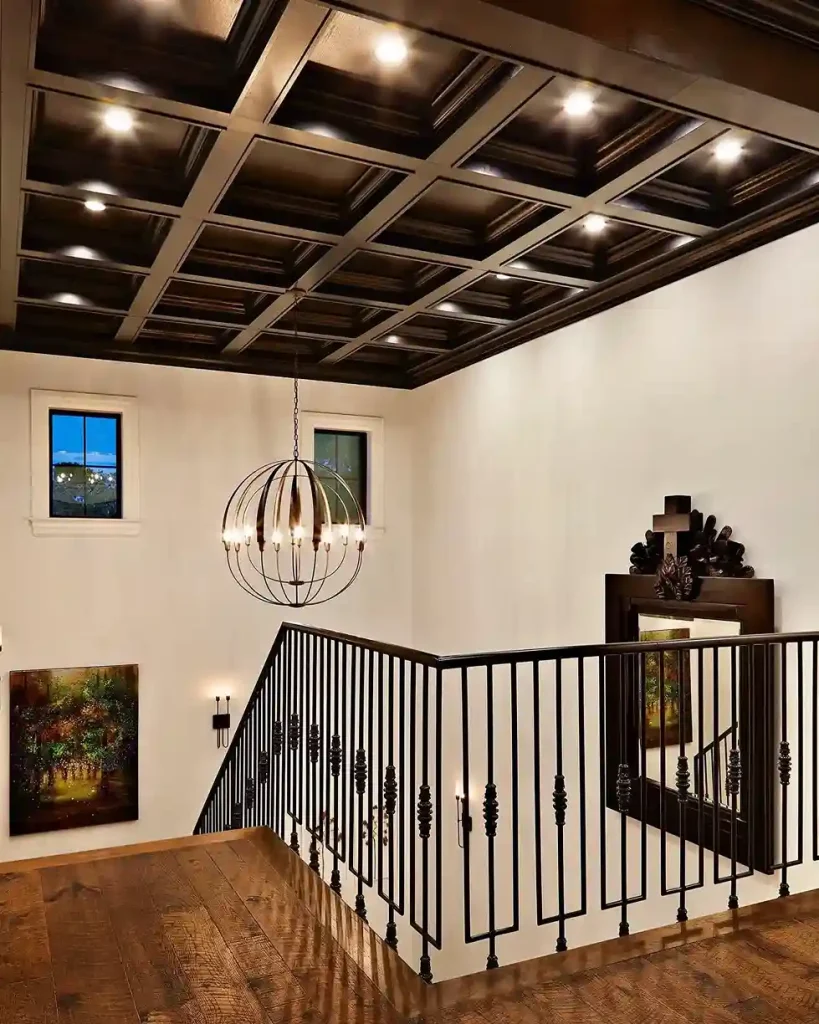
Coffered ceilings elevate living rooms from ordinary to extraordinary with their grid of recessed panels framed by beams. This classic treatment suits traditional, transitional, and even modern spaces depending on execution. Deep, ornate coffers create formal, traditional elegance, while shallow, simplified versions work in contemporary settings.
Credits: @michellemillerdesignfl
Coffer size and spacing should relate to room proportions—larger rooms handle bigger coffers, while smaller spaces need more modest scales. Paint panels and beams contrasting colors for maximum definition or keep monochromatic for understated sophistication. Add recessed lighting within panels for beautiful ambient illumination.
Tray Ceiling Sophistication
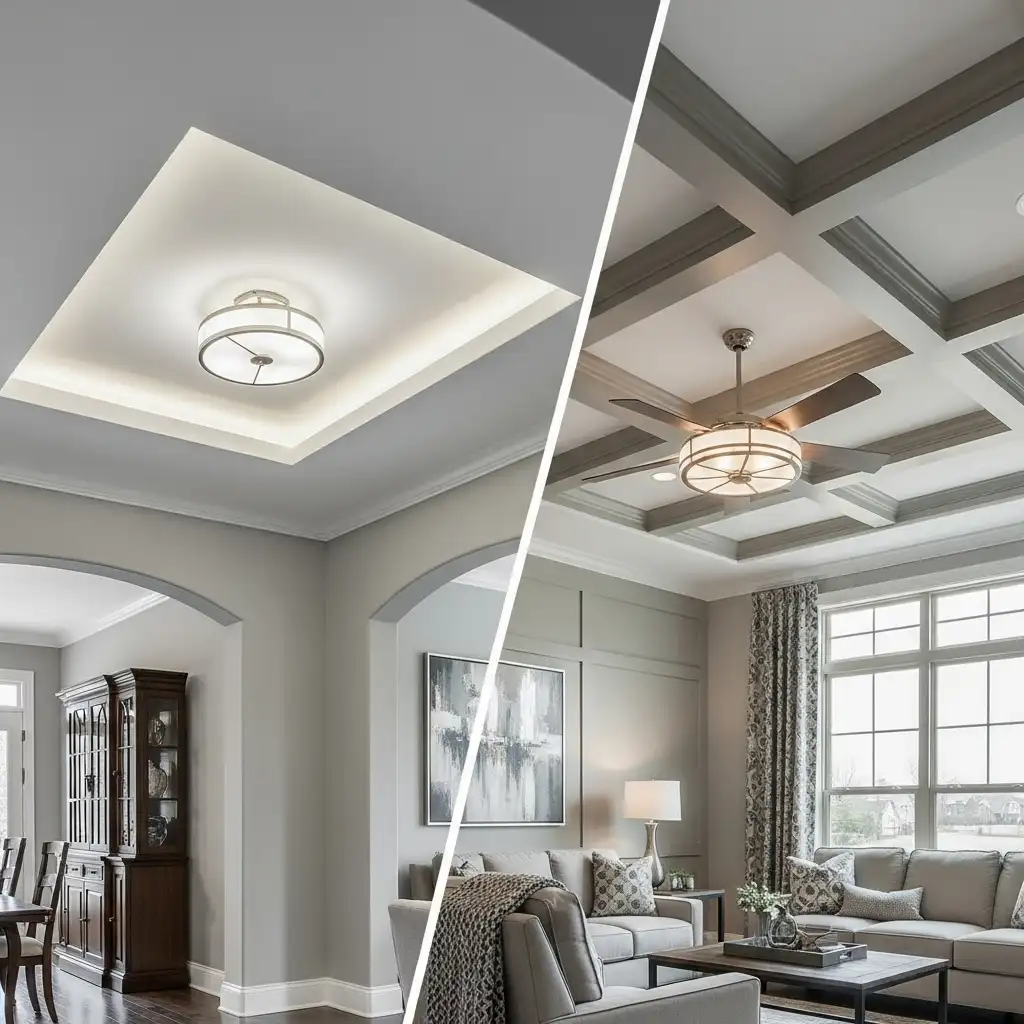
Tray ceilings feature raised perimeters with recessed centers, adding dimension without complex construction. They’re perfect for defining living room zones in open-concept homes. The recessed center accommodates chandeliers or statement fixtures beautifully while the raised border provides opportunities for cove lighting that creates ambient glow.
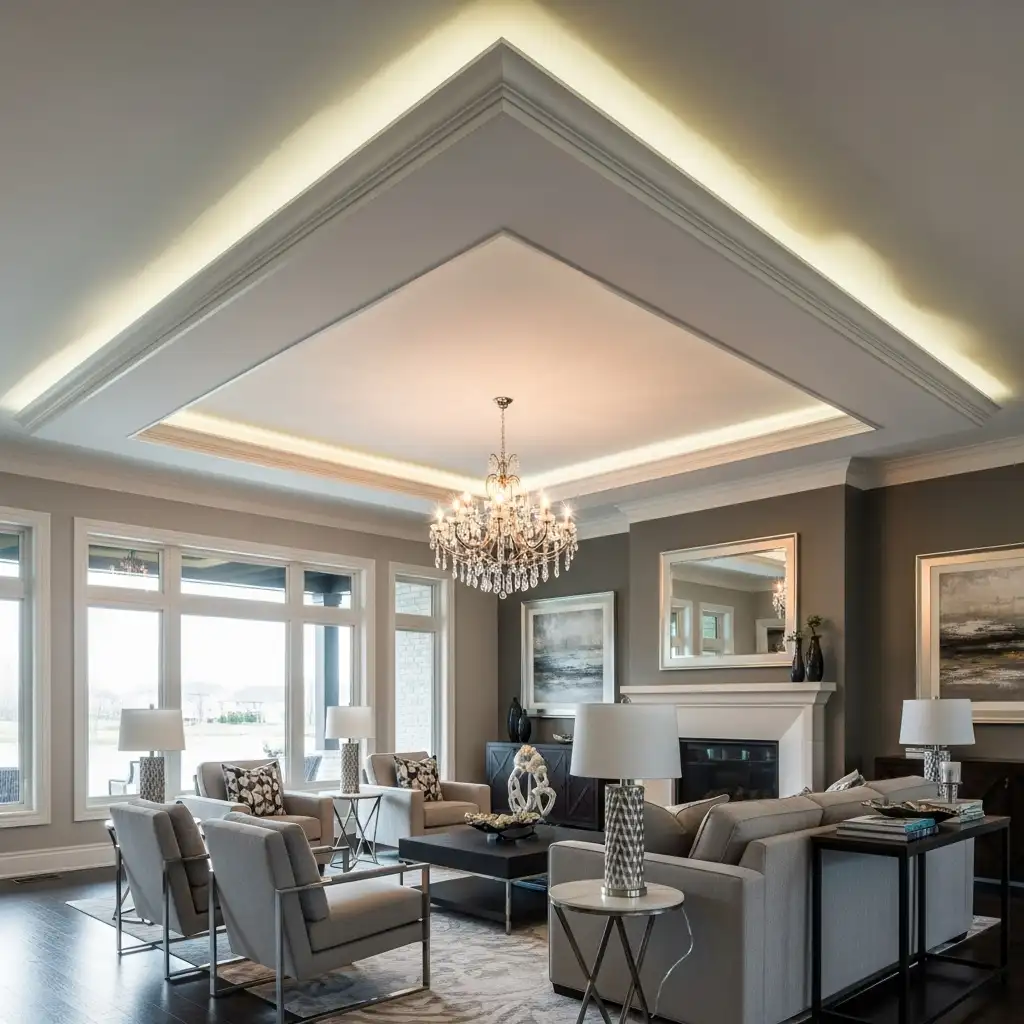
Paint tray ceiling centers different colors than perimeters to emphasize the architectural feature. Wallpaper the recessed section for unexpected luxury. Add crown molding at multiple levels to enhance the layered effect. Trays work in rooms with minimum eight-foot ceilings and dramatically improve rooms with nine-foot or higher ceilings.
Textural Living Room Ceilings
Wood’s Natural Appeal
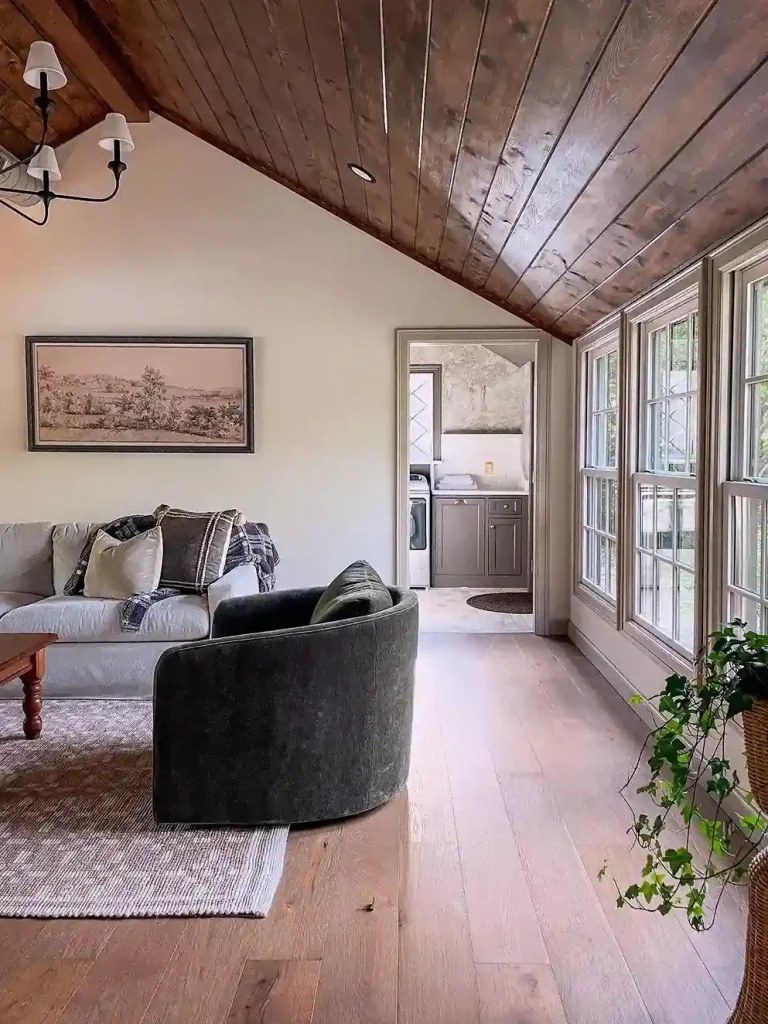
Wood ceiling treatments bring organic warmth that makes living rooms feel grounded and inviting. Shiplap creates casual, approachable character perfect for farmhouse living rooms or coastal spaces. Tongue-and-groove planks deliver refined elegance suitable for upscale traditional or rustic designs.
Credits: @myhomeinthemaking
Plank direction affects room perception—lengthwise planks emphasize room length while width-wise installation creates broader feelings. Diagonal or herringbone patterns add dynamic interest but require more material and installation expertise. Whitewashed wood suits light, airy aesthetics while natural or dark stains create cozy warmth.
Metal and Industrial Elements
Pressed tin tiles bring vintage charm or industrial edge to living room ceilings. Originally popular in late 1800s commercial spaces, decorative metal ceilings are experiencing renewed popularity in residential design. They work beautifully in eclectic, industrial, or vintage-styled living rooms, adding pattern and texture that’s durable and fire-resistant.
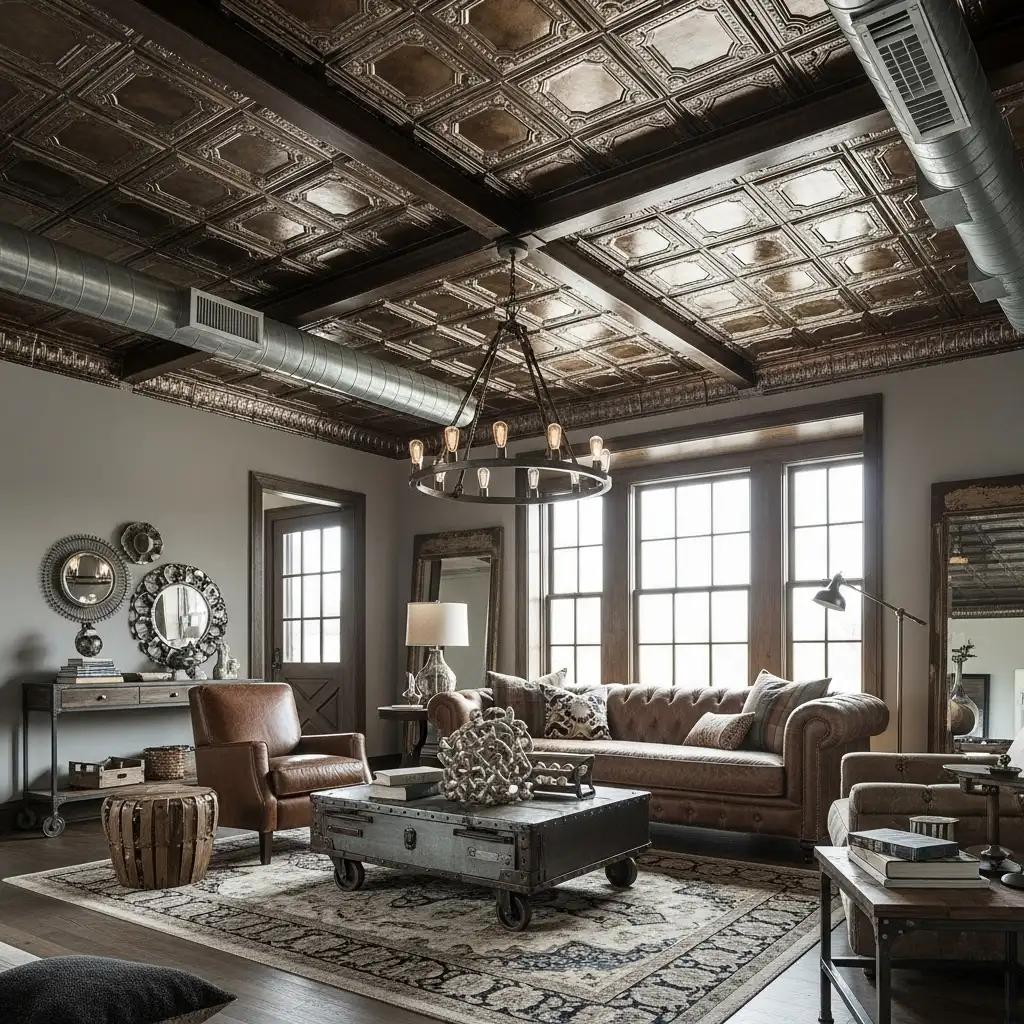
Metal finishes range from raw steel to antiqued copper to painted colors. Installation over existing ceilings is relatively straightforward, making this an accessible DIY project that delivers impressive results.
Lighting Integration
Ceiling design and lighting are inseparable partners in living rooms. Recessed lighting provides even illumination without visual clutter—essential in modern spaces. However, consider how recessed lights interact with ceiling treatments. Beamed ceilings need lights positioned between beams, while coffered designs integrate lights within panels beautifully.
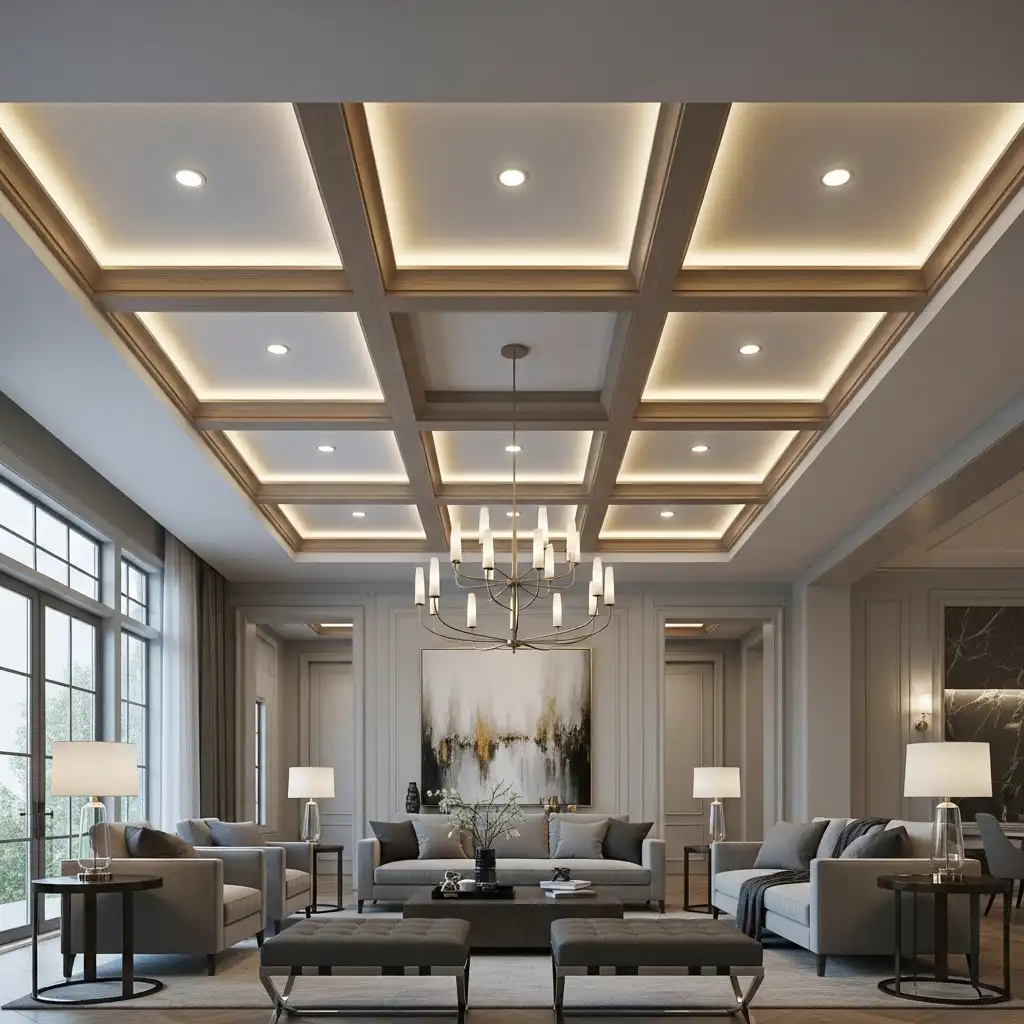
Statement chandeliers or sculptural pendants become ceiling design elements themselves. In rooms with interesting ceiling treatments, sometimes simple flush mount ceiling lights work best, letting architectural features shine without competing fixtures.
Cove lighting hidden behind crown molding or in tray ceiling perimeters creates soft ambient glow that highlights ceiling architecture while providing flattering, indirect illumination perfect for entertaining.
Zone Definition in Open Concepts
Open-concept homes benefit enormously from ceiling design that defines spaces without walls. Use different ceiling treatments to distinguish living areas from dining or kitchen zones. Perhaps living room ceilings feature wood beams while adjacent dining areas have smooth painted surfaces. Or use consistent materials but change directions or patterns at zone boundaries.
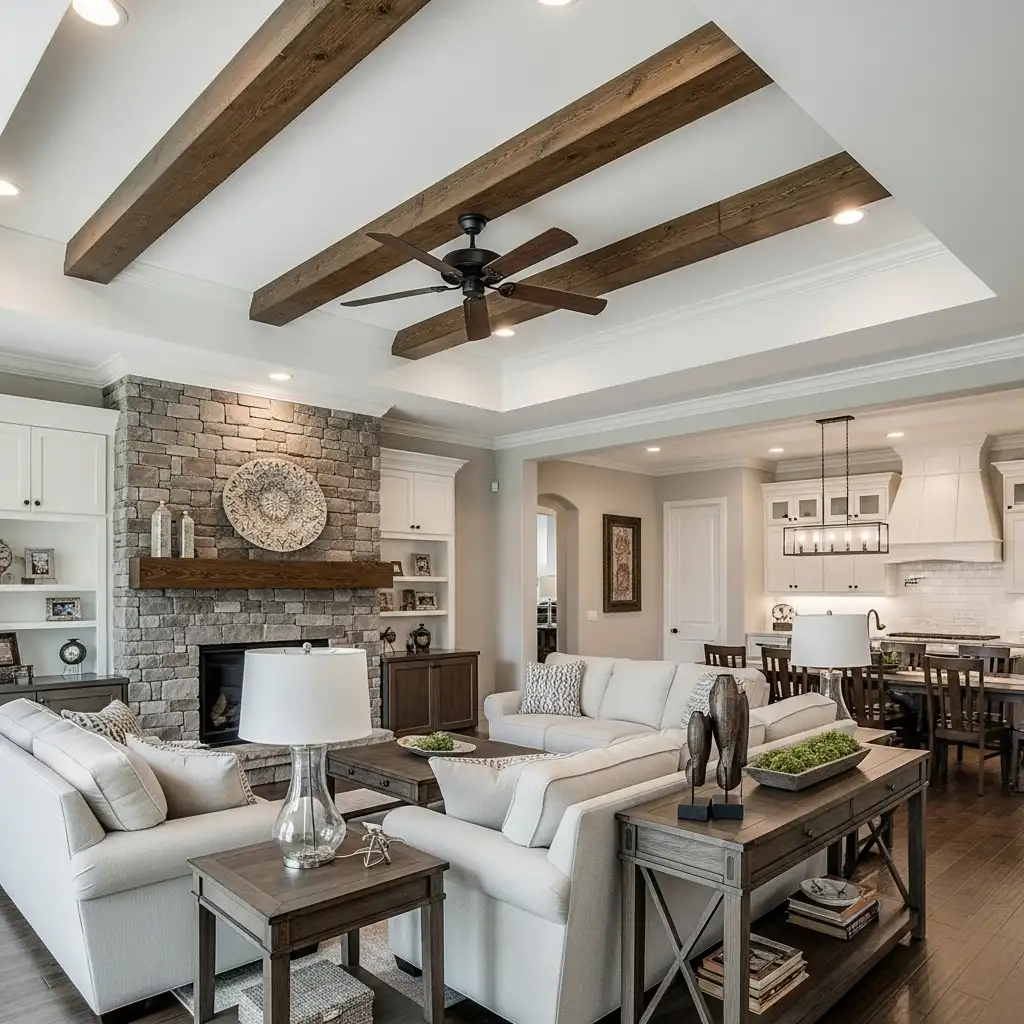
Ceiling height changes also define zones—drop soffits at room edges or raise center sections to subconsciously establish boundaries. This approach maintains openness while providing spatial definition our brains appreciate.
Practical Considerations
Budget significantly influences ceiling design choices. Paint remains the most affordable transformation, while elaborate coffered systems require substantial investment. Consider longevity—ceiling treatments are harder to change than wall paint, so choose designs you’ll love long-term.
Existing ceiling conditions matter. Damaged or textured ceilings may need covering rather than refinishing. Solutions like ceiling tiles or new drywall installation provide fresh surfaces for any design. If dealing with popcorn ceilings, removal or covering should precede decorative treatments.
Conclusion
Living room ceiling design deserves serious consideration as you create spaces that truly reflect your style and enhance daily life. From dramatic dark colors to architectural beam treatments to textured wood installations, ceiling options abound for every style and budget. Your ceiling represents valuable design real estate—use it wisely to create living rooms that impress from every angle, including up.
Q: What ceiling design makes a living room look bigger?
Painting the ceiling the same color as the walls creates seamless visual flow that makes rooms feel more expansive. Light colors—whites, soft grays, or pale neutrals—reflect light and create airiness. Avoid heavy treatments like dark beams or deep coffers in small spaces. Recessed lighting instead of hanging fixtures keeps sight lines open. Vertical elements on walls draw eyes upward, creating height perception. Simple, uncluttered ceiling treatments work best in compact living rooms.
Q: Are exposed beams outdated in living rooms?
Not at all—exposed beams remain timeless when executed properly. The key is matching beam style to your overall design. Rustic wood beams suit farmhouse or cottage styles, sleek painted beams work in modern spaces, and dark stained beams complement traditional interiors. Avoid overly distressed or obviously fake-looking faux beams, which can appear dated. Well-designed beam ceilings add architectural interest and value that transcends trends.
Q: How much does it cost to add a coffered ceiling to a living room?
Coffered ceiling costs vary dramatically based on complexity and whether you hire professionals. DIY coffered ceilings using lightweight materials cost approximately $5-$10 per square foot for materials. Professional installation of basic coffered systems ranges from $15-$30 per square foot, while elaborate custom coffered ceilings with deep panels and ornate details can cost $30-$50+ per square foot. A typical 300 square foot living room coffered ceiling averages $4,500-$9,000 professionally installed.
Q: Can I install ceiling beams in a room with 8-foot ceilings?
Yes, but scale and placement are critical. Choose shallow beam profiles (4-6 inches deep rather than 8-12 inches) to minimize height loss. Install beams strategically to frame specific areas rather than covering the entire ceiling. Paint beams the same color as the ceiling for subtle texture that doesn’t visually lower the space. Alternatively, consider decorative painted beams or faux beam alternatives that add visual interest without actual depth. Avoid this treatment entirely if ceilings are under 8 feet.