
Are you drawn to nature-inspired designs that bring the peaceful beauty of the forest indoors? Do you want to create a nursery that feels timeless, gender-neutral, and connected to the natural world?
Woodland nurseries have become one of the most beloved and enduring themes for baby rooms, offering calming earth tones, adorable forest creatures, and organic materials that create serene sanctuaries perfect for both babies and exhausted parents.

The woodland theme transcends fleeting trends through its connection to nature’s timeless beauty and its versatility accommodating various design styles from rustic cabin to modern minimalist. Unlike character-based themes that babies quickly outgrow, woodland nurseries transition beautifully from infancy through toddler years and beyond, growing with children as they develop awareness and appreciation for nature and animals.

Let’s explore everything you need to know about creating the perfect woodland nursery that balances whimsy with sophistication while providing a peaceful environment promoting rest and bonding.
Why Choose a Woodland Theme?
Gender-Neutral Appeal

Source: @naomibluboutique @taylorlhansen
Woodland nurseries work beautifully for any gender through earth-tone palettes of greens, browns, tans, and soft grays that avoid traditional pink-or-blue stereotypes. This versatility suits parents keeping gender surprises, planning multiple children, or simply preferring nature-inspired aesthetics over gendered conventions. The theme allows personalization through accessory choices without requiring complete redesigns between children, making it practical and economical for growing families. See more baby nursery ideas for your child.
Timeless and Calming

Forest-inspired designs maintain relevance through childhood, unlike baby-specific themes that quickly feel juvenile as children mature. The nature connection provides educational opportunities teaching children about animals, trees, and ecosystems through daily exposure to woodland imagery. The calming earth tones and organic elements create peaceful atmospheres promoting restful sleep for babies while providing soothing environments where exhausted parents find tranquility during midnight feedings and early morning wake-ups.
Versatile Design Flexibility
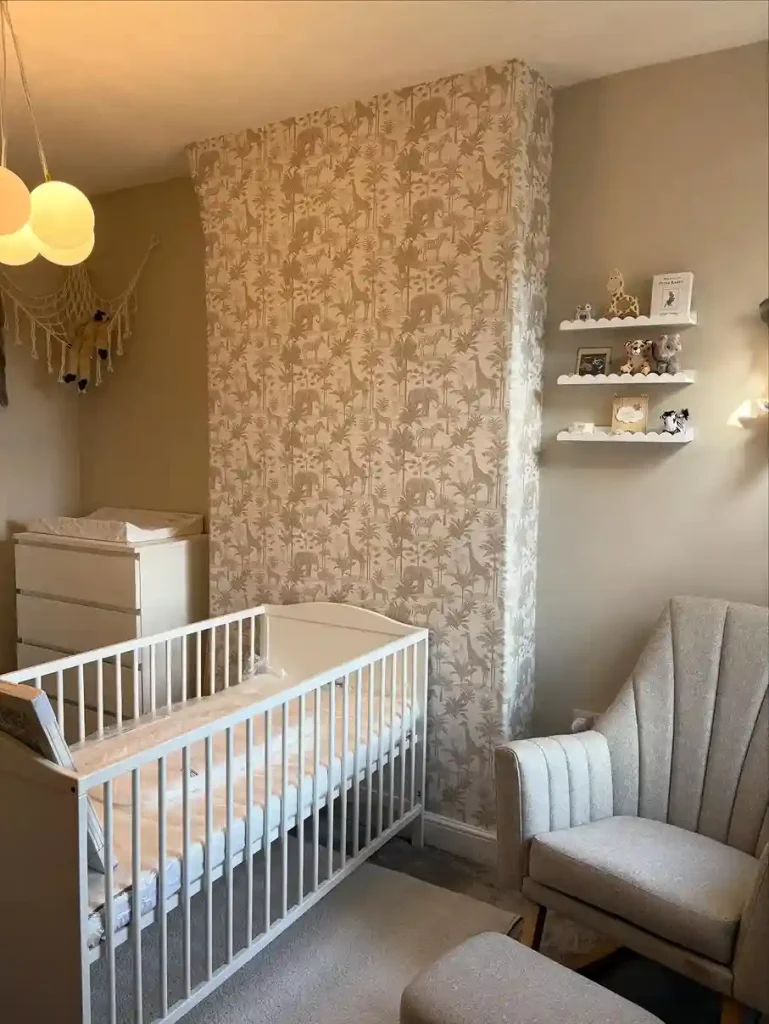
Woodland themes accommodate various design styles from rustic farmhouse with distressed wood and vintage elements to modern minimalist with clean lines and subtle nature references. This flexibility allows personalizing spaces reflecting individual preferences while maintaining cohesive woodland identity. The theme also permits gradual evolution, starting with baby-appropriate soft animals and transitioning to more sophisticated botanical prints or adventure-themed elements as children grow into toddlers and beyond. You can also try star ceiling in your nursery.
Color Palettes for Woodland Nurseries
Earthy Neutrals

Create serene foundations using warm neutrals including cream, beige, tan, and soft browns suggesting forest floors and tree bark. These versatile backgrounds provide calm without sterility, allowing colorful accessories and artwork to pop while maintaining soothing overall atmospheres. Neutral walls work beautifully with natural wood furniture, creating cohesive spaces that feel organic and intentional rather than busy or overwhelming to developing visual systems.
Forest Greens and Sage

Incorporate various green shades from soft sage to deeper forest tones representing foliage and moss-covered trees. Green provides color interest while maintaining nature connection and calming properties beneficial for sleep environments. Use green as accent wall colors, through bedding and textiles, or in artwork and decor creating layers of woodland color without overwhelming small spaces with too much intensity. Try these different wallpapers ceiling in the nursery.
Soft Blues and Grays

Add depth through muted blues suggesting morning mist or mountain skies and various gray tones representing stones and cloudy days. These cool tones balance warm browns and greens, preventing spaces from feeling too yellow or muddy. The sophisticated palette creates modern woodland aesthetics that feel fresh and current rather than overly rustic or dated in execution and overall impression.
Natural Wood Tones

Embrace unpainted wood furniture and accessories showcasing natural grain patterns and warm honey tones that anchor woodland themes through authentic materials. Wood brings organic warmth and texture that synthetic materials cannot replicate, creating connections to actual forests that theme celebrates. Mix various wood species and finishes preventing monotony while maintaining natural material emphasis throughout spaces.
Essential Woodland Nursery Elements
Forest Animal Artwork and Decor

Feature beloved woodland creatures including foxes, bears, deer, owls, rabbits, and raccoons through wall art, stuffed animals, and decorative accessories. Choose artistic styles matching overall aesthetic – watercolor illustrations for soft, dreamy spaces, modern graphic prints for contemporary designs, or realistic photography for sophisticated approaches. The animal imagery provides focal points and personality while introducing babies to wildlife they’ll encounter in nature throughout childhood adventures.
Tree and Branch Elements

Source: @the_bluebonnet_farmhouse
Incorporate tree imagery through wall decals, murals, or wallpaper creating forest atmospheres that envelop rooms in nature’s embrace. Branch-shaped shelving, tree bookends, or wooden branch curtain rods add three-dimensional woodland elements that extend theme beyond flat artwork. These organic shapes soften angular room architecture while reinforcing nature connection through every design detail that contributes to cohesive, immersive environments.
Natural Wood Furniture

Source: @saratoufali
Choose cribs, dressers, and rocking chairs in natural wood finishes rather than painted options, emphasizing organic materials central to woodland aesthetics. Light woods like birch or maple create airy, Scandinavian-inspired spaces while darker walnut or oak provide rustic cabin feelings. The quality wooden furniture serves children through multiple developmental stages, transitioning from cribs to toddler beds and from changing tables to regular dressers without seeming babyish or requiring replacement.
Botanical and Nature Prints

Balance animal imagery with botanical artwork featuring ferns, leaves, pinecones, mushrooms, or forest flowers adding educational elements and design variety. These prints provide sophisticated touches that prevent nurseries from feeling too cartoonish or juvenile. The botanical references connect children to complete ecosystems rather than isolated animals, encouraging holistic nature appreciation from earliest ages through thoughtful, intentional design choices.
Furniture and Layout Considerations
Natural Wood Cribs

Source: @therugseller
Select cribs in natural wood finishes or subtle gray tones that complement woodland palettes without competing with decorative elements. Many convertible cribs transform into toddler beds and eventually full-size beds, providing lasting value through multiple childhood stages. Ensure cribs meet current safety standards regardless of aesthetic appeal, prioritizing child safety over any design consideration in this essential furniture selection.
Comfortable Glider or Rocking Chair
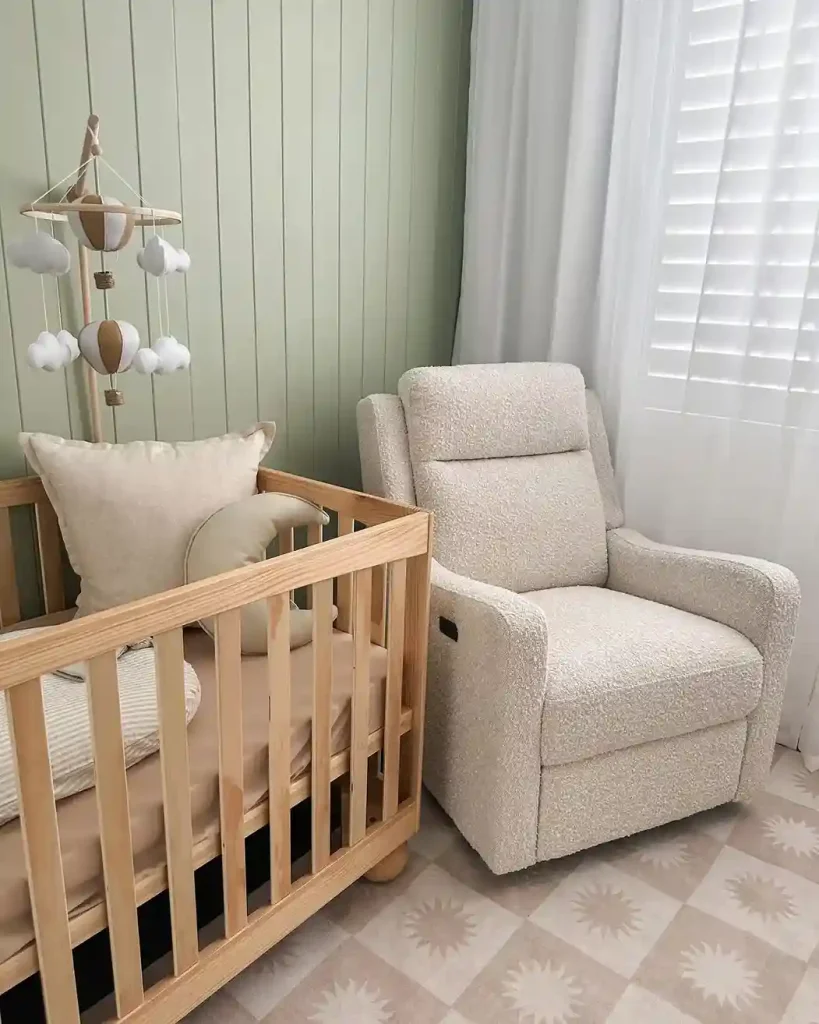
Source: @homestylebytess
Invest in quality seating with good back support, comfortable cushioning, and smooth gliding or rocking motion for countless feeding sessions. Choose upholstery in neutral tones or nature-inspired patterns that coordinate with overall design while providing comfortable, durable surfaces withstanding years of heavy use. Position chairs near windows when possible, allowing natural light during daytime feedings while creating peaceful spots for bonding and rest.
Multi-Functional Dressers

Select substantial dressers that serve initially as changing tables then transition to regular storage as children outgrow diaper changes. Natural wood dressers with changing pad toppers provide practical solutions that grow with families without requiring furniture replacement. Include drawer organizers maintaining clothing organization, making outfit selection easier during those exhausting early months when everything feels overwhelming and challenging.
Smart Storage Solutions

Incorporate baskets, bins, and shelving maintaining organization essential in functional nurseries accommodating countless baby items. Woven natural fiber baskets add texture while providing practical storage for toys, books, and supplies. Open shelving displays beloved items while closed storage conceals less attractive necessities. For additional storage strategies, see our small bedroom storage ideas guide.
Textiles and Soft Furnishings
Neutral Bedding with Woodland Accents

Choose safe crib bedding in cream, tan, or soft green with subtle woodland patterns including leaves, trees, or animal silhouettes. Avoid excessive decoration in cribs themselves, following safe sleep guidelines recommending minimal bedding. Save decorative textiles for areas outside cribs where they add visual interest without compromising infant safety during vulnerable sleeping hours.
Layered Rugs
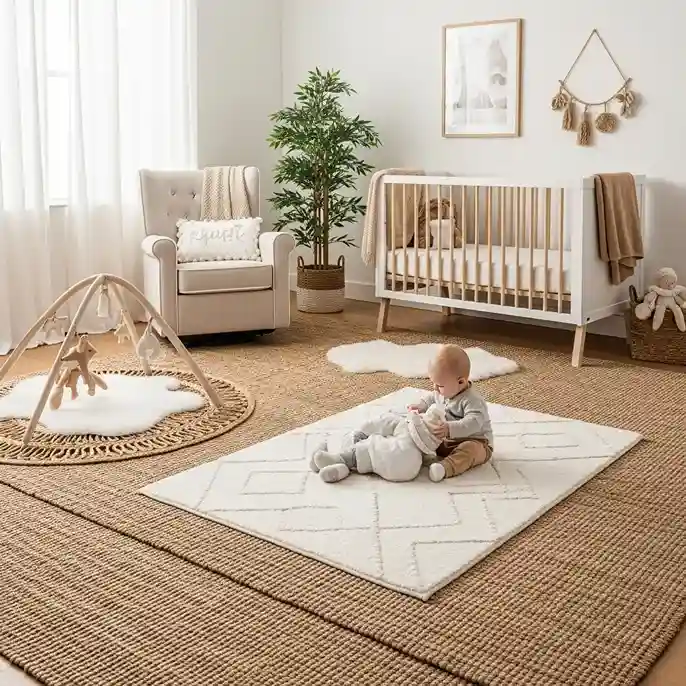
Anchor spaces with natural fiber rugs in jute or sisal providing texture, or use soft plush rugs in neutral tones offering comfortable floor play surfaces. Layered rugs add dimension and warmth while defining nursery zones for sleeping, changing, and eventually playing as babies become mobile toddlers. The soft surfaces protect knees during floor activities while adding essential comfort in rooms where parents spend considerable time sitting during feedings.
Window Treatments

Install blackout curtains in neutral linen or canvas fabrics promoting daytime naps by blocking external light. Layer sheer curtains underneath allowing light filtering during awake periods while maintaining privacy. Choose simple, tailored styles rather than fussy treatments that collect dust and feel overly decorated for peaceful nursery environments emphasizing simplicity and calm over excessive ornamentation.
Throw Pillows and Blankets

Source: @painttherosesred_interior
Add personality through decorative pillows and throw blankets on gliders featuring woodland patterns, cable knits, or faux fur textures suggesting animal pelts. These accessories provide comfort for nursing parents while adding design layers and textural interest. Rotate seasonal accessories refreshing spaces without major changes, making rooms feel current and maintained throughout years of use.
Wall Treatments and Artwork
Accent Walls

Create focal points through painted accent walls in soft sage, warm gray, or forest green behind cribs becoming immediate visual anchors. Alternatively, install wallpaper featuring woodland scenes, botanical prints, or subtle tree patterns adding depth and interest without overwhelming small spaces. Single accent walls provide impact without commitment of papering entire rooms, allowing easier updates as children’s preferences evolve through developmental stages. See our bedroom wallpaper accent wall guide for accent wall inspiration.
Wall Decals

Apply removable wall decals featuring tree silhouettes, forest animals, or mountain scenes creating custom murals without permanent commitment or artistic skills. These renter-friendly options allow dramatic transformations that remove cleanly when ready for updates. The flexibility suits parents wanting significant visual impact without painting or wallpapering investments that complicate future changes or moves.
Gallery Walls

Create curated collections mixing woodland animal prints, nature photography, inspirational quotes, and family photos in coordinating frames. Gallery walls add personality while providing flexibility to swap individual pieces as children grow and interests evolve. The collected appearance feels intentional and sophisticated rather than themey or juvenile, ensuring longevity through childhood stages.
Adding Personal Touches
Name Signs and Custom Elements
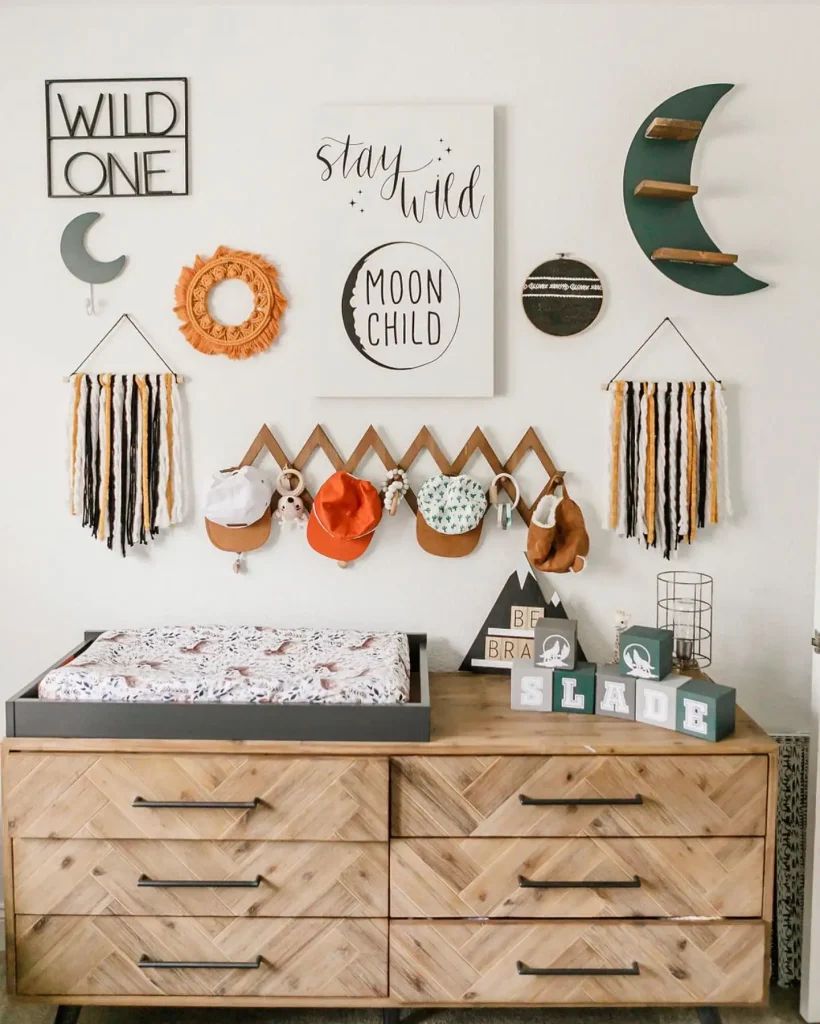
Incorporate personalized wooden name signs, custom artwork featuring baby’s name with woodland elements, or monogrammed textiles adding individual character. These special touches make nurseries feel uniquely yours rather than catalog replicas anyone could recreate. The personalized elements also create meaningful keepsakes preserving memories of this special time in photographs and potentially as future bedroom decor.
Handmade and DIY Projects

Include handmade elements like crocheted blankets, painted artwork, or DIY mobiles adding sentimental value and creative expression. These personal projects become treasured items representing time, love, and anticipation invested preparing for baby’s arrival. The imperfect, handmade quality adds authentic character that mass-produced items lack regardless of price points or brand names.
Family Heirlooms

Incorporate meaningful items like vintage rocking chairs, quilts, or books passed through generations connecting babies to family history and heritage. These cherished pieces add depth and story that new purchases cannot replicate, creating nurseries with soul and significance beyond simple decoration.
Budget-Friendly Woodland Nursery Tips
DIY and Repurpose
Create artwork using printable woodland designs in thrifted frames, refinish hand-me-down furniture, or sew simple accessories from fabric remnants stretching budgets further. DIY projects provide creative satisfaction while dramatically reducing costs compared to purchasing everything new. Many woodland elements suit simple execution including painted tree silhouettes, branch mobiles, or nature-collected pinecone displays. For budget decorating strategies, visit our apartment decorating on a budget guide.
Focus on Key Investment Pieces
Prioritize spending on cribs, mattresses, and comfortable seating where quality and safety matter most, economizing on decorative items. Quality convertible furniture serves children through multiple stages, justifying higher initial investments through extended usefulness. Save on trendy decorative items using budget retailers, thrift stores, or DIY alternatives for accessories that update easily without significant financial commitment.
Start Simple and Layer
Begin with neutral foundations and essential furniture, adding woodland accessories gradually as budgets allow rather than purchasing everything immediately. This measured approach prevents overwhelming spaces while allowing thoughtful curation ensuring each addition truly enhances rather than clutters. Babies notice little beyond comfort and caretaker presence initially, giving parents time to complete spaces without rush or pressure.
Frequently Asked Questions
Is a woodland nursery theme too trendy?
Woodland themes maintain lasting relevance through nature connection that never truly goes out of style. Unlike character-based or highly specific trends, forest-inspired designs adapt through accessory changes without major overhauls. The theme’s flexibility and timeless appeal make it smart long-term choice rather than fleeting trend requiring complete replacement within years.
Can woodland nurseries work in small spaces?
Yes, woodland themes suit any size space through color and accessory choices that don’t require excessive square footage. Soft earth tones make small rooms feel larger, while vertical tree elements draw eyes upward emphasizing height. Strategic furniture placement and smart storage solutions ensure small woodland nurseries remain functional without feeling cramped or overwhelming to inhabitants.
How do I transition a woodland nursery for a toddler?
Woodland nurseries transition beautifully by swapping baby-specific items for age-appropriate elements like adventure themes, camping motifs, or nature photography. Replace crib bedding with toddler bedding featuring similar woodland patterns, add educational nature books, or incorporate outdoor-themed storage. The nature foundation remains relevant while evolving sophistication level matching developmental stages.
What colors work best for woodland nurseries?
Earth tones including greens, browns, tans, soft grays, and cream create authentic woodland palettes. Add depth through muted blues or incorporate natural wood tones that anchor spaces. Avoid overly bright or saturated colors that feel artificial rather than nature-inspired, maintaining serene atmospheres promoting rest and calm essential for nursery environments.
Conclusion: Creating Your Forest Sanctuary
Woodland nurseries offer timeless beauty, calming atmospheres, and nature connections that benefit both babies and parents through this precious early stage. The theme’s versatility, gender-neutral appeal, and longevity make it smart choice for families seeking nurseries that grow with children without feeling dated or juvenile within months.
Through thoughtful color selection, quality furniture, meaningful personal touches, and nature-inspired elements, you’ll create peaceful sanctuaries where your family bonds while surrounding your little one with organic beauty from their very first days.
Start planning your woodland nursery by establishing color palettes, selecting essential furniture, and gradually layering accessories that bring forest magic indoors. Whether you embrace rustic cabin charm, modern minimalist nature references, or somewhere between, the woodland theme adapts to your personal style while maintaining its essential connection to the natural world that makes these nurseries so enduringly beloved and photographed.
Ready to explore more nursery and bedroom design? Check our guides including boys bedroom ideas, girls bedroom ideas, guest bedroom ideas, bedroom ideas for couples, and home interior design ideas for complete inspiration. Your perfect woodland sanctuary awaits – start creating the forest-inspired nursery where your baby’s beautiful journey begins surrounded by nature’s timeless peace and beauty.