
A well-organized sewing room is more than a space for sewing; it’s a place for inspiration. It’s a key factor in improving a home sewist’s efficiency and productivity.
Studies on industrial sewing floors show that a well-designed workstation and an organized system can significantly reduce wasted time and motion. The same principles apply to a personal creative space.
Best 18 Ways to Organize Sewing Room
The Foundation is Decluttering
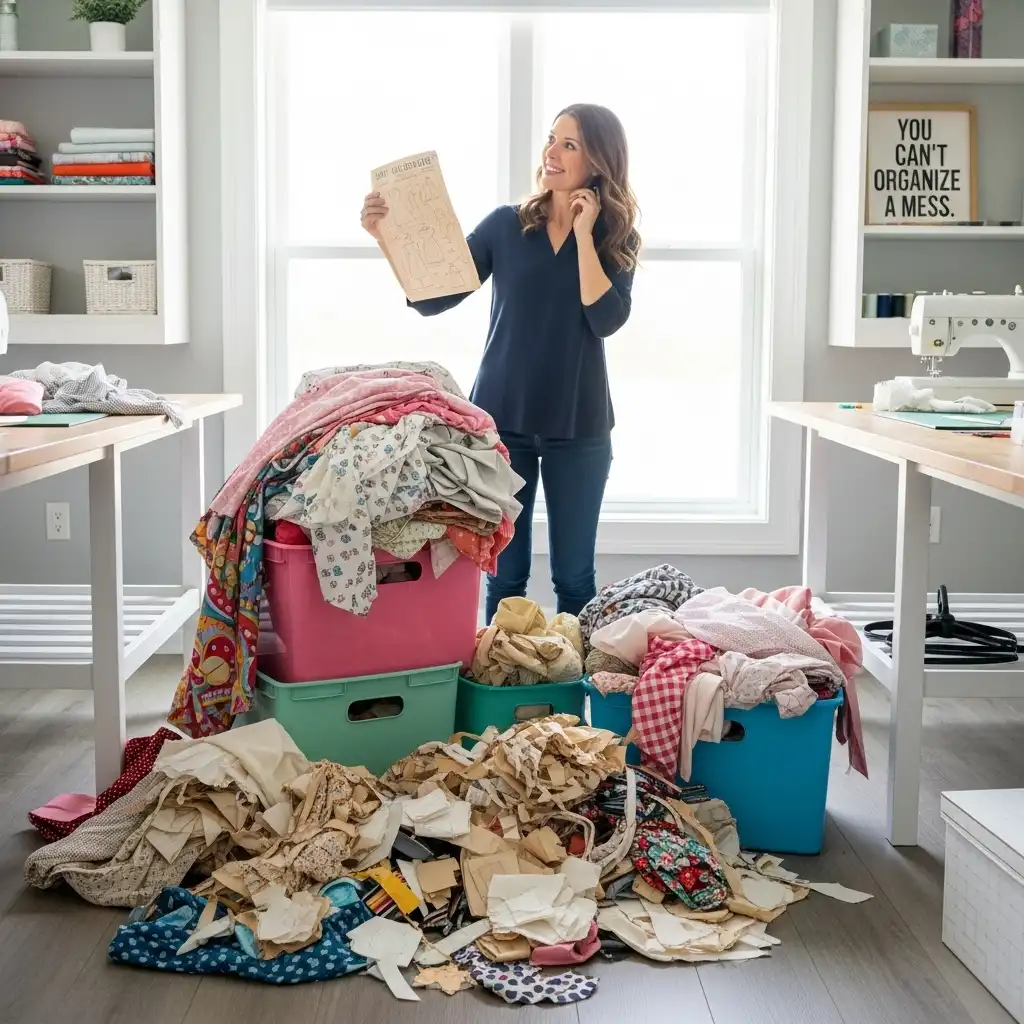
You can’t organize a mess. Pull everything out of the room, and get rid of things you don’t use. Be honest with yourself about what you use and what you don’t. It’s time to let go of anything that doesn’t serve your creative goals.
Categorize Everything You Own
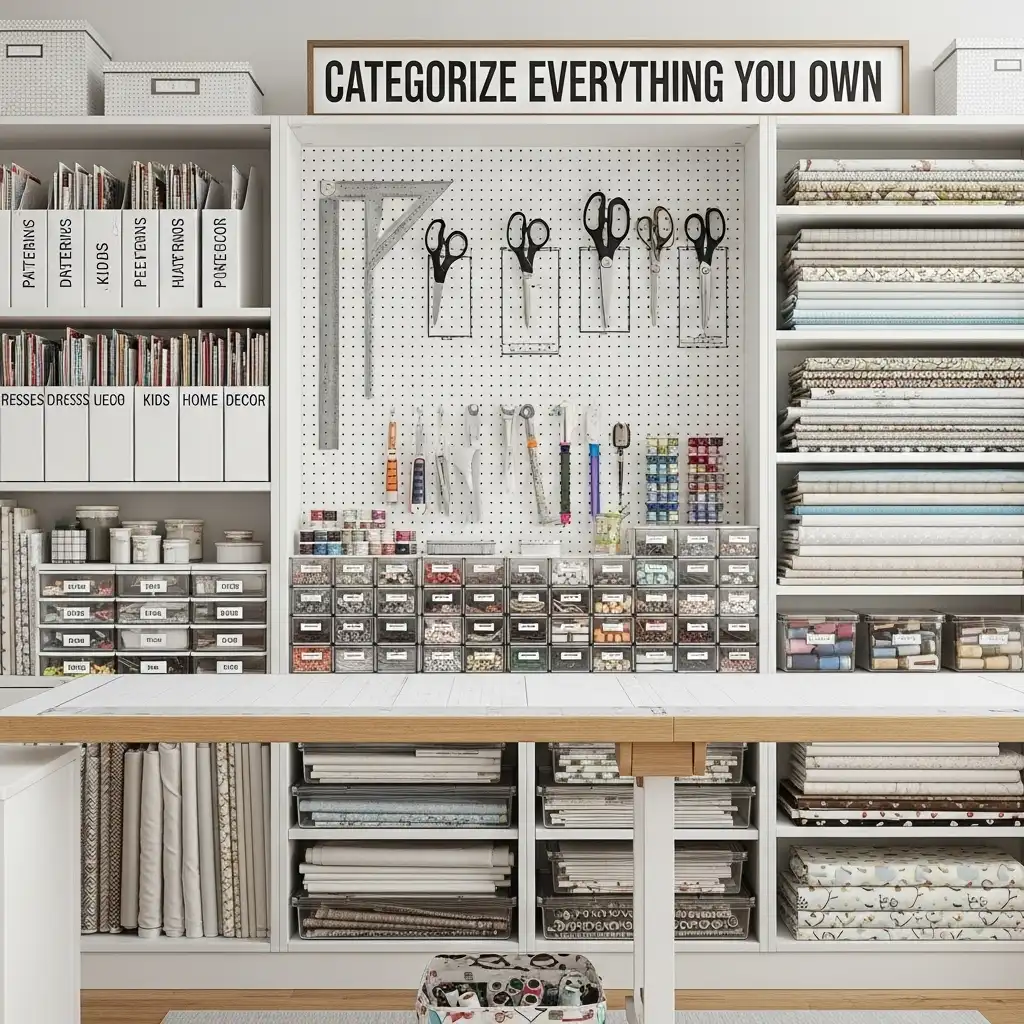
After decluttering, it’s time to sort. Create piles for broad categories like fabric, notions, patterns, and tools. This step helps you see exactly what you have. It also allows you to find the best storage solution for each item.
Fold Fabric into Uniform “Bolts”

Ditch the messy stacks of fabric. Instead, use comic book boards or cardboard to create small, uniform “bolts.” This method saves a lot of space. It also makes it easy to see and access your fabric collection.
Organize by Color or Fabric Type
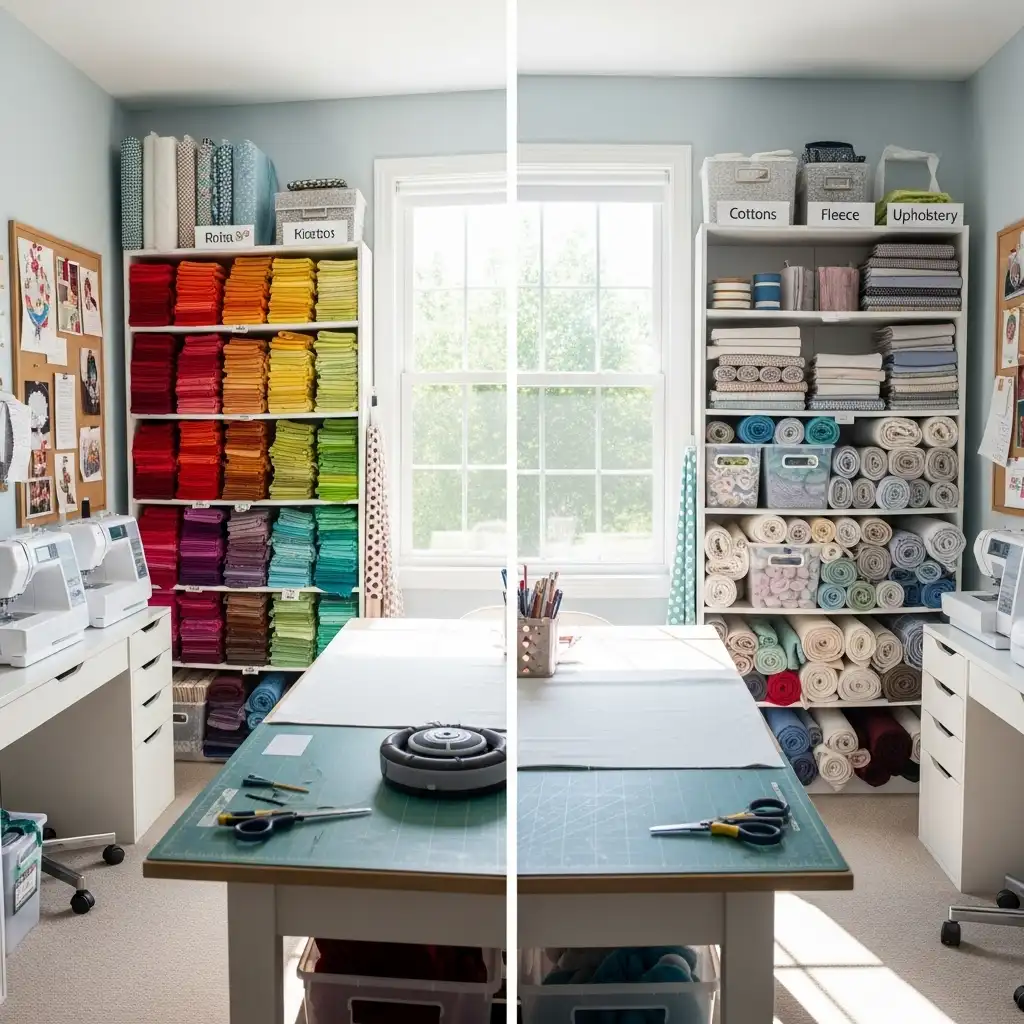
Choose a system that suits your creative mind. Organizing by color creates a beautiful “fabric rainbow” effect. Sorting by fabric type (e.g., cottons, knits, fleece) is highly functional for specific projects.
Store Fabric Scraps in Clear Bins
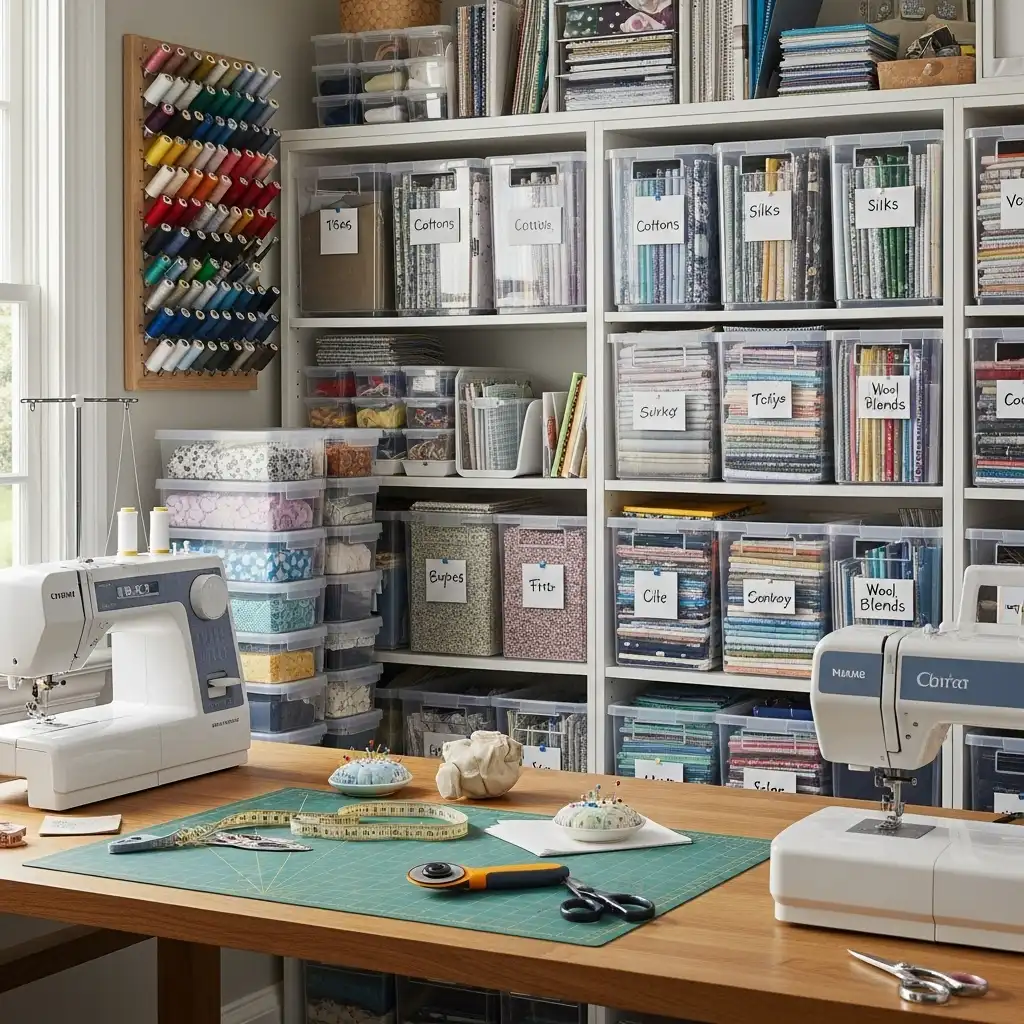
Don’t let your scraps create a chaotic mess. Store smaller fabric scraps in clear, stackable containers. This lets you quickly see what you have without having to open every bin. It’s an easy way to keep your space tidy.
Mount Thread on a Wall Rack
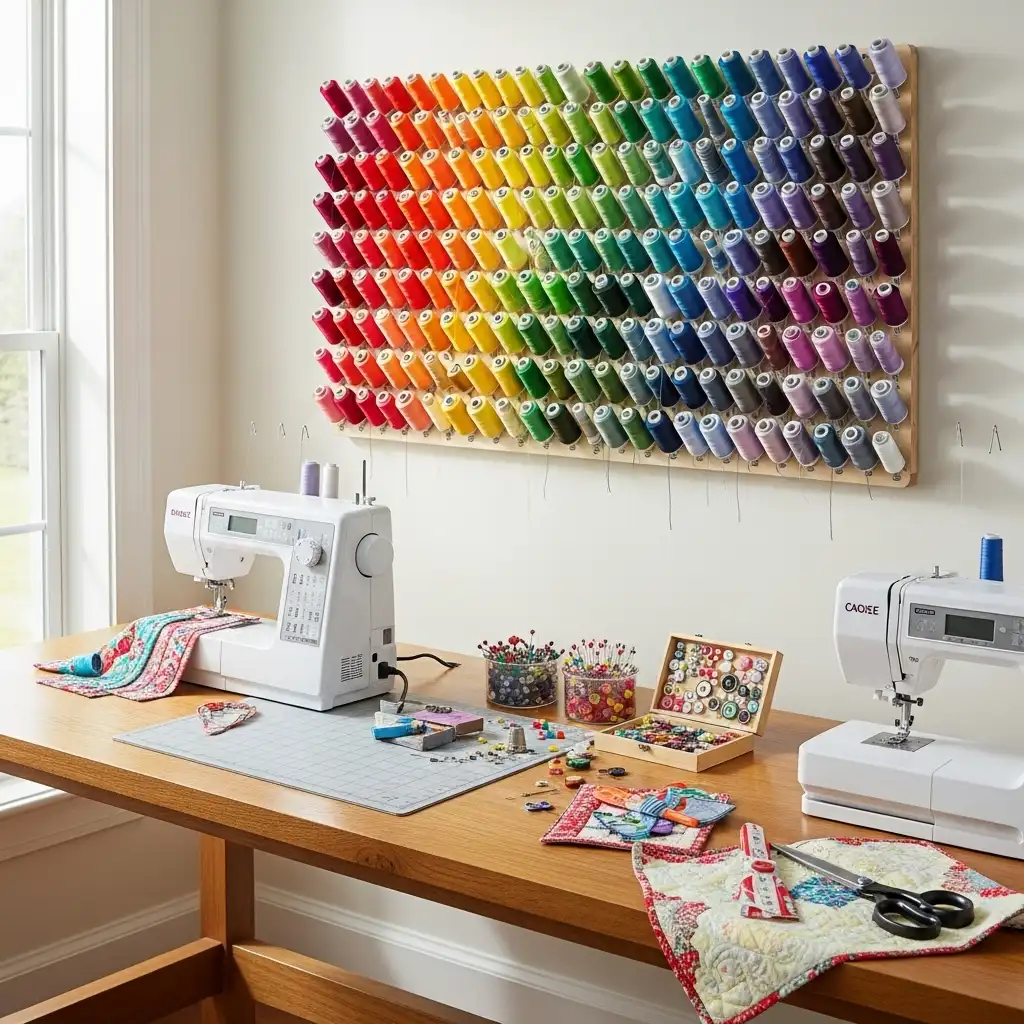
Keep your thread spools neat and untangled with a wall-mounted rack. This saves valuable drawer or shelf space. It also doubles as a colorful and functional piece of art.
Use Clips to Keep Bobbins with Spools
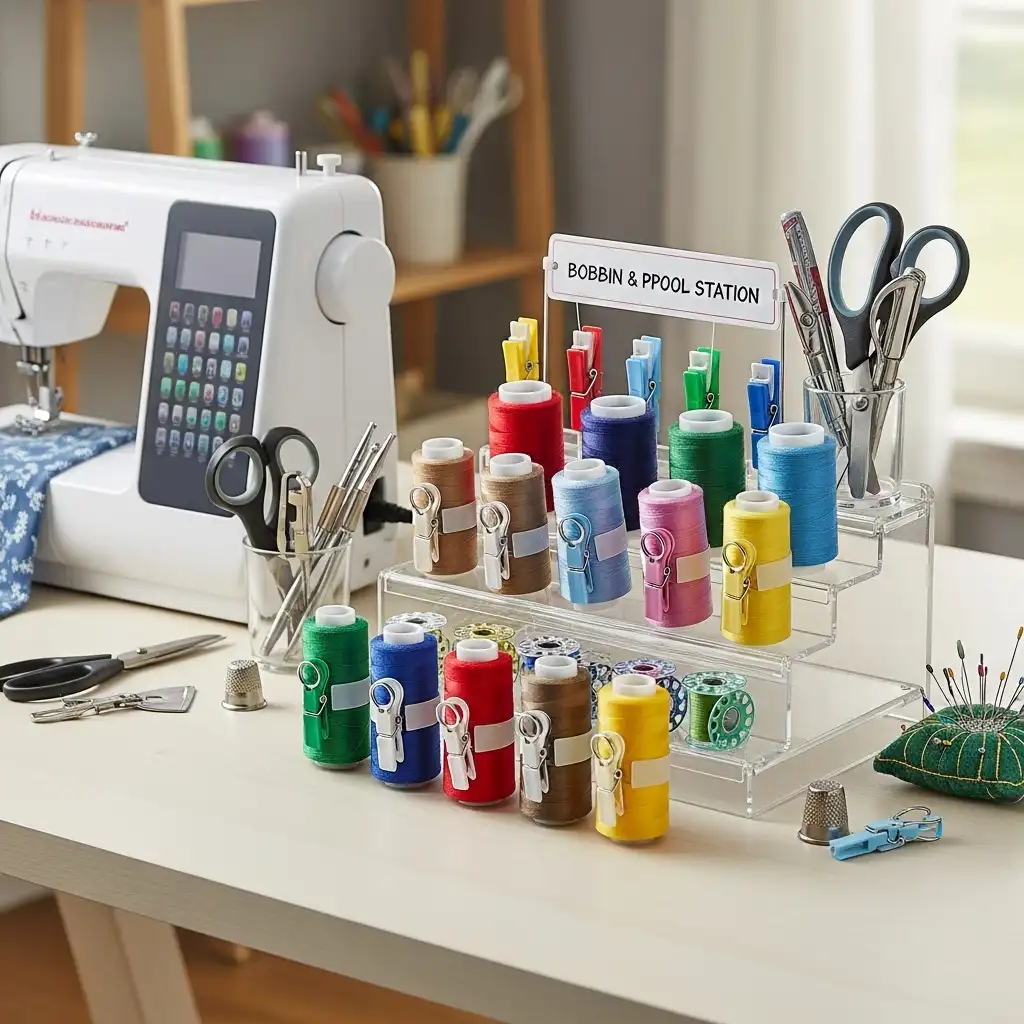
This tiny hack prevents lost bobbins. Simply clip each bobbin to its matching thread spool. This simple step ensures they always stay together and are easy to find.
Hang Tools on a Pegboard
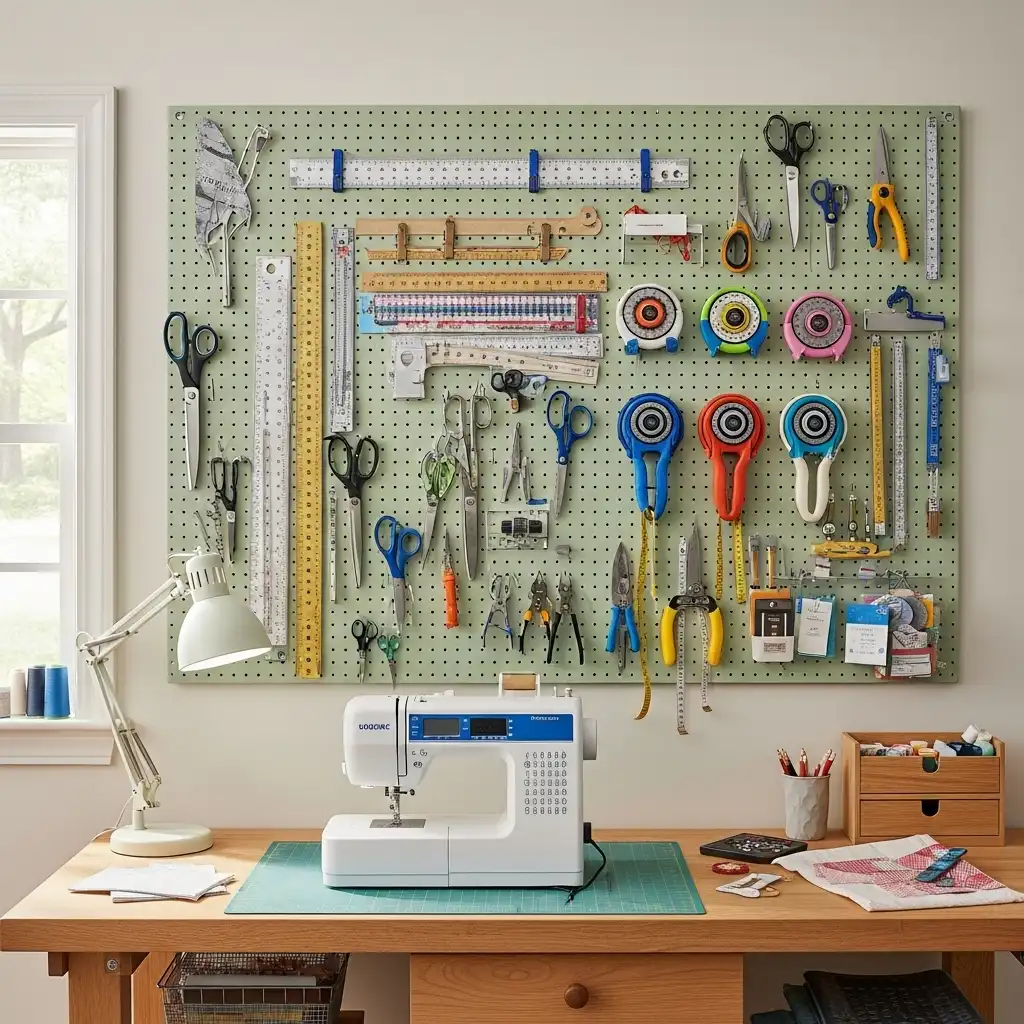
A pegboard is a sewist’s best friend. Hang scissors, rulers, and rotary cutters above your workspace. This keeps your most-used tools in plain sight and within easy reach.
Use Drawer Dividers for Small Items
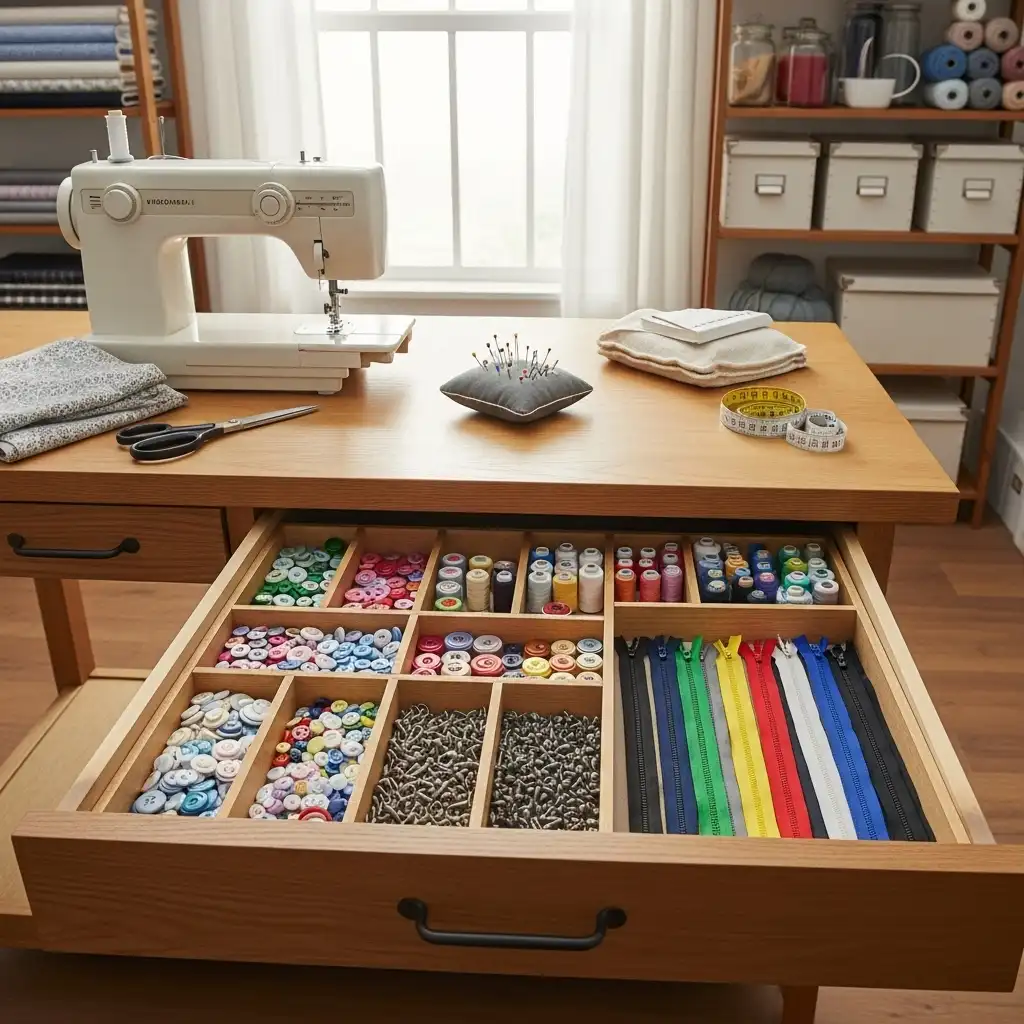
Small notions like buttons, snaps, and zippers can easily get lost. Use small dividers to create a dedicated space for each type of item. This keeps everything organized and easy to find.
Repurpose Jars and Containers
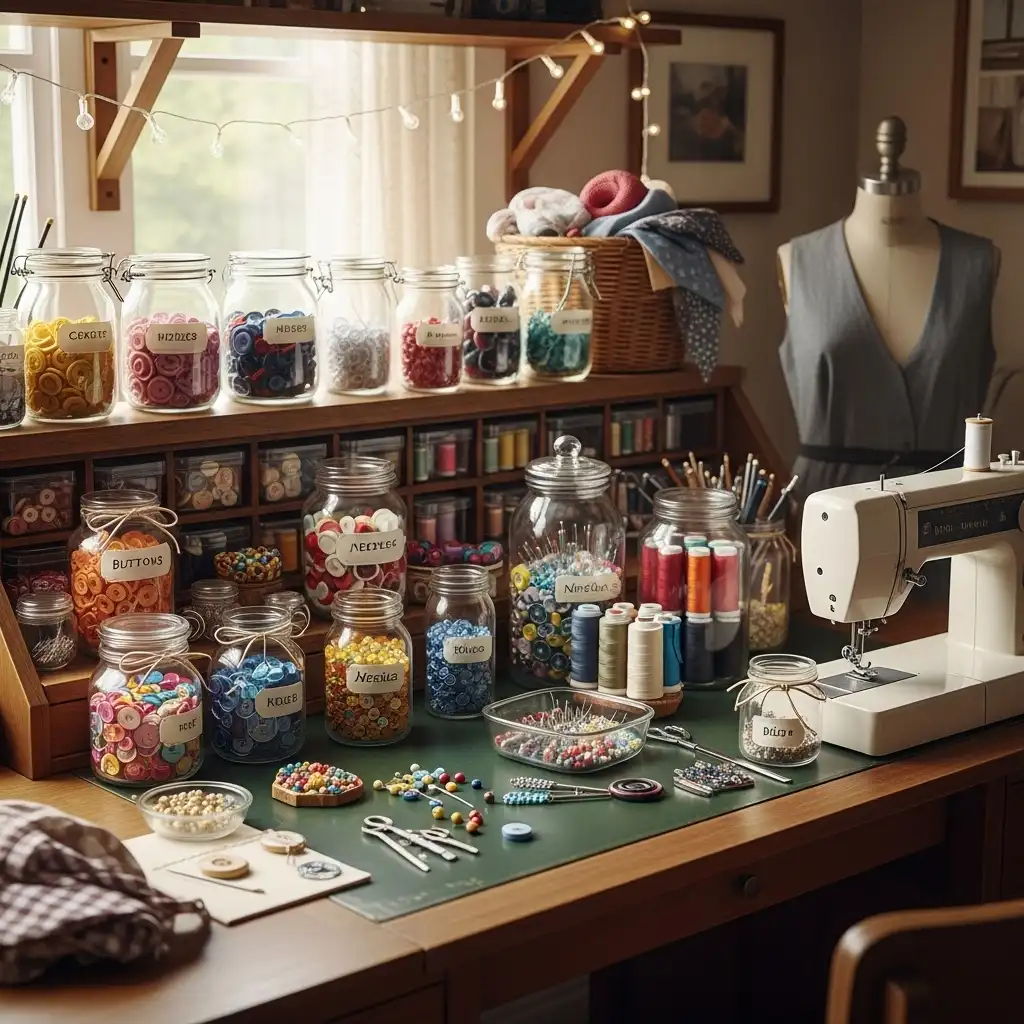
Don’t buy expensive storage containers. Old mason jars or clear glass containers are perfect for storing and displaying small notions. It’s an affordable, charming, and eco-friendly way to organize your supplies.
Create a “Catch-All” Tray
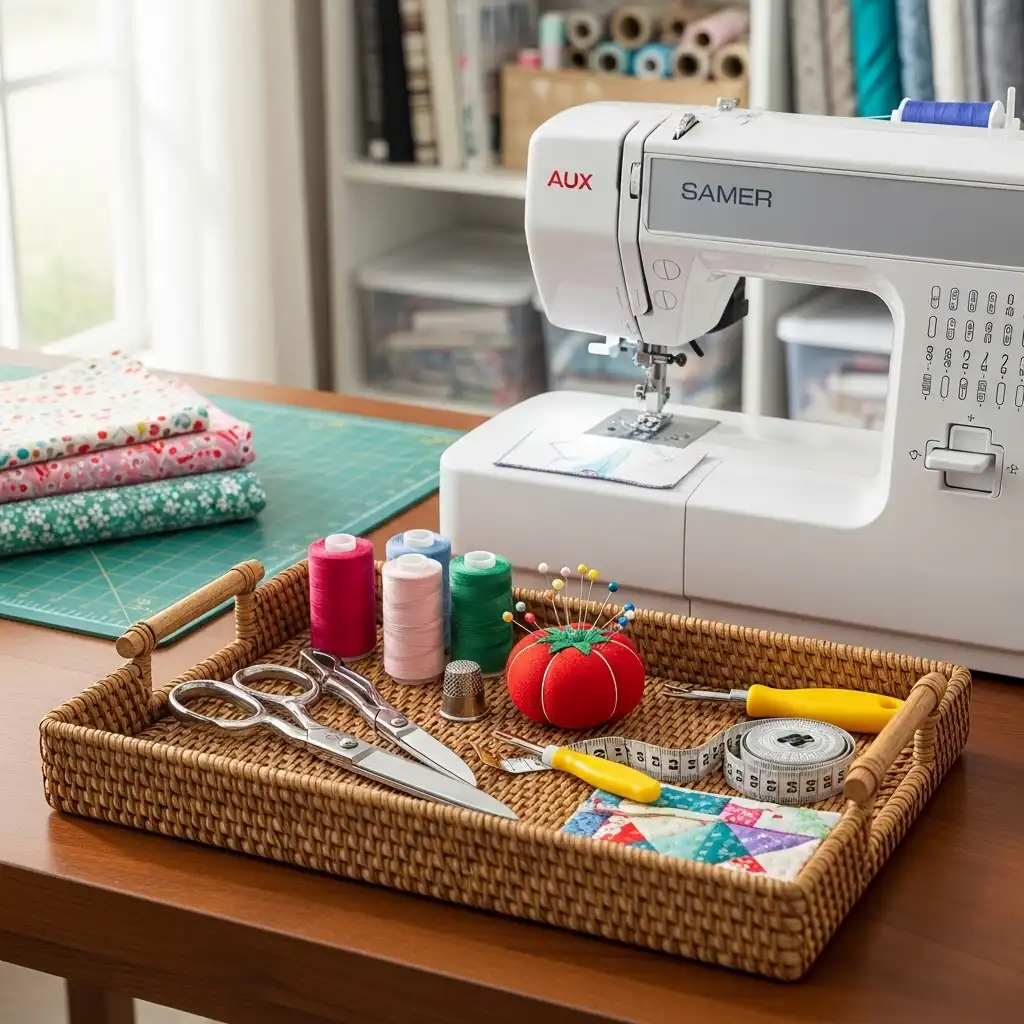
Keep a small tray on your work surface for items you’re currently using. This helps contain the inevitable mess that comes with a creative project. It keeps your main work area from becoming overwhelmed with clutter.
Store Patterns in Binders
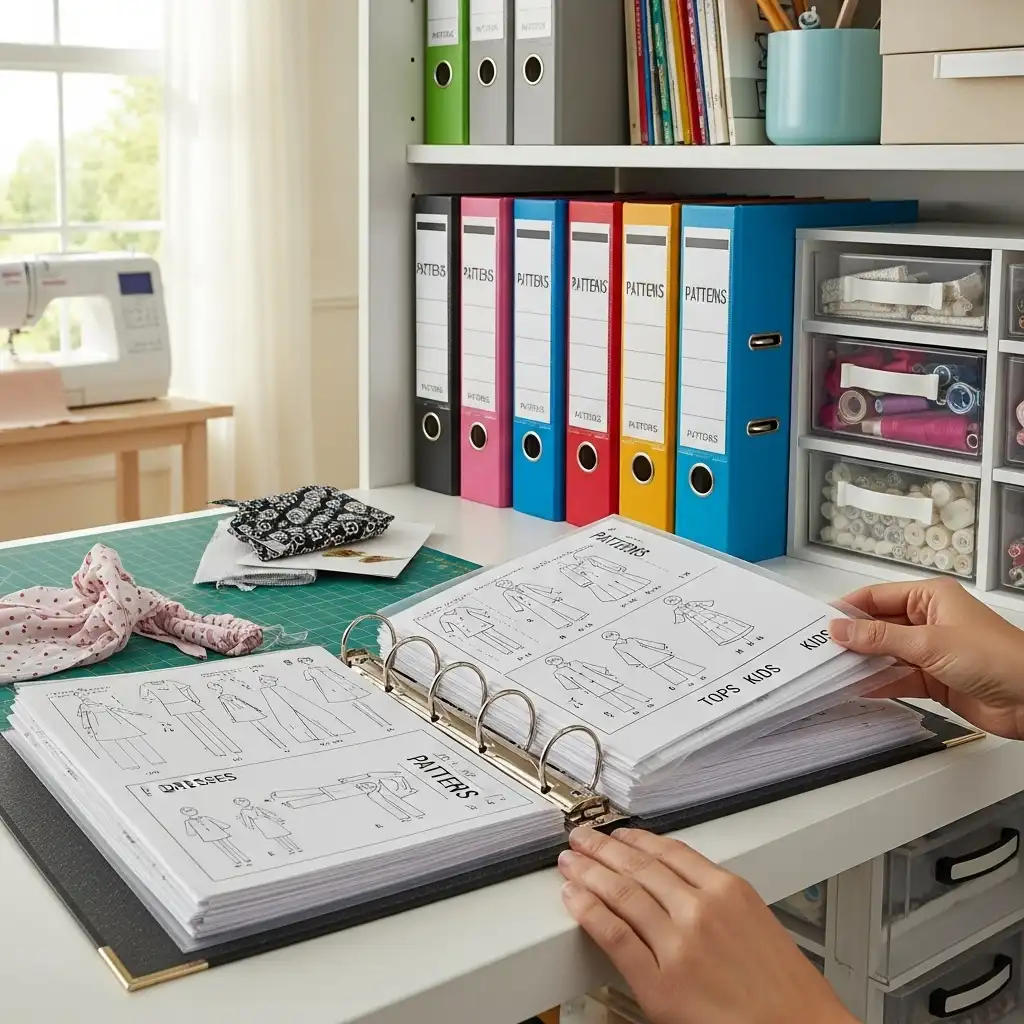
Paper patterns can quickly become a disorganized pile. Use three-ring binders and plastic sleeves to keep them organized. You can sort them by type and find a pattern in a matter of seconds.
Use a Dedicated Project Box for Each WIP
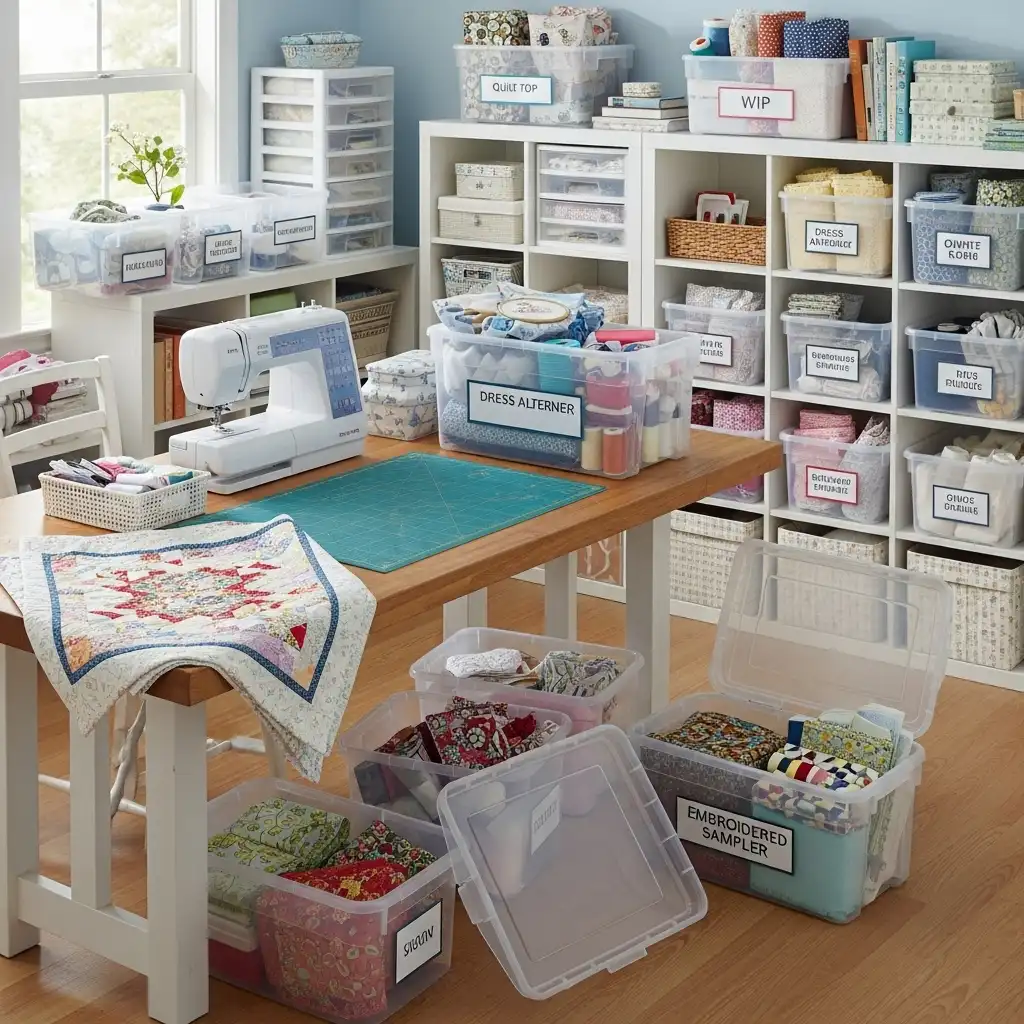
For each unfinished project, gather all the materials and put them in a clear plastic bin. This ensures that nothing gets lost and everything is ready to go. It makes it easy to pick up a project and start right away.
Use a Magazine Holder for Your “To-Do” List

Line up the next few patterns or project folders in a magazine holder. It’s a great visual reminder of your creative queue. This keeps you on track and excited about what’s next.
Think Vertically with Shelves and Carts
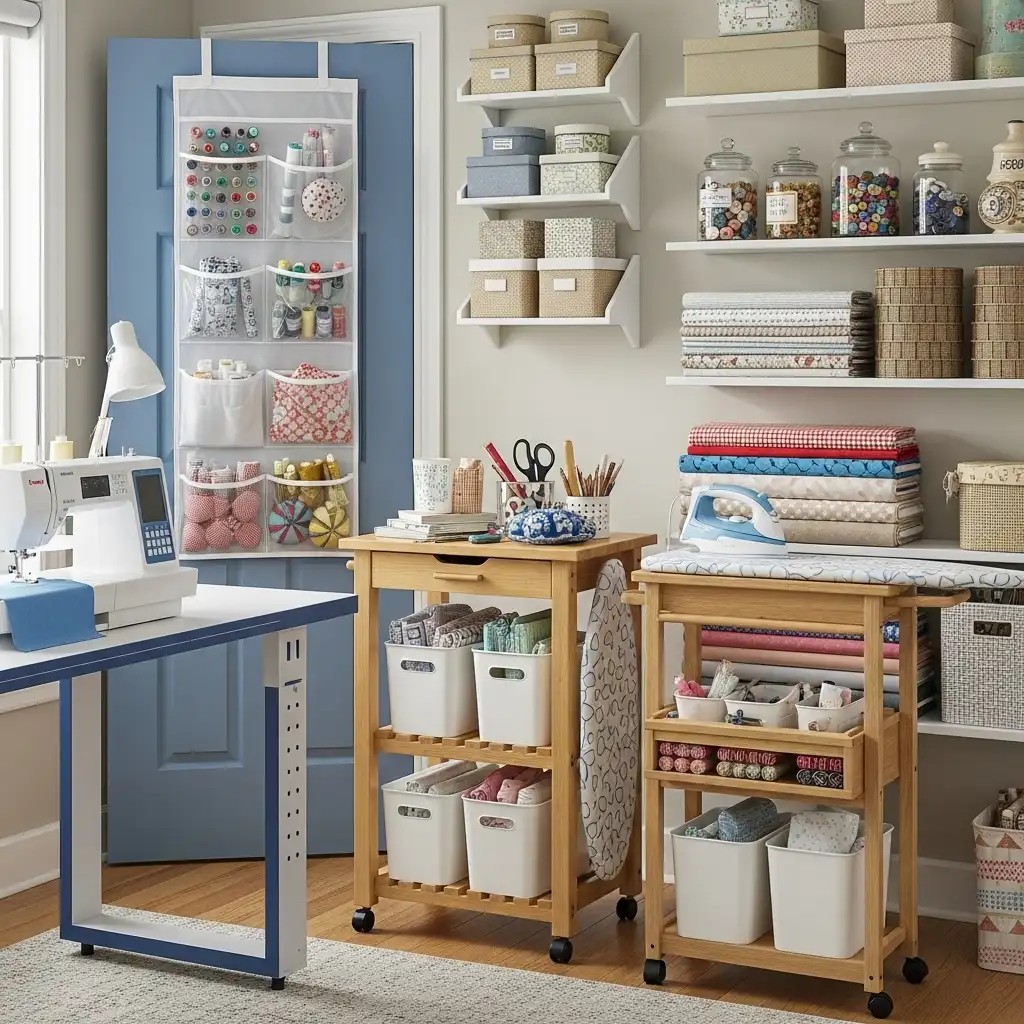
Take advantage of vertical space. Over-the-door organizers and rolling utility carts add storage without taking up precious floor space. Look for opportunities to go up instead of out. You can also like see how to design kitchen as well.
Invest in a Dedicated Cutting and Pressing Station
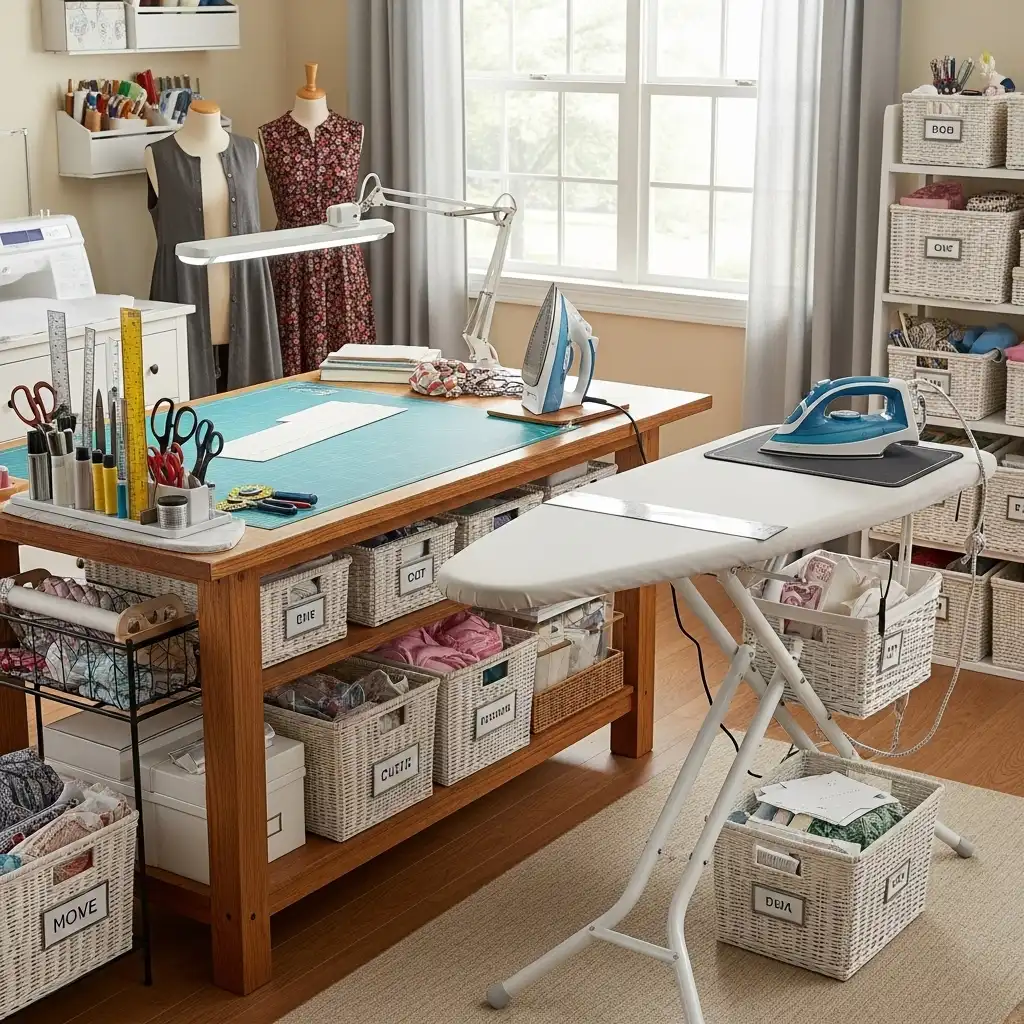
If you have the room, a dedicated cutting table and ironing board can significantly improve your workflow. It reduces the need to move between different areas of your home. A proper setup also makes your work more comfortable.
Label Everything Clearly
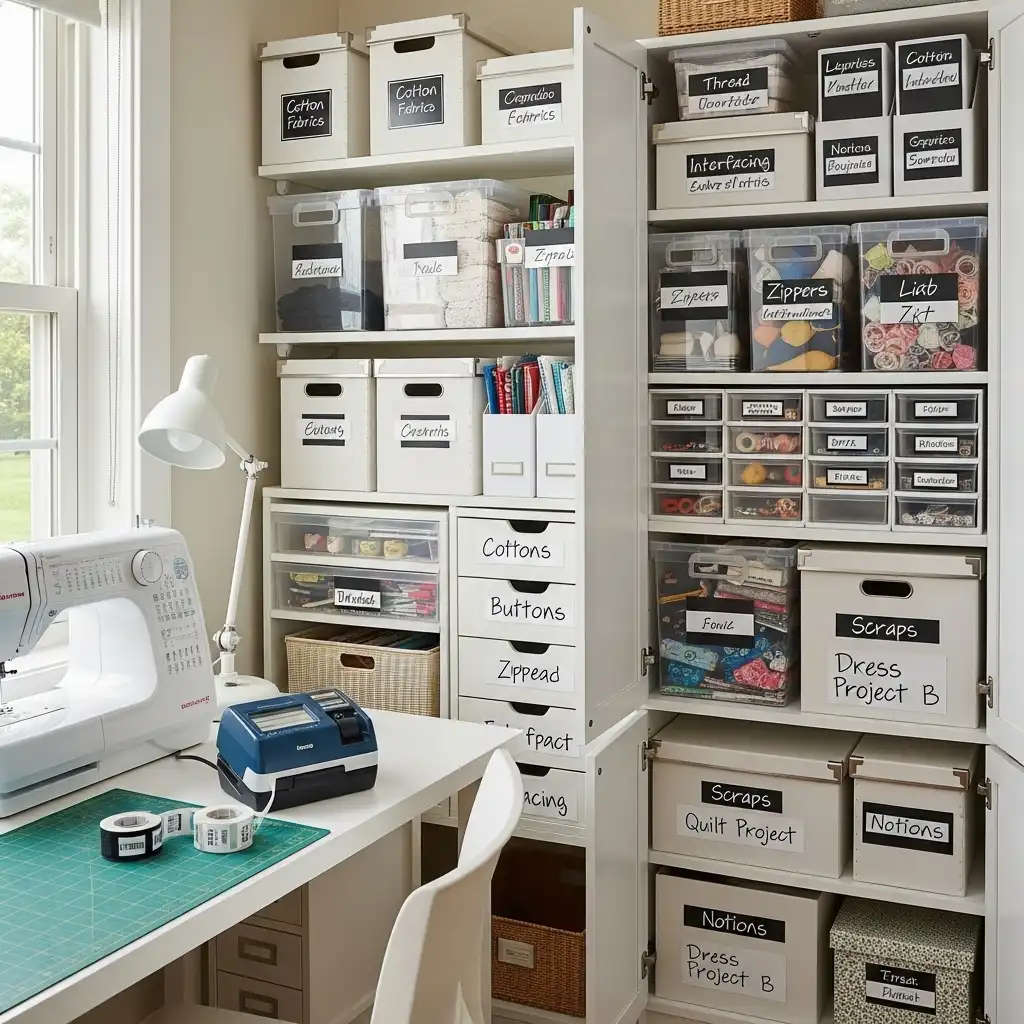
Labeling bins, drawers, and project boxes makes it easy to find what you need. A label maker or a simple handwritten tag can save you a lot of time and frustration. It’s a simple step that has a big impact on organization.
Keep Your Sewing Machine Clean
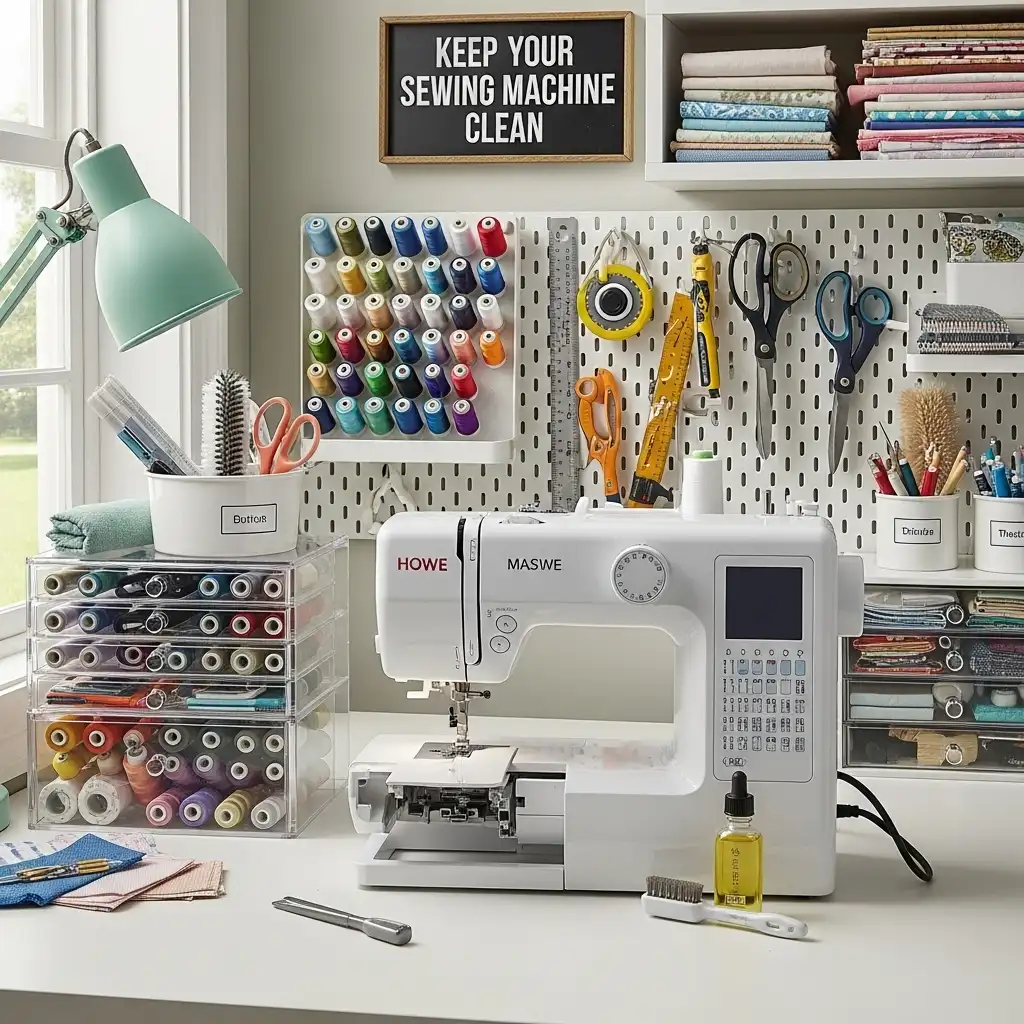
Your machine needs regular care to function properly. Give it a quick clean and oil it as needed. This simple maintenance routine ensures your machine stays in top condition.
FAQs
Why is organizing my sewing room so important?
An organized sewing room is a key factor in improving a home sewist’s efficiency. Research on industrial sewing lines has shown that an optimized layout and organized workstation significantly reduces wasted motion and time spent searching for tools and materials. This principle holds true for a hobbyist, too. Having a designated place for everything helps you move from one task to the next seamlessly, making your sewing time more productive and enjoyable.
What’s the best way to store large fabric cuts and rolls?
For large cuts of fabric, consider rolling them around a tube (like a cardboard mailing tube) to prevent creases and wrinkles, then store them vertically in a tall basket or bin. Alternatively, if you have closet space, you can hang them on pants hangers to keep them neat and easily accessible. The key is to avoid stacking them, as this makes it difficult to get to the pieces on the bottom.
How do I handle fabric scraps that are too small to use?
For tiny scraps that are no longer useful, consider designating a separate bin for them. Once the bin is full, you can use the scraps for stuffing pillows, donating to schools for craft projects, or finding a local quilter or artist who can use them for their own work. This ensures nothing goes to waste and your sewing space stays clutter-free.
Conclusion
Organizing your sewing room is an investment in your craft. By using these strategies and creating a system that works for you, you can transform your space from a source of stress into a place of peace, productivity, and endless creative possibility. For more informative blogs you can keep visit Motif Space.