
The herringbone tile pattern is a design classic that brings instant sophistication and dynamic movement to any space. Formed by rectangular tiles laid in a distinctive V-shape (or “fishbone” pattern), it offers a refined alternative to the standard brick layout.
In the bathroom, herringbone provides excellent texture, visual grounding, and a high-end, custom look that significantly boosts style and perceived value.
Here are 16 ideas, covering placement, material, and color, to master the herringbone look in your bathroom remodel.
1. Make the Floor the Primary Focal Point
Transform the floor into the star of your bathroom. Laying large-format tiles (e.g., 4*12 inches) in a dark, grounding color (like charcoal or black) in a herringbone pattern creates a dramatic visual anchor. This looks striking against light-colored walls and vanity.

Credits: @comparethetradie
2. Introduce Subtle Luxury with White-on-White

For a spa-like feel, use glossy white subway tiles in a herringbone pattern with matching white grout on the shower walls. The pattern becomes a subtle texture rather than a loud statement, maximizing brightness and perceived space.
3. Emphasize Texture with Contrasting Grout
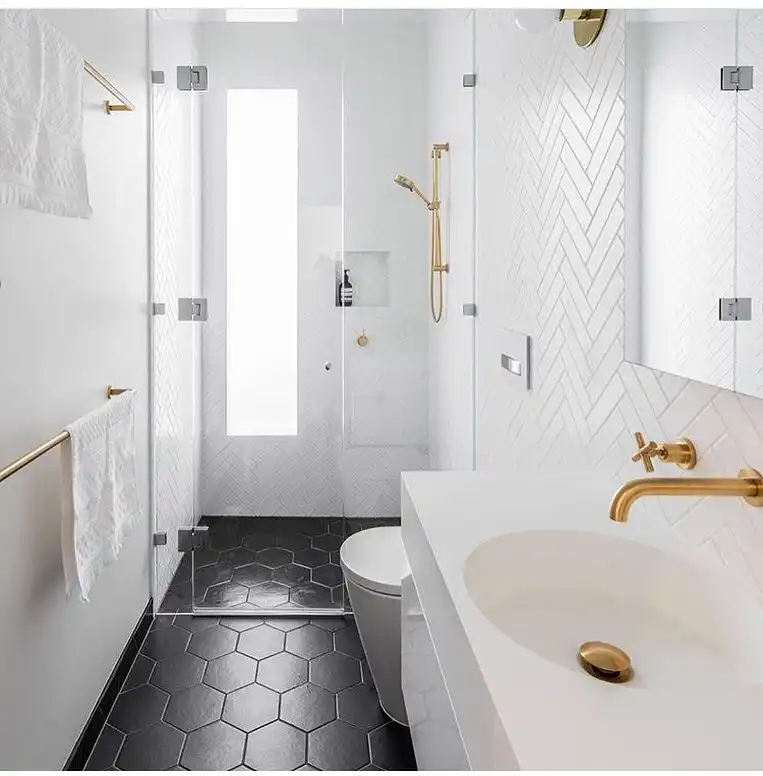
Credits: @eatbathelive
If you want the pattern to truly pop, choose a high-contrast grout color. For example, use dark gray or black grout with white tiles. This enhances the linear movement and makes the herringbone shape sharp and graphic.
4. Elevate the Look with Marble Veining

Credits: @elysa_roberts_interiors
Natural or porcelain marble-look tile is instantly elevated when cut and installed in herringbone. The angled lay breaks up the marble’s natural veining, showcasing its unique beauty with high-end luxury. This is a common feature in luxury bathroom ideas.
5. Create Seamless Flow by Tiling Floor to Shower

For visual continuity, use the same herringbone tile on the main bathroom floor and continue it seamlessly onto the shower floor (if small scale) or up the shower walls. This makes the room feel larger and exceptionally cohesive.
6. Accentuate the Shower Niche

Credits: @threebirdsrenovations
Even if the main shower walls use a basic subway stack, use a small-scale herringbone mosaic exclusively within the recessed shower niche. This custom detail adds an unexpected layer of craftsmanship and style.
7. Go Small with Mosaic Shower Pans

Credits: @roadtorenovation
Small-format herringbone mosaics are ideal for the shower pan. The numerous grout lines inherent in the pattern provide excellent non-slip traction, making them a smart choice for safety and texture.
8. Achieve Warmth with Wood-Look Porcelain

Get the cozy look of herringbone wood flooring in your wet area without the worry. Wood-look porcelain tiles laid in the pattern offer the warmth and grain of timber, perfect for a modern cottage or transitional bathroom.
9. Add Drama with a Black Accent Wall

In a powder room or small bathroom, consider a full wall of matte black herringbone tile. When paired with a light vanity and metallic fixtures, this creates powerful contrast and unexpected visual depth, a bold approach to small bathroom ideas.
10. Frame the Vanity Area as a Backsplash

Install the herringbone pattern just as a backsplash behind the vanity. This draws attention to the sink area and is a budget-friendly way to incorporate the high-impact pattern without tiling the entire room.
11. Use Long, Large Tiles to Elongate Walls

In master bathrooms with high ceilings, choose longer, skinnier rectangular tiles (e.g., 3*18 inches). When laid vertically in the herringbone pattern, the lines draw the eye up, emphasizing height.
12. Soften the Look with Pastel Tones

Credits: @r_lange_construction
For a contemporary or playful vibe, opt for tiles in soft blush, seafoam green, or light blue. These colors, especially in a glossy or zellige-style finish, create a gentle movement that feels light and airy.
13. Create a Custom Rug Effect

Lay the herringbone pattern in the center of the bathroom floor, leaving a border of a different tile (or the same tile cut straight) around the perimeter. This creates the illusion of a built-in patterned rug below the vanity.
14. Embrace the Rustic Look with Brick or Terracotta

Use thin brick veneer or terracotta-look tiles in the herringbone pattern for a rustic, earthy, or vintage bathroom ideas aesthetic. This adds substantial texture and a warm, inviting feel.
15. Mix Patterns with Geometric Floors

If your walls are herringbone, pair them with a simple large-format hexagonal or square floor tile. This avoids visual conflict while ensuring the patterned wall remains the focal point.
16. Install at a 45-Degree Angle
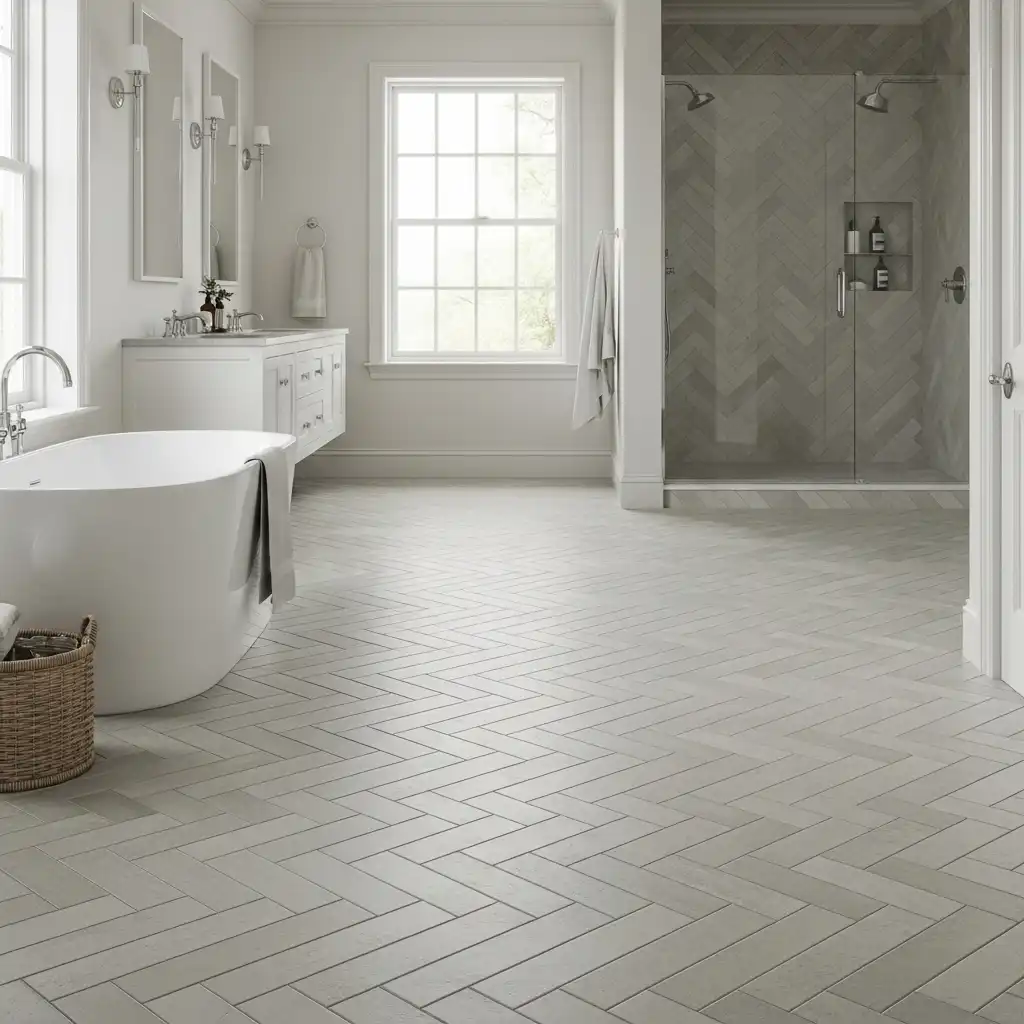
The standard and most visually dynamic way to lay herringbone is at a 45 degree angle to the room’s main walls. This diagonal orientation maximizes the perceived size of the room and highlights the pattern’s movement.
Value, Cost, and Return on Investment (ROI)
The herringbone pattern is generally considered a high-value design feature that increases a home’s perceived luxury and style.
- Value and Appeal: Herringbone is a timeless, classic pattern (dating back to ancient Roman roads) that currently aligns with high-end, contemporary design trends. It is viewed by buyers as an expensive, intentional upgrade, contributing positively to a bathroom’s overall appeal.
- Cost Impact: Installing herringbone is more expensive than standard offset or straight-stack patterns. This is due to the increased labor time required for meticulous layout planning, numerous angled cuts, and higher material waste (often 15% to 20% more tile needed). For a typical $\text{bathroom remodel}$, expect the labor cost for this pattern to be approximately 20% to 30% higher than for a simple lay.
- ROI: While the upfront cost is higher, the investment in a custom, quality tile installation is often recouped. A well-designed bathroom with premium features like herringbone tile and upgraded fixtures is a strong selling point and can contribute to a higher offer price compared to similar homes with basic tile work. For context on broader costs, review our guide to bathroom remodel ideas.
Frequently Asked Questions (FAQs)
Is herringbone tile going out of style?
No, herringbone is considered a classic and enduring pattern, much like the standard brick lay. While trends might influence the color or material used (e.g., currently marble-look is popular), the pattern itself is timeless and continues to symbolize bespoke, high-quality design.
Is herringbone tile slippery on a bathroom floor?
The slipperiness depends entirely on the material and finish. A glossy, large-format tile can be slippery. However, choosing a smaller tile format (like a mosaic) or a matte/honed finish significantly increases traction due to the larger number of grout lines and the less slick surface.
What size tile works best for a small bathroom in herringbone?
In a small bathroom or powder room, stick to medium-sized tiles (around 2*8 or 3*9 inches) rather than very large ones. This size is large enough to showcase the pattern clearly but small enough to avoid excessive cuts and waste in tight corners, helping the space feel less chopped up.
Conclusion
The herringbone pattern is a powerful tool in bathroom design, offering a perfect blend of classic elegance and contemporary visual impact. Whether you use it subtly with matching grout on shower walls or dramatically with contrasting colors on the floor, the inherent movement and sophistication of the pattern will elevate your space. Though it represents a higher investment in labor and materials, a thoughtfully executed herringbone design is a permanent style upgrade that ensures your bathroom is both beautiful and highly valuable.