
Is your living room feeling a little flat? The secret to adding instant architectural drama, warmth, and a custom-built feel might be right above you.
Ceiling beams living room designs are one of the most powerful transformations you can undertake. They draw the eye upward, create a grander feel, and complement nearly any design style, from rugged rustic to sleek modern. Integrating them well is a crucial consideration in home interior design ideas.
This guide will walk you through choosing the right style, material, and layout for your space, ensuring your new ceiling beams living room becomes its most stunning feature.
1. How to Choose the Right Beam Material for Your Style
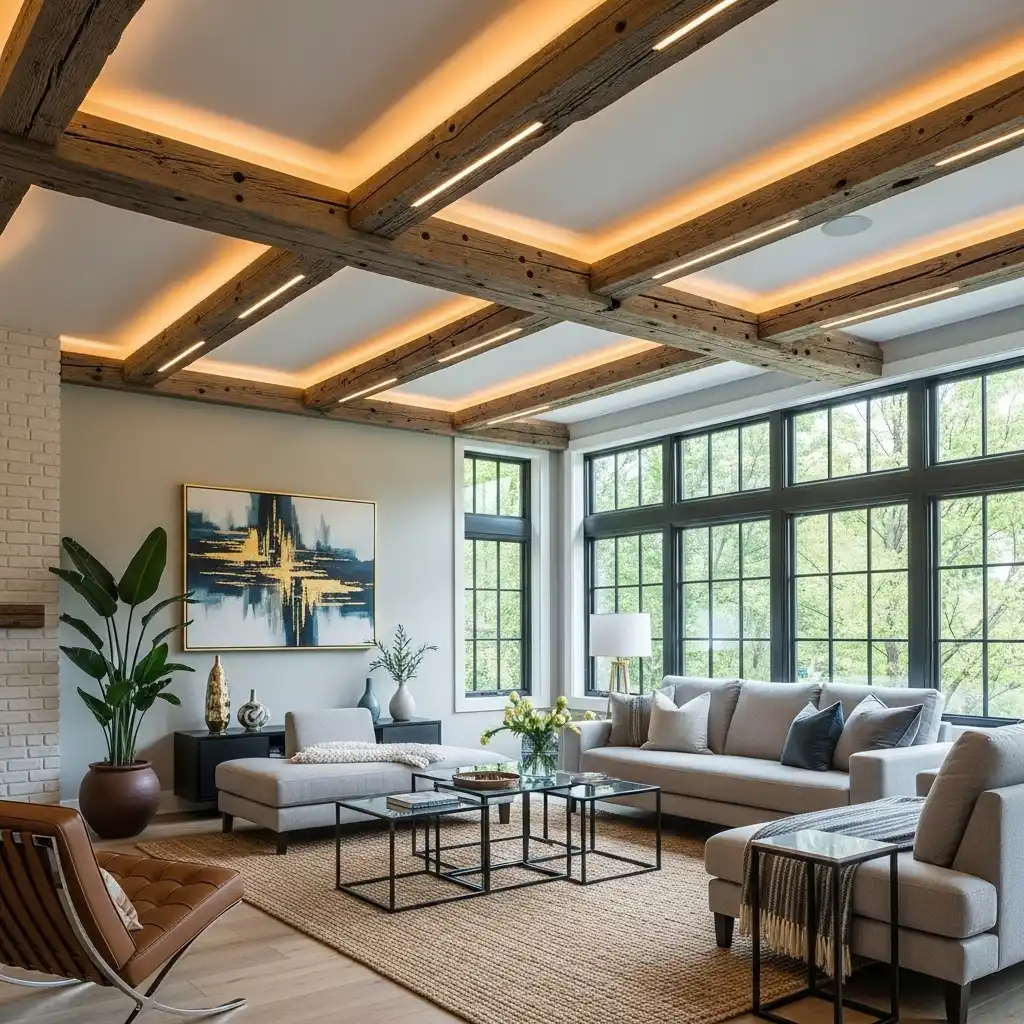
The foundation of your design lies in material selection. From authentic wood to modern faux options, the material sets the tone for your entire ceiling beams living room project.
2. Rustic and Reclaimed Wood: Authentic Character
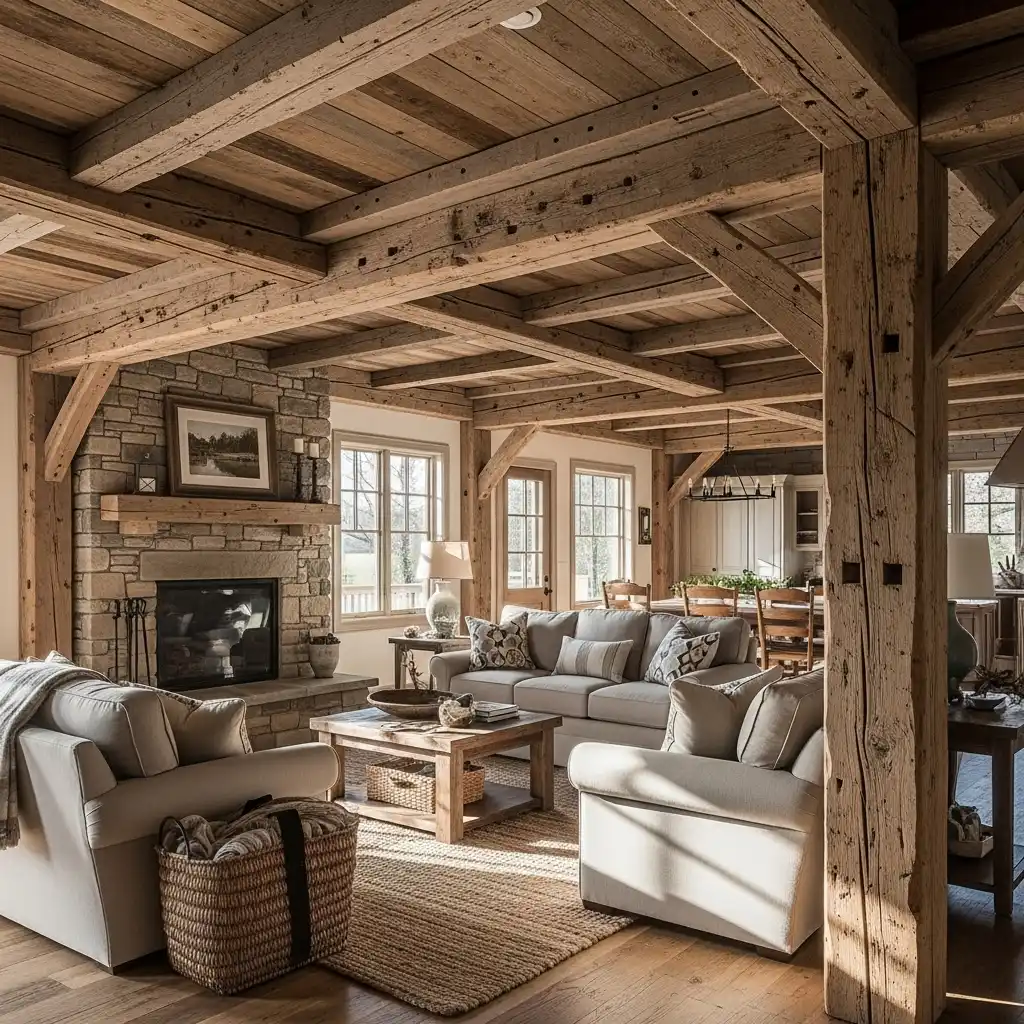
Reclaimed beams, sourced from old barns or factories, feature unique grain and charming imperfections like saw marks and nail holes. This style is essential for authentic farmhouse living room ideas.
3. Faux Wood Beams: Lightweight and Affordable
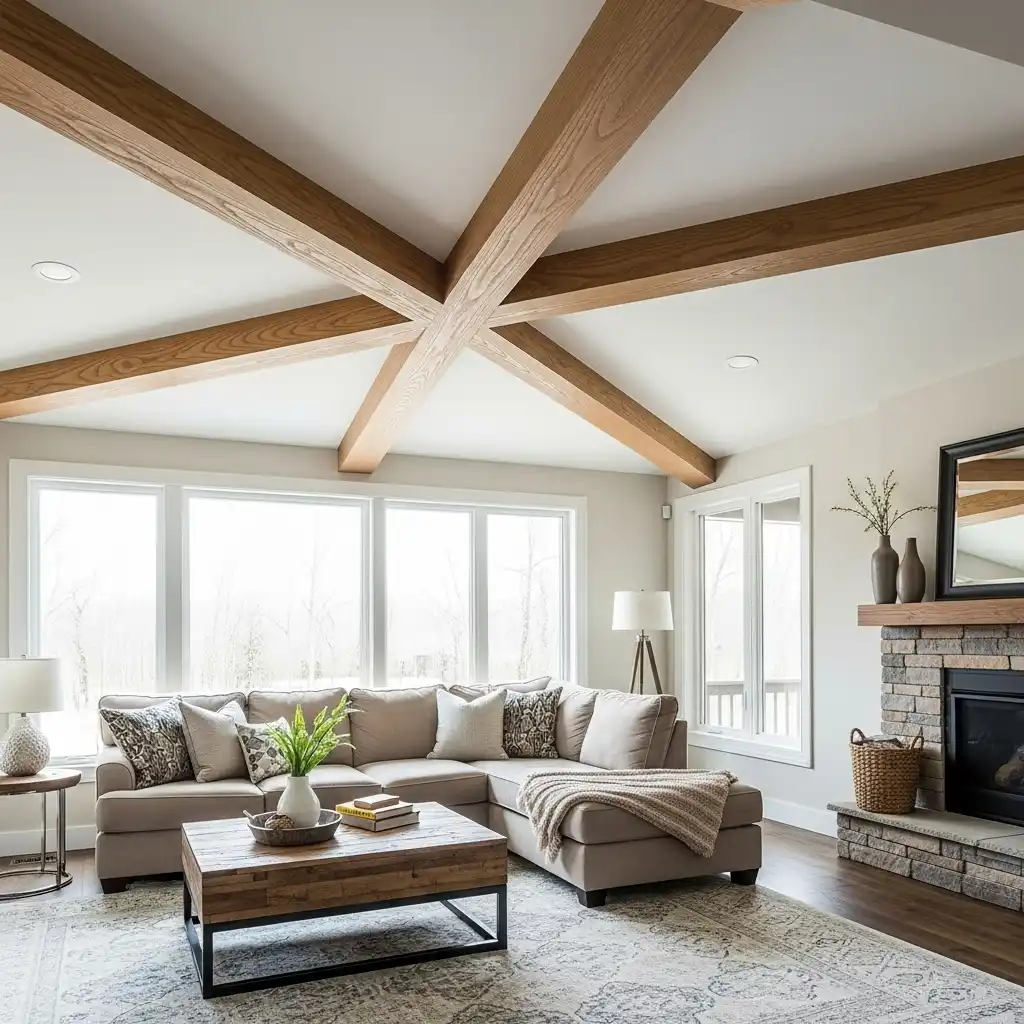
Made from high-density polyurethane, faux beams are the ideal solution for homeowners looking for cheap wood ceiling ideas without sacrificing visual impact. They are lightweight, easy to install, and resist warping.
4. Clean, Modern Box Beams for a Structured Look
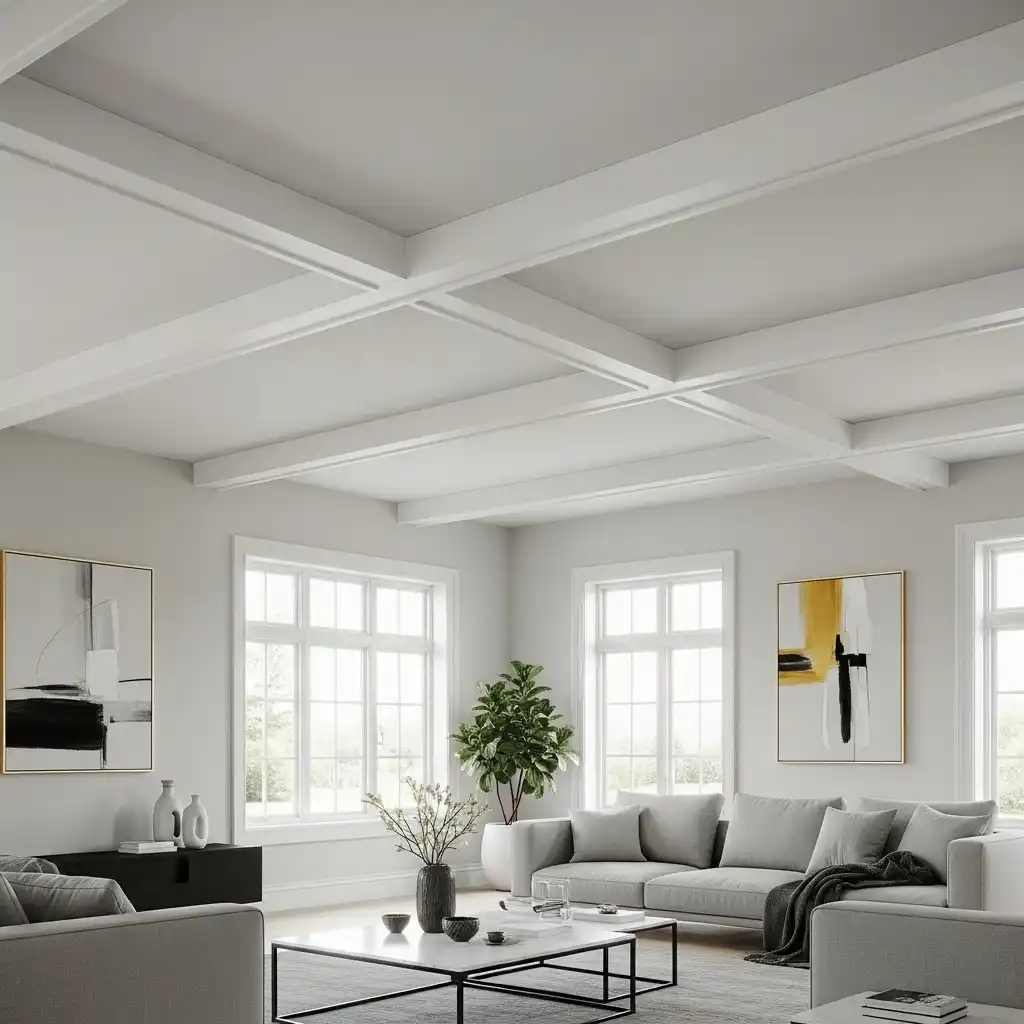
Constructed from three smooth boards, box beams feature clean edges and a simple profile. They work beautifully in minimalist spaces or modern cottagecore ideas, offering structure without heavy visual weight.
5. Painted Beams for a Bright, Airy Feel
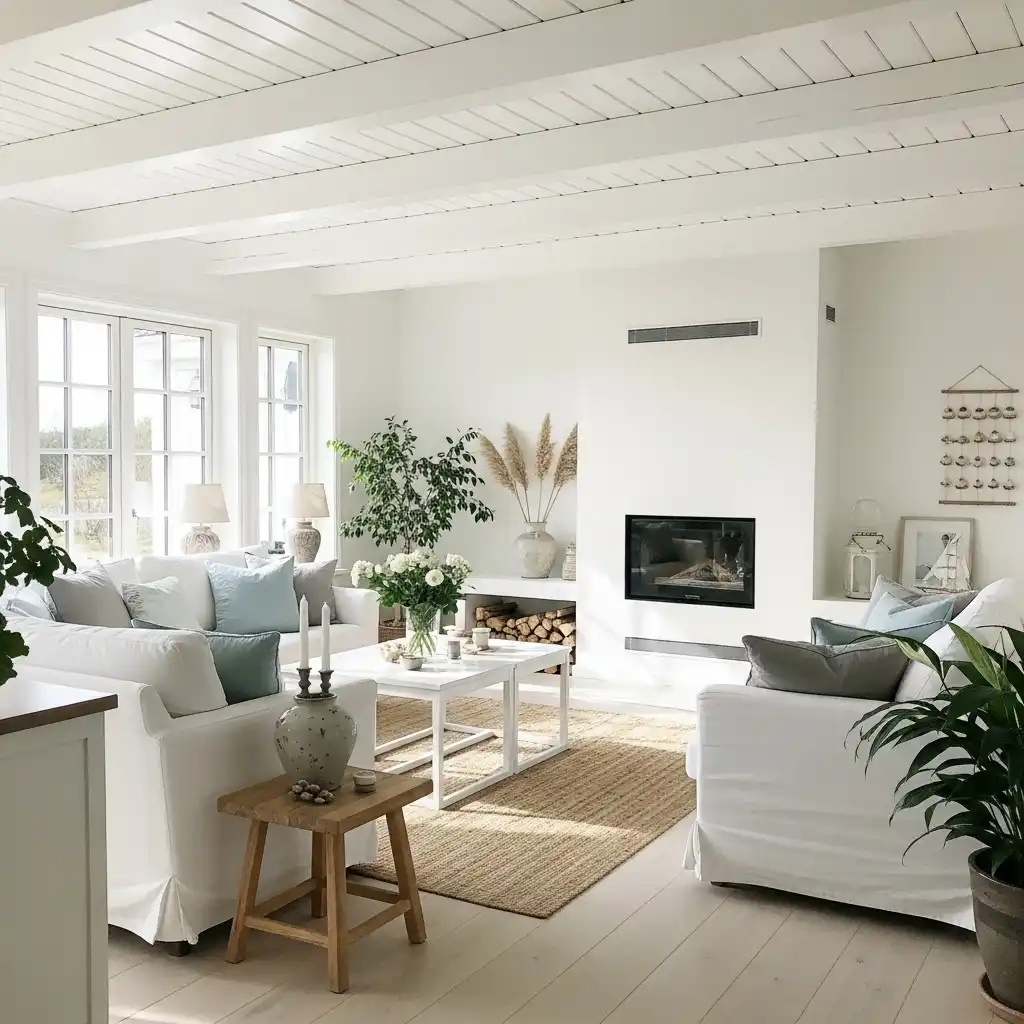
For a brighter, airier look, paint beams to match the ceiling for a seamless look or contrast them for definition. This technique is perfect for coastal or Scandinavian styles and is essential for a dream white living room.
6. Whitewashed Beams to Maintain Texture
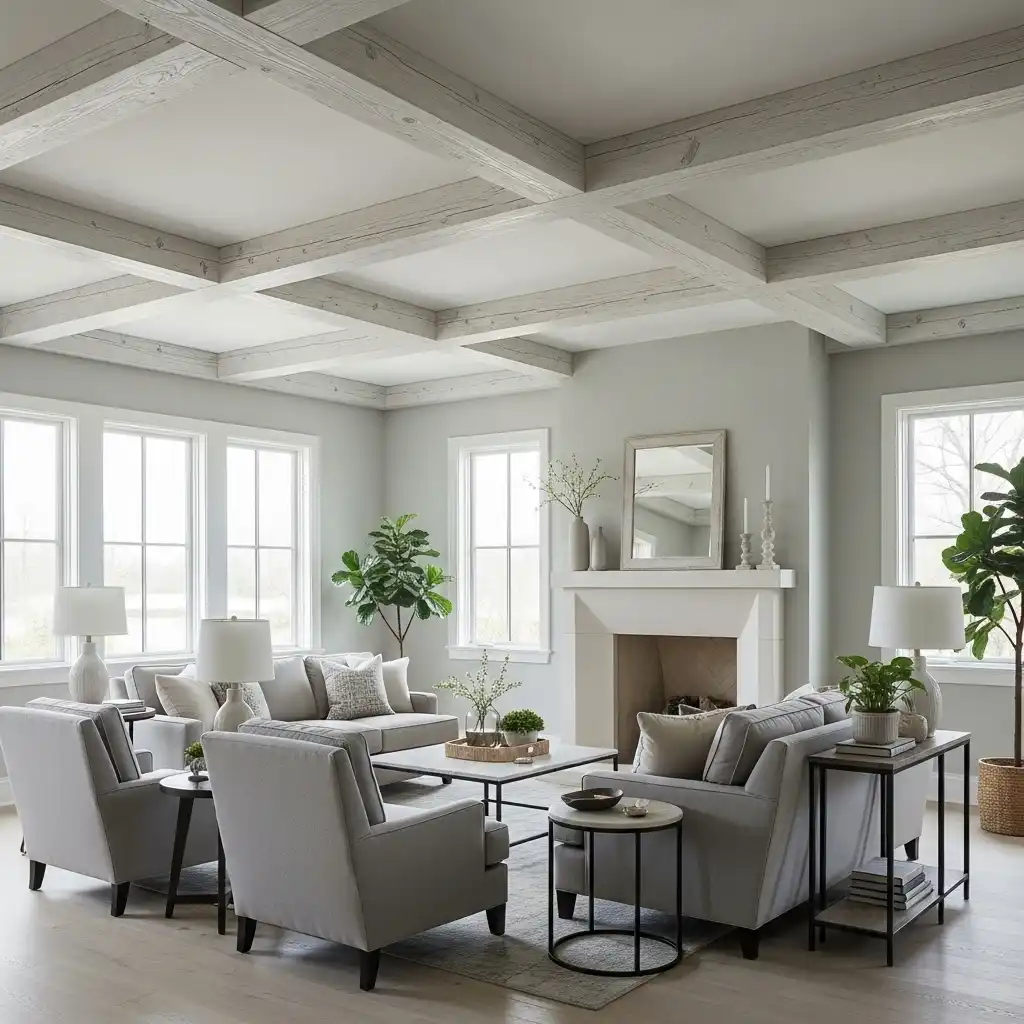
Whitewashing allows the wood’s natural grain and texture to show through while lightening the overall appearance. It’s an excellent compromise between the warmth of wood and the airiness of paint.
7. Stained Beams to Enhance Natural Grain
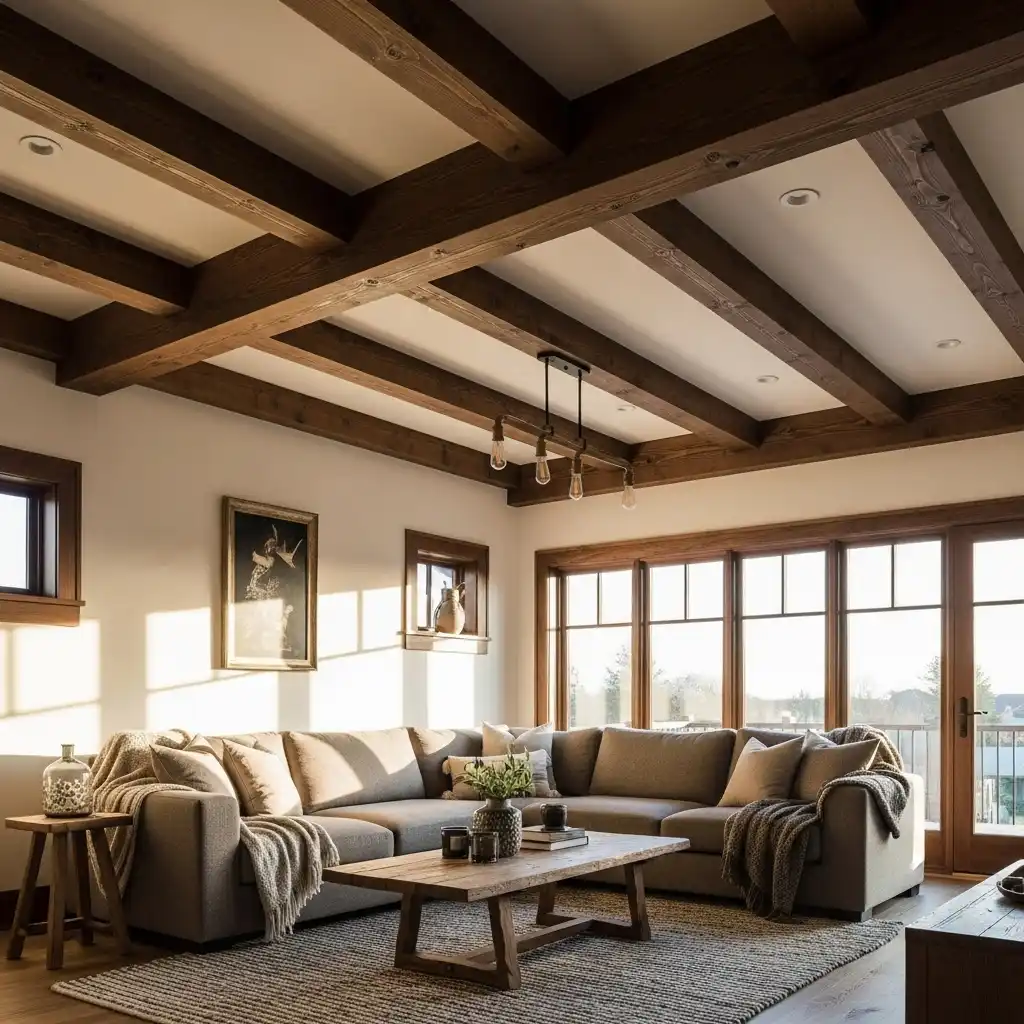
A rich stain can highlight the beautiful natural patterns in wood, adding depth and sophistication. Dark stains like espresso or walnut create a dramatic, anchored feel.
8. Industrial Style with Structural Steel Beams
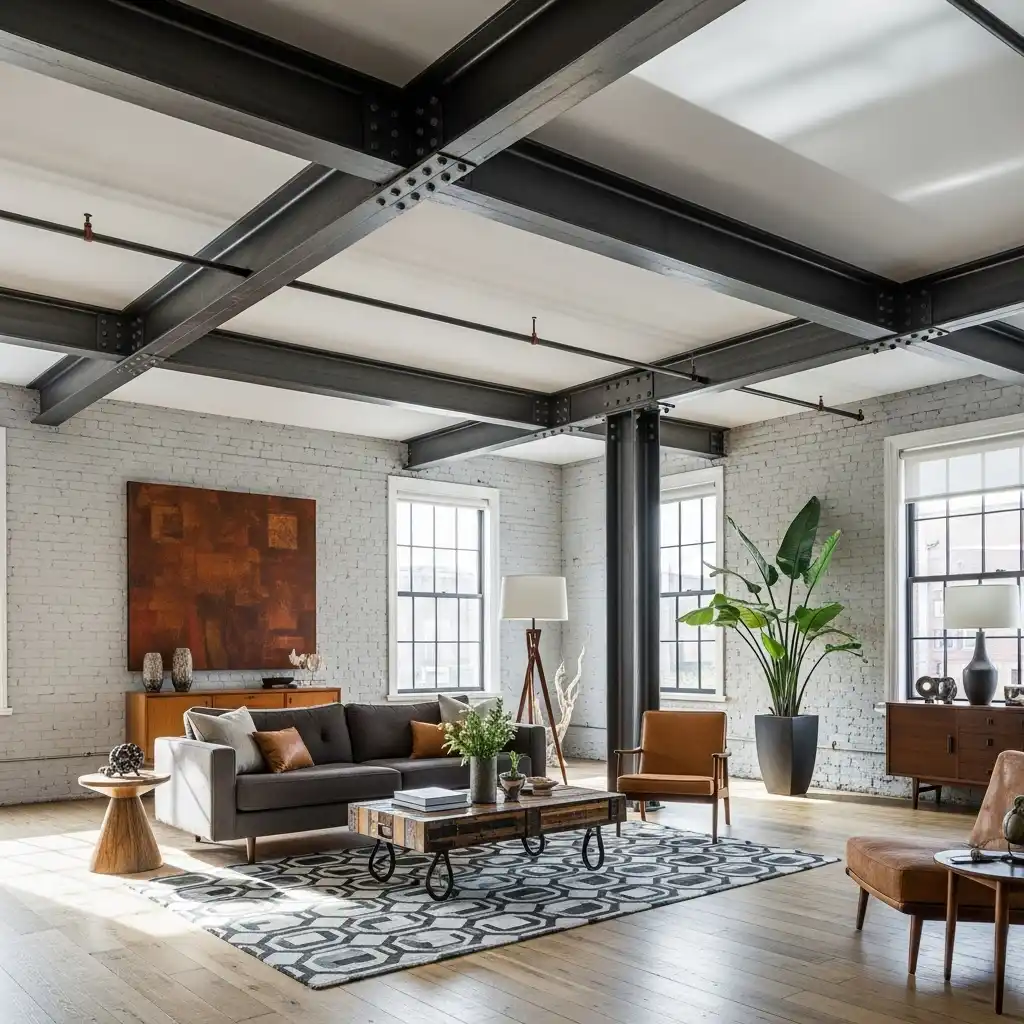
For an urban or loft-like aesthetic, exposed steel beams—or realistic faux versions—add a sharp, sophisticated edge. This look is a hallmark of Mid-Century Modern living room design and industrial spaces.
9. Determining the Best Beam Layout for Your Space
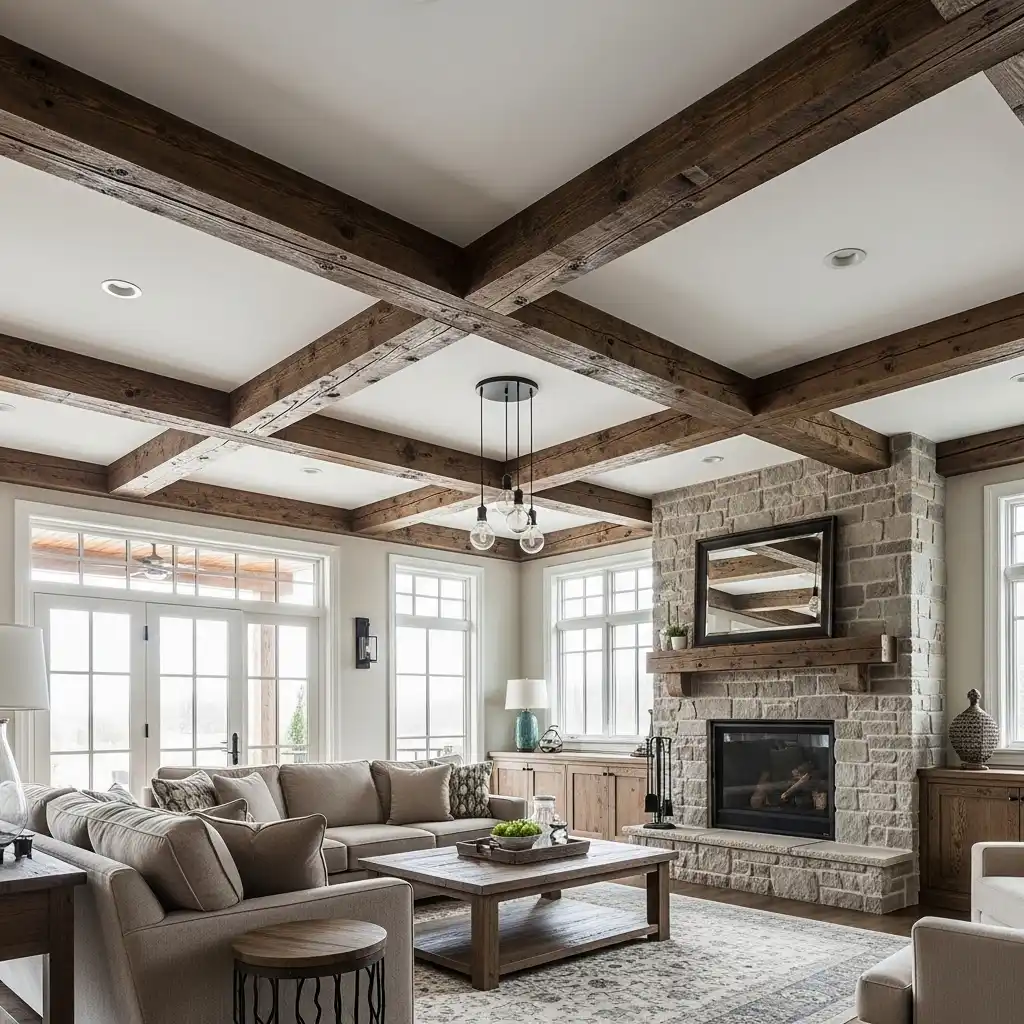
The arrangement of your beams can alter the room’s perceived proportions. The right layout is key to a successful ceiling beams living room design.
10. Parallel Beam Layout to Elongate or Widen
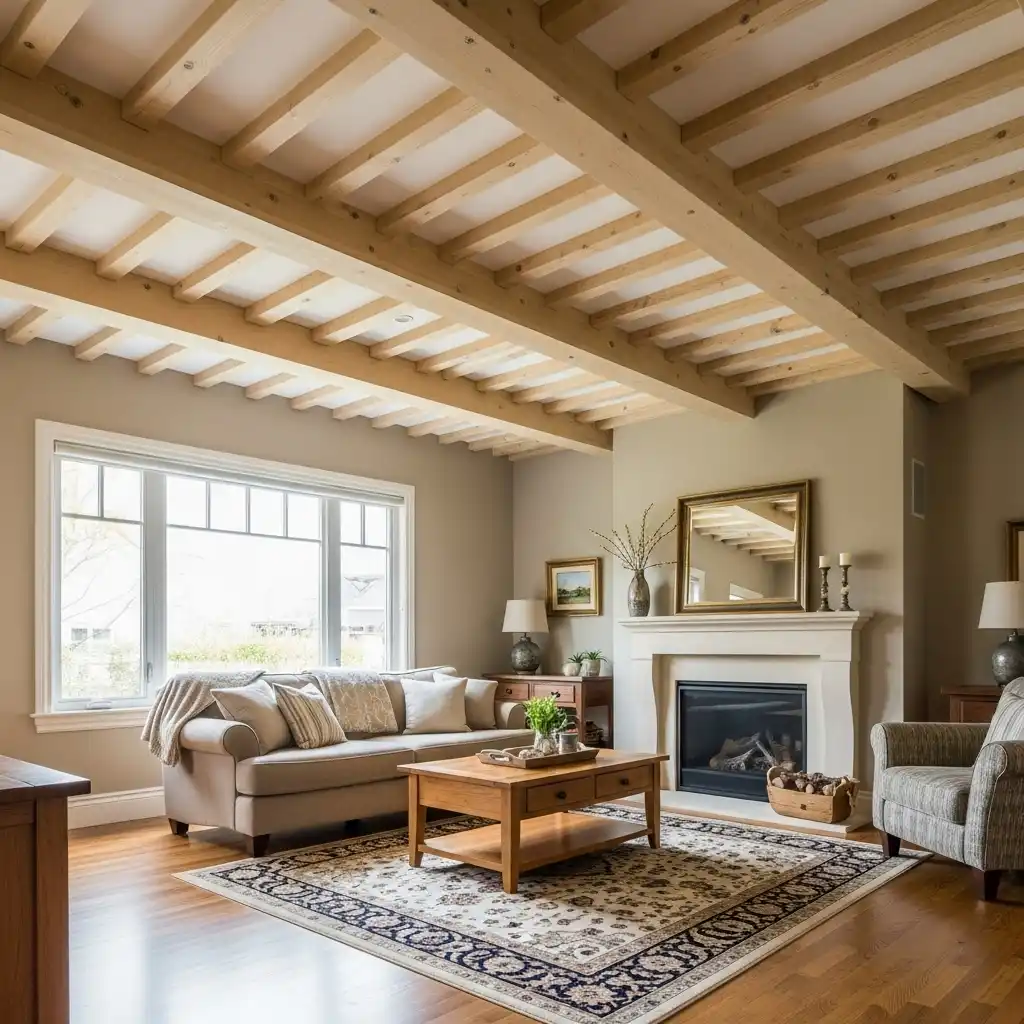
The most common layout involves running beams parallel to each other. Run them lengthwise to make a room feel longer, or widthwise to make it feel wider.
11. Coffered Ceiling Grid for Formal Elegance
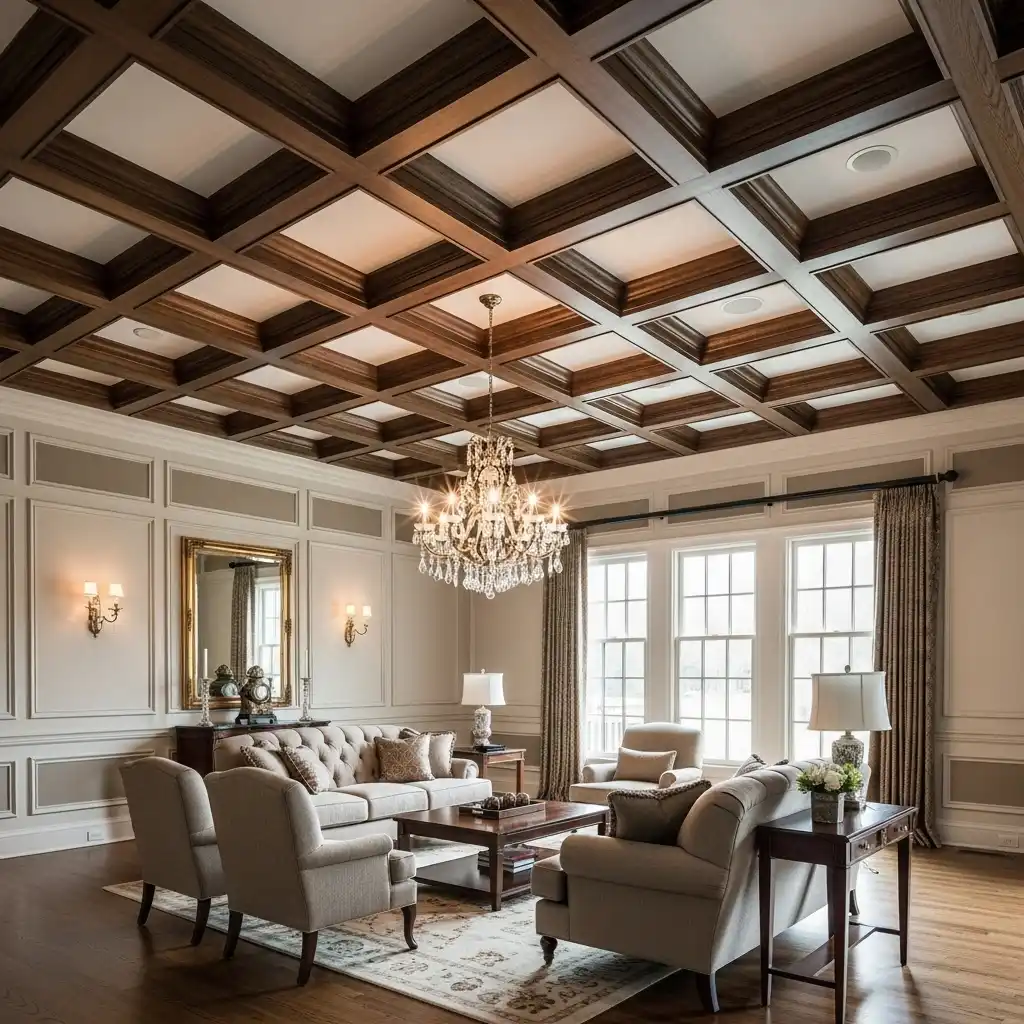
A coffered ceiling uses a grid of intersecting beams to create a repeating pattern of recessed panels. This highly structured layout adds visual complexity and pairs beautifully with wall paneling ideas.
12. Cathedral Ceiling Trusses for Dramatic Height
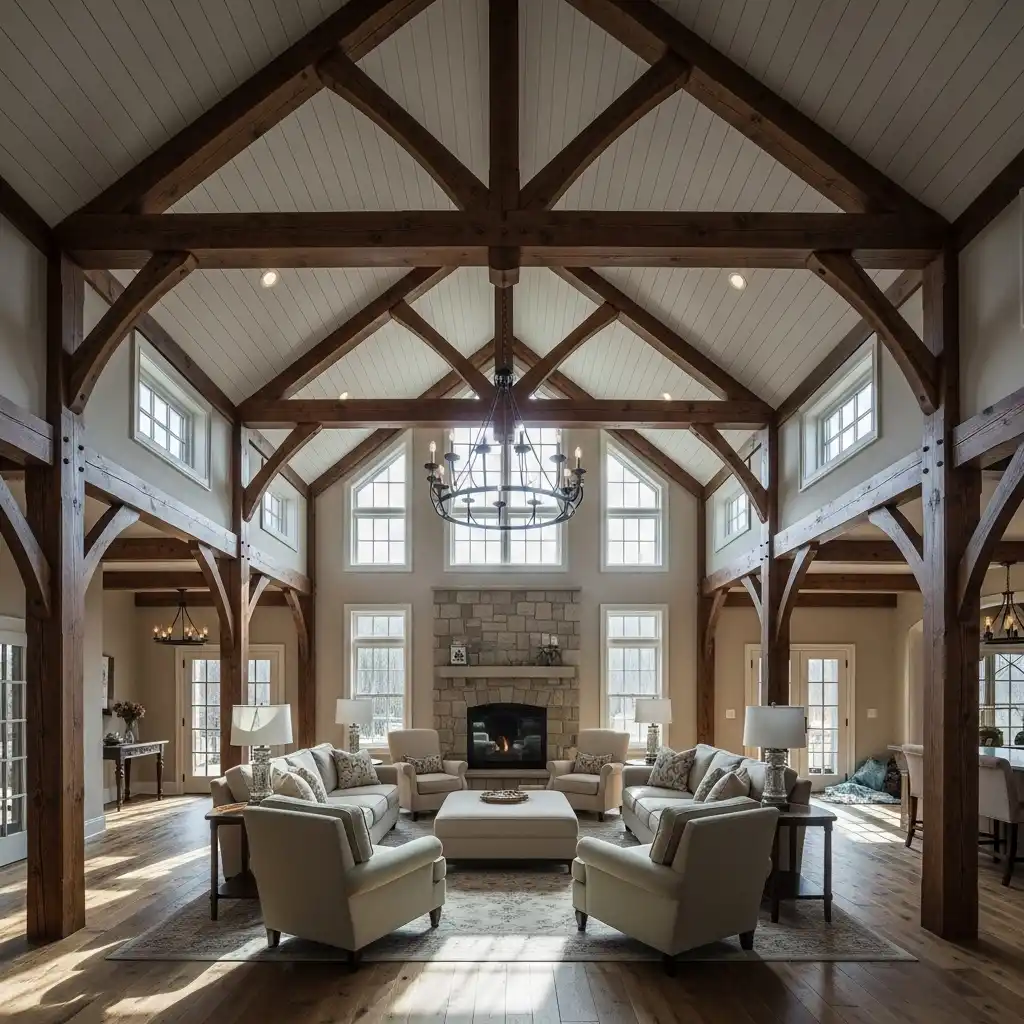
In living rooms with vaulted or cathedral ceilings, exposed trusses or king posts act as the ultimate architectural statement, reinforcing the incredible height of the space.
13. Tray Ceiling Beams for Subtle Dimension
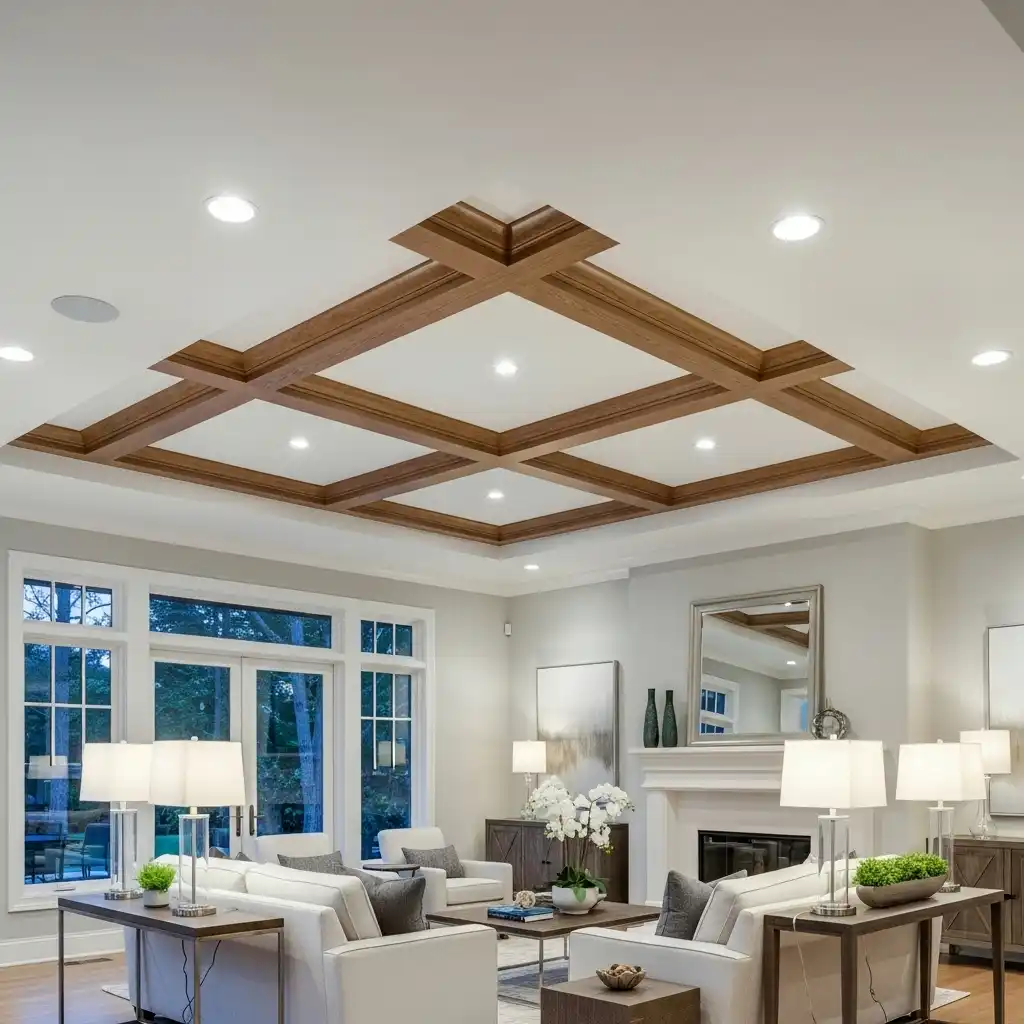
Installing beams around the perimeter of a recessed or tray ceiling creates a framed, layered effect that adds depth without a heavy structural feel.
14. Integrating Recessed Lighting into Beams
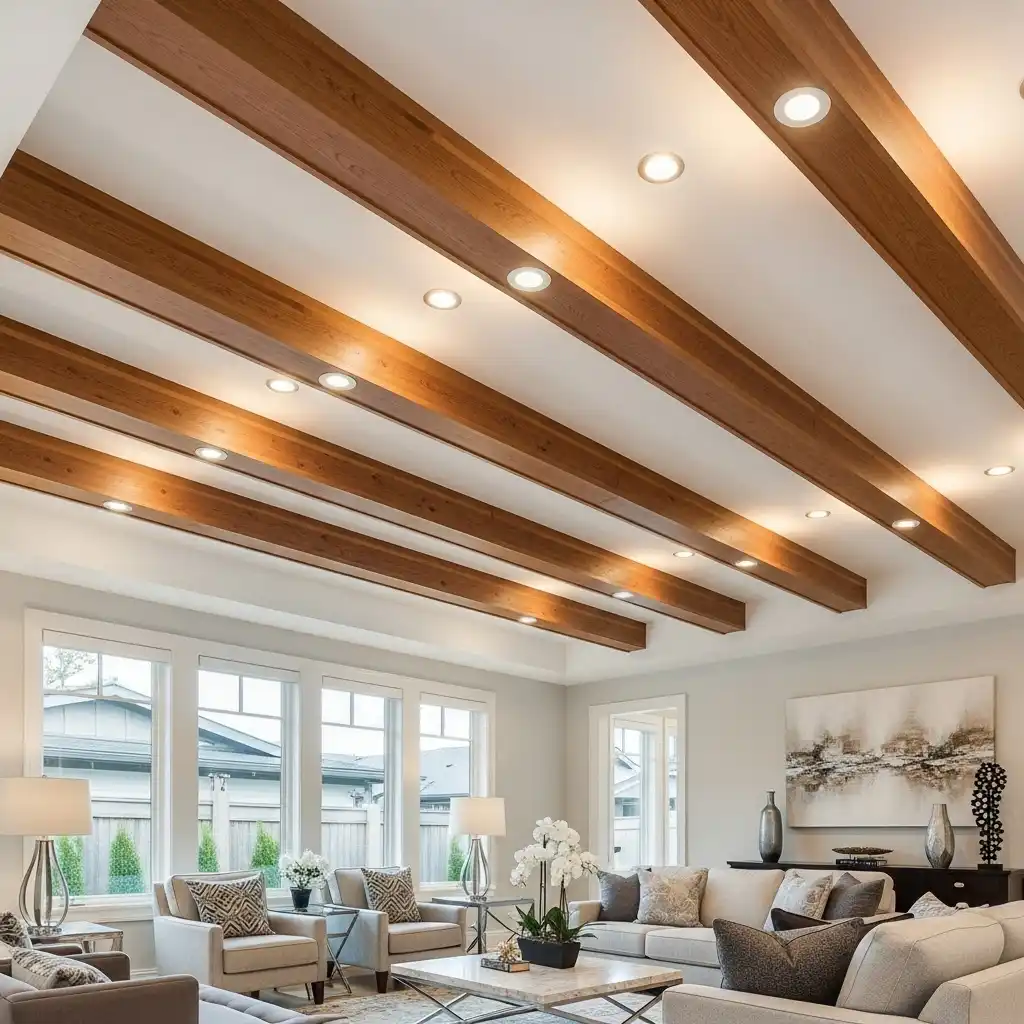
Beams provide the perfect raceway to hide wiring for a clean, streamlined look. Integrating recessed can lights is a key component of effective lighting, similar to smart bathroom lighting ideas applied to the living area.
15. Using Beams to Define Zones in an Open Floor Plan
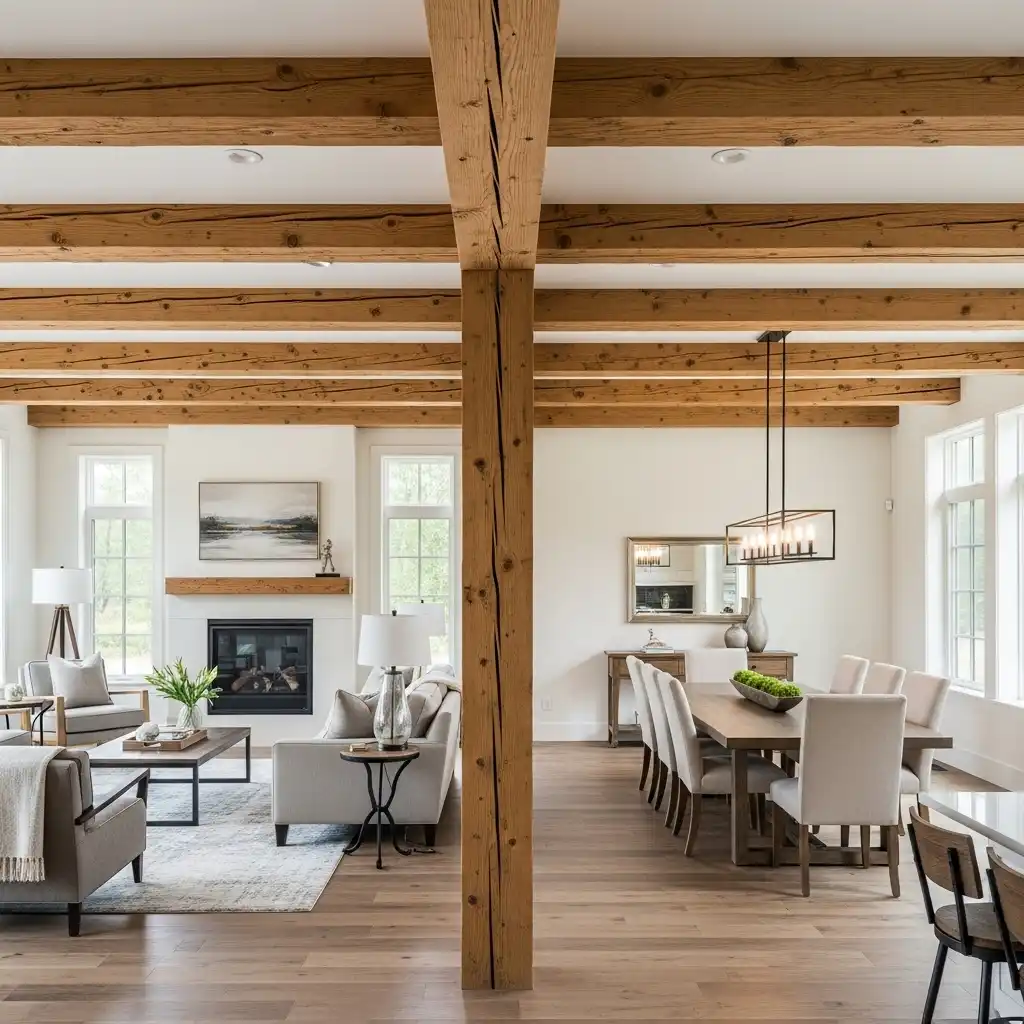
In a great room, beams can subtly define different areas. Running beams perpendicularly over your living room and dining room combo helps visually separate the spaces without building walls.
16. Highlighting a Focal Point with Beam Direction
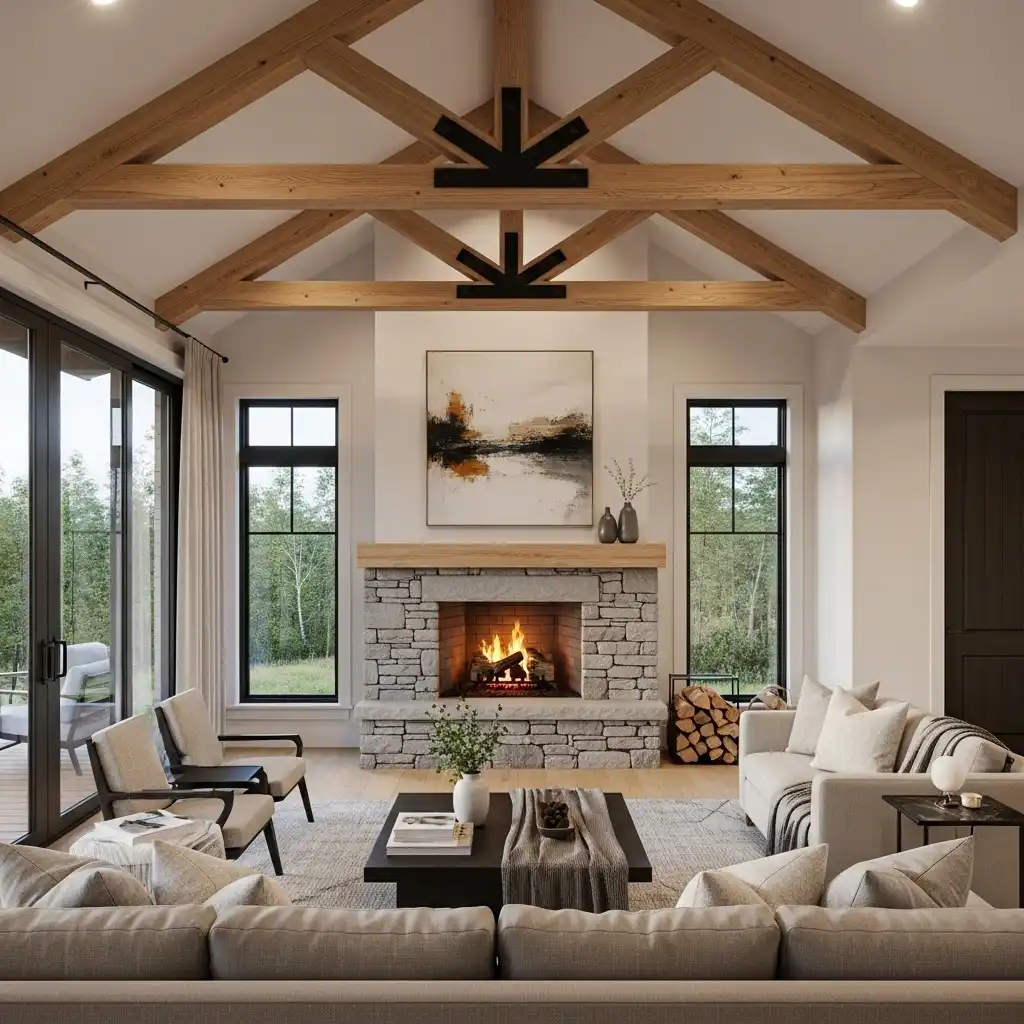
Direct the eye by aligning beams toward your room’s best feature. Ensuring a beam runs parallel to your fireplace and hearth draws attention and enhances its importance as a focal point.
17. Hanging a Statement Light Fixture from a Beam
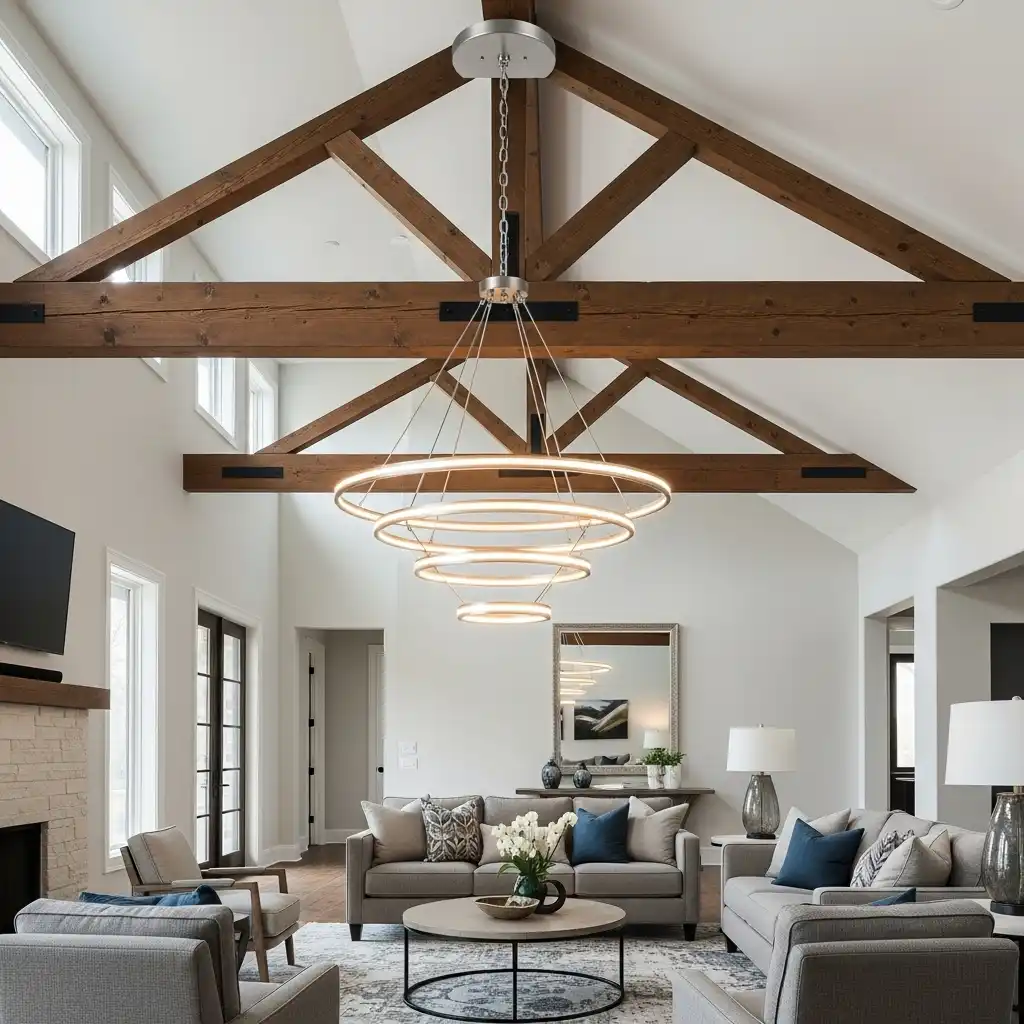
Beams provide a secure, structured anchor for large statement chandeliers or oversized pendants. Hanging a fixture from a central beam grounds it and emphasizes the living room design.
18. Mounting Track Lighting on Beams for Flexibility
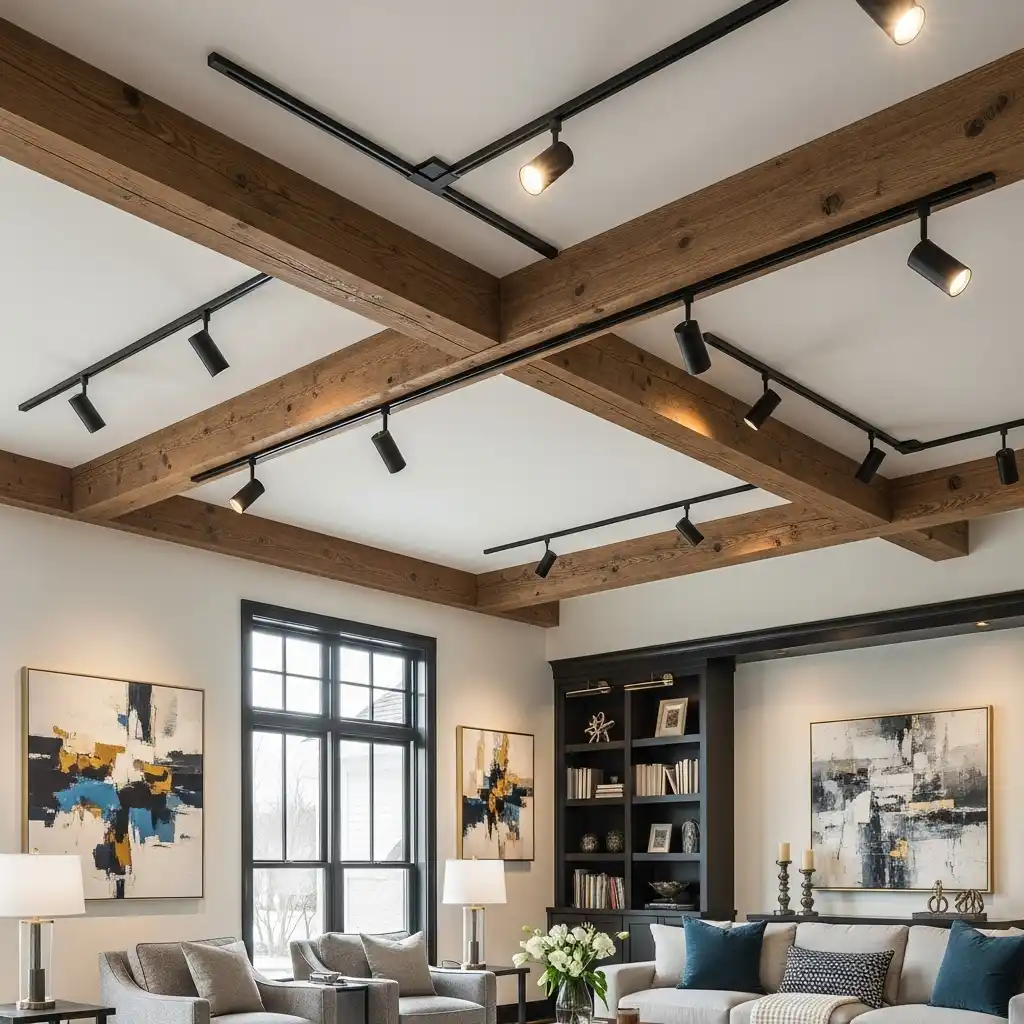
For a more modern and flexible lighting solution, mounting sleek track lighting directly onto the sides of beams allows you to aim light at art, seating, or bookshelves.
19. Using Beams to Conceal Wires and Ductwork
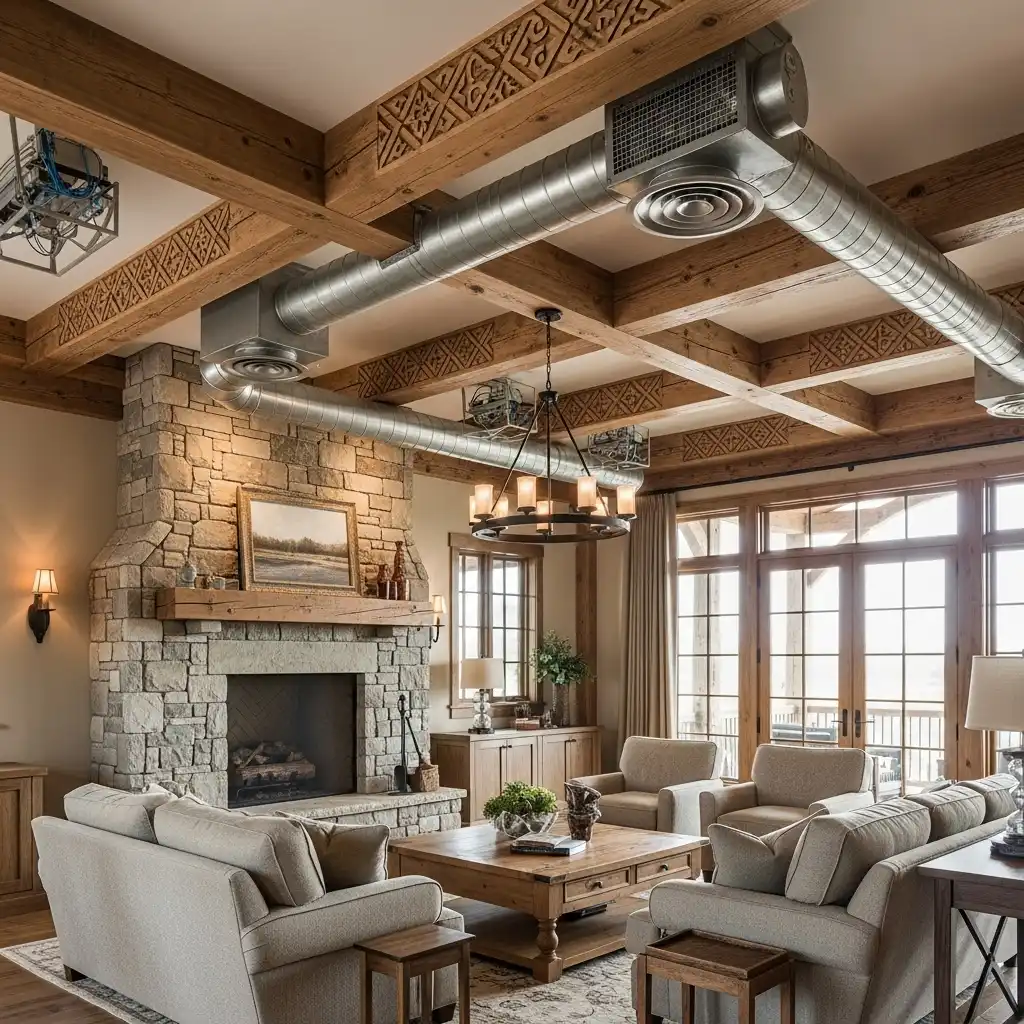
In older homes or remodels, beams can strategically run over areas where ductwork, wiring, or other mechanical elements must be placed, effectively hiding them behind beautiful architecture.
20. Creating a Cohesive Look with Complementary Decor
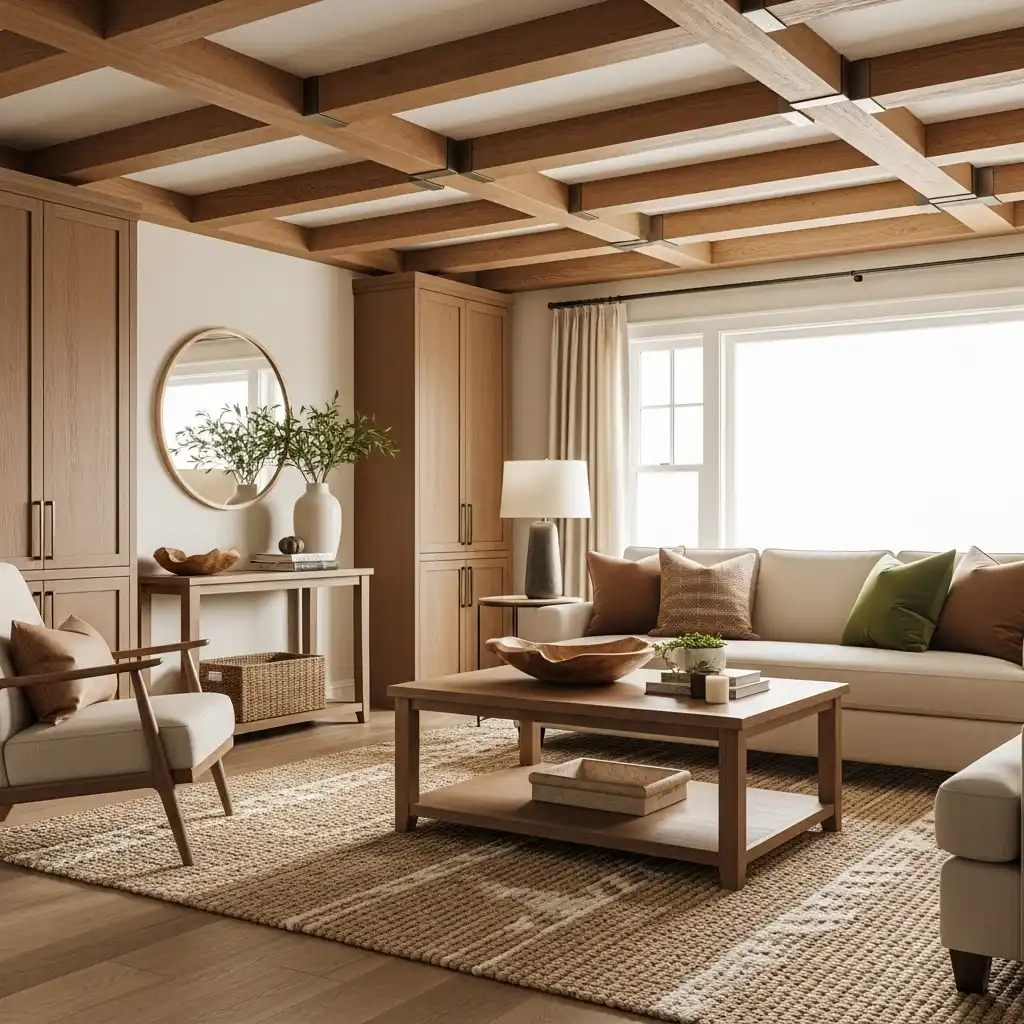
Tie the whole room together by repeating the beam’s material or color elsewhere. Incorporate wood tones in furniture, use similar metal finishes on hardware, or choose a rug that picks up the warm, natural elements for the best Ceiling Beams Living Room.
Conclusion
Ceiling beams living room projects are a high-impact design choice that can fundamentally transform your space. They add architectural weight, texture, and a sense of permanence that paint alone cannot achieve. By choosing the right style, material, and layout from the many options available, you can turn your ceiling into the crowning glory of your living room.
FAQ
Are ceiling beams trendy or timeless?
Ceiling beams living room designs are largely considered timeless. While specific styles (like ultra-dark stain) may cycle, the use of architectural elements to add dimension is an enduring principle of design.
Can beams be added to any ceiling, and are they structural?
This is a critical distinction. Most beams added in a renovation are decorative and made from lightweight materials installed onto the drywall. Structural beams are part of the home’s load-bearing framework and require professional engineering. Always determine your goal before beginning.
How far apart should ceiling beams be spaced?
As a rule of thumb, space beams between 4 and 8 feet apart. Taller ceilings (10+ feet) can handle wider spacing and larger beams; standard 8-foot ceilings should use closer spacing and shallower beams to avoid a heavy feel.
How do I choose the right beam size for my room?
Scale is everything. For standard 8-foot ceilings, opt for shallower beams (5-7 inches deep). For ceilings 10 feet or higher, you can use deeper, more substantial beams (8-12 inches deep) to make a bold statement.
Is it difficult to clean around ceiling beams?
Cleaning is minimal. Dust typically gathers on the tops of beams. Use a long-handled duster or a vacuum attachment periodically. For faux beams, a gentle wipe with a damp cloth is sufficient.