
Don’t box in your basement—open it up! Keeping your ceiling exposed is one of the smartest decisions you can make, especially in older homes where every inch of height counts. This approach isn’t about cutting corners; it’s a intentional style that creates a feeling of spaciousness, guarantees easy access to utilities, and delivers a unique, industrial-chic look.
The goal is not to hide the infrastructure but to integrate it into the room’s design. This basement renovation approach saves money, maintains essential utility access, and transforms a mundane cellar into a striking, functional living space.
Part 1: The Paint and Finish Strategy
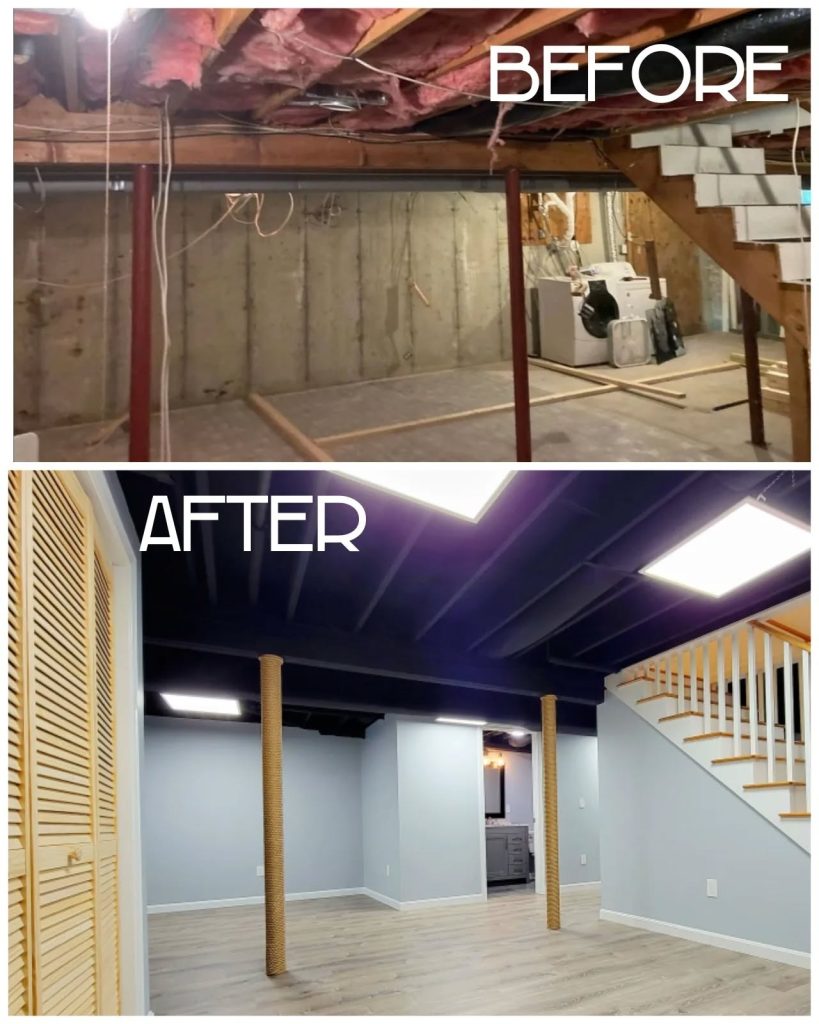
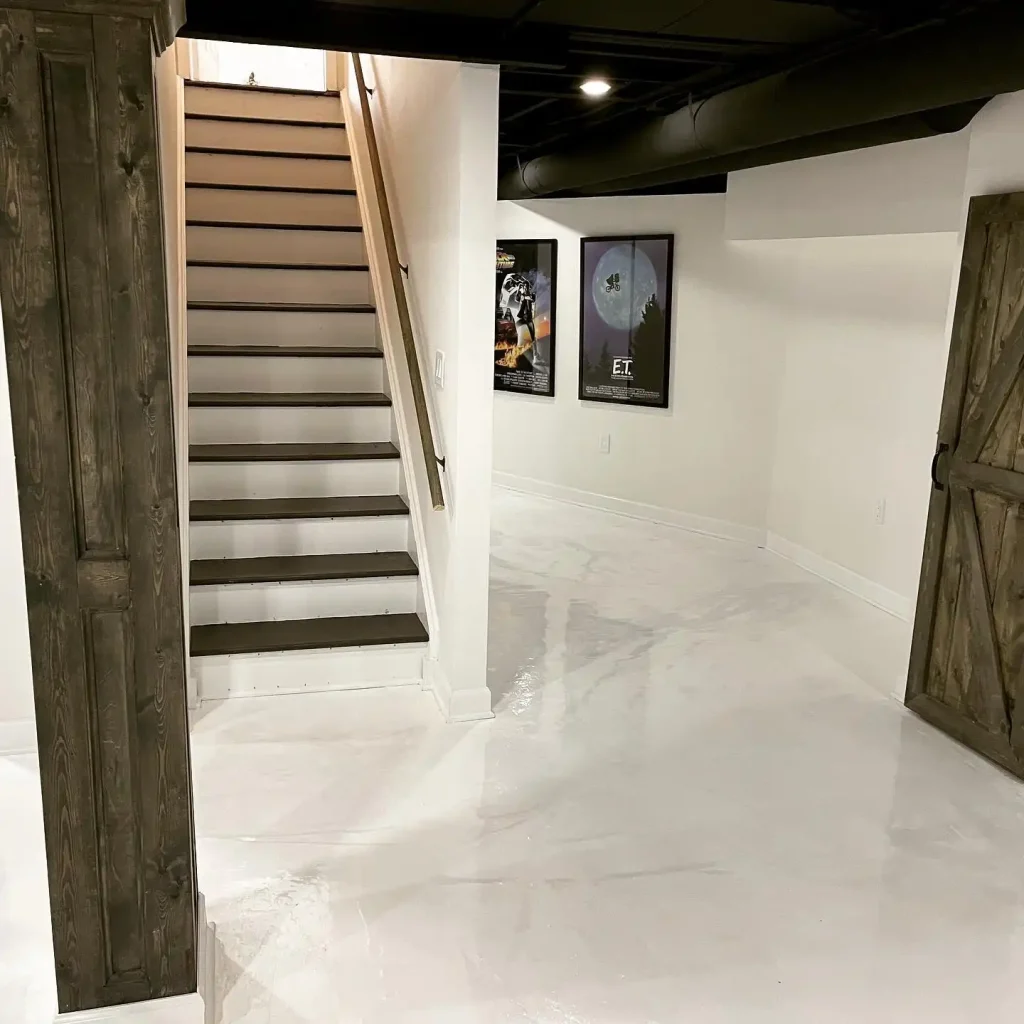
1. Paint Everything Matte Black
Credits: @ihsbuilding
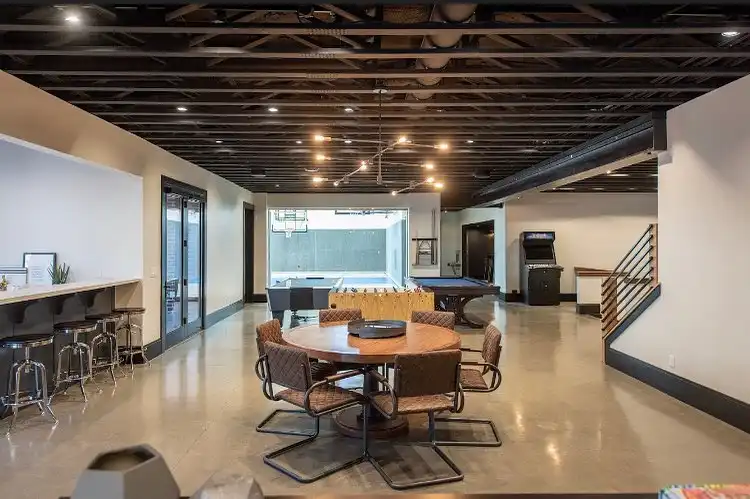
The most popular solution involves painting the entire overhead network—joists, ducts, and pipes—a flat black. This makes the busy structure visually disappear and provides the perfect backdrop for a home theater or media room.
Fact: Matte black paint absorbs light, creating the illusion of infinite depth and effectively concealing imperfections.
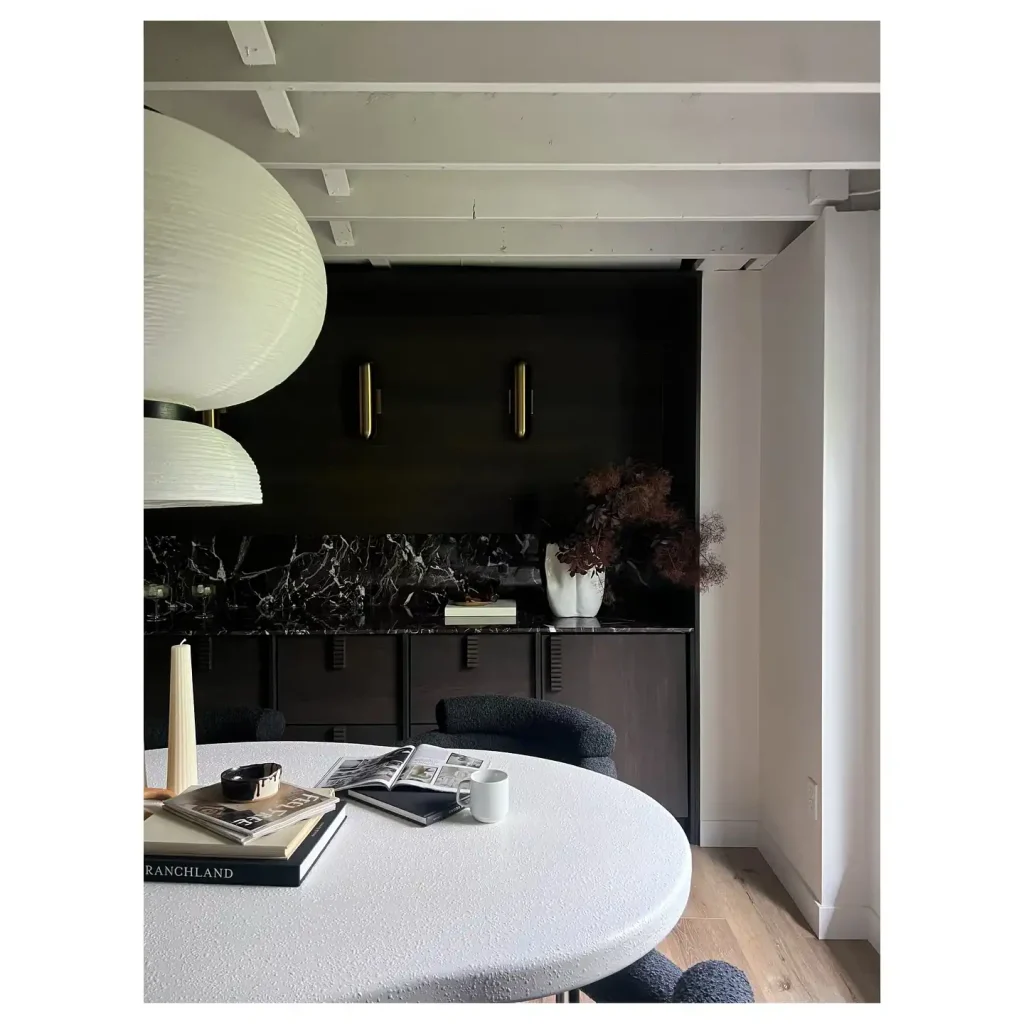
2. Use a Bright White Finish
Credits: @wolfgang_atelier
For basements that lack natural light, such as many found in Phoenix, a bright white paint reflects light back into the room. This makes the space feel instantly larger and brighter.
Budget Fact: White ceiling paint is one of the most cost-effective finishes, averaging $15 – $30 per gallon for a quality, flat-finish interior paint.
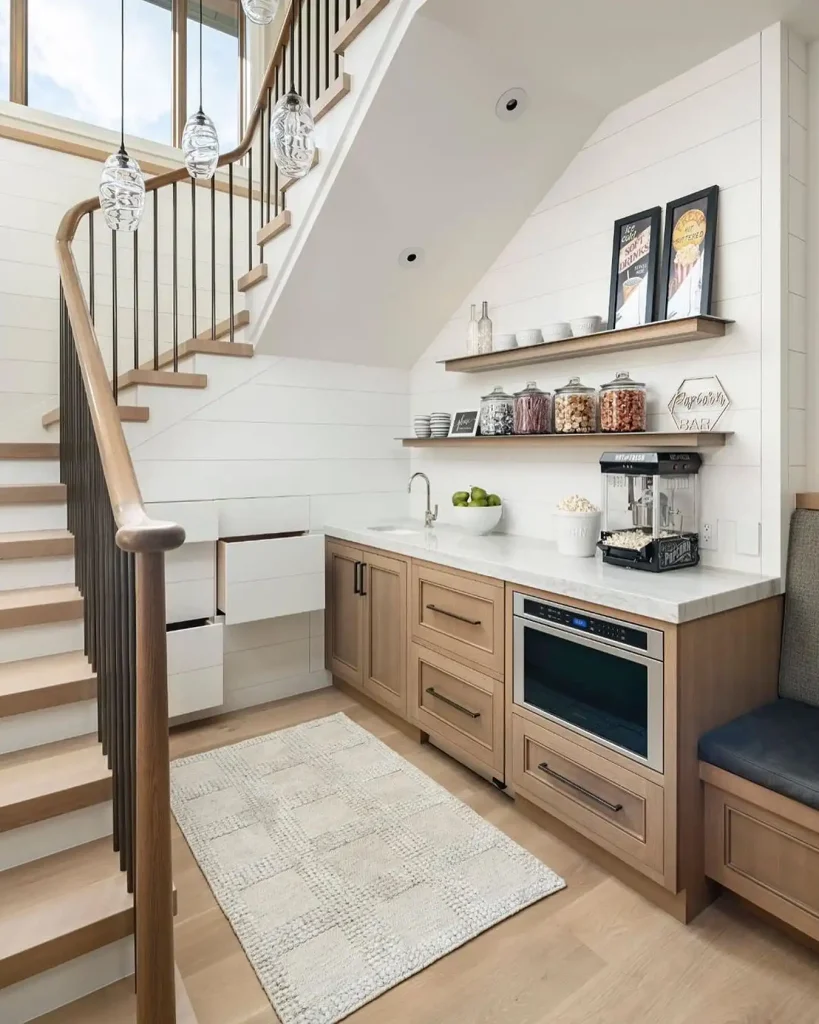
3. Apply a Neutral Gray Color
Credits: @housinginfo
Gray offers a sophisticated middle ground between black and white. A light gray color makes the ceiling appear higher than a dark color, while effectively disguising the color variations of metal, wood, and plastic utilities.
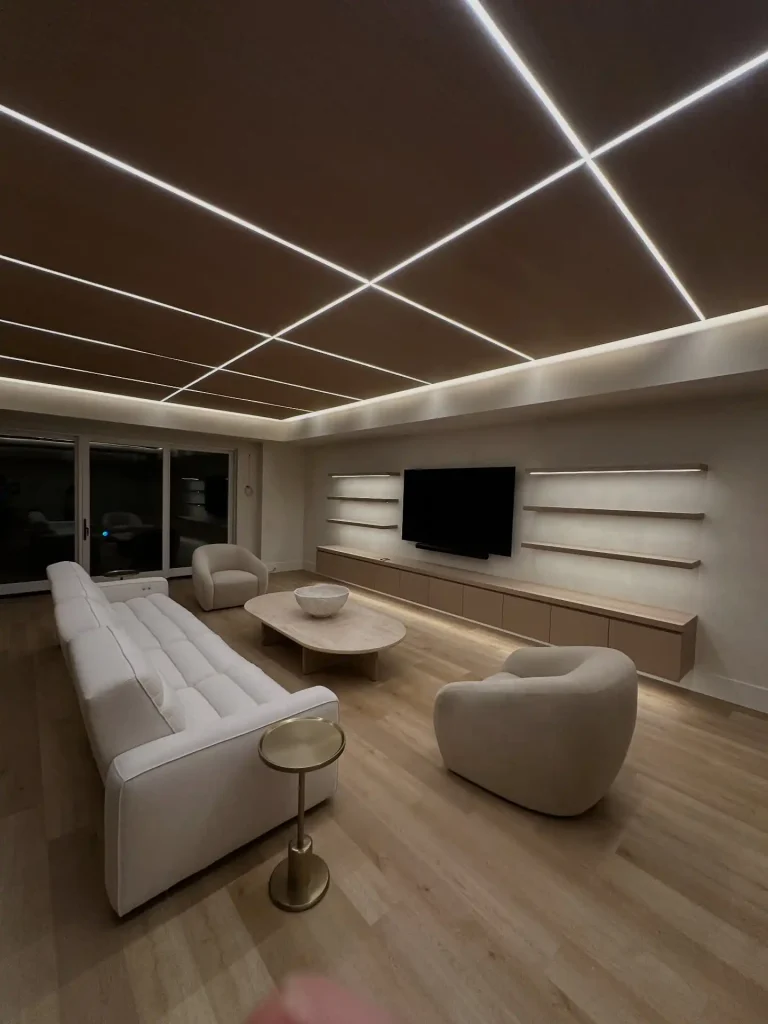
4. Match the Ceiling and Wall Color
Credits: @builtbybeero
Paint the ceiling structure the exact same hue as the wall. This trick eliminates the visual boundary between the wall and ceiling, making the entire room feel larger and often taller. This works well for cozy dens or guest suites.
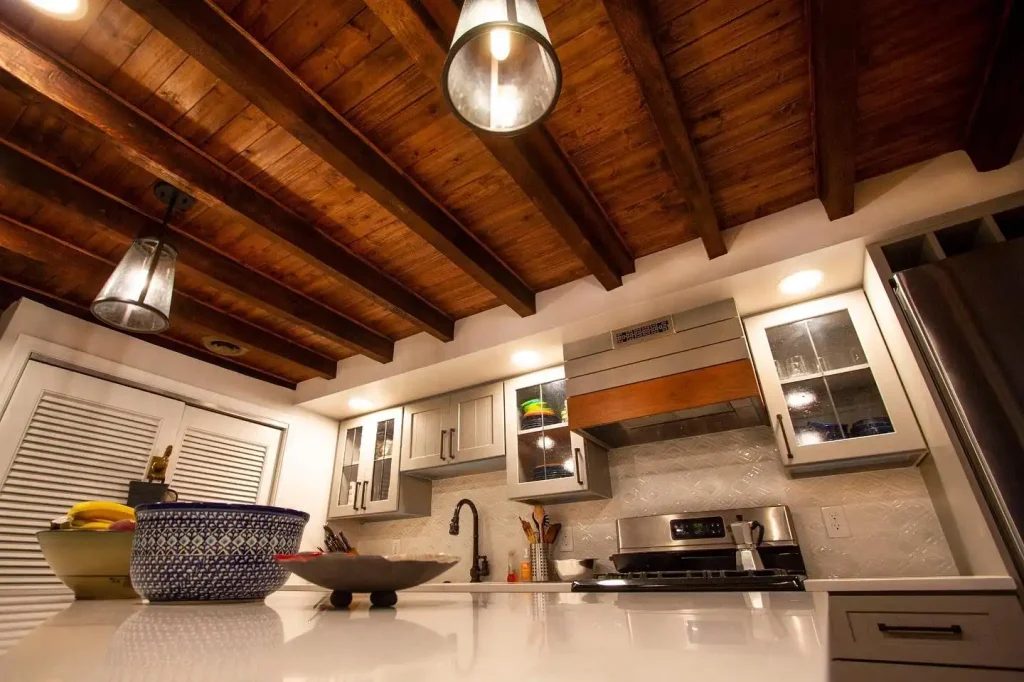
5. Apply a Stain to Wood Joists
Credits: @dremodeling
If the floor joists consist of attractive, old wood, skip the paint. Clean the wood thoroughly and apply a rich, clear stain or protective sealant. This highlights the natural grain and adds a rustic warmth, especially when paired with modern fixtures.
6. White Joists and Black Subfloor
Credits: @builtbybeero
Paint the main joists white for definition, then paint the subfloor between them black. This creates a high-contrast, linear pattern that resembles a clean, contemporary coffered ceiling.
Part 2: Adding Aesthetic Material
7. Install Wood Slats Below Joists
Credits: @raykon_construction
Attach thin, evenly spaced wood slats below the exposed joists. These slats hide most of the pipes and wires while allowing light and sound through, achieving the sleek look of high-end acoustic panels.
8. Fit Beadboard Between Joists

Credits: @vmbuilding
Cut and install beadboard panels into the recesses between the joists. This keeps the beams exposed but fills the gaps with a classic cottage texture, perfect for a finished laundry room or bathroom.
9. Use Corrugated Metal Panels
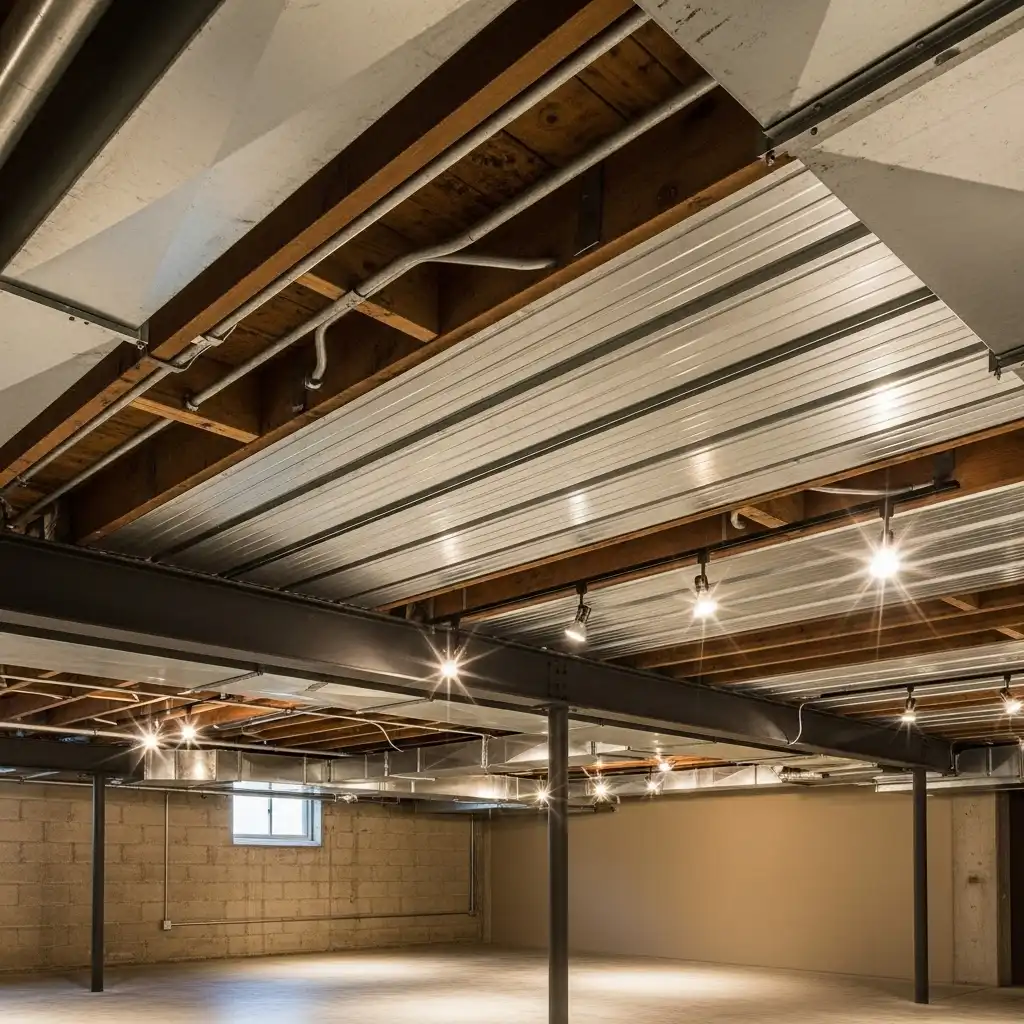
Install lightweight corrugated metal sheets between the joists for a true industrial or urban loft feel. The metal’s texture and reflectivity add a unique, durable element to the basement design.
10. Attach Glue-Up Faux Tin Tiles
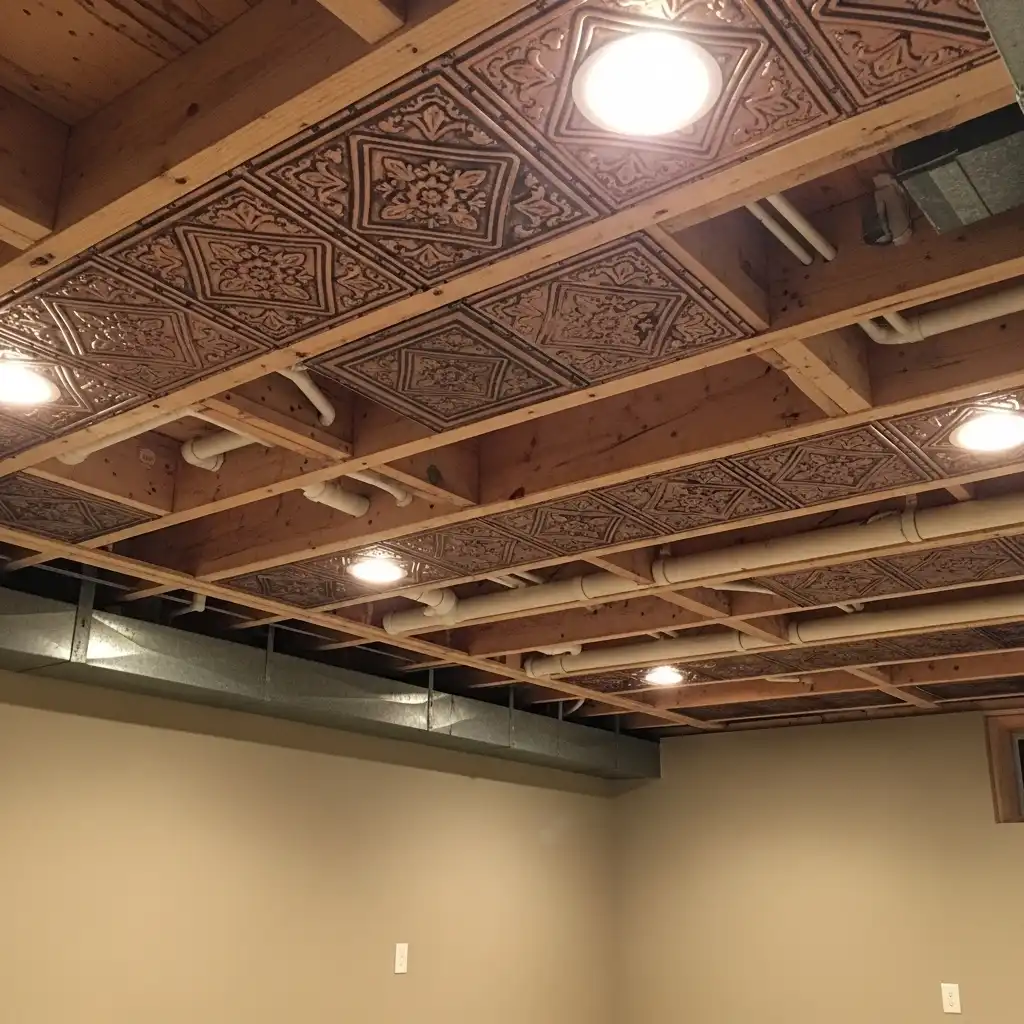
For a vintage or ornate look, secure lightweight faux tin tiles directly to the underside of the floor joists or subfloor. This gives an old-world charm often found in historic American buildings.
11. Hang Fabric or Muslin Screens
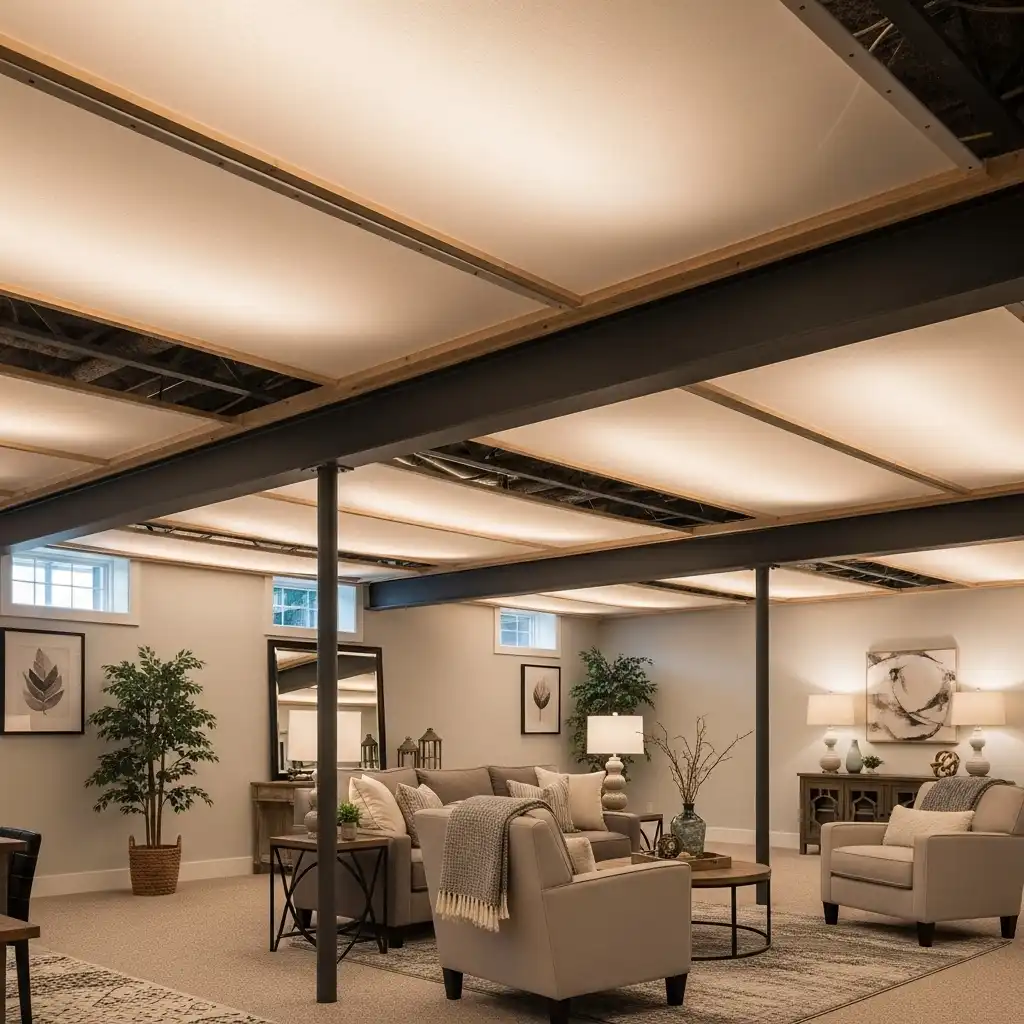
Stretch fire-retardant fabric or simple muslin over custom frames and attach them flush with the bottom of the joists. This simple solution softens the look and costs less than wood paneling.
12. Build Faux Wood Beam Covers

Credits: @weatheredwoodworx
Construct simple, hollow wood boxes to wrap around large, unsightly ducts or steel support beams. This faux beams transforms industrial boxes into striking, rustic architectural features.
Part 3: Lighting and Organization Focus
13. Run Industrial Track Lighting
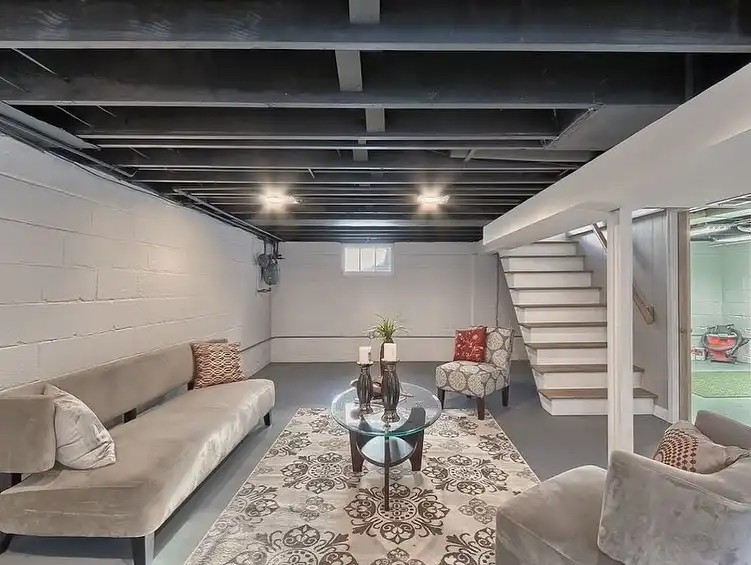
Credits: @thebrandihawkins
Install flexible track lighting systems along the bottom of the joists or major ducts. The hardware becomes part of the exposed, industrial aesthetic, and the adjustable heads offer excellent task lighting.
14. Install Simple LED Puck Lights
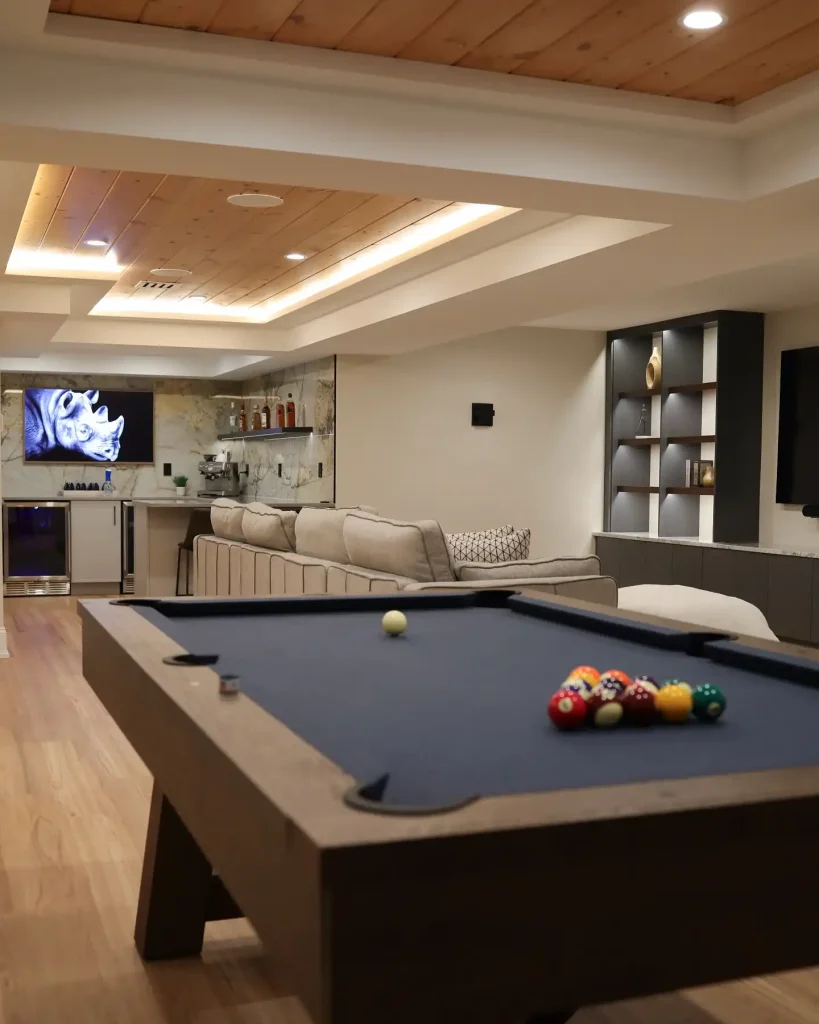
Credits: @carrislandbuilders
Mount small puck lights or wafers directly into the recesses of the subfloor between the joists. When the ceiling has a dark paint color, these ceiling lights resemble small stars, a popular choice for theater rooms.
15. Utilize Strung Edison Bulbs
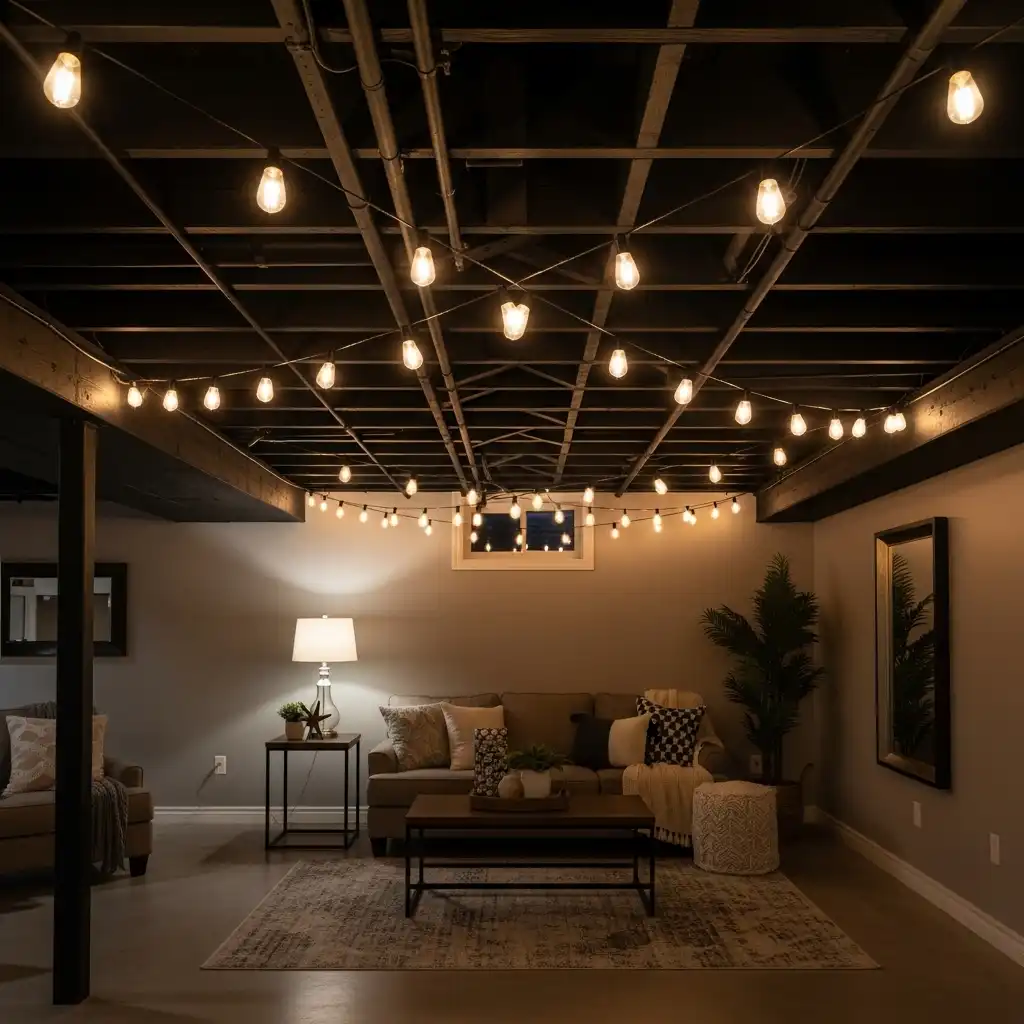
Drape warm-toned Edison-style string lights strategically between the beams. This provides ambient, mood lighting and emphasizes the three-dimensional quality of the ceiling structure.
16. Organize and Bundle Wires Neatly
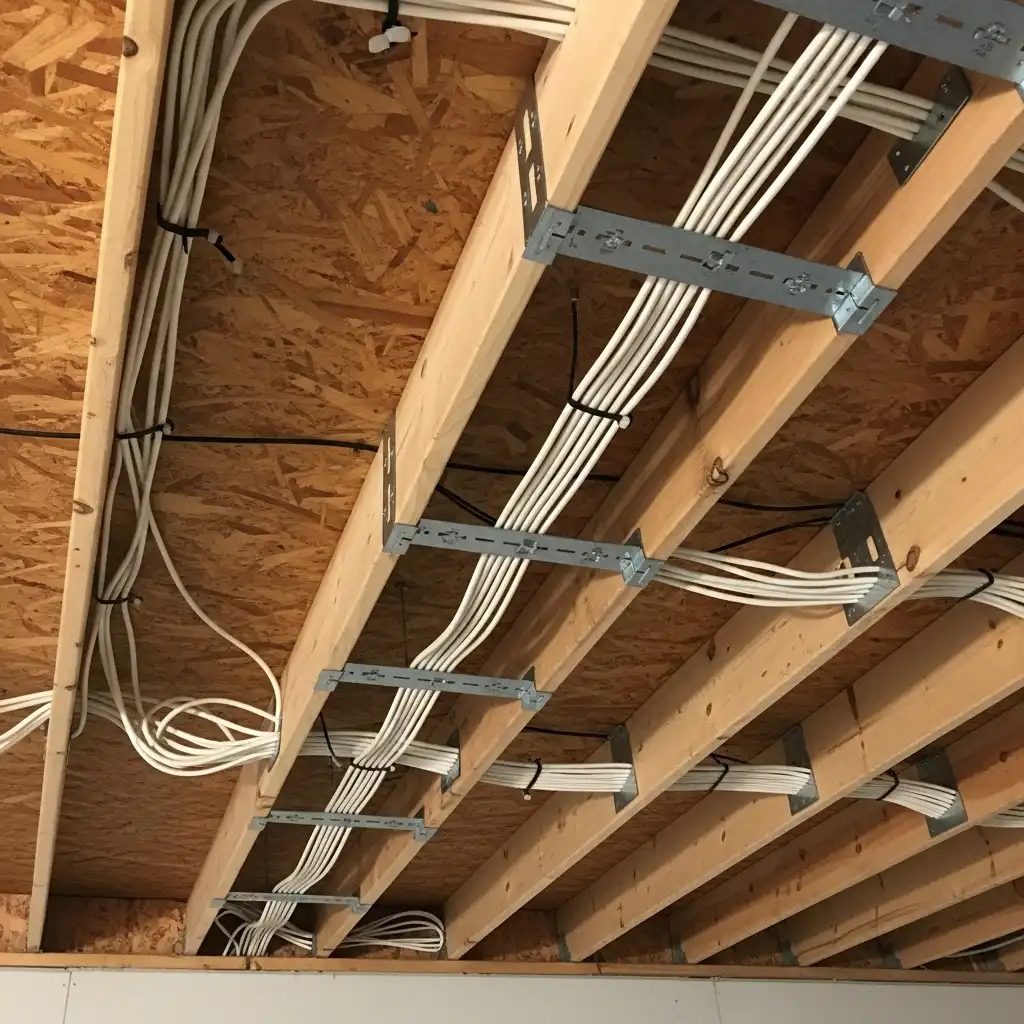
Before any paint application, spend time securing and running all electrical wiring parallel to the wood joists. Use cable ties or staples to keep the organization uniform.
17. Highlight Pipes with Metallic Paint
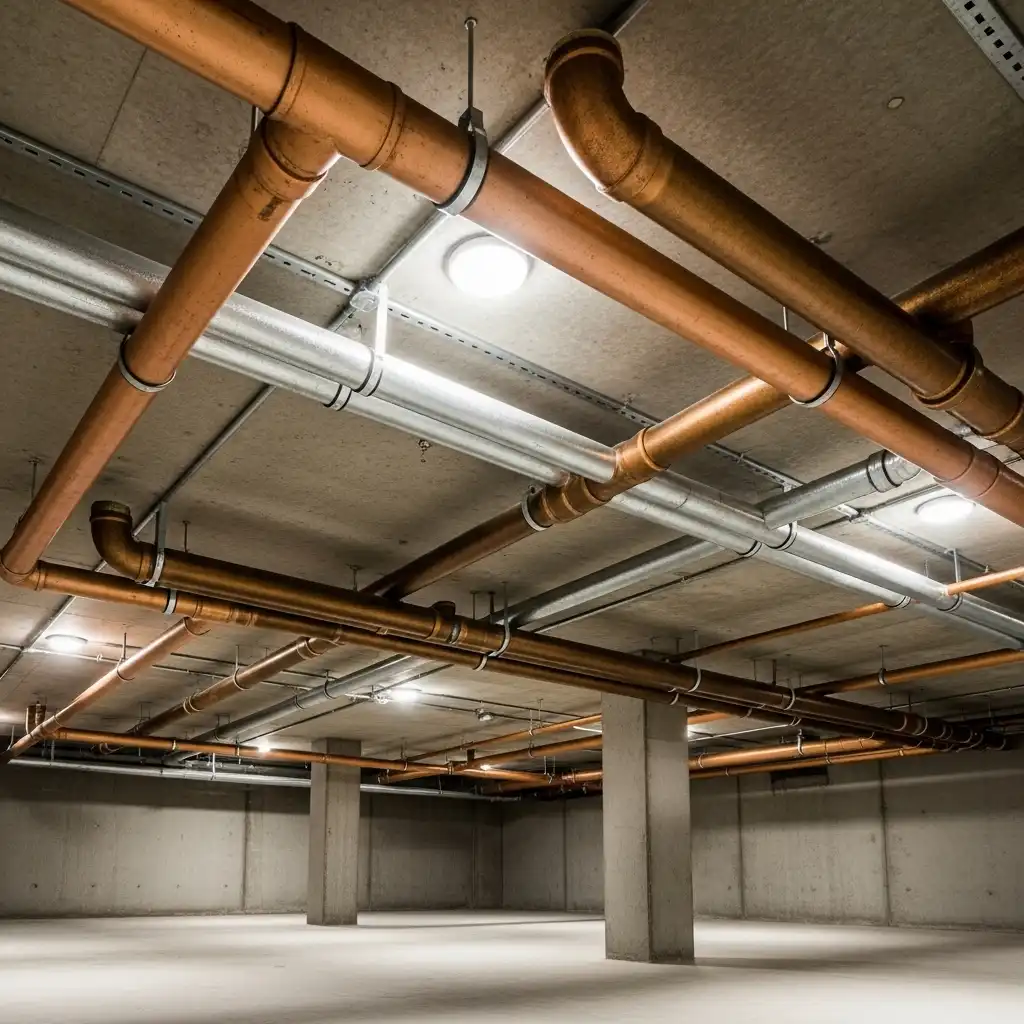
Use a specialized spray paint to give plumbing pipes a sleek metallic finish—copper, silver, or bronze. This transforms these necessary utilities into purposeful, shining design accents.
18. Place Oversized Pendant Lights Low
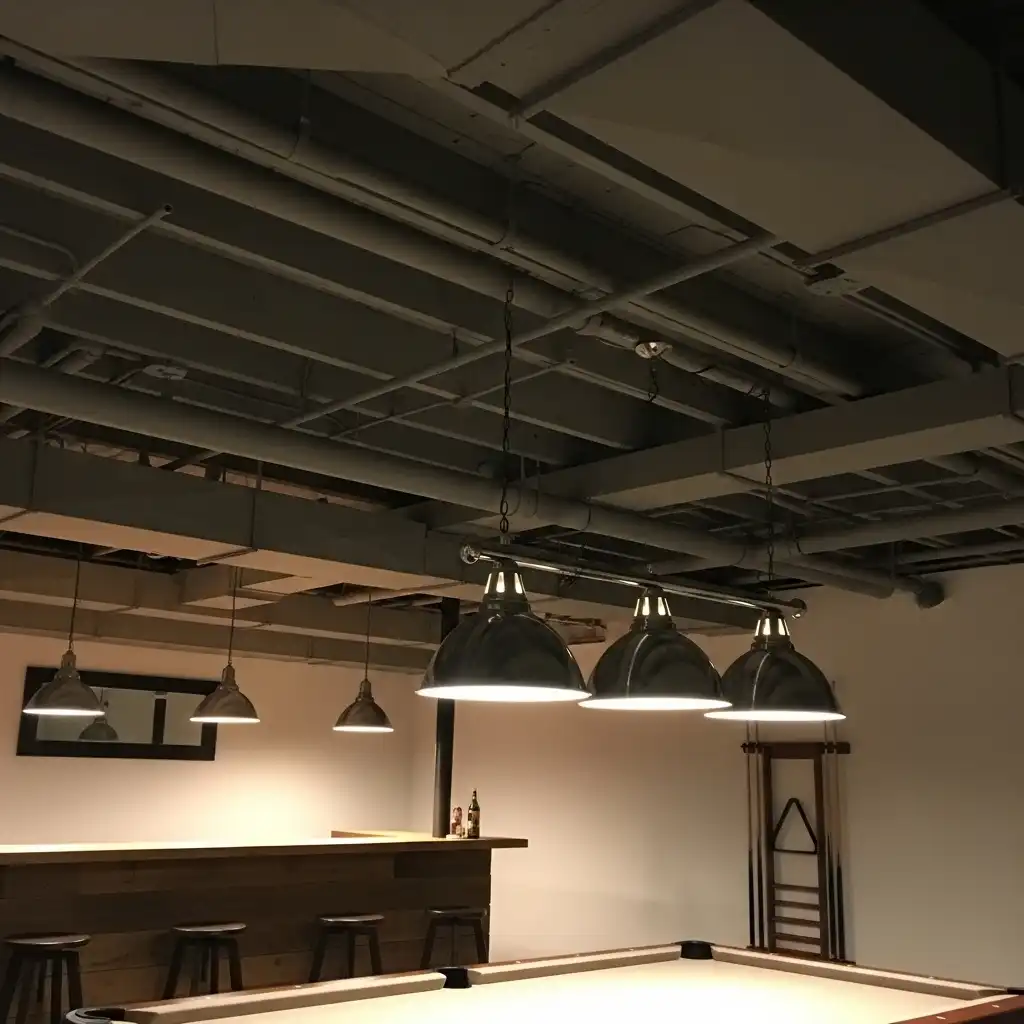
Hang large, dramatic pendant fixtures low over key areas, such as a bar or pool table. This draws the eye down, using the ceiling as a background element instead of the main focus.
Part 4: Function and Accessibility
19. Apply Acoustic Dampening Spray
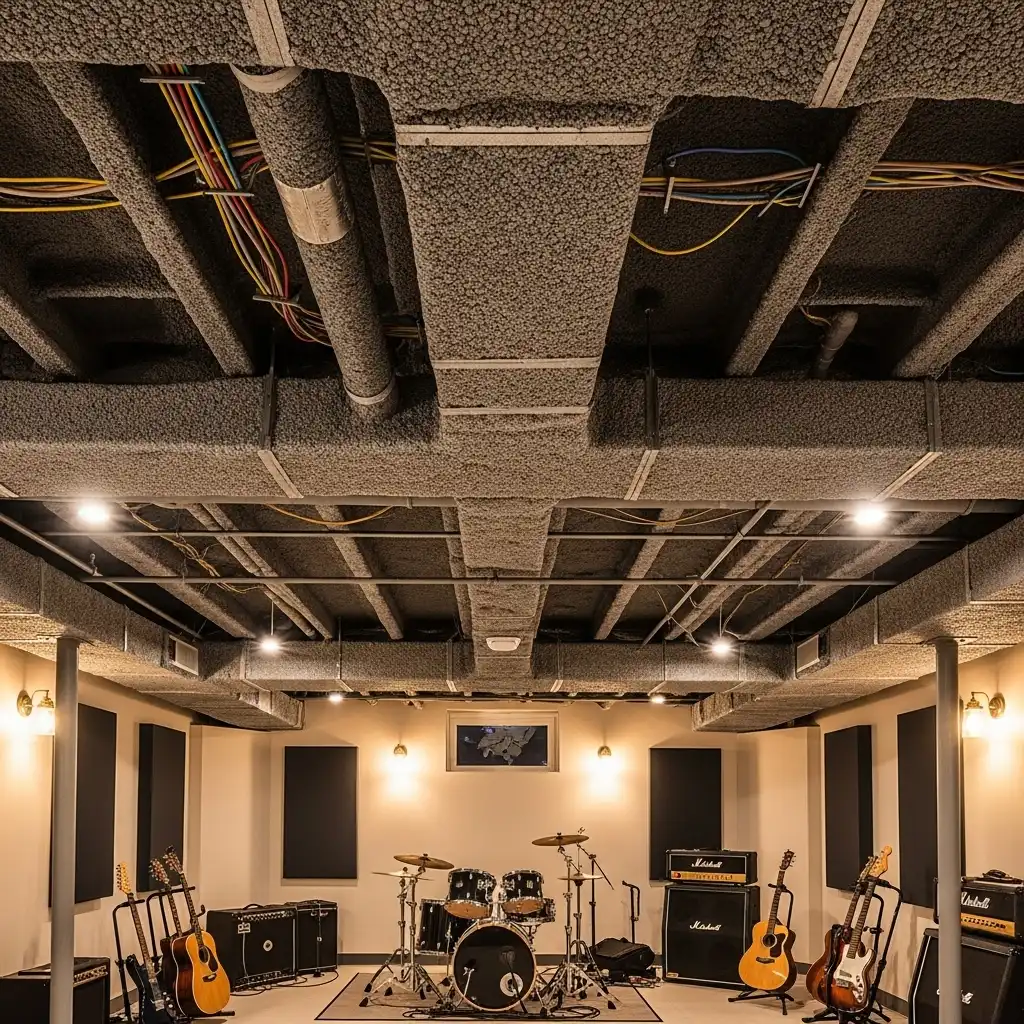
Hire a specialist to apply a spray-on acoustic foam or fibrous material. This not only conceals the infrastructure with a uniform texture but also drastically improves sound absorption, crucial for basements used as music studios or loud family spaces.
20. Create Selective Access Panels

Even with an exposed ceiling, build small, hinged wood-panel doors around frequently accessed utility points, such as dampers or plumbing cleanouts. This keeps the look clean while preserving easy accessibility.
FAQs for Your Exposed Basement Ceiling
What is the average cost to paint an exposed basement ceiling?
For a professional job, the cost spray paint an average 1,000 square foot basement ceiling in a metropolitan area like New York or Los Angeles ranges from $1,500 to $3,000, including the specialized paint and protective materials. The cost difference is often due to the amount of intricate pipe and duct preparation required.
Does an exposed ceiling cause more noise from upstairs?
Yes. An unfinished ceiling lacks the mass and sound isolation of a drywall or drop ceiling. To combat noise, use acoustic dampening materials like sound-absorbing mats placed between the joists or the subfloor above.
What preparation work is essential before I begin the paint process?
Thorough basement ceiling preparation is vital. First, hire an electrician to secure all loose wires. Next, remove any old, ineffective insulation. Finally, clean the entire structure—joists, pipes, and ducts—with a heavy-duty vacuum and a degreaser. This ensures the primer and paint adhere correctly and prevents debris from falling into the finished room later.
Conclusion
Ultimately, the choice to embrace an exposed basement ceiling is a powerful design decision that delivers on both aesthetics and function. By utilizing smart wall treatment and finish techniques—from the visual magic of a simple matte black paint job to the added texture of slatted wood screens—you can reclaim valuable headroom and create a distinctive living space. This cost-effective solution is a modern American trend that allows for unmatched utility access and transforms a previously utilitarian space into a unique, architectural feature that adds substantial appeal to your home.