
Is your craft room overflowing with supplies, making it impossible to find the materials you need when inspiration strikes? Do fabric scraps, paint tubes, ribbons, and beads cover every surface, turning your creative sanctuary into a frustrating maze of clutter?
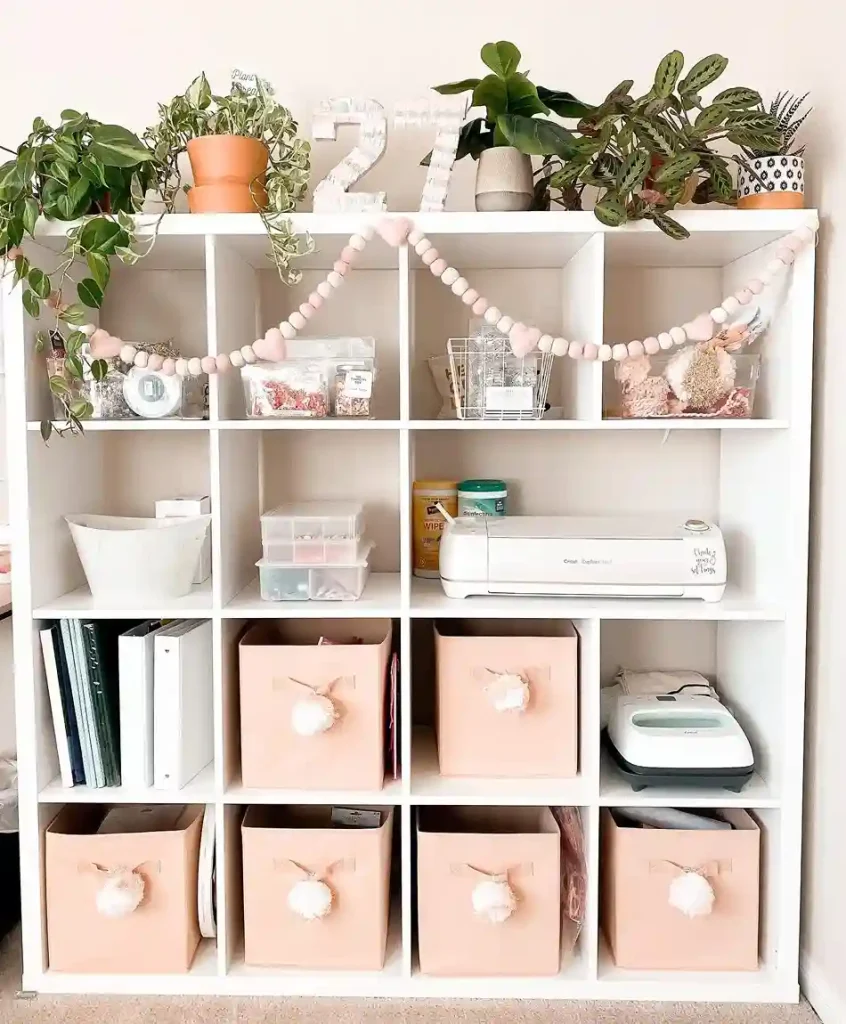
Credits: @katelynshow
A well-organized craft room transforms chaotic collections into accessible, inspiring workspaces where creativity flows freely without the constant frustration of searching for supplies or clearing surfaces before starting projects.
Effective craft room storage goes beyond simple shelving – it requires thoughtful organization systems that keep diverse supplies visible, accessible, and protected while maximizing every inch of available space. Whether you’re working with a dedicated room, a closet, or just a corner of your home, smart storage solutions help you maintain order without stifling creativity.
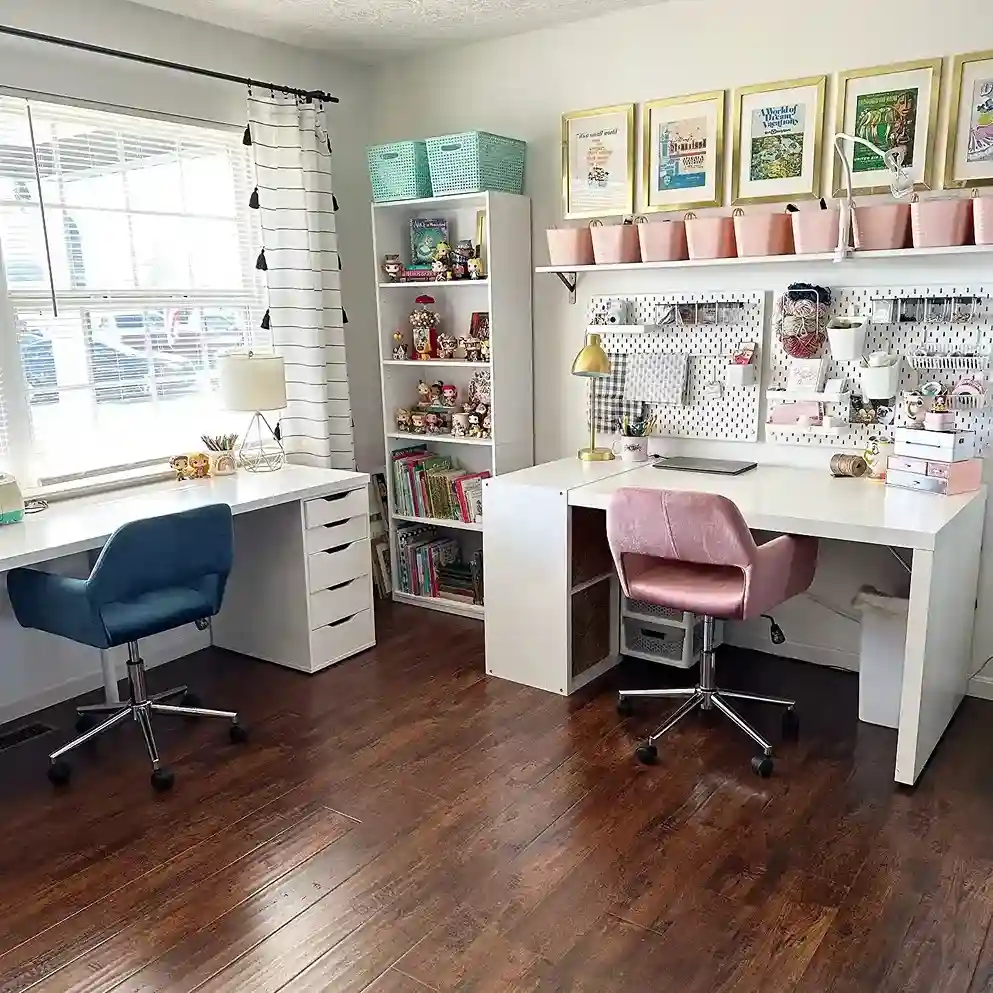
Credits: @bookgirlcreations
From pegboard walls and clear container systems to repurposed furniture and vertical solutions, these 23 craft room storage ideas will help you create an organized, functional space that inspires productivity and makes every crafting session enjoyable rather than stressful.
1. Pegboard Wall Organization
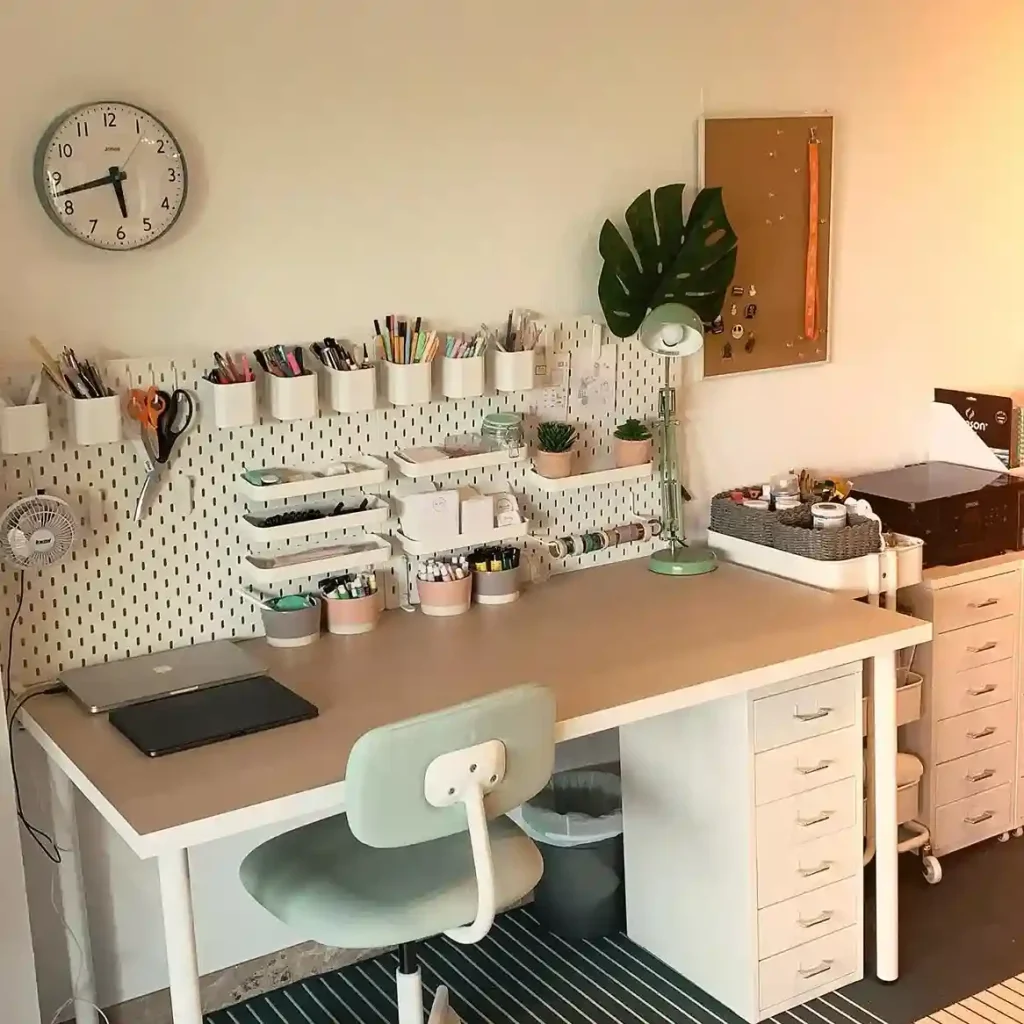
Credits: @mossandmoon_shop
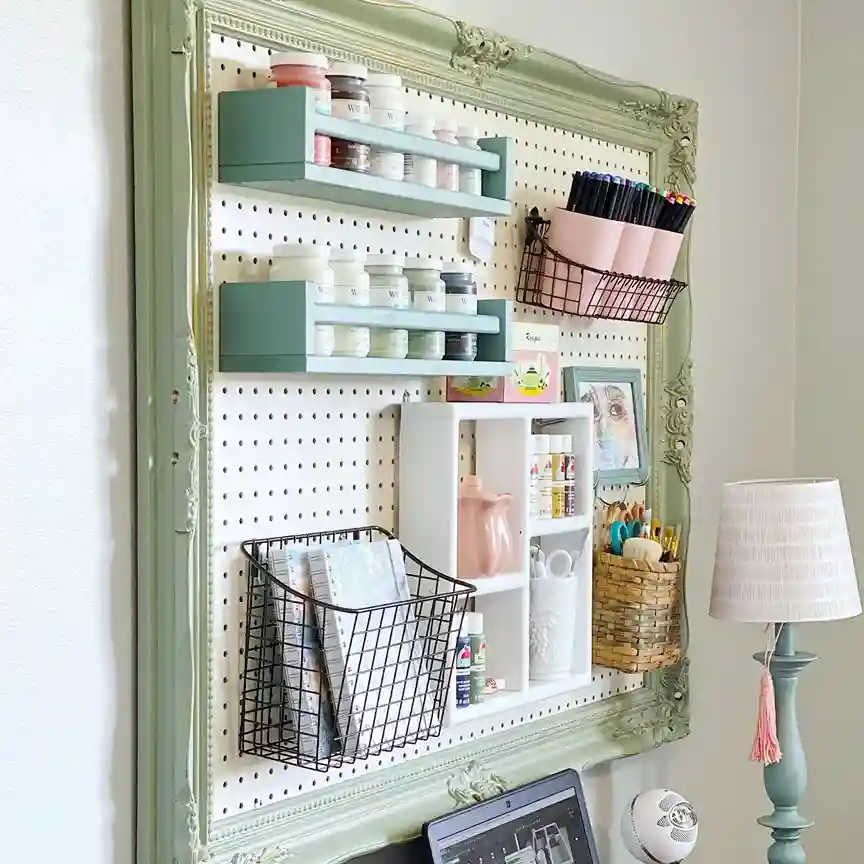
Install floor-to-ceiling pegboard walls that provide customizable storage for tools, scissors, ribbons, and supplies you need within arm’s reach. Pegboard’s versatility allows endless configuration changes as your craft supplies and projects evolve, with hooks, shelves, and baskets rearranging instantly without permanent modifications. Paint pegboard in fun colors or leave natural for industrial charm that adds character while solving storage challenges. This flexible system works beautifully in craft rooms, home offices, and multipurpose spaces needing adaptable organization. For additional workspace ideas, explore our home office ideas guide.
2. Clear Plastic Storage Bins
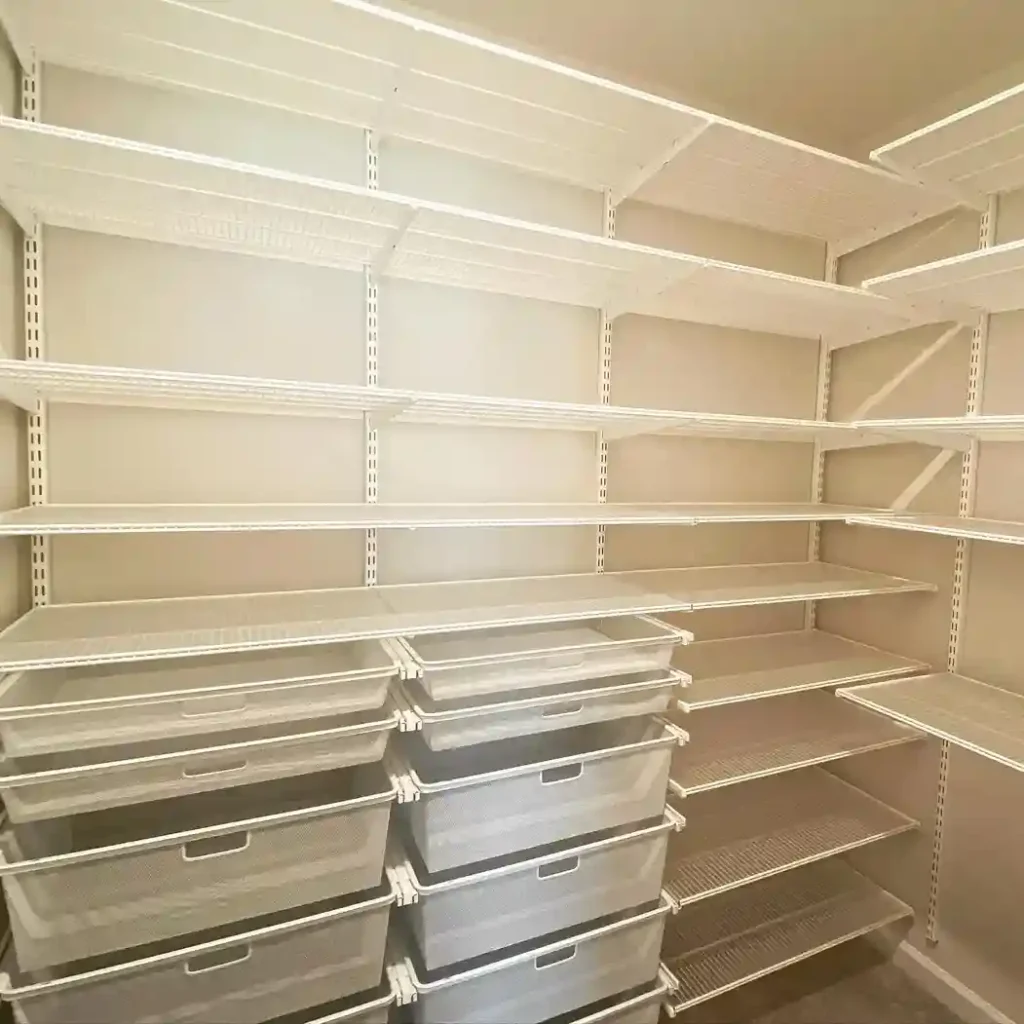
Organize supplies in clear plastic bins that let you see contents instantly without opening every container searching for specific materials. Stackable bins maximize vertical space while maintaining visibility, and labels on front edges identify contents for family members helping with cleanup. Group similar supplies together – one bin for ribbons, another for buttons, separate containers for beads – creating systems that make restocking and locating materials effortless during projects. Clear storage prevents the “out of sight, out of mind” problem that leads to duplicate purchases and forgotten supplies.
3. Rolling Storage Carts
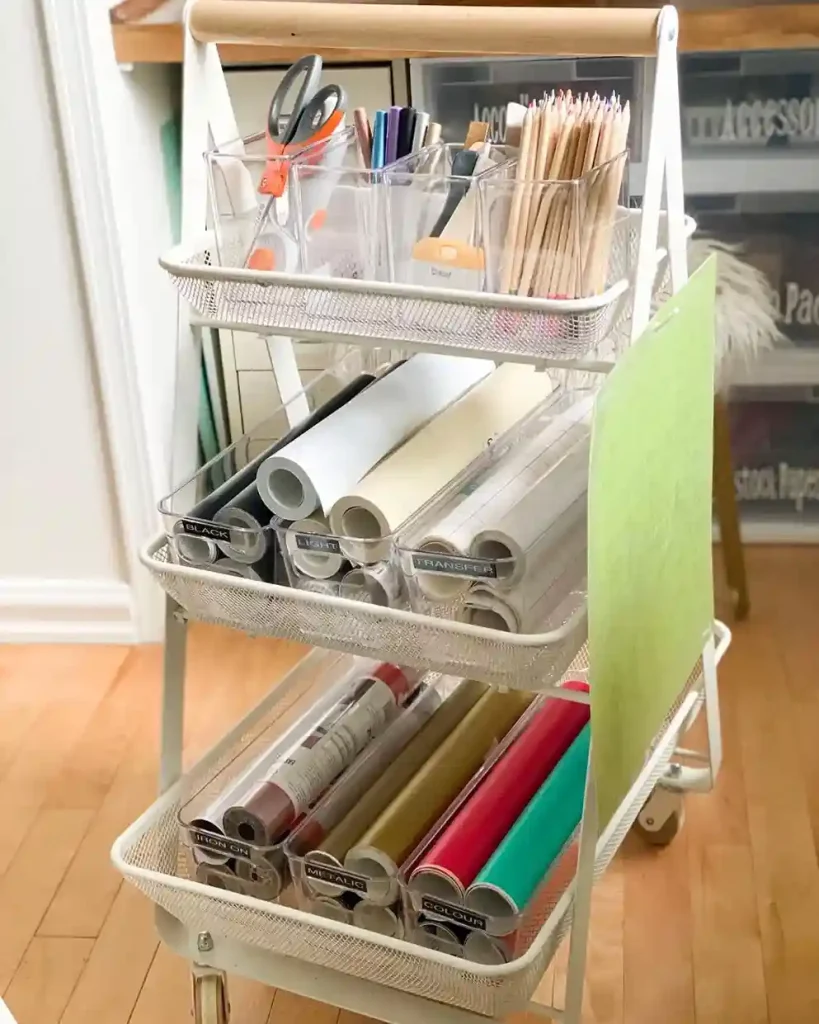
Invest in multi-tiered rolling carts that move supplies wherever needed, from cutting tables to sewing machines to desk areas. These mobile units tuck under tables when not in use, maximizing floor space in compact craft rooms while keeping frequently used supplies accessible. Dedicate different carts to specific crafts – one for painting supplies, another for sewing notions, a third for paper crafting – creating portable workstations that roll out for projects and away for storage. The flexibility makes small spaces function like larger rooms through smart organization.
4. Mason Jar Storage Solutions
Display and organize small items like buttons, beads, pins, and embellishments in clear mason jars that add charming vintage appeal. Mount jar lids to undersides of shelves with screws, then screw jars into lids to create space-saving hanging storage that utilizes otherwise wasted overhead space. This clever system keeps small supplies visible and accessible while preventing them from scattering across work surfaces or disappearing into drawers. Group jars by color or type for both functional organization and decorative appeal. For cottage-inspired design, see our small cottage kitchen ideas.
5. Built-In Shelving Systems
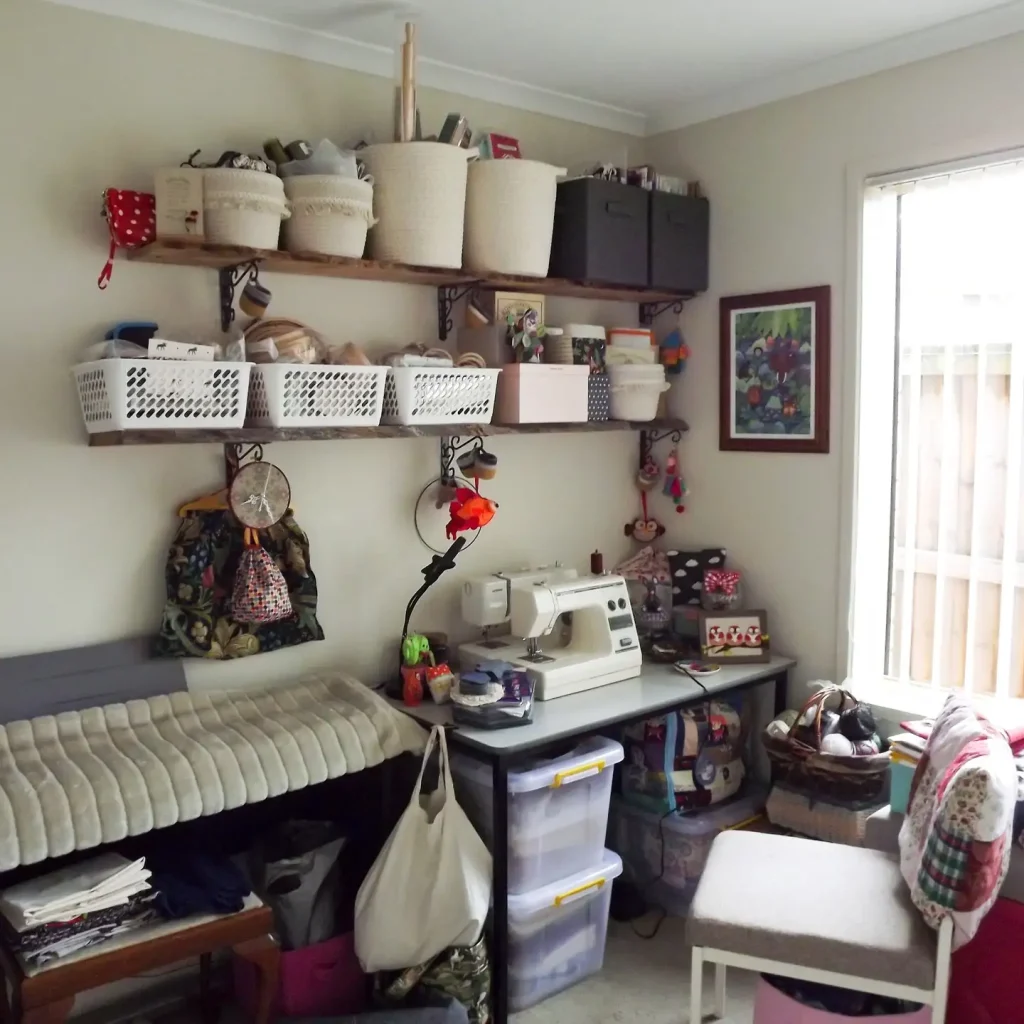
Create custom built-in shelves that maximize wall space from floor to ceiling, providing dedicated homes for every supply category. Vary shelf heights to accommodate different item sizes – tall shelves for fabric bolts, medium for paper stacks, shallow for ribbon spools. Built-ins appear more permanent and polished than freestanding furniture while utilizing awkward spaces and corners that standard furniture can’t fill efficiently. This investment adds significant functionality and perceived value to homes with dedicated craft spaces. Check our built-in shelves living room for installation inspiration.
6. Ribbon Organization Systems
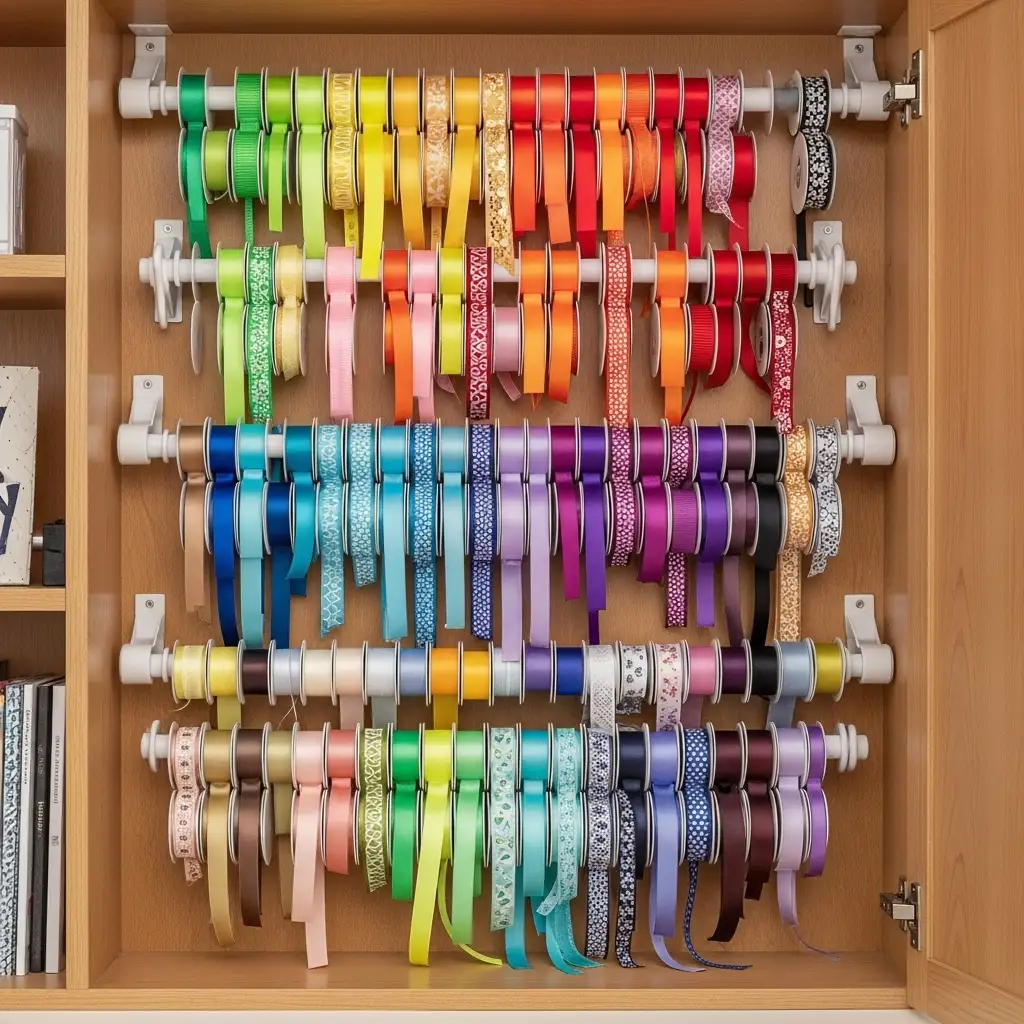
Mount dowels, tension rods, or specialty ribbon holders on walls or inside cabinet doors to organize ribbon collections that otherwise tangle into unusable messes. Thread ribbons onto rods with ends accessible for quick cutting without removing entire spools. This visible storage system showcases your collection while preventing the frustration of untangling knotted ribbons, making it easy to select perfect colors and patterns for projects. The rainbow display also adds colorful decoration to craft room walls.
7. Repurposed Furniture Storage
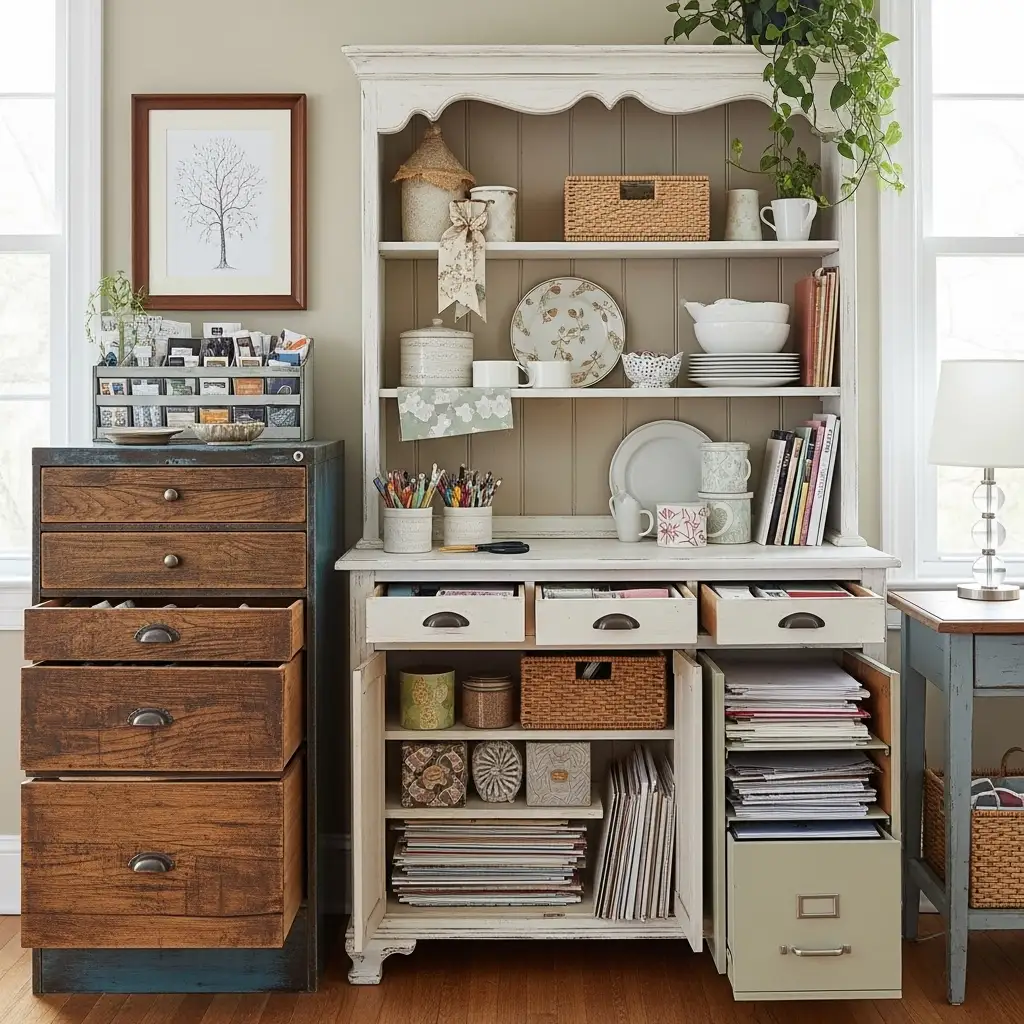
Transform vintage dressers, filing cabinets, or kitchen hutches into craft storage that adds character while providing functional organization. Dresser drawers sort different supply categories, hutch shelves display pretty materials, and filing cabinet drawers organize paper, patterns, and flat supplies perfectly. Repurposed furniture costs less than custom craft storage systems while adding unique personality that makes craft rooms feel collected over time rather than cookie-cutter. For vintage styling ideas, visit our vintage craft room ideas collection.
8. Vertical Wall Storage
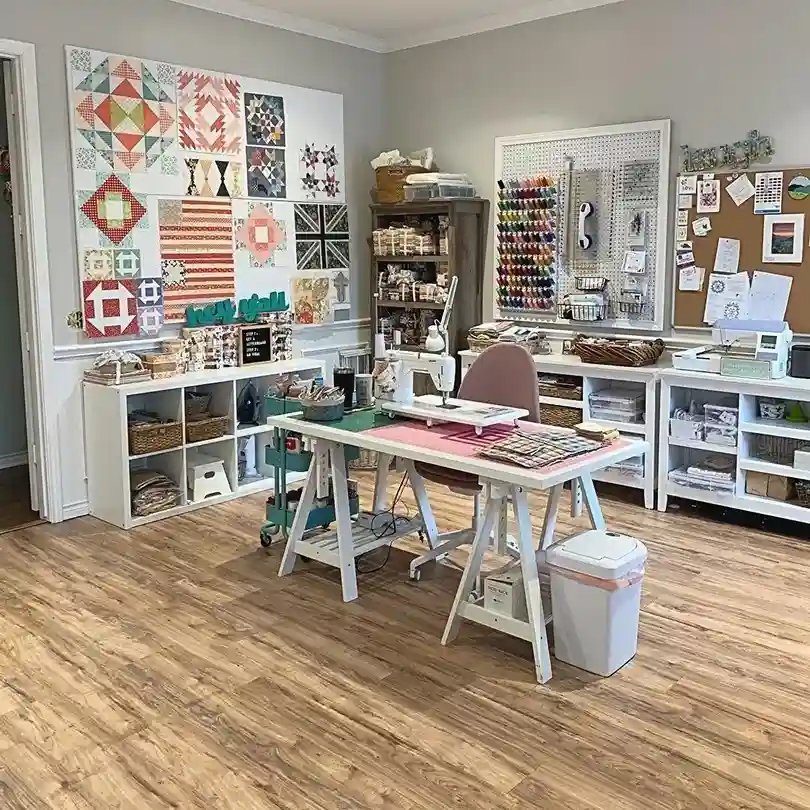
Credits: @mywanderingpath
Maximize vertical space with wall-mounted organizers, floating shelves, and hanging systems that keep floors clear for movement and large projects. Install shelves at varying heights, using upper shelves for infrequently used supplies and lower shelves for daily essentials within easy reach. Vertical storage makes small craft rooms feel larger by drawing eyes upward while providing substantially more storage than floor-based solutions alone. This approach works particularly well in multipurpose rooms sharing space with other functions. See our multipurpose rooms ideas for shared space strategies.
9. Thread and Sewing Notions Organization
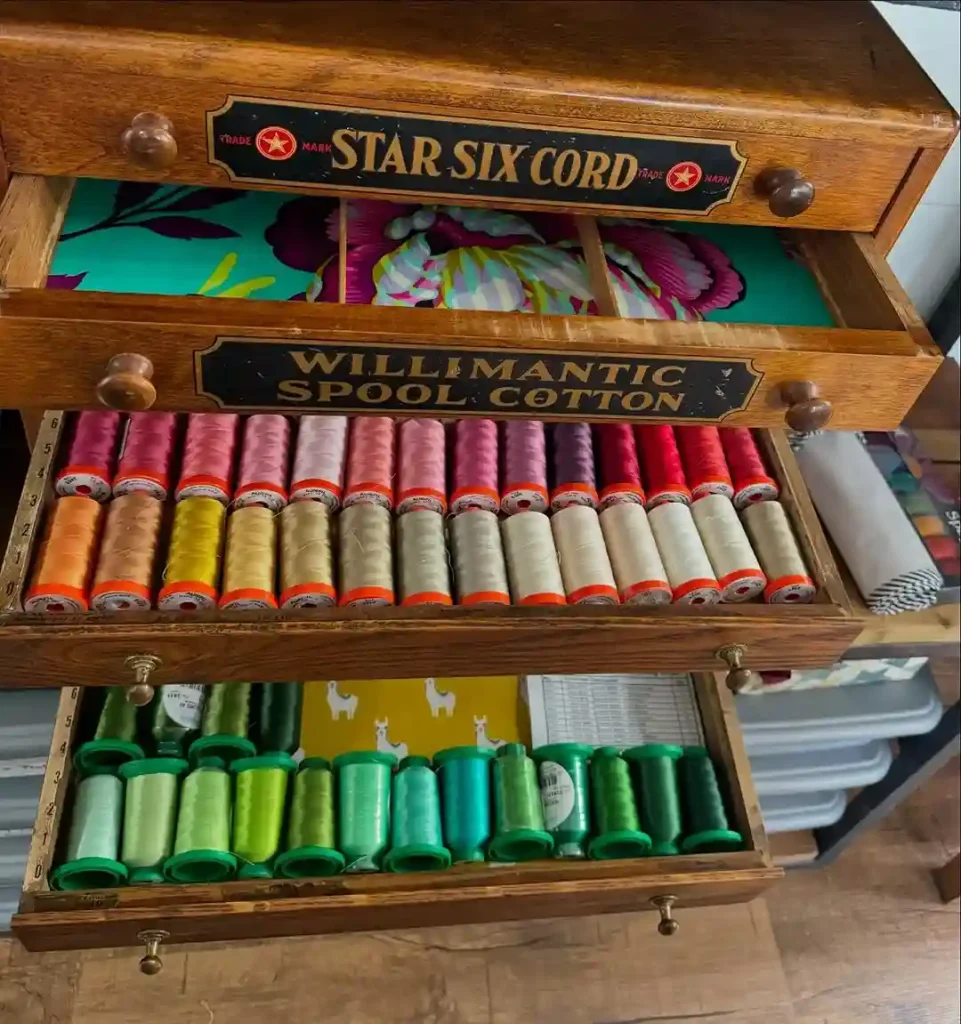
Credits: @cloudninerquilt
Display thread collections on wall-mounted thread racks or rotating stands that showcase colors while keeping spools organized and tangle-free. Dedicate drawer organizers or small bins for needles, bobbins, seam rippers, and other small notions that easily get lost in larger storage. Clear compartmented boxes prevent mixing while maintaining visibility for quick selection during sewing projects. Proper organization prevents frustrating searches that interrupt creative flow and waste precious crafting time. For complete sewing organization, read our how to organize your sewing room guide.
10. Label Maker Organization
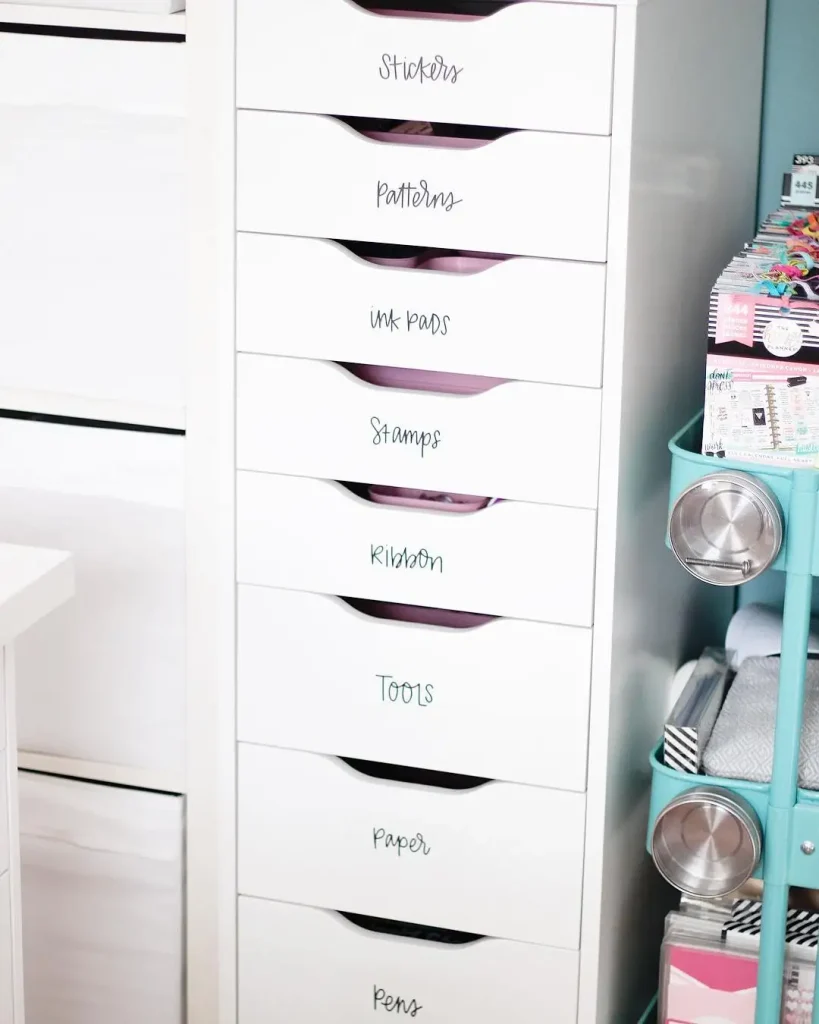
Credits: @the_happy_planner
Invest in a label maker that creates professional, uniform labels for every bin, drawer, basket, and container in your craft room. Clear labeling ensures everyone in the household knows where supplies belong, making cleanup easier and preventing the gradual disorganization that happens when items lack designated homes. Labels also help you quickly locate specific supplies without opening multiple containers, saving time and frustration during projects when you need materials immediately without hunting.
11. Over-Door Storage Solutions
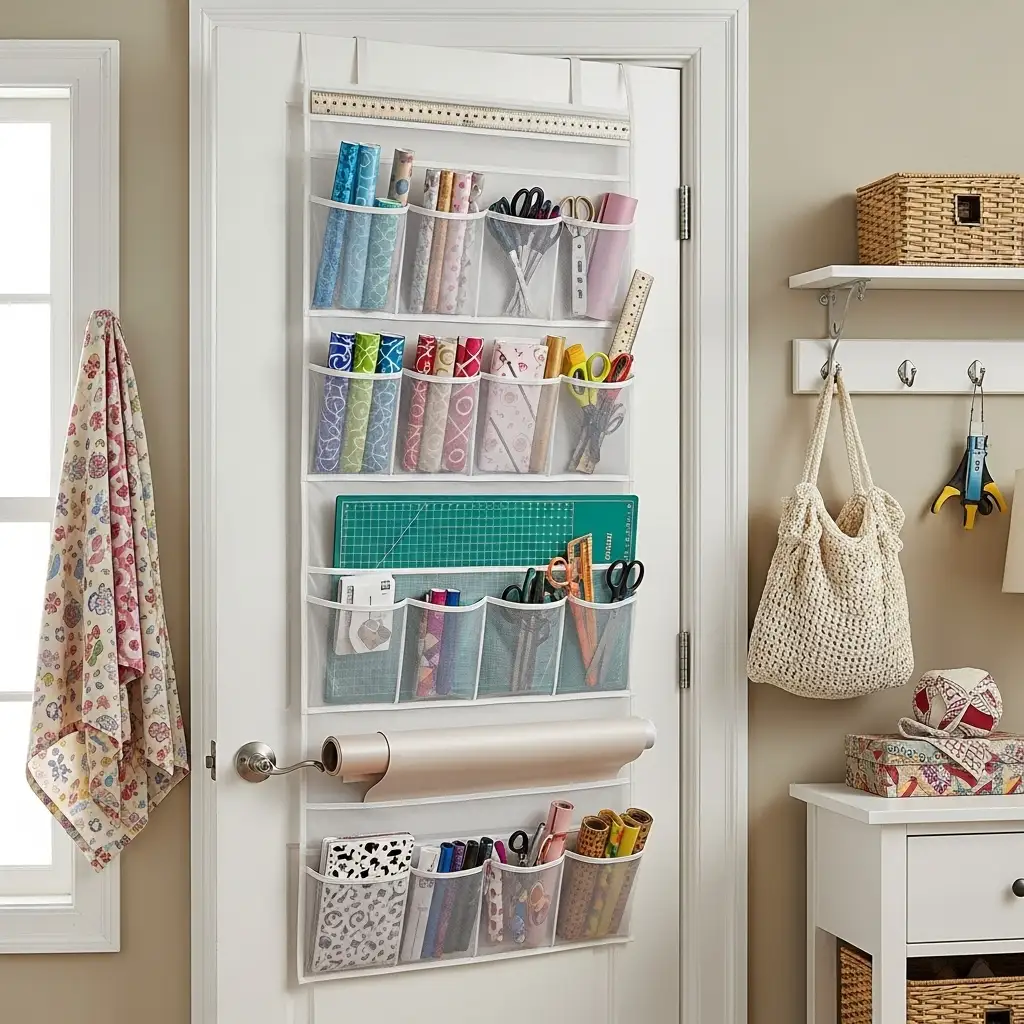
Utilize often-wasted door space with over-door organizers featuring pockets, hooks, or shelves that provide substantial storage without requiring installation. Hang wrapping paper, cutting mats, rulers, or fabric pieces that need accessible storage but don’t require drawer or shelf space. Clear pocket organizers display contents while over-door hooks hold bags of supplies, works-in-progress, or tools used frequently. This invisible storage maximizes small craft rooms without consuming floor or wall space already at premium.
12. Drawer Divider Systems
Credits: @mimimarkoblog
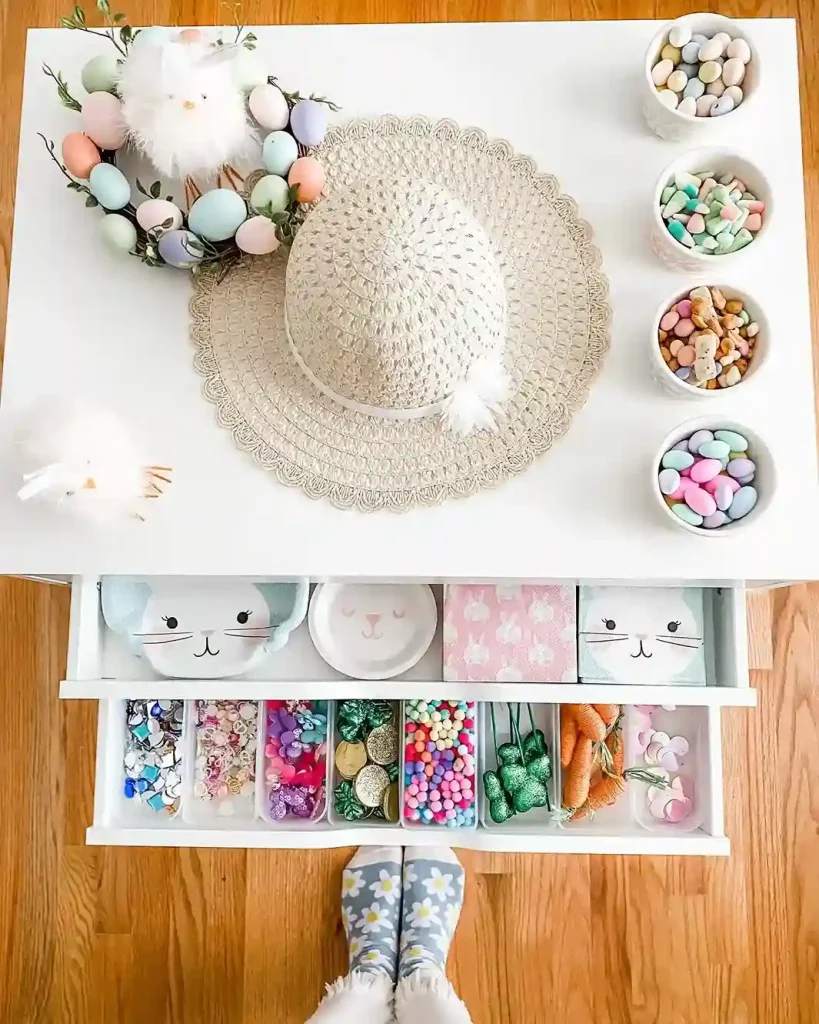
Install adjustable drawer dividers that create compartments for different supply types, preventing the jumbled messes that make finding anything impossible. Customize compartment sizes to fit your specific supplies – small sections for buttons, larger for paint tubes, narrow for pencils. These simple dividers transform chaotic junk drawers into organized systems where every item has a designated spot, making restocking and locating supplies effortless. The organization reduces stress and wasted time, allowing more energy for actual crafting rather than searching.
13. Ceiling-Mounted Storage
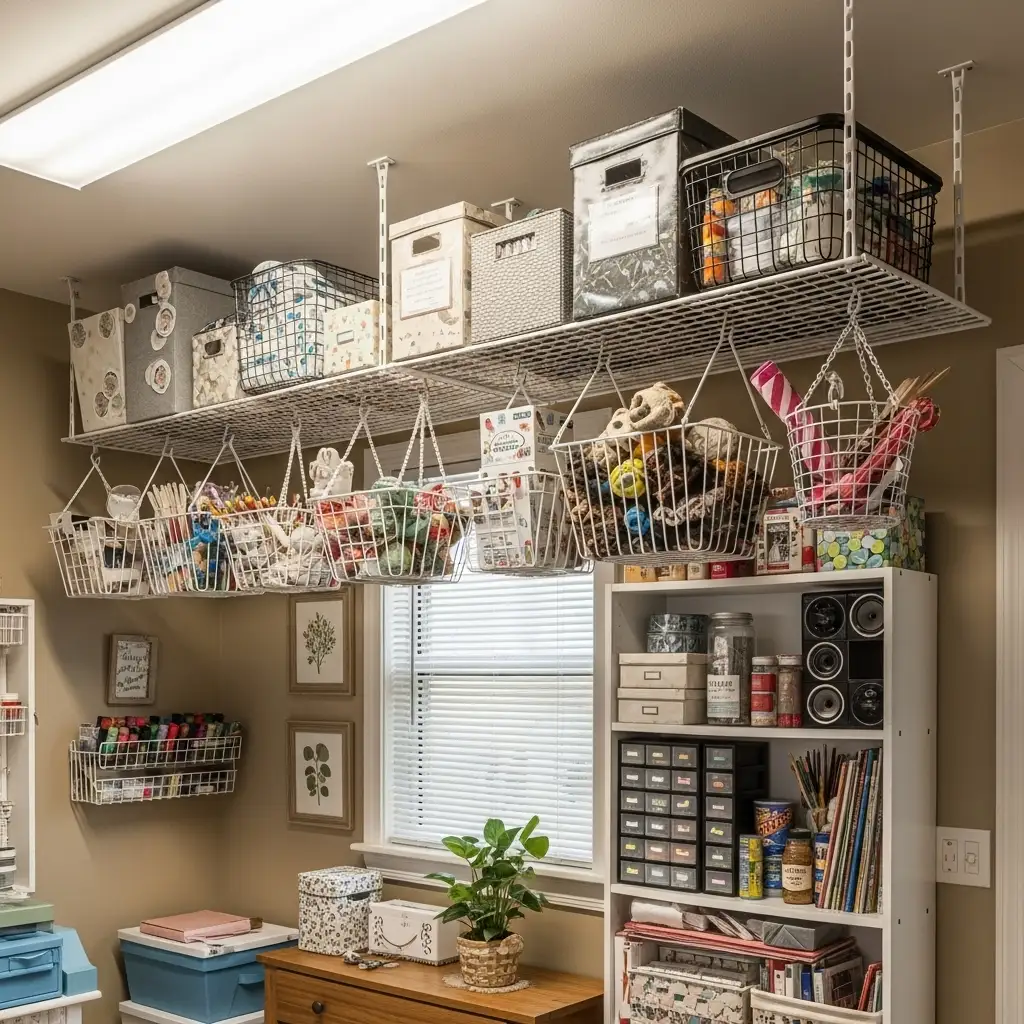
Install ceiling-mounted racks, hanging baskets, or overhead shelving that utilizes unused vertical space above head height. This often-overlooked area provides substantial storage for infrequently used supplies, seasonal decorations, or bulk purchases without consuming valuable wall or floor space needed for active crafting. Ceiling storage works particularly well in garages or basements converted to craft spaces where high ceilings offer untapped potential. For basement design ideas, see our brilliant basement ceiling ideas.
14. Magazine File Storage
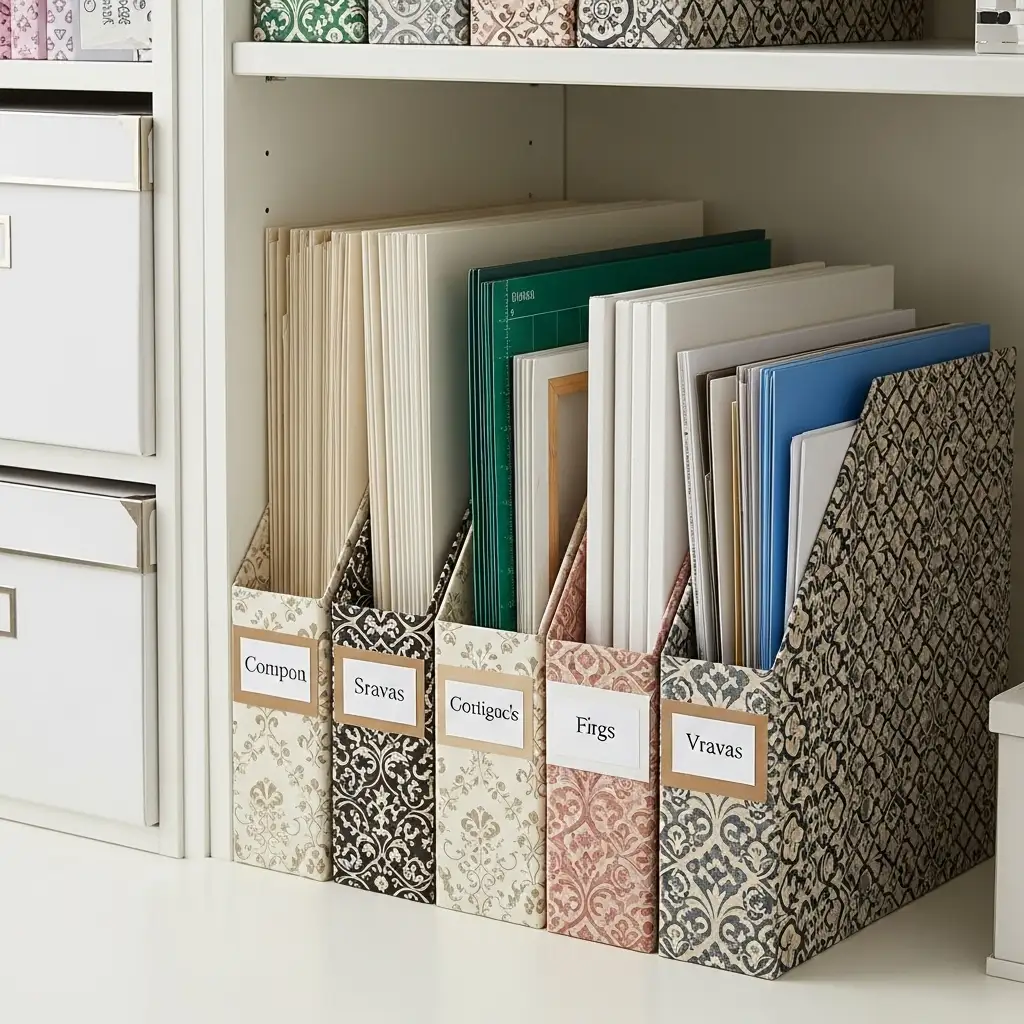
Repurpose magazine files or decorative holders to organize paper, cardstock, cutting mats, canvases, and other flat supplies that stack poorly in traditional storage. Stand files on shelves or desks with spines labeled for quick identification of contents. This vertical storage prevents paper from bending or wrinkling while making specific colors or weights instantly accessible. The uniform appearance creates visual order even when storing diverse supplies, making craft rooms look more organized and intentional.
15. Lazy Susan Turntables
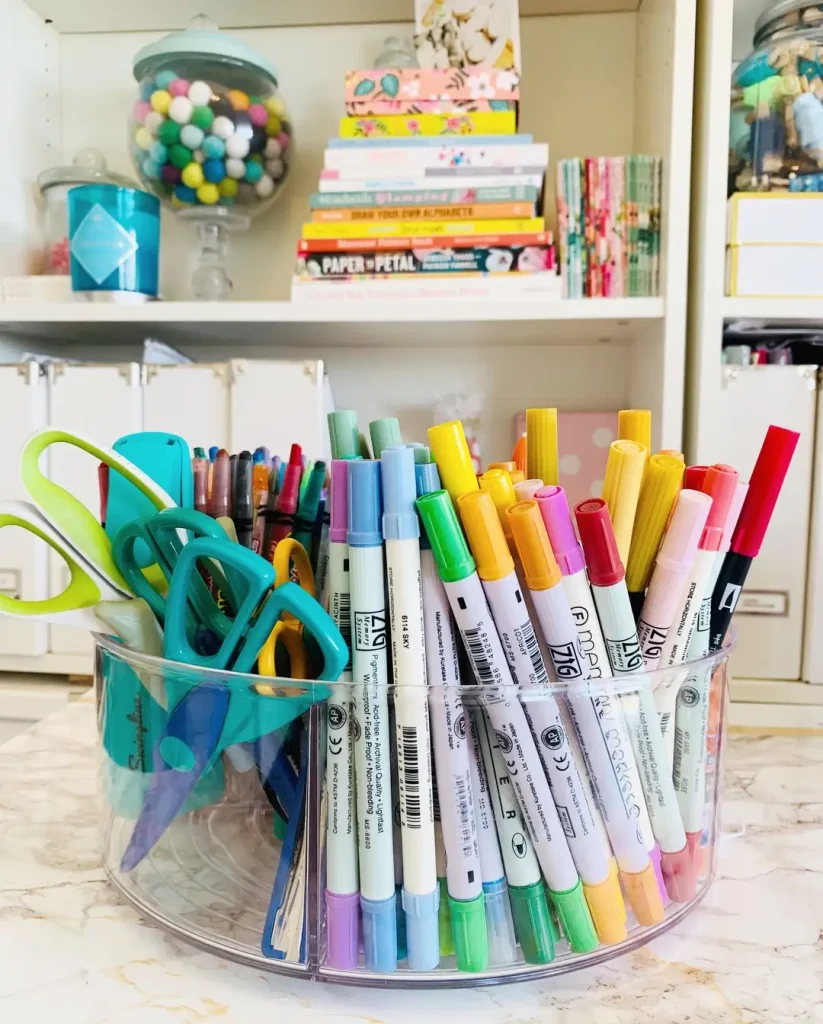
Credits: @theglitzypear
Place lazy Susan turntables in cabinets, on shelves, or workspaces to make supplies in back positions accessible without moving everything in front. These rotating platforms work beautifully for paint bottles, glue collections, small tool sets, or any supplies you need to access quickly during projects. The rotation eliminates frustrating digging through cluttered shelves where items inevitably migrate to unreachable back corners. This simple solution dramatically improves accessibility in existing storage without requiring structural changes.
16. Coffee Station Supply Organization
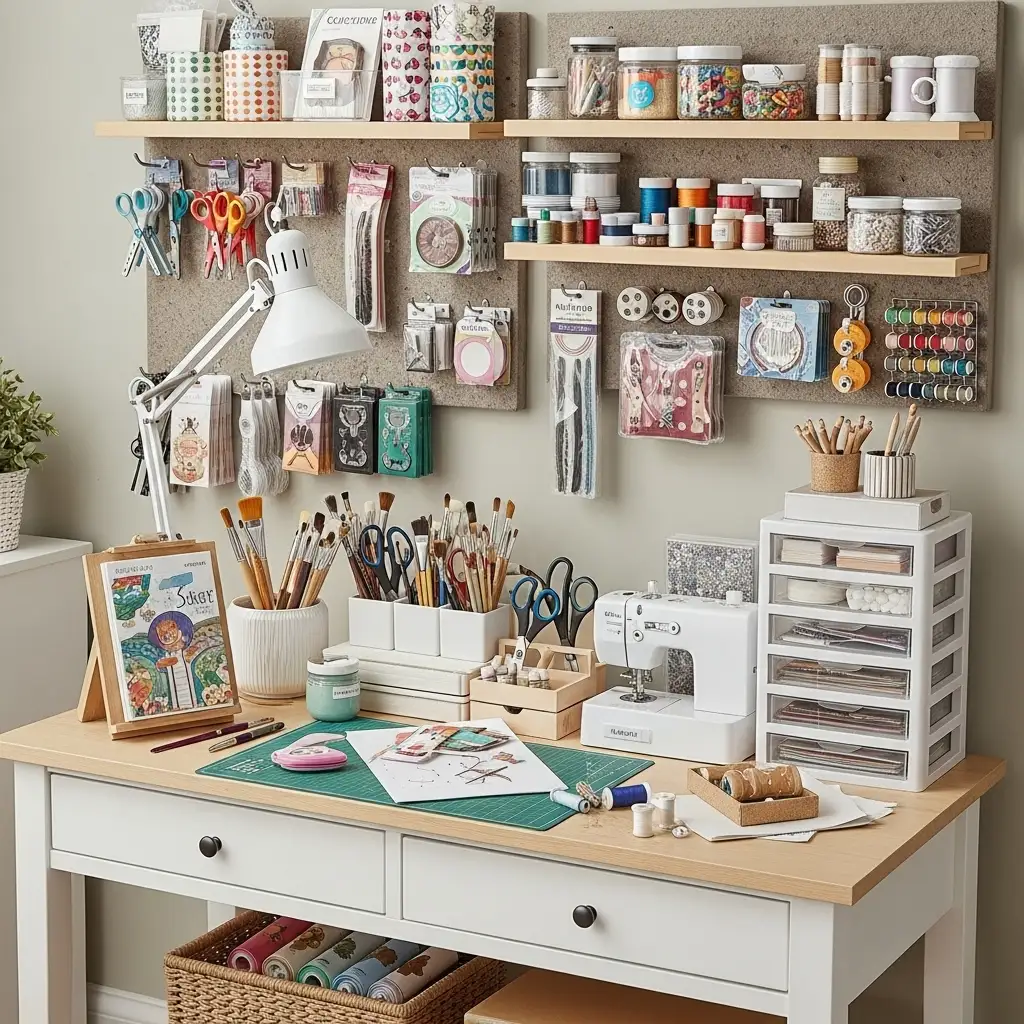
Create dedicated supply stations organized like coffee bars with everything needed for specific crafts grouped together. Set up a painting station with brushes, paints, and canvases; a paper crafting area with scissors, punches, and cardstock; or a sewing zone with thread, needles, and notions. This organization system mimics commercial craft stores where related items group logically, making setup and cleanup faster while ensuring you have all necessary supplies before starting projects. For coffee station inspiration, visit our coffee station guide and coffee bar ideas.
17. Under-Table Storage
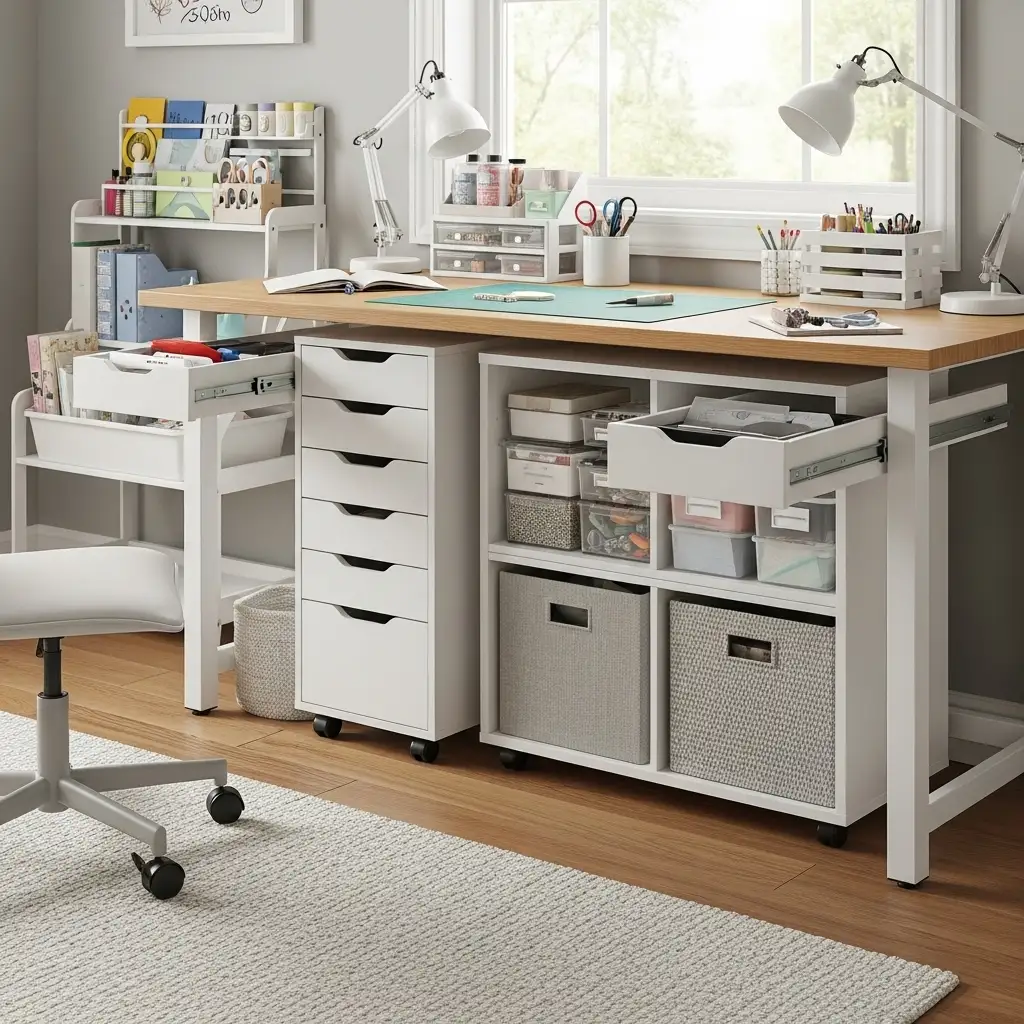
Maximize unused space beneath craft tables with rolling storage, bins, or custom shelving that tucks away when not needed. This hidden storage keeps floors clear while maintaining easy access to frequently used supplies that need to stay close to work surfaces. Install drawer units or storage cubes on casters that slide out when needed and disappear underneath for clean sightlines. Under-table storage works particularly well in small craft rooms or multipurpose spaces where visible clutter would impact other room functions.
18. Wall-Mounted Tool Holders

Install magnetic strips, tool racks, or custom holders that display and organize frequently used tools within arm’s reach of work surfaces. Scissors, rotary cutters, rulers, and specialty tools hang visibly where you can grab them instantly without searching through drawers or tool boxes. This system prevents tool migration throughout the house while ensuring your best scissors don’t disappear into family members’ desk drawers. The visible storage also prevents duplicate purchases when you can see exactly what tools you own.
19. Fabric Storage Solutions
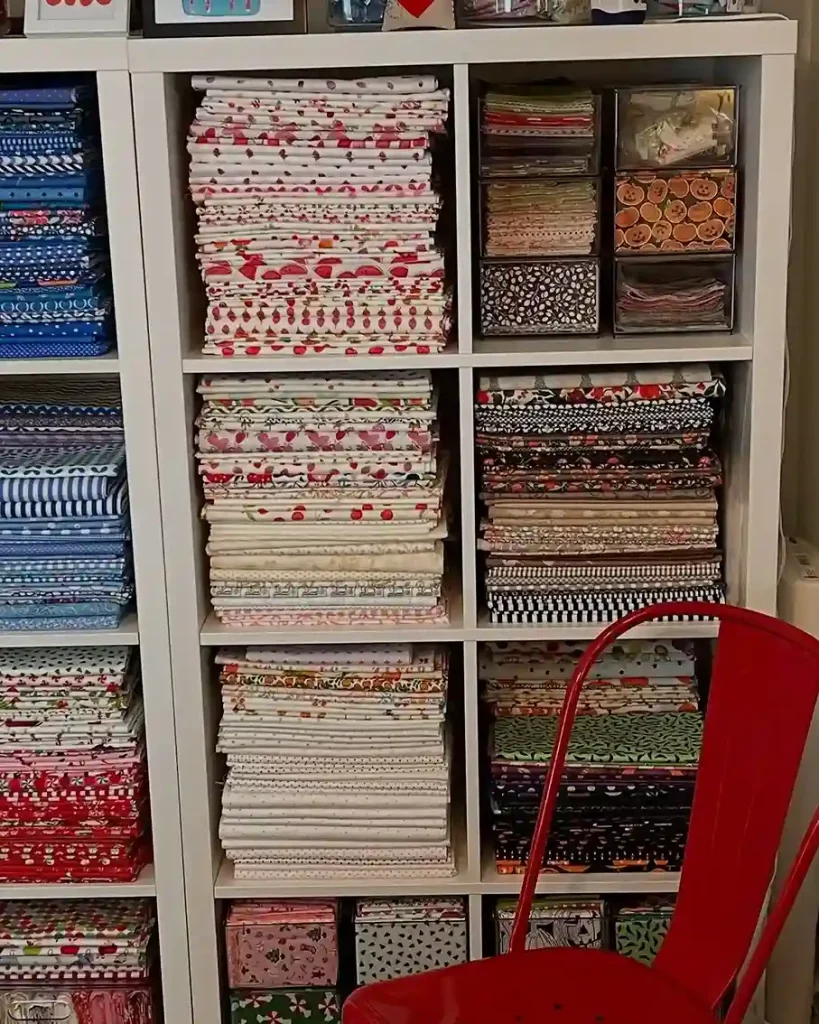
Credits: @laurispringer
Organize fabric collections on comic book boards, wrapped on cardboard bolts, or folded in clear bins that showcase patterns and colors. Store fabric vertically like files so you can flip through selections without disturbing entire stacks, making fabric selection during planning phases quick and inspiring. Group fabrics by color, type, or project for systems that work with how you actually craft. Proper fabric storage prevents wrinkles, protects from dust, and displays your collection beautifully. For textile organization inspiration, see our bedroom storage ideas.
20. Corner Storage Solutions
Credits: @einilomascrap
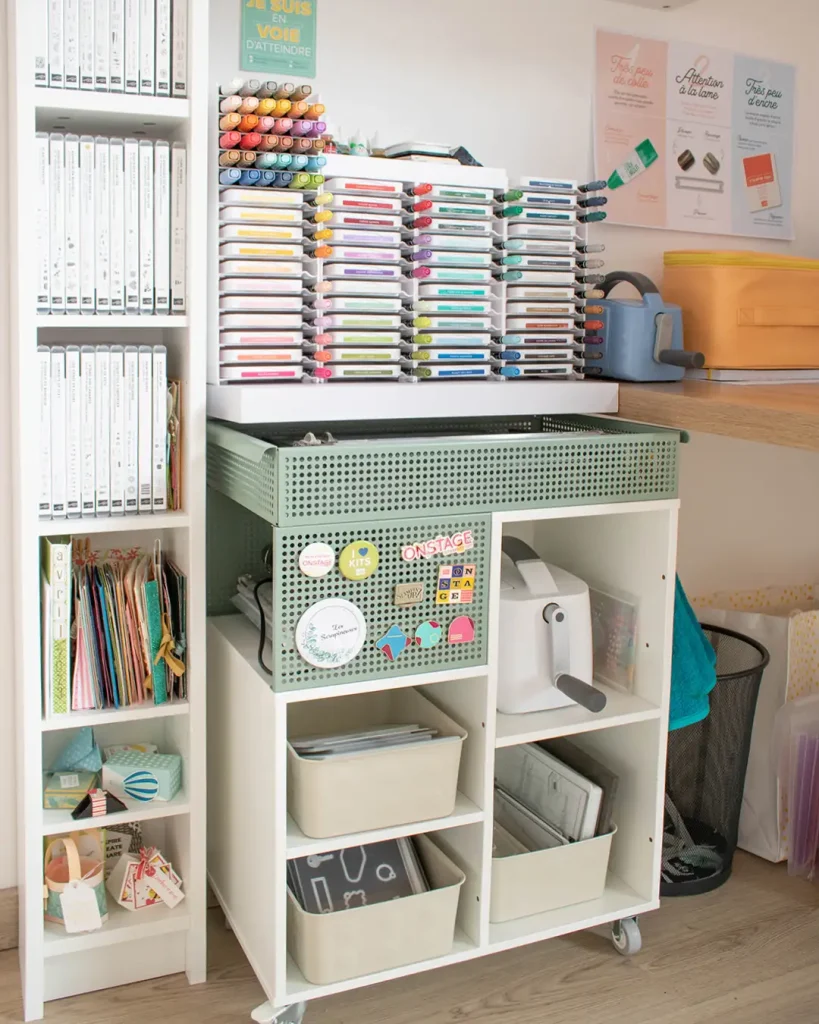
Utilize awkward corners with specialized corner shelves, lazy Susans, or custom-fit organizers that maximize otherwise wasted space. Corners typically become dead zones where supplies get shoved and forgotten, but strategic storage systems make these areas highly functional for storing bulky items or infrequently used supplies. Corner units work particularly well in square craft rooms where every inch of storage matters for maintaining organized, functional spaces. Explore our kitchen corner cabinet ideas for corner organization strategies.
21. Color-Coded Organization
Credits: @jessicaquilter
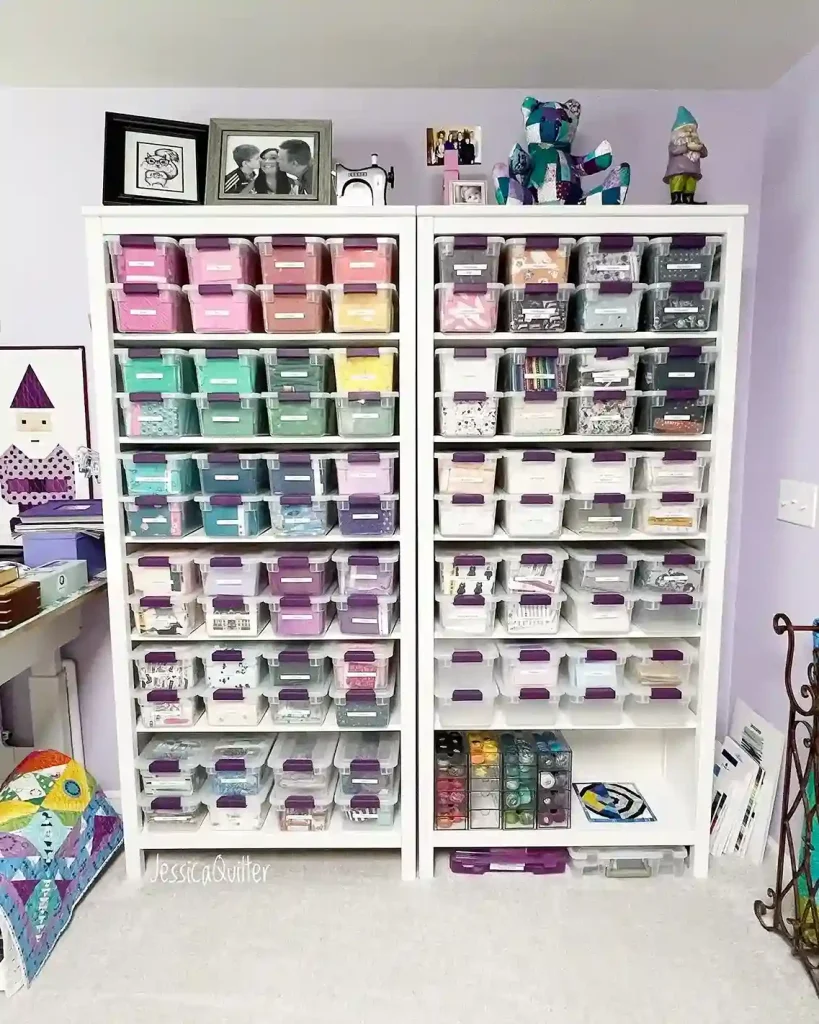
Organize supplies by color rather than type for visual systems that make color selection during projects immediate and inspiring. Group all red supplies together – paint, paper, ribbon, fabric, buttons – regardless of craft type. This rainbow organization creates beautiful displays that function as room decoration while making color coordination effortless. The visual appeal motivates maintaining organization better than hidden systems, and the color-coded approach works intuitively without requiring labels everyone can understand.
22. Portable Caddy Systems
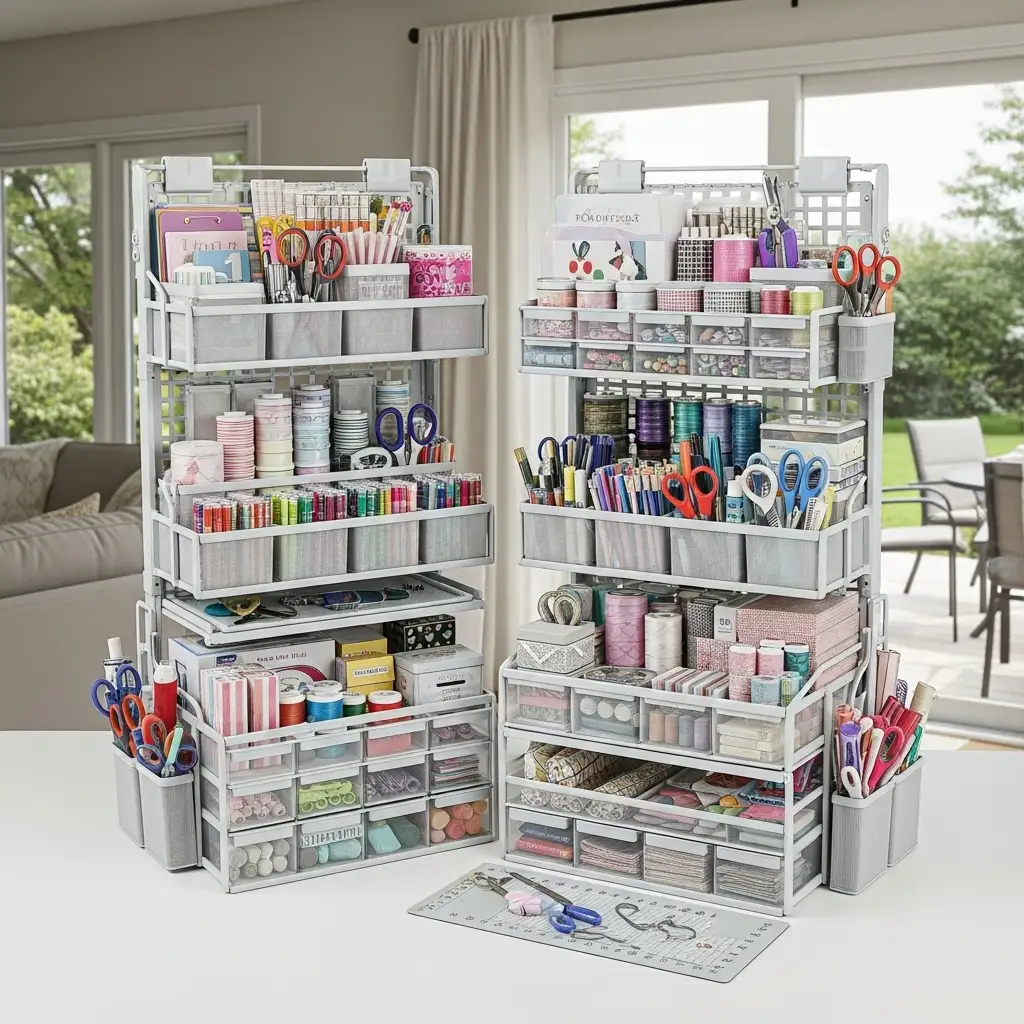
Maintain portable caddies filled with frequently used supplies that carry to wherever you’re working, from craft tables to living room sofas to outdoor patios. These grab-and-go systems keep essential tools together while allowing flexible crafting locations throughout your home. Dedicate different caddies to specific projects or craft types, creating complete portable workstations that eliminate setup time and ensure you have everything needed regardless of where inspiration strikes. This flexibility particularly benefits crafters sharing multipurpose spaces with family activities.
23. Display and Storage Combination
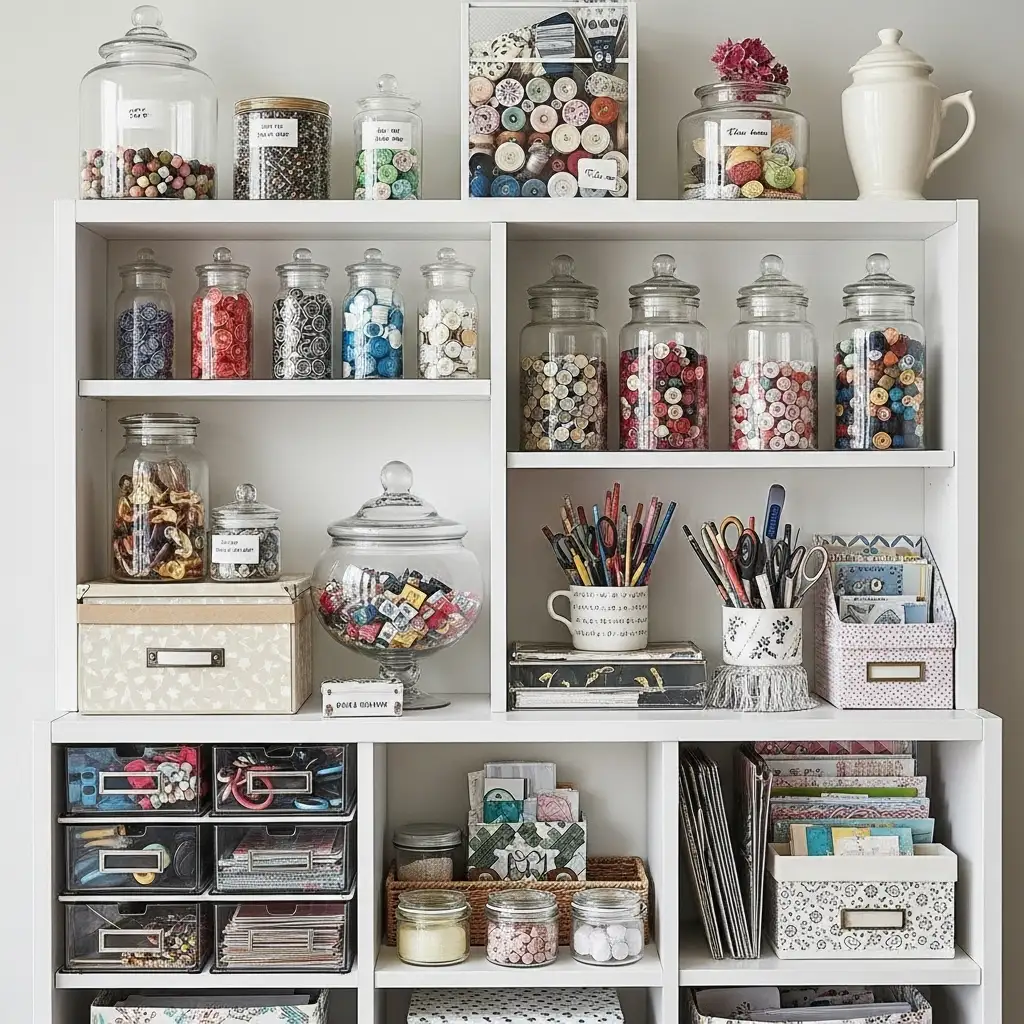
Create beautiful displays that function as both decoration and practical storage, showcasing pretty supplies like colorful threads, vintage buttons, or patterned papers. Glass jars, apothecary containers, or open shelving turn necessary storage into visual focal points that inspire creativity while keeping supplies accessible. This approach works beautifully for supplies you want to see and show off, turning functional organization into design features that make craft rooms feel curated and personal. For display ideas, visit our home interior decor ideas collection.
Additional Organization Strategies
Purge Before Organizing
Before implementing any storage system, ruthlessly purge supplies you won’t realistically use. Donate partial skeins of yarn, dried-up paints, fabric scraps too small for projects, or craft fads you’ve moved beyond. This decluttering immediately reduces storage needs while making room for supplies you actually love and use. Honest assessment prevents organizing clutter you should eliminate, ensuring storage systems house useful supplies rather than guilt-inducing purchases gathering dust.
Create Zones for Different Crafts
Divide craft rooms into dedicated zones for different activities – a sewing area with machine and notions, a painting corner with easel and supplies, a paper crafting desk with organizational tools. These defined zones prevent cross-contamination between craft types while creating efficient workflows where everything needed for specific activities groups logically. Zoning works even in small spaces through careful furniture arrangement and smart storage that maintains visual separation between different craft categories.
Maintain One-In-One-Out Rule
Prevent craft supply accumulation by implementing a one-in-one-out rule where bringing home new supplies requires eliminating something existing. This discipline maintains organized systems without constant overflow that leads to chaos. The rule forces thoughtful purchasing, reducing impulse buys of supplies duplicating what you already own. This sustainable approach saves money while preventing the overwhelming supply accumulation that makes crafting stressful rather than enjoyable.
Schedule Regular Organization Sessions
Calendar monthly or quarterly organization sessions dedicated to restoring order, rotating seasonal supplies, and reassessing systems that aren’t working. Regular maintenance prevents gradual deterioration where organized spaces slowly return to chaos through daily use without intentional upkeep. These sessions also provide opportunities to rediscover forgotten supplies, inspiring new projects while ensuring nothing expires or becomes unusable through neglect. For office organization applicable to craft spaces, see our home office desk ideas.
Frequently Asked Questions
How do I organize craft supplies in a small space?
Maximize vertical storage with wall-mounted shelves, pegboards, and over-door organizers that use height instead of floor space. Choose clear containers and visible storage systems so you can see everything without opening drawers or bins. Utilize under-table storage, rolling carts that tuck away, and multi-functional furniture serving both storage and workspace purposes. Purge ruthlessly to ensure you’re only storing supplies you truly use, and consider off-site storage for seasonal or infrequently used items. For small space strategies, visit our small apartment ideas guide.
What is the best way to store fabric for crafting?
Store fabric folded around comic book boards or cardboard to prevent wrinkles, standing vertically in bins or on shelves like files for easy browsing. Clear bins allow you to see fabrics without removing everything, while vertical storage prevents bottom pieces from being forgotten. Organize by color, type, or project for systems matching your crafting style. Protect fabrics from dust, direct sunlight that causes fading, and moisture that promotes mildew. For delicate or vintage fabrics, use acid-free tissue paper to prevent yellowing and deterioration over time.
How can I organize craft supplies on a budget?
Repurpose household items like mason jars, shoe boxes, and food containers instead of buying specialized craft storage. Shop thrift stores for dressers, filing cabinets, and shelving units that cost fractions of new prices. Use pegboard from hardware stores instead of expensive specialty craft organization systems. Create your own drawer dividers from cardboard. The key is thoughtful organization systems rather than expensive products – creativity in storage solutions costs less than pre-made systems while often working better for your specific needs.
What should every craft room have?
Every craft room needs good lighting including task lighting for detailed work, adequate work surfaces at comfortable heights, organized storage keeping supplies visible and accessible, and comfortable seating supporting long crafting sessions. Include a cutting surface, tool storage within reach, inspiration boards or displays motivating creativity, and appropriate electrical outlets for tools and equipment. Most importantly, craft rooms need systems maintaining organization despite regular use, preventing chaos that makes crafting stressful rather than enjoyable. For complete room design, see our home interior design ideas.
Conclusion: Creating Your Dream Craft Space
Organized craft room storage transforms frustrating, cluttered spaces into inspiring creative sanctuaries where everything has a place and finding supplies takes seconds rather than minutes. The 23 storage ideas presented demonstrate that effective organization requires thoughtful systems tailored to your specific crafts, available space, and working style rather than generic solutions that work for everyone. Whether you implement pegboard walls, clear container systems, repurposed furniture, or combinations of multiple approaches, the goal remains creating accessible, maintainable organization that supports creativity rather than hindering it.
Start with one area or craft type rather than overwhelming yourself organizing everything simultaneously. Implement systems gradually, adjusting as you discover what works best for your supplies and habits. Remember that perfect organization that’s impossible to maintain fails ultimately – prioritize functional systems you’ll actually use daily over Instagram-worthy perfection requiring constant effort. With patience and smart storage solutions, you can create craft rooms that inspire productivity, reduce stress, and make every crafting session the joy it should be rather than a frustrating search for supplies.
Ready to organize more spaces? Explore our guides including laundry room guide, bathroom closet organization ideas, small bedroom ideas, and room divider ideas for complete home organization strategies. Your organized craft room awaits – start implementing these storage ideas today and reclaim your creative space from chaos.