Are you dreaming of wide-open spaces, soaring ceilings, and a home that blends rustic character with contemporary comfort? Does the idea of living in a converted barn or barn-style home appeal to your desire for unique architecture and connection to simpler times?
Barn houses have surged in popularity as homeowners seek alternatives to cookie-cutter suburban developments, embracing spaces that offer both architectural distinction and flexible living arrangements.

Credits: @grange_des_loups
Barn houses – whether authentic agricultural buildings transformed into residences or new constructions inspired by traditional barn architecture – deliver a unique blend of history, craftsmanship, and modern amenities.
These distinctive homes feature signature elements like exposed beams, vaulted ceilings, oversized doors, and open floor plans that create dramatic, light-filled interiors perfect for contemporary lifestyles.
Let’s explore what makes barn houses so appealing and how you can create or style your own barn-inspired living space.

Credits: @timberlynegroup
What Defines a Barn House?
Authentic Barn Conversions
True barn conversions involve transforming historic agricultural structures into residential spaces while preserving original architectural character. These projects typically retain the building’s exterior shell, exposed timber framing, and authentic details like original hardware, weathered wood siding, and characteristic barn doors. The challenge and appeal lie in sensitively integrating modern systems – plumbing, electrical, HVAC, and insulation – without compromising the structure’s historical integrity.

Credits: @shawnhenderson
Converted barns offer unmatched character with hand-hewn beams showing centuries-old tool marks, irregularities in flooring and walls that tell stories, and a sense of permanence impossible to replicate in new construction. However, conversions require significant investment, specialized contractors familiar with historic preservation, and often complex permitting processes. The reward is owning a truly one-of-a-kind home with authentic history and craftsmanship that modern buildings cannot duplicate.
Barn-Style New Construction
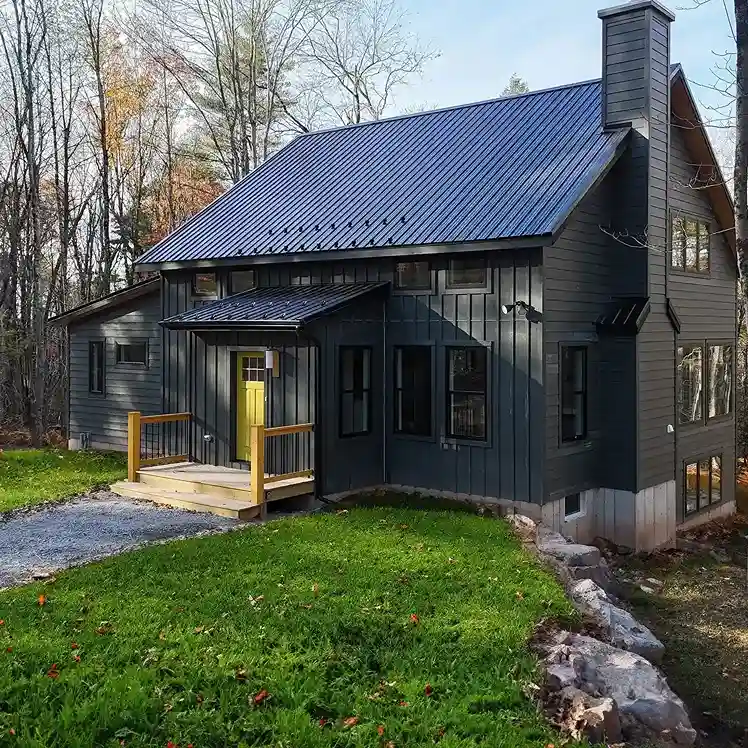
For those seeking barn aesthetics without conversion complexities, barn-style new homes offer the best of both worlds. These purpose-built residences incorporate signature barn elements – board-and-batten siding, metal roofs, large sliding doors, exposed beams, and open floor plans – while including modern construction standards, energy efficiency, and contemporary amenities from the ground up.

Barn-style homes avoid the structural surprises, code compliance issues, and hidden costs often accompanying historic conversions while delivering the architectural drama and rustic character that make barns so appealing. Builders can customize layouts for modern living, incorporate oversized windows for natural light, and design spaces specifically suited to homeowner needs rather than working within existing agricultural building constraints.
Key Architectural Features of Barn Houses
Soaring Ceilings and Open Spaces

Credits: @housinginfo
Perhaps the most dramatic barn house feature is the voluminous interior created by vaulted or cathedral ceilings reaching 20-30 feet or higher. This vertical space creates an immediate sense of grandeur while allowing for creative design solutions like loft bedrooms, mezzanine offices, or dramatic light fixtures suspended from exposed rafters. For inspiration on maximizing these vertical spaces, explore our cathedral ceiling living room and vaulted ceiling living room ideas.
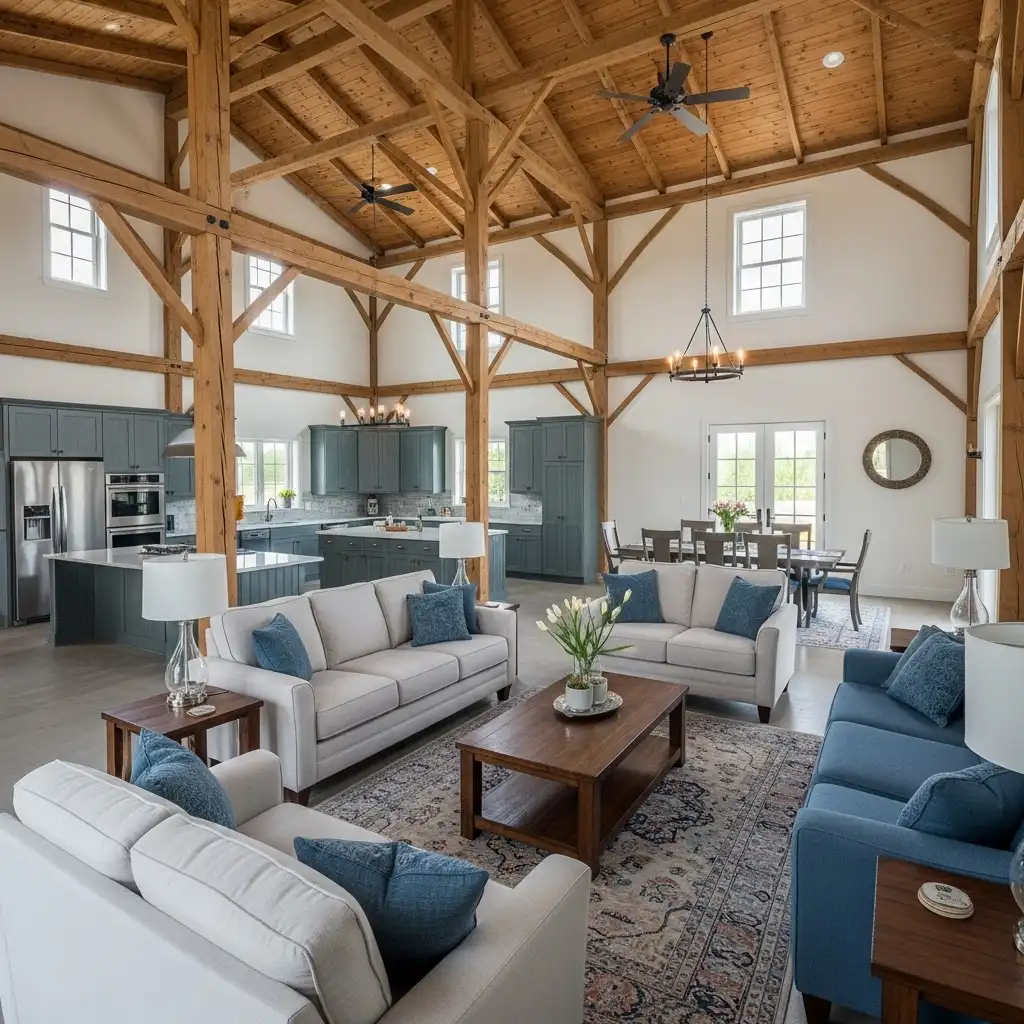
The open floor plan typical of barn houses eliminates traditional room divisions, creating flowing spaces ideal for modern family living and entertaining. Without load-bearing interior walls, you gain flexibility to arrange furniture and define zones through area rugs, lighting, and strategic furniture placement rather than permanent partitions. This openness enhances natural light penetration while maintaining visual connection between living areas.
Exposed Timber Framing

Exposed wooden beams – whether authentic weathered timbers from historic barns or new rough-hewn lumber – serve as the defining visual element in barn houses. These structural elements become decorative features that add warmth, texture, and architectural interest to otherwise plain walls and ceilings. Dark-stained beams create dramatic contrast against white walls, while natural wood tones deliver organic warmth.

The timber framing showcases traditional joinery techniques like mortise-and-tenon connections, wooden pegs, and hand-cut details that celebrate craftsmanship. Even in new construction, exposed beams create visual rhythm and break up large expanses of ceiling, making voluminous spaces feel more intimate and human-scaled. Learn more about incorporating this feature in our wood beams on ceiling ideas guide.
Signature Barn Doors

Oversized sliding barn doors – both exterior and interior – serve as both functional elements and design statements. Exterior barn doors often span 8-12 feet wide, creating dramatic entrances while referencing agricultural heritage. Interior barn doors separate spaces without requiring swing clearance, making them ideal for bathrooms, closets, or flexible rooms that occasionally need privacy.

Modern barn door hardware comes in numerous finishes from rustic black iron to sleek stainless steel, allowing customization to match your overall aesthetic. Whether you choose authentic weathered wood, clean-lined painted doors, or contemporary frosted glass panels in barn door frames, these distinctive features immediately signal barn-inspired design while solving practical spatial challenges.
Interior Design Styles for Barn Houses
Modern Farmhouse Aesthetic

The modern farmhouse style perfectly complements barn architecture by balancing rustic elements with contemporary comfort. This approach combines exposed beams and weathered wood with clean-lined furniture, white walls, and updated fixtures that feel fresh rather than dated. Incorporate shiplap accent walls, farmhouse sinks, subway tile backsplashes, and industrial-style lighting for quintessential modern farmhouse appeal.

Credits: @mountainlivingmag
Focus on natural materials like wood, stone, and metal in simple forms that don’t compete with architectural drama. Keep color palettes neutral – whites, creams, grays, and natural wood tones – with occasional black accents for contrast. This restrained approach allows barn architecture to shine while creating comfortable, livable spaces suited to contemporary lifestyles. For comprehensive farmhouse design guidance, visit our farmhouse living room ideas.
Industrial Chic

Barn houses lend themselves beautifully to industrial aesthetics that celebrate raw materials and utilitarian design. Expose mechanical systems like ductwork and pipes, install metal staircases and railings, and choose furniture with steel frames and reclaimed wood surfaces. Edison bulb fixtures, metal pendant lights, and exposed filament bulbs enhance the industrial vibe while providing adequate illumination.

Incorporate concrete floors, brick accent walls, and metal roofing elements as interior design features. This style works particularly well in barn conversions where industrial heating and cooling systems integrate seamlessly with the aesthetic rather than requiring concealment. The combination of agricultural architecture and industrial finishes creates urban loft character in rural or suburban settings.
Rustic Elegance
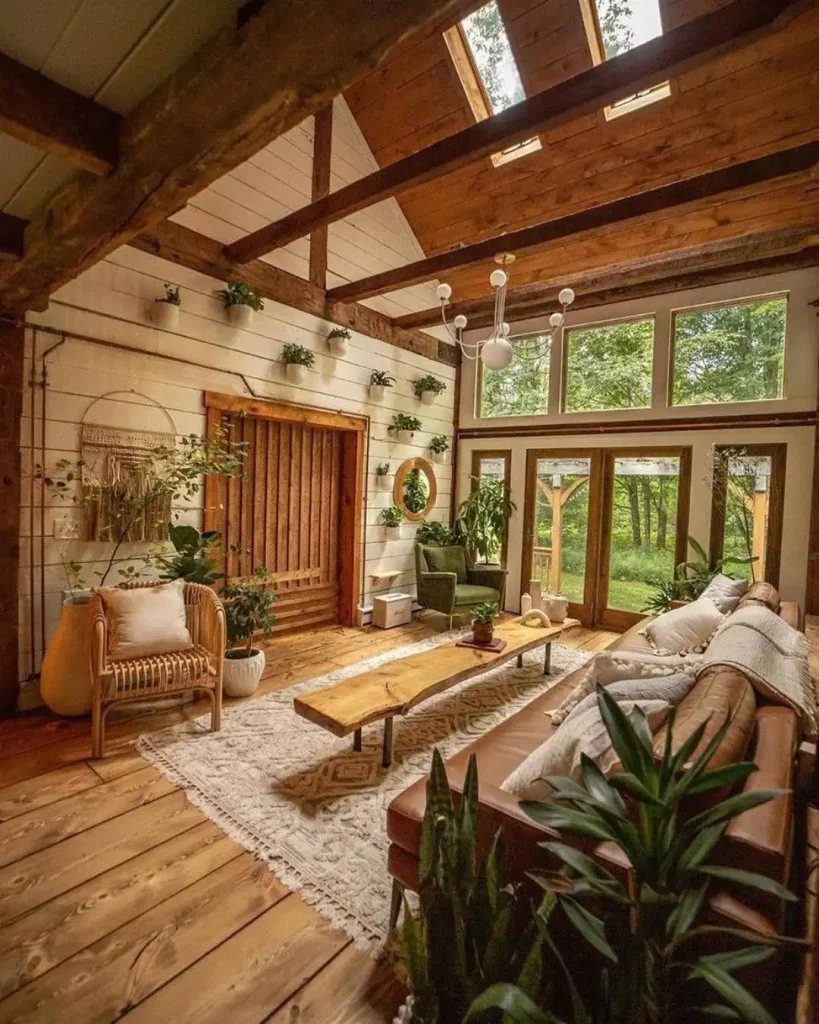
Credits: @thecabinland
For those preferring warmer, more traditional approaches, rustic elegance balances barn character with refined furnishings and sophisticated details. Layer plush textiles like wool rugs, linen upholstery, and leather accents throughout spaces anchored by exposed beams and reclaimed wood. Choose furniture with traditional silhouettes in quality materials that complement rather than compete with architectural features.

Add crystal chandeliers, antique mirrors, and upholstered seating that introduce softness and luxury against rough-hewn timbers and weathered wood. This juxtaposition between rustic architecture and refined furnishings creates sophisticated spaces that feel collected over time. Rich color palettes incorporating deep reds, forest greens, and warm browns enhance the cozy, intimate atmosphere despite voluminous proportions.
Practical Considerations for Barn House Living
Heating and Cooling Challenges
The soaring ceilings and open floor plans that make barn houses so appealing also create HVAC challenges. Heat naturally rises, leaving living areas cold while wasting energy heating unused upper volumes. Combat this with ceiling fans to circulate air, zoned heating systems that target occupied areas, and radiant floor heating for efficient warmth distribution. Proper insulation becomes crucial – upgraded insulation in walls and especially in vaulted ceilings prevents energy loss while maintaining comfort.
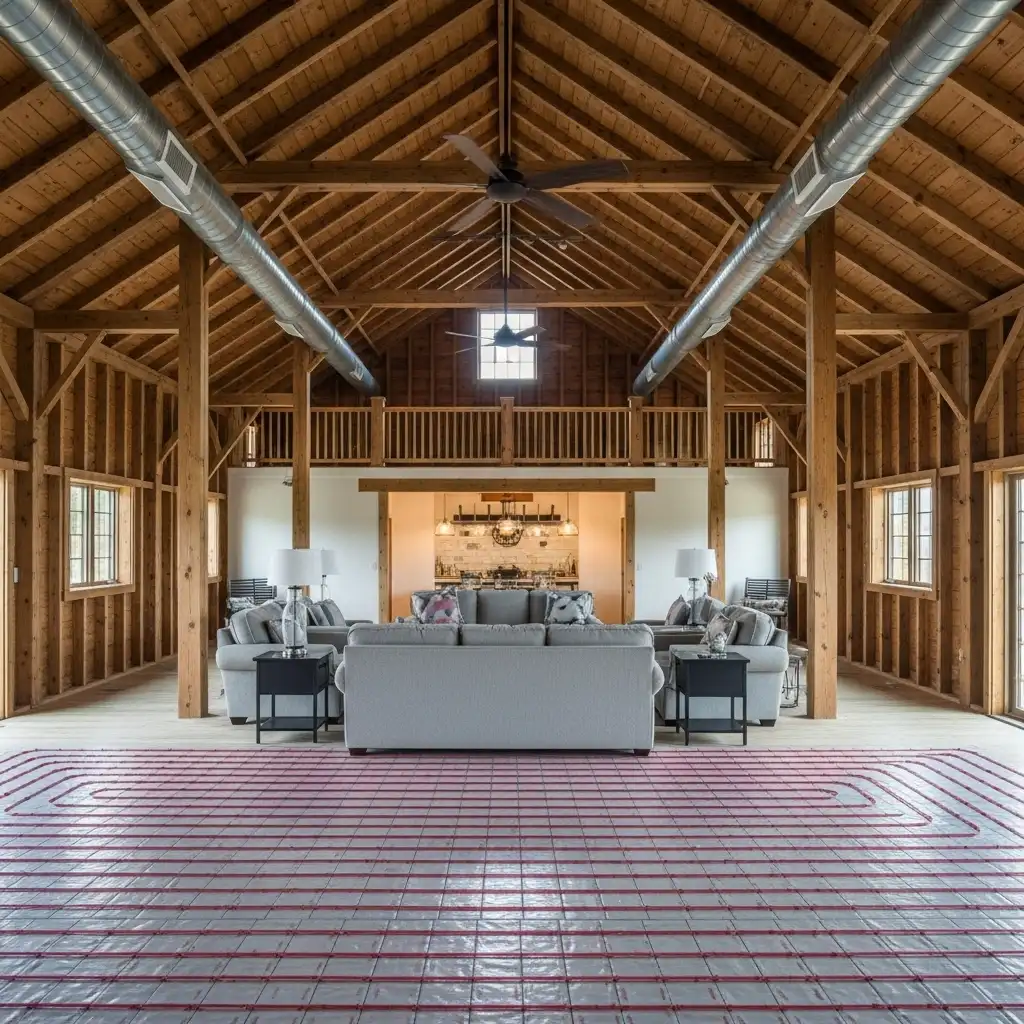
Consider the visual impact of heating and cooling solutions when designing barn houses. Exposed ductwork can enhance industrial aesthetics, while in-floor radiant systems remain invisible. Mini-split systems offer flexibility for zoned comfort but require careful placement to minimize visual impact on your carefully curated design.
Acoustic Considerations
Hard surfaces throughout barn houses – wood floors, exposed beams, minimal soft furnishings – create echoing acoustics that can feel overwhelming during daily activities. Address this through strategic textile placement: large area rugs absorb sound while defining zones, upholstered furniture reduces echo, and curtains or fabric wall hangings dampen reverberation. Acoustic panels designed to look like artwork provide sound absorption without compromising aesthetics.

The open floor plan means noise travels freely between zones, which can challenge families with varied schedules or those working from home. Create acoustic separation through thoughtful furniture arrangement, area rugs, and perhaps glass partitions that maintain visual openness while reducing sound transmission between living and working areas.
Maintenance and Upkeep
Barn houses require ongoing maintenance to preserve their character and structural integrity. Exposed wood beams need periodic inspection for insect damage, especially in authentic conversions where old timber may harbor dormant pests. Exterior board-and-batten siding requires regular painting or staining to prevent weathering, and metal roofs need occasional inspection for rust or damaged fasteners.

The large windows essential for illuminating voluminous interiors create cleaning challenges requiring tall ladders or professional services. Budget accordingly for these specialized maintenance needs while enjoying the trade-off of living in an architecturally distinctive home that rewards proper care with decades of beautiful, functional living space.
Conclusion: Embracing Barn House Living
Barn houses offer something increasingly rare in modern residential design – genuine architectural character combined with flexible, contemporary living spaces. Whether you convert an authentic agricultural structure or build new construction inspired by barn aesthetics, you’ll create a home that stands apart from conventional developments while delivering the drama, openness, and connection to craftsmanship that makes barn living so appealing.
Success lies in respecting the architectural vocabulary that defines barn character – exposed beams, soaring ceilings, large doors, natural materials – while thoughtfully integrating modern systems and furnishings that support comfortable twenty-first-century living. The result is a home that honors history and craftsmanship while embracing contemporary lifestyle needs, creating distinctive spaces that feel both timeless and thoroughly modern.
FAQs About Barn Houses
How much does it cost to convert a barn into a house?
Converting a barn into a livable home typically costs between $100-$300 per square foot, depending on the structure’s condition, location, and your finish level preferences. A basic conversion of a 2,000 square foot barn might range from $200,000-$400,000, while high-end conversions with custom finishes can exceed $600,000. Major cost factors include structural reinforcement, foundation work, new roofing if needed, insulation upgrades, and installing complete plumbing, electrical, and HVAC systems from scratch.
Are barn houses energy efficient?
Traditional barns were designed for ventilation rather than insulation, making converted barn houses potentially energy inefficient without significant upgrades. However, with proper insulation in walls, ceilings, and floors, high-performance windows, and modern HVAC systems, barn houses can achieve excellent energy efficiency comparable to conventional homes.
What are the biggest challenges of living in a barn house?
The primary challenges include acoustic management in open spaces with hard surfaces that create echo, temperature control in voluminous rooms with high ceilings where heat rises away from living areas, and maintenance requirements for exposed wood elements and large exterior surfaces. The open floor plan that makes barn houses appealing also means noise travels freely between zones, potentially challenging families with different schedules or those needing quiet home office spaces.
Can you build a barn house on any property?
Building a barn house depends on local zoning regulations, building codes, lot size requirements, and sometimes homeowners association (HOA) restrictions that vary significantly by location. Rural and agricultural zones typically welcome barn-style architecture as it complements the surrounding landscape, while suburban neighborhoods may have architectural review boards requiring approval or restricting certain exterior materials like metal roofing or board-and-batten siding.