
A plywood ceiling is one of the most stylish, budget-friendly, and versatile ceiling solutions for American homes and commercial spaces. It adds natural warmth, texture, and character that drywall simply cannot match.
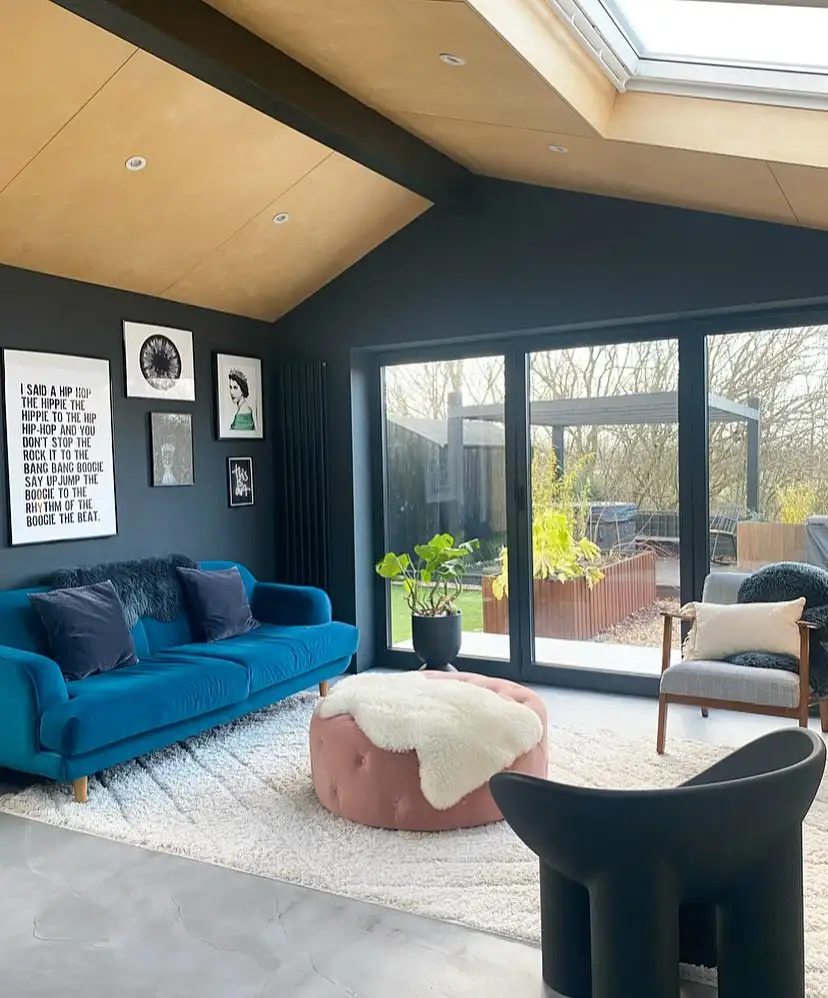
At MotifSpace, we help homeowners and designers make smarter interior choices. This complete guide covers everything from plywood types and costs to installation and trending design ideas.
1. What Is a Plywood Ceiling?
A plywood ceiling uses engineered wood panels installed onto ceiling joists or a timber subframe, replacing traditional drywall or popcorn ceilings with a natural, textured wood surface.
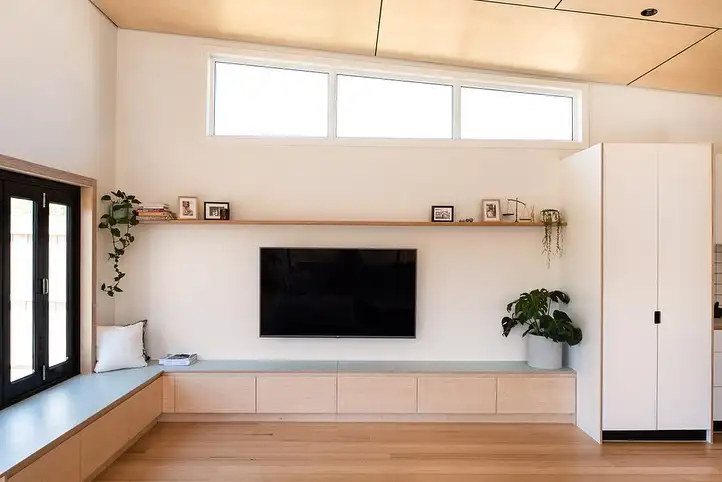
Source: @makerszoo
- Made from cross-laminated wood veneers bonded under pressure
- Available in multiple thicknesses, grades, and wood species
- Suitable for residential, commercial, and outdoor-covered spaces
Plywood ceilings are gaining massive popularity in modern interior design across the United States for their warmth and clean aesthetics.
2. Why Choose a Plywood Ceiling?
Plywood ceilings offer homeowners a perfect balance of affordability, durability, and visual appeal that makes them a top choice across the country.
| Benefit | Details |
|---|---|
| Cost-Effective | More affordable than solid hardwood ceilings |
| Easy to Install | Lightweight panels cut installation time |
| Aesthetic Appeal | Natural grain adds warmth to any room |
| Highly Versatile | Suits modern, farmhouse, rustic, and industrial styles |
| Paintable & Stainable | Customize to any finish or color palette |
| Durable | Resists cracking better than standard drywall |
Explore our ceiling design ideas to see plywood transformations across different American home styles.
3. Types of Plywood Used for Ceilings
Choosing the right plywood species and grade is the most important decision for your project — it determines both the final appearance and long-term durability of your ceiling.
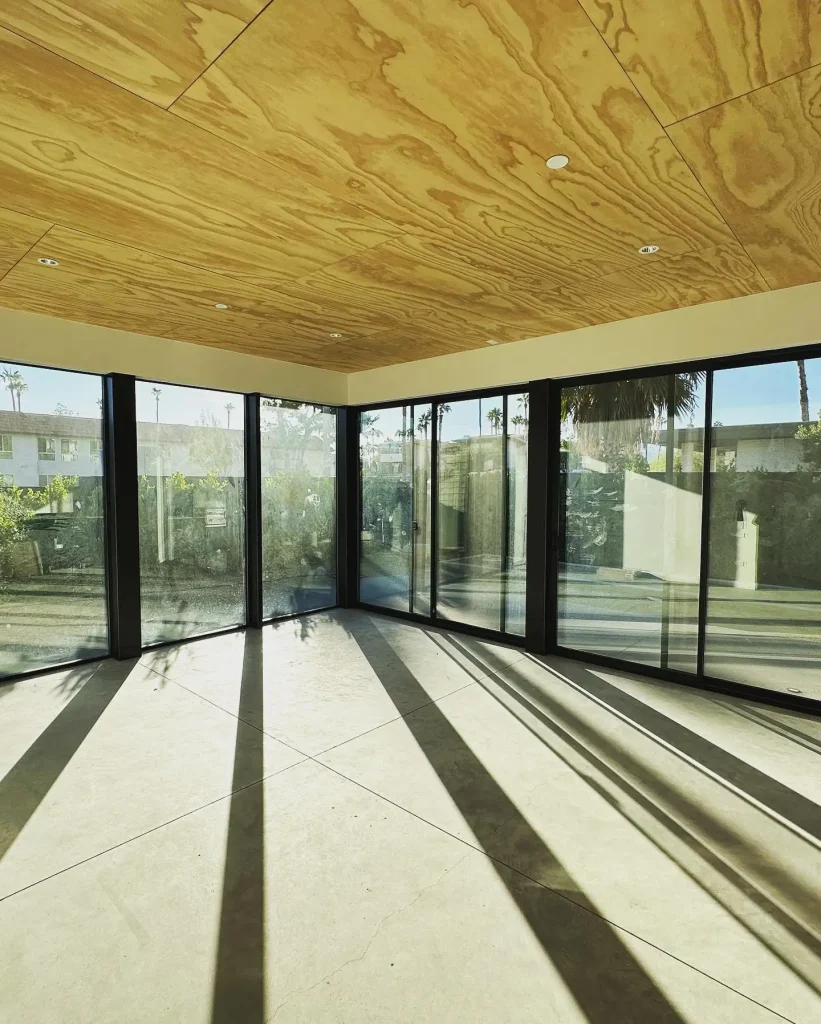
Source: @chrispardodesign
- Birch Plywood — Smooth, fine grain; ideal for painted or lightly stained ceilings
- Pine Plywood — Knotty, rustic texture; perfect for farmhouse or cabin-style homes
- Oak Plywood — Rich, bold grain; suits premium living rooms and dining spaces
- Maple Plywood — Light and consistent grain; great for contemporary interiors
- MDF-Faced Plywood — Ultra-smooth surface for sleek minimalist ceilings
- Marine Plywood — Moisture-resistant; best for bathrooms and covered patios
See our full wood ceiling types guide for a side-by-side comparison of every plywood species.
4. Plywood Ceiling Thickness: What to Choose?
Selecting the correct plywood thickness ensures your ceiling stays flat, strong, and visually seamless without adding unnecessary weight to your home’s structure.
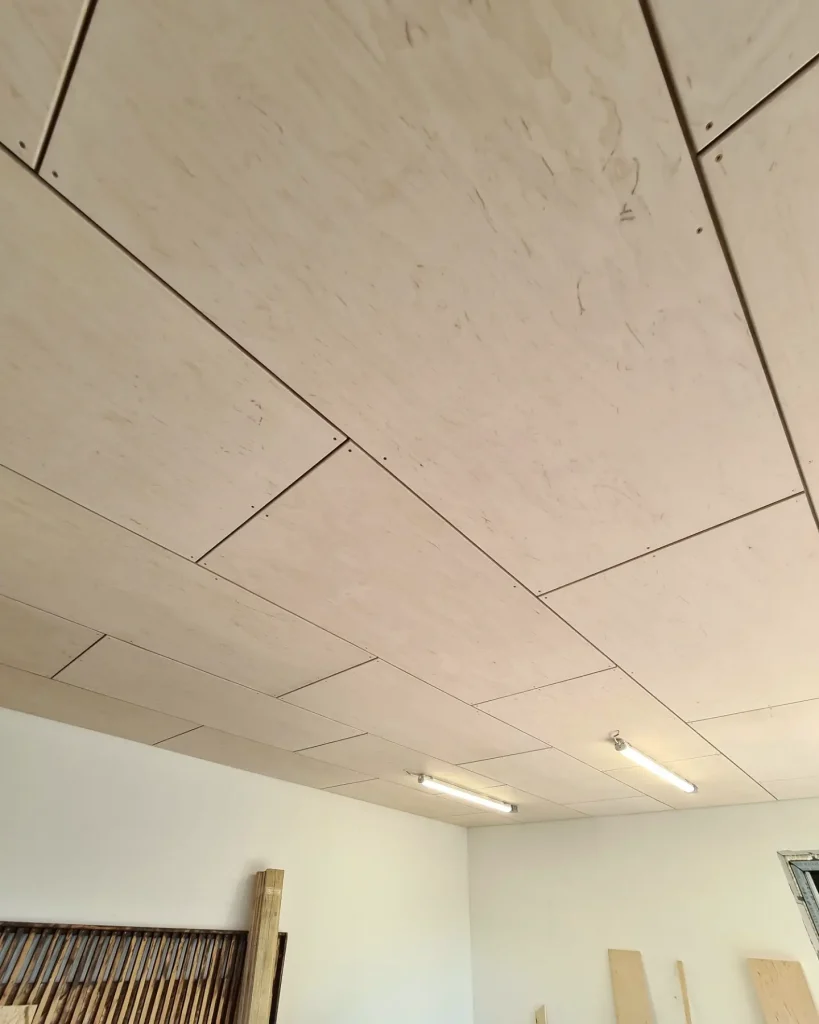
Source: @cut_woodworks
| Thickness | Best Use |
|---|---|
| 1/4 inch (6mm) | Lightweight decorative overlays, short spans |
| 3/8 inch (9mm) | Standard residential ceilings |
| 1/2 inch (12mm) | Wide-span ceilings, heavy-duty applications |
| 3/4 inch (18mm) | Structural or load-bearing ceiling panels |
For most living room ceiling designs, 3/8-inch or 1/2-inch plywood provides the perfect balance of strength and manageable weight.
5. Plywood Ceiling Design Ideas
The design flexibility of plywood is unmatched — from sleek flat panels to dramatic vaulted layouts, it adapts to every architectural style and personal taste beautifully.
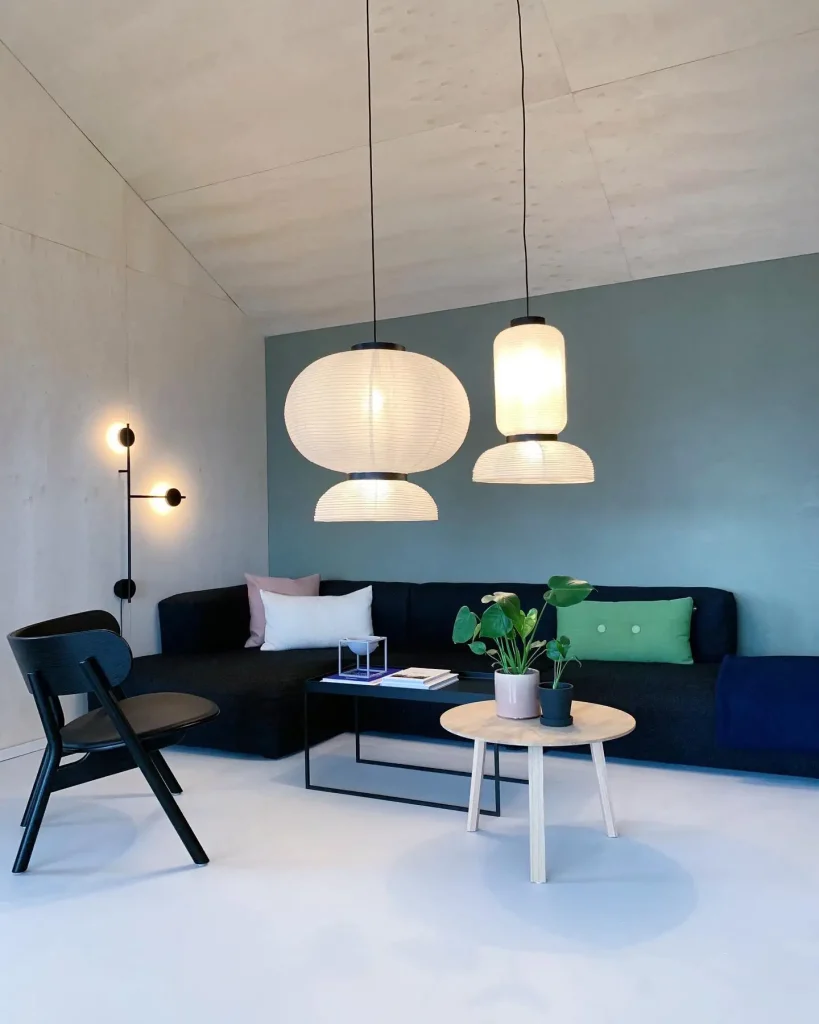
Source: @oppussing_med_karoline
- Flat Plywood Ceiling — Clean, seamless, and perfectly suited to modern homes
- Shiplap Plywood Ceiling — Horizontal boards with narrow V-groove gaps
- Diagonal or Herringbone Layout — Dynamic, contemporary pattern for statement ceilings
- Coffered Plywood Ceiling — Classic grid of recessed panels for a luxurious look
- Vaulted Plywood Ceiling — Dramatic sloped panels that follow your roofline contours
- Exposed Beam + Plywood — Rustic warmth combining structural beams with flat plywood infill
- Painted Plywood Ceiling — Crisp white or bold color for bright, modern interiors
Browse our full interior ceiling design gallery for hundreds of real American home examples.
6. Plywood Ceiling in Different Room Styles
Plywood ceilings are not one-size-fits-all — the right style, finish, and thickness varies significantly depending on which room and design aesthetic you are working with.
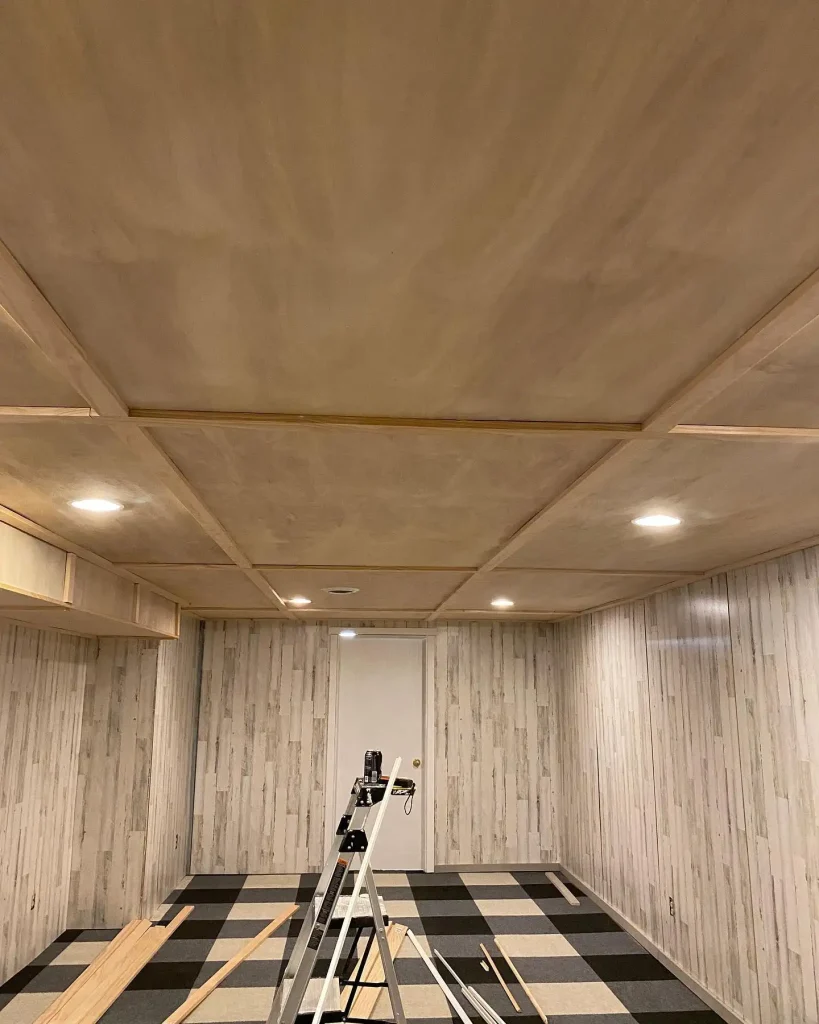
Source: @greenrhinodesign
| Room | Recommended Style |
|---|---|
| Living Room | Flat or coffered plywood with stained finish |
| Bedroom | Warm pine or birch with soft painted tone |
| Kitchen | Painted plywood with recessed lighting |
| Bathroom | Marine plywood with waterproof sealant |
| Home Office | Birch plywood, natural or whitewashed |
| Café / Restaurant | Raw or lightly oiled wide-format plywood |
Check our bedroom ceiling ideas for curated plywood styles paired with popular American bedroom aesthetics.
7. Modern Plywood Ceiling Ideas
In 2026, American interior designers are leaning into plywood ceilings that blend natural texture with intentional minimalism, creating spaces that feel both grounded and sophisticated.
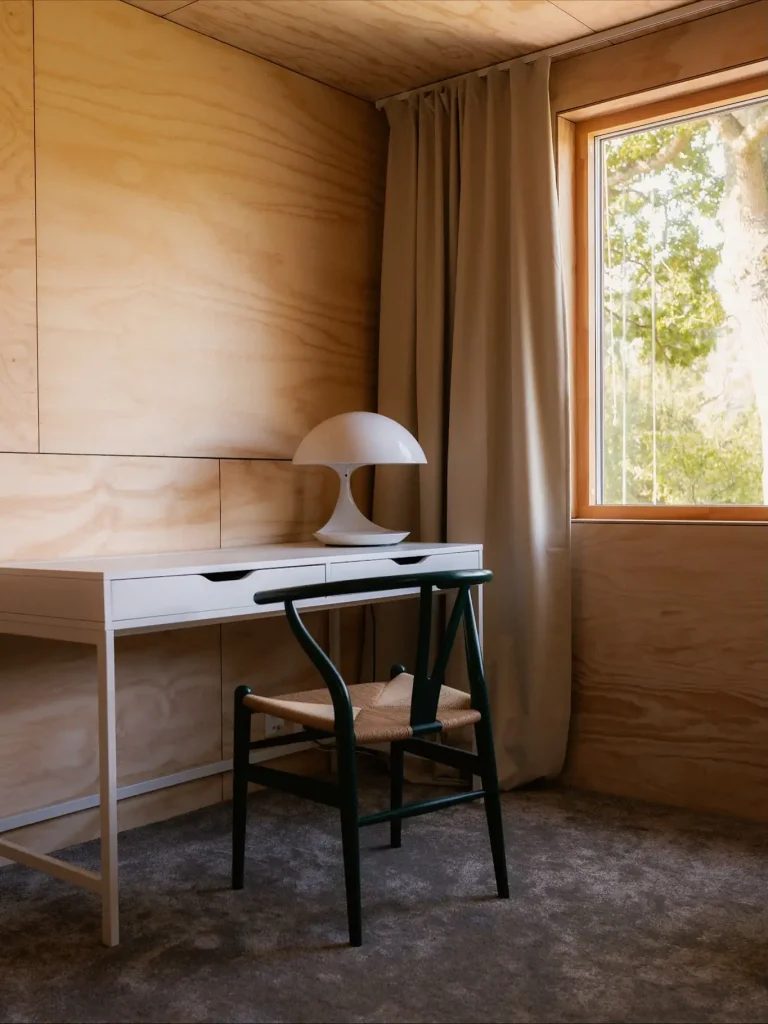
Source: @applaudden
- Whitewashed plywood for a coastal or Scandinavian-inspired vibe
- Dark-stained plywood for moody, dramatic bedroom or den ceilings
- Natural raw plywood with matte varnish for authentic industrial spaces
- Mixed media ceilings combining plywood with black steel or concrete panels
- LED-integrated plywood coves for seamless ambient lighting effects
Visit our ceiling trends page to see what’s dominating American home design this year.
8. Plywood Ceiling vs Drywall Ceiling
If you’re torn between plywood and drywall, the right choice depends on your aesthetic goals, budget, and the specific room conditions you’re working with.
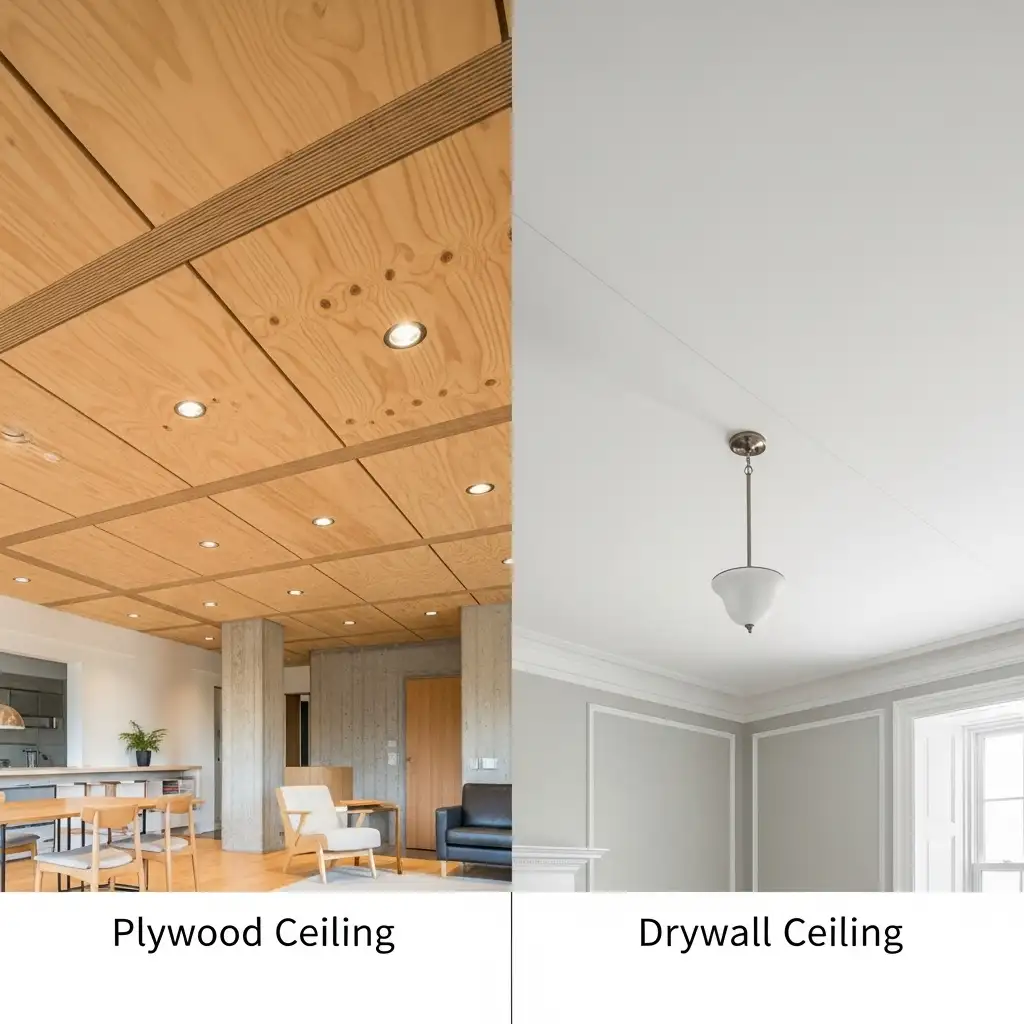
| Feature | Plywood Ceiling | Drywall Ceiling |
|---|---|---|
| Cost | Moderate | Lower |
| Aesthetics | Warm, natural, textured | Flat, neutral |
| Durability | High | Moderate |
| Moisture Resistance | Moderate (marine = high) | Low |
| Installation | Straightforward | Very easy |
| Finishing Options | Paint, stain, oil, varnish | Paint only |
| DIY Friendly | Yes | Yes |
For aesthetic-driven renovations, plywood delivers far more character and design value. Read our full plywood vs drywall comparison to choose the right material for your project.
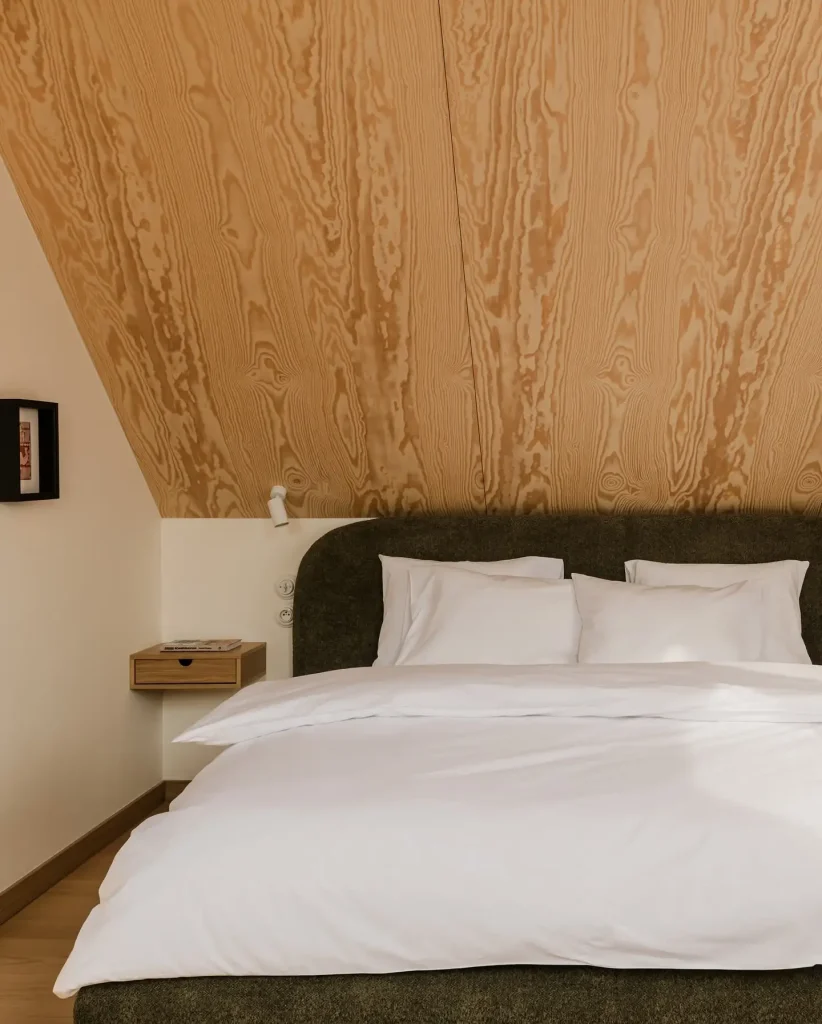
9. Plywood Ceiling Cost
Understanding the full cost breakdown — materials plus labor — helps you budget accurately and avoid unexpected expenses during your ceiling renovation project.
| Item | Estimated Cost (USD) |
|---|---|
| Economy Plywood Sheet (4×8 ft) | $25 – $45 per sheet |
| Mid-Grade Birch Plywood | $55 – $90 per sheet |
| Premium Hardwood Plywood | $95 – $180 per sheet |
| Installation Labor | $3 – $7 per sq ft |
| Finishing / Staining / Painting | $1 – $3 per sq ft |
| Full Project Average (per sq ft) | $5 – $15 installed |
Pro Tip: Always collect 3 contractor quotes. Prices vary by region — Northeast and West Coast typically run 20–30% higher than the Midwest or South.
Explore our interior renovation cost guide for a complete room-by-room budgeting breakdown for American homeowners.
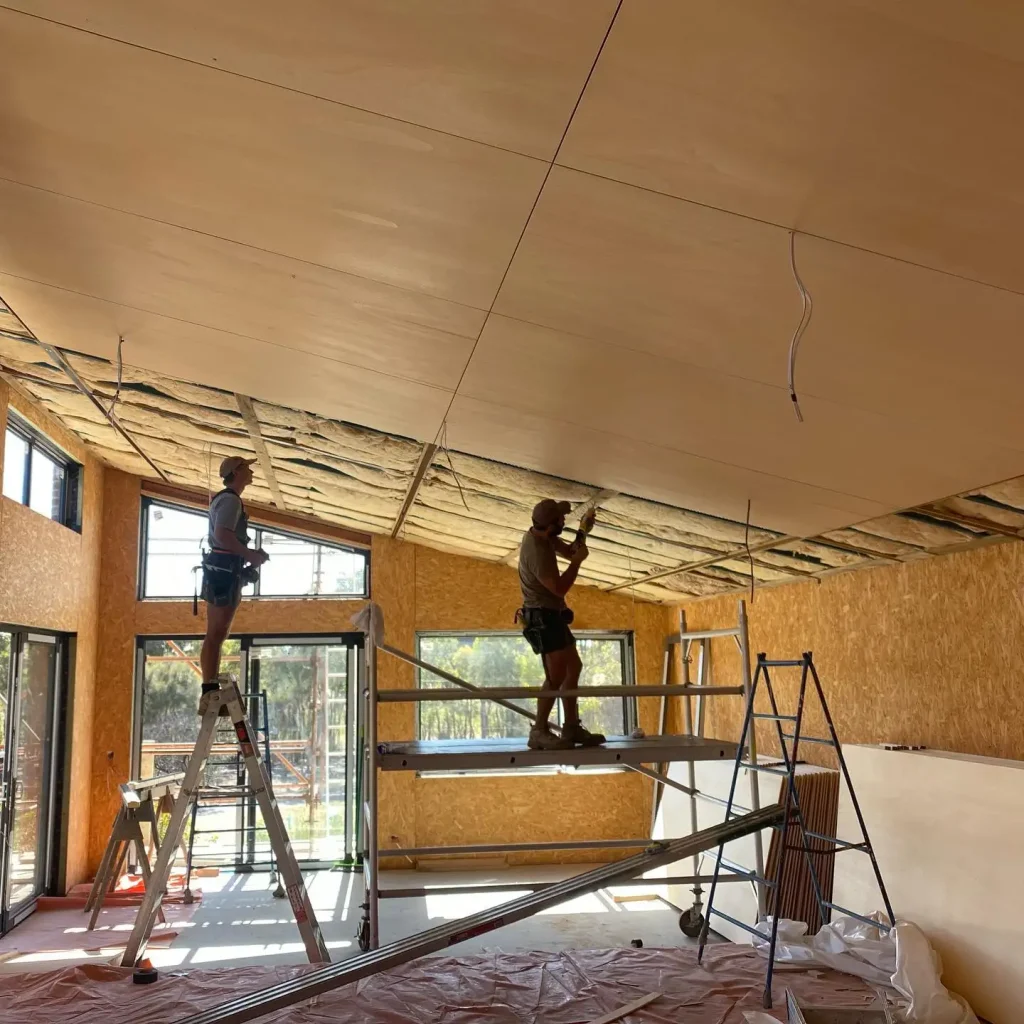
10. Plywood Ceiling Installation: Step-by-Step Guide
A properly installed plywood ceiling looks seamless, lasts for decades, and adds measurable value to your home — and with the right process, it is a very achievable project.
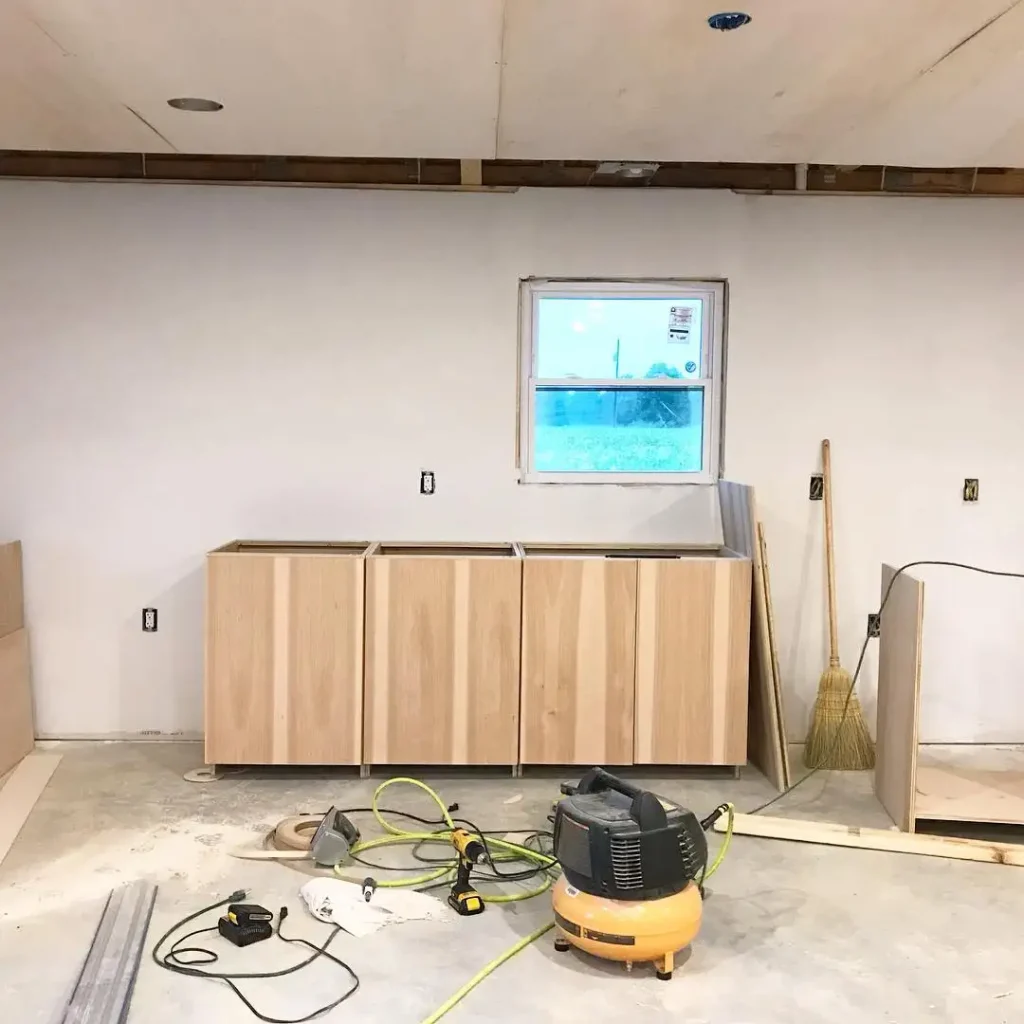
Source: @woodshopdiaries
Step 1 — Plan the Layout
Measure your room carefully. Sketch the panel layout to minimize visible seams and reduce material waste before purchasing.
Step 2 — Prepare the Subframe
Install timber furring strips or metal hat channels, spaced 16–24 inches apart, fastened securely to existing ceiling joists.
Step 3 — Cut Plywood Panels
Use a circular saw or table saw to cut panels to size. Sand all cut edges smooth before installation begins.
Step 4 — Fix Panels to Frame
Secure panels using 1-5/8 inch screws or construction adhesive. Leave 1/8-inch expansion gaps between every panel.
Step 5 — Fill Seams and Holes
Apply wood filler to all screw holes and panel joints. Sand completely flush once the filler is fully dry.
Step 6 — Apply Your Finish
Prime, paint, stain, or varnish as preferred. Install trim molding or cove detail along all ceiling edges.
See our detailed ceiling installation guide with photos and video walkthroughs for every step.
11. Plywood Ceiling With Lighting
Lighting is what turns a good plywood ceiling into a truly great one — the right fixtures enhance the wood grain and create an atmosphere no drywall ceiling can replicate.
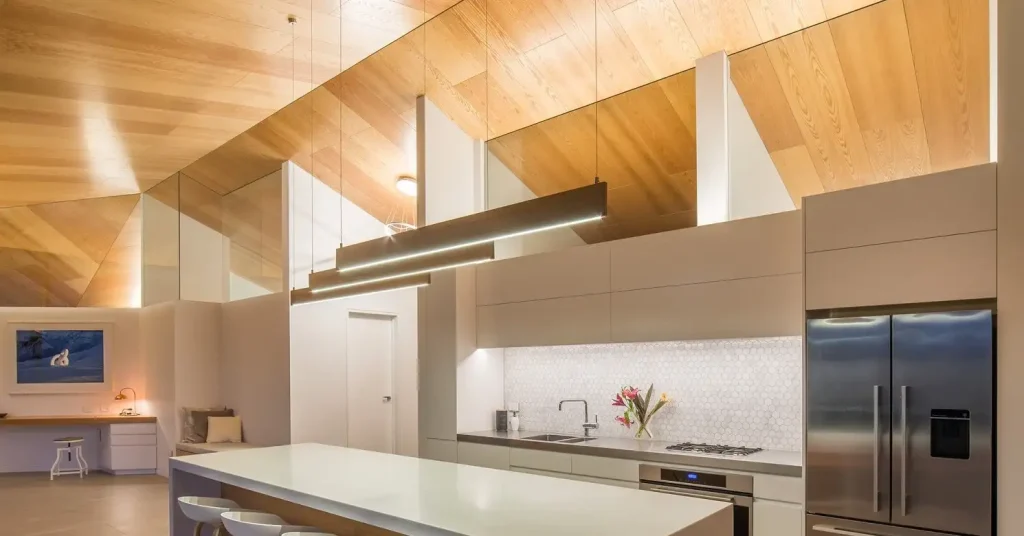
Source: @plymasters_nz
- Recessed Downlights — Clean, flush modern look; plan all cutouts before panel installation
- LED Strip Coves — Dramatic uplighting hidden behind plywood edge details
- Pendant Lights — Statement fixtures dropped through carefully routed holes in plywood
- Track Lighting — Flexible system ideal for kitchens, galleries, and workspaces
- Exposed Edison Bulbs — Perfect companion for raw plywood in industrial or farmhouse rooms
Visit our ceiling lighting design guide for fixture recommendations at every price point.
12. How to Waterproof a Plywood Ceiling
Waterproofing is essential for any plywood ceiling installed in a bathroom, laundry room, kitchen, or covered outdoor space — skip this step and warping is almost guaranteed.
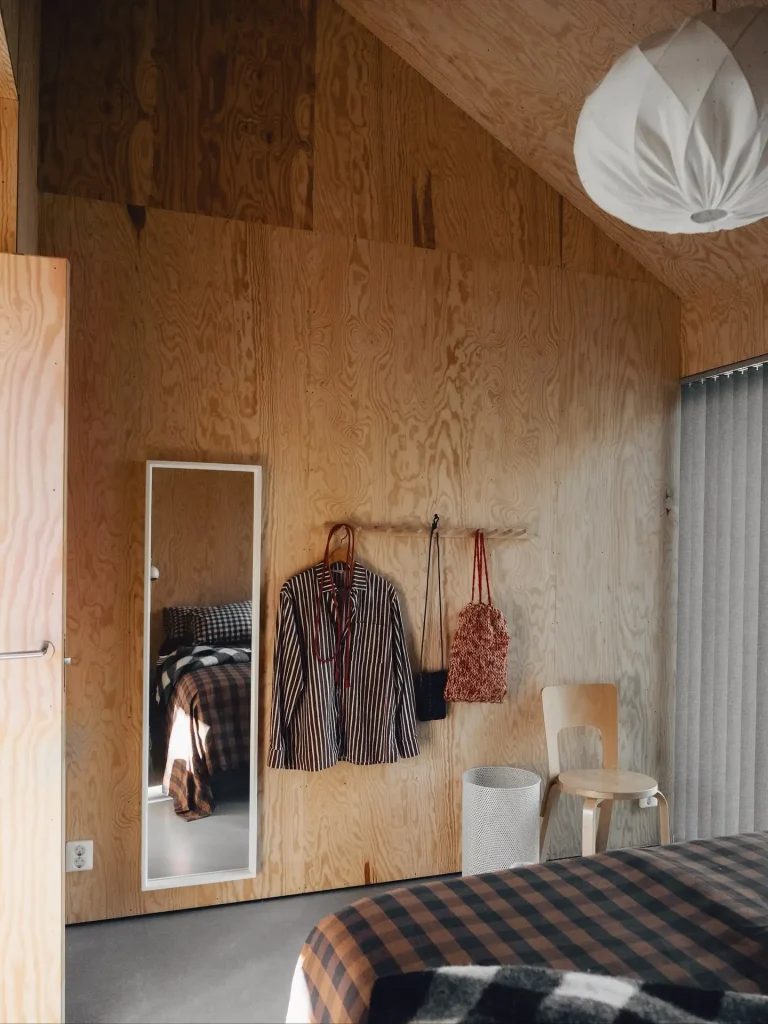
Source: @elisabethdunkerr
- Always start with marine-grade or exterior-rated plywood as your base material
- Apply waterproof primer to all surfaces including backs and edges before any topcoat
- Use polyurethane or epoxy sealant for maximum moisture protection on the surface
- Ensure proper bathroom or kitchen ventilation to minimize daily steam and humidity exposure
- Apply two full coats of moisture-resistant ceiling paint as the protective final layer
Learn more at our waterproofing interiors guide with specific product recommendations for American homeowners.
13. Painting a Plywood Ceiling
Painting plywood is one of the most popular finish choices in American homes — but it requires careful surface preparation to avoid a blotchy or uneven final result.
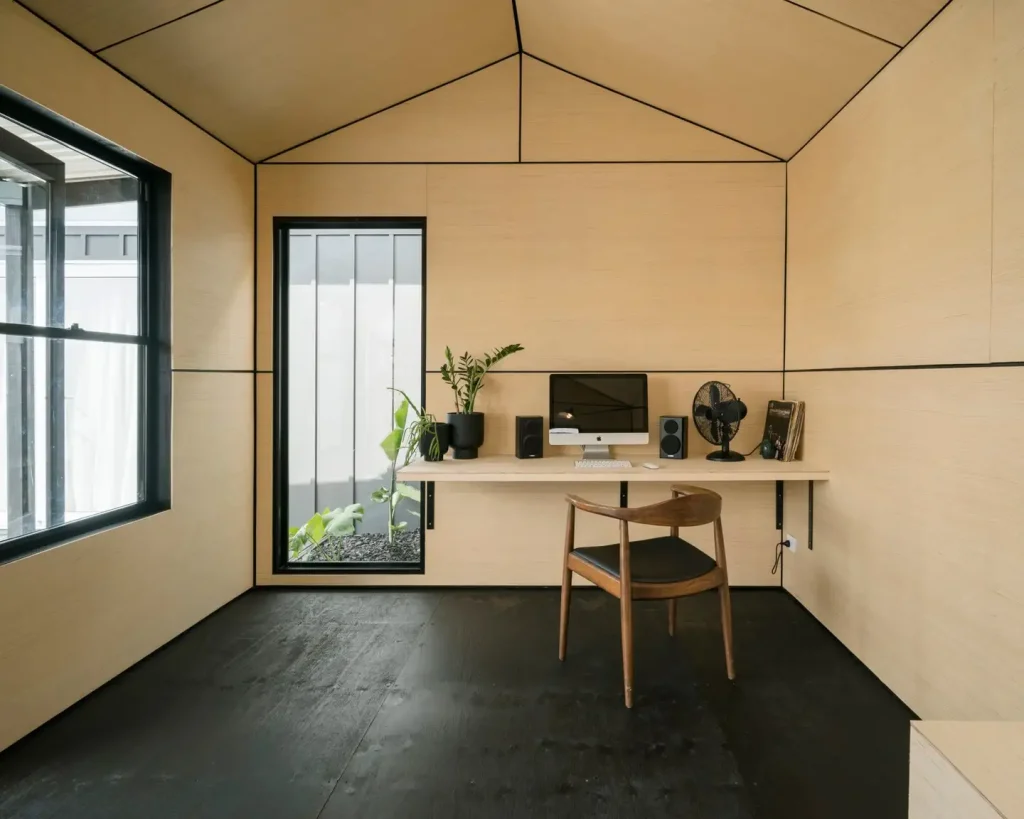
Source: @greenspanbuildings
Preparation Checklist:
- Sand all surfaces to 120–180 grit before priming
- Fill all knots, voids, and grain gaps with paintable wood filler
- Apply shellac-based or oil-based primer to seal the wood grain completely
- Lightly sand the primed surface after it dries (220 grit)
- Apply 2 coats of high-quality ceiling paint for a smooth, even finish
| Paint Type | Best For |
|---|---|
| Latex / Water-Based | Living rooms, bedrooms, home offices |
| Oil-Based | High humidity rooms, kitchens |
| Chalk Paint | Vintage, matte, or farmhouse aesthetics |
| Spray Paint | Ultra-smooth, fast coverage on flat panels |
See our interior painting tips for step-by-step guidance used by professional American painters.
14. Staining a Plywood Ceiling
Staining brings out the natural beauty of plywood grain and gives your ceiling a rich, warm character that even the best painted finishes simply cannot achieve.
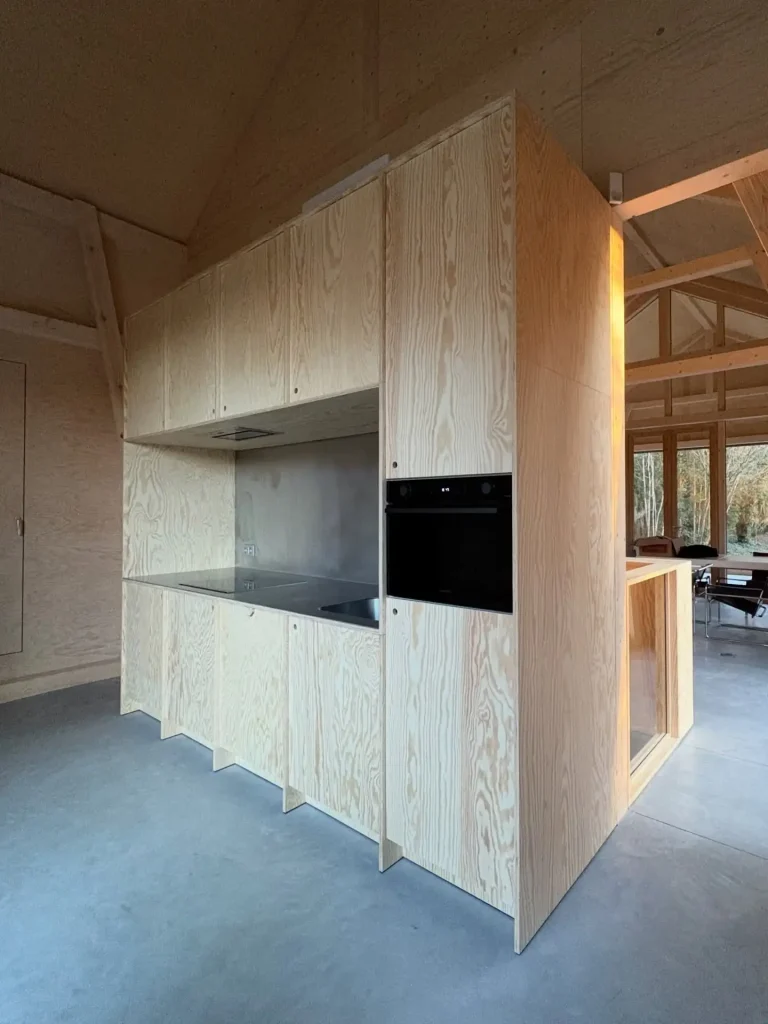
Source: @atelier_vertongen
- Choose water-based stain for low odor and eco-friendly, fast-drying application
- Always test your chosen stain color on a full-size scrap offcut before committing
- Apply stain in the direction of the wood grain using a brush or lint-free cloth
- Allow 4–6 hours minimum between coats for proper wood penetration
- Seal with a clear matte, satin, or semigloss polyurethane to protect the finished surface
Our wood staining guide covers the best American stain brands, color recommendations, and application techniques.
15. Plywood Ceiling for False Ceiling Designs
Plywood is an excellent structural base for building multi-level false ceilings, offering strength and design flexibility that gypsum board alone simply cannot provide.
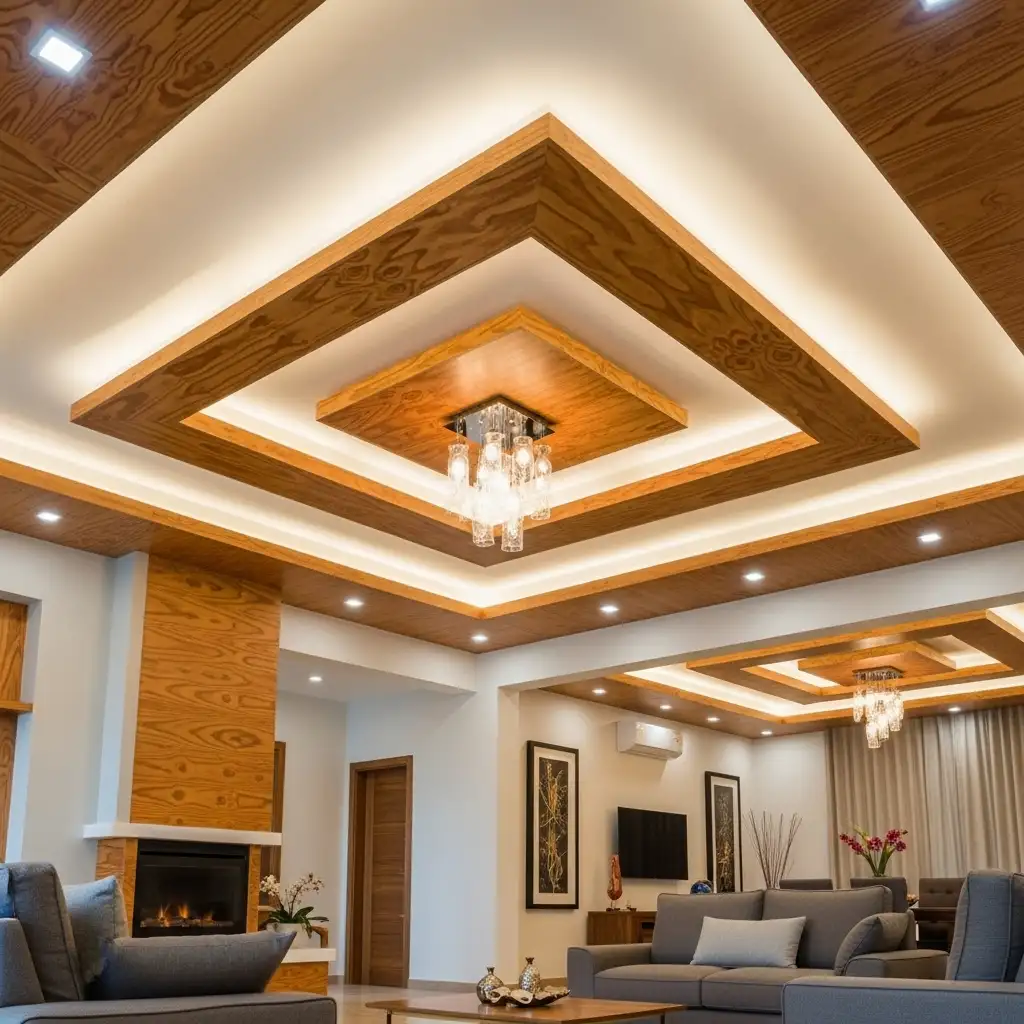
- Create layered false ceilings using plywood as the primary load-bearing structure
- Build cove lighting channels directly into the plywood framework for seamless LED integration
- Combine with drywall or gypsum sections to create interesting material contrast
- Use plywood to form curved ceiling profiles by kerfing or laminating thin layers
- Ideal for false ceiling designs in open-plan living and dining spaces
Plywood-framed false ceilings also perform better than gypsum-only constructions in seismically active regions of the United States.
16. Plywood Ceiling in Industrial and Café Interiors
Raw or minimally finished plywood has become a defining material in American industrial design — from Brooklyn lofts to Austin coffee shops, it appears in the most celebrated interiors.

- Pair with exposed ductwork and steel pipes for an authentic industrial atmosphere
- Use wide-format birch plywood sheets (4×10 or 5×10 ft) to reduce visible seam lines
- Combine with Edison bulb pendants or matte black track lighting fixtures
- Contrast with polished concrete floors or exposed brick accent walls
- Apply clear matte lacquer to preserve the raw, honest wood aesthetic throughout
Check our industrial interior design guide for complete American industrial design inspiration and material sourcing tips.
17. Plywood Ceiling Maintenance Tips
A well-maintained plywood ceiling can look beautiful for 20 or more years — and ongoing maintenance is far simpler and less expensive than most homeowners expect.
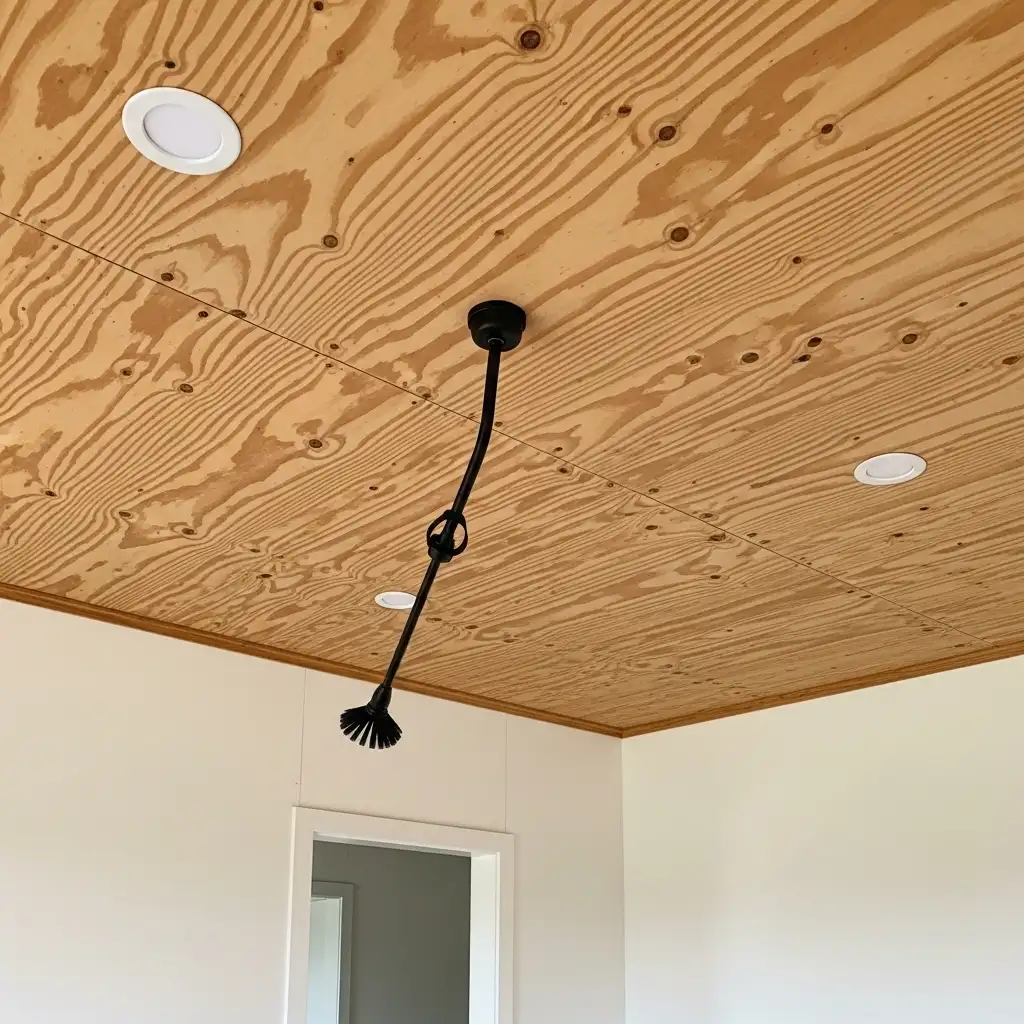
- Dust every 2–4 weeks using a dry microfibre cloth or a soft-bristle brush attachment
- Clean stains gently with a barely damp cloth — never soak or aggressively scrub the surface
- Inspect annually for early signs of warping, discoloration, or hidden moisture damage
- Reapply varnish or polyurethane every 3–5 years to maintain the protective topcoat
- Touch up chips or scratches promptly with matching wood filler and stain pen
Read our interior surface maintenance guide for seasonal care schedules and top-rated maintenance products.
18. Common Mistakes to Avoid With Plywood Ceilings
Even experienced DIYers make avoidable errors with plywood ceilings — knowing these pitfalls in advance saves significant time, money, and frustration on your project.
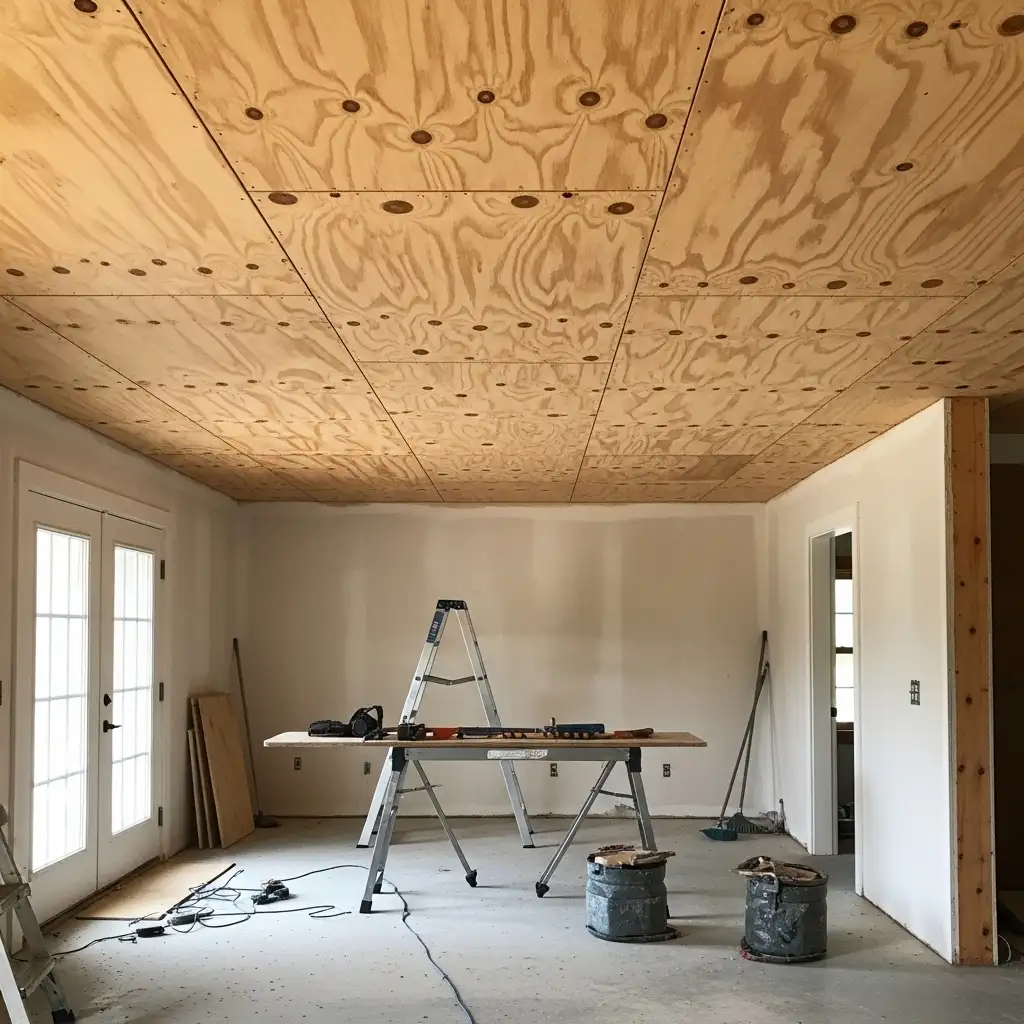
- Skipping acclimatization — Always let plywood sit in the room 48–72 hours before installing to adjust to indoor humidity
- No expansion gaps — Omitting the 1/8-inch gaps between panels causes visible buckling and seam splitting
- Inadequate priming — Skipping proper primer leads to blotchy, grain-telegraphing paint results
- Wrong thickness for span — Using 1/4-inch plywood across wide spans will cause visible sagging over time
- No moisture protection — Unsealed plywood in humid rooms will warp or delaminate within one to two seasons
19. Plywood Ceiling vs POP Ceiling vs PVC Ceiling
Choosing between plywood, POP gypsum, and PVC is a common dilemma for American homeowners — each material has clear strengths depending on your priorities and budget.
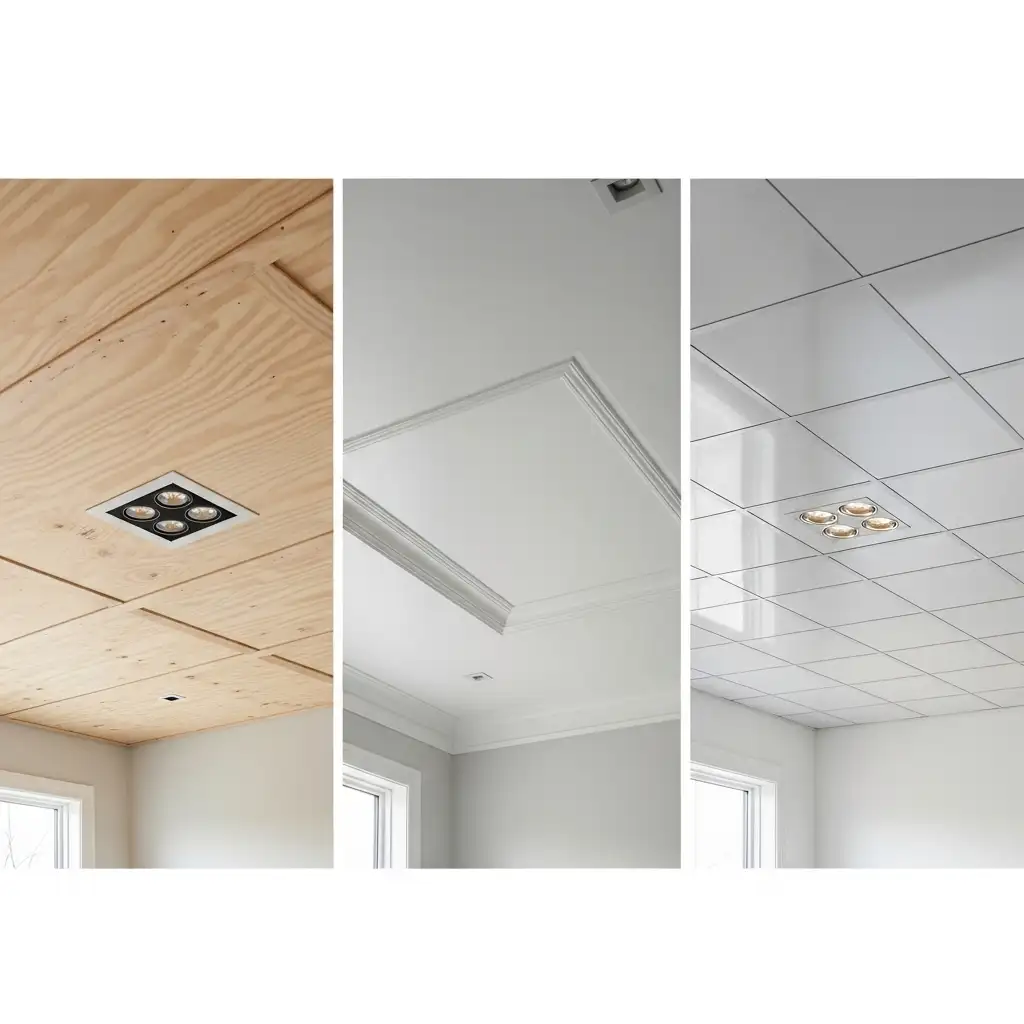
| Feature | Plywood | POP (Gypsum) | PVC |
|---|---|---|---|
| Appearance | Natural, warm, textured | Smooth, neutral | Glossy, contemporary |
| Cost | Moderate | Low–Moderate | Low |
| Durability | High | Moderate | High |
| Water Resistance | Moderate (marine = high) | Low | High |
| Design Flexibility | High | Very High | Moderate |
| Eco-Friendly | Yes | Partial | No |
| DIY Friendly | Yes | Difficult | Yes |
For most residential ceiling projects where aesthetics and longevity matter, plywood and gypsum remain the top two choices among American homeowners.
20. Sustainable Plywood Ceiling Options
American homeowners are increasingly choosing sustainable building materials — and plywood can be one of the most eco-responsible ceiling choices when sourced thoughtfully and carefully.
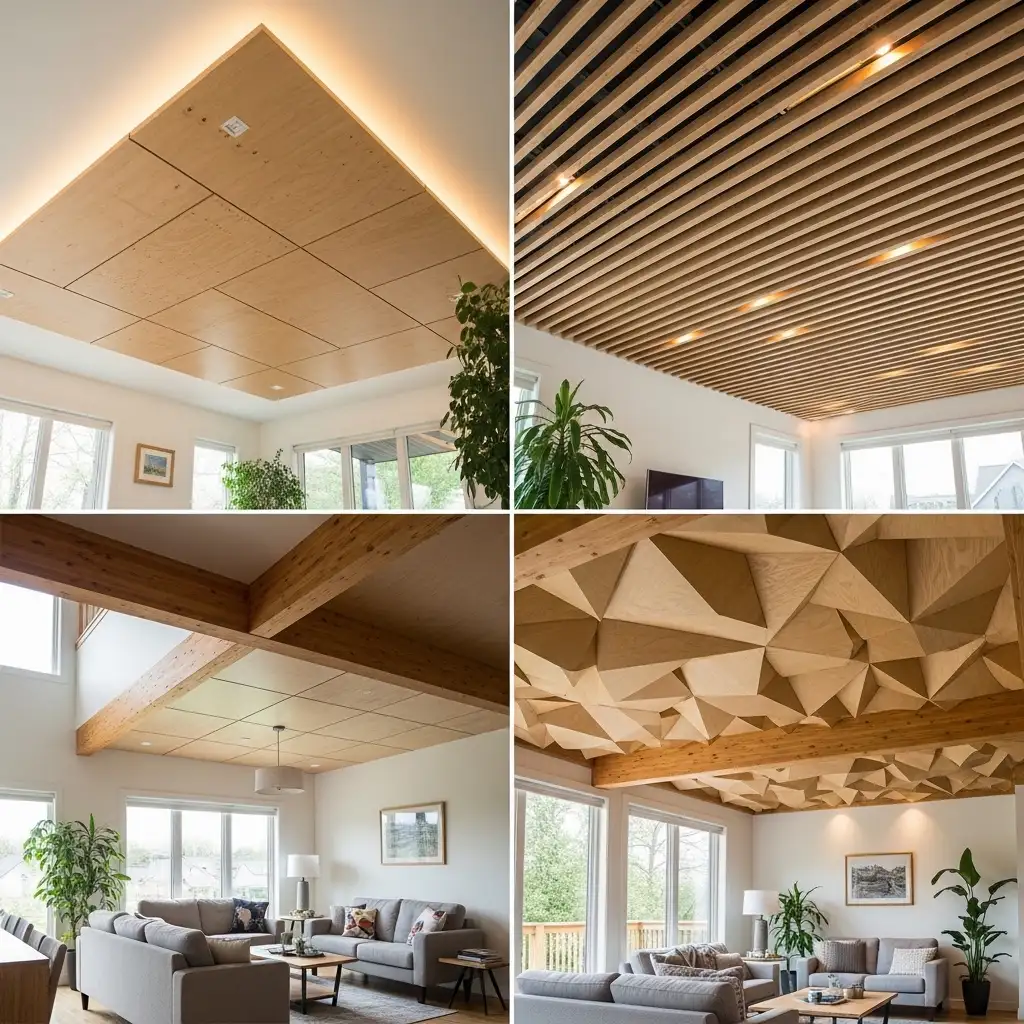
- Look for FSC-certified plywood confirming timber from sustainably managed North American forests
- Choose formaldehyde-free or CARB Phase 2 compliant boards to protect your indoor air quality
- Opt for domestically sourced timber to reduce transportation-related carbon emissions significantly
- Consider bamboo plywood as a fast-regenerating, highly sustainable ceiling material alternative
- Explore reclaimed wood panels for maximum eco-credentials and genuinely unique character
Explore our sustainable interior design guide for certified green product recommendations for American homes.
21. Plywood Ceiling for Commercial Spaces
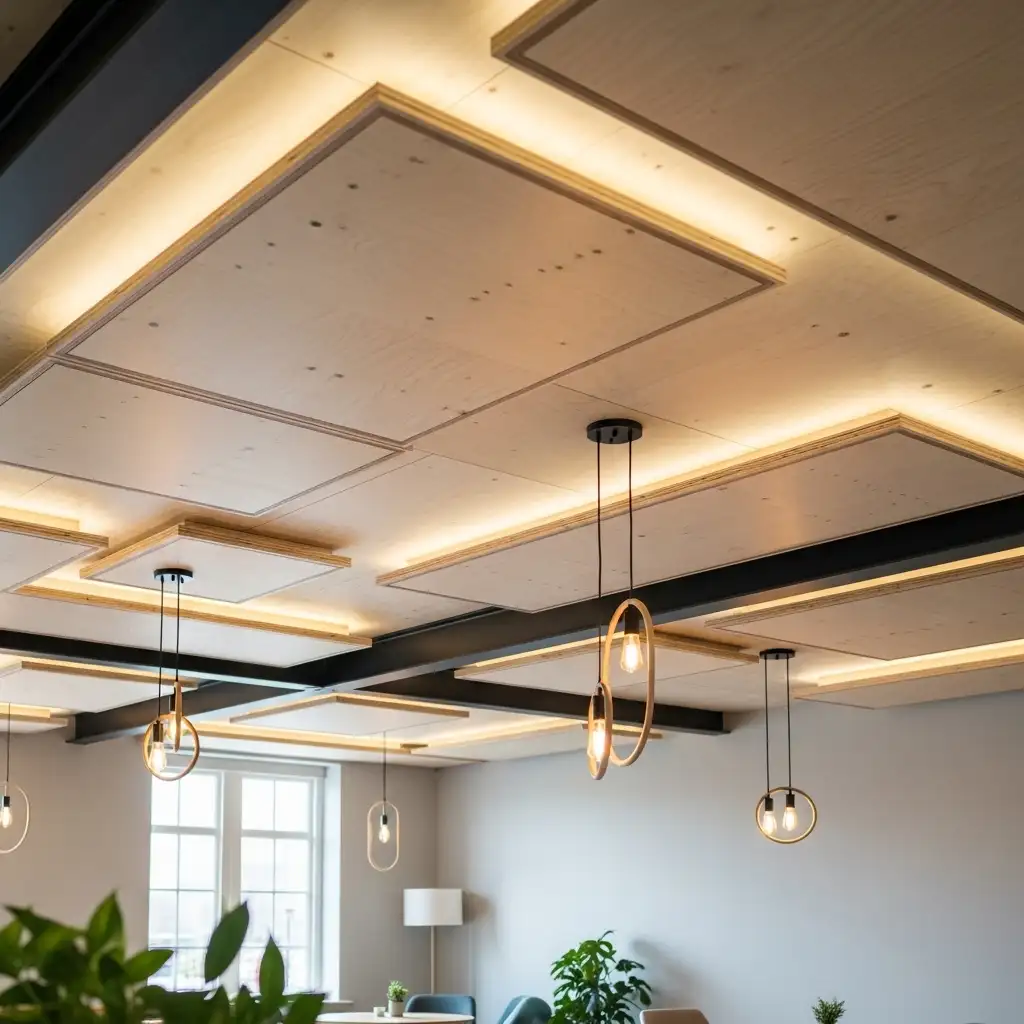
American businesses from boutique hotels to co-working studios are choosing plywood ceilings to create warm, memorable environments that generic drop tile ceilings simply cannot deliver.
| Space | Recommended Approach |
|---|---|
| Corporate Office | Acoustic plywood panels with suspended grid |
| Restaurant | Raw birch with warm pendant downlights |
| Retail Store | Painted plywood with track lighting |
| Hotel Lobby | Stained oak plywood with integrated LED coves |
| Co-Working Space | Lightweight birch panels with exposed black beams |
See our commercial interior design services page for real American commercial project examples and cost breakdowns.
22. Acoustic Plywood Ceilings
Sound control is a growing priority in American home design — and the right plywood ceiling treatment can significantly improve room acoustics without compromising the visual design.
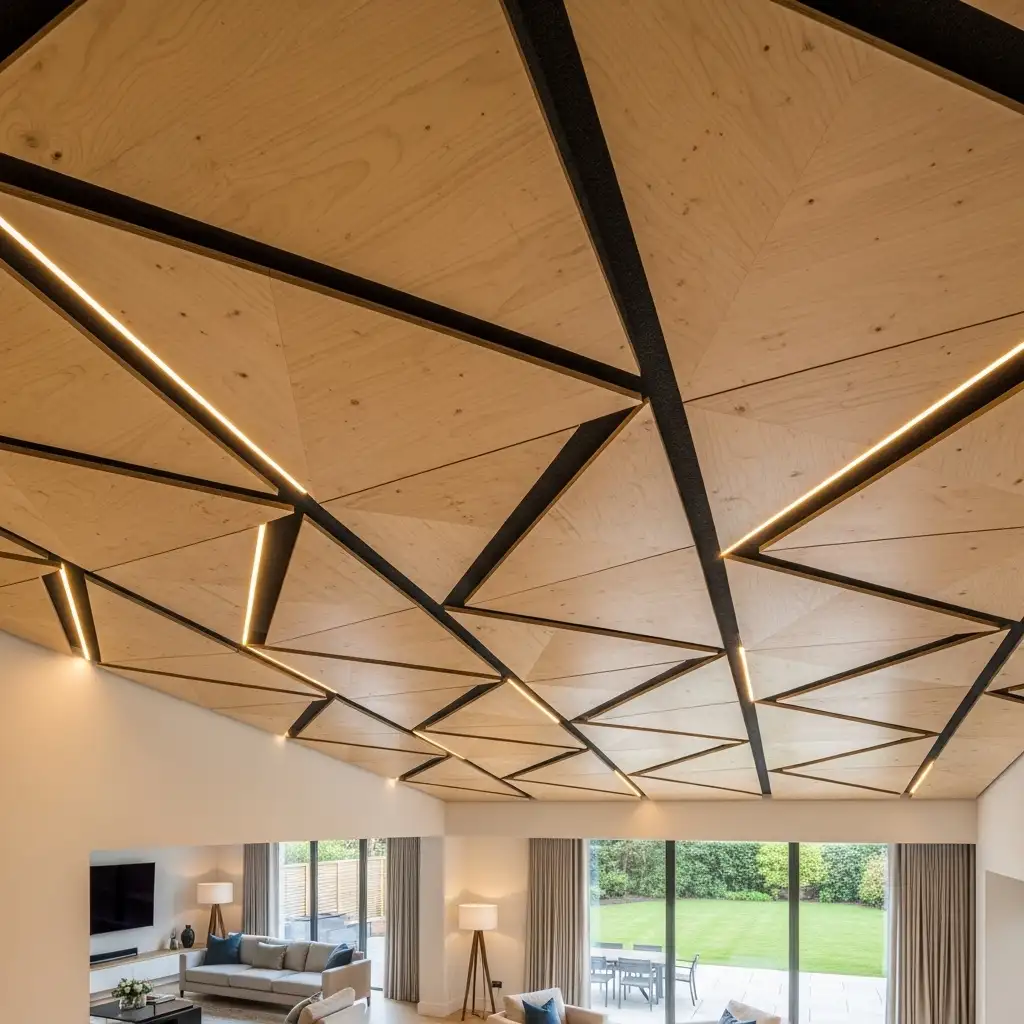
- Perforated plywood panels with acoustic backing material absorb sound waves very effectively
- Install Rockwool or mineral wool insulation above the plywood layer for improved sound dampening
- Avoid large, flat, unbroken plywood surfaces in home theaters or dedicated music rooms
- Use angled, coffered, or textured panel arrangements to naturally break up sound reflections
- Combine plywood ceilings with upholstered furniture and area rugs for full acoustic control
Our home theater design guide explains acoustic plywood ceiling solutions for every room size and budget.
23. Plywood Ceiling Insulation Benefits
Beyond aesthetics, plywood ceilings contribute meaningfully to your home’s thermal performance — an important advantage for American homeowners managing energy costs year-round.
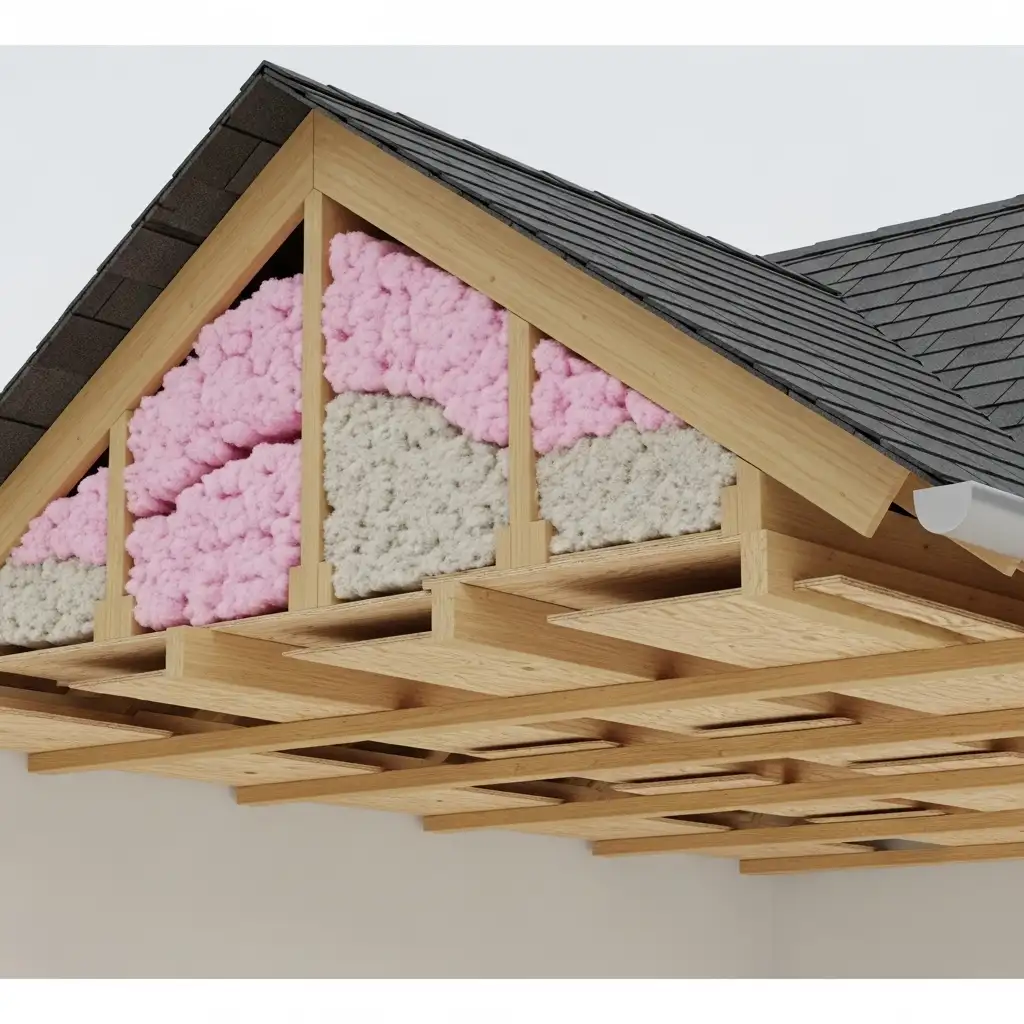
- Plywood naturally has a higher R-value per inch than standard gypsum drywall
- Adding Rockwool, fiberglass batt, or spray foam above the plywood dramatically boosts energy efficiency
- Helps maintain stable interior temperatures during harsh American winters and hot humid summers
- Reduces dependence on HVAC systems, lowering monthly utility bills consistently over time
- A properly sealed plywood ceiling also acts as a secondary vapour retarder for the building envelope
Learn more in our ceiling insulation guide for region-specific R-value recommendations across all US climate zones.
24. Plywood Ceiling: Final Design Tips From MotifSpace
After helping thousands of American homeowners transform their spaces, our design team has developed a refined set of principles that consistently separate stunning plywood ceilings from average ones.
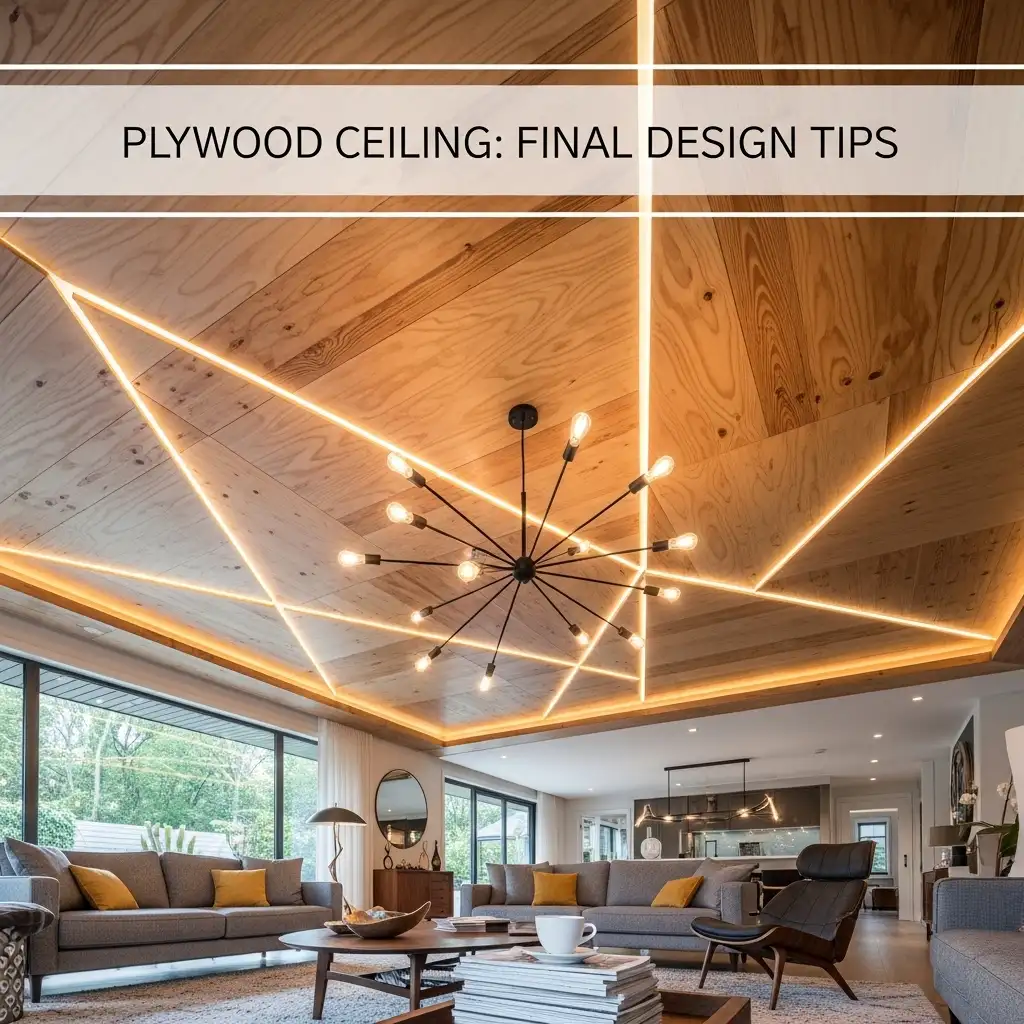
- Choose appearance-grade plywood (A or B face grade) for any ceiling surface that will be visible
- Plan panel orientation carefully — horizontal planks make narrow rooms feel visually wider
- Match wood tones intentionally — coordinate your ceiling plywood with flooring, cabinetry, or furniture
- Resist overdoing it — one well-executed plywood ceiling feature is far more impactful than plywood everywhere
- Hire an experienced trim carpenter — precise, tight installation makes all the difference in the final result
- Always sample before committing — test your chosen stain or paint on a full-size board first
For personalized design advice, contact MotifSpace or browse our interior design portfolio.
Frequently Asked Questions (FAQs)
Q1. Is plywood good for ceilings?
Yes, plywood is an excellent ceiling material for American homes. It is durable, cost-effective, easy to install, and delivers natural warmth that drywall cannot match. When properly sealed and finished, plywood performs well in living rooms, bedrooms, kitchens, and offices.
Q2. Which plywood thickness is best for ceilings?
For most standard American residential ceilings, 3/8-inch to 1/2-inch plywood is the ideal range. Use 1/4-inch only for lightweight decorative overlays over an existing ceiling. Use 3/4-inch for wide structural spans or load-bearing ceiling panel applications.
Q3. How do I prevent a plywood ceiling from warping?
Prevent warping by following these four steps:
Leave 1/8-inch expansion gaps between all panels during installation
Seal all six sides of each panel — front, back, and all four edges — before fixing
Allow plywood to acclimatize inside the room for 48–72 hours before installation begins
Ensure adequate ventilation above the ceiling cavity to prevent trapped moisture buildup
Q4. Can plywood ceilings be used in bathrooms?
Yes — but only marine-grade or exterior-grade plywood should be used in bathroom ceilings. It must be fully sealed with waterproof primer and a minimum of two coats of moisture-resistant polyurethane or epoxy. Always pair with a properly sized exhaust fan to protect the ceiling from daily steam exposure.
Conclusion
A plywood ceiling is one of the smartest investments you can make in your American home’s interior. It delivers natural beauty, genuine durability, and design flexibility that no synthetic ceiling material can truly replicate.
Whether you’re drawn to a crisp white painted plywood ceiling in a farmhouse kitchen, a dark-stained drama in a master bedroom, or raw birch panels in a modern home office — plywood gives every space warmth, soul, and lasting character.
At MotifSpace, we are passionate about helping American homeowners design spaces that feel personal, functional, and beautiful. Explore our ceiling design ideas, interior design packages, and inspiration gallery to start your project today.