
Ceiling tiles are one of the most versatile and practical solutions for updating outdated ceilings, covering imperfections, or adding architectural interest to any room. Whether you’re dealing with a damaged popcorn ceiling, an unfinished basement, or simply want to inject personality into a plain space, ceiling tiles offer countless design possibilities that go far beyond the basic white squares you might remember from office buildings.
Modern ceiling tiles have evolved dramatically, offering homeowners an affordable way to create stunning ceiling designs that range from rustic farmhouse charm to industrial chic to elegant traditional style. Let’s explore everything you need to know about ceiling tiles and how they can transform your space.
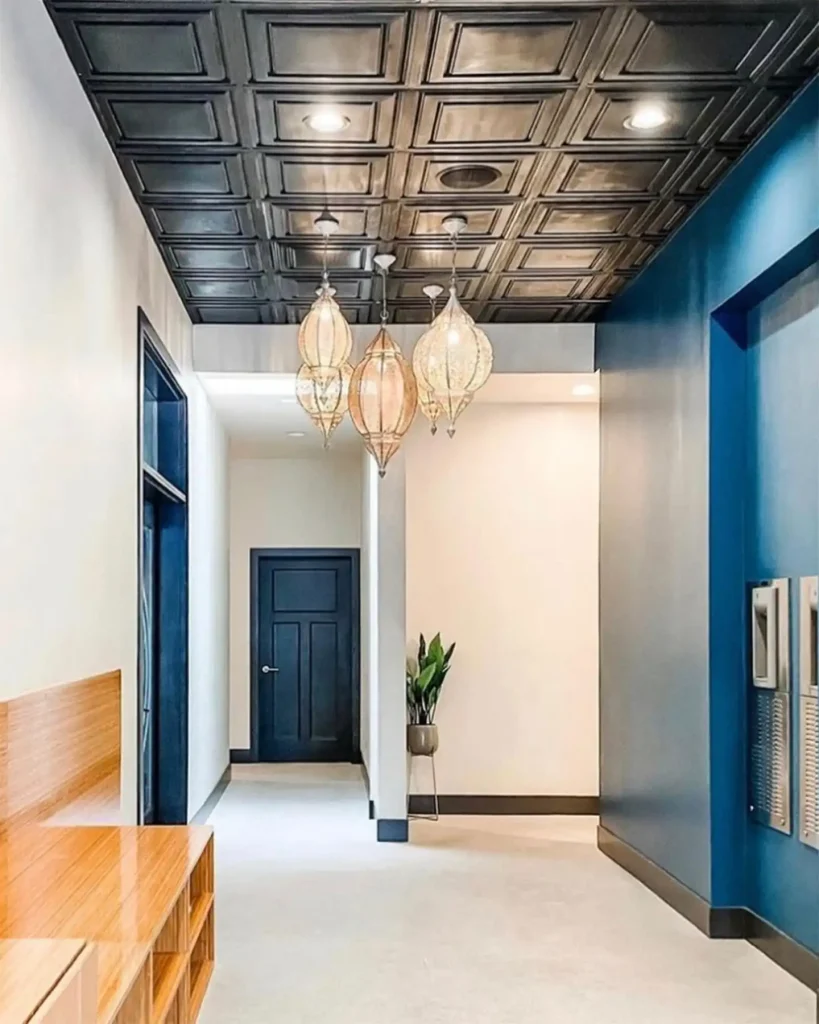
Credits: @ceilume
What Are Ceiling Tiles?
Ceiling tiles are modular panels designed to cover ceiling surfaces, typically made from materials like mineral fiber, metal, wood, PVC, or foam. They can be installed directly to ceiling joists, attached to furring strips, or suspended in a grid system. Available in countless styles, textures, and finishes, ceiling tiles provide both aesthetic appeal and functional benefits like sound absorption and easy access to utilities.
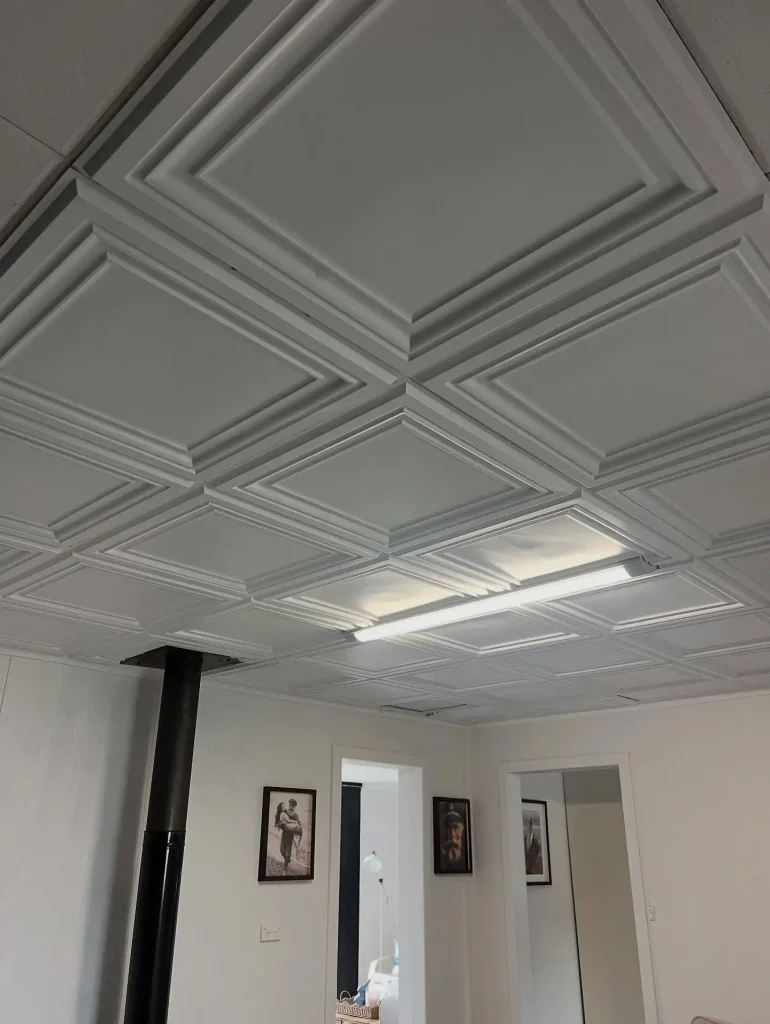
Credits: @clintoncottages
Unlike traditional drywall ceilings that require extensive labor and skill to install, ceiling tiles offer a more accessible DIY option that can dramatically change a room’s appearance in a weekend.
Types of Ceiling Tiles
Drop-In Grid Tiles
The most common system uses suspended metal grids with tiles that drop into place. This approach works particularly well in basements where you need easy access to plumbing, electrical, or HVAC systems. The grid framework hangs below the existing ceiling, creating a new ceiling plane that hides everything above while allowing quick access by simply lifting individual tiles.
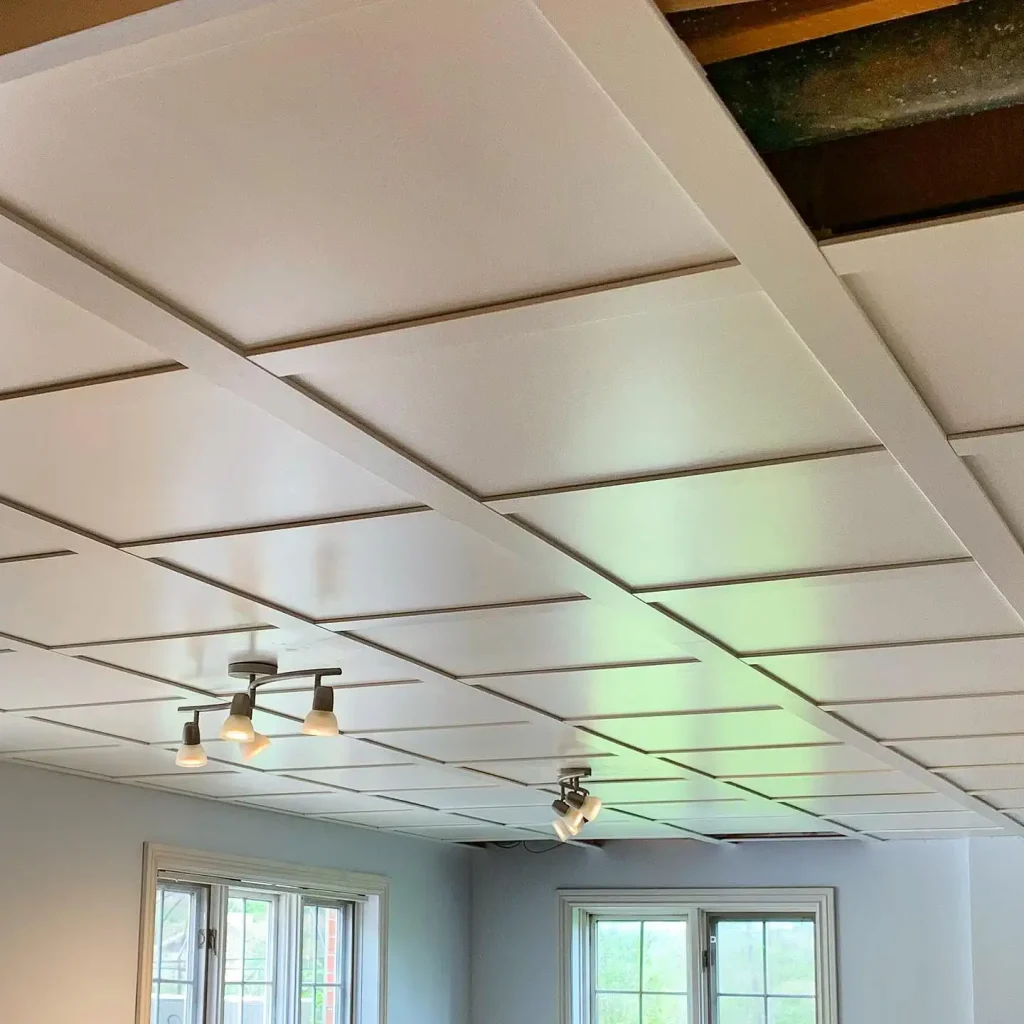
These systems are practical and affordable, though they do reduce ceiling height by three to four inches. For creative applications of drop ceilings, check out our drop ceiling ideas guide.
Direct Mount Tiles
These tiles attach directly to existing ceilings or to furring strips using adhesive, staples, or nails. Direct mount tiles work beautifully when you want to avoid losing ceiling height or create a seamless, integrated look. Popular materials include tin, PVC, and foam tiles that are lightweight enough for adhesive installation.
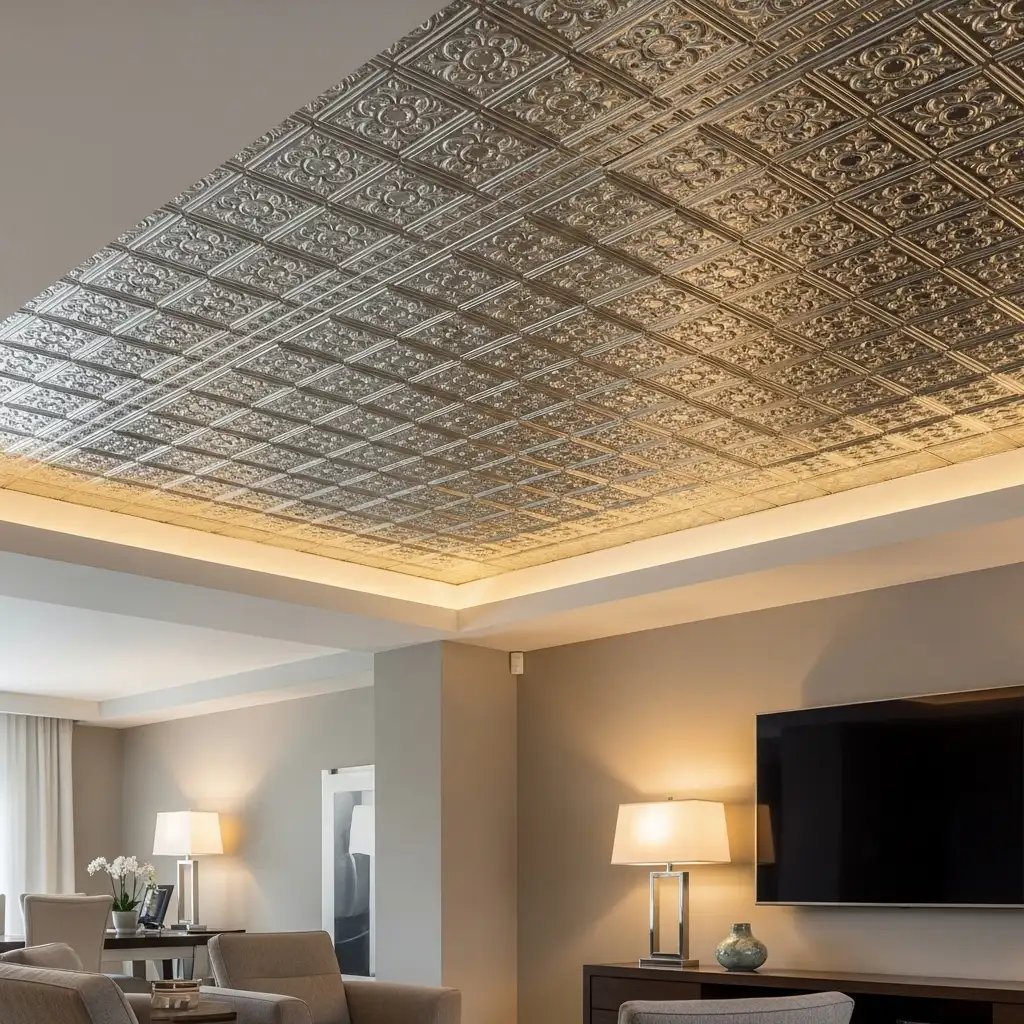
Direct mount installation preserves maximum ceiling height while still covering imperfections, outdated textures, or damaged surfaces.
Decorative Metal Tiles
Tin and aluminum tiles bring vintage charm or industrial edge to spaces. Originally popular in the late 1800s and early 1900s, decorative metal ceiling tiles are experiencing a major resurgence. They come in elaborate pressed patterns ranging from Victorian florals to Art Deco geometrics to simple minimalist designs.
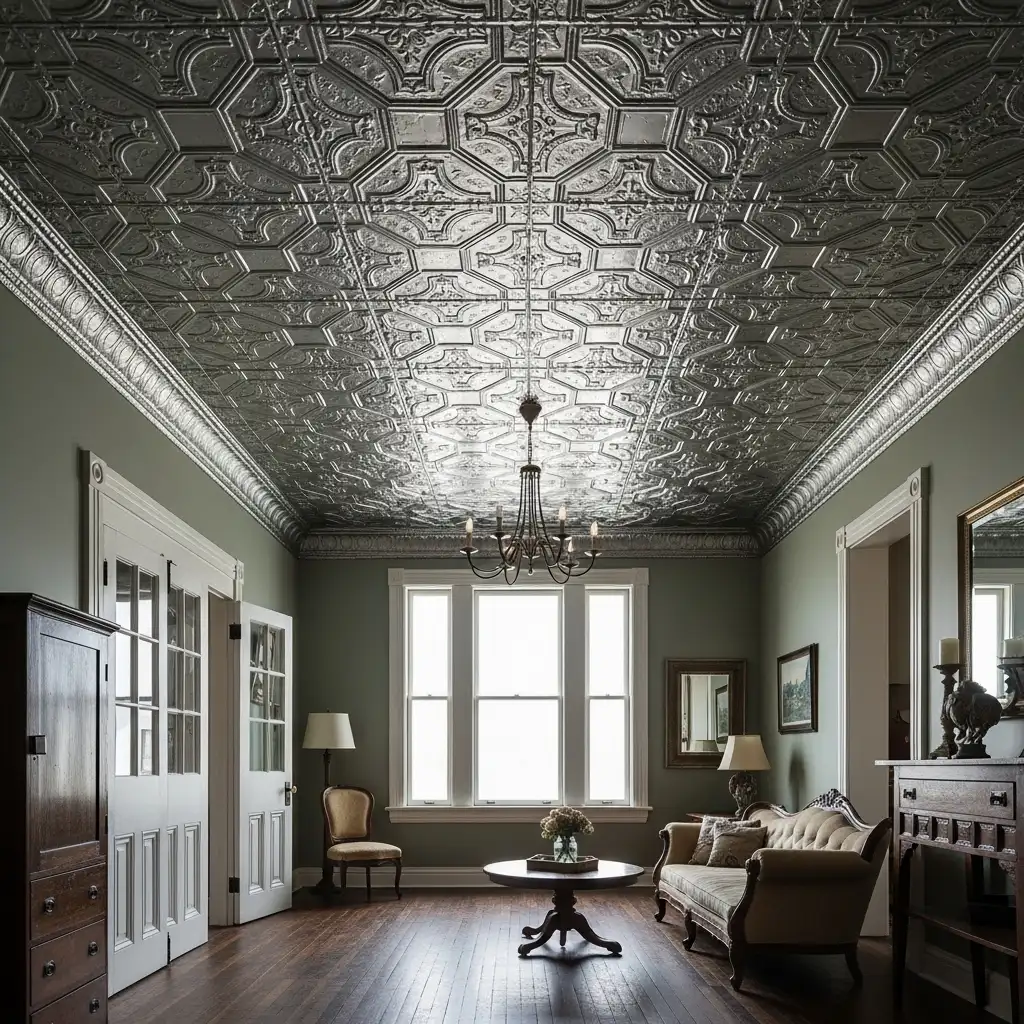
Metal tiles can be painted, left in raw metal finish, or feature antiqued patinas. They’re durable, fire-resistant, and add substantial visual interest to kitchens, bathrooms, and commercial spaces.
Wood and Wood-Look Tiles
For those seeking warmth and natural beauty, wood ceiling tiles or wood-look alternatives create stunning results. Real wood options include tongue-and-groove planks, while budget-friendly alternatives use PVC or laminate that mimics wood grain convincingly.
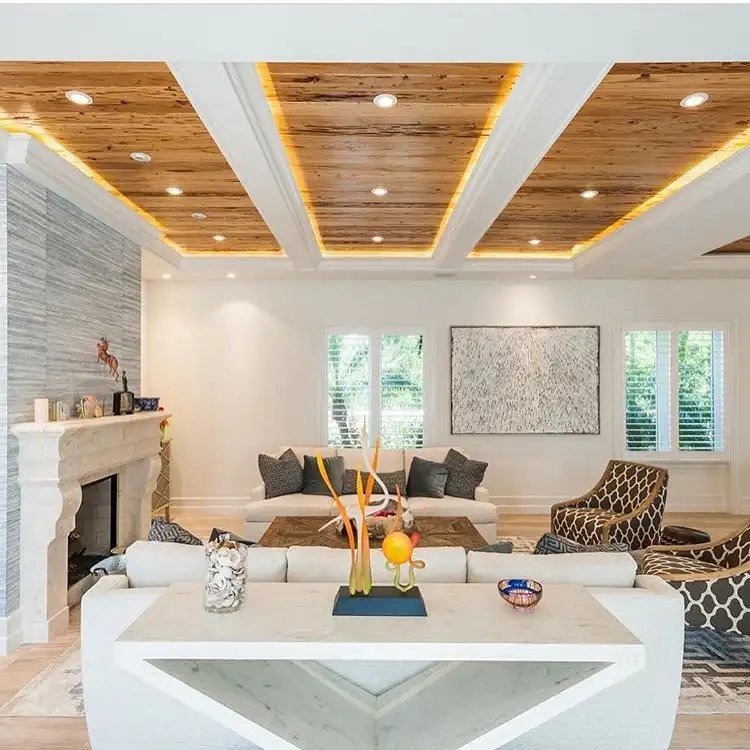
Wood ceiling tiles work exceptionally well in rustic, farmhouse, or cabin-style homes. For comprehensive wood ceiling inspiration, explore our wood plank ceiling ideas and tongue and groove ceiling guides.
Acoustic Ceiling Tiles
Designed specifically for sound absorption, acoustic tiles reduce echo and noise transmission. They’re essential in home theaters, music rooms, offices, or any space where sound control matters. Made primarily from mineral fiber or fiberglass, these tiles feature tiny perforations or textured surfaces that trap sound waves.
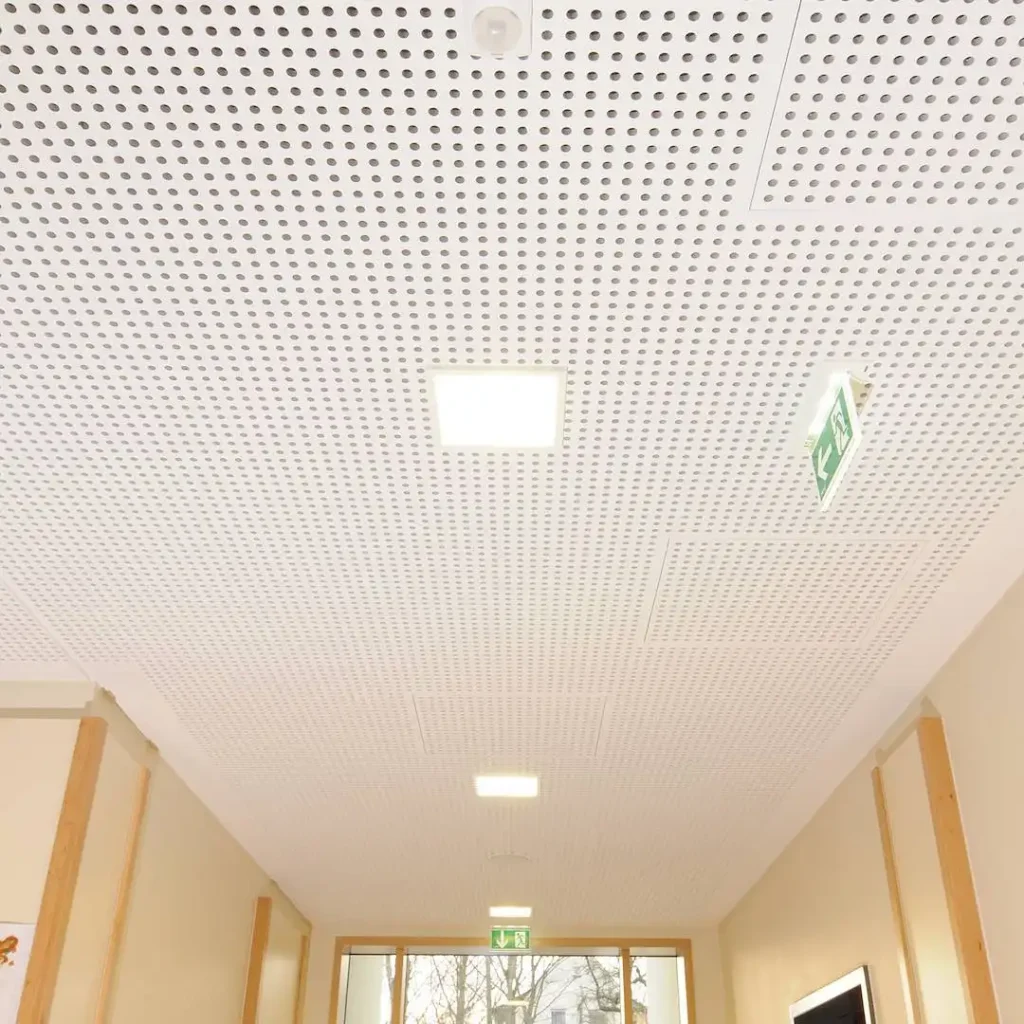
While traditionally plain and utilitarian, modern acoustic tiles now come in various textures and designs that don’t sacrifice style for function.
Decorative Foam Tiles
Lightweight foam tiles offer an affordable way to add dimensional texture and pattern to ceilings. They install easily with adhesive and can be painted to match any color scheme. Foam tiles come in various embossed patterns from simple geometric designs to elaborate ornamental styles.
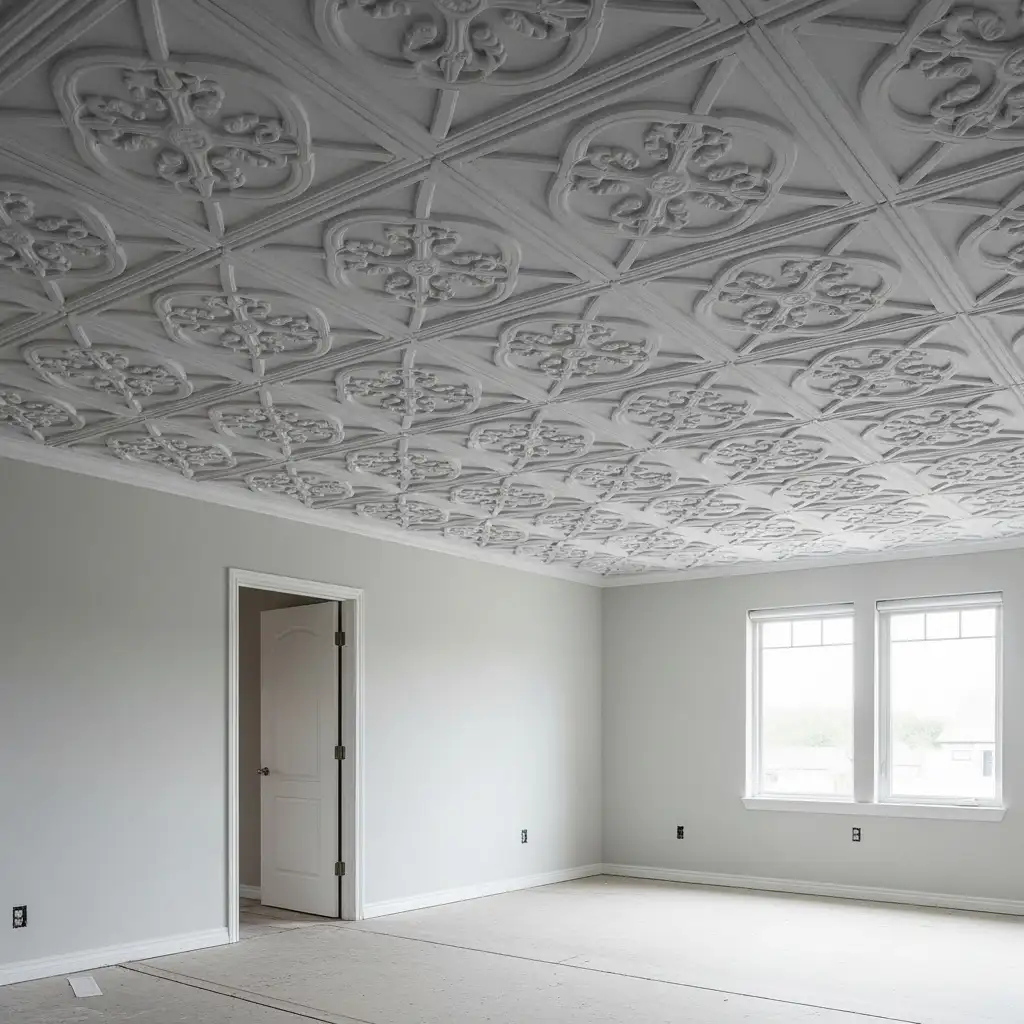
These tiles work particularly well for covering popcorn ceilings without the mess of removal.
Benefits of Ceiling Tiles
Hide Imperfections and Damage
Ceiling tiles excel at covering stained, cracked, or damaged ceilings without expensive repairs. They’re perfect for disguising outdated popcorn texture, water stains, or uneven surfaces. If your ceiling has seen better days, tiles provide a fresh start without demolition.
Easy Installation
Most ceiling tile systems are genuinely DIY-friendly. Unlike drywall that requires taping, mudding, sanding, and painting, ceiling tiles simply click, drop, or glue into place. A typical room can be completed in a weekend without specialized skills or expensive tools.
Affordable Transformation
Ceiling tiles cost significantly less than drywall installation or other ceiling renovation methods. Basic tiles start around fifty cents per square foot, while decorative options range from two to ten dollars per square foot—still far less than custom ceiling treatments.
Access to Utilities
Suspended grid systems allow easy access to plumbing, wiring, and HVAC components hidden above. Individual tiles lift out quickly when you need to reach utilities, eliminating the need to cut into and repair drywall for maintenance or modifications.
Sound Control
Acoustic ceiling tiles dramatically reduce noise, making spaces more comfortable and functional. They absorb sound rather than reflecting it, reducing echo and creating better acoustics for conversation, entertainment, or concentration.
Design Versatility
Modern ceiling tiles offer incredible design flexibility. Create coffered ceiling effects, add texture and dimension, incorporate mixed materials, or make bold statements with patterned metal tiles. The design possibilities are virtually limitless.
Choosing the Right Ceiling Tiles
Consider Your Space
Basements: Suspended grid systems work best, providing utility access while hiding concrete, pipes, and wiring. Standard white or off-white tiles keep basements bright, though decorative options add personality. Visit our basement ceiling ideas for inspiration.
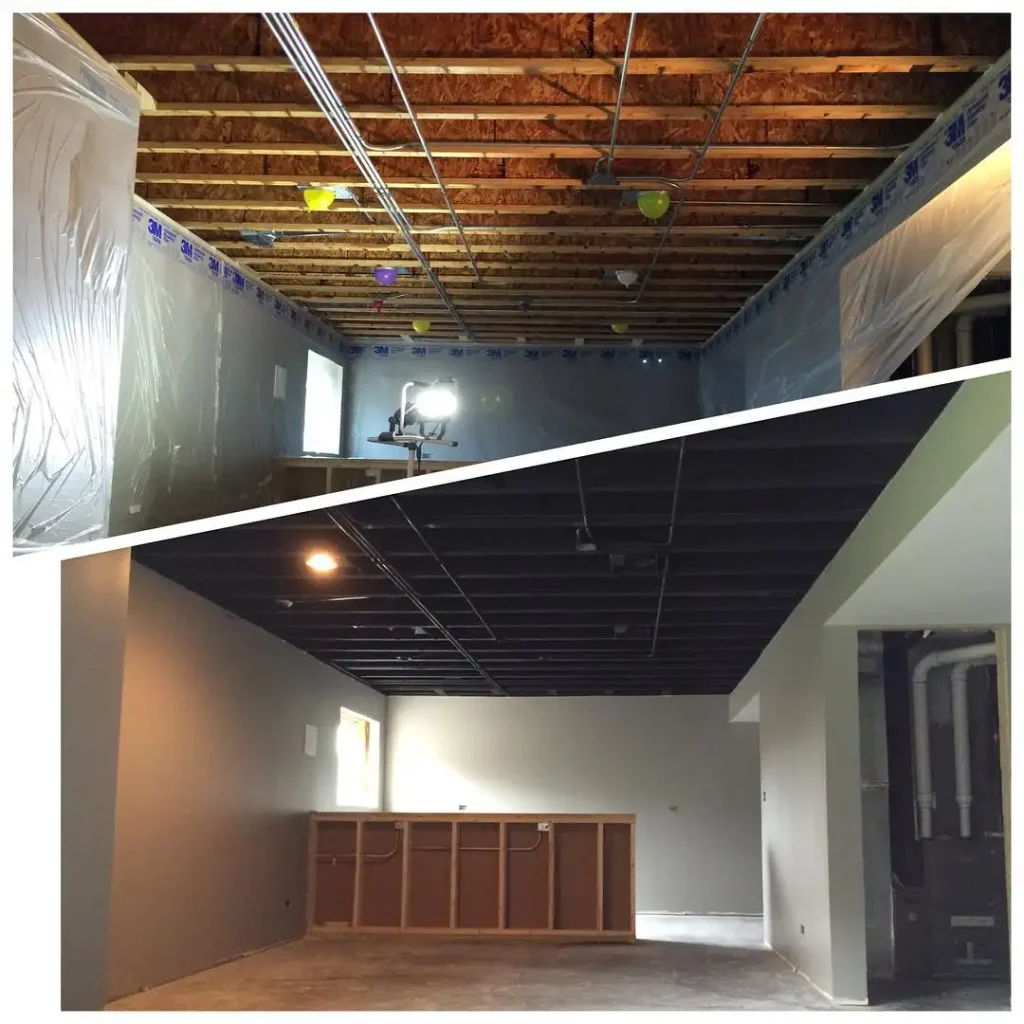
Credits: @paintwerksplus
Kitchens: Metal tiles or PVC tiles resist moisture and clean easily. Their durability handles cooking humidity and occasional splashes while adding vintage or industrial style.
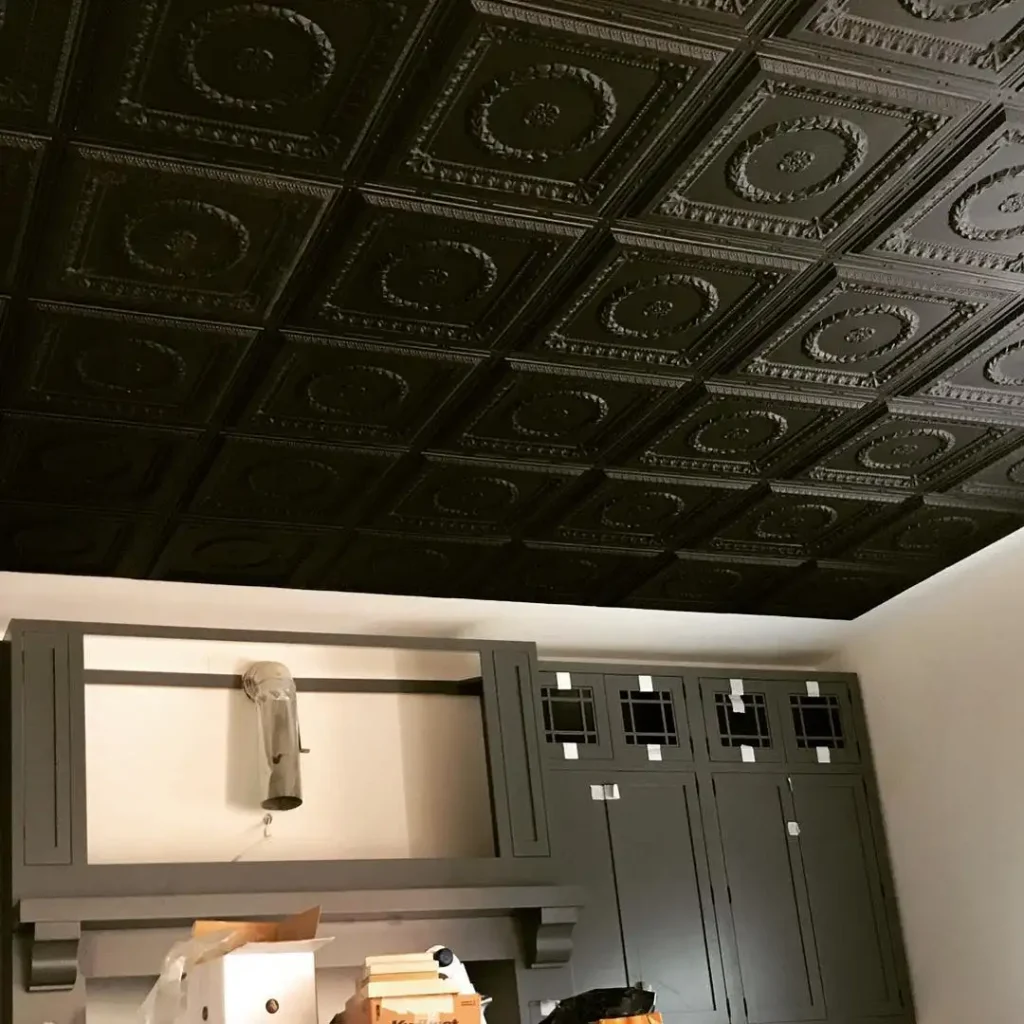
Credits: @ceilume
Bathrooms: Choose moisture-resistant materials like PVC or treated metal. Avoid standard mineral fiber tiles that can deteriorate in humid conditions.
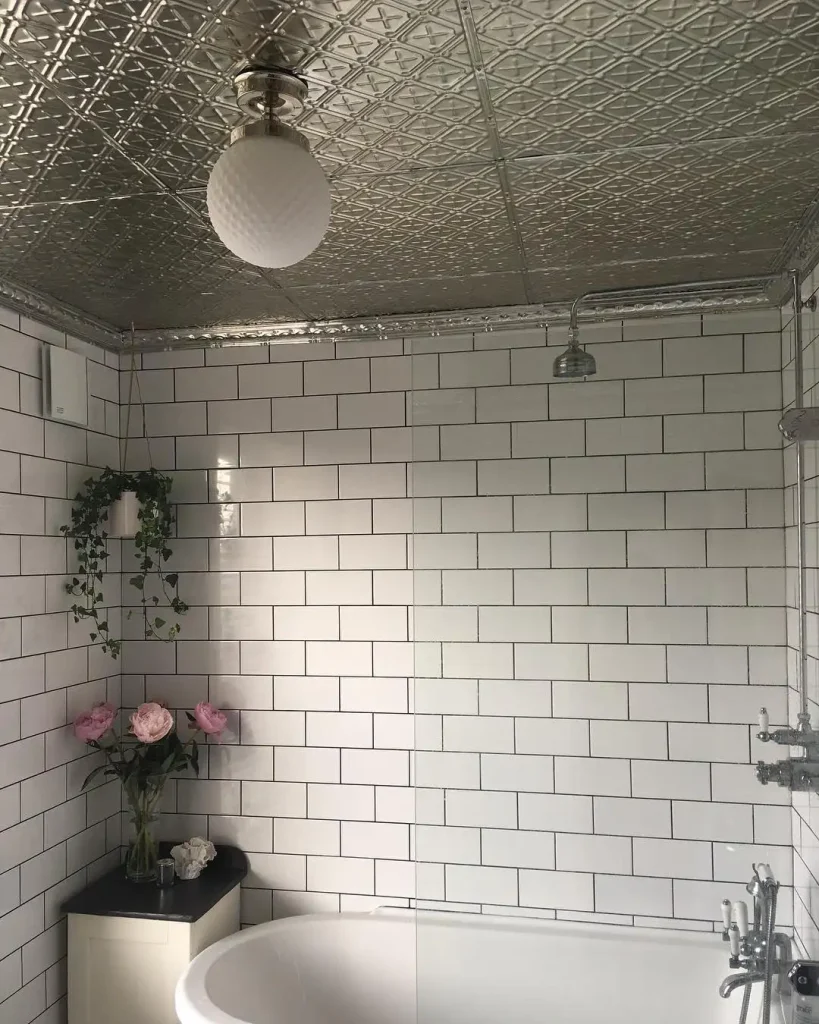
Credits: @addictedtohouseinteriors
Living Rooms: This is where you can get creative. Decorative tiles in wood, metal, or ornate patterns create focal points. Consider how tiles complement your overall design—farmhouse living rooms pair beautifully with wood-look tiles, while industrial spaces suit metal finishes.

Bedrooms: Quiet acoustics matter in bedrooms. Acoustic tiles reduce noise for better sleep, or choose decorative options that enhance your bedroom’s aesthetic. Coordinate with your overall bedroom design approach.
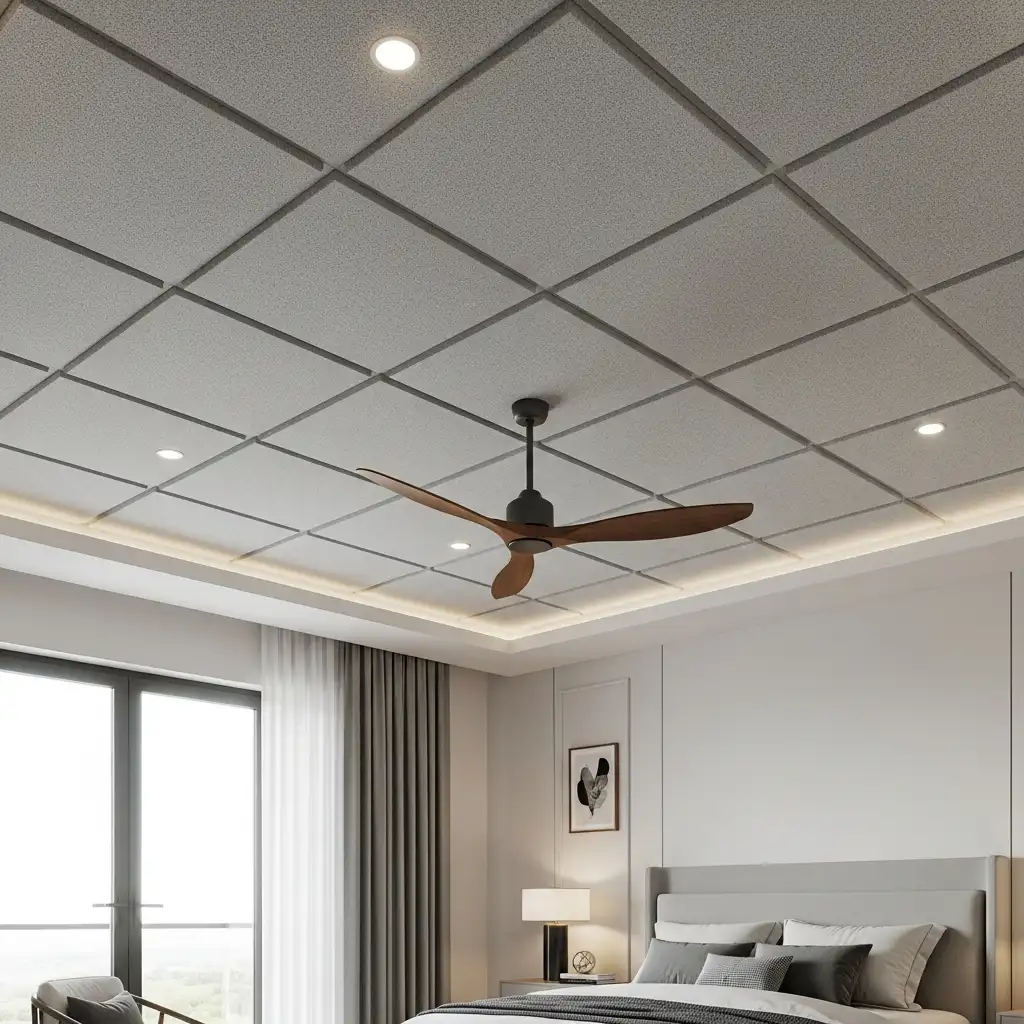
Match Your Design Style
Traditional: Ornate pressed metal tiles or coffered-look panels create classic elegance. White or cream tones with subtle texture work beautifully in traditional spaces.
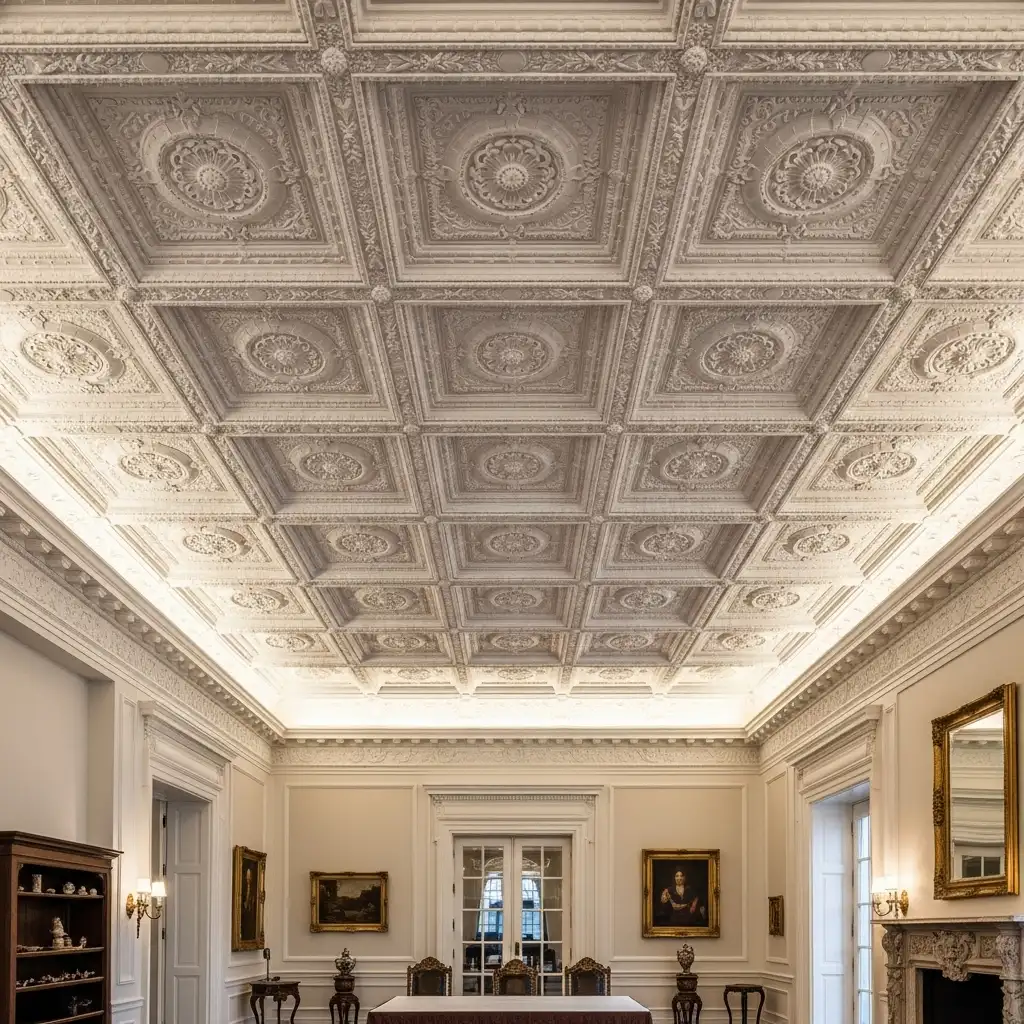
Modern: Clean-lined tiles in monochromatic colors suit contemporary design. Consider large format tiles or seamless systems that create smooth, minimalist surfaces.
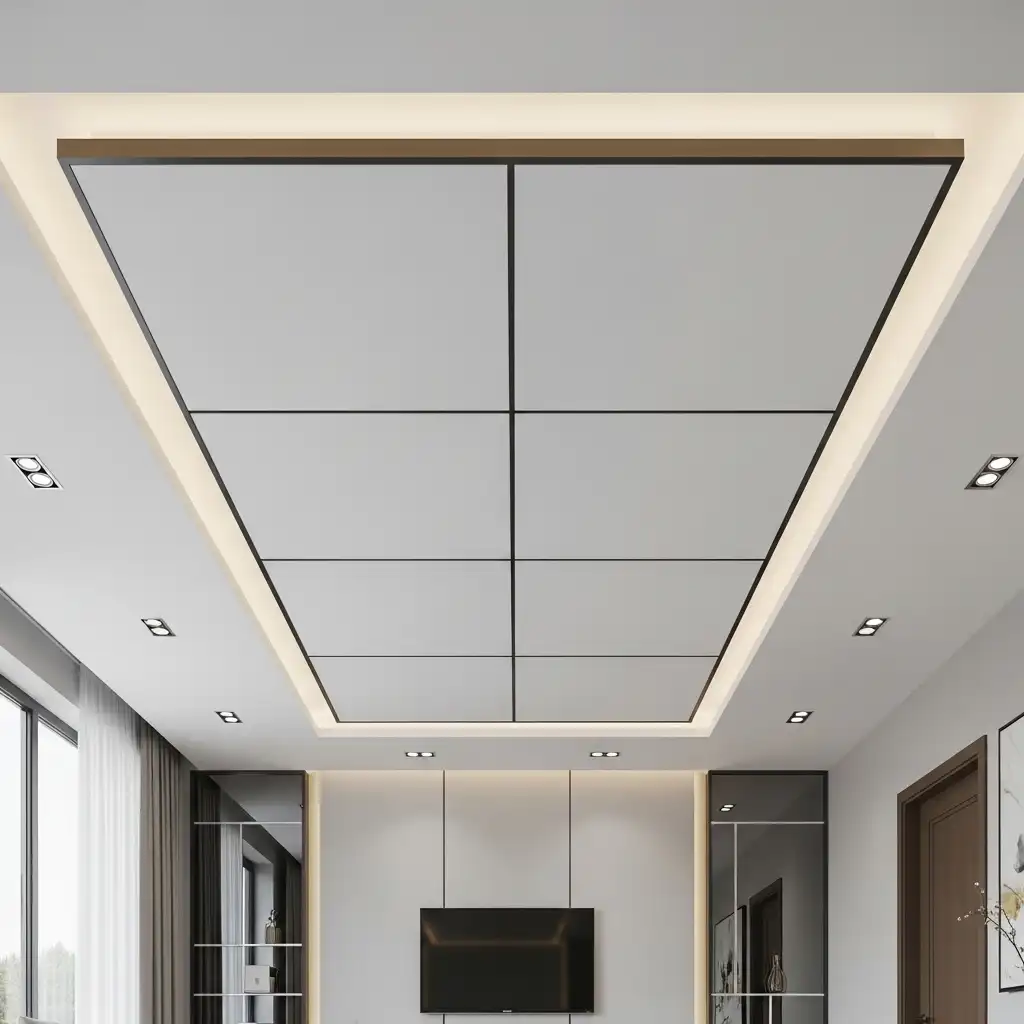
Rustic: Wood tiles or wood-look alternatives bring natural warmth. Distressed finishes, natural grain patterns, and warm tones complement rustic living room ideas.
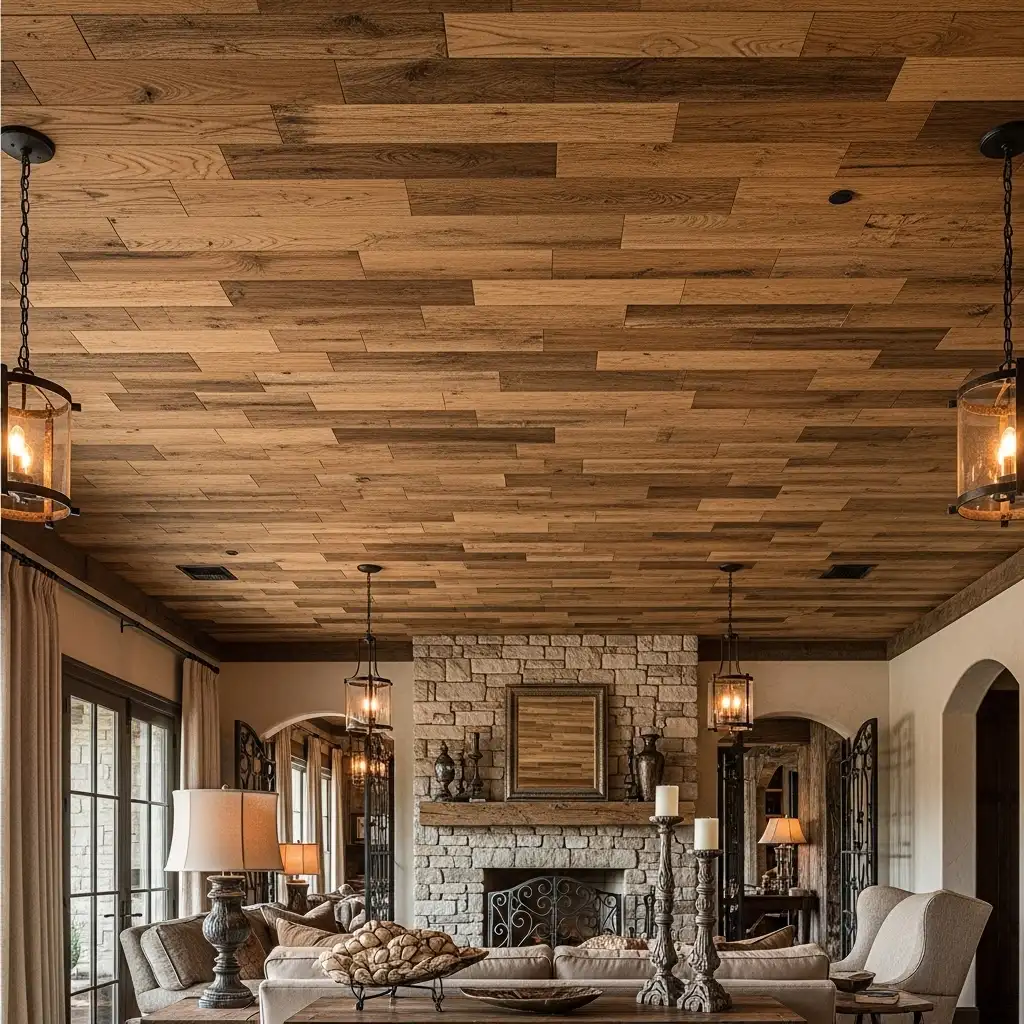
Industrial: Exposed metal tiles, especially in galvanized or aged finishes, enhance industrial aesthetics. Alternatively, consider exposed basement ceiling approaches.

Farmhouse: Beadboard-style tiles, shiplap-look panels, or simple white tiles create farmhouse charm. These styles work throughout farmhouse homes, from kitchens to living spaces.
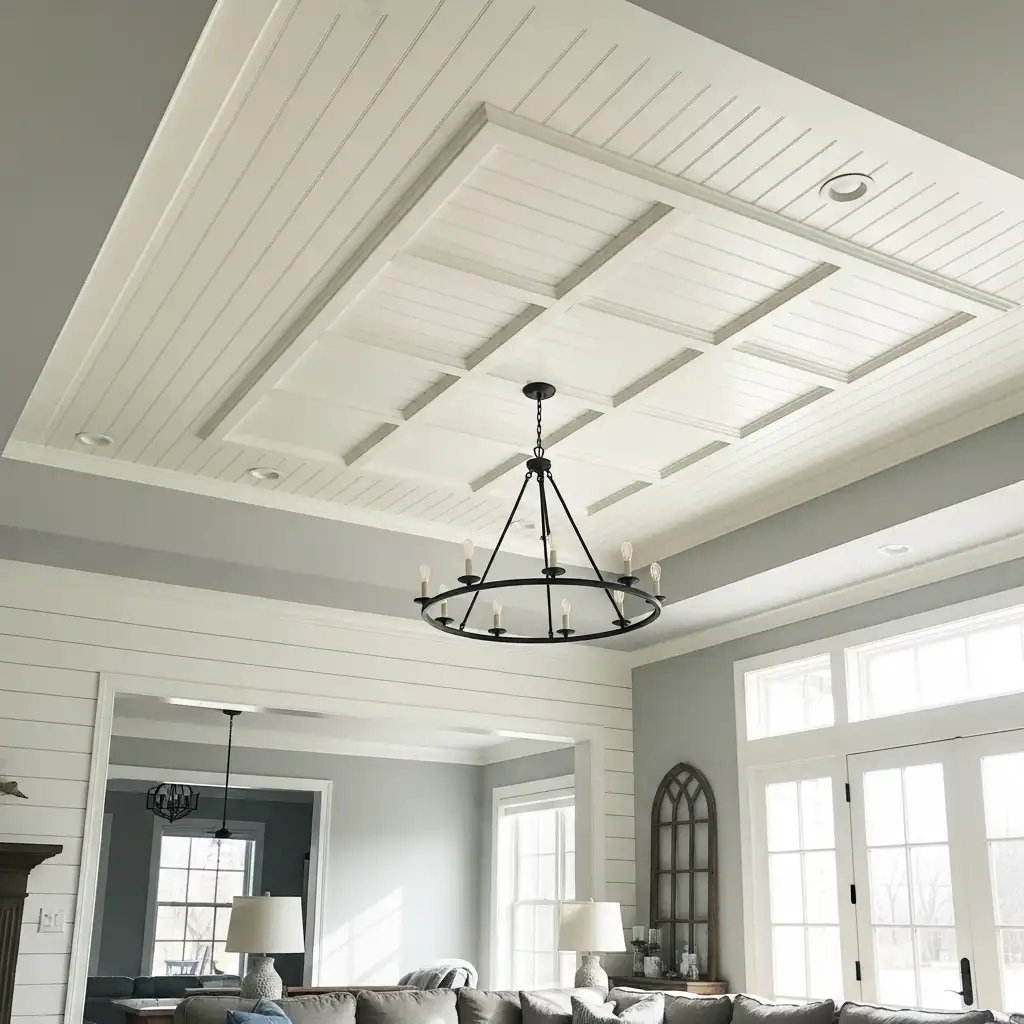
Installation Methods
Suspended Grid Installation
Install wall molding around the room perimeter at your desired ceiling height. Hang main runners perpendicular to ceiling joists, spacing them according to tile size. Install cross tees between main runners to create grid squares. Simply drop tiles into the completed grid framework.
This method requires measuring carefully, ensuring level installation, and cutting tiles accurately around room perimeters and obstacles. While straightforward, precision matters for professional-looking results.
Direct Glue-Up Installation
Mark chalk lines on your ceiling to guide tile placement. Apply construction adhesive to tile backs in a crosshatch pattern. Press tiles firmly against the ceiling, holding briefly until adhesive grabs. Work systematically across the ceiling, ensuring tiles align properly.
This method works best on relatively flat, clean surfaces. It’s faster than grid systems and preserves ceiling height, but provides no utility access and requires a decent existing ceiling surface.
Staple or Nail Installation
Attach furring strips to ceiling joists, creating a framework for tile attachment. Staple or nail tiles to furring strips, working methodically across the ceiling. This method works particularly well for wood tiles or panels that need solid backing.
Furring strips also help level uneven ceilings and provide standoff space for insulation or minor imperfections.
Costs and Budgeting
Ceiling tile projects range from very affordable to moderate investment depending on materials and installation method:
Basic acoustic tiles: $0.50-$2 per square foot PVC decorative tiles: $2-$5 per square foot
Tin/metal decorative tiles: $5-$15 per square foot Real wood tiles: $3-$10 per square foot Suspended grid system: $2-$4 per square foot including grid Installation labor (if hiring): $2-$5 per square foot
A typical 200 square foot room costs $100-$400 for DIY installation with basic tiles, or $400-$3,000 for premium decorative tiles professionally installed.
For budget-conscious projects, explore our cheap wood ceiling ideas for affordable alternatives.
Maintenance and Care
Ceiling tiles require minimal maintenance, but proper care extends their life and appearance:
Regular Dusting: Use vacuum attachments or microfiber cloths to remove dust accumulation every few months. Dust buildup dulls appearance and can affect acoustic performance.
Spot Cleaning: Wipe tiles with slightly damp cloths to remove marks or stains. Avoid excessive moisture, especially on mineral fiber tiles.
Replace Damaged Tiles: Individual damaged tiles can be replaced easily without affecting surrounding tiles—a major advantage over drywall.
Check for Water Damage: Regularly inspect for water stains indicating leaks above. Address leaks promptly to prevent mold and structural damage.
Repaint When Needed: Many tiles accept paint. Refresh tired tiles with ceiling paint using foam rollers for textured surfaces.
Design Ideas and Inspiration
Create Coffered Ceiling Effects
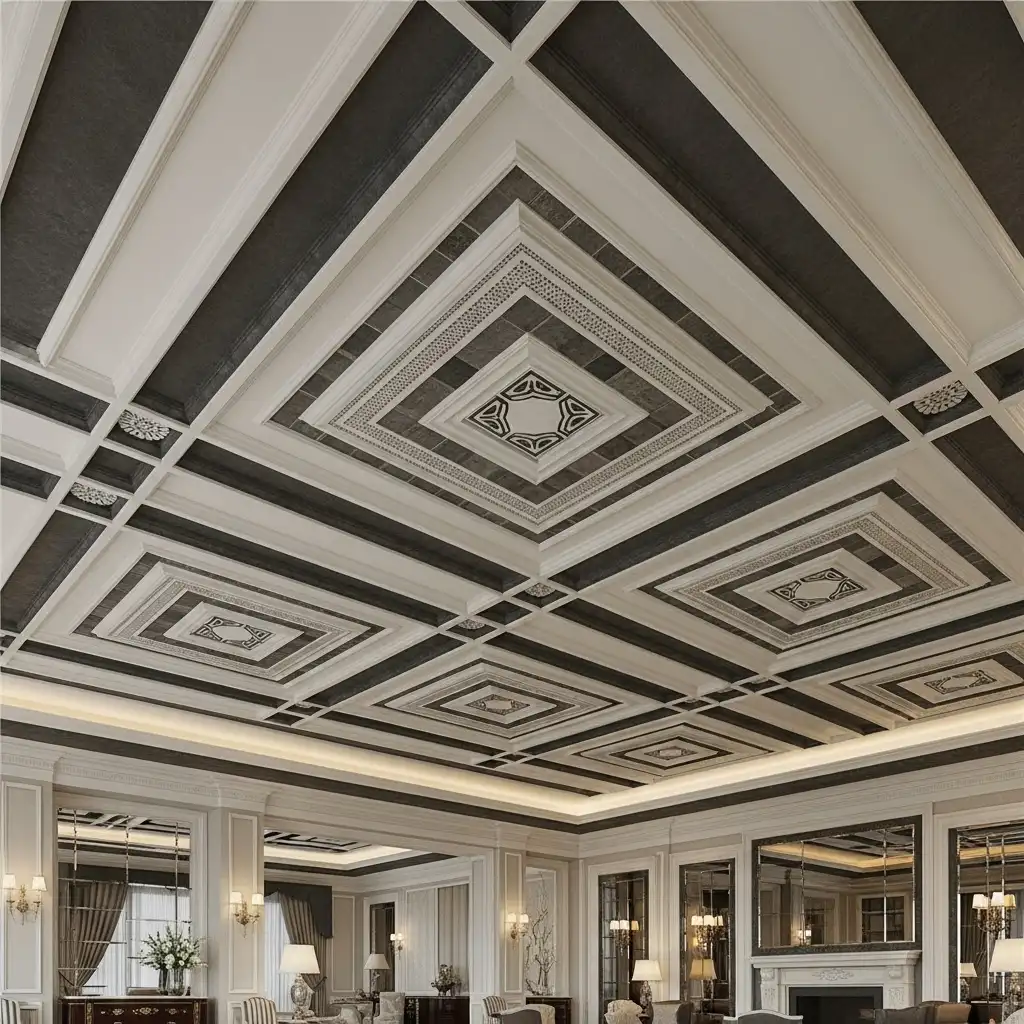
Arrange tiles in patterns with contrasting borders to mimic expensive coffered ceilings. Use darker tiles around perimeters with lighter centers, or alternate tile directions for visual interest. This technique brings coffered ceiling elegance at a fraction of the cost.
Mix Materials and Textures

Combine different tile types for unique looks. Mix metal accent tiles with standard tiles, or create patterns alternating smooth and textured surfaces. Material mixing adds depth and custom character.
Add Lighting Integration
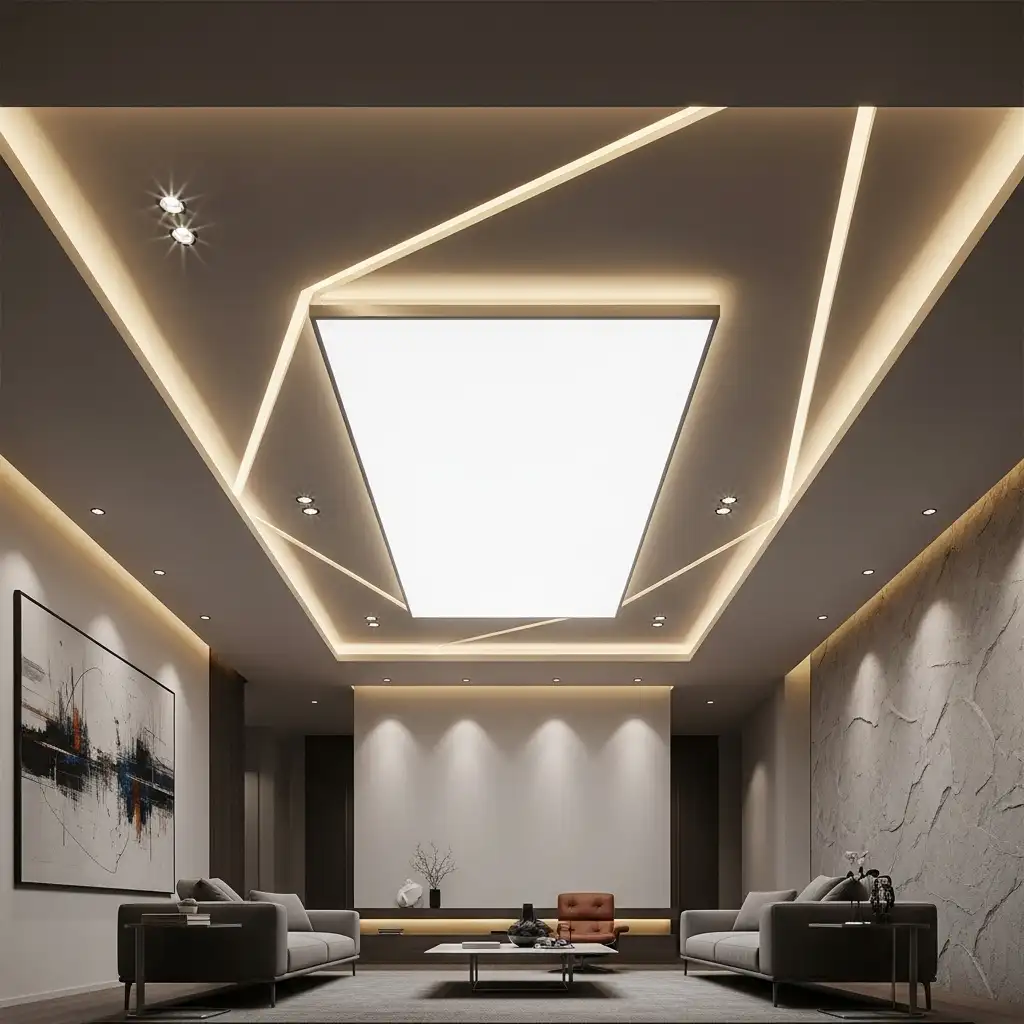
Incorporate lighting into tile systems. Suspended grids easily accommodate recessed lights or flush mount ceiling lights. Some decorative tiles even feature translucent sections for backlighting effects.
Coordinate with Wall Treatments
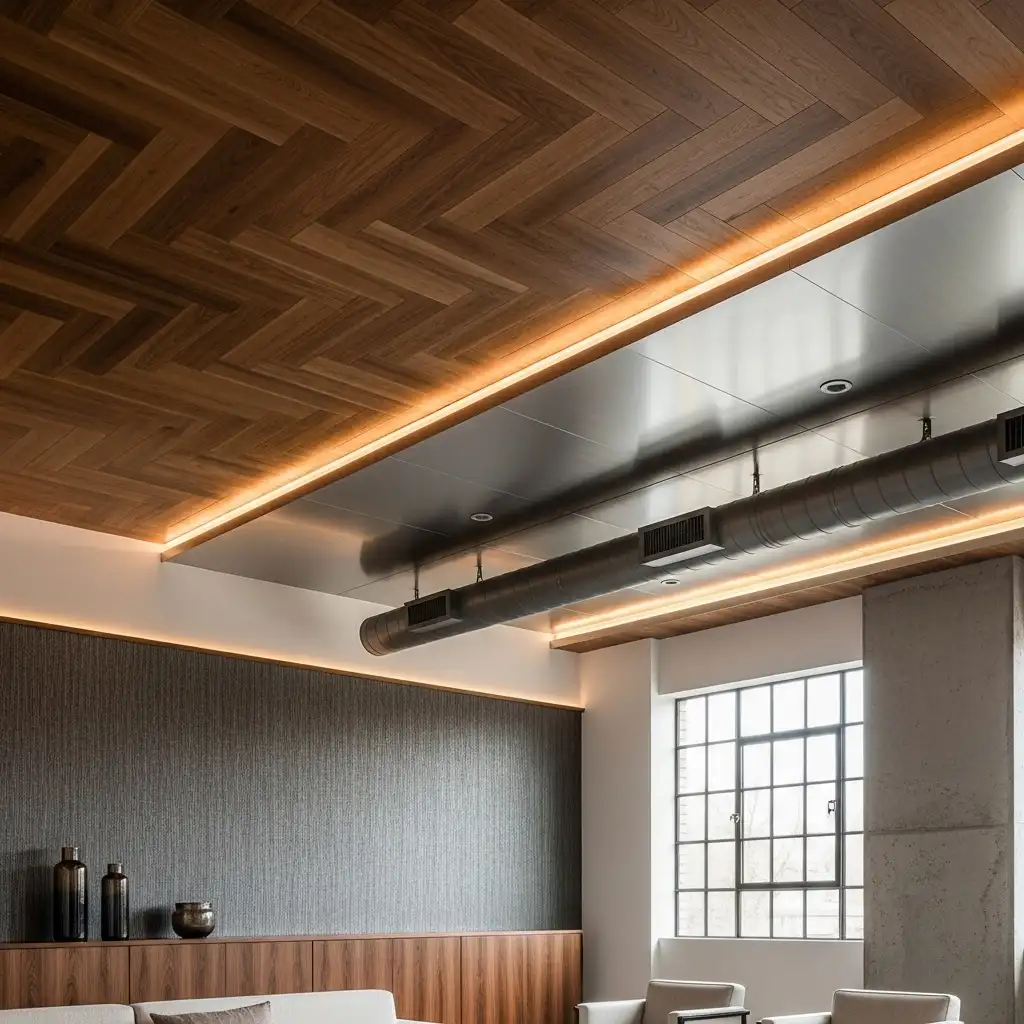
Match ceiling tiles to wall elements for cohesive design. Pair wood ceiling tiles with wood wall paneling for complete natural warmth. Match metal ceiling tiles to industrial wall features.
Extend Visual Height
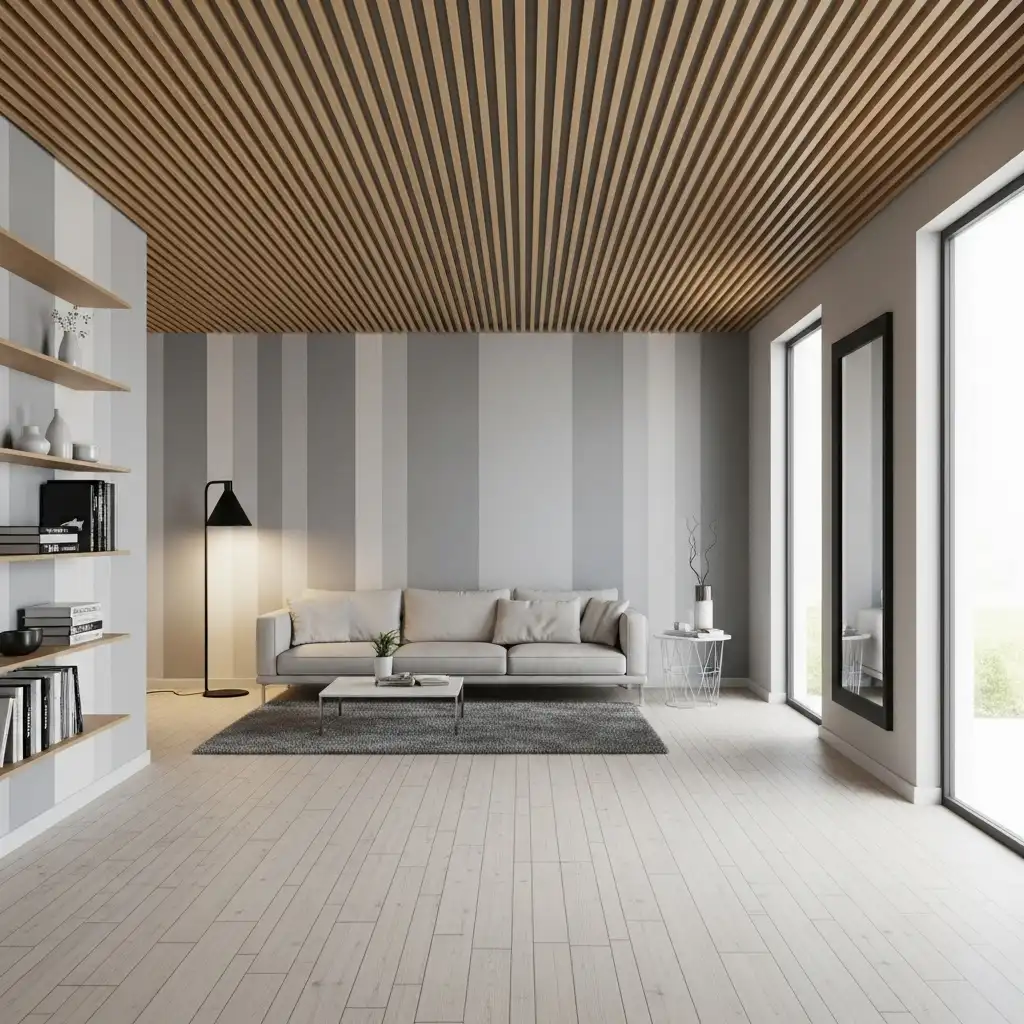
In rooms with low ceilings, vertical patterns or directional tiles can create illusions of height. Light colors and reflective surfaces also make ceilings feel higher than they actually are.
Common Mistakes to Avoid
Don’t skip proper measurement and planning. Ceiling tile projects require accurate room dimensions, careful layout planning, and proper tile counts including extras for mistakes.
Avoid choosing inappropriate materials for high-moisture areas. Standard fiber tiles deteriorate quickly in bathrooms or humid basements.
Don’t ignore existing ceiling problems. While tiles hide cosmetic issues, structural problems, active leaks, or mold require professional remediation before covering.
Never compromise on grid system leveling. Uneven grids create wavy, unprofessional appearances that can’t be hidden.
Frequently Asked Questions
Q: Can ceiling tiles go directly over popcorn ceiling?
Yes, many ceiling tiles install directly over popcorn texture. Direct-mount foam or PVC tiles work well, as do suspended grid systems. This avoids the mess of popcorn removal while creating fresh, modern ceilings.
Q: How much do ceiling tiles lower ceiling height?
Direct-mount tiles add only 1/4 to 1/2 inch. Suspended grid systems typically lower ceilings by 3-4 inches to accommodate the grid framework and allow utility access.
Q: Are ceiling tiles outdated?
While basic white commercial-style tiles feel dated, modern decorative ceiling tiles are incredibly stylish. Metal, wood, and patterned tiles create high-end looks rivaling any ceiling treatment.
Q: Can I paint ceiling tiles?
Most ceiling tiles accept paint. Use flat ceiling paint applied with foam rollers for textured surfaces. Metal tiles require appropriate metal paints or primers. Always test small areas first.
Conclusion
Ceiling tiles offer practical, affordable, and stylish solutions for updating any ceiling. Whether you’re covering an ugly popcorn ceiling, finishing a basement, or adding architectural interest to plain spaces, modern ceiling tiles provide options that fit virtually any budget, style, and skill level.
From rustic wood planks to elegant pressed tin to simple acoustic panels, ceiling tiles transform overlooked fifth walls into design features. They hide imperfections, improve acoustics, provide utility access, and cost far less than traditional ceiling renovation methods.
Take time to choose tiles that complement your space’s overall design, whether that’s cottage style, modern minimalism, or industrial edge. With proper planning and installation, ceiling tiles deliver beautiful results that enhance your home’s comfort and value for years to come.